



Abstract
The ongoing health crisis has impacted businesses worldwide, drastically reducing production, consumption and distribution of goods and services, leading to an economic downturn. An increasing unemployment rate has led to a surge in the sense of job insecurity among employees. Lack of job security has a direct impact on an employee’s health and work–life balance. This article focusses on the relationship between and impact of job insecurity on work–life balance, that is, to understand the impact of perceived job insecurity on working hours, employee’s health and reduced family time. Using a self-completed questionnaire, data was collected from 413 employees from different sectors like construction, banks, hospitals, hotels, schools, FMCG, telecommunication, etc., in India, which assisted in testing five hypotheses. The study found a positive relationship between job insecurity and health issues and work–life conflict. Additionally, job insecurity was negatively linked with job performance. Regression analysis showed mediating effects of work demand, work time, family time and family demand on the relationship of job insecurity with health issues, job performance and work–life conflict. However, the article also discusses various effective mechanisms to reduce job insecurity and ways to curb its negative impacts on various organizational and personal outcomes.
Introduction
Job insecurity or fear of losing the job is often linked to economic or technical reasons. The decision to lay off employees, along with other management decisions like offshoring and outsourcing, increases the perceived job insecurity among existing employees. Economic recession is often linked with a high unemployment rate and job insecurity among people. It impacts the quality of life for a large working population (OECD Better Life Index, 2015, cited in Hanappi & Lipps, 2019). Job insecurity tends to be heightened during times of macro-economic distress (Keim et al., 2014, cited in Minnotte & Yucel, 2018). Thus, the employees who survived the downsizing incident usually have a high perception of job insecurity (Maertz et al., 2010). Job insecurity has been defined as ‘the perceived inability to maintain continued employment in a job risk situation ‘ (Greenhalgh & Rosenblatt, 1984, cited in Sora et al., 2014). Scholars find the perceived feeling to be subjective in nature and defined as ‘an overall concern about the continued existence of the job in the future’ (Sverke et al., 2002, cited in Chirumbolo & Areni, 2010). Whereas, Hellgren et al. (1998) differentiated between quantitative and qualitative job insecurity, the former refers to concerns about the present job, which is the focus of this research article, while the latter pertains to perceived threats like deterioration of working conditions, lack of career opportunities, decreasing salary, etc.
Job insecurity has a dysfunctional impact on employees. It impacts an employee’s behaviour and attitude at work and home. When employees feel insecure about their job, they start behaving differently at work and home, and this impacts negatively on their work–life balance. At work, employees’ attitudes and behaviour are negatively affected by feelings of insecurity (Chirumbolo & Areni, 2010). They work harder and longer to impress their supervisors, which leads to work family conflict. Sigificant amount of research shows long working hours and responsibilities impacts work–life balance negatively, while job insecurity has large affects (Deery & Jago, 2009; Hofa ̈cker & Ko ̈nig, 2013; Yu, 2014). Employees who fear losing their job often lack concentration at work and show low morale and motivation levels. It impacts employees’ satisfaction and organizational commitment negatively and negatively impacts performance (Selenko et al., 2013; Van Vuuren et al., 2019). This further affects organizational performance (Kurnia & Widigdo, 2021). On the other hand, job insecurity impacts an employee’s personal life, affecting quality of family time and work–life balance negatively. Job insecurity is considered one of the major sources of stress at work and is linked to higher rates of physical complaints, psychological strain and poor mental health (Ashford et al., 1989, cited in Chirumbolo & Areni, 2010). Often found to affect family time, parents’ demand and well being (Hanappi & Lipps, 2019). Parents experience an increased level of stress as they perceive job insecurity due to financial and role strain. Thus, this self-reported exploratory study will examine the impact of job insecurity on work antecedents’ work time and work demand as well as family related antecedents’ family time and family demand, to understand how these further impact measured outcomes like work–life conflict, health issues and job performance.
A substantial amount of research has been carried on how job insecurity is perceived among temporary or fulltime employees (Yu, 2014), how it impacts male employees (primary breadwinners) or females (secondary income earners) (Giunchi et al., 2016). It has also received attention among researchers to find how job insecurity impacts well-being, performance and work–life balance (conflict). In the past, researchers have also focussed on the impact of job insecurity on work–life balance during the recession in 2008 (Green et al., 2016) in Pakistan (Imam et al., 2011) in the UK (Stokes & Wood, 2016). But this exploratory research article will focus on how this concept has its impact on work–life balance during COVID-led recession in India. Thus, filling the research gap in the literature by exploring how job insecurity impacts work and family-related antecedents and further leads to work–family conflict, which has a deteriorating effect on health and job performance. While scholars have categorized job insecurity and defined it based on objective or subjective, cognitive or affective, quanititative or qualitative. Many have ignored the vital aspect while explaining the concept, that is the driving fear of not getting a suitable or a job at all. Thus, Job insecurity can be high if an employee fears of not only losing his/her job but also fears of not getting a job at all in near future due to economic downturn, which is the main focus of this article. This fear is common when economy is still struggling to take off.
The ongoing health crisis and lockdowns around the world have impacted businesses. According to the World Bank (2020) forecast, the global economy will shrink by 5.2% by the end of 2020, which will have a long-lasting impact on unemployment. The World Bank (2020) forecasted that India’s growth would slow down by 4.2% by 2020. Output is projected to contract by 3.2% in 2020/21. Predicting a slope in production, consumption and distribution of goods and services means slipping into recession ahead. According to CMIE (2020), the unemployment rate in India was 6.9% by August 2020. At the beginning of the lockdown announced on 24 March 2020, the unemployment rate was highest at 23.4% in the month of April 2020. According to Mckinsey’s (2020) global diversity, equity and inclusion/COVID-19 employee experience survey report, data collected from 600 leaders, including senior economists, financial-market experts and policy makers, in 100 companies across multiple sectors, identified the industries which were hard hit during the COVID-19 crisis, such as airlines, hotels, tourism, construction, real estate, freight and logistics, oil and gas, textile and metal and mining. The report also identified that job insecurity in India is at 78%. Thus, to cope up with the unprecedented times, usually organizations opt to reduce cost by laying off employees. Therefore, the principal objective of this article is to identify the level of insecurity feelings amongst employees, establish a relationship between job insecurity and work–life balance and determine the impact of the former on the latter during the economic crisis due to COVID-19 in India. Hence, various antecedents of work–life balance are identified and examined. Job insecurity is linked to work pressure/intensification, and the number of working hours as well as family demand and family time. Thus, in turn, it impacts on an employee’s health, productivity and overall work–life balance.
Job Insecurity and Its Impact on Work Intensification and Working Hours
Job insecurity is often linked to work intensification among existing workers who survived layoffs and experienced an increase in working hours. When organization downsize, workload often increases as fewer people take same workload (Kets de Vries & Balazs, 1997, cited in Richter et al., 2010). Work demands or intensification are considered additional pressure due to the high volume of work and working time such as deadlines (Boyar et al., 2008; Yang et al. 2000). Work demand can increase the time spent in an organization, and this is mainly due to increased competitive pressure for improved productivity. Employees who fear job lose may perform in excess to display commitment, loyalty towards the organization and that they can be a valuable asset if retained (Roberts, 2007). A research carried out in Indian business process outsourcing (BPOs) examined the impact of 2008’s financial crisis on employment, work and the experience of work through interviews with employers and employees, and revealed that job insecurity intensified work and increased work time (Taylor et al., 2014). Data collected by the Australian Work and Life Index (AWALI) found working hours, work pressure and intensification caused work–life conflict (Skinner et al., 2012). Yu (2014), in a research carried out by using 4,000 work survey data in Australia, found that an increase in work intensification increases working hours and the presence of job insecurity aggravates the work–life balance problem. In the latest report, 80% of the employees mentioned an increase in workload during COVID-19 (Mckinsey, 2020). It was also identified during COVID-19 pressure at work was experienced more by mothers compared to fathers. Thus, the following hypothesis can be drawn:
Job Insecurity and Its Impact on Family Demand and Family Time
Job insecurity increases the workload and work time, thus affecting the time distribution and reducing the amount of time available to be invested in the family role. In addition to time imbalance, with increased worry about losing the job and tiredness after working long hours at work, it affects the family role and quality time spent with family, which usually gives rise to conflict between work and family. Long working hours are often linked to less family time, which explains the presence of work–family conflict (WFC) (Voydanoff, 2005). Job insecurity is often linked to lower life satisfaction and ruined family relationships (Larson et al., 1994, cited in Chirumbolo & Areni, 2010). In a Dutch longitudinal panel data composed of 11,536 observations of 3,668 individuals, a negative association was found between job insecurity and relationship satisfaction (Blom et al., 2019). In a meta-analytical research based on 767 correlations from 171 independent studies published between 1990 and 2016, it was indicated that job insecurity had a negative impact on work–family enrichment (Lapierre et al., 2012). Parental stress consists of financial (Bertozzi & Gilardi, 2008, cited in Hanappi & Lipps, 2019) and role strain because of the difficulty of focussing on childbearing and childrearing while struggling in the labour market (Jahoda, 1982, cited in Hanappi & Lipps, 2019).
Family demand is comprised of caring responsibilities and the responsibility to complete household chores. Caring responsibilities towards elders and children is major antecedent in family work conflict (FWC). Elder-care responsibilities are referred to as physical and psychological help to elderly parents; hence, they are also emotionally demanding (Barling et al., 1994; Bianchi et al., 2006, cited in Young & Wallace 2009).
Childcare responsibility has a negative impact on satisfaction and work–life balance (Hochschild, 2008; Voydanoff, 2005). Job insecurity and current unemployment affected childless individuals who transitioned to parenthood in research carried out using the Swiss Household Panel (SHP) (2000–2016; N = 7,167). Thus, high demand at home due to childcare, elderly care and other responsibilities is considered a factor leading to stress and work–life imbalance.
Due to shared responsibilities at home, many working parents face increased quarrels and conflicts due to care taking responsibilities and household chores (Boles et al., 2003). Lawson et al. (2013) surveyed 586 hotel managers (HMs) working in 50 full-service hotels throughout the USA and found women, employees without children at home and younger adults experienced the highest levels of negative work–family spillover. Time available to complete household chores makes it challenging for working parents (Baruch & Barnett, 1986; Beckett & Howell, 2015; Young & Wallace, 2009). Some studies found that available time for family decreases due to the time use of housekeeping services (Cheung & Lui, 2017; Karatepe & Bekteshi, 2008). Research also shows family responsibilities influences satisfaction with career and work–life balance, parental overload was related to family–work conflict (FWC) (Beckett & Howell, 2015) presence of children, elderly parents to take care has a Family work conflict (Pleck et al., 1980, cited in Goff et al., 1990). Consistent with the conservation of resources (COR) model by Hobfoll (1989, cited in Karatepe, 2010), evidence suggests that family support, either in the form of family members sharing in duties and responsibilities or providing emotional support, helps in reducing WFC (Akkas et al., 2015; Carlson & Perrewé, 1999, cited in Adkins & Premeaux, 2012). Similarly, role theory suggests that a spouse or partner can take some roles by sharing the employee’s roles at home, taking care of children, etc., can moderate negative effects of work pressure. supportive family relationships are also plausibly less demanding resulting in less felt conflict than non-supportive family relationships. Family support is not only related to support from family member for household chores, but also support in childcare. In absence of such support, family demand or responsibilities can interfere work. Thus, we hypothesize that the presence of a spouse or partner and family support will moderate the relationship between hours of work and WFC. Thus, the following hypothesis is drawn:
Job Insecurity and Employee’s Health Issues
Aside from its dysfunctional impact on employees at work, job insecurity has a negative impact on employees’ health. Lack of job security causes stress among employees, affecting their physical and mental health (Glavin & Scheiman, 2014; Minnotte & Yucel, 2018). In a meta-analysis research carried out among 53,405 participants, they found significant correlation between subjective job insecurity and mental health. Job insecurity was related to the risk or presence of depression, anxiety and emotional exhaustion (Llosa-Fernández et al., 2018). In another research carried among 287 workers administered with self-reported questionnaire found negative relationship between job insecurity, performance and mental health (Chirumbolo & Areni, 2010). Similarly, research conducted in a Belgian plant among 336 respondents surveyed from the metal-working industry found that job insecurity was associated with lower well-being (De Witte, 1999). It is also linked to depressive episodes, suicide ideation and a decline in self-rated health (Min-seok et al., 2017). When employees perceive job insecurity, they work long working hours to protect their current job or face work pressure due to work intensification and, in turn, have less family time. Thus, job insecurity affects employees’ health as they stress about financial loss and difficulty in taking care of family responsibilities (Minnotte & Yucel, 2018). In a report published by Mckinsey on women in the workplace (Mckinsey, 2020), it was identified that both men and women experience burnout and are exhausted, and mothers at senior level face more burnout and exhaustion compared to men at senior level (Mckinsey & Leanin.org, 2020).
Job insecurity and workload impact health negatively (D’Souza et al., 2006; Virtanen et al., 2011). Research involved 474 Portuguese using a self-reported questionnaire showed a relationship between perceived job insecurity and job exhaustion was moderated partially in men and total in women (Giunchi et al., 2016). Similarly, data collected from 736 employees from a Finnish health care district showed perceived job insecurity led to work exhaustion (Mauno et al., 2005). With the fear of job loss, employees are often stressed and work extra time, which leads to psychological distress (Minnotte & Yucel, 2018). Thus, the following hypothesis can be drawn:
Job Insecurity and Productivity
Employees’ fear of losing their job, affects their morale and motivation and thus their performance. A research carried out with 13,683 US employees who survived layoffs, outsourcing and offshoring found that survivors of layoffs perceived lower organizational performance (Maertz et al., 2010). A research carried out by collecting data from 400 retail employees of a Chilean company that had undergone a downsize found job security had a negative impact on performance (Bohle et al., 2018). On the other hand, data collected from a sample of 140 Chinese employees in study 1 and data collected for study 2 from a sample of 125 Chinese employees showed job insecurity was significantly negatively related to job performance (Hai-jiang et al., 2015). In contrast, Sverke et al. (2002) found the relationship between job insecurity and performance was less significant. When employees perceive job insecurity, they exert more effort and show improved performance at work, so that they can be perceived as valuable to the organization (e.g., Greenhalgh & Rosenblatt, 1984, cited in Hai-jiang et al., 2015). Similarly, a research carried out using 104 students for lab experiment and 144 employees for survey found that job insecurity reduced the employees’ creativity and performance (Probst et al., 2007). A stratified sample of 150 teachers and 11,500 married students were interviewed and it was found that job insecurity was negatively related to both marital and family functioning for both husbands and wives. It was found to affect marital adjustment, family communication, family problem solving, clarity of family roles and affective involvement (Larson et al., 1994).
Data used from GSS surveys from 2002, 2006, 2010 and 2014 were examined to find the relationships between work hours, schedules and job insecurity. The sample included respondents who were currently in the wage and salary workforce in those years (N = 3,564). A second study with 525 respondents found job insecurity and hours worked undermined job quality (Lambert et al., 2019). Increase in job insecurity is linked to high work pressure or work load and leads to poor health and impacts employee’s productivity (D’Souza et al., 2006; Pilipiec, 2020). Thus, the following hypothesis can be drawn:
Job Insecurity and Work–Life Conflict
Job insecurity is linked with an increase in working hours and less family time, which connotes the negative relationship between job insecurity and work–life balance. It often impacts health and the quality of family time as it leaves a worry among other employed or unemployed partners and children. Job insecurity and work intensification have negative impacts on work–life balance (Yu, 2014). Dzurizah (2014) identified that work demands, along with less job autonomy on working time and the absence of work–life provisions, led to work–family conflict. Work pressure thus is considered as an antecedent to WFC (Akkas et al., 2015; Boyar et al., 2008; Carlson et al., 2006; Harr et al., 2018; Hobson et al., 2001; White et al., 2003). In a longitudinal research conducted by Richter et al. (2010) among Swedish teachers, they found that job insecurity brought more work load and subsequently led to work family conflict for men. In research conducted by Carr and Chung (2014) using data from 22 countries from the 2010 European Social Survey, it was shown that perceived employment insecurity is negatively associated with life satisfaction.
Methodology
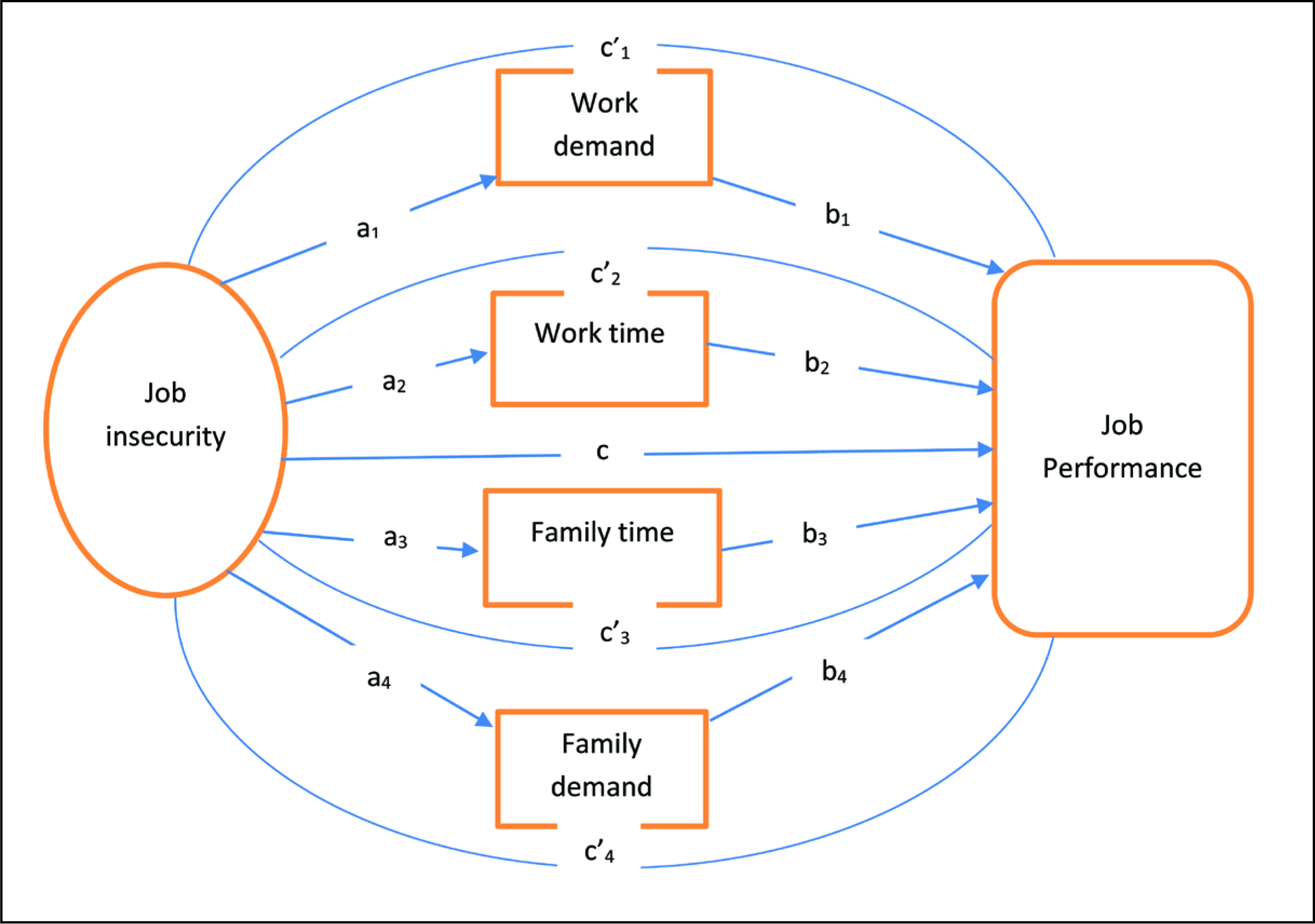
Based on positivist philosophy, this explanatory research collected quantitative data using self-completed questionnaire (using Google forms) to understand employee’s fear regarding job insecurity who survived the organizational layoff and its impact of work–life balance components like work time, work demand, family time and family demand. A correlational study was designed to use mediational model that implies causality. The mediation model was used to find out three causal paths, that is, to find out the effect of independent variable (job insecurity) on mediators (work demand, work time, family demand and family time). To find out the effect of independent variable on the dependent variables (health issues, performance and work–life conflict) and to find out the effect of mediators on the dependent variables. The main reason to use mediational analysis design for the present study was methodological because it allowed the researchers to consider the effect of third variable on the relationship between two other variables of interest (MacKinnon et al., 2007).
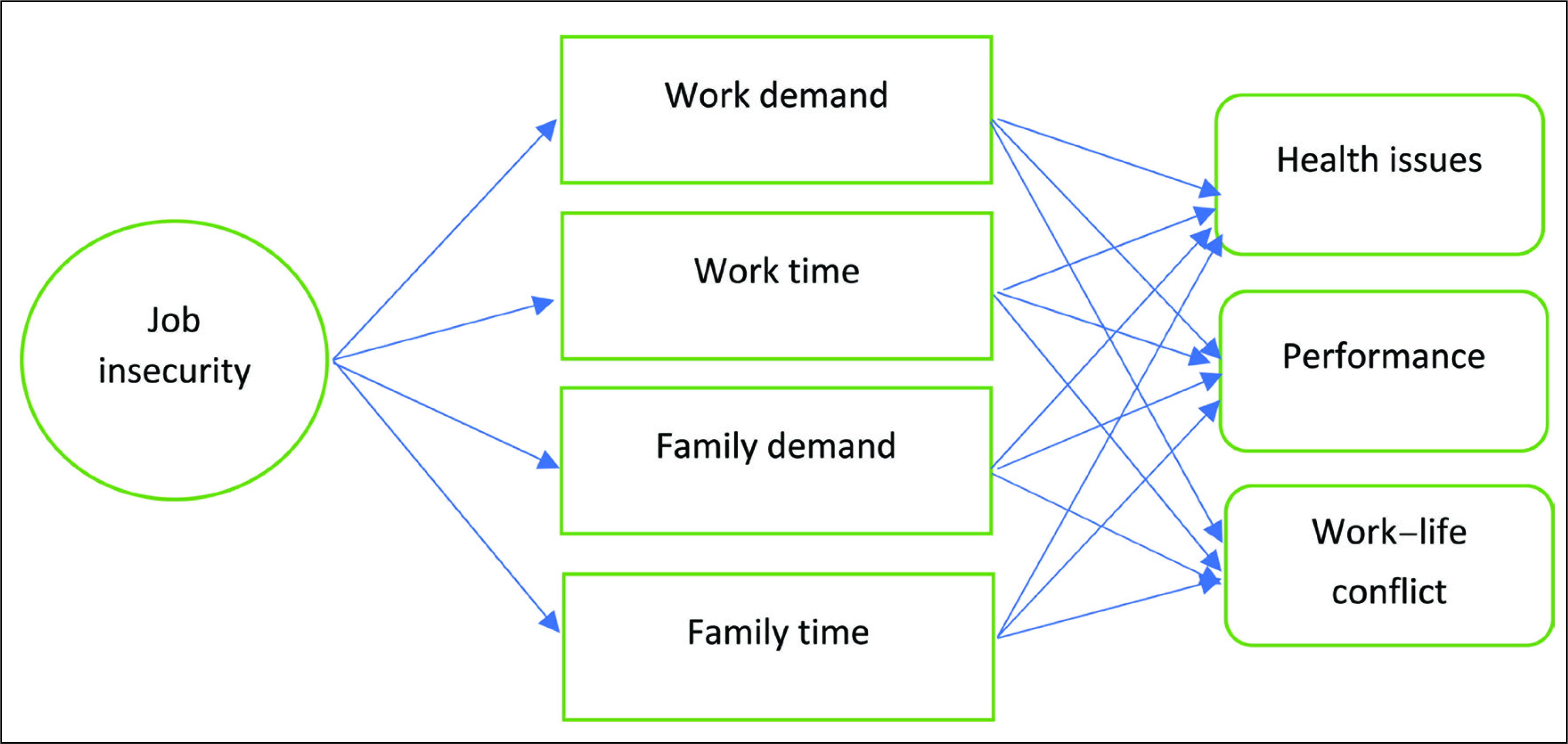
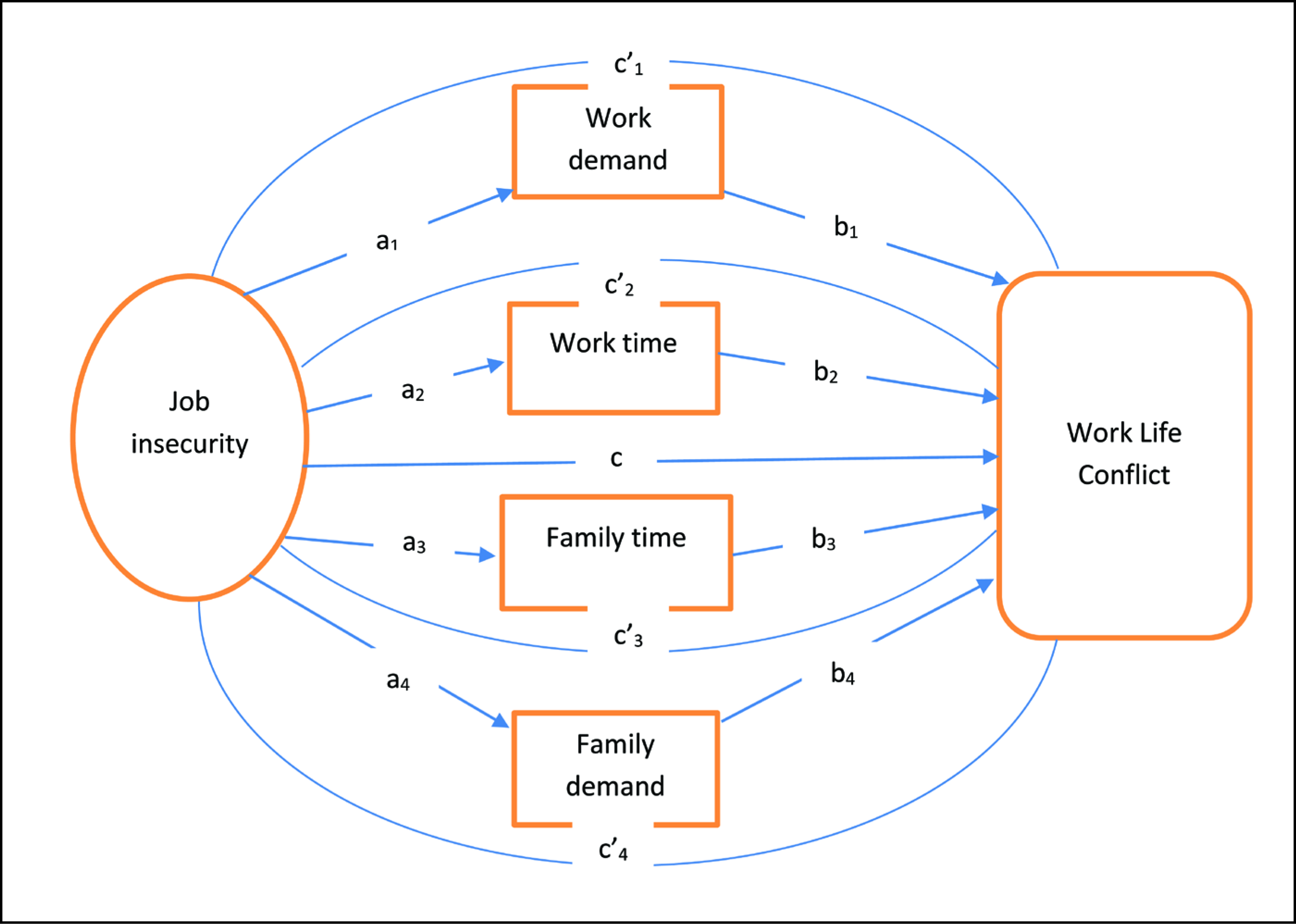
Data was collected from 413 participants from employees at different levels from India, who were selected through purposive and snowballing methods. The online survey link was shared via emails and social media platforms. Thus, by quantifying the opinions of the employees and making generalizations from a larger population. Heterogeneous samples from various industries like aviation, transportation, manufacturing, construction, education, oil and gas and power were approached. Thus, the sample was selected to represent each segment of the population (Gordon & Langmaid, 1990, as cited in Boddy, 2016. A good representation of every sector of the economy helped in examining the established relationship between job insecurity and work–life balance and finding the impact of the former on the latter during the economic crisis due to COVID-19 in India to develop the new theory on job insecurity (Figure 1). Participation in this study was entirely voluntary and participants were made aware that all information provided was anonymous and confidential. The Google survey included a cover letter and was created to gather information post lock down. Data was collected during the month of October, November and December 2020.
Measure
The self-completed survey questionnaire was constructed to include all variables like work time, work demand, family time, family demand, family support and family characteristics data for the current study. The survey was divided into nine sections with open ended questions and 5-point Likert scale used. The questionnaire included socio-demographic followed by job insecurity, work demand, work time, family demand, family time questions which were linked to outcomes like health, performance and work–life balance questions.
The first section on social demography included 11 open-ended questions on industry, age, gender, marital status, marital status, number of children, age of their children and employment status of spouse, income, etc.
Job insecurity section included (six items) questions like ‘My company recently laid off employees’, ‘My colleague(s) from my department/my office was/were laid off’, ‘I fear losing my job in near future’, ‘I am stressed of losing my job’, ‘Due to the ongoing crisis situation’ and ‘I am afraid of not getting a new job in the next 6 months if I lose my current job’.
Work related antecedents like work demand (four items) questions included questions like ‘Due to the ongoing crisis and layoffs, I feel I have a lot of work to do in my job’, ‘I feel pressurized at work due to workload’, ‘Due to layoffs, number of employees in my department has reduced and increase in my workload’ and ‘I am satisfied with my current work responsibilities’. Whereas, work time (six items) questions included ‘I spend ____ hours per day at work’, ‘I feel my working hours are longer’, ‘Fear of losing job makes me work longer hours, so I don’t get fired’, ‘I am a member of labour union’, ‘I get paid for additional hours I work’ and ‘I am satisfied with my current working hours’.
Family related antecedents like family time and family demand were included in the questionnaire. Four open-ended question were included for Family time (four items) like ‘I get enough time with my family after work (spouse and children)’, ‘Due to stress from job insecurity I am unable to spend quality time with my family (spouse and children)’, ‘I am satisfied with the current amount of time I spend with my family( spouse and children)’, ‘I am satisfied with the current amount of time I spend for myself’ and family demand (four items) includes ‘After I reach home I usually …’, ‘I am able to fulfil caring responsibilities towards my children’, ‘I am able to fulfill other household chores’, ‘My spouse/family members helps me by taking care of the children and household chores’ and ‘my partners also fears job loss’.
Outcomes like health, job performance and work–life balance are included in the questionnaire. To measure work–life balance/conflict seven items were used, ‘I carry my work to home’, ’The nature of work that I carry home’, ‘Due to long working hours at work I am getting less time with family (spouse and children)’, ‘I feel my work interferes with my family responsibilities’, ‘I face the following issues at home’, ‘Things I want to do at home do not get done because of the demands my job puts on me’ and ‘Due to work-related duties, I have to make changes to my plans for family activities’.
Health was measured using five questions: ‘I am usually tired when I go home after long day at work’, ‘I have lost sleep over the worry of job’, ‘I face the following health issues’, ‘Does you company provide any support/counselling services’ and ‘I feel stressed about my family all the time for not fulfilling my responsibilities’.
Job performance measured using three items, ‘I am able to concentrate in my work’, ‘I feel my performance was best in the last 6 months’ and ‘Due to fear of losing job I am performing well so I don’t get fired’.
Five items from the questionnaire were reverse scored, including one item from each respective category; work demand, ‘I am satisfied with my current work responsibilities’, work time, ‘I am satisfied with my current working hours’, family time, ‘Due to stress from job insecurity I am unable to spend quality time with my family (spouse and children)’, family demand, ‘My spouse/family members helps me by taking care of the children and household chores’ and job performance, ‘Due to fear of losing job I am performing well so I don’t get fired’. Items with 5-point Likert scale, including strongly disagree (1) to strongly agree (5), were computed to calculate the averages which were further used in the analysis.
Cronbach’s alpha was computed to find the internal consistency for each study variable. The results revealed that the Cronbach’s alpha value for each variable was; job insecurity = 0.95, work demand = 0.88, work time = 0.86, family time = 0.92, family demand = 0.81, work–life conflict = 0.96, health issues = 0.86, job performance = 0.71, respectively.
Results and Analysis
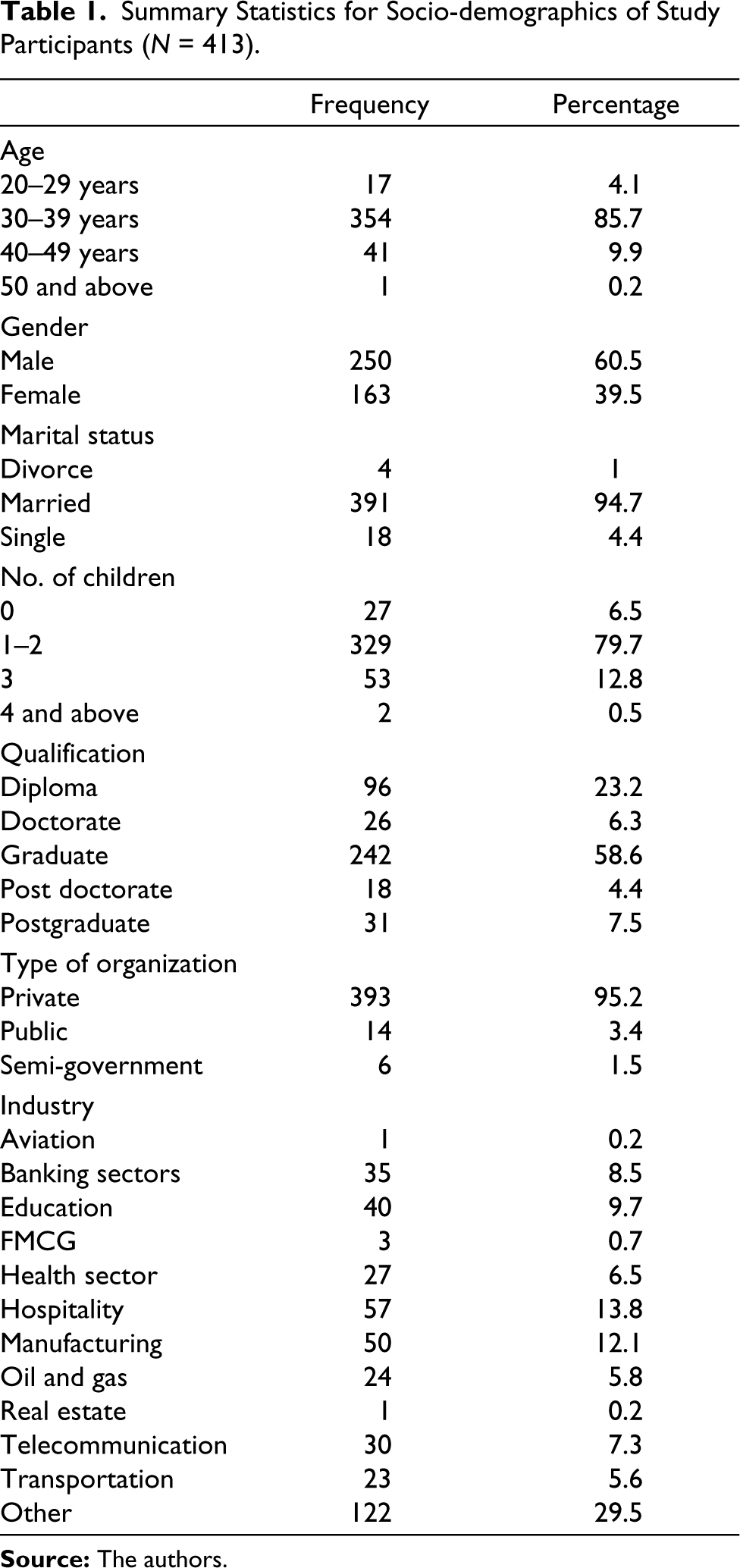
The total number of participants that filled out the survey was 413. The collected data was entered into IBM SPSS version 25 for further analysis. Descriptive statistics were analysed by computing frequencies as shown in Table 1 below. The Spearman’s rho analysis was used to calculate the correlation coefficient to find out the relationship between study variables, whereas regression was used to test the mediation models. Missing values were replaced with the mean values of the entire respective series.
Data purification checks were run to find out biases including common method variance, non-response bias and endogeneity issues. One of the most commonly used methods to find out common method variance is Harman’s one factor method. It was used to test this type of variance that occurs due to the usage of the same data collection method. It was found that the percentage value of the variance was above 50% for the first factor, which indicates the presence of this type of bias (Jordan & Troth, 2020). Similarly, non-response bias was calculated by running an independent sample t-test to compare responses from the first 100 participants and the last 100 participants and suggested that the differences between early responders and late responders on each study variable were significant. Therefore, it indicates the presence of non-response bias (Lindner et al., 2001). Two-stage least-squares regression was used to find out the endogeneity issue, that is, whether the independent variable is correlated with the error term. It was found that the residual significantly predicted the dependent variable, which thus indicates the violation of this assumption (Singh et al., 2017). However, these types of bias were unavoidable in this study due to the fact that the situations during COVID-19 were very unpredictable, and the main aim of this research was to find out the relationship between study variables post lockdown in India. Therefore, there was no other way to avoid these biases.
Significant normality tests, including Shapiro–Wilk test and the Kolmogorov–Smirnov test, suggest violation of the normality assumption. However, it is suggested that these tests may only be reliable for small to medium sized samples but may be unreliable for large sample sizes (that is, n > 300). Therefore, skewness and kurtosis were used to measure the asymmetry and peakedness of the distribution. The absolute values of skewness larger than 2 and absolute value of kurtosis larger than 7 may indicate substantial non-normality (Kim, 2013). It was found that the kurtosis values of study variables were all within the acceptable range but skewness values for few variables were slightly greater than 2 with negative skew values. However, it has been argued in literature that for large samples (n > 200) this criterion could be changed to !2.58 and in very large samples skewness and kurtosis should not be used (Field, 2009, as cited in Ghasemi & Zahediasl, 2012). Outliers, a score very different from the rest of data, is another major concern for mediation analysis. Presence of few outliers was found in the graphical representation of the data using Q–Q plots, histograms and box plots. Therefore, it was decided to use more robust methods to analyse the data including non-parametric statistical analysis for correlational analysis and bootstrapping for mediation analysis (Field, 2013; Kim, 2013).
Descriptive Statistics
Socio-demographic shown in Table 1 suggested that most of the participants were within the age range of 30–39 years (85.7%), followed by 40–49 years (9.9%), 20–29 years (4.1%) and only one participant was within the age range of 50 years or above. 60.5% of the participants were male, whereas 39.5% were female. 58.6% of participants were graduated, whereas 23.2% of participants only completed their education till diploma level. 94.7% of participants were married, while 4.4% of participants were single and only 1% of participants were divorced. Most of the participants reported that their spouse was employed (58.4%), whereas 41.2% of participants reported that their spouse was not employed. Most of the participants had only 1–2 children (79.7%), followed by 3 children (12.8%) or no child (6.5%). Most of the participants belonged to Hospitality (13.8%) and Manufacturing (12.1%) industries, followed by Education (9.7%) and Banking sectors (8.5%) and others. Most of the participants were employed in private-sector organizations (95.2%), followed by public (3.4%) and semi-government organizations (1.5%). The average annual income earned by most of the participants was within the range of ₹300,000–600,000 (79.4%).
Summary Statistics for Socio-demographics of Study Participants (N = 413)
A total of 89.6% participants indicated that their company had laid off employees recently, of which 87.2% of the layoffs were from the same department/office. Most of the participants used to spend more than 8 hours per day at work (89.1%). 96.6% ofparticipants reported that they were not members of a labour union. Most of the participants revealed that they rarely get paid for additional working hours (76%). Around 71.4% of participants reported that they always carry their work home with them.
Inferential Statistics
A correlation coefficient was calculated to find out the relationship between study variablesas shown in Table 2 below.
The results showed that there was a significant positive relationship between job insecurity and work demand and work time, thus accepting H1 and H1a. Job insecurity showed a significant negative relationship with family time and family demand, thus accepting H2 and H2a. The results further suggested that job insecurity was positively related to the number of children, thus accepting H2c.
Spearman’s Correlation Coefficient Among Study Variables
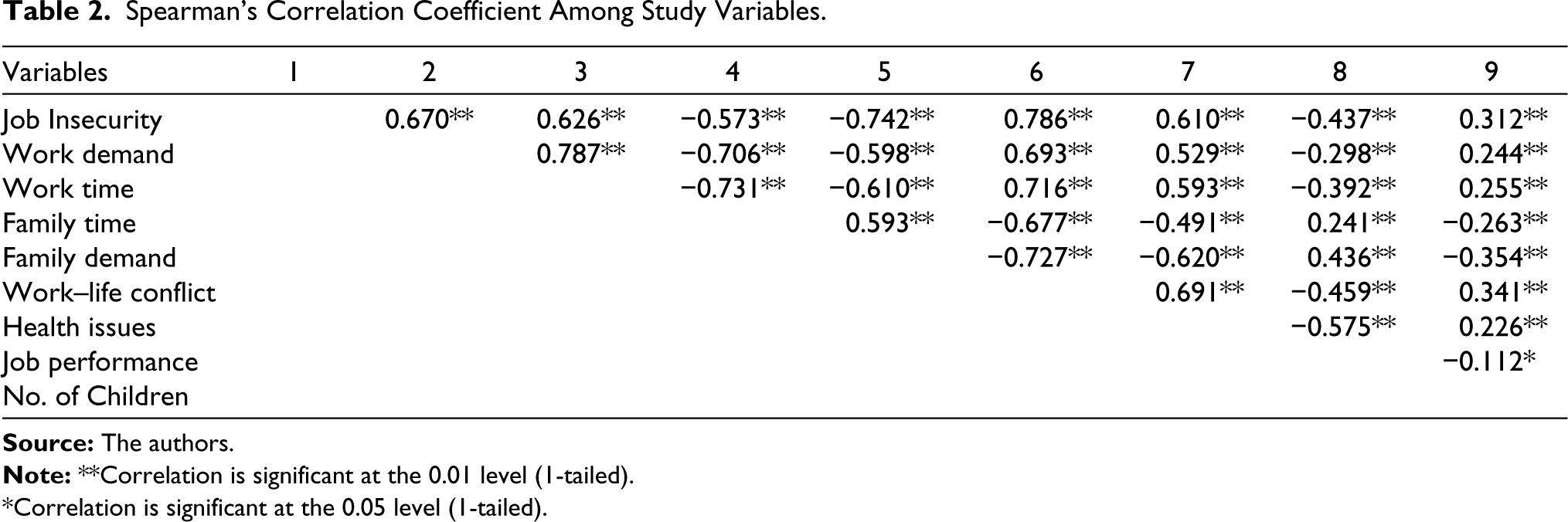
*Correlation is significant at the 0.05 level (1-tailed).
For mediation analysis, all causal steps suggested by Baron and Kenny (1986) were followed to form 3 mediation models. The first model consisted of job insecurity as a predictor variable, health issues as an outcome variable and work demand, work time, family demand and family time as mediators. The second model consisted of job insecurity as predictor variable, job performance as an outcome variable and work demand, work time, family demand and family time as mediators. The third model consisted of job insecurity as predictor variable, work–life conflict as an outcome variable and work demand, work time, family demand and family time as mediators. All these models tested the four conditions of mediation to find out the direct and indirect effects. PROCESS v3.5 macro (Hayes, 2013) was further used to find out the indirect effect using Bootstrapping, which was computed for each of the 5,000 bootstrapped samples with a 95% confidence interval.
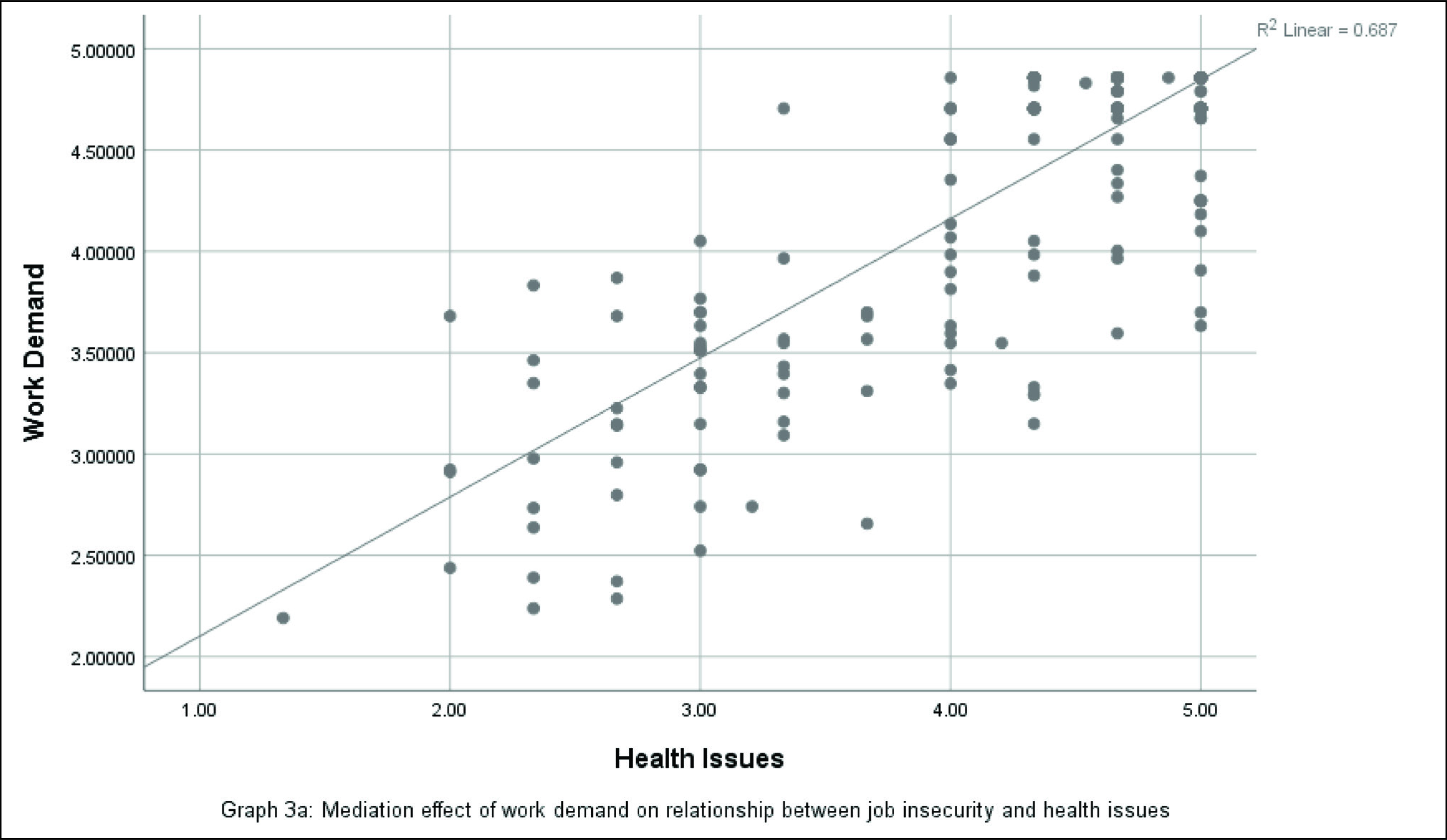
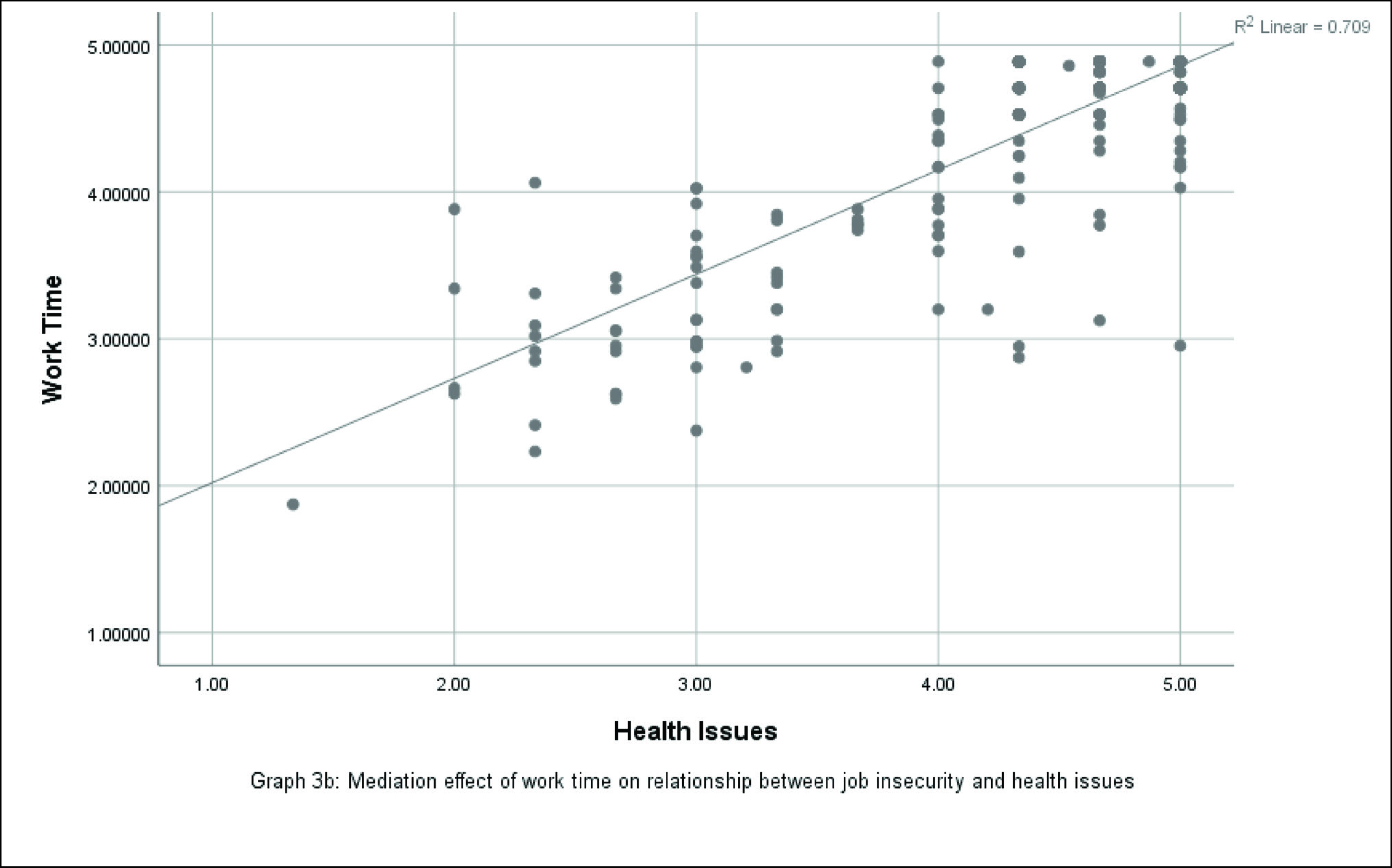
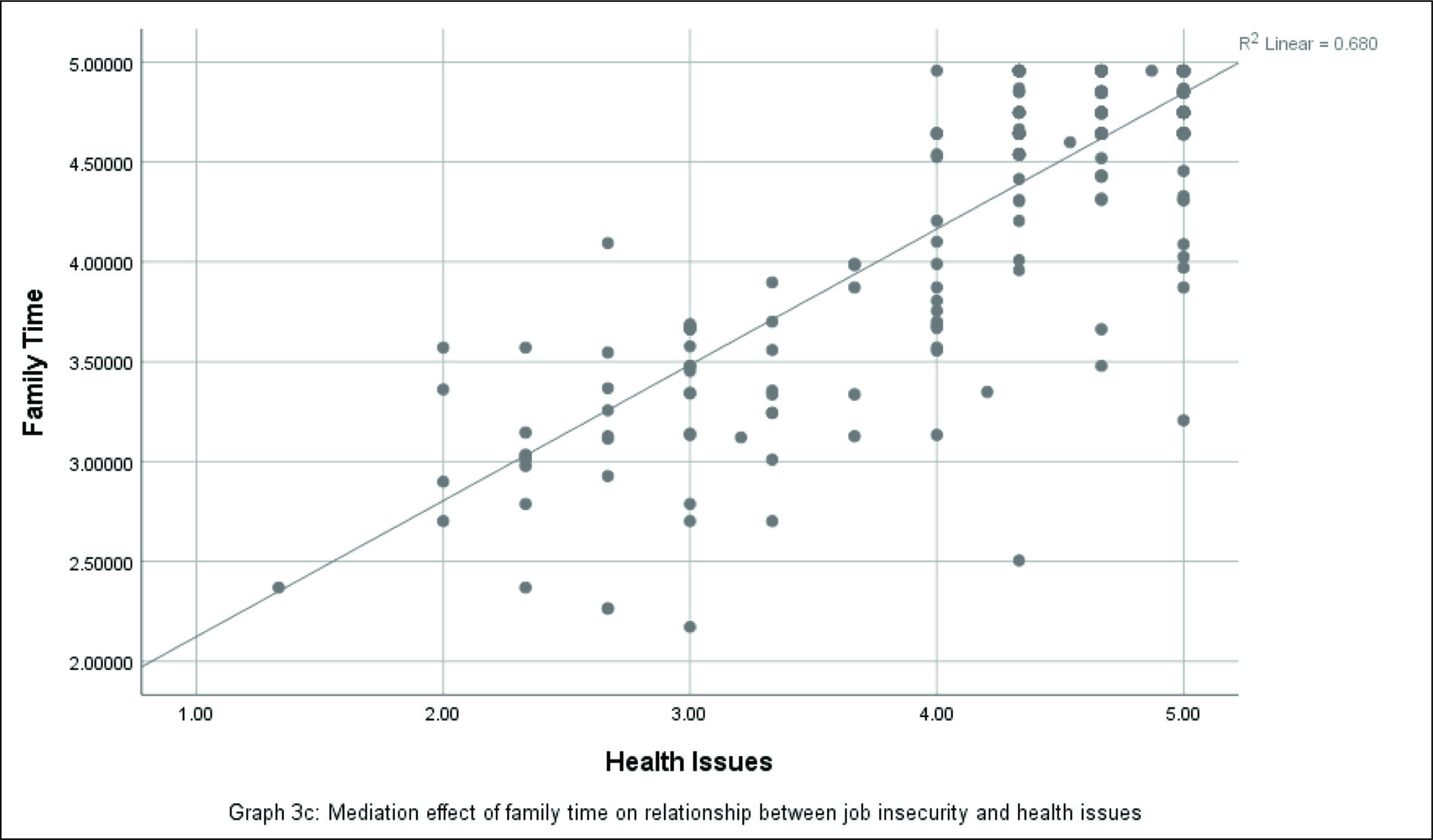
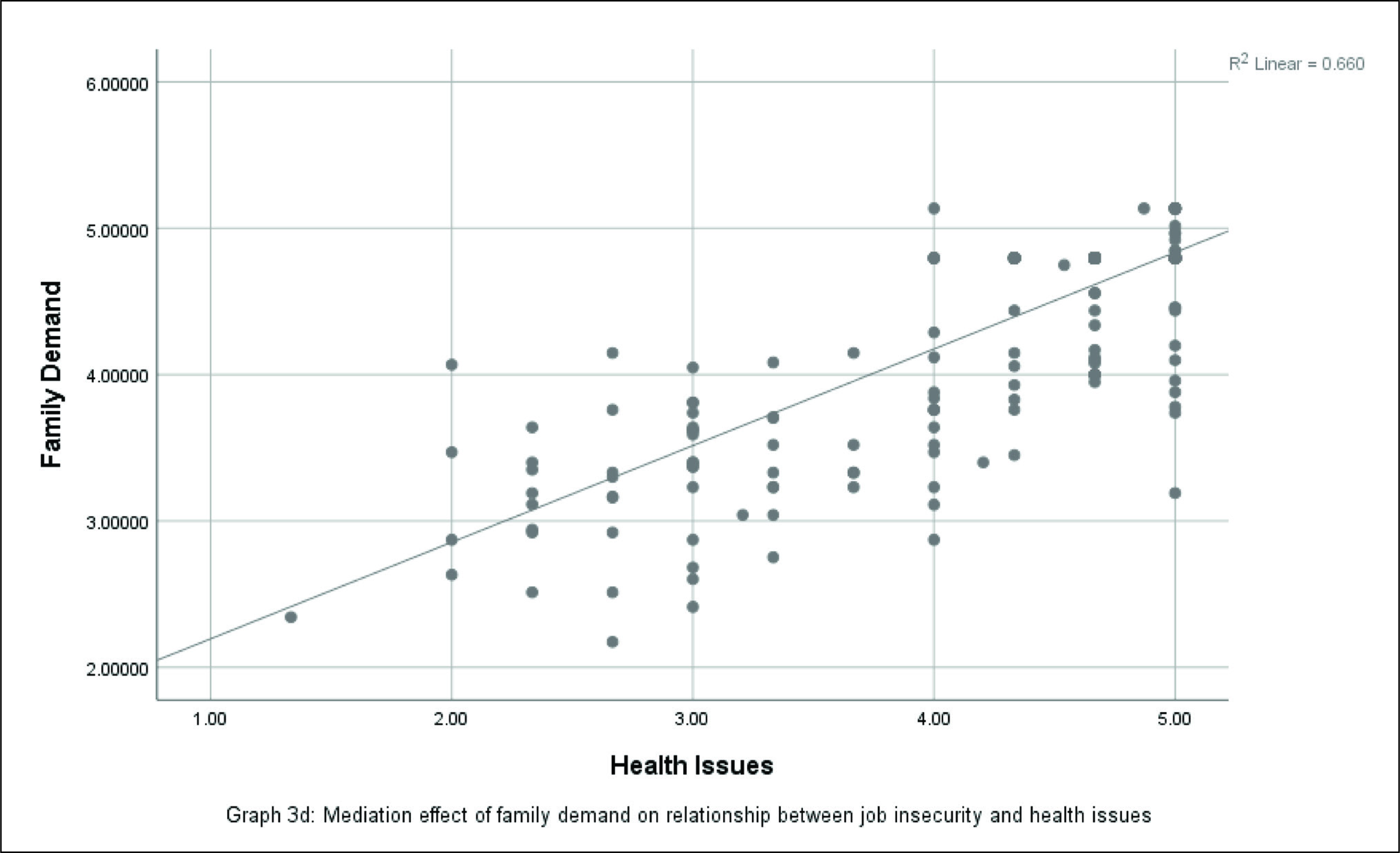
Table 3 shows the first mediation model which suggested that job insecurity significantly predicted outcome variables. Findings through PROCESS also suggested an indirect effect of job insecurity on health issues through work demand, b = 0.39, BCa CI [0.28, 0.48], work time, b = 0.37, Bca CI [0.28, 0.47], family time, b = 0.25, Bca CI [0.18, 0.32] and family demand, b = 0.23, Bca CI [0.16, 0.30], which suggested that work demand, work time, family time and family demand significantly mediated the relationship between job insecurity and health issuesas shown in Figures 2 and 3 (a-d). Thus, accepting H3, H3a, H3b, H3c and H3d.
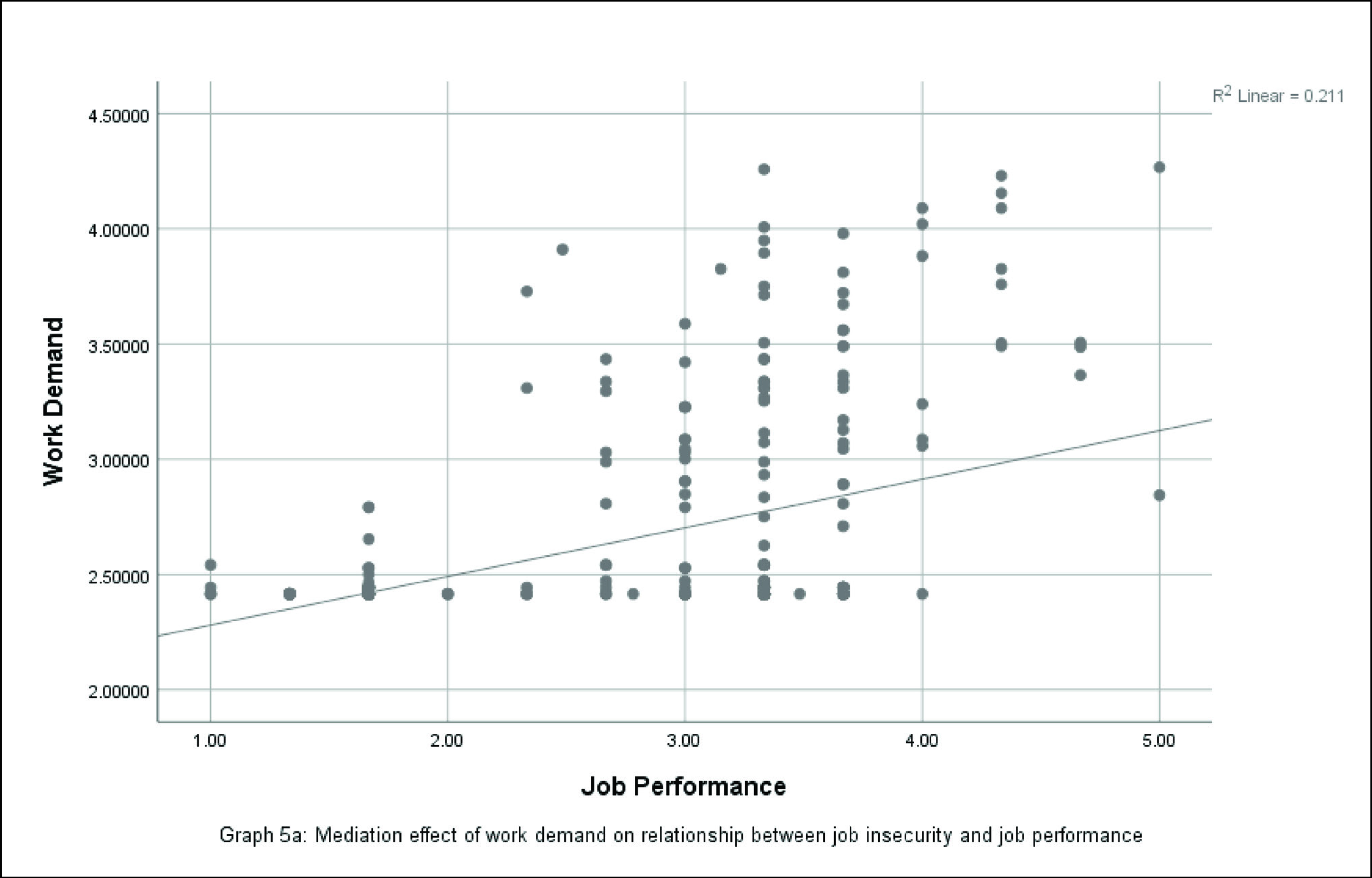
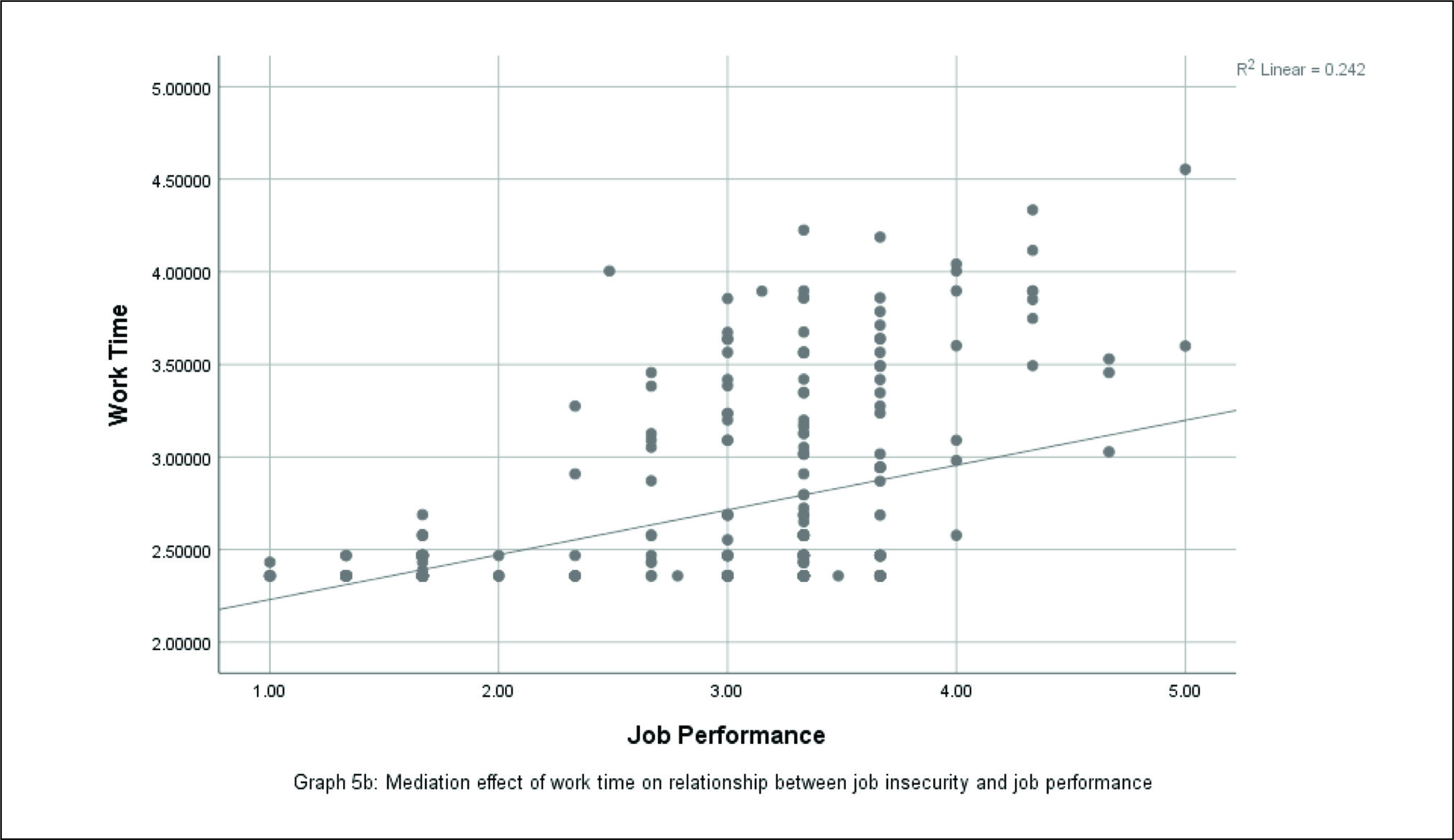
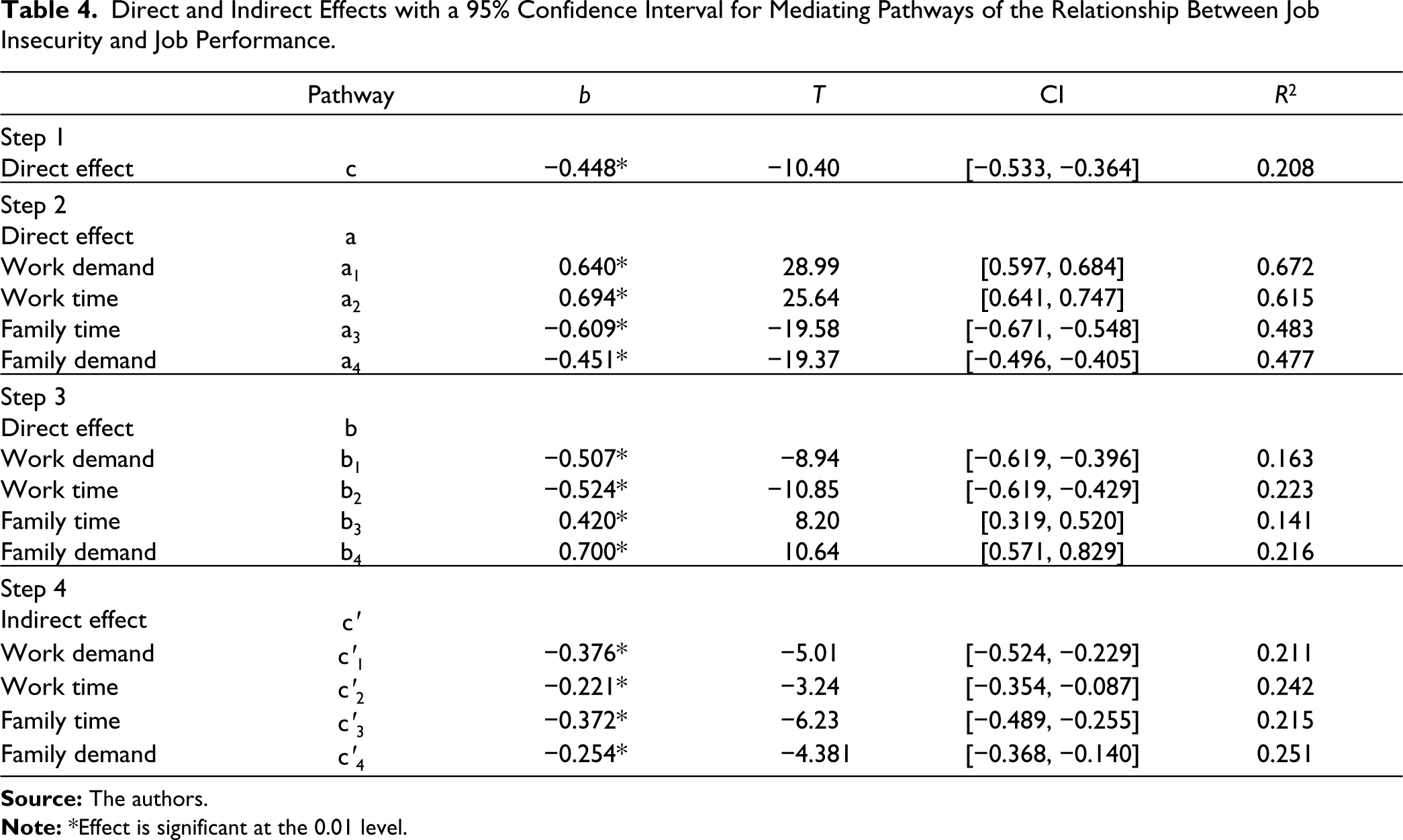
The results found that job insecurity significantly predicted job performanceas shown in Table 4. PROCESS results found indirect effect of job insecurity on job performance through work demand, b = −0.11, Bca CI [−0.30, 0.07] and family time, b = −0.13, Bca CI [−0.01, 0.26] and indirect effect of job insecurity on job performance through work time, b = −0.23, Bca CI [−0.33, −0.13] and family demand, b = −0.19, Bca CI [−0.27, −0.13] respectively. This suggested that work time, work demand, family time and family demand significantly mediated the relationship between job insecurity and job performance as shown in Figures 4 and 5 (a-d). Thus, accepting H4, H4a, H4b, H4c and H4d.
Direct and Indirect Effects with a 95% Confidence Interval for Mediating Pathways of the Relationship between Job Insecurity and Health Issues
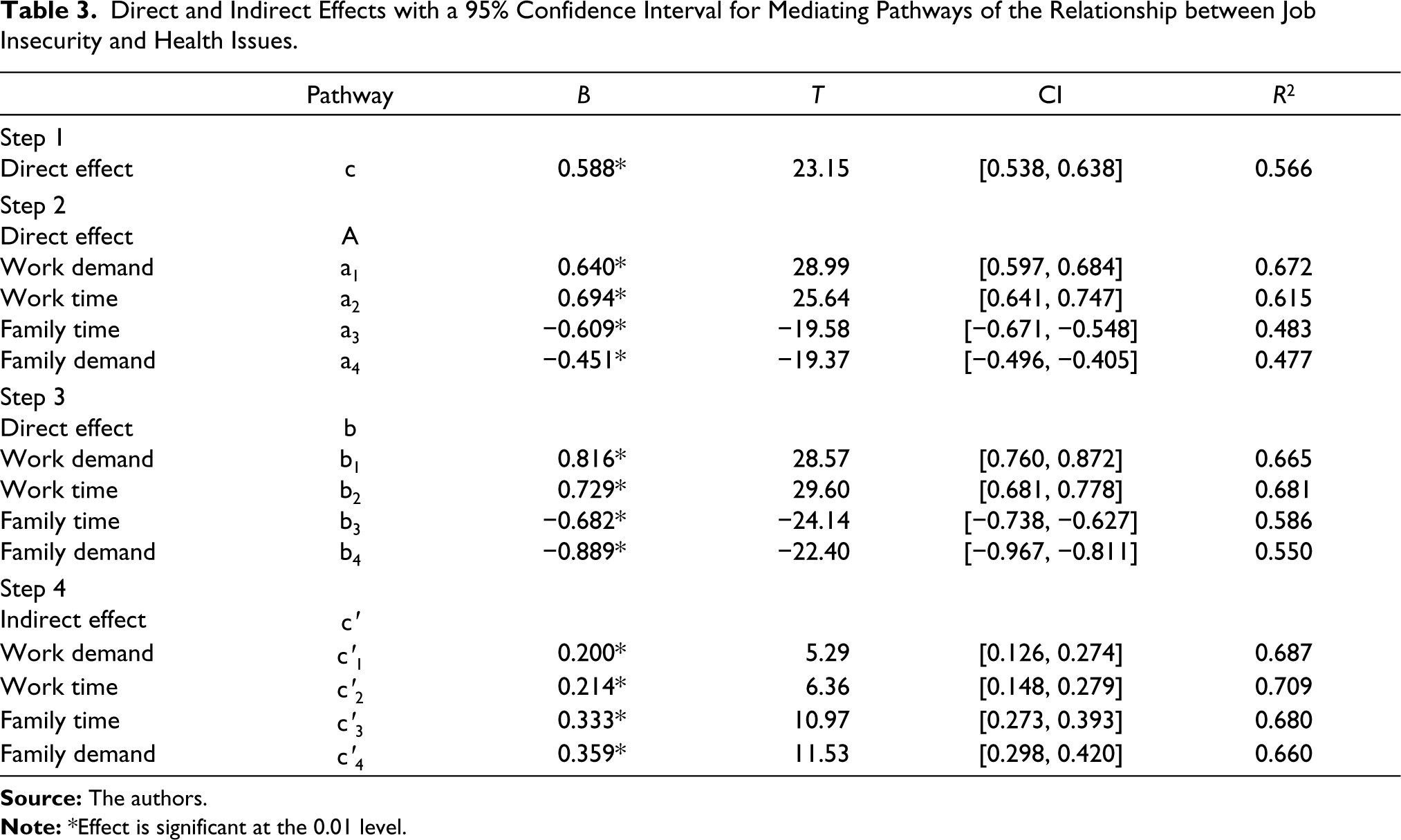
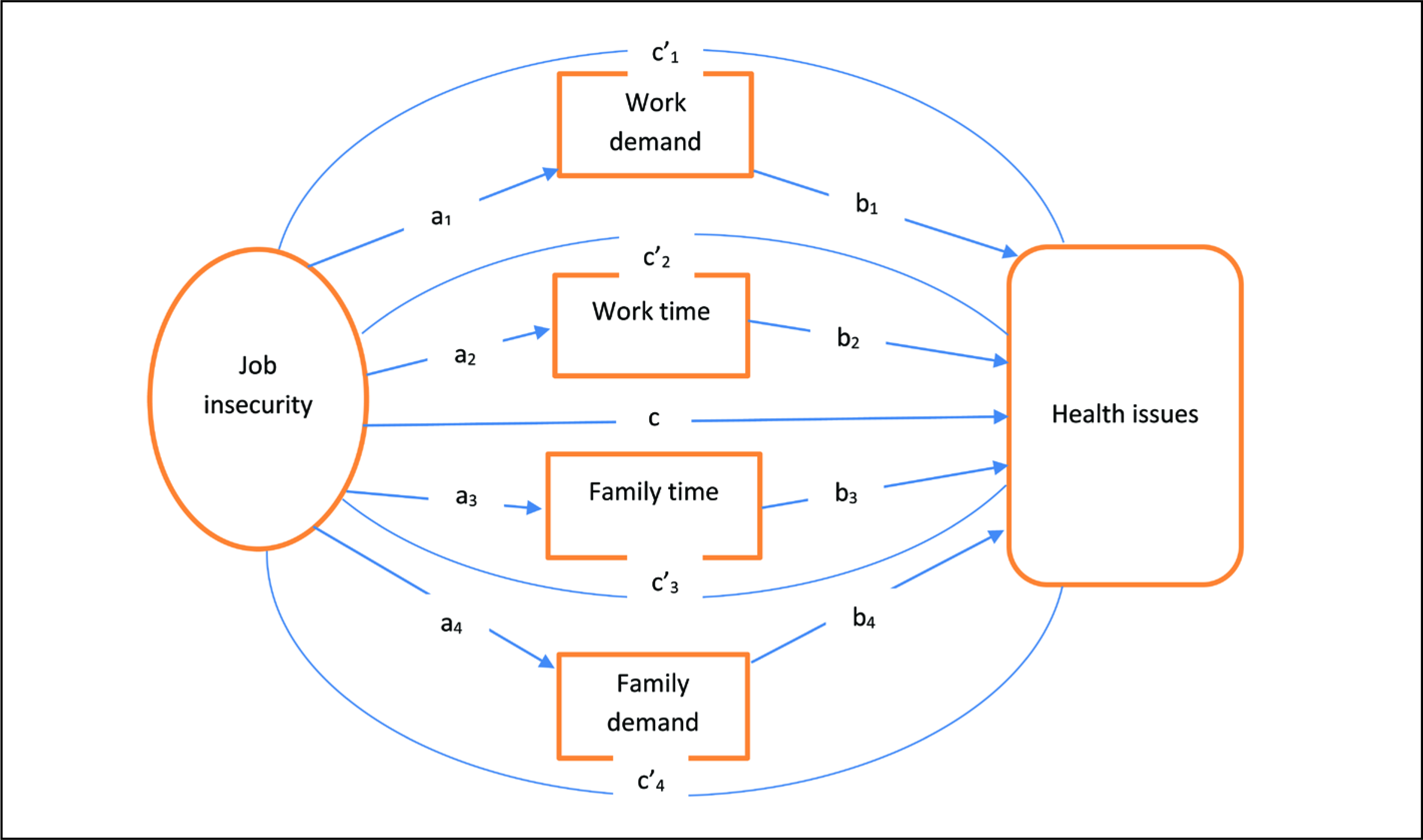
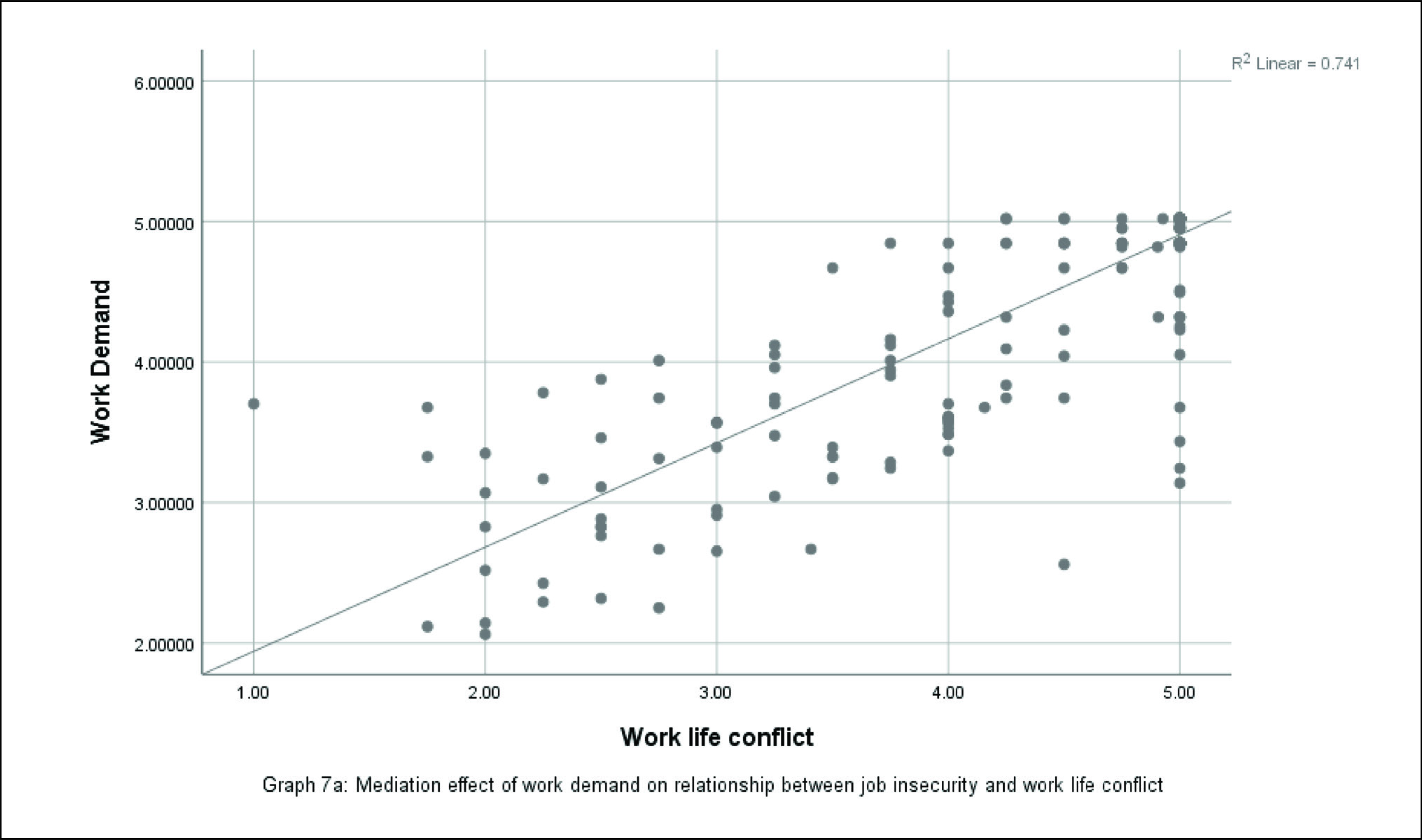
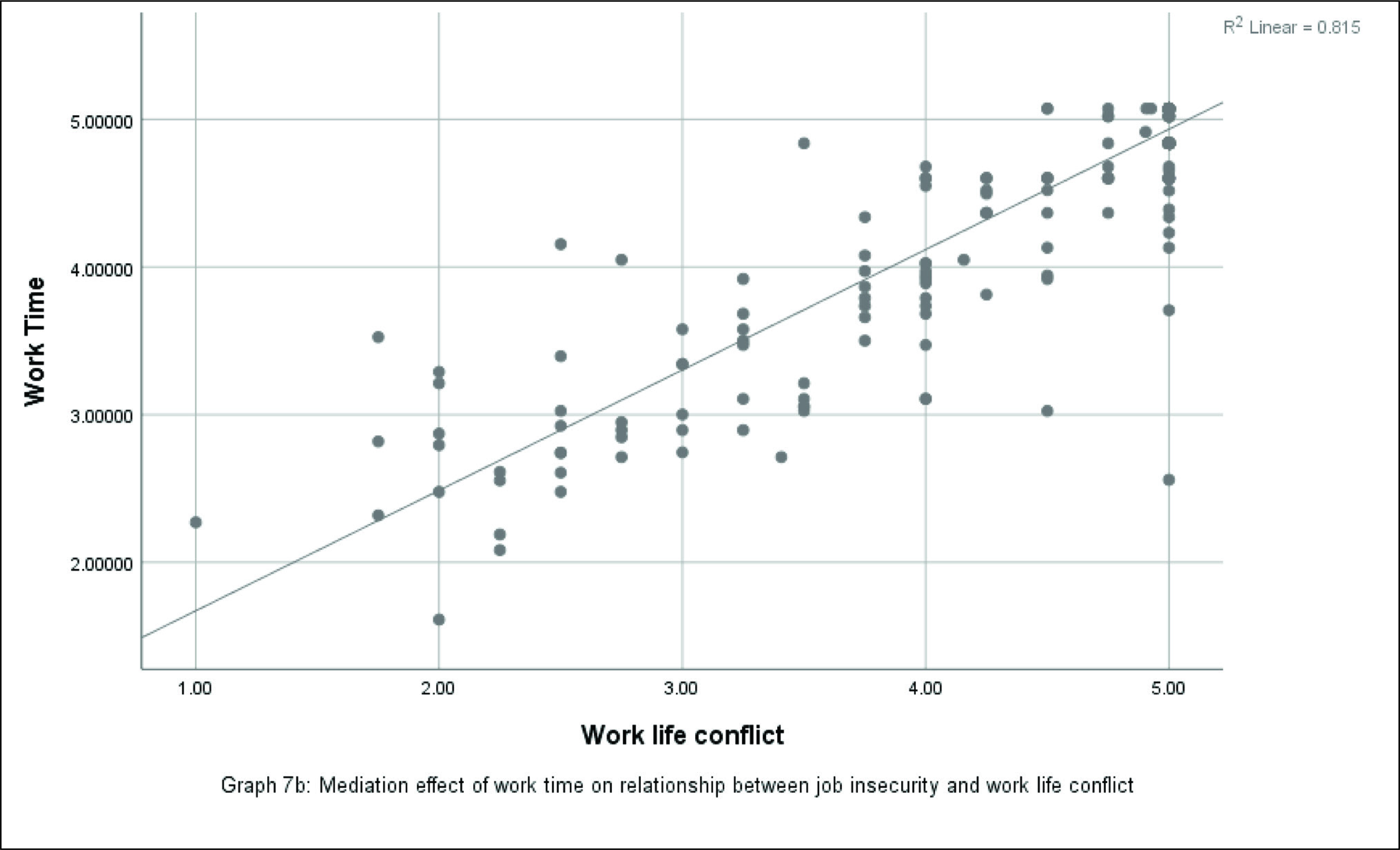
Table 5 shows the results which suggested that job insecurity significantly predicted work–life conflict. PROCESS analysis also showed the indirect effect of job insecurity on work–life conflict through work demand, b = 0.45, Bca CI [0.33, 0.56], work time, b = 0.49, Bca CI [0.37, 0.60], family time, b = 0.35, Bca CI [0.27, 0.43] and family demand, b = 0.25, Bca CI [0.17, 0.35] which suggested that work demand, work time, family time and family demand significantly mediated the relationship between job insecurity and work–life conflict as shown in Figures 6 and 7 (a-d). Thus, accepting H5, H5a, H5b, H5c and H5.
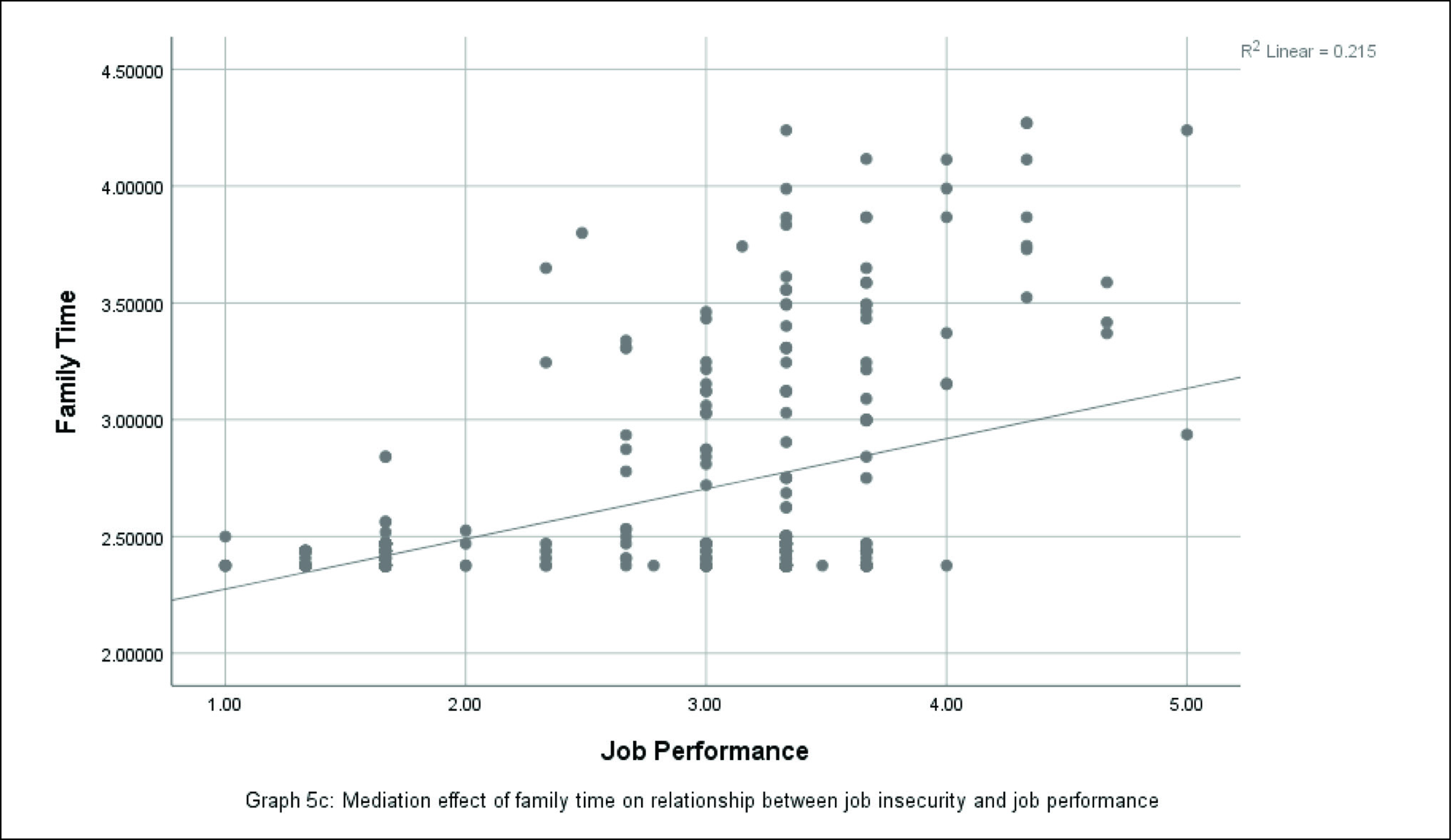
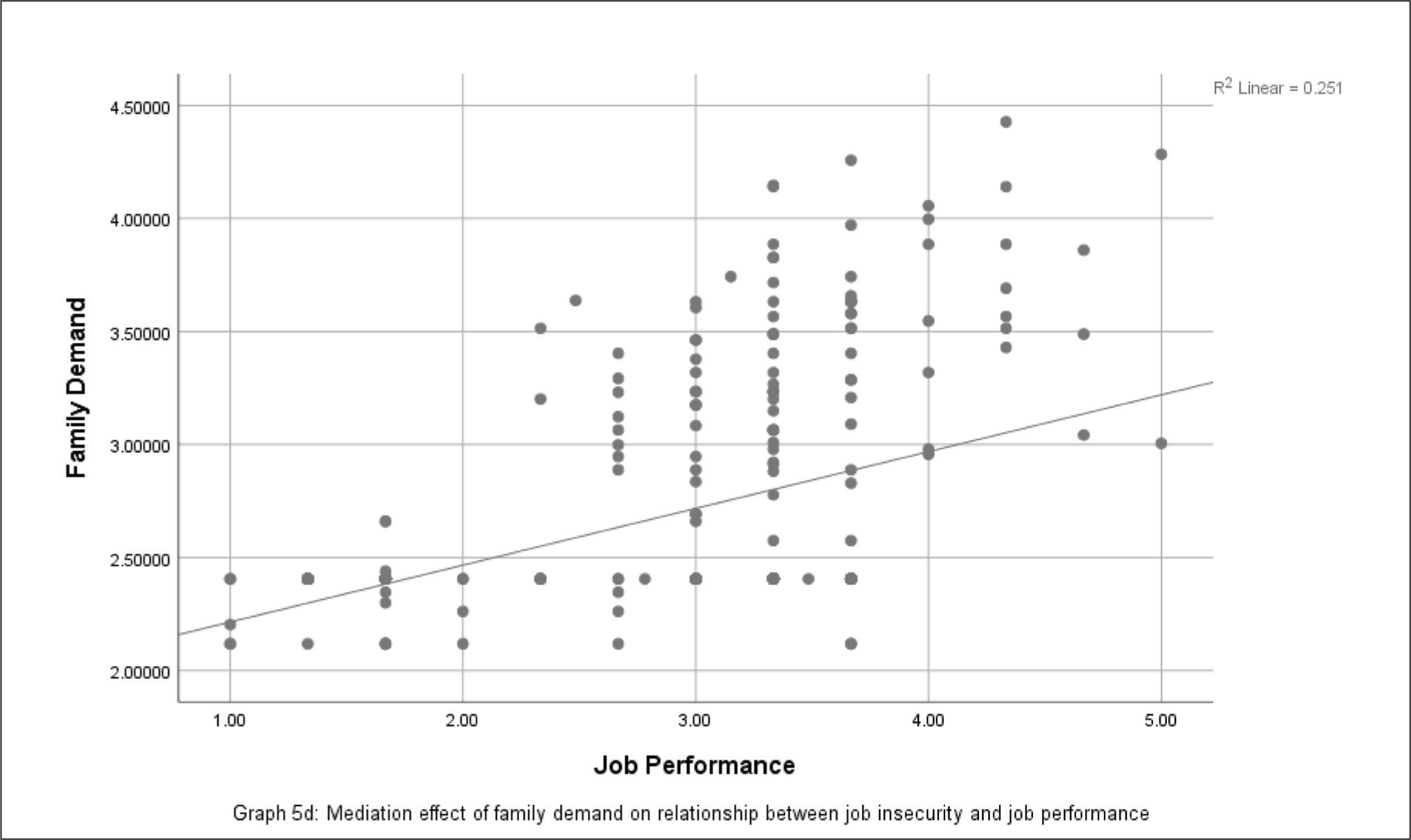
Direct and Indirect Effects with a 95% Confidence Interval for Mediating Pathways of the Relationship Between Job Insecurity and Job Performance
Discussion
The results are consistent with the literature and other researchers’ findings on job insecurity and work–life balance. Results suggested a positive relationship between job insecurity with health issues and work–life conflict, which indicates that an increase in job insecurity increases health issues and work–life conflicts. However, job insecurity was negatively linked with job performance, suggesting a decrease in an employee’s performance was related to an increase in job insecurity (Piccoli et al., 2019).
Direct and Indirect Effects with a 95% Confidence Interval for Mediating Pathways of the Relationship Between Job Insecurity and Work–Life Conflict
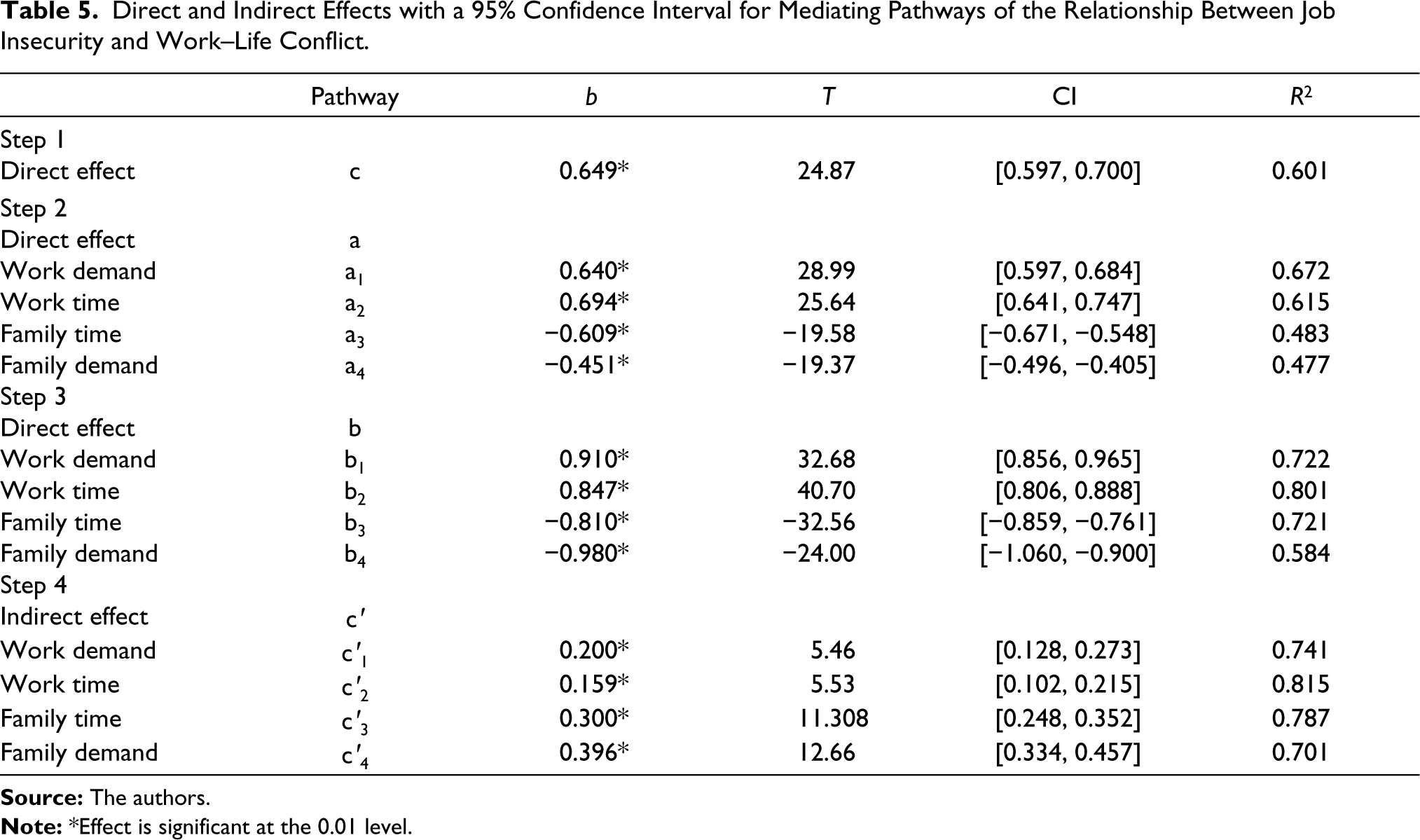
Results showed that job insecurity is positively linked with work demand and work time increase whereas negatively linked with family time and family demand. This suggested that increase in job insecurity predicts increase in work demand and work hours. Similarly, increase in job insecurity decreases family time and demand. Work demand and work time positively predicted health issues (McDonough, 2000) and work–life conflict whereas negatively predicted job performance which indicates that increase in work demand increases health issues and work–life conflict, whereas reduces job performance.
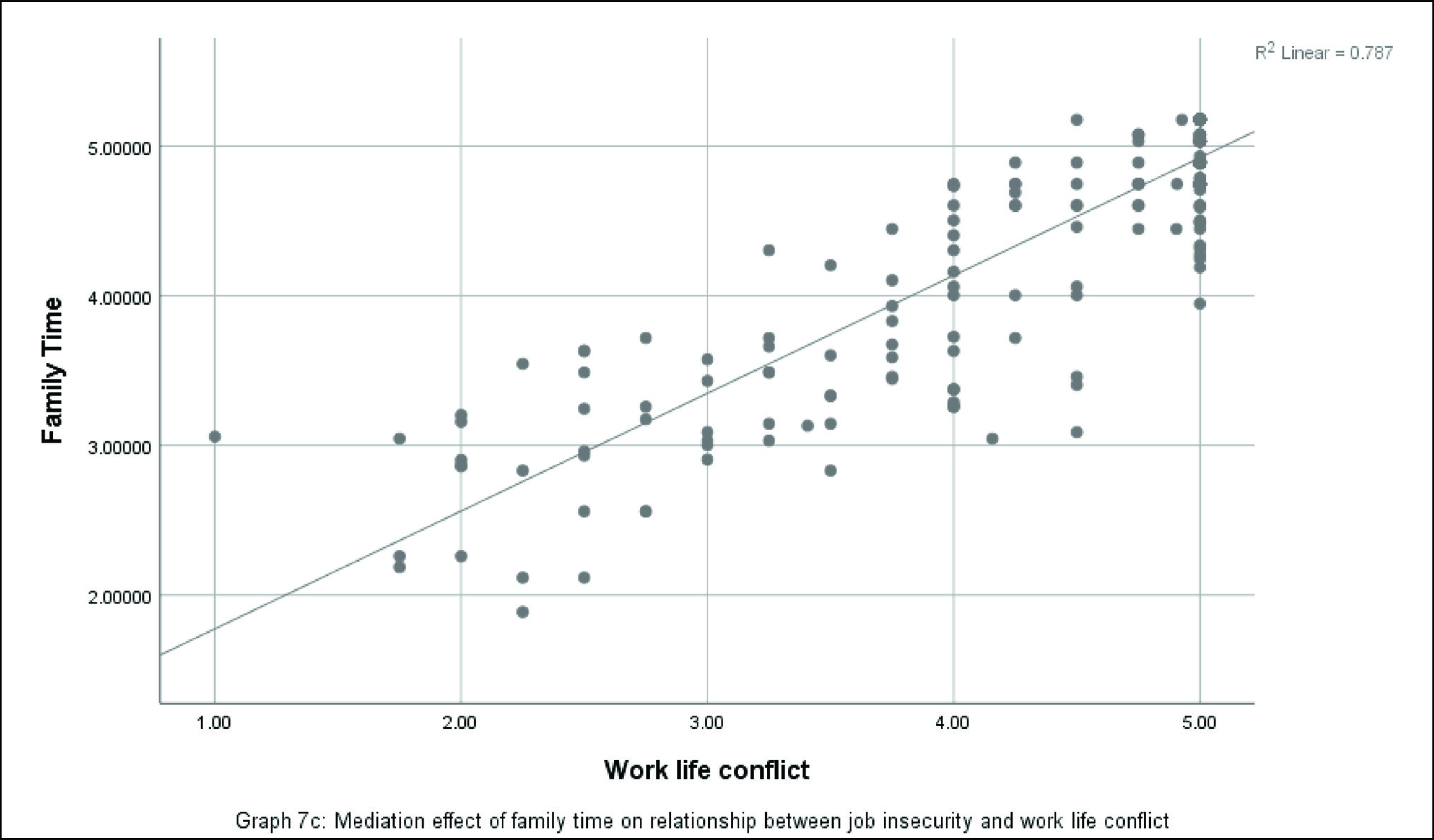
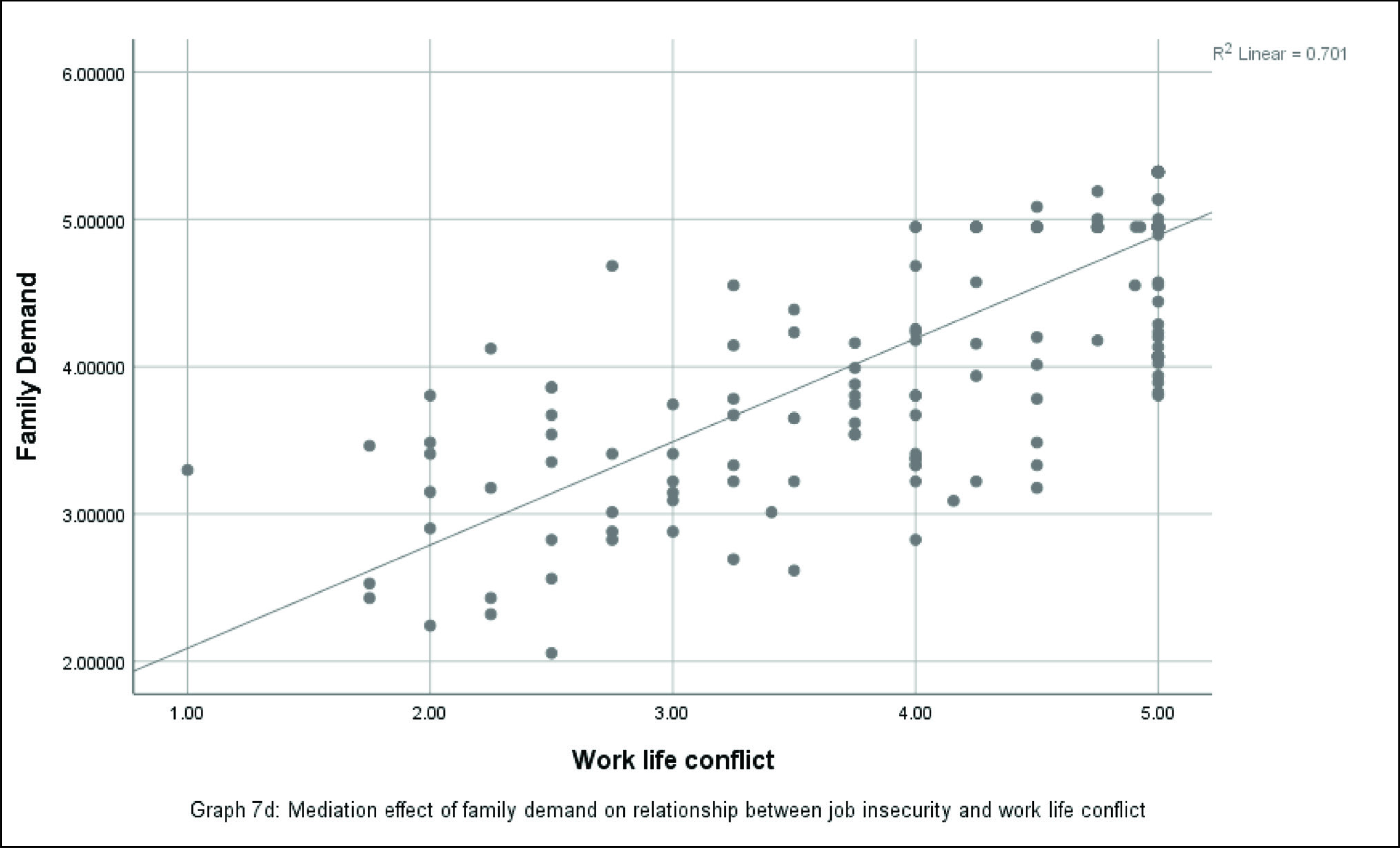
Family demand and family time positively predicted job performance (Akanni et al., 2018), whereas they negatively predicted health issues and work–life conflict. This reflects that fulfilling family responsibilities and spending more time with family reduces health issues and work–life conflicts and improves job performance.
Regression analysis showed mediating effects of work demand, work time, family time and family demand on the relationship of job insecurity with health issues, job performance and work–life conflict. This indicates that work demand, work time, family time and family demand are important factors for maintaining health, job performance and work–life balance when employees are insecure with their jobs. The study identified that 80.6% of the respondents had job insecurity. It was suggested through the results that an increase in job insecurity was positively related to work demand and work time, which in turn positively mediated health issues and work–life conflict. That is, job insecurity leads to increased work demand and work time, which in turn leads to more health issues and work–life conflicts. However, work demand and work time negatively mediated job performance, which reflects that increased work demand predicts reduced job performance.
It was indicated that job insecurity negatively predicted family time and family demand, which in turn positively affected health issues and work–life conflict, but negatively affected job performance. This suggests that an increase in job insecurity reduces family demands and family time, which in turn increases health issues and work–life conflict while decreasing job performance (Yu, 2014).
The study, however, is not free from certain limitations. One of the limitations includes using an online survey to collect data as not many individuals may have access to the internet, electronic gadgets or may not have digital literacy to be able to respond to this survey, which seems to reflect the underrepresentation of the population of interest. This further seems to contribute to the non-response bias. The second limitation of the study is that it collects information from the participants all at once through an online survey, which seems to contribute to the common method bias. The third limitation seems to be using a self-constructed survey to collect the data, which further limits the validity and reliability of the questionnaire. This could add to measurement error and is represented by the issue of endogeneity.
Recommendations
The results obtained from current research, provide several useful implications to various sectors which had unsparing effects of COVID-19 on production, consumption and distribution. The findings of this research will be of interest to policy makers in organizations and the government. Increase in unemployment worldwide has left the existing employees in organizations with the fear of losing their jobs. The fear of losing a job increases the counter-productive work behaviour that leads to low performance, high work pressure and an increase in work time. Organizations can further face a decrease in productivity due to this fear, which can impact employee’s health and increase work–family conflict. The vicious chain of job insecurity should be wrecked by providing employees with a sense of security through various techniques to manage their motivation levels and secure feelings regarding their job and performance. Thus, the issue should be tackled at the very beginning when organizations decide to downsize or layoff their employees, either by negotiating or informing the trade unions about the decision to downsize and maintaining transparent communication with justification for the downsizing. Thus, the employees will be assured of their secured positions and criteria for layoff and have distributive justice, which can reduce the employee’s perception of the organization as unfair. Various contemporary human resource techniques like job enrichment, mentoring, counselling and employees’ participation (Gallie et al., 2016) can help to reduce the perception of work pressure and job insecurity among employees. The organization should also focus on stress management initiatives that will encourage employees to cope with their problems at work and home (Cheng et al., 2014). Organizational and supervisors’ support and family support during these unprecedented times, can reduce the negative effects of job insecurity. Last, organizations should allow employees to choose their working hours and work from home options. Thus, enhancing employees’ volitional (Delanoeije et al., 2019) use will help employees manage work and family pressure. That is, female and male employees can prefer their own volition, so a tailor-made work–life balance programme for everyone will help the organization reduce work-to-family and family-to-work conflict. Thus, helping organizations manage their employees’ behaviour at work.
The research identified how workload, work time, family demand and family time mediated the effects of job insecurity on work–family conflict, albeit the other geographic variables like gender, age, industry, number of children and family support need future research to test other mediators, in order to work on interventions preventing a spillover between the work and family domains. Future research should therefore investigate gender differences in this context, as well as investigate these issues with a longitudinal design with more than two-time waves. While trade unionism had no direct effect in reducing job insecurity, furthermore, researchers should also avoid the limitations of the present study to generate more reliable, valid, and accurate conclusions to increase the generalizability of the study.
Conclusion
This article contributes to the current knowledge and fills the knowledge gap on how job insecurity increases during economic crisis times and employees’ perception towards the concept and its link with various outcomes. Thus, informs the policy makers in organizations and Governments to understand how job insecurity can deteriorate the quality of work and family domain. The study shows strong evidence through self-reported job insecurity that is associated with poor self-rated health, low performance and leads to work family conflict. Thus, the research emphasizes the importance of strong policies to increase employees’ engagement, workforce flexibility, which will support employees’ psychological and physical health and organizational policies accompanied by measures to enhance employee participation in decisions that affect their work lives.
Author Contributions
All authors contributed to the study’s conception and design. Material preparation, data collection and analysis were performed by Ms Asma Begum, Dr Mathew Shafaghi and Ms Ayesha Adeel. The first draft of the manuscript was written by Asma Begum, and all authors commented on previous versions of the manuscript. All authors read and approved the final manuscript.
Availability of Data and Material
The datasets generated during and/or analysed during the current study are available from the corresponding author on reasonable request.
Footnotes
Declaration of Conflicting Interests
The authors declared no potential conflicts of interest with respect to the research, authorship and/or publication of this article.
Funding
The authors received no financial support for the research, authorship and/or publication of this article.