



Abstract
Humanity has witnessed diseases and illnesses since the ancient days. These diseases and illnesses resulted in days of suffering leading to disabilities or deaths of many people within communities and are termed as epidemics. As the society progressed, widespread trade increased the interactions between human, animals and ecosystems, thereby increasing the occurrence of these epidemics, often named as pandemics. Several pandemics have afflicted the world throughout history, be it malaria, tuberculosis, leprosy, influenza, smallpox, plagues or HIV/AIDS or the recent incidence of Novel Coronavirus.
Diseases affect the supply chain of farm produce and agriculture. Consequently, it may impact food security. It is assumed that pandemic affects the buying behaviour of farmers and it has the capacity to alter the buying behaviour of paddy farmers in India. In this study, an attempt is made to investigate the effect of certain factors on farmers purchase behaviour during pandemic situation among rice farmers in Chhattisgarh, India. The studied sample included 120 farmers in Dhamtari, Raipur, India, selected randomly. Narratives were collected from the farmers and were analysed using qualitative data analysis software. From the qualitative data analysis, the implication for marketers is that itinerant trainers should be sent to villages to train the farmers, especially the bigger farmers (who have secondary influence), on the new technologies in agricultural inputs. The farmers also influence each other, and some amount of training coverage may eventually reach all farmers. The local dealers and the village headmen should also be influenced. An attempt should be made to marry the new technologies with the traditional methods, as much as possible.
Keywords
Introduction
Food security is becoming a more pressing worldwide concern (Mok et al., 2020). Rapid urbanization and industrialization, for example, have put a demand on scarce resources like land and water (Mok et al., 2020). According to new research (Boliko, 2019), the number of hungry individuals on the planet is increasing. High exposure and vulnerability to climatic extremes, conflicts and economic downturn are the three primary causes of food insecurity (Boliko, 2019). Drought is wreaking havoc on world agriculture, causing food security issues in many nations, particularly in the poor world (Kogan et al., 2019). In all, two billion people are projected to be food insecure (they do not have regular access to safe, nutritious and adequate food)—either because they are hungry or impacted by moderate levels of food insecurity (Egal, 2019). It follows that the world had been reeling from food insecurity irrespective of the new normal situation brought on by the COVID-19 pandemic.
The COVID-19 pandemic has brought in new norms like social distancing, online purchases, etc., which is named, ‘the new normal’ (Vieira de Jesus et al., 2020).
Pandemic-led challenges may lead to aggravation in food insecurity (Laborde et al., 2020). Such food insecurity may lead to penury and destituteness. If policy supports are not forthcoming, food insecurity may lead to a brake in the development journey of any region. With the widespread effect of the pandemic, the world itself may dial back a few years in its development journey (Laborde et al., 2020). The agricultural patterns need to be studied to protect against this. Primary among these patterns is the agricultural inputs purchases by farmers. It, therefore, becomes pertinent to identify the new-normal buying behaviour of agriculture inputs by South Asian paddy farmers during Global pandemic situation.
Purpose of the Study
This study attempts to identify the antecedents of rice farmers’ buying behaviour, with respect to agricultural inputs, in the time of the new normal. An understanding of such antecedents may be useful during the present protracted pandemic, as well as, during any future global crisis.
Literature Review
During the COVID-19 pandemic, the global economic picture has shifted (Wang & Wu, 2018). The COVID-19 pandemic has expanded at an alarming rate, infecting millions and bringing economic activity to a halt as governments implemented severe travel restrictions to stem the virus’ spread (Vieira de Jesus et al., 2020). Global gross domestic product is expected to decline by 5.2% in 2020, according to the baseline projection (Bhattacharya & Pal, 2021). The world economic status is greatly disrupted and deeply damaged by the lock-down process, based on the existing condition during the current pandemic COVID-19 (Bhattacharya & Pal, 2021).
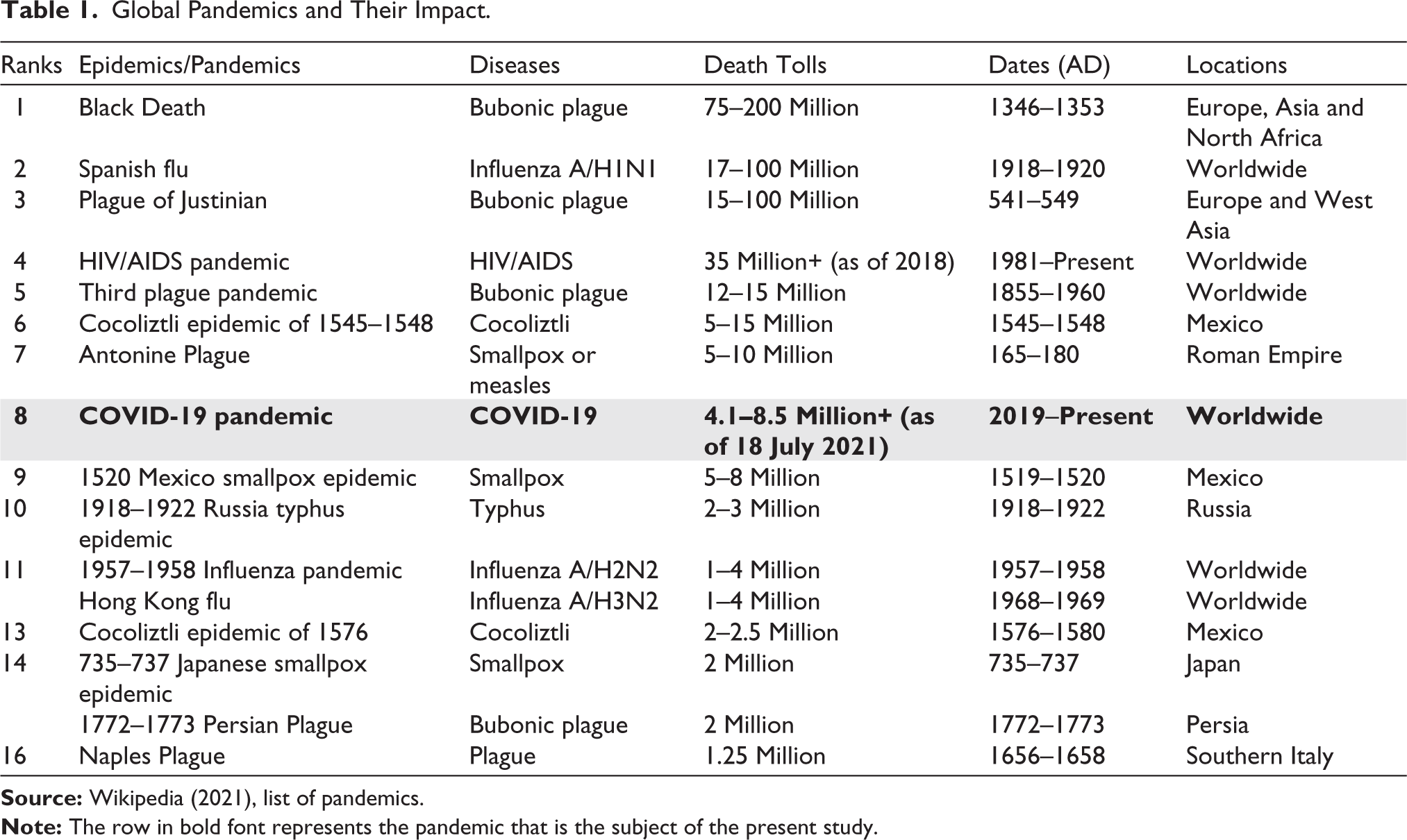
The term ‘epidemic’ is expected to be almost 2,500 years old. The origin of the word epidemic is evident in the Greek expression, ‘epidemiosis’, which is the combination of epi, meaning ‘on’, and demos, meaning ‘people’. Table 1 provides a list of global pandemics, as well as, their approximate death tolls, as provided by Wikipedia (2021).
Thucydides (460 BC–395 BC) intermittently accounted during Peloponnesian War described the incidence of plague in Athens, in the year 430 BCE. This explanation may be the most detailed narrative of an ancient pandemic.
Disease eruptions at large scales, at unforeseen times, may occur recurrently in sequences and waves, often at global scale (Walton et al., 1986). Plague, influenza and smallpox are some of the key pandemics that have distressed mankind in such sweeping magnitudes in our history (Dobson, 2007). For ages, experts endeavoured to categorize the indications, characteristics and deaths arising from specific contagions, to recognize the causal elements, to avert and manage the pandemics successfully (Halsey & Friedman, 1984). Almost every pandemic has affected economic activities thereby affecting economic growth of the world (Hanashima & Tomobe, 2012).
Global Pandemics and Their Impact
Pandemic’s Effect on Farming and Allied Sectors
Farming is related to food security for humankind and affects the overall world economy (Abdelhedi & Zouari, 2018). Among the various food crops, rice farming is a significant portion of the global agricultural makeup and is necessary for ensuring food security in most of the developing and the underdeveloped parts of the world (Pane et al., 2021).
Rice demand will continue to rise in tandem with the projected population growth rate (Hadimartono et al., 2017). The usage of high-quality seed attracted notice. The variables influencing the procurement of hybrid rice seed, according to Pandey et al. (2020), include attitude, subjective norm and perceived behaviour control. Perceived behavioural control denotes the ability of a farmer to decide upon the rice seed variant by him/herself (Hadimartono et al., 2017). However, Zurayk (2020) suggested that the COVID-19 led pandemic has adversely affected rice farming, as well as, the resultant food security.
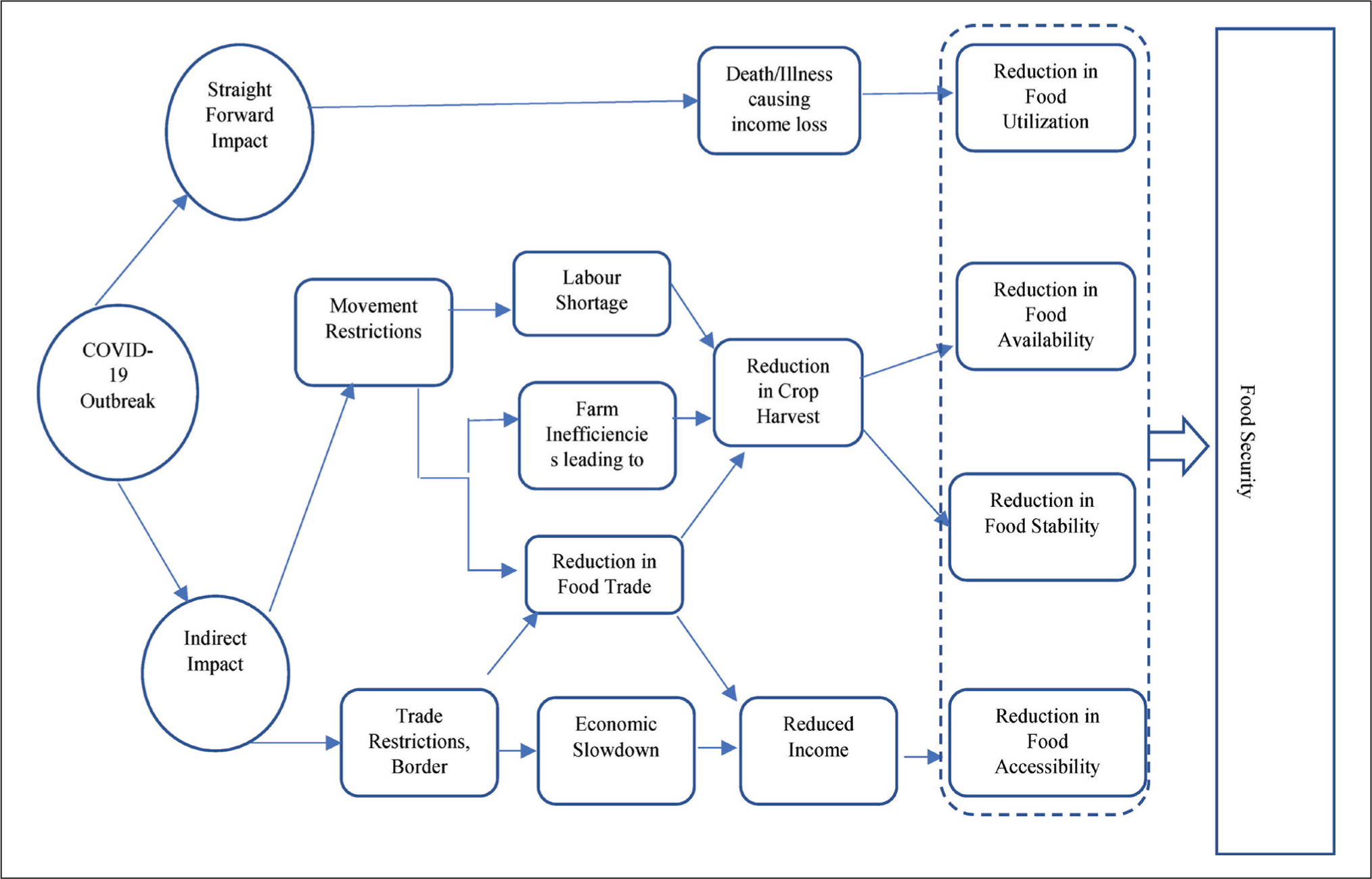
The latest pandemic is possibly impacting food security most adversely in the recent centuries (Zurayk, 2020). This may lead to challenges in food availability, changes in demand patterns and possible food insecurity (Zurayk, 2020). The restrictions in celebratory feasts, the constrained logistics, the hoarding by consumers, whose benefit does not reach the farmers and the shortages in agricultural inputs have affected rice farmers in most developing countries (Gultom & Subing, 2021). It may follow that the rice farmers’ buying behaviour, with respect to agricultural inputs (like seeds), may also present certain interesting changes. Figure 1, conceptualized as part of this study, exhibits a schematic of how global pandemics affect farmers and food security.
Purchase Behaviour of Farmers
The problem-solving technique may explain the purchase decision-making process of agrarians. There have been studies on comparative purchase behaviour of farmers on agricultural-inputs vs. other consumables (Anderson, 1987). The patterns of demand for agricultural inputs originate from and are contingent upon the end-use potential of the product and they may explain the variations in the purchase behaviour towards agricultural inputs (Kumar & Kapoor, 2017). Agriculturists’ buying behaviour may be studied further to develop a better understanding of its motivations and retardants (Anderson, 1987).
In their review paper, Kumar and Kapoor (2017) found several aspects of farmers’ typical purchasing behaviour. In general, the purchasing procedure for regularly purchased inputs was less comprehensive than that for seldom purchased components (Kumar & Kapoor, 2017). There were, however, variations in the breadth of the purchasing process for inputs in the same category (Feeney et al., 2019). Farmers’ traits affected their purchasing decisions, and this effect was particularly pronounced in cases when agri-inputs were purchased often. For most agri-inputs, all four elements of the farmers’ purchasing process were shown to be positively linked (Okello et al., 2019). For different agri-inputs, the farmers’ purchasing procedure varies and is reliant on the farmers’ characteristics. The study findings may be used to design appropriate marketing tactics to expand a company’s client base and improve revenues (Kumar & Kapoor, 2017).
Purchase Behaviour of Farmers in the New Normal
Extant literature reveals encouraging results from the extension access on farmer adoption, productivity, knowledge and financial benefits for agriculturists (Birkhaeuser et al., 1991). This is primarily affected through one-on-one meetings with the help of an Agriculture Extension Officer touring villages and farm training institutions. Agricultural extension services had a crucial role in safeguarding that the farmers have an access to enhanced technologies, such as improvement in farming techniques and the creation of farming cooperatives (Hameed & Sawicka, 2016).
During the recent pandemic (COVID-19), restrictions on vehicle movements affected the transportation of agricultural produce, which had a cyclical effect on future harvest cycles (Zhang, 2020).
Apart from that, most of the governments of the countries imposed a concept called ‘lockdown’ restricting a complete or partial economic activities and transportation. The agricultural extension services for the farmers are virtually unavailable particularly in the developing countries. Paddy farmers in South-East Asian countries as well as in India essentially rely on the seasonal cycles and in each cycle they require a package from the service providers. As the current pandemic situation hampers with their usual purchase behaviour it is really interesting to study how these farmers adopted with the new-normal to continue with their cultivation.
As per Manfre and Nordehnn (2013), the lower economic levels of agriculturists may be helped through the use of information and communication tools. Davis and Addom (2000, p. 30) concluded that
Although many extension and advisory service providers are using e-extension and mass media approaches to advance their outreach to farmers and farmers’ access to information, most of these initiatives are at early pilot stages and limited empirical evidence is available on the effectiveness of ICTs in extension.
In China, distribution centres are employed to agglomerate and distribute goods to rural areas, as well as, to urban households. Such a method is claimed to minimize the spread of diseases. Varner (2012) suggested the employment of social media for the dissemination of information to farmers. The pandemic economy was marked by the hoarding of staples and of long shelf-life edible products (Coldiretti, 2020).
Methodology
This study employed qualitative techniques with the intention of identifying the new normal purchase behaviour of agricultural inputs by paddy farmers of South Asia. The qualitative inputs were taken from paddy farmers. The sampling was performed in multiple steps and levels.
Sampling Methodology
At first, an inventory of all districts of Chhattisgarh was prepared, as listed in Wikipedia (based on key rice production). From these districts, one district was selected using a simple random sampling process on the list of districts. The district of Dhamtari was selected.
From the Dhamtari district, two villages were selected using simple random sampling process on the full list of villages. A total of 25 farmers each from these villages were selected using simple random sampling process using the lists obtained from the panchayat offices (local administrative body of villages in India).
Data Collection
Feedback was sought from willing rice cultivators. Due to severe lockdown and movement restrictions in the selected geographies, the phone was used to record their statements. The statement discussions on an average went for 7–10 min and few were recorded as well with the permission of farmers. The discussions were pointed towards the impact on inputs purchase behaviour due to the pandemic situation and farmer’s perception of their ability to use technology. The farmers were asked about the new normal adopted purchase behaviour for buying agricultural inputs. The farmers were asked if they used technology or which particular factor impacted their inputs purchase behaviour during this COVID-19 pandemic.
Data Analysis
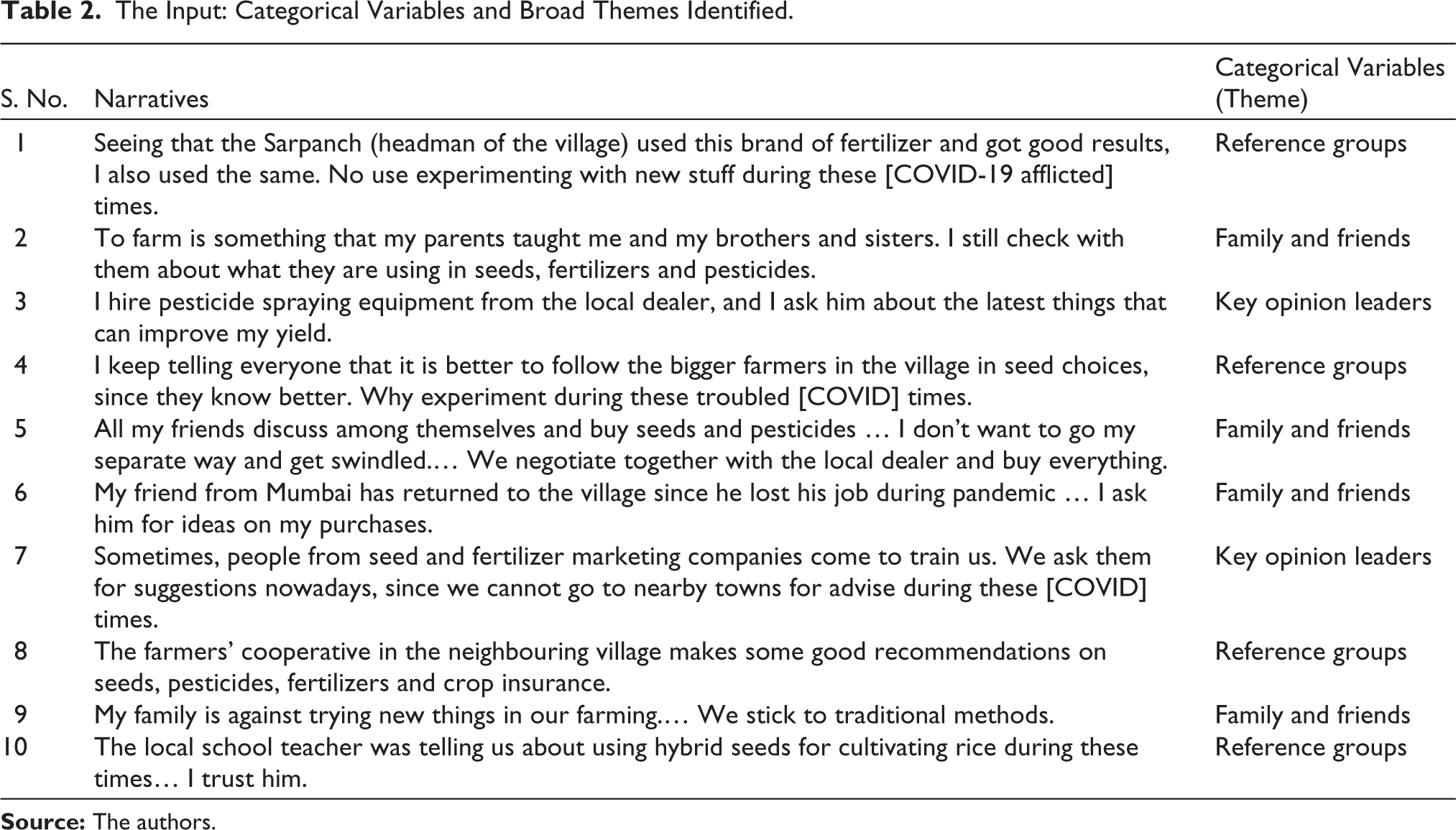
The statements were then analysed with the help of MAXQDA, a software used to analyse qualitative data, and certain categorical variables were identified (Table 2 presents some portions as examples out of the 123 narratives collected) and clubbed together under certain themes. Table 2 provides the inputs to the qualitative analysis software and Figure 2 presents the output of the qualitative analysis (input presented before the output).
Once done, the further analysis was done with the help of Atlas TI to arrange, reassemble and manage these variables in below systemic form (Figure 2). Each of the variables is clubbed together the respective factors towards the new normal purchase behaviour of agricultural inputs by paddy farmers. Analysis of the narratives using MAXQDA software, led to the validation of the model shown in Figure 2.
The Input: Categorical Variables and Broad Themes Identified
Results and Discussion
The study is innovative as it has used normalization process theory (NPT), which is a sociological theory utilized into farming inputs purchase behaviour analysis for paddy farmers in India. This is more of an implementation theory and it has a potential to provide explanation of the entire phenomena of new normal purchase behaviour.
By using NPT as a central theory for this study it has helped in gaining more understanding on farmers purchase behaviour in new normal situation.
As per Scoville (1947), a family-run farmland is one on which the homestead administrator settles on the vast majority of the administrative choices, partakes routinely in ranch work and on which his job as manager of work is minor comparative with his different capacities. As per Errington and Gasson (1994), business ownership, managerial control and business principles are applied as well into farming operations. According to Djurfeldt (1996), the theoretical family farm is categorized by a triad of elements: (a) the element of consumption (i.e., the household), (b) element of kinship (i.e., the family) and (c) the element of production (i.e., the farm). Becot et al. (2017) noted that farmers necessarily gain earnings which generate sufficient profits and also take account of charges. Based on various such literature reviews, farming operations could be considered similar to managing an organization and the principles of organization are applied to it.
In Figure 2, the major nodes denote the thematic clusters, the minor nodes depict the categories (with frequency of occurrence of each category in the brackets) and the numbers on the connecting lines representing the word distances. In qualitative analysis, word distances are considered as the perceptual distances between themes, since a subject who associates two themes closely often speaks about the two themes closer to each other in her narrative. When a subject considers two themes to be less related, she would speak about them with a larger number of words between the themes (other complete sentences between the two themes).
Keeping the aforesaid in mind, it is seen that the bigger farmers are the biggest influencers of purchase decisions of agricultural inputs in the new normal, as seen from the frequency of occurrence (33) of this category (Figure 2). Friend farmers have the next highest influence at a frequency of 31 (Figure 2). The itinerant trainers, under the theme of ‘Key Opinion Leaders’ have the second highest frequency of occurrence at 27 (Figure 2). The lowest influence is by salesmen of agricultural inputs and by farmers’ cooperatives, both at frequencies of 7 (Figure 2). The three major themes and their word distances from the agricultural input buying behaviour are as follows in descending order of importance, as observed from the word distances: friends and family (word distance: 2); reference groups (word distance: 5); key opinion leaders (word distance: 7). Moreover, the word distances between these themes are all very high (above a typical sentence length of 10 words), implying that these three themes are indeed separate.
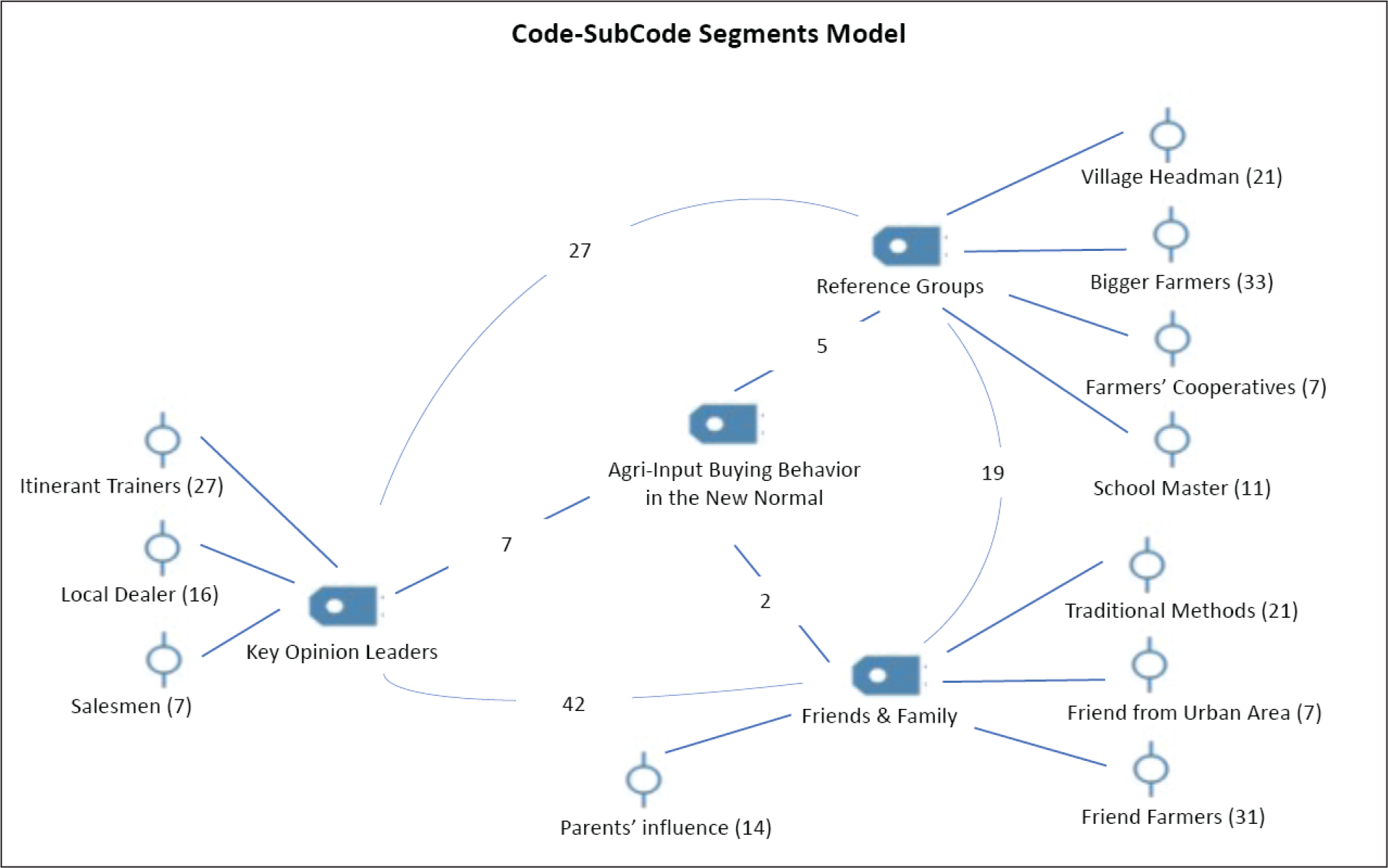
The new normal purchase behaviour of agriculture inputs by paddy farmers had various variables and it all are divided into various factors. However, while developing the model framework of new normal purchase behaviour, the only construct which explains the behaviour is cognitive participation. This construct of cognitive participation helps in context of decision-making and the action which rice farmers took during the purchase of agriculture inputs in current season. This factor identifies with the social work which individuals do to assemble and support a local area of training around any innovation. This factor intended to look at the level to which ranchers really purchased the new typical conduct. The impacting factors and their connections are depicted in Figure 3.
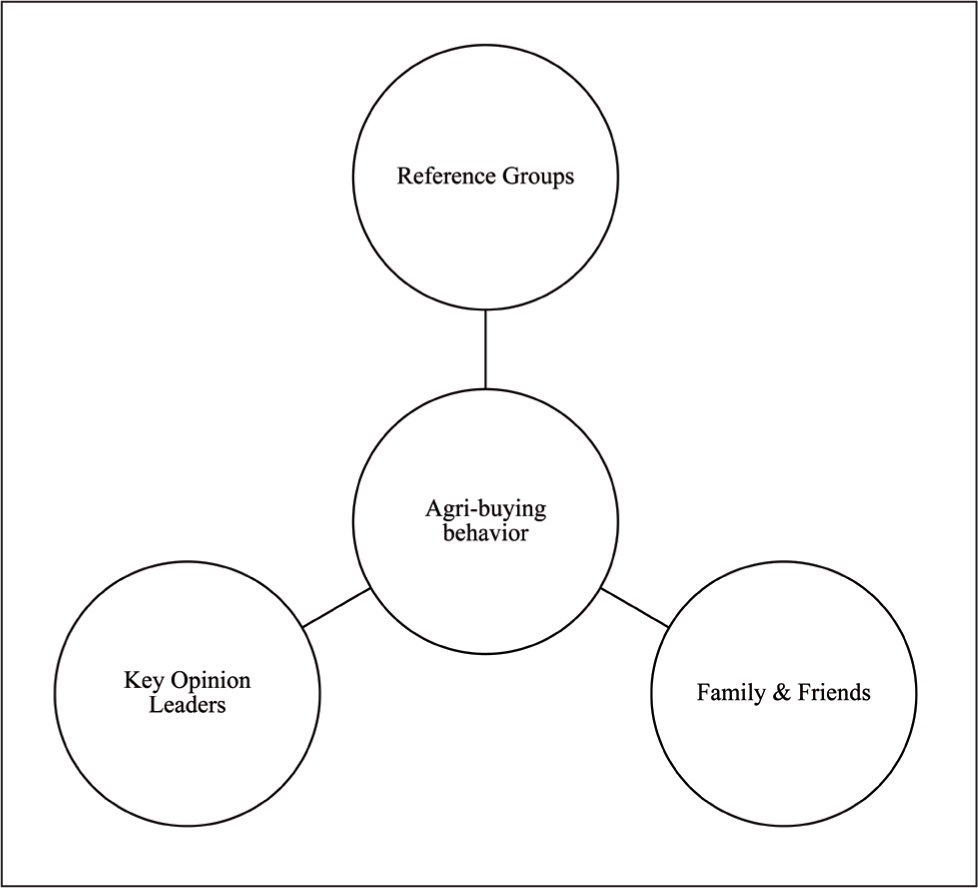
Reference Groups
The term ‘reference group’ was coined by Hyman (1942) to apply to the group against which a person assesses his or her possess circumstance or conduct. Reference bunches are group that individuals allude to when assessing their [claim] qualities, circumstances, demeanours, values and practices (Thompson & Hickey, 2005). This is the peer group which exposes the farmers to new behaviour by influencing his attitude and self-concept and creates a pressure on farmer for conformity by changing his actual brand or product choice. Mass media may act as reinforcing agent but for conversion, personal influence is most effective (Murthy & Swamy 1995).
Family and Friends
A family could be a cohesive social unit, and the individuals have an awesome impact on each other and play an important role in choice making. Family could be a social bunch. It is additionally a gaining, devouring and decision-making unit. All buys are affected by family individuals.
Key Opinion Leaders
Opinion-makers are prone to heterophily (love of the different). They watch and assess developments demonstrated by trailblazers. Opinion-making is paraphrased as ‘the degree to which a person is able casually to impact other individuals’ demeanours or plain conduct in a craved way with relative recurrence’. Supposition pioneers are those who are ‘able to impact other individuals’ states of mind or practices of others within the wanted course’. Opinion leaders include large progressive farmers, agricultural extension officers, etc.
Conclusion
The recent pandemic has impacted radically on the lives of farmers. The pandemic has most straightforwardly and seriously affected access to food, even though the effects are likewise felt through disturbances in accessibility; shifts in shopper interest toward less expensive, less nutritious food sources and diminishing food value. The movement restriction due to pandemic has caused reduction in availability and delay of timely distributions of agricultural inputs. As a result, the discussion around new normal has become much evident and not only farmers but also others have all become much accustomed to new norms. To be proactive on next pandemic, it becomes imperative to plan and integrate technology so that new normal behaviour could be assimilated well in our lives. The objective of this study is to collate the statements and notes from the paddy farmers’ new normal input purchase behaviour and present those in the form of a conceptual framework.
From the qualitative data analysis, the implication for marketers is that itinerant trainers should be sent to villages to train the farmers, especially the bigger farmers (who have secondary influence), on the new technologies in agricultural inputs. The farmers also influence each other, and some amount of training coverage may eventually reach all farmers. The local dealers and the village headmen should also be influenced. An attempt should be made to marry the new technologies with the traditional methods, as much as possible.
The study is significant in the sense that it provides a new normal purchase behaviour model for paddy farmers in South Asia. Such a framework for analysing purchase behaviour during a pandemic could aid marketers in the design of marketing programmes.
This study has potential limitations. The author agrees that the sample size is insufficient in order to conclude a valid research result for entire country. Secondly, the there was little or no studies on Indian rice farmers. Finally, due to time constraints, the author could not gather more sample to conclude and extrapolate it to the entire country.
The future examinations would profit by utilizing NPT as a device before usage to give co-creation thoughts to agricultural input companies for rest of the Asian nations. Also, need to validate this model through a survey involving all the actors in the course of purchase life cycle.
Footnotes
Declaration of Conflicting Interests
The paper is the authors’ own (original) work and has not been published or submitted to any other journal/book or conference for presentation or publication.
Funding
The authors received no financial support for the research, authorship and/or publication of this article.