



Abstract
The global economy has been affected as a result of the unusual circumstances surrounding the COVID-19 outbreak and the restrictive measures taken by governments to contain the crisis. As a result, in order to survive such turmoil, sustain their economic outputs and adapt to change, companies have been invited, and even forced, to innovate. The present study aims at contributing to a better understating of the impacts of strategic innovation management (SIM) practices implemented into a company (i.e., its innovative strategy and culture, product innovation, technological capability, and customer and supplier relationships) on the consumer purchasing behaviour (CPB) in the context of COVID-19 global crisis. Data were gathered from a sample of 57 Moroccan companies operating with international management styles and working according to the standards of the International Organization for Standardization (ISO). Then, the structural equation model (SEM) method was employed to test the proposed hypothesis of the theoretical model. The conclusive results revealed that SIM practices have a significant influence on a company’s CPB, essentially via the adoption of an innovative strategy. Therefore, CPB is likely to be upgraded whenever companies seek for improving the implementation of successful SIM practices.
Keywords
Introduction
In order to survive global competition, maintain competitiveness and improve economic performance and growth, companies need to innovate. According to Dereli (2015), the most important prerequisite to build success and prosperity is innovation; and, along this line, the ones who can develop new ways/ideas and bring new products to the market are the winners. That is why innovation has been attracting, as a key driver for long-term sustainability, the interest of researchers. For instance, Sanchez et al. (2011) argued that it represents one of the fundamental aspects of industrial and economic development policies. For Kalay and Lynn (2015), innovation could be rather considered the most important differentiation strategy to gain competitive advantage.
In the same perspective, Dereli (2015) pointed out that innovation management can enhance competitiveness, and it is essential for the companies’ growth and sustainability. Therefore, it is essential to identify the main strategic innovation management (SIM) practices that should be implemented to achieve high performance. Scholars also advanced that SIM is a process composed of many parts (Igartua et al., 2010; Kalay & Lynn, 2015; Sanchez et al., 2011). In particular, Sanchez et al. (2011) defined SIM as the set of innovative practices, that is, via creating an innovative vision, harmonizing business strategy, market tendencies, expanding the strategy to all organizational levels, technologies and competitors acts. To do so, companies build the adoption of those SIM practices on the analysis of competition mechanism. To further investigate the SIM practices scope, Kalay and Lynn (2015) emphasized that SIM is about managing technologies, business processes and human relationships within the company to support innovation. Therefore, SIM refers to a process that requires the management of different components as a whole (Igartua et al., 2010).
The literature review concerning SIM practices revealed that multiple actions and methods had been pinpointed by researchers to refer to them (Igartua et al., 2010; Kalay & Lynn, 2015; Sanchez et al., 2011; Terziovski, 2010). However, we reduced those SIM practices by addressing the most rigorous and frequently cited ones. For this study, we retained innovation strategy (Goffin & Pfeiffer, 1999; Kalay & Lynn, 2015; Sanchez et al., 2011; Terziovski, 2010), innovation culture (Burgelman et al., 2001; Kalay & Lynn, 2015; Sanchez et al., 2011; Terziovski, 2010), product innovation (Blindenbach-Driessen & Ende, 2006; Sanchez et al., 2011), technological capability (Kalay & Lynn, 2015; Qian & Li, 2003; Sanchez et al., 2011; Terziovski, 2010), customer and supplier relations (Kalay & Lynn, 2015; Terziovski, 2010), as the determinants of the main SIM practices of companies, and which are mentioned in details in the following section.
On another perspective, the literature underlines that a restricted number of studies have dealt with SIM practices’ effects on consumer purchasing behaviour (CPB) (Kalay & Lynn, 2015; Sanchez et al., 2011; Terziovski, 2010). In this regard, this research intends to explore the impacts of specific SIM practices on CPB in the context of the COVID-19 crisis. In other words, this study will investigate the main research question: How do SIM practices improve CPB in times of crisis?
Theoretical Background, Model and Hypothesis
Independent Variables
This study reviewed the literature related to SIM practices in companies (Igartua et al., 2010; Kalay & Lynn, 2015; Sanchez et al., 2011; Terziovski, 2010) in order to identify the main determinants and variables that might influence them. Furthermore, it emphasizes the resource-based approach (RBA), which explains that developing and applying SIM practices that other companies lack would allow a company to achieve high efficiency (Han et al., 1998).
Innovation Strategy
Innovation strategy (IS) is used in several scholars’ models according to the literature (Burgelman et al., 2001; Sanchez et al., 2011; Terziovski, 2010). Sanchez et al. (2011) considered it as the highest level of innovative practices. In this vein, scholars have widely agreed that companies adopting an IS are more performant than those without one (O’Regan et al., 2005). Oke et al. (2012) stated that IS helps top managers to reach customer market information, operate effectively with the company’s resources and make better investments in research and development (R&D). Moreover, Awan and Zahra (2014) stressed that adopting IS has an impact on consumers’ behaviour. Therefore, the first hypothesis can be proposed as follows:
H1: Innovation strategy has a significant positive effect on CPB.
Innovation Culture
Scholars defined innovation culture (IC) differently. IC has been described by Capon et al. (1992) as possessing an informal and open communication environment within the organization, while Deshpande et al. (1993) and Koberg and Chusmir (1987) defined it as the company’s ability to have an entrepreneurial vision, to be creative, risk-taking and open to new ideas. Besides, O’Regan et al. (2005) considered a company’s culture as the most common lever for implementing innovation and performance within the organization. Martin-de Castro et al. (2013) mentioned also that IC indirectly influences the company’s prosperity. Furthermore, companies’ IC enables them to generate new ideas or products for customers (Gajjar, 2013; Yang & Konrad, 2011). Thus, the following hypothesis can be suggested:
H2: Innovation culture has a significant positive influence on CPB.
Product Innovation
Lundvall (2016) assimilated product innovation (PI) to novelty addressed towards users’ needs separated from the innovating unit by a market. In other words, PI is the process that transforms the market opportunities along with new innovative ideas into products and services. In this regard, scholars have commonly agreed that effectively managing PI leads to the success of manufacturing organizations (Cooper & Kleinschmidt, 1995; Cormican & O’Sullivan, 2004; Crawford, 1980; Wheelwright & Clark, 1992). Similarly, good services and innovative products affect customer buying decisions and develop customer loyalty and engagement for repeating their purchases (Lahindah & Siahaan, 2018; Pishgar et al., 2013). Therefore, the following hypothesis can be proposed:
H3: Product innovation has a significant positive impact on CPB.
Technological Capability
Terece et al. (1997) described a company’s technological capability (TC) as the ability to manage technical activities and develop new products or processes efficiently. It implies that companies possessing TC use those capacities to create effective processes that may upgrade their ability to innovate in product and processes and influence positively their performance and their competitive position in the market (Kalay & Lynn, 2015; Ortega, 2010). By the way, organizations are invited to use new technologies in order to stay competitive and gather competitor- and customer-related information that are useful for their survival in the market (Zhou & Wu, 2010). Moreover, many scholars argued that companies’ TC could help to grab the attention of consumers and then to alter their purchasing behaviour (Koufaris, 2002; Osmonbekov & Johnston, 2018; Waheed & Jianhua, 2018). Therefore, the following hypothesis can be suggested:
H4: Technological capability has a positive influence on CPB.
Customer and Supplier Relations
Atuahene-Gima and Ko (2001) stated that a company’s strategic relationships’ portfolio (with both suppliers and customers) has a key role in its innovation process. Indeed, suppliers are considered the technological information source for production processes (Belderbos et al., 2004), and companies must collaborate with them to reduce production costs and boost inputs’ quality during the innovation process. On the other hand, customers are regarded as the source of new ideas related to PI (Hippel, 2005) and information related to the market (Belderbos et al., 2004; Kalay & Lynn, 2015). Consequently, developing customer and supplier relation (CSR) can affect a company’s operation costs, product acquisition and customer intentions (Cannon & Homburg, 2001; Eggert & Ulaga, 2010). Therefore, the following hypothesis can be proposed:
H5: Customer and supplier relation and CPB have a significant positive relationship.
Dependent Variable: CPB
Schiffman and Kanuk (2007) argued that CPB is what customers show when they are purchasing, using, evaluating and disposing of products and services that satisfy their needs. The literature dedicated to CPB is evolving as researchers still recognize and implement new techniques and transdisciplinary perspectives in order to understand the nature of purchase and to shed the light on consumption behaviour (Pachauri, 2001). However, demystifying CPB remains complicated and complex as it is not easy to predict exactly how consumers will behave in a given situation (Jisana, 2014; Solomon, 1996). The inter-disciplinarily of CPB makes it also difficult to find accurate ways to measure it.
Based on previous researches, we opted for four main constituents of CPB, which will correspond later to its four measurement indicators. These components are discussed in brief in the following subsections.
Frequency of Contact
According to Jolson (1997), frequent contact with salespeople facilitate the sales’ relationship, because it allows them to better understand customers’ motives and thus to guide the strategies required to offer them what they need. With an increase of the frequency of interactions, parties can also easily exchange information. In turn, this makes it easier for salespeople to predict customers’ behaviours due to the increase in time spent with them through various situations (Doney & Cannon, 1997), which results in a better knowledge and understanding of the client (Szymanski, 1988).
Recently, Roman and Martin (2008) carried out a 2-year longitudinal study on the frequency of sales’ calls in the context of industrial suppliers. They demonstrated that the increase of contacts strongly influences the sales volume in the frequency of sales calls. They also claimed that the volume of sales is influenced by the extent of contacts between the customer and the seller. Thus, the seller is appealed to devote more time to make sales’ presentations and demonstrations to negotiate with various customers by using sales’ closing techniques properly. Following the work of Roman and Martin (2008), we believe that the frequency of contact is an important determinant of CPB.
Consumer Participation
File et al. (1992) have shown, from the customers’ points of view, that interaction with the company incurs their participation which is a crucial source of satisfaction for them (Humphreys & Williams, 1996). In fact, involving the client in the process of creating a service or producing a product can generate many advantages. File et al. (1992) indicated that increasing participation of the customer in a service encourages him to recommend the same service more easily. File et al. (1992) also found that companies can control the customer involvement, yielding the following benefits: (a) a propensity to make positive recommendations, (b) a reduction of perceived risks, (c) an evolving engagement and (d) an increased improved customer understanding. Clients who participate and become more involved in the service process tend then to share the credit as well as the blame for service outcomes (Baron & Kenny, 1986).
The importance of customer participation in establishing effective relationship marketing has been demonstrated in the literature by several authors (Cermak et al., 1994; Varki & Wong, 2003). In addition, customer involvement is widely recognized in the literature as an integral part of creating a service with all its associated benefits (Regan, 1963; Zeithaml, 1981). Therefore, the present study supports that customer participation is a key determinant of the CPB.
Duration of the Relationship
Companies and customers mutually develop and strengthen bonds from satisfying interactions, which assists in turn in building customer loyalty (Anderson & Sullivan, 1993; Anderson & Weitz, 1989). Verhoef (2003) argued that customer retention is advantageously more economical for companies than constantly being on the lookout for new customers. Likewise, the development of long-term customer relationships is essential for companies’ performance and success (Bove & Johnson, 2000; Verhoef, 2003). In fact, according to Anderson and Weitz (1989), long-term human relationships are more stable than short-term ones, since time enables parties to make the appropriate changes that are required for future business relationship dysfunctions (Verhoef et al., 2002). Consequently, the present study supports that the length of a customer’s relationship with the company is a crucial determinant of CPB.
Company’s Competitiveness
According to Mlouka and Sahut (2008), a competitive company is an organization which knows how to create and take advantage of economies of scale, to adapt its capacities and production process to the evolution of the environment, to change its range of products, and to develop its skills and resources to better reposition itself in the face of unpredictable changes in demand (p. 85).
Several studies in the literature associated competitiveness with consumer behaviours. Mowen (2004) argued that competitiveness is positively associated with consumer behaviours, while Yucel and Kramer (2018) emphasized the impact of the competitiveness of the firm on its consumers’ behaviour and reaction to different offers. Therefore, we believe that a company’s competitiveness is a key determinant of CPB.
CPB During Crises
Consumers could be predisposed to modify their purchasing behaviour, but with questionable results during the time of crisis uncertainty (Fulton, 1992; Zalega, 2018). Deaton (1992) noted that in times of crisis, consumers are more inclined to reduce their consumption and save money (buffer saving) to cope with possible difficult situations.
Fulton (1992) invented a type of consumer behaviour called ‘cocooning’. He defined it as a stay-at-home syndrome when the outside gets too harsh and scary. For Lehu (2012), cocooning is a consumption behaviour characterized by the desire to transform the house into a kind of cocoon, a perfectly protected shelter, for fear of the danger represented by the external environment. This definition perfectly covers the current situation, where a large portion of consumers around the world are experiencing due to the COVID-19 health crisis. In fact, ‘cocooning consumption’ generates a consumer behaviour that is marked by a private and personalized character (Zalega, 2018). Such a private dimension corresponds to the transition from consumption in public places to consumption at home. Therefore, cocooning is an important commercial phenomenon that favours the development of new technologies and increases online shopping popularity (Fulton, 1992; Zalega, 2018).
Proposed Model to Link SIM Practices to CPB
Theoretical Model
The theoretical model proposed in the present study was developed on the basis of the marketing research-related literature. It presents an integration of the scholarly literature statements regarding the SIM practices (Kalay & Lynn, 2015; Sanchez et al., 2011; Terziovski, 2010).
Methodology and Sampling
As mentioned above, the analytical studies on SIM practices developed in the previous studies do not provide an exhaustive view of the impacts of these practices on CPB during a health crisis. They open up the scope to build up an analytical framework favourable to the treatment of any potential relationship between CPB and SIM practices.
A quantitative analysis through an empirical study was employed to test the theoretical model in Figure 1 and the hypotheses presented above. The objective is to identify the underlying relation between SIM practices and CPB in a crisis. For this study, COVID-19 was used as a case study.
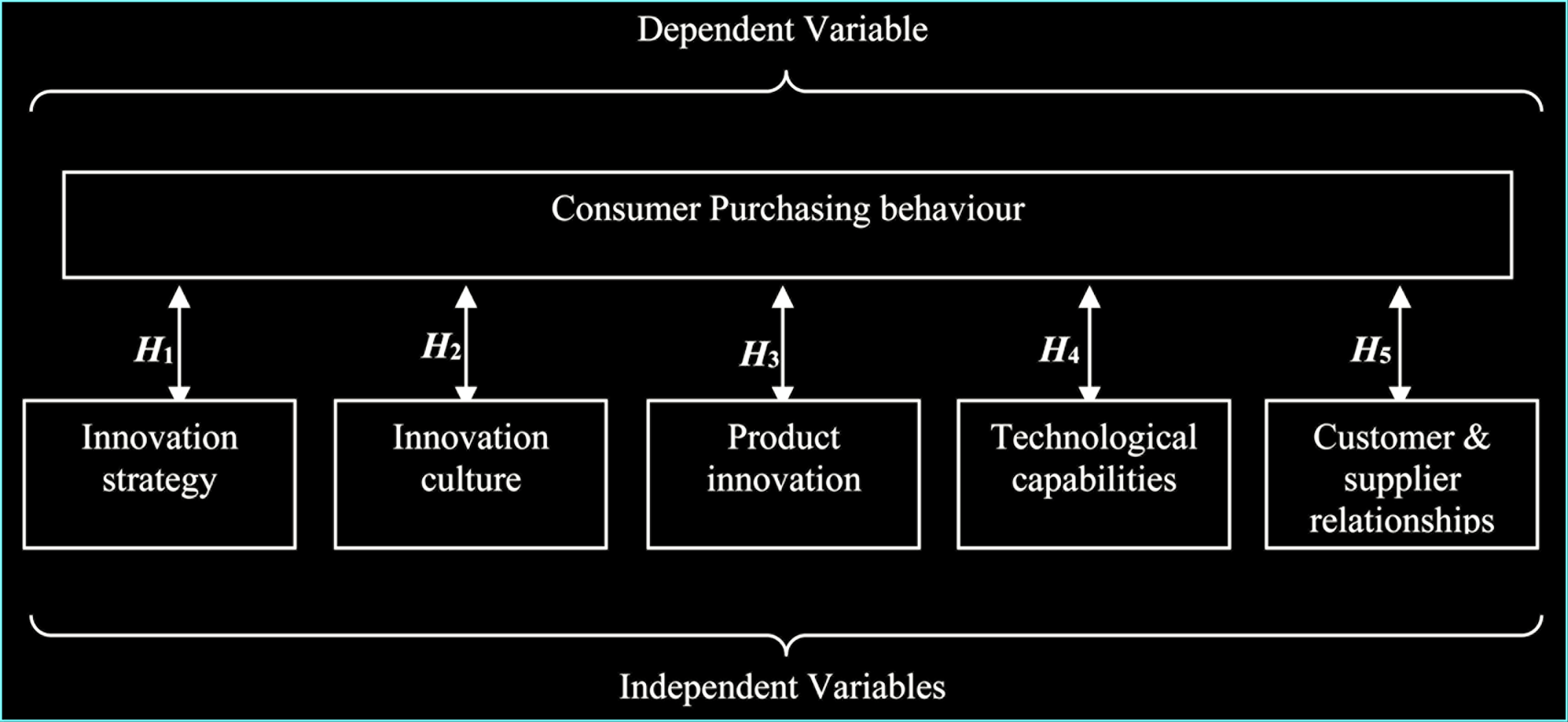
Material sources for this study were gathered by developing a structured questionnaire and conducting a survey. The questionnaire was based on previous studies and deployed using structured questions to help respondents evaluate their companies’ SIM practices and their perceived opinion concerning CPB. Although some of the questionnaires were in English, some questionnaires were translated to French, as French is the second most spoken language in Morocco. For this purpose, the parallel translation method was used, as recommended by Kalay and Lynn (2015). This was done to ensure that the items were correctly translated to avoid language barriers and to make it easier for workers who did not speak English. Moreover, two experts working in the field of R&D and innovation were contacted to revise our questionnaire and resolve any difficulty in understanding the questions. According to Nybakk and Jenssen (2012), a pilot study was not conducted since the questions (items) were derived from previous researches.
Subsequently, in order to test the research hypotheses proposed in the present study, the variables of this research were measured using items based on the compilation of different studies (see appendix). IS was assessed by nine items (Kalay & Lynn, 2015; Terziovski, 2010), CSR by five items (Kalay & Lynn, 2015; Terziovski, 2010), IC by seven items (Kalay & Lynn, 2015; Martin-de Castro et al., 2013), and TC by eight items (Kalay & Lynn, 2015; Su et al., 2013; Terziovski, 2010). For PI, three items were adapted from those found in the associated literature (Cooper & Kleinschmidt, 1995; Cormican & O’Sullivan, 2004; Crawford, 1980; Wheelwright & Clark, 1992). Moreover, CPB was measured by four items, developed and adapted also from the previous-related studies (Anderson & Sullivan, 1993; Anderson & Weitz, 1989; Bove & Johnson, 2000; Czepiel, 1990; Doney & Cannon, 1997; Mlouka & Sahut, 2008; Roman & Martin, 2008; Szymanski, 1988; Varki & Wong, 2003; Verhoef, 2003).
The empirical investigation was conducted on Moroccan companies. Specifically, the sample selection was carried out in several stages. First of all, according to The General Directorate of Territorial collectivities in Morocco (Direction Generale des collectivites Territoriales or DGCT) (Décret N ° 2.15.10, 2015), Morocco is divided into 12 regions. Therefore, 12 clusters were considered for our study, and only these regions were selected: Casablanca-Settat, Rabat-Salé-Kenitra, and Tangier-Tétouan-Al Hoceima. According to the Morocco’s High Commission for Planning (HCP, 2019), companies are highly concentrated in those regions, with a 63% rate of the total Moroccan companies. Second, to select a compliant sample for our study, only companies with at least 30 employees, and operating with international management styles and functioning according to the International Organization for Standardization (ISO), were retained. A database of 432 compliant companies was then employed, and a sample composed of 60 companies was selected using the systematic random sampling.
After selecting our sample, each company was contacted by phone and via email to explain the purpose and request to participate to our research. Discussions were engaged with business leaders and managers in compliance with safety regulations during this pandemic. Therefore, questionnaires were sent to the professional emails of each company’s managers and executives, whenever this suited the companies surveyed’ regulations. Besides, to avoid any issue of confusion, we made phone calls with managers for a more detailed clarification of the scope of our investigation. The research was also conducted, with respect to certain ethical research guidelines, such as not forcing respondents to complete questionnaires and protecting their confidentiality and anonymity.
It would be also important to notice that we excluded three companies whose managers refused to participate in our study. Accordingly, a total of 57 companies were included in our analysis. In particular, 72% of those enterprises are operating in the industrial production sector (automotive, aeronautical, clothes, products for mass consumption) and 28% in services (finance and consulting, IT services). As mentioned earlier, two required questionnaires were sent to the corresponding managers. Finally, 24% of the participants were from the top management, 44% of them from the mid-level management and 32% of them were working in quality, billing and costing, marketing and customer relations departments. Subsequently, the one-way ANOVA test was conducted to test the significance of the non-response bias (Armstrong & Overton, 1977). The analysis showed that the non-response bias was not significant in this study.
Results
COVID-19 Crisis on SIM Practices and CPB: Moroccan Context
Consumption in Morocco During the COVID-19 Crisis
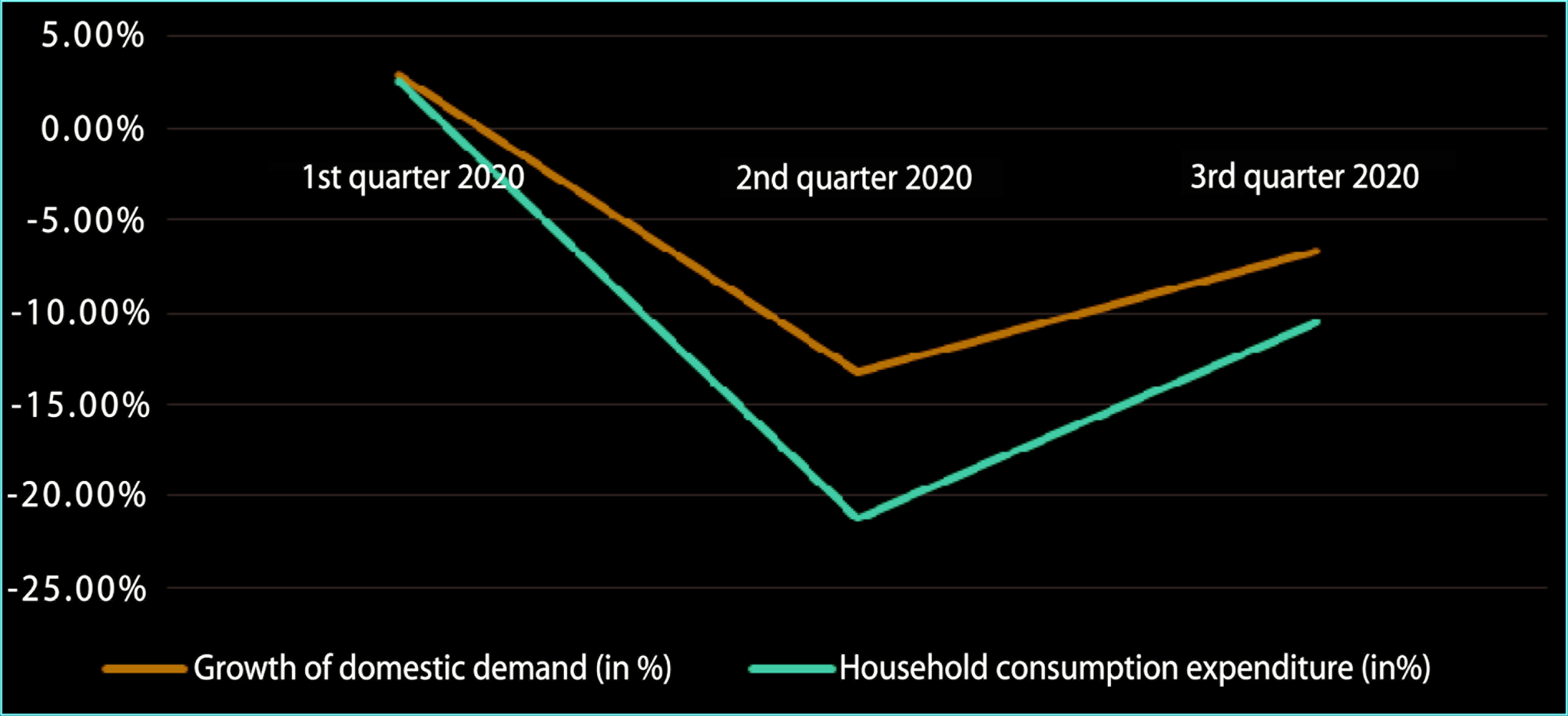
Given the pandemic’s exceptional context and the stringent restrictive measures taken by the Moroccan government to control the crisis and overcome its serious drawbacks, the impact on Moroccan consumers’ consumption is obvious. According to the Economic Outlook report, prepared by the Economic Intelligence Commission of the General Confederation of Enterprises in Morocco (CGEM, 2020; 2021), the domestic demand fell from +2.9% in the first quarter of 2020 to –13.2% in the second quarter of the year 2020, due to the COVID-19 health crisis. Then, it experienced 6.6% growth in the third quarter of the same year (as shown in Figure 2).
SIM Practices and CPB During COVID-19 Crisis
Companies have been disrupted due to COVID-19. Nevertheless, the unique nature of the current crisis has forced many of them to make rapid changes and adopt innovative practices to cope with the new situation. In the present study, data were gathered from a preliminary survey carried out on 57 Moroccan industrial companies. These companies’ managers were asked whether they had adopted five different SIM practices before the 14 March 2020, which was the starting date of the lockdown in Morocco. Those leading persons were also asked about the influence of the COVID-19 crisis on their capacity to adopt those SIM practices from 14 March 2020 to the end of January 2021. Those SIM practices included: IS, IC, TC, PI and CSR.
As illustrated in Figure 3, a strong business response to the COVID-19 crisis was found among respondents, regarding the five SIM practices. Indeed, there is an increase of 18% in the adoption of SIM practices within the correspondent companies. Of the total respondents, 61% agreed that their companies introduced IC during the COVID-19 crisis, indicating a 35% rise, compared to before the crisis. Additionally, 89% of respondents declared that they adopted new digital capabilities and technologies during the COVID-19 crisis, supporting an increase of 43%, compared to what it was before the crisis. For PI, 81% of respondents stated that their companies introduced a new product or service or improved an existing product or service during the COVID-19 crisis, registering a 39% growth compared to before the crisis.
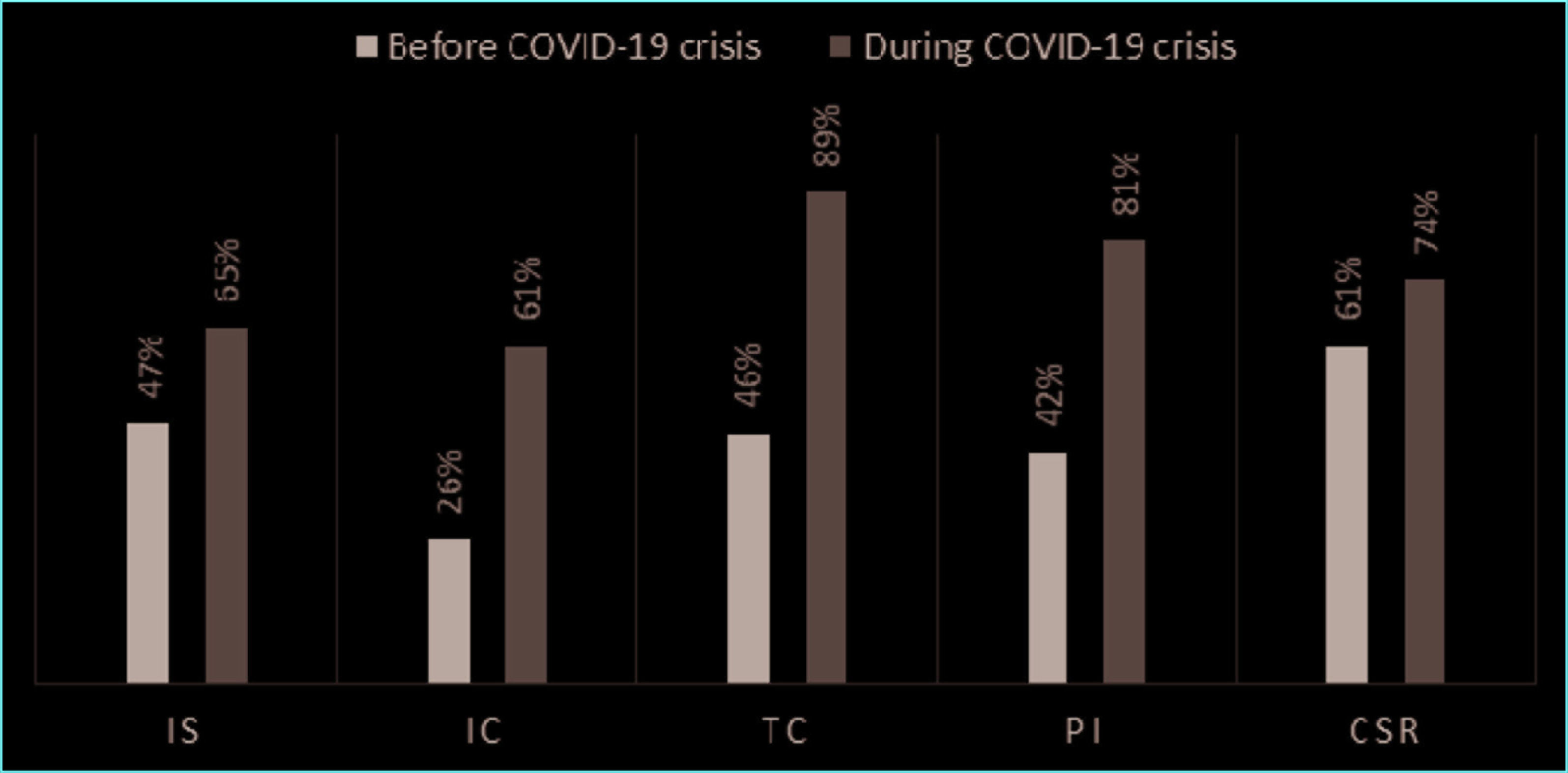
Further, 74% of the companies’ managers reported that CSR practice was adopted during the COVID-19 crisis, which shows a 13% increase in adopting this practice. These SIM practices adoption rates are significant during the COVID-19 crisis. Moreover, technological capabilities and product innovation practices showed the biggest rise of 43% and 39%, respectively. This explains that most companies consider developing and investing in new technologies, improving products or services, and launching new products or services as a response to the COVID-19 crisis.
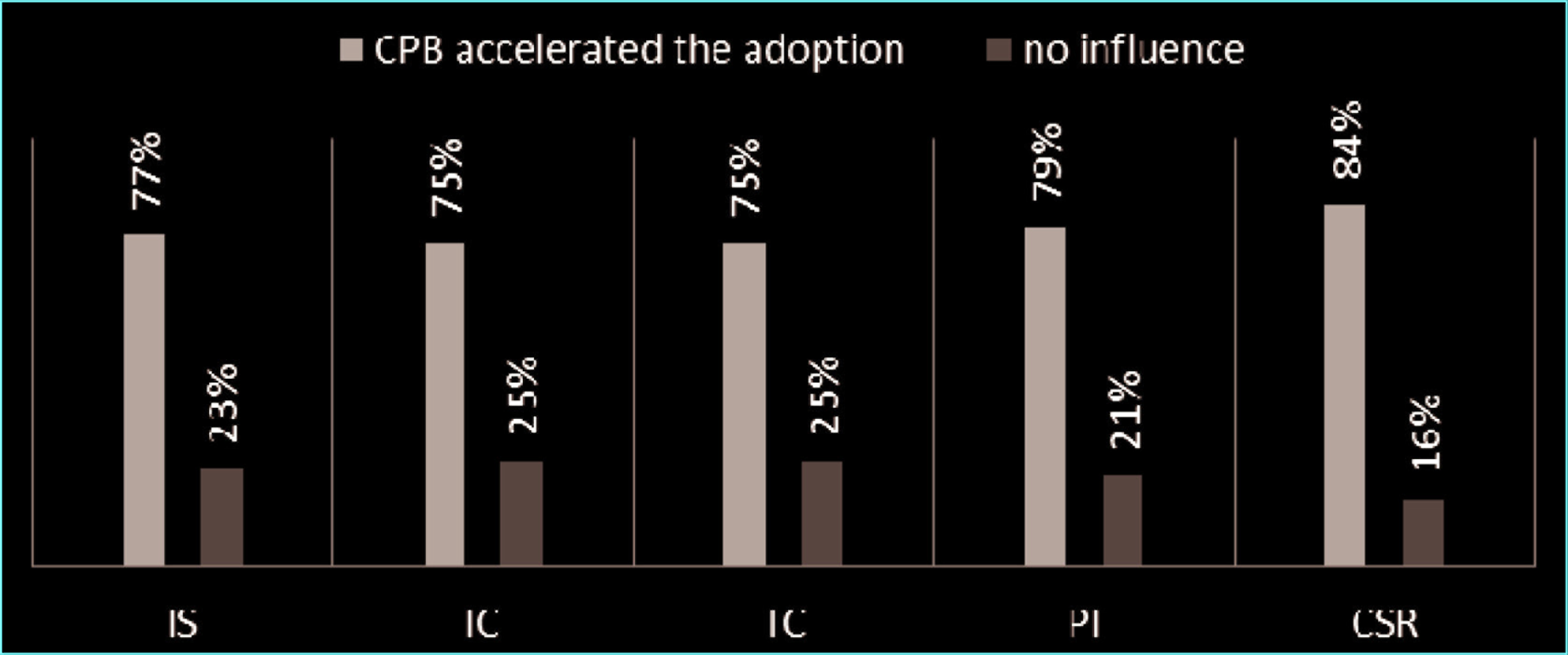
We also asked the managers whether the way they apply SIM practices into their organizations has changed, as a result of the CPB shifts during the COVID-19 crisis. In this survey, most respondents pointed out that the change in CPB during COVID-19 had accelerated their adoption of the five SIM practices (see Figure 4).
Data Analysis
Two software programs were used to analyse the data in this study. First, SPSS (in its version 20) was employed to generate descriptive statistics, reliability test results and correlations between variables. Second, AMOS (in its version 16) was utilized to perform the confirmatory factor analysis (CFA), to check the construct validity (Jöreskog, 1969), and to test the structural equation model to evaluate the hypotheses.
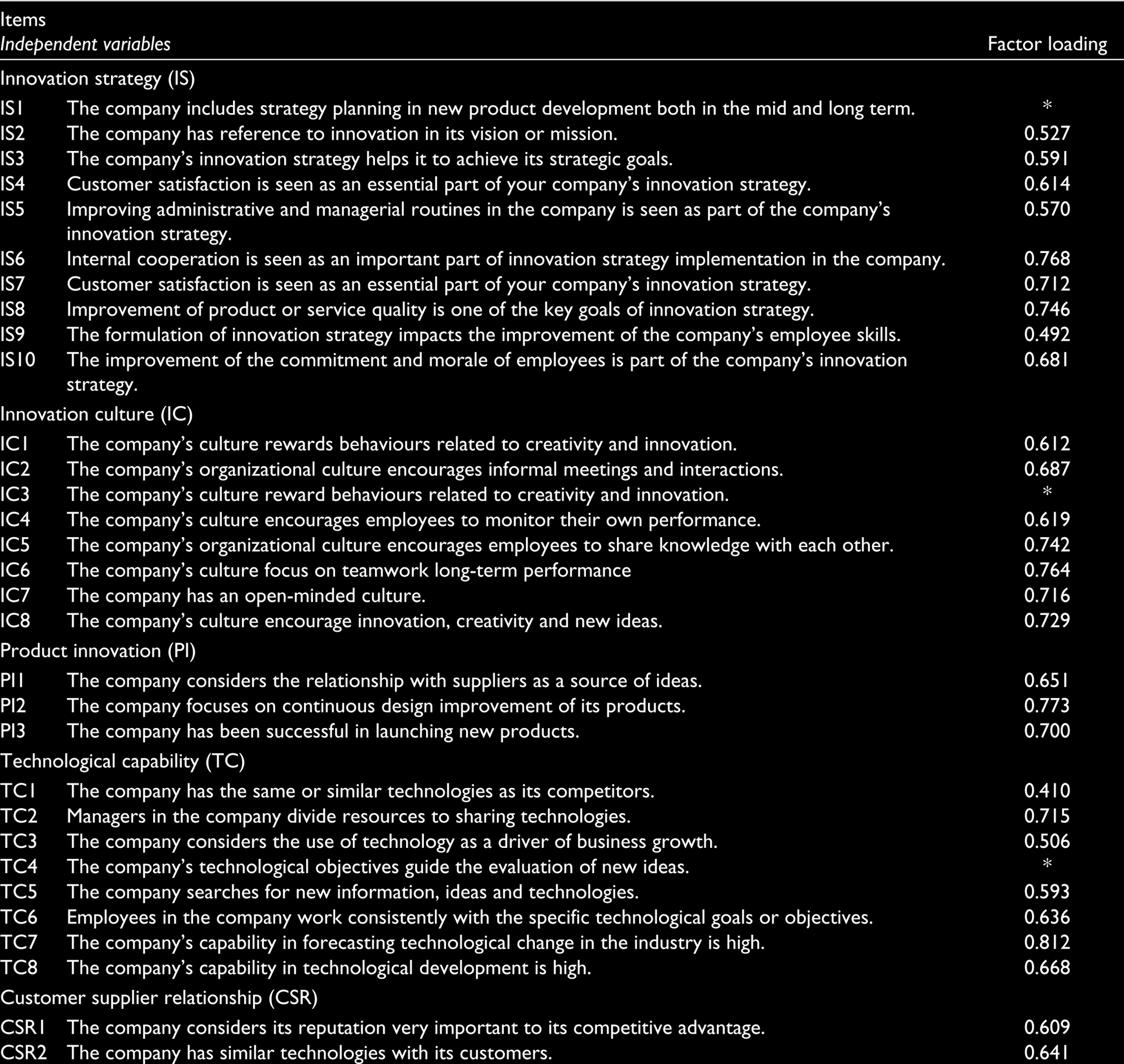
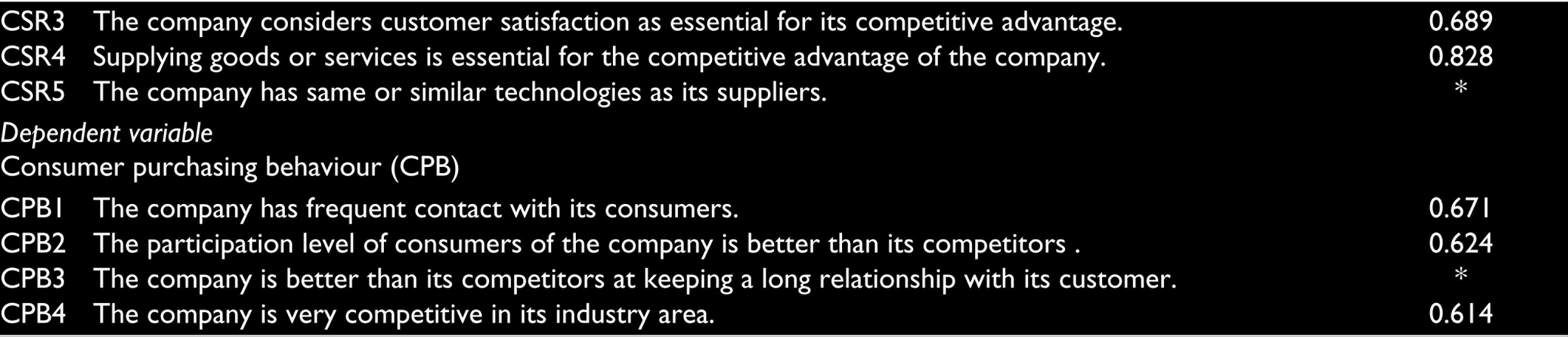
CFA was conducted to check the structural validity (Hair et al., 1992). The factor loadings of all items were larger than 0.4 and they ranged from 0.49 to 0.82 (see appendix). This implies that all those indicators could be retained, according to the study of Straub et al. (2004), who underlined that the items should have a factor loading of 0.40 or more to be significant.
The reliability analysis of constructs is an essential criterion to examine before approaching the exploratory analysis of the data. The Cronbach’s alpha test was used to determine the reliability of the constructs. Table 1 outlines the values of Cronbach’s Alpha. They ranged from 0.72 to 0.82 and were then higher than the acceptable level of 0.70. Therefore, the reliability test meets the standards of reliability for the survey instrument (Nunnally, 1978).
Reliability Test
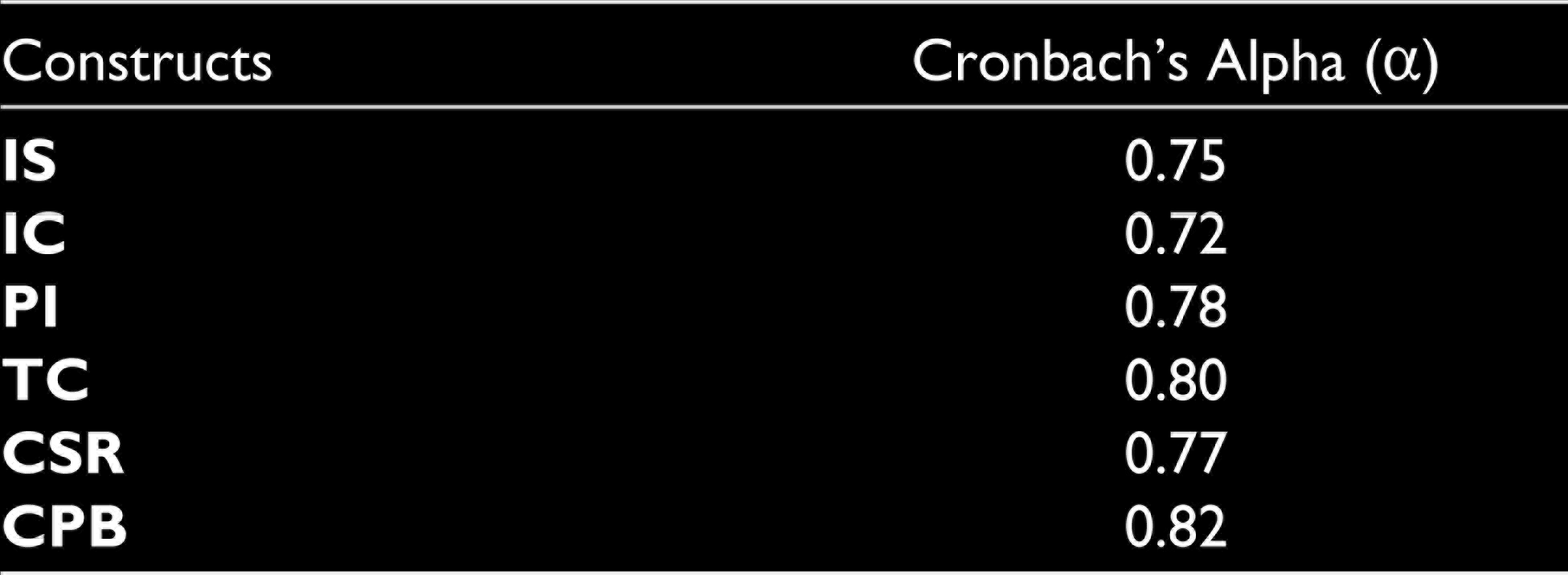
Table 2 outlines the findings related to descriptive statistics and to the correlation between the six variables. The mean and standard deviations of each construct are also presented in Table 2. The highest correlation was between IS and CPB (0.43). Besides, the overall correlation results revealed that there is a significant moderate association between IC and CPB; PI and CPB; and CSR and CPB (r ranging from 0.28 to 0.37). However, the lowest correlation was between TC and CPB (r = 0.16, p < .05). Consequently, it can be deduced that an increase in IS, IC, PI, TC and CSR will influence positively the CPB.
Descriptive Statistics and Correlation

Subsequently, in order to test the hypotheses, a structural equation model (SEM) was performed with the AMOS 16 software. Table 3 presents the hypotheses, hypothesized links, standardized path coefficient β, t-values, p-values, R² values, and Stone-Geisser’s Q² values.
Structural Equation Modelling (SEM)
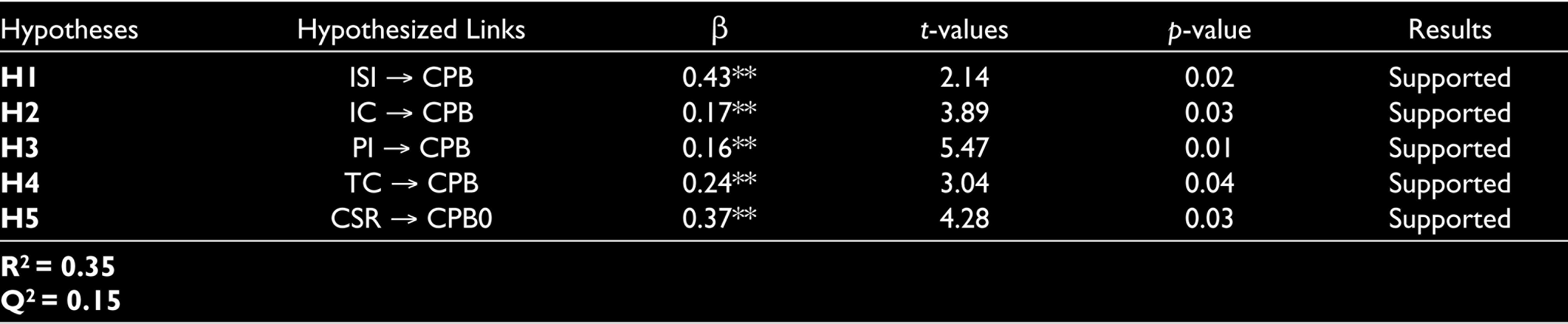
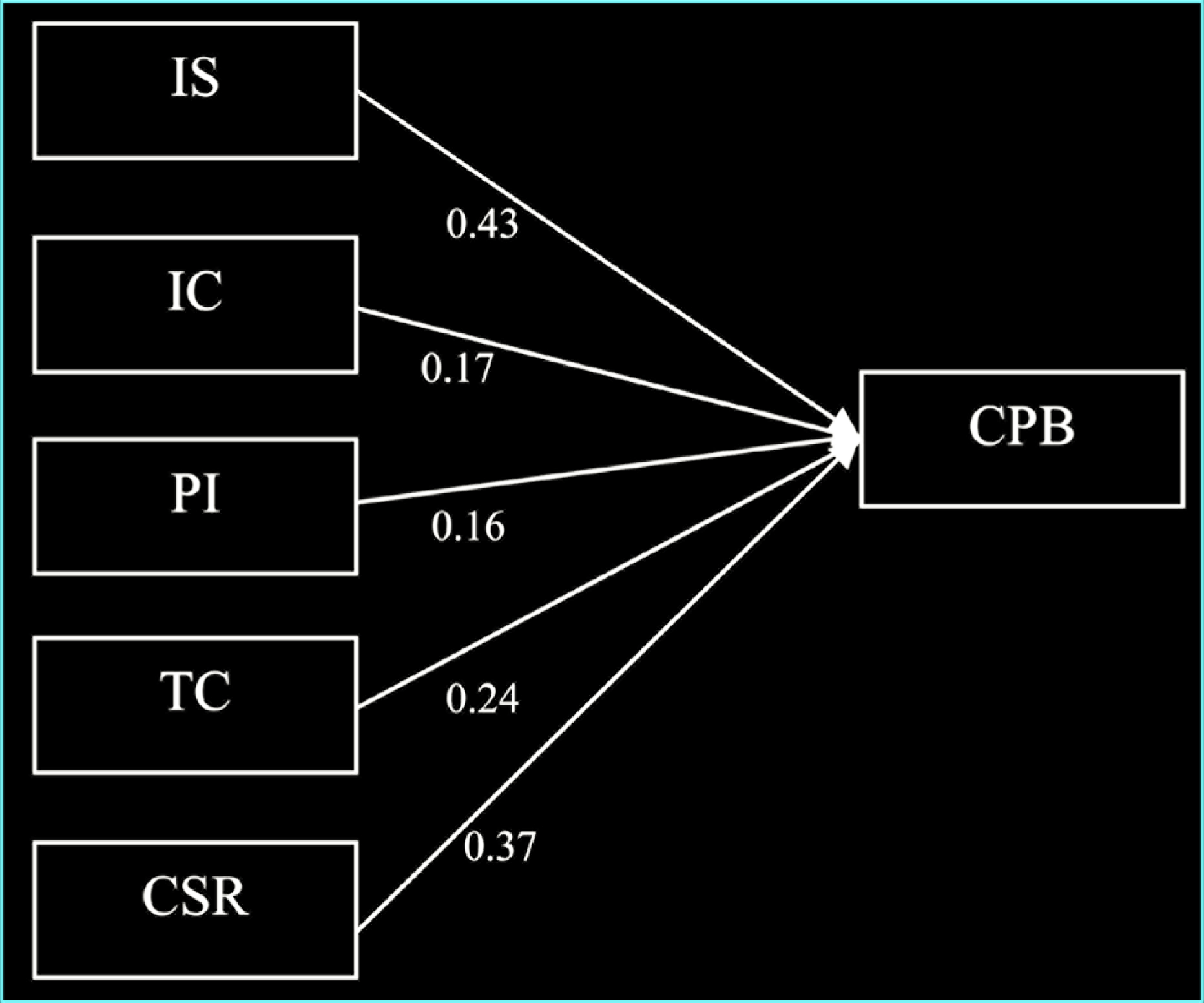
Findings supported that IS has a strong positive effect on CPB (β = 0.43, p < .05). Besides, IC and PI have a weak influence on CPB (β = 0.17, β = 0.16, p < .05). TC and CSR have a moderate impact on CPB (β = 0.24, β = 0.37, p < .05). Therefore, the corresponding research hypotheses H1, H2, H3, H4 and H5 can be supported. Moreover, the results of the SEM fit indices indicate a good fit (X2 = 2.0, CFI = 0.95, GFI = 0.95, AGFI = 0.95, TLI = 0.95 and RMESA = 0.04).
The Figure 5, presented below, depicts the structural equation model, with the different hypothesized associations between the dependent and the independent variables of the present research.
Finally, the R2 value of 0.35 indicated an acceptable level of predictability in our analysis, according to Chin (1998). It means that 35% the variance in CPB might be explained by IS, IC, PI, TC and CSR. On the other hand, the Q² value of 0.15 is higher than the threshold value of zero, specifying that the independent variables are relevant and predictive for CPB.
All the above presented findings show that the theoretical proposed model is reliable.
Discussion
The objective of this research was to test the influence of SIM practices on CPB during the COVID-19 crisis. Five hypotheses were proposed to test the effects of IS, IC, PI, TC of companies and CSR on CPB. They were significantly supported, based on the results of the study.
Results showed that IS of an organization influences the CPB. In other words, companies who implement a successful innovation strategy have higher indicators of customer satisfaction towards their products and services. This highlights that innovation has become necessary for organizations’ competitiveness, and it is the main tool from which organizations can increase their CPB. Such a finding supports those of several previous studies (Awan & Zahra, 2014; Bessant & Tidd, 2007; Kalay & Lynn, 2015).
This study also confirmed that the IC of an organization increases its chance to get more customers. Higher employees’ involvement increases the IC, due to which employees will generate new ideas or products for customers. Therefore, companies, which develop an organizational culture based on rewarding employees’ creativity and encouraging them to share knowledge and monitor their performance, are determined as profitable. This result is consistent with those already retrieved in previous investigations on the positive impact of IC on CPB (Gajjar, 2013; Yang & Konrad, 2011). Thus, Moroccan companies must encourage their employees and boost their abilities to embrace IC and be more creative.
In addition, findings supported that PI has a significant impact on CPB. In other words, outstanding customer service and innovative products influence customers’ buying decisions and develop their loyalty for repeat purchases. This finding is in line with those already supported by with Lahindah and Siahaan (2018) and Pishgar et al. (2013) studies.
Results of this study showed that TC of an organization improves the CPB. This result is consistent with those found in the studies of Waheed and Jianhua (2018), Koufaris (2002), and Osmonbekov and Johnston (2018). The COVID-19 crisis had then accelerated the use of technologies, and customers became dependent on companies’ web facilities for purchasing. It implies that Moroccan companies need to multiply their online platforms and services to interact with their clients and generate a positive value on their customer service.
Lastly, findings revealed that CSR has a strong significant impact on CPB. Companies, which focus on their customers’ satisfaction and consider CSR as a source of information, are more likely to prosper and to build up sustainable competitive advantages. In the same orientation, scholars underlined the importance of CSR development in optimizing costs and gaining new sources of information (Chung & Kim, 2003; Hippel, 2005). Thus, fostering the CSR can affect companies’ operation costs, product acquisition as well as supplier and customer intentions (Cannon & Homburg, 2001; Eggert & Ulaga, 2010).
Implications
This study shows that companies can successfully overcome this sanitary COVID-19 crisis by improving their CPB. This can be done whenever managers focus on implementing innovation with respect to the key practices (IS, IC, PI, TC and CSR).
The results of this study can be applied in the Moroccan context to help companies to gain a competitive advantage in their respective industries. The present research concluded that SIM practices are influencing the CPB of Moroccan companies, especially via the effect of a successful innovation strategy. First, managers of the companies should focus on SIM practices to increase their CPB. For this purpose, an innovation management system can improve innovation performance (Terziovski, 2010), which can be introduced in Moroccan companies to enhance CPB. Besides, by developing an IC, Moroccan companies will be more likely to foster their innovation management system, and then to upgrade their overall organizational performance (Terziovski, 2010). Top managers of Moroccan companies are thus invited to nurture their innovation culture by introducing recognition systems and rewards on generating new ideas, innovation behaviours and rule-breaking for existing and potential employees (Khazanchi et al., 2007). Additionally, the outdated technologies used for working and dealing with customers can resist to the change processes’ requirements (Khan & Manopichetwattana, 1989). Therefore, during the COVID-19 crisis, Moroccan companies’ decision-makers have been conveyed to adopt the latest ways of doing business, such as digital marketing tools, and to develop e-commerce platforms, in order to improve the customer’s online purchasing behaviour. Furthermore, the strategic objectives of Moroccan companies should include more innovation targets and performance indicators (Bessant & Tidd, 2007). Those objectives might be declined into all the levels of the company, due to which they can give innovative services and products to their customers to increase the customer loyalty.
Conclusion, Limitations and Future Research Directions
The research objective of the study was to empirically test the effects of SIM practices among Moroccan organizations on CPB during the COVID-19 crisis. The data were collected from 57 Moroccan companies operating in different sectors. Conclusive results supported that IS, IC, PI, TC and CSR have a significant and positive influence on the CPB during the time of crisis.
However, like any other study, this research has several limitations that could provide a forward for future research. First, this study was conducted on 57 Moroccan companies with a limited sample size. Second, the sample of companies considered in this study corresponds to the ones located only in the regions of Casablanca-Settat, Rabat-Salé-Kénitra and Tangier-Tétouan-Al Hoceima and operating according to ISO standards. As a result, future studies might extend the investigation scope to other companies from various industries and samples could yield different results. Third, since quantitative data were obtained from one respondent per company, the common method bias was not considered in this study. Therefore, future researches can treat the common method bias, including multiple respondents from the organization. Fifth, the framework did not include any mediator or moderator. That is why future scholars can involve different other constructs in the theoretical model we proposed to test the effects of SMI practices and CSB. Lastly, this study did not test the long-run cause and effect relations between those variables. Further studies can investigate the longitudinal design relations.
Footnotes
Declaration of Conflicting Interests
The authors declared no potential conflicts of interest with respect to the research, authorship and/or publication of this article.
Funding
The authors received no financial support for the research, authorship and/or publication of this article.
Measurement Items
| Items Independent variables |
Factor loading | |
| Innovation strategy (IS) | ||
| IS1 | The company includes strategy planning in new product development both in the mid and long term. | * |
| IS2 | The company has reference to innovation in its vision or mission. | 0.527 |
| IS3 | The company’s innovation strategy helps it to achieve its strategic goals. | 0.591 |
| IS4 | Customer satisfaction is seen as an essential part of your company’s innovation strategy. | 0.614 |
| IS5 | Improving administrative and managerial routines in the company is seen as part of the company’s innovation strategy. | 0.570 |
| IS6 | Internal cooperation is seen as an important part of innovation strategy implementation in the company. | 0.768 |
| IS7 | Customer satisfaction is seen as an essential part of your company’s innovation strategy. | 0.712 |
| IS8 | Improvement of product or service quality is one of the key goals of innovation strategy. | 0.746 |
| IS9 | The formulation of innovation strategy impacts the improvement of the company’s employee skills. | 0.492 |
| IS10 | The improvement of the commitment and morale of employees is part of the company’s innovation strategy. | 0.681 |
| Innovation culture (IC) | ||
| IC1 | The company’s culture rewards behaviours related to creativity and innovation. | 0.612 |
| IC2 | The company’s organizational culture encourages informal meetings and interactions. | 0.687 |
| IC3 | The company’s culture reward behaviours related to creativity and innovation. | * |
| IC4 | The company’s culture encourages employees to monitor their own performance. | 0.619 |
| IC5 | The company’s organizational culture encourages employees to share knowledge with each other. | 0.742 |
| IC6 | The company’s culture focus on teamwork long-term performance | 0.764 |
| IC7 | The company has an open-minded culture. | 0.716 |
| IC8 | The company’s culture encourage innovation, creativity and new ideas. | 0.729 |
| Product innovation (PI) | ||
| PI1 | The company considers the relationship with suppliers as a source of ideas. | 0.651 |
| PI2 | The company focuses on continuous design improvement of its products. | 0.773 |
| PI3 | The company has been successful in launching new products. | 0.700 |
| Technological capability (TC) | ||
| TC1 | The company has the same or similar technologies as its competitors. | 0.410 |
| TC2 | Managers in the company divide resources to sharing technologies. | 0.715 |
| TC3 | The company considers the use of technology as a driver of business growth. | 0.506 |
| TC4 | The company’s technological objectives guide the evaluation of new ideas. | * |
| TC5 | The company searches for new information, ideas and technologies. | 0.593 |
| TC6 | Employees in the company work consistently with the specific technological goals or objectives. | 0.636 |
| TC7 | The company’s capability in forecasting technological change in the industry is high. | 0.812 |
| TC8 | The company’s capability in technological development is high. | 0.668 |
| Customer supplier relationship (CSR) | ||
| CSR1 | The company considers its reputation very important to its competitive advantage. | 0.609 |
| CSR2 | The company has similar technologies with its customers. | 0.641 |
| CSR3 | The company considers customer satisfaction as essential for its competitive advantage. | 0.689 |
| CSR4 | Supplying goods or services is essential for the competitive advantage of the company. | 0.828 |
| CSR5 | The company has same or similar technologies as its suppliers. | * |
| Dependent variable Consumer purchasing behaviour (CPB) |
||
| CPB1 | The company has frequent contact with its consumers. | 0.671 |
| CPB2 | The participation level of consumers of the company is better than its competitors . | 0.624 |
| CPB3 | The company is better than its competitors at keeping a long relationship with its customer. | * |
| CPB4 | The company is very competitive in its industry area. | 0.614 |