



Abstract
The global retail industry is undergoing a continuous digital transformation, which has a significant impact on the Hungarian market since it is dominated by large multinational businesses. Although there have been several studies on digitalization as a factor of retail integration and analyses of digitalization projects, a sector-wide framework for mapping key digital solutions has not yet been implemented in the field of Hungarian research. This study attempts to provide insights into the challenges and opportunities of digitalization in the Hungarian retail sector, as well as identify best practices. The research also seeks to investigate the digitalization solutions implemented in the Hungarian food and apparel retail sectors by conducting semi-structured in-depth interviews with six industry experts. The findings of our research outline that the implementation of key digital solutions that contribute to consumer experience and education is the most important step in the digital transformation process. Businesses must embrace online channels and adopt an omnichannel model. In terms of consumer education and marketing, loyalty programmes can generate additional revenue through personalized discounts. Using digitalization tools such as automated inventory and supply chain management or data-driven decision-making, the costs of back-end operations can be reduced. By automating manual processes, retailers can streamline their workflows too, resulting in efficient operations and enhanced consumer experience.
Introduction
Our global economy has experienced several external shocks in the past years, out of which the COVID-19 pandemic proved to be a serious test for most industries. Among the hardest hit was the retail segment (Tabeck & Ahuja, 2023), which had to undergo a major transformation to survive. This survival was ensured with the help of emerging digital business models and the increasing application of novel technologies (Böttcher et al., 2022). This phenomenon is especially interesting to examine as retail has traditionally been referred to as a low-technology sector (Palmié et al., 2022).
Despite its history, retail has become one of the most digitalized sectors today as both physical and digital stores continue to break through and reach customers. With mobile applications, consumers can connect with retailers as conveniently as they like, wherever they like (Faulds et al., 2018). Both in customer-facing in-store technologies and innovative back-end solutions, retailers are creating novel value for customers. Consumers may see QR codes, digital signage, even virtual fitting rooms, and many more digital tools when shopping at retailers (Shankar et al., 2021). Back-end processes are optimized by service robots, which optimize efficiency at retailers (Pistrui et al., 2023). Retailers are striving to offer a seamless experience while opting for such digital tools. Omnichannel retailing has steadily become the new norm expected by consumers (Graf et al., 2021). Such business models require companies to seamlessly integrate their back-end and front-end operation areas so that consumer experience is maximized (Bonetti et al., 2023) and is homogenous for consumers on various different channels (Mostaghel et al., 2022). Both back-end and front-end operations can be supported with digital technologies, which may create a competitive advantage for the retailer (Pistrui et al., 2023). There is no such recipe, however, which may show the way for retailers on how to apply digital technologies, and as such, it is paramount to investigate how different retailers approach digitalization to edge out their competitors.
Nowadays, with the rise of artificial intelligence (AI) in the retail sector, the importance of research around the main principles of digitalization is growing. AI will have an impact in most industries, further improving the customer experience, making service smoother, and taking the burden of more automated tasks off the shoulders of employees (Ahn et al., 2024; Lopes et al., 2024). Although technology can automate single tasks, some jobs are not entirely exchangeable by algorithms (Manzo et al., 2024), and therefore, digitalization should be examined in the context of the whole value chain.
This article examines the level and direction of digitalization in Hungary’s food and fashion retail sectors through a literature review and semi-structured interviews. Our research addresses a gap in the literature on Hungarian retail digitalization. Section 2 outlines the literature and research framework, applied to six interviews with Hungarian retail executives. Section 3 summarizes the methodology, Section 4 presents findings by retail segments and companies, and Section 5 concludes with key insights.
Literature Review
The Emergence of New Business Models
The emergence of digitalisation in the sector dates back to the 1970s when barcodes appeared; the use of technological solutions became prevalent with the spread of the internet (Berezvai et al., 2019). In the past 10 years, new business models have emerged to keep up with the shifting needs and expectations of consumers. According to Suarez et al. (2013), digitalization has accelerated the shift from product- to service-based businesses, fundamentally altering how businesses compete and engage with consumers (Porter & Heppelmann, 2014). For instance, in the retail sector, retailers have traditionally competed primarily on prices, selections and locations (Popkowski Leszczyc et al., 2004). However, as information technology advances, it is now essential to develop concepts and services that add value for consumers. Furthermore, recent studies show that retailers who act fast in digitalization can gain a competitive edge over competitors (Kumar et al., 2023).
Conventional retailers are under pressure to alter their business models to maintain their market shares, as e-commerce and digital retailers gain traction. Numerous traditional brick-and-mortar retailers have gone online, created web-based shops and mobile apps, or increased the number of digital customer touchpoints they offer to customers (Jocevski, 2020). These business model innovations, however, have not proven to be simple, with well-known retailers finding it difficult to come up with convincing responses (Hokkanen et al., 2020). Conversely, ‘born digital’ retailers like Amazon, eBay and Zalando were successful in establishing strong positions in their respective markets. These opposing developments have created two competing narratives—one of a ‘retail apocalypse’ and the other of new opportunities in the retail market (Hokkanen et al., 2020). Innovation in digital business models will probably determine which narrative takes shape for each sector company.
Agárdi (2018, p. 52) discusses the integrative effects of the digitalization of retailing, stating that ‘digitalization is blurring the boundaries between offline and online channels, between retailer and consumer roles, and between products and services’. In addition to conventional retailers, ‘born digital’ retailers like Amazon are innovating with digital business models. Amazon Go, for example, integrates technologies allowing customers to shop without checkout, highlighting the growing importance of digital innovation in retail (Jocevski, 2020). Such business models are being tested and tried in Hungary, as Szabó-Szentgróti et al. (2023) report an ease of technology use and substantial willingness towards using cashierless stores among Hungarian university students, a sizeable target group for retailers.
New digital businesses and business models aim to maximize the use of information technology advancements, and they have created entirely new rules for strategy. By facilitating novel types of digital consumer-to-firm engagement (Sashi, 2012), consumer experience (Minkiewicz et al., 2014) and consumer value (Rintamäki et al., 2007), these business models provide consumers with more opportunities to satisfy superficial needs. In the context of the Hungarian market, consumers are becoming more capable of using smart retail solutions too (Szabó-Szentgróti & Szabó-Szentgróti, 2021).
As a result of digitalization, the concepts of multichannel and omnichannel retailing have emerged in retail literature, examining how retailers can create a consistent consumer experience regardless of the retail channel employed (Lemon & Verhoef, 2016; Verhoef et al., 2015). Blitz (2016), for instance, argues that successful omnichannel and multichannel retailers prioritize the maximization of consumer value over the optimization of short-term shareholder value.
Retail is being rapidly digitalized, with major chains in the region benefiting from centrally managed efforts and Hungary’s high information and communication technology (ICT) readiness enabling advanced technology deployment. Regional differences in consumption and value creation heavily influence technology needs (Machek, 2012; World Economic Forum (WEF), 2018). Pistrui et al. (2023) also find geographical variations: Asian retailers prioritize service robots for customer experience, while European and US retailers balance digital tools across front- and back-end operations, with less emphasis on in-store digital experiences.
Digital Solutions in the Organizational Structure
Given that digitalization is arguably not a binary transition from one stage to another, but rather an ongoing process without a clear beginning or end (Hagberg et al., 2016), investigating retail digitalization requires a process-oriented approach to understand its impact on business transformation. Beyond frameworks for integration, it is crucial to explore and model processes that lead to digital adoption and how it reshapes established business models.
Existing frameworks grasp retail innovation from different perspectives. Ratchford et al. (2023) constitute their framework of retail innovation based on encounters between retailer and consumer, naming three stages: purchase, payment and delivery. It highlights the fact that innovative solutions should be evaluated based on how consumers react to them (Chorowski et al., 2023). The purchase stage involves consumer service robots, kiosks and no-inventory technology stores. Payment notably includes self-checkout solutions, while delivery includes autonomous vehicles, drones and subscription-based solutions which deliver products to the customer (Ratchford et al., 2023). While the framework introduces innovation based on customer-retailer encounters, the business model aspect is merely touched upon.
As a result of examining IKEA’s surge to retail leadership and retail competitors, Khan and Sarkar (2024) propose a digital leadership framework. They acknowledge the change management aspect and several business model components in how retailers succeed as digital leaders. Based on Innovation and Manufacturing Theory, understanding customers and networking with potential partners is key. With strong marketing strategies and smart HR management, retailers can become digital leaders in their markets. In this model, organizational digitalization plays a part as HR is heavily integrated in the process. The framework showcases the fact that retailers nowadays must keep the harmony between changing consumer behaviour and technological changes (Kita & Cvirik, 2024).
According to Teece (2018), there are probably as many business model definitions as there are business models. As stated by Ritter and Lettl (2018), a company’s business model is its ‘way of doing business’. Considering how business models have been discussed in retail settings (Sorescu et al., 2011), we define the business model of a company in this article as ‘the firm’s distinctive logic for value creation and appropriation’ (Ritter & Lettl, 2018). Digitalization affects both internal and external aspects of businesses and their models. While studies explore innovations from gradual changes to radical shifts (Snihur & Wiklund, 2019), the exploration phase of digitalization requires further research.
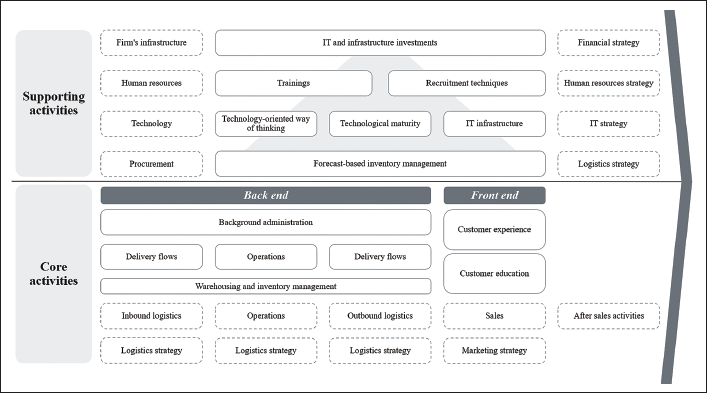
According to Matyusz and Pistrui (2020), an analytical framework can be created to segment and categorize digital solutions. It builds on the value chain model of Porter (1985) while drawing insights from previous literature and empirical research. Porter’s management literature findings highlighted the importance of digitalization in remaining competitive. The role of digitalization in value creation activities of firms is also well-established in consultancy research. As this study aims to assess the importance of digitalization, the value chain framework has been an obvious choice for us to interpret different findings in the context of retail. By combining the described sources, Matyusz and Pistrui (2020) have already analyzed the impact of digitalization separately on supporting and core activities, as depicted in Figure 1.
The emergence of omnichannel capabilities and new business models has created a new environment for companies that affects how they build their value chains (Juaneda-Ayensa et al., 2016). There is an increased scrutiny on each distinct part of value chains too. For example, according to Willems et al. (2017), forecast-based inventory management systems play a crucial supporting role in the procurement process, which has an impact on the company as a whole.
Core tasks that make up a value chain can be separated into back-end and front-end activities, claim Matyusz and Pistrui (2020). On the back end, logistics and supply chain management tasks include managing warehouses and inventories, transport procedures, and shop operations. Front-end activities concentrate on sales and marketing tasks, such as offering a positive customer experience and teaching customers about digitalization tools to improve this experience. The integration of these processes is essential for maximizing value creation for consumers.
According to Deloitte’s report (2017), there are three key areas in which digitization can bring improvement: (a) strategy, which requires business model innovation for pricing, location, scale, assortment, segmentation and positioning; (b) front-end, which involves the design of the store, communication, promotions, pricing solutions, loyalty programmes and other factors affecting customer experience; (c) back-end, which includes supply chain, logistics, warehousing, digital procurement, vendor management, assortment design and planning, human resource management and financial automation.
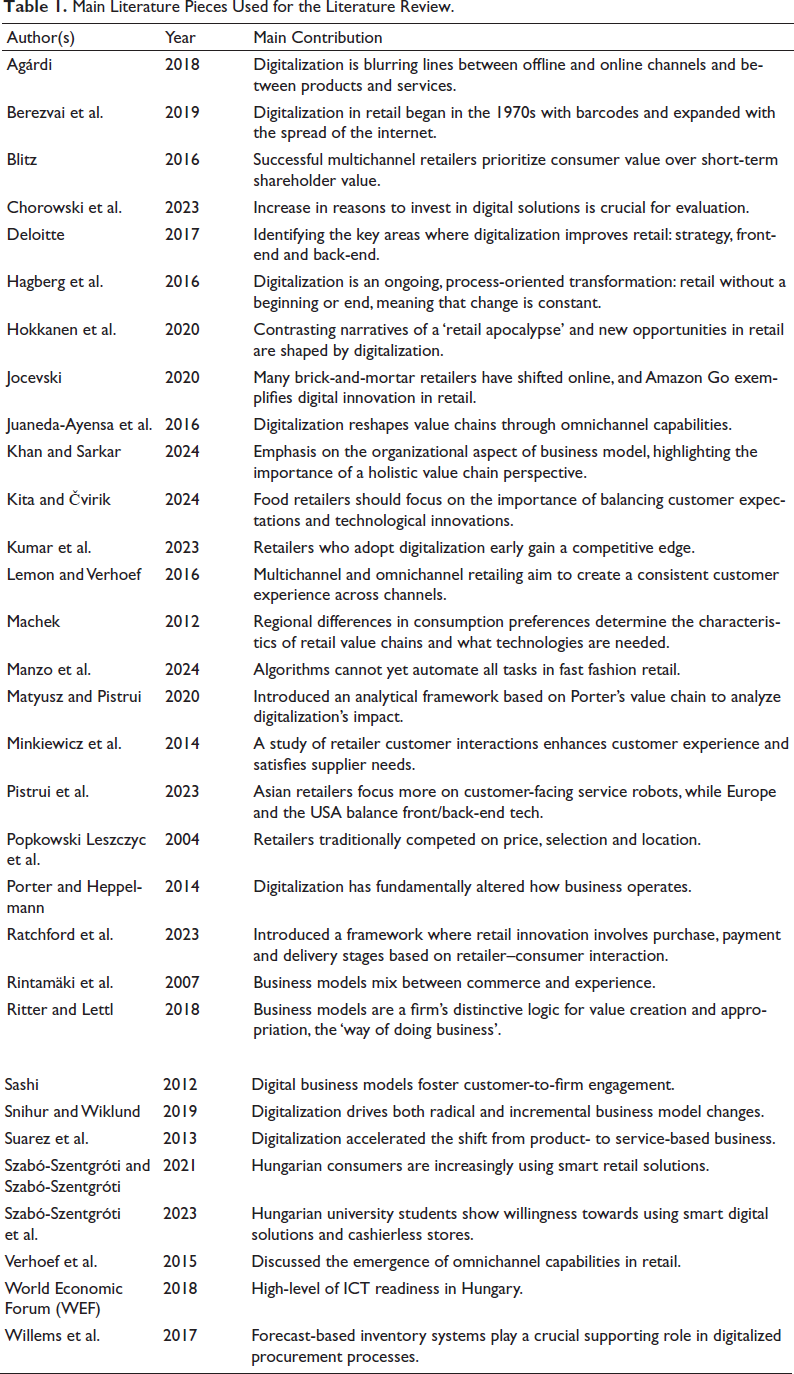
Table 1 summarises the key literature used in this article to provide a general introduction to our research.
Main Literature Pieces Used for the Literature Review.
The primary objective of this study is to investigate the predominant digitalization measures employed in the Hungarian retail industry, with a focus on the food and apparel retail sectors. The aim of the study is to explicate the key trends, patterns and best practices that have emerged as a result of digitalization, as well as the underlying rationales and implications of these developments.
Research Questions
To conduct our research, we formulated the following main research question:
‘How does digitalization affect companies’ front- and back-end activities in the Hungarian food and apparel retail sectors?’
We analyzed how food and fashion retail companies in Hungary are framing and implementing digitalization projects. By segmenting solutions into front- and back-end activities and identifying key enablers, we gained insights into digitalization’s role in functional strategies and its impact on domestic retail. The study aims to highlight significant digital solutions rather than exhaustively map all approaches, focusing on key retail segments like hypermarkets, discounters and online retailers in the food sector.
To support the research question and to understand the digitalization of the Hungarian clothing and food retail sectors, we have defined the following sub-question:
‘What are the similarities and differences between the Hungarian food and apparel retail sectors in terms of digitalization?’
By comparing digitalization solutions in the food and apparel sectors, we can gain an understanding of their similarities and differences. The selected industries are comparable in that they are both consumer-focused.
Data Collection Method
The research utilizes data from secondary sources. Industry analyses, articles, statistics, company websites and reports were examined to map the digitalization of Hungary’s retail sector. Fashion and food retailers, identified by McKinsey & Company (2020) as the most innovative, were analyzed. Semi-structured interviews with experts further explored their digitalization processes.
As a methodological tool, the in-depth interview enables us to examine the researched topic from the interviewee’s perspective, thereby gaining a better understanding of the interviewee’s way of thinking (King, 1994). The English word interview also refers to the objective of the methodology, which is to obtain and comprehend the subject’s different points of view (Sayrs, 1998). Due to its relative simplicity and efficacy, the in-depth interview is one of the most popular qualitative research methods (Cook, 2008).
Expert interviews target individuals with specialized knowledge, such as managers, researchers or field experts, who provide insights unavailable through other methods (Ogden, 2008). Participants are typically identified by name.
Specimen
To gain a more comprehensive understanding of the research questions posed, we conducted in-depth interviews with six different experts, about whom more information is provided in Table 2.
List of Companies Participating in In-depth Interviews by Retail Sector, Segment and Position.
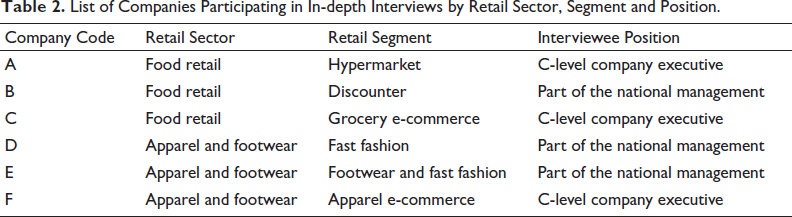
List of Companies Participating in In-depth Interviews by Retail Sector, Segment and Position.
As a starting point, we have analyzed the Hungarian retail market’s different segments based on the data set of the Central Statistical Office (2023). The largest market segments were identified based on annual turnover: food and apparel and footwear. We have also analyzed the retail market toplist of Hungary, published by Trademagazin (2022), to further validate our selection process for the FMCG retail interviews. We contacted representative companies on the market based on the list, and six retailers agreed to participate in our research.
The selected companies are major players in the Hungarian market, mostly subsidiaries of multinational chains, providing insights into international trends and domestic developments. They were chosen for their industry role, digital solutions and market position. Due to confidentiality, expert names, positions and company details remain undisclosed. From January to March 2023, semi-structured online interviews were conducted, typically lasting between 45 and 60 min.
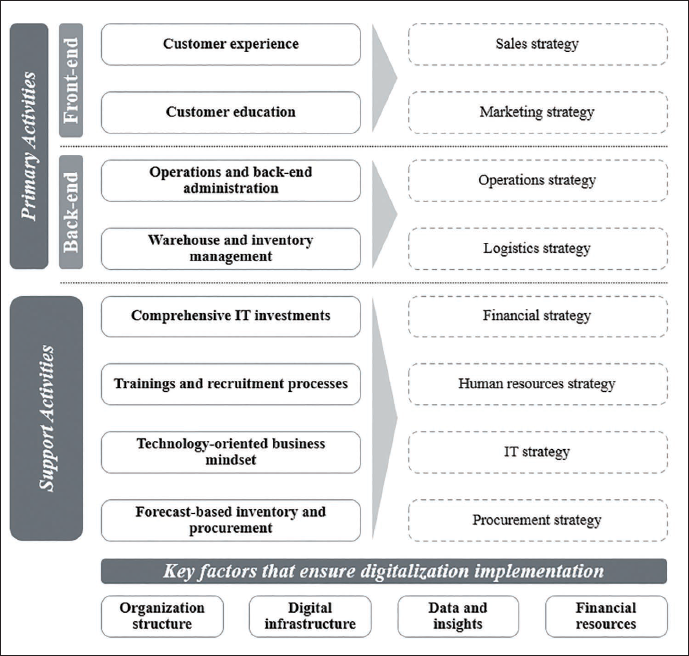
To identify the segments and functional strategies where digitalization is occurring in the lives of various retail companies, we drew on prominent previous studies. Based on this, we have developed a framework for comparing companies and even distinct retail segments. We segmented the analytical framework into primary and supporting activities based on Porter (1985), followed the structure outlined by Matyusz and Pistrui (2020), as well as Sorescu et al. (2011), and incorporated Deloitte’s (2017) mapping of key digital solutions into the model (Figure 2). The benefit of this is that we can analyze the companies within a single retail-segment-spanning framework and obtain a comprehensive picture of the various digitalization solutions.
To conduct a comprehensive evaluation of the digitalization solutions implemented in the Hungarian retail industry, it is necessary to conduct a thorough examination of the entire retail industry.
Key Digitalization Solutions in the Hungarian Food Retail Sector
Hypermarket Sector
We conducted a comprehensive expert interview with a multinational retailer that is a significant player in Hungary’s hypermarket retail segment. In the subsequent paragraphs, the organization is presented as ‘Company A’.
Key factors that ensure digitalization implementation:
They designed each level of the organizational structure to be digitalized. They divide their service model into 10 highest-level processes. Primary processes include creating and developing customer proposals, procurement, logistics and offline and online customer service. These processes are at the core of retail and generate the most value, making them the most crucial areas for innovation.
At ‘Company A’, more than 5,000 people are employed in the company’s global technology and development department. The company tends to outsource the standard and low-value-added digitization processes, such as those in legal, compliance and finance. Developing solutions internally for high-value-added processes, such as customer-facing systems, back-office systems, supply chain platforms and loyalty card systems, allows for complete control over the development process.
We use third-party software providers at little points, for example, compliance areas, when they’re fairly standard. Other bits where we think we can add value and have a unique proposition—we will build it ourselves. There’s a big cost in doing that. You could have a far thinner technology organization, but you wouldn’t get some of the value out of it, and you would have to get an additional license cost. (Company A, C-level executive)
As our interviewee highlighted, retailers are analysing their technology potential and trying to tap into those points where they can add real value.
Key digital solutions for primary front-end activities:
Even though the majority of sales still take place in physical stores, ‘Company A’ was one of the first major grocery retailers to introduce online shopping in the late 1990s. This established the basis for an omnichannel experience. In addition to the numerous digital solutions, such as advanced data analytics, that the business has implemented over time, the customer experience is more personalized than ever before.
The customer journey begins with a loyalty card linked to a loyalty club membership, enabling online shopping, delivery or click-and-collect. Non-members miss out on discounts, encouraging programme enrolment. Discounts are now fully digital via the webshop and app, replacing paper leaflets. The company analyzes customer data, including shopping habits, preferences and spending patterns, to offer personalized recommendations and long-term customized offers.
‘Company A’ has an alternative opportunity to partner with FMCG companies to use its platform for digital advertising, offering sponsored discounts recognized as good deals. By leveraging data, the company personalizes the customer experience, upsells products and boosts loyalty. This ‘share of wallet’ strategy rewards customers with loyalty points and personalized discounts, encouraging them to spend more with this retailer. Company A highlighted the fact that personalization is crucial in today’s retail business model and that real value comes from customized delivery of business models.
On one hand, we hope that by understanding our customers better through their purchase-related data, we can target them better with relevant offers and promotions that help them spend less overall. On the other hand, we use this data to help FMCG brands to connect more directly with customers. (Company A, C-level executive)
When it comes to payment, customers have four options: traditional cashier checkout, assisted self-checkout with staff support to reduce labour costs, self-scanning with a store-provided scanner for loyalty members and app-based self-scanning using a personal smartphone. These systems enhance convenience, speed and collaboration opportunities with FMCG brands for personalized promotions.
Key digital solutions for primary back-end activities:
In comparison to other hypermarket competitors, the firm was able to achieve nearly fully automated pricing decisions, which gave it an advantage in terms of value-based pricing. The algorithm determines the pricing decisions based on market segment-specific criteria.
The back-end administration is fairly digital, allowing the business to reduce costs for these processes as well. Employees have access to a set of in-house administration systems, either on their own devices or on a corporate tool, which they can use to complete the paperwork themselves.
‘Company A’ also employs forecast-based supply chain systems using AI, machine learning and data analytics to enhance efficiency, manage inventory and reduce lead times. Nearly 95% of its back-end processes are automated, requiring minimal human input. This example highlights the importance of managing technology changes and catering to the relationship between human resources and technology.
We have an almost fully automated forecasting engine that we have built ourselves, which calculates on a stock keeping unit level that we are going to sell. The algorithm then automatically creates supplier orders based on a set of rules that enable us to order more efficiently. (Company A, C-level executive)
Key digital solutions for supporting activities:
The entirely digital supply chain management system has digitalized the procurement system. Over the past decade, the company has made substantial technological investments as high wage levels and the pandemic prompted businesses to turn to digital initiatives. They have shifted their operations to agile project management and implemented product methodology, laying the groundwork for digital initiatives.
Summary of observations in the hypermarket segment:
‘Company A’ offers omnichannel shopping, self-scanning technology and customized offers through gathered data. This means a high level of personalization is achieved through advanced analytics. Digital integration is strong across front-end and back-end areas. Key corresponding technologies include mobile scanners, data analytics solutions and loyalty applications.
Discount Retail Segment
In Hungary, discount retailers are growing popular as consumers seek cheaper alternatives. Discounters promote private-label products, produced by the retailer itself, offering lower prices while preserving profit margins.
We conducted an in-depth expert interview with a multinational retailer that is a major player in Hungary’s discount retail segment, referred to as ‘Company B’.
Key factors that ensure digitalization implementation:
Digitalization goals are set company-wide, but execution is managed by national subsidiaries, which allocate their own financial resources. Development is mostly outsourced, though the Hungarian subsidiary has an in-house team focused on cost optimization and improving back-end efficiency.
Key digital solutions for primary front-end activities:
‘Company B’ has not yet reached the point in its digital transformation where it exclusively publishes its coupon booklet online, but it uses frequent in-store virtual merchandising displays.
In addition, they use a loyalty card system, which may be based on either physical cards or virtual cards. With this loyalty card, customers gain access to additional discounts. However, these discounts are not customer-specific. Compared to the previous example, Company B’s small lag in digital maturity is visible since personalization cannot be exploited well.
We have a standard customer app and a digital loyalty card program. If you are looking at our magazine with special offers and there is a campaign running and you are collecting points, you can collect even more points if you use your digital loyalty card instead of a plastic card. (Company B, national management)
The discount retailer also uses a third-party cashback application to attract younger generations, offering up to 5% cashback on purchases. The app automatically credits users for shopping at participating retailers, using location tracking.
‘Company B’ was the first discounter in Hungary to implement the self-checkout customer journey, although this was accomplished through a third-party provider. This indicates that the company does not have complete control over the entire ecosystem and personalization options are limited. The payment is still made at the cash register, but users can pay by presenting a QR code to the cashiers.
Key digital solutions for primary back-end activities:
During the COVID-19 pandemic, home delivery was introduced. Due to its business model, this is not the primary sales channel, but the company believes it is crucial to leverage this channel. By the first quarter of 2021, they were present in 12 of Hungary’s largest cities. They incur no additional logistical expenses because the consumer-ordered products are prepared in the local store and shipped by a third-party company.
The in-store scheduling system is 95% algorithm-driven and automated. Besides digitalized employee schedules, an automated fruit and vegetable checking system saves field managers nearly 8 h of work per week. Complementing these, there is an employee-specific, in-house knowledge database. ‘As part of a previous digitalization project, we developed a fully customized software package to optimize the various control tasks of regional managers. One of these is the so-called fruit and vegetable inspection, which we have digitalized to a large extent’ (Company B, national management). The examined company, although not fully able to personalize its offerings to customers, has made significant efforts to optimize in-house operations and back-end systems. Additionally, ‘Company B’ has committed to a ‘paperless strategy’ for its Hungarian operations by 2025.
Key digital solutions for support activities:
Given that it is based on a discount business model, the company does not prioritize the development of cutting-edge digital solutions in support activities. Even though most of the processes have been digitalized, individuals are still responsible for making the decisions in the procurement process.
Summary of observations in the discount retail segment
‘Company B’ offers a multitude of solutions such as loyalty cards, cashback promotion, virtual merchandising displays and a self-checkout system via a third-party provider. Cashback promotion and loyalty cards allow moderate personalization for the retailer. Digital integration is advanced, but implementation happens via a third party. Key corresponding technologies include virtual displays and digital applications for cashback and loyalty offerings.
Food E-commerce Segment
Hungary’s food e-commerce market is growing rapidly, driven by shifting consumer preferences and digital adoption. Retailers invest in online platforms, logistics, user-friendly apps and flexible delivery options to meet rising demand and enhance convenience.
We conducted an in-depth expert interview with a major player in Hungary’s digital FMCG retail segment for e-commerce retailers, named ‘Company C’.
Key factors that ensure digitalization implementation:
As ‘Company C’ is a delivery company that provides a grocery delivery and pick-up service, digitalization-supporting factors are intrinsic to its structure. The business provides its services via a website and a mobile application. The service enables customers to order FMCG products from multiple participating retailers while a personal shopper handles the shopping. Since the company was co-founded by an e-commerce developer, its digital infrastructure resources are assured.
Key digital solutions for primary front-end activities:
The company’s business model is based on charging a delivery fee for each order and taking a commission from the retailer based on the order’s total value. Customers can choose a delivery window and monitor the status of their shipments in real-time. ‘Company C’ utilizes a network of independent workers known as shoppers to fulfil orders. The app is utilized by retailers to receive orders, locate items in-store and deliver them to consumers. In some instances, shoppers may also contact customers to validate substitutions or order alterations.
Why do we think our business model is better? Firstly, because it is much easier to scale than a traditional e-tailer who delivers from a central warehouse and therefore keeps the product in stock. In contrast, we move people who actually go into physical stores and pick products from the selection. By relying on the existing logistics, we do not have to run a warehouse, which significantly reduces our costs. (Company C, C-level executive)
Company C boasts a different, platform-based approach where shoppers do the shopping in retail stores and deliver the order to the customers. Company C serves as a connector between shoppers and customers, and since back-end costs are significantly reduced this way, they can turn their efforts to gathering data about customers and personalize their front-end operation.
The subscription choice may present users with the opportunity to sign up for a certain order and establish it as a recurring purchase. The business intends to expand on this subscription model soon, so that it may provide customers with options that are derived from their most recent purchases using predictive analytics.
Key digital solutions for primary back-end activities:
From the perspective of ‘Company C’, the sharing economy model is beneficial in several ways. It allows the company to scale quickly by utilizing the independent shoppers’ network. By connecting all establishments to its central purchasing network, this company is digitalizing smaller and independent retailers by providing them with digital inventory management solutions. The shoppers and couriers each have their own applications that allow them to perform their administrative duties digitally. This allows the company to reduce expenses even further.
Key digital solutions for support activities:
Given the company’s nature and business model, the majority of supporting activities are automated or at least digitalized. Comprehensive IT investments are at the heart of business operations, as well as the technology-driven business mindset.
Summary of observations in the food e-commerce segment:
‘Company C’ applies real-time delivery tracking, predictive analytics, customer loyalty programmes and subscription-based ordering. Personalization is strong as predictive analytics is used based on purchasing patterns to predict recurring orders. Digital integration is strong as ‘Company C’ operates with a digital-first, easy-to-scale business model. Key corresponding technologies include cutting-edge solutions like real-time monitoring and predictive analytics.
Summary of the Key Digitalization Solutions in the Hungarian Food Retail Sector
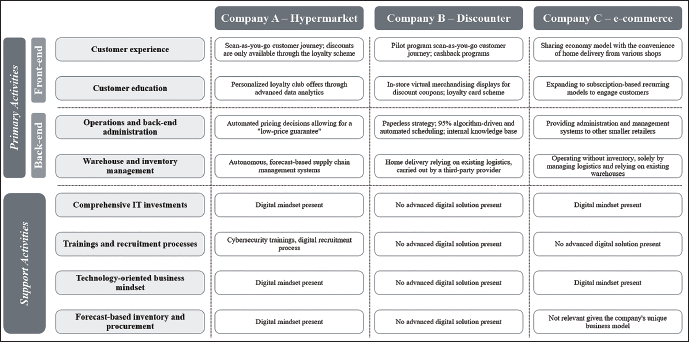
Food retailers increasingly rely on digital tools like self-scanning, loyalty programmes and supply chain solutions for data analysis and personalized discounts. While innovation in support activities is limited, digital tools optimize warehousing, inventory and product displays. Algorithm-based recruitment, though not widespread, is growing, reflecting the industry’s shift towards technology to enhance operations and customer experiences. Platform-based approaches have already emerged and are breaking through in Hungary.
Figure 3 shows a summary and comparison of our results.
Fast Fashion and Footwear Retail Segment
Hungary’s apparel and footwear market is a key retail segment, featuring local and international brands online and in-store. If we analyze market turnover, the 10 biggest companies by turnover value make up approximately 50% of the sector. In this segment, C&A, Deichmann, CCC and Humanic are the four companies that specialize in the sale of footwear, but all companies above 2% market share also sell footwear.
We conducted an in-depth expert interview with a multinational retailer that is a key participant in the fast-fashion clothing retail segment in Hungary. This organization will be referred to as ‘Company D’ in the following paragraphs. The company is a market leader in casual and business casual clothing and accessory retail. Although they sell footwear, it is not a substantial portion of their operation.
Key factors that ensure digitalization implementation:
The retailer operates globally with centralized management, benefiting the Hungarian subsidiary through uniform digital expectations. A performance-based aggregate budget supports digitization. Advanced data analytics drive operations, including a data-driven central sales plan with daily, monthly and annual targets for in-store and out-of-store channels. The company balances in-house IT maintenance with outsourced development, optimizing resources despite small internal development teams.
Key digital solutions for primary front-end activities:
Before the pandemic, the company began implementing its omnichannel programme. Consumers can engage in ‘showrooming’ and ‘webrooming’, in which they discover a product in a physical store but decide to purchase it online, or the other way around.
‘Company D’ offers ‘quick shopping’, where employees assist with online orders via a dedicated internal app showing product suggestions. The company has specific goals and plans regarding the number of quick purchases that the store should generate. The interviewee revealed that the target share of digital sales in revenue is only 2%, but still, as of now, the company finds it hard to meet that goal.
The second method of purchase is via an online store, which is comparable to better-known e-commerce fashion retailers. The customer can request products for in-store pickup or delivery. For the latter, they have implemented a click-and-collect customer journey. This provides shoppers with a flexible and convenient purchasing experience.
Click-and-collect is also a tremendous opportunity for picking up products at a nearby location. For product optimization purposes, the company categorizes stores based on their size and, in some instances, restricts the number of collections. Therefore, if a customer enters a store that does not carry a specific type of clothing, the staff can request the item from a nearby store, and the customer can pick up the clothing on the same day, easing the customer’s journey.
The company integrates its omnichannel strategy with digital loyalty programmes using phone-based authentication. Loyalty members enjoy exclusive, personalized promotions and earn 5% credit on purchases, redeemable on their next transaction.
Key digital solutions for primary back-end activities
‘Company D’ utilizes a centralized, extensive enterprise resource planning (ERP) system that can gather and evaluate data within an hour. It can be used to manage inventory, track sales and even examine store layouts.
Data analytics influence business decisions by constantly monitoring sales data and making store-by-store and week-by-week data-driven decisions. Every Monday, the national leadership teams meet with store managers to analyze key performance indicators (KPIs) and product sales based on the visualized data and make decisions for the week ahead. Assigning green, amber and red colours to key KPIs enables staff to monitor sales goals and adjust operations within a day.
We have a huge digital database where store staff can see different KPIs, including sales data from the previous year, and compare how many products from the women’s department, for example, have been sold online or offline from that store. There are central targets for this, broken down into days and months. In fact, there is a plan for everything. (Company D, national management)
In contrast to what observations we made in the food retail sector, in-store sales assistants are supported with digital tools and data gathering solutions to keep track of their progress and to ease their burden of work.
The company uses personal digital assistants (PDAs) to scan barcodes, linking to the back-end system for product details, including images. Employees can also print prices using a connected digital printer.
The warehouse in an additional European nation is nearly completely automated. The facility is able to quickly restock sizes sold out in Hungary, prioritizing the selling store. To support its omnichannel strategy, ‘Company D’ opened a ‘dark store’ exclusively for serving online shoppers and introduced ‘HUB stores’ in Hungary. HUB stores hold larger inventories, serve as intermediaries for deliveries and allow customers to pick up orders directly.
Key digital solutions for supporting activities:
The digitalization budget is the responsibility of the corporation’s headquarters, so the Hungarian company has no influence. Clearly, the better the country performs, the more products become available and the more money the Hungarian subsidiary receives.
‘Company D’ digitalizes onboarding with an app featuring assessments and training videos. The HR department uses a gamified mobile platform for employee training, boosting engagement. Employees log in with a code to access a uniform interface, download training materials and participate in 4- to 5-day competitions. Scores are assigned based on test performance, encouraging learning through playing.
Summary of observations in the fast fashion and footwear segment:
‘Company D’ offers an omnichannel quick shopping app with personalized outfit recommendations and click-and-collect opportunity. Personalization is high due to outfit recommendations and omnichannel capabilities. Digital integration is strong as click-and-collect requires omnichannel capabilities too. The key corresponding technology is the mobile app that is centred on personalized offers, enhanced with recommendation engines.
Footwear Retailer In-depth Interview Analysis
We conducted an in-depth expert interview with a leading multinational retailer in Hungary’s footwear retail segment in Hungary. This organization will be labelled as ‘Company E’. The company distributes well-known brands like Nike, Adidas and Jordan, but it also has a brand of its own and a significant presence in clothing too.
Key factors that ensure digitalization implementation:
The company has no budget; proposals for digitalization must be presented to the board, and resources must be allocated for these projects individually. This is due to a limited research and development (R&D) budget and the company’s belief that only incremental developments should be made to fit the budget.
Key digital solutions for primary front-end activities:
‘Company E’ began its omnichannel initiative prior to the pandemic. The offline retail channel continues to account for more than 90% of total sales, but the webshop continues to grow in influence.
Meanwhile, the company has established a customer loyalty card programme with multiple benefits. One of them is that only members of the loyalty organization are eligible for discounts. In addition, there are frequent limited-time promotions that are exclusively offered through the online store and typically do not last longer than a few days.
Above all, we use online platforms to make it easier for consumers to shop, to make our website as informative as possible, and to offer special discounts to our loyal customers. After placing an order with the loyalty scheme, the system will immediately show you where the goods are and when they will arrive. We also offer our loyalty members additional exclusive, relevant discounts. (Company E, national management)
Company E has a well-built loyalty system and an online marketplace, which makes shopping easier for customers. Customer loyalty helps the retailer to gather data and thus personalize its offering that is presented to the customer.
Signing up for the loyalty club in-store via a tablet with the assistance of a staff member enables customers to receive immediate rewards. Customers who provide feedback in-store can receive additional discounts and rewards.
In-store and email-delivered consumer feedback forms are examples of after-sales activities. Each store location has a monthly feedback questionnaire with an objective number. Analysts then analyze this information to enhance the consumer experience at the designated location.
Adaptive screens are one of the main initiatives of digitalization in the field of in-store visual merchandising. Promotions can be quickly adapted using this feature. When a new batch of shoes arrives at a store, for example, employees can rapidly display the item or the associated promotion by selecting the appropriate shoes from a virtual database.
Key digital solutions for primary back-end activities:
‘Company E’ sells its own products and distributes major international brands. It uses a fully automated warehouse for inventory management and order placement, with digitalized store and warehouse inventories. Employees use PDAs to monitor stock and new arrivals. A ‘dark store’, similarly to ‘Company D’, fulfils web orders, focusing on fast-moving products.
In our warehouses, we have automated stock replenishment systems that are responsible for ensuring that certain products do not run out of stock. We use PDA systems that can easily and quickly show what parcel has arrived either in the shop or in the warehouse. (Company E, national management)
Additionally, digitalizing the product design process allows the company’s designers to quickly incorporate creativity from a wide variety of outside sources.
Key digital solutions for supporting activities:
In support activities, the company does not prioritize the development of cutting-edge digital solutions. Despite the digitization of the majority of procurement procedures, individuals still hold responsibility for decision-making.
Summary of observations in the footwear retailer segment:
‘Company E’ uses in-store adaptive screens, customer feedback forms and loyalty apps. Personalization is moderate, but is utilized in the form of feedback. Digital integration is moderate as the focus is on visual merchandising and loyalty offers. Key corresponding technology includes adaptive screens and digital feedback forms to gather data.
Apparel and Footwear E-commerce Retail Segment
The apparel and footwear e-commerce retail market segment in Hungary is a fast-growing segment of the clothing retail industry. One of the primary benefits of e-commerce platforms is that they enable retailers to expand their reach beyond the local market. This has allowed numerous apparel and footwear retailers to expand internationally and get into new markets (André et al., 2022).
Two of the top 10 players on the market, particularly Ecipo and Fashiondays, conduct operations entirely online.
We conducted an in-depth expert interview with a leading multinational retailer in second-hand and outlet clothing retail in Hungary. This organization will be named ‘Company F’ in the following paragraphs.
Company F was founded to provide consumers with a more sustainable and cost-effective option for purchasing high-quality apparel, footwear and accessories. It is the market leader in Europe for online second-hand fashion sales. The company’s business model places a significant emphasis on sustainability in fashion. On one hand, it purchases used apparel and footwear from users and lists them for resale on its website. On the other hand, the company sells outlet clothing and authentic designer items at a discount. As part of a clearance procedure of excess inventory, they typically obtain these products directly from the individual brands. These items have never been worn or used before. This enables the company to sell luxury brands like Gucci and Prada on its website.
Key factors that ensure digitalization implementation:
As ‘Company F’ is an e-commerce service provider that digitalizes used apparel products, digitalization-supporting features are inherent to its design. The corporation offers its services via its website and through a mobile application.
Key digital solutions for primary front-end activities:
The intuitive website is one of the most important digitalization solutions that the organization offers. The customer-friendly platform includes sophisticated search and filtering tools, enabling visitors to quickly find the products they want based on size, brand, colour and other criteria. Users have the option of browsing for either pre-owned or brand-new (outlet) apparel. ‘I believe that our in-house developed website, which has won numerous design awards, provides a very integrated shopping experience for users. We have recently expanded our second-hand clothing range with brand new, outlet-priced, original, unused clothes from around the world’ (Company F, C-level executive). The importance of an integrated, unified consumer experience is catered well at Company F, making it a suitable one-stop-shop solution for users.
In addition, the company offers a loyalty card programme that provides consumers with exclusive promotions and discounts. Moreover, the landing page of the website frequently highlights promotional coupon codes. ‘Company F’ ensures that there is always a discount for purchases made through both interfaces simultaneously, rather than discounting the second-hand clothing and outlet clothing sections of the webshop separately.
Key digital solutions for primary back-end activities:
‘Company F’ uses digital technologies like advanced inventory management, data analytics and machine learning to optimize its supply chain, predict demand and set pricing. Upon arrival, products are sorted via an automated belt conveyor system, which are then photographed and recorded digitally by staff. They are then stored in the central warehouse, with online inventory updated on a daily basis. ‘I believe that our unique and highly automated digitization process allows our staff to scan garments onto the website in the most efficient way and highest quality possible so that they reach the final customer showing their true colors and fit’ (Company F, C-level executive). If we examine this from a value chain perspective, the integrated platform offers convenience for both customers and staff, while also making it frictionless for the retailer to get the product from back-end to front-end.
Furthermore, the pricing of the products and garments offered is also digitalized and utilizes advanced data analytics.
Key digital solutions for supporting activities:
The majority of the supporting operations have been automated, or at least have been digitized. Comprehensive investments in technological innovation are at the heart of business operations, as well as the technology-driven business thinking that underpins both.
Summary of observations in the apparel and footwear e-commerce segment
‘Company F’ boasts an intuitive website, loyalty card discounts and filtering tools for customers to browse the selection. Personalization is strong through loyalty offerings and easy-to-use customer-facing digital platforms. Digital integration is also strong as the business model is fully digital with a seamless customer platform. Key corresponding technology includes the e-commerce platform, equipped with sophisticated search and filtering engines and machine learning analytics.
Summary of the Key Digitalization Solutions in the Hungarian Apparel and Footwear Retail Sector
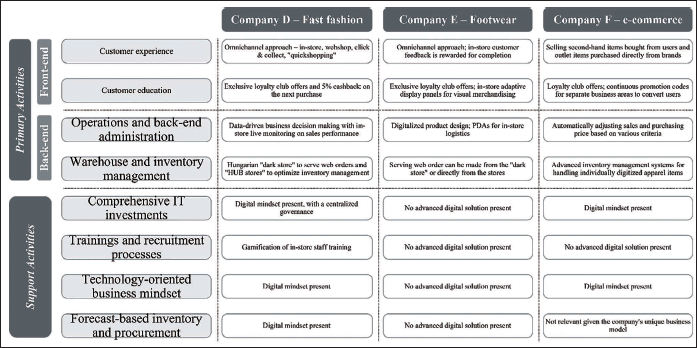
The summary of our results in the Hungarian apparel and footwear retail sector can be found in Figure 4. Among the examined companies, omnichannel activities are prominent, with most operating online stores to meet shifting consumer preferences. Loyalty programmes and personalized online discounts are also common. Back-end operations focus on digitized inventory management, with ‘dark shops’ in the clothing industry serving online orders. Companies differ in their use of sales data analysis and online sales targets, with data-driven strategies optimizing sales. Digital employee training and gamification are key trends. Digitization strategies vary, with some companies using centralized cost frameworks, while others allocate budgets on a project-by-project basis.
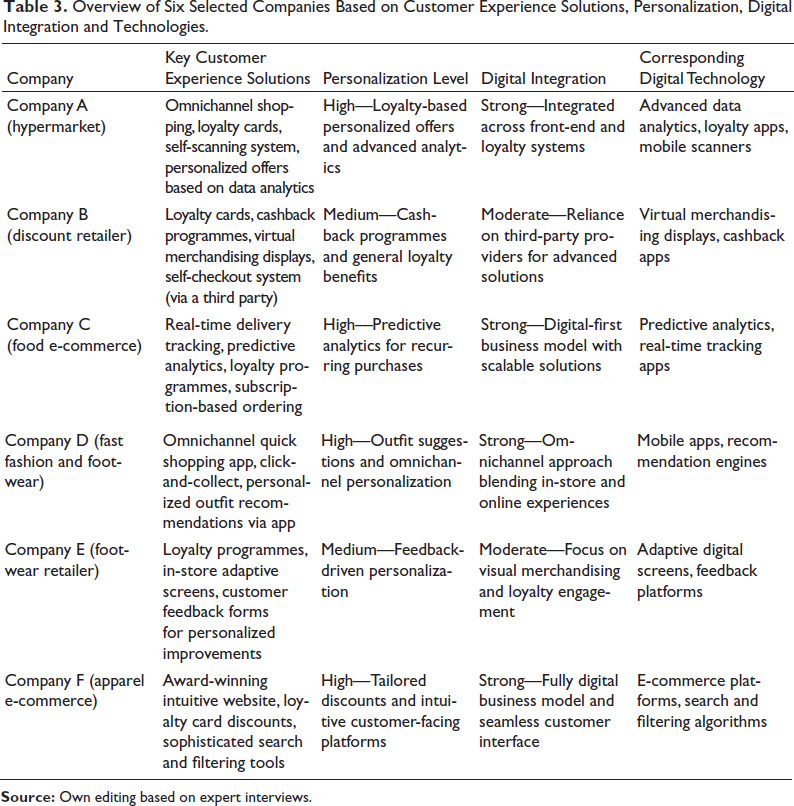
To summarize our investigation into retail, Table 3 presents an overview of six selected companies based on customer experience solutions, level of personalization, digital integration and corresponding technologies.
Overview of Six Selected Companies Based on Customer Experience Solutions, Personalization, Digital Integration and Technologies.
Our study explores key digital solutions and best practices in Hungary’s food and clothing retail sectors, based on industry professionals’ insights. It provides a unique perspective, being the first to assess the market’s digitalization potential with input from retail business leaders.
The findings of the research suggest that some generalizations can be made across different industries, even though several retail organizations employ various digitalization solutions. As Pistrui et al. (2023) also suggest, customer experience and digitalization emphasis vary across continents. For European markets, patterns are similar as retailers take a balanced approach, putting great emphasis on both back-end and front-end digitalization for customer experience. For this reason, the Hungarian market is an ideal landscape to conduct our research based on Porter’s value chain model, which focuses on core and support activities.
The primary digitalization solutions in the food and apparel and footwear retail sectors are highly similar, but there are some major distinctions between them as well. The omnichannel approach to improving the customer experience is the common digitalization answer for both of these industries, as shown by the research of Graf et al. (2021) and Bonetti et al. (2023). ‘Before launching our webshop, there wasn’t a clear demand, but we saw potential in the online market even then’ (Company C, C-level executive). With this strategy, businesses are able to offer their customers a variety of different ways to interact with them. There is a growing trend in both sectors to shift customer education activities, such as promotions and markdowns, to digital media. ‘We want to educate our customers about the benefits of recycling and sustainable practices. It’s not just about selling products, but also making sure that our customers understand the importance of eco-friendly choices’ (Company F, C-level executive). In addition, there is the development of loyalty card programmes, and the analysis of the data collected through these programmes may be used to develop consumer promotions and offers that are specifically tailored to the consumer, which further increases customer engagement and value.
The aim is to use the loyalty card for customers to feel rewarded, so we give them points. But also, on an ongoing basis, to give them discounts so that ideally they come and spend more of their money in our stores and less with someone else. (Company A, C-level executive)
Instead of mass media, businesses prefer to communicate with their customers through this individualized digital approach.
Automation and data-driven processes are transforming operations and back-end procedures in the analyzed sectors. Warehousing and inventory systems are now highly automated, with some retailers automating 95% of processes. ‘We developed a back-end system for handling inventory control, which was customized to our internal processes. It’s not a box solution, it’s tailored to our needs’ (Company B, national management). While both grocery and clothing retailers aim to engage customers, their digital solutions differ. Grocery retail introduced self-scanning systems to streamline the shopping experience. ‘It’s basically about downloading this app, and with your phone’s camera, you can scan products in the store, and at the end, pay with a QR code that includes the scanned items’ (Company B, national management). In contrast, clothing retail focuses on ‘quick shopping’ and uses algorithms to recommend outfits, both in-store and online, leveraging purchase history for personalized suggestions. Clothing retailers frequently utilize specialized locations known as ‘dark shops’ solely for fulfilling online orders. ‘After the Covid period, we started using a so-called “dark store” in Hungary. It is our central warehouse where we can now serve online orders much faster and at lower costs’ (Company D, national management). These innovations reflect the sectors’ distinct yet converging digitalization efforts.
An additional benefit of using digital technology is the ability to have the products that a customer has ordered delivered not only from the online warehouse but also from the physical location of the store itself. Such examples in the apparel and footwear industry show that digitalization is blurring the lines between front-end and back-end operations and even the roles of consumers and sellers, as described by Agárdi (2018, p. 52). ‘The store only needs to pack the item, label it, and it can be ready for collection within an hour. So, if a customer orders online and chooses in-store pickup, the item can be ready within an hour for them to collect’ (Company D, national management). Although customer preferences clearly indicate a desired shift towards digital solutions, the example of ‘Company D’ and a target of 2% for total digital sales shows that prudent goals are set when it comes to digital channels. The digitalization of training and recruitment varies by sector. In retail clothing, employee training on sales floors is a priority, with digital tools and gamification enhancing staff knowledge of existing stock and new collections. ‘We provide continuous training for our employees. For example, our salespeople get training on how to use our digital systems, sales training, and communication soft skills’ (Company E, national management).
The findings of the study make it abundantly clear that those clothing and food retailers who have, up until now, placed less emphasis on improving their processes through digitalization have no excuse to delay if they wish to continue competing successfully in their respective markets. ‘When we started our platform, we knew that competing in the online space was not just an opportunity but a necessity’ (Company C, C-level executive). The implementation of key digital solutions that contribute to the consumer experience and education is the most important step in the transformation process (Figure 5).
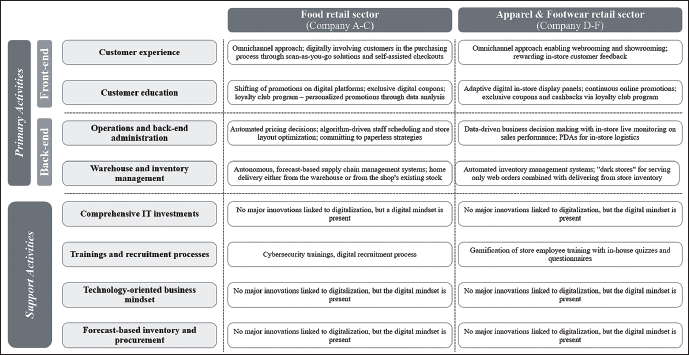
To stay competitive, retailers must adopt omnichannel models and online channels. Loyalty programmes boost revenue through personalized discounts, encouraging repeat purchases. Digital tools like automated inventory and supply chain management reduce costs and enhance efficiency. While both retail segments have embraced omnichannel strategies, they differ in customer acquisition and order fulfilment.
While our article provides valuable digitalization insights and details principles of retail digitalization, limitations include challenges in recruiting busy experts for interviews and the small sample size, which may affect result generalizability. Future research could use larger surveys or diverse sampling methods to address these issues. From a market perspective, the emergence of AI is expected to rapidly disrupt the market, which indicates novel research directions in retail. Additionally, focusing on the Hungarian food and apparel sectors limits the study’s applicability to other retail sectors or countries. Further research could also explore broader sectors, the effects of digital solutions on customer behaviour, and the role of government policies in promoting digitalization.
Authors’ Contribution
Ármin Mohácsi: Theoretical content, Conducting the research, analysis and interpretation of results, draft manuscript preparation and performed the analysis.
Bence Pistrui: Designed the presented idea, theoretical content, research methods applied, and supervised the findings of this work, manuscript preparation.
Dániel Kostyal: Performed the analysis, collected the data, and contributed data analysis tools, manuscript preparation.
Footnotes
Declaration of Conflicting Interests
The authors declared no potential conflicts of interest with respect to the research, authorship and/or publication of this article.
Ethical Declaration
The authors abide by all the ethics involved in this academic work and have not submitted it to any other journal.
Funding
The authors received no financial support for the research, authorship and/or publication of this article.
