




Abstract
Globally, electronic waste continues to grow as technology becomes central to consumers’ lives and relationships. This growth has led to a myriad of challenges such as electronic waste disposal that considerably affect the natural environment. The current article attempts to provide a fresh outlook on the link between materialism, e-waste disposal and consumer well-being often described as antagonistic concepts. Underpinned by the value-attitude-behaviour theory, the study investigates whether the role of materialism in influencing eco-friendly disposal and ultimately consumer wellbeing. The study also examines the mediating role of e-waste disposal in the relationship between materialism and well-being. Following a quantitative methodology and a cross-sectional research design, the study relied on a survey to collect data from 420 South African users of electronic and electrical equipment. Structural equation modelling analyses revealed that the adoption of eco-friendly disposal of electronic waste leads to consumer well-being even when consumers have materialistic tendencies. The present study adds empirical evidence to the co-existence and complementarity of materialism, sustainability and subjective well-being. The findings of this study inform eco-friendly policy development and proenvironmental initiatives that champion responsible e-waste management in households.
Introduction
Rapid advancement in technology brought about by the fourth industrial revolution has led to an exponential increase in the purchase of new electronic and electrical equipment (EEE) such as computers, mobile phones and high-tech appliances (Gilal et al., 2018; Xavier et al., 2021). The desire to keep up with new technology has been the main motive of consumers’ consistent switch from old EEE to new ones (Dhir et al., 2021; Khor et al., 2015). This growth in EEE consumption poses a serious threat to the environment as more electronic waste (or e-waste) is produced and inconsiderately dumped in the already overwhelmed landfills (Bhaskar & Kumar, 2019; Dhir et al., 2021). E-waste materials refer to components, sub-assemblies and consumables, such as home appliances, IT and telecommunications equipment and lighting equipment, that are deemed obsolete or no longer wanted by users (Dhir et al., 2021).
There is a surge in e-waste generation in emerging markets such as South Africa, explained by rapid population growth, fast technological changes and higher demand for EEE in daily activities (Borthakur & Govind, 2018; Gautam & Jain, 2022). Further, the consumption of electronic and electric products is intensified without a consistent and responsible disposal of e-waste (Shahrasbi et al., 2021). The reckless disposal of e-waste is one of the leading causes of environmental problems such as higher pollution through CO2 emission and ecological imbalance which seriously jeopardize human health and safety (Zhang et al., 2020). Although manufacturers have been urged to produce eco-friendly EEE (Zhang et al., 2020), consumers are equally accountable for the stability of the eco-system as per the twelfth UN’s sustainable development goal that aims at ensuring responsible consumption and production patterns (Bhaskar & Kumar, 2019; Xavier et al., 2021). Two behavioural change strategies to promote sustainable consumption include encouraging eco-friendly consumption and post-consumption behaviours as well as discouraging the consumption of products that are harmful to the environment (Dhandra, 2019; Shahrasbi et al., 2021). The present study focuses on the eco-friendly disposal of e-waste, a sustainability-oriented post-consumption behaviour as it is known to be an effective strategy for reducing CO2 emission (Gupta, 2021).
Central to sustainable development is the adoption of clean technologies which refer to technologies that cause little to no harm to the environment (Khor et al., 2015). Therefore, the interest in the eco-friendly disposal of e-waste is gaining currency in the literature (Dhir et al., 2021; Shahrasbi et al., 2021; Zhang et al., 2020). Moreover, there is a mounting pressure to intensify the utilization of cleaner information and communication technologies and eco-sustainable IT practices, including green manufacturing, green distribution or green sourcing (Khor et al., 2015).
Current literature has widely examined the factors influencing the intention to adequately dispose of e-waste or the actual act of disposing of e-waste in an eco-friendly manner (Borthakur & Govind, 2018; Nguyen et al., 2019; Wang et al., 2018). However, these studies relied on theories such as the Theory of Planned Behaviour or the Norm Activation Theory that have used psycho-social variables such as attitude, social norms, personal norms and perceived behaviour control (Gilal et al., 2021). Despite the significant contribution of previous studies on this topic, further insights are needed to decipher other key consumption patterns and tendencies such as materialism that account for the current state of e-waste disposal among consumers. The marketing and consumer psychology literature acknowledges that materialism has a strong grip on consumption choices such as shopping intensity, status consumption and brand engagement (Flynn et al., 2016).
Materialism is a consumption pattern that considers money and the material possessions it can buy as the most important assets in the pursuit of life satisfaction (Furchheim et al., 2020). Materialism is, therefore, viewed as an impetus to the heightened interest for new EEE, and the growing ‘throwaway’ tendency which subsequently increases the replacement of obsolete EEE, resulting in massive production of e-waste (Borthakur & Govind, 2018; Dhandra, 2019; Evers et al., 2018). With globalization, materialistic values have progressively infused the consumption culture in emerging markets generally known to be less inclined to material possessions (Kuanr et al., 2020). Arthur et al. (2020) observed that conspicuous and status consumption has gradually introduced a surreptitious competition between consumers in their quest for social recognition, which subsequently fosters materialistic tendencies in emerging markets.
The extant literature appears to be at odds over the relationship between materialism and sustainable behaviour. A recent systematic literature review by Markauskaitė and Rūtelionė (2022) on the causes of the conflict between materialism and sustainability highlights the growing interest in nexus materialism—sustainable consumption in current literature. While some studies argue that materialism and sustainability are incompatible (Gu et al., 2020; Kilbourne & Pickett, 2008), other scholars think the two concepts can coexist (Binder & Blankenberg, 2017; Talukdar & Yu, 2020; Zawadzki et al., 2020). In contributing to the current scholarly debate, the present study follows the latter view, contending that materialism and sustainable consumption coevolve as there is a ‘green side’ of materialism that prompts the adoption of sustainable behaviours such as e-waste disposal (Ryoo et al., 2020; Strizhakova & Coulter, 2013). The relevance of materialistic tendencies in influencing the consumption and disposal of EEE is reinforced by the urgency to replace obsolete equipment with cleaner or ‘greener’ technologies (Khor et al., 2015) which are more prestigious and socially approved. However, in adopting ‘materialism’ as key construct, previous studies have mostly tested materialism as a unidimensional construct (Evers et al., 2018; Gu et al., 2020; Liobikienė et al., 2020). The concept of materialism is such a complex concept that needs to be unbundled into three facets namely success, happiness and acquisition to best appraise its impact (Flynn et al., 2016; Segev et al., 2015).
Furthermore, the current e-waste literature has provided limited evidence on plausible outcomes of eco-friendly disposal of e-waste. Research is thus needed to uncover possible behavioural outcomes of eco-friendly disposal of e-waste such as subjective well-being. Despite the urgency of the e-waste problem and its potential impact on consumer well-being, Schmitt et al. (2018) observed a dearth of research on materialism and subjective well-being in relation to e-waste disposal. Evidence, however, suggests that consumption patterns and post-consumption actions such as e-waste disposal play a crucial role in consumers’ well-being (Lee, 2019; Oral & Thurner, 2019). The pro-environmental literature (Binder & Blankenberg, 2017; Gu et al., 2020) has demonstrated positive connections between consumers’ subjective well-being, materialistic values and level of engagement in eco-friendly activities.
Grounded on the value–attitude–behaviour (VAB) hierarchy (Homer & Kahl, 1988), the present research integrates theoretical perspectives on materialism (values), moral norms and attitudes towards e-waste (attitudes) and disposal of e-waste (behaviour). Although moral norms are known to precede consumers’ decision to engage in e-waste recycling (Gilal et al., 2021; Gu et al., 2020; Wang et al., 2018), surprisingly, recent reviews of studies on consumer e-waste disposal behaviour (Borthakur & Govind, 2018; Gilal et al., 2021) point to the fact that limited attention has been given to a possible influence of materialism tendencies on moral norms and attitudes towards e-waste disposal. Thus, the present study departs from previous studies by proposing a conceptual framework that extends the VAB theory with the addition of subjective well-being as a behavioural outcome of e-waste disposal.
As sustainable consumption practices and cleaner technology are growing as important subject driving today’s marketing and consumer behaviour erudite debate, consumer research, marketing practices and policy have become duty bound to establish means through which customer well-being is not only improved but maintained. Thus, the current study seeks to address the following questions.
To what extent are all three dimensions of materialism affect the eco-friendly disposal of e-waste and subjective well-being? How would the involvement in e-waste recycling mediate the impact of materialism on subjective well-being?
In addressing these questions, the present study further investigates whether consumers’ e-waste recycling activities strengthen or weaken (i.e., mediate) the relationship between the three dimensions of materialism and subjective well-being.
Literature Review and Hypotheses Development
Materialism, Sustainability, Subjective Well-Being: Two Conflicting Research Streams
Materialism and sustainable consumption are two opposite concepts in their ideologies. While materialism encourages an overconsumption culture for self-enhancement and status, sustainable consumption behaviour consists of green purchasing behaviour, curtailment behaviours such as energy conservation, and reuse and recycling behaviours (Dong et al., 2018; Furchheim et al., 2020). A recent review on the causes of conflict between these two concepts identified information dissonance, various environmental beliefs and concerns, impulsive buying, consumer confusion, anti-consumption and decision evaluation reinforce the incongruity between materialistic and green values (Markauskaitė & Rūtelionė, 2022). Thus, two conflicting research streams emerge from extant literature.
The first stream argues that the relationships between materialistic values, eco-friendly practices and subjective well-being are non-existent or negative. This perspective is based on the belief that materialism leads to dissatisfaction (Thyroff & Kilbourne, 2018) as it distracts individuals from fulfilling important purposes in life that benefit society (Kasser, 2017). It is known that materialistic consumers usually find fulfilment in overconsumption, resulting in a massive generation of waste which in turn contributes to the degradation of the environment (Dhandra, 2019). Although materialist consumers are known to hold on to material possessions such as electronic products (Evers et al., 2018; Simpson et al., 2019), that proclivity towards hoarding does not deprive them from future purchases of new products. This is because materialism is strongly associated with a constant desire to upgrade one’s standard of living through continuous conspicuous consumption (Flynn et al., 2016; Simpson et al., 2019). Empirical research (Gu et al., 2020; Kilbourne & Pickett, 2008) has examined the connection between materialism and eco-friendliness and found them to be incompatible.
Generally, conflict between materialistic tendencies and the urge to act sustainably, negatively affects the well-being of materialistic consumers (Furchheim et al., 2020). Moreover, eco-friendly behaviours such as recycling are known to be time-consuming, costly, arduous and generally unpleasant (Schmitt et al., 2018). This negative connotation of eco-friendliness could adversely affect the consumer’s well-being (Gu et al., 2020). In addition, Tsang et al. (2014) observed that it is harder for consumers with high materialist values to be grateful for what they possess. And this ungratefulness reveals unmet psychological needs leading to dissatisfaction with life.
The second stream of research suggests a positive relationship between eco-friendly behaviours, materialism and subjective well-being. This line of research is gaining currency in the literature (Binder & Blankenberg, 2017; Kaur et al., 2022; Talukdar & Yu, 2020; Zawadzki et al., 2020) primarily because of the status recognition associated with eco-friendly products can make them desirable material possessions (Talukdar & Yu, 2020). The higher financial value of eco-friendly products over generic products motivates materialist consumers to engage in eco-friendly purchases. Correspondingly, Talukdar and Yu (2020) observed a ‘conspicuous conservation’ trend whereby, consumers of luxury products use expensive sustainable products to signal status. Similarly, Kaur et al. (2022) observed that sub-traits of materialism such as possessiveness, non-generosity and envy enhance consumers’ intention to purchase sustainable luxury products because these products are more expensive and self-enhancing. Moreover, materialist consumers are attracted to eco-friendly products because they are often perceived to be of better quality (Issock et al., 2018; Talukdar & Yu, 2020). Eco-friendly products are made from scarce, costly, and exceptional raw materials. Consumers with materialist tendencies are therefore more attracted to such products as it evokes the value of their possession and communicates their image. As such, Binder and Blankenberg (2017) concluded that adopting an eco-friendly lifestyle that is fuelled by the desire to enhance one’s social status and feed on materialistic values is not so much of a sacrifice, but a positive contributor to well-being. However, the positive connections between eco-friendly behaviours and subjective well-being are dependent on the types of eco-friendly actions. Zawadzki et al. (2020) argued that eco-friendly actions for which the meaning is more apparent at the time of action, such as purchasing a green product, is positively related to subjective well-being. Whereas eco-friendly actions for which the meaning is less apparent at the time of action, such as disposing of e-waste in an affiliated eco-friendly facility, is more likely to have a negative impact on consumers’ well-being. Similarly, Schmitt et al. (2018) observed that well-being is strongly influenced by eco-friendly actions that entail more social interactions such as participating in pro-environmental events, and that can easily be observed such as shutting off electrical appliances when not in use.
In light of the above discussion, this study follows the second research stream. This research argues materialism and eco-friendly disposal of e-waste do not represent opposite ends but can coexist and contribute to consumer subjective well-being. These relationships are discussed in the subsequent sections.
Theoretical Framework: Value–Attitude–Behaviour Hierarchy
Propounded by Homer and Kahle (1988) the VAB was initially applied to understand the hierarchical influence of abstract cognition (values) on mid-range cognitions (attitudes) to purchase of natural food which was the specific behaviour of interest. The theory thus stipulates that the mechanism of behavioural influence flows from abstract values to attitudes which in turn affect behaviour (Cheung & To, 2019). In this context, values are perceived as a combination of internal social beliefs that when activated, motivates individuals to develop a cognitive or affective response (Sadiq et al., 2022). Consumer behaviour and psychology literature usually define attitude as an individual’s favourable or unfavourable evaluation of a given object (or behaviour) (Cheung & To, 2019; Kim & Hall, 2021). Values and attitudes are thus crucial antecedents to behaviour as they combine internal belief systems and cognitive and affective responses. Although the foci of the present study are on investigating the connections between materialism (values)—e-waste disposal behaviour and well-being, the impact of attitudes and moral norms as depicted in the VAB is critical.
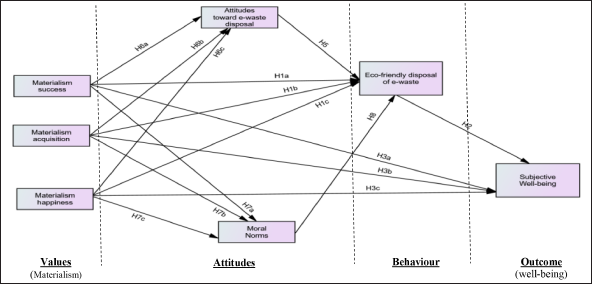
The VAB has been extensively applied to understand an array of sustainable behaviours including tourists’ choice of eco-friendly hotels (Sadiq et al., 2022), consumer’s crowdfunding behaviour for sustainable projects (Kim & Hall, 2021), organic food consumption (Lee, 2019) and the purchase of green products (Cheung & To, 2019). These previous studies provided sturdy empirical evidence for the relevance of the VAB theory as a viable theoretical underpinning for this study. Consistent with previous VAB-based studies (Cheung & To, 2019; Lee, 2019), the present research expands the VAB hierarchical model by examining whether subjective well-being could be considered as an outcome of the eco-friendly disposal of e-waste. The proposed conceptual model empirically tested in this study is depicted in Figure 1.
Proposed Conceptual Model.
Hypothesis Development
Materialism (Value) and E-Waste Disposal (Behaviour)
The marketing literature (Segev et al., 2015; Talukdar & Yu, 2020) has widely acknowledged materialism as a system of personal values where consumers view the acquisition and possession of material objects as central to their lives and a key component in the pursuit of happiness (Arthur et al., 2020). Richins (2004, p. 210) thus defined materialism as ‘the importance ascribed to the ownership and acquisition of material goods in achieving major life goals or desired states’. Following this definition, acquisition centrality, possession-defined success and pursuit of happiness are the three sub-dimensions of materialism (Segev et al., 2015). The pursuit of happiness refers to the belief that possessions are fundamental to well-being and satisfaction in life. Possession-defined success reflects the extent to which individuals see possessions as signs of success and achievement in life. The centrality of acquisition denotes the extent to which consumers consider possession acquisition at the centre of their life.
Previous studies have demonstrated that materialistic values could motivate sustainable consumption (Dong et al., 2018; Evers et al., 2018; Kaur et al., 2022; Ryoo et al., 2020; Talukdar & Yu, 2020). In investigating the drivers of sustainable consumption of durable products in China, Dong et al. (2018) found that consumers’ love for material possessions positively influences their decision to adopt eco-friendly consumption patterns when using durable goods such as computers and cars. This is because materialistic consumers develop a strong bond with the durable product as they love possessions and are willing to reuse or recycle the product. Similarly, research by Evers et al. (2018) on product end-use consumption behaviour, highlighted that materialistic consumers are prone to dispose of their end-use products in an eco-friendly manner. This is mainly because materialistic consumers are encouraged to eschew wasteful consumption that is increasingly not condoned by the society, they seek approval from (Evers et al., 2018; Liobikienė et al., 2020). At an early stage of a product life cycle, materialistic consumers see the product as a means to enhance their self-image (Evers et al., 2018). This creates a special bond between the products and their materialistic owner (Dong et al., 2018). Thus, when the product reaches the end-stage of its life cycle, materialistic consumers find more innovative ways of keeping the old product by recycling it or restoring it in order to keep them. It is, therefore, expected that materialistic consumers recycle or refurbish their obsolete electronic products to maintain their value. Eco-friendly consumption and disposal of products is an effective strategy for marketers to relate and attract materialistic consumers (Talukdar & Yu, 2020). Based on the foregoing account the following hypotheses are proposed.
H1abc: The three dimensions of materialism (success, acquisition and happiness) have a positive effect on the eco-friendly disposal of e-waste.
Subjective Well-Being and E-Waste Disposal
Consumers’ well-being has gained interest in the marketing and consumer research scholarship (Furchheim et al., 2019; Oral & Thurner, 2019). Following the screening of various definitions of subjective well-being by Oral and Thurner (2019), this study views subjective well-being as consumers’ evaluation of a general evaluation of their life and view happiness and life satisfaction to be components of it.
The positive connection between subjective well-being and sustainable consumption is progressively gaining currency in the literature (Binder & Blankenberg, 2017; Zawadzki et al., 2020). When consuming green products, consumers become more confident and self-assured of their positive contribution to the environment, which in turn promotes higher satisfaction with life. This argument finds support in a study conducted among Indian consumers by Dhandra (2019), reporting that consumers’ intention to purchase green products has a positive influence on their subjective well-being.
In investigating a sample of UK households, Binder and Blankenberg (2017) revealed that a consumer’s subjective well-being is mainly determined by their subjective assessments of the positive impact that their eco-friendly behaviours have on the environment rather than their current eco-friendly actions such as energy conservation or recycling. The authors further observed that indirect pro-environmental actions such as purchasing eco-friendly products or supporting an environmental movement have more impact on subjective well-being than direct eco-friendly activities such as recycling and water conservation.
Similar results were reported by Schmitt et al. (2018) in an investigation of the linkage between subjective well-being and 39 distinct pro-environmental behaviours. These pro-environmental behaviours included activities such as buying energy-efficient appliances, using reusable bags when shopping and turning off the tap when brushing teeth. The results revealed that almost all (95%) of these specific pro-environmental actions consistently contribute to higher subjective well-being. However, it is worth noting that the more impactful a pro-environmental behaviour is perceived to be for society (e.g., recycling e-waste or installing a solar geyser), the stronger its positive influence on subjective well-being will be (Zawadzki et al., 2020). All these ongoing arguments corroborate the fact that consumers experience higher subjective well-being when they engage in behaviours that conspicuously benefit society (Dhandra, 2019).
The following hypothesis is proposed.
H2: E-waste disposal positively influences subjective well-being.
Materialism and Subjective Well-Being: The Mediating Role of Sustainable Actions
The connection between materialism and subjective well-being is well documented in the literature. For example, Górnik-Durose (2020) revealed that every subdimensions of materialism has a distinct impact on subjective well-being. While the pursuit of happiness and possession-defined success has a significant but negative impact on subjective well-being, the centrality of acquisition has no effect. In investigating the impact of the three facets of materialism on satisfaction with life, Segev et al. (2015) found that pursuit of happiness has a negative effect, acquisition centrality has a positive effect and possession-defined success has no effect. Further to this, Furchheim et al. (2020) demonstrated that there is an internal conflict between materialistic and green values. This tension increases the level of stress of materialistic consumers, and ultimately decreases their satisfaction with life.
Given the variance in findings, attempts have been made (Górnik-Durose, 2020; Thyroff & Kilbourne, 2018) to disentangle the nexus materialism—subjective well-being as it is subject to various intervening variables. Thyroff and Kilbourne (2018) found consumer self-enhancement and the competitive nature of the market to be the lynchpin to explaining the positive effect of materialism on well-being. From a psychosocial perspective, Tsang et al. (2014) revealed that the complex connection between materialism and subjective well-being is subject to people’s desire to meet the psychological need for satisfaction, and their proclivity towards gratitude. The study demonstrated that the impact of high materialistic values on low subjective well-being is mediated by a decreased gratitude, and a lack of desire to seek out basic and purposeful psychological experiences.
Despite the dominance of findings supporting a negative effect of materialistic values on consumer subjective well-being, the present study suggests that engaging in sustainable behaviour enables a positive relationship between materialism and subjective well-being.
Marketing and consumer behaviour literature has also supported the idea that some material goods can lead to increased consumer well-being (Thyroff & Kilbourne, 2018). Firstly, materialistic consumers are driven by a desire to vaunt sustainable products which are often more expensive and thus prompt the admiration of others (Felix & Almaguer, 2019). This allows materialistic consumers to express themselves via possessions as they find satisfaction in possession acquisition. Moreover, adopting sustainable consumption could serve as a means to gain satisfaction and gratification in adopting an eco-friendly lifestyle through positive actions towards the environment. In doing so, consumers fulfil the psychological need of internal satisfaction, which in turn leads to well-being (Kasser, 2017). Thus, the present study suggests that sustainable behaviour facilitates (mediates) the nexus between materialistic tendencies and consumers’ subjective well-being. This argument is founded on the fact that when consumers engage in sustainable behaviour that benefits society, they find fulfilment and develop higher subjective well-being even if they are materialistic (Oral & Thurner, 2019). Moreover, materialists seek methods to reduce their dissatisfaction with life. Engaging in pro-social or pro-environmental activities could contribute to their well-being given that it benefits the environment and society.
The following hypotheses can be formulated.
H3abc: The three dimensions of materialism positively influence subjective well-being. H4abc: The eco-friendly disposal of e-waste positively mediates the relationships between the three dimensions of materialism (success, acquisition and happiness) and subjective well-being.
Attitudes Towards E-Waste Disposal
Central to explaining how pro-environmental behaviour could improve subjective well-being is the consumers’ attitudes towards the disposal of e-waste. However, apart from a few studies on ‘environmental concerns’, there is limited investigations on the impact of attitudes on e-waste disposal (Binder & Blankenberg, 2017). Attitude towards a pro-environment behaviour refers to the overall evaluation a consumer makes of the pro-environmental behaviour.
Following the VAB theory, consumers’ attitudes towards the environment play an important role in their decision to engage in pro-environmental behaviour including eco-friendly disposal of e-waste (Nguyen et al., 2019; Sadiq et al., 2022; Wang et al., 2018). Evidence sturdily suggests that positive consumers’ attitudes towards the environment create positive actions to protect the environment. For example, a finding by Nguyen et al. (2019) points to the fact that a positive attitude towards recycling is a key determinant in activating Vietnamese residents’ intention to recycle e-waste for formal collections. Similar results were echoed by Dhir et al. (2021) in a study among Japanese consumers, which demonstrated that when consumers have a positive attitude towards e-waste recycling, they are likely to develop a positive intention to engage in e-waste recycling. Looking at it from another angle, consumers holding a negative attitude towards recycling will not engage in such pro-environmental activities. It therefore, becomes essential to investigate how attitudes are formed and which values can influence consumers’ attitudes towards pro-environmental behaviours (Sreen et al., 2020).
The influence of values on attitudes as described in the VAB hierarchy has been widely supported in the literature. This significant impact of values on consumers’ attitudes towards sustainable choices has been proven for various types of values including self-transcendent values (Lee, 2019), altruistic and egoistic values (Sadiq et al., 2022) or materialistic values (Sreen et al., 2020). A specific focus on the role of materialism on attitudes shows sturdy empirical evidence in the current literature. For example, research conducted among Lithuanian consumers by Liobikienė et al. (2020) revealed that materialism has no impact on consumers’ environmental concerns, beliefs and responsibility towards the environment. Further to this, in the Indonesian context, Rahimah et al. (2020) revealed that materialism rather intensifies consumers’ attitudes towards the environment and their social responsibility. The authors argue that given the wide recognition of environmentalism as a laudable value in society, materialistic consumers see environmental concerns as an opportunity to improve their self-views. Moreover, with the growing popularity of pro-environmental movements, people do not want to be perceived as profligate consumers whose desire for material goods is progressively damaging the environment. Thus, the following hypotheses are stipulated.
H5: Attitude towards the environment has a positive impact on eco-friendly disposal of e-waste. H6abc: Each dimension of materialism (success, acquisition and happiness) has a positive effect on the attitude towards the environment.
Moral Norms and E-Waste Disposal
Moral norms refer to feelings of internal obligations to adopt a behaviour that benefits society or refrain from performing actions that harm society (Schwartz, 1977). Individuals’ moral norms (also known as personal norms) are central to the norm activation theory (Schwartz, 1977), a framework that emphasizes the role of internal feelings of moral obligation in predicting the adoption of pro-environmental behaviour such as recycling. This internal moral obligation is aligned with an individual’s self-expectations to accomplish a given behaviour (Wang et al., 2018).
Moral norms are considered crucial determinants of sustainable consumption (Setiawan et al., 2021; Wang et al., 2018). Strong evidence from empirical research demonstrates a significant impact of moral norms on both waste sorting intention and behaviour in Indonesian cities (Setiawan et al., 2021). Specific to e-waste disposal behaviour, Wang et al. (2018) established moral norms as the strongest and direct antecedent of the intention to recycle e-waste among Chinese consumers. The authors further emphasize the central role of moral norms as they found that without the strong moral obligation to recycle e-waste, the publicity relating to the benefit of eco-friendly disposal of e-waste does not affect the consumers’ intention to recycle e-waste. Similar findings on the significant impact of moral norms on e-waste recycling were reported among small and medium electronic store managers in Bangladesh (Mahmud et al., 2020). All these support integrations of moral norms as antecedents of eco-friendly disposal of e-waste.
While the impact of moral norms on sustainable consumption has been established in the literature, it is surprising that little attention has been granted to its potential connection with materialism. Moral norms viewed as the intrinsic pressure to adopt ethical behaviours (e.g., eco-friendly consumption) are certainly prompted by materialistic values as these reflect a system of personal values inclined to the acquisition and possession of material objects (Arthur et al., 2020). A study by Ryoo et al. (2020) asserted that consumers with a high level of materialism show interest in ethical consumption behaviours. Materialism can enable eco-friendly e-waste disposal. This is mainly because materialistic consumers have an attachment to material possessions and would either prefer to hoard their obsolete EEE or make sure that the product is reusable after disposing of it (Dong et al., 2018; Talukdar & Yu, 2020). Thus, such disposal of e-waste aligns with consumers’ internal obligation to ensure that the loved product retains some value after consumption. When confronted with the internal pressure to follow an ethical lifestyle, because materialistic consumers are often self-centred (Strizhakova & Coulter, 2013), they are likely to succumb to this pressure and ultimately adopt eco-friendly behaviours.
The following hypotheses are thus formulated.
H7abc: All three dimensions of materialism (success, acquisition and happiness) have a positive impact on moral norms. H8: Moral norms positively influence the eco-friendly disposal of e-waste.
Methodology
Sample and Data Collection
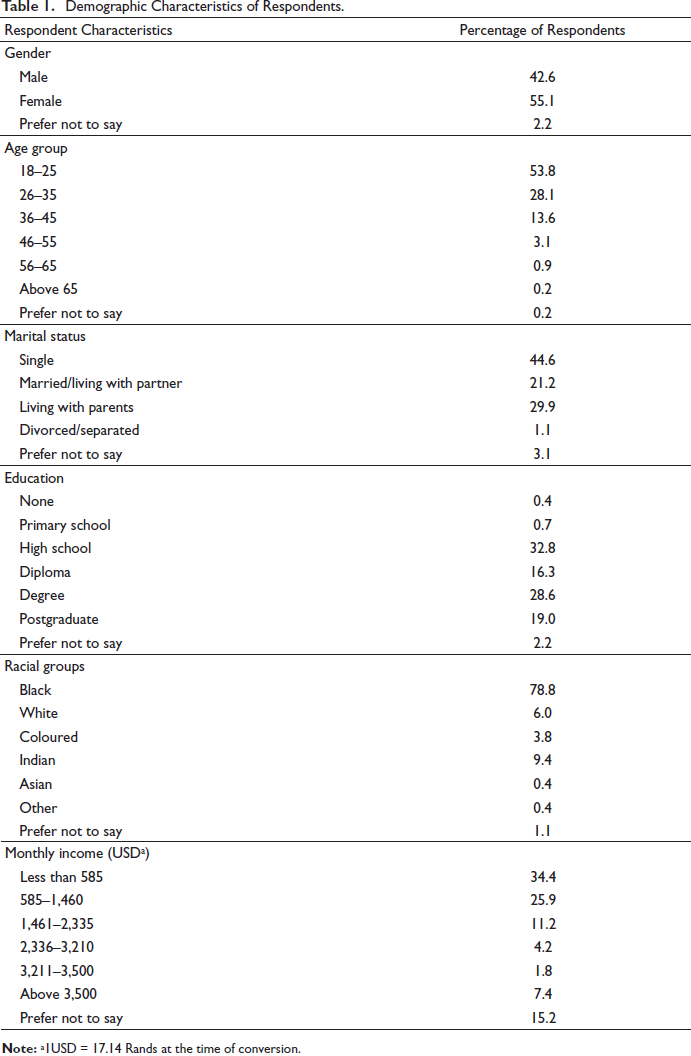
The study follows a positivist research philosophy and a deductive research approach as the aim of this study is to test hypothesized relationships depicted in the conceptual model in Figure 1. Following a quantitative method, a survey was conducted to collect primary data from household heads living in the Gauteng province of South Africa, and that have disposed of any EEE in the past twelve months. Since the sampling frame (i.e., the list of all South African consumers that have disposed of their EEE in the past twelve months) was not accessible, non-probability sampling techniques were used to select respondents (Malhotra et al., 2017). Trained field workers from a reputable research company in South Africa were used to administer the questionnaires to respondents. Initially, the selection of respondents was done through purposive sampling techniques where respondents were selected based on their past usage and disposal of EEE. While most of the respondents were selected on digital platforms such as Facebook and LinkedIn, some questionnaires were administered face-to-face in public places such as workplaces, malls, or parks. To get more respondents, a snowball sampling technique was adopted whereby respondents that have completed the survey were requested to share the questionnaire with potential respondents in their network that have also disposed of their EEE in the past 12 months. After 6 weeks of intense fieldwork, 480 questionnaires were completed. Further cleaning and screening of the data discarded 60 incomplete or faulty questionnaires. A total of 420 valid questionnaires were deemed usable to empirically test the proposed model as per the measurement item—sample size ratio (Malhotra et al., 2017). As indicated in Table 1, the sample was dominated by female respondents (56.4%) and consumers aged between 18 and 35 years old (81%). Most respondents identified as black Africans (84%). The dominant marital status in this sample is single (46.7%). Nearly half of the sample (47.4%) hold a degree or postgraduate degree. In terms of monthly net income, while 13.6% abstained from disclosing their income level, 37.7% earn between 715 and 2,860 USD per month.
Demographic Characteristics of Respondents.
Research Instrument
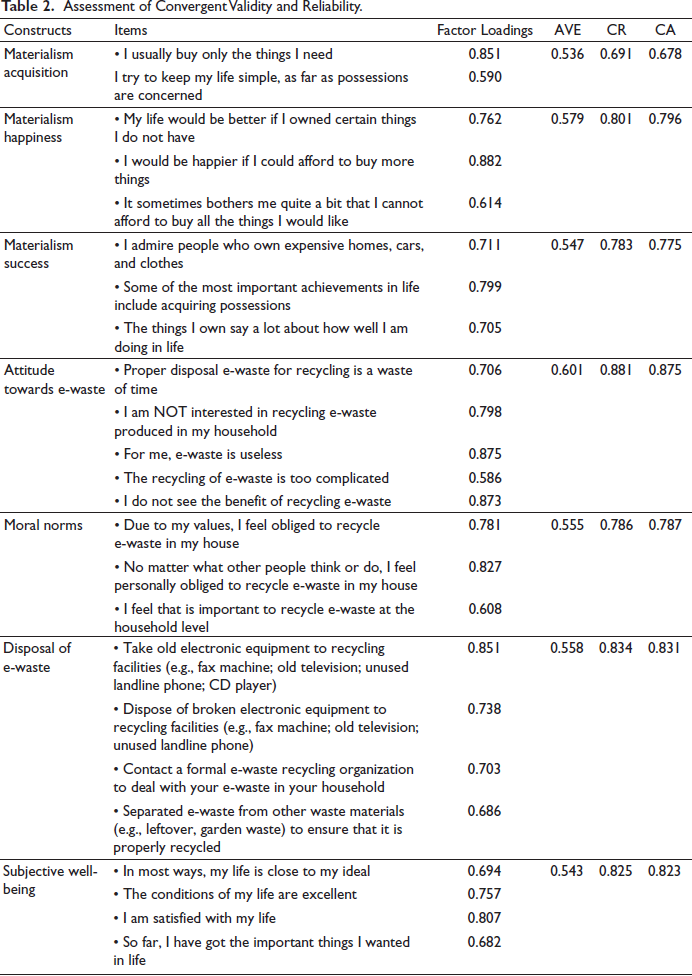
The research instrument (questionnaire) included screenings questions to ensure that the respondents were above 18 years old and had used and disposed of their household’s EEE at least in the past 12 months. General questions on the consumption of EEE at the household level were also posed at the beginning of the questionnaire. The various constructs proposed in the conceptual model were measured and informed by existing studies. The eco-friendly disposal of e-waste was measured by four statement items adapted from Echegaray and Hansstein (2017), that used a five-point frequency scale spanning from never to always. The rest of the constructs used a five-point Likert scale. The three dimensions of materialism were adopted from the original work by Richins (2004). Moral norms and attitudes towards e-waste constructs were adapted from Wang et al. (2018) and Setiawan et al. (2021). The construct subjective well-being was adopted from Kuanr et al. (2020). All item measurements are summarized in Table 1.
Data Analysis
The proposed conceptual model was tested using a two-step structural equation model on IBM AMOS. The first step consisted of assessing the validity and reliability of constructs through confirmatory factor analysis (CFA).
Confirmatory Factor Analysis and Common Method Bias
A measurement model was built to test the reliability, the convergent and discriminant validity of the constructs used to develop the proposed model (Malhotra et al., 2017). The measurement model returned a good fit as demonstrated by the following model fit indices: χ2 = 443.792; degree of freedom = 231; CMIN/DF = 1.921; comparative fit index (CFI) = 0.948; goodness of fit index (GFI) = 0.920; Tucker Lewis index (TLI) = 0.937; root mean square error of approximation (RMSEA) = 0.047; standardized root mean square residual (SRMR) = 0.053.
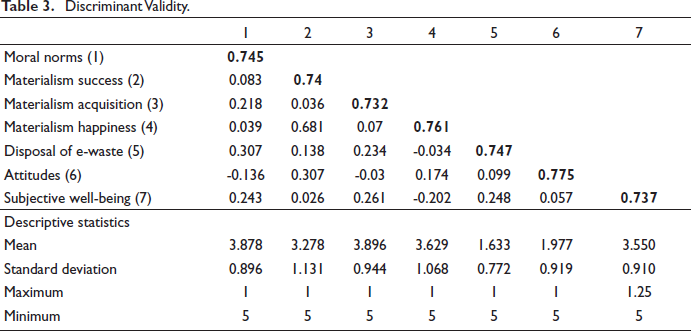
The convergent validity was established through the average variance extracted (AVE) and factor loading above 0.5 (Malhotra et al., 2017). The reliability of the construct was ascertained through the Cronbach’s alpha and confirmed by the composite reliability expected to be above 0.7 thresholds (Malhotra et al., 2017). All the constructs have satisfactory reliability except the construct materialism acquisition which has composite reliability slightly below 0.7 (0.691) which is still acceptable in business sciences as per Malhotra et al. (2017). Table 2 presents the assessment of the convergent validity and reliability. The discriminant validity was evaluated using Fornell and Larcker’s (1981) criterion where the square root of the AVE is compared to the highest correlation value in the inter-construct correlation matrix (see Table 3). The results show that the constructs applied in the proposed model discriminate.
Assessment of Convergent Validity and Reliability.
Discriminant Validity.
Given that measurement items were used to measure the constructs and relied on self-reported data, it is important to examine a possible common method bias to further validate the results of this study. Harman’s single-factor test was applied in this study (Podsakoff et al., 2012). An exploratory factor analysis was conducted where all measurement items were loaded on a single factor using an unrotated factor solution on SPSS. The analysis revealed that the explained variance of the first factor was 18.60% which is below the 50% cut-off (Podsakoff et al., 2012). Therefore, the common method bias is not of concern in this study.
Hypotheses Testing
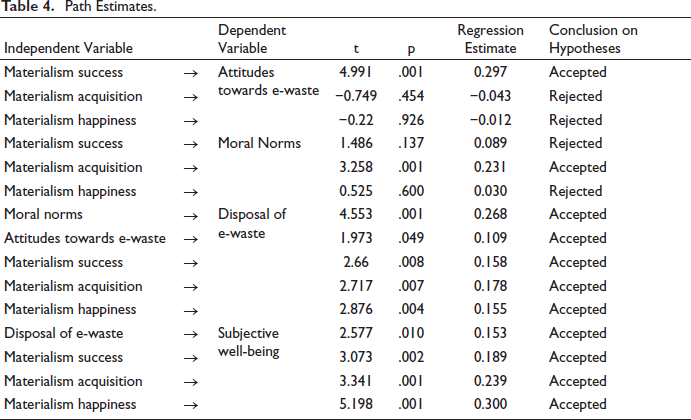
While controlling for demographic variables such as gender, age group, education, income and household size, the structural model was built to test the hypotheses. All the model fit indices meet the required thresholds. χ2 = 733.315; df = 321; CMIN/DF = 2.284; CFI = 0.902; AGFI = 0.861; TLI = 0.876; RMSEA = 0.055; SRMR = 0.080. The results of the hypothesized relationships are summarized in Table 4 and depicted in Figure 2.
Path Estimates.
Structural Model and Path Estimates.
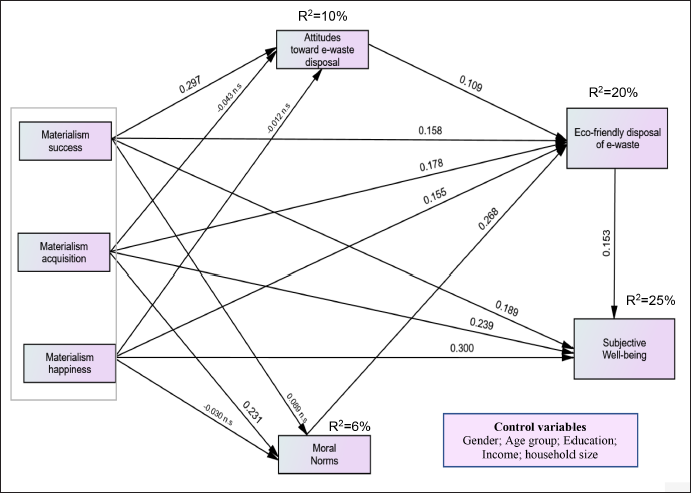
The results show that all three dimensions of materialism have a positive and significant (p < .05) effect on the eco-friendly disposal of e-waste. Attitudes and moral norms also positively affect the disposal of e-waste. The hypotheses H1abc, H5 and H8 are accepted. Table 4 also revealed that out of the three dimensions of materialism, only materialism success significantly affects attitudes (β = 0.297; p < .001), while materialism acquisition is the only significant predictor of moral norms (β = 0.231; p < .001). Therefore, hypotheses H6a and H7b are accepted.
The model explains 25% of the variance of subjective well-being accounted for by the significant and positive impact of the three dimensions of materialism and the disposal of e-waste. The hypotheses H2abc and H3 are supported.
Mediating Effect of Eco-Friendly Disposal of E-Waste
This study posited that the eco-friendly disposal of e-waste could mediate the effect of all three dimensions of materialism on subjective well-being. The indirect, direct and total effects retrieved from the AMOS outputs are summarized in Table 5.
Mediation Analysis of E-Waste Disposal.
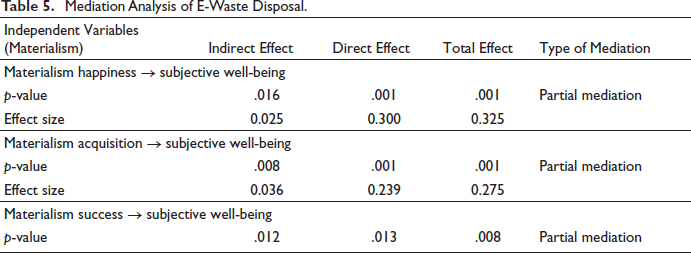
The indirect effect (mediating effect) presented in Table 5 demonstrates that e-waste partially mediates the impact of each dimension of materialism on subjective well-being (p < .05). This result means that the impact of materialism on subjective well-being is significantly strengthened when consumers engage in eco-friendly disposal of e-waste material. The hypothesis H4abc is, therefore, supported.
Discussion
Considering the increase in e-waste production brought about by the fourth industrial revolution coupled with a growing South African population, this study provides a fresh perspective on the impact materialistic values have on consumers’ e-waste disposal behaviour and subjective well-being. In line with current scholarly debates on the paradoxical relationship between materialism, sustainable behaviours and well-being (Markauskaitė & Rūtelionė, 2022), this study embraces the views that materialistic values and sustainability can coexist and eventually improve consumer well-being.
The findings of this study revealed that all three dimensions of materialism (success, acquisition and happiness) positively influence eco-friendly disposal of e-waste and subjective well-being. This assumes consumers’ materialistic values facilitate the disposal of e-waste in a manner that benefits the environment in South Africa. In the wake of a mixed perspective the connection between materialism and sustainable consumption practices, this finding is consistent with several studies that demonstrate a positive impact of materialism on sustainable behaviour (Dong et al., 2018; Kaur et al., 2022; Ryoo et al., 2020; Talukdar & Yu, 2020). For instance, Evers et al. (2018) demonstrated that materialistic consumers engage in recycling durable products because such behaviour is increasingly championed by the society, they seek approval from. Similarly, Kaur et al. (2022) revealed that consumers are more likely to purchase sustainable luxury product when they have materialistic tendencies.
The findings further established that all three dimensions of materialism have a specific influence on subjective well-being, and therefore substantiated the relevance of considering materialism as a multidimensional construct. Consistent with research by Górnik-Durose (2020), of the three dimensions of materialism, possession-defined happiness was the strongest determinant of well-being. The happiness resulting from acquiring a possession translates into well-being, and more specifically satisfaction with life. The proposed model also demonstrated that when consumers dispose of their e-waste in an eco-friendly manner, it positively affects their well-being. The consumers’ subjective assessment of the impact of their pro-environmental actions increases stimulates higher subjective well-being. In this respect, this study resonates with previous work by Schmitt et al. (2018) as well as Zawadzki et al. (2020) who found that pro-environmental activities have a strong impact on the environment and society (e.g., recycling) yield higher well-being. However, to make sense of this finding in the context of sustainability and eco-friendly consumption, a deeper analysis of the relationship between materialism and well-being while e-waste disposal is added as a mediator clarified the crucial role of e-waste disposal behaviour on consumer well-being. Indeed, even materialistic consumers find fulfilment and subsequently well-being when their actions benefit the environment (Oral & Thurner, 2019).
In contrast with the current literature that has paid limited attention to the link between moral norms and materialism, this study indicates a positive relationship between one dimension of materialism (centrality of acquisition) and moral norms. Given the crucial impact of moral norms on the adoption of sustainable behaviours (Setiawan et al., 2021), this finding suggests that this internal obligation to act in an eco-friendly manner can also be explained by the extent to which consumers consider the acquisition of possessions as central to their life. Furthermore, the present research reveals that when consumers view possessions as signs of success and achievement in life, they display more favourable attitudes towards e-waste disposal. This is an interesting finding given the critical influence that attitudes have on e-waste disposal as confirmed in this study and widely reported in previous studies (Nguyen et al., 2019; Wang et al., 2018).
Implications of the Study
Theoretical Implications
The present study offers various key theoretical implications. The first implication is that the study extends the depth and breadth of current research on the crucial impact that materialism has on sustainable behaviour and subjective well-being. This study provides a different outlook on the eco-friendly disposal of e-waste. Too often, studies have been limited to concepts stemming from psychosocial theories such as the TPB and NAM. This study proposes a conceptual model grounded on the VAB theory and shed more insight into the impact of all three dimensions of materialistic values (success, acquisition and happiness) on e-waste disposal and subsequently well-being. The growing tendency towards materialism in emerging markets (Kuanr et al., 2020) makes this study relevant as it contributes to current scholarly work on e-waste disposal behaviour.
The second implication to the body of knowledge is the inclusion of subjective well-being as an outcome of the disposal of e-waste. While most studies on e-waste disposal (Echegaray & Hansstein, 2017; Gilal et al., 2021) have investigated the antecedents of e-waste disposal behaviour, the present study expands the VAB theory and current literature by providing empirical evidence on a potential outcome of adopting such a behaviour. Despite the heightened interest in the relationship between materialism and well-being (Oral & Thurner, 2019; Schmitt et al., 2018), more insight was needed to understand how this relationship occurs in the context of e-waste disposal in an emerging market. In doing so, this study also deciphers the linkage between materialism and well-being often deemed non-existing or incompatible. This was done by the inclusion of e-waste disposal as a mediator that strengthen the impact of all three dimensions of materialism on subjective well-being. Thus, this study demonstrated that the influence of materialistic values on subjective well-being is stronger when consumers dispose of their e-waste in an eco-friendly manner.
Another key implication of this study is its contribution to the scholarly debate on the nature of the relationship between materialism, sustainability and well-being. Although popular beliefs view these three concepts as antagonistic (Furchheim et al., 2020; Gu et al., 2020; Kilbourne & Pickett, 2008), the present study adds empirical evidence supporting the view that materialism, sustainability and subjective well-being can indeed coexist and be complementary (Binder & Blankenberg, 2017; Talukdar & Yu, 2020).
Further to this, the present study provides evidence that materialism indeed could inform the internal pressure to engage in pro-environmental behaviour. Although only one dimension of materialism (the centrality of acquisition) has shown a significant impact on moral norms, this study bridges a research gap that has been surprisingly left unattended in the literature. Indeed, the moral pressure to dispose of e-waste for future recycling and refurbishment of used EEE is driven by consumers’ attachment to possessions as they view them as central to their lives.
Managerial and Public Policy Implications
The findings of this study have important implications for marketing practices in both the profit and non-profit sectors, and public policy. Despite the negative connotation commonly associated with materialism, this research demonstrates that materialistic values could contribute to adequate disposal of e-waste and subsequently consumer well-being. Given that materialism is becoming gradually entrenched in emerging markets, it is indeed a value to reckon in promoting eco-friendly disposal of e-waste (Kuanr et al., 2020). Therefore, instead of denouncing the negative effects of materialism, the focus should be on understanding how to harness the power of materialistic values (Ryoo et al., 2020). Because materialistic consumers are attached to material objects and the ownership of material possessions enhances their feeling of self-worth and well-being (Kaur et al., 2022; Talukdar & Yu, 2020), marketers should communicate the benefit of recycling obsolete in order to retain the value of the product. Practically, recycling agencies should communicate the recycling process of the EEE and provide an estimated financial value of the products after being refurbished.
Moreover, this study demonstrates that when consumers dispose of their e-waste in an environmentally friendly manner, it further enhances their well-being. This finding can inform communication efforts aiming to enhance the eco-friendly disposal of e-waste. Ryoo et al. (2020) revealed that consumers with high materialistic values display a more favourable response to ethical behaviour when they see their interest in adopting such a behaviour. In fostering the eco-friendly disposal of e-waste in households, the marketing message should be centred on what consumers get and not the EEE product they are getting rid of. Benefits such as higher well-being, acknowledgement from peers for doing the right thing, possibility to refurbish the product, are a few arguments that can help to convince the target audience.
Central to sustainable management practices for end-of-life EEE is the role of retailers as supply chain partners (Mane & Niranjan, 2014). Retailers can facilitate end-of-life returns practices where consumers hand over obsolete EEE to retailers, and subsequently, retailers return them to manufacturers for future recycling. Such a transparent value chain should be communicated to consumers to encourage eco-friendly disposal of e-waste. As Gautam and Jain (2022) observed, consumers put economic and future values on e-waste by involving retailers in the recycling process of e-waste. Consumers therefore gain economic values through possible incentives to motivate eco-friendly disposal of e-waste, and future value by virtue of possible refurbishment or upcycling of an EEE. A partnership between end-users, retailers and manufacturers of EEE is an effective strategy to tackle the pressing issue of e-waste. Such partnership will create more economical and environmental opportunities and enhance the corporate image of retailers and manufacturers (Mane & Niranjan, 2014). The government and policymakers should therefore embark on more decisive actions to champion better e-waste management practices by creating recycling and upcycling centres in collaboration with EEE retailers, facilitating partnership with not-for-profit organizations that work on environmental protection, and implementing laws and regulations that facilitate such environmental practices (Gautam & Jain, 2022).
Limitations and Further Research
This research has some limitations that offer several opportunities for further research. The first limitation is the measurement of well-being. This study has only focused on satisfaction with life as a subdimension of consumer well-being. Future studies should investigate more dimensions of well-being including eudaimonic and hedonic well-being. Another limitation is the use of a cross-sectional research design and therefore a survey as the research approach. An experimental design should be considered as it yields more accurate and enlightening results. Although this research aimed at providing initial insights on how materialistic values can contribute to eco-friendly e-waste disposal and well-being, some moderators such as cultural values or personality traits could be embedded in the proposed model. The fact that the study only focused on South African consumers is a limitation. Consumers’ perspectives from other emerging countries in Africa or Asia could add value to this study.
These shortcomings notwithstanding, this research provides useful insights into shifting consumers’ behaviour towards more eco-friendly disposal of e-waste. Such a behaviour change could surprisingly also rely on controversial values such as materialism, and ultimately lead to consumer well-being.
Footnotes
Acknowledgements
The author is grateful to the anonymous referees of the journal for their extremely useful suggestions to improve the quality of the article. Usual disclaimers apply.
Declaration of Conflicting Interests
The author declared no potential conflicts of interest with respect to the research, authorship and/or publication of this article.
Funding
The author received no financial support for the research, authorship and/or publication of this article.
