Abstract
Small businesses and start-ups have started to open up post-coronavirus disease 2019 (COVID-19) lockdowns, but they have faced numerous challenges mainly due to changed customer preferences and the need to fine-tune business models. In this research, we study how a food-tech start-up, Conosh, reshapes its business to weather the COVID-19 pandemic and thereby try to identify important aspects that start-ups need to focus on, post COVID-19 pandemic. Interview memos are thematically analysed to identify repeated ideas, concepts or elements that become apparent. The study reveals that employees’ and customers’ safety, prudent cost management, online presence and doorstep services are key for start-ups to succeed during COVID-19. This research takes a fresh approach to identify key strategic and operational aspects that start-ups need to fine-tune in the wake of COVID-19. The case study enriches scientific research of understanding the impact of COVID-19 on organizations by offering a practical guide on how start-ups can learn and adapt by looking at how other start-ups are surviving today.
Introduction
Coronavirus disease 2019 (COVID-19) has impacted lives and businesses across the globe, and it has resulted in considerable morbidity and mortality since December 2019. Businesses, especially start-ups, are dealing with lost revenue, significant demand reduction across industries, price reductions, disrupted supply chains, factory shutdowns, lockdown of workforces, etc. (Meahjohn & Persad, 2020). The impact is severe on trade, manufacturing and Micro Small and Medium Enterprise (MSME) sectors (Sahoo & Ashwani, 2020). Because of the changed business landscape, start-ups and MSMEs need to quickly reshape their businesses (Salamzadeh & Dana, 2021). One of the sectors that has been badly impacted has been the food industry for start-ups and medium enterprises. With the advent of COVID-19 and changing societal and business environment, it is crucial for start-ups here to make necessary changes to the business models as per updated customer needs in the food industry. In food tech industry, players such as Swiggy, Box8, Cure.fit, etc., started to offer grocery deliveries as they understood the shift in customer mindset to make delicacies at home themselves due to safety concerns associated with ordering food from restaurants (Bansal & Angrish, 2020). Conosh, a food tech start-up that curated social dining experiences at the residences of talented home chefs, has shifted focus on hosting online workshops with talented chefs to engage better with customers (Rashmi, 2020). Conosh has a unique business model, which has product element (like standard meal/thali), as well as service and operational aspects of conducting an event to gratify the customers. This article studies how Conosh.com weathered the pandemic challenges and reshaped its business to survive and excel during COVID-19. We reviewed the relevant literature to understand the impact of COVID-19 on society and businesses. Due to the lack of research in these domains coupled with unique proposition of Conosh, we study Conosh to recognize the practical implications of COVID-19 and how it is impacting the businesses in general. The study suggests key practices and tasks that start-ups, especially in the food-tech industry or those conducting events, should take to weather the myriad challenges posted by the pandemic like COVID-19, and grow their businesses by adopting to customer’s changing preferences and increasing survival chances.
This study started with a question—what are the generic impacts of COVID-19 on start-ups and what steps are helping them to stand up back on their feet?—for which we study Conosh through semi-structured interviews with its co-founders and senior staff associated. We carry out periodic interviews with four core members of Conosh to understand the then current strategic implications and path forward. We reviewed the data collected (interview memos) to develop repeated ideas, concepts or elements that become apparent by using a grounded Theory framework.
This case study is organized as follows: the second section weaves together the literature on the impact of COVID-19 on society and businesses and impact of the pandemic on start-ups across industries. The third section identifies key concerns posed by COVID-19. In the fourth section, we dive deep into understanding the impact on Conosh. In the fifth section, we conduct the data analysis and present the results. The sixth section highlights the learnings of the case study that can be adopted by start-ups, especially in the food-tech industry. The seventh and final section concludes the article. The learnings will help students, researchers and practitioners learn from how a start-up fine-tuned operations and business strategy to tackle variety of unique challenges posed by COVID-19.
Literature Review
As soon as COVID-19 started spreading uncontrollably, almost all countries hit by the virus issued restrictions on movement, placing people in quarantine, closing public services like schools, cancelling large gatherings, etc. (Farooq et al., 2020). People have been worried that they can catch the disease if they go out in public, resulting in fewer people willing to go to restaurants, gymnasiums, parks, sports events, movie theatres, etc., where they are likely to be in close proximity to a large number of people (Antipova, 2021). Governments and economic bodies around the world launched economic recovery programmes of extraordinary size and scope (Markard & Rosenbloom, 2020). Like in all crisis situations, interdependence between businesses, government and society must be anchored to tackle challenges posed by COVID-19 (Banik et al., 2020). Entrepreneurship and start-ups play an important role here in reviving the economy and society (Fazio et al., 2021). Innovative start-ups will be able to better cope with COVID-19, using their specific characteristics and paving paths for others to follow (Kuckertz et al., 2020). As the core activities and partnerships with other firms are disrupted for start-ups, coupled with changed customer preferences, they face a big disruption produced by COVID-19 to reconsider their business strategy across industries (Giones et al., 2020). Governments are promoting start-ups by providing needful financial support, resource and guidance via various schemes and policy changes that aid start-ups to rise in the times of COVID-19.
Shift in Consumer Mindset and Consumption Patterns
Consumer confidence has been low causing reduction in overall demand and consumption, leading to slowing down of production, high inventory accumulation and lay-offs, thus completely changing the world’s outlook (Behl & Mishra, 2020). Consumer purchases have been driven with utilitarian motives such as restocking necessities, replenishing items, replacing damaged items, etc., and hedonic reasons such as the pursuit of freedom, defy boredom, celebrate the end of the storm and to rekindle with family and friends (Larson & Shin, 2018). People anticipated that they might be forced into quarantine for reasonable periods as governments were issuing restrictions (Parmet & Sinha, 2020). These are major consumption pattern changes, and start-ups and small and medium enterprises (SMEs), being one of the important elements in community economic development, are best placed to respond to the dynamic challenges in understanding consumer’s mindset during COVID-19 (Sagara et al., 2021).
Shift Towards Shopping Online
Due to the pandemic, customers want to avoid close proximity with others while buying products or availing services, causing mostly a permanent shift to purchase food items, groceries, household items and other essentials online (Nielsen, 2020). Customers, in general, associate a greater utility with the home delivery method than the in-store pickup method (Gawor & Hoberg, 2019). Even the late adopters, who never used online shopping before, are prompted to shop online as there is no alternative at some places when locked down at respective homes (Kim, 2020). YouTube videos are widely used for seeking advice and tips regarding different diets and health issues (Aydin & Aydin, 2020). Start-ups and SMEs need to change the mindset in running businesses, by using technology transformation, by learning and understanding digital skills relevant to their businesses (Winarsih et al., 2021). Digital transformation can (a) ensure that the business remains competitive, (b) brings in efficiencies in business processes, (c) helps increase customer satisfaction and (d) enables various strategic decisions by providing needful data. Major consumption pattern changes are seen in food industry, where grocery and food shopping is seeing a big shift towards online, and in order to meet this demand, start-ups in this sector can play an important role to meet the changed dynamics and need to invest in innovation and digitization of overall experience (Khan et al., 2020). Especially in developing economies, managers understand the need to be flexible and adaptable to conditions and thus will be able to take necessary actions in the changed business scenario (Bamel et al., 2015).
Impact on Food Industry
Food industry is arguably the most affected by the pandemic after healthcare industry (Nicola et al., 2020). The pandemic has triggered switching behaviours at considerable levels among customers, with farmers’ markets losing most of their customers, while local small independent retailers experiencing high levels of resilience in terms of customer retention (Li et al., 2020). Firms need to be cognizant of the sudden changes in customer preferences and resulting demand side dynamics, for example, in the food service sector, the consumption patterns are switching away from meals already prepared to those that can be prepared and consumed at home (Hobbs, 2020). Customers are also buying increasing amount of frozen or processed food, thus indicating an important time for the marketers of both fresh and processed fruit and vegetable firms to maintain, attract and expand their consumer base. Many believe that with more customers shopping online for fruits and vegetables, it could represent the tipping point for fresh produce retailers that move fresh food delivery beyond tech-savvy, regular online purchasers to the centre of the mass of the food-buying public (Richards & Rickard, 2020). Start-ups in this space need to be cognizant of these trends and reshape the business to thrive and excel in the times of the pandemic.
Summary of Situation/Research Gap
While there is a significant impact of the pandemic and similar past events on consumer behaviour, expenditure and impact on small businesses, studies have not focused on looking at the consequences in a consolidated manner for start-ups. Researchers have studied the impact of COVID-19 on consumer preferences in different countries such as Finland (Laato et al., 2020), Canada (Hobbs, 2020), South Africa (Marks, 2020), etc., that acts as a basis to generalize findings associated to consumer preferences and behaviour. However, how COVID-19 has influenced consumers and the consumption culture and how should start-ups react have received relatively limited attention (Kim, 2020). We thus contribute to the scarce literature with evidence of changing consumer preferences, impact on small businesses due to the COVID-19 pandemic and how can start-ups (especially in food-tech space) foster during the COVID-19 crisis by closely reviewing a food-tech start-up—Conosh. A similar study—impact of the COVID-19 pandemic on Agile software firms—finds similar strategies to help firms excel (da Camara et al., 2020). This is largely an unexplored domain, and we aim to identify key operational and strategic changes that small businesses and SMEs need to use during pandemic times by studying Conosh using grounded theory approach—translate interview notes/narratives into codes and derive theory (Stern & Porr, 2017). Our novel findings provide numerous recommendations for academics, practitioners, small business owners and policymakers to reshape SMEs and small firms, especially in food-tech industry.
Methodology
As understood from literature review, there is no structured research carried out to evaluate the impact of COVID-19 across industries and how these small enterprises are thinking of restarting their businesses. In this research, we aim to explore and analyse the following research problems:
What are the generic impacts of COVID-19 on start-ups and SMEs? How are firms planning to restart business post-lockdown periods due to COVID-19?
Research uses constructivist grounded theory methodology to analyse data collected through in-depth semi-structured interviews, and we leverage the simultaneous collection and analysis of data and the adductive interplay between induction and deduction (Glaser & Strauss, 1967). Interactions were carried out over a period of 12 months, mainly over in-person interviews, and responses were recorded in notes. Average interaction duration was 30–40 min. Participants were informed upfront that interviews were exploratory and semi-structured in nature, where a discussion started with one or two themes and inputs were gathered based on individual’s experience. Memos were written, based on details provided, and were later segregated to categorize in open coding phase. Anecdotal evidence is also included to understand first-hand inputs from Conosh’s team. Key implications and learnings as surfaced from the analysis of codes, have been added.
Company Background: Conosh
Launched in April 2019 in Bangalore, Conosh started with home-hosted food pop-ups that brought people from different walks of life to bond over home-cooked food (Mathur, 2020). It is a place to gather and create great memories over food; it is trying to do across different cities. It was started by two friends, Anshumala and Vaibhav Behl, who were always exploring the world through food and culture. During a university break, they embarked on a culinary trip to Istanbul, discovering the city through its food with a few locals hosting them at their homes over food, coffee readings, teas and Raki (local alcoholic drink) (Sharma, 2020). They realized the power of connecting people through food on this trip, but they did not think much about it. Later, they explored over 10 countries in Europe and Asia together, while experiencing local authentic cuisines and traditions. They liked to keep the experiences simple and free-flowing rather than trying the high-end fine-dining options, as experiencing the cuisines from traditional small places helped them realize the minute details in authentic dishes and food preparation methods.
After completing respective postgraduation studies, both met again in Bangalore, India, in 2019, and wanted to let people experience the authentic food experiences through home cooks (or home chefs). There are a lot of restaurants and high-end cuisines, which allow people to experience bits of traditional food story; however, they found that the authenticity in food was missing. For example, a Gujarati thali with patra, undhiyu, dhokla and other delicacies prepared by a local Gujarati chef had a lot more ingenuity and flavour than the same cuisines tried in restaurants. They also found that a sizable number of home chefs were willing to try and serve food for other people and showcase their cooking skills. They also validated that customers were willing to explore the traditional style of home-cooked authentic meals. And that is how Conosh was conceptualized. It finally took shape in Bengaluru in 2019 when another friend, Neha, joined in as an investor, and the three started Conosh, which now has presence in Bangalore, Delhi and Mumbai. Vaibhav generally says ‘Conosh is about making friends over food, creating unforgettable memories and fostering a feeling of community living that barely exists in today's isolated digital age’.
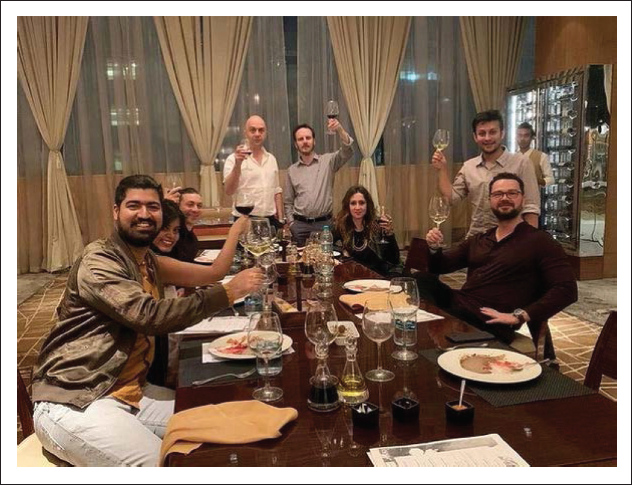
Conosh was all about getting people together over home-hosted social dining experiences also known as Conosh Tables—people from different walks of life would meet up over the comfort of home food. What started as 1–2 events per month grew to 4–5 per week within a couple of months (‘The Culinary Connoisseurs’, 2021). They started with one or two events every weekend, to try and learn from customers on the experiences. They tried to organize events over special occasions, themes (like poker, weekend getaways, music, etc.), and festivals. Key differentiating points about Conosh were the authenticity of food, simplicity of conducting events and allowing customers to cherish food along with meaningful conversations among the diners. By January 2020, Conosh had hosted over 150 pop-ups in Bengaluru and 70 in Delhi, with a diner count ranging between 8 and 30. They had a customer base of over 1,000 with more than 3,000 meals served. The business was not net profitable, but they started to realize operating profits in some of the 2020 months. They planned to expand to 3 more cities and serve 5,000+ customers by June 2020. In turn, they also planned to break even by September 2020.
Impact of COVID-19
When the pandemic hit cities of India, it was not possible to conduct the pop-up events. The revenue dropped to 0. India imposed one of the toughest lockdowns in the world in March 2020, restricting people to come out of their homes (Gettleman & Schultz, 2020). Even after the lockdown, customers were not willing to come out of their houses and even the home-chefs were not inclined to host any external members at their homes. The Conosh team recognized the concern and was willing to wait, while engaging the customers through social media. However, what their customers really wanted was to experience the genuine authentic food that Conosh was able to serve.
As time went by, Conosh’s customers started to crave more and more for experiences and were eagerly waiting to be served the authentic non-regular meals. ‘Customers reached out to us to see if there was a way they could experience the earlier tried Bohri thal, or Bengali fish delicacies in any way. Customers would also ask to be connected to the home-chefs to know more about a particular dish that they really loved’, said Anshumala. By May 2020, the Conosh team knew that there was no point waiting for things to settle down as the cure or vaccine was not in close sight and the uncertainty due to the pandemic might loom longer than just a few weeks. They had to look at options to continue to serve their customers and work their way around the crisis.
Change to Business Model Post COVID-19
Customers wanted to be served; however, the pandemic changed the way how the food requirements could be met. First, the customers did not want to meet anyone externally that increased the chances of them getting infected with the novel coronavirus. Even the home-chefs did not want to meet anyone from outside whom they did not trust. Second, customers were now open to carry out things on their own, right from daily household chores to ordering groceries and making food. Customers did not shy away from trying to cook a new dish and were willing to be guided to experience their beloved delicacies. Third, both customers and home-chefs wanted to upskill themselves. What the pandemic did was to allow people to learn almost anything, from music, dance, cooking, painting, upskilling, etc., through online classes.
Riding on these changes to the business landscape and customer needs, the Conosh team considered serving the customers by changing the business model to include: (a) food deliveries and (b) food workshops by celebrity chefs. The Conosh team focused on allowing customers to order carefully curated authentic meals, which were pre-planned and published well in advance for customers to choose from. The Conosh team curates menus with home chefs, tastes it and then uploads it on their website for customers to purchase. These meals are listed a few days in advance for customers to choose and pre-order and have them delivered to them through growing delivery service options like Dunzo, Porter, etc. The meals are prepared, packed and delivered, keeping the highest standards of customer safety, while ensuring the authentic experiences were delivered to the consumers. Customers are also shown the exact delivery charge (depending on their location and distance from the home-chef who cooked the meals), making the whole charging process more transparent. Gradually, customers started to like the idea of getting the home-cooked authentic food delivered to them, which gave them a break from monotonous self-cooked meals. ‘We recently did meals inspired by the street food of Latin America and on the recipes from A Kitchen full of Stories (written by Ummi Adbulla). Both sold out within minutes’, said Neha. This is similar to the menu that Swiggy or Zomato show, the only difference is that instead of a particular restaurant, Conosh shows the offerings from a particular home chef, and that it would be delivered on a particular day at a particular time. The delicacies that are delivered, however, would be home cooked, something that a lot of food lovers prefer (Dhawan, 2021).
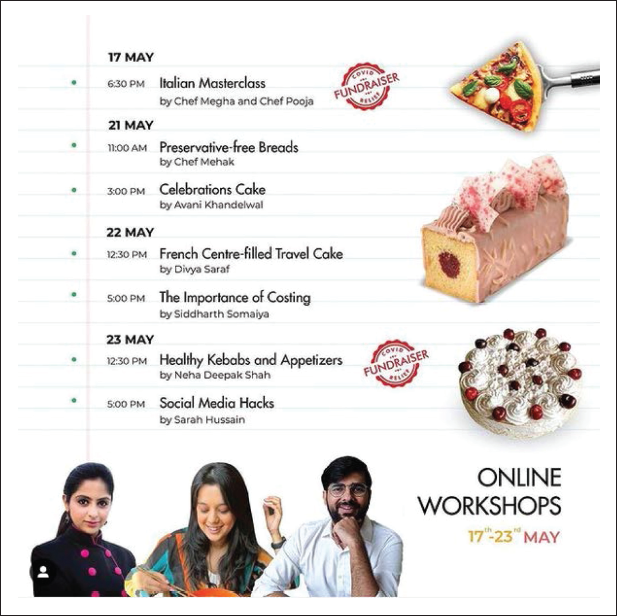
The Conosh team also explored the option to upskill the home-chefs and customers by conducting meal workshops roping in celebrity chefs. These chefs would tell the viewers how to prepare a particular meal (from Salmon steak, to roasted chicken and desserts like macaroons) with attention to detail and responding to questions right away. One of the workshops taught participants, how to make pandan panna cotta, with macadamia crumb and palm sugar caramel from Sashi Cheliah, the 2018 winner of MasterChef Australia (Rashmi, 2020). The celebrity classes were a runaway success as it brought those deeply devoted celebrities within touching distance of the local viewers. ‘With the online classes, the idea is to create a sustainable ecosystem of expert home chefs. They learn new cuisines, upskill and in turn sell better’ said Anshu. Till March 2021, the Conosh team conducted over 200 online classes with celebrity chefs and influencers from around the world, including Gary Mehigan (Judge at Masterchef Australia), Anna Polyviou, Ranveer Brar and more.
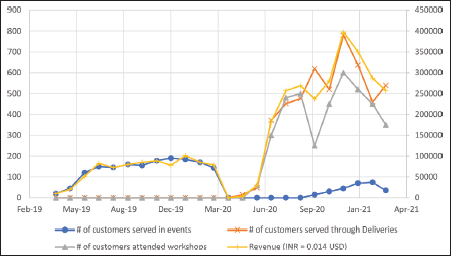
But what exactly made Conosh unique for food lovers? Conosh team mentioned ‘Two of the most important unique features offered by Conosh in its current format are: affordable and live online culinary classes taken by the industry experts that food enthusiasts can attend every week; and secondly, curated gourmet-class homemade meals that our users can enjoy from the comfort of their homes. Our users also get something no restaurant can offer: a chance to eat nostalgic dishes made with heirloom recipes. Further, they can use the Conosh platform to showcase their culinary talent—whether it is newly acquired or honed over years. Finally, Conosh’s uniqueness also lies in offering people a great opportunity to elevate the quality of food served at their private gatherings or parties, through custom orders for a large group’, (Dhawan, 2021). Within 2 months of changing the business model, Conosh reached Pre-COVID levels, and the Conosh team is now on track to grow 6× in 2021 as compared to 2020. A detailed business performance is described in Figure 1.
Conosh’s Customers Served and Revenue.
Talking about future plans, Neha shares, ‘In the first two quarters in 2021, our focus will be on deeper penetration in our existing markets (Delhi NCR and Bangalore). The idea is to get hyper local via apartment-based selling (Conosh Canteens) and by setting up community spaces (Conosh Kitchens). Over next 8-10 months we plan to launch in two new cities’.
Data Analysis and Findings
The study predominantly adopts qualitative data analysis technique, where data from interview notes and transcriptions have been conceptualized line by line, segment by segment and categorized. Memos were collected from the participants and analysed to identify the keywords or codes in each memo. Here, we relied on important COVID-19-specific nuances and phrases that are linked to codes. A word cloud of the codes is presented in Figure 2.
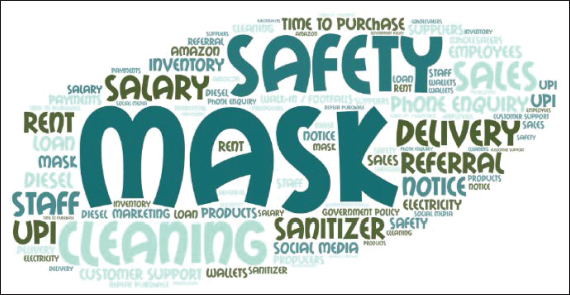
As can be seen from word cloud, customers and home-chefs had safety and associated terms as the most important roadblock/hurdle that needs to be addressed by each and every business today in times of COVID-19. Conosh also had to look at cost elements, understand the changing customer preferences and have more focus on digital presence in times like these. In this step, the codes, categories, impacts, etc., are evaluated for any common patterns and internal dependenceis are identified. It helps stitch together the findings across categories into a simplified summary. Here, the findings are articulated into a story for a better research summary and consumption. Applying it, we find that COVID-19 has significantly changed the business landscape for start-ups and SMEs and most important is the implementation of safety precautions (CF—31.3%; p-value 0.001), carry out cost-cutting measures (CF—23.8%; p-value 0.002) and try to avail options to increase digital presence, while providing doorstep sales and service to customers (CF—12.6%; p-value 0.004). These qualities help start-ups tackle the challenges posed by COVID-19 and expect them to deliver quick favourable outcomes. T-test was performed to see if the three code categories belong to a different population (i.e., have higher importance) or not. Results suggest that the three code categories did belong to a different population as t-Stat (2.89) is greater than t-Critical 2-tail (2.71).
A spider chart view of each code category is as presented in Figure 3.
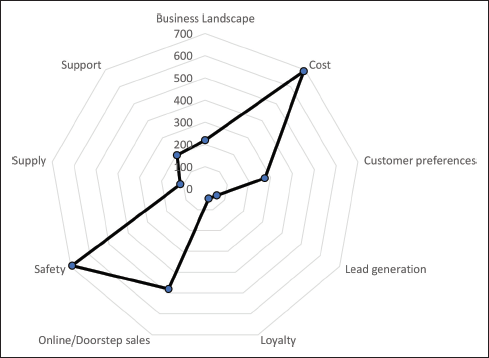
It is not surprising to find that unlike traditional approaches where firms work on economies of scale, think big and optimize closely across all aspects to build their businesses, COVID-19 has asked firms to pause and implement necessary safety measures and precautions to safeguard themselves, their employees and customers before thinking about expansion and optimization ideas. COVID-19 presents a unique proposition to start-ups where firms, like Conosh, which are more open to change and digitization are expected to succeed. Another aspect, which did come out with safety measures, was the need for start-ups to focus on cost optimization. Findings also suggest that other attributes like ‘being cognizant to business landscape’, ‘knowing customers’ preferences better’ and ‘having stronger support mechanisms’ are generically considered important, but there was not much difference in expectation due to COVID-19.
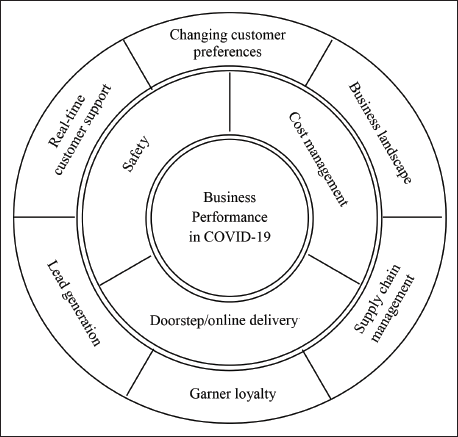
To summarize, we propose a model (Figure 4) that synthesizes the insights gathered from the qualitative analysis of interview excerpts gathered from the Conosh team. For small businesses and start-ups to excel, they need to identify and address concerns associated with inner circle (safety, cost management and doorstep delivery) first and then work on other domains.
Learnings and Implications
Questions that Start-ups Should Ask Themselves with Ideal Answers.
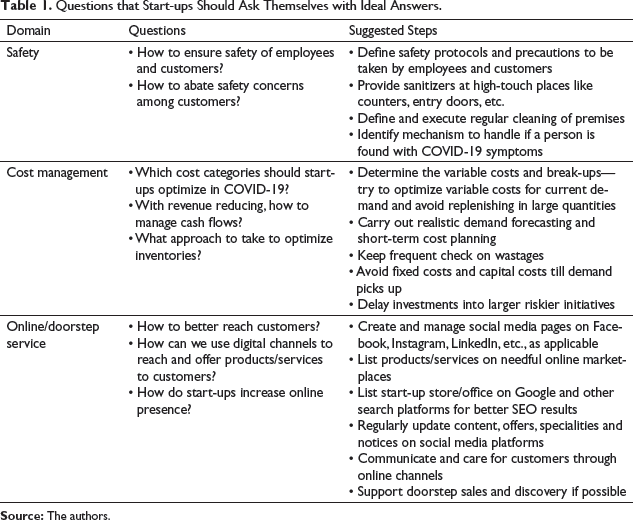
Findings of this study provide guidance to students, entrepreneurs and start-up owners to understand key aspects, which need to be looked at to be successful during COVID-19. Start-ups are nimble, agile and flexible, but in multiple interchanging priorities, important processes and tasks tend to get missed. Although the aforementioned recommendations are based on findings from Conosh (in food-tech industry), the findings can be easily applied to other start-ups in allied domains (e.g., edu-tech, e-commerce, event management, etc.). Start-ups that carry out the pandemic mitigation plan on the aforementioned lines are expected to be more successful than others by being able to easily understand the priorities of various tasks and adopt practices that help both their businesses and customers. These start-ups are expected to be more engaged at work, participating and weathering the pandemic crisis with a lot more zeal and vigour, and are on track to achieve long-term resilience and success.
Conclusion and Scope for Future Study
Limited studies have been performed to identify how start-ups are impacted by a pandemic like COVID-19 and how can they overcome unique challenges brought by a pandemic. Being cognizant of a start-up’s desire and inherent culture of being flexible, the study aims to guide start-ups with necessary mechanisms across important domains to best handle the changing business landscape and customer preferences, reduced demand, supply and inventory concerns, etc., to make it simpler and more effective for start-ups to carry out business. This study on a food-tech start-up—Conosh—identifies that ‘employees’ and customers’ safety’, ‘optimized cost management’ and ‘online/doorstep services’ are crucial for the success of a start-up during the COVID-19 pandemic. We suggest that similar studies in other geographies, especially other major entrepreneurship hubs, can also be carried out, and we expect that the results should be in line with the ones presented in this study. Further studies could beneficially use this theoretical framework to assess the impact on start-ups in specific industries or geographies and determine relative importance. Despite a few limitations of this research, the findings contribute to help identify essential actions needed to be taken to mitigate concerns faced by start-ups today.
Appendix A
Conosh Images