




Abstract
Although existing studies on consumers typology are extensively conducted, insights on consumers typology in adapting their shopping attitude and behaviour during the COVID-19 pandemic remain unexplored. Current studies on consumer responses to the COVID-19 pandemic tend to focus on the following themes: panic buying behaviour, consumer spending and consumer consumption. This study explores a typology of adaptive shopping patterns in response to the COVID-19 pandemic. The study involved a survey of 465 Indonesian consumers. Principal component analysis is used to identify the variables related to adaptive shopping patterns. Cluster analysis of the factor scores obtained on the adaptive shopping attitude and behaviour revealed the typology of Indonesian shoppers’ adaptive patterns. Multivariate Analysis of Variance (MANOVA) analysis is used to profile the identified clusters based on attitude, behaviour and demographic characteristics. Results revealed five adaptive shopping patterns with substantial differences among them. This study provides in-depth information about the profile of Indonesian shoppers’ adaptive patterns that would help retailers in understanding consumers and choosing their target group. The major contribution of this study is providing segmentation on shopping adaptive patterns in the context of the COVID-19 pandemic which presents interesting differences compared with previous studies. This study reveals new insights on shoppers’ adaptive attitude and behaviour as consumers coped with the pandemic.
Introduction
Although many recent studies have been published on consumer behaviour during the COVID-19 pandemic, little is known about consumers typology in adapting their shopping behaviour during the virus outbreak, for example, COVID-19 and its impact on panic buying behaviour (Keane & Neal, 2020; Loxton et al., 2020), the link between COVID-19 and consumers’ response on spending (Andersen et al., 2020a, 2020b; Chronopoulos et al., 2020), COVID-19 and its impact on household food wastage (Jribi et al., 2020), food supply chains during the COVID-19 pandemic (Hobbs, 2020), households’ consumption and debt response to an outbreak using transaction-level household data (Baker et al., 2020) and the economic impact of COVID-19 and the financial vulnerability of workers who have lost their jobs as a result of COVID-19 pandemic (Mogaji, 2020).
Since the 1950s, numerous studies have reported different types of typologies and shoppers’ profile based on, for instance, store attributes (Ganesh et al., 2007; Karande & Ganesh, 2000; Lumpkin, 1985; Reynolds et al., 2002), shoppers’ motivation (Ali et al., 2020; Arnold & Reynolds, 2003; Ganesh et al., 2007; Jarratt, 1996; Kumar & Sadarangani, 2018; Moschis et al., 2004; Stone, 1954), activities-interest-options (AIO) statement (Darden & Reynolds, 1971; Moschis, 1976; Reynolds & Darden, 1972) and online shopping behaviour (Ganesh et al., 2010; Harris et al., 2017; Huseynov & Yıldırım, 2019). However, none of such studies classifies consumers based on shopping adaptation during a hard time due to virus outbreak. Furthermore, the studies majority are based on western countries context, while little insights on shoppers’ typologies based on consumers in emerging economies.
Attempts to classify shoppers during a hard situation due to macroeconomic factors such as economic crisis or recession also have been conducted, for instance, a study that analyses typology of adaptive shopping patterns in terms of attitudes and behavioural responses during a recession (Hampson & McGoldrick, 2013); a study that examines consumer behaviour in Turkey in response to the recent global economic crisis (Kaytaz & Gul, 2014); and a study that develops segmentation and profile of shopping malls customers typologies in time of hardship (Calvo-Porral & Lévy-Mangin, 2019; Lambrechts et al., 2017). Based on data from Indonesia Family Life Survey (IFLS), Frankenberg et al. (1999) conducted a longitudinal survey during the financial crisis in Indonesia between 1997 and 1998 in some dimensions of family and individual well-being such as expenditure patterns, employment and earnings, education, use of healthcare and family planning and health status. However, the impact of an epidemic outbreak is qualitatively different compared to other macroeconomic factors (Jung et al., 2016). Therefore, this study intends to explore a typology of shoppers concerning their attitude and behaviour changes in response to the COVID-19 pandemic.
Profiling shoppers’ adaptive patterns provides practical guidance for retailers to understand their customers better, since shopping typologies serve as a foundation for shoppers’ segmentation and targeting strategies. From a theoretical point of view, this study contributes to enrich the literature on shoppers’ typology based on their attitudes and behaviour changes or adaptation due to the COVID-19 pandemic that currently remains unexplored. After all, little is known about how Indonesian consumers respond, in terms of their shopping patterns, to a pandemic on a scientific basis and across a large number of households and geographies. Hence, the main research objective is to explore the shopping typologies of Indonesian consumers based on their attitude and behaviour in adapting to COVID-19 by analysing the factors such as panic buying, reduction in consumption, price sensitivity, shifting to e-grocery shopping, health consciousness and willingness to make charity donations.
The rest of the article is organized as follows: the first section is the introduction section. In the second section, based on the previous studies, we discuss the theoretical underpinnings of shopper typologies based on shoppers’ attitude and behaviour during a hard time. The third section, discussing the methodology, outlines the methods of testing our proposed shopper typologies. The empirical results of the research are reflected in the fourth section, followed by a discussion. Lastly, we present our conclusion, practical implications and suggestions for future research.
Review of Literature
Shopping Adaptation During Hard Times
Empirical studies show that consumer behaviour changes drastically during a crisis (e.g., recessions). Some studies show that consumers change their buying patterns during hard and stressful times due to economic crisis (Ang, 2001; Frankenberg et al., 1999; Hampson & McGoldrick, 2013; Kaytaz & Gul, 2014; Sharma & Sonwalkar, 2013) and virus outbreak (Baker et al., 2020; Forster & Tang, 2005; Hobbs, 2020; Hui & Wan, 2009; Jribi et al., 2020; Jung et al., 2016). It has been well acknowledged that the COVID-19 pandemic affects individuals’ psychological responses such as anxiety and fear that will affect consumer behaviour (Pakpour et al., 2020). This leads to adaptation in construct creation to determine shoppers’ typology in response to the COVID-19 pandemic. In this study, consumer behaviour and attitude related to shopping adaptations during the pandemic covers the following issues: panic buying, reduction in consumption, reduction in food wastage, price sensitivity, shifting to e-grocery shopping, health consciousness and willingness to make charity donations.
Panic Buying Phenomenon
During the COVID-19 outbreak, as the number of cases increases, consumers radically alter their spending on some categories such as retail, credit card spending and food items (Baker et al., 2020). This effect demand-side shock on the food supply chain including consumer panic buying (Hobbs, 2020). Panic buying leads to consumers becoming pantry stockers, since the pantry may require restocking for as long as the COVID-19 pandemic lasts. Using the risk attitude and risk perception factors, panicked consumers can be classified as those who have a high risk attitude and a high risk perception. In an immediate stressful situation, this kind of consumers remain high risk-averse and will try to avoid the risk. These consumers tend to overreact in the context of a crisis. During the pandemic, panic attacks can lead to consumer egoism such as panic buying (Nicomedes & Avila, 2020). Investigating this issue is expected to provide insights into how households stockpiling and spending reactions play a role in shopping decisions.
Reduction and Shift in Consumption
The sentence should be: Covering the basic needs such as rent, mortgage payment, groceries, utilities and medications in recessions to be concerned for both employed and unemployed consumers (Starr, 2011). In this case, consumers are suggested to consider spending and fulfilling needs versus wants (Wilson, 2020). Consumers may respond to unemployment and fall in incomes in several ways such as spend their wealth, especially liquid assets, or borrow in financial markets to mitigate the income effects of unemployment and, hence, resulting in smooth consumption (Kaytaz & Gul, 2014). Employed consumers face uncertainty about being able to retain their jobs and current salary level, and this leads to a reduction in consumption of discretionary goods (Kaytaz & Gul, 2014). In their study of the Indonesian crisis, Frankenberg et al. (1999) find that consumers allocate a significant amount of their expenditure to food staples, like rice. The expenditure on non-essentials, as well as on health and education declined, and the poorest households suffered the most.
Ang et al. (2000) study consumers from several Asian countries during the Asian crisis. They find that Asian consumers do more comparative shopping, delay purchases of big-ticket items, place more emphasis on product durability and functionality, switch to lower end and local brands and buy at discount stores more often. While Korean consumers tried to maintain expenditures on food, education and health, they reduced expenditure on luxuries during the 1997 Asian crisis (Kang & Sawada, 2008). Consumers also react by focusing on buying necessities, switching to cheaper brands and having a more rational view on promotion. They start to compare different products and select based on price compromising quality (Nistorescu & Puiu, 2009). Based on the portray of consumer behaviour during the crisis, it is also expected that Indonesian consumers will react in similar ways regarding reducing and shifting consumption. This type of consumers can be classified as ‘discretionary thrift: even the rich people are economizing, although they don’t have to. They revealed their dissatisfaction with excess consumption. They started to recycle, buy used goods and teach their children simple and traditional values’ (Sharma & Sonwalkar, 2013, p. 41).
Price Sensitivity
It is believed that panic buying behaviours due to the COVID-19 outbreak tend to be a short-run problem, whereas in the long run, demand-driven effects on food supply chains will arise from a decrease in consumer incomes. This will impact demand as well as shifts across product categories; hence, we can expect consumers to be more price-sensitive and to shift away from more expensive goods (Hobbs, 2020). When uncertainty in jobs and wealth increases and causes a decline in income, especially during a recession, consumers normally become more concerned on price, since it is likely to be an important consideration when consumers make a decision (Hampson & McGoldrick, 2013).
Shifting to E-grocery Shopping
Studies on how consumers perform online grocery shopping during the COVID-19 outbreak are relatively few, while the majority of studies tend to focus on typology of online shoppers (Ganesh et al., 2010; Harris et al., 2017; Huseynov & Yıldırım, 2019; Kau et al., 2003). A study to identify and profile the characteristics of potential users of the online supermarket during the Severe Acute Respiratory Syndrome (SARS) outbreak in Singapore has been conducted (Hui & Wan, 2009). Using the technology acceptance model (TAM), the study investigates the core aspects associated with technology usage. Online grocery sales in Singapore increased significantly in 2003, especially in the early half of the year during the SARS outbreak. Another study investigates the role online shopping played during the SARS endemic crisis (Forster & Tang, 2005). Using data from Hong Kong’s largest online supermarket, the study reveals that demand for online supermarket increased during SARS outbreak in response to the growing fear of infection.
Health Consciousness
According to Nicomedes and Avila (2020, p. 17), one effect of COVID-19 is health consciousness, and it can be defined as ‘a dominant way of thinking about personal habits from the diet to the lifestyle one has such as sleeping patterns and exercise’. Other scholars (Basu & Dutta, 2008; Dutta-Bergman, 2004) defined health consciousness as the degree to which individuals care about their health. Therefore, there is no surprise that during the pandemic, health consciousness drives people to perform home-based exercise (Pu et al., 2020). COVID-19 has forced consumers to watch their health and well-being, and this effect on the demand for health and wellness products has been growing abnormally fast since the outbreak (Nielsen Company, 2020). Consumers may reprioritize health, safety and availability in their consideration of a product and, as a result, the level of consumers’ health consciousness. Boosting the immune system is a way to prevent people from being infected, and it is done by checking their health status simultaneously and eating healthy foods (Nicomedes & Avila, 2020). Consumers’ health consciousness is primarily discussed in studies related to consumers’ intention to purchase healthy products such as organic food (Chen, 2009; Kriwy & Mecking, 2012; Michaelidou & Hassan, 2008).
Willingness to Donate
Current studies on consumers’ willingness to donate to charities during the COVID-19 pandemic have been conducted; however, none of the studies links charitable giving or donation with shoppers’ typology. Examples of studies that focus on an online experiment to test whether human generosity has changed during the early COVID-19 pandemic (Branas-Garza et al., 2020), intrinsic motivations of attitude towards online donation for those affected by COVID-19 (Bin-Nashwan et al., 2020) and an experiment to test prosocial behaviour during the COVID-19 pandemic (Abel & Brown, 2020) are available.
Based on a behavioural perspective, the pandemic can be seen as a communal action problem in which the success of the group in combating the pandemic relies on individual action (Branas-Garza et al., 2020). Using such an analogy, it has been proven that the success of donation or charitable giving of a community may depend on individual solidarity or prosocial behaviour to help others affected by COVID-19. In this sense, financial contributions (monetary donation) from individuals affect the survival of charities. Evidence shows that consumers tend to less caring for others; therefore, they tend to avoid ethical buying and charitable giving as an adaptive shopping pattern during a difficult time like an economic crisis (Hampson & McGoldrick, 2013). In the same vein, in this study, the variable of willingness to make a monetary donation is also used to portray whether such behaviour is adapted during the pandemic.
Objectives
The objective of the study is to classify consumers based upon a variety of shopping attitudes and behaviours related to COVID-19 pandemic sensitivity. The adoption of the approach to classifying shoppers follows Hampson and McGoldrick (2013) who argue consumer decision-making and shopping are multifaceted activities that include several distinct attitudinal and behaviour dimensions. Relevant constructs that are used to explore the typology of shoppers during the COVID-19 pandemic consist of panic buying (Baker et al., 2020; Keane & Neal, 2020; Singh & Rakshit, 2020), reduction in consumption (Ang et al., 2000; Baker et al., 2020; Hampson & McGoldrick, 2013), reduction in food wastage (Jribi et al., 2020), price sensitivity (Ang et al., 2000; Baker et al., 2020; Hampson & McGoldrick, 2013), shifting to e-grocery shopping (Forster & Tang, 2005; Hui & Wan, 2009), health consciousness (Cullen et al., 2020; Hiremath et al., 2020; Roy et al., 2020) and willingness to make a monetary donation (Hampson & McGoldrick, 2013).
The Rationale of the Study
This study serves its rationality in the following ways. First, currently, there is a lack of empirical studies that classify consumers’ shopping adaptation during a crisis due to a global pandemic. Previous studies of consumers’ shopping adaptation commonly dealt with global economic crisis or recessions. This study contributes to the literature by providing new empirical evidence on classifying consumers based upon a variety of shopping attitudes and behaviours related to COVID-19 pandemic sensitivity. It is also expected that this study provide insights that may be useful for retailers to understand their customers better, since shopping typologies serve as a foundation for shoppers’ segmentation and targeting strategies. Second, it confirms that consumer decision-making and shopping are multifaceted activities that include several distinct attitudinal and behaviour dimensions.
Methodology
Sample Frame and Data Source
Using a quantitative approach, data in this study are collected through a questionnaire-based survey. The following are the characteristics of the sample used in this study: the decision-maker in a household, mature, married or had married experiences and regularly buy grocery products. To comply with the physical distancing policy that is implemented by the Indonesian government, questionnaires are distributed online. The questionnaires are distributed via several social media platforms and mailing list that cover a wide range of Indonesian consumers. All questions are assessed using a 5-point Likert scale ranging from 1 = ‘strongly disagree’ to 5 = ‘strongly agree’. Using a purposive sampling technique, decision-makers in households will be selected, since they normally make shopping decisions.
Variables and Their Operational Definition
The definition of variables used in this study to draw operational definition can be explained as follows. Panic buying can be defined as ‘when consumers buy oddly bulky volumes of a product in anticipation of, or after, a disaster or perceived disaster, or in anticipation of a larger price increase of scarcity’ (Singh & Rakshit, 2020). Hence, three questionnaire items used in this study are statements to confirm any increased volume of groceries bought during the early COVID-19 pandemic.
Reduction in consumption and wastefulness are classified as general reactions of Asian consumers during a financial crisis (Ang et al., 2000). A recent study was conducted in Tunisia during the COVID-19 pandemic based on an online survey (Jribi et al., 2020), and this study borrows the construct of Jribi et al.’s (2020) study. In the study, four items of the questionnaire were used to investigate consumers’ adaptive change related to reducing consumption and wastefulness.
Construct related to consumers’ shifting from traditional (brick and mortar) to online shopping is derived from two relevant studies conducted during the SARS epidemic in Asia (Forster & Tang, 2005; Hui & Wan, 2009). In the questionnaires of these studies, eight items were proposed to confirm shifting action and motivation for using e-groceries.
Health consciousness is one of the most important issues that is discussed in many COVID-19 based studies. Questionnaires used in this study are taken from previous studies such as Cullen et al. (2020) and Roy et al. (2020). Seven items related to health consciousness are proposed in this study, while the rest of the constructs are derived from Hampson and McGoldrick (2013).
Principal Component Analysis
Exploratory factor analysis is performed using principal component analysis (PCA) with Varimax rotation to determine the potential groupings of the items. According to Hair et al. (2014), factors with eigenvalues greater than 1.0 and items with rotated factor loadings of 0.5 or higher are retained, while items that do not meet these criteria are removed. Then the Barlett’s test of sphericity and the Kaiser–Meyer–Olkin measure are tested.
Cluster Analysis
A two-step cluster analysis is developed to identify consumer groups. This analysis combines a hierarchical cluster analysis through Ward’s method, which is subsequently followed by a non-hierarchical k-means clustering method to optimize the cluster solutions. Ward’s method was conducted to identify consumer groups. In this analysis, the number of segments was determined by the agglomeration coefficients (Hair et al., 2014); and a cluster solution will emerge as the most appropriate. Then, the total cluster solution is determined based on the number of individuals in each cluster.
MANOVA Analysis
In order to validate the cluster solutions, a MANOVA test is conducted on the entire set of variables to identify the differences among the identified clusters (Hair et al., 2014). Then multivariate test is conducted using Pillai’s Trace and Wilks’ Lambda. Besides, the identified clusters are examined through multiple comparisons with Tukey’s post hoc test to examine the between-group differences in all the dimensions, providing validation of the results from the cluster results. Then, attitude-, behaviour- and demographic-related variables are considered to better describe the main characteristics of consumer clusters.
Analysis
Sample Characteristics
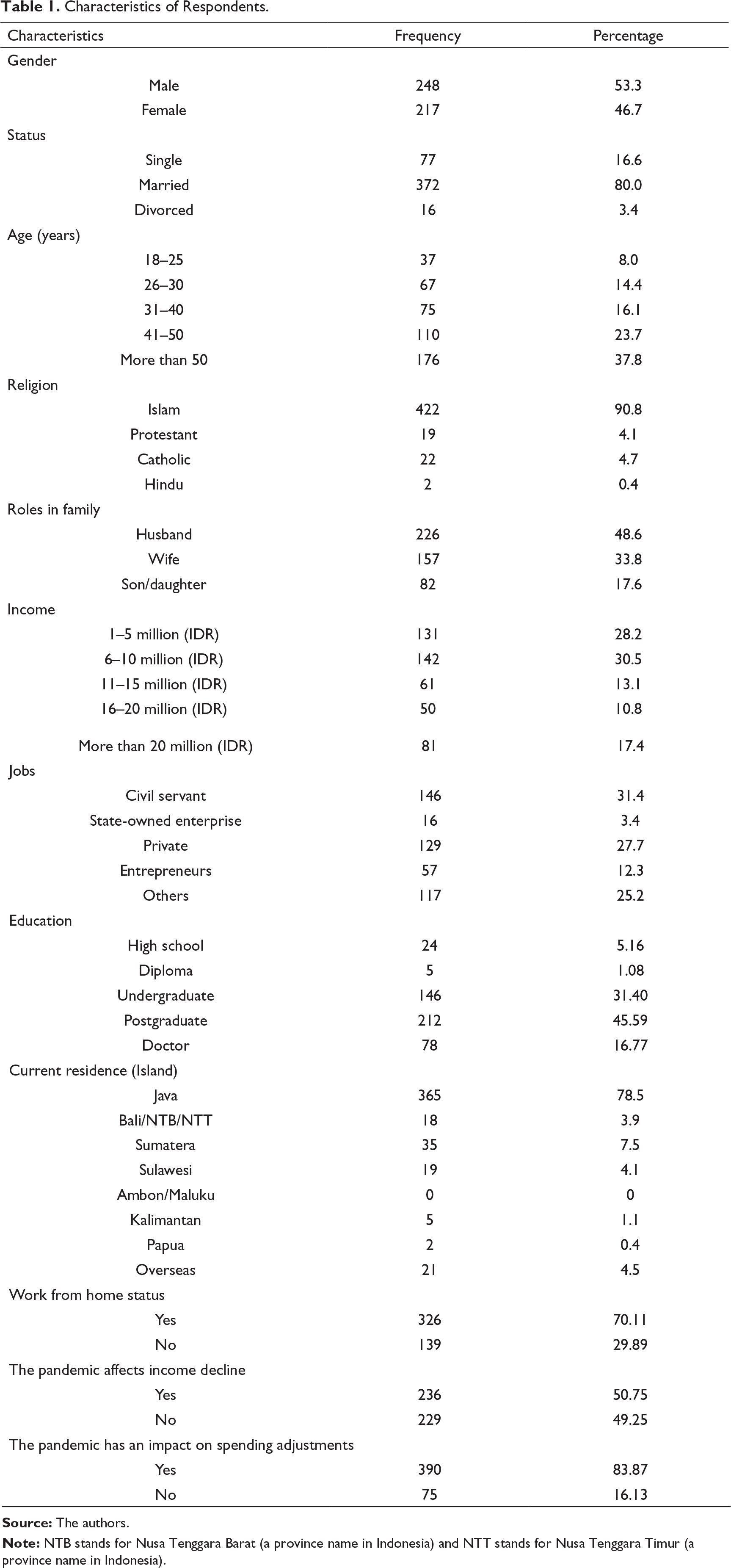
Characteristics of Respondents.
Principal Component Analysis
Exploratory Factor Analysis on Adaptive Shopping Attitude and Behaviour.
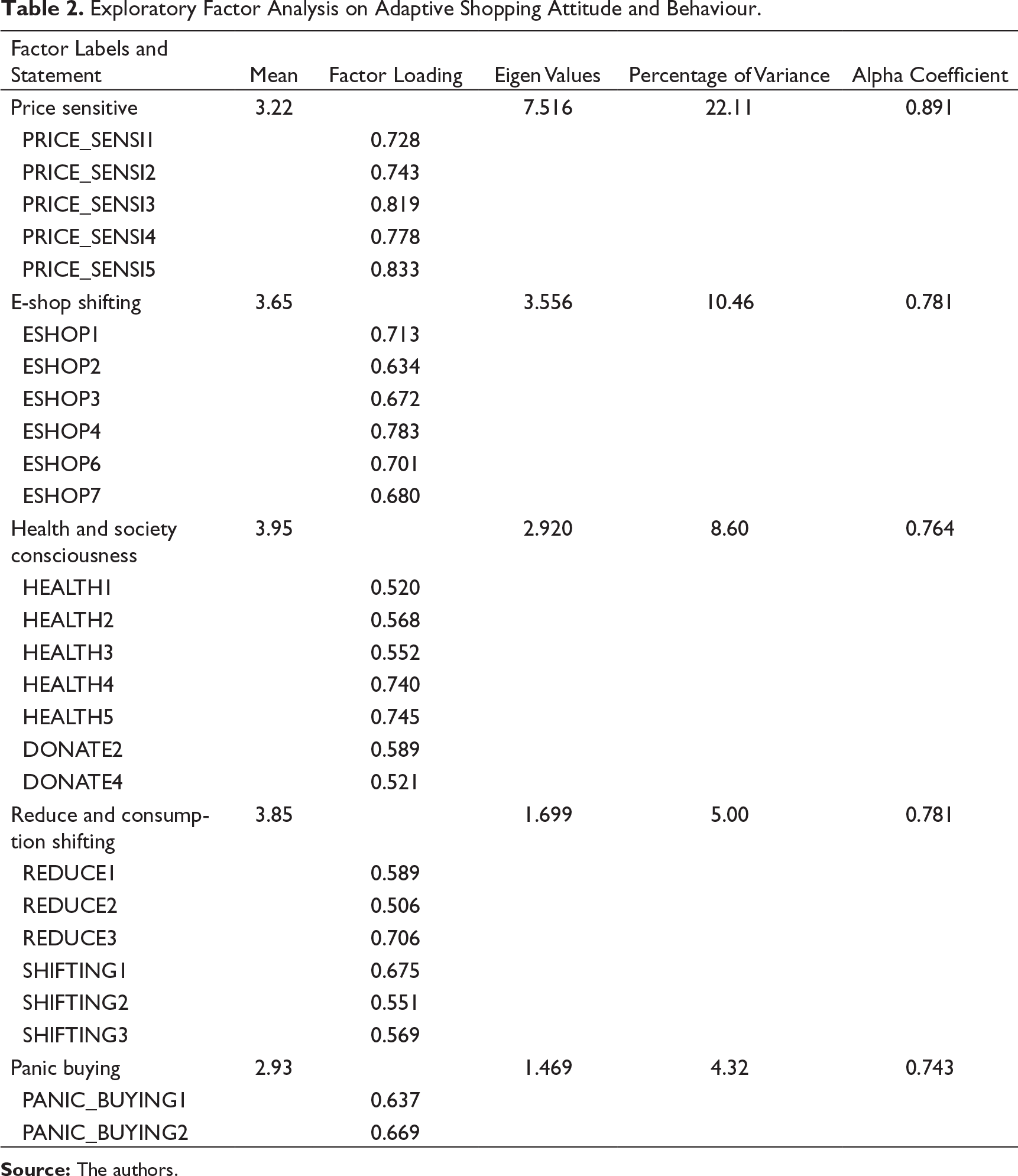
The first factor relates to consumers who find better prices of products or deals or discounts during the COVID-19 pandemic; hence, we can label it as price-sensitive. The second factor deals with online shopping activities during the pandemic. Such consumers do online shopping more frequently during the COVID-19 pandemic, and they prefer this shopping method due to the fact that it offers a wide range of benefits. Hence, we can classify them as e-shop shifting. The third factor concerns consumers who possess health consciousness and care for those who suffered most due to the pandemic, and this led them to support them by donating. Hence, this factor is called health and society consciousness. The fourth factor is termed reduce and consumption shifting, since it is related to any activity to reduce and shift the consumption as an adaptive effort during the pandemic. The last factor is labelled as panic buying; it represents the consumers who feel worried, and it affects their decision to buy groceries in bulk volume as an adaptive effort during the pandemic.
Comparison of Clusters on Shopping Adaptation
Subsequently, to segment the Indonesian shoppers, a hierarchical cluster analysis was conducted across the component values. Homogeneous segments of Indonesian shoppers should be identified based on similar shopping behaviour and attitude. Initial cluster analysis employed a single linkage method to identify outlying observations and a five-cluster solution emerged as the most appropriate. The selected five-cluster solution was based on an interpretation of the dendrogram and agglomeration schedules of the hierarchical cluster process. Then, a K-means clustering analysis with the initial seeds provided by the hierarchical clustering solution was conducted to obtain the final clusters. In addition, the examination of the F-ratios obtained through the MANOVA analysis indicates that the five clusters identified differ significantly.
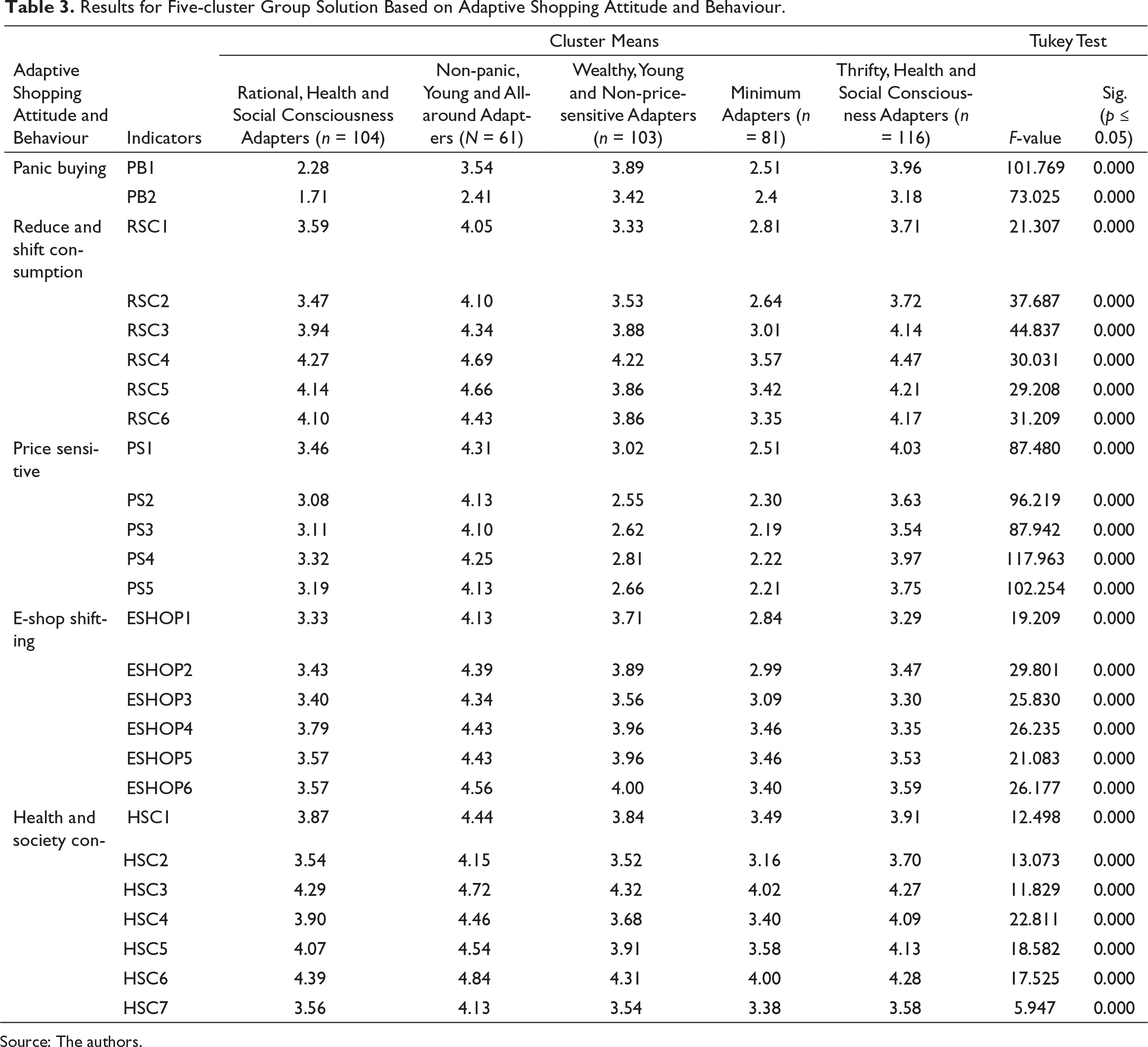
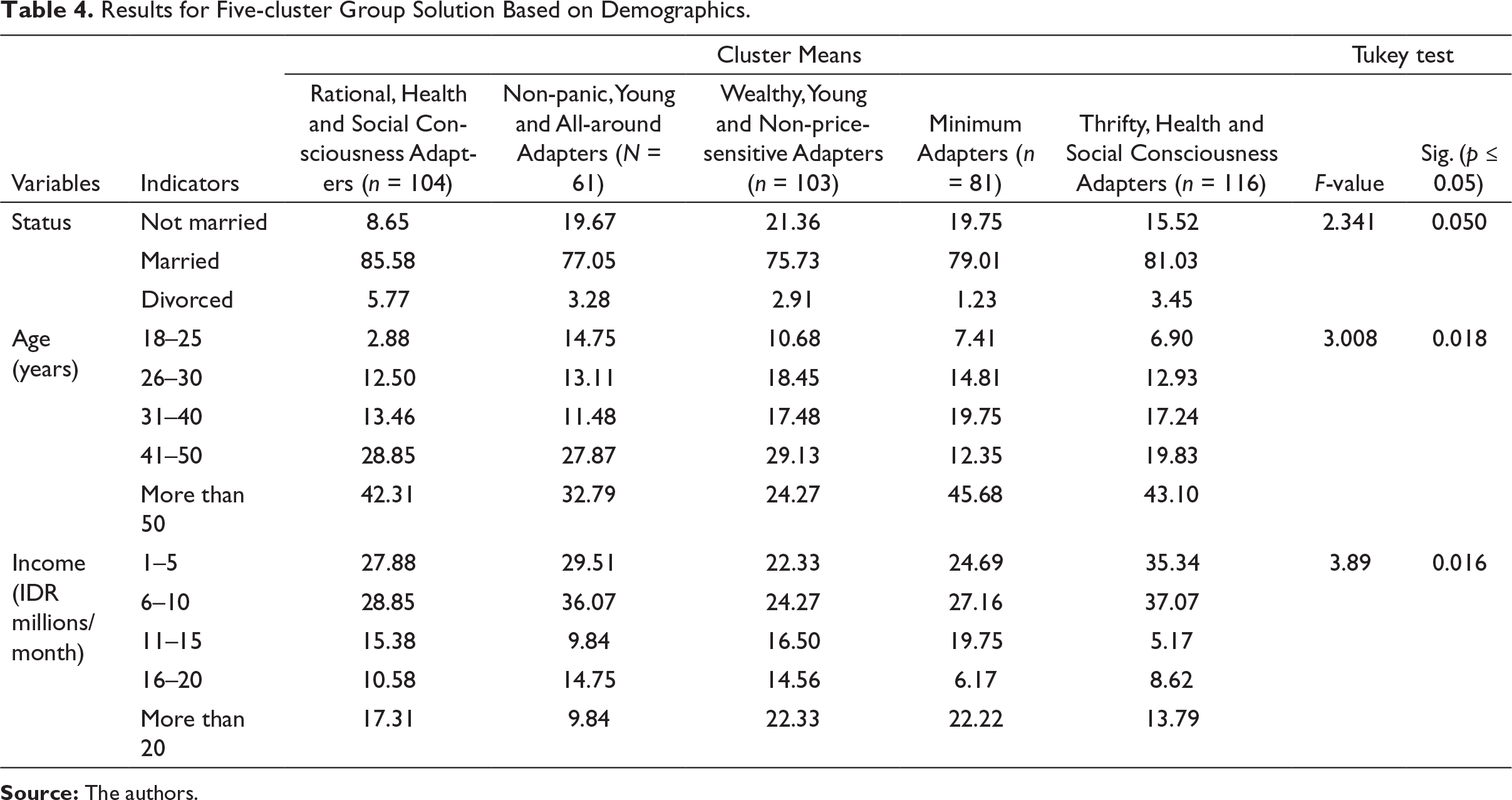
Mean factor scores and pairwise contrasts of adaptive shopping attitude and behaviour are displayed in Table 3. The five variables, panic buying, reduce and shift consumption, price-sensitive, E-shop shifting and health and social consciousness differed significantly across the clusters. Post hoc analysis revealed that all pairwise contrasts were significant. In order to derive further insights into the Indonesian consumers’ segments, the clusters were compared on their demographic characteristics (gender, status, age, role in the family, monthly income and education). Table 4 indicates that there were significant demographic differences across the five clusters for status, age and monthly income. No significant differences were observed between the clusters in terms of gender, role in the family and education; hence, they are not included in the table.
This group of consumers makes up 22.37% of the sample (n = 104), and they are characterized by their high adaptation in reducing and shifting consumption as well as preserving their health and willingness to donate money to help others affected by the COVID-19 pandemic. The consumers who are more than 50 years old (seniors) account for 42.31% of the sample. Around 85% of the consumers in the group have married status. This group of consumers tend to have a higher level of agreement on health and social consciousness scales. In terms of monthly income, more than 50% of consumers in this group have middle to low income (IDR 10 million or lower). Therefore, there is no surprise if they tend to adapt their shopping behaviour by reducing and shifting consumption.
This consumer segment represents 13.12% of the sample (n = 61), and it is the lowest cluster in the number of consumers. This consumer group is characterized by higher values of the mean of all variables, except for panic buying. This means that the consumers show much higher levels of agreement with all the adaptation scales but lower agreement on the panic buying scale. In terms of consumer’s age, the proportion of consumers who are 50 years old or younger is around 67%, while the rest of them are senior consumers.
This consumer segment represents 22.15% of the sample (n = 103). This group of consumers is dominated by younger consumers (50 years old or younger), and it accounts for nearly 76% of the sample. Around 53% of the consumers have a mid to high level of monthly income, that is, IDR 11 million or higher. Such a background may drive them to be non-price sensitive consumers. This group of consumers tend to have a lower mean on price-sensitive variable than the rest of the variables.
This cluster represents 17.42% of the sample (n = 81). This group of consumers is unique, since the consumers in this cluster tend to show disagreement with all the adaptation scales. Senior consumers account for 45% of this cluster. Nearly, 52% of the consumers in this segment are from low a level of financial income background. This type of cluster can also be found in a previous study conducted by Hampson and McGoldrick (2013), and they termed the cluster as ‘minimum changers’, as they show net disagreement with all the adaptation scales.
Results for Five-cluster Group Solution Based on Adaptive Shopping Attitude and Behaviour.
Results for Five-cluster Group Solution Based on Demographics.
Discussion
This study explores the shopping adaptive patterns of Indonesian consumers in during the COVID-19 pandemic, which has not been studied so far. Our findings are in line with previous studies of shoppers’ typology in the context of a crisis (Calvo-Porral & Lévy-Mangin, 2019; Hampson & McGoldrick, 2013), which shows that consumers cannot be seen as a homogenous group, but it consists of multifaceted activities that include several distinct attitudinal and behavioural dimensions.
The major contribution of the present study is providing segmentation on shopping adaptive patterns in the context of the COVID-19 pandemic, which presents interesting differences compared with previous studies on shoppers’ typologies. This study reveals new insights on shoppers’ adaptive attitude and behaviour as consumers coped with the pandemic; for instance, consumers who are more rational and economic and more health-conscious have a greater willingness to donate and to adopt online shopping. Younger consumers who are clustered in ‘non-panic, young and all-around adapters’ and ‘wealthy, young and non-price sensitive adapters’ tend to implement all the variables to adapt their shopping attitudes and behaviour. While, older consumers from ‘rational, health and social consciousness adapters’ and ‘thrifty, health and social consciousness adapters’ clusters being more rational and economic, as well as, more preserve their health and greater willingness to help others affected by the pandemic.
Managerial Implications
This study provides more detailed and in-depth information about the profile of Indonesian shoppers that would help retailers in understanding consumers and choosing their target group. The identified clusters also present challenges and opportunities for retailers to develop marketing strategies, as each cluster may require a different marketing approach. Two clusters (i.e., ‘rational, health and social consciousness adapters’ and ‘thrifty, health and social consciousness adapters’) report being more rational and economic. This may create opportunities for retailers to present shoppers with bargain offers in-store, and it is expected to help stores build volume and share. The two clusters also report being more health and socially conscious. This also creates opportunities for retailers to offer more health and wellness products as well as to initiate corporate social responsibility (CSR) programme by collecting donations from consumers to help others who are severely affected by the pandemic. The two clusters (‘non-panic, young and all-around adapters’ and ‘wealthy, young and non-price sensitive adapters’) that are dominated by younger consumers also present opportunities for retailers. Since consumers in the two clusters show greater willingness to use online shopping, traditional retailers can offer online-based shopping service or mixing ‘brick and click’ shopping service.
Limitations and Future Research
This research presents limitations that provide avenues for future research. The first relates to the issue of distribution of respondents who are dominated by consumers who live in Java Island; therefore, the generalization of the study findings should be made carefully. Future studies could involve more samples from a wide range of geographical background, which provide a better representation of Indonesian consumers. Second, non-probability sampling method has been used in the study. The scope of this study is limited to attitude, behaviour and demographic profiles, while psychographic clusters have not been explained. Future researchers could examine differences in adaptive shopping during the COVID-19 pandemic based on psychographic segments across different product categories as well as different store formats.
Footnotes
Acknowledgement
The authors are grateful to the anonymous referees of the journal for their extremely useful suggestions to improve the quality of the article. The authors also thank The Centre for Management Development (PPM), Department of Management, Faculty of Business and Economics, Universitas Islam Indonesia for research funding to support this research. Usual disclaimers apply.
Declaration of Conflicting Interests
The authors declared no potential conflicts of interest with respect to the research, authorship and/or publication of this article.
Funding
The authors received no financial support for the research, authorship and/or publication of this article.
