



Abstract
The COVID-19 pandemic has significantly affected the way supply chains function and operate. Supply chain resiliency (SCR) has become increasingly more relevant to the pandemic, with corporations and governments realising that their supply chains were not as resilient leading to shortages/delays of many consumer products. Delays in the delivery of essential items, including medicines, food supplies and healthcare equipment, have exposed the challenges that a supply chain might face during a major disruption such as the global pandemic, regional conflicts and natural disasters. The purpose of this study is to identify and evaluate some of the critical inhibitors associated with SCR during COVID-19. The study employs multi-criteria decision-making utilising the fuzzy analytical hierarchy process. This research was conducted in the context of the Indian pharmaceutical supply chains. The research showed that there are seven major inhibitors to SCR. The findings of the current study are expected to aid the pharmaceutical supply chain managers in identifying and evaluating the critical inhibitors to achieving SCR and designing strategies to mitigate any future catastrophe like a global pandemic.
Keywords
Introduction
In global markets characterised by interdependency, complexity and uncertainty, disruptions have become common for many supply chains, irrespective of the nature and market in which they operate (Golan et al., 2020). This has put organisations and their supply chains under enormous pressure to deliver key products on time. The outbreak of the pandemic has reduced the operational effectiveness and performance of the supply chains, along with severely affecting their sustainability and resiliency (Ivanov, 2020a, 2020b; Ivanov & Dolgui, 2021; Sodhi, 2016), and in the process significantly disrupting the flow of the supply chain (Chowdhury et al., 2021). Additionally, as Paul and Chowdhury (2020) observed, multiple nationwide lockdowns and severe interruptions in logistics and transportation have impacted all the nodes and edges of the supply chain. This has been further compounded by the shortage in the workforce, government subsidies for the workforce, social distancing and/or restricted capacity, labourers’ sickness and even demise and disinformation on the side effects of the vaccine. Therefore, this has forced organisations to design strategies to improve supply chain resiliency (SCR) to combat the threats posed by black swan or low-frequency high-impact events such as COVID-19.
COVID-19 has ended up affecting many components of the supply chain, as well as causing significant downstream interruptions, even to the extent of completely shutting down the production and distribution activities of several supply chains (Ivanov & Das, 2020). There have been multiple sectors (pharmaceutical, automobile, retail, airline, hospitality, etc.) of supply chains that have been severely impacted by the pandemic, either directly or indirectly (Belhadi et al., 2021). The pandemic has also managed to expose not only the shortcomings of global supply chains but also the lack of resiliency strategies to combat a devastating event like a pandemic. This leads to the question that despite significant academic and practitioner-based studies and formulated strategies pertaining to enhancing SCR, why could the organisation not mitigate these disruptions? A possible reason is the presence of challenging factors (also known as inhibitors or barriers) that might prevent organisations from effectively and efficiently designing resiliency into their supply chains. As a result, it has become imperative for organisations to identify, evaluate and understand the inhibitors critical to designing resilient supply chains. The post-COVID-19 world will need significant post-mortem analysis into the pre-pandemic business practices. Hopefully, this will produce insights by businesses and their supply chains to be resilient and adaptive in the ’new normal’ post-COVID-19 times for both developed and developing economies.
This research focuses on a developing economy, India, with a particular focus on its pharmaceutical supply chains. According to Business Wire (2021), India is a critical supplier for the pharmaceutical sector with the third-largest market in the world by volume, after the United States and China. It is the world’s top vaccine manufacturer and among the largest producers and exporters of active pharmaceutical ingredients and generics globally. The country supplies over 60% of the global vaccine demand, 40% of US generic demand and 25% of all drugs in the United Kingdom.
Drawing from Kurt Lewin’s force-field theory (Lewin, 1951, 1997), which states that an organisation needs to balance both the facilitators and the inhibitors of change, the current study argues that organisations need to identify the potential challenges associated with achieving SCR in order to design and sustain SCR. Identifying the inhibitors, along with the potential enablers, would greatly aid the supply chain managers to preserve if not improve the SCR and maintain a competitive advantage in the face of unforeseen disruptions (Agarwal & Seth, 2021). However, it has been observed that despite SCR being researched in depth, there is still a considerable dearth of studies evaluating and discussing the inhibitors associated with SCR. Hence, taking a cue from this gap in the extant literature, the current study embarked on identifying a set of critical inhibitors to SCR, along with assessing their relative criticality. Specifically, the current study aims at answering the following string of research questions (RQ):
RQ1. What are the critical inhibitors of SCR that pharmaceutical supply chains in a developing economy faced during the global pandemic of COVID-19?
RQ2. How are the identified inhibitors prioritised for pharmaceutical supply chains in a developing economy like India?
RQ3. How can identifying and prioritising the inhibitors aid pharmaceutical organisation to design more effective SCR strategies to address future pandemics like COVID-19?
Once the final set of SCR inhibitors was identified, this research used the multi-criteria decision-making (MCDM) technique of the fuzzy analytic hierarchy process (F-AHP) to prioritise the identified inhibitors. F-AHP is based on the fuzzy set theory developed by Zadeh (1965) and has the capability to rationally represent imprecise or vague data (Kahraman et al., 2003). F-AHP is a traditional MCDM technique that has been used for selection problems for almost two decades (Liu et al., 2020). However, to the best of the best of the authors’ knowledge, there is still a dearth of the use of F-AHP in the domain of SCR, and this research is one of the first of its kind to use F-AHP in analysing inhibitors to SCR. The paper attempts to fill this void in the extant literature and in the process provides the following threefold contributions to the literature on supply chain management and MCDM:
The study proposes a set of inhibitors to SCR for pharmaceutical supply chains during the COVID-19 times in the context of a developing economy (India).
The study integrates the novel MDCM technique of F-AHP with the intention of empirically analysing the inhibitors associated with SCR in the post-COVID-19 era.
Based on the above two contributions, the study proposes a framework for SCR strategies in the post-COVID times, especially for pharmaceutical manufacturing supply chains in developing economies.
Although the current study concentrates on the pharmaceutical sector of a developing country (India), the authors expect that the strategies identified and prioritised in this study can be extended to any manufacturing or service supply chain in developing countries.
The remainder of the paper is organised as follows. Beginning with an overview of the theoretical foundation behind the concept, the paper goes on to identify a set of inhibitors associated with SCR, which the organisations can use to assess their situation and develop SCR strategies in the post-COVID-19 environment. The identified inhibitors are then evaluated and prioritised using the MCDM approach of F-AHP to determine their relative criticality. The findings of the study and the identified (and prioritised) inhibitors are then discussed in the context of the extant literature, and conclusions are subsequently drawn from the findings. Finally, the possible limitations of the current study are also discussed, along with providing directions for future research activities.
Theoretical Foundation of the Concepts and Previous Studies
The foundation of any robust research study lies in conducting a successful literature review, which paves the way for justifying the identified RQ and developing the basic research framework. This section of the paper is devoted to discussing the basic theoretical premise behind the identified concepts, namely, SCR and COVID-19, previous efforts in studying SCR during pandemics and COVID-19 and strategies for achieving SCR.
SCR and COVID-19
Unforeseen events, both natural and man-made disasters, can lead to significant disruptions across supply chains, thereby adversely affecting operational efficiency and revenue generation in the process. As a result, organisations have started increasing their SCR to both natural and man-made disasters, so that there is minimal disruption in their effort to satisfy their customers’ demands. Resilience, over the years, has stretched simply beyond an organisation’s ability to manage disruptions to its capability to manage disruptions better than its competitors, as well as profiting from disruptions (Sheffi & Rice, 2005). This was evident more than ever during the times of the pandemic, where organisations with a more resilient supply chain managed to bounce back from the global disruption more efficiently than their non/less resilient counterparts.
The COVID-19 pandemic has proved to be the most significant disruptor of supply chain operations in the recent era. It has managed to brutally impact global supply chain operations (Ivanov & Dolgui, 2020); in the process ensuring that the vulnerability of the supply chain spreads far beyond just the pandemic hotspots (Belhadi et al., 2021) and spreads across the globe. COVID-19 has also significantly affected different components of the supply chain, either simultaneously or sequentially, and often to the extent of paralysing them completely within overlapping time windows (Ivanov & Das, 2020). The sudden and unforeseen nature of the pandemic has caught multiple organisations totally off guard as they did not have a ‘plan B’ to combat the disruption and plan for successful resilience and recovery (van Hoek, 2020). Additionally, the traditional methods and strategies associated with tackling resiliency constricts are not effectively mitigating the effects of the current pandemic. New and innovative approaches that provide a responsive (and extremely dynamic) operational strategy at various stages of the pandemic might be successful (Queiroz et al., 2020).
The COVID-19 pandemic has prompted academic researchers on supply chains to conduct numerous studies on the topic. Ivanov (2020a) used a simulation-based study to predict the impact of the outbreak of COVID-19 on global supply chains. Ivanov (2020b) also proposed a viable supply chain model, which comprised SCR, agility and sustainability, to successfully design supply chains in the post-COVID-19 times. Ivanov and Dolgui (2021) have further studied the ripple effect of disruption in the supply chain caused due to the outbreak of COVID-19, and the role that resiliency can play in combating the same. They determined that the adaptation capabilities of the supply chains can play an important role in developing and managing SCR during any pandemic, including COVID-19. Ivanov and Dolgui (2020) further discussed the importance of intertwined supply networks and their viability in making the supply chain more resilient and resistant to unforeseen disruptions like COVID-19. Belhadi et al. (2021), in their study on the airline and automobile sector, determined that localised supply source and cooperation among supply chain members were the key to successfully achieving SCR in the times of COVID-19. Ali et al. (2021), while studying the food supply chain of subject matter experts (SMEs) during COVID-19, proposed a set of reactive strategies for achieving resiliency. SCR in post-COVID times was also studied from the perspective of small farmers (Quayson et al., 2020), where the importance of digital technologies in preventing disruption was discussed.
SCR during the pandemic was also discussed in the context of the food supply chain by Hobbs (2021), where she argued that agri-food supply chains harbour certain characteristics that need to be accounted for while designing their resiliency strategies. Resiliency in food supply chains has also been discussed by Burgos and Ivanov (2021), who used a digital SC twin to propose a framework for improving resilience in supply chains. The role of artificial intelligence (AI) in addressing supply chain resilience during the COVID-19 times has also been a subject of research studies (Golan et al., 2021; Modgil et al., 2021). While Modgil et al. (2021) observed that AI-facilitated supply chains were more resilient, especially in times of the pandemic, Golan et al. (2021), in their study on vaccine supply chains, argued that AI can aid the supply chain managers in achieving an optimal systems performance post a state of disruption like COVID-19. The role of SCR in maritime industries in the era of COVID-19 was also studied by Praharsi et al. (2021), while Herold et al. (2021) discuss how logistics service providers were found to be more resilient and overcome financial and operational hurdles during the time of the global pandemic. However, while there have been multiple studies on the impact of COVID-19 on SCR, there is still scope for identifying and assessing the relative criticality of a set of resiliency strategies that supply chains can adapt in the post-COVID-19 times. The current study intends to shed insights on this issue.
Inhibitors to SCR and Previous Studies
Over the last decade and a half, SCR has become a topic of intense debate and discussion, both among academic researchers and practitioners. Thus, academic researchers have come up with numerous frameworks and models to describe the various facets of SCR. Among one of the more popular research topics has been analysing the enablers of SCR and its role in improving SCR. However, the success of the enablers, and in turn, the supply chain as a whole in achieving the desired resiliency can be greatly inhibited by the presence of a set of challenges or inhibitors. Therefore, the ability to identify possible inhibitors, and subsequently mitigate them, can greatly aid organisations to improve the resilience of their supply chain and gain a competitive advantage in the face of changing environments and markets (Agarwal & Seth, 2021).
The proper identification and subsequent analysis of the inhibitors to resiliency can be immensely beneficial in reducing the vulnerability of a supply chain. Furthermore, as Rajesh (2018) argued, identifying the inhibitors also aids in successful risk mitigation, as well as ensuring preparedness for unforeseen events, and the ability to deal with them proactively. Additionally, it has also been observed that not all the inhibitors themselves are equally critical in nature and are often interrelated. Therefore, identifying the inhibitors and assessing their relative criticality can greatly help supply chain managers to develop more effective resiliency strategies for future disruptions.
Ali and Gölgeci (2019), while reviewing the extant literature on SCR, observed that while SCR has been studied in-depth by academic researchers, there has only been a few studies that discussed the inhibitors (or barriers) associated with SCR. One of the earliest studies on this topic was conducted by Pereira et al. (2014), where they identified and analysed the enablers and inhibitors to achieving SCR. Pal et al. (2014), in their study on organisational resilience in the context of Swedish textile SMEs, also discussed some critical inhibitors that might retard resiliency. Subsequent studies on analysing barriers/inhibitors for SCR were conducted by Ali et al. (2017), where they discussed the inhibitors associated with SCR in the context of SMEs of perishable products. Inhibitors to SCR in the context of small and medium enterprises were also conducted by Halkos et al. (2018). Furthermore, while Rajesh (2018) investigated the inhibitors to SCR for manufacturing, Dashtpeyma and Ghodsi (2021) discussed the enablers and inhibitors for forest biomass and bioenergy supply chain resilience. Other recent studies on identifying and analysing the inhibitors of supply chain resilience included the study by Agarwal and Seth (2021) in the context of the Indian automobile sector and Dadsena et al. (2021) in the context of COVID-19 in India. Thus, the relative lack of research in this area prompted the authors to take it as a part of the study.
F-AHP and Previous Studies
Based on an in-depth review of studies on SCR during the COVID-19 pandemic, it was observed that there are certain inhibitors that organisations should identify and address as a part of developing their SCR strategies. Additionally, it can also be stated that all the inhibitors do not carry equal importance, and therefore need to be prioritised to get a clearer picture. As observed by Hezam et al. (2021), when there are multiple attributes/alternatives, the quantitative technique of MCDM can play an important role in assessing the relative criticality of the same. In the current study, the MCDM technique of F-AHP is used. The advantage of using F-AHP over the traditional AHP process lies in the fact that F-AHP aids the decision-maker in addressing the imprecisions in judgement, otherwise caused by the traditional AHP method. Although including fuzzy sets in AHP makes the process somewhat more complex, replacing the exact numbers with fuzzy numbers addresses the vague judgements by assigning membership degrees to exact numbers (Liu et al., 2020). Thus, F-AHP has become one of the most widely used techniques for evaluating attributes using the MCDM technique.
One of the earliest discussions on F-AHP dates back to the early 1980s when Van Laarhoven and Pedrycz (1983) presented the concept of F-AHP as an extension of the traditional AHP model. Since then, F-AHP has been widely used as a quantitative decision-making tool to evaluate and prioritise attributes and alternatives. Since then, F-AHP has been used in a variety of decision-making processes. Weck et al. (1997) used F-AHP to evaluate alternative production cycles, while Cebeci and Ruan (2007) utilised F-AHP to analyse Turkish quality consultants. F-AHP has also been used in the context of knowledge sharing (Lin et al., 2009), particle swarm optimisation (Javanbarg et al., 2012), managing intellectual capital assets (Calabrese et al., 2013) and the selection and evaluation of ERP (Cebeci, 2009; Kahraman et al., 2010). Some other studies that used F-AHP include selecting product development partners (Büyüközkan & Güleryüz, 2016), prioritising smart grid technologies in the Saudi electricity sector (Alaqeel & Suryanarayanan (2018), e-service quality in the airline industry (Bakır & Atalık, 2021) and consumer behaviour (Lohan et al., 2020), to name a few.
F-AHP has also been a well-utilised technique in the context of supply chain—especially in the context of supplier selection (Awasthi et al., 2018; Çalık, 2021; Ho et al., 2021; Kahraman et al., 2003; Yadav & Sharma, 2015; Yu et al., 2012) and green supply chains (Ganguly et al., 2019; Kannan et al., 2013; Kumar & Garg, 2017; Majumdar et al., 2021; Mangla et al., 2015; Pourjavad & Shahin, 2020). Some other areas of supply chain that have used F-AHP include knowledge management adaptation in supply chains (Patil & Kant, 2014), supply chain risk assessment (Ganguly & Guin, 2013; Ganguly & Kumar, 2019b; Tavana et al., 2021) and sustainable supply chains (Kumar & Garg, 2017; Shete et al., 2020; Wang et al., 2021), among others.
The pharmaceutical and healthcare industry has also been the subject of F-AHP research. Vishwakarma et al. (2019) used F-AHP to model the inhibitors for the Indian pharmaceutical supply chain, while Hossain and Thakur (2020) used F-AHP to benchmark healthcare supply chains. Ganguly and Kumar (2019a) used F-AHP to evaluate the SCR strategies in the context of the Indian pharmaceutical sector. Some other studies that have used F-AHP to solve decision-making problems in the pharmaceutical sector include studies on generic medicine supply chains (Kumar, 2020), green supply chain initiatives in the pharmaceutical sector (Kumar et al., 2019) and lean supply chain in the healthcare sector (Adebanjo et al., 2016).
Studies pertaining to the COVID-19 pandemic have also seen the use of F-AHP. Studies include analysing social isolation barriers (Upadhyay et al., 2021), COVID-19 crisis management (Demir & Turan, 2021), inhibitors to supply chain management (Biswas & Das, 2020) and evaluation of the quality of public transportation (Alkharabsheh & Duleba, 2021). However, a review of the extant literature indicated that F-AHP has not been used to evaluate the inhibitors to SCR post-COVID-19, especially in the context of the Indian pharmaceutical supply chain, and the current study tries to bridge this research gap.
Identifying the Inhibitors to SCR in the Post-COVID-19 Era
Despite organisations continuously striving to improve SCR, many seem to collapse in times of severe disruption, which was evident during the COVID-19 outbreak. A strong reason for this might be the presence of a plethora of inhibitors, which often retards the successful operations of the enablers (Ali et al., 2017; Halkos et al., 2018). Therefore, the organisations need to identify and address these inhibitors so that the organisations gain the required level of resiliency and in turn competitive advantage in the market. In the context of the current study, the process of identification of the inhibitors was conducted in two steps; firstly, identifying a list of inhibitors associated with SCR, especially in the post-COVID-19 times, and secondly, condensing the initial set of identified inhibitors into a set of critical ones in the context of pharmaceutical supply chains in India. After identifying an initial set of inhibitors, the authors condensed the inhibitors, with discussing with the experts in the field, to select the ‘vital few’ from the ‘trivial many’.
The initial set comprised 15 inhibitors, which were identified primarily based on the extant literature on inhibitors to SCR. The initial set of identified inhibitors was, then, subsequently condensed to a set of seven inhibitors, based on interviews with SMEs in the field of supply chain management and the pharmaceutical industry. The SMEs were senior industry professionals who had over 15 years of experience in pharmaceutical supply chains and were involved in handling multiple supply chain disruptions, including the global pandemic. After a couple of rounds of discussions, it was unanimously decided to consider seven inhibitors to improve SCR. The rest of the section is devoted to a discussion of the identified inhibitors to achieving SCR in the post-COVID-19 era.
Lack of Financial Resources by the Organisation
In the current-day business environment marked by limited resources and unlimited demands, organisations are plagued with the optimal allocation of resources, including financial resources. Organisations and their supply chain manager, therefore, often try to systematically combine financial resources, with the objective of better managing supply chain disruptions (Blackhurst et al., 2011). However, an unforeseen disruption can often derail the existing strategies of an organisation, which might also include restructuring of financial resources. The lack of financial resources of organisations has been often observed to be a major stumbling block to achieving SCR. Additionally, the financial stability of the organisation and its potential suppliers can also serve as a challenge to building resiliency in the supply chain (Zsidin et al., 2000), especially if the financial muscle of the organisation has already been weakened by disruption. This can be especially true in times of an unforeseen disruption (e.g., COVID-19), where the non-availability of funds can deter the organisation from opting for alternative suppliers and other avenues (Agarwal & Seth, 2021). Our findings establish inadequate and insufficient investments in R&D by many SMEs mainly due to budget limitations, thereby inhibiting these firms from achieving resilience (Ali et al., 2017).
Lack of Information Sharing Within and Across Supply Chains
One of the desired characteristics of resilience is the ability to bounce back from disruption while maintaining a positive relationship of responsiveness to customer requirements (Ali et al., 2017). To achieve that, organisations and their supply chains need to have a robust flow of information across the supply chain (Kamalahmadi & Parast, 2016). A proper flow of information across the various nodes and actors in a supply chain can lead to information symmetry, thereby aiding in identifying (and addressing) any possible disruptions (de Sá et al., 2020; van Hoek, 2020). However, information asymmetry and inadequate information sharing across the supply chain can retard the design and implementation of resiliency, and therefore can prove to be a challenge to the organisation (Halkos et al., 2018). Furthermore, the lack of information sharing can also retard the flexibility of the supply chain, which can subsequently translate into impeding its ability to cater to unforeseen disruption, and therefore affect the resiliency on the whole (Agarwal & Seth, 2021; de Sá et al., 2020; Scholten & Schilder, 2015). The widespread disruption caused by the COVID-19 pandemic has been partially attributed to the lack of information sharing among various entities of the supply chain and logistics, which in turn has adversely affected the SCR.
Lack of Top Management Support
According to Sheffi and Rice (2005), one of the key components for the success of an organisation was the creation of a risk mitigation culture by its top management. Failure to do so might result in the organisation’s inability to sense and resist disruption, thereby compromising its resiliency. Further, as Agarwal and Seth (2021) argued, a non-committal attitude by the top management can more often than not lead to a failure to address disruption, which might result in a loss of financial strength as well as consumer goodwill. Additionally, as observed by Ali et al. (2017), the lack of top management support (or even hyper-interference by top management) can significantly interfere with managerial autonomy, and in turn, prevent the managers from implementing novel and innovative ideas to combat disruptions. This, in turn, leads to obstructing the organisation’s goal of being resilient. Additionally, a lack of incentives, monetary or otherwise, to motivate engagement in designing and implementing resilience measures, can also serve as a challenge to the success of SCR (Halkos et al., 2018), and a lack of top management support often plays an important role in the failure to design and roll out incentive plans for resiliency measures.
Lack of Agility of the Supply Chain
The agility of a supply chain, which is characterised by its ability to swiftly change in the face of unforeseen changes in the business environment, is a powerful tool for an organisation to combat disruptions. Christopher and Peck (2004), in their study on resiliency, observed that the resiliency of a supply chain was related to its agility, and therefore an agile supply chain can aid in achieving a greater resiliency. This, in turn, can lead to the ability of the supply chain to better address any unforeseen disruptions (Calvo et al., 2020), as well as cushion the adverse effects of the crisis occurring due to the disruption (Carvalho et al., 2012). Therefore, agility can be viewed as one of the more important dimensions for SCR (Brandon-Jones et al., 2014; Hamdi et al., 2020), and therefore failure to be agile can lead to a compromise in the resilient nature of the supply chain. This was ever more so visible in the times of COVID-19, where the failure of the supply chain to swiftly adjust to and bounce back from the disruption led to huge financial losses for multiple organisations.
Bullwhips Due to Unforeseen Supply Uncertainties
A bullwhip effect comprises a situation where a small distortion in consumer demand eventually leads to a significantly larger demand fluctuation in the upstream supply chain (Lee et al., 1997; Patrinley et al., 2020). Bullwhips, which can arise due to random and unforeseen supply uncertainties (Carvalho et al., 2012), can prove to be an important challenge in achieving SCR. Bullwhips can arise from information asymmetry and distortion and can lead to a severe mismatch between demand and supply (Rajesh, 2018). During the global pandemic of COVID-19, a limited supply of products and services translated into a change in the ordering behaviour, thus leading to a bullwhip effect (Patrinley et al., 2020). This, in turn, resulted in affecting the resiliency of the supply chain and proved to be a significant factor contributing to the shortages in supplies, including vaccination and other essential medical supplies (Bamakan et al., 2021).
Lack of Proper Forecasting
Dowty and Wallace (2010), in their study on supply chain disruption, observed that a lack of proper forecasting can lead to a severe vulnerability in supply chains. This is even more true in the case of an unforeseen disruption, where predictions based on observing a past disruption often fail to reflect the true picture. Effective forecasting requires synchronised and proactive methods for forecasting, and failure to do so might lead to a mismatch between demand and supply (Agarwal & Seth, 2021). Since one of the main characteristics of a resilient supply chain is situational awareness and its ability to sense (and forecast) disruptions (Chowdhury & Quaddus, 2017; Christopher & Peck, 2004; Han et al., 2020; Pettit et al., 2010; Ponomarov & Holcomb, 2009), the inability to correctly assess a disruption can prove to be a significant challenge in building SCR, as evidenced during the time of the global pandemic.
Resilient Supplier Selection
Modern business operations are marked by competition and uncertainties with organisations generally collaborating with multiple suppliers to gain a competitive advantage. As a result, the proper selection of suppliers can greatly aid an organisation in reducing the uncertainties associated with supply (Rajesh, 2018). For a supply chain to be resilient, the suppliers should be aware and therefore least vulnerable to disruptions (Parkouhi et al., 2019), which makes supplier selection even more critical. Since supplier disruption can impart significant losses to an organisation by disrupting the flow of products (Hosseini & Khaled, 2019), which was glaringly observed during the times of COVID-19, failure to effectively select suppliers can prove to be a considerable challenge to designing a resilient supply chain.
Prioritising the Inhibitors to SCR Using F-AHP
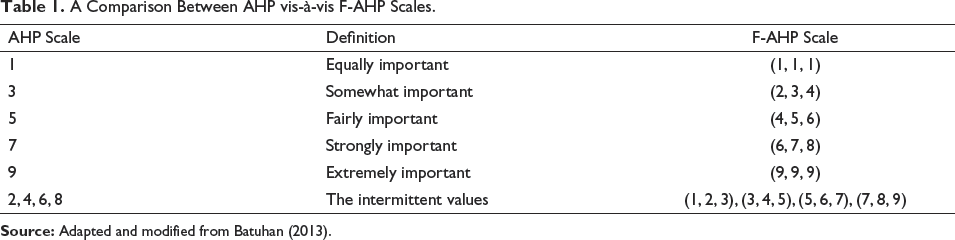
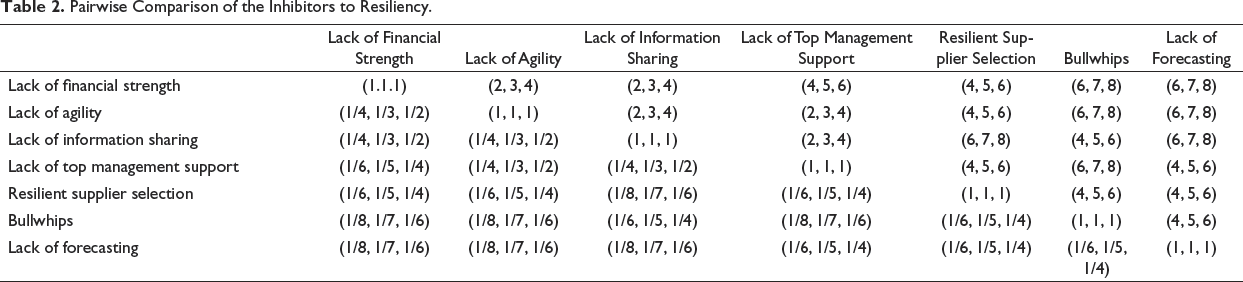
Once the possible inhibitors to SCR in the COVID-19 era were identified, the next step was to prioritise them using the MCDM technique of F-AHP. The first stage of this analysis consisted of selecting and surveying a set of identified experts using an AHP questionnaire, to gather their opinion of the research problem. The selected experts consisted of industry professionals who were associated with pharmaceutical supply chains and had a minimum experience of 15 years in the industry. A set of 17 experts were identified for the survey, and they were surveyed separately to prevent the influence of one expert on another. The experts were surveyed on an AHP scale that is exhibited in Table 1. The AHP scale that was used to gather the responses of the experts was subsequently converted into the fuzzy triangular scale, and the identified inhibitors were compared to the overall objective of the study. The pairwise comparison matrix as provided by one of the experts is provided in Table 2. 1
A Comparison Between AHP vis-à-vis F-AHP Scales.
Pairwise Comparison of the Inhibitors to Resiliency.
After the initial prioritisation of the identified strategies, the next step was to determine the geometric mean of the fuzzy comparison value for each of the strategies. The geometric mean is calculated using Equation (1):
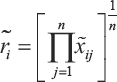
where
Calculating the geometric means was followed by the fuzzy weights of the attributes, which is subsequently followed by de-fuzzing and normalising the weights. The fuzzy weights were determined by multiplying the geometric mean (

The determined fuzzy weights were then subsequently de-fuzzied and normalised, thereby accounting for the final set of attribute and sub-attribute weights. 2 The findings have been provided to the readers in Table 3.
Geometric Mean and Normalised Weights of the Resiliency Strategies.
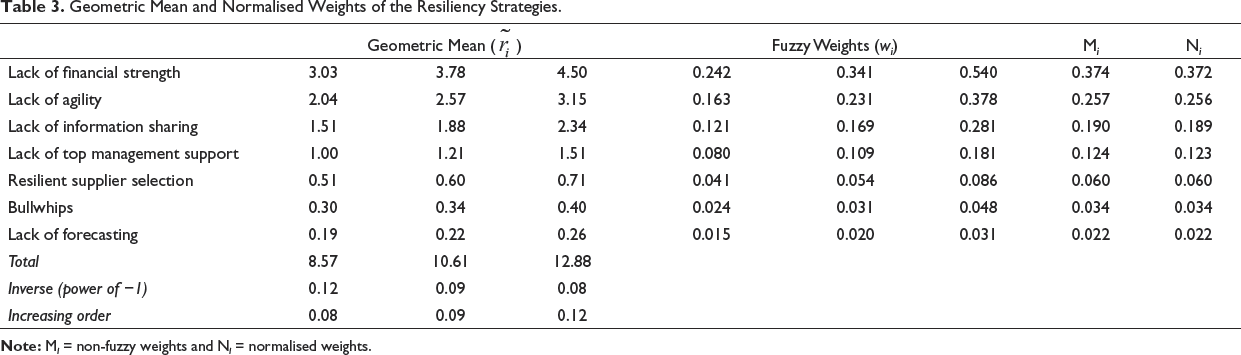
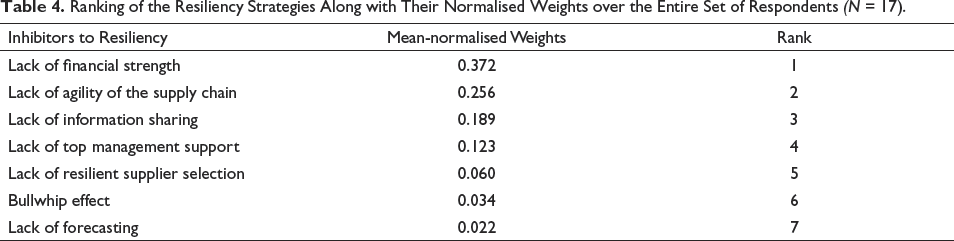
Table 3 provides the prioritised weights of the identified strategies to achieve SCR. As mentioned earlier, this is the response of one of the 23 experts surveyed as a part of this research project. Note the AHP response matrix is the same across all the respondents but with different values. Table 4 details the average of all the experts surveyed as a part of the study along with the rankings of the strategies.
Ranking of the Resiliency Strategies Along with Their Normalised Weights over the Entire Set of Respondents (N = 17).
Finally, it is necessary to mention that although the AHP structure includes the alternatives, as the current study intends to prioritize the resiliency strategies, the last level of hierarchy was considered to be beyond the scope of the current study and therefore was omitted. Additionally, following the methodology suggested by Leung and Cao (2000), a consistency test for the pairwise judgements was performed and consistencies came out to be within the permissible limits. The following section provides a detailed discussion of the findings.
Results and Discussion
In our competitive global and interdependent markets, SCR is an important attribute for any organisation and its supply chain to combat disruptions—predicted or unforeseen. Therefore, having a strong resiliency strategy can aid the organisation not only in assessing the possible risks associated with disruptions but also in designing strategies and allocate resources to combat and overcome those. Understanding the possible (and critical) inhibitors that might retard this process can serve as an important weapon in the hand of the organisations. When it came to the possible inhibitors of SCR in the context of the Indian pharmaceutical supply chain during the COVID-19 pandemic, it was observed that the lack of financial strength was considered to be most important, followed by the lack of agility and the lack of information sharing. The fact that a lack of financial strength was an important inhibitor was consistent with the findings of Agarwal and Seth (2021), who determined that financial resources (or the lack of it) often proved to be a stumbling block to being resilient. Additionally, Min (2019) also observed that the lack of financial resources can also prevent organisations from adopting new technologies to improve their supply chain, and in turn, compromise with achieving resiliency. The attribute with the second highest weight involved the lack of agility of the supply chain. Agility is an important tool to achieve resiliency has been discussed in recent studies (Aslam et al., 2020; Gligor et al., 2019; Karmaker et al., 2021), and the failure to be agile and flexible might serve as a critical inhibitor to achieve resiliency (Rajesh, 2018). This, therefore, supported the findings of the current study.
The inhibitor that drew the third-highest importance was the lack of information sharing. Effective information sharing has been observed to positively affect SCR (Scholten & Schilder, 2015; Tan et al., 2021), and a failure to do so can serve as an important barrier to achieving SCR (Agarwal & Seth, 2021; Ali et al., 2017), thereby supporting the findings of the current study. The next inhibitor that was considered critical towards SCR in the current times of the pandemic was the lack of top management support. Sheffi and Rice (2005) suggested that the role and support of the top management are invaluable to achieving SCR and risk mitigation, and the lack of it often proves to be a stumbling block in achieving a resilient supply chain. This finding was consistent with Agarwal and Seth (2021), who argued that the lack of top management commitment prevents new R&D-related investments, as well as trust issues, all of which can serve as critical inhibitors towards achieving SCR. The other three identified attributes, which had a relatively minor share in the weights, were lack of resilient supplier selection, bullwhip effect and lack of forecasting, respectively. Although the lesser importance of the bullwhip effect and the lack of proper forecasting were not surprising, the low weight for resilient supplier selection came as a surprise to the authors. The low importance of resilient supplier selection was in direct contrast to the extant literature, which has repeatedly argued that resilient supplier selection is a key strategic decision for an organisation (Hosseini et al., 2019; Pramanik et al., 2020). Discussions with the experts regarding this revealed the fact that according to them, although resilient supplier selection was an important attribute, it was mostly guided by information sharing, management support and of course the financial resources available to the organisation. Therefore, the SMEs through the other four identified attributes serve as more critical inhibitors as compared to resilient supplier selection. Thus, overall, the authors determined that if a pharmaceutical organisation and its top management focus on its financial resources, information sharing among the supply chain, making the supply chain agile, resilient supplier selection, minimising the bullwhip effect and effective forecasting, it can minimise the inhibitors associated with achieving SCR, and in turn effectively combat unforeseen disruptions such as the COVID-19 pandemic.
Conclusions, Limitations and Further Research
Based upon literature reviews and interviews with 17 SMEs, the study used the MCDM utilising F-AHP to explore the critical inhibitors to SCR. This study was conducted in the context of the Indian pharmaceutical supply chains, which as discussed is a critical component of the global pharmaceutical manufacturing industry. The findings of the study indicated that there are seven key inhibitors, with the lack of financial strength of the organisation was considered as the most important challenge; it was closely followed by the lack of agility and information asymmetry. These seven are presented in Table 4. This research lays the foundation for a more detailed exploration of SCR. For example, what are the interdependencies between the seven inhibitors? Can you quantitatively model the interdependencies of the inhibitors and the effects of resiliency? Is there a resiliency model based upon tools such as system dynamics that we start exploring return on investment for the seven inhibitors listed?
As discussed, much more research is needed before we can understand the consequences of the interjection of a black swan-type event into the supply chain. This is a good first step at developing a fundamental understanding of the behaviour such that accurate and detailed models can be created in order to conduct meaningful analysis for strategic investments.
Much like any other research study, the current study is not devoid of its limitations. The primary limitation of the study is the geographical region and the nature of the industry. The study is confined to the pharmaceutical supply chain in India, thereby making the scope of the study quite narrow. However, as discussed, this is an important element of the global pharmaceutical industry. Additionally, the strength of the technique adopted for the study. While F-AHP is a robust tool for relative importance, it fails to account for the interrelationship among the attributes. Therefore, the current study, although identifies and relatively prioritises the identified inhibitors, fails to draw any relationship among them. Finally, the study focuses on identifying and prioritising the inhibitors associated with SCR, especially during the times of the global pandemic for the pharmaceutical industry. However, the resiliency inhibitors are not a unique set and vary depending on the nature of the sector and the type of disruptions.
Footnotes
Declaration of Conflicting Interests
The authors declared no potential conflicts of interest with respect to the research, authorship and/or publication of this article.
Funding
This research received no specific grant from any funding agency in the public, commercial or not-for-profit sectors.