




Abstract
This article aimed to investigate the challenges that Ethiopia faces during COVID-19. The article looks highly at COVID-19, political instability, desert locust and the ideal conflict between Ethiopia and Egypt on the great Ethiopian renaissance dam. Economic rescission, food insecurity and internal war are also the main topics clearly discussed. The results revealed that unemployment, inflation and income inequality are aggravated as pandemics arise. Thousands were killed and others were displaced due to internal political instability. Output reduction and famine resulted due to desert locust infestation. Bad political spirit is also one fact in Ethiopia due to ideal conflict with Egypt. Consequently, thousands have been arrested; killing innocent people, food insecurity, economic depression and displacement were highly aggravated. While other countries have been moving to prosperity, the Ethiopian economy has been challenged with stagnation. Therefore, the authors suggest that there should be strong intervention from both non-governmental organisation and the government of Ethiopia. Let Ethiopia’s recovery come to tell new development.
Introduction
The COVID-19 pandemic has caused varying degrees of damage followed by diverse paths to recovery around the world. There have been both successes and failures in the effort to contain the spread of the disease and mitigate its adverse effects on public health and the economy (Stiglitz, 2021). Ethiopia is the oldest independent African country and the land of origin. Ethiopia’s location gives it strategic dominance as a jumping-off point in the Horn of Africa, close to the Middle East and its markets. Ethiopia is landlocked, bordering Eritrea, Somalia, Kenya, South Sudan and Sudan, and has been using neighbouring Djibouti’s main port for the last two decades. With more than 112 million people (2019), Ethiopia is the second-most populous nation in Africa after Nigeria and the fastest growing economy in the region. However, it is also one of the poorest, with a per capita income of $850. Ethiopia aims to reach lower middle-income status by 2025.
In the 1st October 2020, Parliament announced good news that Ethiopia become a lower middle-income country, scoring an economic growth 6.9% and 1 trillion Ethiopian Birr GDP. Good exemplary public goods, such as Entoto park, Andinat park, industrial park, highway road, schools and rail ways, are also hope for the homeland. Over the last decade, Ethiopia has become increasingly dependent on Chinese aid and investment. Chinese has a hand in most mega-projects in the country either fully or partially. Chinese loans also account for nearly half of Ethiopian external debt. However, Abiy’s effort to modernise the economy is shifting the power dynamics and positioning the country to leverage the investment competition from the west and China. In December 2019, the country secured a maximum loan of US$9 billion from Western donors, the International Monetary Fund and the World Bank. There is clear interest from Western investors, and companies from the USA and Europe are preparing to make multi-billion investments. Given the potential, Ethiopia is a too big prize to ignore for the west. ‘There could be no better country than Ethiopia for my first visit outside the EU. Ethiopia has given hope to an entire continent,’ said Ursula von der Leyen (2020), President of the European Commission, on her visit to the African Union (AU) and Addis Ababa.
The government is devoting a high share of its budget to pro-poor programmes and investments. Large-scale donor support will continue to provide a vital contribution in the near term to finance the cost of pro-poor programmes. Though Ethiopia’s economy and political arena are in a position of reform, the country faces different challenges which tackle economic development. The evilest hegemony against Ethiopia’s economy was the pandemic COVID-19, the desert locust, internal political instability, cold war with Egypt on Grand Ethiopian Renaissance Dam (GERD) and economic recession.
The year 2020 was a critical time for Ethiopia. Political instability is a key figurative challenging factor, for instance, the death of the very well-known Oromo iconic artist Hacaaluu Hundeessaa, dispute on GERD with Egypt, the ‘Newly emerged Rebel group’ and the war between ‘federal government and Tigray people Liberation front’ were the main factors for political instability. Thousands died, and millions were displaced. In another way, the disaster desert locust infestation also emerged in the east and northern parts of Ethiopia. Production and productivity were issues of concern in the homeland. Restriction to total lockdown and ‘stay at home’ slogan resulted in stagnation in both domestic and international trade; COVID-19 also became visible striking evil in Ethiopia. The Nile dispute, at its root, is a pan-African problem that affects not only Ethiopia, Egypt and Sudan, but also the rest of the continent. Eleven riparian African countries rely on the Nile for economic development, and the outcome of the negotiations will have implications for other river basins too (Klare, 2013). For this reason, the AU is well placed to play an active role in the resolution of this issue. Therefore, this review article attempts to address the impact of the five most challenges against Ethiopian economic development with the current economic hope and forward conclusion.
Methodology
The article used both systematic and empirical analysis approaches to get a brief idea of the evil challenges against the Ethiopian economy. Both published and unpublished data were used to write the papers in a good way. Thanks to technology, the authors of this article downloaded and read many updated documents and internalise the issues using the following search terms: ‘COVID-19 in Ethiopia’, ‘the poverty and pandemic’, ‘COVID-19 in the Africa’, ‘Desert locust in East Africa’, ‘Desert locust in Ethiopia’, ‘Food security and impact of Desert locust’, ‘Political instability in Ethiopia’, ‘war between Federal government and TPLF’, ‘dispute on Ethiopia renaissance Dam’, ‘Ethio–Egypt Cold war’, ‘displaced peoples during war’. The article was initiated in 2020, to give little contribution on the know-how of ‘the Evil Challenges against Ethiopian economy’ to the decision-maker, non-governmental organisation and the world in general.
Discussion
Ethio–Egypt Conflict on Grand Ethiopian Renaissance Dam Project (GERDP)
The GERD is Africa’s biggest hydroelectric project and the 10th largest in the world. Though the project is highly significant for Ethiopia, it become a source of conflict between Egypt and other riparian countries. Many authors estimated that with the reservoir area of 1,874 km2, the dam has a total storage volume of 74 billion cubic metres of water (Tesfa, 2013). In the earlier plan, its turbines can generate 6,000 MW of electricity and 15,692 gigawatt hours of energy per year (GERDP, 2013). Indeed, when the construction of the GERD is completed, the Nile will have two of the world’s largest dams—the High Aswan Dam and the GERD—in two different countries (Egypt and Ethiopia). There is still no agreement on how these dams will operate to manage scarce water resources.
The new normal will benefit Ethiopia and Sudan without significantly affecting water users in Egypt. Management of multi-year droughts will require careful coordination if risks of harmful impacts are to be minimised (Wheeler et al., 2020). Ethiopia has long had development ambitions of its own. Egypt, Ethiopia and Sudan have held tripartite negotiations over the Nile for the past seven years. The contention between the three countries has been over the use of the river and the GERD (Paisley & Henshaw, 2013). Ethiopia asserts that the GERD will not harm Egypt. Egypt disagrees. Ethiopia avers that it is only claiming its right to utilise one of its resources for national development under international law of equitable use of trans-boundary water bodies. Egypt claims its rights under international agreements (Hendawi, 2020).
Striking Point
The sticking points include water security associated with the volume stored and stages of impounding the dam, dam safety and water quality. The recent dispute over the definition of ‘drought’ and ‘severe drought’ is related to the filling and management of the dam and its implications for water security. Some of the claims are based on research evidence, but others are nationalist ideology-based positions. Research has a place in the negotiations but little influence. However, strategic national interest takes more significance even for the US. Ultimately, these are enmeshed with policy sovereignty and international law (Abdallatif, 2020).
Cognisant of the need to directly speak to his Ethiopian counterpart, President Abdelfatah El Sisi, in a live broadcast, asked Prime Minister Abiy Ahmed to swear ‘before God and the people of Egypt’ that he will not hurt their share of the Nile waters. Abiy responded, ‘We will take care of the Nile and we will preserve your share and we will work to increase this quota.’ Yet despite these public assurances, negotiations have failed to produce an agreement. They have turned into zero-sum game with each country trading accusations against the other. Egypt fears the GERD portends water scarcity. But for Ethiopia and other riparian countries, the GERD is a symbol of assertiveness in reclaiming a share of the Nile water resource (Abdelhady et al., 2015).
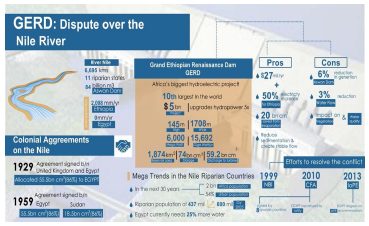
Consequently, the conflict resulted in internal war in Ethiopia. In one case, the former Veto militaristic Tigray People’s Liberation Front (TPLF) declares war on the federal government for claiming power in Ethiopia. Some of the leaders in TPLF support the idea of El Sisi, and finally, the federal government attacks the TPLF warrior by the name of law enforcement in which thousands fled to Sudan and Eretria, and thousand were killed in the battle. The issue of GERD becomes a question even in the world. The USA and Russia were attempted to mediate for reconciliation but failed in agreement. Currently, South Africa is in a position to negotiate (Arsano, 2007). Therefore, if a remedial solution will not come for the dispute, it will result in a war between Egypt and Ethiopia. Some observers argue that the GERD could lead to an interstate war between Ethiopia and Egypt. Others downplay the potential for violent conflict over the GERD, contending that the dam could facilitate enhanced cooperation. Very few consider that despite the possibility of conflict or cooperation, such changes in the exploitation of the Nile River resources are due to changing relations and the need to address long-standing unfair and hegemonic approaches to trans-boundary resource sharing (Rahman, 2012).
Impact of Covid-19 on Ethiopian Economy
Impact on GDP
Given the recent study conducted by Alemayehu Geda about the social and economic impact of COVID-19 in Ethiopia and using local and global media-based information, information obtained from interaction with some of the industry actors as well as his own research about the Ethiopian economy, one can understand and come up with the possible economic impact of the virus on the country. That study noted that GDP might have been contracted by 11.2% in 2020/2021 fiscal year (that ran from July 2020 to June 2021) if the economic effect of the virus lasted till the end of 2020. In the best-case scenario of the effect of the virus being limited to the first quarter of the next Ethiopian fiscal year 2020/2021, the GDP may contract by 5.6%, instead. In the worst-case scenario of the effect hanging around for the coming three quarters, the decline in growth could be as high as 16.7%.
Alemayehu Geda notes that the government’s related latest forecast of economic growth for the coming 2020/2021 fiscal year is 8.5%. It is not clear whether the possible impact of COVID is taken into account in this forecast. If it is not, the government needs a growth rate of 19.7% (i.e. 11.2% + 8.5%) to attain this 8.5% level of economic growth with the COVID effect included, and this is completely unrealistic. On the other hand, if the possible effect of COVID is not taken in this forecast, the growth, including the COVID effect, will be negative 2.7% (that is almost a 3% decline) under the average scenario that we have envisaged in this study (in the best-case scenario of a 5.6% economic decline due to COVID, this could be a 3% growth of the economy in 2020/2021.
Fiscal Risk
COVID-19 will have a twofold fiscal impact, pulling in opposite directions. First, there will be pressure to spend more to deal with the health and socio-economic impacts of the pandemic—and this is happening already with an initial Birr 5 billion in additional expenditure authorised by Parliament. Second, revenue collection is likely to be hit hard as a result of a contraction in economic growth as well as a fall in trade taxes due to decreased exports and imports. This will limit fiscal space, but the constraint could be handled by relaxing targets for the current and next fiscal years as well as finding non-inflationary sources of financing that such as significant new external concessional or near-concessional financing as well as debt reduction (not just temporary relief which would increase repayment obligations in future years).
Impact on Refuge
Ethiopia hosts over 750,000 refugees, most of whom live in 26 camps in five regions. The majority live in peripheral underserved regions of the country, also referred to as the DRS. In refugee camps, overcrowding, inadequate housing and lack of sanitation put the population at a high risk of rapid transmission of COVID-19, if the virus is introduced in any of those settings. Prolonged restrictions on movement and transportation could also negatively impact agriculture and livestock crop and livestock production activities, as noted earlier in this assessment, which are the major livelihoods of rural populations. These will also affect the cross-border trade of essential commodities, which sustain some of the regions where refugees are located. Prices of basic and essential items are most likely to increase. This will negatively impact the incomes and savings of refugees and host communities, as well as their ability to access these items, in addition to affecting their food and nutritional status. Moreover, the general economic downturn could have a negative impact on the government of Ethiopia’s (GoE’s) ability to create employment opportunities for both refugees and host populations. Competition for jobs will increase considerably, which could lead to ‘protectionist’ measures and discrimination against refugees.
Impact on Human Rights
Analysis of the pre-COVID-19 context in Ethiopia reveals that the human rights situation has improved in the last couple of years following reforms implemented by the government including a major restructuring of executive organs, opening up of the political space for civil society and opposition parties, an increased focus on effective governance, increased representation of women in positions of power, the release of imprisoned opposition politicians and human rights defenders, and major legal and institutional reforms and improvements in the civic space. Nevertheless, inter-communal violence over the same period has led to a diverse range of human rights abuses and violations including the right to life, right to liberty and security of the person, large-scale internal displacement and destruction and loss of access to property, exacerbated by weaknesses in law enforcement.
Impact on Manufacturing (e.g. Industrial Parks)
Ethiopia has a nascent manufacturing sector, with manufacturing value added as a share of GDP standing at 6.8% (2018/2019), with little improvement over the past 20 years. There are about 15,000 small and medium-sized manufacturing industries in the country, the majority of them are engaged in wood and metal works, agro processing and textile and garment, employing on average of 60–100 people. The Ethiopian manufacturing sector is already showing serious signs of suffering from COVID-19 even at this initial stage, with the strongest effects felt in sub-sectors exposed to disruptions in global value chains and shrinking demand in export markets. One third of imports come from China, and approximately two thirds of exports go to Asia and Europe both heavily affected by COVID-19 and still several months away from a recovery. The import-dependent and supply-constrained manufacturing sector is starting to experience shortages and delays in primary and intermediate inputs provisioning as well as higher logistics costs and more stringent safety protocols. The already limited share of manufactured exports in total exports (less than 13%) will probably decrease further with important implications for an already strained balance of trade.
Impact on Poverty
The emergence of COVID-19 in Ethiopia and the likely drop in economic performance is likely to increase poverty levels by two million people and lead to a further marginalisation of rural communities. This estimate, however, could turn out to be conservative, depending on how the pandemic and associated social and economic impacts evolve over the next two to three months and beyond. Data from other countries indicate that COVID-19 disproportionately affects the poor, who are generally in poorer health, to begin with, due to inadequate nutrition, poor hygiene standards and limited access to health care. This can contribute to a higher likelihood of complications when contracting COVID-19, requiring additional financial resources to address the need for health care. Ultimately, this can lead to loss not only of assets and livelihoods but also catastrophic health expenditures. This in turn renders the rest of the family even more vulnerable to the disease and its effects.
Apart from such a gloomy picture of growth in 2019/2020, the Ethiopian economy is also characterised by significant macroeconomic instability and precarious balance of payment (and hence foreign exchange problem) condition even before the onset of the economic effect of COVID-19. Understanding the above horrors of COVID-19 and looking back to macroeconomic variables is a crucial moment. Ethiopia is facing a pronounced economic slowdown, and an urgent balance of payments need owing to the COVID-19 pandemic. The economy was growing robustly prior to the pandemic, and progress under the ECF-EFF arrangements was encouraging. The shock is expected to significantly reduce growth this fiscal year and next. It has already materially weakened external accounts as services exports, remittances and foreign direct investment declined.
Desert Locust Infestation
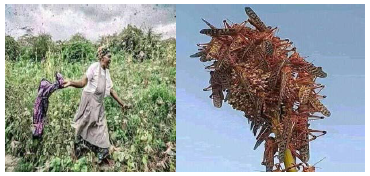
Desert locust is the hazard that arises against food security in East Africa. Ethiopia, Kenya, Somalia and Uganda were the countries highly affected by desert locust infestation. The bad news for Ethiopia was that this evil hazard appeared during the harvesting production season that results in famine and food insecurity in the homeland. About one million individuals in Ethiopia have been affected by the desert locust invasion and require emergency food assistance (Report of the Impact of Desert Locusts, 2020). Of these, about 390,000 are in Somali, 360,000 in Oromia and Dire Dawa city (combined), 100,000 in Afar, 72,000 in Amhara, 43,000 in Tigray and 13,000 in Southern Nations, Nationalities, and Peoples Regions (SNNPR).
Impacts on Agriculture and Livestock Production
Green Fodder Loss:
It is visible that DL damages pasture and reduces feed for livestock which will return in a reduction of total livestock units. Community members, however, estimated a significant reduction in pasture availability of 50% or more in—Somali (61%), Afar (59%), Oromia (31%), Dire Dawa (35%), SNNPR (22%) and Amhara (28%) compared to the normal situation prior to the invasion of the locusts. Most of these areas received adequate Karan and Deyr rains in 2019 that came after a prolonged dry spell. These rains led to substantial improvement in pasture and browse availability that would sustain the existing demand over the dry season. Nevertheless, the DL invasion reduced the availability of pasture and browse conditions.
Increased Expenditure for Animal Feed:
Cattle keepers in Afar and Somali regions indicated that they were spending a significant portion of their income from livestock sales not only to purchase their own food but also to purchase supplementation for their animals, especially the draught animals, such as camels, donkeys and shoats.
Crop Loss:
According to the impact assessment report 2020, DL has damaged different crops but the worst affected was cereal, especially Sorghum, where 113,639 hectares were affected followed by maize (41,341 ha) and wheat (36,188 ha). Oromia was worst affected with total cereal loss of 1,228,352 quintals (122,835 MT) on 41,051.4 ha of cropland. Somali region experienced the second-largest cereal crop loss of 1,026,132 quintals (102,613 MT) on 90,076 ha of cropland. Tigray region was third with 843,241 quintals (84,324 MT) lost on 40,577 ha of land. In Tigray, a significant loss was also due to post-harvest losses. Afar region lost 202,882 quintals (20,288 MT) from 4,421 ha, and SNNPR lost 134,420 quintals (13,442 MT) from 4,158 ha. Dire Dawa and Amhara lost a total of less than 100,000 quintals (10,000 MT). In Afar, Somali, SNNPR and Oromia vegetables, legumes, chat, coffee and fruits also affected.
Loss in Household Incomes
In the Afar region, communities in Eli Dar Woreda reported that DL consumed the date palms that is used for making mats for the traditional Afar traditional house—a major livelihood activity for women. Estimated incomes are likely to reduce from about 7,500 Ethiopian Birr last year to around 2,700 Ethiopian Birr this year.
Impacts on Food Security
Food Consumption Score
Food consumption data were collected and analysed using the standard methodology; the variety and frequency of different foods and food groups consumed over a seven-day recall period were recorded to calculate a weighted food consumption score. Weights were based on the nutritional density of the foods. Standard cutoff points or thresholds were established to enable the analysis of trends and to provide a benchmark for success. Households are then classified as having either ‘poor’, ‘borderline’ or ‘acceptable’ consumption based on the analysis of the data. Households classified as having ‘poor’ food consumption based their diet on cereals on a daily basis and vegetables four days per week. This is considered a bare minimum and is generally regarded as a sign of extreme household food insecurity. Households with ‘borderline’ consumption are eating the equivalent of cereals and vegetables on a daily basis plus oils/fats and sugar/sugar products about five and three days per week respectively. Only households classified as having ‘acceptable’ consumption were having, along with daily intake of cereals, vegetables, oil and sugar, on some day(s) consumption of items with high concentration of proteins: animal products, (meat, eggs and milk/dairy consumed on average two days/week, fish one day/week) and pulses (average two days/week).
According to an assessment conducted by the government of Ethiopia and Food and Agriculture Organisation (FAO), households with poor consumption increased in all the seven regions assessed. Overall, food consumption deteriorated slightly at the time of the assessment, with 41% of interviewed households having poor food consumption in February 2020 when compared to 37% in August 2019. The assessment was conducted by the government of Ethiopia, FAO, other United Nations agencies and non-governmental organisations that are part of the agriculture taskforce, the integrated food security phase classification technical working group and the food cluster.
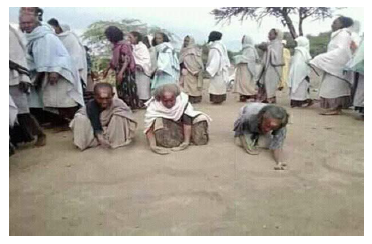
The objective of the assessment was to establish the impacts of the desert locusts on livelihoods and food security of the population in the most-affected zones and Woredas (districts). Ms Fatouma Seid, the FAO representative in Ethiopia said ‘as we strive to control the desert locusts, it is critical to protect the livelihoods of the affected population especially now that the situation is compounded by the COVID-19 crisis’. She added that as soon as conditions permit, FAO will continue to assist farmers and pastoralists with agricultural inputs and cash transfers. At the time Ethiopia arises from the ashes and begins new development through import substitution especially on agricultural production, the outbreak of this evil locust is bad news for Ethiopians. DL results in food insecurity, price increment, reduce livestock production and discouraging farmers. Therefore, Ethiopia needs to be diversified on its agricultural activity and coping strategy to overcome the locust hazard. Agriculture-based people become the poorest. The following picture represents how the affected peoples pray to their God during difficult times.
Political Instability
War and ethnic-based conflict are not uncommon in Ethiopia. However, in addition to COVID-19 disease and rebirth of conflict with Egypt on GERD, political instability has also become an evil challenge against economic development in Ethiopia. Ethnic-based politics is one of the leading horrors in Africa. Ethiopia, Africa’s oldest independent country, has been on the cross road (either to development or poverty). Currently, political crisis in Oromia (largest state in the country) and the war between federal government and TPLF are the two-challenging hegemony in Ethiopia.
Crisis in Tigray
Both indigenous and international reconciliation processes were made to mediate the conflict between TPLF and FDRI under Abiy. To mediate the conflict AU, US-based Ethiopian workers and US congress have been attempted but failed to reconcile. For instance, ‘Most recently, some members of the US congress wrote a petition calling on the US secretary of state to encourage the Ethiopian government to engage in an open dialogue with the opposition for a peaceful transition….’ These all are impressive signs. But the final result has been the displacement and death of thousands in the war of Tigray (Government of Ethiopia, 2020). Many suggestions were given by scholars on the issue of the war. As example:
It is my view that the crisis in Ethiopia today is not a conflict between the federal government in Addis Ababa and the regional government in Tigray. It is a crisis of the federal government manifest in Tigray and other regions. The governance of the federal government has become more of an exercise in seamanship (staying in power) and less of navigation (reaching a destination) falling short of coherent and democratic approaches to address the crisis….
Therefore, defining the problem as a disagreement between the federal government and Tigray is, to say the least, simplistic. There are concurrent crises in Oromia and the Southern regions that also need urgent attention. And to call for dialogue without taking some confidence-building measures, such as the unconditional release of political prisoners, is a non-starter.
Tigray has also called out the prime minister for his ‘unprincipled’ friendship with Eritrean President Isaias Afwerki. There has long been animosity between Tigray and the government in Eritrea, which shares a border with the region. A dispute over territory along this border was the cause of a war fought between Ethiopia and Eritrea from 1998 until 2000. You may remember this dispute making headlines in 2018. That year, Dr Abiy signed a peace treaty with Eritrea’s government, ending the territorial spat. A year later, Dr Abiy won the Nobel Peace Prize. Now it is war, not peace that is drawing attention to Ethiopia. Thousands of civilians have been displaced since 4 November, when Dr Abiy ordered his military to strike forces in Tigray. Hundreds more are reported to have died.
With the communications largely cut in Tigray, the exact number of casualties is not clear. The Ethiopian government has announced a six-month state of emergency in Tigray. A full-blown civil war could last far longer media caption. ‘We fled from death and murder.’ ‘Given the strength of Tigray’s security forces, the conflict could well be protracted,’ says International Crisis Group, a non-profit organisation. ‘Tigray has a large paramilitary force and a well-drilled local militia, thought to number perhaps 250,000 troops combined.’ As Africa’s second-most populous country, Ethiopia is pivotal to stability in the Horn of Africa. If the conflict intensifies, there are fears it could spill over into neighbouring countries. There have already been reports of missiles fired into Eritrea and 27,000 refugees fleeing to Sudan. There is also a concern that the conflict could exacerbate ethnic tensions elsewhere in Ethiopia. Finally, the troops led by General Biranu Jula, Letenal General Bacha Debele and Yilma Merdasa capture the Tigray capital Mekele and announced victory for the federal government.
Crisis in Oromia
The killing of a popular Oromo singer Hachalu Hundiessa in June sparked massive communal riots. Most parts of western and southern Oromia were engulfed in fighting between armed forces Oromo Liberation Front fighters and government forces. The opposition parties in Oromia—protesting the decision of the government to continue in power beyond its mandate at the end of September 2020—began preparing for resistance. The killing of the artist occurred in the middle of this political crisis. The protests engulfed much of the Oromia region where many businesses and shops were torched or looted. The government response to the riots left 178 people dead and a further 9,000 detained without due process of law. Curfews were imposed and a complete closure of the internet enforced.
The public mistrust of the government grew amid inconsistent statements and its knee-jerk decision to arrest opposition political leaders. Its failure to set up an independent inquiry into the artiste’s killing further fuelled suspicion. In reaction to the resistance of the Oromo elites, Abiy has gone about purging over 1,700 local administrators and civil servants. The dismissed officials included Lemma Megersa, the Defence Minister, a politician considered pivotal in prime minister’s rise to power. But resistance in the Oromia region continues in different forms. With over 9,000 people in prison, including key Oromo political leaders, the crisis has immense potential for escalation.
The Wolayta Crisis
The Wolayta people in the country’s south have long agitated for a regional state of their own. The claims have become louder since December 2018 when the neighbouring Sidama people secured a referendum to form their own regional state—breaking away from the SNNPR state. The constitution recognises the right of any nation or nationality clustered in any of the regional states to form its own state. Following the steps required, the council of representatives of the Wolayta zone unanimously voted for a regional state and presented its decision on 19 December 2018. But this has yet to be considered at regional or federal levels or referred to the Electoral Board. In protest at the silence, the Wolayta organised a massive rally, and the 38 representatives to the regional council declined to attend the council meeting. The federal government responded to these developments by detaining dozens of zonal officials, elected members of the Wolayta statehood council, political party leaders and civil society actors. The regime also acted violently against peaceful demonstrators demanding the release of those detained. The government also suspended a community radio station and shuts down offices of civil society organisations.
A National Crisis
Events in Oromia and Wolayta illustrate the point that the current Ethiopian problem is not limited to a dispute between the federal government and the TPLF. It is a national one. The decision of the federal government to postpone the scheduled elections using the excuse of the COVID-19 pandemic was rejected by most substantive opposition political groups calling for a dialogue to avert the consequences of the constitutional crisis. The best organised of these groups, the TPLF, has the capacity to hold its regional elections on schedule. This has brought the crisis to a head. But the dispute with Tigray cannot be resolved with a simple compromise; there is much more at stake, and the TPLF leaders are unlikely to make a short-term bargain when they see the problem as more fundamental. Tens of thousands of Ethiopians, including leaders of the opposition, are in prison for political reasons. All media outlets, except those fully controlled by or affiliated to the prosperity party, are closed. For a meaningful dialogue to start, the federal government should take some unilateral confidence-building measures. All political prisoners should be released without condition, and all media outlets closed by the government opened immediately. It should also end the unlimited and unlawful state of emergency. This can then set the stage for a national dialogue with two main objectives (Njeri, 2015). The first is to agree an early date for elections and determine how the country transitions to an elected government. The second is a discussion on some of the fundamental questions on the political future of Ethiopia. This is currently obscured by a focus on the crisis of the moment.
Economic Stagnation
Economics cannot be separated from political science and other social sciences. Political science is the study of government and the way we make decisions collectively (Stiglitz, 1993). The government sets the rules and regulations that underpin the economy. It sets the interest rates and levels of taxes and expenditures that regulate the macroeconomy (Stiglitz, 2021). In a country where there are many problems like COVID-19, desert locust, war and political instability are highly aggravated, there will be economic rescission. Development monopoly is also the great horror in Ethiopia. For the last 27 years back, TPLF was the great champion in monopolising the wealth of people where politics and economics were in the hands of them. These monopolies will lead to income inequality that results inflation and unemployment in a given country. In recent season the government took measures on monetary policy and demonetisation in order to overcome macroeconomic challenges.
Many authors are considered COVID-19 as strong as great depression. Given the recent study conducted by Alemayehu Geda about the social and economic impact of COVID-19 in Ethiopia and using local and global media-based information, information obtained from interaction with some of the industry actors as well as his own research about the Ethiopian economy, one can understand and come up with the possible economic impact of the virus on the country. That study noted that GDP may contract by 11.2% in 2020/2021 fiscal year (that runs from July 2020 to June 2021) if the economic effect of the virus lasts till the end of 2020. In the best-case scenario of the effect of the virus being limited to the first quarter of the next Ethiopian fiscal year 2020/2021, the GDP may contract by 5.6%, instead. In the worst-case scenario of the effect hanging around for the coming three quarters, the decline in growth could be as high as 16.7% (Abasimel & Wana, 2022).
Alemayehu Geda also notices that the government’s related latest forecast of economic growth for the coming 2020/2021 fiscal year is 8.5%. It is not clear whether the possible impact of COVID is taken into account in this forecast. If it is not, the government needs a growth rate of 19.7% (i.e. 11.2% + 8.5%) to attain this 8.5% level of economic growth with the COVID effect included; and this is completely unrealistic. On the other hand, if the possible effect of COVID is not taken in this forecast, the growth, including the COVID effect, will be negative 2.7% (that is almost a 3% decline) under the average scenario that we have envisaged in this study (in the best-case scenario of a 5.6% economic decline due to COVID, this could be a 3% growth of the economy in 2020/2021). Apart from such a gloomy picture of growth in 2019/2020, the Ethiopian economy is also characterised by significant macroeconomic instability and precarious balance of payment (and hence foreign exchange problem) condition even before the onset of the economic effect of COVID-19. Understanding the above horrors of COVID-19 and looking back to macroeconomic variables is a crucial moment. From this angle, the Ethiopian economy is drastically reduced.
Ethiopia is a diverse country. The ethnic-based politics is also the chief evil in the homeland.
In 4 November 2020, the war between the central government and TPLF was the key figurative example the political system in Ethiopia is challenged. More than 10,000 people died, and 40,000 were displaced. On that day of the war, the well-armed TPLF bombarded the capital of her sister Amara region (Gondar and Bairdar) and the capital of Eretria, Asmara. While Ethiopian moto was a journey to prosperity, oppositely the conflict was confronted the road. From this angle, you can understand as the economy was stagnant.
The year 2020 posed evil challenges for Ethiopians. Unfortunately, the disaster desert locust was also emerged to confront production and productivity of crops. The east and northern parts of the country were the witnesses of the impact of infestation. If production and productivity are low the aggregate income of the country become stagnant.
Conclusion
This article investigated and prioritised the critical and typical challenges that Ethiopia faced in 2020. The land of origin faced several challenges, such as COVID-19, desert locusts, conflict with Egypt on GERD, internal political instability and economic stagnant. The GERD is Africa’s biggest hydroelectric project and the 10th largest in the world. Though the project is highly significant for Ethiopia, it become a source of conflict between Egypt and other riparian countries. The sticking points include water security associated with the volume stored and stages of impounding the dam, dam safety and water quality. The recent dispute over the definition of ‘drought’ and ‘severe drought’ is related to the filling and management of the dam and its implications for water security. Yet, despite the USA, Russia and AU attempted mediation; negotiations have failed to produce an agreement. Therefore, if a remedial solution does not come to the disputes it will result in a war between Egypt and Ethiopia.
Another challenging evil is COVID-19. During law enforcement, there were restrictions to the total lockdown slogan in order to reduce the impact of the pandemic. Economic recession, fiscal risk, remittance, export reduction, domestic violence and political instability were the significant outcomes due to the pandemic outbreak in Ethiopia. Who is the speaker for the poor citizen? In one case, the poor people depend on daily activity, which is hand to mouth, in another case national emergence which supports the slogan of ‘stay at home’ has been launched. Apart from such a gloomy picture of growth in 2019/2020, the Ethiopian economy is also characterised by significant macroeconomic instability and precarious balance of payment (and hence foreign exchange problem) conditions even before the onset of the economic effect of COVID-19. Understanding the above horrors of COVID-19 and looking back to macroeconomic variables is crucial moment.
Desert locust is a hazard that arises against food security in East Africa. Ethiopia, Kenya, Somalia and Uganda were highly affected by desert locust infestation. The bad news for Ethiopia was that this hazardous evil appeared during the harvesting production season which in turn results in famine and food insecurity. About one million individuals in Ethiopia have been affected by the desert locust invasion and require emergency food assistance (Report of the Impact of Desert Locusts, 2020). Of these, about 390,000 are in Somali, 360,000 in Oromia and Dire Dawa city (combined), 100,000 in Afar, 72,000 in Amhara, 43,000 in Tigray and 13,000 in SNNPR. War and ethnic-based conflict are not uncommon in Ethiopia. Ethnic-based politics is one of the leading horrors in Africa. Ethiopia, Africa’s oldest independent country, has been on the crossroad (either to development or to black valley). Currently, political crisis in Oromia (largest state in the country) followed by the death of well-known singer and patriotic Hacaaluu Hundeessaa in Finfinnee and the war between the federal government and TPLF are the two-challenging hegemony in Ethiopia. In a country where many problems such as COVID-19, desert locust, war and political instability are highly aggravated, there will be economic rescission. Development monopoly is also a great horror in Ethiopia. For the last 27 years back, TPLF was the great champion in monopolising the wealth of people where politics and economic were in the hands of them. These monopolies will lead to income disparity that results in inflation and unemployment in a given country. Recently, the government took measures on monetary policy and demonetisation to overcome macroeconomic challenges. Given the above multifaceted issues on the economy of Ethiopia, it can be concluded that the country is at the crossroad. Therefore, strong intervention is needed to tear down the wall of political instability, economic stagnation and poverty in Ethiopia.
Footnotes
Declaration of Competing Interest
The authors declare that they have no known competing financial interests or personal relationships that could have appeared to influence the work reported in this paper.
Funding
The authors received no financial support for the research, authorship and/or publication of this article.