




Abstract
The growing environmental difficulties triggered by enterprises’ activities have drawn academics and development experts’ attention to mechanisms to advance growth and development without compromising the environment. Discussions about eco-innovation have become topical as a result, yet there still remains a dearth of understanding on the subject. Eco-innovation emphasises the duality of technological innovation and environmental protection as long-term solutions to the inherent tensions between these goals. Despite this, there has been little research on methods to improve eco-innovation performance, taking into account internal and external factors. Cognizant of the external environment’s dynamics, this study, based on institutional theory, investigates how institutional pressure affects eco-innovation. We used a cross-sectional survey approach to draw data from 155 businesses. Results revealed institutional pressures, that is, normative, mimetic, and coercive, also environmental complexity (EC) has a positive role in promoting eco-innovation. While environmental dynamics was found to have a positive moderating effect on the relationship between normative pressure and eco-innovation, EC was revealed to have a moderating influence on the relationship between mimetic, normative pressure, and eco-innovation. In light of these seminal findings that have received little research attention, we propose policy, theoretical, and practical implications.
Introduction
Eco-innovation has in recent years gained academic and policy traction owing to the urgency to advance cutting-edge approaches toward the adverse effects of the excesses erupted by enterprises’ production (Li et al., 2017; Zhang et al., 2019). It entails enterprises’ development and adherence to environmentally friendly and resource-efficient production and manufacturing processes consistent with sustainability ideals (Cecere et al., 2020). It also represents notions anchored on themes including green innovation, sustainable innovation, environmental innovation, and eco-innovation, which is the subject of our study. Eco-innovation furnishes enterprises with a competitive advantage in an increasingly challenged environment. It is acknowledged as efficacious in developing and developed jurisdictions including Europe where the European Union has enacted the EU eco-innovation plan, inter alia, entreating member states to pursue development in a way and manner that does not compromise the environment’s resilience and quality (Cecere et al., 2020; Keshminder & del Río, 2019).
While bourgeoning studies on eco-innovation have identified inherent advantages entailing the development of resource-efficient and competitive advantage, as well as valuable and unique competencies, the rising interests thereof have elicited government and nongovernment concerns tailored to advance conservation and sustainability. As a consequence, enterprises, scholars, and governments including that of the People’s Republic of China emphasised innovation-development synergy and thus proposed five development policy frameworks converging around: ‘innovation, coordination, green, open and sharing’ in the year 2015. Furthermore, in 2017, not only did China accentuate the relevance of implementing innovation-driven development strategies fashioned to protect and improve its ecology, and by extension, that of the world, but it further demonstrated commitment by accelerating green development—a framework anchored on, and driven by the rapid improvement of scientific and technological capabilities, high-level protection of the environment, and high-quality economic development.
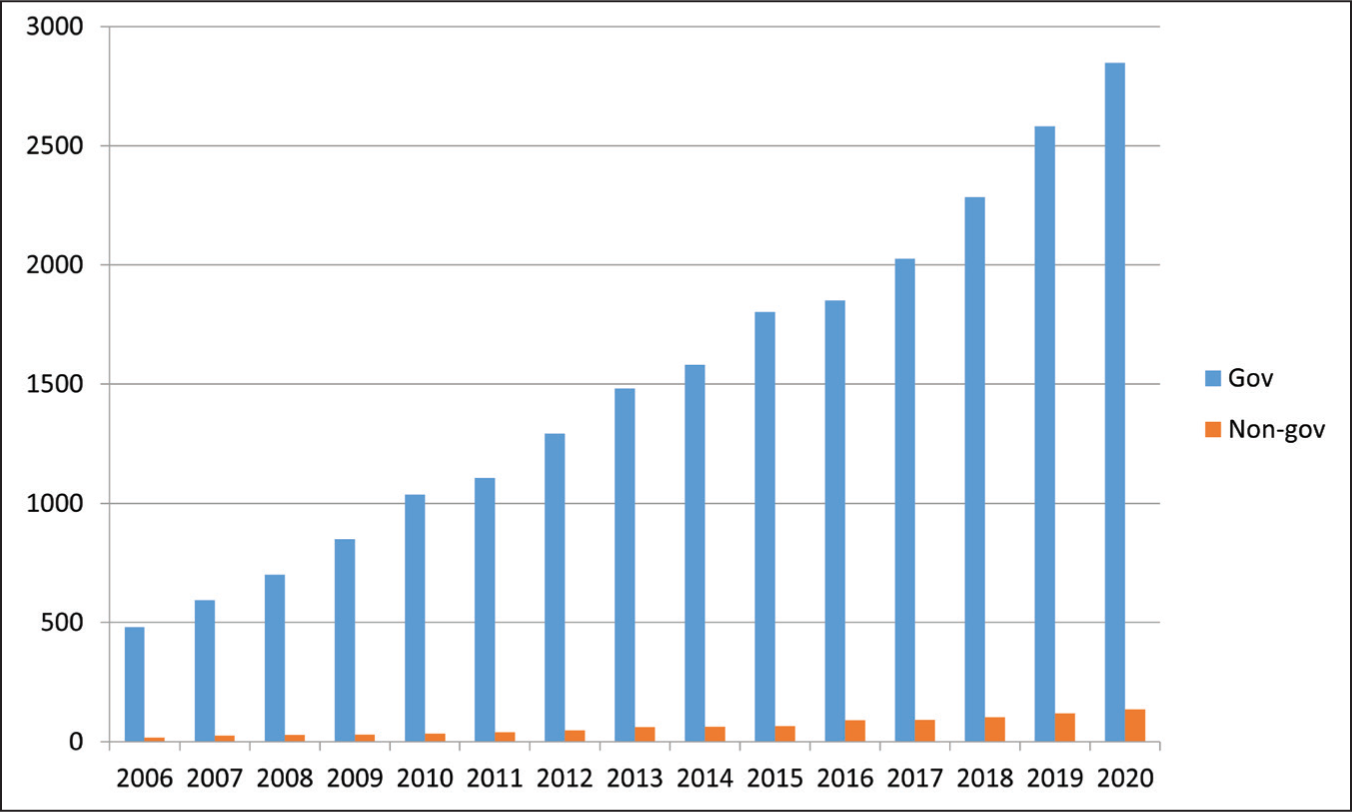
The evidence of R&D investment from government and non-governmental stakeholders is presented in Figure 1. In fact, R&D investment has been on the rise for nearly 15 years, and the government’s investment here has always ranked high, reaching more than 95%. In addition to realising R&D performance targets, the formulation of these policies by the government is designed to exert investment effects on stakeholders. These policies of the Chinese government can be construed as institutional pressure on enterprises. Nonetheless, how to effectively leverage the roles of these measures and the benefits of funds requires an empirical inquisition to clarify the relationship between institutional pressure and ecological innovation.
Government and Non-Governmental Funds of China’s R&D Expenditure (Unit: 100 Million yuan).
Noteworthy, the synergy toward eco-innovation is underpinned by a panoply of factors unlimited to not only environmental knowledge and awareness but also stakeholder influence (i.e., regulatory authorities, consumers, pro-environment agencies, etc.), internal factors (i.e., corporate environmental awareness, profit considerations, and technical capacity), and institutional pressures. Therefore, predicated on considerations of environmental sustainability outcomes, eco-innovation is touted as capable of yielding immense organisational performance and consumption benefits (Amore & Bennedsen 2016). In light of these benefits, eco-innovation as a sprawling study area has received significant research attention, with a number of studies investigating organisational compliance undergird, in addition to their adoption and compliance antecedents (Hojnik & Ruzzier, 2016; Keshminder & del Río, 2019).
Indeed, scholars (Starks, 2009; Brossard et al., 2013) have empirically investigated and established the relationship between innovation activism and organisational ownership while illuminating organisational monitoring capabilities and corporate influence on innovation decisions. Research highlights the association between institutional innovation investment and enterprise value enhancement potentials, considering the wide-ranging capacities of institutional investments and monitoring outcomes (Brossard et al., 2013). Following the institutional tradition, Dyck et al. (2019) and Spark & Cowton (2004) posit the salience of investment for environmental sustainability.
Scholars (DiMaggio & Powell 1983) segment institutional forces into coercive pressure, normative pressure, and mimetic pressure. Though coercive pressure stems from policies and institutional arrangements issued by the government, it nonetheless comes in binary forms entailing both government coercive pressure and market coercive pressure. The government’s coercive pressure mainly includes administrative measures and government environmental supervision. For example, China has formulated emission and punishment measures where violators of these policies are forced to either suspend business or shut down. Market coercive pressure entails market-oriented economic means such as the issuance of environmental protection subsidies, collection of pollution charges, and the implementation of emissions trading. These measures play a catalytic role in protecting the environment while promoting ecological innovation. Normative pressure on the other breadth comprises organisational practices, normative processes, and corporate social responsibility, which altogether impacts the formation and consolidation of corporate values and their compliance with social norms, thus affecting ecological innovation behaviour.
Though institutional forces are important for green innovation, research findings nonetheless affirm contesting and contrasting outcomes, with Cai & Li (2018) and Ramanathan et al. (2018) confirming their salience while Eiadat et al. (2008) contesting the same. They elucidate the disparities in light of the complexly composed institutional settings constituting regulative, normative, and cognitive forces, as well as eco-innovation’s capital intensiveness, which in their view tends to discourage enterprises’ pursuit of it (Berrone et al., 2013; DiMaggio & Powell 1983).
From the preceding discussion, it is clear that, while institutional forces remain relevant to eco-innovation, their influence on enterprises remains ambiguous and understudied. Eco-innovation is considered risky and uncertain, considering its capital intensiveness (Cecere et al., 2020). Rennings (2000) defines it as involving externality barriers such as environmental dynamics and uncertainties—one resulting from spillovers caused by eco-innovation imitation (Cai & Li, 2018). These findings have influenced the study’s incorporation of environmental complexity (EC) and environmental dynamics (ED) into the institutional framework used to evaluate enterprises’ eco-innovation activities.
The study’s relevance is discerned in the following ways: first, we contribute to institutional literature by probing the implications of institutional forces on enterprises’ eco-innovation. Additionally, the study enriches investigations on the plausible moderating effects of environmental uncertainty on institutional forces and firms’ eco-innovation activities, by enlightening the possible effects of government-led policies on the same. We again extend eco-innovation knowledge by demonstrating how it stimulates firms to adapt eco-innovation and other sustainability trends using the Chinese case. Set apart from studies with a regional and international focus (Brossard et al., 2013; Garcia-Sánchez et al., 2020), this study engages a country-specific approach using selected enterprises from 31 provinces in China mainland. The study findings would provide policy pointers for government and non-government stakeholders.
The remaining parts of the article proceed as follows: the second section covers the literature review. Theoretical framework and hypotheses are delineated in the third section while study design is captured in the fourth section, and the empirical analysis of data is presented in the fifth section. In the sixth section, we present a conclusion and discussion and proceed to draw study implications and limitations under the seventh section.
Literature Review
The theme of sustainability has become topical in international development policy discussions—as evidenced by its high rank among the United Nations’ global goals—the Sustainable Development Goals (SDGs), which enjoin member countries to advance social, political, and economic development without compromising the needs of the current and future generations. This implies the importance of striking a sustainable balance in meeting intergenerational needs. The efficacy of eco-innovation in tackling environmentally unfriendly challenges has driven enterprises’ commitment to it while striking a sustainable balance in meeting intergenerational needs (Keshminder & del Río, 2019). Eco-innovation is variously conceptualised. Kemp and Pearson (2007) define it as the use of management or production methods to reduce negative environmental consequences. Klewitz et al. (2012) define it as resource-efficient innovations effective in mitigating the excesses associated with manufacturing and production.
In addition to risk reduction, eco-innovation has the potential to improve organisational performance, competitiveness, market share, and reputation (Klewitz et al., 2012). Cecere et al. (2020) state that eco-innovation is distinct from other types of innovation, and pinpoint the diversity of its composition in terms of the company-level internal and external elements that are crucial for shaping enterprises’ potential. It is instructive to emphasise at this point that, their relationships notwithstanding, the already mentioned internal and external factors are not distinct. Whereas the former entails enabling and inhibiting factors in firm innovation management, the latter incorporates regulatory forces (i.e., media, government, and non-government) and consumer eco-friendly orientation, among others (Dyck et al., 2019).
A consideration of these internal and external elements emphasises the importance of institutional pressures and stakeholder influence on enterprises’ approval or legitimacy solicitation within the corporate environment (DiMaggio & Powell, 1983). Using this as a motivator, and following in the footsteps of previous studies, the research focuses on institutional theory to investigate its predictive effect on firm-level eco-innovation in mainland China.
Theoretical Framework and Hypotheses
The institutional theory of DiMaggio and Powell (1983) underlines major forces undergirding the decision-making processes within the institutional or organisational precincts. The theory also highlights corporate-level decision-making as susceptible to organisational forces (Arkorful et al., 2020). Enterprises’ decision-making conforms to a network grid of factors comprising regulations, culture, values, and other social expectations underpinned by efficiency, rationality, and legitimacy considerations. Firms become inclined to act in line with corporate values and practices (Jianxun et al., 2021), and they tend to pursue sustainability, i.e., eco-innovation via corporate consensus (Arkorful et al., 2020). DiMaggio and Powell (1983) emphasise the salience of institutional pressures (coercive, normative, and mimetic) to corporate decision-making.
To differentiate them, coercive force originates from resource-rich and/or powerful regulatory bodies, whereas normative forces erupt from sector-specific expectations. Mimetic pressure originates from business entities’ expectations about the activity of industry players and/or competitors. While considering the interplay of these forces inside organisational contexts, it is necessary to keep in mind that they are generated collectively by stakeholders, competitors, and sector-specific actors (Jianxun et al., 2021). The integration of structures and industry participants within enterprises and corporate contexts confirms its proclivity for rationally based social, economic, and value considerations, an observation that has informed the use of the institutional theory in this investigation.
Given the uncertainty and ever-changing environmental situation surrounding eco-innovation efforts (Berrone et al., 2013; Cai & Li, 2018), our research incorporates EC and ED as moderators into the institutional theory for this empirical investigation.
Hypotheses Development
Institutional Pressures and Eco-innovation
The institutional context in which organisations and/or enterprises operate invariably influences their operation to such an extent that their policy development and implementation, as well as the establishment of their operational framework, are all governed by the institutional environment. Firms are therefore required to adhere to the values, standards, and laws derived from the environment (DiMaggio & Powell, 1983). The proximate notion of organisational behaviour is rooted in the pursuit of legitimacy or otherwise (i.e., acceptance or approval) as articulated by DiMaggio and Powell (1983), who delimit institutional forces into a triad of coercive, normative, and mimetic pressures. Coercive pressure from the government regulatory environment (Scott, 2005) requires rigorous conformity in order to achieve government legitimacy.
On the contrary, normative pressure, which includes values and norms aimed at satisfying societal standards and associated ethics, comes from informal sectors such as customers and non-governmental organisations. Mimetic pressure is generated by competitors and other actors in the business or production environment. Because the imperativeness of mimetic pressures is rooted in the volatility of the business environment, organisations recognise and copy competitors in order to stay relevant and obtain legitimacy. It is worth noting that these pressures operate concurrently in business and non-corporate settings; the effects differ from one context to the next and are relative, and studies have demonstrated the importance of coercive, normative, and mimetic pressures on firm outcomes (Berrone et al., 2013), and Scott (2005) encourages further research.
Against the backdrop of Jianxun et al.’s (2021) validation of the institutional theory’s applicability and proposal to further investigate it across disciplines, this study incorporates ED and EC to test their collective effects. Our work replicates the theory in our study context, which is important, given Berrone et al.’s (2013) proposal to investigate them in the green innovation context. With reference to the positive effects of eco-innovation, such as knowledge enhancement, resource conservation, and clean energy and resource efficiency policy formulation and implementation, Li et al. (2017) receive support from Zeng et al. (2017), who propose the institutional theory as an effective framework for interrogating firms’ eco-innovation activities.
In addressing the influence of coercive pressure on firms’ eco-innovation behaviour, economists believe that government regulation of firms’ environmental activities raises firm-level costs while simultaneously applying financial pressure (Amores-Salvadó et al., 2014). Good regulation will ensure sector competitiveness (Cai & Li, 2018). With competition spawning new ideas, exposing firms to ground-breaking concepts, and relieving them of inertia while fostering eco-innovation, regulatory mechanisms under coercive pressure may assume command-control and market-based approaches. While the former comprises administrative limits, penalties, environmental standards, and regulations, the latter includes, but is not limited to, pollution compensation and emission trade agreements.
The availability of these control mechanisms, as well as their active execution, has a substantial impact on enterprises’ eco-innovation considerations. In contrast to coercive pressure, normative pressure encompasses flexible and relaxed control methods in terms of company regulation. Control of organisational innovation under normative pressure takes the shape of social values, norms, standards, principles, and rules emerging from customers, suppliers, and the general public. Firms’ eco-innovation engagements may be prompted by the need to meet the requirements of consumers, suppliers, and partners, international or sector agreements (Zhu, 2016).
Enterprises’ legitimacy to these actors may be strengthened or weakened by a cognitive assessment that awakens enterprises’ eco-innovation initiatives. The pressure created by corporations and/or organisations attempting to reach the standards of other entities by emulating them promotes eco-innovation, which may be influenced by the need for corporate recognition, legitimacy, and authority. They are pertinent to businesses’ long-term viability and engagements (Arkorfulet al., 2020; Jianxun et al., 2021). Following on from these academic arguments, the study hypothesises that institutional pressures would propel firms’ eco-innovation and thus hypothesise the following:
Environmental Complexity
Firms’ innovation behaviour is influenced by social, economic, and political elements that come together to form the environment in which they operate. The environment establishes the context for the firm’s innovative activity (Bradley et al., 2011). Moreover, information is essential to firms’ innovation activities. Recent years have seen a significant increase in interest in the idea of EC, referred to as the of knowledge required by enterprises for strategic actions (Bradley et al., 2011). Information asymmetry drives EC as a precursor to innovation. To that purpose, firms in less concentrated markets must absorb and assimilate greater volumes of market information, as well as steer competitor relations to mitigate uncertainty caused by rival firms’ strategic decisions. Firms in densely information-concentrated marketplaces, on the contrary, are not forced to go through such stringent information processing methods; instead, they use disciplinary approaches to reduce variability in information for decision- and policy-making (Bradley et al., 2011). Given the dissimilar circumstances and unfavourable position in which enterprises in less concentrated marketplaces find themselves (for which reason they need to improve their information processing capabilities for decision-making), they are likely to be exposed to EC (Bradley et al., 2011). Growing streams of literature on EC have highlighted sparse consequences, with George’s (2005) private business study emphasising EC’s negative effects in complex firm settings. The sparse EC outcome is evident in research (Ju & Zhao, 2009). These studies project the strengthening and weakening effects of EC on enterprises and their actions, emphasising its context-dependent effects, and thus highlighting the importance of future empirical investigation in the context of eco-innovation. As a result, to shed light on its impact on company innovation, this study integrates it into an institutional theory framework. This study, in particular, employs EC as a moderator on institutional pressure forces and business eco-innovation behaviour to help provide enterprises, stakeholders in eco-innovation, and decision-makers with pointers on how to harness and leverage institutional pressures toward eco-innovation. Based on the foregoing arguments, the study generalizes EC to have a moderating effect on firms’ ability to engage in eco-innovation behaviour, and proposes the following hypotheses:
Environmental Dynamics
ED remains one of the most critical variables in firm-level innovation management. It is particularly important to firms’ ability to undergo adjustments and adaptations while repositioning themselves in response to environmental changes. It is conceptualised as firms’ inclination to align internal resources and capacities with the external environment. Companies’ responses to these developments safeguard them against shocks and uncertainties while also reconfiguring their competitive edge in the environment in which they operate. As a result, in this situation, firms can capitalise on these inherent chances and transform them into advantages (Bradley et al., 2011). The literature confirms that environmental dynamism, typified by spontaneous change, has a significant impact on enterprise innovation and capability range. It is critical to emphasise at this point that firm-level innovation and its underlying dynamics can change dramatically depending on the impact of environmental changes and how firms respond to those changes. Because of this, it is difficult, if not impossible, for firm managers, decision-makers, and stakeholders to predict the current and future state of the firm and the environment (Jiao et al., 2011), making it critical for firms to sustain growth and performance by instituting innovative mechanisms to counteract the debilitating effects that such changes may engender (Hitt et al., 1998). Previous research has investigated the role of a dynamic environment in modulating the link between company innovation and dynamic capabilities (Jiao et al., 2011). To that end, by locating companies inside institutional settings, the current analysis generalizes that environmental dynamism will have a large moderating impact on institutional pressures to encourage eco-innovation. Based on our previous discussion, we hypothesise the following:
Study Design
Traditional institutional theory emphasises the influence of external environment on enterprise organisational behaviour. The logic of using institutional theory to study enterprise ecological innovation lies in that enterprises regard ecological innovation as a way to cope with the regulatory pressure of external environment. In order to improve organisational legitimacy, enterprises will timely adjust their strategies according to the changes in external environment under the pressure of external institutions, so as to obtain more resources and achieve better performance. So, we were able to figure out how internal and external factors work together to drive ecological innovation by linking institutional theory, enterprise eco-innovation, and environmental uncertainty.
Questionnaire Design and Variable Measurement
This study’s data originate from a questionnaire survey, which is divided into four sections: basic enterprise information, eco-innovation, institutional pressure, and environmental uncertainty. Environmental uncertainty is segmented into two dimensions: ED and EC. Institutional pressure is divided into three: coercive, normative, and mimetic pressure. All items are measured using a 5-point Likert scale, where 1–5 represent ‘not agree’, ‘few not agree’, ‘average’, ‘few agree’, and ‘agree’. The questionnaire items are taken from mature scales to ensure the data’s reliability. To confirm the reliability and validity of the questionnaire and make it more consistent with reality, several items were omitted based on the pre-investigation, and the final questionnaire scale was constructed as follows.
Dependent Variable: Eco-innovation
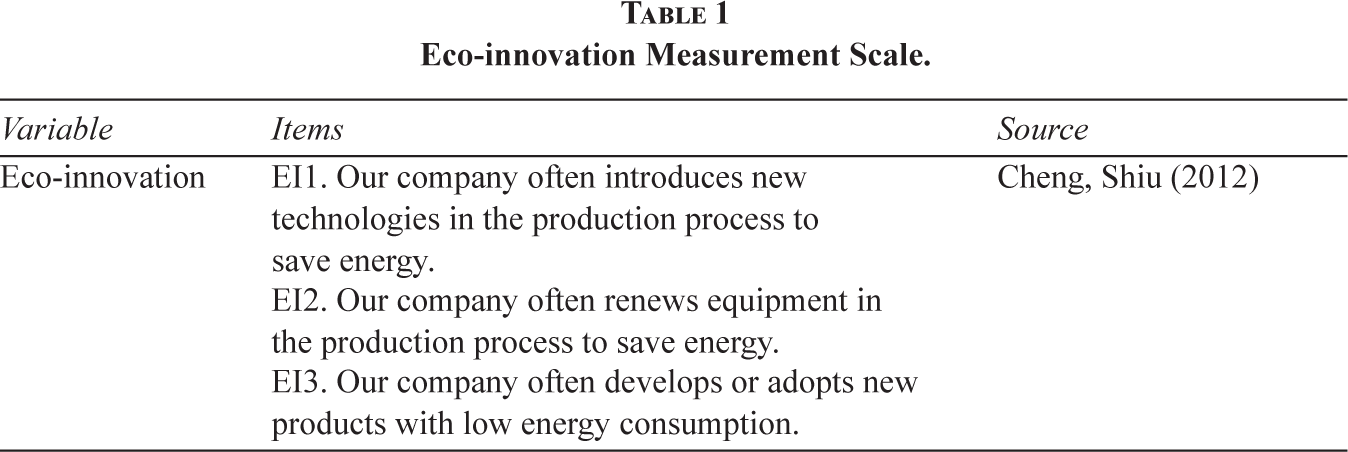
The eco-innovation scale developed by Cheng and Shui (2012) is used in this article to measure eco-innovation. Following a screening of the original scale, four questions are retained to measure the dependent variable. Table 1 shows the specific measuring scale.
Independent Variable: Institutional Pressure
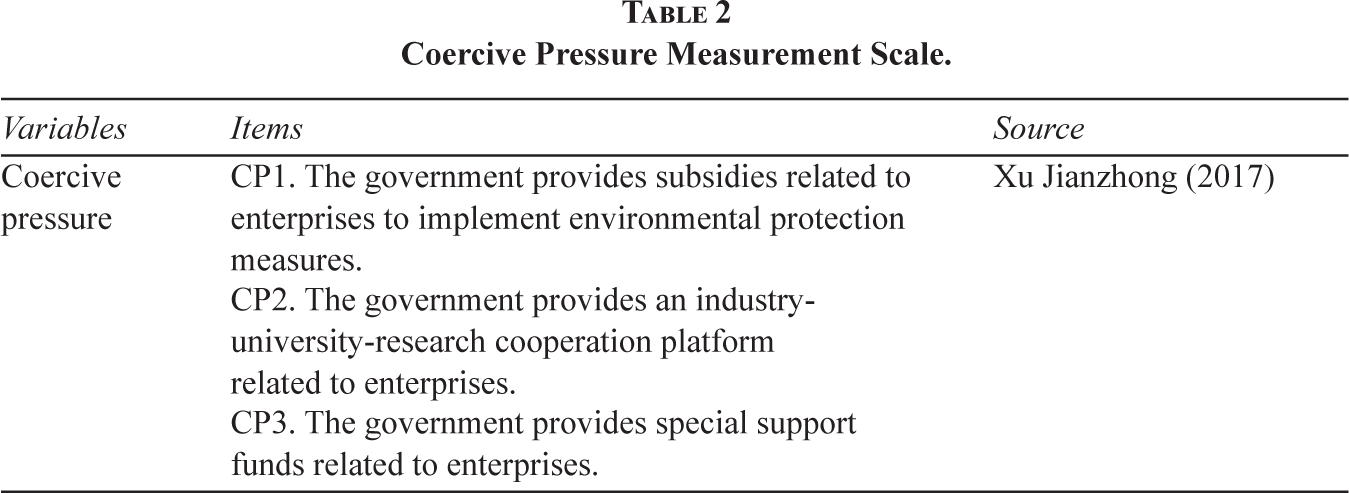
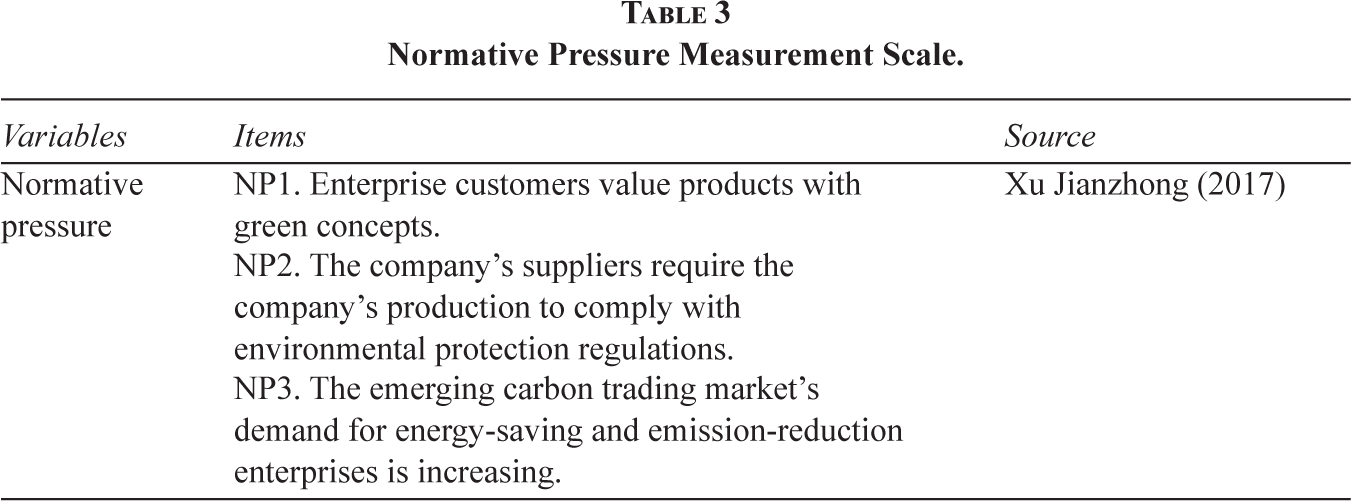
According to Xu Jianzhong’s (2017) research, institutional pressure is classified into three types: coercive pressure, normative pressure, and mimetic pressure. Tables 2–4 show the specific measurement scales.
Eco-innovation Measurement Scale.
Coercive Pressure Measurement Scale.
Normative Pressure Measurement Scale.
Moderating Variable: Environmental Uncertainty
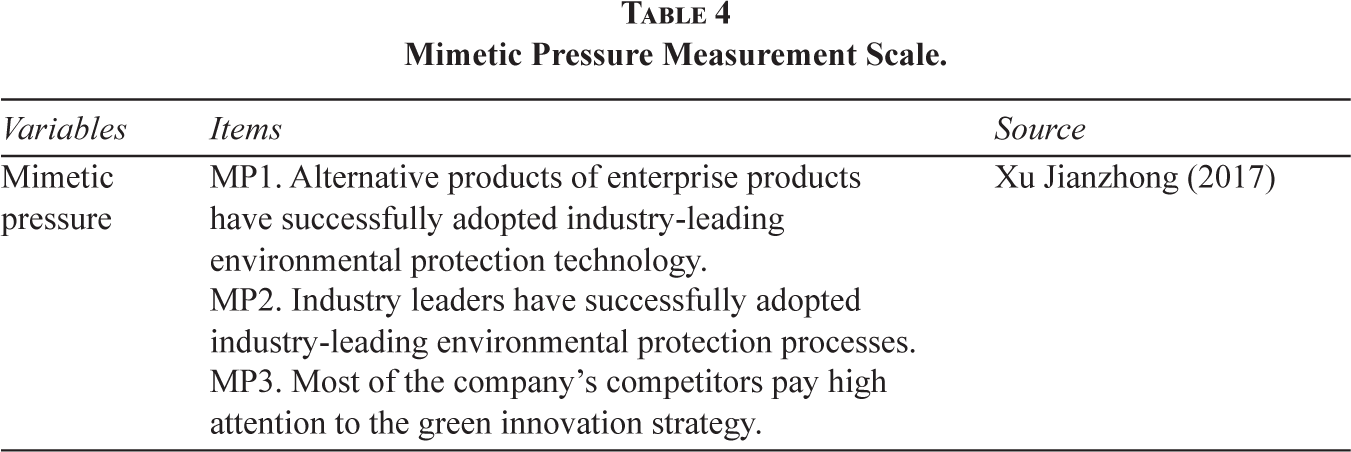
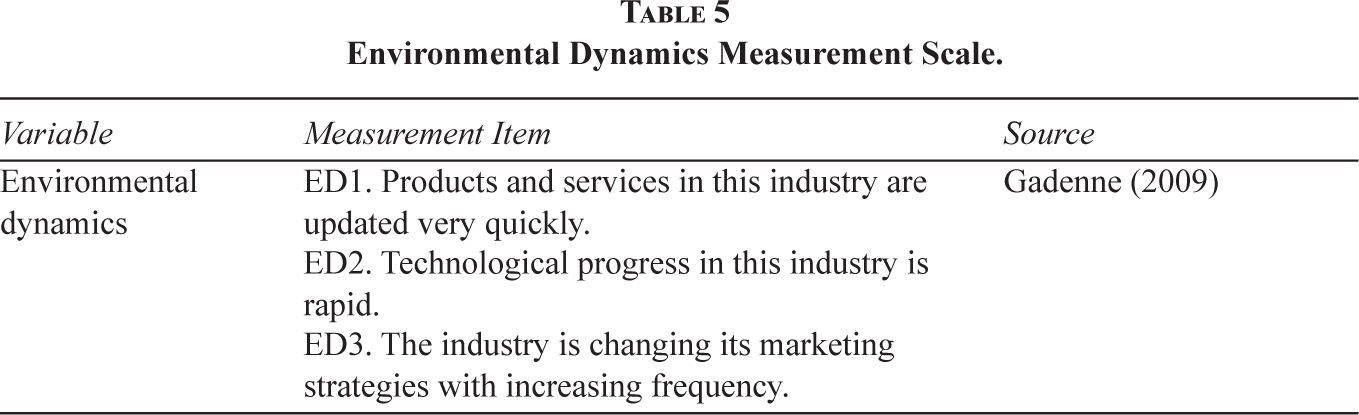
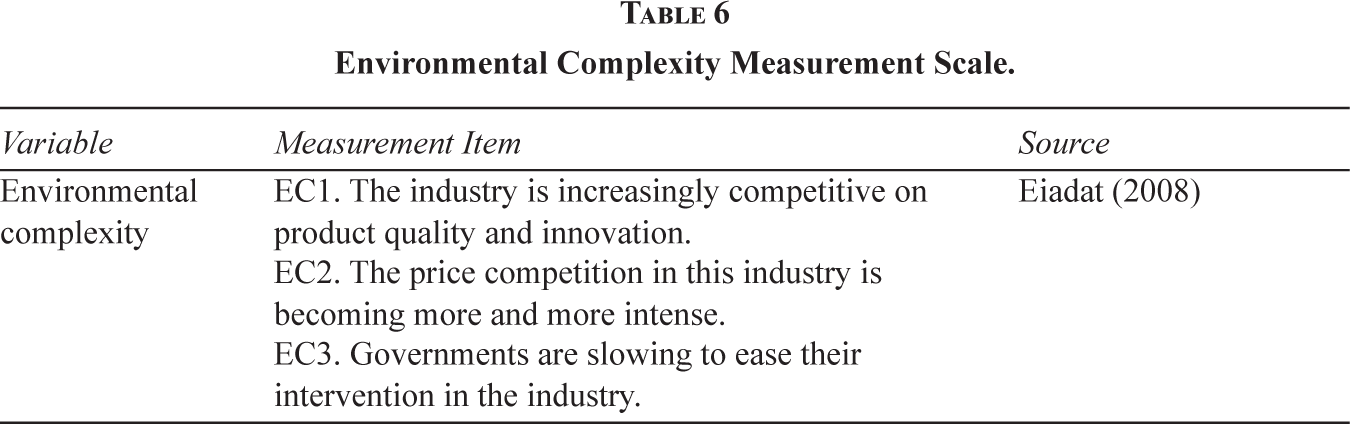
This study uses the Miller and Friesen (1983) scale to quantify environmental uncertainty, with some alterations based on the actual scenario, primarily changes in the market, rivals, and products. Tables 5 and 6 show the specific measurement scales.
Mimetic Pressure Measurement Scale.
Environmental Dynamics Measurement Scale.
Environmental Complexity Measurement Scale.
Control Variables
In order to eliminate the interference of these elements, different types of enterprises will have an impact on eco-innovation activities. The greater the firm, the more institutional pressure it will face to preserve sustainable development.
Data Collection
In this article, 300 business firms from Zhejiang and Jiangsu were chosen at random. A total of 260 questionnaires were issued to these firms’ front-line employees, R&D people, and senior managers via the questionnaire platform, with a collection rate of 70.38%. Nonetheless, there are 155 valid surveys with a collection rate of 59.61%. SmartPLS is used for reliability and validity analysis, whereas SPSS is used for regression analysis.
Empirical Analysis
Reliability and Validity Test
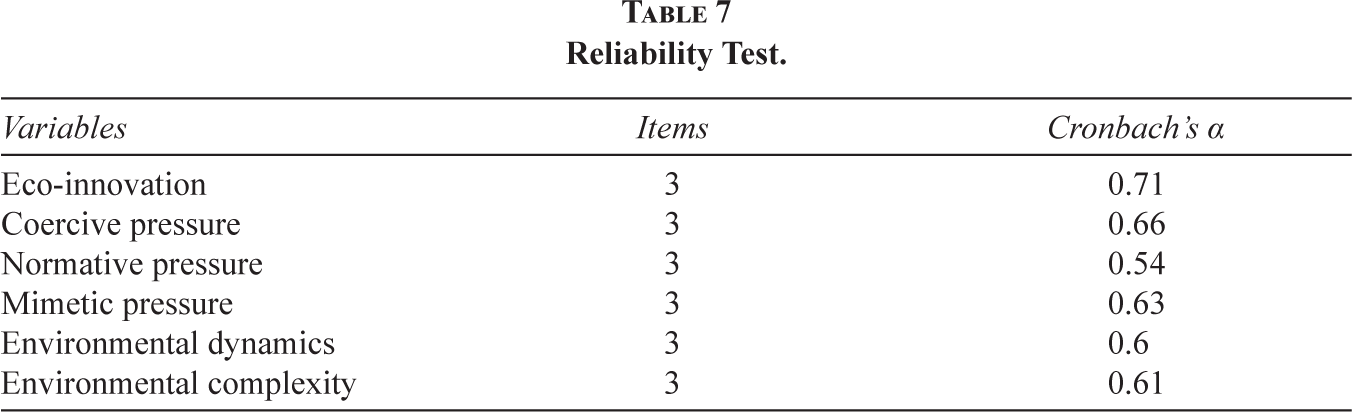
The reliability test verifies the trustworthiness of the sample measurement results by referring to the stability of the items tested by the questionnaire (Table 7). Cronbach’s α coefficient was employed in this work to examine the internal consistency and reliability of variables. The Cronbach’s α coefficients of the variables utilised in this study ranged from 0.5 to 0.6 consistent with Wu Minglong’s research, the constructions Cronbach’s α coefficients are between 0.5 and 0.6, which is within an acceptable range. Given that the overall reliability of the components is more than 0.7, it may be argued that the questionnaire is reliable and fits the study objectives (Arkorful et al., 2022). The validity test consists of two parts: one is convergent validity, which refers to the degree of correlation between items contained in the same factor, which means that the items measure the same factor. Convergent validity is mainly assessed by means of average variance extraction (AVE) and combined reliability. For the constructs, the AVE value greater than 0.5 indicates that the variable has good convergent validity. As indicated in Table 8, each variable’s factor loading is larger than 0.6, the AVE value is greater than 0.5, and the composite reliability is greater than 0.7, indicating that each measurement item and the variable it represents have good convergent validity. Second, discriminant validity displays the distinctness of multiple measuring items within the same component, that is, the degree of irrelevance with other items, mostly by judging the square root of each variable AVE and the magnitude of its correlation coefficient (Arkorful et al., 2022). As shown in Table 9, the square root of AVE on each diagonal is greater than the correlation coefficient of the row and column, indicating that the variables have good discriminant validity.
Reliability Test.
Convergent Validity.
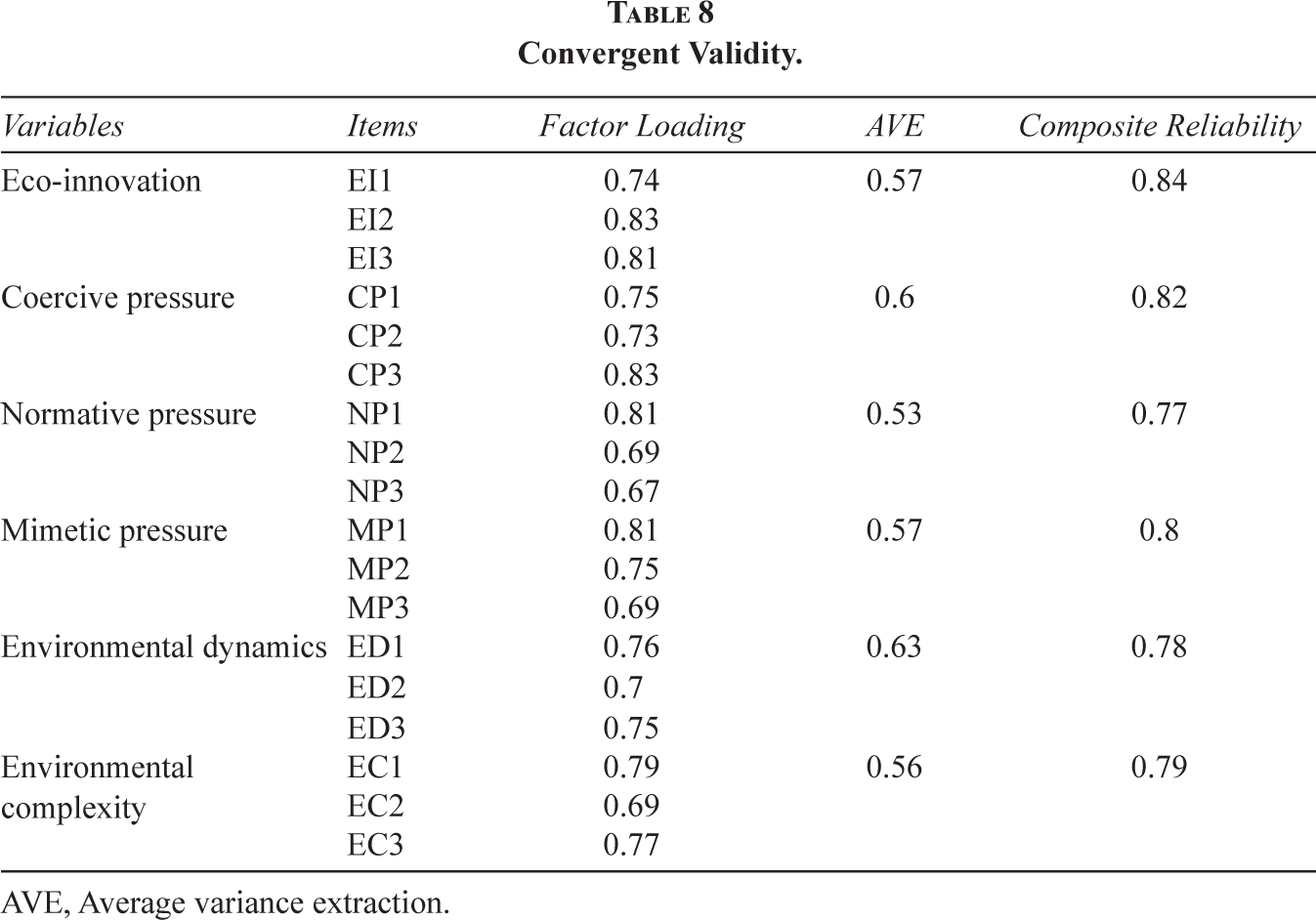
AVE, Average variance extraction.
Discriminant Validity.
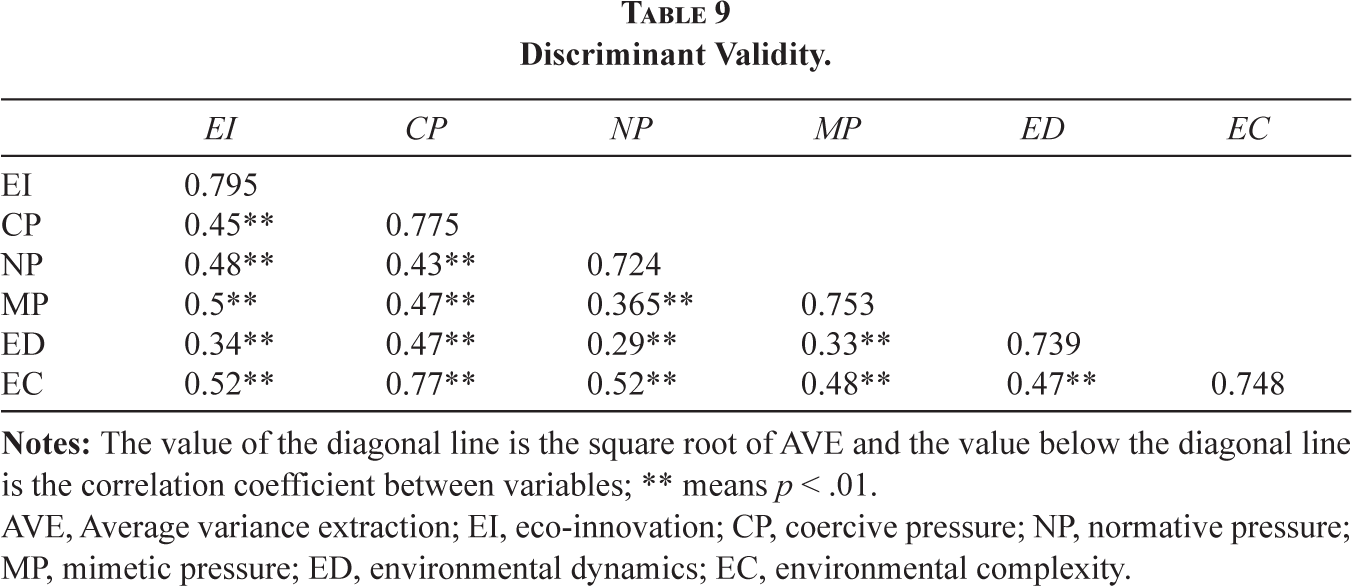
AVE, Average variance extraction; EI, eco-innovation; CP, coercive pressure; NP, normative pressure; MP, mimetic pressure; ED, environmental dynamics; EC, environmental complexity.
Hypothesis Testing
This article analyses the main effects of institutional pressure and eco-innovation and verifies the moderating effect of environmental uncertainty by introducing interacting items. Table 10 displays the findings of this investigation. In this study, the regression equation is gradually incorporated to prevent multicollinearity after decentralising the independent variables and moderating variables, and hierarchical regression analysis is employed to test the hypothesis. The VIF value in each model in Table 10 is significantly less than 10, indicating that the multicollinearity problem may be ruled out. Model 1 is the result after only adding constant terms and control variables. The constant represents the part that is not explained by the variables, the constant t in Table 10 is statistically significant only in Model 1 reflecting that with the addition of variables, the explanatory power of the model becomes higher and higher. Model 2 adds three independent variables of coercive pressure, normative pressure, and mimetic pressure on the basis of Model 1 to measure the impact on eco-innovation. Model 3 adds ED and EC. Model 4 adds the interaction term of EC and institutional pressure on the basis of Model 3 to verify the moderate effects of EC. Model 5 adds the interaction term of ED and institutional pressure based on Model 4 to verify the moderating effects of ED. To avoid the multicollinearity problem between the interaction term and the independent variable, when calculating the interaction term, the independent variable and moderator variable are centralised.
Results for Hierarchical Regression Analysis.
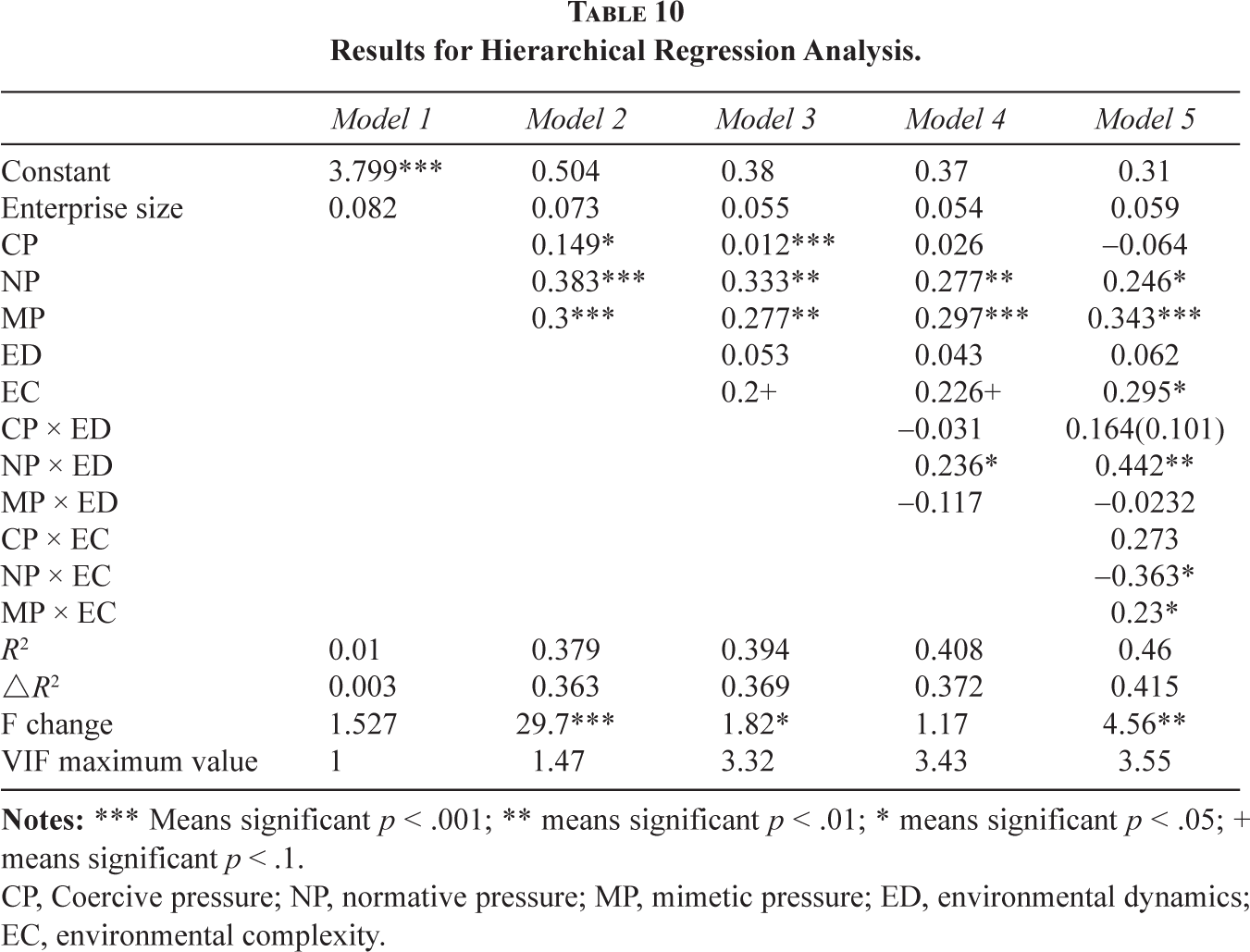
CP, Coercive pressure; NP, normative pressure; MP, mimetic pressure; ED, environmental dynamics; EC, environmental complexity.
According to Model 1, the control variable firm size has no effect on eco-innovation performance (β = 0.082, p > .1). The results of Model 2 (R2 = 0.379, F Sig < 0.001) show that adding the independent variable of institutional pressure improves the model’s explanatory power. CP can positively influence eco-innovation (β = 0.149, p .05), NP can positively influence eco-innovation (β = 0.383, p .001), and MP can also enhance eco-innovation (β = 0.3, p .001). Hypotheses H1, H2, and H3 are therefore validated. Institutional pressure can significantly promote eco-innovation performance. Model 3 added two moderating variables, EC and ED, and the explanatory power of the model was improved, but the effects of ED on the independent variables were not significant (β = 0. 053, p > .1), and EC on the independent variables was significant (β = 0.2, p < .1). The coefficient of CP is not significant in Models 4 and 5, because the effect of CP is dispersed by the moderating variables after they are added to the model.
Model 4 added the interaction term of ED based on Model 3, and found that ED only has a positive moderate effect on the relationship between normative pressure and ecological innovation (β = 0.236, p < .05). The other two moderate effects were not significant (β = -0.031, p > .1; β = -0.117, p > .1). Therefore, H5b was validated. ED moderate the relationship between normative pressure and eco-innovation. Model 5 adds the interaction term of EC to Model 4 and reveals that the model’s explanatory power is significantly increased (p < .05). The moderating effect of EC on the relationship between normative pressure, mimetic pressure, and ecological innovation is significant (β = -0.363, p < .01; β = 0.23, p < .055). The moderating effect of EC on coercive pressures and ecological innovation was insignificant (β = 0.273, p > .1). Assuming that H4b and H4c are validated, EC has a considerable moderating effect on the link between normative and mimetic pressures and eco-innovation. ED, on the contrary, have no moderating effect on the link between coercive pressures and ecological innovation.
Figures 2–4 demonstrate the moderating influence of EC and ED. ED positively attenuate the favourable link between normative pressure and eco-innovation, as shown in Figure 2. When ED are high, normative pressure has a positive influence on eco-innovation, whereas, when ED are low, normative pressure has a mild positive effect on eco-innovation.
Moderating Effects of Environmental Dynamics.
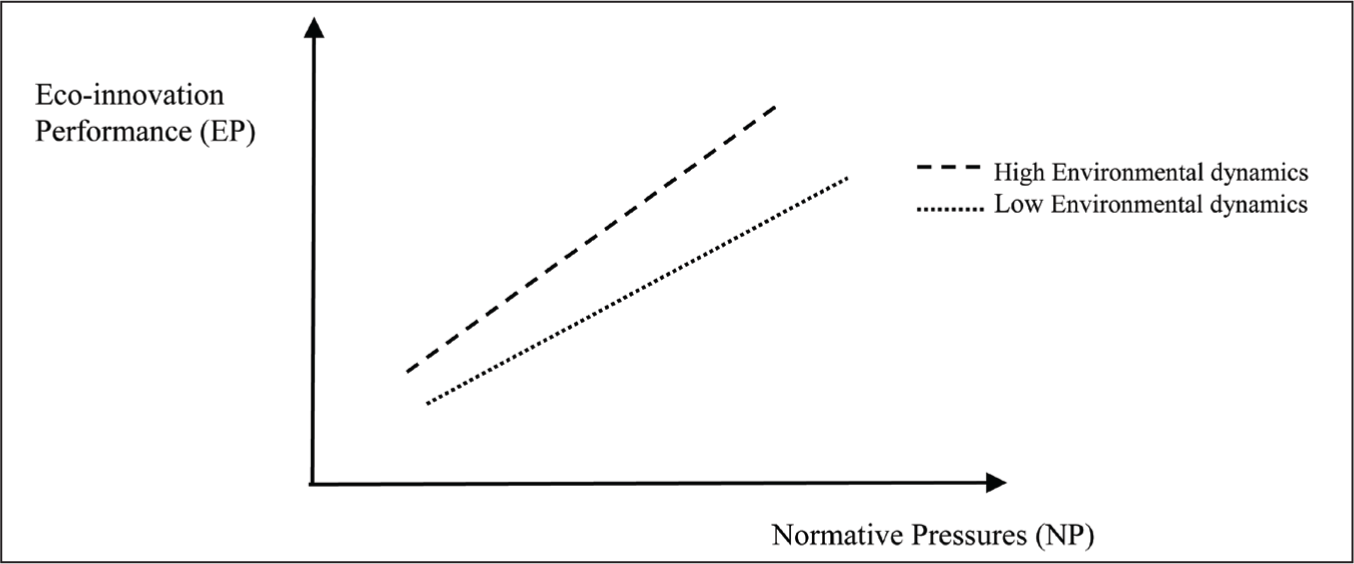
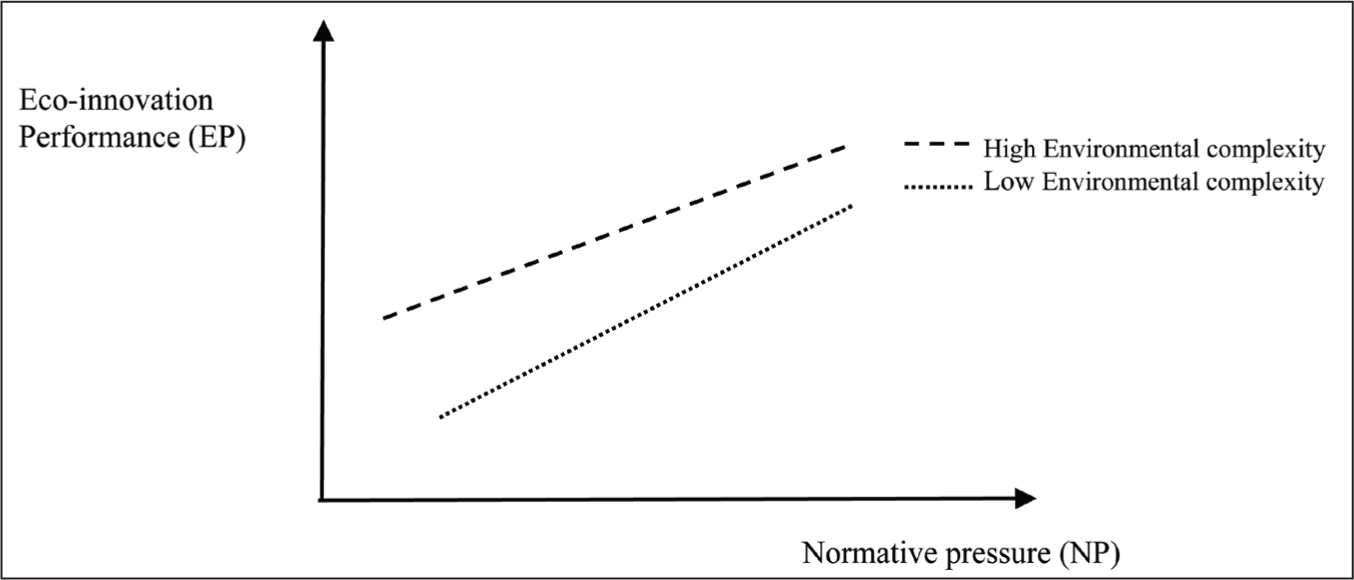
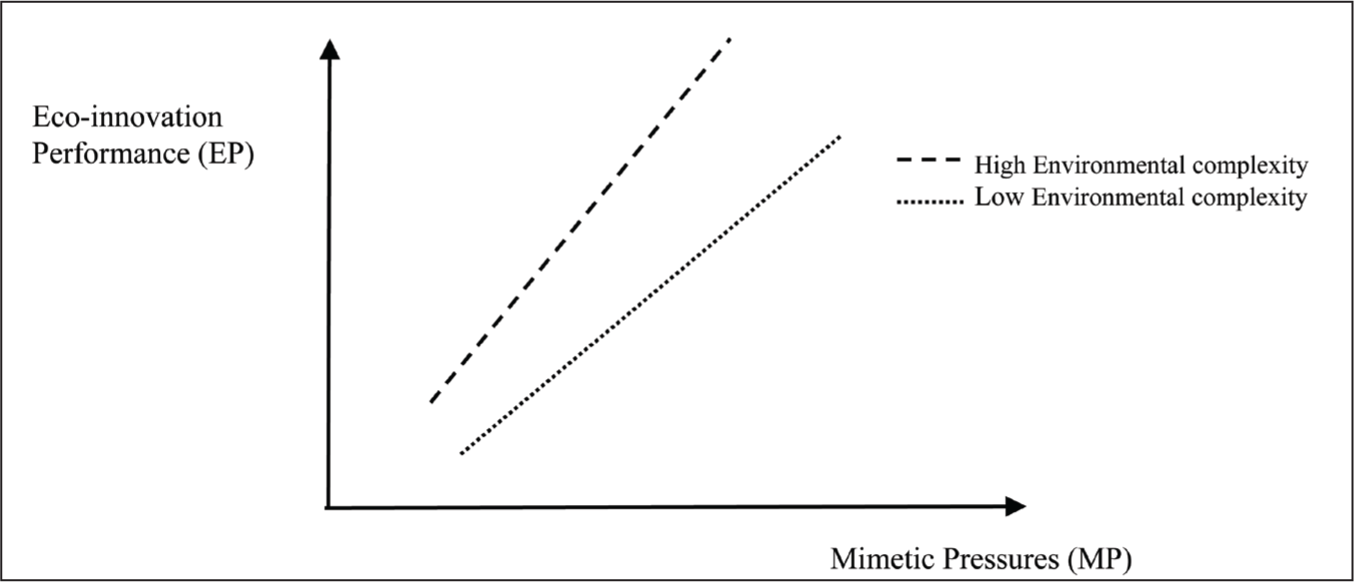
Figure 3 shows that the positive association between normative pressure and eco-innovation is moderated by EC. When EC is high, normative pressure has a higher positive effect on eco-innovation; when EC is low, normative pressure has a modest effect on eco-innovation. EC has a considerable negative moderating influence on the link between mimetic pressure and eco-innovation, as seen in Figure 4. When EC is high, the association between mimetic pressure and eco-innovation decreases; when ECenvironmental complexity is low, the relationship between mimetic pressure and eco-innovation increases.
Moderating Effects of Environmental Complexity between NP & EC.
Moderating Effects of Environmental Complexity between MP & EC.
Conclusion and Discussion
This study, based on institutional theory, develops a model of the effects of institutional pressures on enterprise eco-innovation and validates environmental uncertainty, the moderating role of ED, and EC in the relationship between institutional pressure and eco-innovation. This report reaches the following conclusions after analysing 155 enterprise data points:
First, considering institutional pressures, CP can promote eco-innovation. When combining the effects of institutional pressure and environmental uncertainty, coercive pressure has no significant positive effect on eco-innovation. This conclusion contradicts previous mainstream research (Cai & Xu, 2021). Most scholars believe that the government can improve enterprise eco-innovation levels using regulatory mechanisms such as command control and market incentives (Geng et al., 2021). According to several studies, the more environmental regulations impose constraints on firms’ production, the more likely enterprises pursue eco-innovation to avoid illegal hazards (Hojnik & Ruzzier, 2016). Yet, this study discovered that coercive coercion does not always foster eco-innovation. The fundamental reason for this is that, as environmental uncertainty grows, businesses are presented with a complex and dynamic environment; hence, depending exclusively on strong regulatory measures cannot effectively motivate businesses to pick an acceptable eco-innovation strategy. Strong regulatory measures force enterprises to achieve particular standards or requirements before engaging in corresponding production activities (Yao et al., 2019). In this type of environment, enterprises may choose strategic eco-innovation and short-term management policies to meet existing regulatory requirements without significantly modifying existing manufacturing methods and procedures. As a result, when other variables are added and/or taken into account, coercive pressure becomes negligible.
Second, normative pressure has a significant positive effect on eco-innovation. This conclusion reinforces existing research on the relationship between normative pressure and eco-innovation (Yao et al., 2019). There are three primary reasons: First, it is driven by the nature of the enterprise itself. The ultimate goal of enterprises is to gain profits. Faced with customers’ and suppliers’ differentiated needs, especially the increase in consumers’ green consumption behaviour, it is important that enterprises’ goal of attracting consumers to gain larger market shares and profits be sufficiently backed by attention to customers’ and suppliers’ pressure—to be able to better understand and satisfy consumers and gain more profits (Dewick & Foster, 2018). The second is the promotion of national policies. With the proposal on carbon neutrality goal at its peak, it is evident that society’s environmental standards are becoming increasingly demanding, and enterprises are required to operate in accordance with relevant stakeholders’ expectations and frameworks. Therefore, conforming to mainstream social values and behavioural norms will gradually be internalised as part of broader enterprise behaviour toward eco-innovation promotion over time (Sumrin et al., 2021). The third factor is public opinion. Some academics have confirmed that people and community groups’ concern for the environment can influence enterprise environmental protection plans (Henriques et al., 1999). As a consequence, as the general public gets increasingly concerned about environmental protection, the demand for environmentally friendly products, company environmental information disclosure, and tolerance for corporate pollution conduct increases. Thus, firms must apply eco-innovation strategies and pay attention to regulatory pressure in order to sustain or increase the market.
Third, mimetic pressure has a positive impact on eco-innovation. This finding is consistent with research conclusions that mimetic pressure from competitors or peers will prompt enterprises to engage in eco-innovation while seeking a better market position (García-Quevedo et al., 2020). When regional innovation entities or industry competitors face challenging external environments, and external competitors place a high value on environmental protection issues and introduce green products, if an enterprise wants to gain a more advantageous market position, it must imitate the practices of other competitors; otherwise, it will lose development opportunities and market position (Zhao et al., 2019). Consumers may become more environmentally concerned as a result of the increased demands of the outer environment if the concept of green consumption permeates cultural norms and values. Other consumers will adopt environmentally friendly habits, and businesses will engage in green innovation, manufacture green products, and get market access in order to appeal to this consumer category.
Moreover, EC and eco-innovation performance have a positive relationship. This conclusion is consistent with previous studies’ findings that the pace and unpredictability of external environment change will increase enterprises’ eco-innovation capability (Sumrin et al., 2021). EC refers to the scope and diversity of enterprise activities. The higher the complexity of the environment in which the enterprise is located, the greater the scope and diversity of its activities, which implies that enterprises’ operating factors are relatively complex, and enterprises will maintain a high degree of attention to the market, invest more energy, and continue to innovate to obtain new growth opportunities, thus promoting the improvement of ecological innovation performance.
Furthermore, EC has a significant positive moderating effect on the relationship between normative pressure, mimetic pressure, and eco-innovation performance. Little research has examined the relationship between institutional pressure and eco-innovation performance with environmental uncertainty (Zhang & Walton, 2017). According to the conclusion, mimetic pressure has a significant positive effect on eco-innovation. The higher the complexity of the environment, the more companies will be in the industry, and thus, the greater the external competition pressure the company faces, the correspondingly greater the mimetic pressure from competitors or peers (Jianxun et al., 2021). Establishing a competitive market position necessitates an understanding of consumer demands and preferences. Green consumption recognises more competitive factors that enterprises must focus on to complete technological iteration, produce new green products, meet market demand, and maintain a competitive edge under the influence of the global green concept. In the face of high environmental dynamism, enterprises must pay close attention to the external environment and keep an eye on the trends of external rivals and changes in the external environment, so that the pressure from external imitation increases (Scarpellini et al., 2020). Eco-innovation may achieve the unification of economic development and environmental protection, and it has become a vital measure for businesses to respond to external environmental changes. As a result, enterprises will expand their eco-innovation behaviour at this time, manufacture green products, and then enter the market.
Finally, ED moderate the relationship between NP and eco-innovation performance. This is consistent with erstwhile study findings. The ED are divided into two parts: the dynamics of the outside environment for consumption and the dynamics of the outside environment for competition. Enterprises must focus on the changing conditions of the external environment while also investing resources to respond to the changes in the external environment. External environmental changes will alter consumer tastes, and there will be an increase in demand for green consumption (Dewick & Foster, 2018). To tap into potential green consumer demand, satisfy consumer needs, and then encourage the enhancement of eco-innovation performance, enterprise managers will gather market data to assess changes in consumer demand. In the face of increasing environmental demands, the speed of technological updates is accelerated, and new knowledge and new technologies are constantly emerging. Existing corporate technology struggles to fulfill the demands of green product research and development. To deal with the external competitive environment, businesses will absorb and integrate essential knowledge while also encouraging the advancement of eco-innovation performance.
Research Implications and Limitations
The study has managerial and theoretical consequences and emphasises the salience of integrated studies in distilling eco-innovation driving forces. Theoretically, previous research has mostly focused on external institutional pressure, but this article combines external institutional pressure and external environmental uncertainty to examine factors influencing eco-innovation and proposes a comprehensive model of the impact of coercive pressure, normative pressure, and mimetic pressure on ED and EC on eco-innovation. This research conclusion will assist stakeholders in developing reasonable and dynamic regulatory rules based on environmental uncertainty, which makes it critical for enterprises to adopt acceptable eco-innovation models, taking into cognizance external policies and the environment. Second, a framework model of the relationship between institutional pressure, environmental uncertainty, and eco-innovation performance was constructed, and the direct impact of institutional pressure on eco-innovation was analysed from the perspective of environmental uncertainty, enriching antecedent variables of the innovation ecological system based on institutional theory.
Regarding management implications: first, the government is the policy guarantor of the external environment of the company’s eco-innovation activities and the promoter of innovation behaviour. The government’s first priority is to create a good external environment and encourage businesses to engage in eco-innovation by enhancing environmental protection rules and clarifying corporate pollution standards. Second, to address the issue of capital shortages, the government should focus on the role of economic incentive policies including preferential tax policies and subsidy policies, lessen the tax burden on creative firms, and boost direct financial support for innovative initiatives. Such as green credit, green bonds, and green insurance have made significant strides under the umbrella of ‘Carbon peaking and Carbon neutrality’ and innovation-driven policy. Finally, the creation of the external environment is a requirement. The government should foster a good innovation environment in infrastructure construction, public services, scientific and technological information support, and intellectual property protection, as well as establish a good eco-innovation system to promote rational resource circulation and utilisation.
According to the research conclusions of this article, as the importance of green development grows, enterprises should pay attention not only to the direction and trend of government regulation and policy changes but also to the environmental protection trends of market players such as consumers, suppliers, and industry competitors and make strategic adjustments and planning. Enterprises should simultaneously actively work to support the government’s innovation policies, provide fundamental support for the growth of innovation activities, and work to increase technology competitiveness in order to obtain the resource support necessary for R&D and innovation. This support can be achieved by actively working to support the government’s innovation policies. Furthermore, firms must rigidly create innovation plans and employ R&D funding correctly to reduce losses caused by innovation failures while bringing eco-innovation goods to market better and faster and promoting the implementation of ecological process innovation results.
Furthermore, as the new carbon market develops, firms with excellent environmental protection technology will experience increased development opportunities. Therefore, enterprise executives should incorporate eco-innovation into the overall strategic layout, grasp the government’s tax incentives and subsidy policies, invest funds and technologies to support enterprises to carry out eco-innovation activities, and reduce the burden of enterprises’ production experience activities on the ecological environment by increasing investment in eco-innovation research and development.
Despite the study’s strengths, it has limitations which we catalogue as follows. First of all, the cross-sectional data collected in this study cannot reflect the impact of environmental regulation on various stages of enterprise eco-innovation from a dynamic perspective, and longitudinal data research can be carried out in the future. Second, institutional pressure and external uncertainty overlap. Changes in institutional pressure, in a broad sense, are part of the environment’s dynamism and complexity. Scholars can reduce homogenisation between enterprises in the future by boosting the accuracy of research. Finally, while this article aims to investigate the external variables driving enterprise eco-innovation, it only examines the direct effect of institutional pressure and the moderating influence of external uncertainty and does not examine internal and external factor relationships. In the future, we can investigate how the internal characteristics, resources, and capabilities of enterprises in the process of implementing eco-innovation strategies can interact with external factors in the process of promoting eco-innovation, in order to improve enterprise eco-innovation performance.
Footnotes
Declaration of Conflicting Interests
The author(s) declared no potential conflicts of interest with respect to the research, authorship, and/or publication of this article.
Funding
The author(s) received no financial support for the research, authorship, and/or publication of this article.