




Abstract
What can be learnt from an application of author-level bibliometrics to the field of agricultural research in Zimbabwe for the period 2012–2016? The study addressed the question by integrating data from three sources: Scopus, the Web of Science and the National Research Database of Zimbabwe. A set of fifteen bibliometric indicators was constructed for 2,873 Zimbabwean authors, of which 248 (9%) were in agricultural sciences and 295 (10%) in multidisciplinary agricultural sciences. The indicators represented three dimensions: volume of article output, scholarly publication outlet and research collaboration. Results are discussed in terms of the Zimbabwean government’s policy for agriculture. Part of the lessons learnt calls for author-level bibliometric studies to connect more closely with the local, regional and global politics of knowledge production.
Introduction
Not only did the volume of Africa’s research increase in recent years (Mouton & Blanckenberg, 2018), but also the volume of bibliometric studies focussing on research in Africa. The growing collection mainly concerns studies of research production, research collaboration and citation impact (Boshoff, 2010; Mêgnigbêto, 2013; Tijssen, 2007). Field-specific studies of African research also seem to be thriving (Asubiaro, 2019; Patra & Muchie, 2017) and the methodological approaches are becoming more blended and sophisticated. For instance, some studies combine bibliometrics with other approaches, such as surveys (Owusu-Nimo & Boshoff, 2017), whereas others apply advanced statistical techniques to bibliometric data (Guns & Wang, 2017).
Despite all these developments, journal articles are still the preferred unit of analysis, with the Web of Science (WoS) and Scopus as the two most used mainstream data sources. This preference is somewhat misplaced as individual researchers and not their articles (which represent only one form of codified output) are the real sources of research creativity and research contribution. Article authors constitute the scholarly research workforce of a country, as they contribute to original research in scholarly journals in order to advance local, regional and global knowledge bases. Bibliometric studies of African research, therefore, although growing and diversifying, are not sufficiently opening to include author-level datasets that are tailored for specific countries and which go beyond a single mainstream database to also include local data.
This bibliometric study addresses the vacuum as highlighted above and focusses on article authors in Zimbabwe, a country in southern Africa. Firstly, the study constructed and analysed an author-level dataset for the period 2012–2016, using Scopus, WoS and the National Research Database of Zimbabwe (NRDZ). Secondly, the focus was on the scholarly research workforce in agriculture in Zimbabwe. Agriculture is considered the backbone of the Zimbabwean economy, with more than 90% of rural households in Zimbabwe depending on agriculture for their daily survival (USAID, 2020). The Zimbabwean government, in its policy outline for agriculture for the period 2012–2032, has also set an objective of working towards an adequately resourced agricultural research system, specifically by building the necessary institutional and human resource capacity (MSTD, 2012).
The study, being explorative in nature, was guided by a single broad research question: what can be learnt from an application of author-level bibliometrics to a critical research field in a developing country with a small research system, where the application includes a dataset that goes beyond Scopus and WoS? To this broad question, the following specific sub-questions were added:
In terms of the NRDZ contents, what documents are included in the category of journal articles and what publication outlets can be distinguished from the classification of such documents? What share of the Zimbabwean scholarly research workforce publishes in agriculture, and how are the researchers distributed across the national sectors? How does the research workforce in agriculture differ from the country’s workforce in other fields, in terms of fifteen author-level bibliometric indicators, grouped in three dimensions: (a) volume of article output, (b) publication outlets and (c) modes of national and international research collaboration? What insights can the findings contribute to the Zimbabwean government’s policy outline for agriculture?
Before discussing the construction of the relevant database, a brief overview is given of the critical role of agriculture in relation to food security in Zimbabwe. This is followed by a discussion of the research and development (R&D) landscape of Zimbabwe, accentuating agriculture and a discussion of selected aspects of research production in the African context. The latter covers two sets of insights from the research literature: scholarly publication outlets (linked to deliberations on the representation of African research in mainstream bibliographic databases and the phenomena of institutional repositories (IRs) and predatory publishing) and modes of research collaboration.
Agriculture and Food Security in Zimbabwe
According to a recent food insecurity analysis conducted by the Zimbabwe Vulnerability Assessment Committee (ZimVAC), the country experienced its worst acute food insecurity in 2019, which was driven by a combination of economic shocks and weather extremes (FSIN, 2020). As a result, in late 2020, 27% of the country’s population experienced high levels of acute food shortages, a figure projected to rise to 35% by early 2021 (IPC, 2020). To mitigate factors, the government removed import duty on basic commodities, including maize, wheat and cooking oil (ZimVAC, 2020). Zimbabwe thus relies heavily on crop imports from neighbouring countries, with such imports meeting an estimated 30% of demand (Welborn et al., 2019).
Humanitarian food assistance to Zimbabwe is also at the order of the day and expected to increase dramatically. The United States is the largest bilateral donor that supplies emergency humanitarian food assistance to Zimbabwe. In the 2019 fiscal year, the United States Agency for International Development contributed US$122.2 million to this end, more than double its contribution of US$54.6 million in the previous fiscal year (USAID, 2020). The national and international humanitarian food assistance programmes that are operative in Zimbabwe support about 6.7 million beneficiaries out of a population of 15.6 million (IPC, 2020). All of the above signifies that the country finds itself in dire straits in terms of food security, which highlights the need for, among others, an adequately resourced agricultural research system to address issues of food security.
R&D Landscape of Zimbabwe with a Focus on Agriculture
In 2012, as other African countries also did, the Zimbabwean government committed to allocating at least 1% of its gross domestic product (GDP) to R&D (MSTD, 2012). Previously, in 2005, the country’s gross expenditure on R&D (GERD) was relatively low, estimated at 0.2% (AU-NEPAD, 2010). However, in 2012, GERD was estimated at 0.76% (UNESCO, 2014). Of the latter, 83% was allocated to higher education with the remaining 17% assigned to the government sector (the only two sectors covered by the R&D survey). From its share, the government sector allocated its largest portion (32%) to agricultural sciences (UNESCO, 2014). In 2012, the country was reported as having 2,739 headcount researchers. The total number of full-time equivalent (FTE) researchers was 1,315. Of this total, the majority (92%) were in the higher education sector, followed by the government sector (8%). These figures from the R&D survey are partial as other sectors besides higher education and government were not surveyed, which implies a lack of information about research producers in the country. Of the 2,739 researchers surveyed, 14% were in agricultural sciences (UNESCO, 2014).
The R&D surveys of 2005 and 2012 provide limited information on agricultural R&D in Zimbabwe. The Agricultural Science and Technology Indicators (ASTI) initiative of the International Food Policy Research Institute is a much better alternative, although data for the private for-profit sector are excluded. Figure 1 shows the total number of FTE researchers in agriculture in the period 2003–2016, as reported by ASTI (2020). Following an initial decline from 144 FTE researchers in 2003 to 127 in 2007, the number dramatically increased to 164 in 2008, before peaking at 242 in 2016.
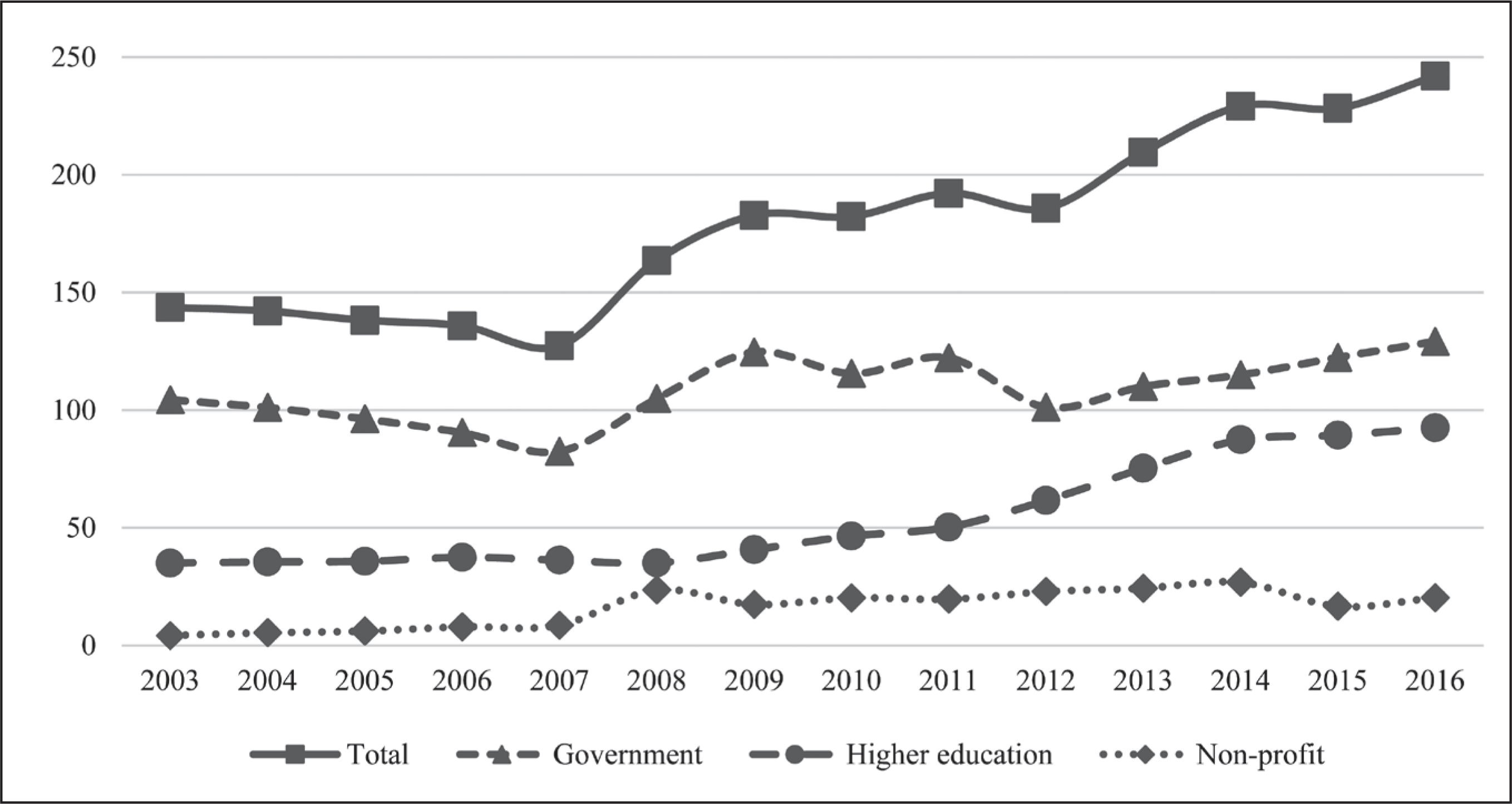
In agriculture, the government sector employs more FTE researchers than any other sector in the country. For example, in 2003, it employed 73% of FTE researchers, which subsequently decreased to 53% in 2016 (ASTI, 2020). This coincided with an increase in the percentage contribution of FTE researchers from higher education (from 24% of the total FTE researchers in 2003 to 38% in 2016). However, in government in 2016, the share of agricultural researchers with doctoral degrees was only 11%, compared with 39% in higher education (ASTI, 2020).
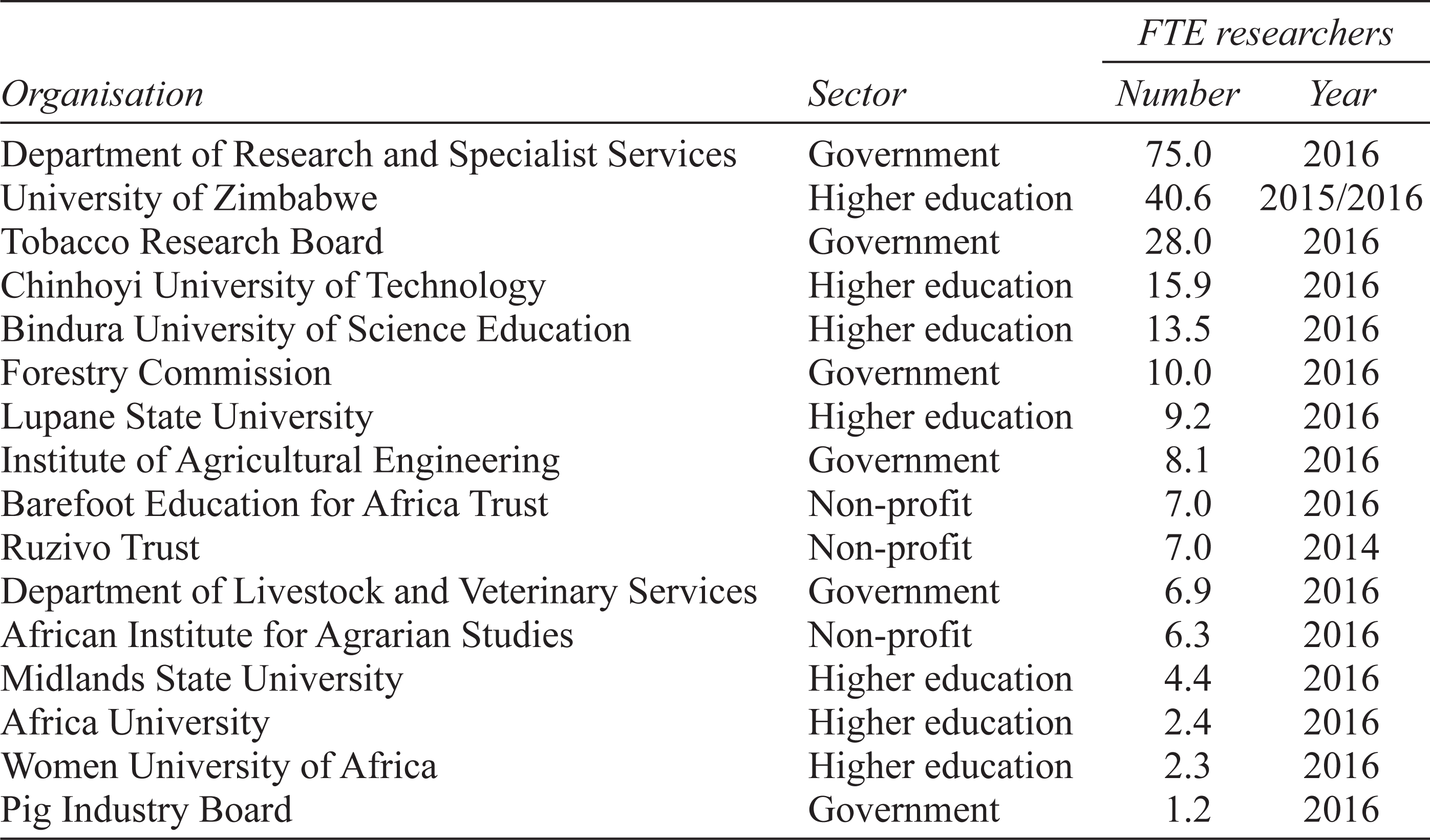
The most prominent agricultural research organisation in government is the Department of Research and Specialist Services (DRSS), which, in 2016, employed seventy-five FTE researchers (Table 1). The DRSS has been in operation since 1948 (UNESCO, 2014) and falls under the Ministry of Lands, Agriculture and Rural Settlement. According to Flaherty et al. (2011), the DRSS accounted for up to two-thirds of national agricultural research investments and human resource capacity in the 1980s and early 1990s. However, due to the country’s economic and political constraints, by 2008, it had employed less than a quarter of the nation’s public research staff. Although the DRSS traditionally experienced high staff turnover it more recently also reported an ageing workforce—in 2016, 80% of researchers with doctoral degrees were older than 50 years (Beintema et al., 2019). In higher education, the University of Zimbabwe is the best resourced in terms of agricultural research staff (40.6 FTE researchers, Table 1), distributed across three constituencies: Faculty of Agriculture (26.5), Faculty of Veterinary Science (9.3) and the Department of Biological Sciences in the Faculty of Science (4.8). In 2019, the University of Zimbabwe produced two doctoral graduates and thirty-one master’s graduates in agriculture (UZ, 2019).
Number of Agricultural Researchers (FTE) in Zimbabwe, by Organisation and Sector
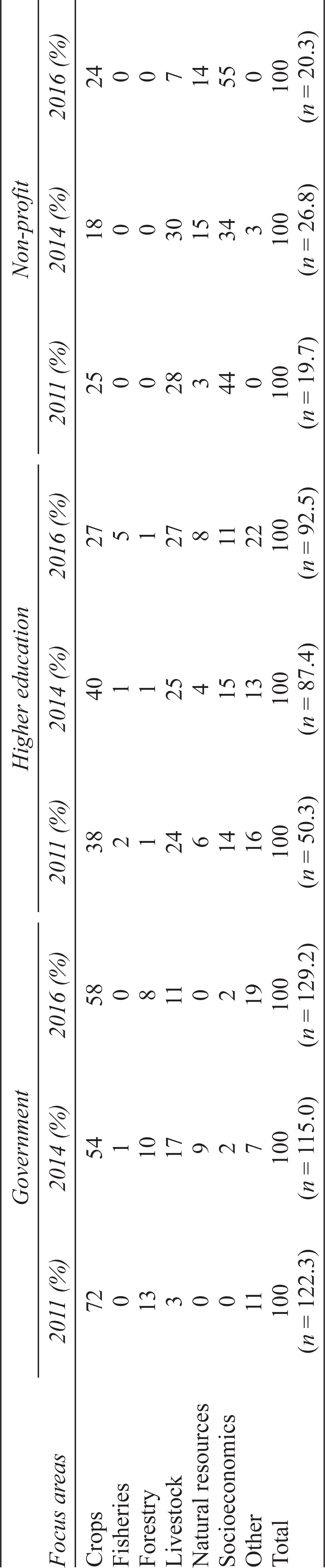
Although relatively large shares of FTE researchers in the government and higher education sectors focus on the studying of crops, the focus has diminished with time (Table 2). For instance, in 2011, 78% of government researchers studied crops whereas only 58% did so in 2016. Livestock research appears to be a consistent focus in the higher education sector, with about a quarter of the sector’s researchers devoting attention to this area. The non-profit sector, the smallest of the three, seems to be shifting its research attention to socio-economic issues, away from a former focus on livestock research.
Percentage Breakdown of Agricultural Researchers in terms of their Focus Areas, by Sector and Year
Prior to 2000, the country had relied on donor sources for much of its research funding. However, by 2003, most donors had suspended their operations due to political instability (Besada & Moyo, 2008). Research collaboration with regional and international organisations was obviously constrained. That said, in agriculture, some international research organisations continued to operate in the country (Flaherty et al., 2011), among which the International Maize and Wheat Improvement Center (CIMMYT) with its headquarters in Mexico, and the International Crops Research Institute for the Semi-Arid Tropics (ICRISAT) based in India. Zimbabwean research in agriculture also had other opportunities for international collaboration, such as the University of Zimbabwe which received funding from the Southern African Development Community (SADC) for research contributing to regional food security (Mouton et al., 2008).
Representation of African Research in Mainstream Bibliographic Databases and the Phenomena of Institutional Repositories and Predatory Publishing
Journals in mainstream bibliographic databases (Scopus and WoS) are considered synonymous with international quality standards and perceived by the academic world as key ‘authorities’ with the power to identify what universally matters in science (Chavarro Bohórquez, 2016). However, bibliometric studies that exclude local journals by only focussing on mainstream journals can under-represent knowledge production in the developing world (Ràfols et al., 2016). It can also result in biased conclusions. For instance, Boshoff and Akanmu (2017) reported notable differences regarding certain indicators of national and international collaboration for pharmacy research at a Nigerian university, when comparing Scopus and WoS with a more comprehensive set of publications. It needs to be remembered that publishing in local, non-mainstream journals serves three functions for developing country researchers (Chavarro et al., 2017): training (providing a springboard for eventual publication in mainstream journals), knowledge bridging (making available research to readers who have limited access to mainstream journals) and knowledge gap-filling (publishing research on topics neglected in mainstream journals).
Overall, it is believed that mainstream databases are biased in favour of journals from industrialised countries and towards topics in those countries (Ràfols et al., 2016). This sentiment has fuelled the desire for alternative sources of data for bibliometric studies of research in the developing world. Local journals constitute one such untapped data source. IRs present another data source, with the added advantage that some publications in local journals might also be contained in the IR collections. However, IRs come with setbacks, for instance, it is not always clear what is stored within IRs. Hence, the perception that some of the contents are questionable. Another setback of IRs is its stifled growth because of academics’ unwillingness to populate repositories without any clear incentives for doing so (Raju & Raju, 2009).
A recent and concerning phenomenon in journal publishing is that of predatory publishing. Beall (2017) defines predatory journals and publishers in terms of a multi-page list of criteria, among which the use of spam email to solicit manuscripts, unusually quick peer review and cluttered advertising on the journal’s website. Beall’s multiple definition, which specifically targets open access (OA) journals and boils down to an intention to deceive, is highly controversial and not foolproof, and the list itself is now defunct. Notwithstanding, the journals and publishers identified through Beall’s list of criteria provide a starting point to explore the extent of questionable journal publishing in developing countries. According to Shen and Björk (2015), the regional distribution of authorship of predatory journals is highly skewed, with Asia and Africa constituting three quarters of those authors. An emphasis on article quantity and the lack of funding for research and publishing most probably contribute to the prevalence of predatory publishing (henceforth referred to as publishing in questionable journals) in African countries (Berger, 2017). Although publishing in questionable journals is generally considered undesirable, the practice often serves specific functions for developing country researchers. For instance, in Nigeria, questionable publishing can satisfy the appointment and promotion criteria of universities, especially universities that place a high value on international publications irrespective of the quality of publication (Omobowale & Akanle, 2014).
Research Collaboration in the African Context
Several bibliometric studies of research collaboration have been performed for various parts of Africa, both country-wise and regionally (Boshoff, 2009; Mêgnigbêto, 2013; Onyancha & Maluleka, 2011; Sooryamoorthy, 2009). These and other studies have highlighted certain ‘regularities’ about research collaboration in the African context. Single-authored articles represent one such regularity, as they are the exception rather than the rule in the broader African setting (Pouris & Ho, 2014). Where instances of research collaboration (as measured by co-authored articles in either Scopus or WoS) do occur, those instances tend to be mostly international rather than national (Mouton & Blanckenberg, 2018).
Other regularities relate to the profile of non-African countries collaborating in Africa’s research. For example, a study by Adams et al. (2014), covering the period 2000–2012, reported the main international research collaborating countries of Africa as the United States of America (USA), France, the United Kingdom (UK), Germany and Canada, in that order. An earlier study by Narváez-Berthelemot et al. (2002), covering the period 1991–1997, identified the same five countries as the main international contributors to Africa’s research. Depending on the countries concerned, the international research collaborations of African countries are mediated by language and colonial legacy, as well as by targeted international co-operative health and agricultural programmes (Adams et al., 2014).
As much as collaborating with international authors presents opportunities for African researchers, this mode of collaboration raises several challenges, many of which relate to equity (Dodsworth, 2019), especially when it comes to setting the research agenda and allocating research duties. One of the challenges with such collaborations is the asymmetry of the relationship and the dominance of partners from the developed countries (Gaillard, 1994). Surveys of article authors showed that collaborators from outside Africa facilitate resources and funds for research, whereas African researchers in international partnerships tend to be instrumental in the fieldwork and data collection components of the research (Boshoff, 2009; Owusu-Nimo & Boshoff, 2017).
The current bibliometric study aimed to contribute to the existing literature on African research collaboration by introducing measures of research collaboration based on the number of unique co-authors of each Zimbabwean author, considering both the national and international affiliations of the collaborating authors. Together with a classification of the different forms of scholarly publication outlets, the collaboration measures were used to explore the patterns of article production of authors in agricultural research in Zimbabwe. The next section explains the development of a database of Zimbabwean research articles and its translation into a database of Zimbabwean authors, both of which informed the construction of relevant classifications and indicators.
Data and Methods
Development of a Database of Research Articles and Authors
The Research Council of Zimbabwe (RCZ) launched the NRDZ as a searchable database in December 2011. The NRDZ is described as ‘an online integrated and comprehensive “one stop shop” covering all public domain research’ in the country (RCZ, 2019). All Zimbabwean researchers and members of RCZ staff are eligible to deposit publications in the NRDZ, while scripts also harvest publications from IRs in the country. In March 2018, from the online NRDZ and specifically for the period 2012–2016, details were downloaded of 1,357 records classified as journal articles. The records were organised in a Microsoft Access database and all duplicates removed. This generated 1,048 unique records. The records were subsequently checked against a combined Scopus–WoS database to identify matching articles.
The WoS data were obtained from the database system at the Centre for Research on Evaluation, Science and Technology (CREST), Stellenbosch University, South Africa. CREST has access to the raw data in the WoS Core Collection database under an agreement with Clarivate Analytics. A three-fold search strategy was used: (a) documents of the article type, with (b) at least one Zimbabwean author address and (c) covering the period 2012–2016. This resulted in a total of 2,003 relevant articles. In the case of Scopus, the online database that Stellenbosch University subscribes to was used to extract relevant articles. The same search strategy as for WoS was implemented, which led to 2,390 articles being extracted. Since Scopus’ articles can also appear in WoS, and vice versa, the two sets of articles had to be unified. Following unification, a total of 2,658 (unique) articles remained, of which 65% were shared between Scopus and WoS. The unique contribution of Scopus was 25% and that of WoS was 10%. The 2,658 articles were used to check the NRDZ data against. Only 165 of the articles in the Scopus–WoS database also appeared in the NRDZ.
NRDZ articles without any match in the Scopus–WoS database were searched online to locate their full-text version, where available. These searches allowed for the identification of records that were not journal articles but other document types, such as books, reports and theses. It also identified ‘articles’ which did not exist, that is, records listed in the NRDZ without any further reference to it anywhere on the world wide web other than the NRDZ listing. All journal articles not in Scopus or WoS were also checked against the Beall’s (2017) list to identify publications in questionable journals. In a few cases, judgements about journals not on Beall’s list were made (e.g., a journal ceased to exist after only a handful of editions, or it reported questionable journal metrics). Publications not considered questionable were classified in one of two categories—‘article in international journal not indexed in Scopus or WoS’ and ‘article in Zimbabwean journal’. None of the Zimbabwean journals were indexed in WoS and Scopus.
Figure 2 shows the seven kinds of documents originally categorised as journal articles in the NRDZ for the period 2012–2016. Out of 1,048 ‘articles’ mentioned in the NRDZ, the single largest category (281, or 27%) represents articles in a questionable journal and the next largest category (221, or 21%) articles that do not exist beyond being mentioned in the NRDZ. Moreover, 309 articles (30%) were published in international journals, with 16% appearing in either WoS or Scopus.
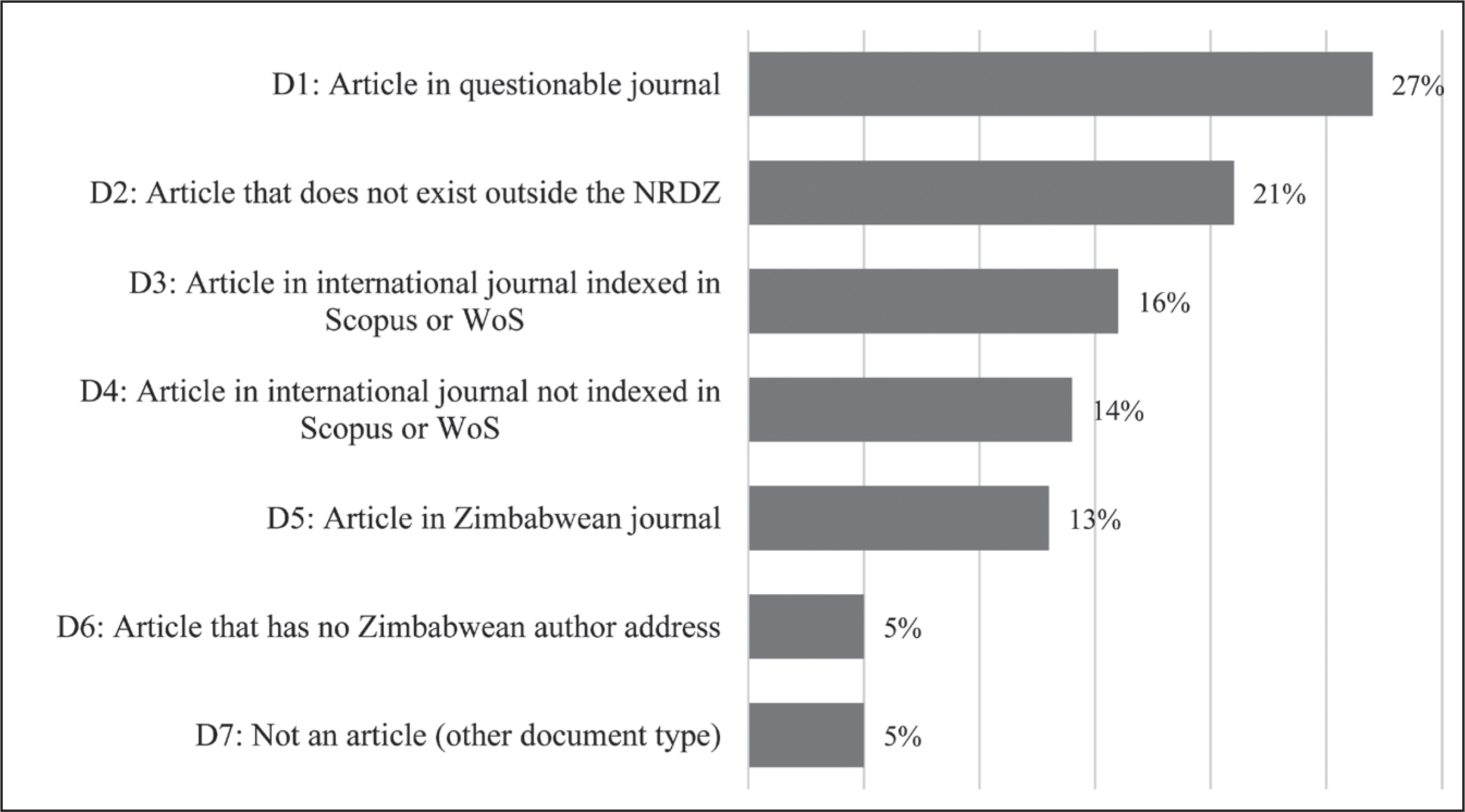
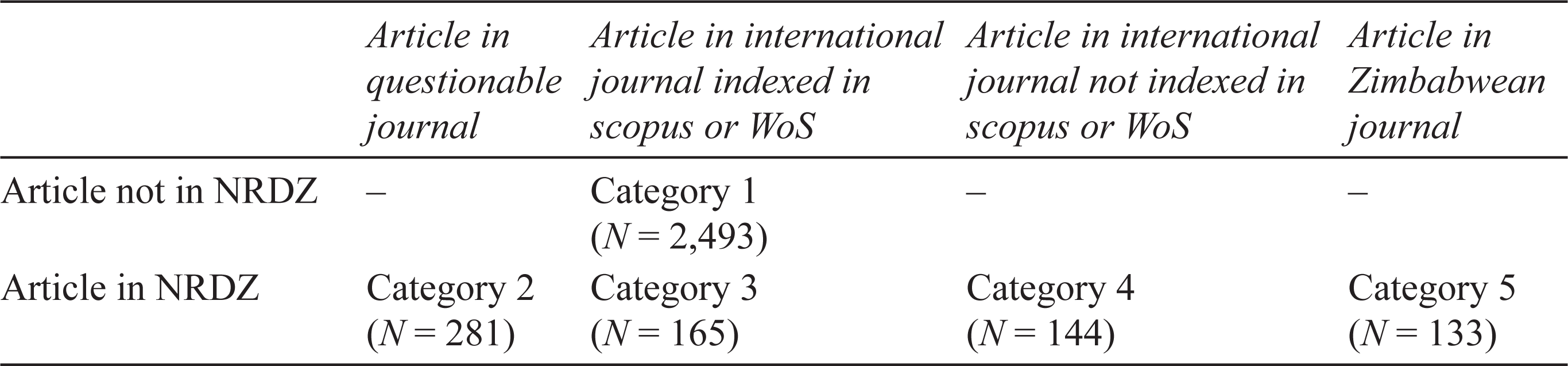
Four kinds of documents in Figure 2 (D1, D3, D4 and D5) can be considered valid, where ‘valid’ means that the document was found to be traceable and of the article type, and with at least one Zimbabwean author address. As D3 already appeared in the combined Scopus–WoS dataset, only three more valid document types (D1, D4 and D5) had to be added to the Scopus–WoS dataset to approximate Zimbabwe’s ‘total’ article output in journals for the period 2012–2016. This resulted in a final dataset of 3,216 articles. Table 3 shows a breakdown of the 3,216 articles in terms of five publication outlet categories, based on a cross- tabulation between the kind of journal in which an article appears and whether that article is referenced in the NRDZ or not. Accordingly, 22% of Zimbabwe’s ‘total’ article output in journals is estimated to be captured by the NRDZ.
Number of Articles in Five Publication Outlet Categories
To convert the dataset of articles to a dataset of authors, an authorship dataset was first created. In an authorship dataset, each row contains the name and address of a single article author, together with a selection of relevant article particulars (e.g., article title). For articles with multiple authors, each author’s name will appear in a separate row next to the same article title. Unique author identifiers (IDs) were then assigned to all authors (Zimbabwean and non-Zimbabwean) in the authorship dataset. Next, a dataset of authors was created using the ‘group by’ query function in Microsoft Access to return only one row of data for each unique author ID. In doing so, 10,375 unique authors could be identified, of which 2,873 were Zimbabwean authors (authors with at least one Zimbabwean address for any article in the relevant period) and 7,502 international authors (authors with only an international address for any article in the relevant period). Of the 2,873 Zimbabwean authors, 415 (14%) also reported an international address in at least one of their articles.
Development of a Field Classification of Authors
Each Zimbabwean author was placed in one of six mutually exclusive broad fields. At first, only four broad field categories were identified (agricultural sciences, health sciences, natural sciences and engineering, and social sciences and humanities). A five-step procedure was followed. Firstly, the subject categories of journals in the WoS were organised into the four mentioned fields, by applying the framework of Boshoff (2010). This resulted in each WoS article being classified in one or more broad fields. Secondly, the titles of journals in Scopus, together with the journal field classification of Scopus, were used to also classify the Scopus journals into the same four broad fields. Thirdly, the titles of the 270 journals with articles unique to the NRDZ informed the assignment of those journals to the same four fields, again allowing for multiple field classifications. Fourthly, since any author could have articles in one or more of the four fields, each author had to be uniquely assigned to one field only. For instance, where all an author’s articles appeared in one field only, the author was automatically placed in that field category. In doing so, 2,093 of the 2,873 authors could be assigned to one broad field only. Finally, the remaining 780 authors were classified into the category of ‘multiple broad fields’. For the purposes of this study, the latter category was subdivided in two components: multiple broad fields that include agriculture and multiple broad fields that exclude agriculture.
Development of a Sector Classification of Authors
The 2,873 Zimbabwean (ZW) authors were classified into one of seven mutually exclusive national sectors. An author who published all articles using only a university address, was classified as ‘ZW university sector only’. The same principle applied to authors who published all their articles in either the government (‘ZW government sector only’) or NGO sector (‘ZW NGO sector only’). The ‘ZW INO sector only’ indicates authors who published all their articles by specifying a so-called ‘international national organisation’ (INO) as their author address. An INO is an international organisation that has its headquarters outside Zimbabwe, but which publishes articles using the address of its Zimbabwean subsidiary (Ngwenya & Boshoff, 2020). Moreover, any Zimbabwean author, in theory, could be affiliated with one or more Zimbabwean sectors. For instance, an author could have published one article using a university address (university sector) and another article using the address of a department in government (government sector). Such an individual would be classified as ‘ZW multiple sectors’. The sixth category of ‘ZW other sectors only’ comprises authors who used national addresses that could not be classified in any of the university, government, NGO or INO sectors. Lastly, the ‘ZW and non-ZW’ category indicates authors with both Zimbabwean and international addresses.
Development of Fifteen Author-level Bibliometric Indicators
A set of fifteen indicators was constructed for each Zimbabwean author, grouped in terms of three dimensions. The first dimension captured the total article output of an author in the relevant period (one indicator). The second dimension consisted of five indicators, each representing a particular publication outlet category: articles in international journals indexed in Scopus or WoS but which do not appear in the NRDZ (publication outlet 1), articles in questionable journals in the NRDZ (publication outlet 2), articles in international journals indexed in Scopus or WoS which also appear in the NRDZ (publication outlet 3), articles in international journals not indexed in Scopus or WoS but which do appear in the NRDZ (publication outlet 4), and articles in Zimbabwean journals in the NRDZ (publication outlet 5). For each author, the indicators reflected the percentage of articles in a particular publication outlet category. Where an author had no articles in a certain category, a percentage score of zero was assigned.
The third dimension represented the different modes of research collaboration and internationalisation, and comprised nine indicators. A first indicator was the percentage of co-authored articles published by each Zimbabwean author. The number of (unique) co-authors of each Zimbabwean author constituted a second indicator. Two more indicators dealt with national collaboration, namely the percentage of co-authors at the author’s own institution and the percentage of co-authors at national institutions other than the author’s own institution. In terms of international collaboration, the world economy classification system of the World Bank (2019) was used to generate an additional four indicators. The World Bank classifies the world’s countries into four income groups: high, upper- middle, lower-middle, and low. Each indicator showed the percentage of co-authors in a certain world economy. Countries in the high-income group reflect the ‘global north’ and those in the middle- and low-income groups the ‘global south’. The last of the nine indicators reports for each Zimbabwean author the percentage of articles where that author also had an international address. A Zimbabwean author could have an international affiliation in one of two ways—by specifying a dual national and international address affiliation in the same article, or by specifying a Zimbabwean address in one article and an international address in another.
Results
An analysis of the broad field classification of Zimbabwean authors revealed that 248 (9%) of the 2,873 authors had published all their articles in journals solely classifiable in the agricultural sciences (Figure 3). This is markedly less than the 27% of authors who only published articles in journals in the social sciences and humanities, or the 18% who only published in journals in health. However, an additional 10% of authors published in journals with multiple subject categories, of which one category includes agriculture, or in journals of different subject categories but where at least one of the journals is in agriculture. Both instances are indicated by the category of ‘multiple broad fields, including agricultural sciences’ (henceforth referred to as ‘multidisciplinary agricultural sciences’).
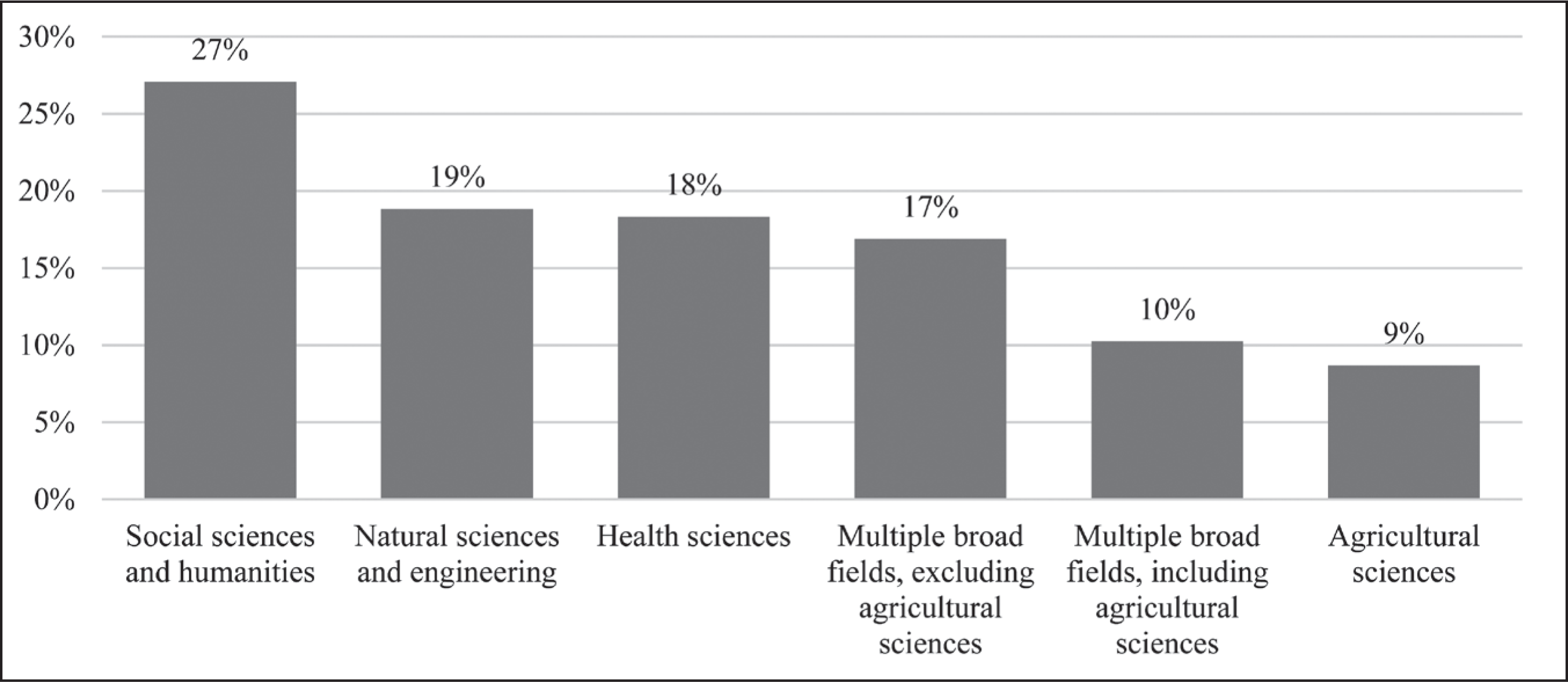
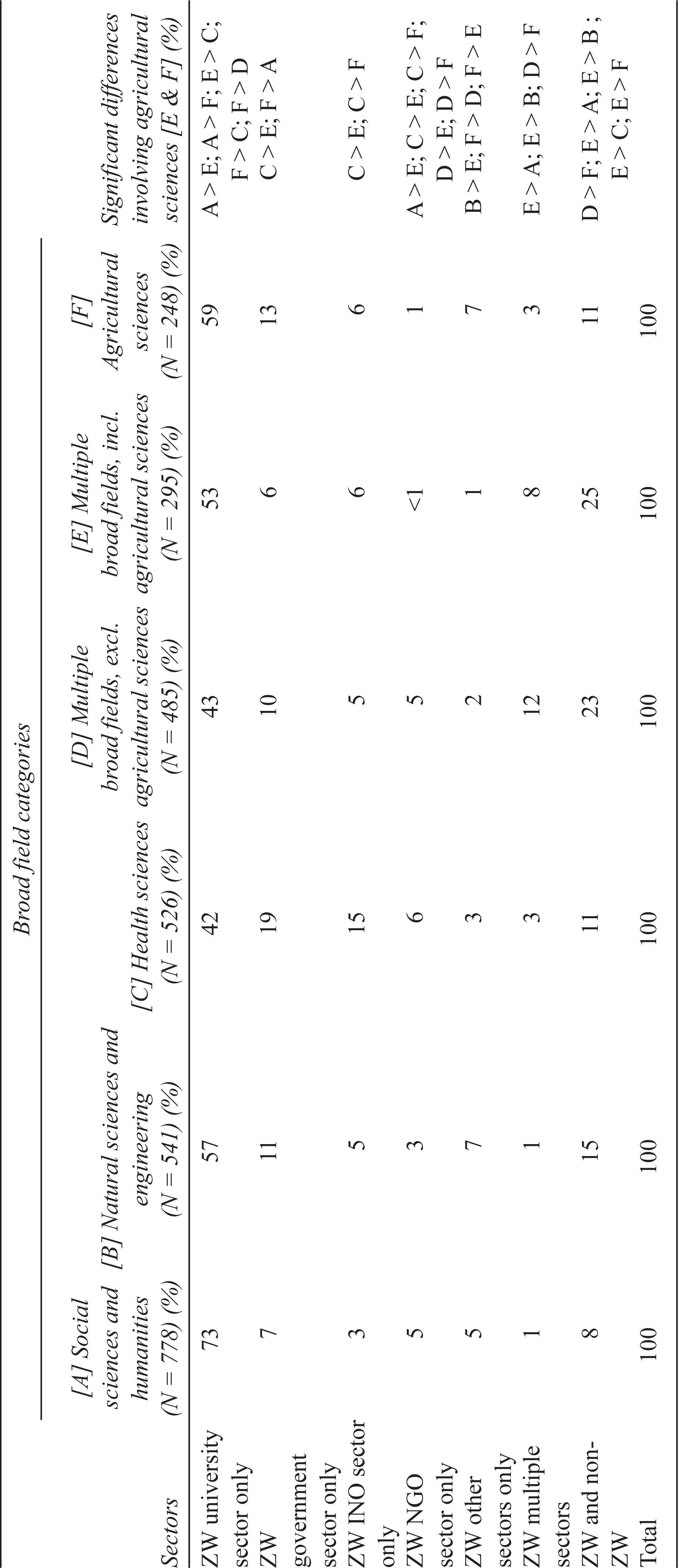
Table 4 breaks down the Zimbabwean authors in each field in terms of their sector classification. The emphasis is on authors in the two agricultural fields (columns E and F) and how the sector concentrations of these authors differ from those in the other four fields (columns A, B, C and D). The last column shows, for each sector, the significant differences that pertain to the shares of authors in the two fields of interest. In all fields, most authors are in the public university sector. The two agricultural fields, compared with the social sciences and humanities, include significantly fewer university authors (53 and 59% versus 73%). In agricultural sciences, the second largest concentration of Zimbabwean authors are in the government sector (13%) whereas, in multidisciplinary agricultural sciences, it is in the ‘ZW and non-ZW’ sector (25%). The latter implies that, in the period 2012–2016, about a quarter of authors in multidisciplinary agricultural sciences reported both a Zimbabwean and non-Zimbabwean address, either in the same article or in different articles.
Sector Affiliations of Zimbabwean Authors in Six Broad Field Categories
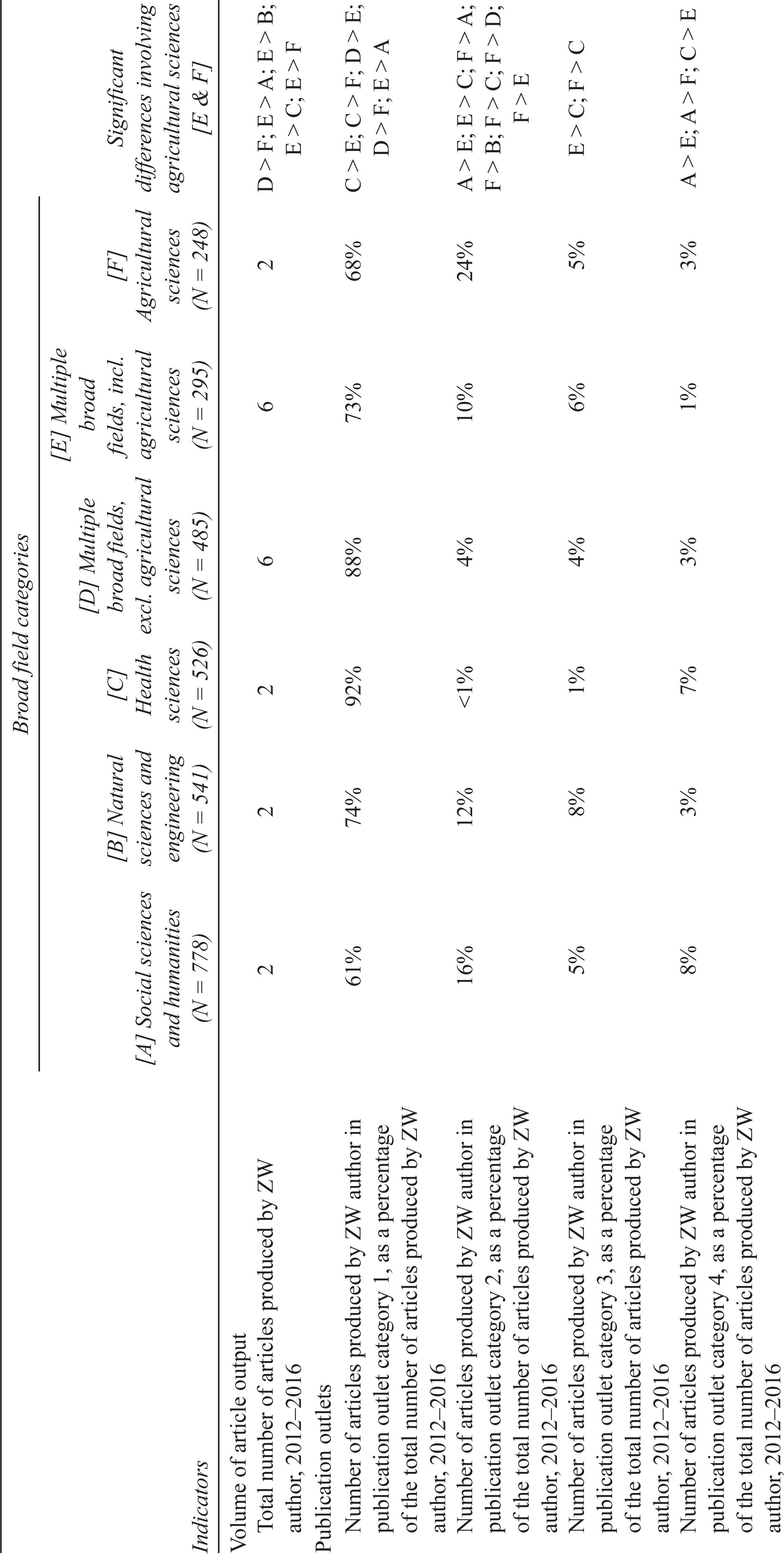
The sector affiliation of the authors was subsequently cross-tabulated with the set of fifteen author-level bibliometric indicators (Table 5). Authors in the two agricultural fields differ significantly in relation to four indicators. Authors in multidisciplinary agricultural sciences, on average, published significantly more articles than those in the agricultural sciences (six versus two articles) and had a larger share of articles in national journals (9% versus 0%), in addition to a larger share of co-authors from high-income economies (13% versus 7%). On the other hand, authors in agricultural sciences published more articles in questionable journals compared with those in multidisciplinary agricultural sciences (24% versus 10%, outlet category 2). In fact, the share of articles in questionable journals by authors in agriculture is significantly higher compared with authors in all other fields.
Mean Scores of Zimbabwean Authors on Fifteen Indicators, by Broad Field Category
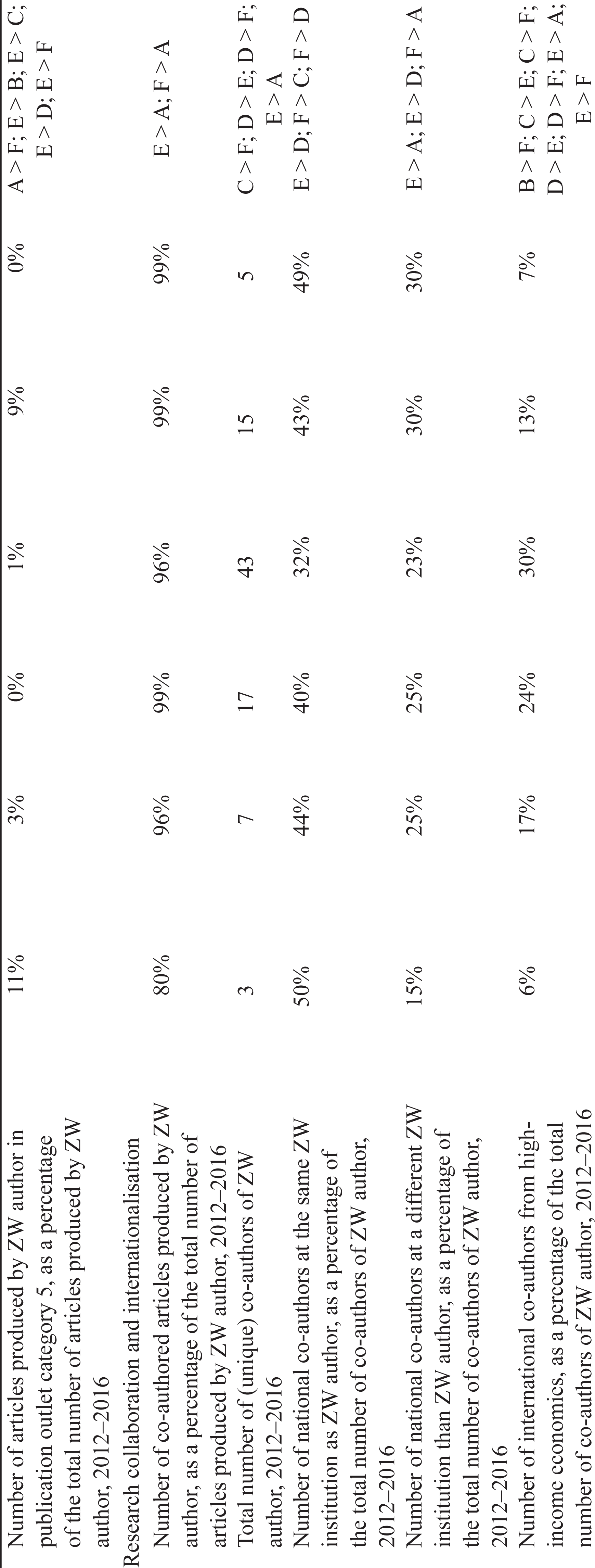
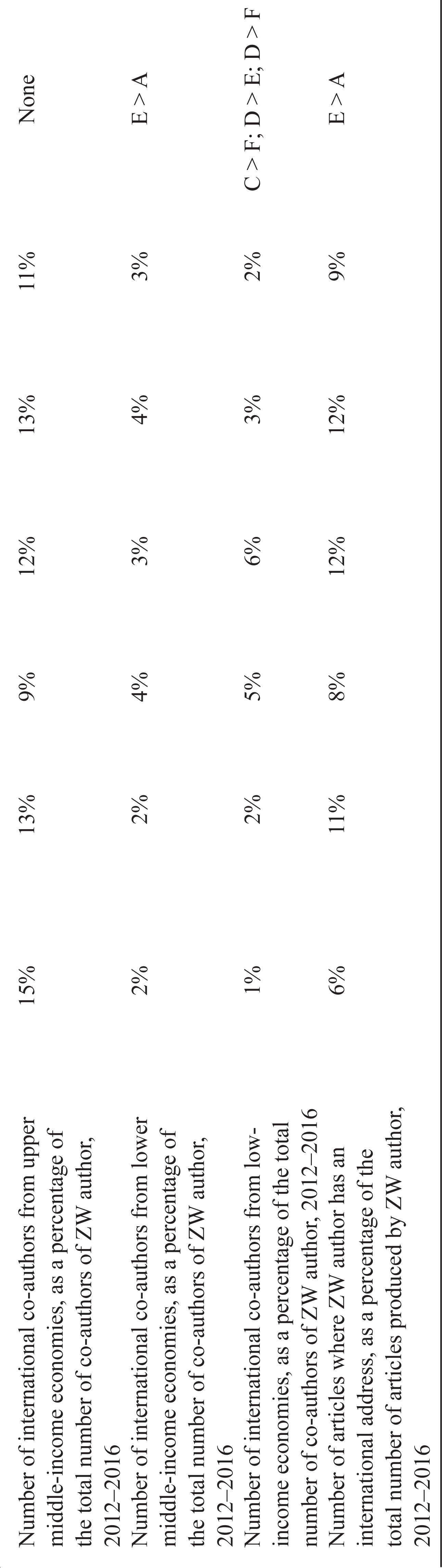
In terms of the modes of research collaboration, authors in the two categories of agricultural sciences produce their articles almost exclusively by means of co-authorship (on average, 99% in both cases). In both fields, respectively, 43% and 49% of the co-authors of a Zimbabwean author are from the same Zimbabwean institution as the author. To a lesser extent, the co-authors of an author also reflect other institutions in Zimbabwe (on average, 30% for each agricultural field category). Relatively, small percentages of co-authors appear to be outside Zimbabwe, and, if so, then mainly from high-income and upper-middle-income economies (on average, between 7% and 13%).
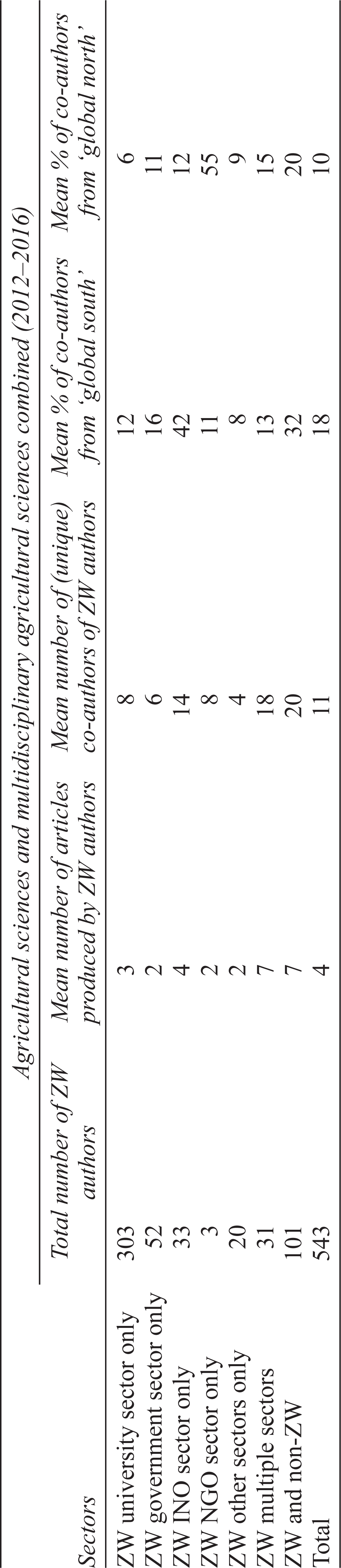
Table 6 provides for another take on the modes of research collaboration, by introducing sectors in the analysis and by reporting on international collaboration in terms of the ‘global south’ versus the ‘global north’. The two categories of agricultural sciences are combined in this table. It shows that the percentages of co-authors from the ‘global south’ are highest for two groups of Zimbabwean authors in agriculture: those in the INO sector (42%) and those with both national and international affiliations (32%). The mean numbers of co-authors of those in these two groups are also high, namely 14 for INO authors and 18 for internationally affiliated Zimbabwean authors.
Bibliometric Profile of Zimbabwean Authors in the Combined Agricultural Field Category, by Sector
Discussion
A bibliometric study of agricultural research could focus either on the research that was produced (articles) or on those responsible for producing the research (authors). This study opted for the latter by highlighting the scholarly research workforce in agriculture in Zimbabwe. Analyses of the scholarly research workforce of a country might result in different insights compared with analyses of headcount or FTE researchers. For instance, based on ASTI data, in 2016, the government sector accounted for 53% of FTE researchers in agriculture in Zimbabwe (ASTI, 2020). The current study, reporting on the period 2012–2016, places the contribution of government to the scholarly research workforce at a much lower level, namely between 6% and 13%. The discrepancy, other than as a result of time and measurement differences, could also be because of significant reductions in the human resource component of the agricultural research and extension system in Zimbabwe due to political uncertainty and financial constraints (Echanove, 2017). Both statistical survey and author-level bibliometric data might be required to fully comprehend the human resource dimension of agricultural research in Zimbabwe. The scholarly research workforce, as measured by author-level bibliometric indicators, and the research staff complement, as measured by R&D and ASTI surveys, will never fully overlap. The reason is that not all researchers in Zimbabwe publish articles and not all article authors with a Zimbabwean address are considered research staff in surveys.
In its national policy outline for agriculture, the Zimbabwean government strives to increase the number of research publications in agriculture by 2032. Two relevant statements of action are to facilitate ‘the re-establishment of the national agricultural journals’ and to provide ‘financial resources … to enable researchers to pay for scientific publication in regional and international peer-reviewed journals’ (MAMID, 2012, p. 19). The need for establishing a core set of national agricultural journals is clear from this study, as none of the researchers in agricultural sciences published in national journals. Researchers in multidisciplinary agricultural sciences are slightly better off in this regard, as 9% of their articles, on average, appeared in national journals. The latter is exclusively because of publications in the Midlands State University Journal of Science, Agriculture and Technology, which is a multidisciplinary journal. However, regardless of how politically desirable publishing in local journals may be, researchers by nature also value prestige and visibility, where the latter are associated with publications in international journals indexed in Scopus and WoS. To publish in international journals, the submissions need to be of sufficient quality to survive peer review and the research topics must also satisfy the interests of both the journals’ editors and their readership (Vessuri et al., 2014). These requirements can create a challenge for researchers in small science systems on the periphery, who rely on international collaboration to become more internationalised and to position themselves in a core set of international journals. The relative ease, or not, of accessing international collaborations can create a differentiated and segmented research workforce—with the so-called ‘haves and have nots’ on the extremes, and all others in-between. The few with access to international connections are linked to research addressing global challenges or ‘big science’ initiatives, among other considerations. On the other hand, the research topics of those with ‘contextualised research agendas’ (Bianco et al., 2016, p. 400) might be too local to capture the mainstream interest in terms of both attracting international collaborations and ensuring publications in international journals.
Agricultural research in Zimbabwe, through its extension, is meant to result in sustainable practices among mostly small-scale farmers, with a focus on increased livelihood (Echanove, 2017). Any contextualised research in journals—which underpins local extension—should therefore be scrutinised through peer review. On average, between 10% and 24% of the articles of Zimbabwean authors in the two categories of agricultural sciences are published in questionable journals. Arguably, this practice cannot be separated from pressures on Zimbabwean researchers, especially those at universities, to produce a set number of articles in order to be eligible for promotion. In a work setting that is characterised by limited research funding and high teaching loads, the resources and time for research are restricted. Publishing in journals that promise rapid publication but for which the extent of peer review might be unknown, thus presents an attractive option to both ignorant researchers and not-so-ignorant researchers with strong career aspirations. On the other hand, in the period of analysis, Zimbabwe had no active national journals exclusively dedicated to agriculture. In the absence of such national journals, there is a real possibility of questionable journals starting to take over the functions that publishing in local journals normally serves for researchers in developing countries (Chavarro et al., 2017).
As part of the policy objective to ensure an adequately resourced agricultural research system, the Zimbabwean government also aims at strengthening the ‘partnerships of national public agricultural research institutions with regional and international research institutions’ (MAMID, 2012, p. 18). The Zimbabwean scholarly research workforce in agriculture appears to be inward looking. On average, between 30% and 49% of the co-authors of Zimbabwean authors in the two agricultural fields are from either the author’s home institution or from another institution in Zimbabwe. Collaboration with others from the ‘global south’ seems to be characteristic of Zimbabwean authors mainly in two sectors: INOs and a mixed sector where the authors have both a national and international affiliation. Both these sectors are subject to some form of international influence: INO (an international parent organisation with a Zimbabwean-based child organisation) and mixed sector (Zimbabwean authors with international affiliations or mobility). Thus, to overturn the introversion of agricultural research in Zimbabwe, it is not only about opening the public sector organisations (universities and government entities) for international partnerships, but also about partnering with publishing researchers at other local organisations and entities who already embody international influences in one way or the other. In terms of INOs, for instance, the suggestion could mean closer interaction between public sector researchers in Zimbabwe and publishing researchers affiliated with international research organisations in Zimbabwe, such as CIMMYT and ICRISAT. The latter two INOs are part of the CGIAR global network of agricultural research centres.
The study also highlighted shortcomings in using a national research repository, such as the NRDZ, to assess a country’s research output and to improve national research visibility. The NRDZ was estimated to capture only 22% of Zimbabwe’s article output in journals. One explanation for this could be that researchers in Zimbabwe, as is probably true for all researchers, are sceptical when it comes to populating academic work in repositories as doing so does not offer any rewards (Raju & Raju, 2009). Not all journals also permit self-archiving of published research in repositories. Publishing articles in journals that are fully OA, the so-called gold OA model, will allow self-archiving of published material. However, gold OA publishing will not invariably lead to greater research visibility, as is evident from studies where citations are used as a measure of research visibility (Dorta-González et al., 2017). Gold OA is also just one business model among others in OA publishing. The hybrid OA model, for instance, requires authors (or their sponsors) to pay a publication fee for an article to appear as OA in a journal that also publishes closed access articles (Björk, 2017). Government’s intention to provide the necessary financial resources for agricultural research publications can therefore take on a variety of forms. These include, among others, paying the publication fees of OA articles under the hybrid model for such articles to be uploaded to the NRDZ, prioritising and incentivising publication in fully OA journals that satisfy quality standards, and investing in a set of OA national journals that meet certain quality criteria for eventual incorporation in a non-commercial, regional bibliographic database.
Finally, based on this study, two preliminary answers can be presented as lessons learnt from applying author-level bibliometrics to a study of agricultural research in a small science system like Zimbabwe. From a methodological perspective, the answer is that author-level analyses should best be combined with article-level analyses. For instance, by classifying journals in an article-level analysis, value was added to the author-level indicators created. The second answer is informed by a theoretical and interpretive perspective. Author-level bibliometric studies of the scholarly research workforce of countries at the scientific periphery, in order to move beyond the ordinary, need grounding in the historical and policy context of a country. These studies also need to connect closely with the local, regional and global politics of knowledge production. More theoretically informed empirical work, for instance, is required on the segmentation if not polarisation of Zimbabwean article authors in terms of patterns of collaboration (international versus national) and publishing (international versus local and regional).
Footnotes
Acknowledgements
The authors thank the two anonymous reviewers who provided helpful comments on an earlier draft of the manuscript.
Declaration of conflicting interests
The authors declared no potential conflicts of interest with respect to the research, authorship and/or publication of this article.
Funding
The authors disclosed receipt of the following financial support for the research, authorship and/or publication of this article: This work is based on the research supported by the National Research Foundation of South Africa (Grant No. 91488). Any opinion, finding and conclusion or recommendation expressed in this article is that of the authors and the NRF does not accept any liability in this regard.