




Abstract
This article focuses on cross-border e-commerce and observes the effect of greenwash and green e-WOM (word of mouth) on consumers’ mindful consumption. The mediating role of brand attitude between greenwash and e-WOM on mindful consumption is tested. The moderating role of return policy leniency is also tested. The survey method was employed to conduct this research, and data were collected in two waves from 543 respondents. The proposed hypotheses were tested using structural equation modeling through SmartPLS. The results show that green e-WOM has a definite impact on mindful consumption. The mediating role of brand attitude is empirically evident.
Introduction
The world is becoming more connected, and using technology faster has made online shopping across borders grow considerably (Chen et al., 2023). This type of shopping, called cross-border e-commerce (CBEC), is now a big part of global online business, making up 22% and trading over $3.5 trillion in 2022 (Chen et al., 2022). However, this fast growth of cross-border online shopping has highlighted global challenges for sustainability and mindful consumption. Modern consumers are worried about ethical, wasteful resource use (Chueamuangphan et al., 2020) and the community impacts of their choices making green shopping more complicated (Shao et al., 2021).
Previous studies on sustainable cross-border online shopping have examined economic, social, and business perspectives (Baek et al., 2020). Some studies have focused on how businesses buy from each other online, checking the quality of what they get (Chen et al., 2023). Meanwhile, other studies looked at how people get their green online orders delivered . Some researchers explored how different aspects of cross-border online shopping, such as trust and motivation, affect what people buy (Baek et al., 2020; Haryanti & Subriadi, 2022). Making cross-border online shopping services different and making people see them as good for the environment encourage them to buy again (Yang et al., 2023). Previous studies have explored environmentally friendly consumption and green purchases (Chen et al., 2023), but there is a need for more investigation into consumer behavior in the CBEC setting (Cui et al., 2020).
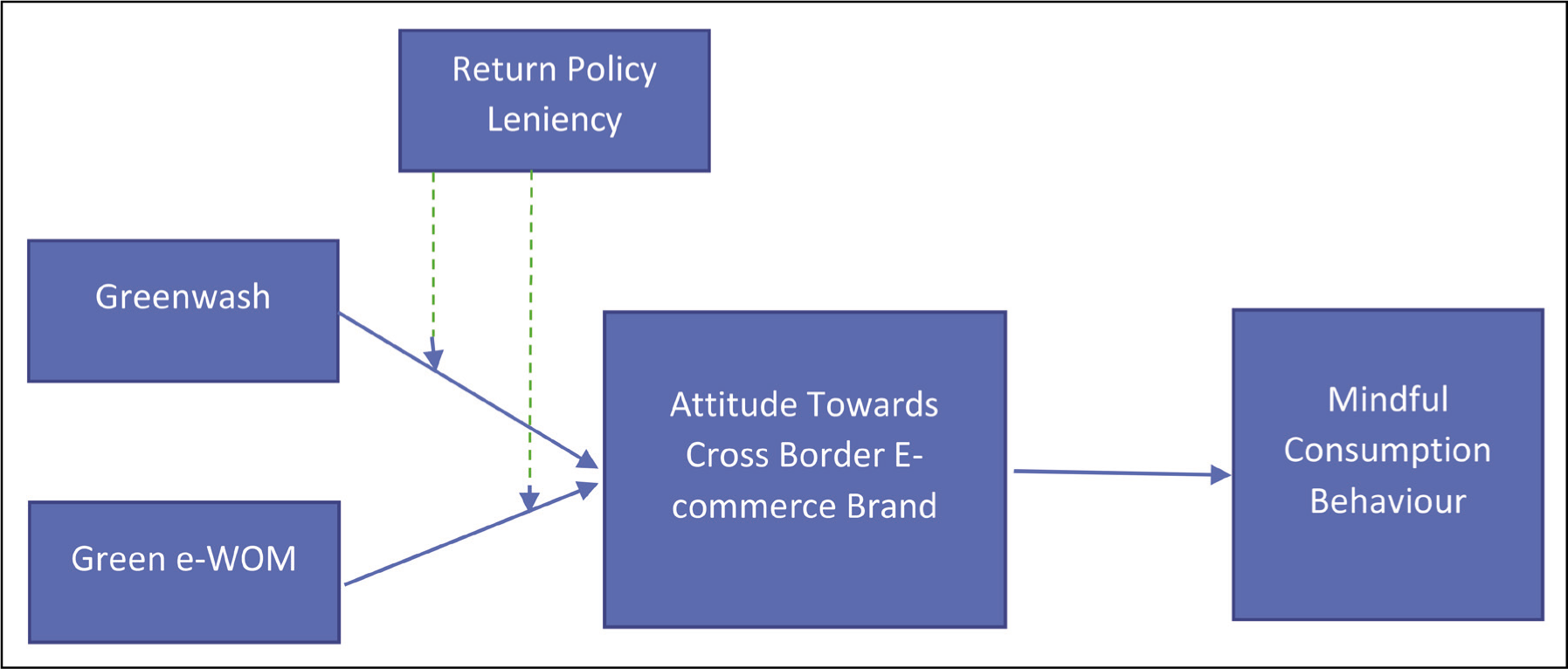
This study addresses this crucial gap and examines how green e-WOM (word of mouth) and greenwashing (misleading environmental claims) impact consumers’ attitudes toward sustainable CBEC, ultimately influencing mindful consumption. The study also tests the moderating role of a lenient return policy and explores proposed antecedents. Moreover, it investigates the mediating role of attitude between green e-WOM, greenwash and the outcome of mindful consumption behavior (MCB). By uncovering the factors that influence sustainable CBEC, this study contributes valuable insights to the limited literature on MCB from a sustainable CBEC perspective.
The Asia Pacific region is expected to be the biggest market for CBEC (Statista, 2023), due to its large population size. For example, people in this region like buying products from the United States, Australia, and China through CBEC (Minhas, 2023). Also, because of COVID-19, online shopping companies such as Amazon and Alibaba got a boost. In the digital economy, sustainability is crucial for making important decisions (Haryanti & Subriadi, 2022).
Online shopping has both good and bad effects on the environment. It can reduce CO2 emissions because people do not need to travel as much, but it also leads to more waste from packaging (Chueamuangphan et al., 2020). Prior studies have looked separately into the mediators and moderators in CBEC (Mou et al., 2020). We seek to examine the following research questions (RQs):
RQ1: How do greenwashing and green e-WOM affect consumer attitudes? RQ2: How effective return policy leniency impacts consumers’ buying decisions where, on one side, greenwashing and green e-WOM are impacting them? RQ3: How does consumer attitude impact their mindful consumption?
Theoretical Framework
Stimulus-Organism-Response
Mehrabian and Russell (1974) introduced the stimulus-organism-response (SOR) model, which posits that the environment, acting as a stimulus (S), triggers cognitive and affective reactions, leading to certain behaviors. Our study uses greenwashing and e-WOM as stimuli. Consumer attitudes toward e-commerce businesses represent the organism (O) in our model, while the response (R) is mindful consumption by consumers. Previous literature has primarily applied this theory to examine showrooming behavior (Arora et al., 2020), consumer trust (Zhu et al., 2020), and behavioral intentions (Sultan et al., 2021). Thus, our study used the SOR framework to better understand how the consumer attitude impacts their mindful consumption.
Literature Review and Hypotheses Development
Greenwashing and Consumers’ Attitude Toward Sustainable CBEC
Nowadays, businesses often use greenwashing to communicate the eco-friendliness of their products to create positive public perception (Seele & Gatti, 2017). Unfortunately, this approach negatively impacts the firm’s corporate social responsibility initiatives (Nyilasy et al., 2014). It can erode stakeholders’ confidence (Pizzetti et al., 2021), mislead investors, lead to a decline in consumer interest in the products (Santos et al., 2023), and even affect the company’s financial performance.
India plans to overtake the United States as the second-largest e-commerce market by 2034. The burgeoning CBEC carries profound significance for India, contributing 20% to the global e-commerce pie (The Economic Times, 2023). Consumer attitudes toward sustainability impact their product purchases, and studies show that greenwashing hurts consumer behavior (Ioannou et al., 2023). Once exposed, it strips products of loyalty, satisfaction, and benefits, replacing confidence with confusion. Schmuck et al. (2018) identified that greenwashing initiates an effective persuasive mechanism that detrimentally influences consumer attitudes toward sustainability.
Perception, attitude, and behavior are connected in linear models (Davis, 1989). Attitude is a summation of an offering’s evaluation. Building on these foundations, this research proposed that greenwashing has the potential to affect consumer attitudes toward sustainability negatively, especially on online cross-border e-commerce platforms, as exhibited in Figure 1. Therefore, the following hypothesis is proposed:
H1: Greenwashing negatively correlates with consumers’ attitudes toward sustainability for cross-border e-commerce platforms.
Conceptual Model.
Green e-WOM and Consumers’ Attitude Toward Sustainability
Previous studies have shown that e-WOM greatly influences consumers’ attitudes and intentions (Anastasiei & Dospinescu, 2019). Kunja et al. (2022) have observed that e-WOM’s impact on consumers’ attitudes is substantial, regardless of whether the purchases are made online or offline. Indrawati et al. (2023) highlighted the importance of studying consumers’ attitudes toward e-WOM to understand their behavior better. Thus, this study posits that the online information about CBEC has the potential to positively influence consumers’ perceptions, leading to the adoption of mindful purchasing behavior in CBEC. The assumption above is based on the principles of the S-O-R theory. Thus, this study hypothesizes the following:
H2: e-WOM positively correlates with consumers’ attitudes toward sustainability concerning online cross-border e-commerce platforms.
Consumer Attitude Toward Sustainability and Mindful Consumption Behavior
The theory of reasoned action supports the connection between attitude and behavior and planned behavior, as explained by Ajzen in his works from 1985 to 1991 (Ajzen, 1985). According to these theories, when people have strong feelings about something, they try to avoid it or actively engage with it. Empirical investigations support the link between attitude and behavior.
Notable research by Chekima et al. (2016) and Chetioui et al. (2020) highlights the positive impact of an individual’s attitude on their sustainable purchasing behavior. Kalafatis et al. (1999) also found that attitude positively impacts consumers’ intentions to adopt green products. The present study similarly posits a favorable and constructive relationship between consumer attitude and MCB, drawing parallels with extant findings.
H3: Consumer attitude toward sustainability correlates with consumers’ mindful consumption behavior concerning online cross-border e-commerce platforms.
Moderating the Role of Return Policy Leniency
Online shoppers usually check the seller’s profile and products (Bowen & Aragon-Correa, 2014). Encountering inappropriate communication or greenwashing practices can negatively affect how they view the brand (Ghitti et al., 2023; Pizzetti et al., 2021). However, in such instances, a return policy characterized by leniency emerges as a crucial factor (Janakiraman et al., 2016; Shao et al., 2021; Tolia, 2022a). This flexible return policy boosts consumer confidence and encourages positive attitudes toward international online shopping platforms (Yang et al., 2023). Thus, we propose that return policy leniency moderates the relationship.
H4a: Return policy leniency moderates the relationship between greenwashing and consumers’ attitudes toward sustainability concerning online cross-border e-commerce platforms.
The uncertainty of consumer purchase decisions brought by the disconnect between purchasing and experiencing the product can be reduced by return policies offered by online retailers (Shao et al., 2021). Lenient return policies guarantee customers the option to get a refund or exchange the product if it meets the specified return criteria (Shao et al., 2021). This may improve the consumer perceptions of product quality and address concerns about counterfeit, lost, damaged, or delayed items (Shao et al., 2021; Yang et al., 2023). The implications extend to the realm of customer satisfaction. Satisfied consumers endorse the brands through e-WOM (Al-Adwan et al., 2022; Tolia, 2022b). The phenomenon encourages the purchase of sustainable products from cross-border e-commerce platforms. Therefore, we need to study how return policies affect relationship dynamics. Thus, we propose the following hypothesis:
H4b: Return policy leniency moderates the relationship between e-WOM and consumer attitudes toward sustainability concerning online cross-border e-commerce platforms.
Mediating Role of Attitude Toward Sustainability
Kaur and Luchs (2022) found that mindful consumers are more environmentally responsible. The mediating role of attitude between greenwashing and conscious green buying behavior needs validation. A flexible return policy can mitigate the influence of greenwashing and online reviews on consumer attitudes toward conscious shopping. The relationship between attitude and behavior can be supported by the Theory of Reasoned Action (TRA) and the Theory of Planned Behavior (TPB) (Ajzen, 1985; Schifter & Ajzen, 1985). These theories suggest that consumers’ attitudes-whether positive or negative-will influence their intention to either engage with or avoid a behavior or product. Besides theoretical support, past studies have confirmed a positive link between attitude and behavior (Chekima et al., 2016).
Further, Kalafatis et al. (1999) discovered that attitude plays a role in consumers’ purchasing of green products. This study likewise assumes a positive relationship between attitudes toward MCB. Since conscious consumerism is likely to spread more through communities of purpose than the brand communities, e-WOM impacts it more significantly. Hence, we propose the following hypothesis:
H5a: The relationship between greenwashing and consumers’ mindful consumption behavior will be significantly mediated by attitude toward sustainability. H5b: The relationship between e-WOM and consumers’ mindful consumption behavior will be significantly mediated by attitude toward sustainability.
Moderated Mediation
Our study uses moderated mediation between MCB and consumer attitudes, moderated by easy returns policies. Our research focuses on how lenient return policies influence consumer attitudes toward sustainability behavior in cross-border online shopping, specifically when greenwashing and e-WOM inform consumers. Abdulla et al. (2022) argue that consumers perceive, evaluate, and respond differently to varying degrees of leniency in return policies across the monetary, time, effort, scope, and exchange dimensions. This can impact consumers’ buying decisions by offering better service, lowering costs, and increasing value. For instance, Chen et al. (2023) found that giving consumers a longer return time window increases their willingness to use a CBEC platform. Therefore, the following hypothesis is posited:
H6a: The indirect association between greenwashing and mindful consumption behavior via attitude toward sustainability will be weakened when return policy leniency is high and more robust when return policy leniency is low.
When consumers receive third-party, unbiased communications through positive consumer reviews of the CBEC brands, they are more likely to trust such e-WOM than greenwashing. The latter is likely biased as the brands usually promote themselves for the selfish goal of more sales. Therefore, we propose the following hypothesis to test the indirect association:
H6b: The indirect association between e-WOM and mindful consumption behavior via attitude toward sustainability will be strengthened when return policy leniency is high and weakened when return policy leniency is low.
Methodology
Tools and Techniques
Before evaluating the structural model, we ensured the validity and reliability of the data. To this end, we used the SmartPLS tool version 4. Among alternatives for testing a structural model, PLS is widely popular due to its capability to combine linear regression with confirmatory factor analysis. PLS is also reliable for detecting actual paths and not detecting non-existent paths in covariance-based structural equation modelling (Ringle et al., 2024).
Sample and Procedure
We conducted a well-structured online questionnaire using Microsoft Forms, distributed to participants across India. The authors shared the survey link on social media platforms such as WhatsApp and Facebook. We employed the convenience sampling method to ensure a diverse group of respondents. Subsequently, we requested the participants to help us expand our reach by referring their acquaintances who have experience with CBEC platforms-known as the snowball technique (Kumar & Ghodeswar, 2015). Our research focused on consumers who had engaged CBEC. To ensure the relevance of respondents to our study, we implemented two filtering questions. Participants were encouraged to participate if they met specific criteria: (a) “Are you aware of the cross-border e-commerce brands?”; (b) “Have you made at least one purchase on a product through cross-broader e-commerce brands?” Respondents who did not answer were removed from the analysis.
A convenient sampling approach is used for the first wave (no. of respondents (n) = 721). In wave 1, we received n = 637 valid responses after filtering and exclusions. Of them, 19 forms needed to be completed and hence were not included for data analysis. So, we had 618 responses for consolidation with wave 2. The questions in wave 1 were related to topics such as greenwashing, green e-WOM, and attitudes toward sustainability, alongside demographic and filter questions.
In wave 2, the respondents who had completed the first questionnaire (n = 618) were sent the second questionnaire. This set of questions delved into areas such as return policy leniency and MCB. However, we received only 564 valid respondents after filtering and exclusions. Out of them, 21 incomplete questionnaires were not considered. Thus, a total of 543 responses were considered for analysis.
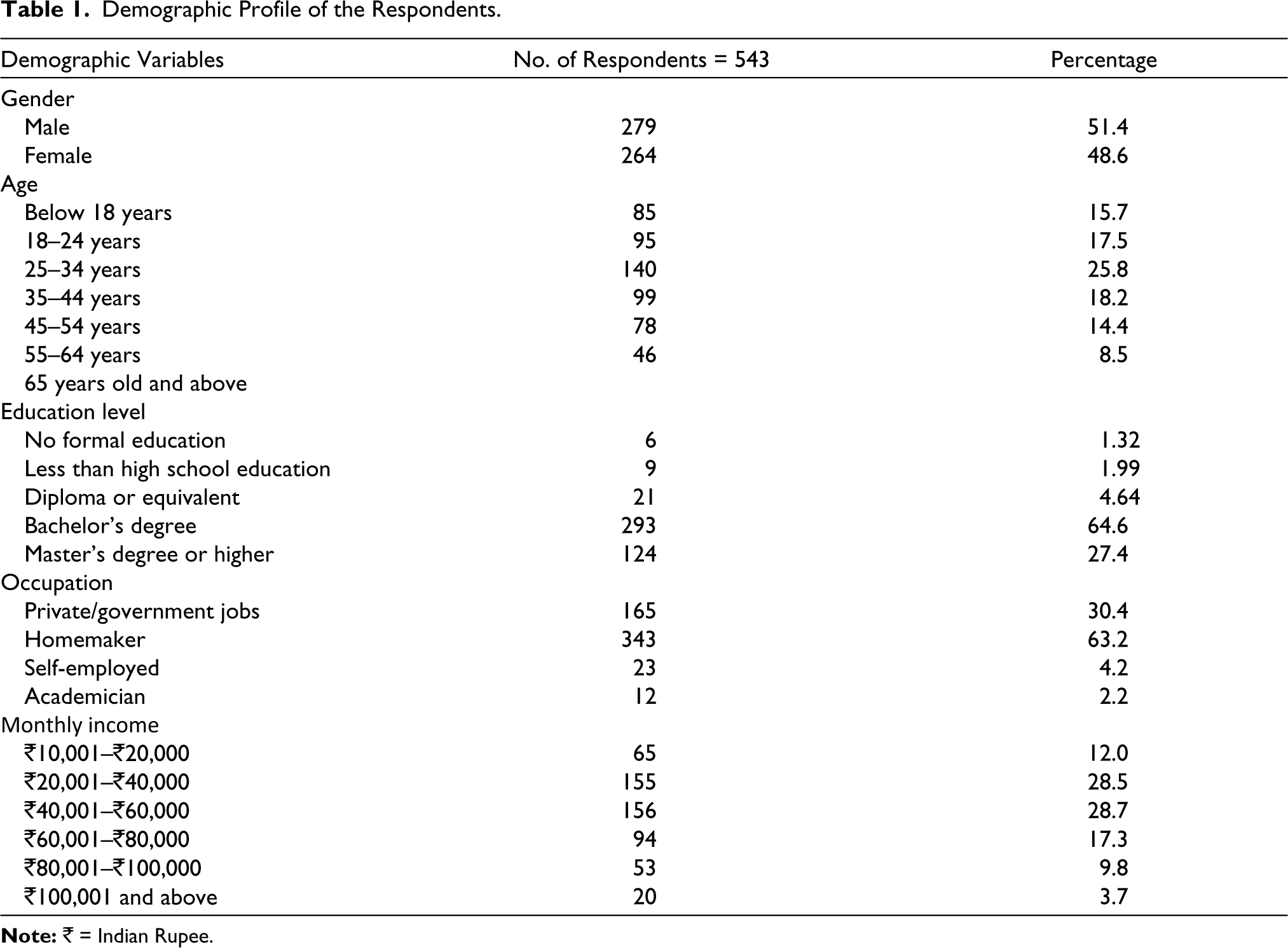
To ensure the validity and appropriateness of our survey measures, we engaged an expert group of three academic researchers and two practitioners specializing in e-commerce and CBEC. Their insights were invaluable, leading to several suggestions for refining our instrument. These suggestions were thoughtfully incorporated into the survey. Furthermore, we conducted a pilot study involving 25 CBEC users online, resulting in minor revisions to address any ambiguities, awkward phrasing, or distorted meanings. Table 1 presents the demographic details of the respondents.
Demographic Profile of the Respondents.
Instruments
We had employed 20 items in the instrument along with three filter questions and five demographic-related questions. The data collection was done from April to June 2024. In order to mitigate common method bias, two waves of data collection were implemented at two-month intervals (Podsakoff et al., 2003; Tang et al., 2024). The scale items were presented in English language, and participants were asked to rate them using a Likert scale ranging from 1 (strongly disagree) to 7 (strongly agree).
Data Analysis
For data analysis prior to conducting the analysis, the missing data and multicollinearity concerns were addressed by employing the variance inflation factor (VIF) technique as suggested by Kock (2017). Harman’s single-factor test (Fuller et al., 2016) was employed to evaluate the presence of common method bias (CMB). Given that the initial factor explained only 28.5% of the variance, falling short of the recommended threshold of 50% (Podsakoff & Organ, 1986), the concern regarding CMB was dismissed.
Convergent Validity
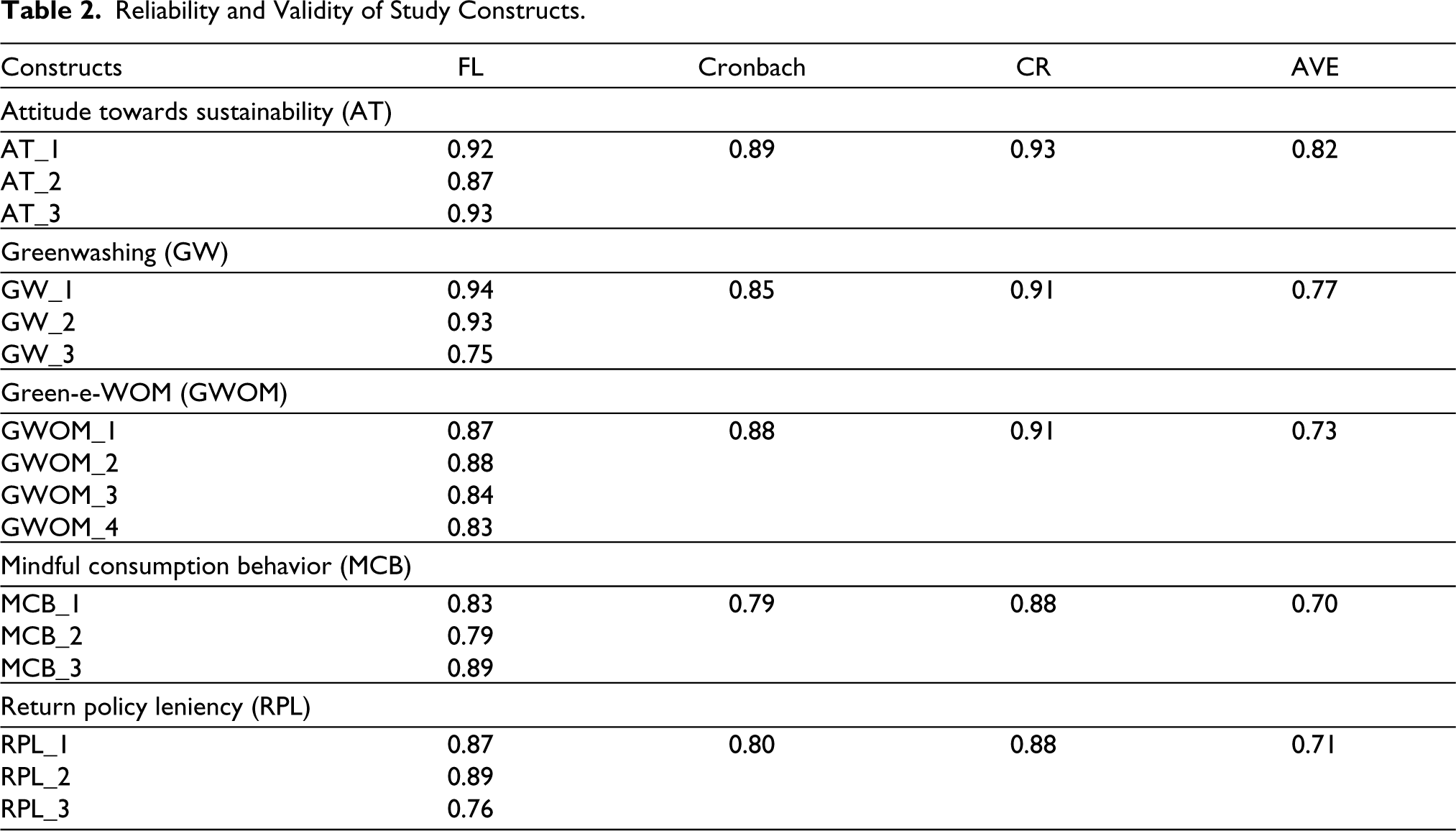
According to the data presented in Table 2, the loadings of all the constructs fell within the range of 0.75-0.94. These loadings exceeded the recommended threshold of 0.70, as suggested by Hair et al. (2014) and Ringle et al. (2020). The study findings revealed that the composite reliabilities of all the constructs exceeded the threshold of 0.70, suggesting the absence of any concerns regarding convergent validity (Nitzl et al., 2016; Ringle et al., 2020).
Reliability and Validity of Study Constructs.
Divergent Validity
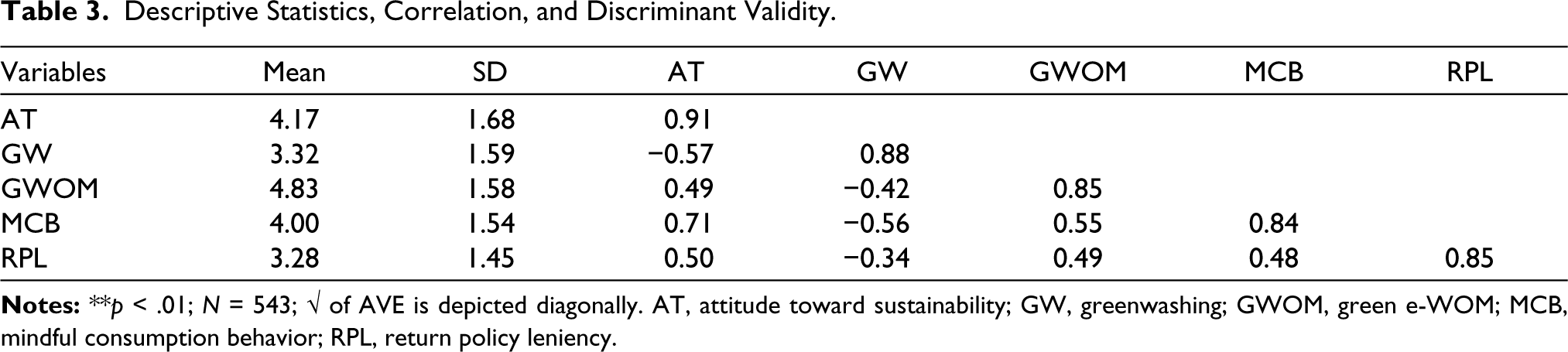
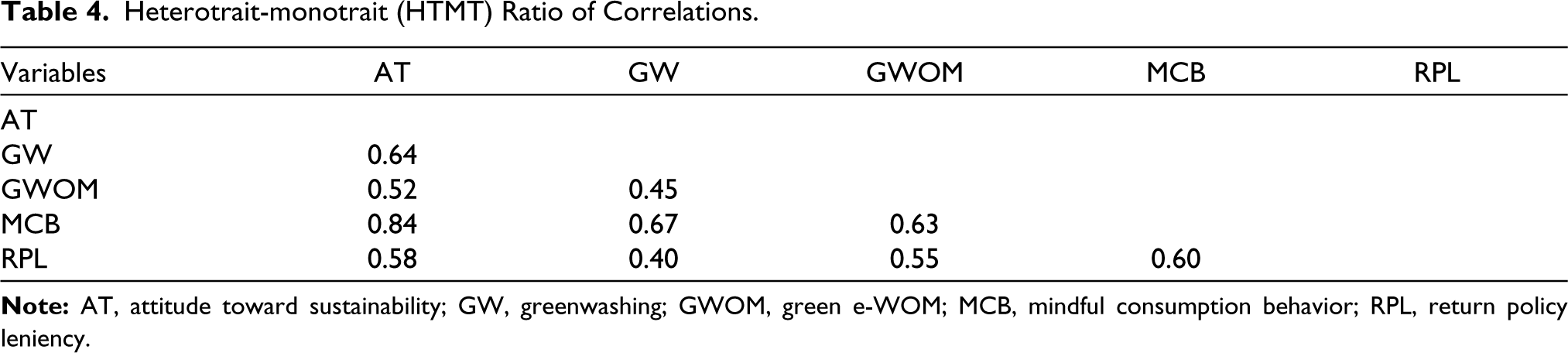
As indicated in Table 3, the square root of the average variance extracted (AVE) for each construct surpasses the correlation coefficient between the respective construct and other constructs. This confirms the presence of divergent validity. Additionally, the divergent validity of the constructs was assessed by ensuring that the values met the criterion of the heterotrait-monotrait (HTMT) ratio being below 0.85, following the guidelines of Hair et al. (2014) and Ringle et al. (2020). Table 4 of the study depicts that the highest value of HTMT is 0.84, thus establishing convergent validity.
Descriptive Statistics, Correlation, and Discriminant Validity.
Heterotrait-monotrait (HTMT) Ratio of Correlations.
Structural Model and Hypotheses Testing
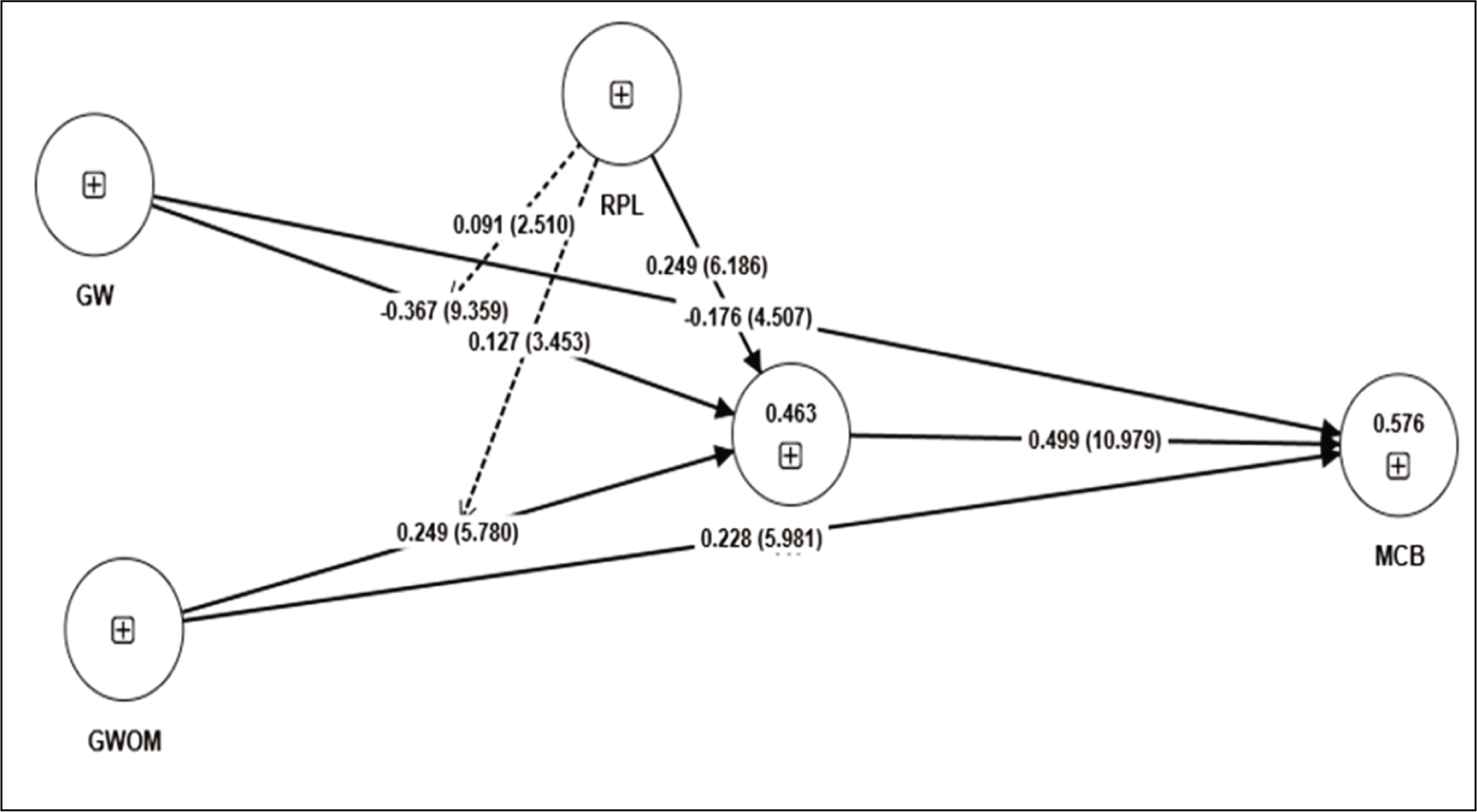
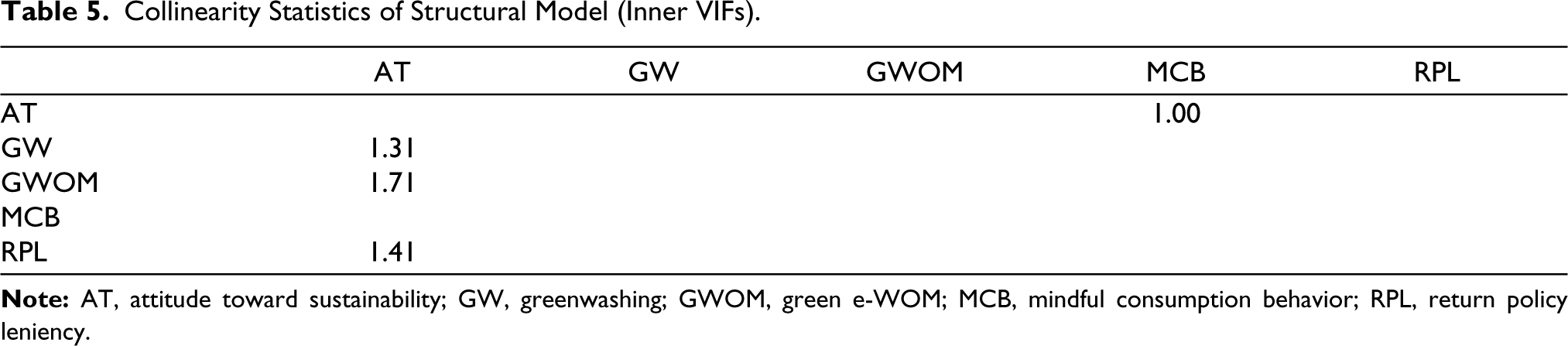
Figure 2 depicts the structural model where direct and mediation relationship among the constructs can be witnessed. We assessed the collinearity by calculating VIF whose values were found below the recommended maximum threshold of five (Hair et al., 2014); the issue of multi-collinearity was ruled out (Table 5). We evaluated the fit by examining the coefficient of determinations (R2), the path coefficient size (f2), the predictive relevance (Stone-Geisser Q2) of the endogenous variables, and the standardized root mean square residual (SRMR) to determine the overall structural model fit. We followed the recommendation of Cohen (2013) regarding small (0.02), medium (0.15), and large (0.35) effect sizes (f2). The effect size of AT on MCB was 1.01 large, GW on AT was 0.19 large, GWO on AT 0.071 large, and RPL on AT 0.081 large. The R2 values of AT (0.463) and MCB (0.576) were found to be significant; thus, we had strong predictive relevance. We also measured Stone-Geisser’s Q2 (Woodside & Zhang, 2013) using the blindfold method to assess the model’s predictive accuracy, which according to Chin (2009), should be greater than zero. The values of Q2 for AT and MCB were 0.451 and 0.413, respectively. As the value of SRMR 0.071 was less than the recommended maximum threshold value of 0.10, it further confirms the overall fit of the PLS structural model (Henseler et al., 2015).
Structural Model.
Collinearity Statistics of Structural Model (Inner VIFs).
Hypothesis Testing Results
Furthermore, we used bootstrapping to test the path coefficients of the structural model. The results indicated that, based on the acceptance criterion (t value >1.96, p value < .05), all the hypotheses were supported (see Table 6). Table 6 depicts the direct and indirect results. Hypotheses 1, 2, and 3 were supported when a negative and significant effect was found for GW on AT (β = –0.37; t = 9.31), positive and significant effect of green e-WOM on AT (β = 0.25; t = 5.96), and between AT and MCB (β = 0.71 and t = 24.35).
Direct, Mediating, and Moderating Effects.
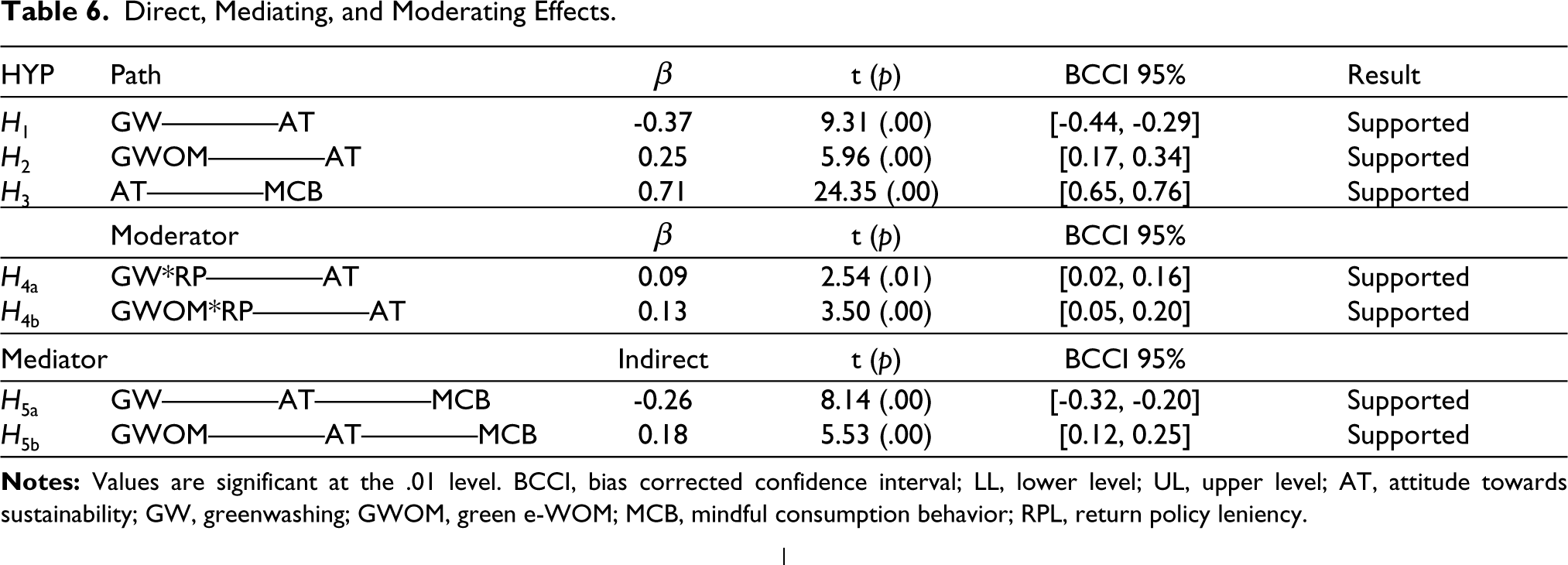
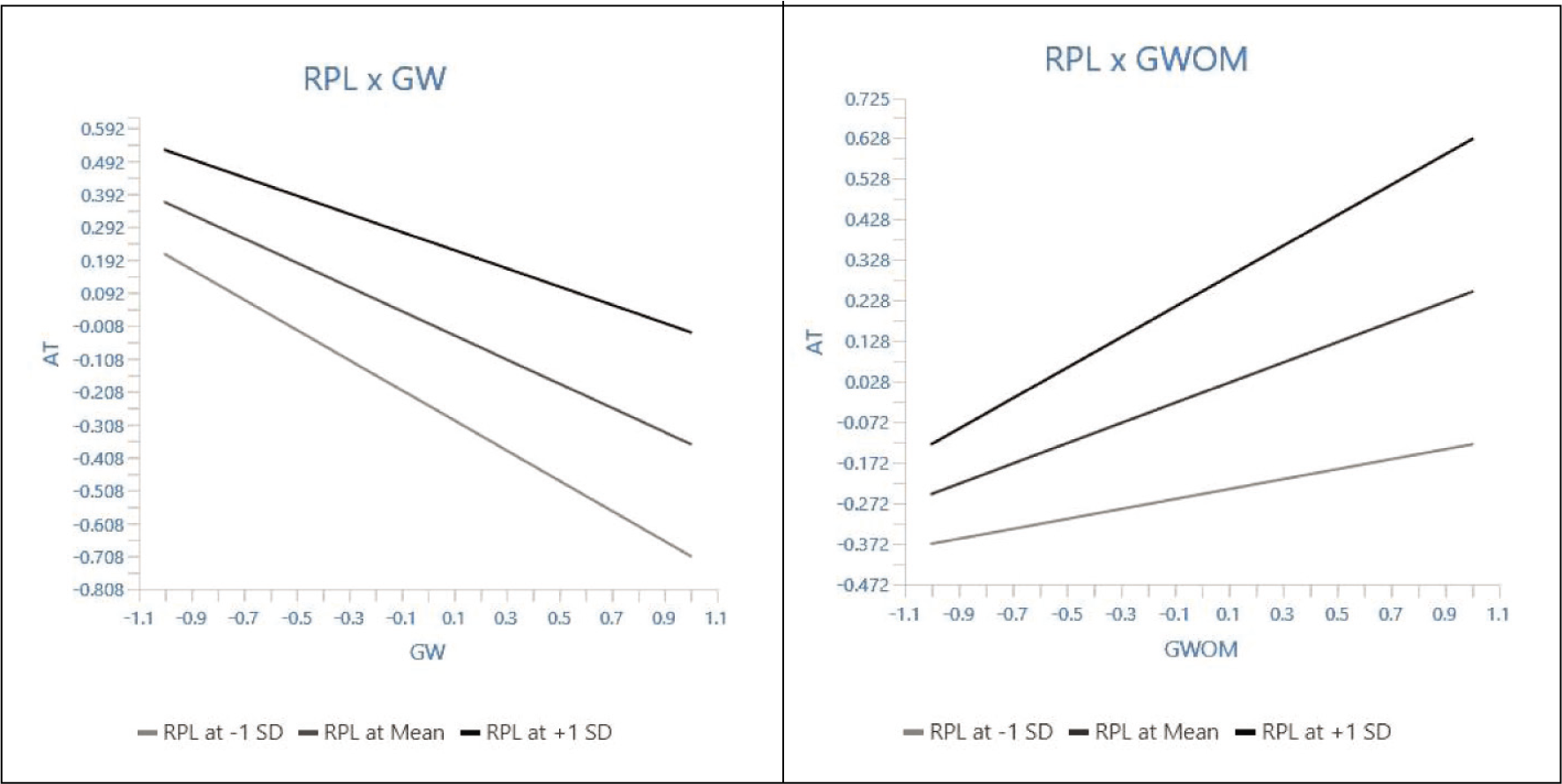
This study tested the moderating role of RPL as a complementary step for the structural model assessment and hypothesis testing. The outcomes of the moderation analysis as depicted in Table 6 and Figure 3 evidenced the moderating role of RPL on the link between GW and AT (β = 0.09, t = 2.54, p = .01) and between green e-WOM and AT (β = 0.13, t = 3.50, p = .00), therefore supporting H4a and H4b, respectively.
Following the recommendations of Hair et al. (2014) and Ringle et al. (2018), we used bootstrapping with 10,000 resamples to test the indirect associations. As can be depicted from the results in Table 6, AT significantly mediated the relationship between GW and MCB (indirect effect = –0.26, LLCI = –0.32, ULCI = –0.20) and between green e-WOM and MCB (indirect effect = 0.18, SE = LLCI = 0.12, ULCI = 0.25), thus supporting hypotheses H5a and H5b, respectively.
Moderated Mediation
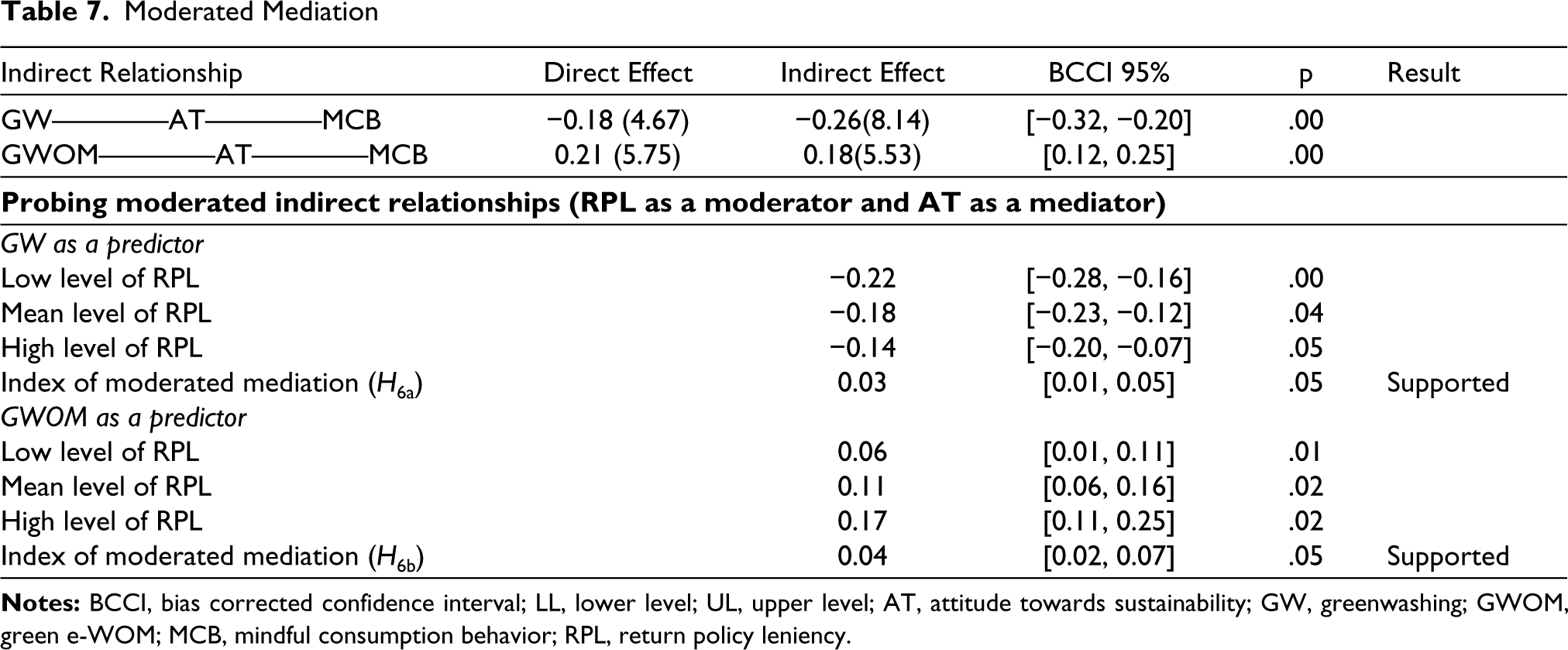
The results in Table 7 indicate that the index values of return policy leniency for moderated mediation for AT effects are significant for GW as a predictor variable (index = 0.03, CI = .01.-05) as well as for green e-WOM as a predictor (index = 0.04, CI = 0.02, 0.07), respectively. The results depict that at a higher level of return policy leniency, the indirect effect of GW on MCB via AT will be weaker, supporting H6a of the study. Similarly, H6b the indirect effect of e-WOM on mindful consumption behavior via attitude toward sustainability is stronger under high return policy leniency and weaker under low return policy leniency.
Moderated Mediation
Discussion
This study examined the effects of greenwashing and green e-WOM on consumer attitudes and sustainable behavior in CBEC. The study explored the impact of lenient return policies on consumer attitudes and mindful consumption. We designed a mediation framework to improve effectiveness and offer a practical solution. This framework examines the relationship between greenwashing, e-WOM, lenient return policies, and online shoppers’ buying intentions. Our research findings lead to interesting conclusions.
First, green e-WOM was found to have a significant favorable influence on consumer attitudes. Greenwashing harmed consumer attitudes. The lenient return policies directly influenced consumer attitudes. They indirectly affected MCB with CBEC. A theoretical model was developed based on the SOR theory to accomplish these objectives and was tested using the PLS technique. The study found that greenwashing and online WOM influence consumers attitudes and lenient return policies can moderate this effect.
Second, the findings are consistent with prior research that showed the impact of e-WOM on consumer attitudes and behavior across different contexts (Barger et al., 2016; Tolia, 2023). The results suggest that AT significantly impacted the relationship between GW, MCB, EWOM, and MCB. GWOM can help change consumer attitudes toward eco-friendly products, influencing their purchasing decisions. The findings of this study also confirmed the positive association between consumer attitudes and MCB. This result confirms earlier studies showing that positive consumer attitudes are linked to sustainable consumption behavior (Piligrimienė et al., 2020; Tolia et al., 2022). This indicates that when consumers prefer eco-friendly, sustainable products, they are inclined to be more mindful of their purchasing, driven by their “temperance” principle. The mediation effect of consumer attitude between e-WOM and MCB was supported. The findings align with the SOR theory, indicating that environmental stimulus green e-WOM has a positive impact on consumer responses to MCB by influencing their internal state of mind.
Third, the leniency of the return policy can affect consumer attitudes, purchasing intention, and the impact of greenwashing and green e-WOM on sustainability and mindful consumption. The results suggest that the more lenient the return policy, the stronger the effect of greenwashing and green e-WOM on purchase intention. Unlike greenwashing, green e-WOM is more reliable and credible for consumers. CBEC platforms benefit from lenient return policies as they boost consumer trust and minimize uncertainties (Gefen & Straub, 2004; Oghazi et al., 2018). The return policy can help change the negative perception of CBEC’s ethical operations (Mou et al., 2020).
Theoretical Implications
This study offers significant theoretical contributions by examining the conscious purchasing habits of consumers within the CBEC platform industry. It explores novel factors such as greenwashing and green e-WOM, which have not been extensively studied in the context of CBEC platforms. Identifying these new and relevant factors and their interconnections within this specific setting is a valuable academic contribution.
Additionally, this research shifts focus to an emerging area of consumer behavior by investigating consumer attitudes and conscientious behavior within the CBEC industry. It expands the existing literature on consumer behavior during crisis events by exploring the effects of crises on consumer behavior beyond the traditional focus on purchase intention. Recent studies, such as those by Mou et al. (2020) and Lu et al. (2023), have examined the impact of positive and negative emotions on repurchase intention and the key factors influencing consumers’ use of CBEC platforms. Furthermore, this study uniquely examines the role of lenient return policies in linking greenwashing, green e-WOM, and their impact on consumer attitudes toward sustainability.
Practical Implications
The study reveals three key practical implications. First, it demonstrates that sustainable practices in CBEC can significantly enhance consumer engagement and order sizes, thereby increasing the overall utilization of CBEC platforms. This underscores the importance of greenwashing and green e-WOM, in shaping consumer attitudes and purchasing behaviors on these platforms.
Second, the findings provide actionable insights for CBEC markets and service providers. By understanding the factors that drive or hinder platform usage, businesses can develop strategies to encourage repeat purchases and foster long-term loyalty. For example, implementing flexible return policies and effectively managing consumer perceptions of green e-WOM and greenwashing can improve customer satisfaction, particularly among new users. This approach not only enhances service visibility but also builds a positive, lasting interest in CBEC.
Lastly, the study highlights the resilience of CBEC users despite the challenges of international purchasing. Effective service recovery strategies are crucial in maintaining consumer trust and loyalty. CBEC service providers should focus on comprehensive service recovery plans to address potential service failures. Ensuring these strategies are well-communicated and implemented at all levels of customer service can help sustain positive consumer attitudes and loyalty.
Limitations and Direction of Future Research
This study possesses specific constraints that present prospects for future investigation in this domain. The current study’s generalizability may be limited by its exclusive focus on comprehending the behavior of Indian consumers. In order to strengthen the reliability of our findings, future research endeavors should aim to validate them with consumers from various contexts. Furthermore, considering the notable shifts in household demographics witnessed in India, which are responsible for the growing prevalence of CBEC platforms, the findings of our study may be applicable only to this distinct situation. Extending our research to countries with lower adoption rates of CBEC could provide valuable insights and help resolve potential challenges in implementing it in diverse contexts.
Furthermore, this study utilized the SOR framework, which can be employed by future researchers to better understand the adoption of services in the e-commerce industry. Researchers can also perform comparative analyses of SOR using various theories on technology acceptance and consumption values to clarify any differences and deficiencies addressed by each theory. Adopting this comparative approach would enhance the comprehension of CBEC research for scholars and practitioners, providing a more detailed and sophisticated understanding.
In addition, our study specifically examined two factors, greenwashing and green e-WOM, in order to maintain a simple model and avoid testing an excessive number of hypotheses. Previous research has identified various factors that come before or influence something else, including free shipping, quality of service, fairness of price, and positive emotional value (Do et al., 2023; Han et al., 2022; Hazarika & Mousavi, 2021; Mou et al., 2020). Researchers can enhance our model by integrating diverse variables into their studies to investigate the influence of supplementary factors on consumer attitudes, ultimately resulting in conscientious consumer behavior. Finally, the study used a two-wave data collection methodology and self-reported data to examine the hypotheses. Although this method was advantageous in quickly capturing the behavior of a representative subset of the population, it also introduces the potential for biases in the data. Hence, forthcoming investigations could delve into the interconnections among variables by employing longitudinal or experimental studies to yield a more all-encompassing comprehension of the underlying dynamics.
Footnotes
Declaration of Conflicting Interests
The authors declared no potential conflicts of interest with respect to the research, authorship, and/or publication of this article.
Funding
The authors received no financial support for the research, authorship, and/or publication of this article.