



Abstract
This article presents a conceptual overview of artificial intelligence (AI) research in the realm of E-commerce. Potential research themes, explored through content analysis and visualization techniques, offer a deeper understanding of the knowledge landscape in this field. The study utilized R Studio and VOS viewer to analyze the performance and map the scientific output of 1,458 research articles from the Scopus database (1995–2024). The study examines the conceptual structure of data through clustering themes and network analysis. The findings indicate a significant focus on advanced E-commerce analytics within AI research, with key areas including product recommendations and AI-driven customer support. The research spans diverse fields such as computer science, marketing, and psychology, emphasizing AI’s interdisciplinary applications in E-commerce. The research’s novelty lies in providing TCCM-based insights for future research and guidance for practitioners looking to leverage AI in their E-commerce operations.
Introduction
E-commerce entails the activities and services related to buying and selling goods or services and transmitting funds over the Internet. It emphasizes the reliance on technology and digital platforms like websites, mobile apps, and social media to facilitate transactions. E-commerce has revolutionized business operations and consumer behavior by providing convenient and accessible avenues for online commerce (Jolaoso, 2023). Increasingly, firms engage in e-commerce activities due to growing customer demand for online services and their potential to confer a competitive edge (Ter Chian Tan et al., 2018). However, firms face challenges in this domain due to its integration with rapidly evolving, and highly affordable information technology (IT), necessitating continuous adaptation of business models to evolving customer needs (Gielens & Steenkamp, 2019). Artificial intelligence (AI) is revolutionizing e-commerce by analyzing data and using insights to achieve specific goals through smart decision-making (Akter et al., 2021; Kaplan & Haenlein, 2019). AI can act as a system, tool, or algorithm, allowing companies to use big data to personalize services and meet customers’ needs, giving them a competitive advantage (Bawack et al., 2021; Deng et al., 2019).
AI applications have become essential in e-commerce, revolutionizing how businesses interact with customers and operate. They personalize experiences by recommending products and customizing marketing messages using data analysis. Integrating AI with e-commerce means using smart systems, tools, or algorithms to improve and simplify online transactions for buying and selling goods or services. Despite three decades of research and the publication of around 4,000 academic articles across various disciplines, researchers still do not have a comprehensive understanding of this rapidly growing field. This lack of integration makes it challenging to identify significant gaps and assess how well the key concepts have been covered in the literature. Reviewing studies on AI in e-commerce is crucial for advancing understanding, developing frameworks to interpret phenomena, and testing new theories (Cram et al., 2020).
This study consolidates existing research on AI applications in e-commerce, utilizing bibliometric analysis to identify trends, key contributors, and prominent research themes. By clustering themes and employing visualization techniques, this research offers a comprehensive overview of the field, identifying focal points such as AI-driven business operations, personalized shopping experiences, and advanced analytics.
Following the introduction, the manuscript proceeds with the syntheses of current representative research, which identifies significant studies and research gaps. The methodology details data collection and analysis using the Preferred Reporting Items for Systematic Reviews and Meta-Analyses (PRISMA) framework to ensure transparency. Performance and network analyses reveal key trends, influential contributors, and major themes. Future research directions propose questions to address identified gaps, and the conclusion provides a summary of findings and their implications. This structure synthesizes current knowledge and establishes a foundation for advancing AI-driven e-commerce research.
Rationale of the Study
Existing research on AI in e-commerce often focuses on specific platforms or aspects, without fully integrating insights across different dimensions (Table 1). This fragmented approach limits a comprehensive understanding of how AI can transform various facets of e-commerce, from customer experience to operational efficiency. For instance, while Bawack et al. (2021) focused their research specifically on AI studies published in information systems journals, Desai and Ganatra (2022) emphasized on a single platform, making their findings less applicable to a wider range of e-commerce settings. Similarly, Zhu et al. (2023) and He and Liu (2024) concentrated on niche aspects of AI’s role without addressing the broader implications for the e-commerce sector.
Existing Studies and Insights.
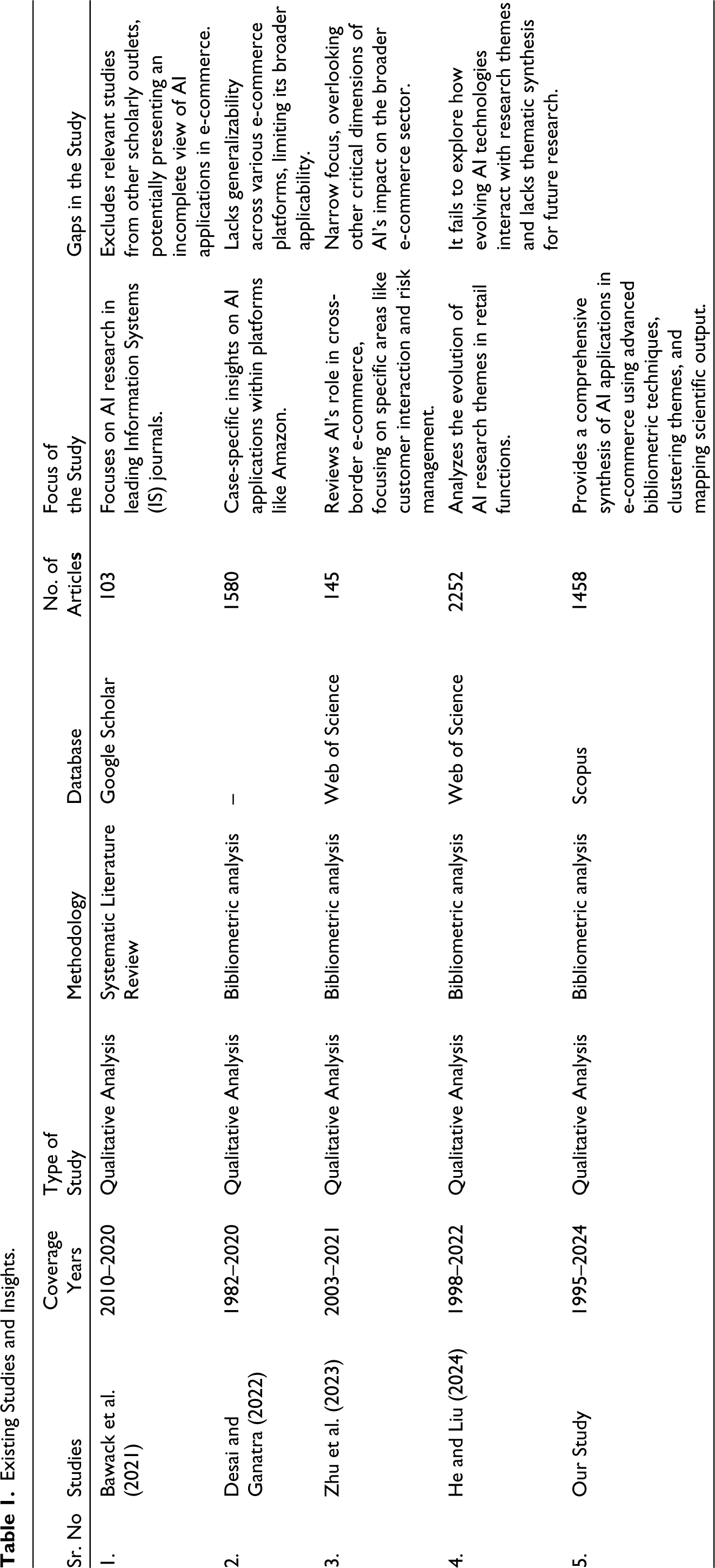
Our study addresses these gaps by offering a broader and more integrated analysis of intelligent technologies in the digital commerce space. The evolution of intelligent technologies is tracked over time, demonstrating how retail functions can be enhanced to provide businesses with a competitive edge. Clear research directions are also outlined, offering a roadmap for scholars and practitioners to address gaps and drive innovation in technology-driven commerce. The study is guided by the following research questions:
What are the yearly trends in AI and e-commerce publications? Who are the key contributors (authors, institutions, countries) in AI applications within e-commerce? Which scholarly papers are the most influential in this field? What are the main themes and research focal points, and how are they interconnected? What future research prospects lie ahead in the field of AI and e-commerce?
Research Methodology
This study employs a rigorous bibliometric analysis to systematically review and integrate existing literature, adhering to the PRISMA framework for enhanced transparency and reproducibility (Page et al., 2021). The steps involved in this methodology are outlined below:
Identification of Relevant Literature
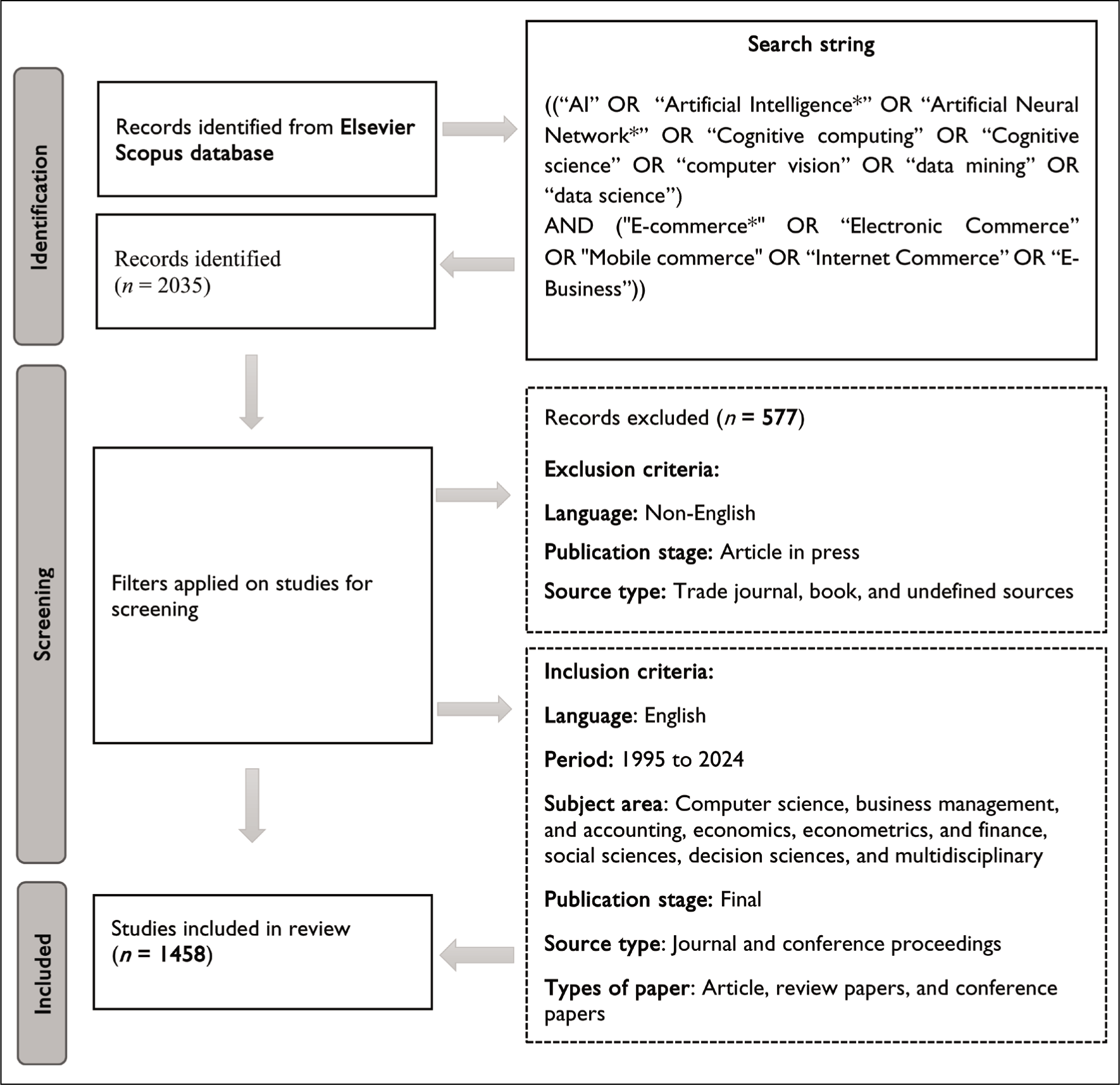
Selecting an appropriate bibliographic database is crucial for effective bibliometric reviews (Bawack et al., 2021). Web of Science and Elsevier Scopus are the primary databases, but evaluating their coverage without a comprehensive analysis can be challenging. Scopus was chosen for this study as it is recognized as the largest curated repository of research literature abstracts and citations (Singh et al., 2021). A structured search strategy to capture relevant studies has been detailed below (Figure 1):
Screening and Eligibility Assessment
After gathering the initial dataset, records not meeting the inclusion criteria, such as non-English articles, articles in press, and trade journal publications, were removed. A total of 2,035 records were screened, and 577 documents were excluded based on relevance. The timeframe from 1995 to 2024 was chosen to cover the foundational years of e- commerce and the latest AI advancements. The beginning of 1995 captures the early integration of AI in e-commerce (Lingnau et al., 1995), and extending the analysis to March 2024 provides a comprehensive view of recent innovations, highlighting AI’s role in shaping industry trends and enhancing operational efficiency.
Inclusion and Data Extraction
After thorough screening, 1,458 studies met the inclusion criteria for detailed bibliometric analysis. Key data, including publication year, authorship, institutional affiliations, geographic distribution, citations, and keywords, were extracted to assess trends and AI development in e-commerce. VOS viewer (Van Eck & Waltman, 2010) and the Bibliometrix R-package (Aria & Cuccurullo, 2017) were used for data analysis and visualization.
Performance Analysis
Annual Trend Analysis
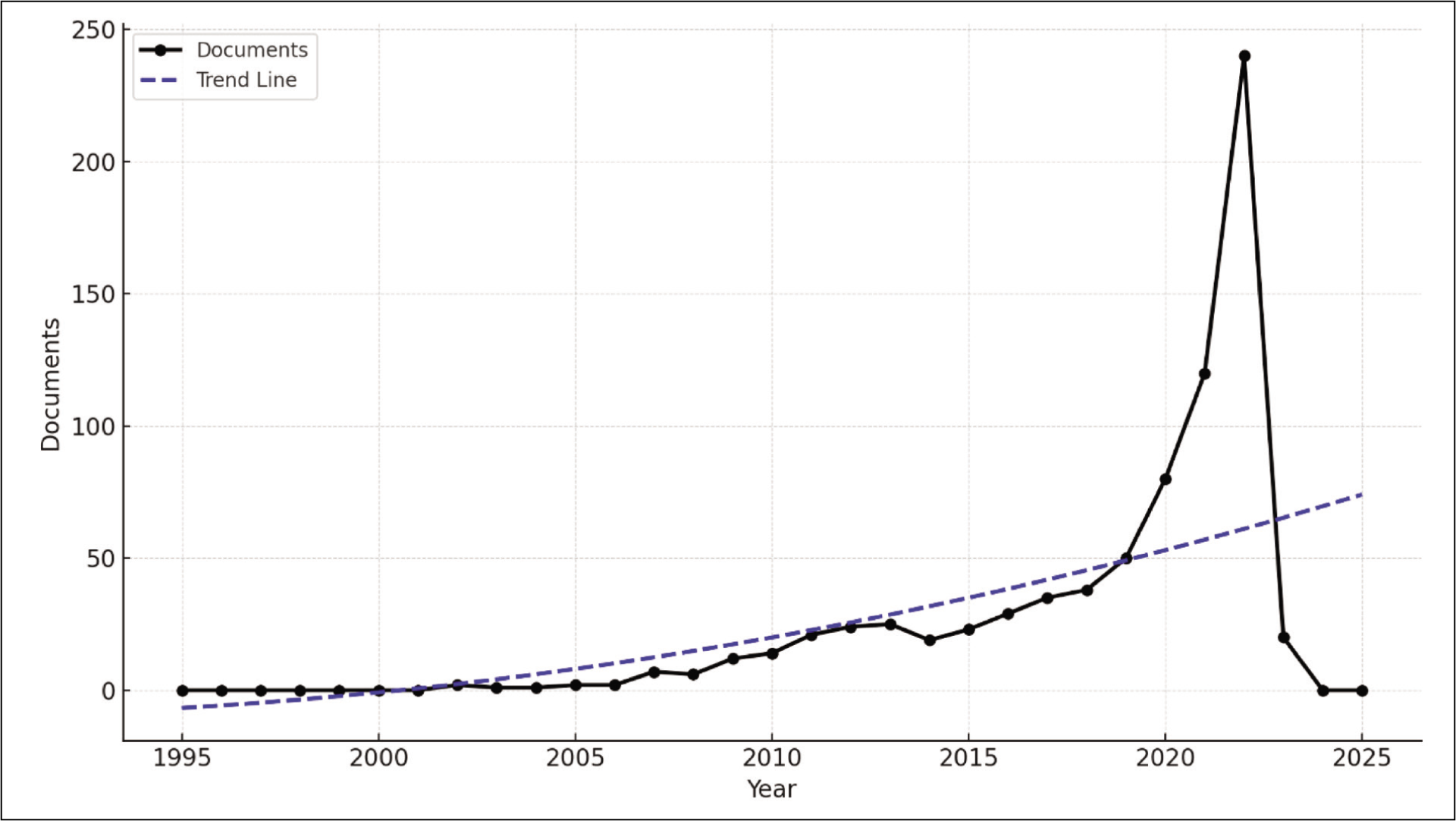
Figure 2 highlights a distinct upward trend in publications exploring the integration of AI and e-commerce. From 1995 to 2006, publications remained minimal, averaging just 10.6 documents per year, reflecting the nascent stage of both fields. Around 2007, the number of publications began to rise, fueled by technological advancements and the expansion of social media. The most significant surge occurred between 2017 and 2022, driven by rapid developments in AI, particularly in personalized marketing and customer service automation. Between 2007 and 2024, average annual productivity jumped to 74 publications, underscoring AI’s growing importance in e-commerce and the increasing scholarly attention on this topic.
Leading Authors
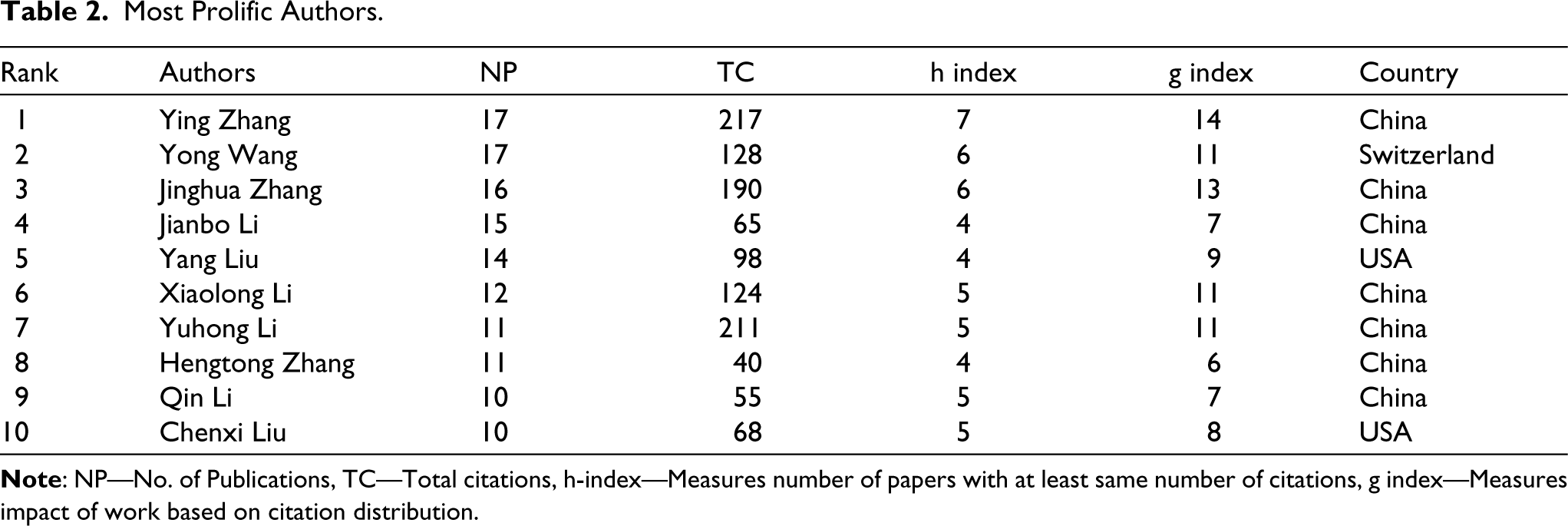
Table 2 highlights the leading authors in AI and E-commerce research. Beverley Yi Zhang is the most prolific with 17 articles and 217 citations, followed by Yinglin Wang with 128 citations and an h-index of 6. Most authors are from China, indicating the country’s significant role in this field. The top 10 authors have produced 10 or more publications, reflecting their substantial contribution to this research area.
Most Prolific Authors.
Leading Institutions and Countries
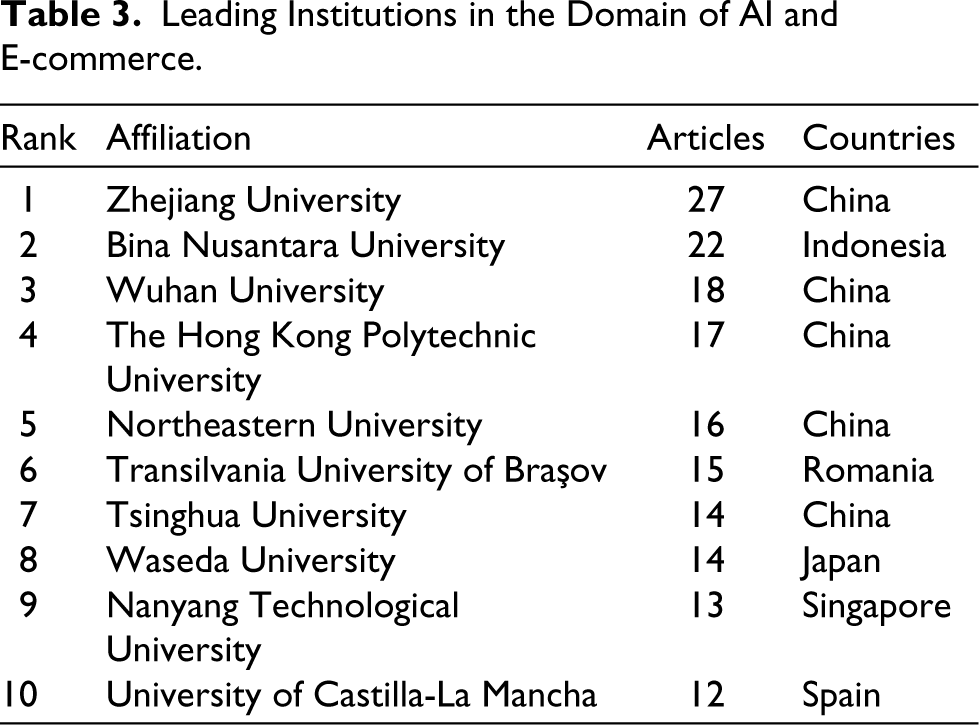
Table 3 highlights the leading institutions in AI and e-commerce research. Zhejiang University and Bina Nusantara University lead with 27 and 22 articles, respectively. Notable contributions also come from Wuhan University, The Hong Kong Polytechnic University, Tsinghua University, and Waseda University, all making substantial impacts in this field. A notable concentration of these studies hails from developed nations, with China standing out prominently. Five of the top ten institutions are from China, highlighting the country’s dominance in AI and e-commerce research.
Leading Institutions in the Domain of AI and E-commerce.
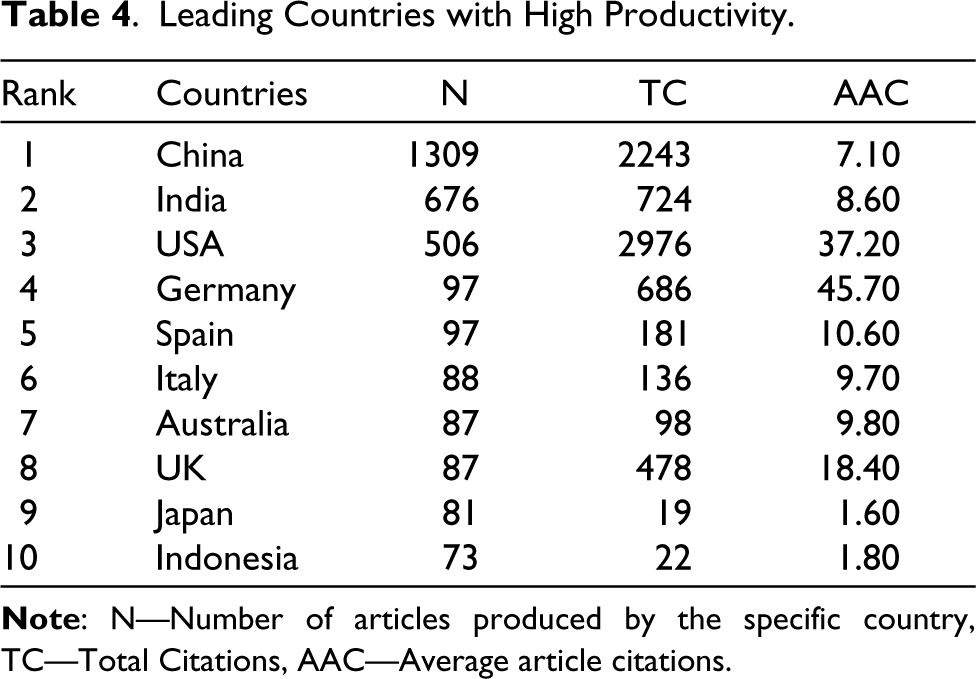
An analysis of AI implementation in e-commerce across 64 countries identifies the top 10 performers (Table 4). China leads with 1,309 published articles, followed by India with 676 and the USA with 506. However, the USA ranks first in total citations with 2,976, followed by China with 2,243. Germany, Spain, Italy, Australia, and the UK also significantly contribute in this field. Interestingly, while most research originates from developed nations, China and India are at the forefront of AI integration in e-commerce.
Leading Countries with High Productivity.
Keyword Analysis
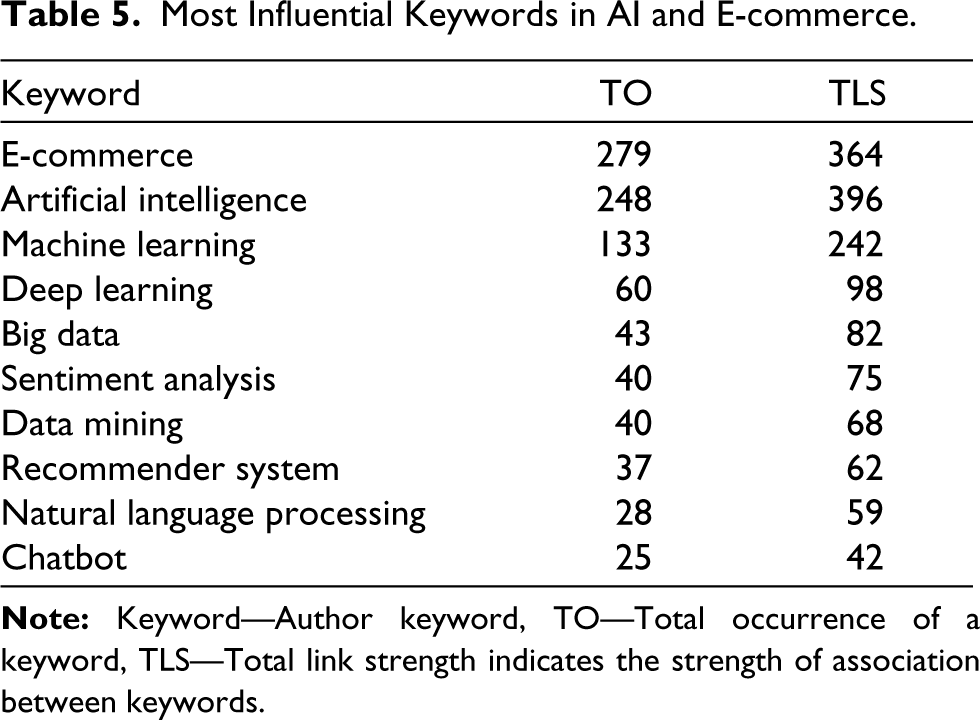
Table 5 showcases the top 10 keywords based on their frequency and total link strength, selected from 107 keywords found in 1,458 documents. Only keywords with at least 5 occurrences were included in the analysis. The leading keywords are “E-commerce” (279 occurrences), “Artificial Intelligence” (248 occurrences), “Machine Learning” (133 occurrences), “Deep Learning” (60 occurrences), and “Big Data” (43 occurrences). These keywords are crucial in shaping the research landscape in this field. Among the keywords, “e-commerce” and “artificial intelligence” have the highest link strengths, with 364 and 396 total links, respectively, indicating their strong associations with other terms in the literature. “machine learning,” “deep learning,” and “big data” also show significant link strength. Other top keywords include “sentiment analysis,” “data mining,” “recommender system,” “natural language processing,” and “chatbot” reflecting the diverse topics and techniques explored in e-commerce and AI research. This analysis underscores the prominence and interconnectedness of these keywords, offering valuable insights into key focus areas and trends in the field.
Most Influential Keywords in AI and E-commerce.
Significant Contributions in the Domain of AI and E-commerce
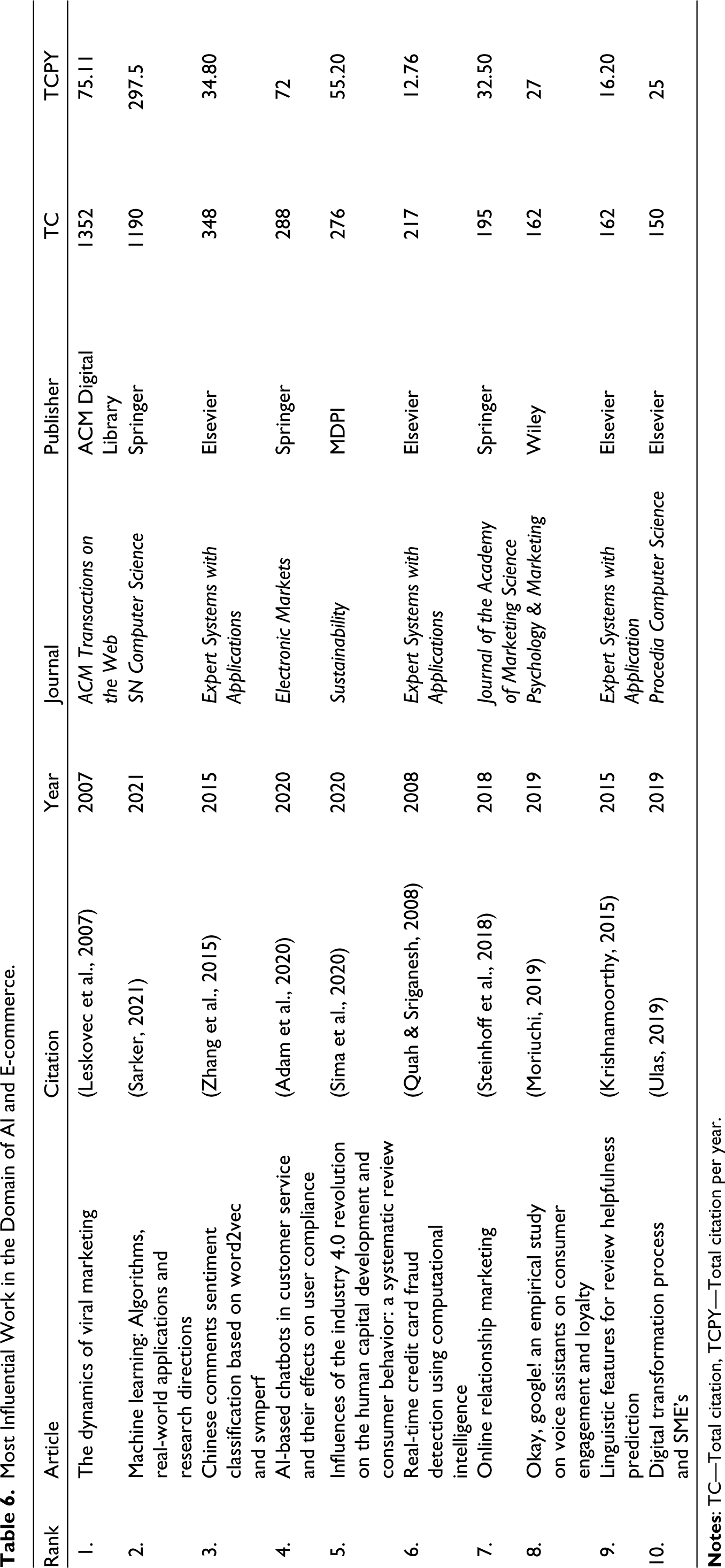
To address the research question on the most influential pieces of literature in the field of AI within the e-commerce sector, the following works (Table 6) stand out based on total citations (TCs). Leading with 1352 citations, Leskovec et al. (2007) highlight AI’s potential to enhance viral marketing by analyzing recommendation networks, understanding user behavior, identifying niche products, and targeting high-propagation communities. Sarker (2021) underscores AI and machine learning’s critical role in leveraging data from IoT, cybersecurity, and social media for e-commerce in the Fourth Industrial Revolution. Steinhoff et al. (2018) emphasize the importance of AI in relationship marketing, fostering seamless, interconnected, and personalized engagements. Additionally, Adam et al. (2020) and Moriuchi (2019) highlight the impact of AI-based chatbots and voice assistants in enhancing user compliance and consumer engagement through personalized assistance.
Most Influential Work in the Domain of AI and E-commerce.
These studies collectively suggest that integrating AI into e-commerce can enhance marketing strategies, utilize data for informed decision-making, improve customer relationship management, and facilitate seamless, personalized customer interactions. This integration promises improved performance, increased customer satisfaction, and sustained competitiveness in the digital marketplace.
Network Analysis: Conceptual Structure
Co-occurrence Network
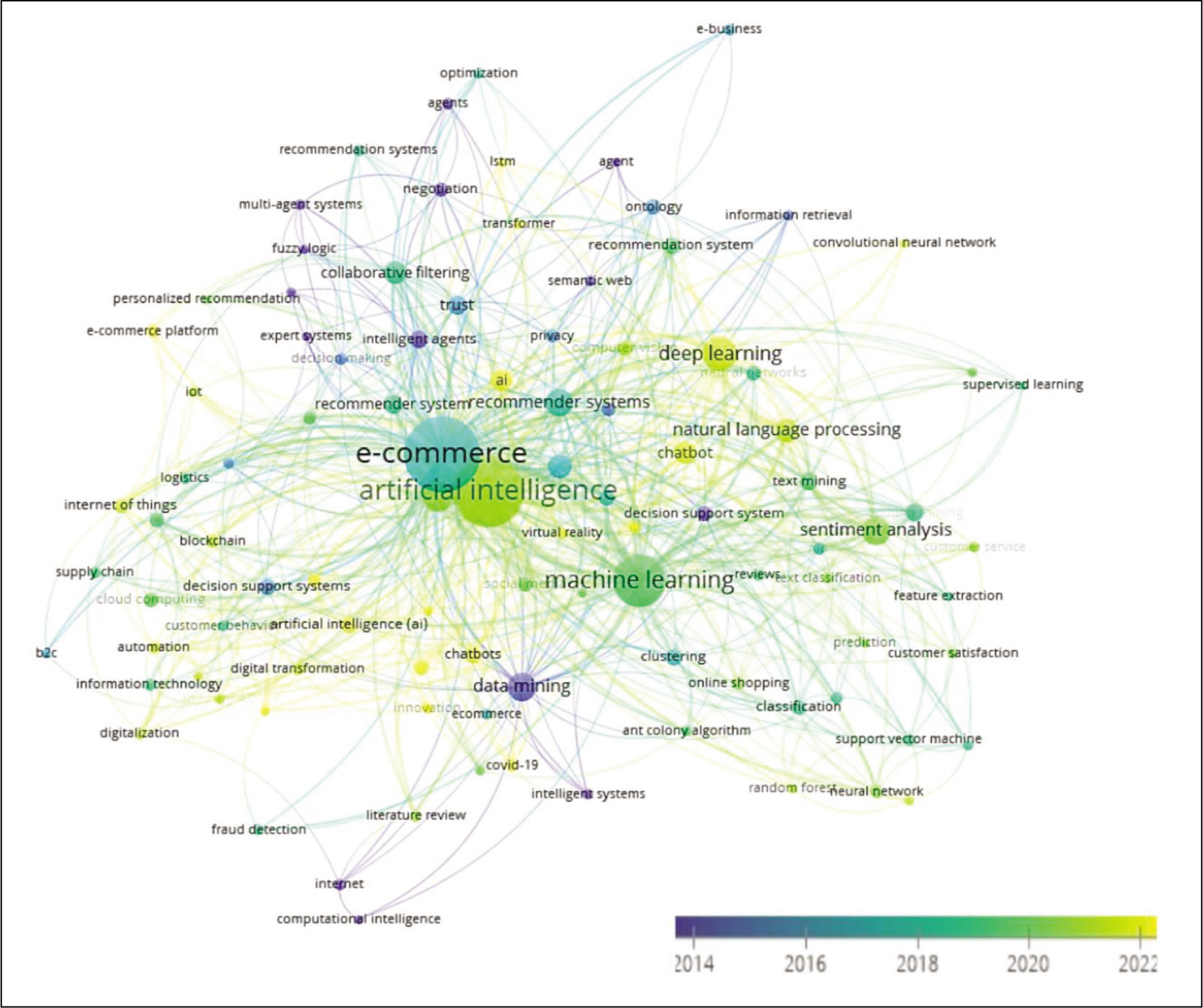
The network visualization highlights recent advancements in AI and e-commerce research through author keywords. Each bubble represents a keyword, with color denoting the average publication year (darker colors for older, warmer for newer) and size indicating keyword frequency. Core terms like “e-commerce,” “artificial intelligence,” “machine learning,” and “data mining” dominate, reflecting their foundational roles. Key techniques like deep learning, natural language processing (NLP), and sentiment analysis are closely linked, illustrating their application in e-commerce.
Early studies focused on fuzzy logic and data mining (Chen, 2015; Sharma et al., 2016), later evolving into machine learning, supervised learning, and cloud computing (Rao et al., 2018; Yu et al., 2021). Recent research emphasizes deep learning, chatbots, and virtual reality in commercial activities (Li & Wang, 2023; Song et al., 2023). Emerging themes, such as the impact of the COVID-19 pandemic and digital transformation driven by technologies like automation and cloud computing, further emphasize AI’s growing role in e-commerce (Jing et al., 2023).
Interpretive Perspective: A Thematic Approach
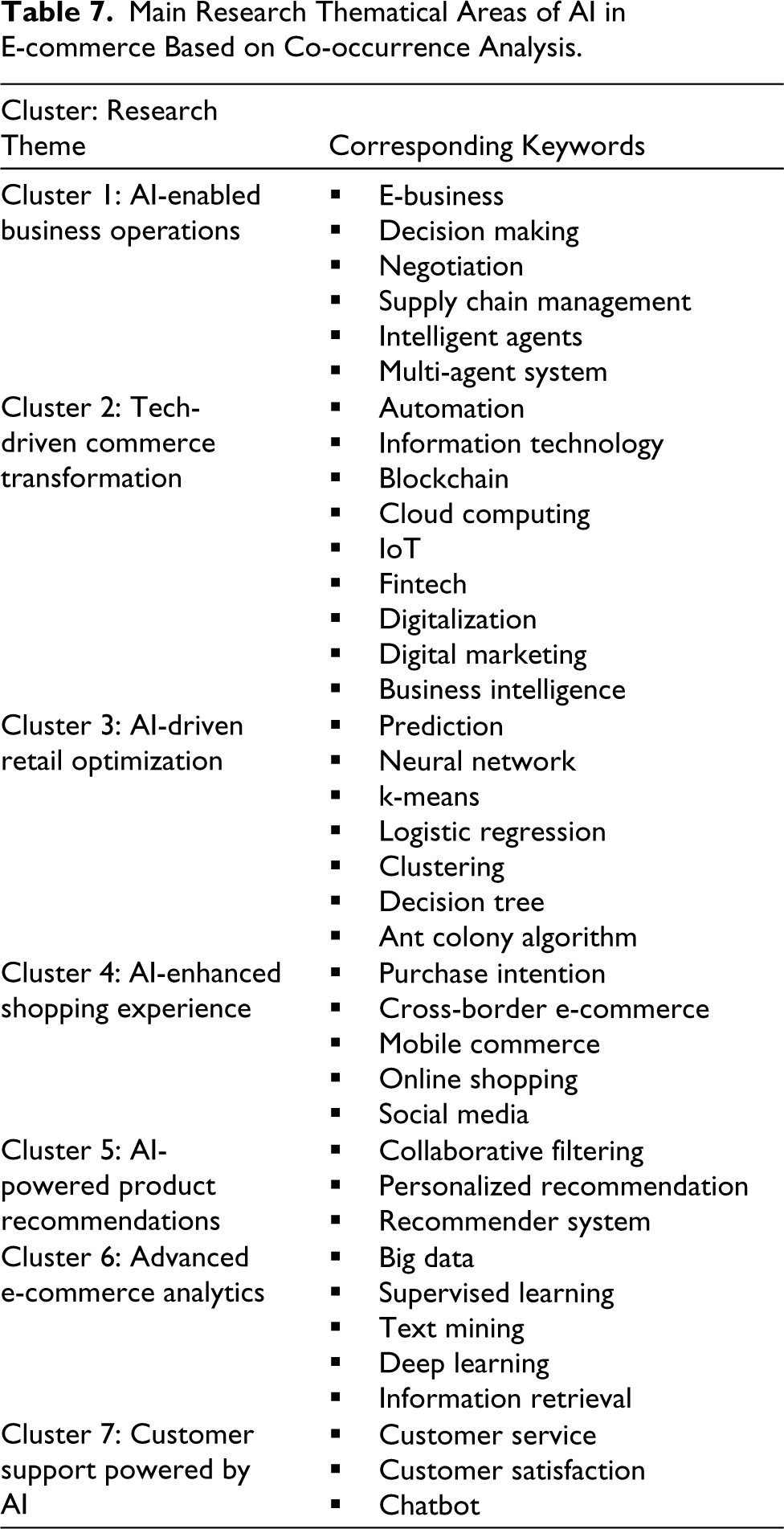
Research on AI in e-commerce encompasses various themes that highlight the evolutionary impact of AI technologies on the industry. Here are seven themes that characterize research on AI in e-commerce (Table 7):
Main Research Thematical Areas of AI in E-commerce Based on Co-occurrence Analysis.
Theme 1: AI-Enabled Business Operations
AI applications significantly enhance customer experience and operational efficiency in e-commerce through intelligent agents. These agents, such as automated negotiation bots, collect information, search for products, negotiate agreements, and evaluate outcomes, increasing financial benefits for both consumers and vendors (Batra et al., 2022; Huang et al., 2010). Leveraging machine learning, negotiation bots improve efficiency and precision and reduce the effort required from human negotiators (Batra et al., 2022). Additionally, multi-agent systems optimize decision-making in supply chains by enabling better disruption management, operational optimization, and enhanced collaboration (Lara & Wassick, 2023; Qi et al., 2023). This seamless integration of AI agents not only streamlines operations but also fosters innovation, ultimately driving a more dynamic and competitive e-commerce environment.
Theme 2: Tech-Driven Commerce Transformation
Disruptive technologies such as the Internet of Things (IoT), big data analytics, blockchain, and AI are transforming business operations. In e-commerce, emerging technologies like AI, IoT, blockchain, and data analytics enhance personalization, optimize operations, ensure security, and provide valuable insights into customer behavior (Jallouli & Kaabi, 2022). Among these, AI stands out as the latest change agent with significant potential for marketing transformation (Desai & Ganatra, 2022; Pan et al., 2021). AI tools, including chatbots, robotic process automation (RPA), NLP, big data analytics, and image recognition, enhance smart tourism by offering personalized recommendations, streamlining operations, enabling real-time translations, and enriching travel experiences (Tsaih & Hsu, 2018). In digital marketing, AI-driven automation and analytics, social commerce, big data, and extended reality (VR/AR/MR) are driving the evolution. Voice marketing and enhanced video marketing further reshape the marketing landscape by enhancing user interaction and creating engaging content (Kuzyk et al., 2023). The integration of AI into e-commerce platforms fosters a new, diversified model, transitioning from traditional methods (Pan et al., 2021). These advancements collectively create a dynamic and customer-centric environment, fostering innovation and competitive advantage in the e-commerce sector.
Theme 3: AI-Driven Retail Optimization
AI-driven solutions are revolutionizing retail operations by optimizing supply chain management and e-commerce processes. Ant colony optimization (ACO) algorithms play a crucial role in improving vehicle routing, enhancing delivery speed, reducing costs, and minimizing resource use (Revanna & Al-Nakash, 2023; Ushada et al., 2022). In e-commerce, AI scrutinizes user behavior to track browsing patterns, cart additions, and purchase completions. Neural networks like WaveNet refine sales forecasting by analyzing product descriptions, enabling businesses to predict demand and better manage inventory and marketing (Chen et al., 2024). Moreover, deep learning models process clinical and genetic data for improved medical diagnostics, such as early cancer detection (Kumar et al., 2023). Together, these AI technologies create an efficient, adaptive business ecosystem.
Theme 4: AI-Enhanced Shopping Experience
AI is transforming e-commerce by boosting operational efficiency and customer engagement through personalized shopping experiences (Birau et al., 2023; Subbaiah et al., 2024). Machine learning enhances this by accurately predicting customer churn, enabling effective retention strategies (Lee et al., 2024). AI also automates inventory management, reduces costs, and enhances data security (Birau et al., 2023). AI-driven chatbots improve customer service and facilitate cross-border transactions (Meltzer, 2023). By analyzing social media feedback, AI provides actionable insights that help businesses refine strategies and products (Alotaibi, 2023). These tools reshape consumer behavior, making shopping more personalized and increasing retention and sales for e-commerce.
Theme 5: AI-Powered Product Recommendations
AI technologies like collaborative filtering (CF) and recommender systems are transforming e-commerce by providing personalized product suggestions. Integrated into e-commerce platforms, recommender systems help users navigate vast inventories with tailored recommendations based on their preferences and behavior (Jha et al., 2021). By analyzing user data, these systems improve both user experience and engagement, optimizing recommendation personalization (Zhao, 2023). CF is particularly effective, using insights from multiple users to predict individual preferences based on shared product interactions (Yu et al., 2021). These AI-driven tools give businesses a competitive edge by enhancing user engagement.
Theme 6: Advanced E-commerce Analytics
In the dynamic world of e-commerce, a suite of innovative technologies including big data analytics, data mining, and deep learning is revolutionizing online trading and enhancing customer experiences. At the forefront, big data analytics and data mining are critical for managing large datasets, which help in predicting customer preferences and bolstering decision-making processes (Jeevitha et al., 2023; Mandala et al., 2023). Specifically, data mining technology plays a key role in efficiently extracting vital information from e-commerce platforms, facilitating text retrieval, and analyzing consumption trends to forecast consumer demand and purchasing power (Zhong, 2022). Moreover, deep learning models like “DeepLimeSeg” are enhancing these capabilities further by refining customer segmentation through advanced algorithms, thereby improving the precision and transparency of marketing efforts (Talaat et al., 2023). Collectively, these advanced tools are reshaping e- commerce, facilitating more personalized and efficient interactions that enhance the customer experience.
Theme 7: Customer Support Powered by AI
This theme discusses the strategic utilization of AI-powered chatbots by e-commerce enterprises to elevate customer satisfaction levels, optimize operational processes, and establish a distinctive presence in a fiercely competitive market landscape. Chatbots, functioning as virtual assistants, employ AI and NLP algorithms to engage users, replicate human interactions, and provide efficient responses to inquiries in various industries (Siddig & Hines, 2019). They enhance personalized support, reduce customer service costs through automation, and play a vital role in resolving complaints promptly, leading to increased customer satisfaction (Khan, 2020; Singh et al., 2024). Furthermore, these AI-powered assistants contribute to rebuilding customer trust post-service issues and implementing strategic service recovery measures (Song et al., 2023). In essence, chatbots represent a valuable asset in elevating customer experiences and streamlining service operations in the modern digital era.
These themes collectively demonstrate the transformative impact of AI technologies on various aspects of e-commerce, from personalized recommendations and predictive analytics to enhanced customer service and supply chain optimization. By embracing AI-driven strategies and solutions, e-commerce businesses can stay competitive, drive growth, and deliver superior shopping experiences to customers in today’s digital marketplace.
Future Research Frontiers in AI for the E-commerce Sector
The application of the theory, context, characteristics, and methodology (TCCM) framework is essential for comprehensively exploring the multifaceted impact of AI in e-commerce, especially as this field continuously evolves with new technologies and consumer demands. By structuring the study around the TCCM elements, this approach allows for an organized analysis of AI’s role in transforming online commerce, enhancing both academic insight and practical implications for industry stakeholders (Paul et al., 2023). The field of AI and e-commerce is evolving rapidly, offering innovative ways to enhance consumer experience, personalize interactions, and drive business growth. However, this rapid growth also brings challenges that require critical examination, particularly concerning consumer trust, ethical considerations, and sustainable engagement. This objective (RQ5) seeks to explore future research prospects in AI-driven e-commerce through the TCCM framework, which provides a comprehensive structure to address existing research gaps and propose novel insights (Table 8).
Research Prospects for AI Integration in e-Commerce Using TCCM Framework.
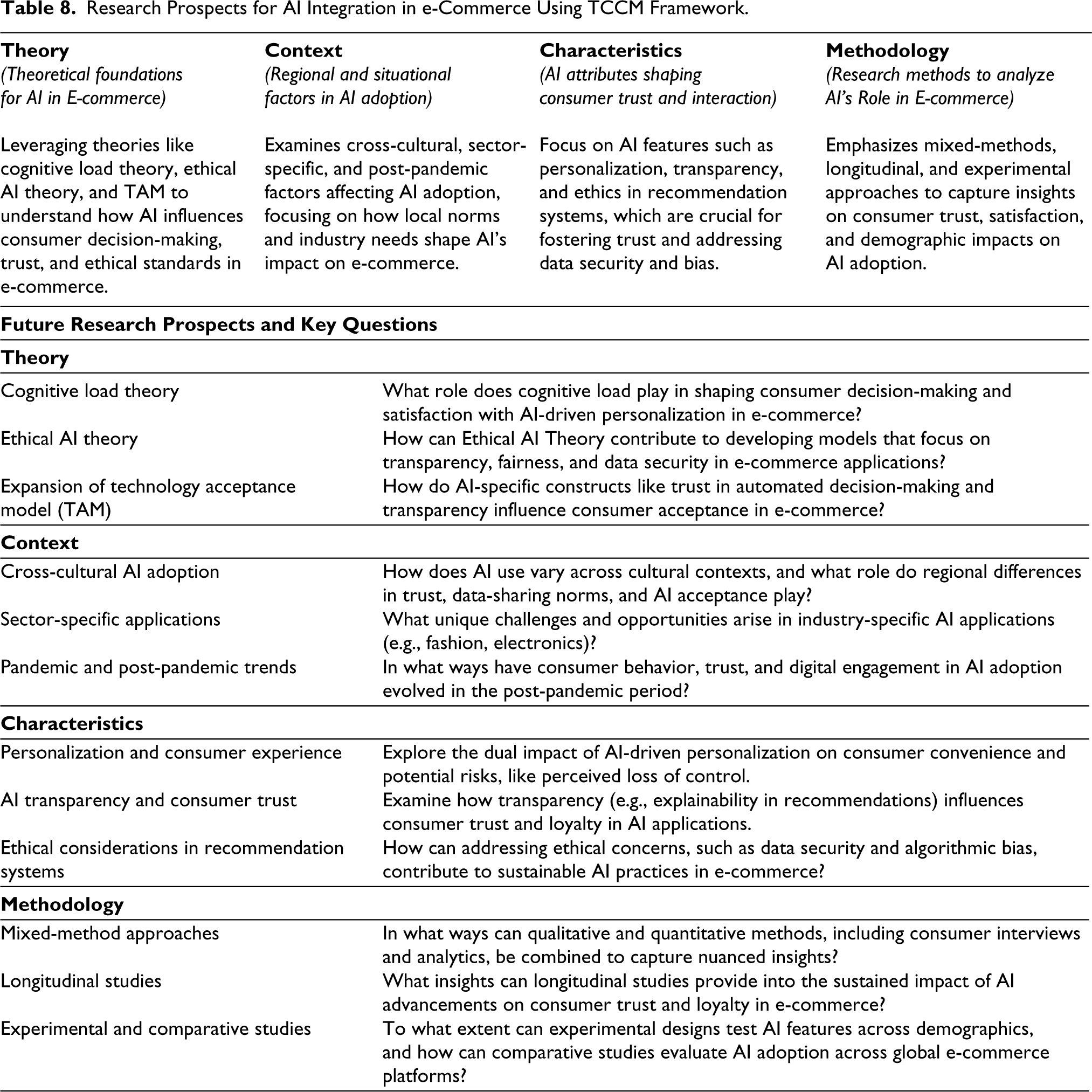
Each dimension within the TCCM framework serves a distinct purpose: Theory encompasses foundational and emerging theories like cognitive load theory, ethical AI theory, and expansions of the technology acceptance model, which can deepen our understanding of consumer behavior and satisfaction in AI applications. The Context element highlights the diverse influences of cultural, sectoral, and post-pandemic factors on AI adoption, helping to identify how AI might be adapted to varying consumer expectations across regions and industries.
Characteristics focus on specific AI-driven features, such as personalization, transparency, and ethical considerations, which directly impact consumer perception and experience. Finally, Methodology underscores the need for diverse research methods, such as mixed-method approaches, longitudinal studies, and experimental designs, to gain nuanced insights and test AI applications’ efficacy over time and across demographics.
In essence, the TCCM framework enables this study to provide a well-rounded understanding of AI’s transformative potential in e-commerce. By identifying theoretical insights, contextual applications, unique AI characteristics, and methodological approaches, this study establishes a strategic foundation for advancing research and practice in AI-driven e-commerce. This comprehensive perspective ensures that future developments in AI can be both consumer-centric and ethically aligned, fostering trust and innovation within the digital marketplace.
Conclusion and Discussion
Conclusion
The annual publication trend in AI and e-commerce research (RQ1) shows a consistent increase in the number of publications over recent years, reflecting the growing interest and recognition of AI’s significance in the e- commerce sector. This growing volume of research underscores the field’s evolving nature and the persistent drive to explore and innovate. Active contributors in this domain, including authors, institutions, and countries (RQ2), are identified by analyzing publication records, citation counts, and author affiliations. Beverley Yi Zhang from China stands out as a prolific author, underscoring China’s prominence in AI research. Institutions and countries with the highest number of publications and citations also emerge as key contributors, indicating their significant role in advancing the field.
The most influential scholarly papers (RQ3) are identified through citation counts, which reflect their impact and recognition within the research community. Leskovec et al. (2007) is recognized for highlighting AI’s potential in boosting viral marketing campaigns, making it one of the most highly cited and impactful studies in this field. Prominent keywords (RQ4.1) such as “E-Commerce,” “Artificial Intelligence,” “Machine Learning,” “Deep Learning,” and “Big Data” highlight the primary research foci in AI and e-commerce. Analyzing the co-occurrence of these keywords reveals their interconnectedness and helps identify key themes and areas of interest. This analysis highlights how machine learning, deep learning, e-commerce, and AI work together to drive innovation and improve efficiency in online retail, resulting in better user experiences and greater competitiveness. Co-occurrence analysis (RQ4.2) further identifies key themes demonstrating AI’s transformative impact on various aspects of e-commerce, personalized recommendations, and supply chain optimization. Embracing AI-driven strategies enables e-commerce businesses to thrive and deliver superior shopping experiences in the digital age. Future research (RQ5), guided by the TCCM approach, should deepen theoretical exploration in areas like cognitive load and ethical AI while considering cross-cultural, sector-specific, and post-pandemic contexts. Emphasis on AI characteristics, such as transparency and personalization, will be crucial. Mixed-method, longitudinal, and experimental methodologies are recommended to capture these nuanced insights, fostering sustainable and ethical AI advancements in e-commerce. This forward-looking approach will ensure that AI continues to drive meaningful and consumer-centered innovations in the digital marketplace.
Discussion
AI has emerged as a critical technology for organizations aiming to excel in the competitive e-commerce landscape. Companies entering the e-commerce sector or seeking to maintain their competitiveness should prioritize investment in AI research and development. Leveraging AI across various operational and customer-facing functions provides e-commerce companies with a significant competitive edge.
This integration fosters innovation and competitive differentiation by enhancing efficiency, personalized customer experiences, and supporting data-driven decision-making. AI tools in online retail significantly improve customer support through chatbots and customer feedback analysis, enhancing personalized interactions and streamlining service processes. Personalized recommendations powered by AI systems enrich the shopping experience by offering tailored product suggestions based on user behavior and preferences. Automation and advanced inventory management systems boost operational efficiency, cost reduction, and resource allocation optimization.
AI revolutionizes supply chain management by optimizing decision-making and vehicle routing, leading to faster and more efficient deliveries. It employs neural networks and deep learning algorithms to improve data analysis, forecasting, and customer segmentation, resulting in more accurate predictions of customer preferences and streamlined inventory management. Moreover, it plays a critical role in predicting customer churn and strengthening security protocols, ensuring the protection of consumer data, and enhancing customer loyalty. Integrating AI tools across various retail functions not only streamlines operations but also promotes innovation and adaptability. This comprehensive integration of AI ensures a sustained competitive advantage in the rapidly evolving e-commerce environment. Embracing AI-driven solutions allows e-commerce companies to enhance operational efficiency, deliver personalized customer experiences, and make data-driven strategic decisions to secure a stronger foothold in the market.
Implications
This study emphasizes that AI applications in e-commerce are predominantly centered around recommender systems, with sentiment analysis, optimization, trust, and personalization emerging as key focal points within this domain. Consequently, managers can leverage these insights to enhance the efficacy of their recommender systems, gaining a deeper understanding of optimized, personalized, trust-driven, and sentiment-aware analytics using specifically tailored AI algorithms. Such knowledge would render it exceedingly challenging for competitors to replicate or mimic the quality of recommendations provided through e-commerce platforms (Kandula et al., 2021). For firms seeking to integrate AI into their e-commerce operations, access to unique customer data, proprietary AI algorithms, and expertise in analytics are indispensable prerequisites (De Smedt et al., 2021). Through our research, we offer valuable insights that can inform academia and industry stakeholders, thereby advancing knowledge and facilitating informed decision-making in AI-enabled e-commerce.
Limitations
This study, like many prior investigations, has inherent limitations. The literature review set specific criteria for selecting academic sources, thereby narrowing the findings to articles that align with these specifications and restricting the study’s broader relevance within the AI and e- commerce field. Certain pertinent keywords, such as “Machine Learning” and “Cross-Border Electronic Commerce (CBEC),” were omitted from the initial selection criteria, potentially narrowing the study’s scope and excluding research that could provide a comprehensive understanding of AI applications. The analysis relied exclusively on the Scopus database, omitting other prominent sources like Web of Science, and Dimension. This dependence on a single database may limit data inclusiveness, as studies indexed solely in other repositories were not incorporated. The study’s emphasis on English-language publications may also have led to the exclusion of valuable research in other languages. Furthermore, the research highlights general themes of AI applications across e-commerce without a platform-specific focus (e.g., B2B or B2C), which could offer more targeted insights. Addressing these limitations could enhance the breadth and depth of understanding regarding AI’s role in e-commerce.
Footnotes
Declaration of Conflicting Interests
The authors declared no potential conflicts of interest with respect to the research, authorship, and/or publication of this article.
Funding
The authors received no financial support for the research, authorship, and/or publication of this article.