




Abstract
Purpose:
The purpose of the study is to have an understanding about the impact of augmented reality (AR) on user experience in case of a makeup app. This article tries to explore how personalisation, an AR process, impacts the various aspects of user experience (pragmatic quality, hedonic quality by stimulation, hedonic quality by identification and attractiveness). This study also evaluates the moderating role of privacy concern on the relationship of personalisation and user experience.
Methodology:
This research empirically analyses data from an experiment conducted in a controlled lab setting with 200 valid responses from users of a makeup app, which incorporates AR technology. SPSS and SmartPLS4 were used for the analysis.
Findings:
The results show that personalisation significantly impacts the user experience, particularly in terms of enhancing pragmatic quality. However, the results did not show a moderating effect of privacy concerns on the relationship of personalisation and user experience.
Implications:
This research offers marketers a foundation on leveraging AR technology in enhancing the app experience. It also contributes to the AR literature by understanding the interplay of personalisation, privacy concern and user experience.
Originality/Value:
This study examines how personalisation in AR distinctly shapes the user experience. It also addresses the contemporary dilemma of privacy concerns, investigating whether marketers should prioritise enhancing personalisation or exercise caution to uphold user privacy. While previous studies related to AR and user experience have been conducted in Western contexts, this study is unique in its kind in India.
Introduction
As the world of e-commerce continues to grow, the demand for enhanced customer experience is also on the rise (Leachman & Scheibenreif, 2023; Zimmermann et al., 2023). In context of this situation, it is becoming essentially important to devise an innovative and distinctive service strategy (Dotzel et al., 2013; Hilken et al., 2017; Singh et al., 2022). Augmented reality (AR) is an example of one such distinct innovation, which is widely regarded as a highly promising technological advancement (Javornik et al., 2016; Rejeb et al., 2023; Smink et al., 2020). This technology has the ability to integrate virtual elements into the real world thus providing a mesmerising experience to the customers (Alimamy & Gnoth, 2022; Kowalczuk et al., 2021; Wedel et al., 2020). The need for such immersive experiences is growing at a faster pace (Chen & Lai, 2021).
With the emerging trend of integrating the real world with digital elements, the world itself is becoming a user interface (Flick et al., 2021; Olsson et al., 2012a; Schmalstieg & Reitmayr, 2007). This transformation is fundamentally changing the way information is accessed and presented to individuals. Marketers have also picked up AR to offer a fresh way to show products (Rauschnabel et al., 2022; Tan et al., 2022), share information and create experiences in real-life situations (Huang & Hsu Liu, 2014). It is being used by major companies to let shoppers try on, personalise or visualise products such as clothes, shoes, sunglasses, makeup and furniture in online context (Baek et al., 2018; Hilken et al., 2017; Rauschnabel et al., 2019). With most shopping happening online, customers largely miss out on seeing and feeling products in person, which affects their engagement with products (Verhagen et al., 2016). This is how AR tries to bridge this gap (Baek et al., 2018; Scholz & Smith, 2016). Despite its importance in retail, knowledge about AR and its utility in retail remains very less (Kowalczuk et al., 2021; Rauschnabel et al., 2022; Söderström et al., 2024, 2024; Tan et al., 2022).
AR is becoming popular in the global market and it is expected that AR market will reach 88.4 billion USD by 2026 (Pacholczyk, 2022; Voicu et al., 2023). Major companies like Amazon, Alibaba, ZARA, Nike shoes, IKEA and Ray Ban are incorporating this technology to let shoppers virtually try on their products (Alimamy & Gnoth, 2022; Dogra et al., 2023). Furthermore, over the time Indian companies have also started using AR for their marketing efforts which include Lenskart (eyewear), Nykaa (makeup), Byju’s (education) and MagicBrics (real estate) (Palesi et al., 2021). However, most existing research on AR has been conducted in Western contexts (Dogra et al., 2023; Faruk et al., 2024), leaving a significant gap in understanding of AR in Indian context (Subran & Mahmud, 2024).
AR is gaining such notability because of the extent to which it can personalise the overall experience of a consumer (Alimamy & Gnoth, 2022; Zimmermann et al., 2023). Personalisation plays an important role in creating positive experience leading to positive change in user’s behaviour towards retail (Wedel et al., 2020; Zimmermann et al., 2023). Research has considered personalisation as an important process of AR (Smink et al., 2020; Zimmermann et al., 2023) as it is capable of providing immersive experience by letting people imagine products in personally relevant context (Hilken et al., 2017; Smink et al., 2020; Wedel et al., 2020). The literature has looked closely at AR, but it has not focused much on personalisation (Alimamy & Gnoth, 2022; Vargo & Lusch, 2016). To fill this gap this study closely investigates personalisation as one of the important process of AR.
Furthermore, the literature on AR has focused on its technological features while ignoring the requirements and issues of the customers (Poushneh & Vasquez-Parraga, 2017; Swan & Gabbard, 2005). One such issue is the interaction of users with an AR app which can be studied through analyses of user experience (UX; Arifin et al., 2018; Davidavičienė et al., 2019; Poushneh & Vasquez-Parraga, 2017). UX of an AR app provides more detailed information on how end users feel about the technology (Davidavičienė et al., 2019; Hellianto et al., 2019; Poushneh & Vasquez-Parraga, 2017). In the context of personalisation, UX refers to an individual’s perceptions and responses shaped by tailored products (Zheng et al., 2017). Personalisation emphasises both functional and emotional aspects of the interactive products (Tseng et al., 2010). However, not much of the literature provides the information about the impact of personalisation on UX in context of AR apps (Arifin et al., 2018; Poushneh & Vasquez-Parraga, 2017). This study tries to fill this literature gap by empirically investigating the impact of AR on UX by analysing the relationship between personalisation and UX.
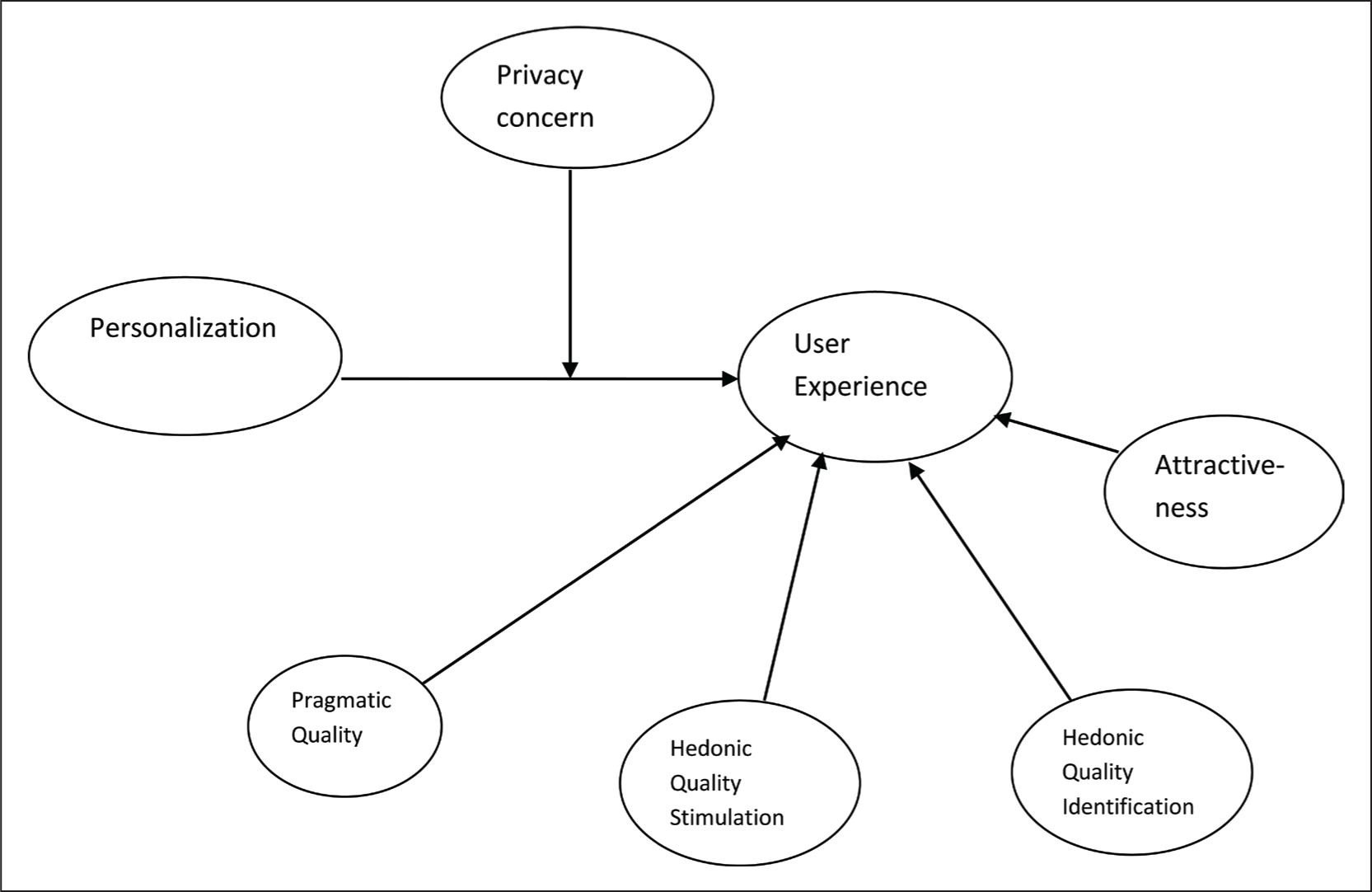
Safeguarding user’s privacy in e-commerce is a key challenge (Varghese, 2023; Bandara et al., 2020). On one hand, online apps which have incorporated AR are viewed positively by consumers due to their ability to offer personalised customer experiences (Anand & Shachar, 2009; Smink et al., 2020; Zimmermann et al., 2023), but on the other hand, consumers may see these apps as a tool that might compromise their privacy (Cowan et al., 2021; White et al., 2008). Therefore, privacy concern has become a major challenge in case of AR technologies. Studies have highlighted that facial recognition, an important aspect of AR (Cowan et al., 2021; Feng & Xie, 2019), raises significant threats to privacy (Cowan et al., 2021; Dacko, 2017). Therefore, the companies should start emphasising on establishing effective privacy safeguards when they access consumer photos (Cowan et al., 2021; Feng & Xie, 2019). There are many studies of privacy concern in e-commerce (Hinds et al., 2020; Huang & Qian, 2021), but very few related to AR (Cowan et al., 2021; Harborth & Pape, 2021). Furthermore, there are limited numbers of studies that have taken into account how privacy-related concerns (Hilken et al., 2017; Huang & Liao, 2015; Yim & Park, 2019) might moderate the impact of AR apps. This study is an attempt to analyse the moderating effect of privacy concern on the relationship between personalisation and UX, as illustrated in Figure 1.
Conceptual Model.
To conclude, this research offers marketers a foundation on leveraging AR technology in enhancing the online shopping experience. The managers must prioritise designing AR that achieves the goal of personalisation for enhanced UX with a balance between personalisation and privacy concerns.
Theoretical Framework
Theory of Interactive Media Effect
According to theory of interactive media effect, various characteristics of media can significantly influence the interaction between technology and consumers (Javornik, 2016; Lee et al., 2021). When these media characteristics are interactive, they strongly influence the cognitive and affective responses of the consumers (Sundar et al., 2015). Previous studies have shown that interactive media characteristics provide immersive experience to the consumers (Javornik, 2016a; Sundar et al., 2015). Our study is in line with theory of interactive media effect by focussing on personalisation, recognised as an interactive media characteristic (Rodgers & Thorson, 2017) of AR technology which is able to provide immersive experience (Kowalczuk et al., 2021). This study aims to explores its impact on UX, which describes both cognitive and affective responses of users (Poushneh & Vasquez-Parraga, 2017).
Equity Theory
In this study, Equity Theory (Adams, 1963) is used to explore how the relationship between personalisation and privacy concerns in AR influences UX. Equity Theory suggests that people are more inclined to use technology when they feel there is a fair balance between what they gain and what they lose (Adams & Freedman, 1976; Poushneh, 2018). It is the amount of information that the users are willing to share with a technology is based upon the benefits they get in return (Poushneh, 2018). If the benefits they receive from AR, such as personalisation, outweigh the privacy concerns, they are likely to perceive a higher level of equity, which will report a positive and enhanced UX and vice versa. This study has applied equity theory to understand how privacy concern might moderate the relationship between personalisation and UX while using AR (Poushneh & Vasquez-Parraga, 2017).
Conceptual Framework
Augmented Reality
AR is a technology which has the ability to overlay digital elements on their physical surroundings which allow its users to personalise their own space (Alimamy & Gnoth, 2022; Hilken et al., 2017; Tan et al., 2022). The online customers are looking for more immersed knowledge about the product (Billewar et al., 2022). AR holds substantial potential in providing such immersed shopping experiences (Chen et al., 2022; Kowalczuk et al., 2021) by offering enough product information that helps them in making better purchase decisions (Henkens et al., 2021; Oh et al., 2008). In comparison to static pictures and simple text formats that were prevalent in the early years of online retailing, contemporary product presentation styles, such as videos, 360-degree spin rotation, and enabling customers to virtually experience and interact with products, provide a more authentic representation of product information (Verhagen et al., 2014).
Personalisation as an Augmented Reality Process
Personalisation is regarded as a foundational process of AR, as it allows customers to visualise things in a personally appropriate setting, which might elicit positive response(Alimamy & Gnoth, 2022; Chen et al., 2022; Parise et al., 2016; Smink et al., 2020). AR allows users to interact with virtual products in their physical environment, enhancing their sensory involvement and control over the product experience (Scholz & Smith, 2016; Smink et al., 2020). Interactivity is characterised by the personalisation a technology provides (Rodgers & Thorson, 2017) and personalisation in AR is capable of providing immersive experience (Pardini et al., 2022). The need for such experiences which comes through personalisation is becoming indispensable for online shopping (Dobrița et al, 2023).
User Experience
UX of technology is important to understand because it directly impacts the user acceptance of that technology and further implementation of it (Graser et al., 2023). UX defines all aspects of how an interactive product is used by people: how it feels, how people understand how it works, how people feel about it while using it, how it solves their problem, how appropriately it is related to the context for which they are using it (Alben, 1996). It is a complex construct that includes a user’s cognitive and affective state (Alben, 1996), product attributes and the context of use (Hassenzahl & Tractinsky, 2006).
In context to online shopping, UX is defined as the comprehensive experience that a user had undergone after interacting with the online app (Srivastava, 2022). Studies have demonstrated that UX goes beyond mere usability; it aims at comprehensively examining a user’s interaction with an interactive product (Arifin et al., 2018; Hassenzahl, 2005; Hassenzahl et al., 2003; Schrepp et al., 2006). In the context of personalisation in AR, UX refers to how individual perceives and reacts to personalised products (Zheng et al., 2017). It emphasises both functional and emotional aspects of the interactive product by highlighting the importance of designing a personalised experience (Tseng et al., 2010). Therefore, in line with the theory of interactive media effect (Sundar et al., 2015) personalisation in AR should have a stronger impact on UX.
UX is a higher order formative construct derived from four UX characteristics: pragmatic quality (PQ), hedonic quality by stimulation (HQ-S), hedonic quality by identification (HQ-I) and attractiveness (ATT) (Arifin et al., 2018; Hassenzahl et al., 2003).
PQ of an AR application refers to its usability level (Arifin et al., 2018). HQ-S describes the level of fun that comes from the features provided by the technology (Arifin et al., 2018). HQ-I evaluates the extent to which an interactive product is able to communicate the identity of the user (Schrepp et al., 2006). ATT refers to the overall perception of the product’s appeal (Hassenzahl, 2010) and personalisation is known to have significant influence on ATT in context of AR apps (Belk et al., 2012). In line with the above literature and the theory of interactive media effect this study hypothesise:
Privacy Concern
In this digital age of e-commerce people sharing their personal information online becomes major issue when they become victims of unethical practices, as a result of which people become sceptical and privacy concern takes place (Akour et al., 2022). Privacy concern pertains to the degree of control a consumer has over their personal data (Fletcher & Peters, 1997). It involves an individual’s perception of how they assess privacy concern and how much they are prepared to share their personal information (Poushneh, 2018; Slyke et al., 2006). AR technology requires access to personal information from users to offer personalised services, causing some users to be cautious about sharing such data (Olsson et al., 2012a; Xie & Karan, 2019). Thus, in line with equity theory which states that customers while shopping compare their gains and losses (Adams & Freedman, 1976), we propose that AR applications may raise privacy concerns of users while providing them personalisation (Olsson et al., 2012b). Users will have positive experience with AR app when they perceive their personal information to be secure and vice versa (Poushneh, 2018; Poushneh & Vasquez-Parraga, 2017). Thus, based on the above literature and equity theory we hypothesise
Methodology
Participants
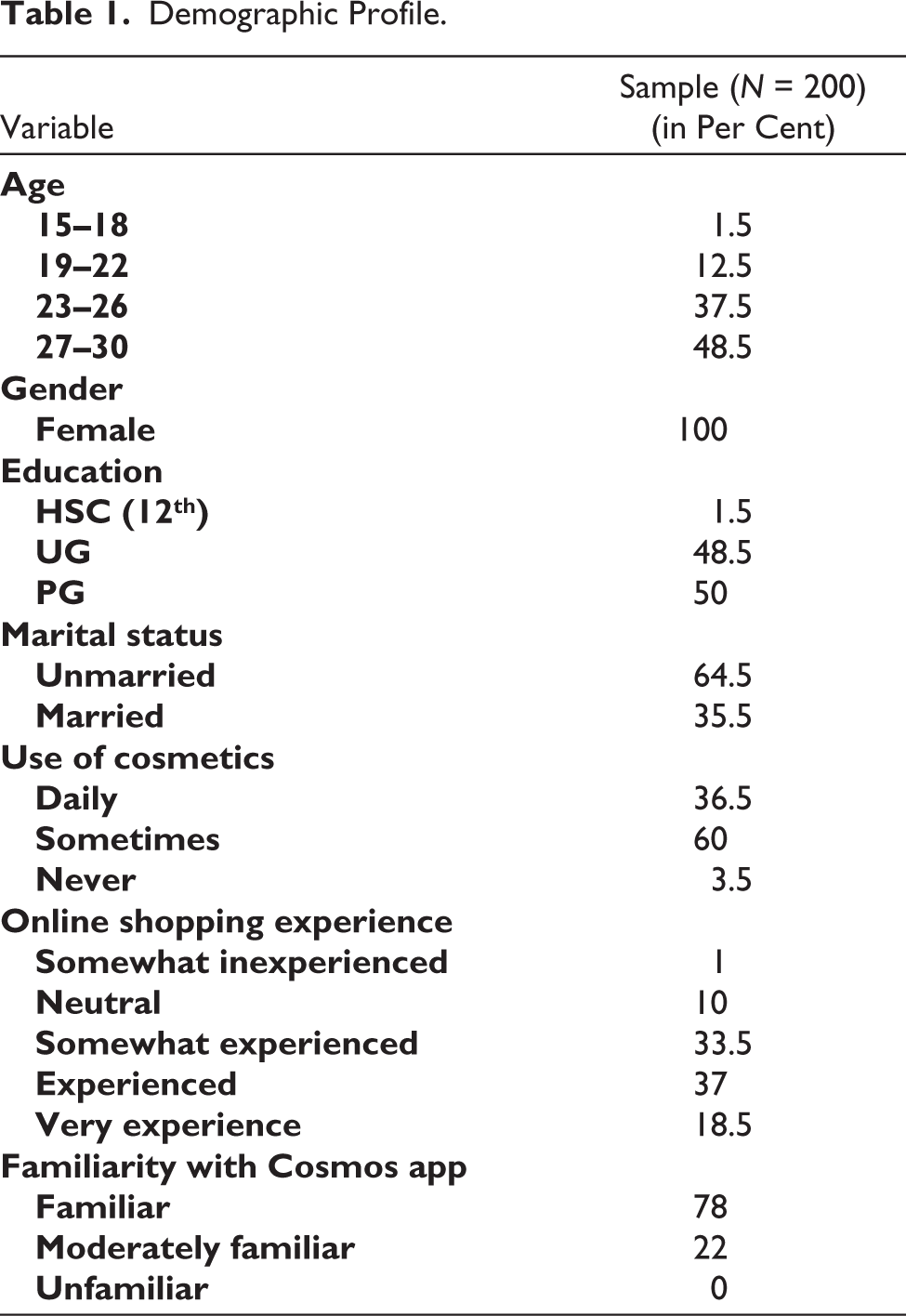
Participants were recruited through purposive sampling technique. The sample consisted of 200 female students across educational institutes of Jammu, J&K (UT). As the experiment consisted of makeup, females could only participate in the experiment. The students between the age group of 15–30 years old were selected as they show more openness towards innovative technology (Blake et al., 2003; Smink et al., 2019; Wang et al., 2014). With the permission of respondents, the controlled laboratory experiment was conducted. The demographic profile of respondents is summarised in Table 1.
Demographic Profile.
Stimulus
A makeup app was selected for the study. To ensure anonymity and confidentiality a hypothetical name, ‘Cosmos’ is used to refer the makeup app. This app was chosen because it allows consumers to view how makeup would look on them through an AR feature called ‘try it on’. ‘Cosmos’ has successful adaptation to the omni-channel retail environment and it is able to provide its customer a unique shopping journey with virtual makeovers. As this app is still in the early stages of integrating AR technology, this capability is presently limited to only a few products, thus only lipstick was utilised for the experiment.
Procedure
The experiment followed set of protocols within a controlled laboratory environment. The pre-requisites for the experiment consisted of a smartphone and reliable internet connection. In each experiment, participants were initially briefed about AR. Subsequently, they were provided with instructions for downloading the app, or to disregard if already installed. Then they were given the details on participating in the task. They had 15-20 minutes to perform the task. After engaging with the ‘Try It On’ feature, participants were requested to fill the questionnaire.
Measurement
To measure UX AttrakDiff questionnaire from Hassenzahl et al. (2003) was used. AttrakDiff will give information about the PQ, hedonic quality and ATT of the AR app. Overall, there are 28 items of UX which were measured using a bipolar semantic differential 7-scale method. Personalisation and privacy concern were measured on 7-point Likert scale measuring from ‘strongly disagree’ to ‘strongly agree’ with four items from Smink et al. (2020) and 5 items taken from Feng & Xie (2019) respectively.
Results
Measurement Model Assessment
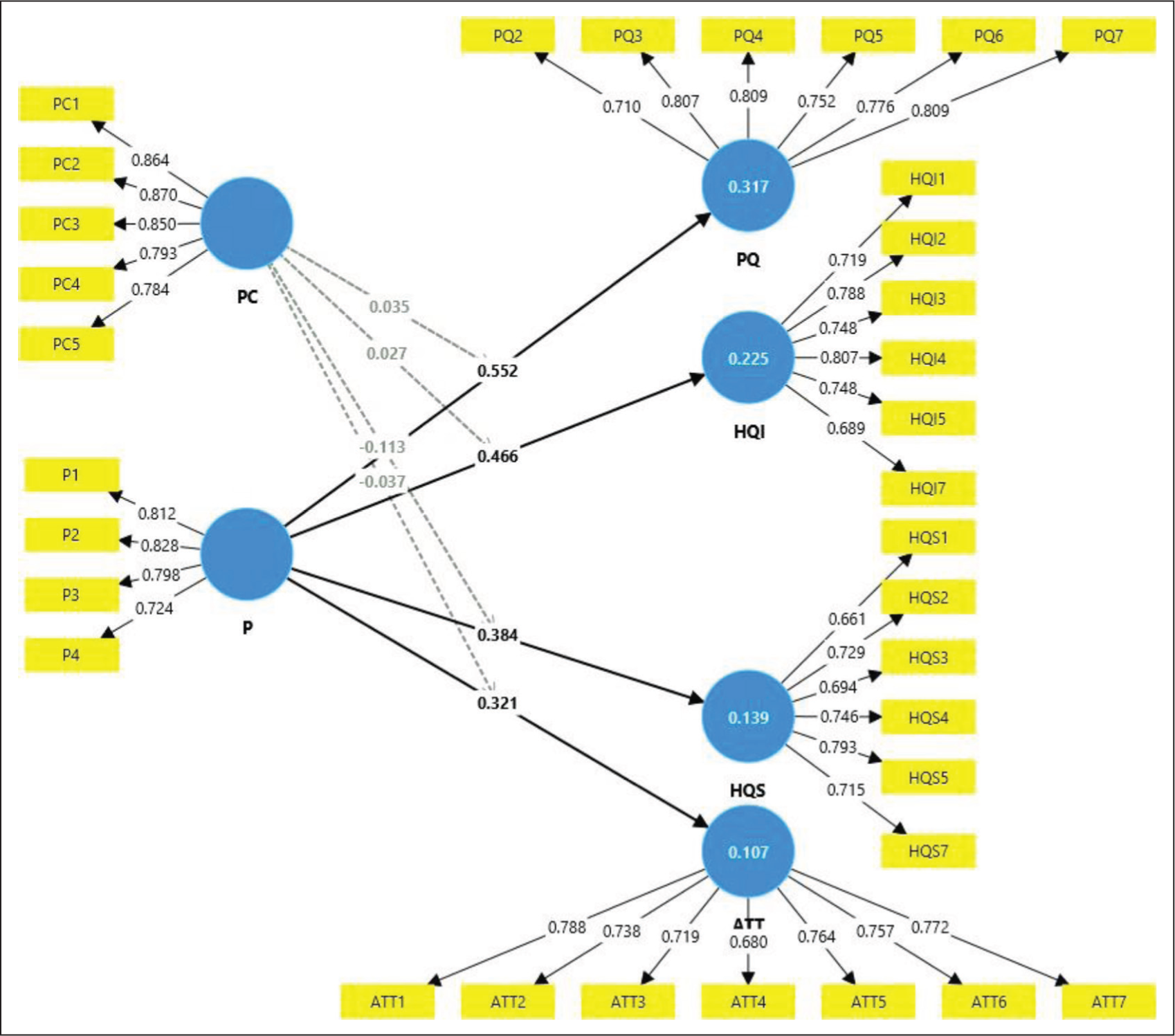
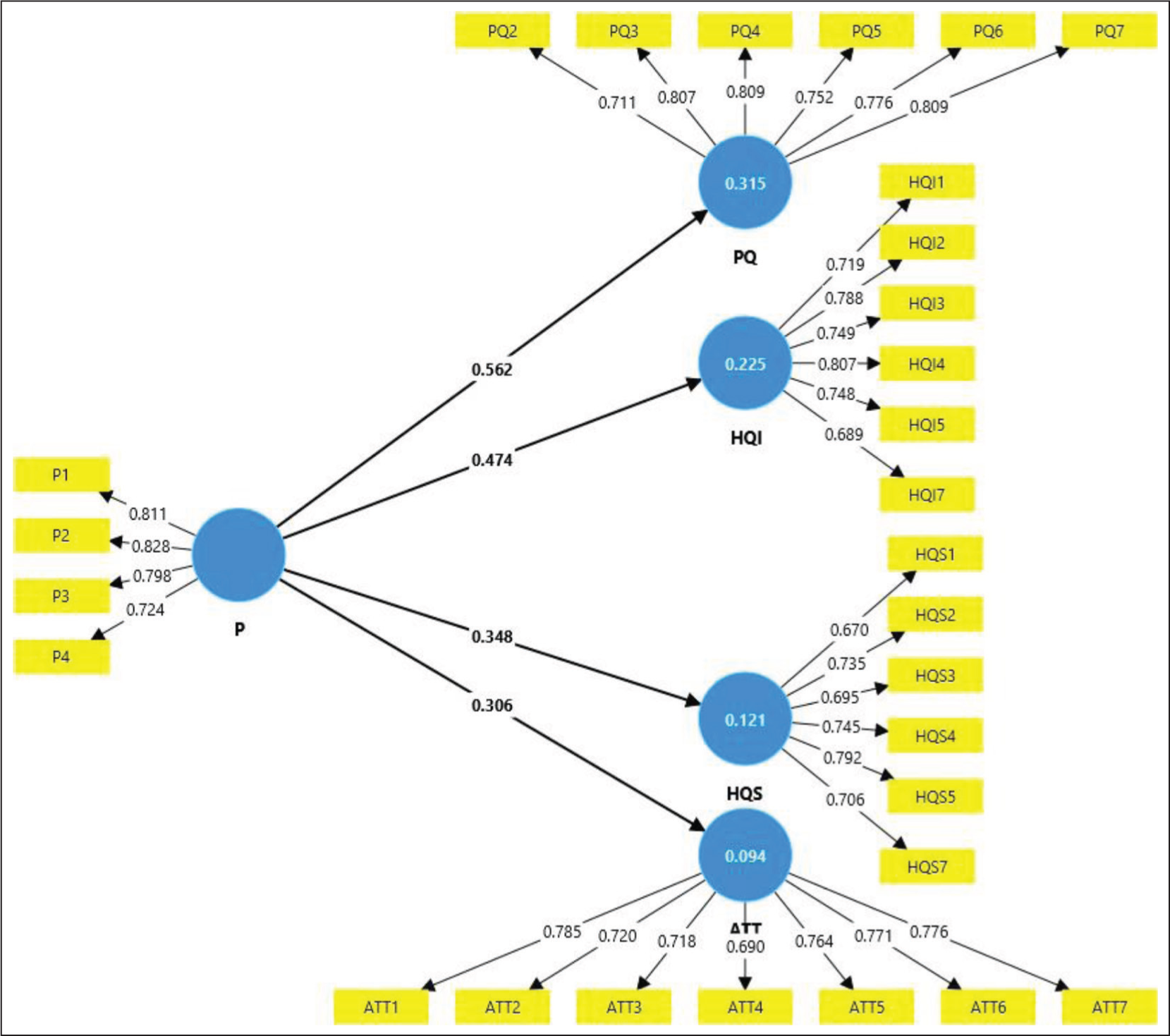
SPSS was used to obtain descriptive statistics and partial least squares structural equation modelling (PLS-SEM) was employed to test the measurement model. SmartPLS4 was selected due to its suitability for small sample sizes and its applicability to both reflective and formative constructs. Since UX is a higher order formative construct whereas personalisation and privacy concerns are reflective construct, we followed a two-step approach (Becker et al., 2012; Duarte & Amaro, 2018). In the first step, we determined the quality of the first-order constructs (Figure 2), by assessing internal consistency, convergent validity and discriminant validity (Hair et al., 2017). In the second step, we used the latent variable scores as indicators for our second-order construct (UX) which involved considering the weights of the first-order constructs on the second-order constructs and their significance (Duarte & Amaro, 2018; Hair et al., 2021; Henseler et al., 2014). The results are presented in Table 2.
First-Order Measurement Model.
Measurement Assessment.
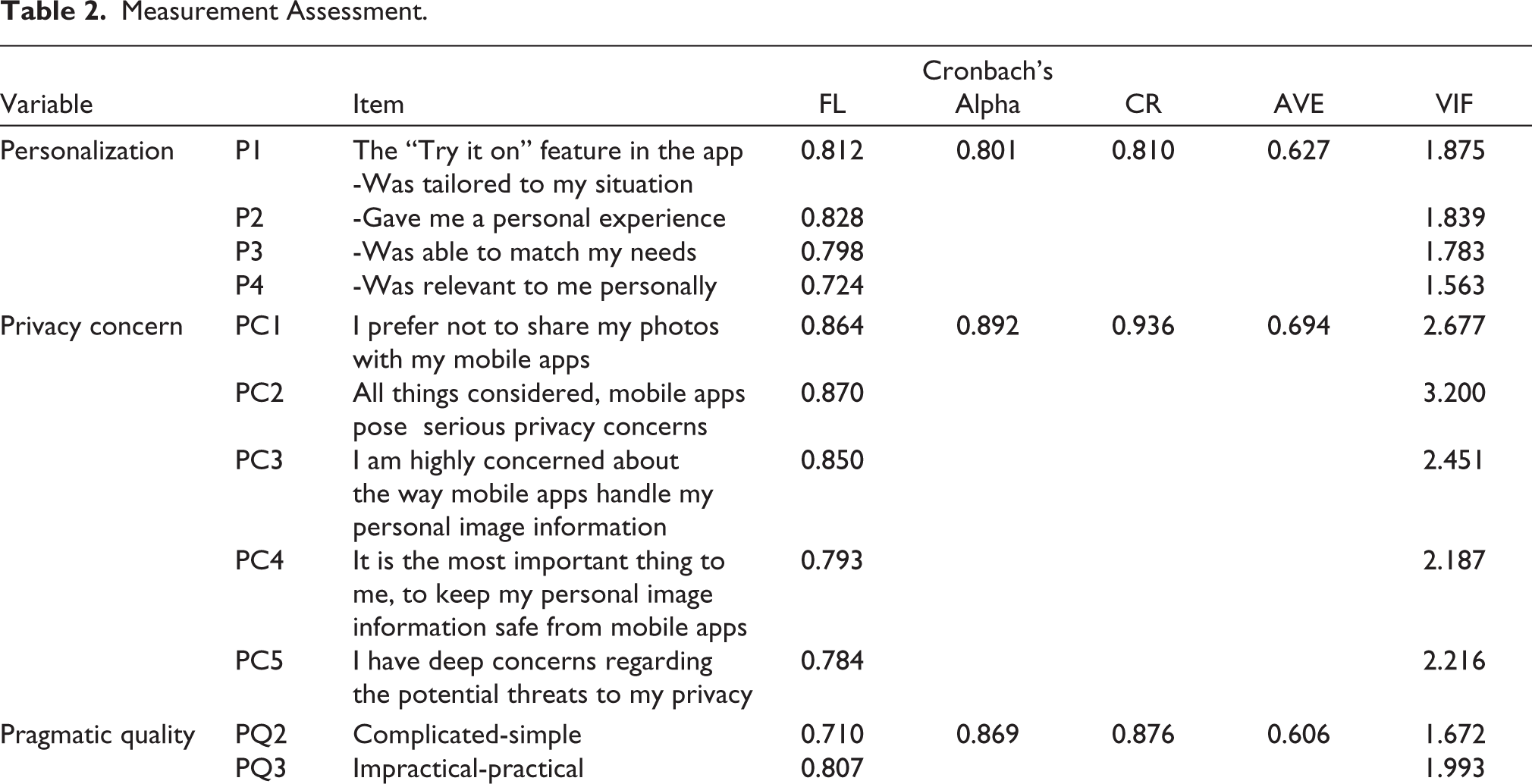
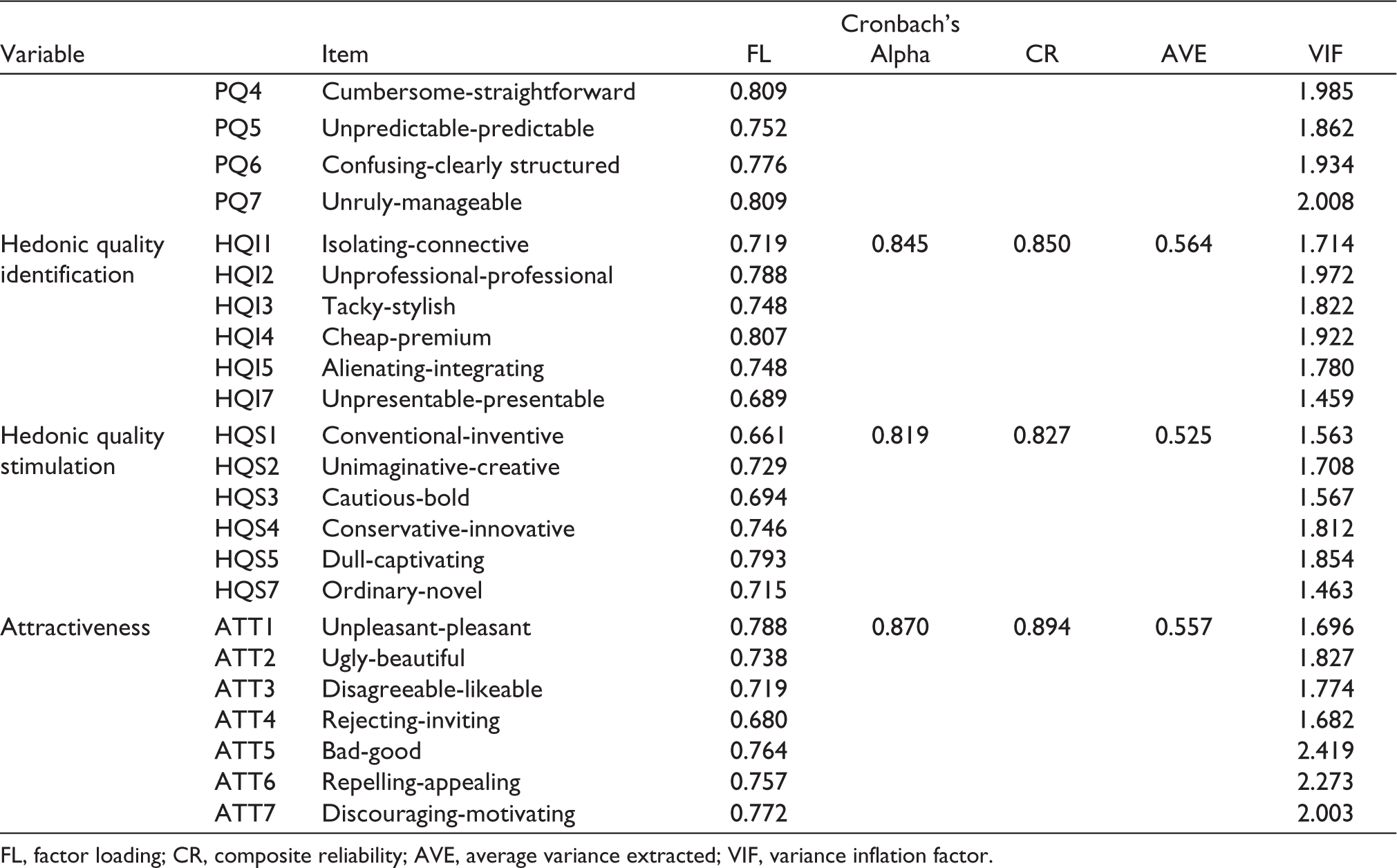
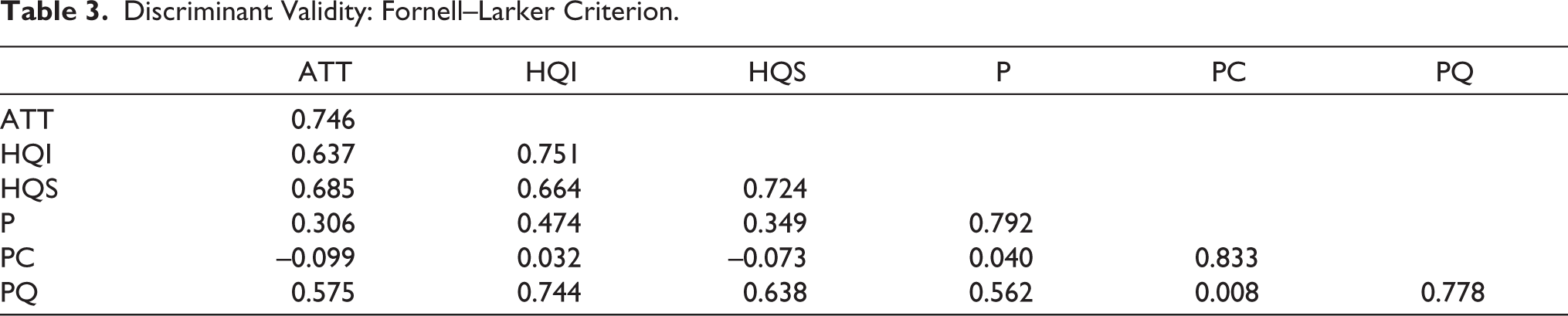
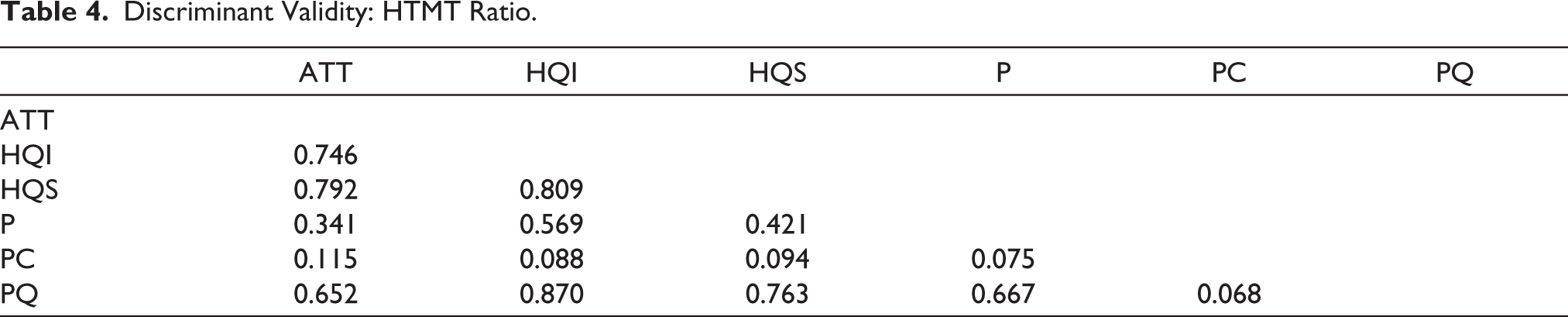
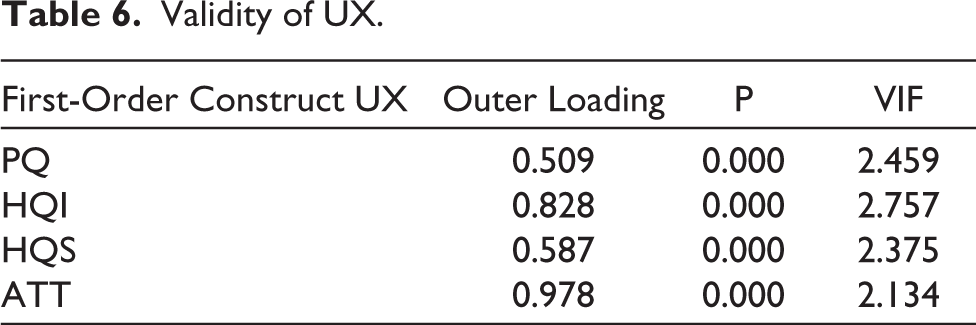
The Cronbach’s alpha (α) values of all the constructs were above the recommended value of 0.7, thus exhibiting reliability (Nunnally, 1978). To check the convergent validity, the values of average variance extracted (AVE) and composite reliability (CR) were checked and all the values were above the threshold value of 0.5 and 0.7 respectively. Discriminant validity was also assessed using the Fornell–Larker criterion and heterotrait-monotrait ratio (HTMT) ratio. All the construct satisfied these two conditions, as shown in Tables 3 and 4 respectively. In this study, UX is measured as a higher order formative construct (Cataldo et al., 2024; Poushneh & Vasquez-Parraga, 2017). To validate the quality of the second-order construct, the quality criteria for formative constructs are used (Duarte & Amaro, 2018; Hair et al., 2014; Henseler et al., 2009). The weights of the first-order construct on the second-order constructs and their significance were assessed. The weights of the first-order constructs should either be significant and above the recommended value of .10 (Andreev, et al., 2009), or, where they are insignificant, the loadings of the indicators should be above 0.50 (Hair et al., 2014). The outer loadings of all the dimensions of UX came above 0.50; therefore, they were all retained (Table 6).
Discriminant Validity: Fornell–Larker Criterion.
Discriminant Validity: HTMT Ratio.
Impact of Personalisation on UX Dimension.
Validity of UX.
Structural Model: Hypothesis Testing
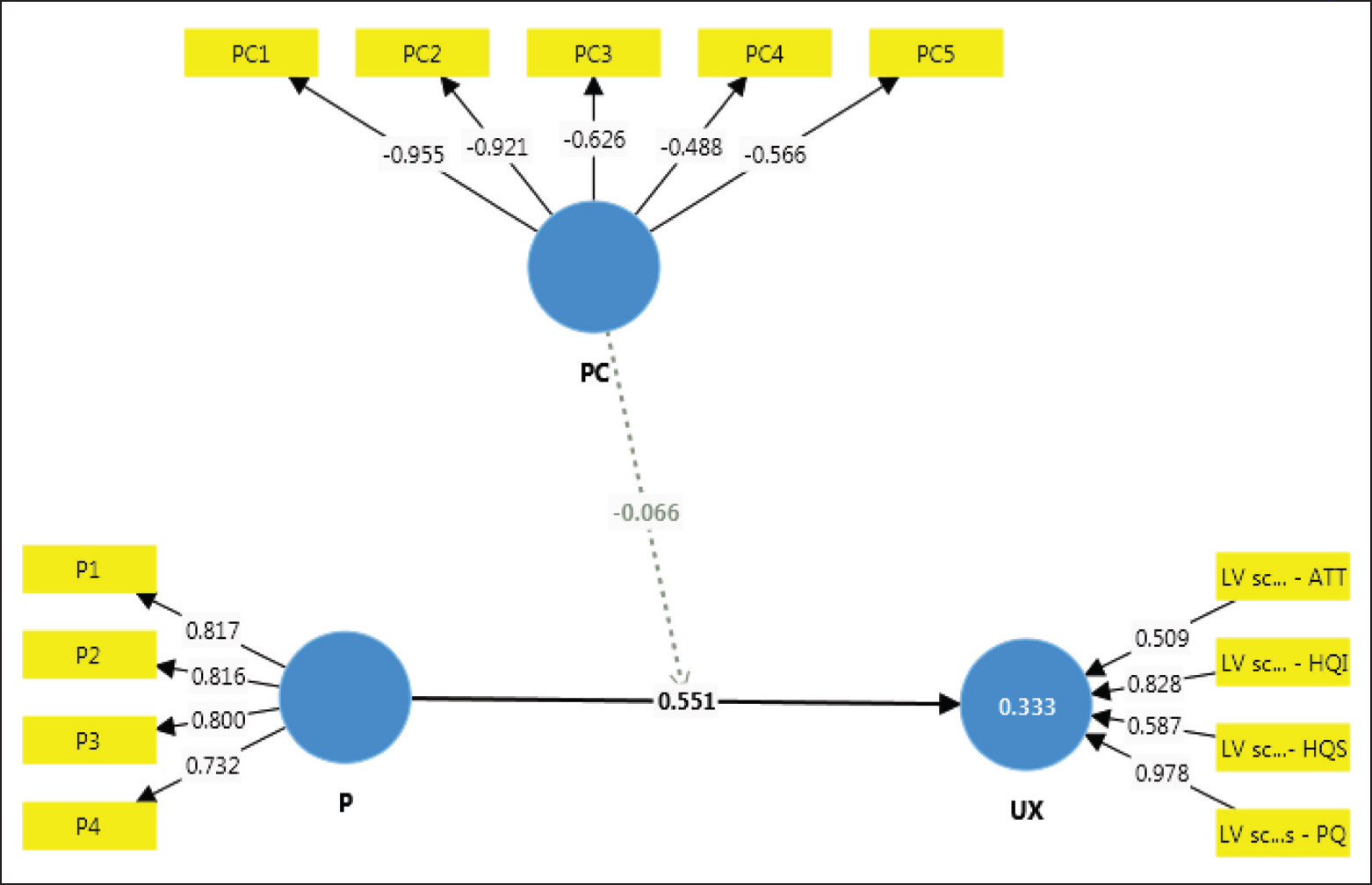
A structural equation modelling using SMART PLS 4.1.0.2 tests the proposed hypothetical relationships among latent constructs. For this, the bootstrapping technique with 5,000re-samples was used to estimate various path coefficients of the structural model. The results, as reported in Table 7 (Figure 4), revealed that personalisation (β = 0.551, P < .01) significantly influences the UX in case of an AR app, thus confirming H1. The beta value for personalisation and UX is positive showing a positive correlation between personalisation and UX, meaning AR apps which provide effective personalisation leads to an enhanced UX. As a rule of thumb, R2 values can describe the level of predictive accuracy: values of 0.25 and less are weak, values between 0.25 and 0.75 are moderate and values exceeding 0.75 are strong (Hair et al., 2011; Henseler et al., 2009). Therefore, our model has a moderate level of predictive accuracy as personalisation can explain 33.3% variance in UX. The model had a satisfactory fit with an SRMR value of 0.088, where a value of less than 0.1 (Hair et al., 2011) is considered a good fit.
Path Coefficients. Hypotheses Results.

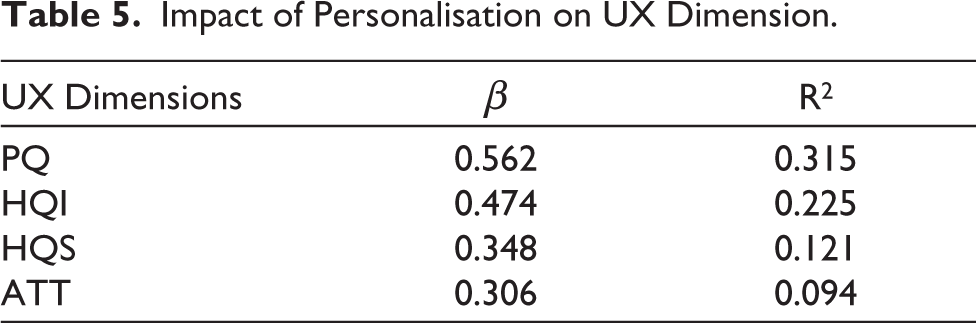
As in Figure 3, the study has shown the effect of personalisation on specific characteristics of the UX, namely PQ, HQ-S, HQ-I and ATT. The analysis revealed that personalisation accounted for 31.5% of the variance in PQ, 22.5% in HQ-I, 12.1% in HQ-S and 9.4% in ATT. These results are presented in Table 5.
Impact of Personalisation on UX Dimensions.
Moderation Analysis
The results related to the second hypothesis (H2) of the study reveal that privacy concern does not moderate the impact of personalisation on UX. The empirical results provided no support for the second hypothesis (H2) because the interaction effect of privacy concern and personalisation (PCxP) on UX was non-significant (β= –0.066, P > .05). Hence, our H2 was rejected. The structural model is shown in Figure 4. The results for path coefficients and hypotheses’ acceptance and rejection are compiled in Table 6.
Structural Model.
Discussion and Conclusion
The results of the study reveal that personalisation explains 33.4% of the variance in UX, thus personalisation has a significant influence on UX. This is in line with a numerous studies showing that personalisation, as a significant feature of AR technology, improves UX across multiple domains, such as commercial websites, AR-enabled fire-fighting systems and digital storytelling in museums (Belk et al., 2012; Chen et al., 2022; Papakostas et al., 2021; Pardini et al., 2022; Roussou & Katifori, 2018). This is because users find personalised AR experience as more entertaining and appreciate its functionality to a greater extent, thus indicating an enhanced UX (Poushneh & Vasquez-Parraga, 2017). Our research adds to the strength of existing studies by demonstrating how personalisation affects UX in context of a makeup app. The results of this study also contribute towards the literature on AR, wherein AR technology is seen as important tool for enhancing UX. In this direction, the results of the study align with the studies of Bretos et al. (2024), Davidavičienė et al. (2020) and Singh & Ahmad (2024).
This study contributes to the quantification of UX, addressing a gap in the existing literature regarding the measurement of UX, which has been limited in prior research (Davidavičienė et al., 2020; Poushneh & Vasquez-Parraga, 2017; Sekhavat, 2016). The study’s findings shed light on the various dimensions of UX within AR app and highlight the influence of personalisation on each one of them. The results reveal that the impact of personalisation on PQ is maximum (β = 0.562, R2 = 0.315), followed by HQ-I (β = 0.474, R2 = 0.225), HQ-S (β = 0.348, R2 = 0.121) and ATT (β = 0.306, R2 = 0.094). Personalisation significantly enhances PQ of the AR app, making it feel simple and easy to use (Bakalov et al., 2013; Desai, 2019; Law & Van Schaik, 2010). There is a limited impact of personalisation on the hedonic qualities in AR apps because when it comes to hedonic experiences, users may not view personalisation as the main factor driving their emotional or sensory enjoyment while interacting with AR apps (Desai, 2019). The impact of personalisation on ATT is the lowest as AR app is shaped by multiple factors, such as how the app looks, its visual appeal, how well it works and its overall design, rather than being solely determined by the presence of personalisation features.
In this study, personalisation primarily impacts the PQ of the AR app by engaging users’ cognitive responses, as it focuses on usability and task efficiency, requiring logical evaluation and problem-solving (Bakalov et al., 2013; Desai, 2019; Law & Van Schaik, 2010). In contrast, hedonic quality—both in terms of identification (HQI) and stimulation (HQS)—elicits affective responses (Diefenbach et al., 2014). Furthermore, ATT is influenced by both cognitive assessments of system performance and affective reactions to its design, exhibiting both cognitive and affective responses, reinforcing its multidimensional nature (Kim & Perdue, 2011; Li et al., 2023; Principe & Langlois, 2011). Therefore, this article also contributes towards the consolidation of literature on the theory of interactive media effect in context of AR technology (Javornik, 2016; Lee et al., 2021; Sundar et al., 2015; Wang & Sundar, 2018; Zheng et al., 2017), wherein personalisation of AR app affects the cognitive and affective response of the users.
Furthermore, the results suggest that the privacy concern does not moderate the relationship of personalisation and UX. This could be explained by the current trend where individuals express worry about their privacy (Poushneh, 2018) but still value and desire personalised experiences (Kim et al., 2013; Tam & Ho, 2006). Consequently, the desire for personalised experience seems to outweigh the concerns regarding privacy (Sundar & Marathe, 2010; Zhang & Sundar, 2019). This is explained well with the equity theory, as individuals compare the benefits of tailored AR experiences against potential privacy risks and often prioritise personalised experiences in AR despite concerns about privacy (Poushneh & Vasquez-Parraga, 2017; Zhang & Sundar, 2019). By exploring the moderating role of privacy concern, the study contributes to the recent advancements in the AR literature (Du et al., 2022).
Implications, Limitations and Future Research
AR has developed significant interest and adoption across various industries due to its multitude of benefits. Many leading companies are integrating AR into their operations, recognising its potential to captivate audiences and enhance user engagement. This article offers key insights that can guide marketers in taking advantage of AR in case of a makeup app.
This study underscores the importance of AR technology in enhancing UX. However, merely incorporating AR technology is not sufficient for enhancement of UX. App developers must have deep understanding of the various dimensions of UX such as PQ, HQ-S, HQ-I and ATT for a successful AR implementation in an application. As from the study it was found that personalisation strongly impacts PQ, indicating that a well-designed personalised experience results in a more intuitive user interface, which is practical, straightforward, clearly structured and manageable, setting a benchmark for other applications to follow. Additionally, while personalisation had the least impact on ATT, it was still significant. Therefore, app developers must work on enhancing the app’s overall aesthetics of the AR experience to further improve the quality of the app so that it becomes more attractive.
Although privacy concerns did not influence the relationship between personalisation and UX in this study, AR apps that offer personalisation in exchange for private information may still raise significant privacy concerns. App developers should be mindful of key factors, such as ensuring data collection transparency, providing clear consent and control options for users and practicing data minimisation to gather only the necessary information. These considerations are essential for maintaining user trust and safeguarding privacy while offering personalised experiences.
While our findings offer valuable insights for managers, there are several limitations that should be considered for future research. First, this article focused on a relatively narrow age group, limiting the generalisability of the results to individuals not older than 30 years. Second, behavioural outcomes were not included in this study, and this aspect could be considered for exploration in future research. Lastly, the research exclusively centred around makeup, allowing only females to participate. Future research should broaden its scope to encompass other categories like eyewear and furniture, and include participation from males as well.
Footnotes
Declaration of Conflicting Interests
The authors declared no potential conflicts of interest with respect to the research, authorship and/or publication of this article.
Funding
The authors received no financial support for the research, authorship and/or publication of this article.