




Abstract
In the rapidly evolving landscape of metaverse technologies, the potential for enhancing service interactions is immense. However, many of these technologies fall short in offering context-driven and customizable experiences. This paper proposes that AR Cloud (ARC), a novel external metaverse technology can bridge this gap. ARC stands out by enabling real-time interactions, fostering contextual awareness, ensuring high content flexibility, promoting social engagement, and delivering personalized experiences. We present a conceptual model that juxtaposes ARC with established metaverse augmentation technologies, such as lifelogging and augmented reality. Our discussion focuses on the transformative impact of ARC on the value co-creation process, emphasizing the enhanced well-being outcomes—both hedonic and eudemonic—that arise from ARC-powered service interactions. We conclude by charting a course for future research on ARC, touching upon its attributes, potential moderating variables, its role in sustained value co-creation, and the potential service outcomes it could support.
Keywords
Introduction
The Augmented Reality Cloud (ARC), which is central to the expansive Metaverse concept, has the opportunity to reshape the ways in which individuals engage with their environment by providing persistent augmented reality experiences anchored to specific locations and accessible across multiple devices and users (Duong Nam-Duong et al., 2022). It does this by utilizing cloud computing to manage resource-intensive tasks like data storage, image processing, and object recognition (Shea et al. 2017), crucial for ensuring seamless and scalable Metaverse experiences (Rostami and Maier 2022). For instance, users might point their mobile devices at a park to view a live historical reenactment or access real-time restaurant reviews through a headset as they navigate a street. Such applications highlight the potential of ARC to enhance real-world interactions with digital overlays, facilitated by cloud technology's capacity to handle large data volumes and complex computations, thus guaranteeing smooth and consistent user experiences across varied locations and devices (Shea et al. 2017).
Despite ARC's capabilities, existing research predominantly concentrates on its technical dimensions rather than its interoperability or the service outcomes it enables (see e.g., Patil et al. 2023). Nevertheless, it is crucial to recognize that the interoperability of cloud solutions within ARC is essential for delivering consistent and scalable services across the Metaverse. This interoperability ensures that various augmented reality services can seamlessly interact and integrate with each other across different platforms and devices, fostering a unified service environment within the Metaverse (Dhelim et al. 2022). Such integration is vital for realizing the full potential of ARC in enhancing user engagement and facilitating value co-creation within the burgeoning Metaverse ecosystem.
Research on metaverse and associated technologies has extensively examined augmented reality (AR) and virtual reality (VR) across various settings and contexts. AR involves the digital overlay on top of physical objects, while VR transport users to immersive virtual environments. Both technologies have been researched within industries such as education with studies such as Chen et al. (2019), highlighting its use in interactive learning environments, while Kavanagh et al. (2017) explore the immersive capabilities of VR in the same field. In healthcare, Ferrari (2019) discusses AR applications for surgical training and patient care, while Fertleman et al. (2018) investigate VR’s role in healthcare training. The retail sector benefits from AR's enhancement of consumer interactions (Poushneh and Vasquez-Parraga 2017), whereas Farah et al. (2019) demonstrate how VR can create engaging shopping experiences. Tourism research includes Kim, Lee, and Jung (2020), showcasing VR's ability to simulate travel experiences, and tom Dieck, Hyungsoo Jung, and Rauschnabel (2018) who focus on AR for enhancing tourist engagement. Despite these advances in AR and VR technologies, the expansion of augmentation technology towards the ARC presents an intriguing and growing area of interest. To that end, this paper aims to highlight the potential of ARC as a metaverse augmentation technology within service provision and value co-creation.
The most common augmentation technology is AR due to the sheer number of studies in recent years focusing on the technology’s marketing attributes such as authentic experiences (Alimamy and Nadeem 2022), presence (Kim and Choo 2021), interactivity (Barhorst et al. 2021), and personalization (Alimamy and Gnoth 2022). These attributes have been found to result in multiple positive outcomes like heightened decision-making comfort (Hilken et al. 2017), willingness to co-create (Alimamy and Gnoth 2022), satisfaction (Barhorst et al. 2021), purchase intentions (Poushneh 2021), and positive attitude (Scholz and Duffy 2018).
Despite the benefits in using augmentation technology, both for the consumer and the service provider, especially when compared to conventional marketing strategies, there are still shortcomings in research within this space. This is predominantly because the technology itself is still in its infancy. Social interaction and digital engagement between customer and service agents are limited to the augmentation application they are using, which is designed to fit one purpose. This leads to cross-compatibility challenges, which can prevent augmentation applications from being used in conjunction with other apps or within different environments, consequently diminishing their practicality and usability (Nguyen, Jung, and Dang 2020). This lack of integration can lead to varied user experiences even when applications share similar metaverse technology attributes. For example, the Wannakicks app offers a personalized shoe trial experience, whereas the IKEA Place app allows for furniture customization in one's home. Both aim to deliver personalization and empowerment, yet the distinct quality, features, and attributes of each app may result in divergent user experiences. These differences can affect how users perceive value and make decisions (Rauschnabel, Felix, and Hinsch 2019). Such a service provider-centric approach, typical of traditional AR apps, often scripts user experiences towards certain ends, such as a purchase or favorable reviews, which contrasts with the co-creative value principles advocated by Vargo and Lusch (2004), where value is jointly constructed by customers and service providers.
Unlike traditional augmentation technologies that are tethered to specific objects, ARC is adaptive. It enriches environments and promotes shared immersive experiences by augmenting the physical realm with intelligent, context-aware digital objects (Beauchemin Russell, 2016). For example, a user with a head-mounted display (HMD) or utilizing a smartphone camera can aim at an approaching train. This action reveals augmented details about the train, such as seat availability, its route, and occupied areas. Furthermore, users can engage with this digital layer to promptly purchase a ticket using their stored credit card details, even choosing a particular seat. ARC can be perceived as a form of “metaverse” accessible through augmentation devices or smartphones. However, unlike the simulation or VR metaverse, which gained significant traction, especially after Facebook's rebranding to META, ARC has not attracted equivalent attention. META’s recent introduction of its “presence” platform, currently under testing, not only projects digital objects onto the physical world but also enables interactions between these digital elements and their tangible counterparts seamlessly (VRScout 2021). In essence, this platform represents an early iteration of the potential offered by a fully developed ARC, enhancing daily experiences with a digital overlay that fosters novel interactions with physical entities, people, and spaces.
Additionally, ARC has seen limited industry adoption due to the absence of robust head-mounted displays and the high costs of early headsets (McGill et al. 2020). Content development further posed a significant challenge, requiring substantial manual effort and time. However, the scenario has evolved due to recent advancements in pass-through and AR technologies, complemented by AI's role in swiftly and cost-effectively generating curated content (Tuunanen et al. 2019). These developments have reignited interest in ARC, as evidenced by the substantial investments from major tech giants like META and Apple (Global Market, 2023). Both companies have released headsets with passthrough capabilities, effectively allowing users to “see-through” the wearable headset and overlay digital content on the physical environment (Global Market, 2023). In a 2017 interview, the CEO of Apple Tim Cook famously said “I’m excited about augmented reality because unlike virtual reality which closes the world out, AR allows individuals to be present in the world but hopefully allows an improvement on what’s happening presently...With AR you can, not be engrossed in something, but have it be a part of your world, of your conversation. That has resonance.” (Digital Trends 2017). This statement summed up Apple’s focus on developing the Apple Vision Pro, a wearable headset that enables access to digital content overlayed onto physical environments, while on the go. Additionally, some development companies such as Unity and Microsoft have offered tools that enable the integration of “spatial anchors” in real environments. This innovation allows users to interact with the real world and other users by connecting with these virtual anchors, which are anchored to physical locations. Such technological advancements are instrumental in fostering the creation of ARC ecosystems.
This transition from a world where virtual and physical environments are distinct to one where they seamlessly integrate is further highlighted by Tuunanen et al. (2019). The authors contend that service delivery has evolved from being primarily human-based to digital and is now poised for another significant shift—from digitization to cybernization. In this forthcoming phase, services will be rendered through the synergy of physical and digital realms, signifying a pivotal change in the interaction between individuals, businesses, and technology. Moreover, the authors exemplify this shift with the Amazon GO case study, a physical store where AI-powered fusion sensors and spatial computing systems enable customers to select physical products and place them in their bags, then automatically be billed upon exit. This setup, similar to a small-scale ARC system, merges the physical store with dynamic, real-time digital interactions, embodying the essence of a cybernetic entity.
Consequently, the aim of this study is to explore the potential of ARC as a metaverse augmentation technology that could be capable of enhancing service interactions and fostering value co-creation. We begin by examining the concept of the metaverse, exploring its intertwined relationship with augmentation technology, and subsequently discussing the concept of the ARC. Furthermore, through the theory of embodied cognition, we advance the potential of ARC within service ecosystems by evaluating its influence on the value co-creation process and to highlight the ways in which the technology results in both hedonic and eudemonic value outcomes. The study follows the “model” analytical approach methodology for conceptual papers to develop a theoretical framework that “describes an entity and identifies issues that should be considered in its study” (Jaakkola 2020) and culminates with a proposed future research agenda for incorporating ARC within services.
Literature Review
Metaverse, which is a combination of the words “meta” that is, transcendence, and “verse” that is, world, has been traced back to the 1992 book “Snow Crash.” The novel depicted the metaverse as a virtual world that is accessible through VR (Joshua 2017). Despite the novel being ahead of its time, much of the metaverse’s popularity came from one event—the rebranding of the social media giant “Facebook” into “Meta” in October 2021. Mark Zuckerberg, the CEO of Facebook (now “Meta”) argued that the future of social interactions (and the internet for that matter) will be central to this new virtual world that they were going to build. Since that announcement, there has been a plethora of interest in the metaverse with many entities vying for a share (Pew Research Centre 2022). Although the main concept of the metaverse for Meta is the virtual simulation of the physical world which is accessed through AR and VR, the Acceleration Studies Foundation (ASF), a non-for-profit research company, has classified the metaverse as nuanced VR and AR technologies almost 15 years ago; they argued that there are different types of metaverse(s) which comprised of several technologies spread across two spectrums: (a) simulation to augmentation; and (b) external to intimate, represented in a grid-like fashion (Figure 1) (Smart et al. 2007). Types of metaverses (adapted from Smart et al. 2007).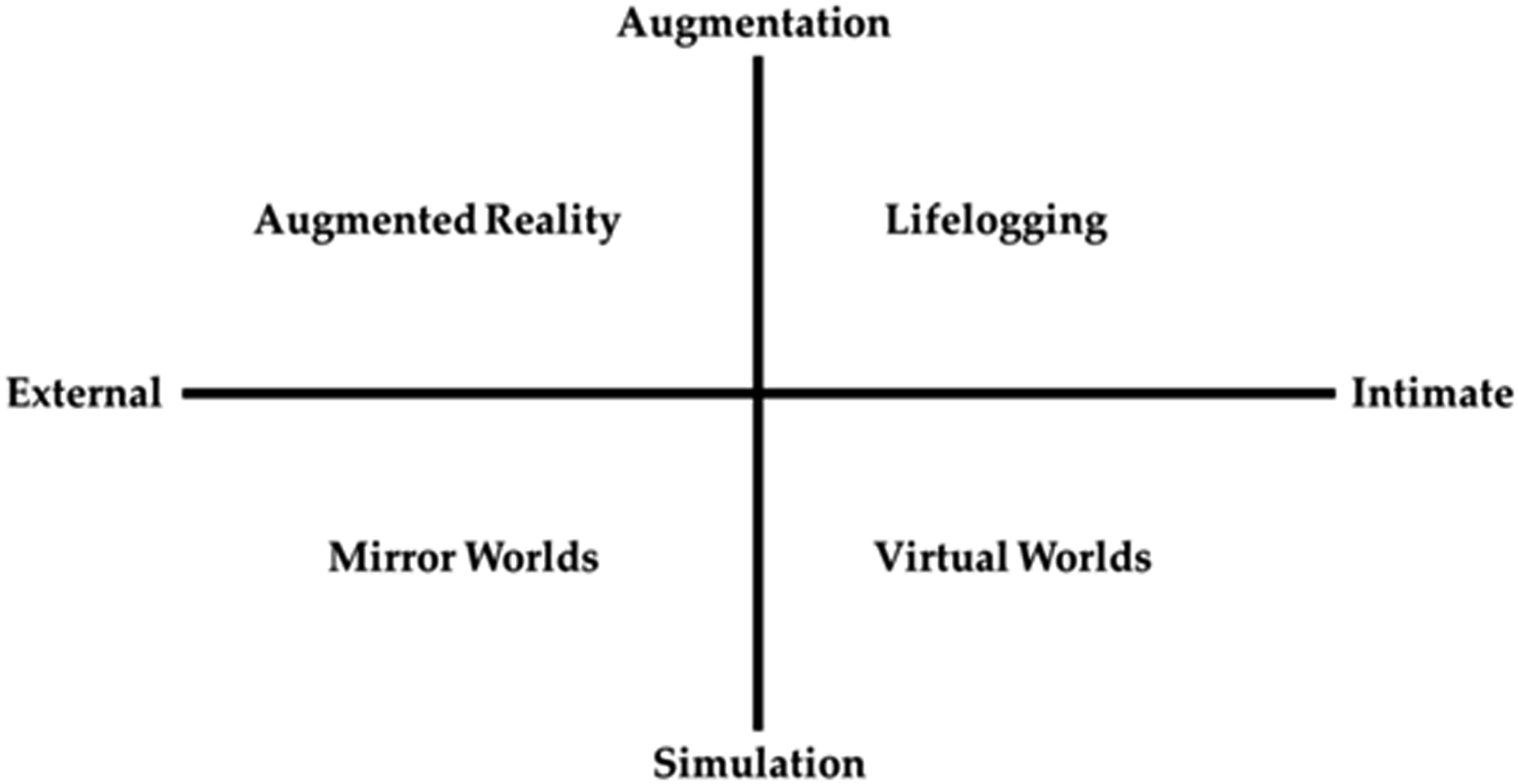
On the intimate side of the grid, lifelogging refers to technology that is used to capture, store, and share experiences and information from the physical world. For instance, the use of an Apple Watch that monitors and captures information about an individual’s fitness and sleep levels is a form of lifelogging. Virtual worlds are another type of intimate metaverse technology that comprises a virtual avatar that can interact with other virtual avatars. For instance, Minecraft allows players to manipulate a virtual environment by extracting raw materials to build items and infrastructure. Although there is a social aspect through the ability to chat and play with others, it was initially considered as an intimate, simulated environment due to the ability to control their environment and manipulate it according to their own needs. On the external side of the spectrum, AR and Mirror Worlds exist; the latter has given rise to the concept of digital twin—a passing evolution from Mirror Worlds into digital representations of physical objects (Singh et al. 2021). They represent augmented and simulation technologies, respectively. Mirror worlds refers to a virtual duplicate of a physical environment, for example, a VR supermarket or roller-coaster experience. Whereas AR is associated with the ability to augment physical objects with digital content and information. As such, AR, and VR technologies which are collectively referred to as extended reality, XR, or xReality (Rauschnabel et al. 2022), enable external interactions with the physical or digital worlds, respectively. Advancements in technology such as microchips and wearable efficiencies has resulted in increasingly mobile and efficient XR technological experiences, especially within the AR space (Rauschnabel et al. 2022).
In line with recent research (Flavián, Ibáñez-Sánchez, and Orús 2019) that categorizes AR and VR as components of the broader MR spectrum, we propose an enriched Metaverse matrix, as illustrated in Figure 2. Specifically, we argue that ARC pushes the boundaries of external augmentation beyond traditional AR by amplifying entire environments and transforming vast areas like urban landscapes or large structures, making the technology a more encompassing external augmentation technology. On the virtual dimension side of the spectrum, we propose an intermediary metaverse category. This category, which bridges the intimate and external dimensions, includes multi-user virtual environments (MUVEs) as seen in mega-multiplayer games like Roblox or World of Warcraft. In these platforms, players navigate using avatars, immersing themselves in the virtual world and interacting with other players’ avatars. This creates a dual experience: it’s intimate because of the personalized avatar control, yet external due to the vast, shared virtual landscapes players explore and interact within. Types of metaverses—extended matrix.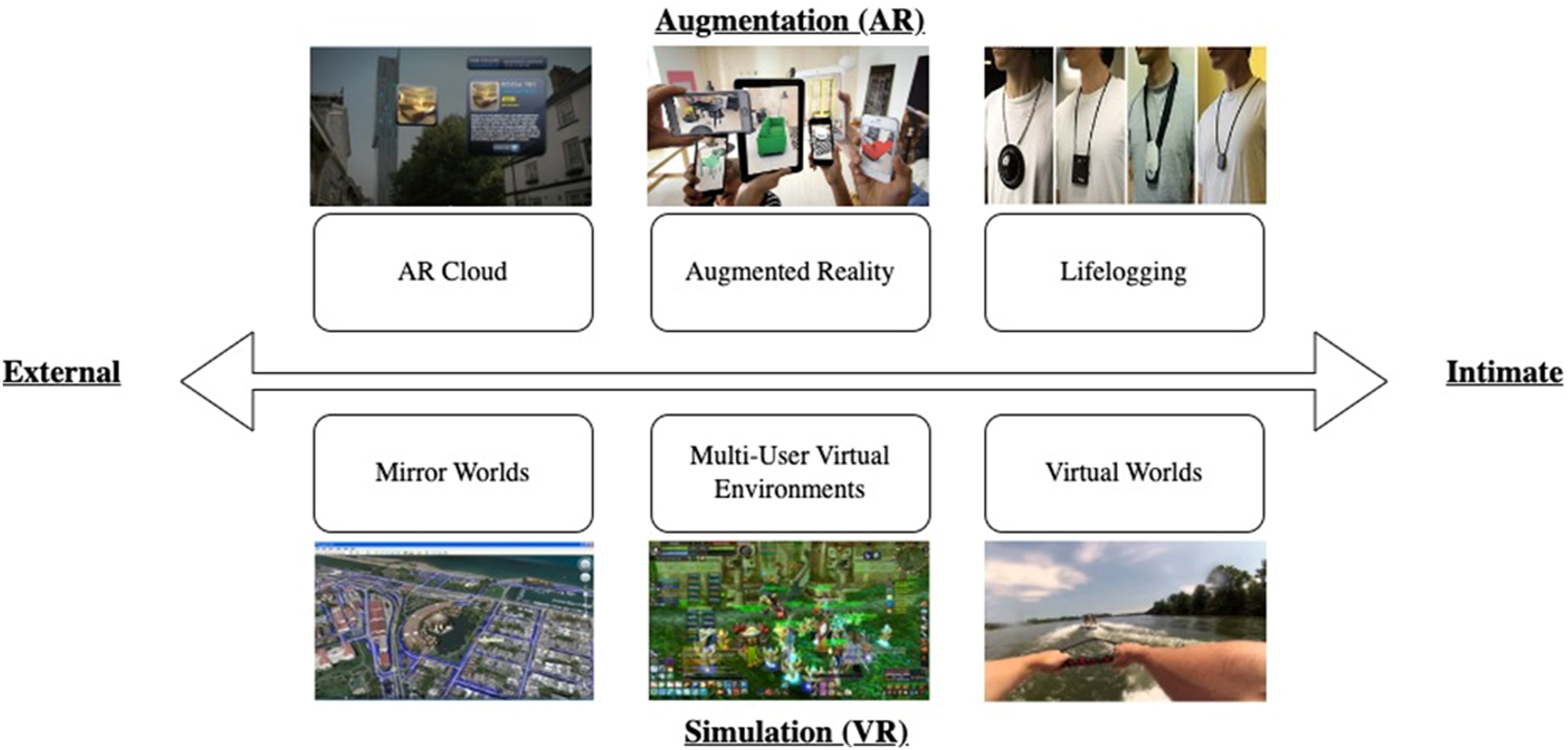
Trillion-dollar companies, such as Facebook and Apple are investing billions of dollars and repositioning their brands to become first-movers into the XR space as the industry is poised to reach US$454 billion by 2030 (Allied Market Research 2021). Although the importance of simulation within this space cannot be understated, the role of AR in this matrix and subsequently, the Metaverse(s), enable the integration of digital content into the physical world, and potentially allow for value co-creation to happen in the real-world. Due to this, the current research explores the augmentation thread of this matrix (lifelogging, AR, and ARC) to highlight the attributes and value co-creation potential of these three technologies.
Augmentation Technology and Value Co-Creation
Data derived through lifelogging technology can be used to help a person identify a problem, monitor their health, and/or improve their quality of life. In addition to wearables, social media is also considered a way to manually record, store, and share information with others (Karapanos, Teixeira, and Gouveia 2016). For instance, Instagram users can share information about their lives through images, which can either be shared publicly or saved privately. Lifelogging, along with other augmentation technology is expected to facilitate value co-creation—or the active collaboration and mutual creation of value between the user, service provider, and other users (Vargo and Lusch 2004).
According to Prahalad and Ramaswamy (2004), value co-creation experiences require four components to be successful: Dialogue, access, risk mitigation, and transparency (DART). Lifelogging could conceivably enable dialogue between the service provider, for example, application, and the user by providing recommendations and reminders for the user, which the user acts on by setting goals and objectives. Yet, due to privacy concerns associated with the sharing of intimate, personal data, the dialogue between social agents such as individuals could be limited. Regarding access, lifelogging provides additional information to the user (compared to what can be derived without lifelogging), other social agents such as a concerned family member, personal trainer or doctor, and the service provider. This would enable collaboration to set the right targets or objectives for future interaction episodes. Depending on the app, lifelogging can also provide transparency in terms of how the data is used and whom it is shared with, which also reduces risks associated with making an uninformed decision (e.g., the intensity of exercise).
Turning to AR, recent advancements in the technology have piqued interest in its application for marketing. Enhanced AR technology has significantly amplified customer value, as evidenced by studies like Cranmer, Claudia tom Dieck, and Fountoulaki (2020) and Rauschnabel et al. (2022). Caboni and Hagberg (2019) highlight the interaction experience as a primary value of AR, where customers can visualize and engage with offerings, whether as holograms, such as 3D furniture models, or overlays on physical items, like virtual glasses on a user. Another significant value is the ease of information access. AR apps, like IKEA's, offer product details, holographic size visualizations, and reviews, streamlining the decision-making process for potential buyers. Furthermore, AR stands out in the realm of entertainment and personalization, enhancing product tangibility and boosting purchase confidence (Vonkeman, Verhagen, and van Dolen 2017). Lastly, AR enhances the overall service experience (Javornik 2016; Scholz and Duffy 2018), improved decision comfort, reduced confusion, increased trust, and enhanced customer engagement (Alimamy and Gnoth 2022; Hilken et al. 2017). In retail, AR facilitates touchless product evaluation, leading to higher sales and fewer returns (Papagiannis 2020).
The extant literature underscores AR's role in value co-creation (e.g., Alimamy and Nadeem 2022). Although AR offers mutual benefits for customers and providers, it's not without limitations in co-creation. Using the DART model as a reference, traditional AR covers dialogue, access, risk mitigation, and transparency. However, customer input is often restricted to pre-set options. This interaction doesn't fully embrace co-creation principles where both parties collaboratively add value (Vargo and Lusch 2004). Service providers might curate app content, affecting transparency and decision-making. For instance, the Sephora AR app limits product views and might prioritize positive reviews, potentially skewing customer perception.
In this study, we propose that ARC plays a pivotal role in the value co-creation process. ARC is distinguished by its ability to provide AR content that is both anchored to specific physical locations and shared across multiple devices. ARC ensures that digital elements are not only embedded within the user's real-world environment but also consistently maintained across various platforms (Duong Nam-Duong et al., 2022). This capability allows multiple users to access and interact with the same augmented content in a synchronized manner, enhancing collaborative experiences and interactions in a shared physical space. Drawing from the theory of embodied cognition, all cognitive processes stem from bodily states (Barsalou 2008). Comprehensive customer experiences, constructed from an integration of senses, shape behaviors, emotions, and judgments (Krishna 2012). These sensory-rich experiences are instrumental in formulating abstract thought and bestowing meaning (Csikszentmihalyi Mihaly & Rochberg-Halton Eugene, 1981). Given this perspective, ARC, with its immersive, multi-sensory interactions, promises deeper meaning and value compared to traditional AR and lifelogging technologies, which often present constrained, isolated experiences.
ARC not only overlays external information onto the physical world but also enables these digital constructs to fluidly interact with physical entities, offering a comprehensive, embodied interaction. This capability aligns with the DART model’s principles for value co-creation: dialogue, access, risk assessment, and transparency (Prahalad Coimbatore & Ramaswamy Venkatram, 2002; Prahalad & Ramaswamy, 2004). In contrast, mirror worlds, a technology enabling user interaction in a purely virtual environment, are designed as parallel universes detached from tangible reality (Mystakidis 2022). Thus, while both technologies present unique offerings, ARC stands distinct in its potential to provide a truly integrated experience, bridging digital and physical domains.
Proposed Conceptual Framework
AR Cloud Attributes
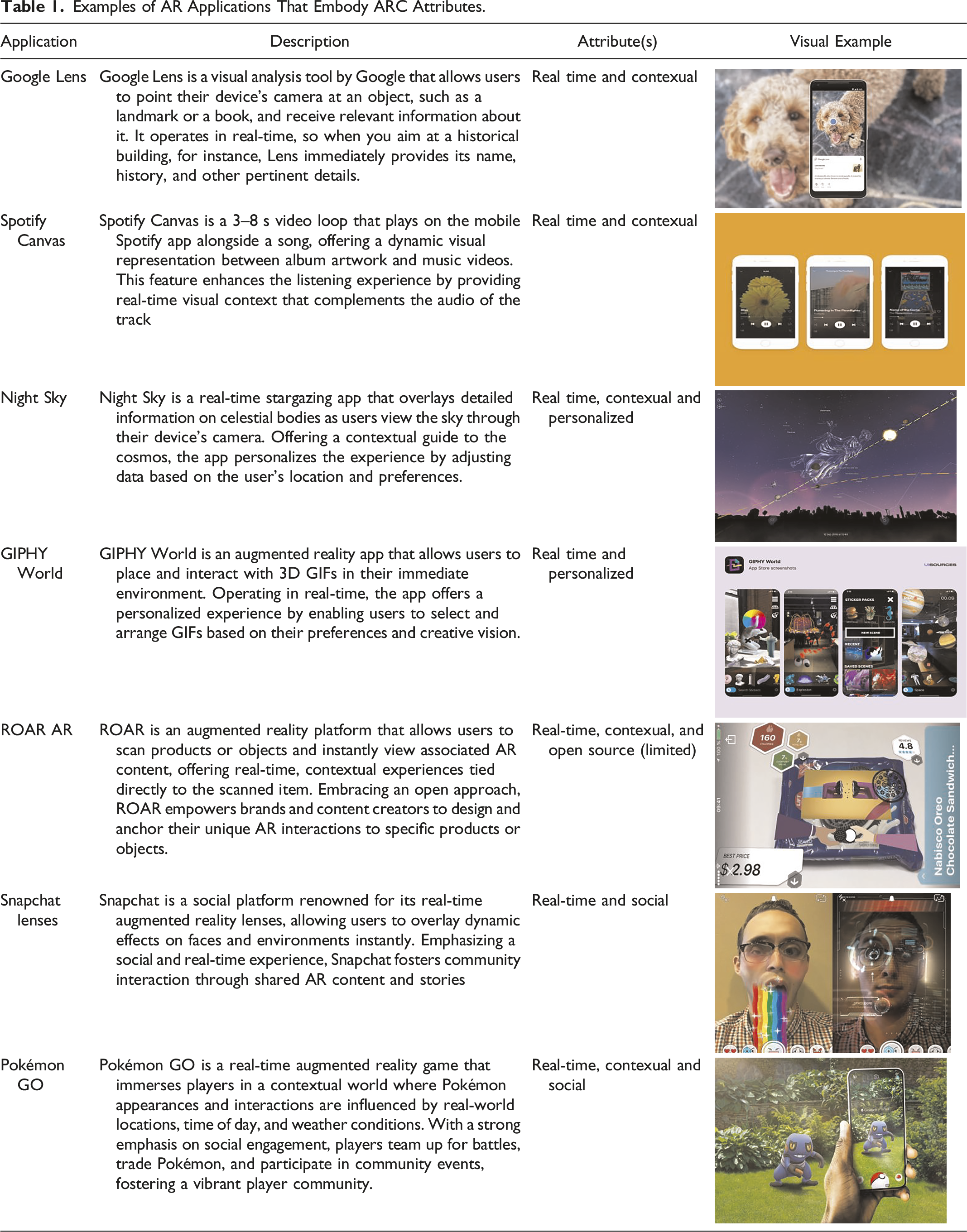
Examples of AR Applications That Embody ARC Attributes.
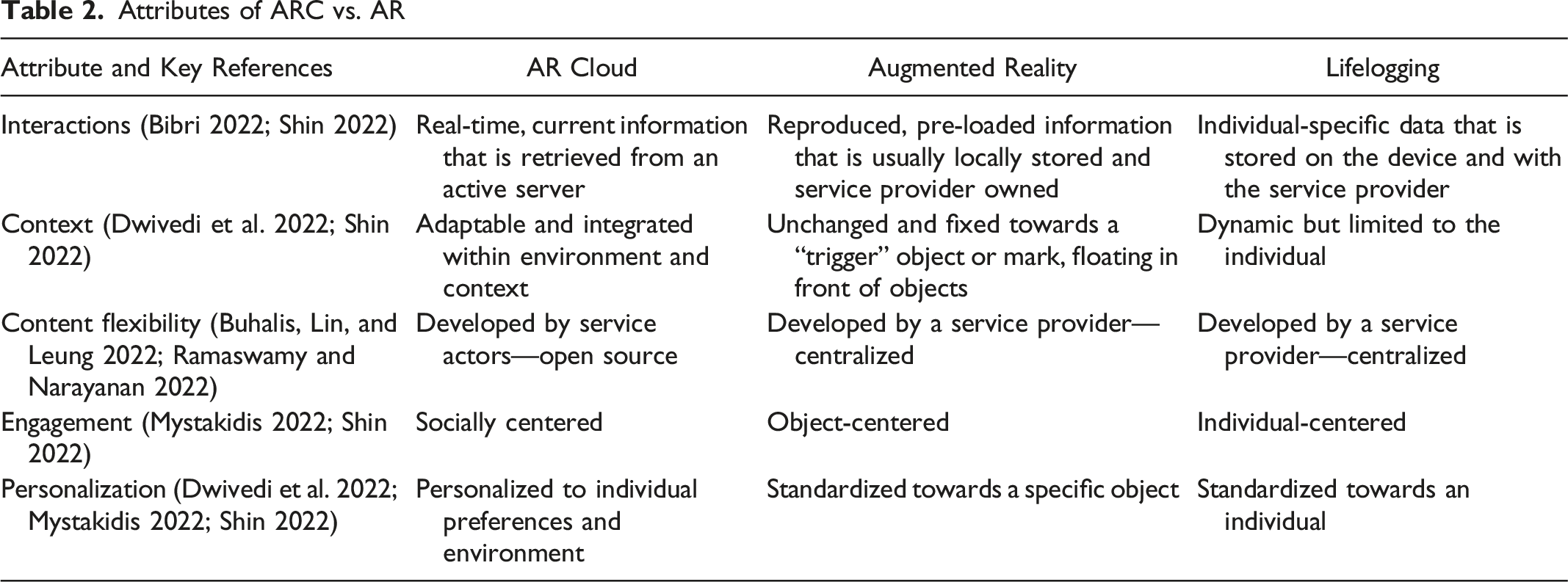
ARC is seen as the next progression from lifelogging and AR, merging AR's features with the attributes previously discussed. ARC promises a more integrated interaction with digital elements in the physical world, surpassing the limited scope of many current applications. Described as a “spatial AR,” ARC builds on the conceptualization of ANW by presenting a multi-layered reality where digital and physical realms intertwine, facilitating novel interactions and richer information exchanges (Beauchemin Russell, 2016). This depth contrasts with the more superficial interactions of many AR solutions and aligns with Ball (2022)'s Metaverse definition.
In the digital landscape, the concept of “real-time” attributes has been pivotal in shaping user experiences. AR has utilized real-time data to varying degrees. For example, Google Lens offers real-time insights, but often falls short by providing outdated or static information which is infrequently updated by the service provider. In contrast, lifelogging captures real-time data for later use. ARC elevates this concept, merging lifelogging's immediacy with AR's immersion. Rather than using static app data, ARC delivers a continuous, real-time experience directly from its server. For example, users in an ARC environment might immediately see updated hotel availability or new reviews. This dynamic content, potentially added by other users or service providers, ensures a current experience. However, ARC's real-time nature isn't without challenges. Nadeem and Al-Imamy (2020) caution about potential privacy and ethical issues, especially if data is misused. Additionally, ARC's open environment, where anyone can contribute, might frustrate users if their curated spaces are altered by others. Striking a balance between innovation and potential risks is essential.
In terms of contextual awareness, ARC is distinguished from traditional AR. Despite AR apps like “Night Sky” providing context-specific experiences, such as displaying constellations based on the current night sky, they often remain static and isolated. ARC, on the other hand, dynamically integrates with real-time changes, offering a deeper understanding of the environment. For instance, in a supermarket, ARC could provide real-time price comparisons, navigation, reviews, and personalized recipe suggestions. This enhanced awareness can offer a richer experience (Mengcheng and Tuunanen 2022) that isn't solely dictated by service providers but rather co-created with the customer in real-time. A notable example of a small-scale ARC environment is Amazon Go. In these innovative stores, ARC principles are applied to create a seamless shopping experience with features like spatial awareness to automate billing and provide recommendations, demonstrating the effective use of ARC in enhancing everyday consumer activities. In essence, ARC's contextual capabilities surpass traditional AR but require users to navigate its richness carefully.
Another one of ARC's standout attributes is its content flexibility, rooted in decentralized control aimed at preventing content monopolization. Mirroring the metaverse's decentralized nature (which is often associated with blockchain), ARC empowers users to curate content, promoting transparency and autonomy, and thereby value co-creation (Prahalad and Ramaswamy 2004). ARC's ecosystem thrives on transparency, with elements like reviews and price comparisons being democratically and collaboratively generated by users and service providers, akin to open-source platforms like Firefox and Wikipedia. Contrasting with AR applications such as “Roar,” which enables users to overlay digital content onto the physical space, providing a degree of content adaptability. However, it operates largely on a centralized paradigm, where the content flexibility is somewhat restricted and predefined to what the application provides in terms of digital elements. ARC excels in decentralized content creation and adaptability. Users become active creators, molding the digital realm in real-time, a dimension Roar's AR lacks. This flexibility aligns with the concept of value co-creation as it allows for value to be determined by the beneficiary (Vargo and Lusch 2016). Although ARC's flexibility encourages deep user immersion in co-creation, it also demands a shift from passive consumption to active contribution, underscoring the balance between empowerment and cognitive demands.
Another attribute that is especially unique with ARC is social engagement. It distinguishes itself as a shared digital platform anchored in the physical world, evolving into a dynamic space that nurtures profound connections and interactions among its users. For instance, traditional AR apps like Pokémon Go engage users by overlaying digital creatures in real-world spots, leading them to gather at “Pokestops” or collaborate in “Raid Battles.” However, their interactions are largely confined to the game's narrative. In contrast, ARC offers a richer, shared digital environment where users can collaboratively craft, perceive, and interact with digital entities. This collective engagement not only boosts interaction authenticity (Miller et al. 2019) but also deepens shared experiences, amplifying feelings of social empowerment (Hilken et al. 2020). Such synchronous engagements, experienced in real-time, enhance both knowledge and relational values (Rossignac-Milon and Higgens 2018). Central to value co-creation, ARC's social interaction surpasses AR games, providing a platform for genuine co-creation. Users engage synchronously through a blend of physical and digital elements, forging value that is intrinsically social, shaped, and molded by the surrounding social factors (Edvardsson, Tronvoll, and Gruber 2011). Thus, ARC offers a more comprehensive and immersive social engagement than conventional AR.
Finally, ARC affords users personalized experiences beyond those possible through AR and lifelogging. Although traditional AR apps like GIPHY World let users place and view digital content in the physical world (stickers in this case), ARC dynamically adjusts its digital content based on individual preferences. Consider a shopper in a supermarket using ARC: beyond showing past purchases, it could highlight familiar patrons or suggest optimized navigation paths based on past visits or a current shopping list. This personal touch aligns with the idea of value-in-use, emphasizing value as a subjective, user-determined concept (Vargo and Lusch 2016). These personalized interactions not only enhance the immediate experience but also refine future engagements. However, such personalization raises privacy concerns, as users might need to share detailed personal data. This balance between personalization and privacy is pivotal, potentially influencing a user's commitment to co-creation.
Attributes of ARC vs. AR
Theoretical Framework and Propositions
The theory of embodied cognition, which argues that cognitive processes are deeply rooted in the body’s interactions with the world (Barsalou 2008), provides a theoretical framework for understanding the potential of metaverse technology in facilitating value co-creation. This theory is particularly relevant to the discussion of ARC, which is experiential and exposes users to related and unrelated incidental sensory experiences.
Building on this theoretical foundation, we turn to the early work of Prahalad Coimbatore and Ramaswamy Venkatram (2002) and Prahalad and Ramaswamy (2004) to understand the potential of any operant resources such as ARC within service ecosystems. Specifically, the authors identified the basic elements that underpin the broader experience of value co-creation through their development of the DART model. This model includes four dimensions: dialogue, access, risk assessment, and transparency, that, when employed within an organization, enhance the value co-creation experience (Prahalad Coimbatore & Ramaswamy Venkatram, 2002; Prahalad & Ramaswamy, 2004) and explain the essentials that support interactions between social actors (Albinsson, Perera, and Sautter 2016). This model aligns well with the theory of embodied cognition, as it emphasizes the importance of interactive and sensory experiences within the value co-creation process.
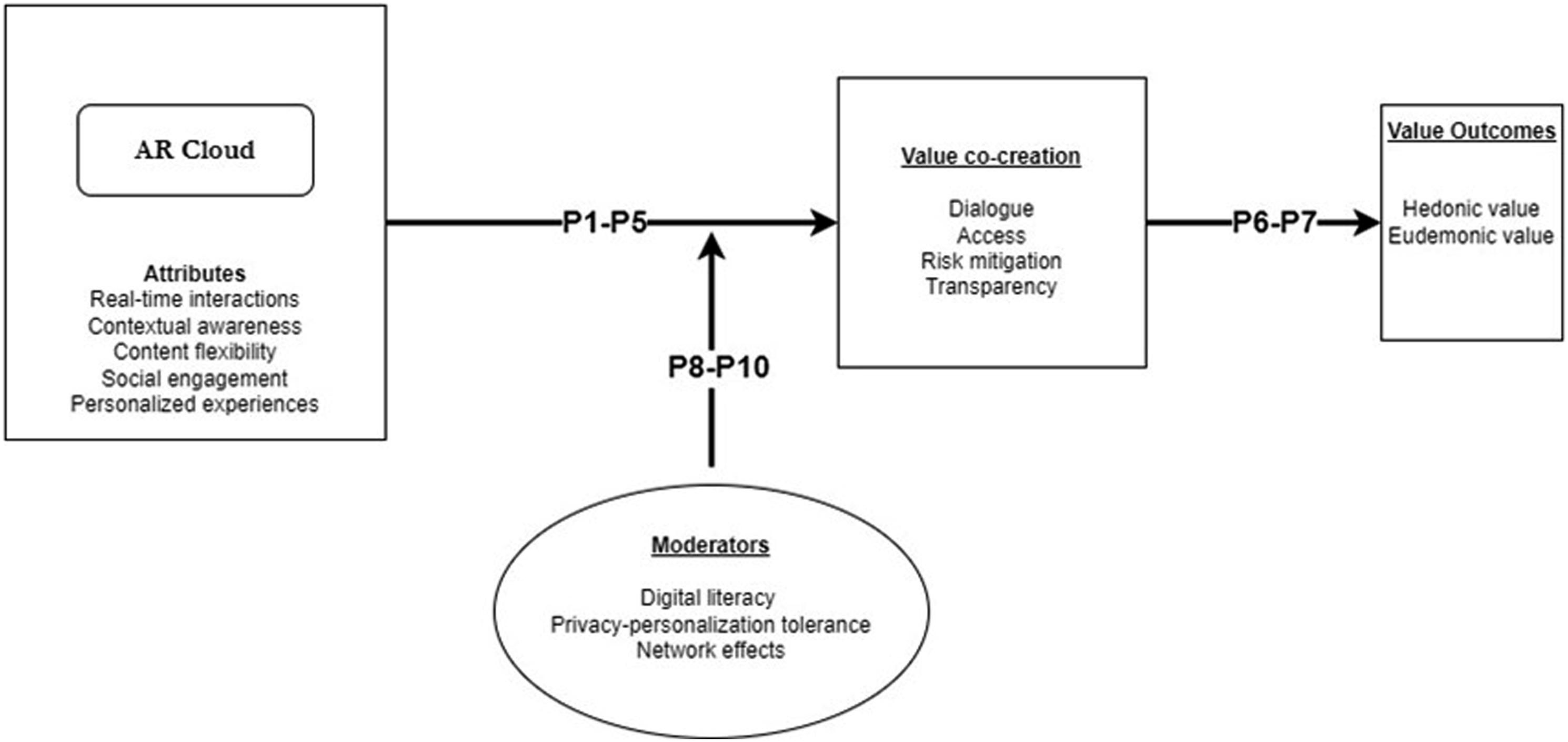
With the theoretical grounding of embodied cognition and the practical framework of the DART model established, we turn our attention to the specific capabilities of metaverse technologies. To clarify the contribution of ARC for value co-creation, the next section explores the technology’s salient capabilities, that is, real-time interactions, social engagement, content flexibility, contextual awareness, and personalized experiences, within the DART model for value co-creation. Each of these capabilities not only underpins the unique features of ARC but also corresponds to the components of the DART model, therefore underscoring the potential of ARC in the value co-creation process.
Real-Time Interactions
Using digital overlays in the physical realm, ARC offers users immersive feedback in their metaverse. This real-time response facilitates dialogue; for example, in retail, users can inquire about a product in ARC and instantly communicate with other system members by pointing their device or looking through an HMD, aiding subsequent discussions with sales agents. Analyzed through embodied cognition, ARC enhances cognition by merging physical actions with digital insights (Barsalou 2008). It elicits a comprehensive cognitive reaction, as both mind and body engage, surpassing other metaverse technologies (Brinck 2017). Unlike AR and lifelogging's abstract communications, ARC's immersive feedback ensures integrated cognitive processing (Fingerhut Joerg, 2021).
Besides dialogue, ARC's real-time interactivity aids risk-mitigation in co-creation. Users can instantly obtain precise, updated data. Considering a hotel search, customers can scan a city with their HMD, selecting based on reviews, proximity, and cost. With AR, this real-time, three-dimensional perspective is absent, raising risks of outdated or misleading information. Lifelogging stores vast data but lacks ARC's real-time interactivity crucial for risk assessment. Embodied cognition theory states that real-time feedback, tied to an individual's interaction with their environment, is vital for decisions and assessing risks (Barsalou 2008). For example, AR may preview a train seat, but real-time visuals of an incoming train's capacity reduce service-purchase risks. This discussion suggests that ARC's real-time quality enhances the dialogue and risk-mitigation elements of the DART co-creation model. Despite transparency and access also benefiting from ARC's real-time nature—offering broader sensory feedback and updated information—dialogue and risk-mitigation emerge as the dominant co-creation dimensions linked to ARC's real-time interactions.
Social Engagement
In the context of metaverse technologies, ARC stands out as a platform promoting dynamic social engagement between users in the physical domain. ARC's capability to superimpose digital data onto physical spaces isn't just informational, but also catalyzes the dialogue aspect of the DART model. For example, where AR might let users gather details on a museum artifact in isolation, ARC encourages collective discussions, overlaying 3D data that users can see, touch, and converse about. This physical-digital dialogue creates a layered social experience apt for co-creation (Tchorek Grzegorz et al., 2020). From an embodied cognition stance, such dialogues encompass more than mere information transfer; they are immersive interactions involving body and mind, where cognition is rooted in physical actions. Unlike other metaverse technologies like AR and lifelogging, ARC seamlessly combines physical and digital facets, heightening social immersion and co-creation. Without this integration, technologies offer less immersive and thus less significant dialogues crucial for co-creation (Buhalis, Lin, and Leung 2022).
Moreover, ARC grants limitless access to combined digital-physical spaces, fostering community and shared ownership. Successful value co-creation necessitates unrestricted access to resources shared across the service ecosystem (Albinsson, Perera, and Sautter 2016). Experiencing this shared digital data in tandem with physical interaction resonates with embodied cognition theory, reinforcing the overall social connection and co-creation. For instance, at a historical site, ARC not only offers detailed digital content but combines it with sensory experiences such as the touch of artifacts, the scents of the surroundings, and ambient sounds. This rich sensory blend, along with users sharing knowledge, promotes a collective understanding. Although AR and lifelogging offer digital content access, they fall short. Lifelogging boosts data access between user-device interactions, and AR augments physical spaces with digital components. However, their access is typically service provider driven. Hence, when examining the metaverse's social dimension, the DART model's dialogue and access components are paramount.
Context Awareness
Context within ARC enhances co-creation via operant resource integration. Individuals experience an embodied dialogue, meshing verbal and physical interaction with the digital facets of their physical surroundings. This interplay of cognition and perception, tied to specific contexts, amplifies the co-creation value. For instance, being physically present in a museum allows visitors to discuss specific artifacts or spaces they encounter. Such dialogues extend beyond just words, incorporating physical actions, gestures, and spatial movements that complement verbal exchanges. With ARC, visitors can discuss artifacts as they gesture or navigating around them, making the dialogue a tangible, immersive co-creation of knowledge. ARC's capacity for such contextual dialogue differentiates it from conventional AR and lifelogging. These tools offer some virtual interaction, they miss the immediacy and contextual depth ARC delivers, positioning ARC as the premier platform for embodied dialogue and contextual co-creation.
Transparency, influenced by ARC's acute contextual awareness, plays another pivotal role. As defined by Albinsson, Perera, and Sautter (2016), transparency is the flow of information between service providers and agents, deepening users' understanding and boosting co-creation value. Viewed through an embodied cognition prism, transparency transforms from mere data sharing into an interactive journey, where contextual information becomes a physical encounter. Picture ARC showcasing architectural designs within real-world settings. Urban planners can move around these virtual blueprints, seeing them from varied angles, promoting information exchange in a way that's both physically and mentally engaging. This transparent interaction through ARC promotes a shift from passive viewing to active participation. While AR offers some interactivity, it lacks ARC's spatial context and physical engagement intrinsic to ARC while lifelogging, focusing on personal experiences, lacks the real-time interaction vital for co-creation. ARC, by promoting transparency via immersive, context-tailored interactions, paves the way for a fuller co-creation experience.
Content Flexibility
The inherent content flexibility of ARC empowers users to function both as engaged participants and contributors. Analogous to open-source systems like Mozilla Firefox or knowledge repositories like Wikipedia, users in ARC platforms actively contribute to, verify, and sustain content. These contributions, stemming from both their physical interactions and cognitive reflections, are pivotal to the digital overlay of ARC. This concept of dialogue expands from just interactions to truly co-creating and shaping the digital realm with user-generated content, be it product reviews, price comparisons, or even designing a virtual store layout, but crucially, these engagements are not remote but deeply rooted in the users' physical experiences and motivated by their embodied cognition. However, with great flexibility comes greater responsibility and cognitive demands. Users transition from being mere spectators to being core actors in the co-creation journey, tasked with both content generation and assessment. Though this may appear daunting, it equally offers avenues for profound engagement and discourse. Users' experiences, molded by their physical interactions, influence ARC's content, and subsequently, the co-created value. This contrasts with AR and lifelogging. AR's user engagement is primarily consumption-based, restricting users from contributing to a communal digital environment. Lifelogging, although personal and reflective, misses out on the broader co-creation opportunities ARC delivers. Here, personal chronicles enhance individual cognition but don't necessarily contribute to a collective digital milieu.
Moreover, ARC's adaptive content flexibility ensures users can engage with, refine, and influence the digital extension intertwined with their tangible worlds. It's not just about accessing information anymore; it's about tailoring that digital realm based on one's experiences, insights, and needs. Mirroring Wikipedia's model, ARC users can both consume and enhance content. Visualize a virtual shopping scenario: users can sift through, modify, or even create product reviews, making real-time price comparisons or customizing the digital storefront based on firsthand experiences. This fluid access radically diverges from the rigid paradigms of traditional AR and lifelogging, where interaction is largely passive and dominated by the provider. ARC doesn't merely grant users a gateway to digital content; it ushers them into an enriched cognitive intersection of tangible and digital domains. This intricate blend, informed by users' physical interactions, equips them with the tools and perspective to shape and maximize the value derived from their experiences.
Personalized Experiences
The personalized dimension of ARC constructs a multifaceted canvas for dialogue within the DART paradigm. Underpinned by embodied cognition, this tailored dialogue evolves into a comprehensive experience, entwining both mental and physical engagement and, in turn, yielding a more intricate and rewarding co-creation journey. Let's visualize a tailor-made historical museum tour. As a visitor with a head-mounted display (HMD) steps in, the ARC system identifies their profile and prior engagements, subsequently curating content in resonance with their preferences. Past fascinations, like an affinity for ancient Egyptian history, prompt the system to spotlight pertinent exhibits, furnish detailed insights, or even propose an efficient exploration route. This interactive dialogue between the user and ARC is dynamic, responding not only to the user’s cognitive feedback but also their physical position within the museum. Furthermore, ARC’s capabilities aren't restricted to solitary interactions. It promotes communal dialogue by bridging visitors with mutual interests, fostering a collective knowledge exchange. For instance, an alert about another visitor with a shared enthusiasm for Egyptian history can incite direct, enriching conversations. Through this immersive and tailored interaction, visitors are not just passive recipients; they are active contributors, curating distinct experiences and enhancing their overall appreciation. The depth of co-creation achieved here underscores the intertwined relationship between individual, system, and the environment, juxtaposed starkly with AR and lifelogging's more generic and less interactive approach.
Additionally, ARC's personalization aligns perfectly with the transparency facet of the DART model. Within such bespoke ARC experiences, users are met with a distinct digital layer, reflecting their unique inclinations and histories. For instance, visualize a custom shopping escapade: on entering the store wearing an HMD, ARC overlays digital insights onto physical commodities, accentuating those aligning with the user’s tastes. Pertinent product details like prices, reviews, comparisons, and origins are vividly relayed. Such an unobscured presentation, combined with the real-time tailored experience, equips users with the tools to curate their unique interactions. Through the lens of embodied cognition, navigating the physical store while being inundated with tailored, transparent information augments a singular cognitive journey. The harmony between tactile experiences and real-time data processing through ARC culminates in a unified, immersive shopping narrative. In contrast, AR and lifelogging fall short, lacking the profound integration and co-creative depth inherent in ARC.
Outcomes of ARC-Powered Value Co-Creation: Hedonic and Eudemonic Well-Being
In this article, we emphasize how ARC's attributes offer service agents an enhanced avenue to merge their operant resources and co-create value. The ultimate outcome of such co-creation is well-being (Diener and Chan 2011). Within the services literature, well-being can be transient joys or long-term accomplishments like achieving goals (Delle Fave et al. 2011). These well-being types are termed subjective (hedonic) and psychological (eudemonic) well-being (Gardiazabal and Bianchi 2021). Hedonic well-being arises from fleeting emotions of happiness, pleasure, and the absence of discomfort (Ryan and Deci 2001). In contrast, eudemonic well-being is about realizing one's potential, encompassing individuals, communities, and broader ecosystems (Anderson and Ostrom 2015).
ARC-driven resource integration and value co-creation can spur hedonic well-being via derived pleasure and happiness. We postulate three ways that ARC can enhance hedonic well-being. Firstly, value co-creation via ARC permits mental capacity “off-loading” from daily experiences to technology. For example, when choosing a restaurant, users can filter options that match their preferences through ARC and book instantly, eliminating the hassle of visiting individual websites. This shifts the focus from the process to the experience—like savoring a meal with friends. Contrarily, lifelogging, and traditional AR mainly offload mental tasks in the context of one's day-to-day activities or smaller environments. Secondly, ARC offers sensory enrichment, distinguishing itself from lifelogging and AR. Unlike these technologies, which have limited sensory input, ARC provides expansive sensory experiences by augmenting environments. This can elevate autonomy in co-creation and relatedness– two factors that boost hedonic well-being via satisfaction (Zhong and Mitchell 2010). A user, for instance, can use ARC to freely explore and filter restaurant reviews, interact with fellow customers or staff, and pose questions directly. Finally, ARC's alignment with the DART framework further enriches the value co-creation process. It provides users with a more comprehensive, clear, and impartial service risk overview compared to AR and lifelogging. Users can engage in conversations with other service agents, affirming their value perceptions. This tailored, dialogue-driven information imparts feelings of satisfaction and risk reduction, aligning with hedonic well-being traits (Gardiazabal and Bianchi 2021).
On the other hand, eudemonic well-being is tied to the pursuit of fulfillment, which in turn leads to personal development and the attainment of goals (Ryan and Deci 2001). This type of well-being highlights the importance customers place on the depth of involvement and challenges they encounter within a service ecosystem, encompassing actors and resources (Ryan, Huta, and Deci 2008). It's often broken down into three foundational psychological needs: competence, autonomy, and relatedness (Ryan and Deci 2001).
Competence is essentially the confidence customers derive from service experiences that support their objective fulfillment. ARC, providing service agents with rich, unbiased, and transparent information, ensures users feel equipped to realize their fullest potential. This stands in contrast to other augmentation technologies like lifelogging and AR, which may induce feelings of inadequacy due to their application limits. For example, a user can harness ARC to evaluate hotel rooms in a city. They gain confidence from accessing comprehensive hotel data, reviews, availability, and even virtual room tours. Adding to this, ARC's social dialogue feature might allow users to converse with others, seeking validation for their choices, further nurturing confidence.
Autonomy, on the other hand, is about service agents exercising control over their actions. With ARC, users can seamlessly navigate the platform, tailoring their experiences and collaborating with any service actor without the constraints seen in other augmentation technologies. Consider a scenario where a shopper, seeking a perfume, utilizes ARC to refine choices based on specific preferences like brand or fragrance notes. They might even pose questions to fellow shoppers or store assistants via ARC, without feeling obligated to choose a recommended product. Such autonomy not only aids in goal fulfillment but intensifies eudemonic well-being.
The third pillar, relatedness, revolves around establishing social connections. ARC's architecture encourages this by creating a communal space for value co-creation. Unlike AR, which is limited to singular applications, ARC fosters expansive social interactions, cultivating relational values amongst its users. A fitting illustration is an employee using ARC to visualize and co-design an office layout collaboratively. This virtual environment becomes a canvas where all employees can offer inputs, requiring mutual respect and reliance on others for collective value creation. Such shared endeavors culminate in eudemonic value, encapsulating both shared goals and the realization of personal aspirations and knowledge requirements (Sharma, Conduit, and Rao Hill 2017).
Moderators Impacting the Effect of Value Co-Creation
There exists a plethora of factors that can shape the efficacy of value co-creation through ARC. Although the list is expansive, we will explore three paramount moderating influences in the subsequent section: (a) digital literacy, (b) privacy-personalization tolerance, and (c) network effects. The choice of moderators is motivated by Grewal et al. (2020) who identified broad moderators that have intricate sub-factors. For instance, digital literacy might encompass age, education, and prior experiences with technology. The balancing act between privacy and personalization can be influenced by customer attitudes, the nature of the products or services being augmented, and even the significance of the occasion. Meanwhile, network effects might be swayed by the speed of technology adoption, user-friendliness, and individuals' perceived ability to use the technology. However, for clarity and succinctness, our focus will remain on the overarching constructs, shedding light on their potential to moderate the effectiveness of ARC in value co-creation.
Digital Literacy
Digital literacy pertains to the proficiencies inherent in using technology (Bennett, Maton, and Kervin 2008). Encompassing cognitive, technical, and socio-emotional capabilities, digital literacy grants individuals the fluency to both utilize and comprehend technology (Ng 2012), including emerging metaverse technologies like lifelogging, AR, and ARC. A lack of adeptness in leveraging technology can induce anxiety, subsequently hampering one's learning curve and influencing their perception of the technology (Compeau Deborah & Higgins 1995). Research indicates that digital literacy matures over time, often enriched by social interactions (Bawden 2008). Given that metaverse technologies are nascent compared to established ones like the internet and smartphones, they are poised to gain significantly from enhanced digital literacy. Such literacy is anticipated to propel the co-creation of value in these technologies, as users become more inclined to interact and collaborate within the platform (Sharma et al. 2016). This is especially crucial for ARC, which, due to its immersive nature, may prove daunting for those not well-versed in the digital realm.
Privacy-Personalization Tolerance
Privacy-personalization tolerance is another pivotal moderating factor, rooted in the concept of privacy calculus. This method evaluates the trade-offs between the costs and benefits of sharing personal information (Dinev and Hart 2006). Grounded in maximization and social exchange theories, scholarly insights suggest that privacy calculus operates as a pragmatic response to a multifaceted challenge: the propensity to trade personal data for perceived value, such as tailor-made experiences (Culnan and Bies 2003). Particularly, metaverse technologies like ARC necessitate extensive personal details to craft a bespoke user experience (Mystakidis 2022). However, providing such data bears inherent risks, including potential deceit, data theft, and breaches of privacy. These vulnerabilities amplify user apprehensions regarding a company’s ulterior motives, eroding trust, escalating perceived risks, and ultimately dampening engagement (Van Slyke et al. 2006). Given this context, we theorize that individuals prioritizing personalization over privacy might be more inclined to actively participate in value co-creation processes.
Network Effects
A crucial element potentially impacting the efficacy of value co-creation via external metaverse technologies, including AR and ARC, is the technology’s inherent network externality. This principle suggests that the value derived by an individual user escalates with the increasing aggregate of active users on a platform (Mcintyre et al. 2021). The efficacy of ARC hinges on its widespread adoption. Drawing parallels with the World Wide Web (WWW), as the user base expanded and web creation burgeoned, the accruing value amplified, fueled by the increasing inter-user relationships and the profusion of valuable content. Thus, we theorize that with a substantial network effect in ARC—meaning an extensive user base—the co-created value on the platform intensifies. This amplification arises as every user contributes distinct advantages and interactions to the platform, culminating in enhanced utilitarian and hedonic value.
In summary, this paper proposes that ARC, characterized by its heightened (a) real-time interactions, (b) contextual awareness, (c) content flexibility, (d) social engagement, and (e) personalized experiences, supports the value co-creation process through effective dialogue, improved access, risk assessment, and transparency (Parahalad and Ramaswamy 2004). The consequences of such improved value co-creation processes result in hedonic and eudemonic well-being. The proposed framework (Figure 3) responds to calls for a better understanding of technology within the value co-creation process (Vargo and Lusch 2016) by identifying ARC as an operant resource and explicating specific attributes that can produce positive service outcomes to customers and service providers. Conceptual model.
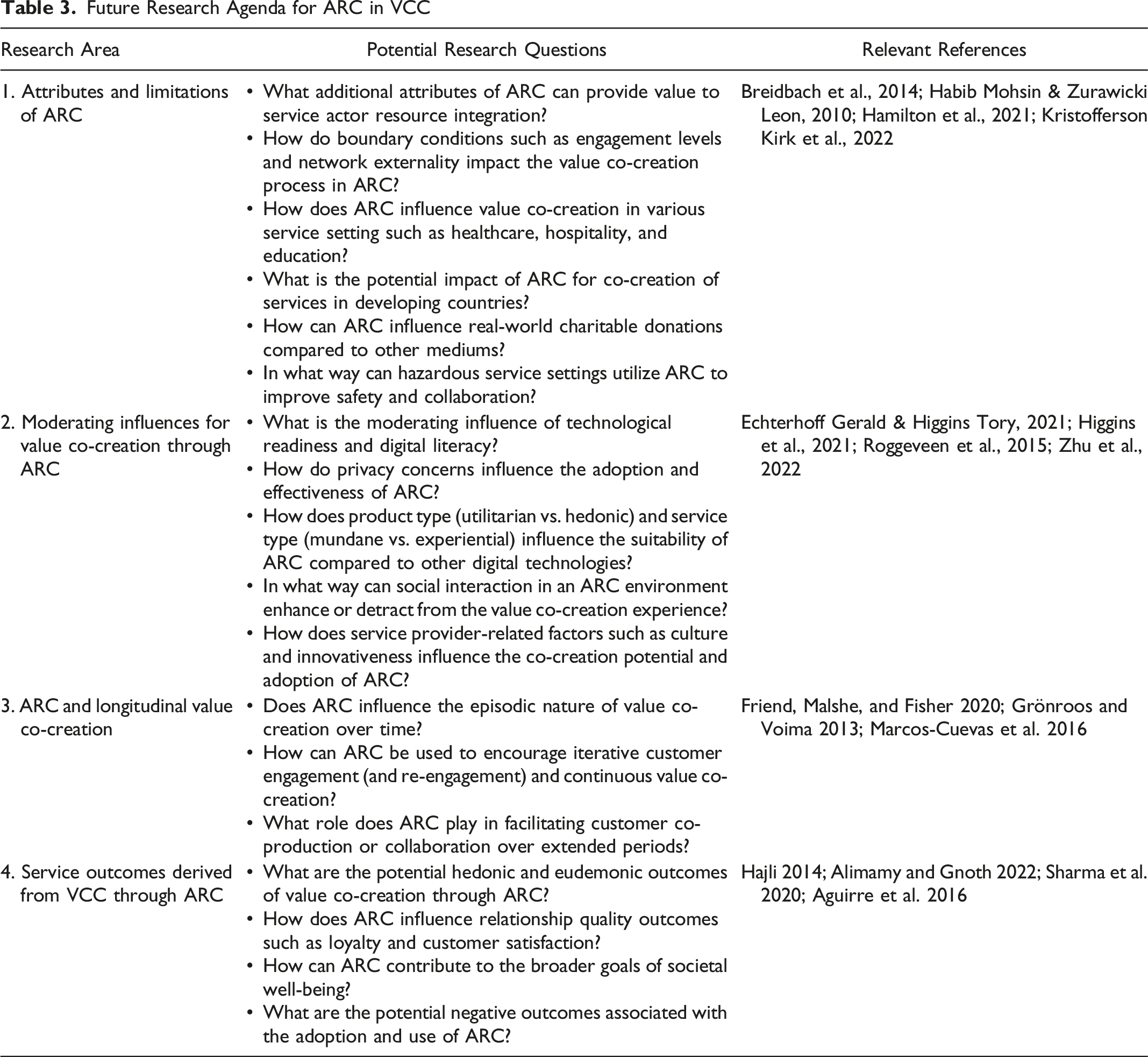
Future Research Agenda for ARC in VCC
Attributes and Limitations of ARC Within Services
In this paper, we argue that ARC's unique features, including real-time interactions, contextual awareness, content flexibility, social engagement, and personalized experiences, facilitate value co-creation. As ARC’s popularity grows, it’s plausible to identify additional beneficial attributes. Factors like platform engagement level (Breidbach, Brodie, and Hollebeek 2014) and the number of users—up to a point where it leads to “information overload”—can impact this co-creation. Furthermore, “traveling companions” (Hamilton et al. 2021), those accompanying users physically or virtually, play a vital role in ARC’s overall experience. Future ARC research should acknowledge these companions, as they influence decision-making and behavior.
Moreover, exploring the application of ARC across sectors like healthcare, education, and rural services can yield transformative insights, potentially alleviating poverty or enhancing well-being (Habib Mohsin & Zurawicki Leon 2010). For instance, using ARC to boost productivity in developing nations by collaborating with global experts could uplift communities. Also, despite VR being found to boost charitable giving over print media (Kristofferson Kirk et al. 2022), ARC’s impact in this realm remains unexplored. Additionally, ARC’s potential in high-risk environments, such as construction or warfare, is significant. It can offer advanced, intelligent systems surpassing traditional AR or VR, ensuring safer decision-making in perilous situations.
Moderating Influences for Value Co-Creation Through ARC
Our research highlighted potential factors that may influence ARC’s value co-creation capabilities, including technological readiness, privacy-personalization tolerance, and network effects. Although these are significant, other moderators and mediators should be examined in future studies. For example, not every product or service will equally benefit from ARC compared to AR, lifelogging, or VR technologies. Depending on whether a product is utilitarian or hedonic (Roggeveen et al. 2015), or if a service is mundane or experiential (Zhu et al. 2022), different AR technologies might be preferable. Researchers should identify which technology best promotes personal well-being and under which circumstances ARC optimizes rather than diminishes it, considering factors like information and cognitive overload or privacy concerns.
Social interactions in ARC can either enhance or diminish user experience. AR technology’s main appeal lies in its potential for a “shared reality” in the physical realm (Echterhoff Gerald and Higgins Tory 2021), a state where participants resonate with each other’s perspectives. ARC might amplify this experience, fostering stronger relational connections (Higgins, Rossignac-Milon, and Echterhoff 2021). Future studies could explore how social networks, dialogue, and shared reality via ARC influence value co-creation.
Lastly, as service providers are pivotal to value co-creation, examining their related factors such as cultural attitudes or innovative tendencies is essential. Research might explore how a company’s innovation culture or tech investments influence their enthusiasm for customer engagement via new technologies, enhancing our understanding of the dynamics necessary for successful value co-creation.
ARC and Longitudinal Value Co-Creation
This study delineates ARC as a tool that integrates the DART elements integral to value co-creation. However, value co-creation isn't a singular event; it's an ongoing process emerging from sustained engagement episodes (Friend, Malshe, and Fisher 2020). Given that customer value isn't constructed linearly (Grönroos and Voima 2013) but through repetition (Marcos-Cuevas et al. 2016), ARC's strength lies in its ability to foster continuous experiences using real-time, contextual data. Consider a user assessing a hotel room's availability and price on ARC. As they revisit the platform later, these details might differ. Service providers can harness this fluidity to promote repeat interactions. Additionally, ARC's capability to “bookmark” experiences can inspire users to revisit and build upon their previous interactions, such as collaborating on a product design and later refining it or commenting on peers' contributions.
We suggest that future investigations explore ARC's potential as a platform prompting re-engagement and fostering cyclical value co-creation, assessing the efficacy of both service-provider and customer-driven re-engagement activities.
Service Outcomes Derived from Value Co-Creation Through ARC
This study positions ARC as an enabler for value co-creation, leading to both hedonic and eudemonic outcomes. Yet, there's a scope to investigate further service (and non-service) implications of ARC. For instance, the contextual and social dynamics of ARC might underpin relationship quality indicators like loyalty and satisfaction (Hajli 2014). Given its tailored offerings, ARC could also enhance user involvement, engagement, and revisit intentions (Alimamy and Gnoth 2022). Importantly, ARC's content flexibility might act as a springboard for value co-creation, as it permits collaborative content development, paving the way for value-in-use.
Furthermore, service outcomes such as satisfaction, experience, and quality can be explored within ARC's value co-creation paradigm. Investigating these outcomes could provide a comprehensive perspective on ARC's benefits within service ecosystems (Sharma et al. 2020), deepening our grasp on the advantages of disruptive technologies in everyday scenarios. Given ARC's potential to decentralize and tailor value co-creation, service outcomes are anticipated to align more closely with customer nuances, highlighting their active role in the process and possibly leading to a more sustainable, circular service approach. Future studies should probe co-creational tech within a circularity framework to boost societal welfare. Lastly, potential drawbacks of ARC warrant attention. Despite the study’s focus on certain moderators, areas like the personalization-privacy dilemma might pose challenges. There's a risk that users may perceive data compromises outweighing the ARC benefits (Aguirre et al. 2016). Unraveling the weight of benefits achieved through ARC could help address these ambiguities.
Disclosure
During the preparation of this work the author(s) used ChatGPT to edit and clarify the language of several sentences in the manuscript. After using this tool/service, the author(s) reviewed and edited the content as needed and took full responsibility for the content of the publication.
Supplemental Material
Supplemental Material - The AR Cloud: Navigating Metaverse Augmentation Technologies for Enhanced Co-Creation of Value Within Services
Supplemental Material for The AR Cloud: Navigating Metaverse Augmentation Technologies for Enhanced Co-Creation of Value Within Services by Saifeddin Alimamy and Timothy Jung in Journal of Service Research
Footnotes
Declaration of Conflicting Interests
The author(s) declared no potential conflicts of interest with respect to the research, authorship, and/or publication of this article.
Funding
The author(s) disclosed receipt of the following financial support for the research, authorship, and/or publication of this article: This work was supported by the Zayed University (R22035).

Supplemental Material
Supplemental material for this article is available online.
Author Biographies
References
Supplementary Material
Please find the following supplemental material available below.
For Open Access articles published under a Creative Commons License, all supplemental material carries the same license as the article it is associated with.
For non-Open Access articles published, all supplemental material carries a non-exclusive license, and permission requests for re-use of supplemental material or any part of supplemental material shall be sent directly to the copyright owner as specified in the copyright notice associated with the article.
