




Abstract
The agile approach is a timeboxing approach wherein the entire project is broken down into smaller tasks of user stories that iterate continuously to improve from feedback obtained frequently. Agile methodology in the right blend of its values and principles can be used in a dynamic environment to manage cross-functional teams for faster and effective decision-making. Flexibility is of prime importance in the agile approach which helps organizations to thrive in rapidly emerging market conditions. The timeliness and cost-effectiveness provided by the agile methodology give a competitive edge to the organizations employing it. Fast-evolving consumer trends and market needs were contrasted by lengthier project timelines of other traditional methodologies. This created the need for methods that provide faster outputs at their fullest potential for the organizations to retain their customers and position in the market which motivated this research. Yet, a huge research gap exists in the area concerning the development of agile methods. This article aimed to provide a deeper understanding of how agile can be used to solve the complexities of the current day market conditions along with its widespread applications in various industries through a systematic literature review of past research work. Further, this review also aims at explaining the impediments of adopting agile methodology in any sort of organization under any given circumstances. During the study, it was found that there were several definitions and frameworks of agile that have been proposed in different forms. This review has tried to provide a consolidated concept of the agile approach presented to date.
Introduction
The history of the agile approach dates back to the late nineteenth century, even before the word agile was devised. Back then, project management methodologies were time-consuming and expensive, and customers waited for 2–3 years to receive a finished product. In the aerospace industry, it took almost 15–20 years for complex deliveries to be built (Coenen & Robijt, 2017; Zhu et al., 2016). Hence, organizations focused on building a lightweight methodology, to build and deliver products and services as quickly as possible to end-users. This would also ensure swift feedback that would help the developers of projects to know the scope of the product or service and the direction it will take in the market in terms of success and sustainability (Dingsøyr et al., 2012; Lishner & Shtub, 2019). In due course, all these requirements paved the way for the agile methodology to be developed. The traditional development methodologies had several drawbacks that raised the need for methods to provide quality outputs that were faster and flexible (Hemon et al., 2020; Mohamed & Darwish, 2019; Sameen et al., 2019).
Agile means quicker and efficient movements. The values and principles combined define agile, which can be used in any volatile environment. It manages the teams to make spontaneous decisions and be as amenable as possible to the rapidly evolving market conditions (Asnawi et al., 2011; Yusoff et al., 2019). In a business context, agility means the ability of organizations to efficiently adapt to market dynamics in a cost-effective manner (Cram, 2019). When a company adopts the agile approach, it becomes flexible, making itself suitable for a competitive market with high unpredictability (Berczuk, 2007; Dikert et al., 2016; Nejatian et al., 2018; Turner et al., 2019). Employing agile methods with the right blend of values and principles makes the organization robust with better outcomes in terms of time, quality, and cost-effectiveness (Izvercianu et al., 2015; Krasteva & Ilieva, 2008; Soni & Kohli, 2017). Today, the agile approach is being adopted across various industries irrespective of their context of operation. This study is prompted by projects with lengthier timelines making them inefficient and unsuited for a volatile market environment (Bartsch, 2011; Minor et al., 2008; Tripp & Armstrong, 2018). The study explores the process of the agile approach and its implementations across industries like software development, marketing, supply chain, product development, etc. This study is a systematic literature review of the agile approach, its application across industries and the impediments faced by the companies in an agile work environment. The research works between 2000 and 2019 were reviewed. At present, the agile approach is being adopted across the world in different industries. This is made possible by tailoring the agile approach to better suit the context of the operation (Mohamed & Darwish, 2019; Papadakis & Tsironis, 2018; Yau & Murphy, 2013).
Conboy and Fitzgerald (2004) discuss the various agile models that are in use currently in the market by different organizations and propose a framework that is suitable under any unforeseen circumstances. The framework focuses on flexibility and leanness. The author also presented a framework with certain assessment metrics that measure the efficiency of activities employing agile. The literature review paper proposed by Gunasekaran and Yusuf (2002) has reviewed various papers on agile methods and has presented the definitions provided by the authors from 1995 to 2000. This literature review focused on the agile methods in the manufacturing industry in particular. Further, from the review of the previous works, the authors had presented a framework for agile manufacturing strategies. The major area under study was strategic planning for manufacturing using agile methods. This article focused on the application of agile methods in different industries apart from software development and project management. Izvercianu et al. (2015) developed a framework that specifically suits small and medium enterprises. The framework presents ways for designing marketing activities using agile methods. The framework contained a roadmap from the potential market to the end consumers. The potential of the market was analyzed using various steps such as need analysis, competitor analysis, development and marketing strategies, and business portfolio analysis. The results obtained were studied using the agile marketing audit. Dybå and Dingsøyr (2008) reviewed several agile software development methods and studied the benefits and limitations of agile methodologies. The study also revealed the impacts of human and social factors of implementing agile methods in companies. The authors had stressed the fact that there exists a research gap in the need for more empirical studies on agile methods in software development.
Cabral et al. (2012) proposed a decision-making model to assist supply chain managers (SCMs) to select SCM practices based on Leanness, Agility, Resilience and Green (LARG) principles aiming to improve performance. The paper proposed to tailor the concepts of LARG principles to SCM. This framework model is based on the Analytic Network Process (ANP), which helps SCMs select the LARG SCM best practices and Key Performance Indicators (KPIs) to be implemented. Project management is the heart of the Information Technology industry which is a vast area under continuous development. On a large scale, the IT industry has been employing agile methods for a long time and Goh et al. (2012) have investigated agile practices in big IT industries. The case data classified Project Uncertainty for each IT project in airport departure system, airport operation database system, airport security system, and airport data center system. Naturally, it is not simple to adopt agile methods in organizations of any size and context. A lot of challenges have to be considered during the adoption of the agile approach. Gandomani and Nafchi (2016) in their study adopted a ground theory to identify the transition prerequisites companies need to consider for agile adoption which makes people and organizations stronger to deal with challenges from the traditional approach. The study discusses the theoretical and practical implementation of the prerequisites.
Research Methodology
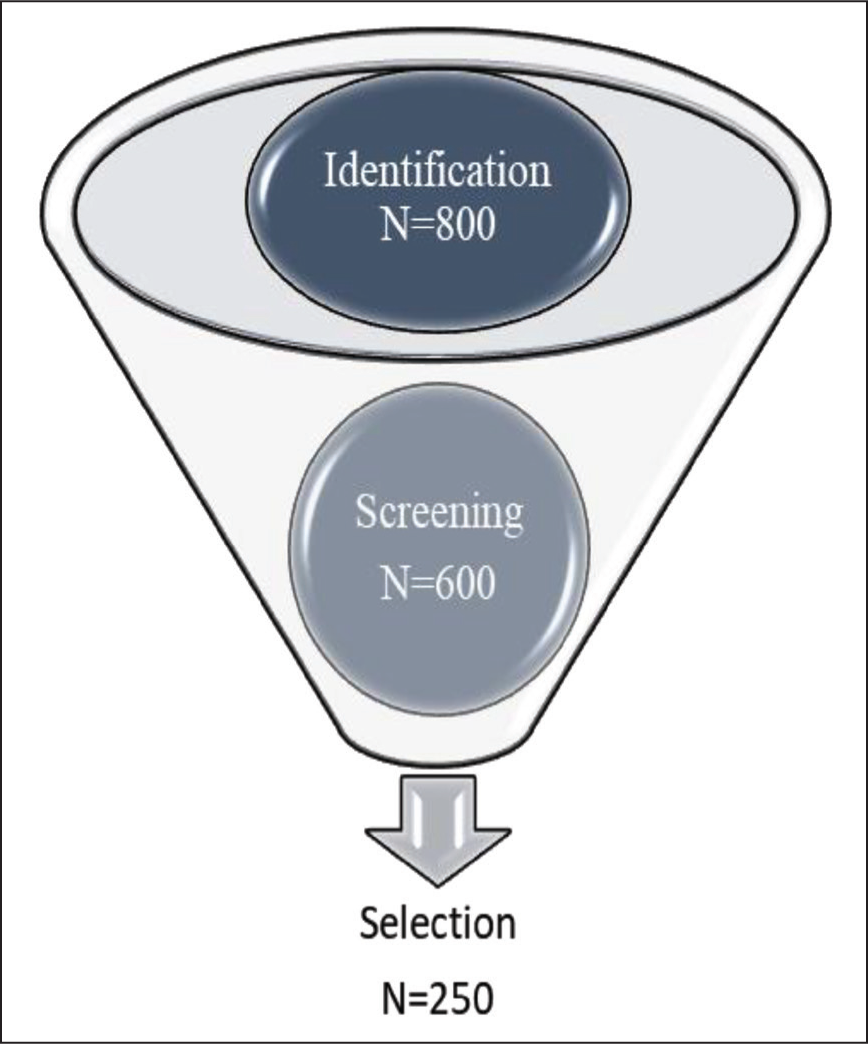
The article is an exploratory study following the Systematic Literature Review process. This literature review searched three general databases: Google Scholar, ProQuest, and Ebsco using keywords such as “agile,” “agile methods,” “agile manifesto,” “agile principles,” “agility,” “agile in software development,” “agility in marketing,” “agile in supply chain management,” “agility in manufacturing,” “scaling agile,” “scrum,” “sprint,” and “agile framework.” This search yielded thousands of samples spread across various categories such as scholarly journals, articles, theses, book chapters, literature review papers, etc., all of which come under secondary data. Among these thousands of papers, the selection of samples for this literature study was based on inclusion and exclusion criteria. The criteria include exclusion of papers without full access, works prior to the sampling timeline and inclusion of papers relevant to the agile approach. The selection process also went through few stages of filtrations until the final selection of samples was made. From the final selected samples, certain characteristics were observed which were recorded. Some characteristics include the main topic of discussion, field of study, the constructs studied, models depicted, tabulations and supported hypothesis, etc. During this stage around 800 samples were obtained. The second stage of this review was the screening stage in which the samples collected during the previous stage were screened and filtered. The screening was done by checking the relevancy of the title and abstract to the concepts of agile methodology. The second stage resulted in around 600 samples. Finally, the samples from the second stage went through another round of screening in which the samples were selected after complete reading. From those 600 samples, 300 were eligible for developing this literature review article.
During this entire process, certain criteria were used to select and reject the samples collected. The inclusion criteria were all kinds of journals, articles, literature review, thesis, case studies, reports, book chapters, etc. Also, the samples selected were those that were published between the years 2000 and 2020. The samples that were excluded were duplicates of papers already included, samples that were irrelevant to this study, press releases, and samples that did not have access to full content.
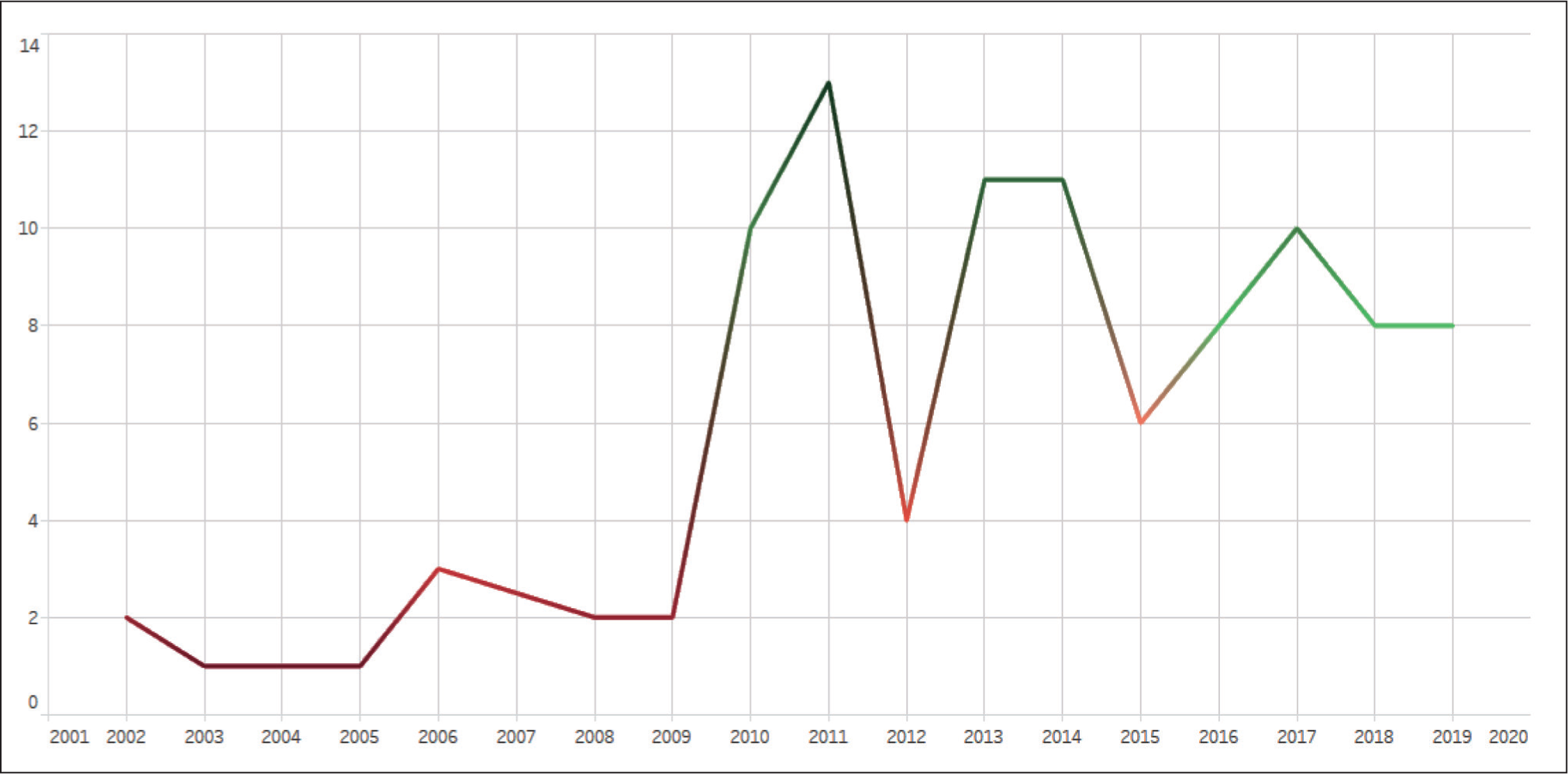
Before 2009, the number of studies conducted on agile have been very few and only after 2009, there has been a greater increase in the studies conducted on agile. This increase in the use of agile methods after 2009 can be related to the vast infusion of technology and the huge increase in the information that needs to be handled by the organizations. With the increase in the advent of technology, the market environment had also become volatile and the demands and needs of the customer have become more dynamic than ever before. Hence, with higher involvement of technology, the use of agile methods has also increased in many organizations which have proved to be a competitive advantage for them. Moreover, agile methods were strongly able to overcome the dynamics of the market environment of organizations operating in any field and any context. Thus, the increase in the study and use of agile methods can be seen largely from the year 2009.
Search Strategy Diagram.
This review article gives a holistic view of the importance of agile methodology in the presently changing environment, its processes, and applications in different industries, along with its challenges. This article aims to provide the comprehensive agile manifesto which was seen as a major research gap during the literature review process.
The research questions that were addressed during this study are:
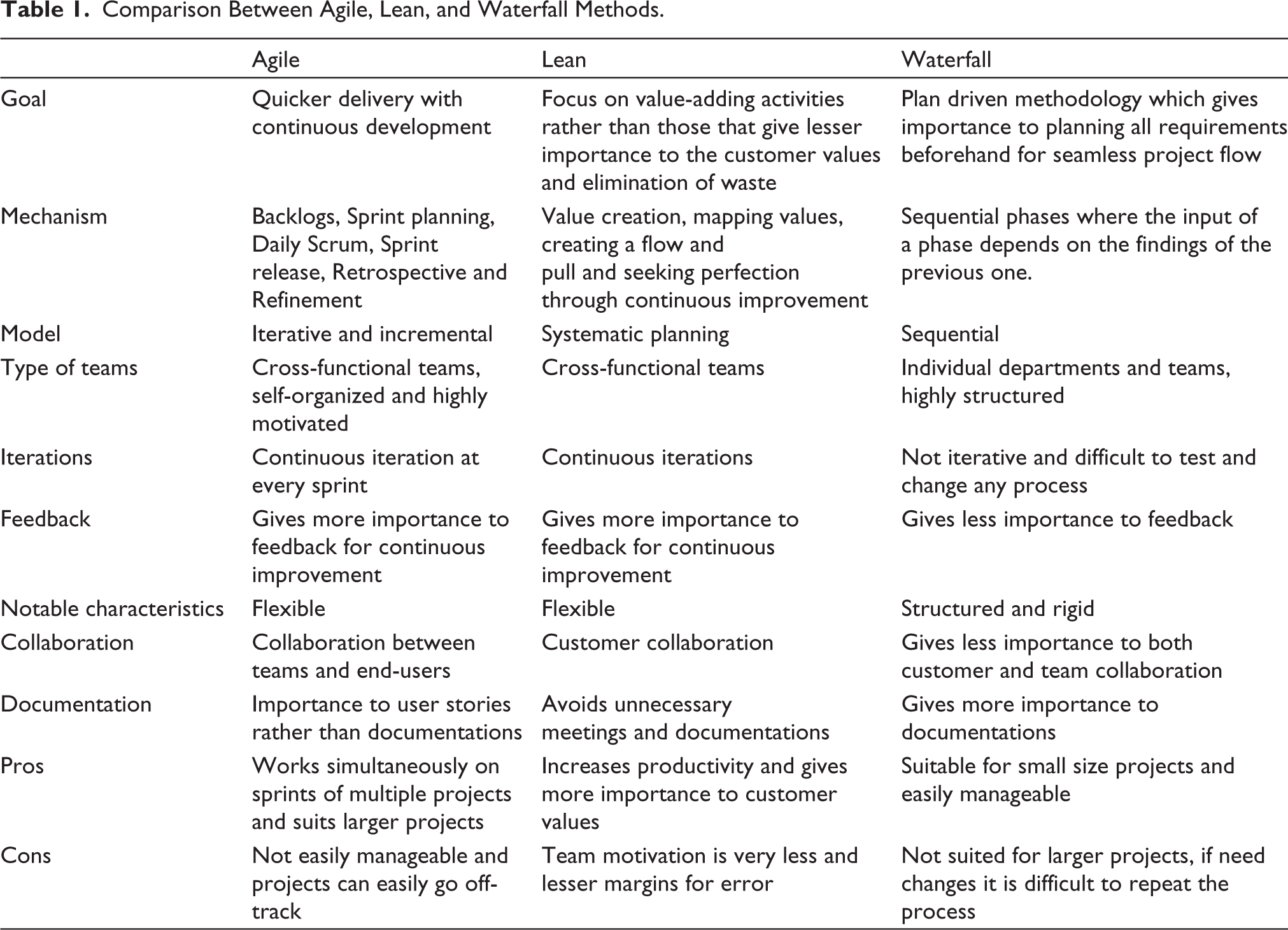
RQ1: Why is agile being adopted on a large scale by many of the organizations? RQ2: How does agile work? RQ3: Is agile methodology suited only for software development and project management? In which fields is the agile methodology being implemented? RQ4: What are the distinguishing features that exist between agile and other methodologies like lean and waterfall? RQ5: What are the challenges faced during the implementation of the agile approach?
RQ1: Adoption of Agile Approach in Organizations
During this literature review process, five important characteristics of agile were identified to be discussed by various research works. Agile methods are characterized by these important aspects and they are the main reason behind companies shifting to agile methodologies, making them successful (Lishner & Shtub, 2019). They are Flexibility, Sustainability, Suitability, Efficiency, and Cost-Effectiveness.
Flexibility
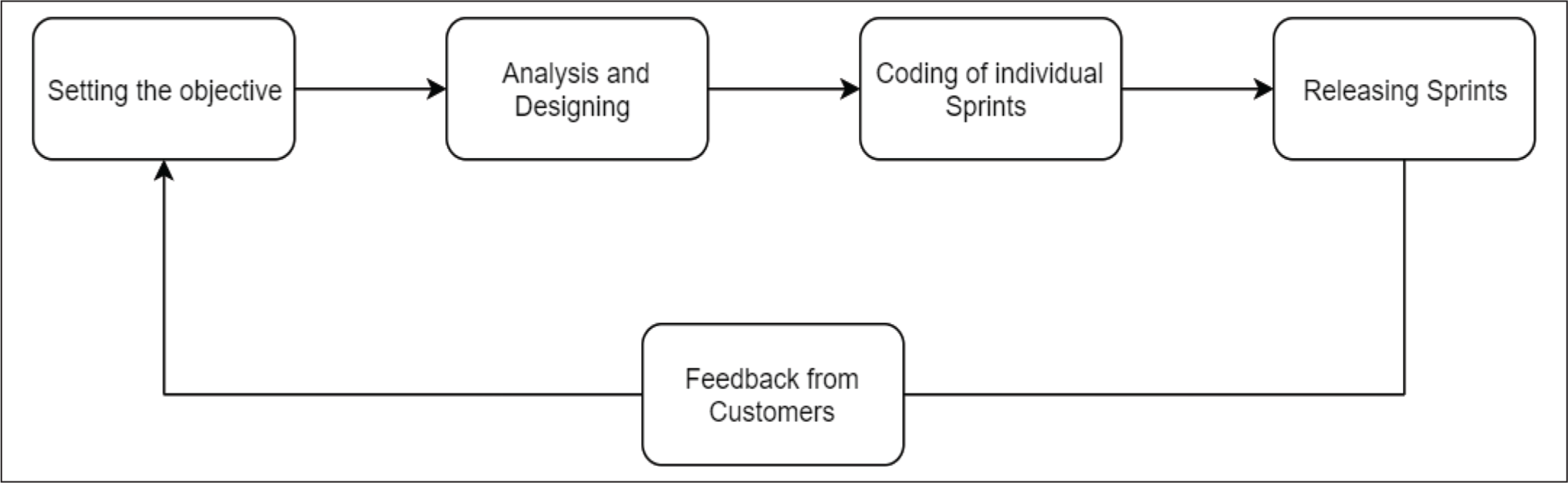
In agile, flexibility would define the ability of the organization, department, project, team members and the tasks and activities in change management and adapt to the volatile of the market environment (Activities et al., 2010; Cawley et al., 2010; Chiang et al., 2012). In agile, the entire project is broken down into smaller sprints that are iterated continuously. After the completion of each iteration, the end-user would see a working version of a smaller portion of the project (Cao et al., 2009; Conboy, 2009; Ghobakhloo & Azar, 2018). This enables the entire project to be more flexible that can be changed, corrected, and improved at any stage and any number of times before the final finished product is delivered to the end-user (Jain et al., 2008; Narasimhan et al., 2006; Ram et al., 2018; UsmanMalik et al., 2014). This aspect of agile also helps the project to adapt seamlessly with the trends and changes of user expectations and the market at the time of delivery of the project (Giachetti et al., 2003; Morampudi & Gaurav, 2013; Nowotarski & Paslawski, 2015; Wadhwa & Sharma, 2015; Wadhwa et al., 2007).
Sampling Timeline.
Sustainability
Sustainability in agile is the potential of the projects to thrive in a rapidly evolving market environment and customer needs (Bucea-Manea-Tonis & Tonis (Bucea Manea 2014; Cawley et al., 2010; Sadath et al., 2018). Sustainability in agile methodology focuses on collective ownership of responsibilities in a project. This way no single team member is termed as a critical resource. Sustainability encourages a healthy work style for the team members and reduces the occurrence of errors (Balog, 2019; Flumerfelt et al., 2012; Hoogveld & Koster, 2016; Jeffs & Papillon, 2019). It also gives high importance to feedback, a vital part in the improvement of perfection of project details at every stage (Albarosa et al., 2016; Barroca et al., 2018; Stray et al., 2020; Toljaga-Nikolić et al., 2020).
Suitability
The market being dynamic and fast-paced, the demand for project or product development is increasing. Products should be developed and delivered to end-users in a short period in multiple stages (Khalid et al., 2014; Mwadulo, 2016; Patel & Ramachandran, 2009; Rahimian & Ramsin, 2008), making them suitable for changing customer needs in a more efficient way. Thus, suitability in agile is termed as the ability of the projects to better suit the market environment and the context of an organization in which it is operating (Hoogveld & Koster, 2016; Kulkarni et al., 2011; McCormick, 2012; Spataru, 2010; Vogelsang et al., 2019). The extent to which an organization can achieve suitability depends on its capability to handle agility. This in turn depends on the capabilities of the teams, the efficacy of the administration, and the cultural values of the organization (Akbas Helsinki & Akbas, 2019; Grey, 2006; Mikulenas & Butleris, 2010).
Efficiency
The efficiency of a project or a process in agile is the capability of the team to complete the sprints and backlogs faster and yet deliver quality output to the end-users at the end of each sprint (Cao et al., 2009; Čelesnik et al., 2018; Gal et al., 2018; Lee & Xia, 2010; Nabelsi & Gagnon, 2017; Recker et al., 2017). The most important features that drive efficiency in an agile project are cross-functional team members, a number of rapid iterations performed during every sprint, feedback after every sprint release, and the improvements done based on the feedback received (Krasteva & Ilieva, 2008; Serrador & Pinto, 2015; Verbruggen et al., 2019). In simple words, efficiency can be defined as how fast a task can be completed within a given time frame and release short versions of user stories with high quality at shorter intervals (Torrecilla-Salinas et al., 2019; Zhu et al., 2016).
Cost-effectiveness
Another important feature of agile methodology is its cost-effectiveness. Agile methods are featured by the concept of giving more importance to the most valuable tasks rather than the less valuable tasks (Vázquez, 2018). This important aspect of agile is more cost-saving compared to all the other traditional methodologies (Askarinejad Amiri, 2012; Bhasin, 2012; Cardozo et al., 2010; Masood & Farooq, 2017; Vax & Michaud, 2008). The cross-functional teams of agile projects also enable them to complete the task faster saving more time and resources. The efficiency of agile teams also means fewer errors and risks. The errors that may occur can also be corrected at an earlier stage thus avoiding larger changes and losses. All these factors of agile methodologies save more cost and thus agile is always termed as a cost-effective methodology in managing large and complex projects in any industry (Annosi et al., 2016; Harb et al., 2015; Matharu et al., 2015; Sharifi & Zhang, 2001).
RQ2: Working of Agile
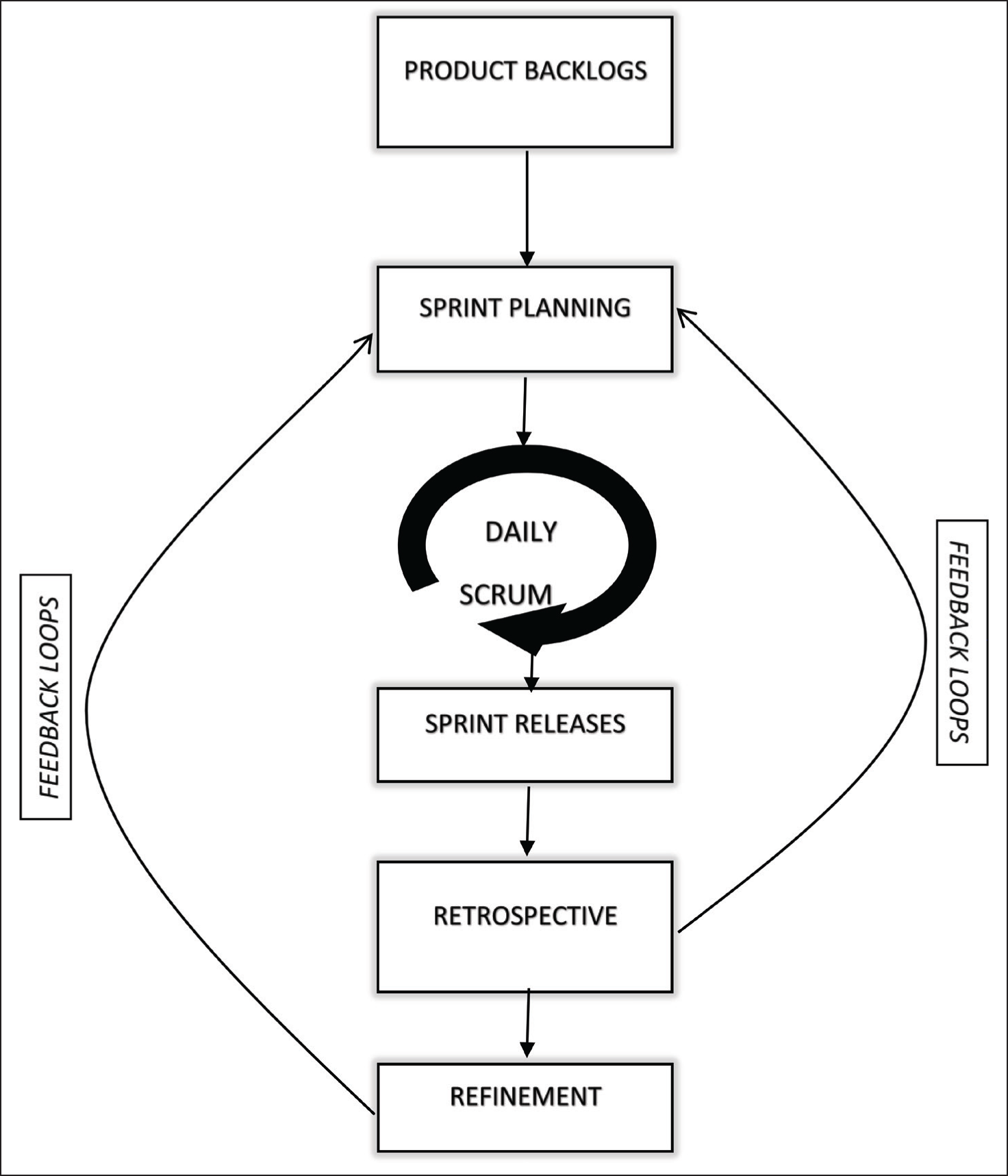
The framework presented in this article covers the process flow of agile methodology in general. Agile methods focus on certain principles and values which are discussed in the papers: (Conboy et al., 2011; Gera et al., 2019; Laanti et al., 2013; Moi et al., 2019; Paulk, 2002; Scott 2012; Soundararajan et al., 2012; Thrassou et al., 2018; UsmanMalik et al., 2014; Yusoff et al., 2019)
On consolidating, broadly there are about 12 principles and 4 values that are currently under the agile manifesto used by the companies. The 12 principles are:
Customer satisfaction; Rapid responses to change; Frequent delivery; Collaboration; Motivation; Interactions; Delivering functional outputs; The steady pace of development; Importance of detail and design; Simplicity; Self-organizing teams; Retrospective at regular intervals.
The four main values that agile methodologies focus are:
Importance on individuals and interactions rather than processes and tools; Documentation as user stories (working software over documentation); Customer collaboration; Responding to changes rapidly over following a plan.
The process of agile begins with determining the goals that are to be achieved by the organization (Rakshith & Patil, 2013). The goals determined should satisfy the principle SMART (Specific, Measurable, Accessible, Realistic, and Time-bound) and by identifying KPIs. Chan and Thong (2009), Schuch et al. (2020), and Strode and Strode (2016) reviewed articles published from 1990 to 2005 on various agile methodologies that apply to different organizations based on their context of operations. Some methods that are currently in use are Dynamic System Development (DSDM), Xtreme Programming (XP), Scrum, Adaptive Software Development (ASD), and Crystal methods (Cocco et al., 2011; Melnik & Maurer, 2004; Ram et al., 2018; Shameem et al., 2018; Shen et al., 2013). The resources, including both material and human, are determined and formed. The key concept of agile teams is that they are cross-functional teams mainly focusing on the cross-functional collaboration of both employees and customers (Abrar et al., 2019; Cho, 2008; Eloranta et al, 2016; Hannola et al., 2013; Hossain et al., 2009; Vacari & Prikladnicki, 2015).
Product Backlogs
Product Backlog Items (PBIs) give a brief description of the task and which team member it has been assigned to, along with priority and timeline while user stories give a detailed picture of the product backlog items (Sidky et al., 2007). Once all the initial goals, requirements, and processes are decided, the cross-functional teams list down the tasks and activities that need to be performed. These tasks and activities are called product backlogs (Alperowitz et al., 2017; Cervone, 2011; Paasivaara et al., 2008, 2012; Wińska & Dąbrowski, 2020).
Sprint
Agile project planning is a method to estimate the work and capacity of people required through work units called sprints and iterations (Conboy & Fitzgerald, 2004; Gera et al., 2019; Yusoff et al., 2019). The scrum master decides the product backlog items and logs them on the scrum board. In the sprint planning meeting, the scrum master would discuss and assign the product backlog items to the team members and sets the sprint duration (Angara et al., 2020; Benefield, 2008; Boschetti et al., 2014; Golfarelli et al., 2013; Keijzer-Broers & de Reuver, 2016; Mahnic, 2011). Sprint planning is the first step which involves all the project team members along with the scrum master deciding the product backlog items or the user stories for each sprint. In earlier days, sprints used to be long and the users had to wait long to see the product being developed. But now, sprints are as short as even one day, where there are short releases of some of the features of the product. Each sprint is designed based on the resource availability and their capacity (available hours). After every sprint planning, the team is encouraged to deliver the PBIs within the given sprint duration (Blessie, 2018; Boschetti et al., 2014; Gannon, 2013; Jansi & Rajeswari, 2015; Morampudi & Gaurav, 2013; Scotland & Boutin, 2008).
Daily Scrum
The action items with timelines are assigned to people which are tracked in a Scrum board or any DevOps board by the Scrum master. The Scrum Master keeps track of the activity timelines and helps resolve any risks or impediments (Carlos et al., 2018; Machado et al., 2015; Turnbull et al., 2019). The purpose of the scrum board is to make the list of backlogs visible to the team. The scrum board may be of any form like a whiteboard, sticky notes or any online forms. In regular intervals, the stages of sprint activities, improvements, feedback, and tasks for the next day are discussed in daily scrum meetings (Cervone, 2011; Newmark et al., 2018; Sutherland, 2005). The daily scrum meeting also known as the Stand-up meeting is decided by looking at the backlog items displayed on the scrum board (Duka, 2013; Eloranta et al. 2016; Hossain et al., 2009, 2011; Jeldi & Chavali, 2013; Su, 2012; Vlaanderen et al., 2011; AL_Zaidi & Jameel Qureshi, 2014)
Agile Process Flow.
Retrospective
Retrospective is considered as an opportunity for the agile team to check and correct the mistakes made. This enables the team members to make improvements that are needed for the next sprint cycle (Gaikwad et al., 2019; Jovanović et al., 2016; Mendes et al., 2016;). Retrospective meetings are held before the next sprint planning. During the retrospective meetings, happenings of the previous sprint cycle are discussed along with whatever happened during the sprint release (Dingsøyr et al., 2018; Wawryk & Ng, 2019; Werewka & Spiechowicz, 2017).
Refinement
After each sprint, the refinement session is held to look back at the goals set, to see if they are still relevant and up to the timeline (Gunasekaran, 1998; Neb & Nagpal, 2019; Rush & Connolly, 2020; Samet Aydın, Levent Yaşarol.Pdf, n.d.). This is the process where the development teams and the end-users collaborate to review and revise the user-stories and update them. Adding details, corrections, improvements, and estimations are done in the refinement process (Benduhn et al., 2017; Müter et al., 2019; Paige et al., 2005; Sánchez-morcilio et al., 2019).
Feedback
The most important feature of agile is the continuous feedback throughout the process. Feedback is given and received on both—the members of the agile team and the processes (Ahmed et al., 2017; Berczuk, 2007; Diel et al., 2016; Dwivedi, 2013). Since agile teams are highly collaborative, timely feedback is given by the team members to their colleagues based on their performance, quality of work, time management, communication, and so on. Feedback is received for the processes and the products developed from the end-users (Andrei et al., 2019; Brown et al., 2013; McHugh et al., 2012; Stoica & Mircea, 2016; Twidale & Nichols, 2013). This feedback helps the agile teams improve the standards of their processes and helps them achieve the end user-stories efficiently and effectively (Angioni et al., 2005; Dima & Maassen, 2018; Duka, 2013).
Software Development Lifecycle Using Agile Methodology.
RQ3: Applications of Agile in Various Fields
Agile was seen as the sole methodology for software development and project management in its early stages. But today, agile is being employed in almost every industry for its operations. Organizations in different industries adopt agile to stay afloat in changing environments to deliver a product of better quality and to suit customer needs (Dumitriu et al., 2019; Nemkova, 2017; Tseng & Lin, 2011). The applications of agile are addressed in six major industries namely Software Development, Project Management, Manufacturing, Marketing, Supply Chain Management, and Education.
Software Development Industry
The working principles of agile methods help projects in Information Technology to be delivered in short iterations, update their software or products as per the changing needs from customers, lower defects rate, and overcome the challenges faced in traditional methods (Dingsøyr et al., 2012; Goyal, 2011; Lichtenthaler, 2020; Shankarmani et al., 2012; Sharma et al., 2012; Soundararajan et al., 2012; Spataru, 2010; Thorgren & Caiman, 2019;). Several literature review papers were identified with previously published articles on how software development started incorporating agile methodologies into their working systems to improve their speed, flexibility and quality of service (Abdalhamid & Mishra, 2017; Abrar et al., 2019 Breivold et al., 2010; Cardozo et al., 2010; Dikert et al., 2016; Hoda et al., 2017; Silva & Goldman, 2014; Sletholt et al., 2011; Talukder, 2017). Further, papers also reviewed the different agile approaches that were practiced by different companies. The papers provided insights on the benefits and limitations of using different approaches of agile in different contexts of software development (Abdalhamid & Mishra, 2017; Flora & Chande, 2014; Hamed & Abushama, 2013; Laanti et al., 2013; Wińska & Dąbrowski, 2020).
Project Management
Dynamics, complexities, and risks of occurrence of changes in the specifications of the projects due to constant and fast changes in the needs of consumers have made the traditional project management methodologies fail in recent times (Hidalgo, 2019; Hoda & Murugesan, 2016; Lindlöf & Furuhjelm, 2018; Sanchez et al., 2019). Agile Project Management focuses on feature-driven development principles (Karlesky & Vander Voord, 2008; Kulkarni et al., 2017) that focuses on controlling requirements through fixed time and cost associated with the project. Agile project management methodology is iterative and gives importance to continuous improvements through frequent feedback cycles (Bucea-Manea-Tonis & Tonis (Bucea Manea), 2014; Fernandez & Fernandez, 2008; Landaeta et al., 2011; Rasnacis & Berzisa, 2016). The agile projects are flexible, and the projects are delivered in quick sprints to the end-users, frequent feedback are collected and utilized to improve the next sprint cycles (Čelesnik et al., 2018; ELENA, 2019). Incorporating agile methods in project management dates back to the nineteenth century. Agile enables organizations to respond as quickly as possible to customer needs and sustain the dynamics of the market environment (Ceschi et al., 2005; Edeki, 2013; Jeffs & Papillon, 2019; Kavitha & Thomas, 2011; Paasivaara & Lassenius, 2016; Paasivaara et al., 2008; Sutherland, 2005).
Marketing
The use of agile methodologies in marketing is nothing but the adaptation of the management principles of agile used in the software development industry. The principles of agile used in marketing need to be modified to suit the dynamics of the marketing environment (Brinker, 2016; Vaillant & Lafuente, 2019; Zhou et al., 2019). With the advent of technology, several marketing strategies were also founded to help companies survive the excess competition. They are Digital marketing, Content marketing, E-mail marketing, Search engine marketing, and so on. One such strategy was the agile marketing approach (Gera et al., 2019; Inversini & Buhalis, 2014). Agility in marketing methods allowed the companies to have a cross-functional collaboration of marketing teams with shared goals which allowed the companies to work and respond quickly to a dynamic environment. It helped them publish their tasks quickly and receive feedback immediately to make required changes based on their performances and changing needs of the end customers (Christofi et al., 2013; Cooper & Sommer, 2020; Vaillant & Lafuente, 2019). Agility in marketing has also ensured dynamic collaboration, connection, and communication with all the stakeholders involved. Agile marketing has helped companies achieve decisional speed, accuracy, and flexibility (Chuang, 2020; Heredia et al., 2013; Kosasi et al., 2018; Nurcholis, 2020; Sommer, 2019).
Manufacturing
The implementation of the agile manifesto in the manufacturing domain ensures the complete integration of technology, customers, manufacturing methods and finally, management systems. The manufacturing process is always characterized by the integration of customers and suppliers starting from designing the products, manufacturing, marketing to support services (Gunasekaran, 1998; Gunasekaran & Yusuf, 2002; Onuh & Hon, 2001). Agility in manufacturing enhances the flexibility and rapid responses to changes in market conditions (Caridi & Cigolini, 2002; Ghobakhloo & Azar, 2018; Gunasekaran & Yusuf, 2002; Mccurry & Mcivor, 1996; Meade & Sarkis, 1999; Yauch, 2011). Integrating agile methods in the manufacturing domain ensures certain important aspects such as the reduction in lead time, meeting customer needs immediately, decrease in buffer stock and the flexibility to change to meet the requirements of the customers (Elmoselhy, 2013; Flumerfelt et al., 2012; Garbie et al., 2008; Meade & Sarkis, 1999; Mittal et al., 2017; Sharifi & Zhang, 2001). The performance of agile methods in manufacturing industries has been measured and several authors have developed metrics to assess the activities of agile in manufacturing organizations (Aravind Raj et al., 2013; Garbie et al., 2008; Vinodh & Aravindraj, 2012; Yauch, 2011).
Supply Chain Management
The increasingly competitive business environment has made prominent supply chain disruptions in most of the industries (Chiang et al., 2012). The disruptions include shorter product life cycles resulting in the need for faster movement of products and information along with the entire supply chain network, increasing lengths of supply chains due to globalization of businesses and volatile demand patterns (Agarwal et al., 2007; Christopher & Towill, 2001; Power et al., 2001). In SCM, the complexity is high in engineering systems which have necessitated the need for a more agile approach to respond rapidly to changing environments, identify late customer needs or failure of an agent which is difficult in the traditional approach (Agarwal et al., 2007; Alford & Page, 2015; Armoutis et al., 2008; Gilaninia et al., 2011; Chiang et al., 2012). The dynamics of the market have resulted in consumer needs and wants changing rapidly, hence the complexity of the supply chains has made them inefficient, slow and cost and time-consuming. Supply chains employing agile methods are mainly characterized by their speed, cost-effectiveness, flexibility, and efficiency (Armoutis et al., 2008; Gilaninia et al., 2011; Hoogveld & Koster, 2016; Jermsittiparsert & Pithuk, 2019; Kawa & Maryniak, 2019; Prof & Barutc, 2007).
Educational Institutions
Educational institutions are complex organizations including educational activities, research programs, and other knowledge-exchange programs. Such institutions are facing larger risks such as technological advancements, financial risks, management pressures, and so on (Alipui et al., 2014; Boyle et al., 2006; Hildenbrand et al., 2008; Melnik & Maurer, 2004; Rush & Connolly, 2020; Owen & Dunham, 2015; Twidale & Nichols, 2013; Vogelsang et al., 2019;). The integration of agile into such educational institutions has helped them overcome all major risks. Agile methods in educational institutions help them manage the prevailing uncertainty in the market, adaptability, creativity, systemic thinking, and flexibility (López-Alcarria et al., 2019; Vogelsang et al., 2019). One major impediment that will be faced by the educational institutions while adopting agile methods will be in terms of the faculty work force and the students adapting to the changes. They should be educated and trained on the agile methodology of management, their benefits and risks for the better and seamless adaption of the agile approach by both faculty and students (Dove, 1996; Kropp & Meier, 2013; Melnik & Maurer, 2004; Philbin, 2015).
RQ4: Lean, Agile and Waterfall Methodologies
Many organizations, where Lean methodology is explicitly followed, agile is also being adopted in recent times. Some organizations convert their Lean processes into agile methods, but in many organizations Lean and Agile are combined to reap the benefits of both the methodologies (Lu et al., 2011; Yordanova & Toshkov, 2019). In contrast, in organizations following waterfall methods, a large shift can be seen toward agile methods to suit the context of a dynamic environment.
Lean and Agile
Lean and agile are two project methodologies used by manufacturing firms to improve operational efficiency and increase their profits (Ghobakhloo & Azar, 2018; Law & Lárusdóttir, 2015; Mehrsai et al., 2014). The purpose of agile is to deliver the working part of a project continuously to the end-users and update the status of the development of user-stories. This enables continuous feedback from the consumers that are used for development and improvements in the next stages of project or product development. Lean, on the other hand, spend time and resources on value-creating activities and aims at cost reduction by eliminating unnecessary activities that consume resources (Jain et al., 2008; Narasimhan et al., 2006; Kupiainen et al., 2015; Lishner & Shtub, 2019; Rico, 2010; Sohi et al., 2016; Wang et al., 2012). Recently, the industries that have been following lean methods have started implementing the agile manifesto alongside their lean methods. Lean and agile methodologies complement each other and provide the combined benefits of both. These two methods are adopted together in two different approaches generally depending on the context of the operations in an organization. The approaches are lean within agile and agile within lean (Cawley et al., 2010; Ghezzi & Cavallo, 2018). Further, lean and agile methodologies are sometimes tailored together to form a hybrid model called the Leagile method (Elmoselhy, 2013; Perera & Fernando, 2007; Purvis et al., 2014; Rodríguez et al., 2012; Wang, 2011; Wang et al., 2012). The hybrid Leagile model focuses on creating value to the consumer needs by rapid iterations for improvements based on the feedback received from frequent delivery of tasks of the whole project. Here, the strengths of the lean and agile methodologies complement each other overcoming certain disadvantages prevailing in them respectively (Narasimhan et al., 2006).
Waterfall and Agile
The most basic and significant difference between the waterfall model and the agile model is that the waterfall model is a sequential methodology (Clear, no date; McCormick, 2012) whereas agile involves simultaneous processes by cross-functional teams and agile processes undergo multiple iterations (Ashmore, 2012; Goyal, 2011; Khoza & Marnewick, 2020; Rouvrais & Landrac, 2012). There are several drawbacks in the traditional waterfall model like they do not respond to changes quickly, they are iterated multiple times, have a longer completion cycle and give lesser importance to feedback. These drawbacks are pushing the companies in today’s dynamic market towards the adoption of agile methods (Almeida, 2017; Balaji, 2012; Duka, 2013; Mahadevan et al., 2015; Mahalakshmi & Sundararajan, 2013; Thummadi et al., 2011). The success rate of projects adopting waterfall methods has gone down drastically. The complexity of the projects, constricted time frames, sustainability, and suitability are major factors determining the failure of waterfall projects in many organizations (Crocitto & Youssef, 2003; Cusumano & Smith, 1997). Hence, the importance of the agile methodology has increased manifold as it overcomes all the factors that lead to the failure of waterfall projects. Agile methods give importance to quicker deliveries, cost-effectiveness, and suitability to the current market trends which lead to higher success rates of projects adopting agile rather than projects adopting waterfall methods (Andrei et al., 2019; Cocco et al., 2011; Dima & Maassen, 2018; Hanslo & Tanner, 2020; Mohamed & Darwish, 2019; Stoica & Mircea, 2016).
RQ5: Challenges of Implementing Agile Methods
The transition from any traditional method to an agile manifesto in any industry is not a smooth one. The company may face many hurdles during the transition (Hansen & Baggesen, 2014; Jermsittiparsert & Pithuk, 2019; Santos et al., 2016). The challenges can be categorized into four groups based on their context. They are Management, People, Process, and Technology (Almeida, 2017; Bjarnason et al., 2011; Senapathi et al., 2019; Shameem et al., 2018).
Comparison Between Agile, Lean, and Waterfall Methods.
Management or Organizational Level Challenges
The challenges faced during the adoption of agile methodologies at an organizational level include:
size of the organization and number of employees type of management (top-down or bottom-up approach) industry product-based or service-based organization organization culture management principles (risk management, requirements management, change management, etc.) (Bannerman et al., 2012; Crocitto & Youssef, 2003; Hekkala et al., 2017; Hossain et al., 2009, 2011; AL_Zaidi & Jameel Qureshi, 2014; Thorgren & Caiman, 2019).
Along with these, the global organizations operating across different regions around the world face problems of communication due to time zone differences. Agile encourages enabling face-to-face communication among employees (Diel et al., 2016; Tripp et al., 2016). But global organization employees face the problem of geographical distance and time zone differences between their regions of operations.
People Level Challenges
People level challenges start with the depth of knowledge employees have on agile development methodologies. Further, psychological challenges and sociological challenges also need to be considered (Almeida, 2017; Ghobadi & Mathiassen, 2016; Kalenda et al., 2018). The psychological challenge majorly is the acceptance of change in their work environments, trust among the new team members, and the ease of communication they are about to establish with the cross-functional teams (Bannerman et al., 2012; Hossain et al., 2009; Lous et al., no date; Kendall & Kendall, 2006; ). Sociological challenges include the level of team dependency, communication within and across cross-functional teams, responsibilities of the individual team members, adaptability and trust among the co-workers (Boehm & Turner, 2005; Hekkala et al., 2017; Senapathi et al., 2019; Thorgren & Caiman, 2019).
Process Level Challenges
Process level challenges refer to the challenges and difficulties the organization faces during the development process of a project (Dima & Maassen, 2018; Nishijima, 2013). They include documentation problems. Agile focuses on user-stories rather than documentation where the problem arises in the long run. Since agile teams are cross-functional, they establish a cross-functional dependency among them and thus affect co-ordination (Hole & Moe, 2008). Problems occur in global organizations where many teams are separated by geographical boundaries spread across the world. Hence, their dependency creates problems during the project development processes (Boehm & Turner, 2005; Whitworth & Biddle, 2007). This cross-functional-collaboration of teams also results in problems in the speed of operation, quality and time zone differences (Abrar et al., 2019; Arshad & Hanifah, 2010; Gera et al., 2019; Tripp et al., 2016).
Technology Level Challenges
Another level of the challenge includes the stage of technological advancements of the organization. Challenges arise when the organization is not equipped with the required tools and technology necessary to make a transition from the existing traditional methods to agile development methodology (Boehm & Turner, 2005; Chuang, 2020; Cooper & Sommer, 2020; Hamid et al., 2015). Technology is also required for issue tracking, tracking, and maintaining a free flow of feedback from the end-users to developers and customer collaboration (Almeida et al., 2019; Cooper & Sommer, 2020; Hossain et al., 2011; AL_Zaidi & Jameel Qureshi, 2014).
Conclusion
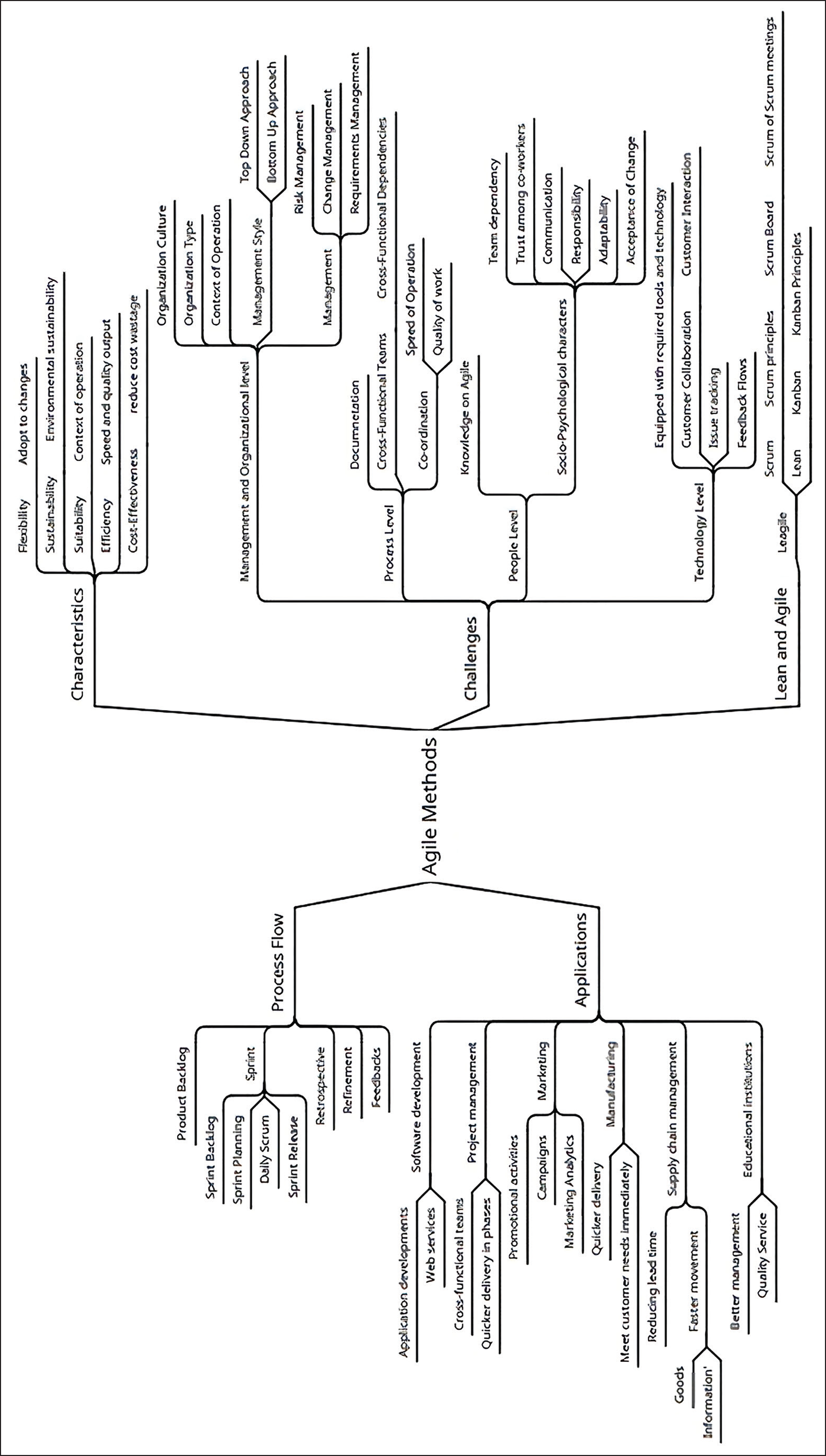
This article has presented a systematic literature review on the various aspects of agile methods such as their characteristics, process flow, applications in various industries and challenges faced in agile adoption. The literature works available between the years 2000 and 2020 were studied for this purpose. A deeper understanding of the agile methods and why companies have started to adopt them on a large scale recently was obtained in this review. The research gaps such as unavailability of a consistent agile framework, no clear understanding of whether agile can be implemented across various contexts of operations, how agile differs from other traditional methodologies and challenges faced during the implementation of agile have been addressed in this literature review paper. The entire framework of the agile methods is presented in Figure 5. Furthermore, agile being one of the most promising methodologies, companies are shifting toward it on large scale and this article would enrich the existing research work in the area.
Framework of Agile Methods.
Footnotes
Declaration of Conflicting Interests
The authors declared no potential conflicts of interest with respect to the research, authorship, and/or publication of this article.
Funding
The authors received no financial support for the research, authorship, and/or publication of this article.