




Abstract
Purpose:
The purpose of the research is to investigate the determinants of consumer ethnocentrism (CE) and its influence on the actual purchase behaviour (APB) of domestic versus foreign products among Indians post COVID-19 pandemic using the theory of planned behaviour (TPB).
Design/methodology/approach:
To obtain the results, statistical techniques such as EFA, CFA, t-test, ANOVA and regression were applied to 861 responses, conducted via a structured questionnaire in the different metropolitan cities of India in two phases.
Findings:
Two major determinants of CE, i.e., patriotism and nationalism, are found. Indians have moderate to high ethnocentrism levels, and their tendency to be ethnocentric significantly differs across demographic traits; there is a significant influence of CE on attitude formation that subsequently leads to favourable intention and finally to APB.
Practical implications:
The findings indicate that marketers can feel confident in targeting both genders in their promotional campaigns as there were no pertinent variations in both genders’ ethnocentric tendencies. The increasing level of ethnocentrism will surely be an opportunity for Indian manufacturers and sellers. Their promotional tools must carry a visible message that the product is domestically manufactured and its consumption will lead to value addition in the country.
Originality/value:
The research provides insights to understand ethnocentrism through the lenses of TPB and social identity theory. The study will augment our understanding of the plausible reasons behind the increasing ethnocentrism among Indians, especially after the COVID-19 pandemic.
Introduction
Globalization has blurred the boundaries between countries, making the globe a converged and homogenous market. As a result, today, consumers are surrounded by a plethora of global and local products to choose from (Othman et al., 2008). Global products are usually linked with wealth, status, recognition and prestige, adding to consumers’ social reputation (Piron, 2000). While local products convey pride and belongingness by representing local culture, traditions, customs and resources (Özsomer, 2012; Schuiling & Kapferer, 2004). Local products better position themselves as the ‘Sons of the soil’ as they serve the nation by grasping local consumers’ demand in a better way (Cayla & Eckhardt, 2008). Product localness and globalness carry significance and strongly influence consumer purchase intention (Batra et al., 2000; Dimofte et al., 2008; Steenkamp et al., 2003; Swoboda et al., 2012).
A consumer’s preference for any product is influenced not just by objective factors such as price, quality, product image, source country image and so on but also by affective factors such as consumer ethnocentrism (CE) (Maheswaran, 1994). Even international marketing literature demonstrates that ethnocentrism has a key role in choosing between local versus global (Baber et al., 2023; Balabanis & Siamagka, 2022; Balabanis & Diamantopoulos, 2004). CE reflects consumers’ feelings, attitudes and purchase behaviour towards local products as a matter of identity and pride (Shimp & Sharma, 1987).
The ethnocentrism concept has always been a hot topic of discussion, whether it was the Buy Malaysian Product campaign of 1997–1998 (Utusan, 2001); a recent speech of the US President, where he invoked the Made in America phrase to preserve American jobs to strengthen local economy (Enzerink, 2022); the Make in India pitch of 2014 or the Made in China campaign with numerous tax breaks to maintain China’s manufacturing dominance (Economic Times, 2014). Reports indicate that the Chinese prefer their local products more than others (McKinsey & Company, 2021). It is a fact that all developed nations have attained developed status by heavily focusing on locally available products (Elliott & Cameron, 1994).
By relying more on locally manufactured (Swadeshi) goods, India can be made Atmanirbhar, a state of being self-sustaining and self-generating (Sawant, 2021; Verma et al., 2021). For instance, the Indian ice cream brand AMUL, which self-promoted as ‘A Taste of India’, gained a 36% share in a market that was previously dominated by only multinational corporations (Hollis, 2008). After the COVID-19 pandemic, when we are struggling to uplift our GDP, the Atmanirbhar movement will lessen our reliance on imported goods, easing import pressure by strategically positioning India as a new global manufacturing centre (Srivastava, 2020).
Especially, when the manufacturing base of India is getting pace, it is very essential to know the choices and preferences of Indian consumers regarding their own products, as the success of any product (foreign or local) will largely depend on how consumers perceive them (Manufacturing Policy Reforms, 2021; Renaissance of Indian Manufacturing Sector, 2022). Hence, prior knowledge of the ethnocentric tendencies of Indians is a must. Further, CE is not a static phenomenon, it keeps on changing due to rapid globalization and economic developments. It differs across countries, cultures and time horizons (Mwantu & Tanko, 2016).
Studies analysing the actual purchase behaviour (APB) of Indians for domestic versus global products are scarce (Batra et al., 2000; Kumar et al., 2009; Lee et al., 2010), especially post COVID-19 pandemic. Further, the theory of planned behaviour (TPB) is also studied less with CE (Castillo et al., 2021; Maksan et al., 2019), especially in the Indian context. Therefore, to fill the above gaps, the present study aims to analyse the ethnocentrism level of Indians and its impact on APB of local versus foreign products using the social identity theory and an extended version of TPB. In addition, the study also tries to find out the determinants of the ethnocentrism concept. The present study will benefit both local and global manufacturers to develop an appropriate marketing strategy to face competition and satisfy their consumers in a better way.
The article is structured as follows. The second section discusses the literature review and hypothesis development. The third section explains the research methodology. The fourth section highlights analysis and results. The fifth section covers discussion and conclusion. The sixth section details the implications of the study and the seventh section presents the limitations and future scope.
Literature Review and Hypothesis Development
Consumer Ethnocentrism
Sumner (1906) was the first to address CE as a sociological construct that states that all other groups are inferior to one’s own group, which is superior. Another explana-tion of ethnocentrism put forward by Balabanis and Diamantopoulos in 2004 explained it as a broad construct representing a worldview in which one’s group is at focus and all else is measured and valued in relation to it. According to Sumner’s theory, ethnocentrism is more related to ‘we-group’ feelings, wherein the in-groups are at the centre and the out-groups are appraised concerning them. Sumner emphasizes the importance of ethnocentrism’s two-fold structure: a negative outlook towards out-groups and a positive outlook for in-groups. The criteria by which other groups are judged and the desire to associate with them are set by in-groups. Social identity theory explains ethnocentrism as the relationship between in-groups and out-groups.
Shimp and Sharma (1987) explained ethnocentrism as a trait-like aspect of an individual’s personality. They established CETSCALE to assess customers’ ethnocentric inclinations while buying foreign- versus American-made products. The CETSCALE consists of Likert-type statements in which individuals describe the severity of their disagreement. CETSCALE has been tested in many countries with a variety of goods and has been determined to have good reliability and validity (Huddleston et al., 2000; Klein et al., 1998). CE often ends with overestimating the performance of domestic products (Camacho et al., 2020; Nguyen et al., 2022; Ramadania et al., 2023; Trivedi et al., 2023). Local products are favoured by ethnocentric consumers even if no apparent reasons for such behaviour are seen. They treat in-group people more favourably and purchase domestic products to promote the well-being of the local economy. They consider foreign products as a threat to their homeland (Vuong & Giao, 2020; Yousaf et al., 2022). They staunchly say no to foreign goods and even reprimand others for it, believing that purchasing foreign products puts their citizens out of jobs, harms their indigenous businesses and causes massive unemployment in their nation (Yousaf et al., 2022).
In the literature, patriotism and nationalism are shown as the two antecedents of CE (Balabanis et al., 2001; Sharma et al., 1994). Patriotism is a strong feeling of love and attachment to our own nation without having any hostility with others (De Figueiredo & Elkins, 2003; Mummendey et al., 2001). Patriotic people tend to favour their own nation’s products out of love and commitment to their country (Carvalho et al., 2019). This way, they want to support their local economy.
On the other hand, nationalism is related to out-group rejection and hostility towards others (Ariely, 2012; De Figueiredo & Elkins, 2003) and demonstrates the aggressive side of favourable in-group appraisal (Kosterman & Feshbach, 1989). Also, it symbolizes supremacy and domination of one’s nation over other nations. In the words of Druckman (1994), nationalism is liking one’s group and disliking other groups. The reason why nationalist consumers favour local products is their belief that buying imported ones would be detrimental to their economy and put their people out of work (Carvalho, 2004).
Theory of Planned Behaviour
The TPB’s fundamental tenet is that the APB is determined by behavioural intentions, derived from the combination of three components: ATT (behavioural aspects), SBN (normative aspects) and PBC (control aspects) (Ajzen, 2002). The more favourable these three attributes are, the greater the chances a consumer intends to perform a specific behaviour (Kirmani et al., 2023). Previous studies highlighted that TPB variables are positively associated with PI and APB. Mcdermott et al. (2015) found that intention was most strongly influenced by ATT, followed by PBC and SBN. An ethnocentric consumer tends to have a positive attitude towards the purchase intention of domestic products (Maksan et al., 2019; Zeugner-Roth et al., 2015). The theory has a powerful ability to predict APB (Nardi et al., 2019; Wang & Scrimgeour, 2021).
Attitude is an individual’s favourable or unfavourable opinion towards any activity (Ajzen, 1991). According to Chen and Tung (2014), a person’s intention towards a behaviour is positive if his attitude is favourable. Moreover, ATT includes an evaluation of the action under discussion, including the pros and cons of engaging in the behaviour (Leonard et al., 2004). ATT is the most significant indicator of behavioural intention (Hossny, 2022; Kotchen & Reiling, 2000). ATT also refers to how one views the outcomes of one’s actions (Ramayah et al., 2010). SBN evaluates the strength of the social pressure to indulge in a behaviour or not (O’Neal, 2007). The culmination of normative beliefs and motivational drives predicts it. It highlights the perceived expectations of significant others (like family, friends or co-workers) and one’s motivation to conform to those expectations (Hee, 2000). SBN results from an individual’s belief that his reference group would approve or disapprove of his behavioural acts. The likelihood that certain behaviour is interlinked with the SBN’s positivity (Vabo et al., 2017). Existing literature has also substantiated that ATT is significantly related to SBN (Tarkiainen & Sundqvist, 2005). PBC refers to the difficulty of carrying out a particular behaviour, reflecting prior experiences or perceived barriers. Ajzen (1991) said that it is related to people’s assessments of their capacity to engage in certain behaviours. Its two main components are sufficient availability of resources, i.e., time, money etc. and the person’s motivation to carry out such behaviour (Mahon et al., 2006). In it, an individual perceives that he can control his behaviour towards the purchase intention. It is also determined by one’s perceived level of difficulty or easiness in performing that behaviour.
Therefore, it is hypothesized that:
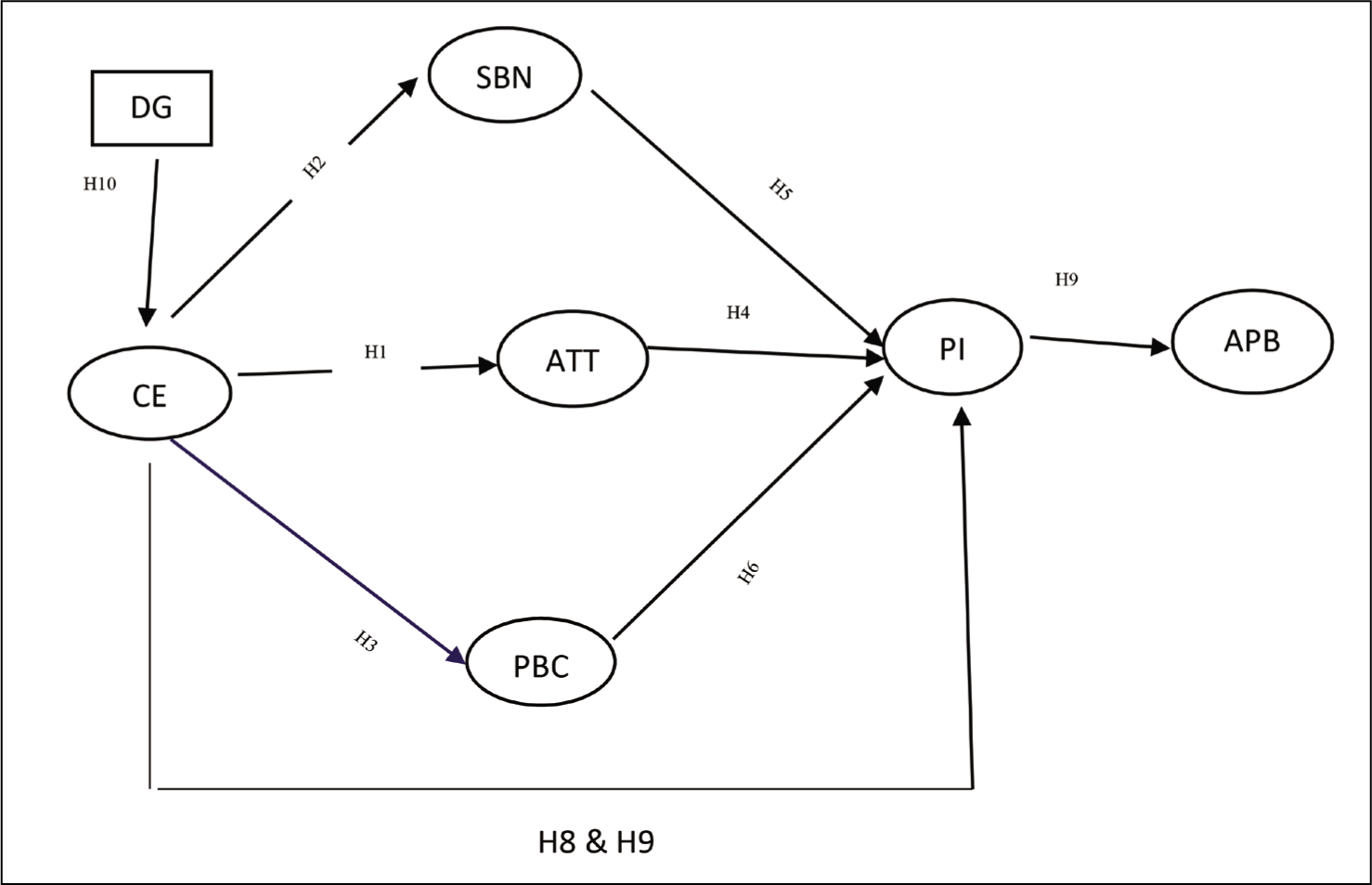
H1: CE positively influences the ATT towards the purchase of domestic products. H2: CE positively influences the SBN towards the purchase of domestic products. H3: CE positively influences the PBC towards the purchase of domestic products. H4: ATT positively influences the purchase intention of domestic products. H5: SBN positively influences the purchase intention of domestic products. H6: PBC positively influences the purchase intention of domestic products.
Behavioural Intentions (INT) and Actual Purchase Behaviour
The individual’s intention to carry out a predetermined behaviour is the main component of the TPB. The intention is the consumer’s readiness to carry out a certain behaviour. Intention is a sign of how much effort a person is likely to put into a behaviour (Mcdermott et al., 2015). It is regarded as an immediate precursor to behaviour (Fishbein & Ajzen, 1975). Further, favourable attitudes and subjective norms produce stronger behavioural intentions (Yadav & Pathak, 2017). The chances of performing the behaviour are increased if the intentions are stronger. According to Ajzen (1991), behaviour intention can be expressed only when the behaviour is willingly controlled. CE through a positive attitude influences the purchase intention of domestic products (Chaudhry et al., 2021; Haque & Maheshwari, 2015).
While, purchase behaviour is a decision process and consumer involvement in purchasing or readiness to purchase a specific product (Ajzen & Fishbein, 1980). When an individual crosses all the necessary steps and considerations involved in purchasing a particular brand, APB is obvious (Kotler & Armstrong, 2009). The various stages of actual consumer purchase are the need or desire to recognize products, search for relevant information, evaluate the various options available in the market, make a purchase decision, and finally, estimating the decision following the actual purchase (Berkowitz et al., 2003; Thackston, 2003). APB is the end result of all the different stages that a consumer goes through in making a final purchase. Thus, it is hypothesized that:
H7: CE positively influences the purchase intention of domestic products. H8: ATT mediates the relationship between CE and purchase intention of domestic products. H9: PI positively influences the APB of domestic products.
Demographics and Ethnocentrism
Ma et al. (2020) found that demographic factors also influence CE levels (Jain & Jain, 2010; Shankarmahesh, 2006). Women appraise domestic products more favourably than men, indicating that they are more conservative, patriotic and ethnocentric than their counterparts (Han & Terpstra, 1988). Studies have also shown that, given a choice between local and global, females usually opt former over the latter (Balabanis et al., 2002; Bawa, 2004; Mayda & Rodrik, 2005; Vida & Dmitrovic, 2001).
Consumer age has been repeatedly recognized as a factor strongly linked to ethnocentrism (Haque & Maheshwari, 2015). Consumers over the age of 50 are shown to be substantially more ethnocentric than those under the age of 50 (Klein & Ettenson, 1999). In general, older people are found to be more ethnocentric than younger ones typically because they are more patriotic and conservative in their approach (Bawa, 2004; Shankarmahesh, 2006). Balabanis et al. (2001) found that among Turkish consumers, age had a significant influence on ethnocentrism. Similarly, Imbert et al. (2003) discovered that older Russians had stronger ethnocentric tendencies as compared to younger ones. It was found in the existing literature that ethnocentrism is negatively impacted by income level. The higher the income, the lower the ethnocentrism level of an individual (Bruning, 1997; Keillor et al., 2001). More affluent consumers exhibit less ethnocentric tendencies in their consumption behaviour (Shoham & Brenčič, 2003). In the literature, consumer education is inversely associated with ethnocentrism, with more educated customers being less ethnocentric (Caruana & Magri, 1996; Klein & Ettenson, 1999). According to Bawa (2004), a higher level of education is linked to a lower degree of CE. Hence, it is hypothesized that:
H10a: Gender of a consumer positively influences his ethnocentrism level. H10b: Age of a consumer positively influences his ethnocentrism level. H10c: Income level of a consumer negatively influences his ethnocentrism level. H10d: Education level of a consumer negatively influences his ethnocentrism level.
Research Methodology
Pre-testing and Pilot Study
A pre-test was conducted on seven respondents while drafting the questionnaire to determine whether the respondents were obtaining the intended meanings of the statements or not. Afterwards, pilot testing was carried out to examine the validity and reliability of the constructs. For content validity, the questionnaire was sent to a few experts in the domain area, and the statements were reframed after incorporating their minor suggestions and comments. The modified questionnaire was again sent to 52 respondents, who were requested to complete and review it. Cronbach’s alpha, a reliability test benchmark, was 0.811 above the allowed limit of 0.70 (Hair et al., 2013).
Sampling and Data Collection
Descriptive cross-sectional research was conducted with a deductive approach. A survey with a self-administered questionnaire was carried out. The sampling frame of the study comprised respondents from metropolitan cities in India, i.e., Gurugram, Delhi, Mumbai and Bangalore. Specifically, these cities were chosen as people come here from different geographic and socio-cultural regions of the country, making it easy to get an image of pan-India. Since the sampling list of ethnocentric individuals was not available, only those respondents who expressed their willingness to participate in the study were used to collect the data. Therefore, non-probability sampling (convenience sampling) was considered methodologically a better choice to collect responses. The criteria for sample selection require the respondent to be 18 years of age and have some source of income so that he/she can make rational decisions regarding the purchase of any product. The primary data were collected in two phases: June to August 2022 and November to January 2023.
Questionnaire and Measurement
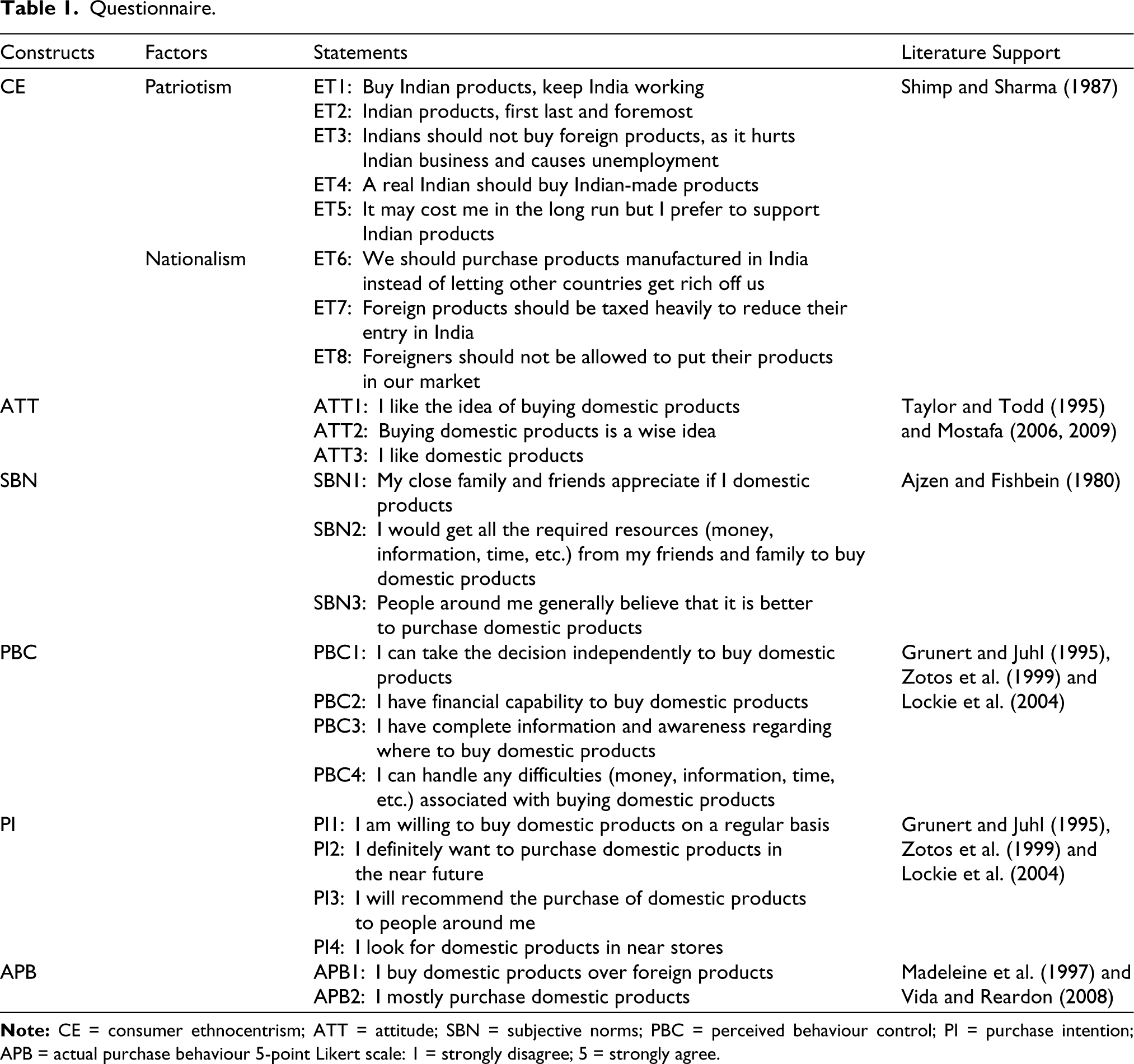
The questionnaire was designed using Google Forms and circulated online (using e-mail IDs and online academic groups) and offline (using hard copies). In all, 1,200 questionnaires were distributed, and 873 of them were returned. Twelve incomplete questionnaires were discarded, and finally 861 were used. The sample was sufficiently large as there were 24 statements. According to Nunnally and Bernstein (1967), the sample must be 10 times the number of statements (24 × 10 = 240 < 861). The questionnaire was initially designed in English with language translations wherever required. It consists of two components: The first section asks for socio-demographic information, namely, age, gender, income and educational qualifications. The second part measures the CE, ATT, SBN, PBC, PI and APB towards global versus local products (see Table 1). The analysis was performed using mean value, standard deviation, correlation, EFA, t-test and ANOVA in IBM-SPSS (23), and Microsoft Excel (2016) and CFA in IBM-AMOS (23).
Questionnaire.
Proposed Conceptual Framework
In the present research, variables of TPB (ATT, SBN and PBC) and CE construct (Figure 1) are used to show the influence of CE on the PI of domestic products (Ajzen, 2011).
Conceptual Framework.
Ethnocentric tendencies do not prosper in isolation rather they are influenced by demographic, social and psychological factors (Sharma et al., 1994). Demographic traits of an individual also influence the CE (Keillor et al., 2001).
Analysis
Respondent Profile
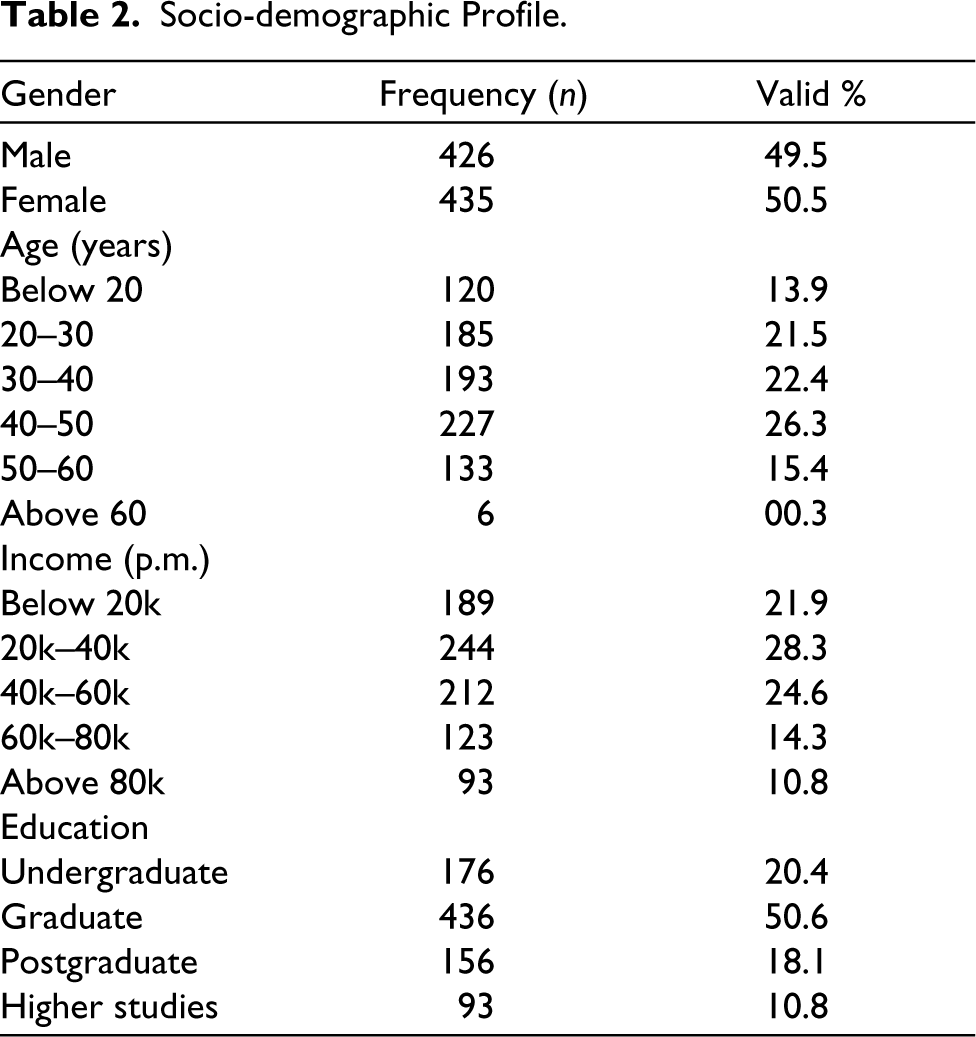
Table 2 shows the respondent’s profile. The study sample consisted of an equal number of females (50.5) and males (49.5%). In the age group, a sample of 40–50 years and 30–40 years was in the majority followed by 20–30 years. In the income segment, 20k–40k group had a 29% share followed by 40k–60k (25%). 51% of the sample was at least a graduate, while 18% had postgraduate degree and the rest 11% had higher studies.
The aforementioned details clearly indicate that the sample is heterogeneous in nature (see Table 2). Due to this, it becomes interesting to find out the demographic influence on ethnocentric tendencies.
Socio-demographic Profile.
Exploratory Factor Analysis
Initially, the Kaiser–Meyer–Olkin (KMO) test and Barlett’s test of sphericity were used to analyse the sample adequacy and the normality. The KMO value (0.929) and Bartlett’s sphericity test (sig = 0.00) demonstrated that the EFA’s underlying assumptions had been adequately satisfied. The sample size was sufficient, and the data distribution was found normal (Hair et al., 2006).
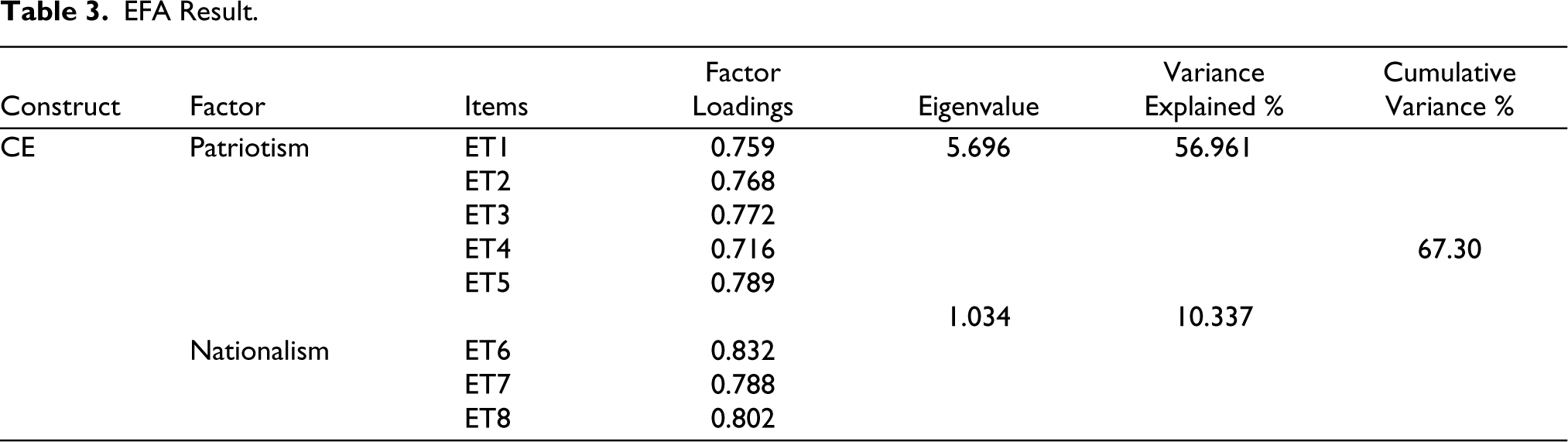
The EFA technique was applied to the dataset to verify the items of the construct. Principal component analysis and varimax rotation with a greater number were used to extract the factors. The criteria used to extract factors were eigenvalue greater than one, communality (>0.5) and factor loadings (>0.5) (Roesch & Rowley, 2005). Finally, two factors—patriotism and nationalism—were extracted based on the findings. Also, based on the variable-factor ratio, the total cumulative variance explained by all items was almost 68% larger than the floor-level explanation (refer to Table 3) (Costello & Osborne, 2005).
EFA Result.
Confirmatory Factor Analysis and Model Fit
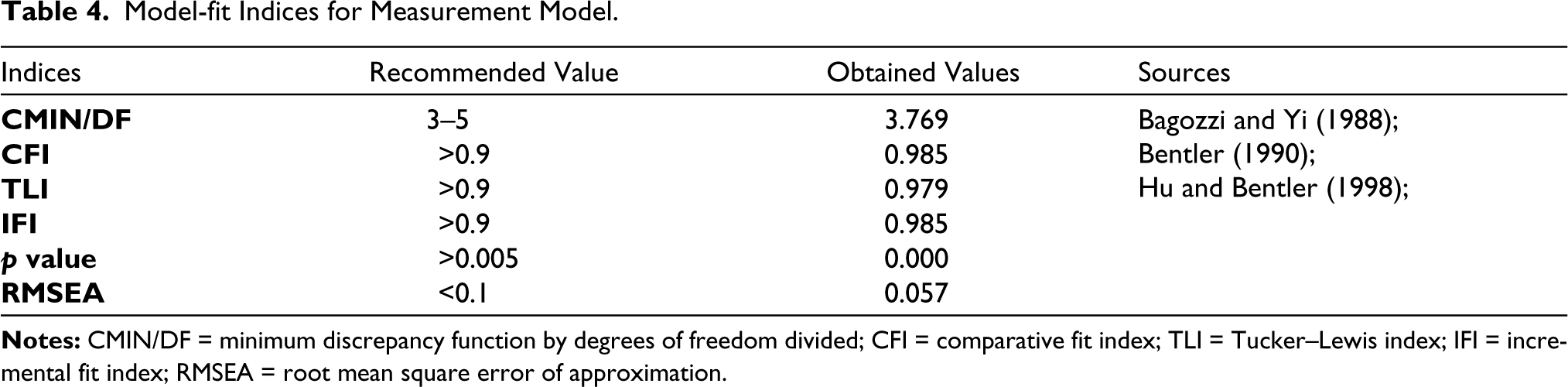
After extracting factors using EFA, it is necessary to confirm the obtained structure. Using the information gathered in the second phase, the two components (patriotism and nationalism) were examined using zero-order CFA. CFA was performed using AMOS 24 (analysis of moment) (Byrne, 2010; Hair et al., 2010). The correlation between both constructs was 0.78, factor loadings > 0.6 (Table 5), composite reliability (CR >0.7) and convergent reliability (AVE >0.5) were above the specified limits. Hence, a second-order construct was formed and validated. The measurement model’s findings revealed that the values fall within the established ranges (refer to Table 4), indicating that the model is a good fit and appropriate for further study.
Model-fit Indices for Measurement Model.
Reliability and Validity
The constructs’ internal consistency is gauged by a measure known as reliability (Hair et al., 2013, 2022). For each construct, it is evaluated using Cronbach’s alpha estimates and CR (Table 5). The values of alpha and CR are over the permitted threshold of 0.70 (Fornell & Larcker, 1981). Next, validity must be confirmed. If the instrument measures what it is supposed to measure, it is considered valid. First, content validity is analysed and then for construct validity, convergent and discriminant validity are evaluated.
Reliability and Validity Statistics.
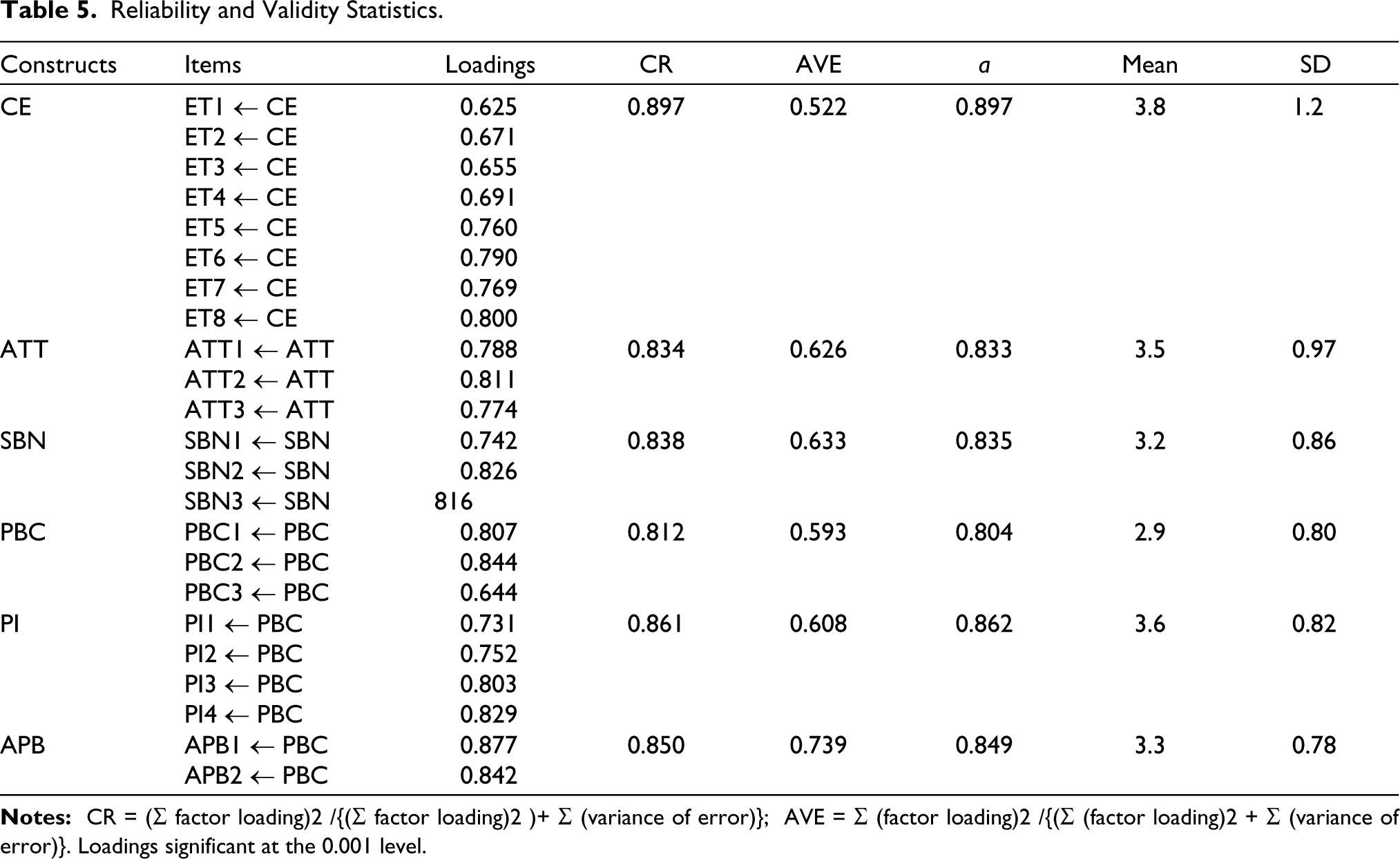
Content validity: To measure the content validity statistically, high and significant factor loadings are used to ensure that the construct is loaded highly on all its statements (Hair et al., 2010, 2022).
Convergent validity: When items in the construct have high positive correlations between them, then convergent validity is established (Carlson & Herdman, 2012). For it, measures such as the CR and the average variance explained (AVE) are used. The total shared variance among the statements of a construct is displayed by AVE. Both CR and AVE values were greater than 0.7 and 0.5, respectively. Additionally, the requirement that CR must exceed AVE is also met (Table 5). Thus, all the conditions for convergent validity were duly satisfied (Hair et al., 2006, 2019, 2022).
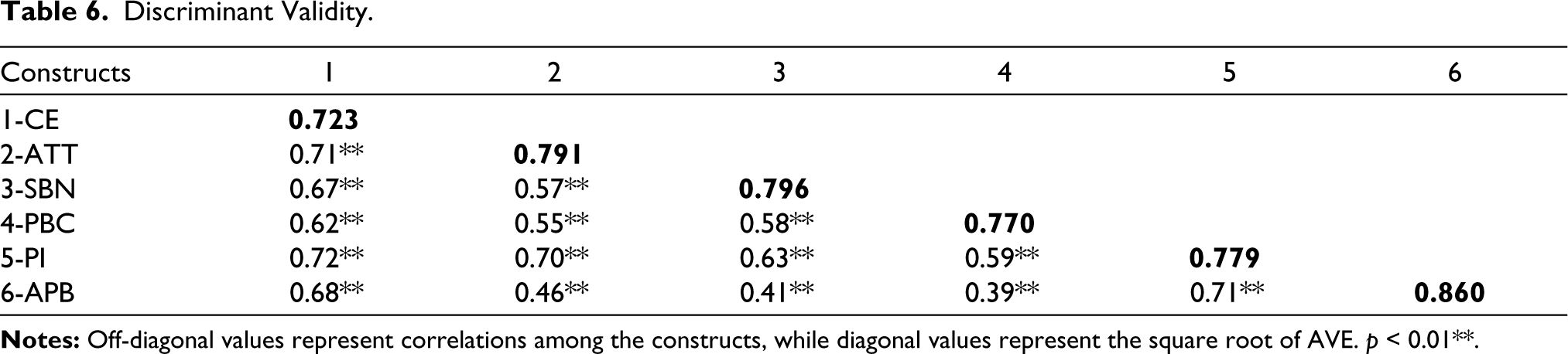
Discriminant validity: It denotes the degree of uniqueness of the different construct indicators (O’Leary-Kelly & Vokurka, 1998). It means the variance shared among the indicators of a construct is greater than the other constructs in the study (Compeau et al., 1999). To establish it, first, √AVE must be greater than the correlation coefficients (r) (values descending off-diagonally in Table 6) (Ahmed et al., 2020) and second, AVE value must be greater than the recommended value of 0.5 (Ahmed et al., 2022; Gefen & Straub, 2005; Hair et al., 2006). The measuring model utilized in the study meets the assumptions of discriminant validity, as shown in Table 5 (Hair et al., 2022). The aforesaid conditions give some affirmation that common method variance is not a problem in the present research (Podsakoff et al., 2003). In addition, using Harman’s one-factor test, it was found that no single construct could explain all the variables (EFA results) (Podsakoff et al., 2003).
Table 6 shows the correlation coefficients among various constructs used in the study. There exists a significant high correlation between CE and PI (0.72), CE and AT (0.71), AT and PI (0.70), and PI and APB (0.71).
Discriminant Validity.
Structural Model Indices
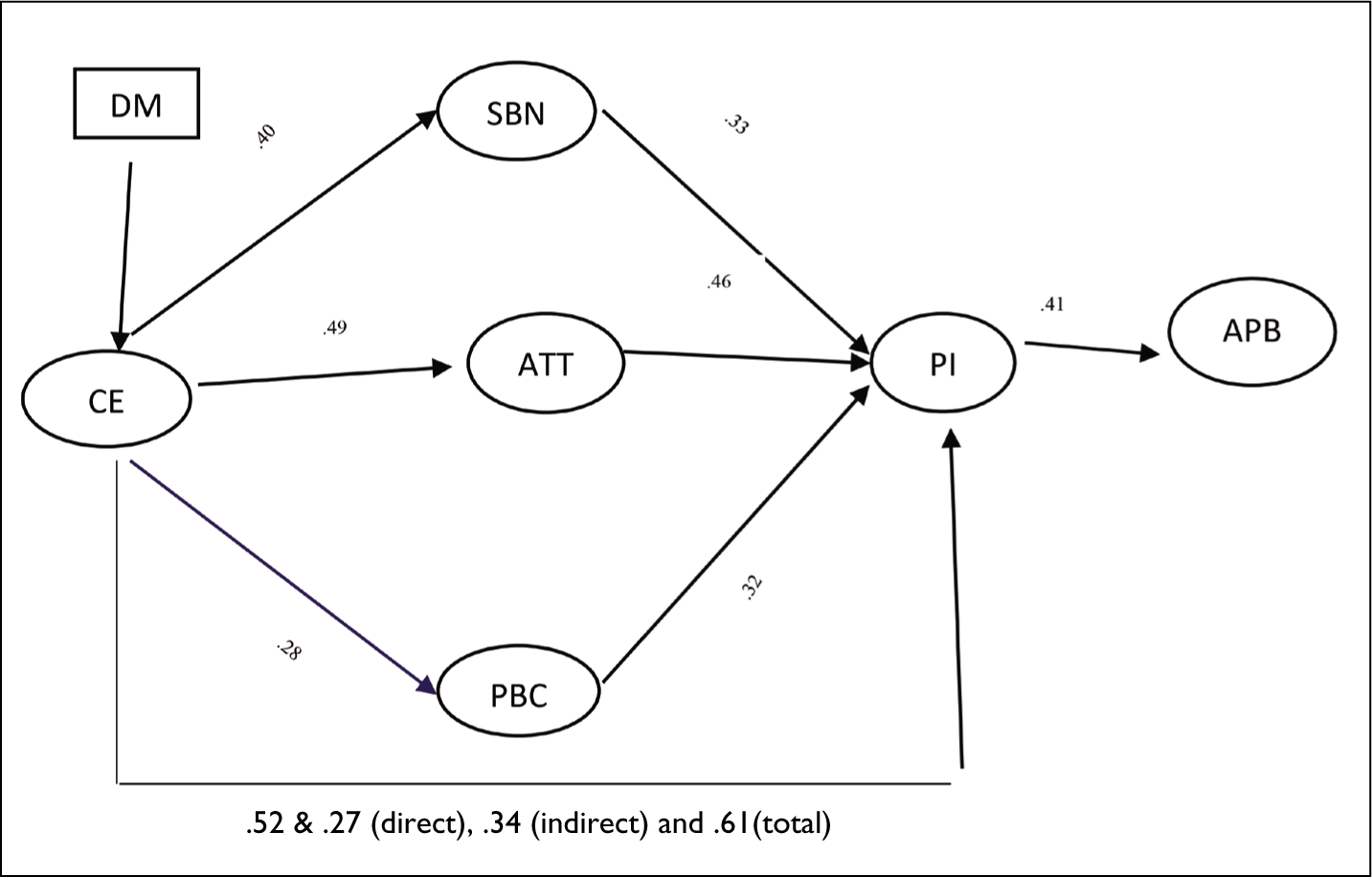
Figure 2 depicts the statistical fit indices for the structural model used in the study. The value of χ2/df (overall goodness of fit) was 2.749, which is acceptable; the AGFI value was 0.90, greater than 0.80; both CFI (0.98) and TLI (0.96) are higher than the benchmark of 0.95; and RMSEA was 0.052, which is lower than standard (0.08). Hence, the model is a good fit (Chau & Hu, 2001).
Hypotheses Testing
After analysing reliability, validity and correlations, the hypotheses were tested using SPSS (23) and AMOS (23). The mean value of 3.8 signifies that Indians are moderately ethnocentric, and the standard deviation value of 1.2 indicates there exists a variability in the ethnocentric tendencies of Indian consumers. Demographic analysis also supports that there was heterogeneity in the data.
For hypotheses testing, AMOS software was used and for mediation bootstrapping with a higher number (2000) along with a 1% confidence interval was done. Table 7 shows that all the hypotheses were supported except H10a ‘Gender of a consumer positively influences his ethnocentrism level’. In hypotheses testing, the standardized path coefficient (β) values indicate that the influence of CE on ATT (β = 0.49, p < 0.01), SBN (β = 0.40, p < 0.01), PBC (β = 0.28, p < 0.01) and PI (β = 0.52, p < 0.01) is significant and proved, whereas path between ATT and PI (β = 0.46, p < 0.01), SBN and PI (β = 0.33, p < 0.01), PBC and PI (β = 0.32, p < 0.01) is also significant and positive. It was observed that the impact of CE on ATT is more substantial than that of SBN and PBC. Also, ATT has a more significant impact on PI followed by SBN and PBC. This indicates that ATT has more explaining power than the other two components of TPB (Mcdermott et al., 2015).
Hypothesis Testing.
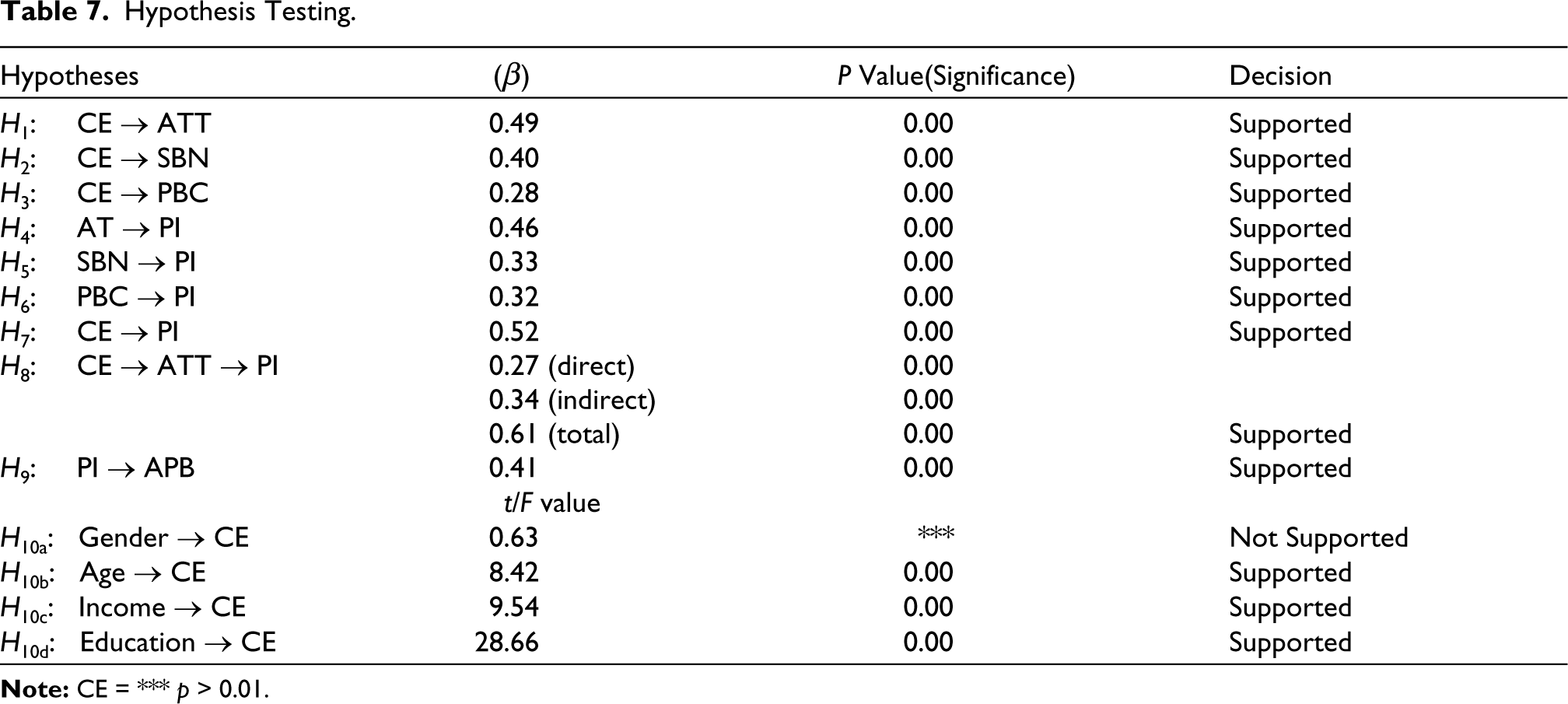
CE has a strong influence on PI (Fernandez-Ferrin et al., 2015; Mockaitis et al., 2013; Yen, 2018) but this influence strengthened more in the presence of AT (β = 0.61, p < 0.01), keeping the direct effect still significant (β = 0.27, p < 0.01) (Dalila et al., 2020; Shin et al., 2016). This shows that the ATT partially mediates the relationship between CE and PI, supporting the H8 hypothesis. Finally, it was observed that PI significantly influences APB (β = 0.4, p < 0.01), indicating that positive intention to purchase a product subsequently turns into an actual purchase.
Demographic analysis was performed using t-test and one-way ANOVA in SPSS. H10a reveals that gender of a consumer makes no difference in his ethnocentrism level (t = 0.63) (refer to Table 7); hence, the hypothesis was not supported. Being male or female does not make any difference in the ethnocentrism level. H10b results indicate that the age of a consumer positively influences his ethnocentrism level (F = 8.42; Table 7). To get deeper insights, the Tukey statistical test was applied and it was found that people over 50 years were more ethnocentric compared to people between 20 and 30 years old. H10c analysis shows that consumer’s income level negatively influences his ethnocentrism level (F = 9.54, Table 7). Tukey test results show that the person earning more than 60k p.m. was comparatively more ethnocentric than the one earning about 20k p.m. H10d results found that the consumer’s educational level negatively influences his ethnocentrism level (F = 28.66, Table 7). Respondents who were at least graduate had less ethnocentric feelings than those who had or were in higher studies.
Discussion and Conclusion
The present study has used the TPB and social identity theory to augment our understanding of the construct CE. First, EFA was run on CETSCALE items to identify the two antecedents of CE. The results revealed that patriotism and nationalism are the two broad dimensions of CE. The results coincide with the previous studies (Balabanis et al., 2001). Thereafter, CFA was run to confirm the factors obtained. The assumptions of CFA were duly met and the CE construct was formed.
The mean score (3.8) shows the Indians possess moderate to high ethnocentric tendencies. Indians are showing increasing preference for Made-in-India products. The COVID-19 pandemic has clearly shown the world that a country can survive through tough times only if it is self-reliant. The buying behaviour of Indians post covid is making some distinct changes (Varindia, 2022). A majority of Indians are reimagining their purchasing decisions on factors beyond price and quality. They are re-evaluating what is essential to their country and economy and are increasingly focused on buying products and brands that are made in India (Kota, 2022). The possible reasons for such behaviour could be a belief that purchasing foreign products may harm their economy, put their fellow beings out of jobs or make other countries rich us (Kaynak & Kara, 2002). They perceive foreign goods as a threat to their country and try to boycott them at any cost. They support local products to keep the local economy thriving (Pecotich & Ward, 2007).
Also, the purchase of domestic products shows love and affection for the country and bolsters national pride (Heslop et al., 2008). It gives the impression that we trust our local brands and take pride in their consumption, thus establishing a connection between consumption and citizenship (Tsai, 2010). Local products give a sense of identity and belongingness. It is like ‘We belong to the product and the product belongs to us’ (Dmitrovic et al., 2009; Vida et al., 2008). Refraining from foreign and choosing local have emotional and symbolic meanings too. Today, Indian consumers have evolved. They are becoming more discerning. They seek benefits beyond price while making purchases and anticipate a value proposition (Mckinsey & Company, 2021).
Therefore, the present study reveals that the blind craze for global brands is waning at a rapid pace as many Indians express their desire to replace foreign brands with indigenous brands (Jain et al., 2019). Now, it is no accident that in many retail stores in India, indigenous products have prominent shelf positions. The high liking for foreign products that used to exist in India in the nineties is gradually fading away and now Indians do not have such a lobby obsession for products manufactured outside (Jain & Sindhwani, 1994; Shashidhar, 2021). Especially after the COVID-19 pandemic, it has been seen that Indians are making a definite shift in their choice of goods, their preference for local products has accelerated now (McKinsey & Company, 2021).
Next, TPB variables (ATT, SBN and PBC) are tested on the relationship between CE and PI. Findings revealed that the extended TPB model in the CE context thoroughly explains the individual’s intention to purchase domestic products. CE significantly influences ATT, SBN and PBC and also directly influences PI. The results corroborate with the similar findings of previous researchers (Arvola et al., 2008; Dalila et al., 2020; Fernandez-Ferrin et al., 2015; Mockaitis et al., 2013; Shin et al., 2016; Weber & Lambert, 2015; Yen, 2018). Results show that highly ethnocentric people have favourable attitudes, experience more social pressure and perceive more behavioural control regarding buying local products over foreign products (Balikcioglu & Kanlitepe, 2023; Nguyen et al., 2023).
The positive influence of CE on SBN and PI supports the idea of social identity theory which states that ethnocentric people following high SBN tend to associate themselves with in-groups and apart from out-groups, which helps to explain why consumers choose local over global (Jia et al., 2023; Mughal et al., 2023; Tajfel & Turner, 2004). Parents’ ethnocentric inclinations often impact their kids’ ethnocentric behaviour (Fernandez-Ferrn et al., 2017). Strong ethnocentric people not only have a positive intention to purchase but also influence the behaviour of other people in their in-group acting as ‘significant others’. They reprimand others for purchasing foreign products and consider this act unethical and unpatriotic. Consumers’ beliefs about what significant others will think (in-group) and their motivation to comply with those beliefs further shape their behaviour. In addition, strong perceived social approval will accelerate their likelihood of purchase. The positive linkage between CE, PBC and PI indicates that ethnocentric people are confident enough to conduct their purchase behaviour, find the task easy to do and have all the resources to carry out the behaviour (Mahon et al., 2006; Paul et al., 2016). The easy availability and affordability of resources further added to the effect. The higher perceived control increases the likelihood of forming a positive intention, as individuals believe they can overcome potential obstacles.
The positive significance of CE on ATT and PI is in line with previous studies (Dalila et al., 2020; Shin et al., 2016). Also, out of all the variables of TPB, ATT is the strongest predictor of purchase intention, followed by SBN and PBC. The results are aligned with various previous studies (Armitage & Conner, 2001; Balabanis & Diamantopoulos, 2004; Maksan et al., 2019; Mockaitis et al., 2013; Povey et al., 2000; Saffu et al., 2010; Sultan et al., 2020), which indicate that ethnocentric consumers preference for domestic products arises from positive attitude towards domestic products (Maksan et al., 2019; Vabo et al., 2017). The direct effect of CE on PI in the presence of ATT was still significant, showing that attitude partially mediates the relationship. The mediated relationship between CE and PI is stronger than the direct relationship between CE and PI. Finally, the significant influence of PI on APB was observed in the study, indicating that highly ethnocentric people are willing to convert their purchase intention into their APB.
Finally, demographic analysis was performed in which age, income and education were observed as determining factors correlating with ethnocentrism levels. According to the study, gender is not significantly related to CE. Being male or female makes no difference in their ethnocentrism levels. The outcomes are consistent with earlier research (Balabanis et al., 2001; Hopkins & Powers, 2007; Maina, 2016). The plausible reasons could be that females are no longer restricted to grocery shopping. Ages have gone by when women were confined to veils and instructed to obey the decisions of others. Now, they actively take part in all decisions, from buying a pin to buying a plane. Indian women are making more knowledgeable decisions in all areas. Also, the sample is from metropolitan cities in India, where women have a significant share of the family income. They work outside, experience the world and are growing more informed and vigilant day by day. They spend more time and effort studying and evaluating products, which significantly impacts their purchasing decisions (TOI, 2022).
While age, income and education were found to be significantly related to CE. (Nijssen et al., 2002; Shankarmahesh, 2006). The likely reason could be that younger people are assumed to be more modern and cosmopolitan in their approach, they like to try new things and ideas. They are more individualistic in their approach. Hence, ethnocentrism tendencies directly relate to an individual’s age (Balabanis et al., 2001; Josiassen et al., 2011).
Whereas education widens the mental horizons of people and takes them out of their shallow confinement of thinking (Bruning, 1997; Sharma et al., 1994). As education increases, ethnocentrism level decreases (Balikcioglu & Kanlitepe, 2023; Mockaitis et al., 2013; Prince et al., 2020). A good income level helps us to travel more, leading to more communication and exposure to the outside world, making us more liberal and outward in our purchase decisions leading to low ethnocentrism levels among people (Mockaitis et al., 2013). So, as a whole, it was found that the relation is comparatively more substantial among the relatively older, low-income groups and less educated consumers.
Implications
This study will help marketers to design a more appropriate penetration strategy for the Indian market. Marketers may target both males and females in their promotional campaigns, as there were no pertinent variations in the ethnocentric tendencies between the genders found in the study (refer to Table 7). As per the present results, CE differs in terms of income, education and age group of consumers (see Table 7). It can be used as a competitive tool to identify the more ethnocentric segment, so as to strategize communicational appeals based more on patriotic and nationalistic themes, especially when nationalist sentiments are on the rise. The increasing level of ethnocentrism among Indian consumers (mean 3.8, see Table 5) could be a threat to international marketers. However, for domestic ones, it could be an opportunity to work on redesigning their advertising campaigns. The packaging and labelling of products must convey that the product is domestically manufactured and that its consumption will definitely lead to value addition for the country and its citizens (Shimp & Sharma, 1987).
The high correlation between SBN and PI gives marketers an opportunity to involve some more well-known personalities in their advertisements so that word of mouth is spread and people can associate themselves with them more strongly.
The study shows that the favourable attitude turns into purchase intention, which finally leads to APB. Using this, marketers must try to make the attitudes of consumers favourable by packaging and labelling the product in such a way that it highlights its consumption benefits for the nation as a whole. Only when they evaluate the pros and cons of buying domestic products will the attitude towards domestic products be favourable.
Now, CE is going beyond the nationalistic feeling, wherein people of similar cultures and social groups consider themselves as one group (in-group) and the rest as others (out-group). This in-group mentality could be used by marketers to highlight that customers are loyal to their country if they boycott foreign products and if they use them, they betray their own people. The rationale is that the influx of foreign products will lead to job cuts in our own nation, which leads to a vicious cycle of poverty and unemployment, eventually deteriorating our domestic economy (Narang, 2016; Supphellen & Gronhaug, 2003).
The policymakers and government could even use the present study results to rethink their existing policies and revamp them by incorporating demographic traits and increasing levels of ethnocentrism among Indian consumers.
The study proves that the favourable attitude together with subjective norms and perceived behavioural control leads to purchase intention, substantiating the TPB.
Limitations and Further Scope
The study has a few limitations, which could be a scope for future research. The present study is uni-national in nature, in the future a cross-comparison of countries could be done for a broader understanding of the phenomenon. Limited demographics (age, gender, income and education) are included in the present study, the future study can be done using more demographics. More mediating and moderating effects could be tested in the future.
Footnotes
Declaration of Conflicting Interests
The authors declared no potential conflicts of interest with respect to the research, authorship and/or publication of this article.
Funding
The authors received no financial support for the research, authorship and/or publication of this article.