




Abstract
A transgender individual, often referred to as a trans person, is someone whose gender identity differs from the sex they were designated at birth. Worldwide, fewer than 1% of individuals identify as transgender, with estimates generally falling between under 0.1% and 0.6%. In April 2014, the Supreme Court of India officially acknowledged transgender people as a “third gender” in accordance with Indian law. The transgender community in India, which includes Hijras and others, possesses a rich heritage and profound connections to Indian culture and Hindu mythology. Unfortunately, society seldom recognizes or strives to comprehend the trauma, suffering, and pain endured by members of the transgender community. Additionally, there is a lack of understanding regarding the significant emotional turmoil experienced by those whose mental identity does not correspond with their assigned biological sex. In this review of case reports, which we encountered in our esteemed department, we try to find out the answers which were left behind by the authorities. It typically depicts the discrimination against them. It also portrays the socio-cultural relationships and support they need from us as an involved and evolving society.
Introduction
A transgender (or trans) person is someone whose gender identity does not align with the sex they were assigned at birth. Numerous transgender individuals pursue medical assistance to transition from one gender to another, and those who do may refer to themselves as transsexual. The term “transgender” lacks a universally accepted definition, even among scholars, and is frequently utilized as an inclusive term. This definition includes binary trans men and trans women, and it may also cover non-binary or genderqueer individuals. Furthermore, related groups like third-gender individuals, cross-dressers, drag queens, and drag kings are occasionally encompassed within wider definitions of transgender. A significant number of transgender individuals face gender dysphoria, and some seek medical interventions such as hormone replacement therapy, gender-affirming surgery, or psychotherapy. Nonetheless, not every transgender person pursues these treatments, and certain individuals may face obstacles in obtaining them because of legal, financial, or medical challenges. Typically, under 1% of the global population identifies as transgender, with estimates varying between <0.1% and 0.6%. 1 In April 2014, the Supreme Court of India recognized transgender individuals as a “third gender” under Indian law. 2 India’s transgender community, which encompasses Hijras and various other groups, boasts a profound history intertwined with Indian culture and Hindu mythology. In his ruling, Justice K.S. Radhakrishnan emphasized the disregard and misunderstanding that society frequently exhibits toward the trauma, pain, and emotional challenges encountered by transgender individuals, especially those whose gender identity does not align with their biological sex. Historically, Hijras have endured systemic discrimination, including being denied driving licenses and social benefits. Additionally, they often face ostracism and exclusion from their communities. 3 While sexual orientation and gender are separate concepts, historically, gay, lesbian, and bisexual communities have frequently served as the sole environments where individuals who are gender-variant could discover acceptance in the gender roles they resonate with. This was particularly true during times when legal or medical gender transitions were nearly impossible. Nonetheless, this acceptance has a complicated past. Up until the 1970s, a large portion of the gay community in Western societies, similar to the wider world, did not distinctly separate sex from gender identity. Consequently, the important contributions of the transgender community to the history of LGBT rights are frequently neglected. Transgender individuals encounter elevated rates of employment discrimination. A 2011 review of multiple studies revealed that around 90% of transgender Americans had experienced harassment or mistreatment in the workplace. Additionally, 47% reported facing negative employment outcomes because of their transgender identity, with 44% being passed over for a job, 23% denied a promotion, and 26% terminated due to their gender identity. 4 The cultures of the Indian subcontinent recognize a third gender, commonly known as hijra in Hindi. On April 15, 2014, the Supreme Court of India officially acknowledged the third gender, stating that “The recognition of transgenders as a third gender is not merely a social or medical concern, but fundamentally a human rights issue.” Previously, in 1998, Shabnam Mausi made history by becoming the first transgender individual elected to public office in India, representing the central state of Madhya Pradesh. 5 The prevalence of transgender individuals in the general population is not well understood, as estimates vary widely depending on how transgender is defined. A recent systematic review revealed that around 9.2 individuals per 100,000 have either sought or undergone gender-affirming surgery or hormone therapy, while 6.8 out of every 100,000 have received a diagnosis specific to transgender individuals, and 355 out of every 100,000 identify as transgender. These discrepancies underscore the necessity for consistent terminology in the study of transgender experiences. Research that concentrates on surgical or hormonal gender affirmation may not correspond with studies that investigate diagnoses such as “transsexualism,” “gender identity disorder,” or “gender dysphoria,” nor with those that rely on self-reported identity. The lack of standardized terminology across studies contributes to inconsistent population estimates. 6
Case Scenario
At the most unexpected hour, we encountered six transgender individuals accompanied by police personnel seeking an opinion regarding which cell to put them in. A medical board was formed, consisting of a Medical Jurist and an obstetrician. As it was midnight, no investigations were performed; only a physical examination was possible. So, on the basis of physical examination and by examining the external genitalia, an opinion was given that phenotypically all the transgender individuals were female and logically should be kept in the female cell. But still, the query remained unanswered: what is suitable for them? As a medical professional, is not it our utmost duty to make them feel comfortable while examining and to help they identify themselves.
Discussion
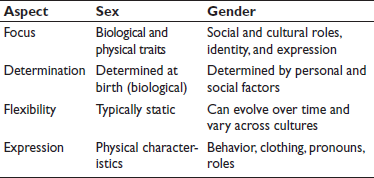
As India is a developing nation, it requires more time and strength to change, which does not happen overnight. The transgender community encompasses a wide range of individuals whose gender identity does not align with the sex they were assigned at birth. This group includes trans men, trans women, non-binary individuals, genderqueer people, and others who defy conventional gender norms.
The transgender community often serves as a vital support network, fostering solidarity, advocacy, and shared understanding among its members. Despite progress in societal acceptance, transgender individuals frequently face challenges such as discrimination, lack of access to healthcare, legal barriers, and social exclusion. Community organizations, advocacy groups, and allies work together to promote transgender rights, ensure visibility, and create safe spaces for individuals to express their authentic selves.
Globally, transgender communities are shaped by unique cultural, legal, and societal contexts, but the shared goal of equality and recognition unites their efforts. As per the Prison Act, 1894, Chapter 5, Section 27, separation of prisoners: The requirements of this act regarding the separation of prisoners are as follows:
In prisons housing both male and female prisoners, females must be confined in separate buildings or distinct sections of the same building. This arrangement should ensure they cannot see, converse with, or interact with male prisoners. In prisons accommodating male prisoners under the age of 21, provisions must be made to completely separate them from other prisoners. Additionally, those who have reached puberty must be kept apart from those who have not. Unconvicted criminal prisoners must be kept separate from convicted criminal prisoners. Civil prisoners must be kept separate from criminal prisoners.
7
The Supreme Court of India has also declared that transgender prisoners should be treated equally to other categories of inmates and must have the same rights. Experiences of transgender people in jail are often marked by significant challenges and systemic inequities. Transgender individuals, particularly trans women, face elevated risks of violence, harassment, and discrimination in correctional facilities. Some of the key issues they encounter include:
Placement in Facilities
Misclassification: Transgender individuals are frequently assigned to facilities according to their sex assigned at birth instead of their gender identity, which heightens their risk of experiencing violence and mistreatment.
Policies for placement: Some jurisdictions have begun implementing policies to house transgender individuals in alignment with their gender identity, though such policies are not universal.
Violence and Harassment
Access to Healthcare
Legal Protections and Advocacy
Reform and Progress
There is increasing awareness of the unique challenges faced by transgender inmates, prompting some jurisdictions to adopt policies aimed at improving their treatment. Individuals may also experience gender dysphoria, which is characterized by significant or ongoing distress stemming from a mismatch between their gender identity and biological sex. 8 These reforms include housing transgender individuals according to their gender identity, providing access to necessary medical care, and training staff on LGBTQ+ inclusivity. Transgender individuals ought not to be viewed as marginalized segments of the community; they deserve respect, acknowledgment, and appreciation. It is essential to create a consistent and systematic approach for gathering data regarding the status of transgender individuals and gender identity, which is crucial for effective policymaking and intervention initiatives. 9 These individuals require acknowledgment of their identities as genuine, improved access to healthcare resources, and educational and preventive materials that are suitable for their experiences. 10 However, much work remains to be done to ensure equitable treatment for transgender people in correctional systems nationwide.
Conclusion
The Transgender Protection Person (Protection of Rights) Act, 2019, Chapter 5, Section 10, obligations of establishments states that every establishment should ensure compliance with the provisions of this act and should provide such facilities to transgender people. 11 The authorities have announced that 16 states have verified that prisoners are categorized and separated based on evaluations carried out by jail medical personnel or through biological identification and/or genital characteristics, instead of giving precedence to the gender identified by the prisoners themselves. Under the Transgender Persons (Protection of Rights) Act, 2019, Section 11 requires the appointment of a “complaint officer” to address grievances related to the rights of transgender inmates in prisons. Nevertheless, only 13 states and two Union Territories have adhered to this requirement. Furthermore, the majority of states and UTs have not established specific welfare programs for transgender prisoners. Instead, they are applying existing welfare programs to this group.12–14 Only seven states and two UTs have taken steps to enhance transgender prisoners’ access to appropriate welfare programs. It is essential for prison departments to guarantee that correctional facilities provide sufficient sanitation amenities, including designated bathing and toilet facilities solely for transgender prisoners. Moreover, a thorough health assessment, along with a socio-psychological evaluation, should be performed for each transgender prisoner upon their admission. Prison authorities must ensure that transgender prisoners who are interested in engaging in vocational training and skill enhancement programs receive encouragement from prison staff to pursue these opportunities without any limitations or fears.15, 16
National Crime Records Bureau compiled prison statistics reported to it by the states and UTs in the year 2020, and as per it, there is a total of 70 transgender inmates, and a major number are residing in Gujarat, UP, and Maharashtra. 12 Even after these groundbreaking reports, states and UTs have terribly failed to set up a healthy and friendly environment in prisons for transgender people.
Recommendations & Suggestions
Accommodated in suitable facilities according to the gender they identify themselves with.
Separate ward or enclosure by prison authorities.
Housed separately but not segregated, a hospitable environment.
Protect their right to privacy, identity, and bodily integrity.
Uniform procedure to be followed while examining.
Not to violate the fundamental rights.
More body positivity and inclusivity.
Should not be inhibited from any kind of vocational training.
Have full access to health services.
Footnotes
Declaration of Conflicting Interests
The authors declared no potential conflicts of interest with respect to the research, authorship, and/or publication of this article.
Ethical Approval and Informed Consent
Not applicable.
Funding
The authors received no financial support for the research, authorship, and/or publication of this article.
