



Abstract
This study explores how the LEADER programme in rural Estonia aligns with the concept of smart rurality by leveraging technology, innovation, and collaborative governance to address rural development challenges. Specifically, it investigates the social value created through grassroots approaches, focusing on how Local Action Groups (LAGs) foster social cohesion, trust, and regional resilience. Using a qualitative methodology, 26 semi-structured focus group interviews were conducted with representatives of LAGs, local government officials, and entrepreneurs across Estonia. The findings reveal that the LEADER programme empowers stakeholders by aligning development initiatives with local needs, fostering social cohesion, and building trust within communities. Estonia’s LAGs have successfully reduced bureaucracy, enhanced cross-sector collaboration, and ensured efficient resource use. However, challenges such as favouritism and a lack of transparency persist, reflecting broader critiques of the programme across Europe.
By framing these findings within the concept of smart rurality, the study demonstrates how collaborative governance and social innovation contribute to rural resilience. Estonia’s experience highlights the potential of regionally tailored solutions to balance social, economic, and environmental priorities. The study concludes by advocating for further research using mixed methods to engage diverse stakeholders, improve the evaluation of social value, and advance inclusive and sustainable rural development. In addition, recommendations for advancing rural development practices are provided, emphasizing strategies to enhance inclusivity, transparency, and alignment with sustainability goals.
Introduction
Rural areas across Europe face persistent challenges such as population decline, weak infrastructure, and limited opportunities, making them less attractive than urban regions (Ahlmeyer and Volgmann, 2023; Brown and Schafft, 2011; McDonagh, 2013). These dynamics accelerate outmigration to cities, contributing to rural marginalization and the decline of already small communities (Plüschke-Altof et al., 2020; Van der Ploeg et al., 2017).
Initially associated with digital connectivity and service delivery, smart rurality has evolved into a broader concept encompassing social innovation, governance, and place-based development strategies (Wendt-Lucas et al., 2025). This shift reflects recognition that rural development cannot rely solely on technological solutions. Rural areas are highly diverse, and smart strategies must be adapted to local conditions through place-based approaches (Zavratnik et al., 2018). Although often framed around digital infrastructure, recent scholarship underscores that effective rural transformation also depends on local actors, governance capacity, and social innovation (Steiner et al., 2023; Vercher, 2022). A broader perspective integrates technological tools with the social foundations that sustain rural communities (Echebarria et al., 2020), where social value becomes pivotal – enhancing trust, cohesion, and collective agency, all crucial for inclusive and durable development. This aligns with collaborative governance models, in which public, private, and community actors co-produce locally embedded, resilient solutions (Ansell and Gash, 2008; Grillitsch and Sotarauta, 2020).
This article explores how collaborative governance, operationalized through the LEADER programme, supports the creation of social value in rural Estonia. The study aims to explore the interplay between social value creation and smart rurality, offering insights into how these concepts can support the development of vibrant and sustainable rural communities. Rather than introducing a new evaluative tool, the study provides conceptual clarity on how social value is generated through governance processes, situating Estonia’s LEADER experience within current rural development debates.
To address the persistent structural challenges in rural areas, the European Commission introduced the LEADER programme in 1991. While the LEADER programme’s role in driving economic development and fostering local innovation is well-documented (Jalalian et al., 2021), its specific impact on social value creation remains underexplored. Social value encompasses dimensions such as community cohesion, social capital, and resilience – elements that extend beyond traditional economic metrics and are critical for sustainable development.
This focus is particularly relevant in Eastern European contexts like Estonia, where the profound social changes following the Soviet era have created rural development trajectories distinct from those of Western Europe (Próchniak et al., 2021). Estonia allocates significant portion (nearly 12 per cent) of its EAFRD funds to the LEADER in the programming period 2023–2027, one of the highest contributions in the union (ARIB, 2024), reflecting the programme’s strategic role in addressing local needs and fostering community empowerment. Estonia’s experience offers valuable insights for other Central and Eastern European countries, where rural development faces similar post-socialist transitions, demographic decline, and governance challenges.
Despite LEADER’s demonstrated capacity to promote economic growth and community-driven innovation, questions remain regarding the definition and realization of its social value at the local level. Addressing these ambiguities, this study evaluates the programme’s contributions to social value creation through the framework of collaborative governance, shedding light on how it fosters cohesion, trust, and resilience in rural communities.
LEADER offers a potential framework for illustrating the concept of smart rurality, extending beyond technological advancements to include governance models that empower communities to co-create sustainable solutions through participatory governance. However, significant barriers such as bureaucratic obstacles, regulatory constraints, and the need for greater transparency in project evaluation continue to limit its full potential (Arroyo et al., 2015; Navarro et al., 2016).
By examining how LEADER’s social value creation goals manifest within Estonian LAGs, this study highlights both the successes and limitations of the programme in addressing local needs. The findings contribute to broader discussions on rural development, collaborative governance, and the integration of social value into the smart rurality framework.
The following sections outline the theoretical foundations of the study, describe the research methodology, and present the results, followed by a discussion of the main observations and conclusions.
Collaborative governance and social value creation in rural development
Conceptual foundations
The theoretical framework of this study examines the interconnection between social value and collaborative governance in advancing sustainable rural development within the smart rurality paradigm. While smart rurality is often framed around digitalization and innovation (Visvizi et al., 2019), a social value perspective ensures that technological advancements align with local needs, cultural specificities, and social dynamics. It emphasizes trust, cohesion, and inclusivity as essential for sustainable innovation and governance.
At the heart of this study is the concept of social value, which extends beyond economic metrics to include community cohesion, social capital, and environmental sustainability (Grönroos and Voima, 2013; Jones et al., 2016). Its context-sensitive nature means that social value varies according to local priorities and perceptions, requiring active community engagement for its creation and assessment (Arvidson et al., 2013; Kenter et al., 2015). Addressing these multidimensional aspects necessitates a governance lens, particularly in rural settings where social innovation and community agency shape outcomes.
Collaborative governance provides such a lens. Defined as the engagement of public, private, and civil society actors in joint decision-making (Ansell and Gash, 2008; Emerson et al., 2012), it fosters cooperation, integrates local knowledge, and aligns development with regional needs. This model is especially relevant for rural areas, where governance challenges intersect with social, cultural, and environmental issues (Grillitsch and Sotarauta, 2020). Recent studies highlight that successful smart rurality depends not only on infrastructure, but also on collaboration and institutional capacity (Stein et al., 2025; Wendt-Lucas et al., 2025).
In this context, collaborative governance emerges as a pathway for embedding social value into smart rurality initiatives. By fostering collaboration and mobilizing resources – ranging from cultural values, mission-driven initiatives, and knowledge to physical assets like buildings and natural environments – it bridges the gap between technological innovation and the specific needs of communities (Ansell and Gash, 2008; Torfing et al., 2021). This framework mitigates the risks of a technology-centric focus by emphasizing human-centric, community-driven outcomes and addressing gaps in traditional governance models that often overlook the social dimensions of rural development.
These conceptual foundations guide the analysis of Estonia’s LEADER programme, which exemplifies how collaborative governance can generate social value in practice.
Defining social value in rural development
In this study, communities are conceptualized not merely as geographical entities but as interconnected networks of individuals bound by shared experiences and social relationships. These networks facilitate social interaction, cultural exchange, and mutual support, which are critical for creating social value (Gilchrist, 2019; Green and Haines, 2015). Communities possess assets that can be developed and utilized, including human, social, physical, financial, and cultural resources, all contributing to their overall well-being and development.
Social value is a multidimensional concept that extends beyond traditional economic metrics to include benefits that enhance community well-being, resilience, and cohesion (Grönroos and Voima, 2013; Jones et al., 2016) Social value also encompasses environmental and cultural dimensions, contributing to shared goals and mitigating socio-economic marginalization. Social value is not universal; it is shaped by context-specific perceptions and priorities, requiring locally grounded, participatory processes for its creation and evaluation (Arvidson et al., 2013; Kenter et al., 2015).
In this study, rural communities are not seen merely as geographic units, but as interconnected networks of individuals linked by shared experiences and social relationships. Rural communities, characterized by their social networks, cultural heritage, and local knowledge, are central to generating social value. This value manifests through improved economic opportunities, enhanced social cohesion, and environmental sustainability (Gilchrist, 2019; Yusoff et al., 2021). Harnessing these community resources can improve local livelihoods and resilience, addressing the disparities and challenges faced by rural areas (Green and Haines, 2015). EU rural development policies align with this understanding, promoting community empowerment and resourcefulness to mitigate demographic and economic inequalities (Castillo et al., 2024; European Commission, 2024).
Social value emerges through co-creation – collaborative processes where multiple stakeholders contribute knowledge, resources, and effort to generate outcomes that reflect local needs and aspirations (Altinay et al., 2016). This co-creative dynamic is especially important in rural contexts facing socio-economic disparities, depopulation, and resource imbalances, where development must be participatory, inclusive, and sustainable.
Several scholars have proposed frameworks to assess and evaluate social value, which support accountability and align development strategies with community goals. Kroeger and Weber (2014) highlight comparative frameworks for evaluating social value across sectors, while Hervani et al. (2017) advocate for sustainability metrics that integrate economic, social, and environmental indicators. Lindberg et al. (2018) emphasize the need for tools to measure and communicate outcomes of social innovations – valuable for assessing programmes like LEADER.
Such frameworks not only facilitate accountability but also help align development strategies with community-specific goals, ensuring that initiatives remain responsive to local needs and aspiration This flexible conceptualization of social value enables rural communities to address diverse challenges and opportunities, making it an essential component of rural development. By bridging various dimensions of well-being, social value acts as a cornerstone for inclusive, sustainable progress in rural areas.
Moreover, the social value framework enhances the potential of collaborative governance and co-creation. By fostering active participation among diverse stakeholders, it helps build trust, collective agency, and a shared sense of purpose – essential elements for addressing multidimensional challenges rural areas face. This enables rural communities to develop solutions that are not only context-sensitive but also deeply rooted in their cultural and social fabric.
In this way, social value is not merely an adjunct to smart rural development, but a foundational element. Its integration ensures that technological progress is guided by human-centric principles, resulting in development that is sustainable, inclusive, and reflective of the unique characteristics of rural life.
Collaborative governance as a pathway to social value
Collaboration within rural development programmes and policymakers and stakeholders is essential for revitalizing rural areas (Van der Ploeg et al., 2017). Collaborative governance is defined as the engagement of public, private, and civil society actors in joint decision-making to address shared challenges (Ansell and Gash, 2008; Emerson et al., 2012). This participatory model enables stakeholders to contribute their unique perspectives and resources, creating solutions that are more aligned with local needs.
In rural development, collaborative governance advances social value by fostering trust, enhancing participation, and promoting co-created solutions. It marks a shift away from hierarchical, state-centred governance model towards more inclusive, networked approaches (Ostrom, 1990; Sootla and Kalev, 2021) where communities assume active roles in shaping local development agendas. By embedding local priorities into decision-making processes, collaborative governance strengthens community cohesion, legitimacy, and collective agency.
As a governance paradigm, it also emphasizes public value creation by integrating diverse resources and enabling collective problem-solving (Torfing et al., 2019). Through mechanisms such as social learning, negotiated rules, and flexible institutional arrangements, collaborative governance facilitates the resolution of complex, cross-sectoral challenges (Ansell and Torfing, 2021; Hartley et al., 2013). This is particularly critical in rural settings, where challenges often span multiple domains and require adaptive, shared responses.
By enabling communities to co-create development solutions, collaborative governance becomes a vehicle for embedding social value in policy implementation. It empowers local actors to leverage cultural, social, and material assets, producing development outcomes that are both locally anchored and widely supported. This aligns with the European Commission’s LEADER programme, which operationalizes collaborative governance through Local Action Groups (LAGs) – multi-stakeholder partnerships that bring together public, private, and civil society actors to plan and implement locally tailored strategies (Granberg and Andersson, 2016).
In this study, collaborative governance is approached not only as a normative ideal, but as a practical mechanism through which social value can be mobilized and sustained in rural contexts.
The LEADER programme, as a case study
Building on the concepts of social value and collaborative governance, the LEADER programme exemplifies how these principles can be implemented in practice. It provides a structured framework to address rural challenges through localized, community-driven approaches. Emphasizing a bottom-up, area-based, and multi-sectoral approach, LEADER promotes community participation, cross-sector collaboration, and local innovation to improve rural quality of life (Dax and Oedl-Wieser, 2016; European Commission, 2006).
Recognized for its effectiveness in fostering local collaboration and innovation, the programme has been implemented across most EU regions, with Estonia adopting LEADER in 2006 to strengthen its rural development strategies and making it an essential tool for addressing unique regional challenges within a post-Soviet, rapidly transforming context (Próchniak et al., 2021). In the LEADER programme, the European Commission’s task is to create funding conditions that member states can adapt to national needs (European Commission, 2006; European Network for Rural Development, 2016).
LEADER operates through Local Action Groups (LAGs), which are multi-sector partnerships that design and implement local development strategies tailored to local priorities and thereby operationalizing collaborative governance (Granberg and Andersson, 2016). A region is typically defined as a homogeneous social and functional territory, marked by shared traditions, identity, and needs (European Network for Rural Development, 2016). LAGs work closely with public sector representatives to align projects with local visions.
In Estonia, Local Action Groups (LAGs) are actively involved throughout both legislative and funding processes, ensuring that regional needs are incorporated from policy design to implementation. The composition of LAGs varies across countries but follows the principle of multi-sectoral representation. In Estonia, each LAG must include at least two local government units, one business actor, and one non-profit organization or foundation, reflecting a commitment to local autonomy and stakeholder diversity.
Similar multi-sectoral models are adopted elsewhere – for example, in Georgia, LAGs include residents and local authorities, while France emphasizes joint decision-making across multiple municipalities (European Leader Association for Rural Development, 2019; Thoenig, 2005).
However, recent research underscores that while LEADER’s decentralized model supports community empowerment, it can also generate tensions between local implementation and national coordination. Corte-Real et al. (2025) show that in rural Portugal, this decentralization has led to implementation bottlenecks, especially in aligning local strategies with overarching national policy frameworks.
While LEADER’s bottom-up approach, multi-sectoral collaboration, and innovation are widely recognized (Dax and Oedl-Wieser, 2016; European Commission, 2006), its potential for social value creation merits closer examination. Evaluating LEADER’s impact requires recognizing that social factors, specific to each territory, influence economic outcomes and development processes (Pisani, 2017).
Numerous studies have evaluated LEADER’s impact at the local level, offering insights into its effectiveness and identifying areas for improvement. Atkočiūnienė et al. (2024) examined LAG strategies in the Kelme Region, highlighting the critical role of stakeholder participation and strategic alignment with LEADER’s core principles. Their findings emphasize that inclusive planning and local engagement are essential for preserving the programme’s bottom-up ethos and ensuring effective implementation.
Similarly, case studies from Greece and Denmark demonstrate that prioritizing local input and fostering a sense of ownership among community members enhances the success of regional development initiatives (Chatzichristos and Perimenis, 2022; Thuesen and Nielsen, 2014). These participatory practices enable local stakeholders to address region-specific challenges more effectively than traditional top-down approaches. However, weaknesses remain—Arroyo et al. (2015) note that national authorities often overlook local contexts, which can limit responsiveness and reduce programme effectiveness.
Beyond economic growth, LEADER promotes social innovation and community cohesion (Bosworth et al., 2016; Dax et al., 2016). Dax et al. (2016) noted its role in fostering social innovation and neo-endogenous development. The programme supported projects that not only spurred economic growth but also enhanced social cohesion in rural areas. These local projects often involved the creation of new social networks and the strengthening of existing ones, which contributed to more resilient and connected communities. In Estonia, LAGs have supported initiatives ranging from preserving cultural heritage to fostering small-scale entrepreneurship and sustainable land use practices (Barone et al., 2023).
The LEADER framework operationalizes social value co-creation through collaborative governance. LAGs serve as platforms where public, private, and civil society actors collaborate to address shared goals (Granberg and Andersson, 2016). By involving stakeholders in all phases of development, LEADER empowers communities to create solutions aligned with their priorities.
Social value in this context includes cohesion, trust, and resilience, extending beyond economic indicators (Grönroos and Voima, 2013; Hervani et al., 2017). By prioritizing bottom-up approaches, LEADER fosters community empowerment, enabling local stakeholders to take ownership of development initiatives (European Commission, 2006; Dax and Oedl-Wieser, 2016). For instance, evidence from marginalized rural regions, LEADER initiatives highlight how projects can build trust among stakeholders, promote inclusive decision-making, and enhance local livelihoods through targeted interventions (Chatzichristos and Perimenis, 2022). The programme’s emphasis on networking and cooperation further enhances its capacity to create social value. By involving marginalized groups and fostering cross-sectoral collaboration, LEADER ensures that rural development is not only economically viable but also socially equitable. This participatory model mitigates the risks of top-down approaches that often fail to address the nuanced needs of rural communities.
Despite its potential, LEADER faces challenges. Bureaucracy and excessive involvement of local authorities can hinder the true potential of local communities (Arroyo et al., 2015; Navarro et al, 2016). Potential risks such as community demotivation and inadequate feedback from higher authorities underscore the importance of state support and guidance to enhance the effectiveness of this approach (Van Meerkerk, 2019). Financial constraints and institutional barriers have also limited impact (Pollermann et al., 2014; Granberg and Andersson, 2016).
In addition, the European Court of Auditors (2022) has questioned whether LEADER’s benefits outweigh its administrative costs. Importantly, while LEADER’s contributions to social innovation and governance are recognized, social value has not been systematically evaluated, underscoring a gap in current knowledge (Bosworth et al., 2016; Dax et al., 2016; Thuesen, 2010).
This study addresses that gap by examining how LEADER fosters social value in Estonian LAGs, contributing to broader discussions on rural development, collaborative governance, and community empowerment.
Data and method
The case study focuses on the assessment of social values within the LEADER programme in Estonia. The European Commission mandates that at least 5 per cent of the European Agricultural Fund for Rural Development (EAFRD) resources be allocated to the LEADER approach (European Network for Rural Development, n.d.). Estonia is an interesting case for study due to its allocation of nearly 12 per cent of EAFRD funds to the LEADER programme, one of the highest in the EU, showcasing a strong commitment to rural development. Estonia is widely regarded as a successful implementer of the LEADER approach, with its performance aligning with broader European evaluations that highlight the programme’s strengths in fostering stakeholder engagement, project efficiency, and multi-sectoral collaboration (Bosworth et al., 2016; Dax and Oedl-Wieser, 2016).
To address the research aim, a qualitative study was conducted, utilizing 26 semi-structured focus group (FG) interviews across all LEADER LAGs in Estonia (Figure 1). Deliberative paradigm underpins the value assessment; therefore, the qualitative approach was chosen to better capture participants’ opinions, long-term knowledge, and experiences essential for investigating the social value associated with the programme, as has been proven in other cases (Navarro et al., 2016; Pollermann et al., 2014; Thuesen and Nielsen, 2014).
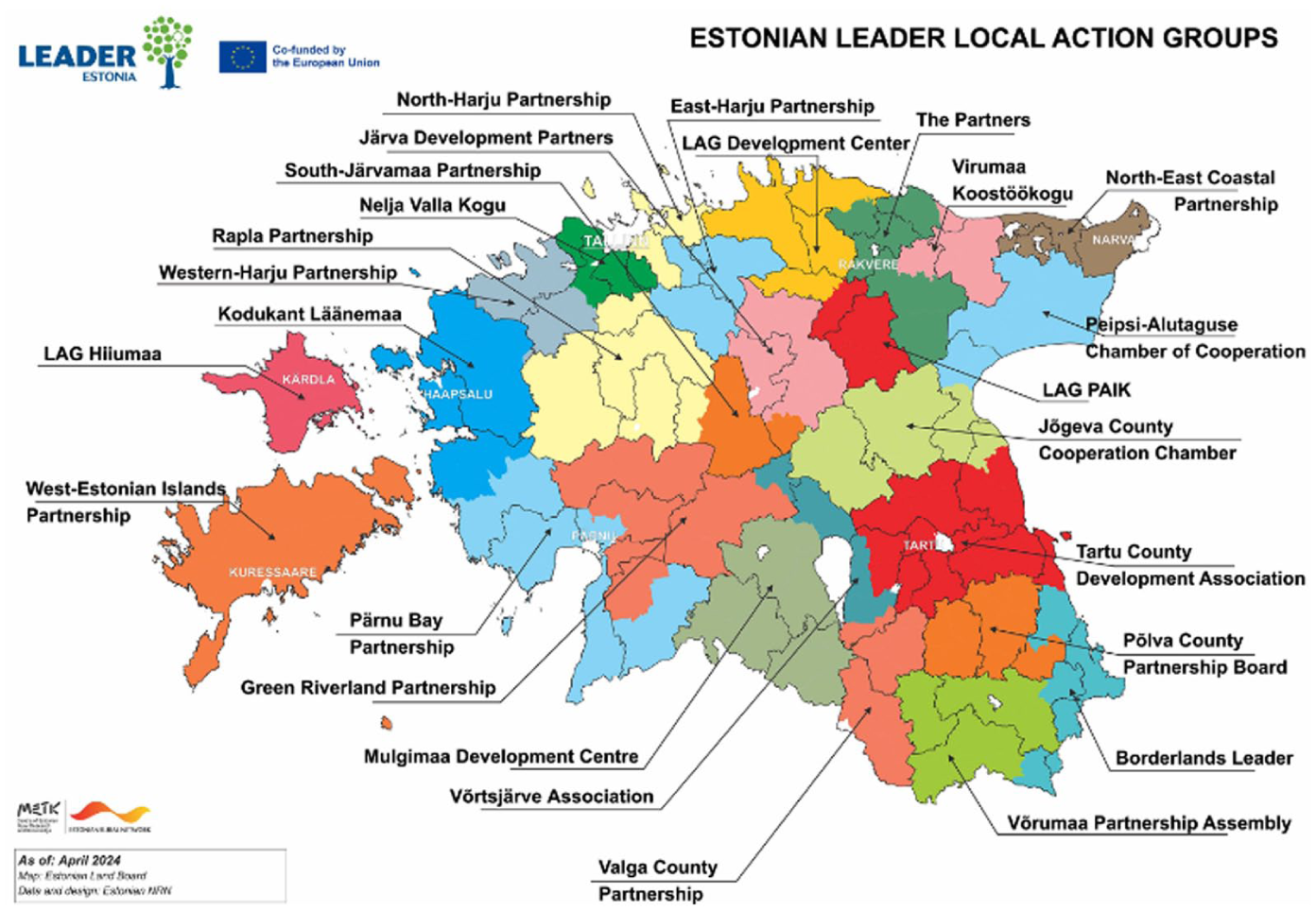
The map of LEADER LAGs in Estonia.
Interviews were conducted between January and March 2024. FG interviews were selected because the interaction among respondents helps to compensate for any gaps in the researcher’s knowledge on the topic (Vihalemm, 2014). Open-ended questions were used to draw out various perspectives, which are crucial for assessing social value (Nardone et al., 2010). These interviews provided a structured yet flexible method for collecting in-depth data and personal stories, helping to better understand the impact of social changes on communities. The structure of the FG interviews was based on a social values framework developed by Lindberg et al. (2018), adapted to suit the study’s objectives. For this study, the societal level was narrowed with the local community level, focusing on social, economic, and environmental values at these three levels. The prompts and guiding questions used during the interviews are provided in Appendix 1, allowing for a clearer understanding of how the data were collected.
Invitations to the interview were sent to all LAGs and all members had the opportunity to participate in the interviews. A total of 74 individuals participated in the interviews, including 59 representatives of LAGs, 10 representatives of local government, and 5 entrepreneurs. The 59 LAG representatives also engaged with businesses and various communities, representing not only LAGs but also community and business perspectives. While the invitation was extended to all eligible stakeholders, participation was voluntary, resulting in a self-selected sample. This approach captured the perspectives of highly engaged stakeholders motivated to share their insights, though less engaged or critical voices may have been underrepresented. Nonetheless, it provided detailed reflections on social value creation from those most actively involved in LEADER initiatives.
All interviews were transcribed and systematically coded using open coding to identify patterns and themes relevant to the study. A qualitative content analysis was conducted to uncover connections within the data, guided by the adapted Lindberg et al. (2018) framework for exploring the programme’s impact on social value creation across individual, organizational, and community levels. Thematic analysis identified four key areas of focus: (1) community development, (2) governance, (3) cooperation, and (4) sustainability.
The main themes provide context and insights into stakeholder perceptions, linking community development to social cohesion and highlighting collaboration challenges. These findings offer a comprehensive view of LEADER’s social value.
This study is conceptual in nature and does not offer a formal evaluative analysis of the LEADER programme’s outcomes. Rather, it explores how social value and collaborative governance are experienced and interpreted by stakeholders, providing contextual insights. The findings aim to enhance conceptual clarity and bridge policy implementation with theory, rather than propose new evaluative tools.
Results
The following sections offer a comparative assessment of how social value is created in rural areas through the LEADER methodology. Four main themes emerged from qualitative content analysis, highlighting the programme’s impact on rural development in Estonia. These themes illustrate the programme’s influence on local communities. Interviews revealed that social value is not derived from any single factor but emerges through the synergy of multiple elements, rooted in collective co-creation. Participants emphasized that social value results from the combined efforts and cooperation of the community, rather than from isolated activities.
Theme 1 – community development: grassroots empowerment in the countryside
In Estonia, the programme’s participatory approach has been crucial for community engagement and local development. Despite Estonia’s small size, the regions of all 26 LAGs are diverse. Regions differ in culture and local identity. For instance, while supporting entrepreneurship may be a priority in one region, another may focus on preserving cultural heritage.
By involving local communities in decision-making processes, LEADER enhances their ability to address specific regional needs more effectively than traditional top-down initiatives. As one participant noted, ‘LEADER’s methodology is not just about funding; it’s about empowering locals to take the lead and shape their community’s future’. This approach fosters a sense of ownership and responsibility among community members, making people feel valued and needed in the region. Interviews also revealed that this sense of involvement directly impacts development processes, creating a virtuous cycle of empowerment and engagement.
LAGs play a central role in ensuring a good living environment and sustaining communities by making rural areas attractive for living and working through increased jobs and services. In addition, collaboration with the public sector amplifies their effectiveness by bringing them closer to local people. This partnership ensures that LAGs better understand and meet residents’ needs while maintaining a reliable and sustainable relationship. As one respondent remarked, ‘Without the public sector, the grassroots essence of LEADER would be compromised, as the partnership ensures that the approach remains inclusive and responsive to local needs’.
However, the grassroots nature of LEADER is not without challenges. While the methodology fosters empowerment and local ownership, some participants noted that not all voices in the community are equally heard. Certain groups or individuals, particularly those less familiar with the programme, may feel excluded from decision-making processes. As one interviewee observed, ‘The programme empowers the already active, but it’s harder to engage those who feel disconnected or sidelined’. This highlights the need for deliberate efforts to involve underrepresented groups and ensure inclusivity.
In addition, the interviews revealed that LAGs provide extensive support to applicants before and after submitting their applications, fostering a sense of community involvement and responsibility. This personal connection not only helps in effective fund utilization but also ensures that projects would be completed successfully with minimal interruptions or repayment issues. However, some participants noted potential tensions arising from this personal approach, where certain applicants might feel favoured over others. The challenge of ensuring transparency and equity in decision-making persists. As one respondent observed, ‘It’s difficult to avoid the perception of bias when some applicants are more vocal or better connected than others, even when decisions are based on clear criteria’. To address these concerns, LAGs have implemented strategies such as engaging independent evaluators, establishing transparent decision-making protocols, and promoting clear communication about selection criteria.
The LEADER programme’s grassroots approach has been transformative for community development in Estonia, fostering local ownership, trust, and collaboration. However, challenges such as inclusivity and equity highlight the need for intentional strategies, including targeted capacity-building for underrepresented groups and third-party oversight, to ensure the programme’s continued success in creating meaningful social value.
Theme 2 – governance: community-led growth and local leadership
Community-led rural development initiatives provide significant economic and social benefits. This theme showcases how grassroots involvement not only addresses regional needs but also enhances local economic and social conditions through targeted development efforts.
Participants highlighted that LAGs have been instrumental in enhancing the economic and social fabric of their communities. The personal approach and direct involvement of LAGs in development projects have led to substantial improvements in local living conditions. One participant stated, ‘Our initiatives have helped to create jobs and improve services in rural areas, making them more attractive for people to live and work here’. This sentiment underscores the tangible economic benefits brought about by community-driven projects, which have made rural areas more appealing as both residential and employment destinations. Participants discuss that tailored development strategies, such as supporting local entrepreneurship, can significantly boost economic activity and revitalize communities.
While participants appreciated the opportunities provided by LEADER, there was acknowledgement of occasional disconnects between project goals and implementation. For example, one respondent mentioned, ‘Some rural development projects, like community playgrounds, have not been utilized as intended, sometimes becoming neglected over time’.
Although the decentralized approach of LEADER is widely valued, participants acknowledged its administrative burden. As one respondent remarked, ‘The process is empowering but cumbersome; for small organisations, the paperwork can feel insurmountable’.
Despite these challenges, grassroots involvement showed promising results, suggesting that community-driven approaches can contribute to fostering economic and social development.
Theme 3 – cooperation: strengthening networks and collaborative capacity
In the rural heartlands of Estonia, communities have long understood that progress is not the result of isolated efforts but of collective endeavour. The FG interviews reveal a profound theme of how networking and cooperation are not merely strategies but pillars for sustainable development and community resilience.
Throughout Estonia, LAGs have harnessed the power of networks to bridge gaps, share resources, and amplify their impact. These networks are not just functional but deeply rooted in the cultural and social fabric of the communities they serve. A participant illustrated this beautifully: ‘In our region, cooperation is like a tapestry. Each thread represents a different sector—public, private, and third sector—woven together to create something strong and beautiful’”.
These networks often start locally but extend beyond regional boundaries, focusing on building bridges between stakeholders. Within the LEADER framework, they foster idea exchange and collaboration towards shared goals. While they amplify impact and innovation, sustaining them requires ongoing effort and capacity building to maintain balance among stakeholders.
The LEADER approach has proven particularly effective in addressing local needs that might otherwise be overlooked by national policies. However, participants also highlighted challenges in ensuring that all stakeholder voices are equally heard and that projects genuinely reflect the diverse priorities of the community. While the one respondent emphasized the benefits of stakeholder collaboration – stating, ‘By connecting with various stakeholders, we’ve been able to tailor our projects to meet the unique needs of our region. It’s about listening and responding to our community’ – it was also noted that smaller or less experienced stakeholders might struggle to fully engage in such processes.
These networks play a crucial role in fostering innovation by allowing communities to adopt and adapt successful solutions from elsewhere. Cooperation goes hand-in-hand with networking, activating and bringing networks to life. This cooperation spans across different sectors and levels, from local community groups to regional authorities and international partners. FGs emphasized that cooperation is the driving force behind projects, providing the necessary resources and reach to make a significant impact.
Effective cooperation requires more than formal agreements; it necessitates a culture of trust, mutual respect, and a shared vision for the future. The advantage of Estonian LAGs in terms of cooperation is close communication among them, through which strong collaboration networks are established. Participants from Virumaa Partnership highlighted that building this culture takes time and continuous effort. Early stages often involve misunderstandings and conflicts, but as relationships strengthen, so does the capacity for effective collaboration. Over time, trust and cooperation grow, enabling achievements that initially seemed unattainable.
While the theme of networking and cooperation is predominantly positive, it faces challenges, particularly the imbalance in resources and capacity among different LAGs. Smaller or less experienced groups sometimes struggle to keep up with larger counterparts, hindering network effectiveness. However, FG participants believe targeted support and capacity-building initiatives can mitigate these challenges. All LAGs confirmed minimal national bureaucracy, finding programme implementation easier over multiple periods. Although initial cooperation between the three sectors was problematic, effectiveness has grown over time, with policymakers increasingly considering LAG’ suggestions to facilitate methodology implementation.
Moreover, the evolving nature of rural development requires continuous adaptation. Without dedicated and consistent work, it would not be possible to achieve the current level of trust that interviewees highly value. Therefore, interviewees emphasized the importance of continuing the same approach and striving to improve it further. They believe that the future development of the LEADER programme and the increase in social value depend on the community’s ability to maintain its commitment and improve its cooperation capacity. Only through continuous self-improvement and striving towards common goals is it possible to achieve even greater social value and ensure a strong, supportive, and united community for the future. What worked in the past may not necessarily work in the future, necessitating a flexible and dynamic approach to networking and cooperation. As one LAG member noted, ‘We must remain open to change and ready to adapt our strategies. The world is changing, and so must we’.
Theme 4 – sustainability: pathways for rural resilience
The LEADER programme has demonstrated its capacity to pioneer sustainable practices in rural Estonia by integrating traditional knowledge with innovative approaches, fostering a balance between preserving heritage and embracing modern advancements. Sustainability lies at the core of these efforts, with environmental initiatives, such as promoting renewable energy and sustainable agriculture, forming a cornerstone of the region’s development strategies.
A notable example comes from a project where solar panels were installed in community centres, reducing energy costs and promoting green energy. As one local leader explained, ‘Our commitment to sustainability is reflected in every project we undertake. It is about creating lasting benefits for our community and the environment’. These projects exemplify how LEADER facilitates environmentally conscious development, simultaneously addressing economic and social needs.
The concept of smart rural development, which aligns closely with LEADER’s goals, is particularly relevant here. By combining traditional practices with modern technologies, LEADER initiatives are fostering resilience and adaptability in rural communities. For instance, some projects integrate digital tools into traditional activities, such as using 3D modelling to plan renovations of historical sites or applying precision agriculture technologies to monitor soil health. As one respondent observed, ‘We applied precision agriculture technologies, which allowed us to monitor soil health digitally, ensuring that traditional farming methods remain viable and environmentally sustainable in a changing climate’.
These dual approaches allow communities to honour their traditions while creating opportunities for future generations through skill development and digital literacy. However, respondents also acknowledged challenges in ensuring the long-term sustainability of such projects. Small businesses, in particular, often struggle to maintain momentum after funding ends, especially when adopting and upgrading digital tools due to high costs and limited expertise. One participant noted, ‘LEADER gives a great start, but sustaining it requires continuous support, especially when it comes to digital transformation’.
However, fostering innovation and sustainability is not without its challenges. Resistance to change and limited resources can pose significant hurdles. Yet, the determination and creativity of LAGs often turn these challenges into opportunities. One LAGs partner emphasized, ‘Innovation requires persistence. We must show the tangible benefits of new approaches and build trust within the community’”.
By bridging the gap between the past and the future, the LEADER programme in Estonia exemplifies smart rural development. Its initiatives combine traditional practices with innovative technologies to ensure that rural areas remain vibrant, resilient, and adaptive to global changes. Nevertheless, continued focus on capacity building, equitable resource distribution, and support for long-term project viability is crucial to amplifying these successes.
Discussion
This discussion critically examines the LEADER programme’s contributions to rural development in Estonia, addressing its alignment with the theoretical frameworks of collaborative governance, smart rurality, and social value creation. While the programme demonstrates significant achievements in fostering grassroots empowerment, economic resilience, and social cohesion, it also reveals limitations, particularly in inclusivity, governance transparency, and environmental sustainability.
Understanding and advancing social value in LEADER programmes
Social value creation has long been central to the LEADER programme, encompassing intangible aspects such as trust, social cohesion, and community resilience. However, this concept remains underexplored in systematic way. This study addresses that gap by assessing social value at three interrelated levels: individual, organizational, and community.
This study demonstrates that the LEADER programme has generated significant social value at the individual level by fostering trust, personal engagement, and strong social connections. Participants often described how the programme has deeply integrated into their personal and professional lives, contributing to a sense of purpose and responsibility. However, this high level of involvement may lead to challenges, such as burnout or blurred lines between personal and professional roles, raising concerns about long-term sustainability.
LEADER has also delivered economic benefits, particularly for individuals in small-scale enterprises, by supporting income generation and job creation. While this has strengthened local economic resilience, the consistently positive feedback merits closer examination. Those with prior experience or established networks may be better positioned to benefit, potentially exacerbating inequalities for those less connected to LAGs or less familiar with the programme.
Although not a primary focus, environmental values are gaining attention at the individual level. Participants expressed interest in aligning their activities with sustainability goals but noted the need for clearer guidance and stronger policy support. This reflects an opportunity for LEADER to enhance its role in fostering individual environmental responsibility.
At the organizational level, the programme has strengthened cooperation among public, private, and third-sector actors, improving coordination and trust. This collaboration has streamlined decision-making and fostered cohesive rural development. However, while these positive outcomes are evident, uneven power dynamics remain a concern, as dominant or well-established actors may exert disproportionate influence, sidelining smaller or less experienced groups. LEADER’s economic contributions at the organizational level have been particularly impactful, enabling resource-sharing and synergy among sectors. However, the lack of critical feedback on project inefficiencies raises concerns about whether less successful outcomes are fully assessed. Greater transparency in evaluating challenges, alongside successes, could help identify areas for improvement. On the environmental front, LAGs have made strides in incorporating renewable energy projects and sustainable agricultural practices into their strategies. However, scalability remains a challenge. Stronger integration with national policies could enhance the reach and impact of these initiatives, ensuring that they contribute meaningfully to regional and national objectives. At the community level, LEADER has fostered engagement, improving quality of life, and promoting long-term sustainability. Its participatory approach helps communities address their unique needs, fostering a sense of ownership and accountability. However, inclusivity remains a concern. While the programme empowers active and vocal members of the community, less engaged or marginalized groups may not have equal opportunities to participate in decision-making. The programme’s economic contributions at the community level are evident in the creation of jobs, support for small businesses, and improvement of local services. Yet, the absence of critical feedback raises concerns about whether all voices are heard, particularly those who may have encountered barriers to participation or access to resources. Community-level projects, such as renewable energy and recycling initiatives, reflect growing alignment with sustainability goals. However, participants acknowledged that better alignment with national and EU policies could amplify their impact, highlighting the need to better link bottom-up initiatives with top-down policy frameworks.
The findings affirm the utility of a social value framework, showing how participatory approaches foster engagement and ownership. Nevertheless, gaps remain in conceptualizing and measuring social value. While LEADER effectively addresses tangible needs (e.g. economic development and improved services) and intangible factors (e.g. trust and social cohesion), less visible impacts – such as voluntary labour and enhanced trust – remain underappreciated in formal evaluations. This reflects a broader challenge, where intangible impacts are often overshadowed by measurable outputs (Moulaert et al., 2005).
The lack of critical feedback may reflect limitations in the evaluation process. Participants could be reluctant to express negative views due to close ties with LAGs or concerns about harming community relationships. Moreover, these findings challenge the assumption that social value creation is inherently positive. LEADER’s participatory model may inadvertently exclude marginalized groups, limiting their access to resources and decision-making. This critique aligns with Navarro-Valverde et al. (2022), who emphasize that social innovation under LEADER is highly context-dependent and can reinforce existing inequalities if not carefully managed. Similarly, Johansson and Holmquist (2024) argue that LEADER’s governance framework often reproduces policy assumptions that overlook power imbalances, raising concerns about inclusivity and long-term impact. These insights highlight the need for social value frameworks to explicitly address equity and ensure benefits are fairly distributed across all community members.
Advancing collaborative governance in LEADER
The LEADER exemplifies collaborative governance by fostering cross-sector partnerships and empowering local actors to participate in decision-making. This aligns with theoretical models emphasizing trust, transparency, and shared decision-making in addressing complex societal challenges (Ansell and Gash, 2008). In Estonia, collaboration among public, private, and third-sector actors has been a key strength of the programme, enabling LAGs to align projects with local priorities and efficiently leverage regional resources. However, Johansson and Holmquist (2024) caution that while LEADER promotes local participation, its governance framework often reflects top-down policy assumptions, which may limit truly equitable collaboration.
Despite its strengths, collaborative governance under LEADER faces tensions, especially in rural settings. While designed to be inclusive, findings indicate that power imbalances within LAGs can limit the diverse participation. Dominant stakeholders with greater social or political capital may overshadow marginalized voices. This dynamic resonates with critiques that participatory structures do not inherently mitigate inequality (Bock, 2016; Dax et al., 2016). Navarro-Valverde et al. (2022) similarly note that without deliberate strategies, LEADER can reinforce existing hierarchies rather than foster genuine inclusion.
To address these challenges, collaborative governance theories must account for the power dynamics that shape participation. The Estonian case shows that targeted strategies – such as capacity-building for underrepresented groups, transparent decision-making protocols, and third-party oversight – can enhance inclusivity and equity. These findings contribute to governance theory by underscoring that equity-focused interventions are essential to ensure all community members equally, not just dominant actors. This aligns with Navarro-Valverde et al. (2022), who stress the need for context-sensitive governance to mitigate inequalities, and Johansson and Holmquist (2024), who argue that LEADER’s design can unintentionally reinforce existing power structures unless critically examined.
Smart rurality: integrating technology, innovation, and sustainability
Smart rurality integrates technological innovation with social and community dynamics to promote sustainability (Echebarria et al., 2020). This study shows how LEADER operationalizes this concept through grassroots initiatives that balance traditional practices with modern tools, fostering rural resilience. Recent research emphasizes that smart villages require not only digital tools but also strong local governance and social capacity (Bokun and Nazarko, 2023; Rahoveanu et al., 2022), aligning with LEADER’s emphasis on community-driven innovation.
However, the study also reveals gaps in the programme’s integration of smart rurality principles. While technological and environmental initiatives are present, they are often secondary to social and economic goals. This reflects broader critiques warning against an overemphasizing technology while neglecting human-centric and governance aspects (Bokun and Nazarko, 2023; Kovács, 2016). In Estonia, participants noted the need for stronger national policy guidance to scale environmental projects and ensure their lasting impact, echoing calls for clearer frameworks in smart village implementation (Rahoveanu et al., 2022).
These findings suggest the need to expand smart rurality beyond technology, embedding collaborative governance and social value as core elements. Estonia’s experience shows that embedding environmental objectives into rural strategies can align social value creation with broader sustainability goals. This supports recent calls for a multidimensional smart village framework that balances digital tools with local participation and ecological priorities (Bokun and Nazarko, 2023).
Recommendations for advancing rural development practices
The findings from Estonia’s LEADER programme underscore the need for a holistic rural development approach that integrates the principles of collaborative governance, smart rurality, and social value creation. Though distinct, these concepts are interconnected and mutually reinforcing, and provide a comprehensive framework for addressing the complex rural challenges. This study contributes to collaborative governance theories by underscoring the need for equity-focused interventions to address power imbalances. It advances the concept of smart rurality by advocating for a broader definition that prioritizes sustainability and cooperative governance alongside technology. It also enriches social value discourse by emphasizing the need to recognize intangible contributions and structural inequalities. These insights offer practical recommendations for the following. First, aligning local initiatives with national and EU-level policy frameworks can bridge the gap between bottom-up innovation and top-down priorities, especially in environmental sustainability. Second, fostering inclusivity through targeted outreach to marginalized groups and capacity-building ensures that LEADER’s benefits are equitably distributed. Third, evaluation frameworks should include metrics for intangible impacts, such as trust and social cohesion, to provide a fuller picture of their contributions. One potential approach could be incorporating Societal Readiness Levels, which offer a framework for measuring such impacts. By reflecting on successes and limitations, this study offers a roadmap to enhance the effectiveness, equity, and sustainability of rural development. Estonia’s experience demonstrates that rural resilience needs more than economic growth; it requires a commitment to inclusive governance, community-driven innovation, and ecological balance.
Conclusion
This study examined LEADER’s role in fostering social value as a foundational element in rural development, addressing a gap in its impact’s evaluation. Findings demonstrate that LEADER strengthens social cohesion, trust, and local ownership through its grassroots, community-driven approach. By advancing collaborative governance and empowering local stakeholders, the programme supports sustainable development and reduces regional inequalities – highlighting a form of social value often overlooked in existing assessments. The study places LEADER within the smart rurality framework, showing its potential to integrate technological innovation, social dynamics, and sustainability. Yet in practice, smart rurality often prioritizes technological and economic goals, with human-centric and community-oriented dimensions receiving less focus. In Estonia, environmental goals are emerging, but remain secondary benefits rather than primary objectives. This underscores the need to recalibrate rural strategies to better align technology and economy with social value and sustainability. Despite its contributions, the study has limitations. The predominance of positive feedback from participants, likely influenced by their close relationships with LAGs, may obscure more critical perspectives. In addition, the reliance on qualitative methods, such as focus groups, prioritizes consensus over dissent and makes it challenging to fully capture intangible contributions like trust, voluntary labour, and social cohesion. Future research should adopt mixed-method approaches to provide a more balanced and comprehensive evaluation of the programme’s impacts.
This study highlights the need to embed social value in rural development frameworks to address structural challenges and promote inclusive, sustainable growth. Aligning grassroots innovation with broader policy frameworks the LEADER programme remain a model for advancing social innovation and smart rurality. Future research should explore ways to better balance economic, social, and environmental priorities to meet the evolving needs of rural communities in Estonia and beyond. These insights are especially relevant for rural regions in Central and Eastern Europe, where post-socialist transitions, demographic decline, and structural inequalities present unique challenges. Estonia’s experience demonstrates how LEADER can foster social cohesion and grassroots innovation in such contexts. Given similar funding priorities and governance dynamics across the CEE region, these findings can inform broader strategies for inclusive, sustainable rural development beyond Estonia.
Footnotes
Appendix 1
Author’s Note
Kadri Kangro is now affiliated to University of Tartu, Estonia.
Declaration of conflicting interests
The authors declared no potential conflicts of interest with respect to the research, authorship, and/or publication of this article.
Funding
The authors received no financial support for the research, authorship, and/or publication of this article.
Consent to Participate
All participants provided informed consent before the interviews began.

Data Availability
The data used in this study is not publicly available. Audio recordings have been deleted, and transcriptions are stored in a cloud service, password-protected, until the publication of the article, at which point they will be deleted.