



Abstract
Based on a relational understanding of socio-spatial polarisation as a nested, multidimensional and multi-scalar process, the paper applies a comparative perspective on current trends of socio-spatial development in Estonia, Latvia and Lithuania. Comparing current scholarship and data on demographic and economic processes of centralisation and peripheralisation, we also examine political debates around issues of polarisation in different scholarly national perspectives. Despite variations in national discourses, our comparative perspective conveys strong similarities between the three Baltic countries in terms of socio-economic and demographic concentration in the capital regions to the disadvantage of the rest of the country. The analysis of regional policies further points to tensions between a concern for territorial cohesion on the one hand, and an adherence to the neo-liberal logic of growth and competitiveness against the backdrop of post-socialist transition on the other hand. An overview of case studies in the three countries shows a common reliance on endogenous resources to foster local development, conforming to the neo-liberal logics of regional policy. However, these strategies remain niche models with different levels of success for the respective regions and also among the populations in the region. As a result, we argue for a stronger role of regional policy in the Baltic countries that goes beyond the capital regions by better addressing the negative consequences of uneven development.
Introduction
Uneven regional development has long been portrayed as an intrinsic feature of today’s capitalist societies (Hadjimichalis and Hudson, 2014; Harvey, 1982; Massey, 1984); however, the increasing socio-spatial polarisation into core and peripheral regions has only recently reached levels challenging social and territorial cohesion as well as the European project as a whole (Dijkstra et al., 2018; Rodríguez-Pose, 2018). Polarisation processes are particularly sharp in Central and Eastern Europe (CEE) (Lang et al., 2015; Lang and Haunstein, 2017; Neufeld, 2017), which has led to renewed interest in the socio-spatial effects of the post-socialist transition in the former Eastern Bloc and USSR (Loewen and Schulz, 2019; Raagmaa et al., 2019). Among CEE countries, the Baltic States show extreme rates of demographic, economic and social polarisation (Ubarevičienė, 2018). In these three countries, a distinct concentration of growth and development in the capital cities, on the one hand, and growing disparities between the capitals and the rural and old industrial regions, on the other, can be observed, with the latter being generally affected, albeit to various degrees, by phenomena and trends such as de-industrialisation, the decline of social infrastructure, population decrease and cultural alienation (Dzenovska, 2020).
These dynamics are, to an extent, common to most of the former republics of the Soviet Union and CEE countries, but the peculiarly radical character of post-socialist restructuring in Estonia, Latvia and Lithuania makes them specific. The instant shift from soviet command economy to liberal market economies was unique, as were the consequences of these changes. The similarity of changes at a macro-scale but different national responses and local contexts make this region of particular interest for those analysing spatial consequences of socio-economic transformations. Up until recently, the issues of persisting socio-economic polarisation have not been addressed by policymakers across the Baltic States (Raagmaa and Stead, 2014) and have been treated more as an unavoidable consequence of economic growth at national levels. Hence, we investigate in this paper how processes of polarisation are unfolding in the Baltic States and to what extent the increasing challenges of peripheralised regions have entered the political discussion. In this context, we further analyse how local development perspectives and regional policies are negotiated in the light of increasing polarisation.
Based on a relational understanding of socio-spatial polarisation (outlined in the following section ) as a nested, multidimensional and multi-scalar process, including its discursive construction (Lang et al., 2015; Plüschke-Altof, 2017), the paper applies a comparative perspective on current trends of socio-spatial development in Estonia, Latvia and Lithuania. We expected to find similarities of spatial development related to similar macro-level transformations, but also differences caused by the different national policies and regional structures of these countries. This is further substantiated by an account of dominant regional development paradigms applied in clear opposition to the previous command economy (section "Political challenges, post-socialist legacies and (responding to) socio-spatial polarisation in the Baltic States"). In the consecutive three sections, this is followed by a presentation of current scholarship on socio-spatial polarisation in Estonia, Latvia and Lithuania, highlighting particularly the demographic and economic processes of centralisation and peripheralisation. Furthermore, we discuss the political debates around the issues of polarisation in different scholarly national perspectives.
We complement the empirical part of this paper with three case studies on the development of exemplary peripheralised areas, showcasing core–periphery relationships based on different types of regions in terms of size and position within the national urban system: Šiauliai as a second tier city, Latgale as an intermediate city region and Setomaa as a predominantly rural region. The comparative analysis on a country level can help to reveal general trends and factors of change; however, local level factors remain hidden. Our idiographic case study approach is methodologically suitable for revealing micro-level aspects furthering our general understanding of regional polarisation. We have chosen to study the most peripheralised regions in terms of their socio-economic position in the respective countries. These are places which cannot benefit from being close to national growth poles and should realise their own development strategies. All cases are examples of extreme peripheralisation representing particular national discourses of backwardness as ‘problem regions’. Within the case studies, we focus on the core–periphery relationships with the capital regions as the currently dominant growth poles and on development opportunities as seen by local stakeholders. Our research is based on national statistics, brief literature reviews, the policy analysis of strategic policy documents and qualitative research building on group discussions and interviews. In the Conclusion, we identify similarities and differences regarding regional development and discuss the added value of a multidimensional and multi-scalar approach to polarisation.
Conceptualising socio-spatial polarisation
Regional studies have advanced considerably over the past few years, profiting from the relational turn in geography and related disciplines stressing the open-ended character of regions and their highly mobile and network-based character of social construction (Bathelt and Glückler, 2003; Varró and Lagendijk, 2013). Furthermore, scholars have raised growing concerns related to spatial justice and the political economy of regional development, calling for more attention to be paid to increasing socio-spatial polarisation at various scales (Hadjimichalis and Hudson, 2014; Pike et al., 2007; Rodríguez-Pose, 2018). This has led to a renewed interest in critical geography frameworks in regional economics and regional development studies, particularly regarding the adoption of multi-scalar spatial perspectives and political-economy-focused analyses (Hadjimichalis, 2006; Lang and Görmar, 2019). In contrast to these advancements, however, most studies describe the challenges of shrinking, rural, peripheral or old-industrial regions from an intraregional position, without giving adequate weight to exogenous, relational and multi-scalar perspectives (cf. Hadjimichalis and Hudson, 2007). This is particularly problematic because processes of centralisation and peripheralisation are to be understood as ‘two sides of the same coin’ (Leibert and Golinski, 2016: 257).
The ambition of this paper is, therefore, to respond to this research gap by providing a framework for the study of peripheralised regions in the context of ongoing polarisation processes, that is, in relation to parallel processes of centralisation. In doing so, we are better able to discuss issues of spatial justice and the potential futures of particular (types of) regions in a time which is highly characterised by processes of polarisation in multiple dimensions (Görmar et al., 2019).
Polarisation, as a relational and multidimensional phenomenon, includes socio-economic, demographic, cultural, political and discursive processes of space-making, that is, the production of core and peripheral regions at different but intersecting scales (Kühn and Lang, 2017; PoSCoPP, 2015). Consequently, recent conceptualisations of socio-spatial polarisation often imply a relational approach to dynamic societal, economic and demographic processes (Leibert and Golinski, 2016). This perspective shifts our focus to the dynamics that produce peripheralisation for a better understanding of the making of peripheries: instead of looking only into population shrinkage and establishing the ‘weak’ economic base of certain areas, it observes the polarisation dynamics of core regions that attract economic activity and internal migrants. Instead of simply stating marginal regions’ lack of power when it comes to resource allocation (infrastructure, state institutions, investment incentives), this perspective raises questions about where the power and decision-making are concentrated. In addition to dependencies linked to branch plant economies (Kühn, 2015), this issue relates mainly to normative political decisions about the potential contributions of particular areas’ development to national economic growth, materialising in metropolitan region policies (Kühn and Lang, 2017). This is the context in which Rodríguez-Pose (2018) differentiated places that matter (the bigger cities, being perceived as growth poles and hubs in global networks) from those ‘places that do not matter’ (areas declining and ‘lagging behind’) and are ‘left behind’.
Against the tendency of New Economic Geography and New Regionalism perspectives and subsequent policies to make cities and regions responsible for their own (mis-)fortunes (Bristow, 2005; Welsh, 2014), the state plays a key role in terms of both spatial interventions and setting the regulative (including financial) frameworks within which local and regional actors are placed (Brenner, 2004). It remains unclear, however, to what extent states realise the need for interventions and exercise their regulative power. In the Baltic States, where polarisation has increased in the past few years, it is particularly unclear to what extent post-socialist legacies have impacted on policy decisions. Furthermore, the issue of how development perspectives of peripheralised regions are negotiated in the light of increasing polarisation in different national contexts remains a critical knowledge gap. In this context, the (re-)production of both centres and peripheries, including their perception and labelling, have been rarely studied. The perceived disadvantage of one region interrelates directly with the perceived advantages of other regions. Polarisation particularly self-reinforces itself through virtuous and vicious cycles, adding a powerful discursive dimension creating material cultures (Bristow, 2005) to the well-established economic understanding of these circular processes (Hirschman, 1958; Myrdal, 1957).
The perspective of socio-spatial polarisation outlined helps us to study new patterns of regional disparities in a multidimensional and multi-scalar relational perspective. Instead of focusing too much on territorially defined structural forces and determinants in particular regions, the emphasis of this study is on societal processes leading to the (re)production of core and peripheral regions. In the next section, this perspective is applied to a discussion of current socio-spatial development challenges regarding regional policies and their normative anchoring in opposition to previous ideas of development linked to the command economy.
Political challenges, post-socialist legacies and (responding to) socio-spatial polarisation in the Baltic States
The neo-liberal development paradigm that the Baltic and other CEE countries followed based on the Washington Consensus principles since the early 1990s did not succeed in providing balanced spatial development and ensuring equally distributed living standards (PoSCoPP, 2015). Instead, the radical market liberalism promoted by the Baltic States’ political elites since regaining independence from the USSR in 1991 led to an ongoing socio-spatial polarisation (Lauristin and Vihalemm, 2009). In terms of spatial planning, the transition resulted in the rapid transformation of a complex and rigid hierarchical system, subordinated to the logic of the command economy and based on the principle of the distributive allocation of resources, into a decentralised one; concurrently, the main task of the planning system shifted from allocation to facilitation and control – now demanded by market mechanisms (Golubchikov, 2004, 2006). The quick dissolution of the command system and the subsequent ‘atomisation’ led cities and regions into a competitive struggle with unequal means. Despite the peripheralisation of non-metropolitan areas that has since then deepened throughout several crises, including the Russian financial crisis in 1998 and the global financial crisis starting in 2007, this neo-liberal trajectory has remained largely uncontested. On the contrary, regional policy has been increasingly based on the premises of competitiveness and economic growth, overwriting European level policies which emphasise territorial cohesion and sustainability (Loewen and Schulz, 2019; Peck, 2010; Raagmaa and Stead, 2014).
Although not uniform and being influenced by different evolutions, a consensus about free market-oriented, fiscal and monetary conservative policies was predominant among the political elites of the three countries in the wake of independence in the early 1990s. The way in which the path of capitalist transformation was followed, however, was more determined than in most other CEE countries and the former USSR (Unwin, 1998). At the same time, these economic transformations intermingled strictly with political ones – in particular the establishment of liberal democracy and the reinforcement of national identities in the context of the restoration of statehood – in ways that were complex and contradictory to a certain extent but most probably facilitated the development of a hegemonic neo-liberal discourse and the implementation of corresponding policies. One example is the discursive conflation of free-market economic policies and democracy, which owes a lot to supranational bodies, such as the European Union (EU) and the International Monetary Fund (Unwin, 1998). Moreover, it has been argued that a combination of ‘liberal market orientations with a populist nationalist appeal’ (Lauristin and Vihalemm, 2009: 20) successfully ensured the implementation of a neo-liberal agenda and marginalised possible alternatives, particularly through the representation of the socialist past as ‘Soviet colonialism’ (Annus, 2012: 21). This association of the socialist with the colonial effectively eradicated policies focusing on socio-spatial justice and welfare as viable alternatives. Instead, voices supporting egalitarian policies on the left end of the political spectrum, including pensioners, farmers and the Russian-speaking minorities as the main opponents of the shock therapy, were dismissed as ‘too socialist’ (Lauristin and Vihalemm, 2009: 20) or as ‘overly compliant towards Russian-speaking settlers’ (Madariaga, 2010: 27). The polarisation between majority and minority political elites along ethno-linguistic lines in Latvia led to the political and electoral debate being monopolised by ethno-cultural and geopolitical issues and to the marginalisation of socio-economic issues (Hanovs, 2014). These dynamics effectively skewed non-liberal policy options and brought about wide support for radical reforms (Madariaga, 2010). Moreover, the intense preparations for North Atlantic Treaty Organization (NATO) and EU accession, which were perceived as a ‘return to the West’, unified the electorate, thereby hiding underlying social conflicts (Lauristin and Vihalemm, 2009).
This regional policy trajectory is in sharp opposition to urban and regional development paths under command economy during the Soviet era. While all three Baltic countries have been sharing very similar historical pathways for more than 200 years, the main influence on their spatial structures dates to periods after World War Two when fast urbanisation and industrialisation took place. At the same time, rural areas and their agricultural centres also enjoyed a relatively high quality of life (Annist, 2005; Katus et al., 1998). As Katus et al. (1998) pointed out in the case of Estonia, this blossoming of (largely) Estonian-speaking rural areas and small towns in the late 1980s could partially be seen as a reaction to the gradual Russification of industrial towns in north-east Estonia and major urban regions, especially Tallinn. Similar processes could be observed in Latvia and, to a lesser extent, in Lithuania. Therefore, the population in rural areas and small towns remained stable at the beginning of the transition and only gradually started to decline as the younger generation moved from the countryside to the major cities in search of education and employment (Leetmaa et al., 2013; Plüschke-Altof et al., 2020).
The rapid economic transformation in the transition period resulted in a sweeping redistribution of the population from old-industrial and agricultural locations to central and foreign locations offering new jobs and higher salaries. The concentration of economic development in metropolitan cities was a trend common to CEE (Gentile et al., 2012); however, the question of how many and which particular regions could play a role as metropolitan centres, concentrating business services, new industries and gateway functions, was open.
Although regional differences in economic development (measured as gross domestic product (GDP) per capita at a Nomenclature of Territorial Units for Statistics (NUTS) 3 level) have been relatively stable in the Baltic area during the last decade or so, there has not been much progress in balancing spatial development and reducing socio-spatial polarisation. The concentration of population within and around the capital regions is still ongoing in all Baltic States (Ubarevičienė, 2018). However, fast suburbanisation around some second and third tier cities reveals that there are vital and growing sectors, providing salaries which are sufficient for intensive suburban housing development, particularly in Estonia and Lithuania (Ubarevičienė, 2018). The number of such growth poles is limited to a very few historically important cities (Pärnu and Tartu in Estonia, Kaunas and Klaipėda in Lithuania). Old industrial towns and cities demonstrate similar trends of demographic and economic decline across all three countries. In the same tune, small towns and rural places show a loss of about a third of their populations compared with 1990. International emigration has been the major factor driving this shrinkage in all the three states, which had the most significant population outflow among the European countries (United Nations, 2017) (Figure 1).
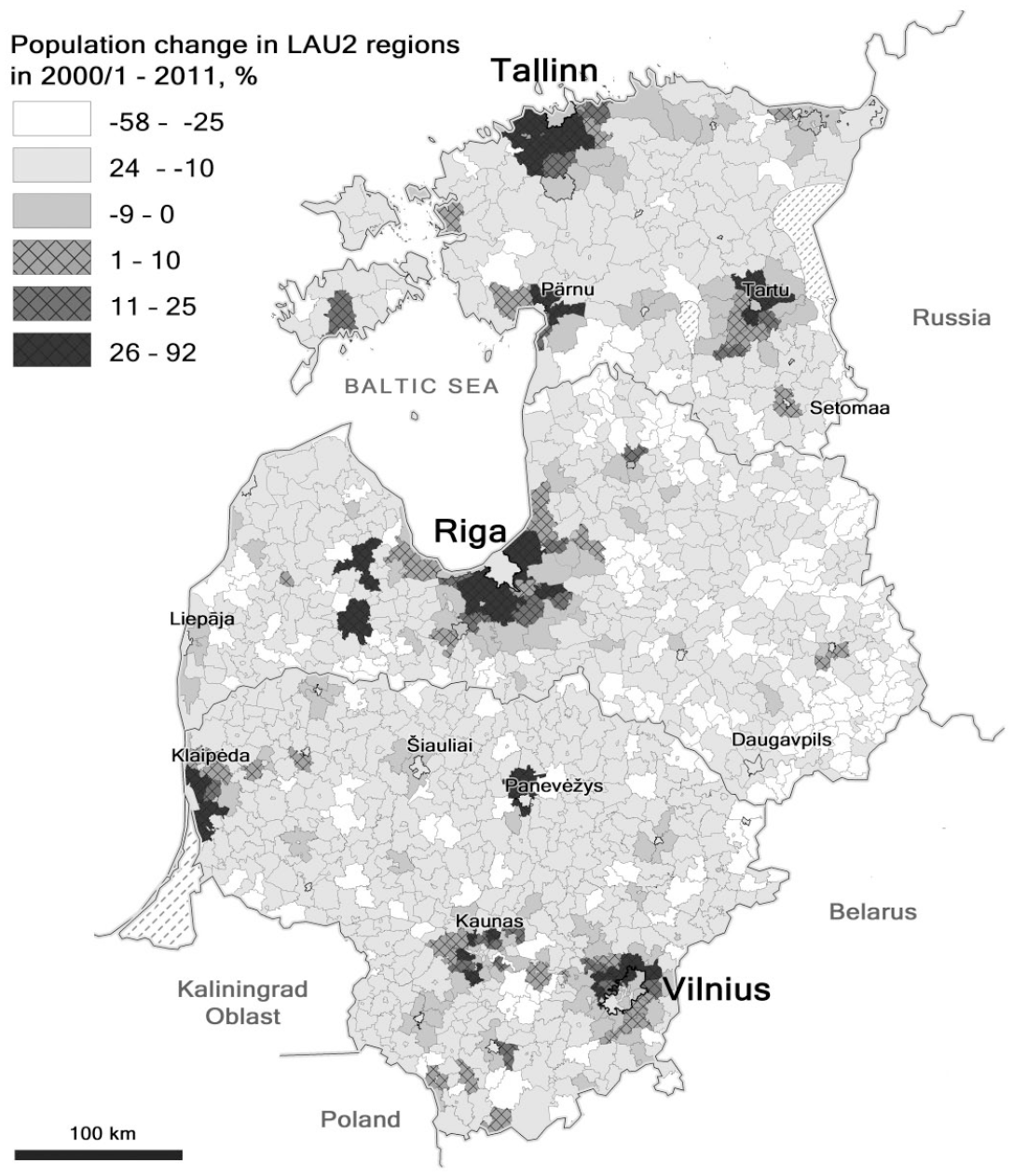
Changes in the population in the Baltic countries during the first decade of the 21st century. Author: R. Ubarevičienė (the author’s calculations were based on data of population censuses of 2001 and 2011, source: based on Ubareviciene 2018, page 96).
Issues of socio-spatial polarisation in Estonia
On the socio-economic level, polarisation processes in Estonia are manifested in the concentration of human and economic capital in the urban areas around the capital Tallinn and, to a lesser extent, the second-largest city Tartu. Demographic shrinkage is caused by a low fertility rate and outward migration to urban areas and abroad (Annist, 2017). All counties have suffered from population losses between 5% and 27% since 1991 (Plüschke-Altof et al., 2020), while, at the same time, Harju county (Tallinn urban area) accounts for about 45% of the population. The shrinkage is spurred by demographic ageing and larger shares of a reliance on old-age pensions in rural and post-industrial countries. 1
A similar polarisation between the Tallinn urban area and ‘the rest’ occurred in the regional distribution of GDP (Figure 2), which is mainly caused by regionally uneven employment possibilities. In 2019, 57% and 10% of all companies in Estonia were registered in the Tallinn and Tartu regions, respectively. This also reflects the average gross monthly salary which is highest in Harju (EUR 1531: Eesti Statistika, 2020a). While there was a relative growth in the tertiary sector and knowledge-intensive economies in the two big city regions (Servinski et al., 2016), the other regional economies were relying primarily on heavy industry (in the north-east) and agriculture (in the south) – the two sectors suffering most from post-socialist recession and unemployment (Plüschke-Altof et al., 2020). Some of them were also closely bound to the former Soviet-Russian market that is now sealed off by the EU external border and market protection mechanisms since EU accession (Annist, 2005).
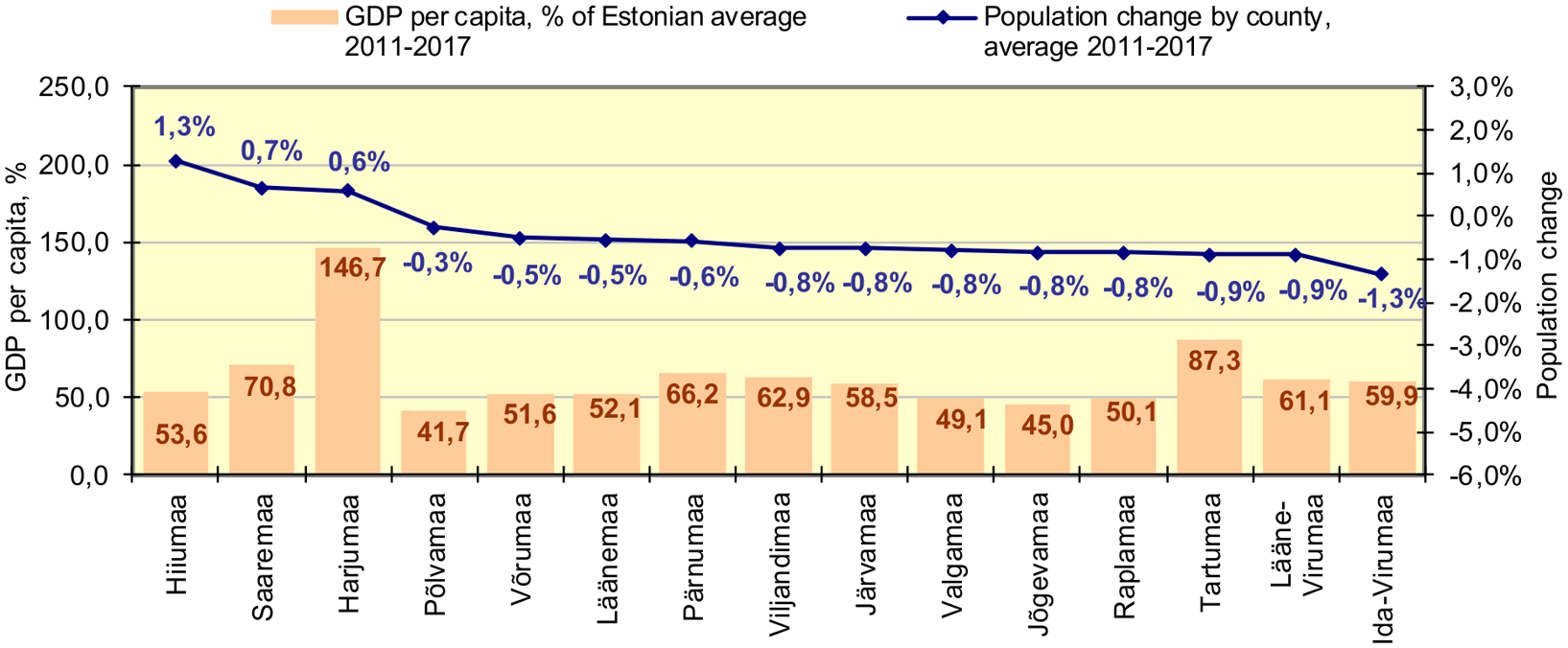
Demographic and economic polarisation in Estonia by county 2011–2017 (Source: Eesti Statistika, 2020c).
On the administrative level, polarisation processes resulted in and are further spurred on by decreasing levels of public service provision, especially in mobility, education and health (Plüschke-Altof et al., 2020). Such inequalities are discussed critically in debates on the‘mobility poverty’ (Jüssi, 2019) and ‘car-dependency’ (Tuvikene et al., 2020) of many rural residents and in terms of health disparities, that is, limited access to health services (hospitals or family doctors) and health-enhancing services (multifunctional green spaces, accessible public space, recreational activities) (Ernits et al., 2019).
On the cultural level, socio-spatial polarisation is linked to the changing image of rurality (Plüschke-Altof, 2017). Rurality has been rather positively connoted historically, building on an idea of Estonians as ‘country people’ (Nugin and Trell, 2015) that is still employed in alternative rural economies (Annist, 2013; Raagmaa and Noorkõiv, 2013). Media discourse analyses (Plüschke-Altof, 2017), however, convey increasingly negative ascriptions of rural areas as lagging behind economically, geographically remote, politically dependent or institutionally weak and their inhabitants as socially problematic, resistant to ‘modern’ development and trapped in a ‘kolkhoz mentality’.
Policy response and scholarly positions in Estonia
Estonian academic and public discourse focuses mainly on the influence of global trends, (post-) socialist path dependencies and the neo-liberalisation of regional policies as reasons for the socio-spatial polarisation. In terms of global trends, debates refer to an increasing urbanisation, de-industrialisation and automation, and a decline of the agricultural sector (Annist, 2017; Raagmaa and Noorkõiv, 2013). Post-socialist path dependencies influence economic development and policymaking. Economically, the collapse of the Soviet economy launched a compressed shock in the 1990s, so that the restructuring that occurred over decades in other countries was experienced in only a couple of years (Annist, 2017). Politically, the experience of (failed) socialism has left today’s neo-liberal trajectory of regional policy largely uncontested (Loewen, 2018).
How can one deal with the growing polarisation? The most prominent change in regional policy has been the administrative reform in 2017, reducing 213 local municipalities to 79 in order to strengthen their capacities (Noorkõiv, 2018). There is the trend of e-governance at a state and municipal level, such as participatory budgeting (Krenjova-Cepilova, 2019; Lauri, 2019), to compensate for the centralisation of vital services. Municipalities have provided public transport free of charge since 2018 and have been discussing demand-based local solutions, for example ‘community drivers’, to face the limited mobility in sparsely populated settlements (Ernits et al., 2019; Tammsaar, 2018). Finally, substandard living conditions in small towns and the countryside are also being debated, most recently regarding the example of prefabricated socialist housing and the state funding for renovation (Hindre, 2019; Kährik and Väiko, 2020). Following the trend toward neo-liberal regional policy, other development strategies focus on enabling the endogenous potential of regions, such as the creative utilisation of local resources for firm innovation (Graffenberger, 2019), community engagement (Noorkõiv, 2016), place image (Plüschke-Altof and Grootens, 2019), heritage culture (Annist, 2013), place leadership (Grootens, 2019; Kindel and Raagmaa, 2015) and rural tourism (Raagmaa and Noorkõiv, 2013). As these strategies are often based on self-employment or micro-enterprises, they are supported by project-based funding schemes on a national and EU level (e.g. LEADER).
However, challenges for dealing with polarisation processes arise from the specific context of Estonian regional development and planning: the very dispersed settlement structure, high seasonality of rural living, a considerable degree of registration mobility 2 (Tiit, 2019) and the concentration of the Russian-speaking minority and heavy industry in north-east Estonia. The latter has only gradually come to be addressed in the form of structural changes to meet the 2050 climate neutrality targets (also supported by a special development programme for the region). 3
Core–periphery case study: the development of the Seto region
The Seto region, which has formed a municipality since 2017, is located in the border area of Estonia, Russia and Latvia; thus, it is at one of the longest distances from the capital Tallinn (about 300 km). It was incorporated into the Estonian state in 1920 as the historical region of Pechory (Petserimaa). During the Soviet occupation of Estonia, about three-quarters of Pechory were unified with the Pskov oblast of the Russian Soviet Federative Socialist Republic, leaving only a quarter on the territory of today’s Estonian Republic. After Estonia joined the EU and Schengen Area, this resulted in a division of Setomaa demarcated by the external border of the EU, which not only divides the cultural territory but also its historical trading routes. In addition to this loss of a substantial source of local income, the post-socialist restructuring of the rural economy resulted in a tangible decrease of employment opportunities in the agricultural sector (from 20.4% in 1991 to 4.6% in 2012) (Taim, 2015). The consequences of this on the job market are still vivid today in Setomaa’s relatively high rate of deprivation (10% in 2019, fourth position in the country) and lower than average income levels (80% of the country’s average).
This economic peripheralisation was accompanied by demographic shrinkage. As of 2019, Seto municipality had 3280 inhabitants and a population density of 7.1 people per km² (1 January 2019). The population sparsity is coupled with two related demographic challenges (see Figure 3): firstly, ageing, a population with a high proportion of pension-aged people, and secondly, selective outmigration (Raagmaa and Noorkõiv, 2013). These processes have caused a vicious circle, whereby economic decline and demographic shrinkage result in a reduced provision of administrative services close to the place of residence, which will most probably fuel further shrinkage processes. One example is the decrease of Meremäe Secondary School, one of the region’s major schools, from full gymnasium to basic school in the 2000s (12 classes reduced to 9).
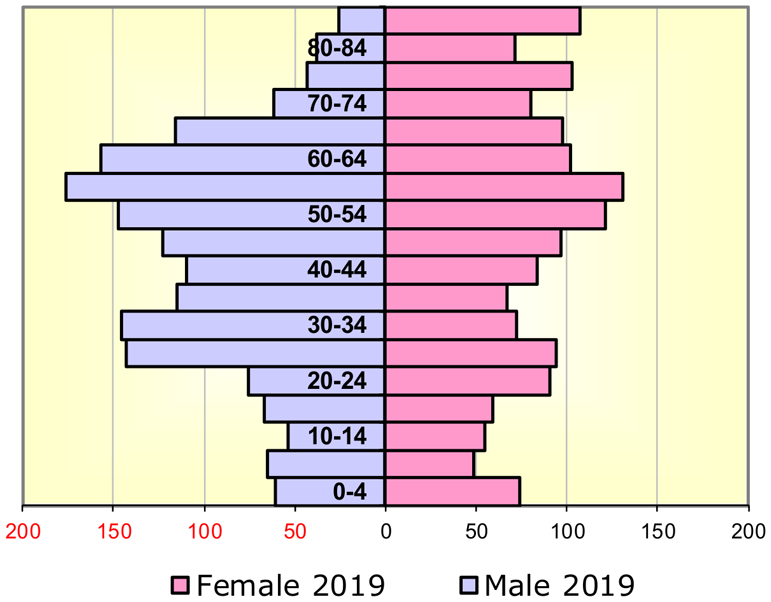
Population demography in Setomaa municipality in absolute numbers (Source: Eesti Statistika, 2020b).
A unique support programme (‘Youth to Setomaa’) was launched in 2017 as a response strategy to demographic shrinkage with the objective of supporting young families financially in starting their life in the region. The reliance of the local economy on simple labour and traditional fields (Figure 4) is slowly being diversified to fight the economic downturn. In addition to a commodification of the rural landscape (rural tourism, second-home ownership) (Palang et al., 2009) and cross-border co-operation, Seto municipality is focusing on heritage culture and entrepreneurship (Annist, 2013; Plüschke-Altof, 2018).
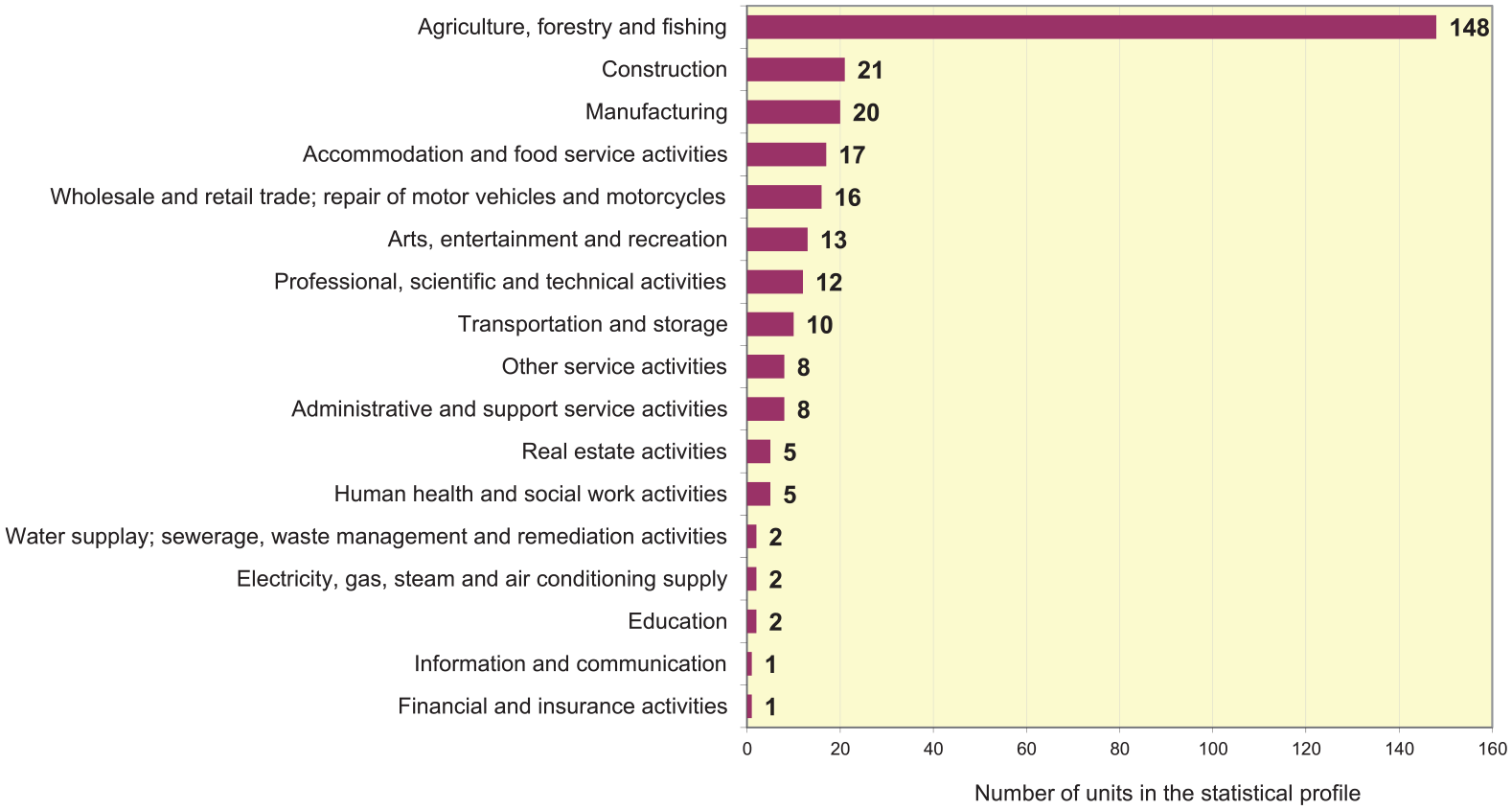
Economic sectors in Setomaa, absolute numbers of economically active units (Source: Eesti Statistika, 2020b).
Utilising its brand ‘Setomaa – Yours authentically’, the region is reinventing itself based on rural authenticity and heritage culture (Annist, 2013). On the one hand, this ‘re-invention of Setomaa’ (Plüschke-Altof, 2018) has resulted in national and international recognition in the form of state funding via the Setomaa Programme supporting cultural and entrepreneurial endeavours since 2006 and acknowledgement of Seto’s traditional Leelo choral singing in UNESCO’s Representative List of Intangible Cultural Heritage. On the other hand, this development strategy is limited when dealing with the multidimensionality of the region’s peripheralisation. Firstly, it is bound to the shortcomings of project-based funding that benefits locals actively ‘taking care of Seto stuff’ (Plüschke-Altof, 2018), while marginalising those who lack the socio-cultural capital to apply successfully for funding, partly due to the consequences of regional polarisation, for example, a lack of time due to the need for commuting or long-term mobility for employment (Plüschke-Altof and Annist, 2021). Secondly, it is based on a logic of regional competitiveness where Setomaa is competing for funding with other heritage culture regions in Estonia (Plüschke-Altof and Grootens, 2019). Thirdly, salaries have remained relatively low due to its building on self-employment and micro-enterprises (see above).
Issues of socio-spatial polarisation in Latvia
The sharply monocentric structure in Latvia (Meijers et al., 2007) makes socio-economic and demographic polarisation even more pronounced than in the other two Baltic countries. Monocentricity is enhanced by the large population difference between Rīga and the other major cities and by the historically pre-eminent role of the capital (Adams et al., 2006; Kūle et al., 2011; Kūle and Stead, 2011), an important trading centre since the early Middle Ages and an important industrial centre from the late years of the Russian Empire onwards. Moreover, the political and economic effects of the collapse of the USSR on other relevant (industrial and military) centres have further increased the gap between the capital and the rest of Latvia. As of 2016, regional disparities were the third largest in the Organisation for Economic Co-operation and Development (OECD) (OECD, 2018) and Rīga metropolitan area, which included 48% of the national population, and had contributed to 69% of national GDP growth over the previous 15 years. National planning strategies in the last 20 years, following EU guidelines, have referred constantly to the monocentric structure of the country as a relevant challenge for national development and emphasised the need to address regional disparities but, at the same time, have relied on the capital’s competitiveness to enhance national growth (Kūle et al., 2011). The extent of economic and demographic polarisation in Latvia is shown by Figures 5 and 6 below.
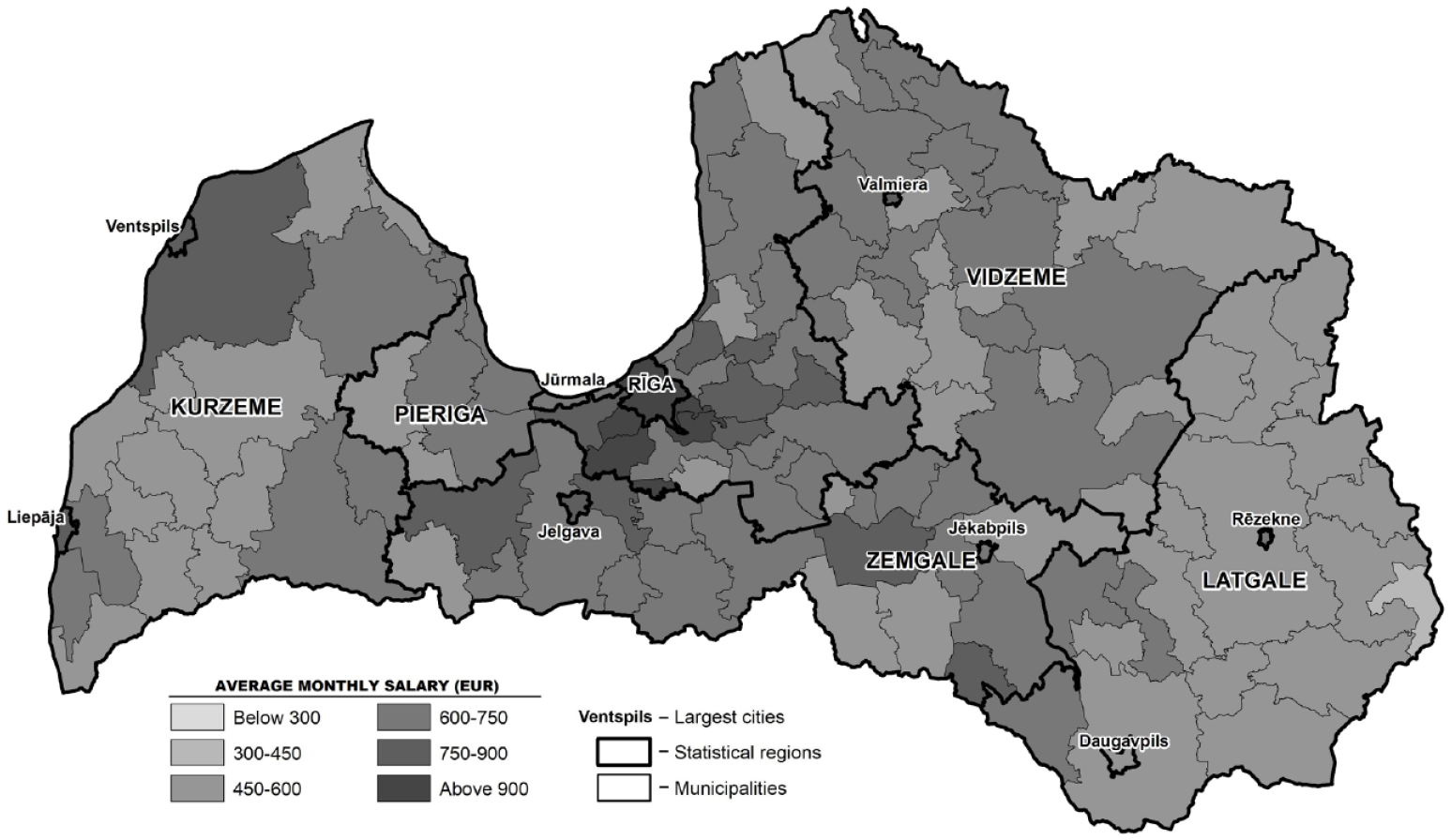
Average monthly salary (in euro) of employed people in Latvia (2019; Source: Central Statistical Bureau of Latvia, https://www.csb.gov.lv).
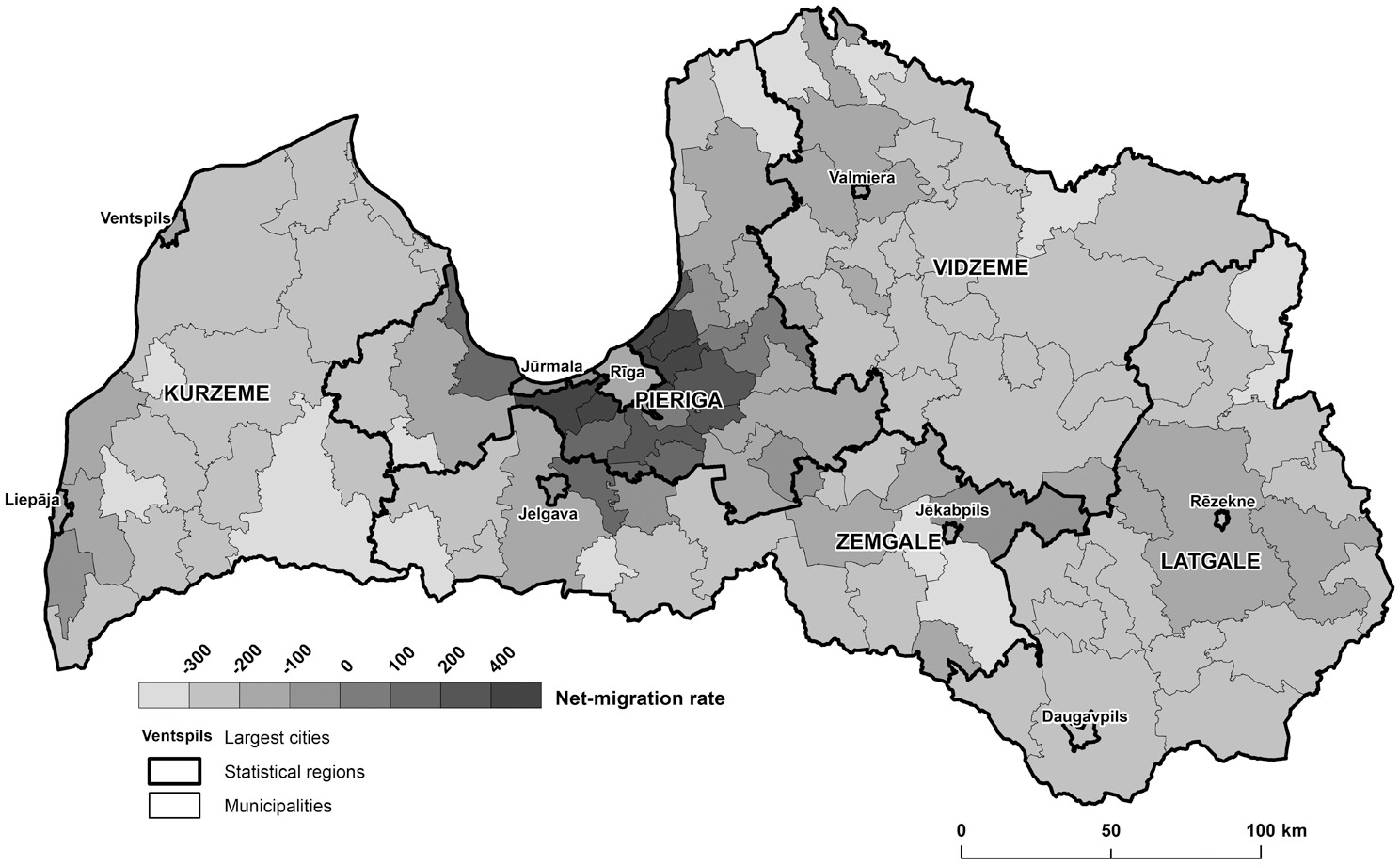
Net migration in Latvia, 2000–2018. (Source: Central Statistical Bureau of Latvia, https://www.csb.gov.lv).
Policy response and scholarly positions in Latvia
The discourse on spatial development and cohesion in the post-1991 years in Latvia has focused both on changes in the administrative system and regional policies and on the overall economic structural transformation. Similar to the other Baltic states, the economic and demographic crisis of the transition period has particularly affected non-metropolitan regions, leading to a decrease in the institutional and financial capacities of development authorities, municipalities and other local actors, with negative effects on the capability of attracting structural funds (Adams et al., 2006; Raagmaa and Stead, 2014). The current lack of an intermediate political–administrative level between the municipal and the national one and the large proportion of small municipalities adds to this issue (Adams et al., 2013). This has contributed to making the implementation of EU spatial planning directives difficult; additionally, political elites have paid little attention toward tackling issues of spatial disparities and regional economic restructuring.
The analysis of recent strategic documents, such as the National Development Plan 2014–2020 (Cross-Sectoral Co-ordination Centre Republic of Latvia (CCSC), 2012) and Latvia Sustainable Development Strategy 2030 (Riga City Administration Planning Department, 2014), highlights how the official discourse combines generic concerns for socio-economic equality, balancing development of regions and polycentricity with a neo-liberal view of development strategies. In this view, the capital city and, to a lesser extent, other relatively large cities and towns, are identified as poles/engines of growth, with the expectation of generating positive trickle-down effects on regional economic development. Both documents emphasise the development of Rīga as a ‘global city’ and the core national development strategy, whereas territorial cohesion and balanced development goals are demanded for urban–rural partnership and endogenous development strategies.
De-industrialisation has played a relevant role in polarisation dynamics by fostering unemployment and depopulation. Following the collapse of the USSR and the Soviet production chain, where Latvia played a relevant role in manufacturing (Eglitis and Lace, 2009), the industrial sector shrank significantly and collective farming collapsed in the 1990s, with a disproportionate effect on non-metropolitan regional centres and rural areas. Moreover, Latvia is one of the CEE countries in which the share of manufacturing in value-added and employment shares in the economy decreased the most in the years 2000–2015 (Stojcic and Aralica, 2017). Recent ethnographic studies describe the strong connection between depopulation and countryside de-industrialisation, and the perception of ‘emptiness’ that has arisen among many non-metropolitan residents due to public infrastructure degradation and population aging (Dzenovska, 2018).
Core–periphery case study: the development of the Latgale region
Latgale, located in the south-eastern part of the country, bordering Russia, Belarus and Lithuania, is one of the five planning regions in Latvia. It is the poorest and least developed region in Latvia and among the poorest in the EU, affected by a decades-long decline of its industrial and agricultural structure, depopulation, socio-economic and discursive/cultural peripheralisation and marginalisation. It is also an emblematic case where the dominant logic of development turns a geographically and culturally border location, potentially an asset, into a both factual and perceived weakness. Latgale accounts for only a third of GDP per capita compared with Rīga (2015) and has suffered from the sharpest demographic decline among Latvian regions (38.8% population decrease from 1989 until 2019). As a traditionally agrarian region which developed significant manufacturing activity in the Soviet years, Latgale has suffered particularly from post-1991 economic restructuring; the main cities in the region (Daugavpils and Rēzekne), which were relevant Soviet centres in the machinery, chemicals, food, car and wood industry sectors (Krišjāne, 2005), were hit significantly. The secondary sector has also suffered from the 2008–2009 financial and economic crisis and the post-2014 mutual sanctions with the Russian Federation, the main importer of machinery, wood and food products from the region. Unemployment, emigration and aging are sharper phenomena here than in the rest of Latvia, and the region also ranks among the worst-performing OECD regions in terms of health and civic engagement. Business activity rates are lower than the national average (Kalniņa-Lukaševica, 2012) and specific problems with municipal economic welfare services have been observed.
The strong cultural regional identity of Latgale, descending to a large extent from historical Russian and Polish influences, has been identified as a strength by a few authors, as a source of goodwill and a key factor behind inter-municipality co-ordination and co-operation and the earlier emergence of regional development strategies than in the rest of the country (Adams et al., 2006). However, its multicultural history and characteristics (particularly the cultural and linguistic peculiarities of Latgalian Latvians and the very high share of native Russian language speakers and East Slavic inhabitants) and, to a lesser extent, its economic structure associated with Soviet industrial heritage are also, at times, sources of stigmatising narratives of backwardness, self-segregation and extraneity to national culture by the national media and political élites (Erbsen, 2020; Mawhood, 2016).
Recent regional development strategies have been focused mostly on strengthening higher education institutions and socio-cultural and transport infrastructures, and on the development of the production sector. The former goal has been pursued in a rather systematic way, with support from EU funds and some success in strengthening the educational infrastructure and establishing new cultural institutions, such as museums.
Another recent initiative to foster regional economic development was the establishment of a Latgale special economic zone in 2016, the first one at a regional level in Latvia.
The peripherality of the region in the national perspective is widely acknowledged by local actors. Political rhetoric in the region, at times, frames complaints toward the national government and politicians through metaphors of abandonment and forgetting (Ozoliņa-Fitzgerald, 2014). Peripheralisation is found to be enforced through geographical isolation – particularly inadequate transport infrastructure – and, at times, cultural othering. The geographical peripherality is also described as being currently exacerbated by geopolitical contingencies, above all, the ongoing tensions with Russia (Mawhood, 2016).
More generally, there are complaints about a systemic lack of regional policies and development strategies in the country. The establishment of the regional special economic zone is described as a belated and insufficient initiative. Cross-border co-operation programmes are positively assessed but described as ‘hampered’ by the presence of borders. A general lack of trust in the capabilities of political institutions to promote development is observed among the population. Local actors perceive the region as unable to attract high-value-added activities, inviting instead ‘business searching for cheap labour’ and ‘poor tourists’. The low birth rate and high social inequalities among residents are perceived as relevant problems affecting depopulation.
In a significant twist, some of the characteristics that are perceived by local actors as sources of peripheralisation and othering tools in the national strategies and discourse are presented by them as strengths of the region and potential drivers of development: multiculturalism, cultural openness – associated with adaptability and flexibility – and a favourable location (border with Russia and Belarus). Local stakeholders evaluate the contribution of cultural initiatives to social and cultural identity reinforcement positively but also complain about the lack of local capabilities in turning culture and heritage into resources for socio-economic development, despite good potential; the lack of a young, educated and cosmopolitan workforce and entrepreneurs is regarded as a major constraint in this regard.
Overall, local actors advocate employment-targeted policies, social welfare programmes, affordable housing and accessibility improvements, along with tax incentives and workplace decentralisation to tackle the demographic crisis and peripheralisation. However, even from the Latgale perspective, the priority of development programmes on the capital region seems largely uncontested.
Issues of socio-spatial polarisation in Lithuania
Regional development in Lithuania has been characterised by a growing concentration of jobs and population in three metropolitan regions and the fast shrinkage of the remaining regions. While the general decrease of employment in Lithuania in 1992–2017 was similar to that of the population (-26%; Lietuvos Statistikos departamentas, 2020), its spatial distribution is extremely polarised (e.g. Akmenė municipality, located in Šiauliai County, has lost more than 66% of jobs since 1992). The population development shows a very similar spatial pattern (with the sharpest decline being -39%, see Figure 7). Only the three metropolitan regions of Kaunas, Klaipėda and especially Vilnius have shown recent increases in the socio-economic wellbeing with significantly higher wage levels than in all other municipalities (Burneika and Pocius, 2019; Lietuvos Statistikos departamentas, 2020).
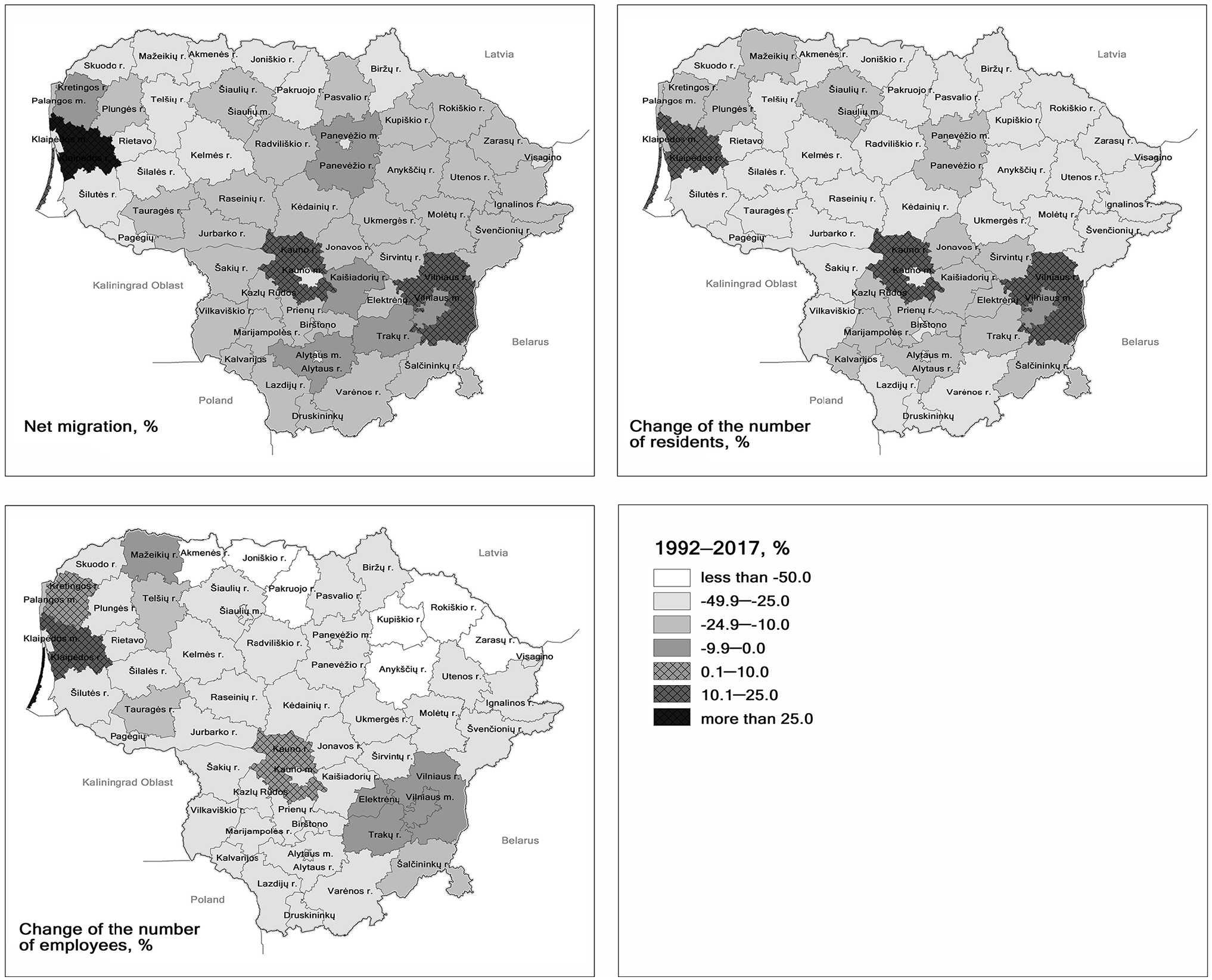
The changes of population, employment and net migration in Lithuanian municipalities in 1992–2017 (based on data of Lietuvos Statistikos departamentas, 2020).
The issues of uneven regional development have gained a lot of attention, among both politicians and scholars of Lithuania, but there is a strong focus on demography (shrinking number and changing structure of population) and emigration. Both trends are almost entirely linked to negative connotations in Lithuanian mass media (Chodkevičiūtė, 2017).
Policy response and scholarly positions in Lithuania
The regional development of and particularly the shrinking population in rural and peripheral areas are mentioned as problems in the government programme adopted in 2016 (Lietuvos respublikos Seimas, 2016, 2019). The programme includes a special section about the reduction of regional exclusion and rural development, though the actual response to this is related mostly to the support for housing for young families in Lithuanian ‘regions’. In this debate, the term ‘region’ recently became a ‘polite’ synonym for ‘periphery’. However, only a few hundred families received such support and it was mostly concentrated in suburban and peri-urban areas of second tier cities (mostly in Kaunas and Klaipeda). All big cities (including Šiauliai) were excluded from the programme. Other suggestions were related to the relocation of government units around the country (Masiulis, 2019), including the decision to move the Ministry of Agriculture to Kaunas, which has never been fully implemented. The White Paper on Regional Policy, which was approved at the end of 2017 (Lietuvos respublikos vidaus reikalų ministrerija, 2017) can be regarded as an indicator of the growing awareness of problems of regional development, but, so far, its impact has been rather limited. Some peripheralised areas have recently gained special attention in Lithuanian regional policy because municipalities with high unemployment were qualified as target areas for state interventions (Lietuvos respublikos vidaus reikalų ministrerija, 2019). This resulted in a more privileged position of these areas for the distribution of EU funding for regional development. The EU support strategy also foresees specific measures for non-metropolitan areas, thus excluding Vilnius, Kaunas and Klaipeda from the competition for the EU support for investment.
Lithuanian scholars tend to perceive ongoing spatial transformations as a result of the changing economy and society mostly related to the transition from a Soviet-industry-led economy to a neo-liberal capitalist service-sector-led economy. This transition resulted in massive job losses in industry and agriculture throughout the country and the growth of new economic sectors mostly in metropolitan areas (Burneika et al., 2017; Daugirdas et al., 2013; Ubarevičienė, 2018). The transformation of a centrally planned multipolar urban system is taking place under the conditions of a weakly regulated neo-liberal economic policy uncritically following new economic ‘realities’. In this context, migration trends have been reasoned mostly according to neoclassic economic traditions (differences of wages and employment across Lithuania and the EU) (Ubarevičienė, 2018).
The changing distribution of population is the most topical theme among Lithuanian scholars dealing with socio-spatial polarisation. Most researchers find similar trends of polarised development between growing metropolitan city regions, especially Vilnius, and declining peripheral cities and municipalities (Daugirdas and Pociūtė-Sereikienė, 2018; Pociūtė-Sereikienė, 2019; Ubarevičienė et al., 2016). In particular, the most rapidly depopulating rural areas show several well-studied socio-economic problems, mostly related to decreasing densities of population and the related shrinkage of public service networks (Daugirdas et al., 2013; Kriaučiūnas, 2010; Pociūtė-Sereikienė et al., 2014). These are empirical studies, where ongoing processes are perceived as the continuation of urbanisation trends, which were coming to a halt during the Soviet era as a consequence of housing and economic policies (e.g. employment in agriculture stood at around 20% during the last decade of the Soviet era (Lietuvos Statistikos departamentas, 1992)). The studies of Ubarevičienė et al. (2016) reveal that peripheral regions not only lose population but (due to the fact that migration is selective) also suffer from the negative structural change of population. The uneven regional economic development was paid a lot less attention by Lithuanian scholars, though the first empirical evidence was published in the early 2000s (Burneika, 2004, 2007; Misiūnas and Svetikas, 2004). These studies revealed that polarisation processes had started right after the collapse of the Soviet Union, when economic development concentrated in Vilnius as the new capital of Lithuania as an independent state.
Core–periphery case study: the development of Šiauliai city-region
Šiauliai, the central city of Šiauliai County (NUTS 3 region), is the biggest city in the northern part of Lithuania and the fourth-largest city with 100,100 inhabitants (as of 1 January 2019). Being the largest Lithuanian city among those which have experienced extremely negative trends of development, Šiauliai – in our sample – represents a second tier city affected by peripheralisation. Studying Šiauliai, which has the ambition of turning into a Lithuanian metropolitan growth pole, makes current struggles between processes of centralisation and peripheralisation particularly visible (Pociūtė - Sereikienė, 2020).
The city was developed during the socialist period and the majority of employees were working in then newly established factories (Sireika, 2007: 172). The population of Šiauliai increased from 58.6 to 145.5 thousand from 1959 to the end of the Soviet era. In recent years, however, the city lost a third of its population and was shrinking faster than the Lithuanian average (-25% since 1992; the population was stable only in the capital region). Shrinking labour markets are seen as the main reason of these changes, as the city has lost 36%, or more than 28,000, jobs since 1989 (Lietuvos Statistikos departamentas, 1992, 2020).
Šiauliai has suffered from the de-industrialisation of its economy, similar to Western European cities at the end of 20th century (Hall, 1998), whereas the pace of de-industrialisation was much faster, the scope much wider and the deregulation of markets and blurring of state boundaries were much more sudden. Consequently, net migration has been negative since the early 1990s. The peripheral location could be the reason why the share of foreign emigration was the highest in Šiauliai County. Vilnius has attracted most of those moving within the country (Lietuvos Statistikos departamentas, 2020). The birth rate in Šiauliai has dropped by 30% since 1992 due mostly to the emigration. Decreasing demand has caused the reduction of jobs in schools and other public services.
Though the general trends of development of the city are clearly visible through the analysis of statistical data, qualitative research reveals how these processes are interpreted from a local actors’ perspective. During ten interviews with local decision makers, the severe population decline due to a negative natural change and the emigration of working-age residents is recognised as the most critical process for the future development of Šiauliai because the shortage of a labour force damages the investment attractiveness of Šiauliai both locally and internationally. The peripheralisation of the city in the global context is also seen as the consequence of the local government’s misguided and excessively bureaucratic policy hindering better integration in global economic circuits.
Local entrepreneurs and representatives of non-governmental organisations also referred to the actual inability of local government to control the shrinkage, and lack of a clear vision and robust strategy for urban development, while representatives of the local authority claim that firms should be more socially responsible. However, the bottom-up initiative of local leaders to develop the city around the idea of ‘Šiauliai as a land port’ was neglected by the city authority 10 years ago.
Most concepts of local authority (including the city mayor) concerning future development can be linked to the idea of making the city a more attractive living place for present and new residents. We may summarise them as follows:
Creating a ‘family-friendly place’ though the development of social infrastructure
Attracting young people to the city by strengthening the university and supporting studies for those who stay and work in Šiauliai
Branding Šiauliai as a ‘green city’ through investment in green areas, thus changing the negative image of a post-industrial city.
Industrialisation was not mentioned as a main pathway for city future development, but industry-related Ukrainian and Belarusian immigration has helped to stabilise the population number during the most recent period; however, the opposing side declared that immigration increases only the quantity but not the quality of the labour force. As there are no demographic premises for city growth, we suggest that many local actors prefer further city shrinkage because they do not believe that immigration could provide a better quality of life for the majority of the current residents. All in all, the respondents argue that to be a smaller but resident-friendly city is the path Šiauliai should take.
Discussion and conclusions
In this paper, our focus on the three Baltic countries highlights one striking similarity: the concentration of economic activity and population in the capital and metropolitan regions, with uneven employment opportunities and overall disparities in well-being to the disadvantage of the rest of the country. The socio-spatial polarisation in the Baltic States is among the widest in Europe and also results in tangible challenges, especially in the domains of administrative service provision and the design of fair and efficient regional policies. The underlying dynamics of these rising disparities at regional levels are, as the theoretical framework of socio-spatial polarisation suggests, multidimensional and multi-scalar.
On the political level, the radical break with the socialist history effectively eradicated alternatives to the chosen path of a radical market economy. While this was most tangible, for example, in the social policy reforms (for an overview see Pungas, 2017), it also eroded more distributive models of regional policy. The belief in trickle-down effects common to the growth pole approach translated into favouring overall national development and the growth of capital and metropolitan regions. At the same time, the ongoing nation-building processes also supported a focus on the capitals. This was further enabled by the EU cohesion policy, that defined all three Baltic States in total as NUTS 2 regions, and the local implementation with a spatially blind approach encouraging regional competitiveness regardless of the different local conditions to be competitive (Loewen, 2018).
Addressing socio-spatial polarisation was complicated in all three countries by the rather weak municipal level, consisting of many small local governments that were restored within their historical pre-war boundaries after regaining independence in 1991. While this administrative patchwork rug has been addressed in (partly ongoing) administrative reforms, it remains an issue, especially in terms of political power and financial and institutional capacities necessary to ensure service provision. This is further complicated by the missing intermediate level in all three countries: there is no adequate power to co-ordinate regional development at a supra-municipal level. Moreover, a conscious choice to support service and infrastructure provision across the country would run counter to the neo-liberal logic of state retrenchment and an effective, demand-based provision of services.
Finally, on the cultural level, the ‘return to the West’ narrative largely united all behind the common cause of independent nation-building and relative national security as part of the EU and NATO. The political reforms were implemented by a political elite that consisted mainly of the winners of transition and aimed to shake off the unwanted Soviet past (Pungas, 2017). Their association of the socialist with the colonial silenced those voices who were critical about the neo-liberalisation of the countries’ political economies (Lauristin and Vihalemm, 2009). In public discourse, this resulted in putting the blame on peripheral areas and stigmatising them for their (structural) inability to partake in the neo-liberal development process, which gradually entered public discourse despite the historically prevalent positive notions of rurality (Plüschke-Altof and Annist, 2021; Plüschke-Altof and Grootens, 2019).
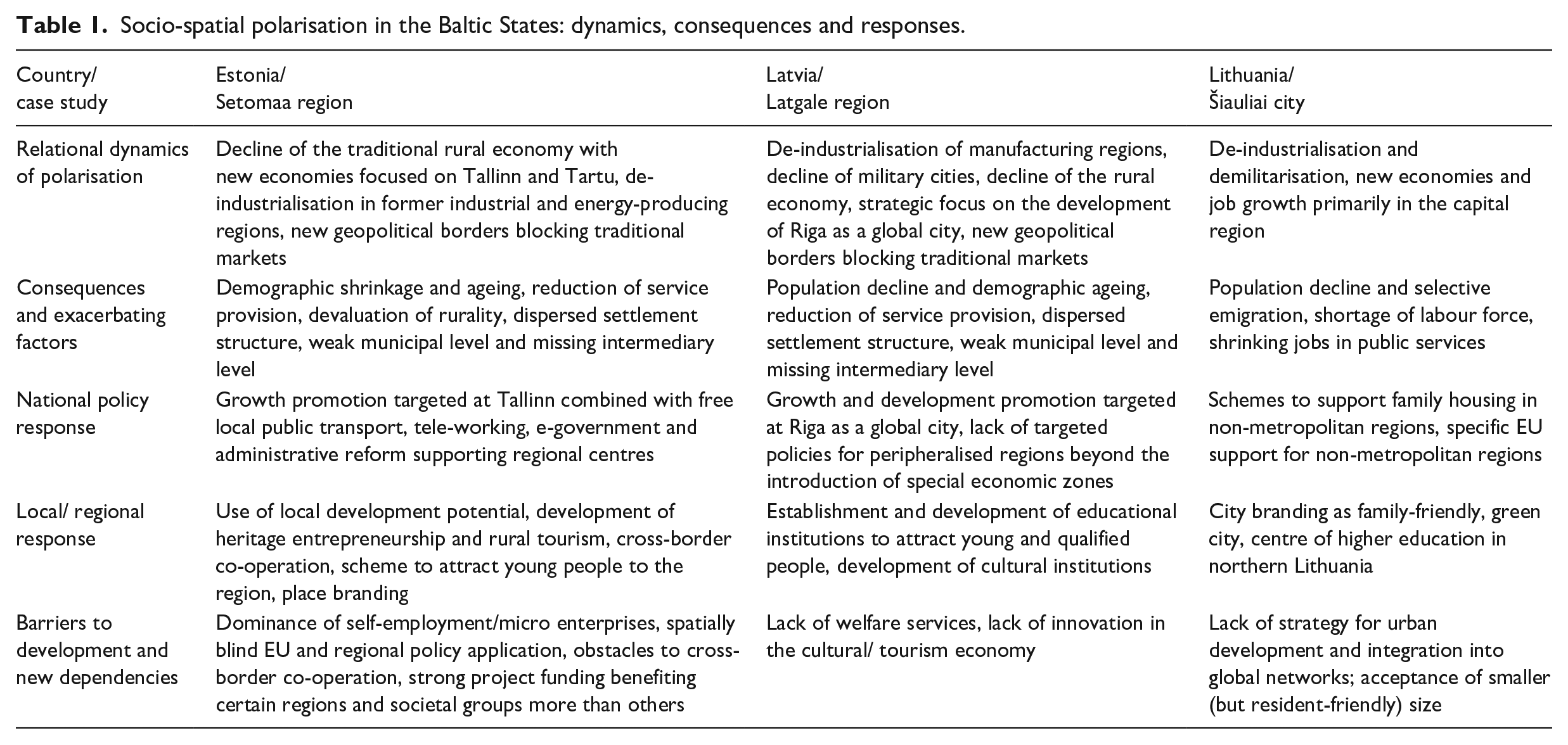
The local level case studies, focusing on sharp core–periphery disparities from the perspective of the peripheralised subregions, illustrate this polarisation between the capital/metropolitan regions and the rest. Irrespective of the different types of region – from small peripheralised rural areas (such as the Setomaa region in Estonia) to peripheral regions in a monocentric country (Latgale in Latvia) and declining regional centres in polycentric countries (such as Siauliai in Lithuania) – peripheralisation processes are rather similar. However, they also show the variety of strategies the regions employ to overcome peripheralisation (see Table 1). While all of these strategies reflect the agency of regions, they also convey the difficulties in overcoming structural limits. Conforming to the neo-liberal logic of regional development based on endogenous resources, these strategies remain niche models with different levels of success for the respective regions and among the regional populations (for the example of Setomaa, see Plüschke-Altof and Annist, 2022). The calls for ‘tapping into the unused potential’ of peripheral territories (Barca et al., 2012; Rodríguez-Pose, 2018) as a key strategy appear to be problematic for territories affected by a drastic downsizing, or even full dismantlement of their economic structure, socio-cultural resources, welfare services and capacity in the last few decades. In this regard, the integrated rebuilding of welfare and social infrastructures, aiming for a better quality of life, seems to be a necessary complement to the pursuit of ‘post-industrial’ ways of development which are otherwise confined to micro enterprises and low-value-added activities. The feasibility of such an integrated approach would imply a challenge to the imperative of territorial competitiveness that, in open contradiction to cohesion goals, is dominant in the spatial policies of the EU, the former Eastern Bloc and former USSR.
Socio-spatial polarisation in the Baltic States: dynamics, consequences and responses.
Following theories which consider spatial imbalances as structurally inherent to capitalism, we may state that extreme trends of polarisation in the Baltics are a ‘natural consequence’ of weakly regulated free-market forces. Hence, if regional policy is not taken more seriously in the near future, the prospects for a more balanced regional development in the Baltic countries will be clearly at risk. Discussing processes of urbanisation, de-industrialisation and related centralisation and polarisation in the Baltics, we also have to keep in mind that they take place in the virtually borderless EU space. Inner polarisation in the Baltic States should, thus, also be understood in the context of polarisation between EU core regions and their peripheries, which are largely dependent on the solidarity of the richer member states of the EU.
Footnotes
Acknowledgements
We are thankful to two anonymous reviewers and the editor for their very useful comments on earlier versions of this paper. We are indebted to the participants for lively debate at a joint workshop in June 2019 in Riga, funded by Latvian University and Leibniz Institute for Regional Geography. We are particularly thankful to Zaiga Krišjāne for making this workshop possible and for her engagement in the debate. We also thank Rūta Ubarevičienė (Lithuanian Centre for Social Sciences, Vilnius) for her map of Baltic states’ demographic development and Johannes Fenske (Leibniz Institute for Regional Geography) for his support in editing the paper. Parts of this paper are based on research carried out in the project ‘Socio-economic and Political Responses to Regional Polarisation in Central and Eastern Europe (RegPol²)’ funded under FP7 under REA grant agreement n° 607022 and in the project ‘Social Entrepreneurship in Structurally Weak Rural Regions: Analysing Innovative Troubleshooters in Action (RURACTION)’ funded under H2020 under REA grant agreement n° 721999. The Latvian case study has been worked out based on material stemming from the DemoMig-project, a Latvian national research programme-funded project focused on demographic challenges and development strategies for peripheral regions supported by National Research Program Project No. VPP-IZM2018/1-0015. The field study carried out in Lithuania (Šiauliai city region) in 2018–2019 was targeted at the revelation of attitudes and actions of main public and private leaders (local government, entrepreneurs, community leaders) of the city and surrounding municipality toward future development of the city. The qualitative research was carried out as a part of a post-doctoral studies project of G. Pociūtė-Sereikienė. The case study in Estonia has been implemented based on institutional resources.
Declaration of conflicting interests
The author(s) declared no potential conflicts of interest with respect to the research, authorship, and/or publication of this article.
Funding
The author(s) received no financial support for the research, authorship, and/or publication of this article.
