




Abstract
Abstract
Human papillomavirus (HPV) testing is being considered as the primary screening test for cervical cancer in England, rather than the currently used cytology test. We aimed to estimate the impact of primary HPV testing on incidence and morbidity of cervical cancer in England by estimating the proportion of cervical cancer diagnosed within 6 years of a negative cytology. We used a population-based case-control study of prospectively recorded data on cervical screening in England between 1988 and 2012, including 8774 women with invasive cervical cancer aged 25 to 64 and 17,341 controls. We used incidence rates in 2010 to estimate absolute risks. We found that 38.8% of all women with cervical cancer had a negative test within 6 years of diagnosis. Assuming HPV testing is 95% sensitive for cancers that would develop over the next 6 years but were missed by cytology, and that 4.3% of those diagnosed by cytology would be missed by HPV testing, we estimate that a maximum of 32.6% of current cases in women invited for screening aged 25 to 64 could be prevented. This translates to a reduction in the rate of cervical cancer in this age group of 4.2 per 100,000 women per year in England, equivalent to 587 cancers.
INTRODUCTION
The benefits of human papillomavirus (HPV) testing over cytology have been widely discussed in the literature. 1 Guidelines for the introduction of HPV testing as a primary screening test suggest it should be better than the current screening method at identifying women harbouring CIN2+ or likely to develop it over the next few years, and it must differentiate them from transient high risk HPV infections by having an acceptable positive predictive value (PPV). 2 Most would agree that in the absence of any screening programme, primary HPV testing should be implemented; however, where a cytology screening programme with a high sensitivity and PPV already exists, the benefit of switching to primary HPV testing is less evident.
An overview of European and North American studies using HPV testing as a primary screening test concluded that HPV testing was substantially more sensitive in detecting CIN2+ than cytology (96.1% vs. 53.0%). 3 However, this study showed a large variability in the sensitivity of cytology, with the highest reported sensitivity found in studies carried out in the United Kingdom (76.7% sensitivity for CIN2+). A further three separate studies from the United Kingdom4–6 showed a consistently low 6-year cumulative incidence rate of CIN3+ among women negative for HPV, suggesting that cervical screening strategies which screen women for HPV every six years are safe and effective.
Triage using HPV has been introduced into the English screening programme since April 2012 to reduce the number of repeat cytology tests required. It has also been introduced as a test of cure following treatment for high grade CIN. A pilot scheme is planned to assess the feasibility of implementing HPV testing as the primary screening test for cervical cancer, rather than the currently used cytology test. The pilot also aims to establish whether using HPV testing as the primary screen for cervical disease results in better outcomes for women while minimizing overtreatment and anxiety. 7
Here we aim to estimate the impact of primary HPV testing on incidence and morbidity of cervical cancer in England, where the screening programme is rigorously quality assured, by estimating the proportion of cervical cancer diagnosed within 6 years of a negative cytology.
METHODS
We used a population-based case-control study of prospectively recorded data on cervical screening in England between 1988 and 2012. Cases were women with cervical cancer (ICD-10 C53) diagnosed aged 25 to 64 and registered with an NHS general practitioner (GP) in England between April 2007 and March 2012. Control women were matched on age and place of residence, and randomly selected from GP lists. Data on screening histories were abstracted from routinely recorded cervical cytology records held on the National Cervical Screening Call/Recall System (and as such are not subject to recall bias). After linking, the data were anonymized before being transferred to us for analysis. Details of the design have been published previously. 8
We identified women with a negative cytology test resulting in routine recall (ie. that did not result in referral to colposcopy or early recall) within 6 years of diagnosis and compared them with women with no tests within 6 years. Cytology tests within 6 months of diagnosis were excluded (to minimize confusion between symptomatic tests and screening tests). To assess the impact of primary HPV testing on cervical cancer incidence, we use all cancers in the dataset. To assess its impact on mortality we focused on advanced stage cancer, defined as those recorded as having FIGO stage 2+ cancer or to have been treated by radiotherapy or chemotherapy (with or without hysterectomy). We used conditional logistic regression to estimate the odds ratio of developing cervical cancer following a negative test.
We modelled outcomes using the following scenario: at the time of the negative cytology an HPV test would have been positive 95% of the time (equivalent to 95% sensitivity of HPV testing for identifying cytology negative women who have or would develop cervical cancer over the next 6 years). We have chosen 95% based on a sensitivity for cytology to detect CIN3 or worse of 97.1% in HART 3 and allowing for a slight drop in sensitivity among cytology negative women (see appendix 1 for details).
Odds ratio of developing cervical cancer within 6 years of a cytology test
1Excludes tests within 6 months of diagnosis
2Estimated using conditional logistic regression
3See appendix 3 for details
We used official cancer statistics for England 10 to estimate absolute risks. All analyses were done in Stata 11 (release 11.2. College Station, Texas).
RESULTS
We included 8774 women with invasive cervical cancer aged 25 to 64 and 17,341 controls. Stage was available for 90% of cases (n = 7924). Of those with known stage, 41.6% were FIGO stage 1A cancers. Out of 8774 women with cancer, 38.8% had a negative cytology within 6 years of diagnosis compared with 69.9% of controls (Table 1). With an HPV test that was 95% sensitive among those with a negative cytology, we estimate that in this age group introducing HPV as the primary screening test would identify 36.9% of women who were subsequently diagnosed with cervical cancer earlier. In a perfect screening programme one might hope that all these women would have been treated and thereby prevented from developing cancer.
A total of 2256 (25.7%) cancers were advanced stage at diagnosis, and 31.0% (699) of these had a negative test within 6 years of diagnosis. This represents 8.0% of all cancers in the study.
In England in 2010 a total of 1,801 cervical cancers in women aged 25–64 were diagnosed, corresponding to a rate of 13.0 per 100,000 women. 10 Assuming 36.9% of these could be prevented by the introduction of HPV as the primary screening test, this would be equivalent to 664 cancers (or 4.8 per 100,000 women) per year in England, of which approximately 136 (or 1.0 per 100,000 women) would have been advanced stage at diagnosis.
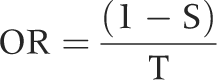
The result above would apply to a co-testing screening programme (ie. one in which screened women have both cytology and HPV testing and are referred if either test is positive). Assuming HPV testing becomes the sole primary screening test, we need to take into account the proportion of cancers currently found by cytology which would be missed by HPV testing. Based on cytology having a sensitivity of 76.9% we estimate that in the absence of screening (by cytology) there would have been 144% more cancers. It is reasonable to assume that screening by HPV testing would have missed 3% of those prevented by cytology, corresponding to 4.3% of observed cancers (see appendix 1 for details). Therefore the net reduction in cervical cancer by introducing HPV testing as the primary screening test would be 32.6%, equivalent to 587 cancers (or 4.2 per 100,000 women) per year in England.
The sensitivity of cytology in England is high; in this study we saw a 76% lower risk of developing cancer within 6 years of negative cytology compared with those with no tests within 6 years of diagnosis (OR 0.24, 95% CI 0.22 to 0.25) (Table 1). If the sensitivity of cytology was 53% (as reported in the literature) and the screening coverage and rate of disease in the population was comparable with those observed in this study, we estimate that the proportion of women with cancer and a negative test within 6 years of diagnosis would rise to 53.4% and HPV primary testing could identify and prevent 50.8% of all cancers (full details in appendix 3).
DISCUSSION
Our results suggest that introducing HPV testing as the primary screening test in England would prevent a maximum of 32.6% of current cases in women invited to screening aged 25 to 64. This translates to a reduction in the rate of cervical cancer in this age group of 4.2 per 100,000. However only a small proportion of these cancers will be advanced stage (1 per 100,000 women), reflecting the high sensitivity of cytology in England. The impact of using HPV as the primary screening test in countries where cytology sensitivity is 53% and coverage is similar to that in the UK (about 80%) would be substantially greater.
We have been optimistic in assuming that the screening programme would have successfully treated all women testing positive for HPV before the lesion became cancer. In practice, the reduction in the incidence of cervical cancer is likely to be smaller. Natural history of progression from HPV infection to cervical cancer suggests that women who were HPV positive within 6 years of diagnosis would have had a cervical lesion. 11 In this study, 78.0% of cases with a negative test within 6 years of diagnosis had the test 3 or more years before diagnosis. It is reasonable to assume that most of these women would have had high grade CIN at the time of the negative test. A few (perhaps those with a negative between 5-6 years (15.4%) before diagnosis) might not have any visible lesions, however, they would have been followed up yearly until the HPV resolved or a lesion was found and treated. Nevertheless a few would have already had cancer (at the time of the negative cytology), particularly those with a negative within a year of diagnosis (2.4%). Additionally some women would inevitably have been lost to follow-up or developed cancer despite treatment.
It may be thought that it would be better to estimate the potential impact of primary HPV testing from the randomized controlled trials of HPV testing (alone or in conjunction with cytology) versus cytology. However, all these trials are only in screened women, and do not allow estimation of the effect of coverage among women who are screened less often than recommended. Further, despite being large, these trials only have a small number of cancers on follow-up and the confidence interval for the relative risk is wide.
We have not considered any other factors that would affect the impact of primary HPV screening, such as vaccination status, changes in coverage, costs, or adverse psychosocial effects. Small studies suggest that HPV testing may increase anxiety and reduce the ability to make informed choices. 12 Nevertheless, HPV testing has been introduced as a triage test in many settings without any significant adverse psychosocial effects when compared with conventional screening. 13 However, the number of women referred to colposcopy is expected to rise significantly (at least at the beginning), and this will inevitably increase the costs to the screening programme and associated anxiety for those referred to the service.
The introduction of HPV as a primary screening test in England will lead to a reduction in the incidence of cervical cancer (mostly early stage). Due to the high sensitivity of cytology in England, the impact of changing to a still more sensitive test will be relatively modest. Until HPV vaccinated cohorts reach middle age, other interventions to improve screening coverage will be needed to prevent the majority of cases that occur despite the NHS Cervical Screening Programme.
Footnotes
ACKNOWLEDGMENTS
This work was supported by Cancer Research UK [C8162/10406 and C8162/12537]. The funder had no input in the design, conduct, collation, analysis or interpretation of the data or the preparation, review or approval of the manuscript. The collection of data as part of this audit has been covered since 2003 by section 251 of the NHS Act 2006 re-enacted Section 60 of the Health and Social Care Act 2001 approval (PIAG 1-08(a)/2003). The analysis of anonymized data in this context is considered service evaluation which does not require research ethics approval according to UK guidelines (NRES). The authors declare no conflict of interest.