



Abstract
William Attree (1780–1846) came from a prominent family in Brighton, England. He studied medicine at St Thomas’ Hospital, London, and there was unwell for nearly 6 months with severe ‘spasms’ of the hand/arm/chest (1801–1802). Attree qualified Member of the Royal College of Surgeons in 1803 and served as dresser to Sir Astley Paston Cooper (1768–1841). In 1806 Attree is recorded as ‘Surgeon and Apothecary’ of Prince's street, Westminster. In 1806 Attree's wife died in childbirth and the following year he underwent emergency amputation of the foot in Brighton following a road traffic accident. Attree served as surgeon in the Royal Horse Artillery at Hastings, presumably in a regimental or garrison hospital. He went onto become surgeon to the Sussex County Hospital, Brighton, and Surgeon Extraordinary to two Kings: George IV and William IV. In 1843 Attree was appointed as one of the original 300 Fellows of the Royal College of Surgeons. He died in Sudbury, near Harrow. His son William Hooper Attree (1817–1875) was surgeon to Don Miguel de Braganza, the former King of Portugal. The medical literature appears to lack a history of nineteenth century doctors (especially military surgeons) with physical disability. Attree's biography goes a small way towards developing this field of enquiry.
Keywords
Introduction
William Attree (1780–1846) was an English surgeon who trained at St Thomas’ Hospital, London. He came from a well-known family of lawyers in Brighton on England's south coast. Attree's biography is inscribed on his tombstone (see Image 1) at the parish church of St Margaret, Ditchling, Sussex. Archived records confirm its wording: ‘Sacred to the memory of William Attree, Esquire. R.H.A; FRCS; Surgeon Extray to their late Majesties Geo IV and Will. IV, died 22nd April 1846 at Sudbury Grove in the County of Middlesex aged 67 years’. 1 Online sources state that Attree was born in 1780 and it has not been possible to resolve the discrepancy in age with that given in his epitaph, which suggests he was born a year earlier. Attree qualified Member of the Royal College of Surgeons of England on the 18th November 1803 and in 1843 became one of its original 300 Fellows. 2 Fellowship of the college had been created in order to distinguish specialist surgeons from general practitioners (apothecary surgeons) of the day.
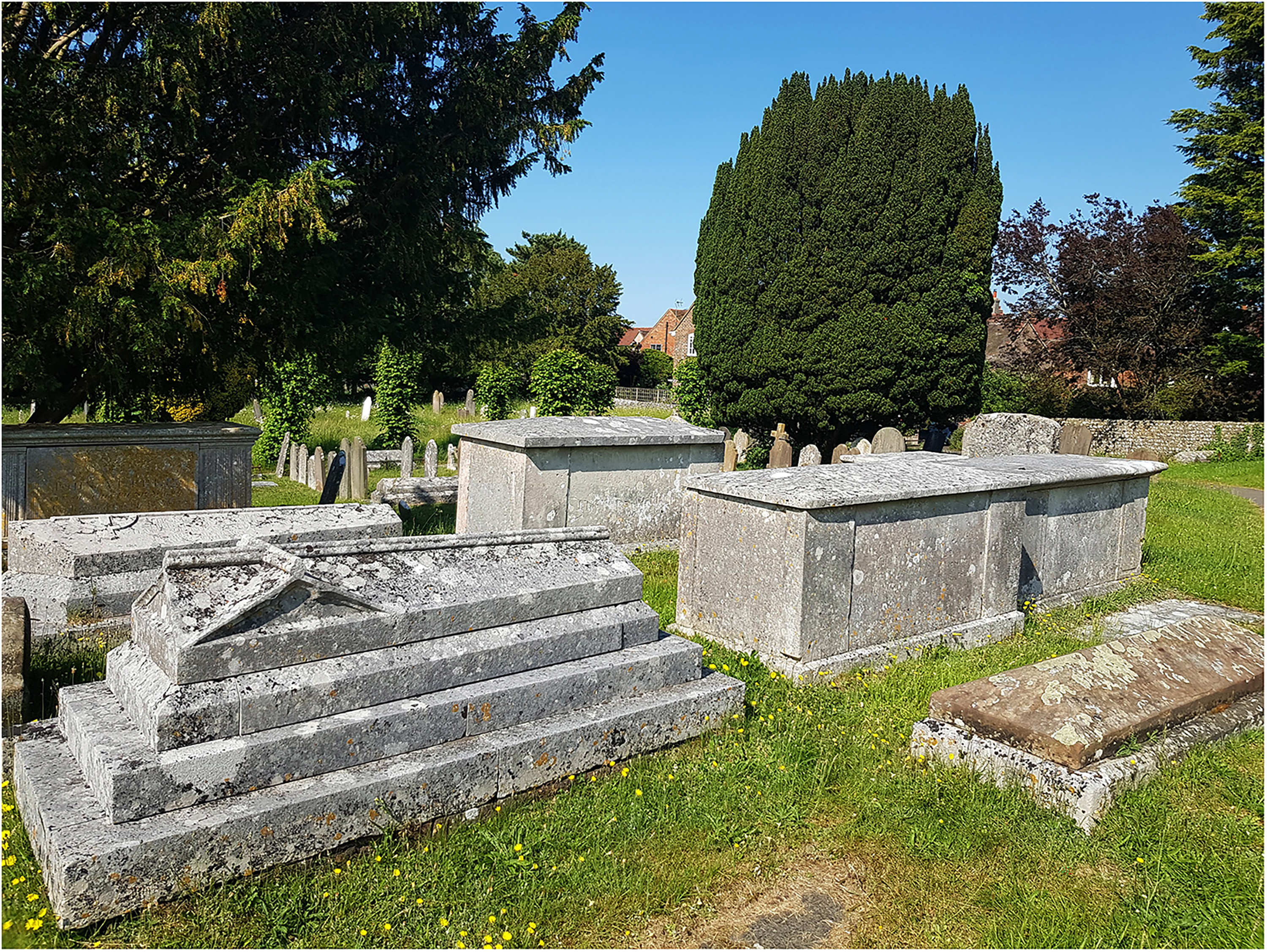
The Attree family tombstones at St Margaret's church, Ditchling, Sussex. The inscription on surgeon William Attree's tomb is barely legible today. The family's longstanding association with Ditchling is evident inside the church where a memorial commemorates Captain Francis William Wakeford Town Attree who died near Ypres in 1915. Image taken in June 2021 by MJF Cooper.
Attree family and association with Brighton
William Attree was the son of William Attree (1749–1810) and Frances Attree (née Blackman, c.1755–1811). In his work on the Brighton legal firm Howlett and Clarke, Anthony Dale provides the following information about the Attree family. 3 Descended from an established Ditchling family, William senior was a solicitor and key figure in late eighteenth century Brighton. After training at Lewes, he qualified in 1775 and went on to become the first Clerk, and Treasurer, to the Brighton Commissioners, as well as Clerk to the Brighton Vestry. 3 Establishing his practice in Brighton, in 1775 he built an office and residence at 8 Ship Street (Image 2). Being one of the few attorneys in Brighton at that time, he was employed by many wealthy clients, including the Prince Regent, for whom he worked on various projects such as the diversion of Great East Street (today known as East Street) away from the Royal Pavilion. 3 In 1802, William senior purchased the Old Ship Hotel, which stands at the seafront end of Ship Street and has historic links with the medical profession of Brighton (see Image 3). William Attree senior had four daughters and four sons. Among these (which included surgeon William) was Thomas (1777–1863), a very successful solicitor who earned the epithet ‘King of Brighton’ due to his influence. 3
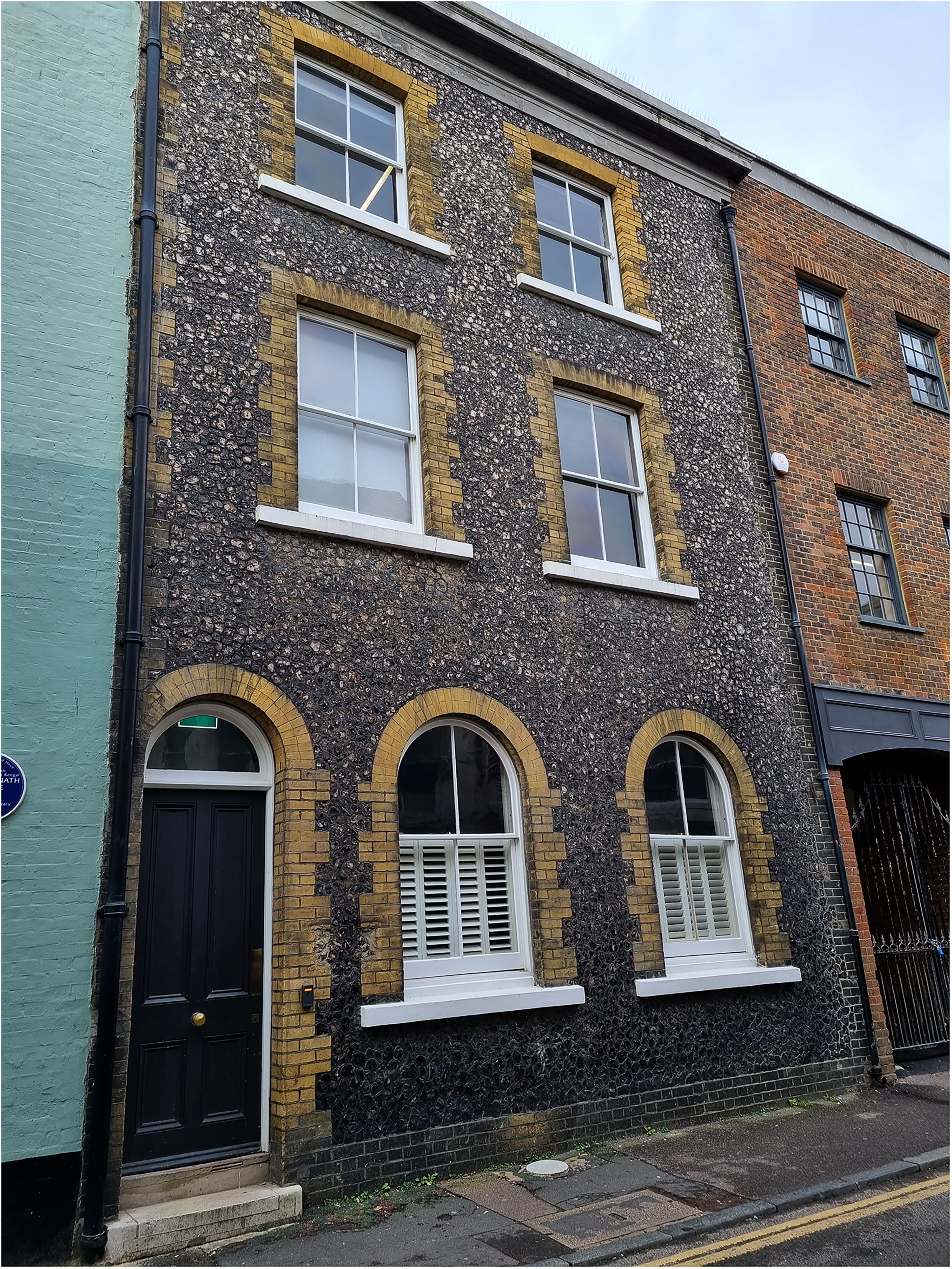
No. 8 Ship Street, Brighton. The Attree family was in legal practice in Brighton for over 200 years, with the firm (latterly known as Howlett and Clarke) based at 8 Ship Street until 2010. It was here where William Attree recuperated from his amputation and, we believe, the operation took place. Given the narrow street and the surgeon's need for natural light to operate, the procedure may have been undertaken on the middle level (i.e. with the largest windows). Photo by MJF Cooper March 2022.
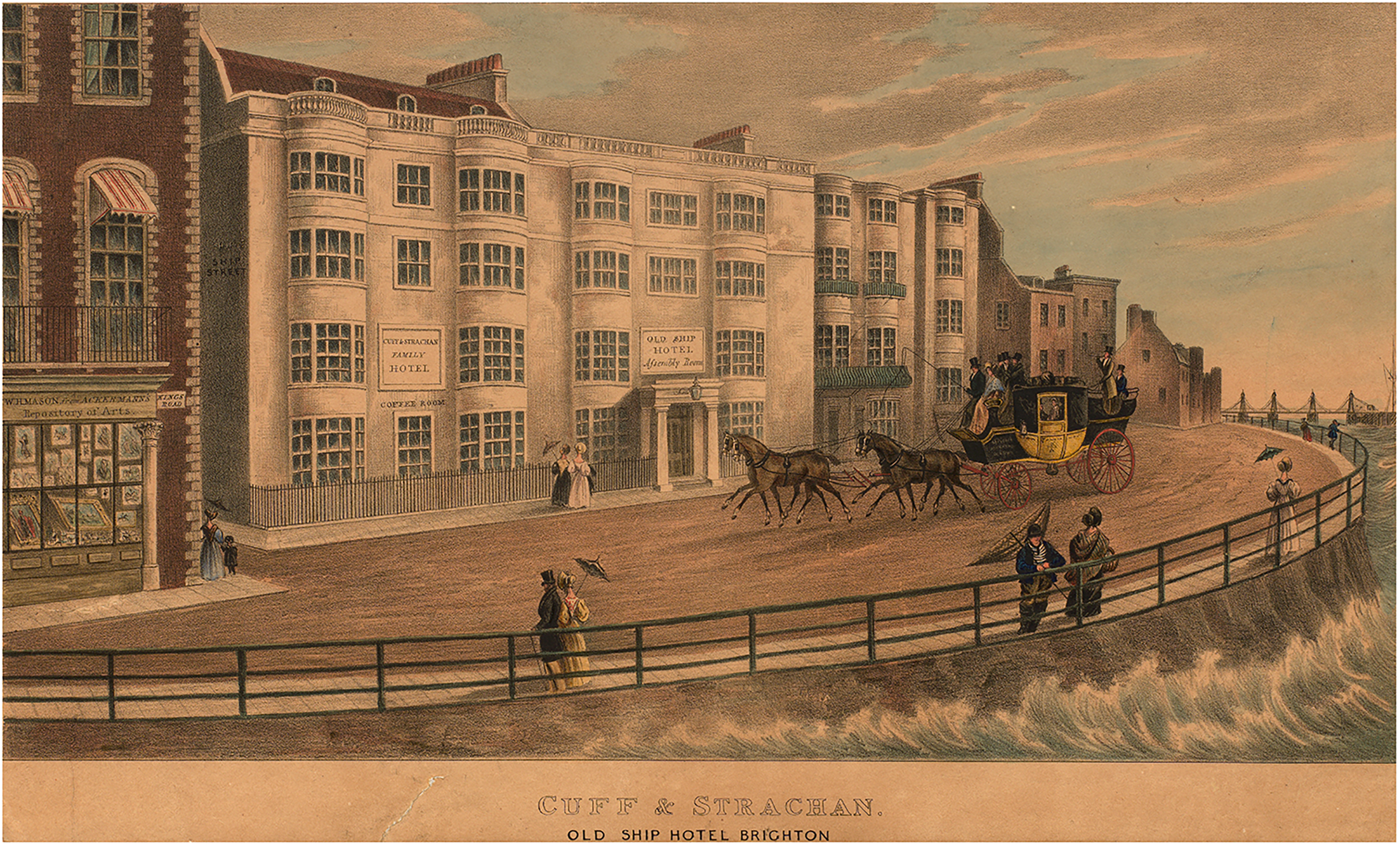
Brighton's oldest hotel: the Old Ship. It still stands where Ship street meets the seafront. Previous owners include the Attree family. An earlier owner was Nicholas Tettersell aboard whose boat King Charles II fled to France on 15 October 1651. The hotel has historic links with the medical community of Brighton. Meetings to establish the Royal Sussex County hospital (opened 1828) and the first annual dinner of the Brighton and Sussex Medico-Chirurgical Society (1847) took place here. Image courtesy of Royal Pavilion & Museums, Brighton & Hove.
Medical Student at St Thomas' Hospital, London (1801-1802)
William Attree was born on 12 June 1780. 4 Nothing is known about his schooling. In 1801 he was appointed dresser (a role that broadly equates to house officer) to the surgeon Astley Paston Cooper (1768–1841) at St Thomas’ Hospital, London. 5 Insight into Attree's character and his early life at St Thomas’ Hospital can be gleaned from a series of 121 letters written between 1796 and 1803 by (or to) the Weekes family of Hurstpierpoint, Sussex. Richard Weeks (1751–1823) and his sons, Hampton (1780–1855) and Dick (1783–1847) all practised surgery in Sussex. The letters considered below date from 1801 to 1802, a period when Attree and Hampton Weekes were studying at St Thomas’ Hospital. Here they lived together at the home of Richard Whitfield, apothecary to St Thomas’ Hospital. Attree (like Hampton and, later, his brother Dick Weeks) must have been apothecary pupil to Whitfield. In addition to clinical work, their education included lectures and dissection. The Weekes family letters were published in 1987 by Dr John Ford and the summary below quotes directly from his fascinating book. 5 Many letters referring to Attree do so only in passing and this sometimes makes their content difficult to interpret with certainty. The letters were largely written by or to Hampton Weekes and are quoted below in chronological order.
Letter 4 (from Hampton to Richard Weekes): [?19] September 1801
In this letter Attree is recorded teasing a medical student colleague: ‘Fixott [Charles Fixott, another pupil of Whitfield's] is the oddest fellow, we are frequently talking French to gether, he says he will assist me at anytime we went one Evening to Smoke two Pipes together & take our Glass of Grog; we met 3 Jersey fellows Gentlemen there was such a talking of French with us I enjoyed it a great deal, Fixott is very good naturd but verry [sic] petty, Attree does laugh at him so and calls him a frenchman, he answers quickly and says dem [presumably damn] de French I am not French Man he is an only Son & been very much indulged.
He and Attree both attend Midwifry [sic] Lectures at 8 in the Morning. I one morning went with them, down Frying Pan Alley…
…my room looks towards the dissecting Room where I sit, Attree & I, are very comfortable’. 5
Letter 5 (from Richard to Hampton Weekes): 21 September 1801
This brief reference suggests that Attree was popular among Hampton's family: ‘I can think of nothing more to say & am in a hurry to be gone so conclude with respects to your friend Attree &c
Yours sincerely
R[ichard] Weekes’
Letter 6 (from Hampton to Richard Weekes): 24 September 1801
Hampton offers a description of Attree and reveals him to be very sociable. For that reason, it is hinted that Attree may have been behind with his medical studies. To remedy this, he had acquired a cranium for study: ‘Fixott and i are now writing by Candlelight & Attree is just come in from being out to dinner, he is asking me if I will go to the play to morrow night to see ye. play of Wild Oats, & the entertainment of I dont know what for he has forgot he thinks the Lock & Key, I tell him I wont promise him he appears to have rather too many friends I think, he has not been educated in the way I have, I mean in the Medical department of, Osteology, Mycology, Neurology &c & like as I was could not stick to it, tho he has procured a seperated [sic] Cranium from a young Man & has made a beginning’
5
Letter 7 (from Hampton to Richard Weekes): 25 September 1801
Despite Hampton's concern over Attree's application to studying, the theatre visit went ahead: ‘Attree is gone to the play & Fixott is I dont know where, I have been to see a Venereal patient not far off from the Elephant & Castle, By Mr W.'s desire by wh. Means I escaped the oportunity of going with Monsier [sic] Attree to ye. Play as Fixott, alias Don calls him, I am not sorry for it in my own mind for I am keeping the Money in my pockett by it’
5
Letter 8 (from Hampton to Richard Weekes): 28 September 1801
Attree's contrasting attitudes towards study and entertainment are made clearer in this letter. Its illegible word probably confirmed that he was indeed preoccupied with the latter: ‘[I will] be firm in all my proceedings, as to plays I don’t feel an inclination to go to any neither will I at all I am almost amind to say, - I feel myself more pleasantly situated in the study a great deal, than walking about the Streets, I assure you, but that is not […] at present with Attree or Fixott’
5
Letter 9 (from Hampton to Richard Weekes): 8 October 1801
Here Attree is noted pressing Hampton to finish writing his letter so they can catch the post. This suggests that Attree was again keen to go out. Alternatively, he may also have been a keen correspondent although (if true) none of his letters appear to have survived: ‘Attree is on my right hand saying make haste that we shall not be in time for ye. Post…’
Letter 10 (from Hampton to Richard Weekes): 10 October 1801
Attree appears to have a love of theatre and is noted attending Drury lane in October 1801: ‘Mrs W., Attree, Fixott, & Mr & Mrs. Osborne of Uxbridge are gone to Drury lane to see Artaxerxes’
5
Letter 10 goes on to describe Attree singing: ‘Mrs. W's maiden name was Wade, her Brother is also staying with us, he sings also systematically, & after they sing, we are calld on to sing of course, & 1st Attree begins with something humourous, as he has a little about him, but as to idea of singing or voice (none)’
5
Letter 12 (from Hampton to Richard Weekes): 23 October 1801
This letter comments on Attree's attire: ‘I find you have not recd. my last, were in I speak of the dreadfull storm we had as well as you - You begin by saying you are sorry for my cold & little Cough wh. I had, but at present have almost quite got the better of, I borrwd a flannel waistcoat of Attree, that did me great deal of good, I think of getting myself one from your advise, - As to buck boots I will tell you a something of Attree has just had a 2d. pair, so you may suppose they are worth but very little, each pair costs £2.6.6… ’
5
Ford notes that in possessing a flannel jacket, Attree appears to be heeding the advice in John Shaw's 1821 ‘A manual for the student of anatomy’ to guard against the dangers of the cold dissecting room. 5
Letter 12 goes on to offer insight into drinking habits and antics among contemporary medical students: ‘Now Dr as to Wine we make out very well for Mr W. is so good as to produce a Bottle every day after dinner & also after Supper, it is Currant wine very good, - what we take is generally two glasses after Dinner & one after supper not more, we take nothing more either of us excepting either of us loose a Bottle by a bett if so we go and partake of it at a Tavern some where, this has not occured more than two or three times, we have each of us I believe lost a Bottle each I whon [sic] one to day from Attree…’
5
In Letter 12 the trade in body parts is evident and suggests that it extended from London as far as to Sussex: ‘Dr shall I send you down an upper extremity in a deal box made close? What think you of it or will you stop untill it is colder - Attree has just bought a Head we are going to attack it tomorrow…’
5
Letter 14 (from Hampton to Richard Weekes): 1 November 1801
Attree is noted having visited a lying-in house (i.e. for confinement in pregnancy), presumably to learn about obstetric care: ‘I hear daily of such anecdotes of young men going to the lying in house, just by, half a dozen of them to gether, I went with Attree out of curiosity when we got there there were 2 or 3 more, they stared at me & seemd a little difident, & when I had learnt the state of the case, well say they Sir & what do you think of it how does the case stand, & when will it be over’
5
Letter 15 (from Hampton to Dick Weekes): 1 November 1801
In Letter 15 Attree is noted attending church: ‘Mr and Mrs Whitfield Attree & I we all went to St Thomas's Church to day…’
5
Letter 21 (from Hampton to Richard Weekes): 15 November 1801
Here Attree's illness is first mentioned. It consisted of headache and ‘spasm's’ in his chest for which he had taken what sounds like unpleasant medication: ‘I have been busily employ’ed the greatest part of this day in the dissecting Room working on a blood Vessel of Attree's wh. is very fat… We work on this day on account of ye. subjects going on to spoil, I dare say it was so in your time if you dont forget, - Attree is somewhat indisposed with pain in his Head he is also subject to Spasm's of ye. Chest, he has taken a dose of Physic to day in which I have not envied him’.
Letter 22 (from Richard Weekes and continued by Dick Weekes to Hampton Weekes): 18 November 1801
Again, Attree is mentioned fondly in the closing of a letter: ‘Remember me to Day. The Pugh's Attree Cline &c’
Letter 23 (from Hampton to Richard Weekes): 21 November 1801
Here Attree is again reported to be unwell from spasms, now in his arm. This was initially attributed to dissecting. Headache is reported again but this appears to refer to the attack on Sunday 15th November. The description of his care illustrates treatments that were routine at this time: ‘Poor Attree has been very ill indeed with Spasms of ye. Right Arm coming on as Cooper & Dr Fordyce think from dissecting, He has always been subject to spasm in ye. Chest, He has had one of ye. Sisters of ye. Hospital to sit up with him these 3 or 4 nights past, has had Leaches; been fomented and poulticed, tho: by this time there is no appearance of its coming to suppuration, His Brother has been staying here these two days past, Mr Cooper is not fully satisfied that dissecting is ye. sole cause for many of ye. Young men cut their fingers & nothing of ill consiquence [sic] ensues, more than this Attree does no recollect puncturing or cutting his finger at all neither is there any marks of it, I have cut my fingers frequently & they get well again, Cooper has always said it does not happen from ye. absorption of putrid matter, I hope I may escape all affections of this sort, I believe I mentiond to you that he lie abed all day Sunday last which was the day after he was dissecting, wh. day he had violent pain in ye. Head,’
Letter 24 (from Hampton to Richard Weekes): 25 November 1801
In Letter 24 (25 November 1801) it becomes clear that Attree's spasms had been violent but were now improved, leaving a ‘dull pain’: ‘Now to speak of Monsier [sic] Attree as Don calls him, I am happy from ye. authority of Dr Fordyce Mr Cooper to pronounce him out of danger, As I assure you that time was when they realy did not know what to think of him All the danger to be apprehended was from ye. violence of ye. Spasms, tho: at present he is free from them, & there only continues a dull pain, He is commencing now to eat animal food wh. he has abstaind from 7 days, He is so far debilitated as not to be able to sit up more than an hour or two, Jno. Attree his Brother has been staying here but on Sunday last went to Teddington to see his Sisters that are at School there he has not returned untill to day, the reason of his being detaind there so long was pleasure I believe, His Father came to Town last Evening & immediately enquired for him and was suprized at not finding him in Thomas's Street, As he had written to his Father that was totally confined in his Brothers Room, Now the Fathers arrival as you may suppose was entirely unlooked for on his part, So he arrved [sic] in Town this Morning and went away to meet his Father who was gone to Westminster on business, Mr W, Don & I have had a fine laugh at it.’
5
Letter 25 (Richard Weekes and continued by Dick and Mary Ann Weekes to Hampton Weekes): 25 November 1801
Again, Attree is mentioned in the closing of a letter, which mentions his illness and ideas about its origin and treatment: ‘My Farther [sic] desires his Compliments to Mr Attree, was sorry to hear of his Indisposition advises him not to frequent the Dissecting Room too much, & to take all opportunities of Breathing Country Air, to Walk to Highgate, & Hamstead [sic], often particularly when the Wind is in the North…
5
Yours sincerely M A Weekes’
Letter 26 (from Hampton to Richard Weekes): 27 November 1801
This letter shows that Attree was now mobile but hint that he could be impatient, possibly from a desire for entertainment: ‘The Clock has just gone 9 & so has the Watchman Jack Attree is marching about in the study where I am writing…’
5
Letter 27 (from Hampton to Richard Weekes): 3 December 1801
It appears that Attree's illness had now returned such that bed rest was ordered. Again, improvement in his symptoms is reported: ‘Jno. Attree left us yesterday Morning, at which time he begd of me daily to write & inform him how his brother was, I have written twice as I am to write every day I inform you Attree has had a relaps of pain, from comg. down too soon so Dr Fordyce orderd him to lie a bed for a Week he is now out of danger & good deal better, […] will go to Brighton in 10 days of a fortnight..’
Letter 28 (from Dick to Hampton Weekes): 5 December 1801
In this letter Richard Weekes refers to a ‘pouch’ for keeping surgical instruments. Attree is mentioned in a familiar manner which hints that he could be generous: ‘Give us a new pair of Scissars [sic] very strong one's for the Pouch we broke ours only cutting some Tow. We think you are much improved both in you [sic] language and writing. Wm. Borrer will write to you soon and perhaps remit you the Money. If not you must borrow a guinea or two of [sic] Don Attree or some one…’
5
Letter 34 (from Hampton to Richard Weekes): 2 January 1802
Here it is suggested that Attree was closely acquainted with Astley Cooper. The purpose of Cooper's visits is not stated and most likely relate to Attree's illness. They could, alternatively, be social or on grounds of his education. This letter refers to the dissection of an elephant leg: I long to get it [a pelvis] dry to send it to Hurst, with ye. Femur of an Elephant wh. Mr Cooper has given me, (It was dissected here & died at ye. Tower). I have had the frequent opportunity of conversing with him lately as he comes every day to see Attree who will I believe be going into Sussex in about a fortnight, (This Femor [sic] is very like ye. Human Femor)
5
Ford notes that Cooper would ‘study any dead animal he could, including all those that died in the menagerie at the Tower of London’. 5
Letter 42 (from Hampton to Richard Weekes): 17 January 1802
This letter mentions Attree again in relation to entertainment in London. It hints that Attree may not have been well enough to partake: ’I was not at home until 10 for I had been with Miss Attree to ye. Phantasmigorea [sic] or display of Phantoms very well worth seeing it is at ye. Liceum ye. Strand…. Wm. Attree waited at Ustinsons & we came home together, His father arrived there last night… W. Attree, Mrs & Miss with my self all went to ye. European Museum … [where] There are very fine paintings’
5
Letter 46 (from Hampton to Richard Weekes): 9 February 1802
Letter 46 mentions Attree's illness, showing that he was unable to write as it now affected his ‘hand’: ‘I received a Letter yesterday from W. Attree wrote with his left hand, in wh. he inform'd me his hand is but very very little better this his expression…’
5
Letter 48 (from Richard to Hampton Weekes): 11 and 14 February 1802
This letter was started by Richard Weekes and continued by Dick Weekes at Hurstpierpoint. It highlights widespread concern over Attree's health, including from Charles Morgan who was surgeon-apothecary at Henfield. Again the symptoms are reported in the hand: ‘I am frequently asked abt. Will Attree what was his case & how is he I hear he carries his Hand in a sling supported with a large splint or board & has very little motion in his fingers, Chs. Morgan told me a few days ago it was taken off but I find that is not true’
5
Letter 70 (from Hampton to Richard Weekes): 15 May 1802
This letter offers a glimpse into the dietary habits of Attree and Hampton Weekes: ‘Went into a Pastry Cooks with Attree this 1 shilling’ ‘Cline has ordered cold water to be applyd to Attree's hand instead of greasy applications wh. seems to agree very well’
Letter 71 (from Hampton to Richard Weekes): 19 May 1802
Here Attree's specimen collection is mentioned. Hampton's comment illustrates the prominence of specimens in medical students’ learning and the breadth of knowledge required. It is of note that Attree is spelt with three ‘e's. This may represent an affectionate pronunciation of his name: ‘Attreee [sic] has got 250 or 300 specimens like Dicks but as yet knows very little of Mineralogy [sic] or Chemistry wh. is Brother to it’
5
Letter 79 (from Hampton to Richard Weekes): 21 June 1802
Again, it is hinted that Attree was a sociable person: ‘Attreee [sic] & I are going to Breakfast I believe with Mrs. Farncombe and Miss Harishan, of Standran in a day or two’
Letter 80 (from Dick to Hampton Weekes): 30 June 1802
A brief mention of Attree shows how specimens were exchanged between students: ‘We hope you will soon send us a little parcel by the Carrier of all your things that you intend sending, and likewise your Specimens. for if you cannot sell them to Atreee [sic] you may as well send them down’
5
Letter 83 (from Hampton to Richard Weekes): 10 July 1802
This letter suggests that Attree was now well enough to travel to Brighton: ‘Attree went by ye. Coach this morning to Brighton’
Letter 88 (from Richard to Hampton Weekes): 19 July 1802
Letter 88 confirms Attree's recovery: ‘compliments to Mr & Mrs Whitfield I am glad to hear Mr Atree's [sic] hand is better’
Letter 103 (from Hampton to Richard Weekes): 18 October 1802
This letter hints that Hampton Weekes suspects Attree of living it up in Brighton: ‘We have heard nothing of W. Attree sometime, and wether [sic] he is spending his time to ye. best advantage at Brighton I confess I have some reason to doubt’
5
Letter 104 (from Dick Weekes continued by Richard and Mary Ann Weekes): 19 October 1802
Letter 104 conveys a similar veiled concern over Attree's activities: ‘Does Attree stick close to business, send me a letter when you send my Father one and tell me about Attree and the rest of them’
5
Letter 113 (from Hampton to Dick Weekes): 14 November 1802
Here Hampton pokes fun at Attree in his post-script: ‘Dr, mind you come up with plenty of sang froid, but then at the same time dont loose sight of ye. suaviter in modo, I think that our young Men will be somewhat jelous of your abilitys in ye. different branches of your anatomical knowledge even ye. great Attree when he comes’
5
Letter 117 (from Dick to Hampton Weekes): 12 December 1802
Letter 117 brings news from Hurstpierpoint with particular reference to a smuggler called Webber who was shot with a pistol: ‘I don’t know wheter [sic] you have seen an account in the London & Lewes Paper of one Jno. Webber or not. It is as follows, Mst Webbers Eldest Son at Locks in this Parish Smugler [sic] was returning unladen from Patcham met Robt. Begnall Junr. of Clayton when an affray took place betwen [sic] this Smuglers and Begnall in consequence of wh: this Begnall, who was employd’ by the Hurst Excise Man as his Assistant Shot young Webber with a Pistol the Ball enter’d a little to the left of the Rectus Abdominis Mus: in a line with the Umbilicus lacerating the Colon passed out just over the Os. Illium resembling Strangulated hernia and Died of Mortification of the intestines Omentum & parts adjacent. the Body was inspected by my Father and Wm. Attree Junr. I was not there in consequence of being at a Labor wh. I was very sorry for the jury Brought in a Verdict of Wilfull Murder therefore Begnall will be tried at Horsham but am included to think he will not be Hanged but possibly Transported. We attended Webber’ ‘Wm. Attree was very shy indeed at the Inspection wh. My father of Jno. Webber, in fact my Father did it all for Attree would hardly touch him. But tis not to be sonder’d [sic] at. my Father in sewing him up pricke’d his Thumb with the Needle it fester’d but now seems to be getting well’.
Letter 118 (from Hampton to Richard Weekes): 19 December 1802
In this letter Hampton offers another explanation for Attree's lack of enthusiasm for the post-mortem inspection: ‘I wrote to Attree to inform him when the next course begins by his desire – I have heard he is going to be married – I was not surprised at his shyness at the inspection, moreover I believe he is thoroughly disgusted with anatomy, and why? because he knows nothing about it…’
5
Practice in London and death of Mrs Attree in labour (1806)
After the Weekes family letters, Attree is next recorded practising in Prince's street, Westminster, London. This was newspaper entry noted the tragic loss of his wife in childbirth: ‘DIED. On Monday last, a few hours after her acouchment, Mrs Attree, wife of Mr W. Attree, Surgeon and Apothecary, of Prince's street, Westminster. Mrs. Attree was daughter of C. Rudhall, Gent. of this town’
6
The fate of this child is unknown. This does not appear to be Attree's son, William Hooper Attree (1817–1875), who became surgeon to Don Miguel de Braganza, the former King of Portugal 2 and in 1858 wrote an obituary to the epidemiologist John Snow (1813–1858).
Service with the Royal Horse Artillery (1806–1819) and emergency amputation
Attree's military career began in 1806 as a second Assistant Surgeon in the Ordnance Medical Department (OMD). 2 Drew's records of the commissioned officers in the medical services of the British army notes the following progression: 2nd Assistant Surgeon, OMD, 1 Aug 1806; 1st Assistant Surgeon, OMD, 6 Jan 1809; Retired half pay 1 March 1819. 7
Newspaper archives, however, reveal a further detail of Attree's life, namely that his career was completed as an amputee. The events surrounding the amputation are described in the following newspaper account from October 1807: ‘A distressing accident occurred here on Monday last. As Mr Wm. Attree, surgeon of the Royal Horse Artillery, stationed at Hastings, and son of Mr Attree, Solicitor, was turning his gig out of North Street, into the New Road, a sudden jolt, in crossing the grip, which was of an unnecessary depth, broke one of the springs, and overturned the carriage, when the nave of one of the wheels falling in contact with Mr Attree's left ancle, completely scooped it out, and otherwise so dreadfully fractured the bone, that the faculty [i.e. medical professionals], after a short consultation, declared immediate amputation necessary. The operation was accordingly performed, a little below the calf, by Mr Bond, and borne with the greatest resolution and fortitude by his patient, who, however, during the night, betrayed some alarming spasmodic symptoms; but the desperate case has in its progress ever since, been extremely favourable, and we are happy to say, in contradiction to the many reports of his death, that Mr Attree now lies at his brother's house, in Ship-Street [Brighton], in a fair way of recovery’.
8
Image 4 shows the location of the accident described above. Ironically, New road appears to have been built as part of the recent diversion away from Brighton's Royal Pavilion, a project to which Attree's father provided legal oversight. 3 It is most improbable that the amputation would have been undertaken in a public space. We, therefore, deduce that Attree was swiftly taken back to 8 Ship Street (see Image 2) and operated upon there. On grounds of privacy and the surgeon's need of natural lighting, it may have been in an upper room. The following week Attree's condition is described thus: ‘Mr Wm Attree, whose unfortunate accident we stated in our last, though some symptoms of a threatening nature have since appeared, we are happy to hear, is now pronounced out of danger’. 9 No further specific reference to his injury or disability was identified. (It should, however, be noted that another reference to ‘Mr Attree’ suffering a broken leg was identified during the preparation of this paper but from 1806. We have reviewed the records and these confirm that this incident clearly precedes the amputation described above and probably refers to William's father).
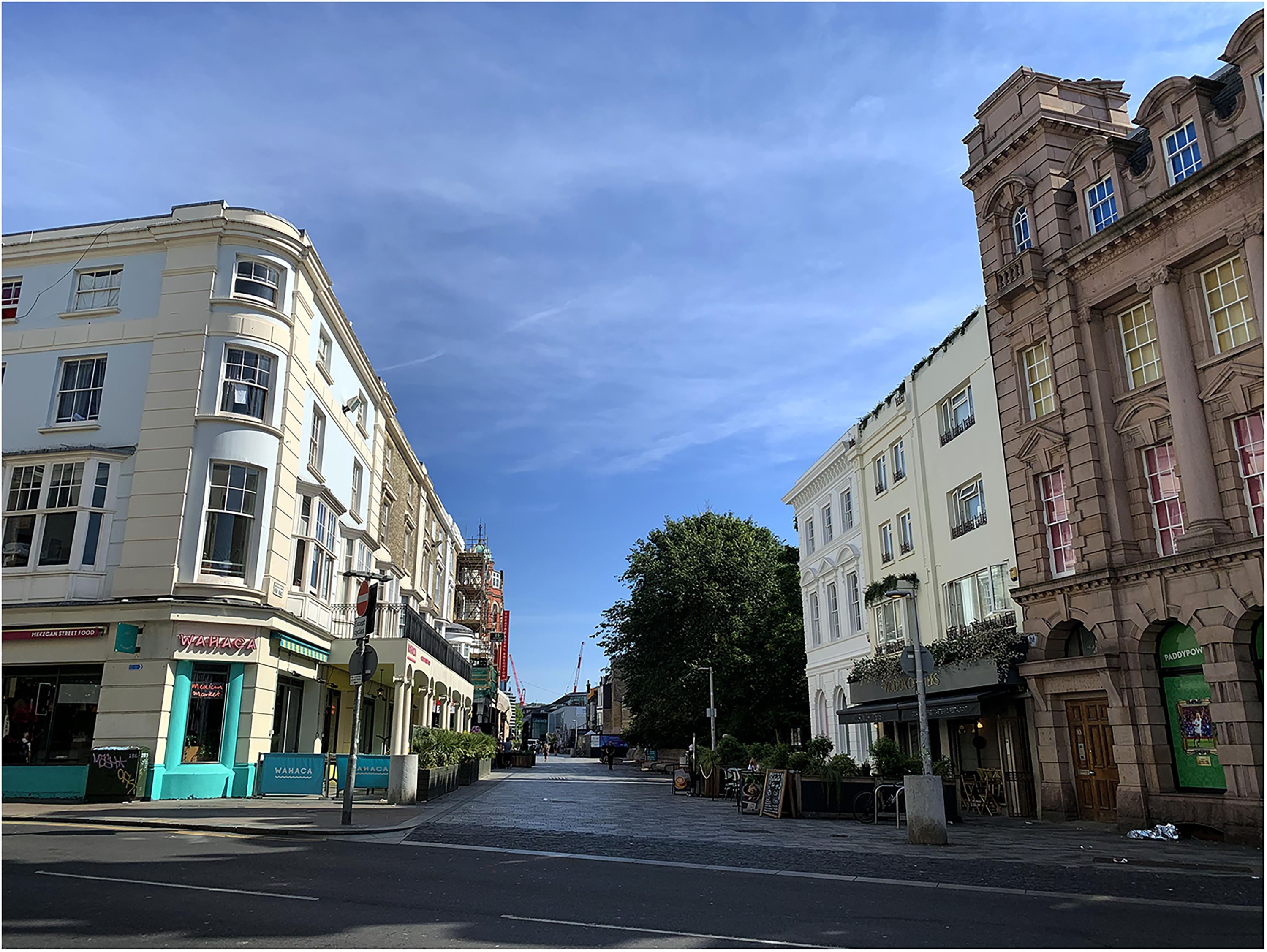
The junction of New road and North street, Brighton. Here William Attree's gig overturned in October 1807. A gig is a lightweight two-wheeled carriage pulled by a single horse. Attree sustained an ankle injury requiring immediate amputation by Mr Bond. It is likely that a tourniquet was swiftly applied and the patient transferred to Ship street for the procedure. Construction of the New road began in 1805. Photo by Carl Fernandes July 2022.
It is unclear exactly how Attree spent his military years and this information would be illuminating in terms of understanding the life of a serving surgeon with disability. In early 1809 the London Gazette notes that he was promoted: ‘Second Assistant-Surgeon William Attree to be Assistant-Surgeon vice Barlow, Resigned Dated January 6 1809’. 10 It seems improbable that he served in the Peninsular war or at Waterloo. Certainly, his name is not included in the roll call for either. Despite serving in a regiment with horses, he would surely have struggled given the dreadful marches suffered by so many on these campaigns.
In the absence of any evidence, it seems likely that Attree remained in Southern England. He probably served at regimental or garrison hospitals of the day. Attree was placed on half pay on 1 March 1819, with the rank Assistant Surgeon and remaining a member of the OMD. 11
Surgical career in Brighton
In 1826 Attree was noted as surgeon to the Brighton Dispensary (established 1809).
12
Attree was appointed surgeon to the Sussex County Hospital at its foundation in 1828.
13
At that time the medical staff at the hospital were: Gibney, Blair, Yates (physicians) and Harry Blaker, Robert Taylor and William Attree (surgeons).
14
In 1829, a William Farr MRCS, surgeon to the Cancer and Scrofula Institution, Bloomsbury, London, dedicated his book ‘A Treatise on the Nature and Treatment of Scrofulous Diseases’ to Attree.
15
In this book, Farr describes possessing ‘five-and-twenty years’’ experience of scrofula and, therefore, appears not to be the famous English epidemiologist William Farr (1807–1883). The preface offers the following dedication, hinting that Attree's royal appointment was the highest among many titles: ‘To William Attree, Esq.
Surgeon Extraordinary to the King,
&c. &c. &c
Battery House, Brighton.
My dear Sir.
My late respected friend and instructor, Mr Cline, in addition to many other acts of kindness, permitted me to prefix his distinguished name to my former editions of this Treatise; and I feel assured that he would not have conferred such an honor upon it, had not the practice which it advocates, met with his entire approval. In consequence, however, of his lamented demise, there is a blank space left in my third edition, which you have kindly consented to supply with your name.
You, my dear Sir, have seen more of the treatment which I recommend, than any other practitioner with whom i am acquainted; you, therefore, are better qualified to testify to its success, and to judge of its advantages : this circumstance, conjointly with the high sense I entertain of your professional character and private worth, has induced me to offer to your protection my present edition, which will be indebted to you alone for going forth to the world, under favorable auspices which attended its predecessors.
I am truly happy in this public opportunity of declaring to you how much I am,
My dear Sir,
Your obliged and grateful servant,
W. FARR’ 15
The reference above to Henry Cline (1750–1827), surgeon to St Thomas’ Hospital, is a poignant one. Henry Cline (junior, 1781–1820) served as dresser to his father, succeeded him at St Thomas’ as lecturer in anatomy and surgery before being appointed surgeon in 1812.
5
He tragically died of pulmonary tuberculosis at his father's house in Lincoln's Inn Fields, Holborn.
5
In this book, some words from the pen of Attree can be found in relation to Farr's treatment: ‘A Mr W., an artist, aged thirty-four, sent for me [Attree]; I prescribed Mr Farr's alkali ; in three days after I first saw him the abscess burst near the second lumber [sic] vertebra ; it discharged a quart that day, the next day a pint, for the two or three following days it was somewhat less, and gradually diminished, until at the end of a month the discharge entirely ceased’.
15
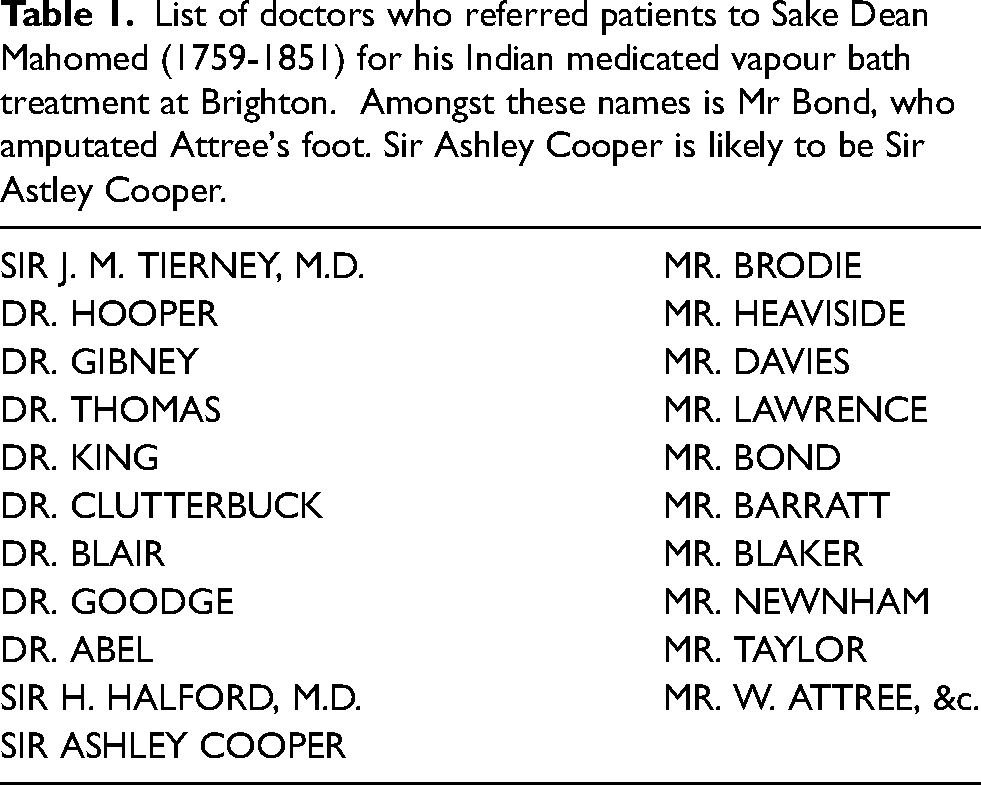
It is unclear exactly when Attree was appointed to George IV. In 1831 he became surgeon extraordinary to William IV's establishment at Brighton. 16 In the same year (1831) he was also a surgeon to a private asylum in Ringmer (near Lewes, Sussex) with seven patients. 17 This was in conjunction with William King M.D. (1786–1865), physician and first president of the Brighton and Sussex Medico-Chirurgical Society in 1847. 17 In 1835 Attree was a signatory to a declaration that ‘Ardent Spirits are not to be regarded as a nourishing article of diet; that the habitual use of them is a principal cause of disease, poverty, and misery; and that the disuse of them, except for medicinal purposes, would powerfully contribute to improve the health and comfort of the community’. 18 This was signed by ‘all the Medical Officers of the County Hospital, of the Dispensary, and the Parish Surgeons’ in Brighton, including William King. 18 In 1838 Attree was recorded as having referred patients to Sake Dean Mahomed (1759–1851) for his Indian medicated vapour bath treatment. 19 This list was published by Sake Dean in 1838 and includes Mr Bond who undertook Attree's amputation (see Table 1).
List of doctors who referred patients to Sake Dean Mahomed (1759-1851) for his Indian medicated vapour bath treatment at Brighton. Amongst these names is Mr Bond, who amputated Attree's foot. Sir Ashley Cooper is likely to be Sir Astley Cooper.
In 1839 Attree was recorded applying again for the post of consulting surgeon to the Brighton Dispensary. The precise reasons for his post-script to the letter are lost in time, but one possibility is that his disability made it harder for him to visit governors at the dispensary and at their homes on foot: ‘TO THE GOVERNERS OF THE BRIGHTON DISPENSARY.
My Lords, Ladies and GENTLEMEN. On the suggestion of several of your Committee of Governors and at the request of many active Friends of this excellent Charity, I beg to offer myself as a Candidate to fill the Office of Consulting Surgeon - an appointment which the Special Meeting of yesterday determined on making. I deem it necessary to state for the information of those Governors to whom I am not personally known, that I have practised as Consulting Surgeon in Brighton for the last 20 years : and was for many years one of the Surgeons to your Dispensary : and one of the Surgeons to the County Hospital, from its opening until the end of the year 1828, when ill health compelled me reluctantly to retire. If elected to the honourable appointment for which I now solicit your Votes and Interests, I pledge myself zealously and faithfully to perform the duties of Consulting Surgeon, and to the utmost of my ability to promote the welfare and general interest of your valuable Institution.
I have the honor to be,
My Lords, ladies, and Gentlemen
Your most obedient humble Servant,
WILLIAM ATTREE
West Hill Lodge 21st June 1839
P.S. – As I cannot wait on every Governor of the Institution, I trust I shall not be considered wanting in respect, or sustain any disadvantage, by not making a personal canvass [sic]’ 20
Death
His published obituary simply states: ‘On the 22d inst. at his residence, Sudbury Park, near Harrow, William Attree, Esq. R.H.A. F.R.C.S. &c. late of West Hill Lodge, Brighton in the 67th year of his age’. 21 It is of note that immediately beside Attree's obituary is the name of another Brighton Surgeon, Harry Blaker. Blaker's entry reads: ‘on the 23d inst. at his residence, 33, West Street, Brighton, Harry Blaker, Esq. surgeon, aet. 61’. 21 Attree and Blaker died the year before the founding of the Brighton and Sussex Medico-Chirurgical Society. Neither is, therefore, included in the society records, however it is clear that they must have been colleagues to many founding members.
A posthumous marble bust of William Attree was exhibited at the Royal Academy in 1847. 22 The fate of his bust is unknown.
Discussion
William Attree came from an influential Brighton family and studied at St Thomas’ Hospital, London. The Weekes family letters offer invaluable insight into his world there. Attree comes across as a fun-loving, care free and popular individual at medical school. Sometimes not the most diligent pupil, he was a keen collector of specimens (as was typical of medical students of the day). Attree appears to have been of a sensitive disposition, for example, feeling uncomfortable at a post-mortem examination. This, however, was not uncommon for medical students. Indeed, Hampton Weekes himself describes the same phenomenon in the operating theatre: ‘As to fainting I have entirely done that away, I take no Brandy nor any thing else now, but at ye 4 or 5 last operations there has been 2, 3, 4, & more young fellows who are uncommonly sick obliged to leave the Theatre…’,
5
Attree's spasms persisted between at least November 1801 and May 1802. By July 1802 he had recovered. The index to the Weekes letters records that Attree was suffering from ‘infection caught in the dissecting room’. 5 That is possible, although the letters confirm there was no recollection of trauma or sign of injury. Swelling, erythema, pus, fever, etc. are not stated in the letters and cardinal signs of infection would surely have been swiftly reported by medical students. Muscular spasms are also an unlikely consequence of infection. Finally, Mr Cooper was eventually unconvinced of that cause. Attree's condition was severe enough for him to be bedbound, to take unpleasant ‘physic’, a nurse summoned and twice declared to be out of danger (presumably, of death). With some licence, we suggest that Attree's violent spasms actually comprised episodes of voluntary muscle movement in response to severe shooting pains. If true, shooting pains in his upper limb (‘chest’, ‘arm’, ‘hand’ may not be entirely precise), their onset without trigger, duration of months, treatment failure and apparent complete resolution could be consistent with a diagnosis of brachial neuritis. This does not account for past chest ‘spasms’ (possibly musculoskeletal pain) or his initial headache, but those symptoms may have been unrelated.
Despite recovery, Attree's life was soon turned upside down: his wife died in labour and he underwent urgent amputation. The fear of gangrene and pain associated with these events in the era before antibiotics and anaesthetic cannot be underestimated. He was, however, able to continue his surgical career, joining the army no less. Attree's duties serving with the Royal Horse Artillery during the period of the Napoleonic wars are unknown. It is likely that his role was that of surgeon to a regimental or garrison hospital, probably at Hastings. The account presented here reveals that despite his amputation, Attree successfully completed his military and surgical careers, including appointments to two Kings. His achievements may have been facilitated by the fact that the evidence points to an amputation just above the ankle, that is, one perhaps more amenable to a prosthesis, horse riding and being seated while operating.
Conclusion
While the Attree family name is remembered in association with Brighton's history, William is not. His biography is not described elsewhere beyond a brief mention in Plarr's lives of the fellows of the Royal College of Surgeons of England. Today, the passage of time has almost completely effaced Attree's epitaph from his tombstone at Ditchling. This article serves to remember Attree as part of a growing understanding of the lives of Brighton's past surgeons23,24 and physicians.25–28 Attree was a convivial medical student who overcame considerable misfortune in life to pursue a career as a surgeon and soldier. The medical literature appears to lack a history of nineteenth century doctors with physical disability or surgeons as patients. The life of William Attree goes a small way towards developing that field of enquiry.
Footnotes
Acknowledgements
The authors thank Dr John Ford of the Worshipful Society of Apothecaries and Dr Carl Fernandes of Brighton and Sussex Medical School.
Declaration of conflicting interests
The author(s) declared no potential conflicts of interest with respect to the research, authorship, and/or publication of this article.
Funding
The author(s) received no financial support for the research, authorship, and/or publication of this article.
