




Abstract
Dr Agnes Savill was the UK's first female consultant dermatologist with a career journey which was, by any standards, extraordinary. She was awarded her MA in 1893 making her the first female graduate from St Andrews University. She then trained as a doctor in Glasgow in the earliest cohort of women granted the opportunity to study medicine. Following qualification, and during her early professional years, she maintained an involvement in the women's suffrage movement by publicly indicting the government for its brutal treatment of women suffrage prisoners in the ‘Votes for Women’ campaign. During World War 1 Dr Agnes Savill was one of a handful of women doctors who served at the Scottish Women's Hospital, a combat hospital in France. Dr Savill worked as the radiologist for the unit and developed expertise in the radiographic appearances of gas gangrene. After the war she returned to her dermatology practice, becoming the UK's leading expert in disorders of the hair and scalp and publishing widely on the subject. However, Agnes Savill had interests which extended into the humanities, particularly music. She was advocate for the use of music as treatment for psychological and physical disorders and wrote a book on this subject which helped promote music therapy as a para-clinical discipline. In her latter years she became fascinated by the history of classical antiquity and, at the age of 79, published a biography of Alexander the Great, an account praised for being both lucid and authoritative. Agnes Savill was a remarkable pioneering doctor: she was a ground-breaking dermatologist, she fought for women's rights and served in France as a combat doctor. Her work in music therapy and her writings on ancient history brought acclaim beyond the realm of medicine. Dr Agnes Savill is Dermatology's Renaissance Woman.
Keywords
Pioneering student
Agnes Forbes Blackadder, the future Dr Agnes Savill, was born on 4th December 1875 in Dundee. Her father, Robert Blackadder, was a civil engineer and architect with a practice in that city. Robert had seven children - two girls and five boys - Agnes being the elder daughter (Figure 1). The Blackadder family embodied those traits characteristic of the Victorian middle class, as Agnes later described: ‘Duty, truthfulness and work were the three main guiding principles inculcated by our hard and just Scottish upbringing….. lessons starting at 7.30, even on dark winter mornings, and not finished till school preparation study had been ‘heard’ by our father in the late evening.
1
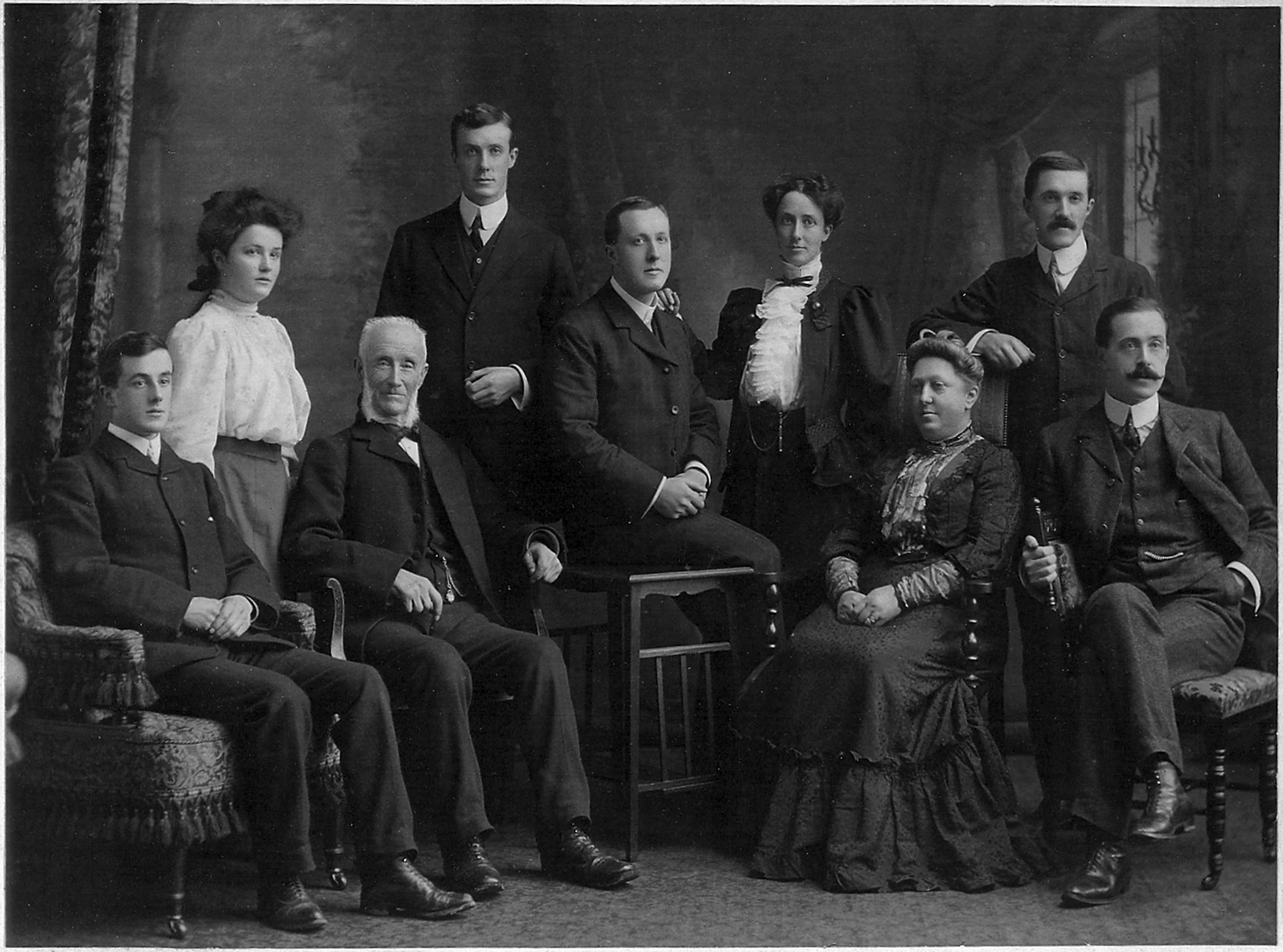
Agnes Blackadder and her family c1895. Agnes is standing second from the right. She was a pioneer of women's education being, in 1893, the first female graduate of St Andrews University, Scotland.
Agnes was educated at Dundee High School where she acquired a reputation for academic brilliance. Girls at this time were raised without expectations to aspire to a higher education, however Agnes was set on studying at university. Female exclusion from the Scottish universities was being challenged in the 1880s and the Universities (Scotland) Act of 1889 formally opened higher education to women students. In 1893 Agnes Blackadder, then aged 17, was in the first cohort of female students to matriculate at the University of St Andrews. Over the next two years she attended lectures at University College Dundee, a constituent college of St Andrews University. Her academic distinction led Agnes to graduate one year ahead of her peers and in March 1895 she was awarded a Master of Arts degree, thus becoming the first female graduate of St Andrews University.
Agnes Blackadder wanted to be a doctor and with characteristic determination ignored the prevailing discrimination against women in medicine. In 1869, seven women had enrolled as medical students at the University of Edinburgh only to be bullied out of the medical school by the (male) students and senior hospital clinicians. Their exclusion was justified on the grounds that it was ‘unnatural’ for women to study medicine. In 1890 a medical course for women was established at Queen Margaret College in Glasgow (QMC). One year after it had awarded its first medical degree to a woman (in 1894) QMC admitted Agnes Blackadder. Once again, she excelled at her studies and graduated MB ChB in July 1898. In 1904 Dr Agnes Blackadder became a Member of the Royal College of Physicians of Ireland, being only the sixth woman to be appointed MRCPI.
Marriage to Dr. Thomas Savill
Dr Agnes Blackadder's first clinical jobs were as House Officer at the Maternity Hospital, Glasgow and then House Officer at the Belgrave Hospital for Children in London. She was subsequently appointed medical officer to the Toxteth Workhouse in Liverpool. In 1901 Agnes Blackadder was awarded her MD from Glasgow University and in the same year married Dr Thomas Savill, a general physician with interests in neurology and dermatology, and moved to London. Dr Thomas Savill was on the staff of St John's Hospital for Diseases of the Skin in London and there is little doubt that Thomas Savill's clinical work in skin disease directed Agnes to pursue dermatology: she joined her husband on the staff at St John's in 1905. At St John's she began a life-long interest in the emerging field of electro-therapeutics, which encompassed radiology, radiotherapy and the application of electricity in the management of disease.
In 1905 Thomas Savill published a highly successful medical textbook, A System of Clinical Medicine, which ran to 14 editions. Agnes was involved with the book from its inception, a collaboration which Thomas Savill acknowledged in the first edition's introduction: Finally, it is difficult for me to express in measured terms my indebtedness to my wife, who has assisted me in the elaboration of this work …. her companionship and encouragement have made many rough places smooth and have often transformed what at times seemed to be a laborious and interminable task into a pastime.
2
Tragically, Dr. Thomas Savill was killed in a riding accident in 1910. The following year Agnes Savill left St John's Hospital. She never remarried. Agnes Savill took over the editorship of the now re-named Savill‘s System of Clinical Medicine and was solely responsible for successive editions until the ninth in 1933, when she was joined by EC Warner. She continued as co-editor and as the author of the chapter on dermatology until the eleventh edition in 1939.
Dr. Agnes Savill and the women's suffrage movement
Despite her bereavement Agnes Savill continued to work and to maintain her engagement with women's rights and the fight against social injustices, the most egregious of which was the suppression of women's entitlement to vote in political elections. Women's suffrage organisations fought hard to overturn the bar to vote in parliamentary elections but rejection first by the Conservative government of 1902–1906 and then the Liberal administration of 1906–1916 precipitated a response from the Women's Social and Political Union (WSPU), a suffrage movement committed to militant action. The WSPU's leader, Mrs Emmeline Pankhurst, organised a series of violent protests leading to the repeated imprisonment of herself and of a group of female agitators, the so-called ‘Suffragettes’. As an extension of their protest, and to gain recognition as political prisoners, imprisoned women started hunger-striking in 1909. Under the direction of the Home Office the prison authorities initiated a policy of force-feeding. During the procedure the hunger striker was restrained on an upright chair, her neck extended backwards over the chair's back by a prison warder and a rubber feeding tube was passed forcibly, either through the mouth or the nose (Figure 2).
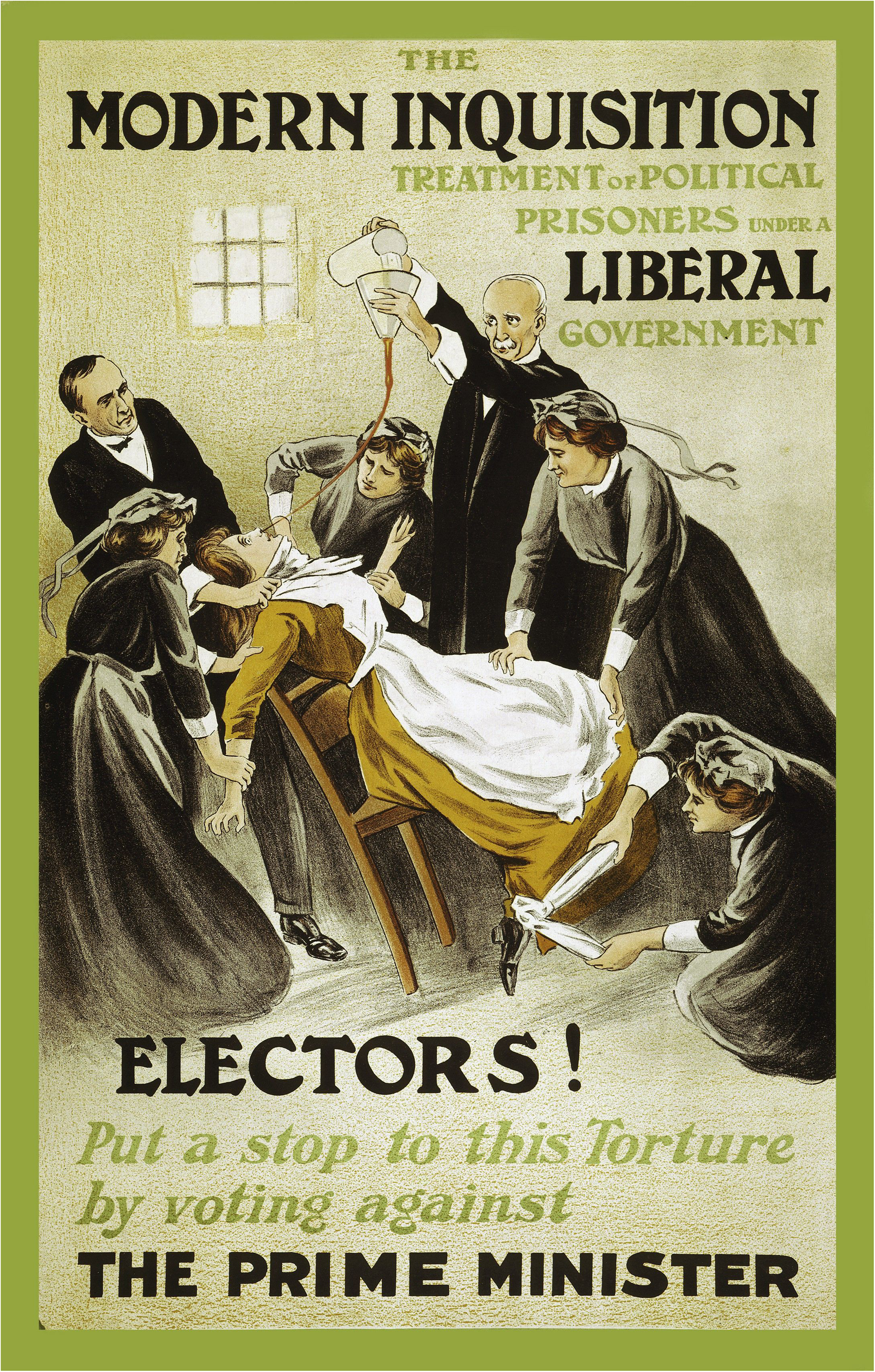
A 1910 propaganda poster produced by the Women’s Social and Political Union urging the electorate to vote against the Liberal government. The government, led by Lloyd George (who is pouring in the feed), enacted a brutal policy of force-feeding suffragette political prisoners.
Dr Agnes Savill was horrified by this example of state-endorsed torture perpetrated on individuals engaged in a legitimate political campaign. Recognising that her condemnation could be most effective as a doctor, Agnes Savill interviewed and examined suffragettes released from prison, publishing her findings in an observational study, ‘The Forcible Feeding of Suffrage Prisoners’, in The Lancet in August 1912. 3 The other authors were Charles Mansell Moulin, a surgeon and pro-suffrage supporter, and Sir Victor Horsley, a celebrated neurosurgeon and social reformer. Agnes Savill's paper reviewed the testament and examination findings of 90 women. Forcing the passage of a feeding tube in a resistant subject was extremely painful. The procedure caused contusions of the naso-pharyngeal mucosae and induced acute upper abdominal pain, reflux symptoms and vomiting. Palpitations, pre-syncope and collapse were common during the procedure. Acute and long-term psychological sequelae included fatigue, disturbed sleep, nightmares, loss of memory and hyperacusis: all symptoms now recognised as features of post-traumatic stress disorder (PTSD).
Agnes Savill's Lancet paper alerted the medical profession to the iniquity of forcible feeding and explicitly indicted Mr Reginald McKenna, the Home Secretary. Her paper also condemned the participation of prison doctors, accusing them of serious ethical violations. Following its publication there was widespread censure of the practice and in 1913 it was discontinued. In 1918 the government gave women over the age of 30 the right to vote, but it took another 10 years before legislation was passed allowing women over the age of 21 equal voting rights with men.
War doctor and the radiology of gas gangrene
On the day war was declared on August 4th 1914, Agnes Savill recorded how she held in her hand a ticket for a holiday in Germany. Abandoning her vacation she instead travelled abroad as a volunteer doctor to serve in France with the newly founded Scottish Women's Hospital (SWH). This organisation was set up by Dr Elsie Inglis, a Scottish physician, who conceived the idea of establishing combat hospitals staffed exclusively by women. Having been rejected by the British medical establishment, the SWH offered its services to the military authorities in France and were provided with a derelict 13th century Cistercian abbey, the Abbey of Royaumont, for use as a hospital. Royaumont lies 90 miles north of Paris and during the conflict was just 30 miles from the Western Front. Women's Suffrage Societies supplied medical equipment and financial support and by January 1915 a small team of women doctors had started work. 4 The lead clinician was a surgeon, Frances Ivens, the other senior doctors were Ruth Nicholson and Winifred Ross, both surgeons, and Agnes Savill, who took on the role of radiologist (Figure 3). Agnes Savill's interest in electro-therapeutics gave her an understanding of the principles of radiology and, showing remarkable resourcefulness, she developed the technical expertise to provide the hospital's diagnostic imaging service.
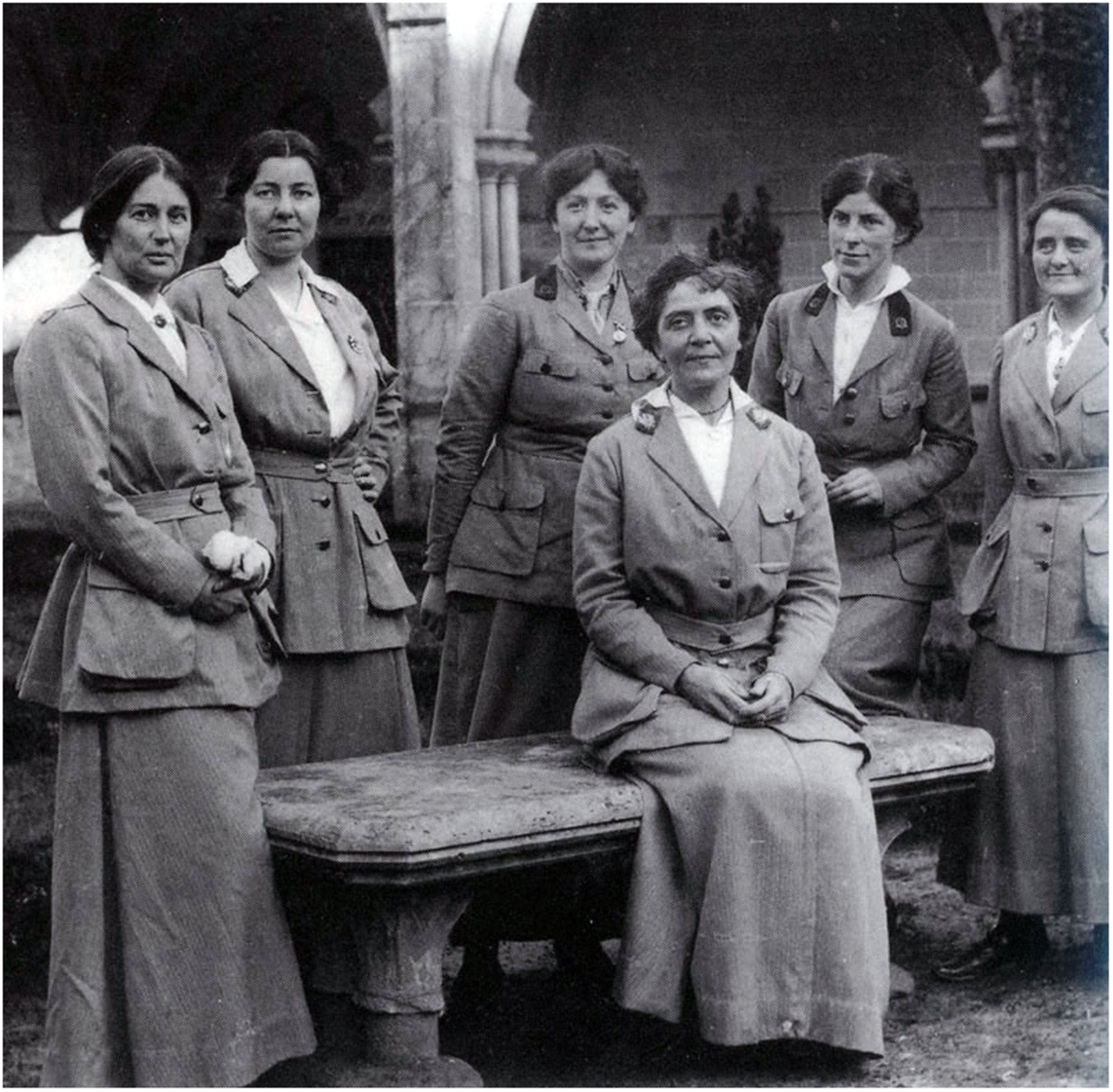
Doctors of the Scottish Women’s Hospital at the Abbey of Royaumont, France c1916. The 600-bed combat hospital was situated 30 miles from the western front and was staffed solely by women. It was in continuous use from 1915 to 1918. The chief, Frances Ivens (seated), was a surgeon. Agnes Savill (far left) worked as the hospital's radiologist.
Eventually the Scottish Women's Hospital at Royaumont contained 600 beds. From its inception in 1915 it received severe casualties and was heavily involved in the offensives of 1915, the Somme battles of 1916, and the final struggles of 1918. In all 10,861 patients were admitted to Royaumont, most were soldiers from the French and French Colonial Armies. 4
As well as the day-to-day work of treating combat injuries, the doctors at Royaumont made a significant contribution to the management of gas gangrene, a common complication of gun shot and shrapnel wounds in the pre-antibiotic era. Gangrene was particularly common on the battle fields of the Western Front because the heavily manured soil contained high concentrations of Clostridium perfringens, the causative bacteria. High-energy penetrating wounds inoculated the organism deep into devitalised muscle putting all combat wounds at risk of infection, a threat treated with surgical debridement or amputation. Studies published by the women of Royaumont showed how co-operation between physician, surgeon, bacteriologist and radiologist could improve the management of gas gangrene. Agnes Savill's examination of radiographs led her to the observation that specific patterns of shadowing had prognostic value in gas gangrene. In her paper, X-ray appearances in gas gangrene, published in October 1916, Agnes Savill described three distinct patterns produced by oedema and gas formation.
5
In particular, she identified the striations present within soft tissue shadows which indicate severe infection and a poor prognosis: … dark lines of gas infiltration map out the individual muscle fibres in such a definite manner that the plate resembles a drawing of the muscles of a limb.
5
Reflecting on her experiences treating soldiers with gas gangrene Agnes Savill wrote: Dramatic in the suddenness of its onset, the rapidity of its progress, and the repulsiveness of its too frequently fatal outcome, it has reaped a cruel harvest of our young and vigorous manhood.
5
She continued to work at the Scottish Women's Hospital at Royaumont until the end of the war. Although there was initial scepticism about women doctors in combat zones, Royaumont proved to be highly effective and, by the end of the war, was recognised as one of the finest hospitals serving the front line.
The therapeutic effects of music
Once the armistice was declared Dr Savill returned to full-time dermatology and resumed her private practice and positions at the London Skin Hospital in Fitzroy Square and the South London Hospital for Women. In 1923 she published a book, ‘Music, Health and Character’, in which she explored the psychological and physical benefits of music.
6
This publication is remarkable for two reasons: firstly, Agnes Savill was not especially ‘musical’ and only came to appreciate music in her thirties; secondly, her discussion of ‘medicinal’ music predates, by some years, the emergence of music therapy as a bona fide therapeutic tool. In ‘Music, Health and Character’ Agnes Savill's outlines her ideas on the transformative power of music. Her observations include the astonishing effect of music on the rehabilitation of wounded servicemen. However it is the candid account of her own response to music which is especially fascinating. Having been bored by classical music during her youth, Agnes Savill's musical agnosticism was reversed when she attended a piano recital in 1913. At this epiphany she found her head and heart captivated by the power of Chopin's etudes. She subsequently describes her musical journey and, as the story unfolds, Agnes Savill describes the therapeutic effects of her new-found appreciation of music. It is clear from the autobiographical fragments in her book that a period of depression, perhaps precipitated by her bereavement and war service, was to a large extent ameliorated by immersion in music. The tone of her writing is earnest but not forbidding, and is full of zeal for the use of music as a psychotherapeutic tool: Under the spell of great music a man finds that the obsession of sordid cares and anxiety fades into the background…. He loses his troubled individual self in a larger whole and emerges strengthened, capable to cope with, and to overcome, what had previously threatened to engulf him.
7
Beyond its function as a psychological balm, Agnes Savill wrote about the potential for music to enrich every person's inner life, an all-embracing notion which is discussed throughout the book and represents the ‘Character’ in its title. Of all the arts, she believed that music possesses a unique emotional force capable of communicating with man's spirit and influencing his mind and, indeed, his personality: Music can harmonize the warring faculties and guide into one channel the scattered aims and conflicting impulses of the undisciplined personality. More subtly, more rapidly, more completely than any other agent which produces intense or high emotion, music can bring about a complete change in the mental attitude.
8
Towards the end of the book Agnes sets out her thesis that music should be investigated formally for its positive, empirical actions: As music gives rise to emotion, and emotion is proved to be accompanied by definite physical changes, it follows that a scientific study of this subject – the physical effects of music – will yield knowledge profitable both to the invalid and the normal man.
9
Agnes Savill promoted music and supported musicians throughout her long life. Her championship of music as therapy led to the foundation of the Council for Music in Hospitals and, subsequently, Music in Hospitals and Care (https://mihc.org.uk).
Britain's first female dermatologist
In the 1920s much dermatological disease was managed by general physicians, while skin cancer was treated by general surgeons. Nonetheless, the place of skin specialists was gaining credibility and the British Association of Dermatologists (BAD) was founded in 1920 to support the work of dermatologists and to promote improvements in the management of skin disease. Dr Savill was Britain's first woman Dermatologist and the first female member of the BAD.
As well as practice in general dermatology Agnes Savill developed expertise in the management of hair and scalp diseases. The development of subspecialty expertise has become an accepted trend in contemporary dermatology, however scalp disorders remain an unusual field of specialism. In the 1920s Agnes Savill became the doyenne of hair and scalp dermatology and championed the needs of this group of patients. She recognised that hair loss syndromes are commonly dismissed as inconsequential, however ‘to the sufferer they seem far from trivial; to women they may indeed colour all life with tragedy.’
Cases were referred to Agnes Savill from colleagues across the UK providing her with a unique collection of patients and an extensive archive of clinical material (Figure 4). Agnes Savill presented her findings in a series of papers and, ultimately, in a monograph, ‘The Hair and Scalp’, first published in 1935. 10 At the time, this was the only English textbook on the subject and represents a distillation of her clinical experience. She writes with authority and great clarity, generously acknowledging others working in the field, most notably the French dermatologist Prof Raymond Sabouraud. The book was highly successful and widely read by dermatologists in the English-speaking world; the fifth and last edition was published in 1962.
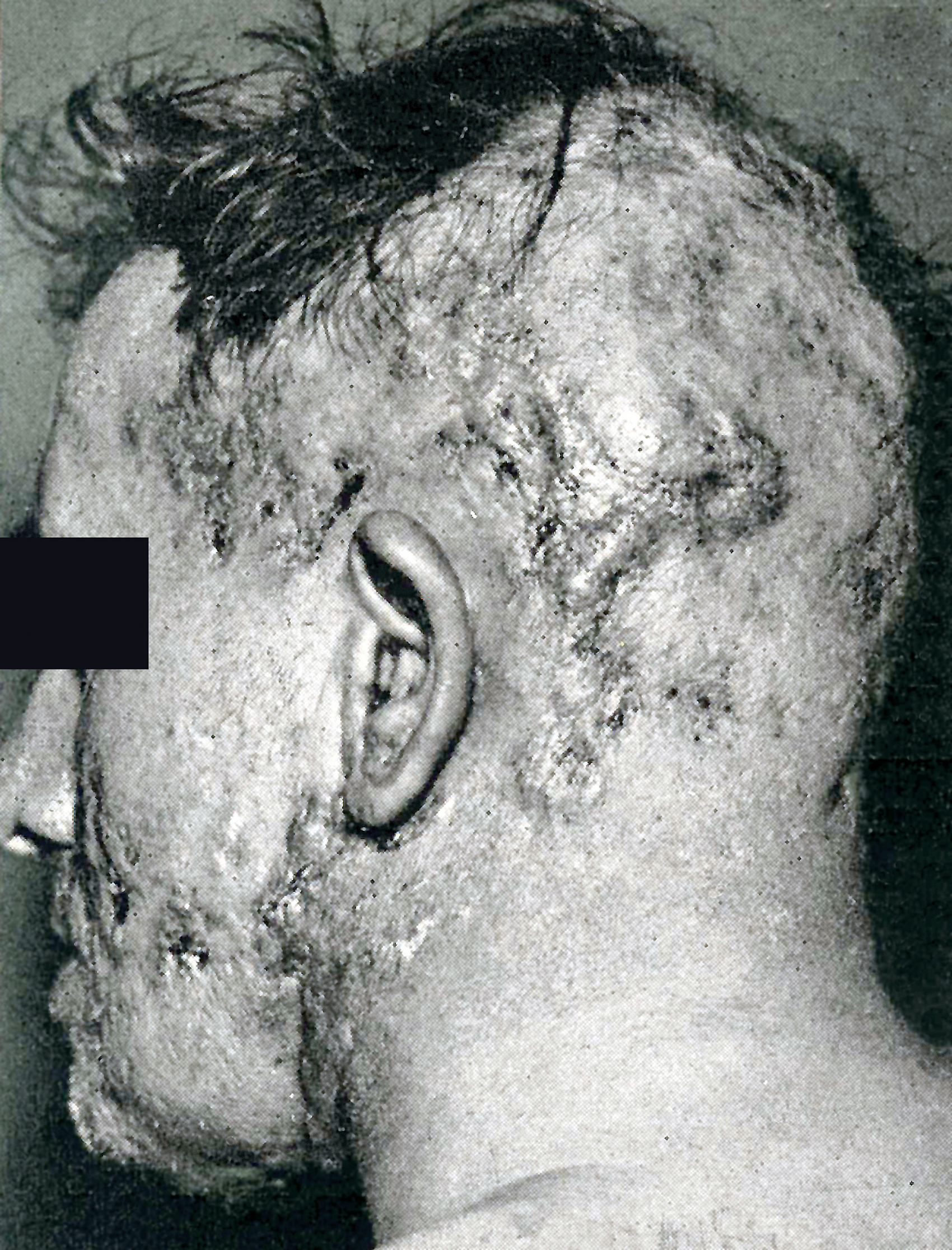
Agnes Savill was the UK's first female dermatologist and became an expert in diseases of the scalp. This is an illustration from her book, ‘The Hair and Scalp’, first published in 1935.
Alexander the Great
Agnes Savill’s professional activity as a dermatologist continued into her seventies and eighties. She also retained broad cultural interests, in particular a fascination for the classical world. In 1955, at the age of seventy-nine, Agnes published a biography of Alexander the Great. This work, aimed at the general reader, is a fusion of ancient and modern writings on Alexander's life and, as Agnes commented in the introduction, was written from the perspective of an admiring apologist: All history is coloured by the temperament of the individual who selects the facts which to him appear relevant or important. No doubt, I am no exception.
11
‘Alexander the Great and his Time’ was an immediate success and received enthusiastic reviews from distinguished classical scholars. It became a standard reference work on the subject and Agnes Savill was invited to provide related articles for Encyclopaedia Britannica. She published the third and last edition of ‘Alexander the Great and his Time’ when she was 83. At this age she was still seeing patients but recouping her energy by spending weekends in a nursing home. Agnes Savill died in London in 1964 at the age of 88 years.
Conclusion
Dr. Agnes Savill was in the vanguard which established the right for women to become doctors. She and her peers overcame considerable resistance to break into the male stronghold of British medicine and to succeed in a professionally hostile environment. Yet Agnes Savill was not motivated by an urge to execute the demands of a feminist agenda. The diversity of her achievements were a product of a vigorous intellectual curiosity and the desire to engage with important contemporary issues. Her obituary, written by Dr Arthur Rook, enumerates Dr Savill’s exceptional accomplishments but makes it clear that, above all, she was devoted to the practice of medicine: She was primarily concerned with the practical problems of diagnosis and treatment, [however] in assessing the response to the procedures she employed she failed to take into account the influence on her patients of her colourful personality and her enthusiasm.
12
Her status as the UK's first female dermatologist has placed Dr Savill in the pantheon of British medicine, while her eminence in hair and scalp dermatology brought her international renown. Beyond these remarkable, professional attainments her writings on music and classical civilisation mark Agnes Savill as a true Renaissance woman. She is honoured twice by the University of St Andrews, firstly by the Agnes Blackadder Hall of Residence and secondly in the Agnes Savill Club.
Footnotes
Acknowledgements
I am grateful to Rachel Hart, senior archivist at the University of St Andrews, for her assistance in researching the life of Dr Agnes Savill.
Declaration of conflicting interests
The author(s) declared no potential conflicts of interest with respect to the research, authorship, and/or publication of this article.
Funding
The author(s) received no financial support for the research, authorship, and/or publication of this article.
