




Abstract
This biographical essay will provide historical insights about Dr Carl Bodon who performed one of the first successful intracardiac injections of adrenaline to a patient and made important contributions to the understanding of cardiac diseases and women's health. Dr Bodon's biography reveals the story of a medical doctor who lived during tumultuous times between two world wars and ultimately died in the Holocaust. His story sheds light on forgotten contributors to the medical field and its practices.
Keywords
Introduction
A few weeks ago, my daughter Eva, who is in medical school, told me that she was writing a paper on cyanosis. I told her about her great-grand uncle Carl Bodon who wrote an article on the subject for the Lancet in March 1923. 1 Indeed, on May 29, 1922, he had performed one of the first successful intracardiac injections of adrenaline. His life was both fructuous in a humanitarian sense, and personally tragic as he and his family had to endure the atrocities during the Holocaust.
On June 4, 1867, Carl Bodon, was born in the small village of Brunóc, Ausria-Hungary (now Brunovce, Slovakia—20 miles South of Trenčín). In 1892, along with his siblings and his father Julius, he changed his surname from Weinberger to Bodon. Carl Bodon, unlike his ten siblings, was the only one who also changed his first name; his birth name was Izidor. (Note, in this article the names of Károly, Carl, Charles, Karol refer to the same person as Dr Bodon interchanged his first name in accord with the language of the publications.)
Historical background
In 1787, Austro-Hungarian Emperor Joseph II issued a decree that Jews had to change their traditional Hebrew names to German names. Bodon's great-grandfather's birth name was Israel Ben Izsák and it was this decree that led my ancestors to change their former Hebrew identities to Weinberger, a name with Germanic roots.
Furthermore, in 1867 with the Austro-Hungarian Compromise, Emperor Franz Joseph I, following multiple attempts toward independence by Hungary and fearing uprisings, allowed the restoration of the constitution of the Kingdom of Hungary, known as the Magyarization. From then until the end of World War I, many Hungarians changed their names from Germanic origins to Hungarian roots. My family adopted the name Bodon since they originated from the small village, Bodonlaka (now Bodovce). The 1869 Hungarian Census indicates that there were 24 houses in Bodonlaka, which included two Jewish families: The Hollenders and the Weinbergers.
Károly bodon‘s background
Julius and Anna Delikat raised their eleven children in Érsekújvár (now Nové Zámky). It was a small agrarian Hungarian town of about 10,000 people (1900). Julius and Anna were innkeepers on Komaromi street; the main street of the town, that was bookend by a church and a synagogue. In the past, Jews had not been allowed to live in the city. That changed in 1840 when the Hungarian Parliament accepted Jewish settlement in Érsekújvár to promote trade and commerce; our family moved to Érsekújvár between 1869 and 1876. At that time, the Jewish population was about 1500 and in 1860, a synagogue was erected to serve its community. 2 The Weinbergers’ children attended a Jewish school where the instruction was done in German and Hungarian.
In 1892, at 25 years of age, Izidor felt that changing his name would support his medical career, as well as help his brother Max (my grandfather) pursue a degree at the Budapest Veterinarian Academy. That year, as Károly Bodon, Izidor graduated from Charles University School of Medicine (lékařská fakulta Univerzity Karlovy) in Prague, a renowned medical school in Europe
My father, Ján Bodon told me many stories about his uncle and the injection of adrenaline but his most vivid memories were from when Károly visited his brother in Kassa (now Košice, Slovakia). My grandfather rode a horse and buggy to the veterinarian clinic where he cared for his animal patients and automobiles were an unusual sight. Károly drove a convertable Mercedes the 170 miles that separated Budapest from Kassa, drawing many admiring glances and causing quite a commotion when he came to town with his American wife Dora (née Kent). Sometimes, my father visited Károly in Budapest where he was living in a luxurious apartment, now a hotel at 12 Revay Street. This would have been during the time when Károly Bodon performed the intracardiac procedure.
La Belle-Epoque
Prior to World War I, Károly Bodon achieved great success in his medical career as a Professor at Semmelweis Egyetem, the Budapest Medical School where he published many medical reports. Most notable among his publications is “A New Classification of Ectopic Pregnancies,” published in English in 1895. Women's health was still a vastly under-researched area at the end of the nineteenth century. Bodon began the article with harsh criticism of the previous research on extra-uterine pregnancies. He found the classifications inadequate and inconsistent: “studying the literature on the subject, I found quot capita, tot sensus, as many authors, as many classifications. This of course, shows the difficulty of settling the question. Experiences gained at the operating table are seldom of value in making out the nature of the case, because, in the hurry of the operation, it is often with these reports as, according to Goethe, it is with books, viz., we often find, not what is to be found, but what we wish to find.” 3
Bodon analyzed all the previous classifications of ectopic pregnancy, which were largely based on the anatomical findings. Importantly, he stressed the need for post-mortem analysis to include microscopic examination: “unfortunately the number of such minutes (post-mortem) exact records is very small.” 3 Such examination was, he felt, essential to advance research into ectopic pregnancies.
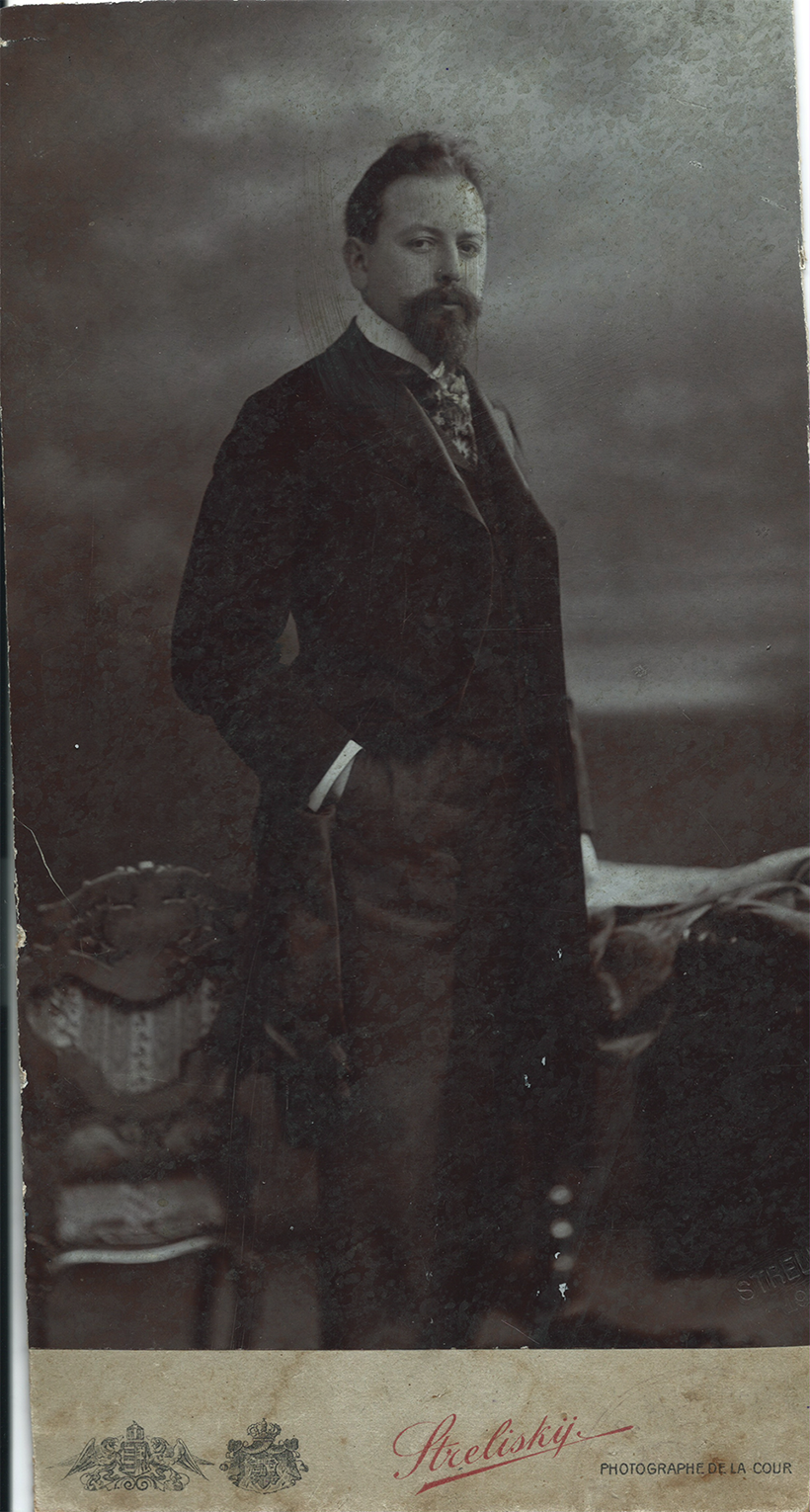 Note. Károly Bodon, 1909. (Personal family collection from Jean Bodon)
His concerns were not just with the disease though; he also showed a regard for holistic patient care. That same year, he wrote an evaluation of the Strasburg Hospital for Women (now Strasbourg France) expressing his uneasiness concerning the lack of compassion and care amongst the staff toward the patients: “[the hospital] is lacking that particular feeling of homeliness which is so prevalent in British hospitals, where everything and everybody is bright, cheerful, and contended.” 4 However, he did admire the hospital's aesthetics and the cleanliness of the buildings, particularly the small isolation building reserved for patients suffering from infectious diseases.
Bodon soon achieved national and international recognition. Due to his involvement in many diverse areas of medicine, and his dedication and talent, he was appointed as Royal Medical Advisor to the Austro-Hungarian Empire and General Consultant of Public Health for the state. In 1908, he was part of the organizing committee the Sixteenth International Congress of Medicine, to be held in Budapest the following year. Among the pressing medical issues discussed at the Congress the following year were tuberculosis, arteriosclerosis, syphilis, cancer and healthy lifestyles, as well as many presentations about diagnostics and surgical techniques. However, the entertainment, lavish parties and receptions with champagne at the royal palace in the presence of Archduke Joseph dominated the press coverage. In retrospect, the conference marked the end of the Belle-Epoque and the beginning of a long war of terror; there would only be one more international medical congress
5
before doctors and medicine were thrown dramatically into the theatre of war.
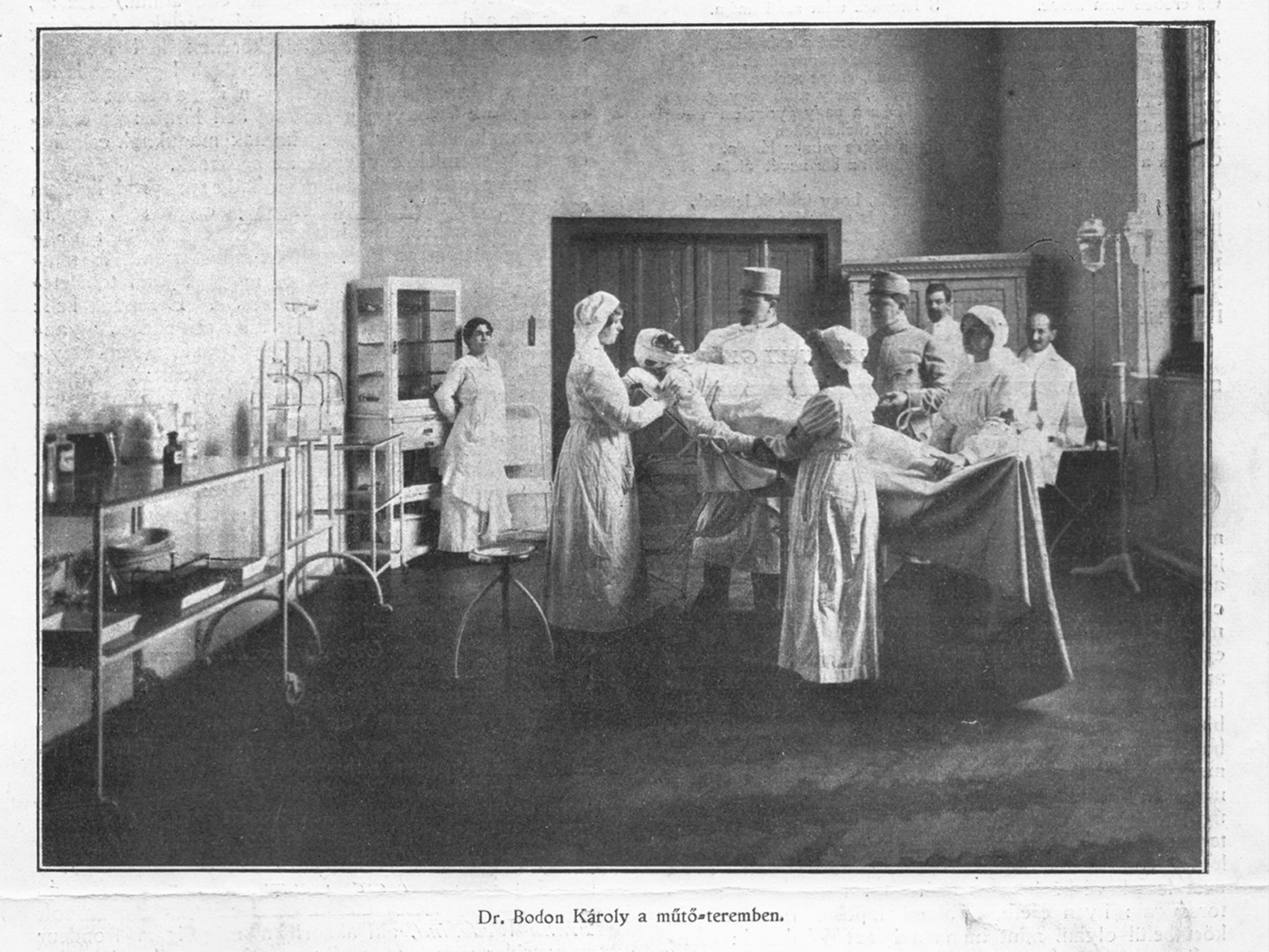 Note. Photos from a Budapest publication, Orszag Vilag, 1914. Photos illustrates Károly Bodon and colleagues assisting a patient. (Photos uncredited)
World War I
During the war, both my great uncle and my grandfather worked respectively as a medical surgeon and a veterinarian. Károly Bodon cared for wounded patients in a make shift hospital placed at the Budapest Art Gallery. As noted in a Budapest publication, “400 beds were placed in the building, another 40 beds were placed in the Museum of Fine Arts and 80 in the Skating Hall. The equipment was state-of-the-art and met all hygiene requirements. The wounded were cared for by a medical staff of five (Commander Dr Marcel Glaser, Chief Surgeon, Dr Károly Bodon, Royal Adviser and Chief Physician, Dr Lóránd Thaly, Chief Physician of Bethesda Hospital, Dr Dezsö Drexler, Retired Colonel and Dr Szántó) with countless professional and volunteer nurses hurried around them”. 6
In 1918, the war that had stopped in most of Europe continued in Hungary until 1921. Following the Treaty of Versailles and the collapse of the Austro-Hungarian Empire in 1919, Hungary lost two-thirds of its land area. The country was in turmoil and suffered many revolutions and coup d’états during that time period. Pogroms started to flare up again during the “White Terror,” a counter movement in opposition to the short lived Hungarian Soviet Republic. Jews and liberals became the scapegoats simply because some Jews had been leaders of this communist revolution. Nevertheless, Bodon resumed his teaching and research at the Budapest Medical School.
Intracardiac injection of adrenalin
On May 29, 1922, Bodon conducted a successful, lifesaving intracardiac injection of adrenalin to a patient of 56 years of age. 1 The patient was a fellow lodger in the building where Bodon lived. Bodon was called to him in the early hours of the morning and found him pale, sweaty, and frightened. He had frank pulmonary oedema with shortness of breath, audible crepitations and bloody, frothy expectorations; he also had chest pain, reported as a sensation of heavy pressure under his sternal bone, and cyanosis with extreme bluish pallor of the patients face and lips. Bodon commenced treatment with morphine for the pulmonary oedema. He then added the recognized stimulants of the day – injections of camphor oil, ether and caffeine – as intramuscular injections. When that failed to work, he attempted intravenous treatment with adrenalin and strophantin, a cardiac glycoside. Adrenalin was still a relatively new treatment option. It had been isolated in 1900 by the Japanese chemist, Jokichi Takamine, and developed as a therapeutic agent by Parke, Davis and Co Laboratories the following year. 7 In 1903, the surgeon George Crile had suggested its use in shock in experimental animals and three years later, as a potential resuscitation drug for cardiac arrest8,9 But intravenous injections were difficult, especially in a shocked patient and results were inconsistent. On this occasion, Bodon described the attempt as “impractical”, implying that he simply could not cannulate a suitable vein due to the shocked state of the patient.
The patient was deteriorating rapidly and by the time Bodon had acquired the necessary equipment for an intracardiac injection, the patient had arrested: “I considered him to be dead; there was no possibility of doing any harm by an intracardiac injection.” 1 Nervous and agitated about the procedure, with no skilled assistance, Bodon proceeded to insert his long needle into the patient's chest. The patient was 110 kg and slumped in a chair, making the procedure technically challenging. As a result, Bodon abandoned his preference for the right ventricle and aimed instead for the left for ease of administration. The procedure went quickly, “the needle, thrust cautiously through the fourth left intercostal space exactly at the sternal border, glided easily into the heart. I felt it reach and enter a cavity, and could also feel a light, short contraction caused by irritation of the needle touching the muscle of the heart. I emptied the syringe, which contained 1 c. cm. of 1 in 1000 adrenaline solution and extracted it quickly: not a drop of blood was to be seen on the needle or at the site of the injection”. 1 A few seconds later he observed a steady improvement of the heartbeat and within minutes deep snoring respirations became regular, the pupils contracted, and the bluish pallor of the lips and facial color subsided. The patient awoke after two hours of rest and remembered nothing about the cardiac arrest. Just three months after the injection the patient was walking and felt perfectly well. What was remarkable about this procedure was not just the injection and successful resuscitation but the extraordinary detail in the subsequent publication. 1 Between the world wars, medical literature was hard to obtain but Bodon was valiant in his efforts to review all the reported cases of intracardiac injections. Overall, he managed to uncover 90 cases, with 24 successful outcomes, while acknowledging that there had probably been far more unsuccessful cases that had not been published. As with his earlier publications, his holistic approach to medicine is also evident here: “Should the last agonies…be protracted, the patient's family should be told that this is a last and perfectly painless experiment to save the dying…” 1 He concluded “I feel convinced that in popularizing the method of intracardiac injections we shall be able to save many patients from an untimely death.”
Between the wars
This was probably the most prolific period in Károly Bodon's academic and medical career. Between the wars he lectured and practiced surgery at various clinics, hospitals, and universities in Europe including Strasbourg, London, Berlin, Vienna, Paris, and Munich.
While in France, he was conferred the Palmes Academiques to honor his distinguished academic accomplishments and was also bestowed the Légion d’Honneur, the highest French order of merit. Bodon continued his research and writings including his popular book: How to Have a Healthy Heart (Hogyan Éljen a Szívbajos Ember?). 10
In the introduction to the book, he explained: “the main reason for writing my book was that the diseases of the circulatory system have greatly increased in the last decades… Thirty years ago, the number of deaths caused by circulatory diseases was 2% of the total number of deaths, compared to the current 10%, in other words, the number of deaths have increased fivefold. Fifty-eight percent or more than half, of people over the age of sixty are affected with cardiovascular disease. These few pieces of information alone make it imperative that the general public be properly informed about the ways in which cardiovascular disease could be prevented and recognized”.
10
Bodon was a prolific writer in the field of cardiology, writing another book, Cardiovascular Diseases and Their Cure, a few years later. In this book he expanded on the following topics: cardiac examination methods, heart sounds, electrocardiography, organic diseases of the heart, treatment of heart disease, heredity diseases, age, sex, marriage, and pregnancy, sport and the heart, the effects of surgeries and anesthetics on the heart, and the heart and the nervous system. This extensive list of topics illustrates his huge contribution to the field and his legacy. One year before the Hungarian Holocaust the latest edition of How to have a Healthy Heart was published for the last time.
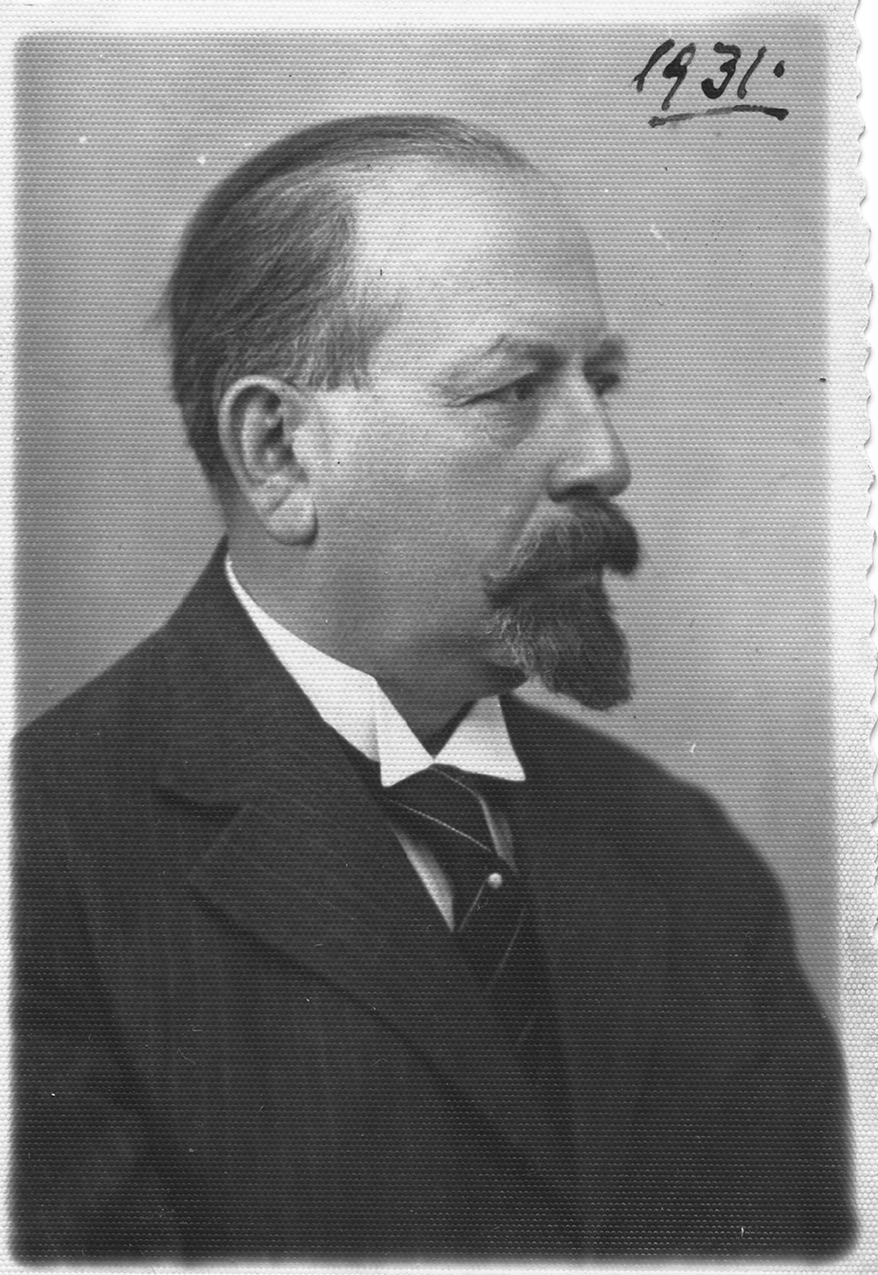 Note. K´roly Bodon, 1931. (Personal family collection from Jean Bodon)
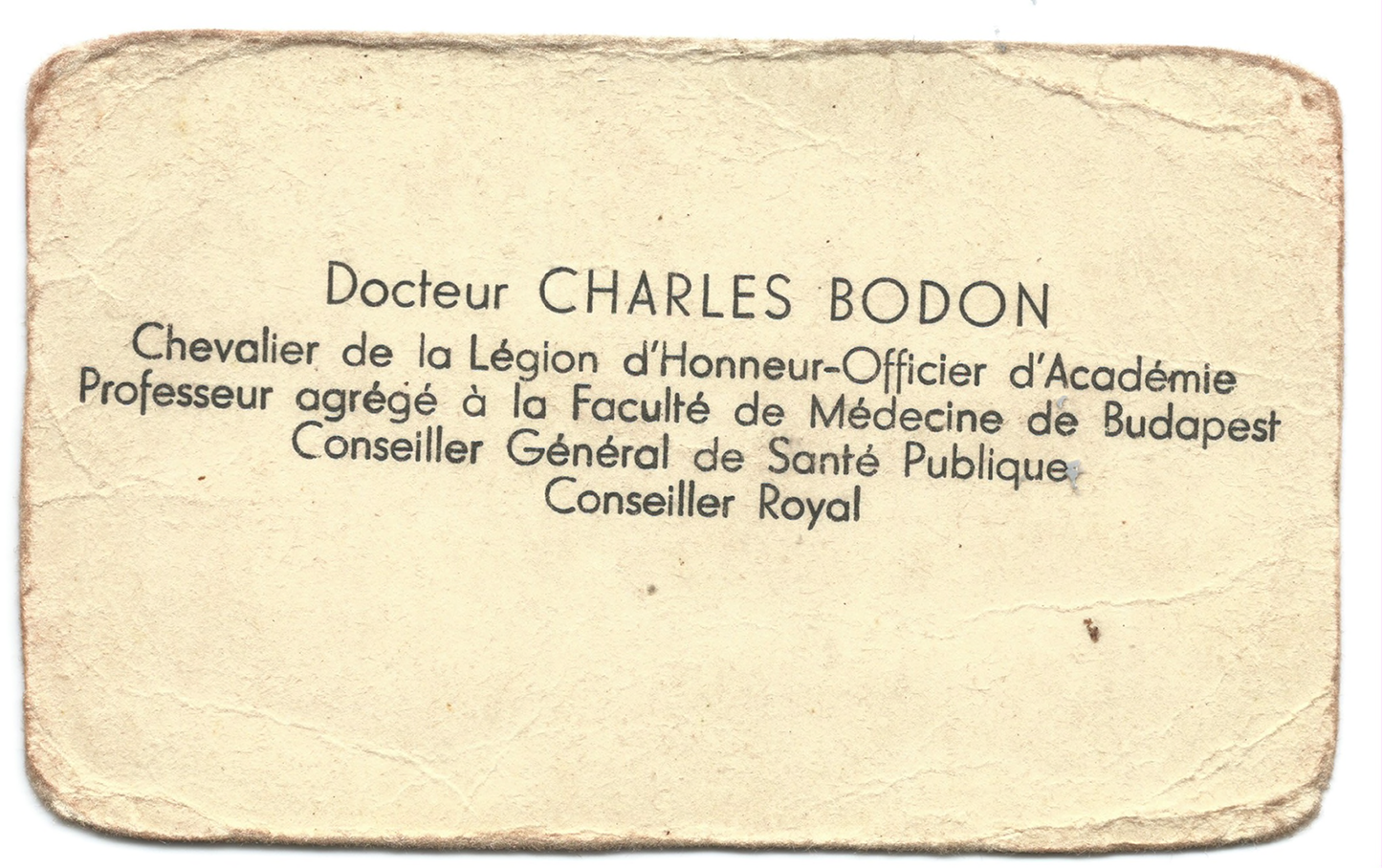 Note. Bodon’s French business card. (Personal family collection from Jean Bodon)
World War II
In 1944, Adolf Eichmann was sent to Budapest to conclude the genocide of Jews in Europe, supported by the Hungarian political party known as the Arrow Cross. Between the months of May and July in 1944, over 434,000 Hungarian Jews were deported to extermination camps and gassed upon their arrival. 2 In a letter to Lord Melchett, Winston Churchill wrote, “There is no doubt in my mind that we are in the presence of one of the greatest and most horrible crimes ever committed. It has been done by scientific machinery by nominally civilized men in the name of a great state and one of the leading races of Europe.” 11
In July 1944, Raoul Wallenberg, a Swedish diplomat, saved tens of thousands of Jews by providing them with passports in order to leave Hungary. Károly, Dora and their daughter Thérèse obtained the passports, however, Károly was not able to cross the border. The Slovak Encyclopedia stated: “he died in (Trenčín?).” 12 Like too many people during the Holocaust, the place or date of death was punctuated with a question mark.
So many lives have been forgotten, so many inventions ignored, so many performances never heard or seen. The Holocaust attempted to eradicate these innovators through acculturation and genocide. Yet, thanks to technological connectivity via the Internet, the oppressors have failed. What was unknown for so many years has been resurrected. Scientists like Károly Bodon, can again be studied and recognized as part of the medical community. Károly Bodon made a great contribution to medical science and it is clear he cared deeply about his patients; he should not be forgotten.
Footnotes
Declaration of conflicting interests
The author(s) declared no potential conflicts of interest with respect to the research, authorship, and/or publication of this article.
Funding
The author(s) received no financial support for the research, authorship and/or publication of this article.
