



Abstract
One of the causes of pollution is the inability of waste to decompose easily, and non-degradable waste is no exception. The issue with non-degradable waste is its difficult and costly decomposition process. Tire waste is non-degradable and can cause air pollution when burned after being discarded. Squandering material with good mechanical and physical properties, low cost, and many other benefits is a waste. This work aimed to utilize three types of tires as an alternative to coarse aggregates in the production of sustainable building materials. Tires were used in inner, outer, and textile tires in 10, 15, and 20%. Three sets of each percentage were accomplished to immerse in water for 7, 14, and 28 days. Density, water absorption, hardness, and compressive strength have been measured for each specimen. The results reveal that the lowest density is for the 20% textile tire after 28 days, and the lowest water absorption is for the 15% textile tire after 28 days. In contrast, the highest hardness was for 15% of the inner tire after 28 days. The highest compressive strength was for the 10% inner type after 28 days. It was concluded that the kind of tire and percentage should be selected carefully according to the application’s demands. Due to the monumental importance of reducing waste materials, four correlations for the best performance of crumb tire waste (CTW) types for each studied property, in relation to the percentage of CTW addition, have been derived. These mathematical relations hint at every proportion without resorting to the trial-and-error method.
Introduction
In a sustainable approach, it is crucial to minimize waste materials to enhance urban environmental performance, leading to the development of a livable, sustainable, and greener city. Waste tire disposal is causing significant ecological issues worldwide. Approximately 1 billion waste tires are generated annually, alongside the production of 1.6 billion new tires. 1 The domestic industry absorbed 659.754 tons of natural rubber in 2019. The tire industry accounted for the highest portion at 42%, followed by tire retreading at 16% and footwear at 14%. 2 There are various methods for managing waste tires, such as vulcanizing or recycling them into rubber powder. A further potential application for waste tires is their use as a replacement for coarse aggregates in concrete formulations. The technique recycles scrap tires by cutting them into small pieces and incorporating them into concrete as a partial replacement for coarse aggregate. This novel approach is expected to result in cost-effective concrete with desirable strength properties. 3 Several studies have examined the use of recycled materials in concrete production.4–6 Understanding the characteristics of recycled waste aggregate concrete, both without and with crumb rubber, is essential for substituting concrete composed of natural aggregates with recycled waste aggregate. This comprehension is necessary for structural considerations, as the efficacy of recycled waste aggregate concrete typically diminishes.7–10 The degree of reduction fluctuates based on several factors, including the quality of the recycled waste aggregates. 11 The cement content of recycled aggregates is one of several variables (such as level of substitution and ratio) that contribute to a decrease in concrete strength.8,10,12–14 It creates a weak bond between the old and ambient concrete matrices. The performance of recycled concrete has been improved in several ways, including the addition of extra cement, the use of superplasticizers, the incorporation of fly ash and silica fume,14–16 and the application of a two-stage mixing approach. 17 Research indicates that adding crumb rubber waste to concrete can reduce compressive and tensile strength due to rubber particles’ lower strength and weaker bond with cement paste.18–22 Some studies suggest that incorporating a small quantity of crumb rubber (up to 5vol%)19,23 or even 3% 24 can maintain the mechanical properties of concrete when used as a substitute for mineral aggregates. Additionally, researchers have found that adding silica fume can enhance the mechanical characteristics of crumb rubber concretes.25–27 The presence of ultrafine silica fume strengthens the surrounding matrix of cement paste and the rubber particles. A further approach to improving the mechanical characteristics of crumb rubber concrete involves pre-treating the rubber particles by submerging them in an NaOH (sodium hydroxide) solution before introducing them into the concrete.4,28 The NaOH solution aids in the removal of zinc stearate from the surface of the rubber, which improves the bond between the rubber powder and the concrete substrate. Research has shown that smaller rubber particles yield greater strength than coarse ones.21,23,29,30 This occurs because coarse crumb rubber particles cause larger air voids to form in the concrete.29,31,32 Furthermore, researchers studied the durability characteristics of crumb rubber concrete, which contains up to 30% rubber. According to the study, conventional concrete had a lower carbonation depth than crumb rubber concrete. Additionally, it was discovered that the carbonation depth increased in proportion to the rubber content, suggesting a greater susceptibility to corrosion.30,33,34 The growing accumulation of used tires poses an environmental challenge, and effective recycling methods remain limited. Utilizing waste tire materials in concrete offers a cost-effective alternative. It is essential to reconcile the requisite mechanical characteristics with the sustainability advantages of utilizing crumb tire waste as a partial replacement for coarse aggregate.32,35,36 Many types of tires may be discarded in landfills. Each has its properties and composition. This work aimed to reveal the role of tire type on the properties when utilized on construction sites. Many researchers have used crumb rubber as a replacement for fine aggregate. At the same time, the current study employs crumb rubber as a coarse aggregate, substituting gravel in varying percentages to achieve the optimum features.
Materials
Cement
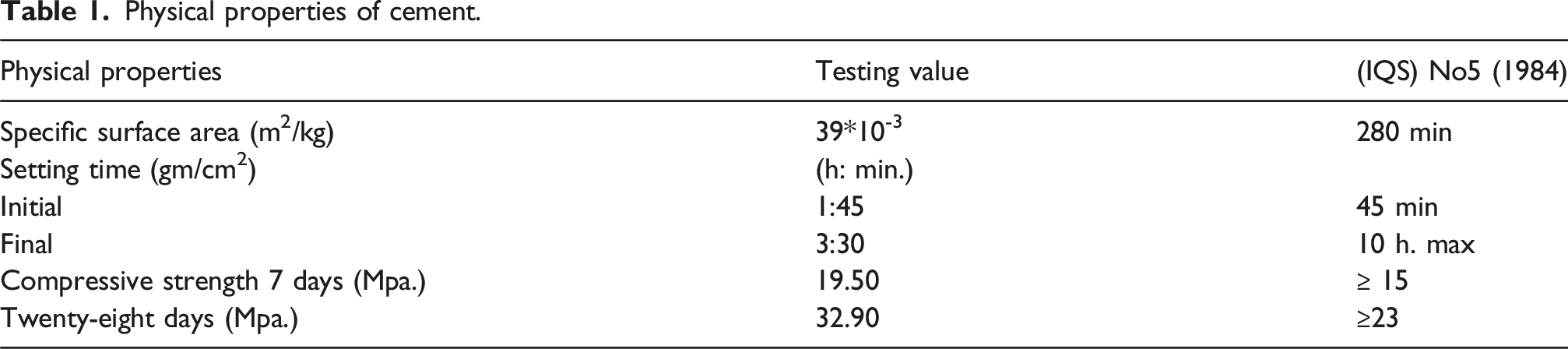
Physical properties of cement.
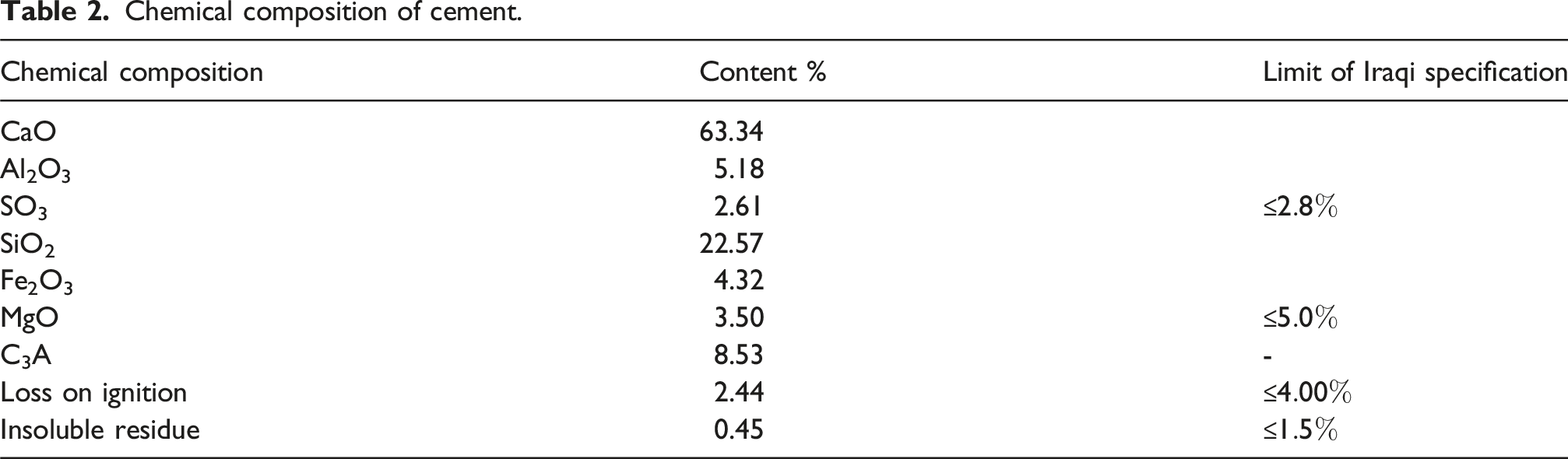
Chemical composition of cement.
Water
Potable water was used in the current research for preparing concrete mixes and curing concrete specimens.
Fine aggregate
Fine aggregate grading.

Physical and chemical properties of fine aggregate.

Crumb tire waste (CTW)
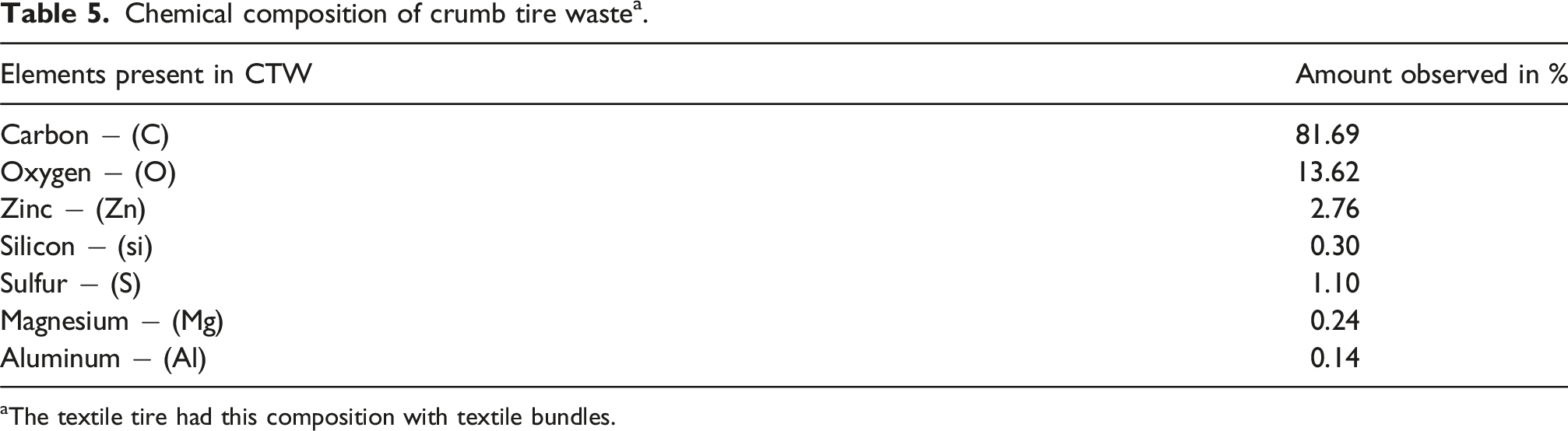
The material was obtained from abandoned tires, where three types of crumb tire waste (CTW) had been selected. The first type was an inner tire with a thickness of about 2 mm; the second was an outer tire with a thickness of 5 mm; and the third was a textile tire with textile bundles. After collecting the tires, an extensive cleaning of each type was performed to ensure that no contamination occurred. A specific cutter machine manually cuts the tire, transforming large pieces of rubber into smaller pieces with a maximum size range between 9 and 12 mm, as illustrated in Figure 1. Crumb tire waste was used instead of coarse aggregate at 10%, 15%, and 20%. Each type of tire was added to the mixture separately to determine which type had the best performance. Table 5 details the properties of the crumb waste material. Crumb tire waste outer and textile. Chemical composition of crumb tire waste
a
. aThe textile tire had this composition with textile bundles.
Experimental work
Mixture design

Specimen preparation
The dried materials were first mixed, and water was added—36 cubical specimens with dimensions 10 × 10 × 10 cm3 were cast. Nine specimens were cast for each percentage (10%, 15%, and 20%). All the specimens were cured in water at about 25°C for ages 7, 14, and 28 days. Density, water absorption, hardness, and compression test were measured to all specimens. ASTM D 2240
40
It has been used to measure hardness, as illustrated in Figure 2. Hardness test device.
Results and discussion
Density
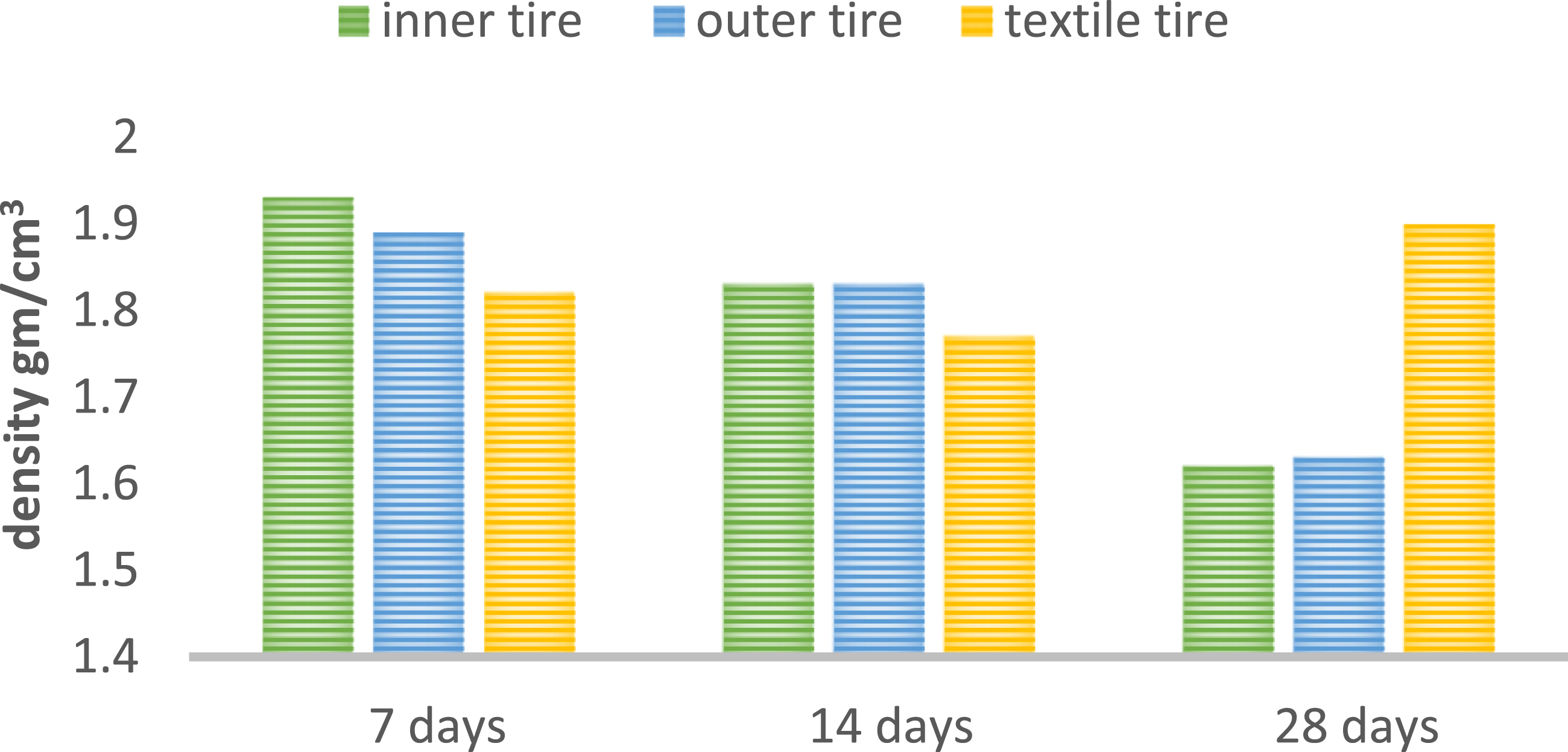
Rubber is a low-density material, unlike ordinary concrete, which is considered a heavy construction material. Adding crumb tire waste (CTW) can minimize the density. The addition of crumb tire waste as a coarse aggregate will result in the formation of voids. Regardless of the amount of crumb rubber added, the density was low, and aging reduced the density as the immersion period increased. Figures 3, 4, and 5 illustrate that the 20% textile tire exhibited the lowest density after 28 days. Effect of incorporating 10% of different types of tires on the density for different immersion periods. Effect of incorporating 15% of different types of tires on the density for different immersion periods. Effect of incorporating 20% of different types of tires on the density for different immersion periods.

Water absorption
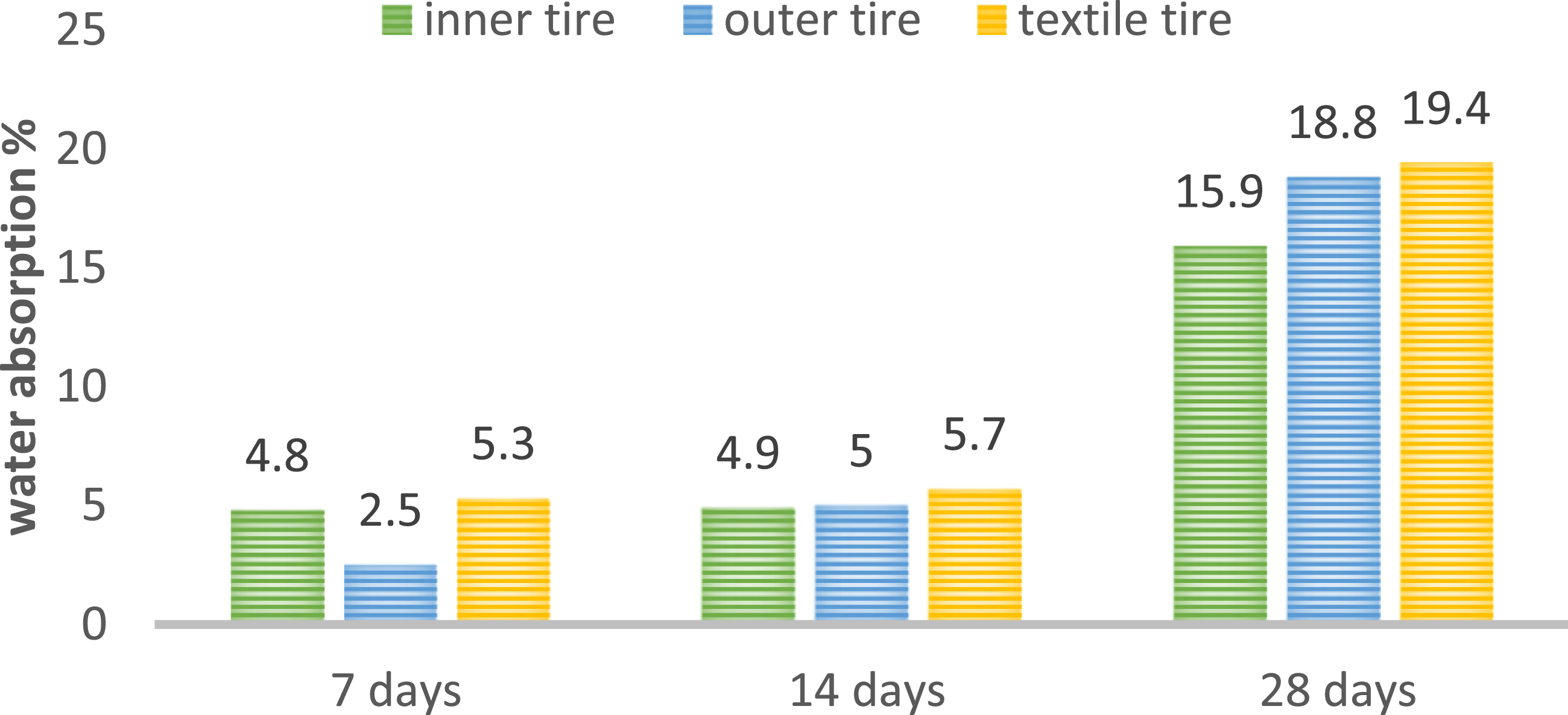
In the water absorption study, it was notable that the specimens of all tire types exhibited low absorption after 7 and 14 days, regardless of their percentage composition. The absorption begins after 28 days, indicating that the addition of crumb tire waste requires time to absorb water. This is evident due to the rubber’s hydrophobic nature, which prevents water from penetrating. As the percentage of crumb tire waste rose, the water absorption increased; the lowest water absorption was for 15% of textile tires after 28 days, as illustrated in Figures 6, 7, and 8. Effect of incorporating 10% of different types of tires on the water absorption for different immersion periods. Effect of incorporating 15% of different types of tires on the water absorption for different immersion periods. Effect of incorporating 20% of different types of tires on the water absorption for different immersion periods.

Hardness
Investigating the specimens’ hardness showed that the hardness decreased as the percentage of crumb tire waste increased. Decreasing hardness may be attributed to the low hardness of crumb tire waste, as rubber aggregate floats effortlessly after mixing with a cement-sand mixture. Hardness is a surface characteristic that reflects the low hardness of the rubber. Generally, the hardness of all specimens, regardless of their percentage and immersion age, fell within the same range. The highest hardness was observed in the 15% inner tire after 28 days, as shown in Figures 9, 10, and 11. Effect of incorporating 10% of different types of tires on the hardness for different immersion periods. Effect of incorporating 15% of different types of tires on the hardness for different immersion periods. Effect of incorporating 20% of different types of tires on the hardness for different immersion periods.


Compressive strength
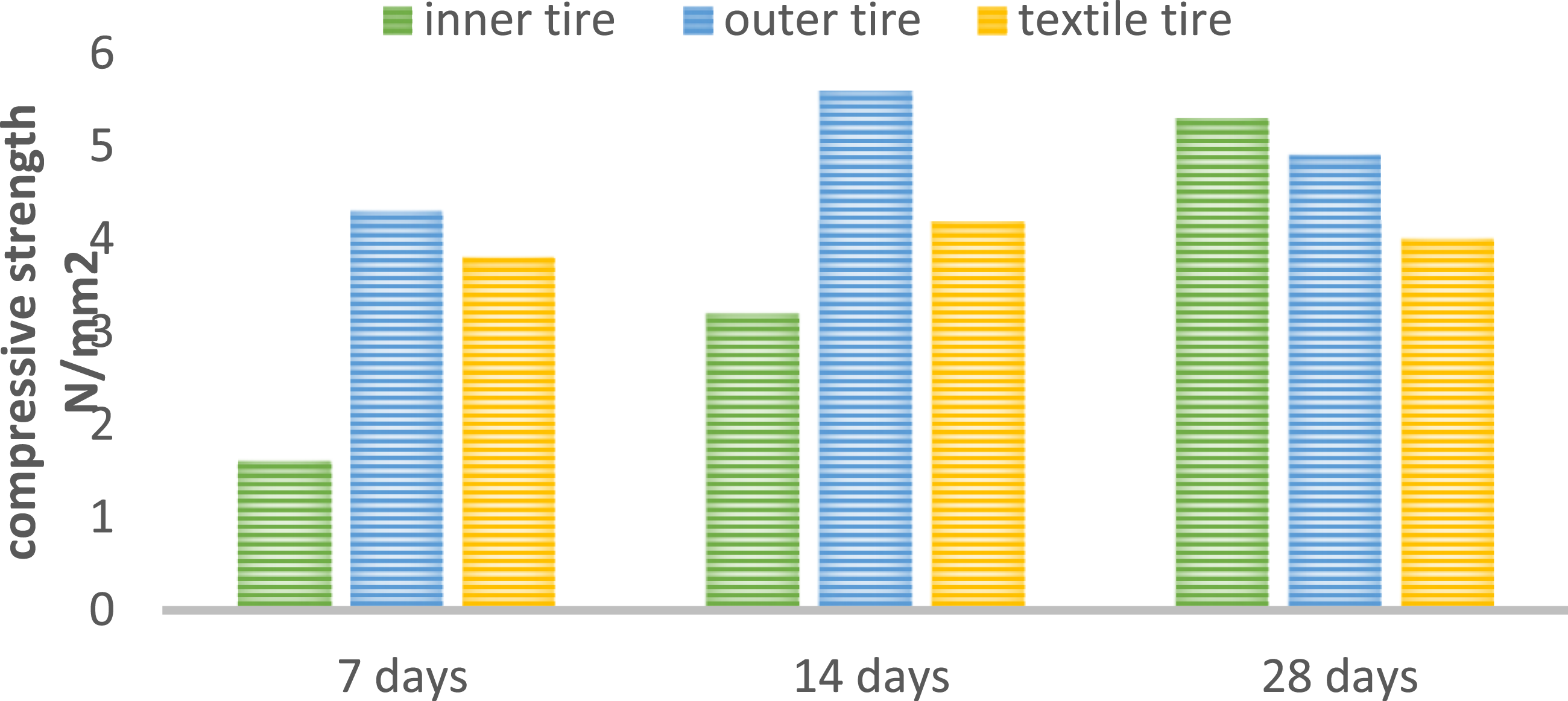
Different factors, such as the incompatibility between crumb tire waste (CTW) and the cement matrix, may cause a decrease in strength. This incompatibility may lead to the formation of voids and microcracks, which weaken the structure because the voids act as stress concentrators. Additionally, incompatibility results in weak interfacial bonding, indicating that the rubber aggregate and cement matrix do not interact effectively. The building materials could not hold the weight because the crumb tire aggregate did not stick together at the edges, which lowers the compressive strength. In studying different percentages of crumb tire waste, it was observed that increasing the amount of crumb rubber results in a decrease in compressive strength. Since rubber is considered a low-strength material, the increasing percentage of crumb tire waste is the dominant factor that decreases its compressive strength. As the curing time increased, the compressive strength improved. The highest compressive strength was for the inner tire type in all percentages and at any curing time, as shown in Figures 12, 13, and 14. This can be clarified as the small thickness of this kind leads to better bonding and minimal voids, which may affect the hardness results, which show the highest results for the inner tire type. After 28 days, the 10% inner type exhibited the highest compressive strength. Effect of incorporating 10% of different types of tires on the compressive Strength for different immersion periods. Effect of incorporating 15% of different types of tires on the compressive Strength for different immersion periods. Effect of incorporating 20% of different types of tires on the compressive Strength for different immersion periods.

Correlation analysis
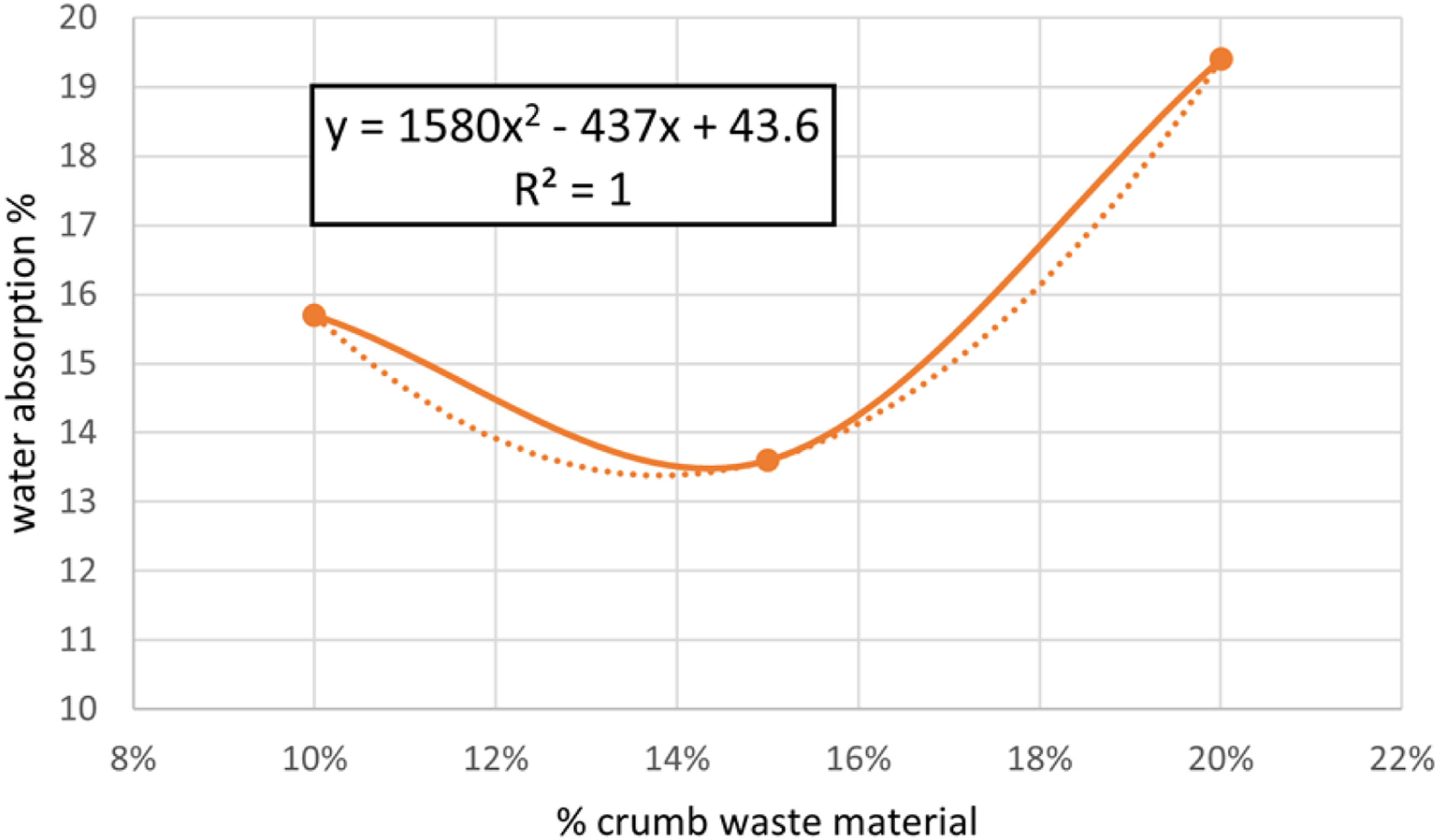
Based on the values obtained in the practical part of the research, a mathematical relationship was established between the variables that obtained the best results. These mathematical relationships can be used to obtain values of the proportions that have not been practically used for the addition of crumb tire waste material and the results values for density, water absorption, hardness, and compressive strength, or to obtain an approximate idea of what results can be obtained without referring to the trial mixes. Therefore, we adopted density and water absorption relationships for the best performance crumb tire waste textile type with 20% and 15%, respectively, and hardness and compressive strength relationships for the best performance crumb tire waste inner type with 15% and 10%, respectively, and the coefficient correlation for all relationships (R2 = 1) That means the variables in the relationship move in the same direction. A value of 1 denotes a perfect positive correlation, as shown in the equations below and Figures 15, 16, 17, and 18. Density and %crumb waste material correlation. %water absorption and %crumb waste material correlation. Compressive strength and %crumb waste material correlation. Hardness and crumb waste material correlation.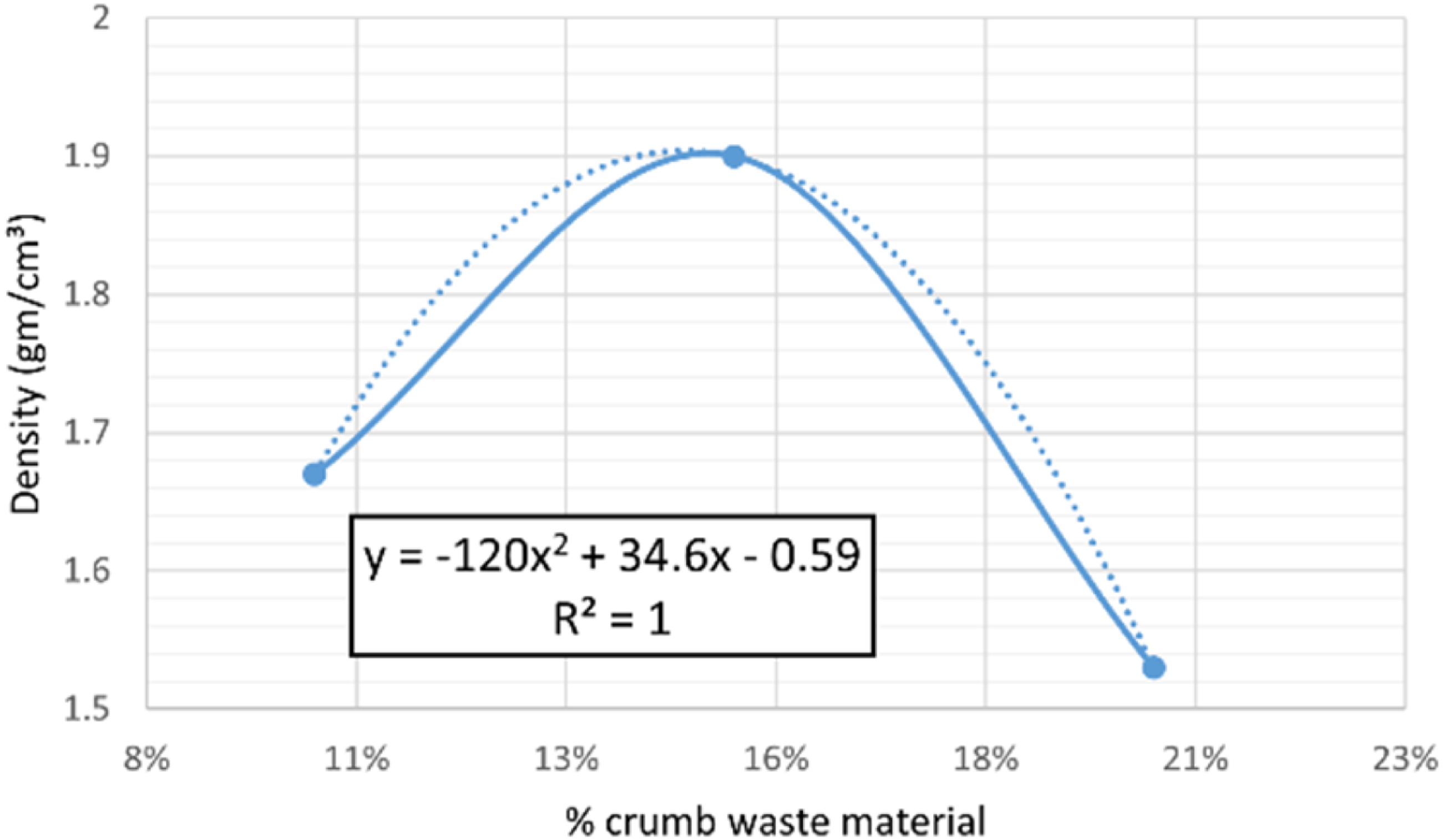


The mathematical relations are. • Density with crumb tire waste (CTW):
• Water absorption with % crumb tire waste (CTW):
• Hardness (HRC) with crumb tire waste (CTW):
• Compressive strength with crumb tire waste (CTW):
Conclusions
There is no standard for utilizing waste at construction sites, i.e., no ASTM, BS, etc., for the mixes and testing specimens. Furthermore, it cannot be compared to ordinary concrete as a reference because it’s a different material with different specifications. The biggest challenge when using such materials is how to predict their behavior, choosing the right percent, the proper conditions, and other parameters. The significance of this work lies in many aspects, such as: almost all researches deal with crumb rubber as partial substitution of fine aggregate, while this work deals with full replacement of coarse aggregate with crumb rubber. Also, the work focuses on different types of tires to show that the best tires can be utilized in this field. Another aspect is to overcome the trial-and-error mixes; mathematical relations have been used to select the optimum percentages for the replacements.
Utilizing crumb tire waste (CTW) in the construction field will overcome environmental damage caused by waste. It lessens the impact on landfills, preserves natural resources, and creates more opportunities for future work. When introduced in the cement matrix, the low density is beneficial because it reduces the overall density of the construction material. After 28 days, the 20% textile tire had the lowest density. The hydrophobic nature of rubber prevents water absorption from increasing, even when the addition of crumb tire waste initiates a void and causes water to penetrate. As the percentage of crumb tire waste rose, the water absorption increased; the lowest water absorption was for 15% of textile tires after 28 days. There is no doubt that the mechanical properties have decreased, but the addition of crumb tire waste will delay the crack since rubber is a good absorber of the energy of the cracks or is resistant to cracks. All specimens, regardless of their percentage and age of immersion, exhibited hardness within a consistent range. After 28 days, the 15% inner tire achieved the highest hardness. The highest compressive strength value was for the inner tire type in all percentages and at any curing time, and the highest compressive strength was for the 10% inner type after 28 days. The mathematical relations allow us to override trial mixes and predict proportional behavior that we did not experiment with. This research recommends using crumb tire waste (CTW) as coarse aggregate because it has several advantages, regardless of its type. The percentage and type of crumb rubber were selected according to the desired application.
Footnotes
Acknowledgment
The authors gratefully acknowledge the facilities and practical support provided by chemical and testing laboratories in the Materials Engineering Department, College of Engineering, Mustansiriyah University.

Funding
The author(s) received no financial support for the research, authorship, and/or publication of this article.
Declaration of conflicting interests
The author(s) declared no potential conflicts of interest with respect to the research, authorship, and/or publication of this article.
Data Availability Statement
The data are available in the results.