



Abstract
Pullulan (PUL) has a diverse range of applicationsdue to its many therapeutic benefits, including biodegradability, biocompatibility, nontoxicity, antimicrobial activity, and adsorption. They are combined with chitosan, polyvinyl pyrrolidone (PVP), polycaprolactone (PCL), heparin, fluorescent polystyrene nanoparticles (PS-NPs), and carboxyl Pullulan to develop properties such as thermal stability, mechanical properties, pH resistance, chemical stability, toughness. The effects of Pullulan content on the properties of the solution, as well as the morphology of the resultant nanofibers, were investigated >80%. The concept of a scaffold can be a useful notion to improve the mechanical behavior of hydrogel-based scaffolds. Compositional analysis by Differential scanning calorimetry (DSC) revealed that Pullulan might enhance the mechanical properties of the nanofibers. This review focuses on the combination and analysis of Pullulan blends and composites of natural and synthetic polymers, as well as their capability in biomedical fields and bone tissue engineering, for example in drug delivery, insulin delivery, food industry, medicinal and biomedical applications, antimicrobial wound dressings, cancer cell targeting, anticancer vaccine improvement, new biopolymer development, food product development and sensing. The electro spinning procedure and the materials employed in it will be covered in this review. The use of Pullulan electrospun nanofibers structures in tissue engineering will also be covered in this paper. The benefits, restrictions, and future opinions were studied. This is because of Pullulan-based polymers have a variety of properties.
Introduction
Structure of Pullulan
Repeating maltotriose units connected by a-1,6-glycosidic bonds compensate PUL, an uncharged linear polysaccharide. 1 PUL is a water-soluble, non-ionic, linear substance and has PUL has excellent surface traction and is easily soluble in water.2,3 PUL has previously been utilized to enhance in vivo mineralization and bone regeneration. 4 These characteristics make PUL a strong candidate for bone tissue engineering employment.
Chemical structure of Pullulan
In the 1960s, its structure was developed.
5
Maltotriose units make up the polysaccharide polymer known as PUL, also referred as 1,4- and 1,6-glucan. An 1,4-glycosidic bond links the three glucose units in maltotriose, whereas a 1,6-glycosidic bond connects the units of subsequent maltotriose Figure 1.
6
Chemical structure of pullulan.
Sources of Pullulan
Bauer made the initial discovery of PUL production from Aureobasidium PUL in 1938. 7 The basic stage in its isolation and characterization was from the yeast-like fungus Aureobasidium PUL.8,9 The bulk use of exopolysaccharides formed by microbes are connected to the defense of the producing bacterium. 10 Due to its ability to produce melanin, this widely used bacterium is sometimes referred to as PUL (poly-1,6-maltotriose), is a dimorphic species with considerable plasticity, and it’s distributed across the world. PUL has specific physical qualities that make it useful in the nourishment and drug industries, including the ability to stick things together, the ability to form fibers, and the ability to create thin biodegradable filmsthat are transparent and oxygen-impermeable. 11
Properties of Pullulan
Dueto their superior biocompatibility and biodegradability, natural materials are frequently used in tissue engineering applications. 12 PUL is a natural polymer that does not cause toxicity, immunogenicity, mutagenity, or cancer. 13 PUL has excellent surface adhesion.14,15 In an aqueous solution, PUL is categorized as a highly electrically spinnable polymer, and thick PUL fibers may support 3D structures. 16 Cross-linking is necessary to make them endure long enough to support the scaffold. 17 White, non-hygroscopic PUL powder dissolves easily in hot or cold water. 18 It has antithrombotic, anti-inflammatory, and anticoagulant properties and it has thermal stability. 19
Applications of Pullulan
A polysaccharide called PUL is employed in food coatings and films. 20 It also used in the drug and food industries. 21 . From food production to medicinal uses, monosaccharides are also employed as a source in tissue engineering, cancer treatment, bio-imaging, plasma expansion, and surface modification. 22 It is utilized as an oil recovery aid, fertilizer binder, water solubility enhancer, and gelling agent.23,24 PUL has been used for a long time in many different applications, including blood plasma replacements, flocculants, food, glue, and cosmetic additives. Source of nitrogen, culture temperature, dissolved oxygen content, and fermentation or design. PUL coatings are employed as functional components, particularly in antibacterial products. 25
Drawbacks of Pullulan
PUL has a wide range of uses, but it also has serious shortcomings that prevent it from being extensively used in many segments of the economy. It is expensive and fragile. 26 PUL is a viable candidate for use in bone tissue engineering because of these characteristics, and bone scaffolds made of PUL have been shown to encourage in vivo mineralization and bone regeneration.27,28 Additionally, it loses mechanical strength due to its hydrophilic nature. 29 PUL has no antibacterial characteristics. 30
Pullulan based nanocomposite
Polymers
Pullulan made from poly (lactic-co-glycolic-acid) (PLAG)
Hepatocellular carcinoma (HCC) is the most common type of cancer in humans and the third greatest reason for cancer-related mortality globally, predominantly in Southeast Asia and Africa. Chemotherapy is ineffective in increasing the overall lifespan of HCC patients and is frequently linked to significant side effects and the emergence of drug resistance. 31
Numerous studies have revealed that paclitaxel (PTX) and combretastatin A4 (CA4), two inhibitors of microtubules, have synergistic effects on tumor cells and tumor vasculature when they used together. While CA4 is more effective on tumor vasculature but less powerful on tumor cells, PTX is less effective on tumor vasculature but more effective on tumor metabolism in tumor cells. However, the wide-ranging therapeutic uses of CA4 and PTX, particularly their combined usage, would be severely constrained because of the various difficulties. First, because of their low solubility, PTX and CA4 have limited bioavailability. 32 PTX and CA4 result in inevitable and severe toxins, including hepatotoxicity, nephrotoxicity, and neurotoxicity, because they lack tumor-targeted delivery. 33 Therefore, new transferors for PTX and CA4 are needed to ease intracellular transport and enhance bioavailability.
The scientists have developed a nanoparticle delivery technology for HCC-targeting anticancer drugs, including PTX and CA4. This nanoparticle system is composed of PUL-based (CAPL) shells and poly (-amino ester) (PBAE) or poly (lactic-co-glycolic acid) (PLAG) cores. 34 Due to the many carboxylic amide groups that make up its chemical structure, CAPL might theoretically be made in two ways after PUL. The material PBAE, which is made up of piperidine rings organised in a structural unit, was employed to make nanoparticles for the administration and transportation of PTX and CA4. 35
Pullulan derived from biotin
Self-aggregating polymeric micelles composed of biodegradable and biocompatible polymers show great promise in drug delivery. 36 Polymeric micelles’ highly hydrated outer shells inhibit the inter-micellar aggregation of hydrophobic inner cores. As a result, self-assembly nanoparticles are well suited to capture hydrophobic drugs or biomaterialsmacromolecules such as proteins and genesacting as artificial molecular chaperones to control their release, improve their bioactivity, and increase their stability. Furthermore, because they improve therapeutic efficiency while reducing side effects, these polymeric nanoparticles with targeting ligands have the potential to be used in cancer therapy. 37
Biotin has distinct structural, chemical, andbiological characteristics, notably low cytotoxicity, immunogenicity, and lack of antigenicity. These factors helped cancer cells absorb drugs through their endosomes and operate as an active tumor-targeting ligand for a variety of anti-cancer drugs. 38 Complexed human serum albumin molecules are used to coat nanoparticlesare used as a drug delivery systemfor treating malignancies.
Poly (lactic-co-glycolic acid)/poly (beta-amino ester)
PTX and CA4 are delivered by a nanoparticle system for their combination treatment targeting HCC. The shells and cores of this system of nanoparticles are made of poly (amino ester), poly (lactic-co-glycolic acid), or charge-reversible PUL-based (CAPL). 39 The molecular structure of CAPL, which is synthesized from PUL using two procedures, has many carboxylic amide groups. The charge will switch from negative to positive as a result of the carboxylic amide bond spontaneously breaking in mildly acidic circumstances, such as the presence of extracellular acid in the tumor microenvironment. With their potent "proton sponge” action, PBAEs, Langer's group developed a novel family of cationic polymers that are ideal for intracellular delivery of genes, proteins, peptides, and low-molecular-weight drugs. 40
A substance called PBAE, which comprises structural units called piperidine rings, was employed to create nanoparticles in order to boost the bioavailability and intracellular distribution of PTX and CA4. The low blood stability of PBAEs, which is primarily caused by their hydrolysis in physiological conditions and the availability of positive charges, limits their use in vivo. We used the two remedies that are given below to address these problems. In order to increase PLGA content, it was first added to PBAE nanoparticles to improve their stability and control drug release rates. Second, to protect the positive charges on the PBAE/PLGA nanoparticles, CAPL was added to their surfaces. Cells with HCC express this gene. CAPL-coated PBAE/PLGA (CAPL/PBAE/PLGA) nanoparticles, Hepatoma-targeting and pH-responsive in stages processes are demonstrated. According to several studies, surface modification is the most effective way to improve the In vivo stability of PBAE-based drug carriers. Hepatoma by acting on HCC cells with increased permeability and retention (EPR) and having a special affinity for ASGPR. The second mechanism is that the carboxyl amide bonds in CAPL are broken in the mildly acidic tumor microenvironment (pH 6.2–6.7) and then removed from the nanoparticle surfaces due to electrical repulsion between negatively charged PBAE and PLGA nanocores. 40 During internalization of tumor cells or vascular endothelial cells (VECs) with encapsulated PBAE or PLGA nanocores, drugs are released via a “proton-sponge” action caused by the low pH of endolysosomes (pH 4.0–6.0). By using ASGPR-mediated endocytosis, CAPL, PBAE, and PLGA nanoparticles may also be effectively taken up by hepatoma cells. PBAE’s “proton sponge” function thus allows the anticancer medicine to be released intracellularly.
Polyvinyl alcohol-based Pullulan
Polymeric micelles with a core-shell shape have drawn attention from scientists in recent years due to their possible utility in the medication delivery industry. 41 Drugs that are water-soluble or barely water-soluble can be transported efficiently and effectively using nanoparticles made by the double-hydrophilic or amphiphilic co-polymer self-assembly and confined by hydrophobic, hydrogen-bonding, or electrostatic interactions. 42 By adjusting the heat, pH, and ionic strength, we can influence the micellization of these copolymers, for example, when a polymer chain moves from hydrophilic to hydrophobic. Micellarization can start when the guest molecule is still attached to the polymer segment. 43
Co-polymers
Polycaprolactone (PCL) based Pullulan
PUL and PCL are copolymers that are usually utilized in tissue engineering and drug delivery investigations because they have no toxicity, immunogenicity, mutagenicity, or carcinogenicity. 44 With the help of co-electro spinning technology, two different polymer solutions may be electrode deposited onto a single fibrous scaffold, producing fibers that are chosen at random, dispersed, and have two different properties. Thus, despite providing various surface features, the benefits that are dependent on the morphology of each polymer fiber are retained. 45 By manipulating protein adsorption mechanisms, the employment of fibers that are hydrophilic and hydrophobic on a scaffold will allow the tailoring of the degree of hydrophilicity, which influences cell fate on the scaffold. 46 Methodologies for creating polymer blends and coatings used to change hydrophilicity were found to have ineffective hydrophilic polymer strength on the surface of a hydrophobic polymercomposite. When compared to the co-electro spinning approach.47–49
Polyethylene Oxide/Polypropylene oxide based Pullulan
The biomedical field industry frequently uses thermosensitive amphiphilic copolymers, such as poloxamer PEO-PPO-PEO block copolymers. 50 At room temperature, these copolymers are water-soluble, but when temperatures are high, hydrophobic interactions lead them to precipitate or go through a Sol-gel transition (depending on the conditions of the poloxamer proportion). 51 Poloxamer is utilized in the form of copolymers nevertheless because their mechanical characteristics are inferior when used alone. 52
Polyvinyl alcohol based Pullulan
Trisodium trimethaphosphate (TMP), a non-toxic cyclic triphosphate cross-linking agent previously employed in hydrogels composed for medicinal purposes, causes chemical cross-linking of PUL and PVA. We suggest combining a chemical agent with freeze-thaw cycles to generate composite PUL/PVA hydrogels with a high degree of hydration and a high mechanical strength characteristic since chemically crosslinked PVA has weak elasticity and resistance. 43 The ratio of swelling to dissolution and the behavior of dissolution were used to describe the hydrogels. Finally, the new hydrogels' biocompatibility and capacity for adipogenic differentiation were evaluated. The physical properties of the blends were greatly enhanced by generating acetal groups and cross bonding the PUL and PVA with glyoxal. The regulated distribution of perifosine was made possible by creating interpenetrating network microspheres by bridging in the presence of glutaraldehyde in PVA/PUL, a water-in-oil dispersion. Due to their antibacterial qualities, PVA, PUL, and silver nanofibers electrospun in aqueous solutions have promise as a preservative. 53 We suggest a new method for creating new composite hydrogels to get over the problems caused by phase separation in PVA/PUL mixes, specifically the usage of 6-carboxypullulan rather than Pullulan. 54
Porous materials can be made from homogeneous and stable aqueous PVA or Oxidized PVA solutions in PUL (OxP) blends by thawing and freezing. The macromolecular chain's incorporation of a PUL derivative with carboxyl groups that is water soluble eliminates the need for any further cross-linking agents and hastens network creation. Different approaches were taken to look at the characteristics of physical networks and test cell availability.55,56
Pectin based Pullulan
While both pectin and PUL have some impressive features, they both have one or more flaws that prevent them from being employed in food packaging. Pectin films can crosslink and make them water resistant; however, they have poor mechanical qualities. PUL films, on the other hand, are sensitive to water and moisture but have outstanding mechanical and physicochemical qualities. Although much study has been done on the production of food packagingfilms utilizing pectin and PUL separately, there have been no reports of generating blend films combining the advantages of both polymers in varied ratios.24,57 As a result, by combining these two biopolymers, this study tried to create an edible packaging film with synergistic effects. This research looked at the qualities of pectin-PUL composites in various amounts to find the optimum one for food packaging. 58
Chitosan based Pullulan
Because of their biodegradability, biocompatibility, repeatability, and sustainability, biopolymers have frequently been used to replace synthetic polymers. In the production of nanofibers. Chitosan is a linear polysaccharide made up of (1,4)-linked 2-amino-deoxy-D-glucan that can inhibit a variety of fungi, yeasts, and bacteria.59,60 In a previous study, Pullulan was added to improve the electro spinnability of chitosan solutions, and chitosan/pullulan composite nanofiber films were successfully created Figures 2 and 3. Scanning electron microscopy images be Pullulan/Chitosan nanofiber mats prepared with different mass ratios (a) pure Pullulan (b) 7/3 (c) 5/5 and (d) 3/7 (polymer solution concentration = 30 wt%, applied voltage = 15 kV and TCD = 15 cm). Viscosity as a function of steady shear rate for different Pullulan/Chitosan solutions.

On the other hand, chitosan/pullulannanofiber films fall short in functional food packaging because of their extreme water sensitivity, which causes them to dissolve as soon as they encounter water. To solve this issue, adjustments must be made to correct the moves on fundamental defect. Biopolymer films may generally be cross-linked by heat or chemicals like glutaraldehyde.
61
Since no harmful materials are used during the entire physical process, heating is certainly a green crosslinking method. In addition, the toxic glutaraldehyde was substituted with natural crosslinking agents Figure 4. Cinnamaldehyde (CA), the primary bioactive component of cinnamon essential oil derived from cinnamon plants, is better suited for use as a green crosslinking agent because the FDA has designated it as Generally recognized as safe (GRAS). This study used two distinct green crosslinking methods, involving heating and cinnamaldehyde addition, to stabilize the chitosan/pullulan composite nanofiber films so they could be used for active packaging.
62
Pullulan/chitosan nanofibermats prepared with different MMT contents of 0, 1, 3 and 5 wt% (Polymer solution concentration = 30 wt%, pullulan/chitosan blend ratio = 7/3, Electrical potential = 15 kV, TCD = 15 cm).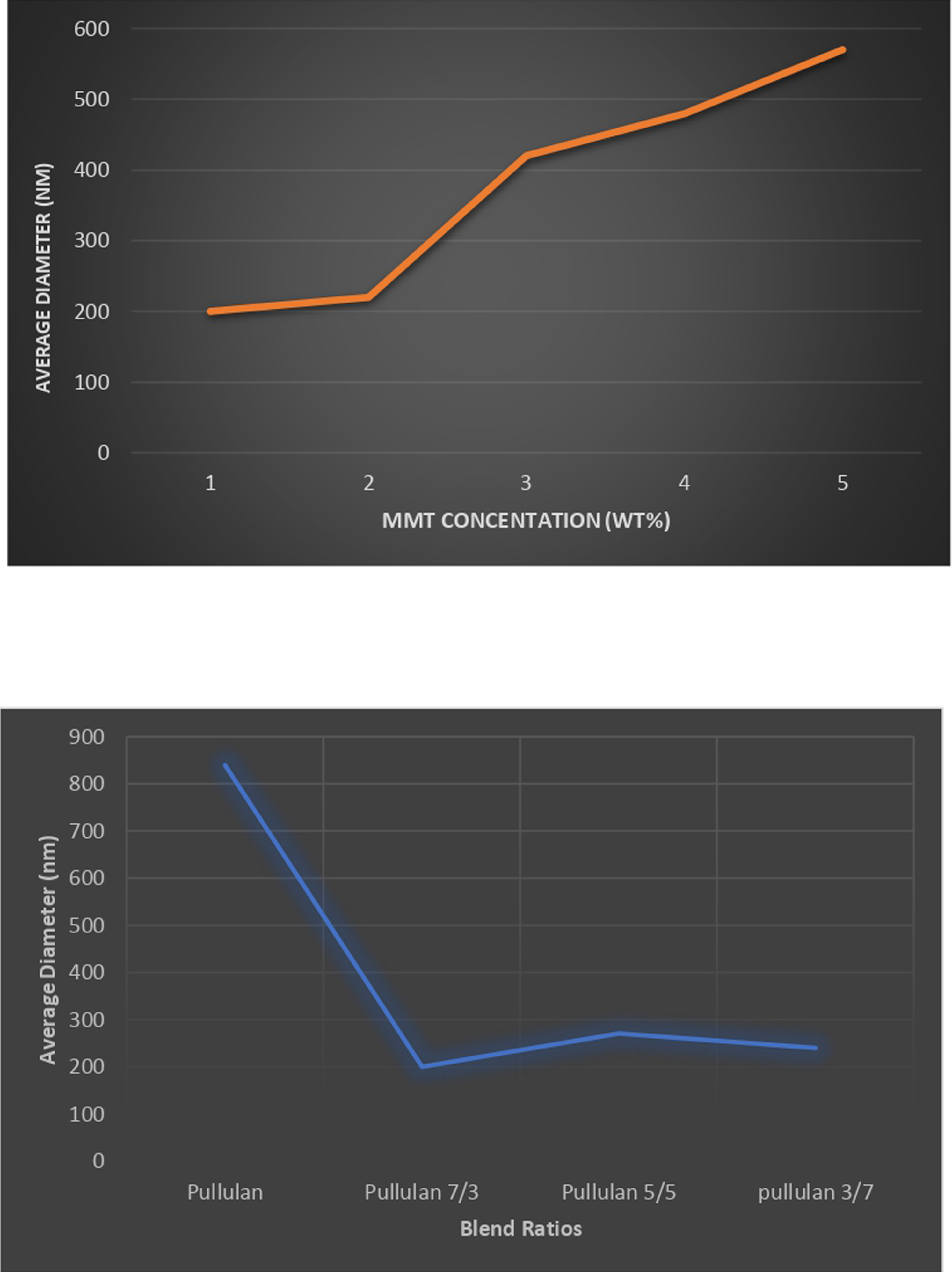
Gelatin based Pullulan
Due to its irreversible hydrolysis, gelatin, a form of collagen, has been widely used in hydrogels. Gelatin is seldom used by itself in skin replacements due to its detrimental impact on cellular and mechanical properties.
63
However, due to its propensity to absorb large amounts of water, a crucial component of cosmetics and skin substitutes, it is commonly combined with other substances.
64
In this investigation, we combined these two compounds using a solvent casting-particulate leaching technique, followed by freeze-drying. Hydrogels may be produced rapidly and easily using the combination of these two techniques, resulting in extremely porous structures composed of inexpensive materials that can be tailored for form. Despite the fact that there are many different cellular skins substitutes available, a large body of research has shown that acellularized skin substitutes are beneficial for skin regeneration. The two most prevalent cell types seen in human skin are fibroblasts, which make up most of the dermal layer, and keratinocytes, which make up most of the epidermal layer.65–67 There is increasing evidence that incorporating both fibroblasts and keratinocytes into skin replacements significantly improves skin regeneration because of the beneficial crosstalk between both cell types.
68
In this study, the applied voltage and tip-to-collector distance were set throughout the experiment at 18 kV and 15 cm, respectively As evidenced 8% concentration of gelatin/pullulan polymer produced the nanofibers by 57 nm size and 12% concentration of gelatin/pullulan polymer produced 110 nm Figure 5(a) and (b). The higher gelatin/pullulan polymer concentrations resulted in smaller fibre diameters than other blended scaffolds as seen in Figure 5(e) and (f), the fiber’s diameter and diameter distribution increased. According to Figure 5(c) and (d), the produced fibres had uniform 8% and 12% w/v concentrations and were bead-free. As shown in Figure 5(g) and (h), the average diameters of the as-spun fibres demonstrated a decreasing tendency with an increase in the gelatin content. This study makes use of this information to create a cellularized bilayer skin replacements using a special 5-day centrifugation procedure that maximizes the possibility for skin regeneration.
69
Gelatin/pullulan nanofiber images and diameter distribution at various concentrations and mass ratio are displayed in showed in (a) concentration = 20%; mass ratio = 25/75; (b) 25%, 25/75; (c) 25%, 33/67; (d) 25%,40/60; (e) 25%,50/50; (f) 25%,30/70; (g) 25%, 20/80; (h) 25%, 10/90.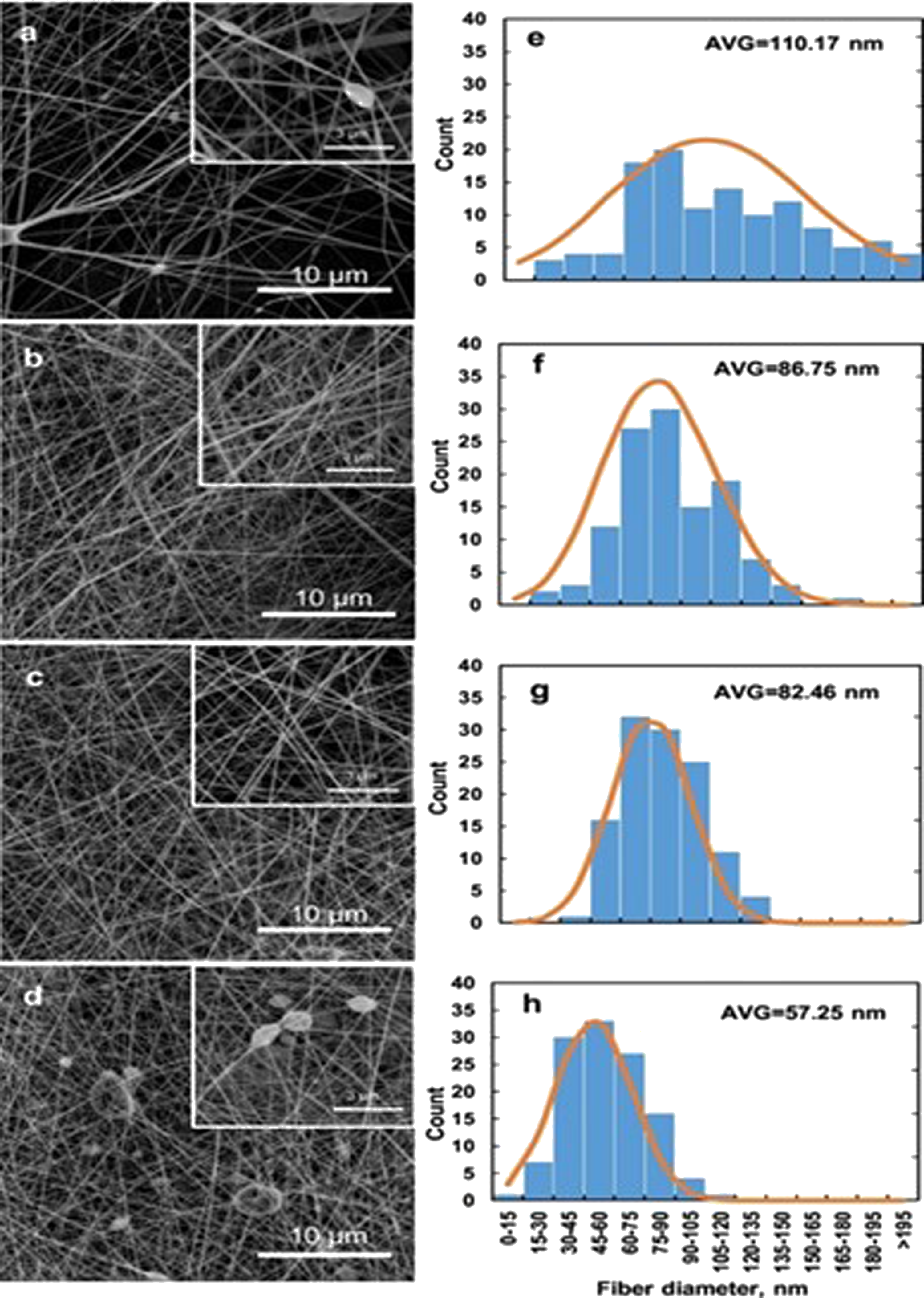
Collagen based Pullulan
Because of its low rejection rate, high biocompatibility, 70 biodegradability, 71 workability, and lack of viral infection risk, Human-like collagen (HLC) has been used in hydrogels, 72 vascular scaffolds, 73 and artificial bones. 74 Several papers have reported on the development of hydrogels using chitosan or chitosan derivatives, hyaluronic acid, collagen, or other cross linking agents. PUL gels or nanoparticles have been used in the transport of genes, drugs, and tissue repair in numerous studies. 75 PUL and collagen hydrogels were used as a biomimetic hydrogel scaffold to boost mesenchymal stem cell angiogenic potential and stemness, 76 direct bone regeneration, and force cell movement in wounds. This study focuses on combining different PUL and collagen molecular weights to create injectable hydrogels for skin healing using a novel method.77,78 It was discovered that dialdehyde PUL and collagen are employed to create sophisticated scaffold materials.
Microspheres
Silk fibrin based Pullulan
Electrospun based silk fibroin
Varieties of silk Fibroin (SF), including fiber, powder, film, and coatings, are available. The chemical and heat resistance of silk-based films is excellent, but they are not stiff or strong enough to be used in structural applications. Despite the strength and flexibility of silk fibers, products made from water-based regenerated silk become brittle and weak mechanically when dried. 81 The characteristics of SFsolutions can be enhanced by blending them with other polymers if the dry state is preferred but brittleness is not. Polymer mixing is one method for developing novel polymeric materials with a range of characteristics.
Films
Egg white (EW), a natural endogenous protein, has been widely used in the agricultural and food sectors due to its low cost, excellent nutritional quality, and excellent functional qualities such as foaming, gelling, and emulsification. 82 Ovalbumin, lysozyme, ovotransferrin, and ovomucin are the most common proteins found in EW. With 385 amino acids, phosphor glycoprotein, and ovalbumin. It is widely employed in nutritional and immunological research. The five helical and five sheet sections of lysozyme are linked by random coils and turns. Lysozyme’s natural source is egg white. Lysozyme is regarded as a food preservative by the World Health Organization (WHO) and several other nations. The information on the PUL and egg white films is still lacking, though. In this study, many edible blend films were produced using hydrogen generation and the maillard reaction between PUL and protein molecules in EW. For further understanding the films’ mechanical characteristics, measurements of their tensile strength and break elongation were made. The water-vapor transfer rate was used to assess moisture permeability, and thermogravimetric analysis was used to assess thermal stability. 83 SEM was employed to investigate the morphology of the films’ surfaces, while were used to characterize the film color. The inter-molecule changes were observed and discovered using FTIR, XRD, and CD, as well as an examination of the free amino groups. The results point to a wider application of PUL. Egg white films are used for food packaging and preservation.
PPI based preparation on Pullulan blend films
The green electrospinning method is used to create food-grade nanofiber films based on aqueous PPI and PUL solutions without the use of synthetic polymers. PUL was added to the mixture, which reduced the flow properties and electrical properties of the substance and enabled the formation of 203diameter, uniform, unbroken nanofibers. Fourier-transform infrared spectroscopy (FTIR)spectroscopy was used to demonstrate the existence of protein and polysaccharide components in the nanofiber architectures; this was consistent with the strong interaction between the protein’s amino group and the hydroxyl group of PUL. PPI/PUL nanofibers that are electrospun have greater thermal stability than pure PPI or Pullulan. 84 According to the WCAs, the zeta potential for thermally cross-linked nanofiber films was significantly higher. Green electrospinning technology-created edible nanofiber films could be used as antibacterial packaging matrix materials to lengthen the food's shelf life, an exciting new delivery mechanism for enhanced and fortified food items.
β-glucan based on Pullulan
In plant and microbial cell walls, β-glucan (βg), a non-starch polysaccharide, is composed of continuous (1-4)-D-glycoside bonds and non-continuous (1-3) linkages that result from D-glycoside connections to glucose. 85 β-g is a white powder that dissolves in water but not in acetone, ethanol, or other organic solvents. It can swell and gel as well as hold water. Furthermore, grains play a key role in maintaining physical health and preventing sickness. High-density lipoprotein cholesterol rises, while low-density lipoprotein cholesterol falls; blood lipid levels rise, and postprandial blood glucose and insulin levels balance. 13 Despite its numerous advantages, there is no evidence of the usage of β-g in edible packaging applications. Because of this, adding βg to PUL films may increase the former's flexibility while also introducing additional functional elements to the finished edible film. Polysaccharides that dissolve in water Glycerin is compatible with βg and PUL. In this work, composite membranes made of βg-PUL and PUL were built using βg and PUL, while glucan served as a plasticizer. 86 The resulting films’ properties and principles were expressed in the creation of βg-PUL composite films.
Applications of Pullulan and Pullulan based nanocomposites in various fields
The importance of Pullulan in antimicrobial activities and its efficiency against pathogenic microbes. It was shown that the Pullulan-based nanofilms were remarkable alternatives for the problems caused by pathogens. Pullulan is combined with polymers such as PVP to fabricate a nanocomposite scaffold that incorporates Ag-Silica Janus particles for the application of bone tissue engineering. 87 Pullulan-reinforced starch nano crystals are used to preserve fresh beef due to their desirable oxygen and water barrier properties, and it is also reported that they will improve the shelf life of fruits and vegetables. Pullulan can also be used as a biosensing material when combined with carbon nanotubes, which show exceptional electrical conductivity reported that it is a potential material for food packaging. It is also a potential material for cancer therapy and bone tissue engineering. 22
Conclusion
Parameters of electro spinning of different polymers.

Effects of electro spinning equipment setup and their corresponding parameters on the characteristics of polymer-based electro spinning.

Footnotes
Declaration of conflicting interests
The author(s) declared no potential conflicts of interest with respect to the research, authorship, and/or publication of this article.
Funding
The author(s) disclosed receipt of the following financial support for the research, authorship, and/or publication of this article: This work was supported by the authors express their appreciation to The Research Center for Advanced Materials Science (RCAMS) at King Khalid University, Saudi Arabia, for funding this work under the grant number RCAMS/KKU/025-23.
