



Abstract
In this work, exfoliated graphite nanoplates (xGNPs)/thermoplastic polyurethane (TPU) composites with enhanced dielectric constant and relatively low dielectric loss factor were prepared by an effective method involving solution blending and water precipitating. The wide-angle X-ray diffraction results proved that the xGNPs had been added into the TPU. Furthermore, the microstructure of the resultant xGNPs (2 wt.%)/TPU composite was investigated by scanning electron microscopy (SEM). The SEM images showed that there were many xGNPs in the TPU elastomer matrix. According to differential scanning calorimetry the melting peak temperature and the crystallization peak temperature of the xGNPs/TPU composites were lower than those of the pure TPU but the melting enthalpy and the crystallization enthalpy of the xGNPs/TPU composites were higher than those of the pure TPU. More importantly, the dielectric constant at 1000 Hz and the thermal conductivity of the xGNPs/TPU composites obviously increased in comparison with those of the pure TPU, especially when the xGNPs content was 2 wt.%.
Keywords
Introduction
Polymeric dielectric elastomers are electroactive polymers which have the abilities to (1) change electrical energy into mechanical work and vice versa, and (2) generate large strain under an electrical field.1–3 These advantages make the polymeric dielectric elastomers promising materials for the fabrication of energy harvesting devices, actuators, artifical muscle, and so on.
Silicone rubber, polystyrene-polybutadiene-polystyrene ter-polymer (SEBS), acrylate material (ACM), and thermoplastic polyurethane (TPU) are potential candidates used as polymeric dielectric elastomers. Among these polymers TPU possesses several advantages such as excellent elasticity, easy processability by the utilization of heating and/or organic solvents, good wear resistance as well as oil resistance so that it has aroused extensive attention.1–6 However, the TPU has a relatively low dielectric constant which limits its applications in the area of dielectric elastomers.
The addition of ceramic fillers, semi-conductive fillers or electrically conductive fillers into a polymer matrix are three commonly-used methods to prepare polymeric composites with high dielectric constant.5,6 Nonetheless, the mechanical properties, breakdown electrical strength, density, and processability of the ceramic/polymer composites and the semi-conductor/polymer composites are usually unsatisfactory because high loading amounts (more than 20 vol.%) of these fillers are demanded to achieve the needed high dielectric constant.5,6 On the contrary, only a small amount of electrically conductive fillers (especially nanoscale fillers with large aspect ratio) is usually enough to enhance the dielectric constant of the resultant electrical conductor/polymer composites.5,6
Carbon-based nanofillers, including carbon nanotubes, graphene and fullerene, have often been incorporated into TPU matrices to improve the properties of the resultant composites.7–9 On the other hand, large-aspect-ratio, electrically-conductive, exfoliated graphite nanoplates (xGNPs) with several advantages such as easy preparation, cost effectiveness, and abundant raw materials over the carbon-based nanofillers mentioned above have been rarely reported in relation to the high-dielectric-constant xGNPs/TPU composites.
Currently it seems that the uniform distribution of graphite fillers is the main technological challenge for the preparation of TPU-based composites. For example, Huang et al. 10 have developed a sub-critical gas-assisted processing approach to disperse aggregated natural graphite particles with low polarity in polar TPU matrices, which required a twin-screw extruder containing a special compressed CO2 injection unit. In this work, by utilizing electrically-conductive xGNPs as the fillers, novel TPU-based composites were successfully prepared by an effective method involving solution blending and water precipitating. The purpose of the water precipitating was to retain the well dispersed state of the xGNPs in the TPU matrix. Furthermore, the influences of the xGNPs on the crystallization behavior, dielectric constant, and thermal conductivity of the resultant xGNPs/TPU composites were studied.
Experimental
Materials and sample preparation
The xGNPs were prepared according to our previous work.11–13 The TPU in pellet form, N,N-dimethylformamide (DMF), and tetrahydrofuran (THF) were purchased from Guangzhou Dongzheng Reagent Co. (China).
Preparation of the xGNPs/TPU composites
For the preparation of the xGNPs/TPU composites the desired amount of xGNPs was first ultrasonicated in a solvent consisting of 50 mL DMF and 50 mL THF for 6 h to form a homogenous suspension. Next, 5 g TPU was added to the xGNPs/DMF-THF suspension. After vigorous stirring for 24 h at 50°C, the mixture was put into deionized water. The resultant precipitate was dried in vacuum at 60°C for 24 h and then pressed at 200°C to obtain the xGNPs/TPU composites. The samples containing 0 wt.%, 0.1 wt.%, 0.5 wt.%, 1 wt.%, 1.5 wt.%, and 2 wt.% xGNPs were denoted as TPU, TPU-0.1G, TPU-0.5G, TPU-1G, TPU-1.5G, and TPU-2G, correspondingly.
Characterization
JSM-6490 scanning electron microscopy (SEM, JEOL Ltd, Japan) was used to study the morphology of the TPU-2G composite. The wide-angle X-ray diffraction (WAXD) measurements were performed on a D8 Discover equipment (Bruker Ltd, Germany). The thermal conductivities of the TPU and the xGNPs/TPU composites were measured by a TPS2500 thermal conductivity apparatus (Hot Disk Ltd, Sweden). The electrical and dielectric properties of the TPU and the xGNPs/TPU composites were measured by a E4990A impedance analyzer (Keysight Ltd, USA). Crystallization behaviors of the TPU and the xGNPs/TPU composites were tested by a differential scanning calorimeter (DSC 7, Perkin Elmer, USA).
Results and discussion
Morphology of xGNPs/TPU composites
The transparent TPU elastomer pellets (see Figure 1(a)) and the black xGNPs powder were used as the raw materials in this work. DMF and THF were used as the cosolvent because the xGNPs could be suspended well in the DMF and the TPU was able to be dissolved in the DMF-THF mixed solvent. It was found that the TPU and the xGNPs dispersed well in the DMF-THF cosolvent under the magnetic stirring, as shown in Figure 1(b). Since there were only small amounts of hydroxyl groups, carbonyl groups, and epoxide groups on the xGNPs surface, the xGNPs exhibited low polarity so that the interfacial interaction between the xGNPs and the polar TPU was weak.11–13 Therefore, if the xGNPs/TPU/DMF-THF mixture was directly subjected to heat drying for the preparation of xGNPs/TPU composites, the xGNPs would easily aggregate in the polar TPU matrix. To solve this problem the xGNPs/TPU/DMF-THF mixture, after the vigorous magnetic agitation, was immediately added into deionized water to “freeze” the well dispersion state of the xGNPs in the TPU matrix and thus the wet black xGNPs/TPU precipitate was obtained (see Figure 1(c)), which was further dried in vacuum at 60°C for 24 h to fabricate the xGNPs/TPU composite with a uniform black appearance (see Figure 1(d)). Next, the resultant xGNPs/TPU composite was cut into small pieces. As shown in Figure 1(e), the xGNPs were homogenously distributed inside the xGNPs/TPU composite. The xGNPs/TPU composites could be pressed into circle cakes at 200°C for the further measurements (see Figure 1(f)). (a) Transparent TPU elastomer pellets, (b) dispersion of TPU and the xGNPs in the in the DMF-THF cosolvent, (c) wet black xGNPs/TPU precipitate, (d) xGNPs/TPU composite, (e) xGNPs/TPU composite cut into small pieces, and (f) xGNPs/TPU composite circle cakes.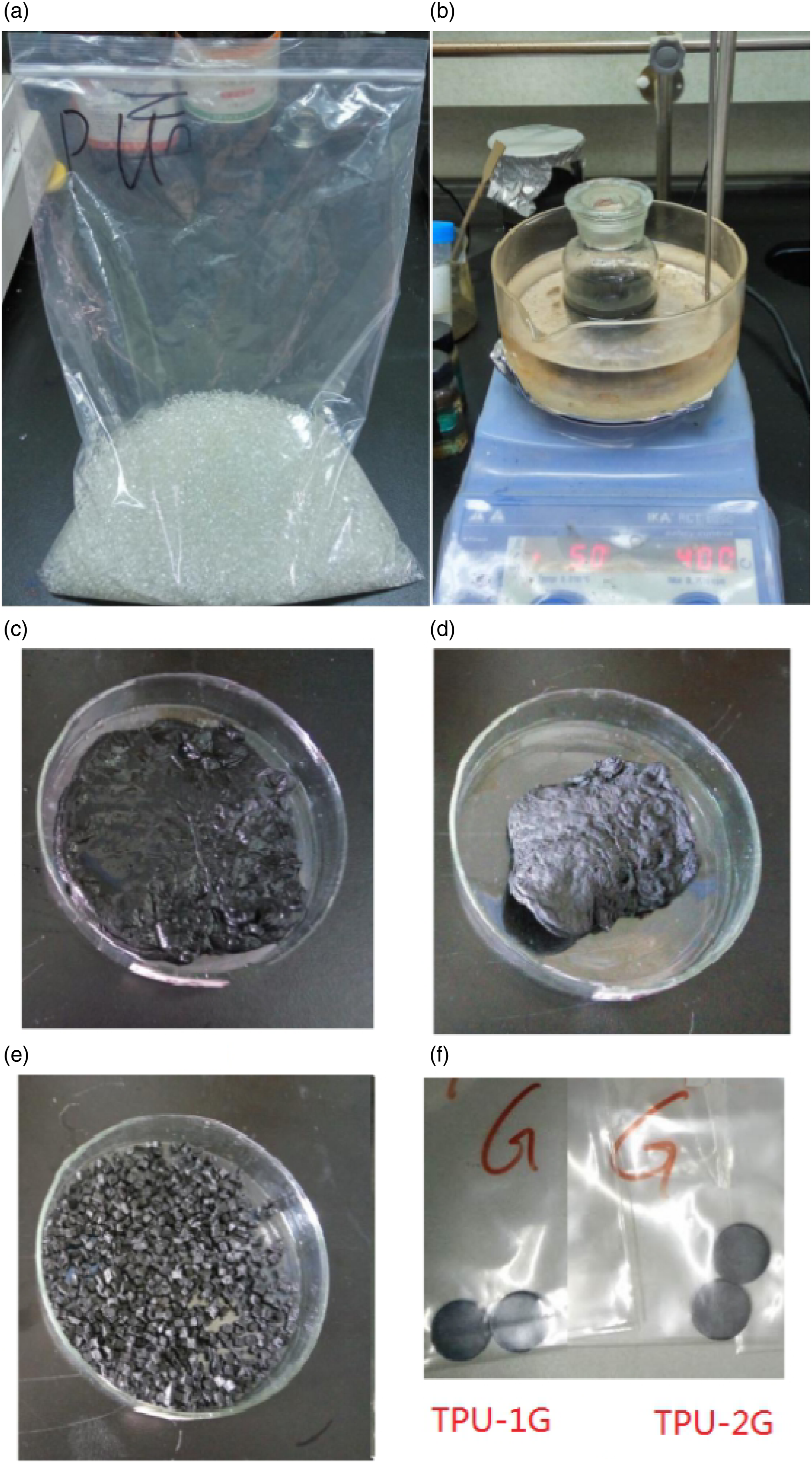
Figure 2 exhibited the WAXD results of the xGNPs, the pure TPU, and the TPU-2G composite. The xGNPs possessed a characteristic (001) diffraction peak at 2 theta = 26.1°.11–13 On the other hand, the pure TPU possessed two characteristic diffraction peaks at 2 theta = 9.1°, corresponding to the c-axis of the crystalline space cell for the hard segments (HSs) with an extended chain conformation, and 2 theta = 20.8°, corresponding to the short range regular ordering crystallinity on lateral spacing of the HSs domains or the amorphous structure.10,14–16 While for the TPU-2G composite, its WAXD pattern obviously showed the two same characteristic diffraction peaks of the pure TPU. However, the characteristic peak of the xGNPs at 2 theta = 26.1° wasn’t found in the WAXD pattern of the TPU-2G composite probably due to the low content of the xGNPs. WAXD results of the xGNPs, the pure TPU, and the TPU-2G composite.
The SEM was utilized to investigated the microstructure of the TPU-2G at different magnifications. As shown in Figure 3, (1) the thin-layer-shape xGNPs were well distributed in the TPU matrix, which could be attributed to the water-precipitating manipulation preventing the aggregation of xGNPs in the preparation process of the xGNPs/TPU composites, and (2) many xGNPs were separated by thin TPU layers and aligned in approximately parallel form with one another, resulting in the micro-capacitance structure with a great contribution to the enhancement of the dielectric constants for the xGNPs/TPU composites. SEM images of TPU-2G composite.
Crystallization behavior of xGNPs/TPU composites
Figure 4(a) and (b) display the DSC heating and cooling curves of the pure TPU and the xGNPs/TPU composites, respectively. The Tm values of the TPU, TPU-0.5G, TPU-1G and TPU-2G were 194.8°C, 193.1°C, 188.3°C and 190.6°C, respectively. This result indicated that the existence of the xGNPs could block the growth path of the TPU crystals and thus inhibit the formation of large TPU crystal with high Tm.17,18 On the other hand, the Tc values of the TPU, TPU-0.5G, TPU-1G and TPU-2G were 160.6°C, 152.2°C, 150.8°C and 152.2°C, respectively. This phenomenon could be explained as follows: there were some interfacial interactions between the oxygenated groups of the xGNPs and the polar groups of the TPU leading to the limitation of moving and folding of the TPU molecular chains to form the crystalline.17,18 Moreover, Figure 4(c) displays the melting enthalpy (△Hm) and the cooling enthalpy (△Hc) of the pure TPU and the xGNPs/TPU composites. The △Hm value and the△Hc value of the TPU were 16.23 J/g and 13.56 J/g, respectively, which were lower than those of the xGNPs/TPU composites. This phenomenon could be attributed to the facilitation effect of the xGNPs for the higher crystallization degree of the TPU.
19
DSC curves of TPU and xGNPs/TPU composites for (a) heating and (b) cooling, (c) △Hm and △Hc of TPU and xGNPs/TPU composites.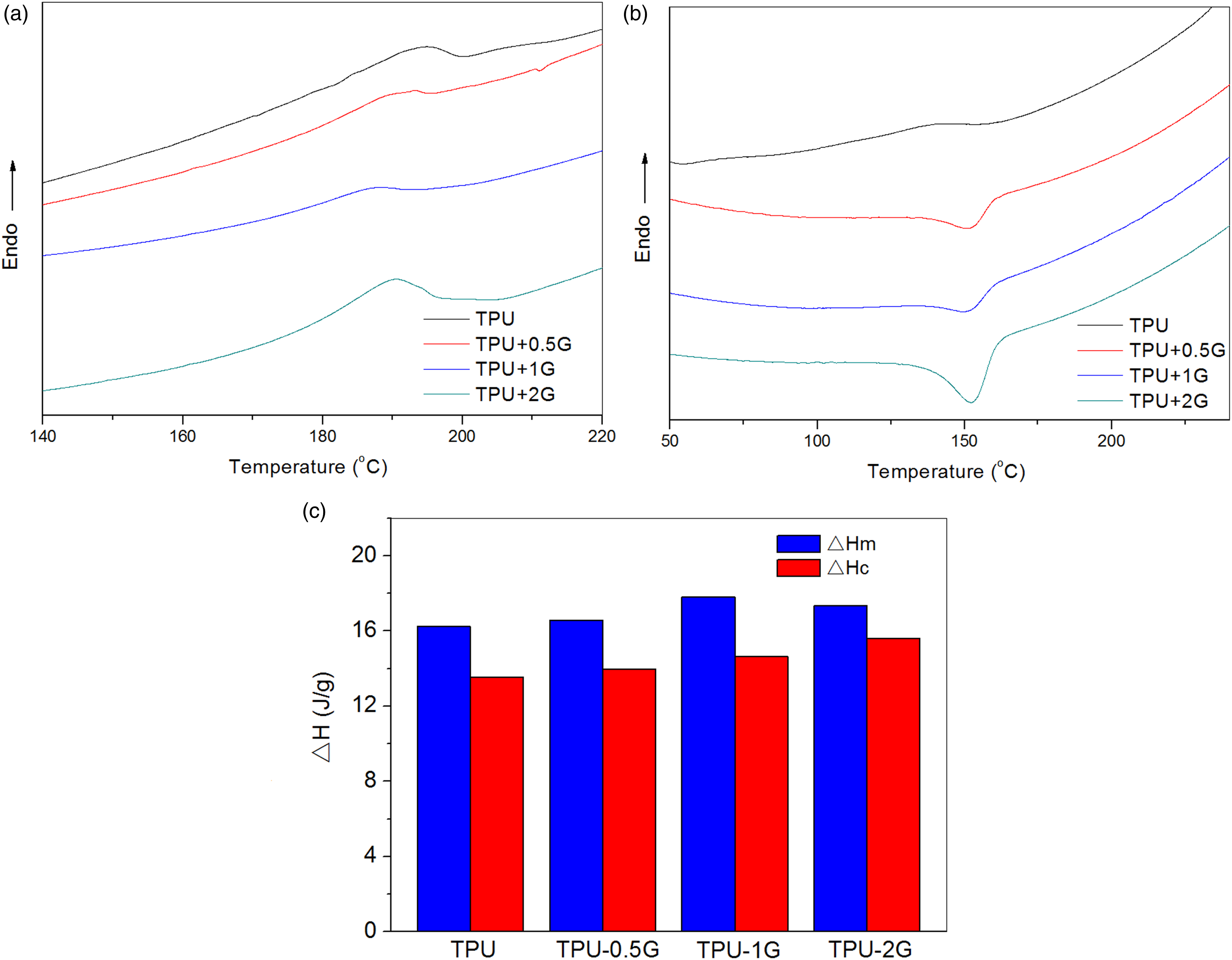
Dielectric and electrical properties of xGNPs/TPU composites
Figure 5(a) displays the dielectric constant of the pure TPU and the xGNPs/TPU composites as a function of the frequency. The dielectric constants of the xGNPs/TPU composites were significantly higher than that of the pure TPU and increased with the increasing xGNPs content. For instance, at 1000 Hz, the dielectric constants of the pure TPU, TPU-0.5G, TPU-1G and TPU-2G were 6.3, 8.6, 10.3 and 17.5, respectively, indicating the improvement of the dielectric constant of the TPU-2G at 1000 Hz was almost triple in comparison with that of the pure TPU. This enhancement could be mainly attributed to the water-precipitating manipulation during the preparation process of the xGNPs/TPU composites for the formation of a large number of the micro-capacitors as mentioned above. Moreover, the Maxwell-Wagner-Sillars (MWS) effect, owing to the resistance difference between the conductive xGPNs fillers and the insulated TPU matrix, was the other important factor in the improvement of the dielectric constant of the xGNPs/TPU composites. This MWS effect in the xGNPs/TPU composites was remarkable especially at the low-frequency range.11–13 Therefore, the dielectric constant difference between 1000 Hz and 107 Hz (dielectric constant at 1000 Hz minus dielectric constant at 107 Hz) of the TPU-2G was 8.69, while the corresponding value of the pure TPU was only 2.29. It has been reported that the achievement of a high dielectric constant the ceramic filler/TPU composites needs a high content of the ceramic filler. For instance, the dielectric constant of a BaTiO3 (20 vol.%)/TPU composite was around 14 at 1000 Hz.
20
However, such a high content of BaTiO3 filler with a high density of 6.1 g/cm3 might decrease the flexibility and the processability of the BaTiO3/TPU composite. For the TPU-2G with the high dielectric constant of 17.5 at 1000 Hz, its xGNPs content was only 2wt.%, which should be helpful to maintain the flexibility and processability of the xGNPs/TPU composite. On the other hand, when the relationship between and the dielectric constants and the contents of the xGNPs/TPU composite obey the percolation theory, the following equation can be applied (a) Dielectric constants of TPU and xGNPs/TPU composites as a function of frequency, (b) the experimental data fitting of the dielectric constants of xGNPs/TPU composites by the percolation theory.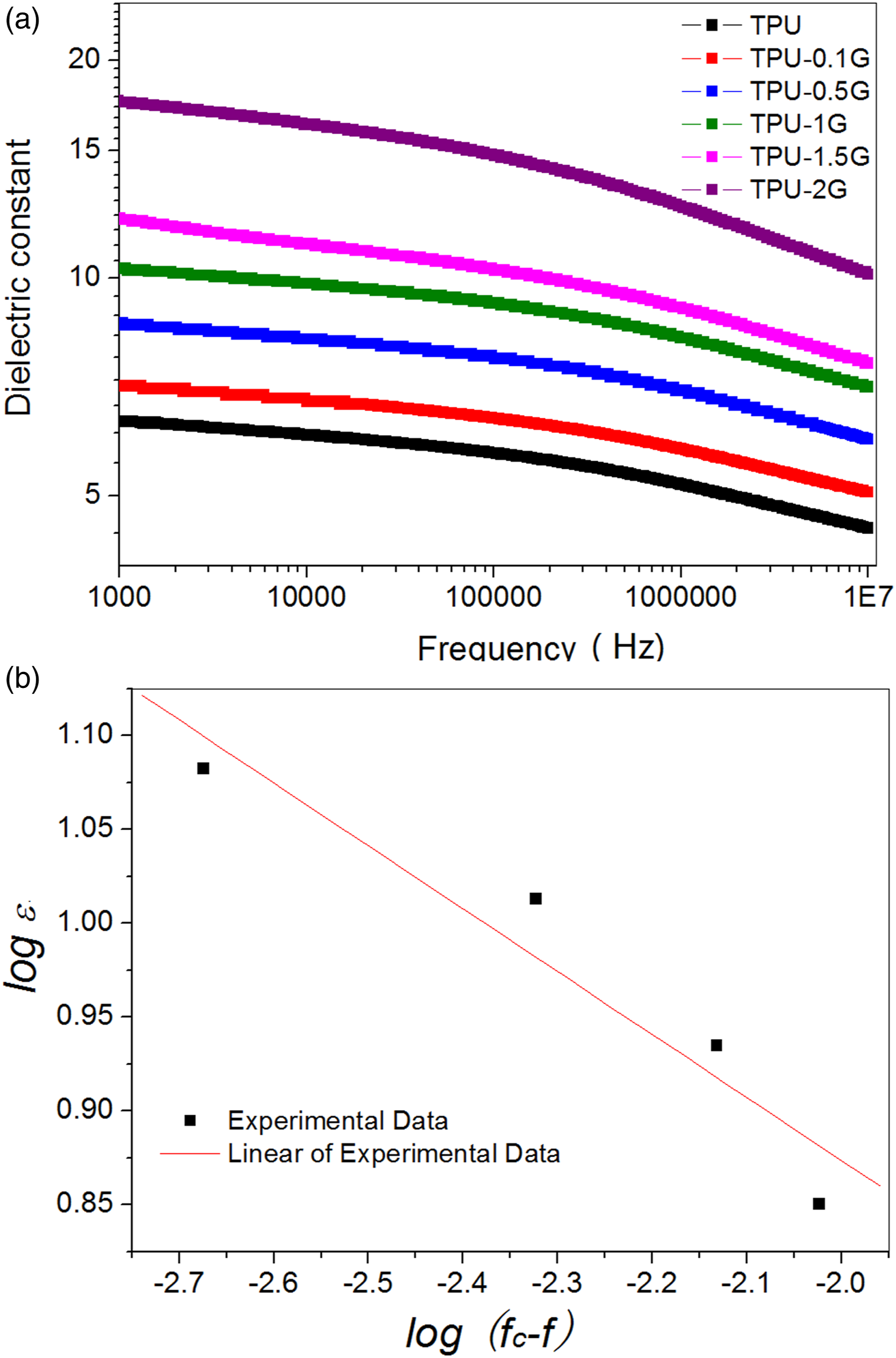

A higher value of the dielectric loss factor implies a larger loss of electrical energy as a result of the thermal dissipation during the charge-discharge process of a dielectric elastomer, and this thermal dissipation will increase the temperature of the dielectric elastomer and then destroy it. Therefore, the dielectric loss factor of the dielectric elastomer should be as low as possible. However, it is well known that the incorporation of electrically conductive fillers into a polymer matrix inevitably increases the dielectric loss factor (tan Dielectric loss factors of TPU and xGNPs/TPU composites as a function of frequency at room temperature.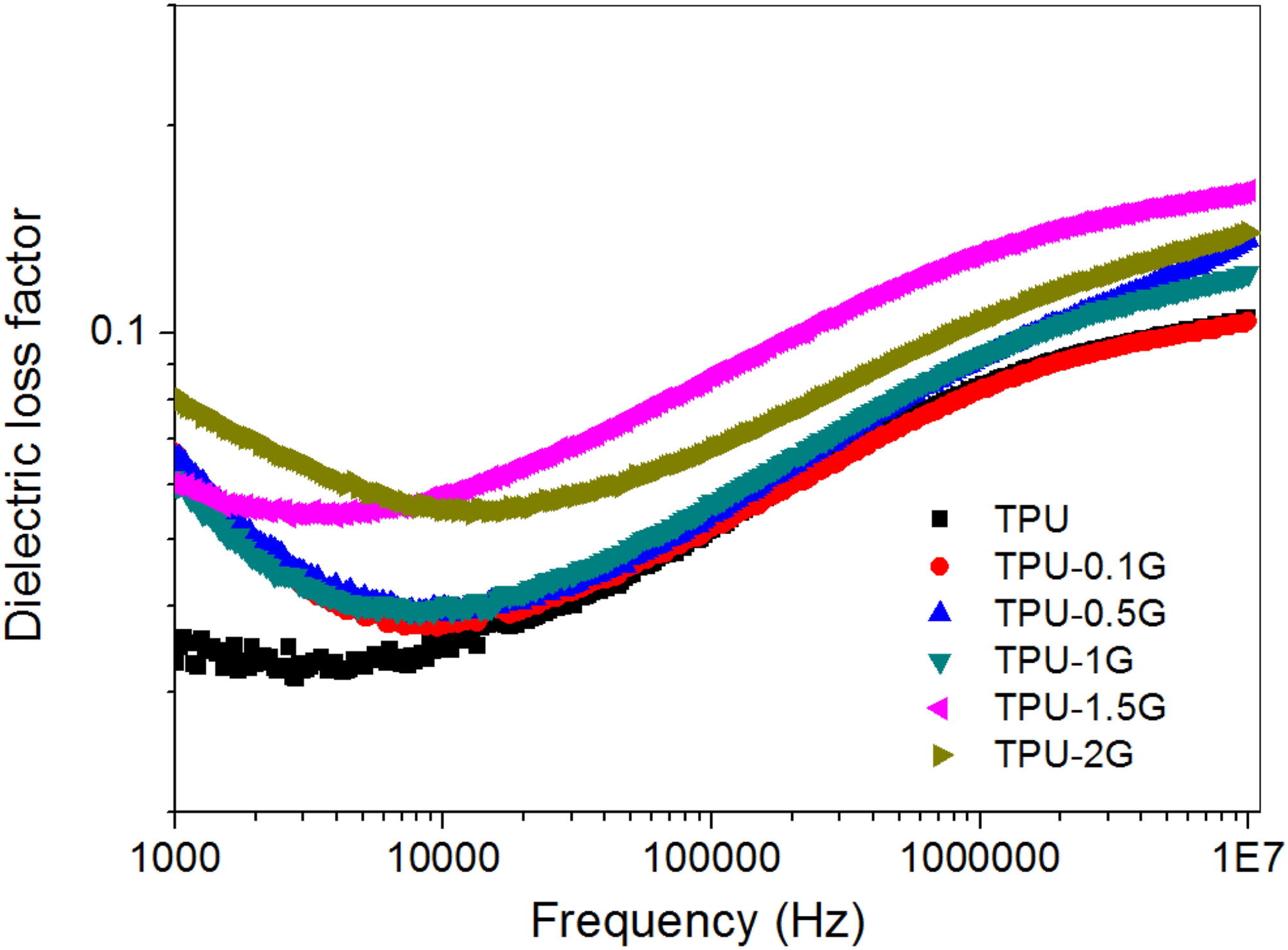
Thermoplastic polyurethane is an intrinsically insulating polymer and the incorporation of the electrically conductive filler in it will certainly improve its electrical conductivity, resulting in a electrical current leakage. Figure 7 displays the AC conductivity of the pure TPU and the xGNPs/TPU composites as a function of the frequency. The AC conductivities of both the TPU and the xGNPs/TPU composites increased with the increase of the frequency in the whole investigated frequency range indicating the insulating behavior.11–13 However, it was also found that the AC conductivities of the xGNPs/TPU composites were higher than that of the pure PTU and increased with the increasing xGNPs content. For instance, at 1000 Hz, the AC conductivity of the pure TPU was only 2.92 × 10⁻⁸ S/m, while the corresponding values of the TPU-0.5G, TPU-1G and TPU-2G were 3.24 × 10⁻⁸ S/m, 3.51 × 10⁻⁸ S/m and 5.77 × 10⁻⁸ S/m, respectively. This result implied that some electrically conductive paths of the xGNPs formed in the xGNPs/TPU composites leading to the increasing of the dielectric loss factor. AC conductivities of TPU and xGNPs/TPU composites as a function of frequency at room temperature.
Thermal conductivites of xGNPs/SBS composites
Because the thermal conductivity of the xGNPs of 704 W/mK is much higher than that of the pure TPU, the incorporation of the xGNPs into the TPU matrix could increase the thermal conductivities of the resultant xGNPs/TPU composites.
12
Figure 8 displays the thermal conductivities of the pure TPU and the xGNPs/SBS composites. The thermal conductivities of the TPU-0.5G, the TPU-1G, and the TPU-2G were 0.380 W/mK, 0.389 W/mK, and 0.412 W/mK, respectively, with enhancements of 6.4%, 9.0%, and 15.4% in comparison with that of the pure TPU (0.357 W/mK). This result suggested that the addition of the xGNPs filler into the TPU matrix could not only improve the dielectric constant but also transfer the thermal energy originating from the dielectric loss, which would be beneficial to the real application of the xGNPs/TPU composites as dielectric elastomers. Thermal conductivities of TPU and xGNPs/TPU composites.
Conclusions
Exfoliated graphite nanoplates/thermoplastic polyurethane composites were successfully prepared by subjecting the xGNPs/TPU/DMF-THF mixture to solution blending and water precipitation in sequence. The homogenous distribution of the xGNPs filler in the TPU matrix was proved by the SEM images. The existence of the xGNPs influenced the crystallization behavior of the TPU and improve the thermal conductivity of the resultant xGNPs/TPU composite. More importantly, when the xGNPs content was 2 wt.%, the dielectric constant of the xGNPs/TPU composite, with a relatively low dielectric loss factor, was almost three times that of the pure TPU at 1000 Hz. We suggest that such xGNPs/SBS composites would be promising materials to be used as the dielectric elastomers
Footnotes
Declaration of conflicting interests
The author(s) declared no potential conflicts of interest with respect to the research, authorship, and/or publication of this article.
Funding
The author(s) disclosed receipt of the following financial support for the research, authorship, and/or publication of this article: The authors would like to acknowledge the support of the Guangdong province natural science foundation, China (2022A1515010475), the professorial and doctoral scientific research foundation of Huizhou University, China (2018JB001), the college student training program of Guangdong University of Petrochemical Technology, China (73321052).
