



Abstract
The eco-friendly functionalized TiO2/polymer antifouling (AF) coating was successfully synthesized by dispersing TiO2 nanoparticles in waterborne epoxy-modified tung oil resin. The AF effectiveness of coating was evaluated toward Staphylococcus aureus (S. aureus, ATCC6538), Escherichia coli (E. coli, ATCC8739) and diatom (Cyclotella sp., FACHB-1635). The nanoTiO2/polymer AF coating showed good antimicrobial activity both under the light and dark conditions by comparison with the pristine TiO2 nanoparticles and bulk polymer. Under light irradiation for 50 min, the AF coating showed only 8.4% and 8% survival rate for S. aureus and E. coli. In addition, The AF coatings exhibited favorable inhibition efficacy toward the growth and adhesion of Cyclotella sp., and the efficacy was enhanced with the increase of TiO2 content. It can be concluded that TiO2 nanoparticles endow the AF coatings with promoted fouling resistance properties.
Introduction
The colonization of submerged surfaces in seawater by fouling organisms such as barnacles, algae and mussels is a serious problem for shipping industry.1–3 The attached marine organisms on ship hulls not only increase the flow resistance and fuel consumption, but also lead to corrosion related repairs.3–5 To retard the increasing fouling rate, antifouling (AF) coatings are widely used to control the growth of marine organisms on hulls.6–9 The first AF coatings with copper, arsenic or mercury oxide as toxicants dispersed in linseed oil or shellac appeared in the mild 19th century. 10 For more than three decades, tributyltin self-polishing copolymer (TBT-SPC) paints managed to monopolize the AF coating market thanks to their outstanding performances. 11 Due to the persistence, accumulation and high toxicity of organotin compounds in the water column, organic tin-based AF coatings were completely phased out.12,13 As a result, great efforts have been made to develop tin-free AF paints.14,15 Some researchers focused on non-release coatings that mainly based on controlling physicochemical and mechanical properties such as surface roughness, elastic modulus or wettability of surface, which impact on the interactions between marine organisms and the surface.16–18 The others concentrated on AF coatings based on novel less toxic biocides or natural compounds.9,19–22 Recently, green AF compounds from microorganisms, seaweeds and aquatic plants, marine invertebrates and terrestrial natural products have been extensively investigated. However, the supply issue limited their use on commercial paints. 23
The transition metal and metal oxide nanoparticles with interesting properties are widely used in several fields such as electronic devices, catalysis, environmental technology, biology, dye-sensitized and medicine. Among the particles, TiO2 nanoparticles have promising applications in the field of antifouling due to high photo-reactivity, low cost, nontoxic nature, and chemical stability. Meanwhile, TiO2 can act as antibacterial agents working based on the interaction of light with the dispersed metallic nanoparticles, which have attracted great interest owing to their high and broad photocatalytic activities.24–26 With high photocatalytic activity,27,28 chemical stability,29–31 antibacterial and self-cleaning ultra-hydrophilic properties, 32 TiO2 has been used extensively for killing different groups of microorganisms including bacteria, fungi and viruses. As we know, AF coating introducing TiO2 is one of the current strategies to suppress biofouling. However, most of the commercial AF coatings are non-waterborne, which must be faced with the problem of the release of volatile organic compounds (VOCs), and little research was reported on evaluation of antibacterial activity against Staphylococcus aureus and Escherichia coli as well as the inhibition activity against Cyclotella sp. toward waterborne AF coating with TiO2 nanoparticles.
There are few papers to prepare TiO2 antifouling coating based on epoxy-modified tung oil waterborne resin and investigate antibacterial activity to the best of our knowledge. In the present work, we aim to investigate the functional effectiveness of waterborne AF coating with TiO2 nanopartiles as AF agent based on epoxy-modified tung oil waterborne resin synthesized in our previous work. 33 The epoxy-modified tung oil coating method for TiO2 not only can prevent marine life from attaching to the hull but also has outstanding antibacterial activity. To this aim, the antibacterial activity of AF coating against S. aureus and E. coli were measured, as well as the inhibitory behavior against diatom Cyclotella sp. were investigated, respectively. Additionally, the adhesion of diatom Cyclotella sp. toward the functionalized TiO2/polymer AF coating was assayed.
Materials and methods
Materials
The epoxy resin used was commercial diglycidyl ether of bisphenol-A epoxy (E-51) purchased from Wuxi Resin Factory of Bluestar new Chemical Materials Co. Ltd. (Wuxi, China). Tung oil (technical grade) was purchased from Jiangsu Donghu Bio-energy Plant Plantation (China). Poly (ethylene glycol)-1000 (PEG-1000) was obtained from Aladdin Industrial Co. Ltd. (Shanghai, China). hexamethylene diisocyanate (HDI), Maleic anhydride (MA), triethanolamine, N, N-dimethyl ethanolamine (DMEA), and methylethylketoxime (MEKO) were bought from Shanghai Lingfeng Chemical Reagent Co. Ltd. (Shanghai, China). TiO2 nanoparticles (anatase) were obtained from Aldrich Chem. Co. All the chemical reagents used were of analytical grade.
Gram-positive S. aureus (ATCC6538) and Gram-negative E.coli (ATCC8739) were selected as test bacteria and provided by China Center of Industrial Culture Collection (Beijing, China). Diatom (Cyclotella sp., FACHB-1635) and CSI medium were provided by Freshwater Algae Culture Collection at the Institute of Hydrobiology, FACHB-collection (Wuhan, China).
Methods
Preparation of functionalized TiO2/polymer AF coating
The TiO2/polymer waterborne AF coating was prepared by epoxy-modified tung oil resin as film-forming material and TiO2 nanoparticles as AF agent. Then TiO2 nanoparticles were well dispersed in waterborne epoxy-modified tung oil resin with the aid of ultrasonic agitation. Waterborne epoxy-modified tung oil resin was synthesized as in our previous works. 33 Tung oil (30 g) and MA (7.5 g) were mixed in the flask, and heated up to 120–130°C for 1.5 h, the tung oil anhydride adduct was under vacuum for 10 min to remove the residual monomer. when the adduct was cooled down to 115°C, adding n-butanol (10 g) and PEG-1000 (20 g) and the reacted for 2 h. Next, the predissolved epoxy resin (dissolved in a mixture medium: ethylene glycol butyl ether: n-butanol = 2:3, v:v, 65°C) was added dropwise into the flask at 90°C, and the triethanolamine (1%, based on the weight of epoxy resin) was added into the system for 2.5 h. As the temperature was cooled to room temperature, isopropanol (10 g) and propylene glycol monomethyl ether (10 g) were added and the pH value was adjusted to 8.0–8.5 by N,N-dimethyl ethanolamine. Then, the curing agent blocked HDI prepared was added and stirred for 0.5 h. Finally, the concentration of TiO2 nanoparticles (2, 4, 6, 8, 10 µg/mL) was added into epoxy-modified tung oil resin diluted by equal amount deionized water and ultrasonic treated for 30 min to obtain the functionalized TiO2/polymer AF coating.
Structure investigation
X-ray diffraction (XRD) analysis was measured with a D/max-γ B rotating diffractometer (Rigaku, Japan), using CuKa (λ = 0.15418 nm). A scan rate of 0.05o/s was applied to record the pattern in the 2θ range of 10–70°.
Antibacterial evaluation
The antibacterial activity evaluation of functionalized TiO2/polymer AF coating against S. aureus and E. coli was performed in liquid culture medium. 34 The concentration of S. aureus and E. coli for bacterial suspension after rejuvenating was set as 1.0, and the absorbance at 600 nm for each sample with the relative concentration of S. aureus at 0.1, 0.2, 0.3, 0.4, 0.5 and 0.6 was measured, respectively. On the basis of experimental data which were described in Figures 1 and 2, the linear regression equation of S. aureus and E. coli from the calibration curve was determined as following:
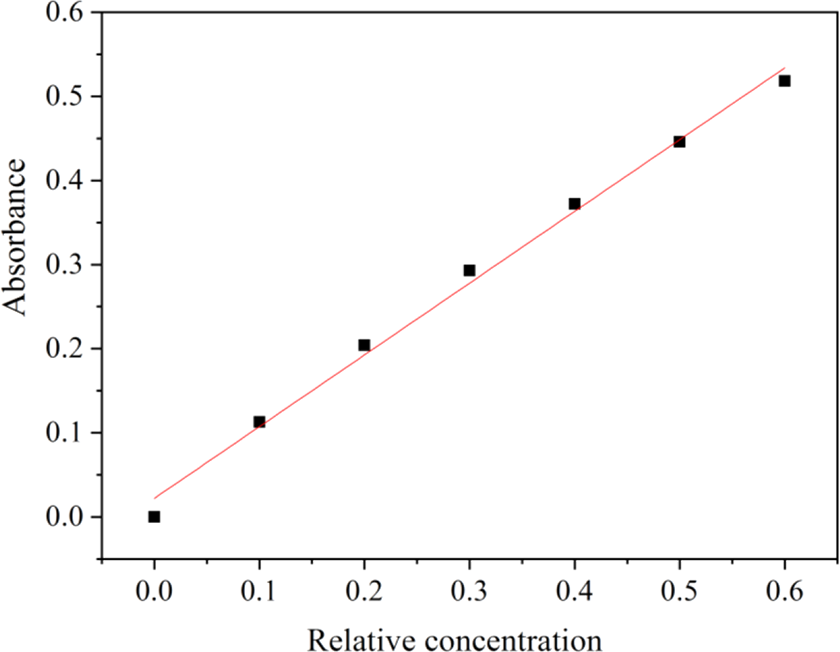
Standard curve of Staphylococcus aureus.

Standard curve of Escherichia coli.


where the X is the relative concentration of S. aureus and E. coli; Y is the corresponding absorbance value.
A volume of 2 mL rejuvenated bacterial suspension was transferred into the liquid culture medium, then 30 mg the functionalized TiO2/polymer AF coating was added into the liquid culture medium containing S. aureus and E. coli after sterilization by ultraviolet light. The culture media were propagated for 24 h on a shaker platform (SHZ-82, Changzhou Guohua Electric Appliance Co., Ltd., Jiangsu, China) at 100 rpm and 37°C. The absorbance at 600 nm was measured using a spectrophotometer (UV-754PC, Shanghai Jinghua Technology Instruments Co., Ltd., Shanghai, China) and relative concentration of S. aureas and E. coli was calculated based on equations (1) and (2).
To investigate the antibacterial performances of the synthesized TiO2/polymer AF coating, pristine TiO2 nanoparticles and the functionalized TiO2/polymer AF coating were applied to the antibacterial abilities. The mixture was irradiated for 10, 20, 30, 40 and 50 min with a 100 W LED lamp. The light intensity was 2000 l× and the distance between the reactor and the lamp was set at 10 cm. In the end, the absorbance value were measured by the spectrophotometer and the survival rate of bacterial were calculated based on equation (3).
The survival rate of bacteria was used to evaluate the antibacterial properties of AF coatings, and based on the concentration of bacteria in the control sample, the survival rate of bacteria was calculated as following:

where C0 is the bacterial concentration of control sample and C is the bacterial concentration of different concentration of TiO2 nanoparticles after the illumination, respectively.
Diatom inhibition test
Cyclotella sp. was stored in an Erlemeyer flask and cultured in a light incubator of 25 ± 1°C illuminating at 2000 l× (12:12 h light: dark cycle) under sterile conditions. 10 mL algae suspension was added in 20 mL CSI medium and cultured for 30 d. When the biomass increased significantly, the algae were transferred again with the proportion of algae suspension and CSI medium at 1:5. During the culturing, the flask was shaken twice a day.
The specimens were put into flasks contained 150 mL sterilized artificial seawater (Table 1) and 20 mL Cyclotella sp. suspension, respectively (the specimen without additional TiO2 nanoparticles was used as control), and then continued to be cultured in the light incubator at 25 ± 1°C illuminating of 2000 Lux (12:12 h light:dark cycle) under the sterile condition. The absorbance values at 680 nm of the algae suspensions were measured using a spectrophotometer (UV-754PC, Shanghai Jinghua Technology Instruments Co., Ltd., Shanghai, China) every 2 days.
Formula of artificial sea water.

Diatom adhesion test
Similar to diatom inhibition test, the specimens were removed from flasks at the 14th day (two specimens for each AF coating). One specimen was washed with 10 mL CSI medium repeatedly. After the adnexed Cyclotella sp. was removed from the specimen surface completely, the absorbance of washed CSI medium at 680 nm was measured using a spectrophotometer to assay the diatom adhesion on each specimen. Each specimen was dried at 25°C and cut into squares (5 mm × 5 mm). Prior to the observation with scanning electron microscopy (SEM; SU8020, Hitachi, Japan), all the specimens were sputter-coated with gold. The field-emission scanning electron voltage was set at 5 kV.
Statistical analysis
Each experiment was repeated three times. Statistical analysis was performed using the unpaired Student’s t-test, and the results were expressed as the means ± standard deviation (SD). A value of p < 0.05 was considered to be statistically significant.
Results and discussion
Structure investigation
The X-ray diffraction (XRD) pattern was performed to confirm the existence of TiO2 nanoparticles in AF coating. As shown in Figure 3, the principal diffraction peaks of sample were present at 2θ values of 25.3° (101), 38.0° (004), 47.7° (200), 54.8° (105) and 63.1° (204), respectively, which correspond to the anatase structure.35,36 These peaks gave the characteristic diffraction peaks of TiO2 nanoparticles, indicating that TiO2 nanoparticles had been successfully doped into AF coating.
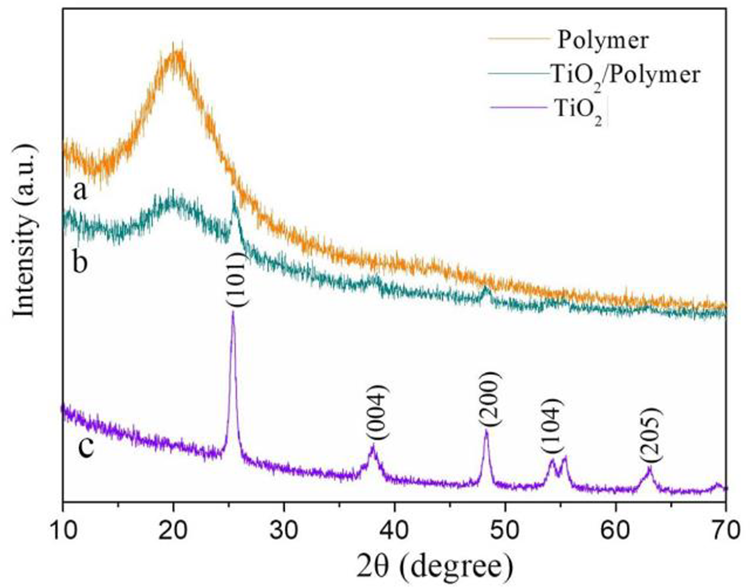
XRD image of the functionalized TiO2/polymer AF coating.
Antibacterial mechanism of TiO2/polymer AF coatings under light
When TiO2/polymer was illuminated under the light, the conjugated polymer could absorb the light to produce high activity of e− and positive hole, h+. The photogenerated electrons were readily transferred to the conduction band of TiO2 and holes were left in the polymer (Figure 4). Thus, the electron in the conducting band of TiO2 activated oxygen adsorbed onto its surface to produce superoxide anion radicals or other active oxides, and meanwhile, the holes left in the polymer combined with the electrons in valence band of TiO2 or they might directly react with H2O or OH− to generate hydroxyl radical. These hydroxyl radicals and superoxide anion radicals can damage bacterial cell membranes, resulting in bacterial death. 37 Furthermore, the unsaturated fatty acid in polymer also has certain antibacterial effect.38,39

The antibacterial mechanism of TiO2/polymer AF coatings under the light.
Evaluation of antimicrobial activity on different bacteria by the liquid culture method
Gram-positive bacteria S. aureus and gram-negative E. coli were respectively used as bacteriostatic test and cultured by liquid culture. The absorbance values were tested by spectrophotometer. Then, their relative concentrations according to the standard curve of two kinds of bacteria and survival rate of bacteria based on equation (3) were calculated. As shown in Figure 5, the survival rate of S. aureus declined with the illumination time prolonged, and when the illumination time reached 30 min, the survival rate of S. aureus declined to about 20%. Compared to the pure TiO2 nanoparticles, the functionalized TiO2/polymer AF coating had better inhibition effect against S. aureus.
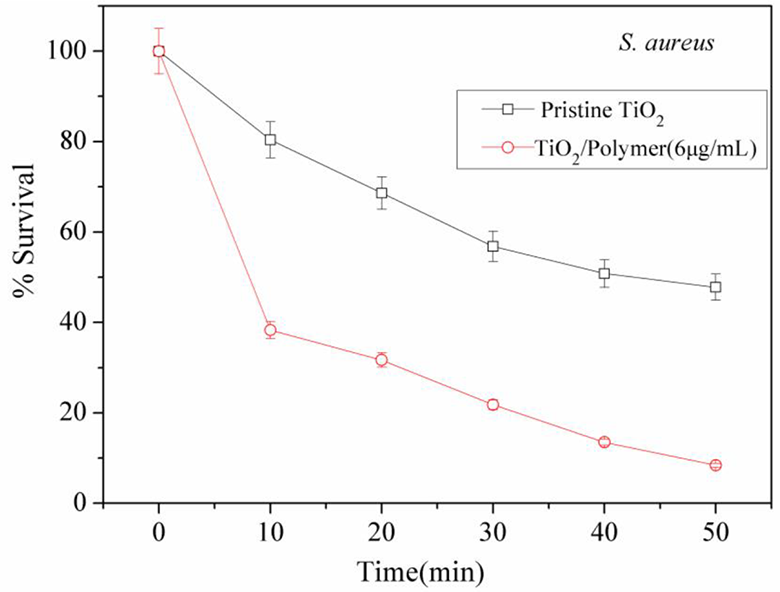
Survival rate of Staphylococcus aureus with time changes.
Inhibitory effect of the functionalized TiO2/polymer AF coating against E. coli was better than pure TiO2 nanoparticle, which was illustrated in Figure 6. By observing the survival rate of E. coli, similar results were found. For example, when the illumination time reached 30 min, the survival rate of E. coli declined to less than 25%. Moreover, in comparison of the survival rate of S. aureus and E. coli, it is not difficult to find the inhibitory effect of the functionalized TiO2/polymer AF coating against gram-positive bacteria S. aureus is better than gram-negative E. coli in 30 min.
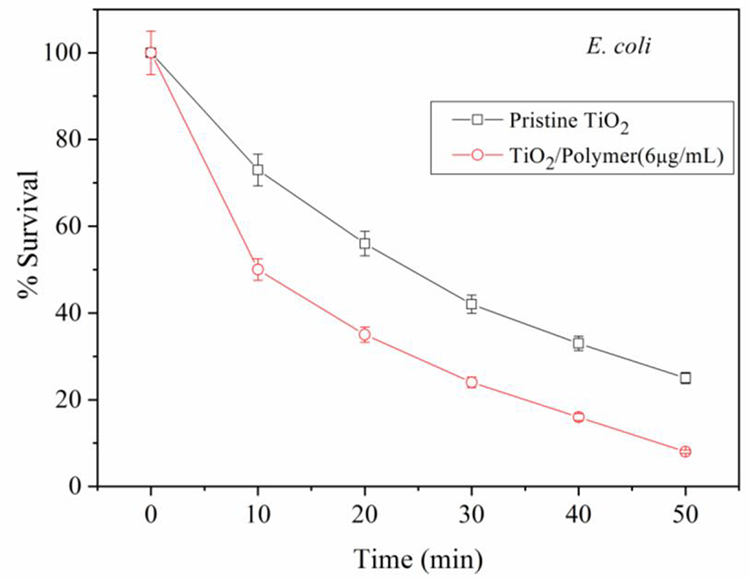
Survival rate of Escherichia coli with time changes.
Diatoms inhibition evaluation
Based on the functionalized TiO2/polymer AF coatings with excellent antibacterial effect. The growth of Cyclotella sp.was evaluated by measuring the absorbance values of algae suspensions. Figure 7 displays the immersion time as a function of absorbance value for the algae suspension with different concentration of TiO2 nanoparticles, correspondingly. As we all known, greater of the absorbance values of diatom algae, more of the number of diatom algae. On the contrary, it showed that fewer number of diatom algae of Cyclotella sp. and the AF coating had better inhibition activity on the growth of diatom algae. In addtion, with increasing the concentration of TiO2 nanoparticles, the absorbance value of the corresponding diatom algae was getting smaller and smaller. Therefore, the functionalized TiO2/polymer AF coating showed an obvious inhibition activity on the growth of Cyclotella sp. as compared to the control.
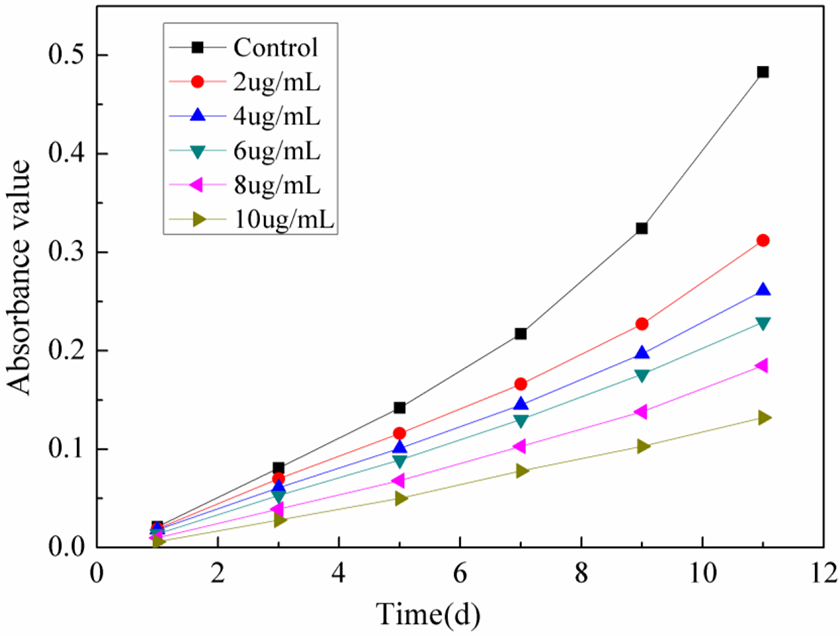
Curves of diatom inhibition for coating with different concentration of TiO2 nanoparticles.
Diatom adhesion assay
Figure 8 described the absorbance of diatom algae attached on the functionalized TiO2/polymer AF coatings with different concentration of TiO2 nanoparticles. Compared with the blank sample, it could be clearly seen the absorbance of diatom algae attached on the TiO2/polymer AF coatings showed a downward trend, indicating that the diatom biomass attached on the AF coating became less. Additionally, with increasing TiO2 nanoparticles concentration, the diatom algae adhesion rate decreased significantly, which was shown in Figure 9. In addition, compared to the control sample, the diatoms algae attached on the AF coating with different concentration of TiO2 nanoparticles were obviously fewer and could be further confirmed by SEM. With increasing TiO2 nanoparticles, the amount of Cyclotella sp. attached on the AF coating would be less and less, this phenomenon explained that more TiO2 nanoparticles concentration, better the inhibitory effect of diatomsalgae. Moreover, the absorbance value of diatom algae solution was obtained by the spectrophotometer, after the samples were repeatedly washed with an equivalent amount of CSI medium, and then further observed the adhesion diatom on the AF coating. The results were illustrated the Figure 10, with increasing TiO2 nanoparticles concentration, the diatom adhesion rate adhered on surface of AF coating was declining gradually. Therefore, according to the information above, we may obtain the conclusion that the diatoms attached on AF coating gradually reduced, due to increasing the concentration of TiO2 nanoparticles. Generally speaking, the AF coating had better inhibitory effect on diatoms algae.
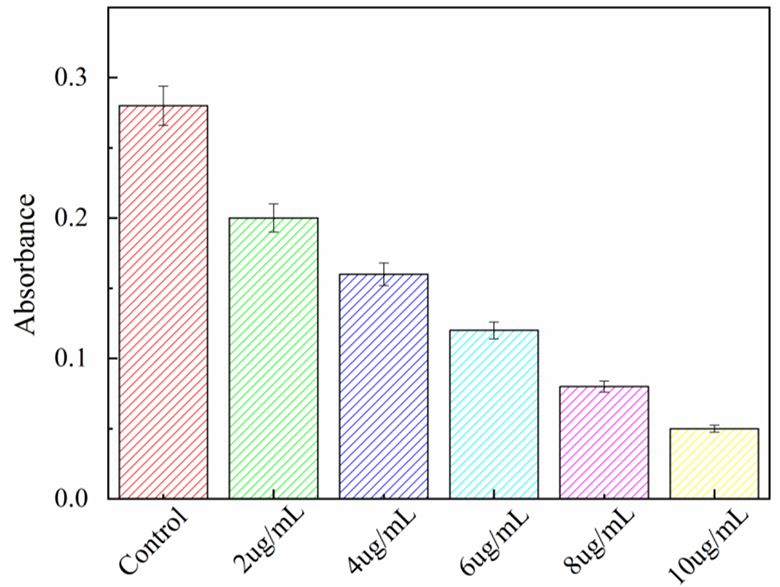
Absorbance values of diatoms on AF coating surface with different concentration of TiO2 nanoparticles.
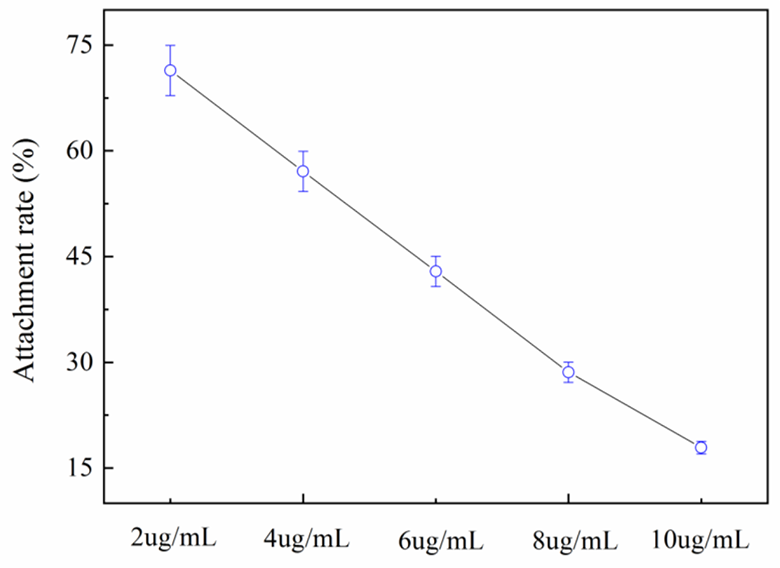
Adhesion rate of diatoms on surface coating with different concentration of TiO2 nanoparticles.
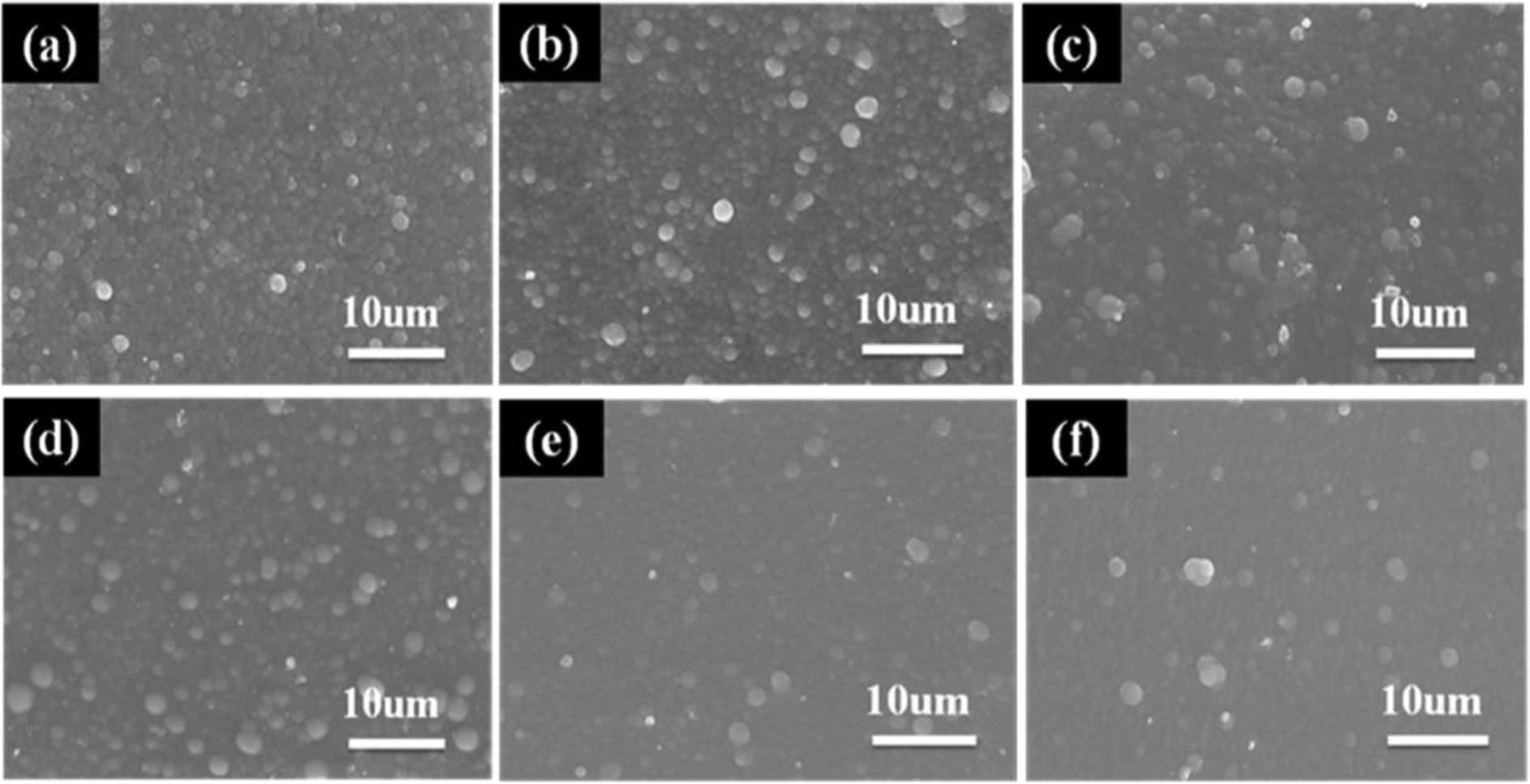
SEM images of diatom adhered on AF coating surface with different concentration of TiO2 nanoparticles at (a) control, (b) 2 µg/mL, (c) 4 µg/mL, (d) 6 µg/mL, (e) 8 µg/mL, (f) 10 µg/mL.
Conclusion
With TiO2 nanoparticles as AF agent, waterborne acrylate-modified tung oil AF coating was successfully prepared. The result showed that the nanoTiO2/polymer AF coating had good antimicrobial activity both under the light and dark conditions by comparison with the pristine TiO2 nanoparticles and bulk polymer. Moreover, the synergistic effect between the polymer and TiO2 contributed the superior antimicrobial performance toward S. aureus and E. coli under light. The results also showed that the AF coatings exhibited better inhibition efficacy toward the growth and adhesion of Cyclotella sp. when the content of TiO2 reached 10 μg/mL. The TiO2/polymer AF coating will be applied to various antimicrobial applications ranging from the light activated system to the dark sterilization approach.
Footnotes
Declaration of conflicting interests
The author(s) declared no potential conflicts of interest with respect to the research, authorship, and/or publication of this article.
Funding
The author(s) received no financial support for the research, authorship, and/or publication of this article.
