




Abstract
This work focused on investigation of application properties of organoclay-modified natural rubber (NR) composites. This organoclay, flame-retardant (FR) dendrimer-modified organic montmorillonite (G-OMMT), was composed of dendrimer and montmorillonite. Different generations of G-OMMT were prepared. G3.0-OMMT was selected and FR composites were fabricated. Their tensile properties, thermal stability, flame-retardance, and other properties were compared. The tensile strength and elongation at break of NR/G3.0-OMMT-15 were 18.8 MPa and 586%, respectively, which were about 12.6% and 23.6% higher than that of pure NR, 16.7 MPa and 474%. In addition, when 10 phr of G3.0-OMMT was added, the wearing loss volume was 0.231 cm3, which was 42.4% lower compared with that of pure NR, 0.401 cm3. The NR composites also possessed better thermal stability. When the amount of this organoclay was 10 phr, T 5% and T 10% were 306.4°C and 349.5°C, respectively. They were 102.3°C and 29.2°C higher than that of pure NR. Moreover, the burning rate was decreased from 30.15 mm min−1 for pure NR to 19.48 mm min−1 for NR/G3.0-OMMT-20, and the limited oxygen index value was increased from about 18% for pure NR to about 28% for NR/G3.0-OMMT-20. Scanning electron microscopy analysis demonstrated that the layered silicates dispersed uniformly in these composites and possessed a good compatibility with the polymeric matrix.
Introduction
Natural rubber (NR) is a type of macromolecules with unique physical and mechanical properties. Usually, it is used as commodity and engineering elastomer. However, this polymer has an inherent high flammability, which is owned by most natural and synthetic rubbers. This kind of drawback may limit its use in many fields. 1,2
The fire performance of polymers may be improved by using flame-retardant (FR) additives. 3,4 Due to its good thermal stability, small size, and intercalation ability, montmorillonite (MMT) was given special attention in the field of flame-retardance. The composites with MMT particles can show higher modulus, reduced air permeability, and better thermal stability. 5,6 Bao et al. 7 synthesized a novel type of functionalized intumescent flame-retardant montmorillonite (IFR-MMT) by solid-phase grafting with an organic modifier, such as diphenyl phosphate, 3-aminopropyltrimethoxysilane, and the like. This additive was added into Ethylene Propylene Diene Monomer (EPDM) matrix and FR rubber composites were prepared. Results showed that the flame retardancy of EPDM composites was improved obviously when the mass fraction of IFR-MMT was 25%. Li et al. 8 prepared a type of NR/organoclay nanocomposites using mixing intercalation method. Experimental results of flammability and mass loss curves showed that these nanocomposites were FR and environmentally friendly.
However, the compatibility of the above organoclay with polymeric matrix was not very good, and this was not beneficial for its physical and mechanical properties. Due to a large number of functional terminal groups, three-dimensional networks, and good compatibility, dendrimer has received more attention in the field of functional materials. 9 Dendrimer owned special properties including both molecular and polymeric chemistry. This polymer may be prepared by step-by-step controlled synthesis, which was ascribed to molecular chemistry. In addition, the polymer may be synthesized by monomer, and this belonged to polymer chemistry. 10,11
In our previous work, a new type of FR dendrimer-modified organoclay, G-OMMT, was prepared and characterized. 12 Results demonstrated that G1.0-OMMT, G2.0-OMMT, and G3.0-OMMT exhibited an increased thermal stability in comparison with that of MMT. Moreover, an exfoliated structure was revealed in this type of organoclay. In addition, phosphorus and nitrogen elements were contained in this dendrimer. Thus, a novel type of enhanced polymer composites with FR ability can be facilitated.
In the present work, this novel type of organoclay was used to prepare different NR/G-OMMT composites. The tensile properties together with thermal stability, solvent resistance, and flame-retardance were studied and compared. As a result, these NR composites possessed better thermal stability, tensile properties, FR behavior, and can be applied to prepare FR wire and cables, conveyor belt, tires, and so on.
Experiment
Materials
The G-OMMT, which was composed of OMMT and dendrimer, was prepared by Zhao and Wang. 12 A novel type of NR/G-OMMT composites was prepared using the formulation, which was presented in Table 1. NR was received from Hainan Natural Rubber Industry Group Co., Ltd. Rubber additives used were all purchased from the market (Shanghai, China).
Formulation and grades of NR/G-OMMT composites.

G-OMMT: dendrimer-modified organic montmorillonite; NR: natural rubber.
Preparation of NR/G3.0-OMMT composites
First, different additives, which were shown in Table 1, were added into the NR gums using two-roll mill. In this process, G3.0-OMMT was added in different ratios, such as 5, 10, 15, and 20 phr, into rubber matrix. Then, the cure process for these gums proceeded at 150°C. This process was lasted for 10 min, and different NR composites with different ratios of G3.0-OMMT, NR/G3.0-OMMT-5, 10, 15 and 20 were prepared.
Characterization
Parameters of the cure process were measured on a vibrating plate rheometer (MDR-2000, Liyuan, China). In optimum cure time, the compounds were vulcanized at 150°C using a pressure of 15 MPa.
Thermogravimetric analysis (TGA) test was performed on a Linseis equipment (PT-1000, Germany). In this experiment, nitrogen was used as the atmosphere, and 20°C min−1 was set as the increasing rate of temperatures. Ten milligrams of the samples was used in the test. They were tested from the room temperature to 600–800°C.
Horizontal burning test was conducted on a horizontal burning tester (5400, Kunshan, China) according to the standard ASTM D635. A size of (125 ± 5 mm) × (13.0 ± 0.5 mm) × (3.0 ± 0.2 mm) was used in this test to prepare the rubber sheets.
Limited oxygen index (LOI) was tested by automatic oxygen index tester (VOUCH company, Suzhou, China, Model 5801A). The sample size was (120 mm) × (6.5 ± 0.5 mm) × (3.0 ± 0.5 mm), and propane ignition was used according to GB/T 2406.2-2009.
Tensile properties were performed on a universal tensile testing machine (TCS-2000, Dongguan, China). The test was conducted with a crosshead speed of 500 mm min−1 according to the Chinese National Standard GB 528-82. The samples used were dumbbell specimens.
Wear-resistant test was carried out on a WML-76 Akron abrasion machine (Jiangsu Xinzhenwei Testing Machinery Co., Ltd, Yangzhou, China). During wearing test, the samples were loaded with a pressure of 26.7 N. In addition, the rotating rate of the sample and empery wheels was 76 and 33 r min−1, respectively.
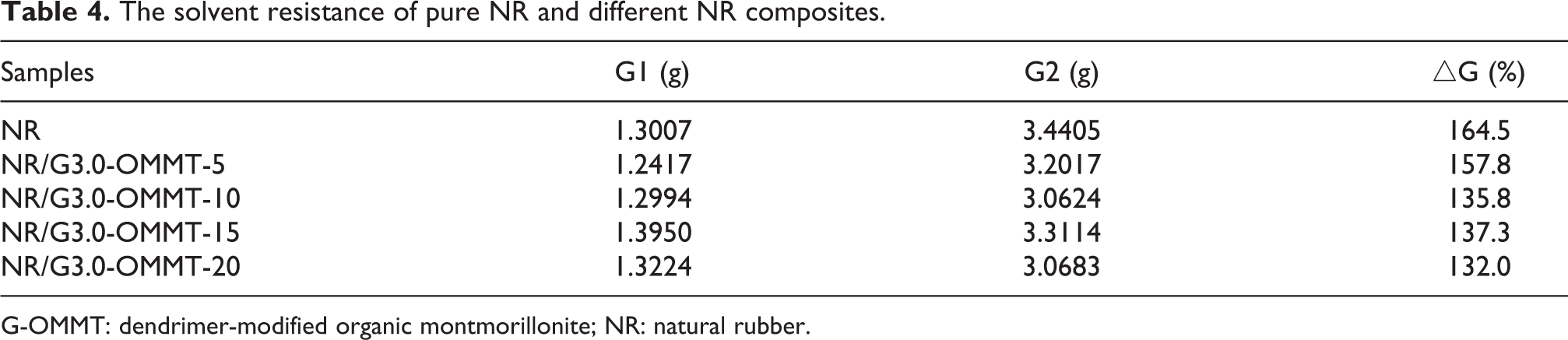
Solvent-resistant property was tested according to GB7763-1987. The samples were cut into a square with the side length of 2.5 cm. The solvent used was cyclohexane. The solvent resistance of the composites can be calculated as △G = (G2−G1)/G1 × 100%, where △G was the percentage of mass change before and after infiltration, G2 was the mass of the sample after infiltration, and G1 was the mass of the sample before infiltration.
Scanning electron microscopy (SEM) was carried out by a Hitachi S-2150 equipment. A potential of 25 kV was used to obtain the photos. A conductive gold layer was coated onto the surface of the samples.
Results and discussion
Structure and properties of G-OMMT
The G-OMMT additive we used in the preparation of NR composites was synthesized by dendrimer and OMMT. 12 The preparing process was shown in Figure 1.

Preparation process of G3.0-OMMT.
First, MMT was modified by methacryloyloxyethyl-trimethyl ammonium chloride (DMC), and OMMT was obtained. Then, different generations of dendrimer with cyclotriphosphazene-core polyamidoamines, G1.0, G2.0, and G3.0, were synthesized from methylacrylate and ethylenediamine. These three generations were different in their number of repeat units. Last, different generations of dendrimer-modified organoclay, G1.0-OMMT, G2.0-OMMT, and G3.0-OMMT, were prepared from addition reaction between DMC and the different generations of dendrimer. The structure and properties of this clay were investigated. TGA results revealed the thermal stability of G1.0-OMMT, G2.0-OMMT, and G3.0-OMMT was improved between the temperature ranges of 100 and 220°C compared with that of MMT (Figure 2). In addition, some exfoliated silicate layers were formed in these organoclays from X-ray diffraction analysis (Figure 3(d) and (e)). Importantly, the implication of peak shift in the samples (Figure 3(b) and (c)) referred to the increased interlayer spacing of the organoclay and the formation of a type of intercalated composites. Last, G3.0-OMMT was selected and applied into the NR matrix. The most important reason was that this additive possessed best thermal stability compared with that of the other two dendritic types of organoclay. All of them showed a decreased behavior compared to OMMT, which may be ascribed to more organic materials adhered over the surface of inorganic clay. Then, this additive exhibited the lowest diffraction peaks, illustrating that the organoclay in this structure was mostly exfoliated into nanostructure, which was beneficial for improving the mechanical properties of polymeric matrices.
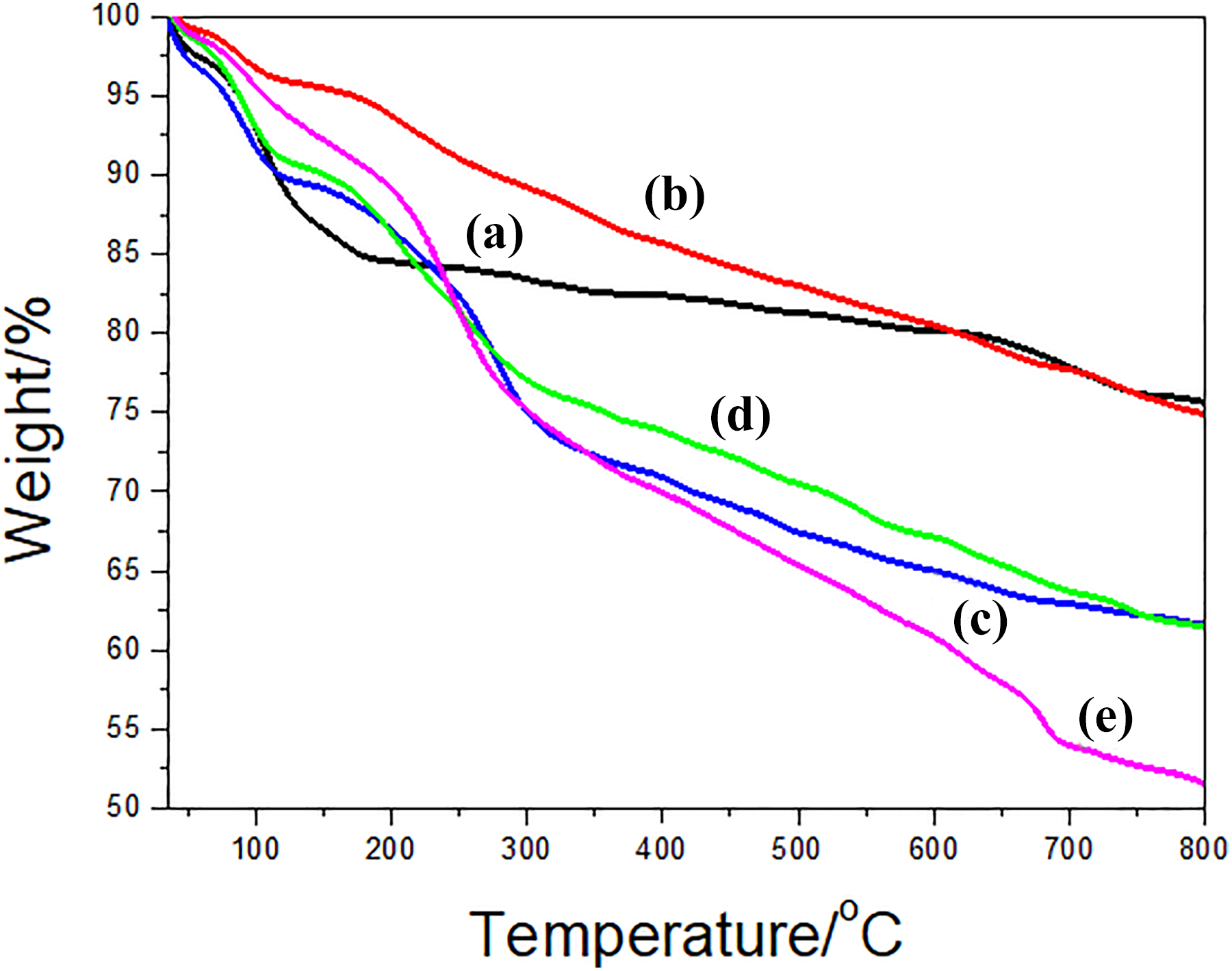
TGA curves of (a) MMT, (b) OMMT, (c) G1.0-OMMT, (d) G2.0-OMMT, and (e) G3.0-OMMT.

XRD patterns of (a) MMT, (b) OMMT, (c) G1.0-OMMT, (d) G2.0-OMMT, and (e) G3.0-OMMT.
Cure characteristics of NR composites
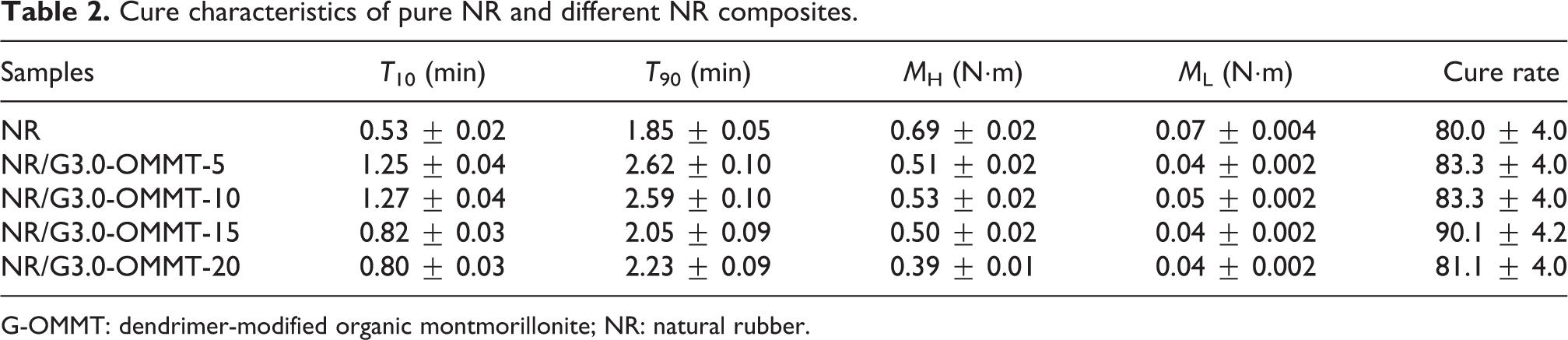
Figure 4 presented cure curves of pure NR and different NR/G3.0-OMMT composites. The mechanism for cure process of pure NR was shown in Figure 5. The cure mechanism was ascribed to the addition reaction between polyolefin and sulfur. During this process, the gum of NR was transformed from linear macromolecule into three-dimensional network structure under certain temperature and pressure by adding sulfur agent and accelerator to the rubber matrix. The scorch time (T 10) and the optimum cure time (T 90) together with the maximum torque (M H), the minimum torque (M L), and the cure rate were summarized in Table 2.
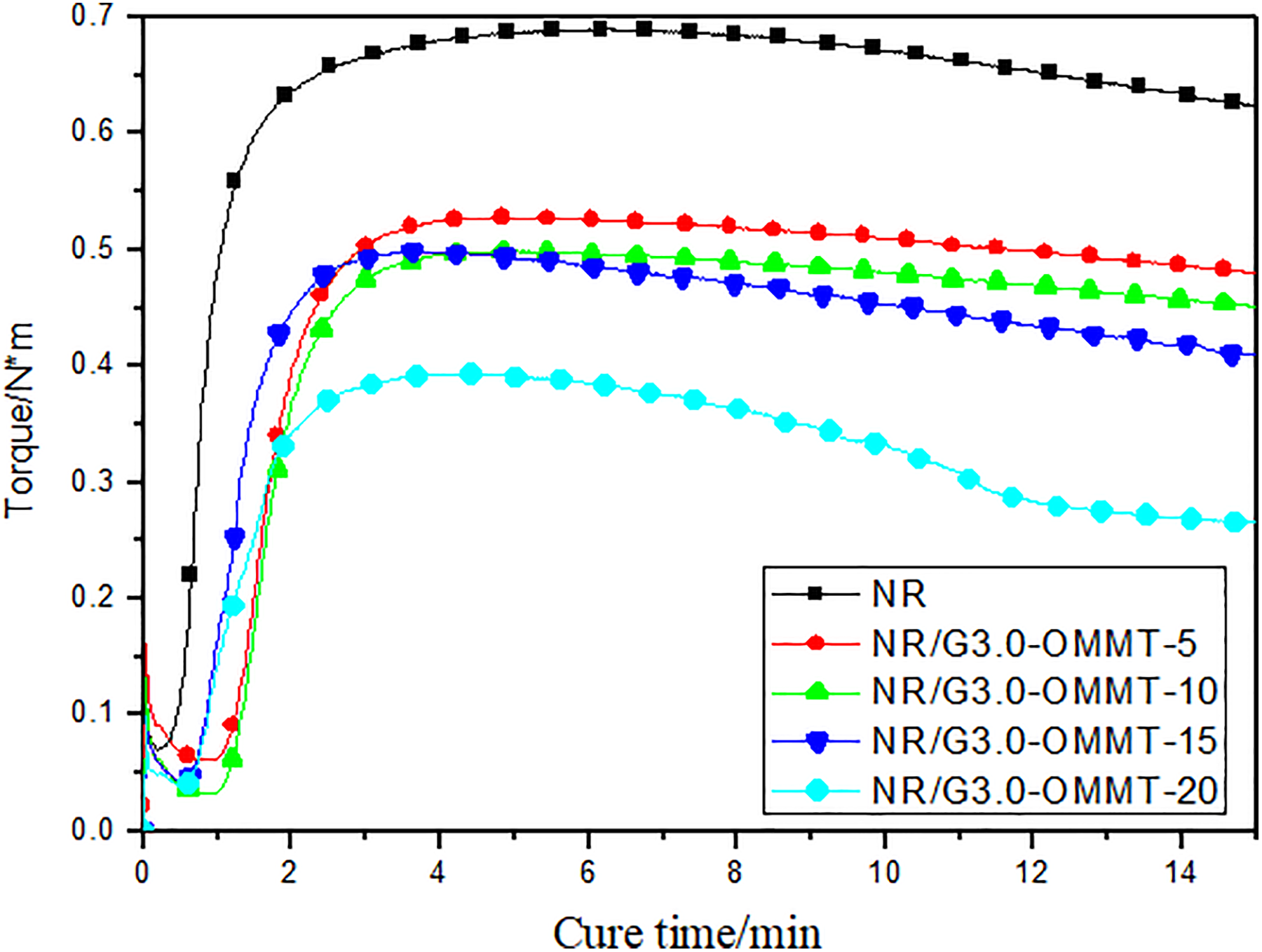
Cure curves of pure NR and different NR composites.
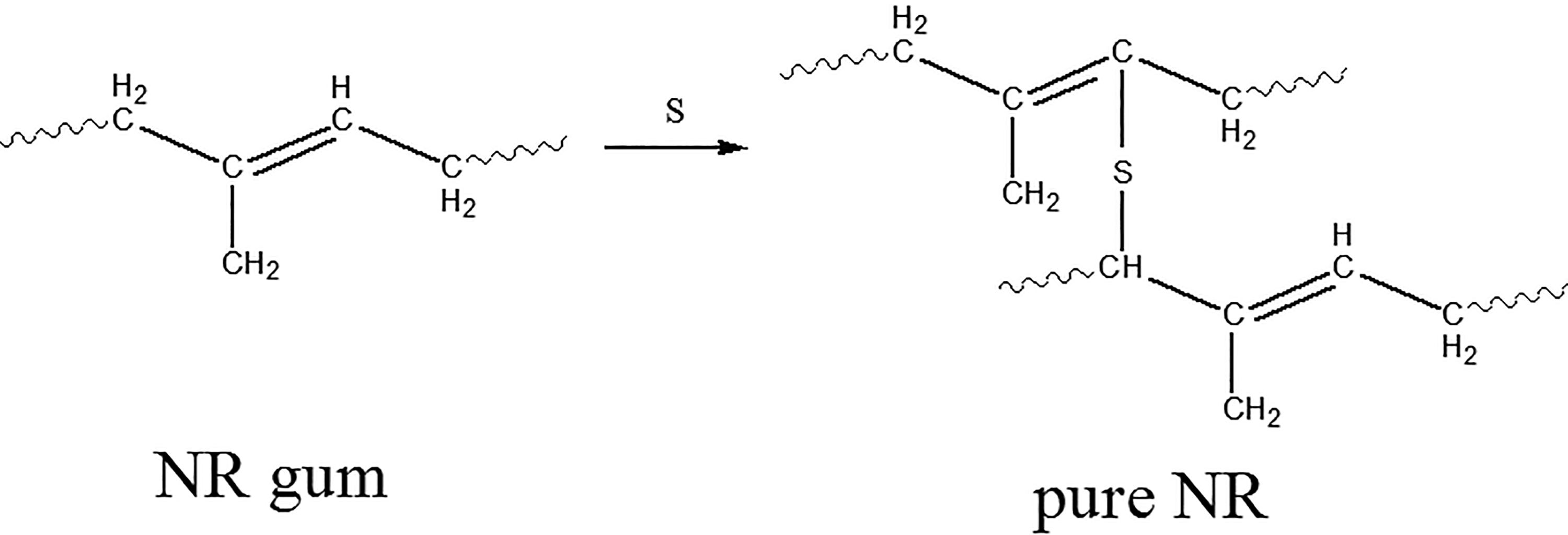
Cure mechanism of pure NR.
Cure characteristics of pure NR and different NR composites.
G-OMMT: dendrimer-modified organic montmorillonite; NR: natural rubber.
From Table 2, the cure rate was increased and then decreased when different amounts of dendritic organoclay were added. When 15 phr of G3.0-OMMT was added, the cure rate reached 90.1. This showed that this organoclay can promote the vulcanization process of rubber. In addition, T 10 and T 90 were increased slightly and then slightly decreased, but they were all higher than that of pure sample. This illustrated that this organoclay can make processing safer compared with that of the neat rubber system. Mathew et al. 13 reported that the cure parameters, such as scorch time and optimum cure time, may be decreased with an increasing clay loading. A conclusion was drawn that quaternary ammonium salt from the organoclay led to such a reduction in scorch time, and this was in good accordance with clay loading. Here, the first increase of scorch time may be attributed to the adsorption of curative by the dendrimer, which showed a different property compared with that of quaternary ammonium salt. The later decrease has resulted from the promotion of rubber sulfation by the layered silicates. In addition, the maximum torque (M H) also exhibited a slow decreasing trend. When the amount of this organoclay was 20 phr, M H reached about the minimum value of 0.39 N·m. This was mainly attributed to a good compatibility between dendrimer and the rubber matrix.
Thermal properties of NR composites
To investigate the thermal stability of these composites, four parameters, T 5%, T 10%, T max, and the yield of charred residue, were calculated from TGA and Derivative Thermogravimetry (DTG) curves. T 5% and T 10% referred to the degradation temperatures at which weight loss is 5% and 10%, respectively. T max referred to the temperature at which weight loss is the fastest. 14 Figure 6(a) presented TGA curves of different NR/G3.0-OMMT composites. It can be seen that the thermal stability of the composites was gradually improved with the increasing amount of G3.0-OMMT. Compared with that of pure sample, the decomposition temperature of these composites was almost decreased and the residual amount of the material was increased. When the amount of G3.0-OMMT was 20 phr, the residual amount was 13.67%. Relevant weight loss parameters were summarized in Table 3. It can be seen that T 5% and T 10% were first increased and then decreased, but they were both higher than that of pure sample. When 10 phr of G3.0-OMMT was added, T 5% and T 10% were 306.4°C and 349.5°C, respectively, and they were 102.3°C and 29.2°C higher than that of pure NR. Figure 6(b) gave DTG curves for NR/G3.0-OMMT composites. It can be seen that the maximum weight loss rate exhibited a decreasing trend. When the amount of the organoclay was 20 phr, the maximum weight loss rate was decreased by 17.3%. A high thermal stability of this organoclay may be the reason for such an improvement. The decomposition gas products and oxygen may be both hindered by the layered silicates in G3.0-OMMT. Thus, the thermal stability of these composites was improved. 15 Mohan et al. 16 also revealed that an enhanced thermal stability may be obtained in nanoclay-filled composites. The degradation behavior of pure rubber showed higher mass loss in the temperature range than that of organoclay reinforced composites. This organoclay was a type of alumina-silicate ceramics and thus can withstand high temperature and own higher amounts of residues. Moreover, organoclays may act as a type of heat barrier, which may be attributed to an enhancement of thermal stability. 17

Thermal stability of pure NR and different NR composites (a) TGA and (b) DTG.
TGA data of NR/G3.0-OMMT composites.

G-OMMT: dendrimer-modified organic montmorillonite; NR: natural rubber; TGA: thermogravimetric analysis.
Flame-retardance of NR composites
The relationship between horizontal burning parameters and LOI values with the amount of organoclay was presented in Figure 7. These composites presented a linear increase of burning time (Figure 7(a)) and a linear decrease of burning rate (Figure 7(b)) due to the flame inhibition effect of G3.0-OMMT. It can be seen that the burning time of the composites was increased with the increasing amount of the FR agent. When 20 phr of G3.0-OMMT was added, the burning time was increased from 149 s to 230 s, and the duration was prolonged by 54.4%. In addition, the burning rate was decreased from 30.15 mm min−1 for pure NR to 19.48 mm min−1 for NR/G3.0-OMMT-20, and the burning rate was reduced by 35.4%. Moreover, the LOI values of these composites were improved with the increasing amount of this organoclay (Figure 7(c)). This value was 18% for pure NR and 28% for NR/G3.0-OMMT-20, and the increase was 55.6%. Dendrimer and layered silicates were the main compositions of this novel additive. In addition, phosphorus and nitrogen elements together with the aromatic structure were contained in the dendrimer. This is the FR mechanism for this organoclay. 18 As a result, NR/G3.0-OMMT composites can meet the HB level requirements according to criteria of horizontal burning test.

FR behavior of pure NR and different NR composites: (a) burning time, (b) burning rate, and (c) LOI values.
Tensile properties of NR composites
The tensile properties of pure NR and NR/G3.0-OMMT composites were shown in Figure 8. Their stress–strain curves were presented in Figure 8(a), and an increasing trend of slope was exhibited with the increasing loading of this dendritic organoclay. The tensile strength of NR was firstly increased with the increasing content of dendritic organoclay but was decreased slightly when the amount was 20 phr. For NR/G3.0-OMMT-15 composite, its tensile strength reached 18.8 MPa, which was 12.6% higher than that of pure sample, 16.7 MPa. This was mainly due to a good compatibility between the dendrimer and the NR matrix, which may lead to a certain improvement in the reinforcing performance. George et al. 19 concluded that the efficient properties were resulted from the dispersion status of layered silicates in the polymeric matrix, and this may lead to improved reinforcing properties. However, when 20 phr of G3.0-OMMT was added, its tensile strength was 16.4 MPa, which was lower than that of pure sample. A phenomenon of aggregation was presented in this composite, and this led to an uneven distribution of this filler in the rubber matrix. The elongation at break was increased with an increasing content of G3.0-OMMT. When 15 phr of G3.0-OMMT was added, the elongation at break was 586%, which showed an increase of 23.6% compared with that of pure NR, 474%. The reason for such an improvement may be ascribed to the flexibility of the dendrimer in the dendritic organoclay, which changed the molecular chains’ structure inside the NR matrix. When 20 phr of the organoclay was added, the elongation at break was decreased. This was resulted from more pores in the rubber matrix, which destroyed the internal structure of the material and resulted in a decrease in toughness of the material.
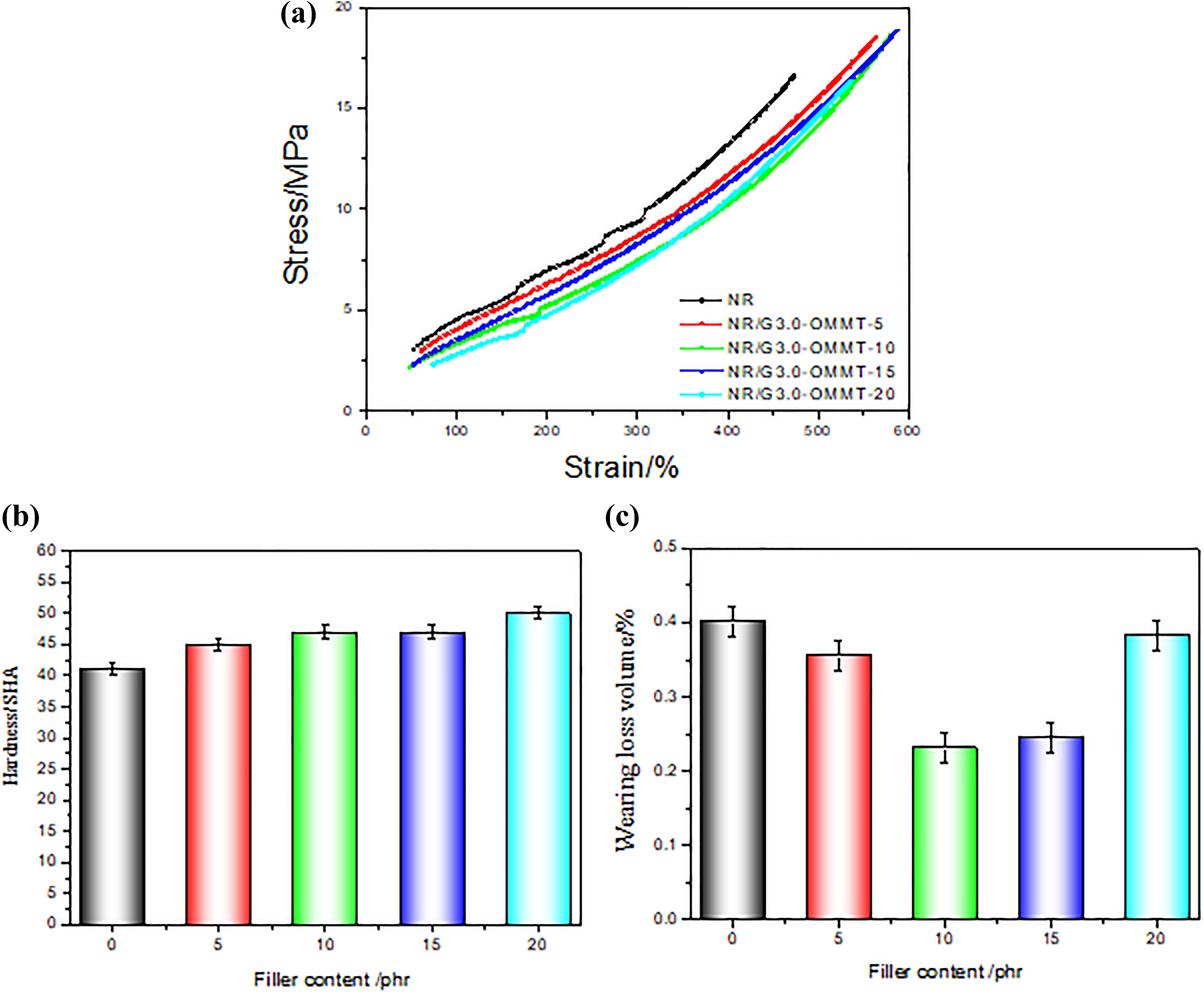
Tensile properties of pure NR and different NR composites (a) stress–strain curves, (b) hardness, and (c) wearing loss volume.
Figure 8(b) presented the hardness of NR/G3.0-OMMT composites. The hardness was increased with an increasing content of the organoclay. When the addition amount was 20 phr, the hardness was about 50 SHA. The clay in G3.0-OMMT was a type of inorganic material owning a high hardness, and thus such a property was obviously improved for the composites. The wearing behavior of NR/G3.0-OMMT composites was exhibited in Figure 8(c). The wearing loss volume was first decreased and then increased with the increasing content of G3.0-OMMT. When 10 phr of G3.0-OMMT was added, the wearing loss volume was 0.231 cm3, which was 42.4% lower compared with that of pure NR, 0.401 cm3. The addition of the dendritic organoclay may hinder the movement of molecular chains and reduce the friction coefficient, thereby improving wear resistance of the composites. When 20 phr of G3.0-OMMT was added, the wearing loss volume was 0.383 cm3, and this was higher than that of other composites but still lower compared with that of pure NR. This was also resulted from the aggregation of G3.0-OMMT in the NR matrix.
Solvent resistance of NR composites
Table 4 presented the mass change percentage of NR/G3.0-OMMT composites after 8 h of immersion in cyclohexane, and this reflected the solvent resistant property of NR composites. It can be seen that the amount of permeation was reduced and the permeation time may be prolonged. When the amount of G3.0-OMMT was 10–20 phr, the mass change was obviously decreased, which was about 20% lower compared to pure sample. It was concluded that the porosity of macromolecular networks was filled, the motion of the polymeric chains was blocked, and the penetration of the solvent molecules was hindered by this dendritic type of organoclay, and thus, NR/G3.0-OMMT composites exhibited excellent solvent resistance. Esmizadeh et al. 20 revealed that the swelling index of samples decreased continuously with increasing content of organoclay. This observation can be related to high interactions between polymeric chains and layered silicates. Bendjaouahdou and Bensaad 21 also reported that NR composites containing organoclay showed lower solvent uptake rate and the lower solvent permeability.
The solvent resistance of pure NR and different NR composites.
G-OMMT: dendrimer-modified organic montmorillonite; NR: natural rubber.
Microstructure analysis of NR composites
SEM images of pure NR and different NR/G3.0-OMMT composites were presented in Figure 9. From Figure 9(a), the rubber additives, such as carbonate, were dispersed uniformly in the NR matrix. Compared with pure NR, continuous and regular layered structures were exhibited in NR/G3.0-OMMT-15 (Figure 9(b)). It can be seen that the organoclay may change the morphology of the NR section and exhibit a good dispersion behavior together with better compatibility in NR. Some micron-sized, exfoliated, and fiber domains can be observed in this section. These domains were likely to be clusters of G3.0-OMMT, carbonate, and their aggregates. The interaction between fillers and polymeric matrix was high, and this may be the reason for improved resistance during the growth of cracks. The scheme for preparation process of NR/G3.0-OMMT-15 and its exfoliation and dispersion in the NR matrix was shown in Figure 10(a). However, the surface morphology of NR/G3.0-OMMT-20 showed worse scattering behavior, and this was resulted from the aggregation of organoclay in this matrix. This can also cause the decrease of tensile properties. This observation can be supported by the decrease of the tensile strength, which can be explained by the weak interactions between the NR matrix and the organoclay. The formation of these organoclay aggregates reduced the interfacial area and decreased compatibility between the polymer and the layered silicates, which may lead to lower mechanical properties. 20,22,23 The scheme for preparation process of NR/G3.0-OMMT-20 and its aggregation and dispersion in the NR matrix was shown in Figure 10(b).
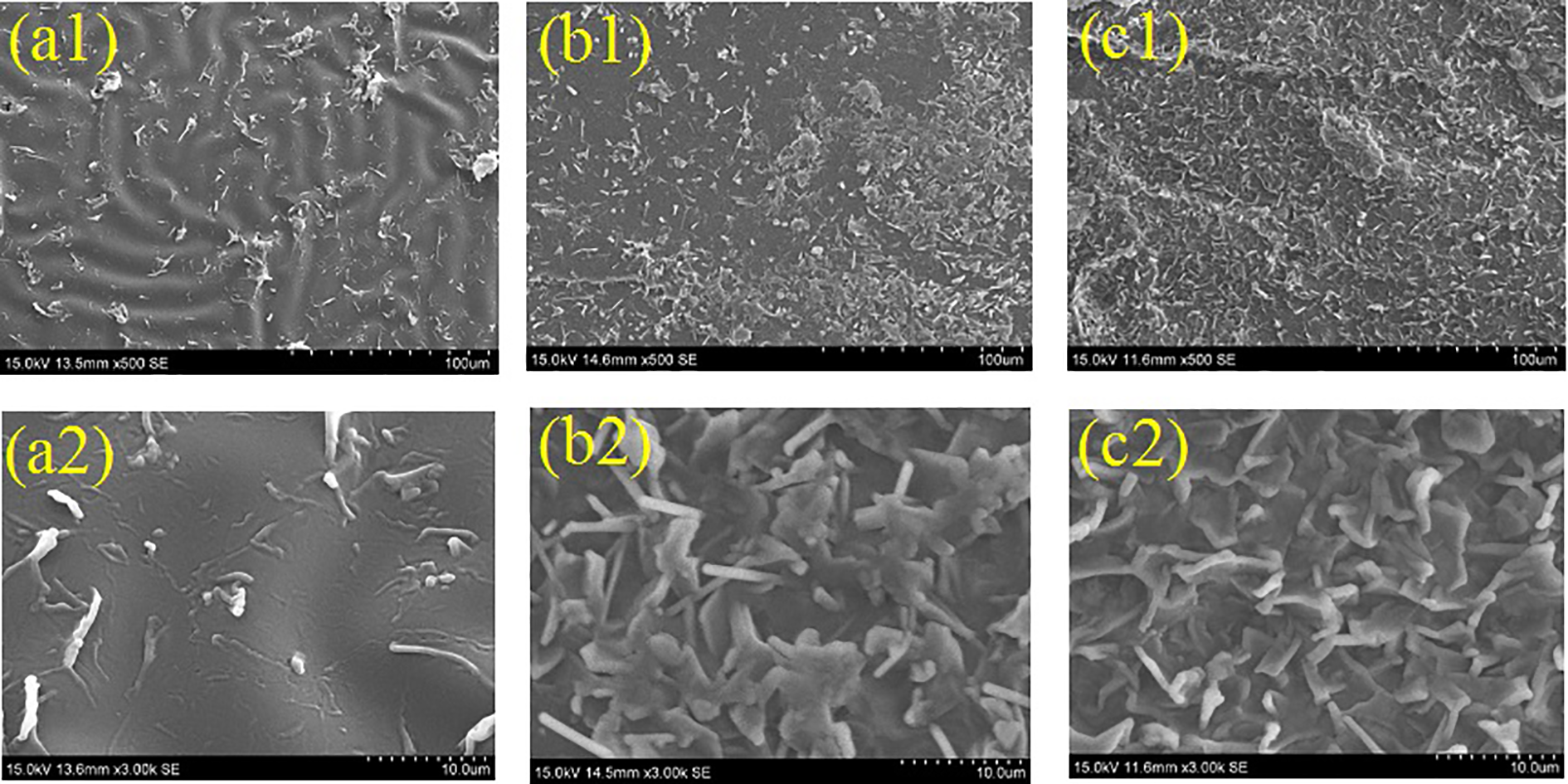
SEM of pure NR and different NR composites. (a1,2)NR, (b1,2)NR/G3.0-OMMT-15, and (c1,2) NR/G3.0-OMMT-20.

Preparation process of (a) NR/G3.0-OMMT-15 and (b) NR/G3.0-OMMT-20.
Conclusions
FR rubber composites were prepared by adding a novel type of organoclay, G3.0-OMMT, into NR composites in different proportions. The cure behavior, thermal stability, flame retardance, tensile together with solvent resistant properties of these composites were investigated.
The cure rate was firstly increased and then decreased after adding the dendritic organoclay. TGA results showed that the thermal stability of the composites was gradually improved. Horizontal burning results revealed that the burning rate was decreased from 30.15 mm min−1 for pure NR to 19.48 mm min−1 for NR/G3.0-OMMT-20, and the burning rate was reduced by 35.4%. LOI value was increased from about 18% for pure NR to about 28% for NR/G3.0-OMMT-20, and the improvement was 55.6%. When the amount of NR/G3.0-OMMT was 15 phr, the tensile strength of the composites reached 18.8 MPa, which was 12.6% higher than that of pure sample. Such an improvement in reinforcing performance was mainly attributed to a good compatibility between the dendrimer and the NR matrix. In addition, the elongation at break was 586% and exhibited an increase of 23.6%. When 10 phr of G3.0-OMMT was added, the wearing loss volume was 0.231 cm3, which was 42.4% lower compared with that of pure NR. The solvent-resistant property revealed that the penetration of the solvent molecules was hindered by the dendrimer-modified organoclay, and thus, the mass change of the samples was decreased with an increasing content of G3.0-OMMT. SEM results showed that the dendritic organoclay with a proper amount may own a good compatibility and uniform dispersion in the NR matrix.
Footnotes
Declaration of conflicting interests
The authors declared no potential conflicts of interest with respect to the research, authorship, and/or publication of this article.
Funding
The authors disclose receipt of the following financial support for the research, authorship, and/or publication of this article: This work was financially supported by “National Natural Science Funds (no. 51873103),” “Capacity Building Project of Some Local Colleges and Universities in Shanghai (no. 17030501200),” “Talent Program of Shanghai University of Engineering Science (no. 2017RC422017),” “Scientific and Technological Support Projects in the Field of Biomedicine (no. 19441901700),” and “First-rate Discipline Construction of Applied Chemistry (no. 2018xk-B-06).”
