




Abstract
In the present work, sandwich hybrid composites have been fabricated using hand layup technique followed by compression molding process. Glass and basalt fabrics were used with epoxy resin to fabricate the sandwich composites. The fabrics were used in both untreated and treated conditions using hydrochloric acid and sodium hydroxide solutions. The Fourier transform infrared study conducted on the fabrics before and after the surface treatment shows the effectual impregnation of acid and base on the fabric by the formation of ions on the surfaces. The tensile and hardness tests were conducted as per the ASTM D638-10 and ASTM D2240 standards. The results show that hybridization and surface treatment improve tensile strength and hardness in all the composites. In particular, the hydrochloric acid–treated sandwich composites with basalt fabric as core and glass fabric as skin have recorded the highest tensile strength of 356.39 MPa. The experimental values have been validated using the simulation results of finite element analysis in ANSYS 15.0 with a minimum deviation of 0.47%.
Introduction
In recent days, hybrid polymer composites have replaced conventional polymer composites in many high-performance applications for their improved and better tailored properties. Many research groups are directing attention on different methods such as addition of functional fillers, 1,2 applying filler hybridization, 3 controlling filler distribution, 4 varying filler size, 5 using different resin matrix, 6 -9 performing matrix modification, 10,11 oxidation of fibers 12 and fillers, 13 different reinforcing fibers 14 and contents, 15 gamma irradiation, 16 silane treatment, 17 plasma treatment, 18 chemical treatment, 19,20 coatings, 21 and hybridization 22 to improve adhesion between the members, thereby achieving the desired properties of the polymer composites for specific applications. 23,24
Hybridization of nano alumina with multiwalled carbon nanotubes was also suggested by Saravanan et al. 3 It is reported that depositing nano alumina on the walls of carbon nanotube increases the tensile strength of the epoxy composites. Dehkordi et al. 25 performed an impact behavior of intraply fabric of nylon and basalt hybrid epoxy composites using hand layup method. The outcome is that the impact performance depends upon basalt/nylon fiber content. Subagia et al. 26 have conducted experiments on the effect of stacking sequence on the flexural properties of carbon/basalt hybrid composites and concluded that the interply hybrid with basalt fabric at the center with outermost carbon fabric experiences the best flexural strength and modulus compared to other stacking arrangements. Jamshaid et al. 27 weigh against basalt with basalt/jute hybrid composites and showed that the hybrid composites exhibit superior mechanical, thermal, and interfacial properties compared to pure basalt/bio epoxy composites. Kumar et al. 28 investigated the flexural strength of hemp, basalt, and hemp/basalt epoxy and found that the damage of hybrid composite is relatively higher than that of basalt composite. Many hybrid works have been attempted using glass fiber with carbon, 29 jute, 30 flax, 31 kevlar, 32 and sisal 33 fibers, which conveys that the hybridization improves mechanical and thermal properties. Dorigato and Pegoretti 34 studied the identical structures of basalt and glass fibers and revealed that the hybridization of basalt fibers increases the impact energy, paving the way toward basalt fiber usage instead of glass fiber in engineering applications. The important constituents of basalt are SiO2, Al2O3, CaO, MgO, Fe2O3, and Fe. Fiore et al. 35 developed hybrid epoxy composites using glass mat and unidirectional basalt fabric by vacuum bagging technique. The position of basalt fabric was varied from lamina 1 to lamina 6 through ply substitution technique. Three-point bending and tensile tests were conducted to show that the composites with basalt fabric in the external lamina have improved tensile and flexural properties compared to glass mat composites.
Wei et al. 36 treated basalt and glass fibers with sodium hydroxide (NaOH) and hydrochloric acid (HCl) solutions followed by examining the mass loss ratio and the strength maintenance ratio of the fibers for different time periods. The acid resistance of the basalt fiber has been identified to be better than the alkali resistance of the basalt fiber and the acid resistance of the glass fiber as equivalent to the alkali resistance. Wei et al. 37 modified the surface of basalt fiber with epoxy and nano SiO2 hybrid. It was found that the tensile strength of the fibers increased as a result of surface modification using sol–gel method. Manikandan et al. 38 studied the effect of surface-modified basalt fiber–reinforced polyester composites prepared by hand layup technique at a room temperature. Basalt fabric was treated with 1 N NaOH and 1 N H2SO4 at a room temperature for 24 h. Mechanical testing of composites such as tensile, shear, and impact strengths was carried out and concluded that the acid-treated basalt fiber composite developed the maximum tensile strength of 246 MPa.
From the above-narrated literature study, surface treatment and hybridization methods are used to improve the mechanical properties of the composites. From the authors’ point of view, there are no works that employ both hybridization and surface treatment methods to improve the properties of composites.
In the present work, glass and basalt fabrics are used to fabricate sandwich hybrid composites using hand layup method followed by compression molding process. The Fourier transform infrared (FTIR) study has been conducted on the fabrics before and after the surface treatment. Tensile and hardness tests have been conducted as per the ASTM D638-10 and ASTM D2240 standards, and the experimental results have been validated with a finite element analysis (FEA) result.
Experimental details
Materials
The NaOH and HCl were purchased from the Universal Scientific Company, Coimbatore, India. The matrix system used is an epoxy resin (Lapox-L12) and a K-6 hardener (aromatic amines) supplied by Atul Limited, Gujarat, India. Lapox-L12 is a pale yellow liquid epoxy resin with medium viscosity. Hardener K-6 is a low-viscosity room-temperature curing liquid. E-glass and basalt fabrics are used as reinforcements. The properties of reinforcements and matrix are shown in Table 1.
Physical and mechanical properties of reinforcement and matrix.

Preparation and treatment of fibers
The fabrics used for making hybrid composites were prepared by cutting the fabric to the required size (298 mm × 123 mm) accurately using the computer numerical controlled board cutting machine. The accuracy maintained here is to attain the proper matrix reinforcement ratio.
The glass and basalt fabrics were subjected to the surface treatment by NaOH and HCl. The fabrics were immersed in 1 N solution of NaOH and 1 N solution of HCl for a period of 3 days and then dried at a room temperature for 24 h before the sandwich hybrid composites were prepared.
Hybridization
Glass and basalt fabrics were used to make the sandwich hybrid epoxy composites. Two different sandwich hybrid configurations (5G-4B-5G and 2B-10G-2B) were prepared. The composites were made with glass fabrics (5G-4B-5G) and basalt fabrics as external layers (2B-10G-2B). In this configuration, six sandwich hybrid composite plates were made with untreated fabrics, HCl-treated fabrics, and NaOH-treated fabrics as reinforcements. The configuration and information regarding the treatment of fabrics are shown in Figure 1.

Configuration of untreated (UB and UG) and treated (NB, NG, HB and HG) hybrid composites.
Fabrication of composites
The sandwich hybrid composites were fabricated by placing the untreated glass and untreated basalt fabrics as per the two hybrid configurations by Lapox L-12 resin and K-6 hardener using hand layup process followed by compression in the die using compression molding machine at a pressure of 10 bar and a temperature of 100°C. The die was kept in position for 24 h, and then the plate was taken out and cured in the direct sunlight for another 24 h. This procedure was repeated for HCl- and NaOH-treated fabrics for the remaining four sandwich hybrid configurations. All the composites were prepared by maintaining the fiber matrix weight fraction at 60:40. Table 2 shows the designation of untreated (untreated glass skin (UG) and untreated basalt skin (UB)) and treated hybrid sandwich configurations (HCl-treated glass (HG), NaOH-treated glass (NG), HCl-treated basalt (HB), and NaOH-treated basalt (NB)).
Designation of the untreated and treated hybrid composites.

UG: untreated glass skin; UB: untreated basalt skin; HG: HCl-treated glass; HB: HCl-treated basalt; NG: NaOH-treated glass; NB: NaOH-treated basalt.
FTIR spectroscopy test on fibers
The effect of chemical modifications on the fabric surface was observed using FTIR spectroscopy. FTIR measurements were performed using TENSOR 27 spectrometer at a room temperature in the absorption mode. A total of 50 scans were taken in the mid-IR range of 600–4000 cm−1 with a resolution of 200 cm−1 for each sample.
Testing of tensile strength and hardness of composites
The tensile tests were done using universal testing machine with a crosshead speed of 1 mm/min, as per ASTM D638-10 test standards, with a specimen size of 165 × 19 × 3 mm. The tests were conducted with five samples in each case, and the mean values are considered with standard deviations for the purpose of achieving reliability and repeatability of the mechanical test results. The samples and the loaded specimens are shown in Figure 2.

Tensile and loaded tensile specimens as per ASTM D638-10 standard.
The hardness tests were performed using Digital Shore Durometer, which is the common method for characterizing polymer composite materials. ASTM D2240 standard was followed while conducting Shore D hardness tests. The tests were conducted by forcing the indenter over a certain period of time on the samples, and the digital value on the D scale was noted. The five tests were conducted randomly on the surfaces in each sample, and the mean values are reported.
Results and discussion
FTIR spectra analysis
The FTIR spectra analysis of glass and basalt fabrics before and after NaOH and HCl treatments are shown in Figure 3(a) to (f).
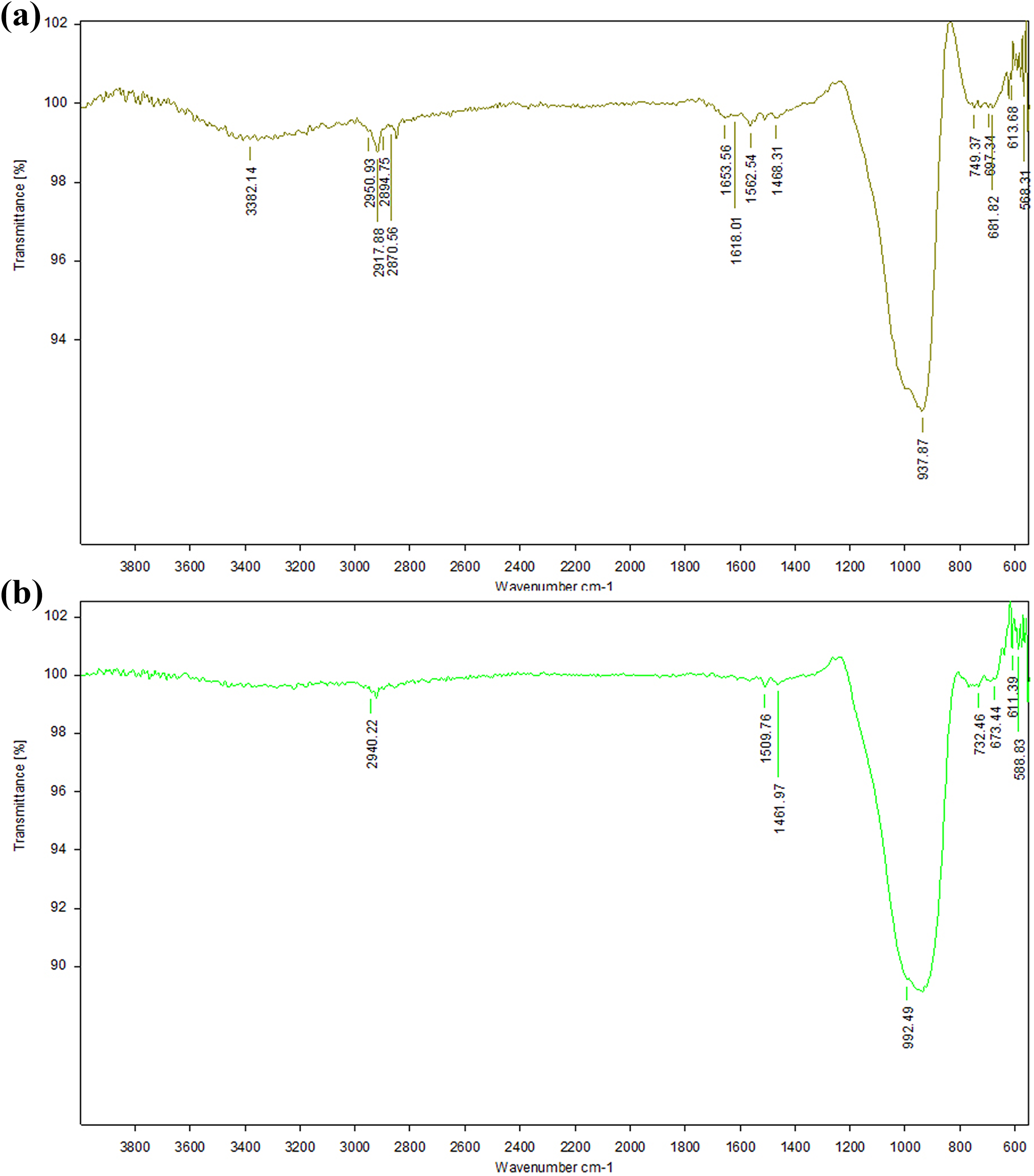
(a, b) FTIR spectra of untreated glass and basalt; (c, d) FTIR spectra of alkali-treated glass and basalt. (e, f) FTIR spectra of acid-treated glass and basalt. FTIR: Fourier transform infrared.
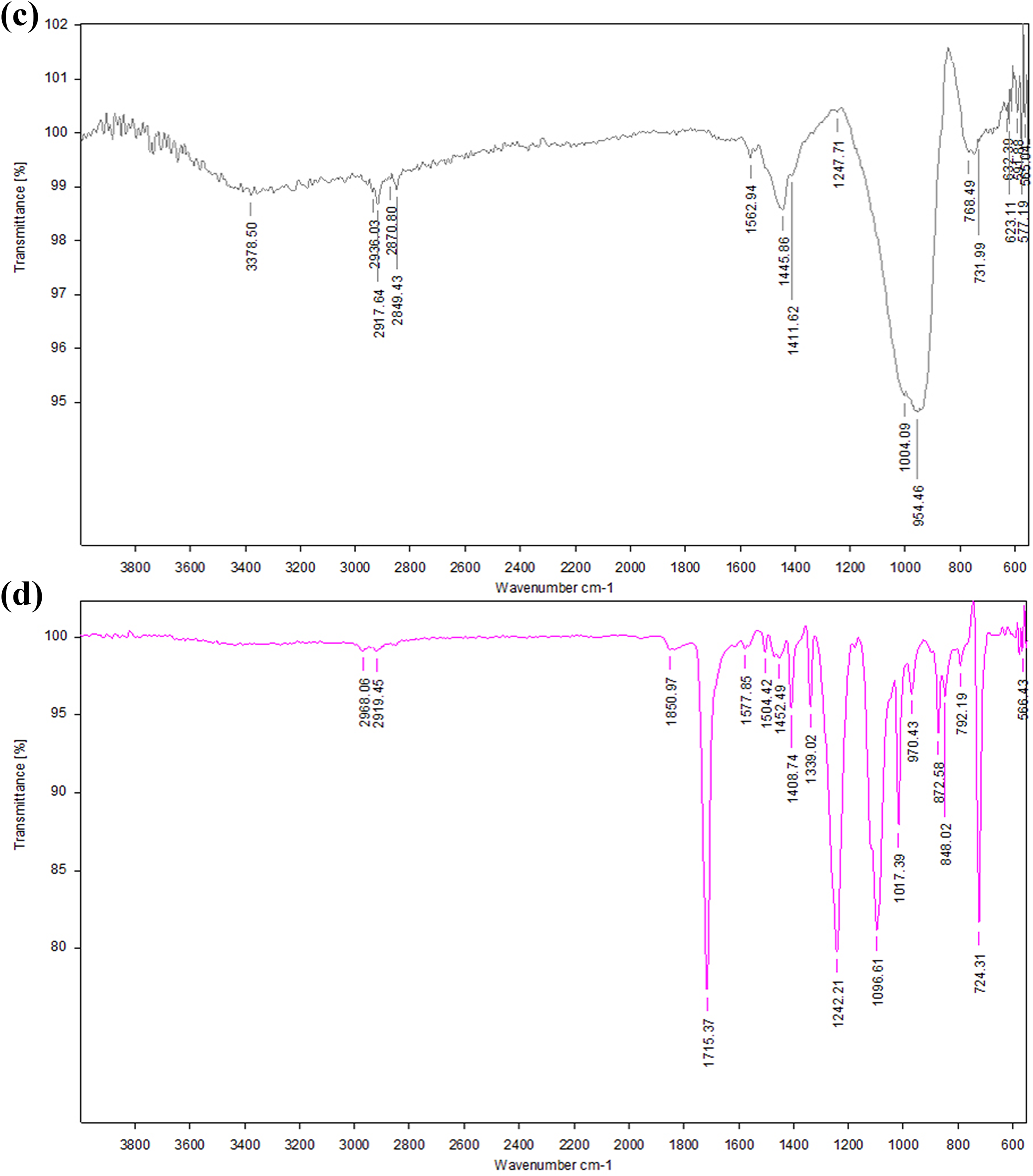

Fibers play a crucial role in determining the strength of the composites; therefore, they are subjected to chemical treatment, and the effectiveness of the treatment is studied by means of FTIR method. It is evidenced from Figure 3(a) and (b) that the presence of peaks of ether, carbonyl, and carboxyl groups is noticed in treated fabric than in untreated fabric. In particular, it is observed that untreated glass records more peaks compared to untreated basalt fabrics. The peak values are responsible for high chemical reactivity and wettability of fibers, which in turn provides better adhesion with the matrix. 39
From Figure 3(a), (c), and (e), it is seen that the C–O stretch in untreated glass fabric occurred at 937.87 cm−1 shifts to 1004.09 cm−1 in NaOH treatment and to 983.31 cm−1 in HCl treatment. The C=O stretch in untreated glass fabric occurred at 1653.56 cm−1 shifts to 1562.94 cm−1 in NaOH treatment and to 1564.42 cm−1 in HCl treatment. The C–H stretch in untreated glass fabric occurred at 2950.93 cm−1, which shifts to 2936.03 cm−1 in NaOH treatment and to 2922 cm−1 in HCl treatment.
From Figure 3(b), (d), and (f), it is evidenced that the C–O stretch in untreated basalt fabric occurred at 992.49 cm−1 shifts to 1339.02 cm−1 in NaOH treatment and to 1338.87 cm−1 in HCl treatment. There is no peak identification for C=O stretch in untreated basalt fabric, which shifts to 1715.37 cm−1 in NaOH treatment and to 1716.33 cm−1 in HCl treatment. This indicates the effective reaction of NaOH on the surface of the fabrics. A strong and sharp band identified at 1716.33 cm−1 is due to C=O stretching of carbonyl groups (>C=O). There is no peak identification for C–H stretch in untreated basalt fabric which shifts to 2968.06 cm−1 in NaOH treatment and then for O–H stretches to 3373.31 cm−1 in HCl treatment. The above change in the wave number indicates the participation of free hydroxyl ions in the chemical reaction which increases the adhesion strength between the fabric and the matrix, resulting in an improvement in the tensile strength and hardness of the resulting composites. 39
Tensile strength and yield strength
Tensile strength values of the untreated and treated hybrid composites are shown in Figure 4, and those of UG and HG samples are 269.72 and 356.39 MPa, respectively. There is an increase of 32.13% in HG sample. The tensile strength values of UG and NG samples are 269.72 and 335.76 MPa, respectively. An increase of 24.49% is noticed in NG sample. The tensile strength comparison between UG, HG, and NG samples reveals clearly the strong effect of different surface treatments on glass fibers. It can be stated that the acid treatment is better than alkali treatment in improving the tensile strength. Stamenovic et al. 40 reported similar findings in their research work carried out on the effect of alkaline and acid solutions on the tensile properties of glass polyester pipes. Manikandan et al. 38 reported an 8.7% increase in tensile strength between acid-treated and untreated glass fibers against a 9.2% drop in tensile strength between base-treated and untreated glass fibers.

Tensile strength of untreated hybrid and treated hybrid composites.
The tensile strength values of UB and HB samples are 242.17 and 244.22 MPa, respectively. A marginal increase in the tensile strength of 0.845% is noticed in HB sample, which is attributed to the stability of the basalt fibers in the acid environment. 36 The tensile strength values of UB and NB samples are 242.17 and 198.82 MPa, respectively. A decrease of 17.9% tensile strength is observed in NB sample, which is due to the combined effect of chemical reaction 41 between Fe+ ions present in the basalt fibers of hybrid (2B-10G-2B) configuration and NaOH. Similar results are also reported by Mohanraj et al., 42 where the sandwich composites made with fibers treated in a corrosive NaOH environment show a decrease tensile strength in the range of 20–56%. In addition, it is also stated that an intercalated sequence with B/P/B/P configuration recorded marginal increase in tensile strength compared to sandwich composites.
The tensile strength values of UG and UB are 269.72 and 242.17 MPa, respectively. In comparison, a 10.21% increase exists in UG samples, which is ascribed to the 5G-4B-5G configuration in which more number of high-tensile basalt fibers exist in the core. Similar observation was also reported by Sezgin and Berkalp 29 in E-glass/carbon fiber–reinforced with polyester resin. The tensile strength values of HG and HB samples are 356.39 and 244.22 MPa, respectively, which accounts to an increase of 31.48% in HG samples. This sheer increase in tensile strength is ascribed to the presence of acid-treated high-tensile basalt fibers in 5G-4B-5G configuration. As a result of acid treatment, pores are created on the surface of the fibers, which increases the surface adhesion between the matrix and fibers and in turn increases the tensile strength of the composites. 38 The tensile strength values of NG and NB samples are 335.76 and 198.82 MPa, respectively. Even though there is an increase of 40.79% in the tensile strength value of NG sample, it lies slightly lower than that of the HG sample. This is due to the mixed effect of basalt fiber losing its strength in aggressive NaOH environment and protection offered by an external glass fabric to the core basalt fabric in 5G-4B-5G configuration.
Altogether, the comparative study made between HG, NG, and UG samples conveys that 5G-4B-5G configurations have better tensile properties compared to 2B-10G-2B configuration. In 2B-10G-2B configuration, it is worth mentioning that untreated hybrid composite ranks best among the treated composites. The presence of external basalt layer with core glass content is attributed toward this specific behavior. 43 It can also be inferred that surface treatment is more influential than hybrid configuration in deciding the tensile strength of the composites. HCl-treated glass fiber composites report more tensile strength than that of NaOH-treated glass fiber composites. The tensile strength rank is in the order of HG > NG > UG > HB > UB > NB.
The yield strength values of untreated and treated hybrid composites are shown in Figure 5. The yield strength values of UG and HG samples are 245.6 and 284.8 MPa, respectively (15.96% increase). The yield strength values of UG and NG samples are 245.6 and 267.6 MPa, respectively (8.96% increase). The yield strength values of UG and UB samples are 245.57 and 193.71 MPa, respectively (21.12% increase). The yield strength values of HG and HB samples are 284.77 and 194.53 MPa, respectively (31.69% increase). The yield strength values of NG and NB samples are 267.59 and 158.41 MPa, respectively (40.8% increase). Therefore, the yield strength follows the ranking order of HG > NG > UG > HB > UB > NB. These findings convey that the yield strength results follow the same trend as that of the tensile strength.

Yield strength of untreated hybrid and treated hybrid composites.
Hardness
The hardness values of untreated and treated hybrid composites with two different configurations are shown in Figure 6.

Hardness of untreated hybrid and treated hybrid composites.
In sandwich hybrid configurations (5G-4B-5G) with HG and NG, hardness values are 38.73% and 23.63% higher than those in the configuration with UG, respectively. This difference in the increasing percentage values is due to the fact that acid treatment enhances the strength of the glass fiber by restoring its original mass, 36 and NaOH treatment slightly reduces the strength of glass fabrics, which is in the outermost layer. In sandwich hybrid configurations (2B-10G-2B) with HB and UB, hardness values are 3.83% and 16.1% lesser than those in the configuration with NB, respectively. This decrease in hardness is due to the stability of basalt during acid treatment and instable performance under base treatment. The basalt present in the outermost layer is responsible for deciding the hardness of the composites. 44
With respect to fiber treatment, HG and NG samples with acid-treated glass fabrics in the external layer exhibit more hardness compared to the base-treated glass fabrics. The strong alkali corrosion weakens the glass fiber more than acid corrosion. 40 Similarly, HB and NB samples with acid-treated basalt fabrics in the external layer also reveal more hardness compared to NaOH-treated basalt fabrics. The basalt fabrics are stable in an acid environment compared to an alkali environment, which weakens the fibers. Therefore, it can be inferred that HCl treatment increases the hardness of glass fiber followed by NaOH treatment. In the case of basalt fiber, both the treatment methods are not beneficial due to the chemical inert nature of the basalt.
Following is the discussion on hardness comparison of glass and basalt fibers under untreated and treated conditions. In untreated condition, the hardness values of UG and UB samples are 63.67 SD and 87 SD, respectively. The hardness value of UG sample is 36.6% lesser than that of UB sample. This increase in hardness of UB sample is due to the hardness of the basalt rocks 45 from which the fiber is made by melt spinning. 46 In HCl-treated condition, the hardness values of HG and HB samples are 88.33 SD and 83.67 SD, respectively. There is a marginal increase of 5.27% in HG sample, which is due to the presence of surface pores created as a result of acid corrosion in the external glass layers. In line with this finding, a research work carried out with similar fibers reports that basalt fiber offers more resistance to acid corrosion as per the mass loss ratio. 36 In NaOH-treated condition, the hardness values of NG and NB samples are 78.67 SD and 73 SD, respectively. There is an increase of 7.20% in NG sample, which is attributed to the fact that the NaOH treatment of basalt fiber affects the surface by the formation of smooth foam as a result of the chemical reaction between Fe+ ions present in the basalt with strong alkali 41 and reduction in iron content of the fibers after treatment. 36
Altogether, it is clearly evident that hybrid configuration has little effect on the surface hardness of the composites than the surface treatment. The hardness rank order of the untreated and treated hybrid composites is HG > UB > HB > NG > NB > UG.
Finite element laminate analysis using ANSYS 15 workbench
As per ASTM D638, the surface geometry was created using Creo 2.0. The created geometry was imported in ANSYS Composite PrepPost (ACP), and shell element 281 has been chosen for composite laminates. The properties of isotropic and orthotropic fiber-reinforced composites (glass-epoxy, basalt-epoxy, and epoxy) were selected for tensile tests using a constant rectangular cross-sectional specimen from ACP library (ANSYS) 47 as shown in Table 3.
Material properties for analysis.

ACP: ANSYS Composite PrepPost.
The fixed boundary condition (BC) is applied at one end of the specimen, and the remote displacement is applied in X direction at the other end of the specimen. The meshed model and applied BCs are shown in Figure 7.

Meshed model and applied boundary conditions.
The result obtained from the linear elastic and orthotropic behavior in ANSYS is compared with the experimental tensile test result of HG sample. From Figure 8(a) and (b), it is identified that the maximum stress is positioned near the right extreme end in the middle basalt layer, which is reflected in the broken tensile test specimen after the failure as shown in Figure 8(c). The maximum tensile stress for HG sample recorded experimentally before rupture is 356.4 MPa, whereas in ANSYS simulation, it is observed as 348.17 MPa at the same location. Hence, the experimental results are validated using simulated values with a deviation of 2.3% error. Further, mesh convergence study is made to ensure the accuracy of the stress level by converging the mesh size from 3135 to 6399, which is shown in Figure 9(a). The tensile strength result obtained after mesh convergence is 354.71 MPa as observed in Figure 9(b) and (c), which is much closer to the experimental results with 0.47% error only.

Location of failure in the simulation before mesh convergence and specimen after failure.

Location of failure in the simulation after mesh convergence.
Conclusion
The effects of surface treatment and stacking sequence (hybrid configuration) on mechanical properties of basalt/glass epoxy composites have been experimentally investigated and validated using ANSYS software. Two different hybrid configurations (5G-4B-5G and 2B-10G-2B) under different fabric treatments were considered for the study. Sandwich hybrid composite plates were made using untreated and HCl- and NaOH-treated fabrics as reinforcements. The effects of surface treatment and stacking sequence on tensile strength, yield strength, and hardness of the composites are discussed. From the results, the following conclusions are summarized. The acid and base treatment of glass fibers confirms the stability of glass fibers in the acid and base environment. The acid and base treatment confirms the stability of basalt in the acid environment and instability in the base environment. HCl-treated basalt fabrics create more active surfaces with the polymeric matrix resulting in more adhesion. The hybrid configuration 5G-4B-5G records better tensile strength compared to 2B-10G-2B in untreated, HCl-treated, and NaOH-treated conditions. In particular, HCl-treated fibers with 5G-4B-5G configuration record the highest tensile strength of 356.39 MPa. The surface hardness of basalt is very high compared to glass fiber. Upon treatment, the harness of glass fiber improves more compared to basalt fiber. The HG sample records the highest Shore D hardness of 88.3. The hybrid configuration 2B-10G-2B stands next to 5G-4B-5G in hardness, which is mainly due to the presence of harder basalt fabrics on the outside layers. FEA results are in agreement with the experimental results, demonstrating that FEA is a suitable tool to validate the mechanical behavior of hybrid structures.
Footnotes
Acknowledgment
The authors gratefully acknowledge Mr S. Balakrishnan, Assistant Professor, Department of Mechanical Engineering, United Institute of Technology, Coimbatore, for facilitating the simulation work in this research.
Declaration of conflicting interests
The author(s) declared no potential conflicts of interest with respect to the research, authorship, and/or publication of this article.
Funding
The author(s) received no financial support for the research, authorship, and/or publication of this article.
