




Abstract
This study evaluated the strength properties, chloride ion permeability and abrasion resistance of styrene–butadiene latex-modified polyvinyl alcohol (PVA) fibre-reinforced rapid-set cement concrete (LMFRRSC) for application to emergency repair of concrete pavements. Experiments were conducted to measure the compressive strength, flexural strength, splitting tensile strength, bond strength, chloride ion penetration and abrasion resistance of LMFRRSC for variable PVA fibre content (0, 0.05 and 0.10%); test results showed that these test parameters increased with the volume fraction of PVA fibre, satisfying all traffic-opening criteria for emergency concrete pavement repair. The PVA fibre additive effectively minimized crack formation generated as a result of high hydration heat in the early material stages and inhibited fibre ball development. Thus, the addition of PVA fibre enhanced the performance of LMFRRSC for emergency repair of concrete pavements.
Keywords
Introduction
Ageing roads and steadily increasing traffic volumes have prompted the development of new methods to rapidly repair deteriorating pavement. 1 –3 Roads undergoing repair require fast traffic openings; thus, short traffic blockades are commonly used to accommodate repair strategies and traffic throughput. 4 –10 To decrease the repair times, rapid-set cement concrete is increasingly used for repairs. 4 –12 However, heat and moisture move inside the newly set concrete under hydration heat generated by the chemical reaction of the concrete components to initiate setting. 9,10,13 Under actual on-site conditions, this movement of heat and moisture creates tensile stress in the internally and externally bound concrete structure, initiating fine-crack formation. These fine cracks increase the water permeability of concrete pavements, resulting in deterioration and loss of function of the original pavement structure. 9,10,13 Ideally, these issues must be alleviated quickly or prevented altogether. 5,6,11 Currently, styrene–butadiene latex (SB Latex) is added to rapid-set concrete to improve the initial strength of the newly paved structure. 1 –11 The addition of latex improves fluidity while reducing the water-cement ratio, thereby preventing material separation due to the viscosity of the latex itself. 14,15 As a result, the hardened latex-modified rapid-set concrete exhibits improved flexural and tensile strength and a higher deformation capacity. The latex additive has also been shown to improve the concrete’s adhesiveness, water tightness, freezing and thawing resistance, abrasion resistance and chemical resistance. 14,15 However, the addition of latex to concrete tends to delay the onset of the targeted initial strength. Thus, despite excellent workability and durability of latex-modified rapid-set cement concrete, it still has the same problems associated with rapid-set cement. In particular, the use of rapid-set cement for securing initial strength produces hydration heat, resulting in crack formation due to shrinkage/contraction, temperature variation and restraints inside the concrete. The occurrence of these cracks reduces the time between subsequent re-pavement maintenance due to a deterioration in pavement durability with water permeability. 1 –9 Thus, with massive use of ultra-rapid hardening cement, it is important to find the means to minimize or prevent hydration–heat crack formation to improve the durability of concrete and, in turn, reduce the time and cost involved by deferring re-pavement. In this research, crack formation was controlled by the use of reinforced fibre.
The reinforcing fibre addition minimized concrete crack formation by dispersing the fibres in random directions throughout the concrete. 11 –14 Additionally, dispersion of the reinforcing fibres improved the brittle and ductile properties of the concrete by inhibiting crack formation and growth. 12 –14 In this research, polyvinyl alcohol (PVA) fibre, a fibre with hydrophilic properties, was used. The hydroxyl surface of PVA fibre shows excellent adhesion to concrete via a strong hydrogen bond and resilience to crack formation in ultra-rapid hardening cement. However, PVA fibre tends to absorb moisture when applied to concrete, as it is a hydroxyl fibre; this property degrades the workability of the concrete due to a reduction in fibre dispersibility and, ultimately, leads to fibre-ball formation.
However, the addition of latex may prevent the fibre-ball phenomenon from occurring. 11 –14 Latex improves the fluidity of concretes, even at low W/C ratios, through surfactant action; it also increases the adhesive force between materials by forming a latex film, which minimizes water permeability and improves the mechanical properties of the concrete. 11 –14 In this study, PVA fibre and latex were added to rapid-set cement for emergency repair of concrete pavements; the strength properties, permeability and abrasion resistance of the latex-modified PVA fibre-reinforced rapid-set cement concrete (LMFRRSC) were evaluated with respect to traffic-opening criteria following emergency repair. The use of LMFRRSC is expected to enhance the durability and life cycles of concrete pavement by curbing deterioration associated with crack formation, providing, therefore, an economic advantage by increasing the time between pavement repairs and reducing the maintenance time for expedited traffic reopening.
Materials and methods
Materials
The rapid-set cement used in this research was manufactured by Union Company (Seoul, Republic of Korea); the physical and chemical properties of the rapid-set cement are listed in Table 1. Coarse-crushed aggregate (maximum dimension 13 mm) and river sand as the fine aggregate (density 2.58 g/mm3) were added to create the concrete mixture. Table 2 lists the physical properties of the aggregates used in this study. SB Latex was provided by the Jungang Polytech Company (Daegu, Republic of Korea); the latex properties are given in Table 3. PVA fibre (Figure 1) was purchased from the Nylon Materials Company (Seoul, Republic of Korea); the properties of the PVA fibre are listed in Table 4.
Chemical compositions of rapid-set cement.

SiO2: silicon dioxide; Al2O3: aluminium oxide; Fe2O3: ferric oxide; CaO: calcium oxide; MgO: magnesium oxide; SO3: sulphur trioxide.
Physical properties of fine and coarse aggregate.

Properties of styrene–butadiene latex.


Properties of PVA Fibre.

Mix proportions
For concrete pavement repairs using rapid-set cement, the American Association of State Highway Officials (AASHTO), the Roads and Transport Authority of each state in the United States, and the Korea Expressway Corporation specify a minimum curing time of 4 h prior to traffic opening, a minimum compressive strength of 21 MPa, and a minimum flexural strength of 3.5 MPa. 15,16 At a material age of 28 days, the rapid-set cement should demonstrate minimum compressive, flexural and splitting tensile strengths of 35, 4.5, and 4.2 MPa, respectively. 15,16 Thus, in this study, a minimum standard curing time of 4 h, a compressive strength of 21 MPa or above and a flexural strength of 3.5 MPa or above were set as the material target values initially, with a compressive strength of 35 MPa or above, a flexural strength of 4.5 MPa or above and a splitting tensile strength of 4.2 MPa or above achieved by a material age of 28 days. Permeability has the most significant influence on the durability and lifetime of concrete payments. Thus, a curing value of 2000 coulomb or less was specified for the chloride ion penetration test results at 28 days based on the American Society for Testing and Materials (ASTM) C1202 test method. 16 To achieve this value, the mixing was carried out using a W/C ratio of 0.28, a latex content of 10 wt% and variable PVA fibre content (0.00%, 0.05% and 0.10%); the mixing ratios are listed in Table 5.
Mix proportions of LMFRRSCs for pavement repair.

PVA: polyvinyl alcohol.
Compressive strength tests
Compressive strength tests were performed in accordance with ASTM C 39 standards. 17 Each test was performed after 4 h, 6 h and 28 days of curing.
Flexural tests
Flexural tests were conducted in accordance with ASTM C 78/C78 M standards. 18 Each test was performed after 4 h, 6 h and 28 days of curing.
Splitting tensile tests
Flexural tests were conducted in accordance with ASTM C 496/C496M-11 standards. 19 Each test was performed after 28 days of curing.
Bond tests
A bond strength test was conducted on the basis of existing research. 20 A floor concrete specimen was fabricated under conditions that simulated the real overlaying environment with coarse aggregate additive (maximum dimension 25 mm). For the bond test, floor concrete was placed in a 100 × 200 mm2 diameter cylindrical mould. After setting, the concrete surface was roughened with a wire brush, and water was sprayed on its surface to simulate surface dry-saturated conditions. A 50-mm-thick overlay layer was poured over the floor concrete in the mould. The floor concrete was cured for 28 days before bond strength testing. For the bond strength test, both ends of the mould were coated with epoxy, allowing the mould to adhere to a tensile jig. The bond test was conducted at a speed of 1.0 mm/min. The bond strength was evaluated according to the bond strength quality criteria used by the Virginia Department of Transportation (Table 6). 20 The bond strength test set-up is shown in Figure 2.
Quality-based bond strength.


Bond test set-up.
Chloride ion penetration tests
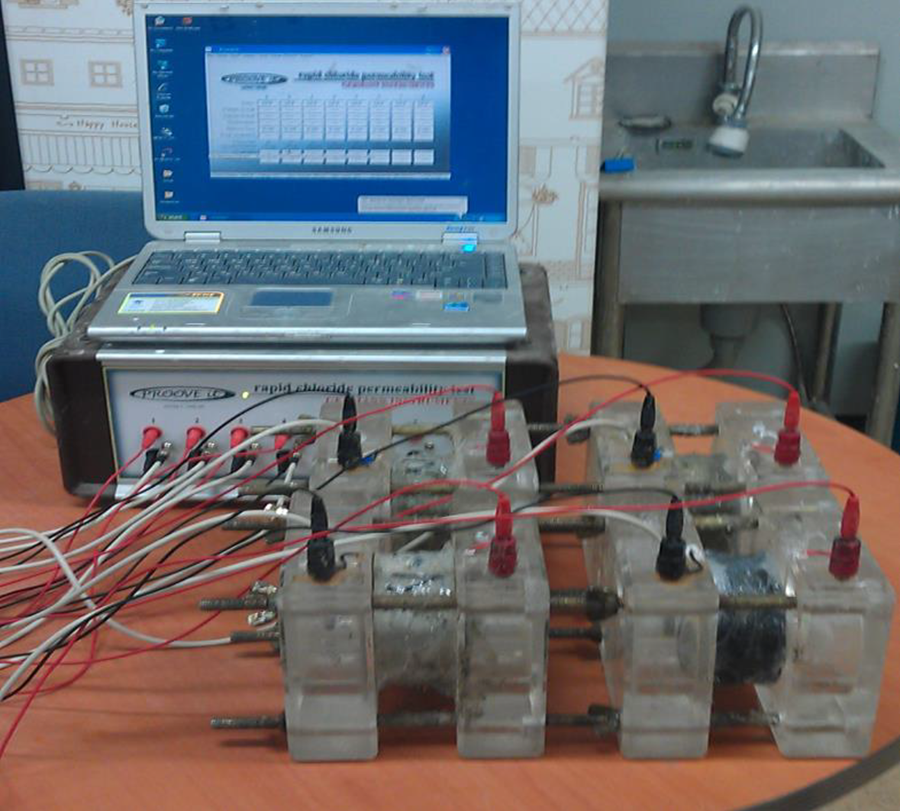
Chloride ion penetration tests were conducted in accordance with ASTM C 1202-94 standards. 21 Specimens (size 150 × 50 mm2) were tested after 28 days of curing. The test apparatus for the chloride ion penetration test is shown in Figure 3.
Abrasion tests
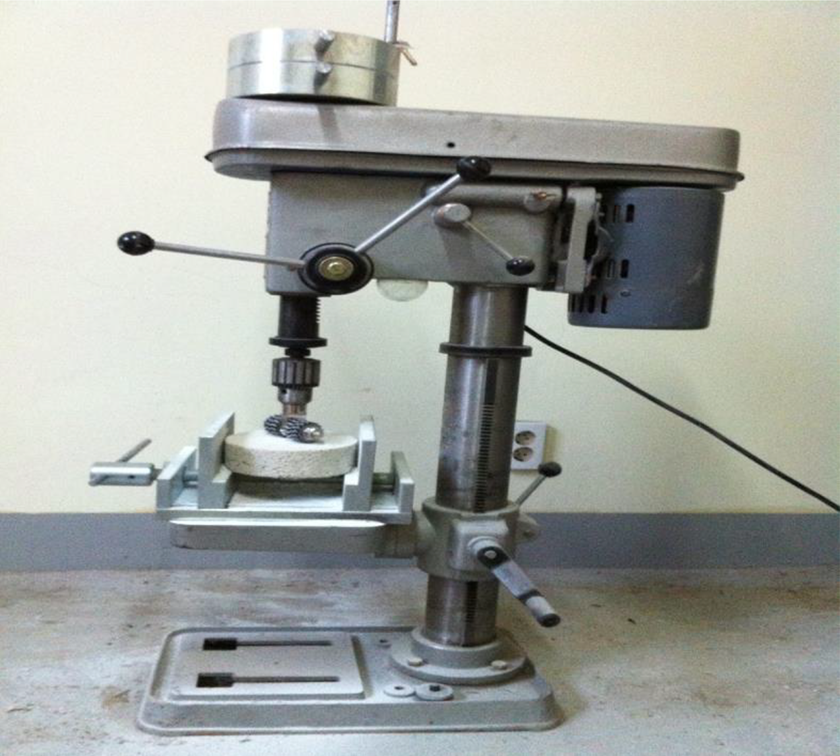
Abrasion tests were conducted in accordance with ASTM C 944 standards. 22 Specimens (size 150 × 60 mm2) were tested after 7 days of curing. The test apparatus for the abrasion test is shown in Figure 4.
Test results and discussion
Compressive strength
Figure 5 shows the compressive strength test results for LMFRRSCs as a function of PVA fibre content. Regardless of the PVA fibre content, all samples satisfied the target 4-h strength target of 21 MPa. In addition, all of the 6-h and 28-day strengths were at or above 25 MPa and 35 MPa, respectively. However, the compressive strength value of samples without the PVA-fibre additive did not exceed the standard strength value. In general, if latex is added to rapid-set concrete, the solidification time, as well as the gain in the compressive strength of the concrete, is delayed. In this study, the amount of rapid-set cement used was increased to meet the 21-MPa compressive strength minimum at the 4-h mark for traffic opening following an emergency repair. However, under these conditions, fine-crack generation inside the concrete was more likely due to the high heat of hydration caused by the higher concentration of rapid-set cement. Fine cracks inside concrete affect the concrete strength. Thus, the concrete strength of older materials is likely to decline. For this reason, PVA fibre was added to the concrete to decrease the generation and growth of cracks caused by the heat of hydration. We observed that the compressive strength increased with the volume fraction of PVA fibre addition.
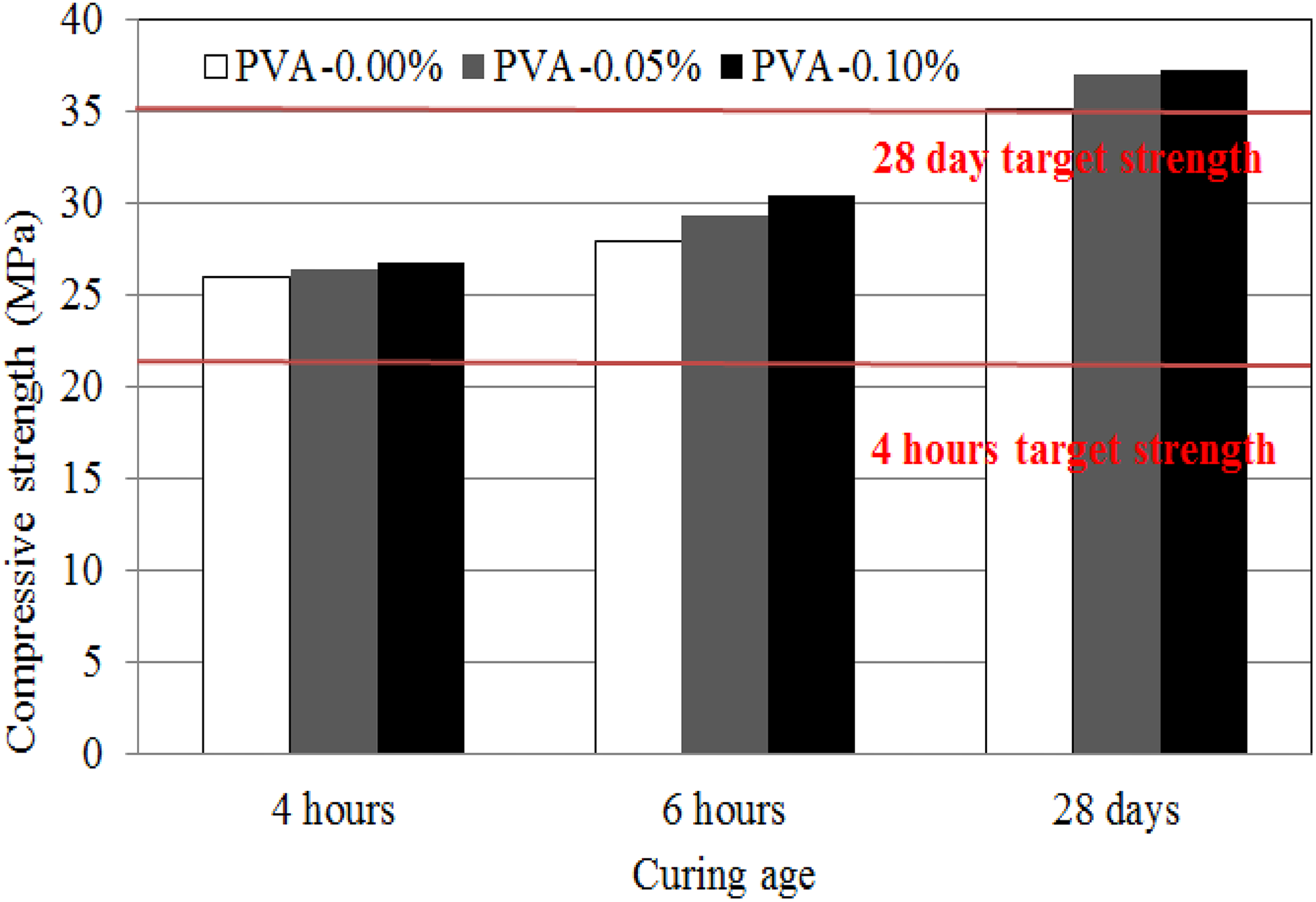
Compressive strength of LMFRRSC. PVA: polyvinyl alcohol; LMFRRSC: latex-modified PVA fibre-reinforced rapid-set cement concrete.
Flexural strength
The test results for the flexural strength of LMFRRSCs as a function of the curing time and PVA fibre addition are shown in Figure 6. In this research, the targeted standards of flexural strength were 3.5 MPa at 4 h for traffic opening and 4.5 MPa after 28 days. The test results indicated a flexural strength of 5.0 MPa, which exceeded specifications at the 4-h and 28-day mark. Thus, in comparison with commonly used concretes, the addition of latex affects the tensile strength and flexural strength more than the compressive strength. Latex addition enhances the adhesive force between materials via film formation; thus, under a bending or tensile load, the concrete is more resilient in terms of its tensile and flexural strength. Our results indicated that the flexural strength increased with the PVA fibre content; therefore, the hydrophilic fibre additive enhanced the adhesive properties of the concrete matrix. As such, PVA is excellent at controlling the generation and growth of cracks in concretes, particularly under bending loads or initial-stage hydration heat conditions. Thus, as the PVA content increased, the bridging effect of the fibre increased, which in turn increased the flexural strength.

Flexural strength of LMFRRSC. PVA: polyvinyl alcohol; LMFRRSC: latex-modified PVA fibre-reinforced rapid-set cement concrete.
Splitting tensile strength
In this research, a 28-day material-age criterion of 4.2 MPa was specified for the splitting tensile strength of LMFRRSCs to meet emergency concrete repair guidelines. All of the test results indicated a value of 4.5 MPa or higher, satisfying the 28-day material-age standard of 4.2 MPa (Figure 7). Additionally, as the amount of fibre content increased, the splitting tensile strength increased slightly as well. These results showed that LMFRRSCs has a high hydration heat in the early stages, which promotes initial-stage strength. The PVA fibre additive inhibited the generation and growth of cracks. As such, under load conditions, strong adhesion to the concrete matrix enhanced the splitting tensile strength of LMFRRSCs.
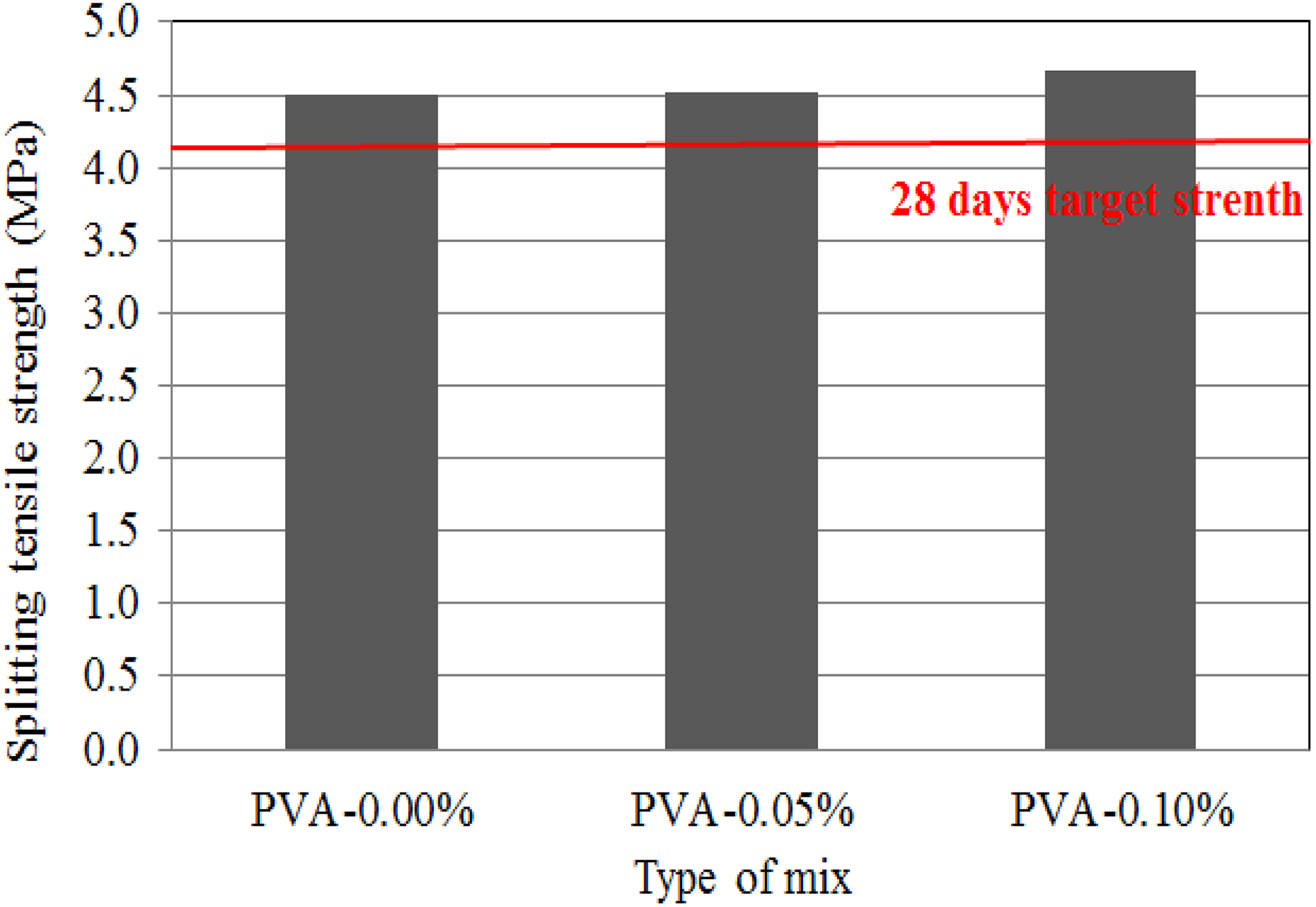
Splitting tensile strength of LMFRRSC. PVA: polyvinyl alcohol; LMFRRSC: latex-modified PVA fibre-reinforced rapid-set cement concrete.
Bond strength
The bond strength of LMFRRSCs was evaluated for emergency repair of concrete pavements on the basis of the 28-day material-age standard specified by the Department of Transportation, Virginia, USA. The adhesion test results showed that the bond strength increased with the PVA fibre content (Figure 8). The concrete specimen without PVA fibre additive exhibited a bond strength of 1.45 MPa. Specimens containing 0.05% and 0.10% PVA fibre showed bond strengths of 1.58 and 1.62 MPa, respectively. According to the criteria set by the Virginia Department of Transportation, all of the bond strength test results were within the “good” range of 1.4–1.7 MPa. Thus, the bond strength of all concrete samples increased with the PVA fibre content and satisfied the guidelines specified. The quality criteria of the bond strength indicated that the PVA fibre additive had little effect on the bond strength of LMFRRSC for emergency repair of concrete pavements. Instead, the bond strength of LMFRRSCs was more affected by the surface conditions of the floor concrete, such as the surface roughness and moisture. But despite its minimal effect on the floor concrete surface conditions, PVA fibre additive may affect the adhesive force between the LMFRRSC component materials. Since PVA fibre had little effect on adhesion with the existing floor concrete, the improvement in the bond strength with the floor concrete was not significant. In contrast, latex, as a polymer material, can significantly influence the bond strength with floor concrete. Thus, the PVA fibre additive had a greater effect on the viscosity of LMFRRSCs.
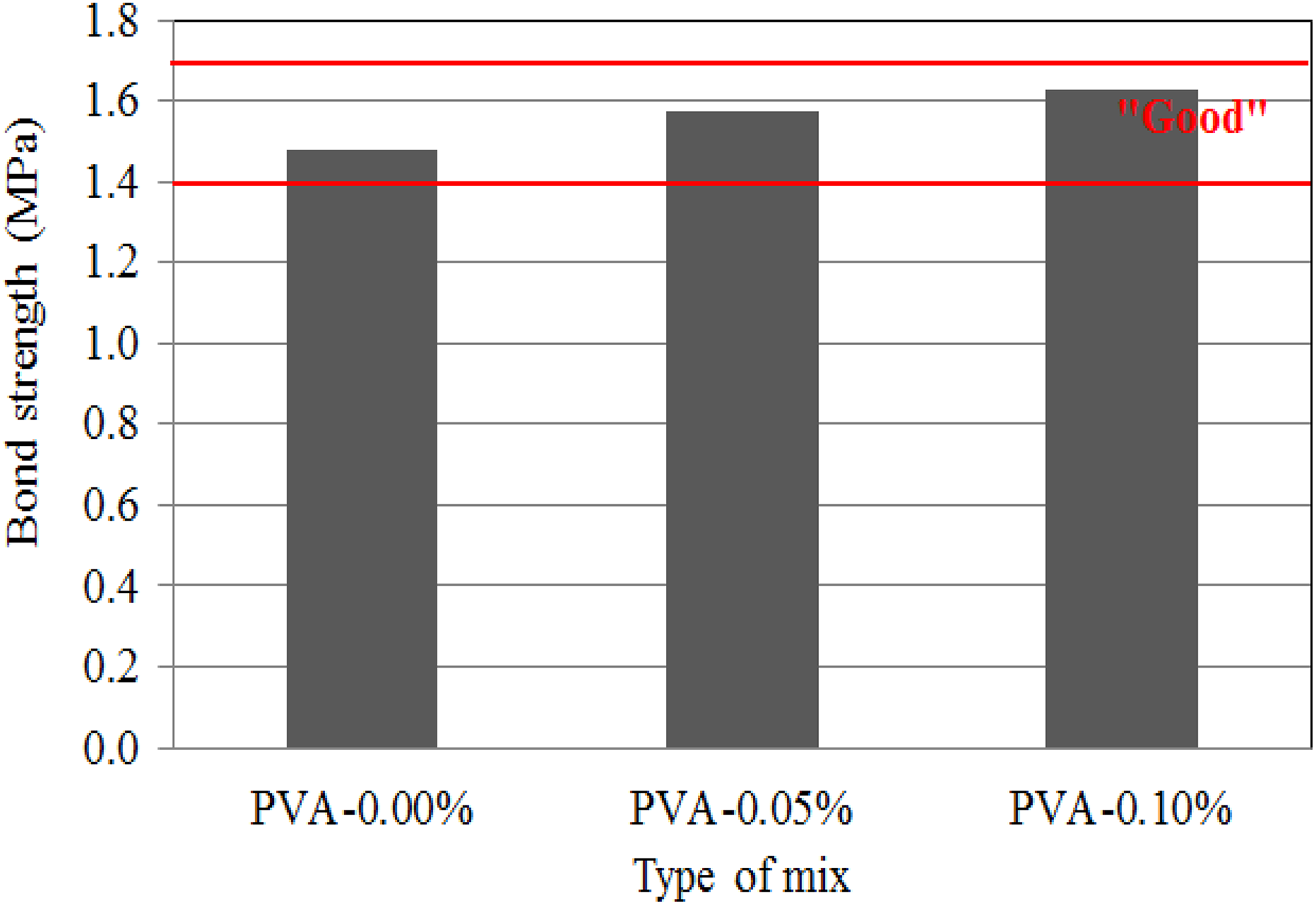
Bond strength of LMFRRSC. PVA: polyvinyl alcohol; LMFRRSC: latex-modified PVA fibre-reinforced rapid-set cement concrete.
Chloride ion penetration
The chloride ion penetration test is an indirect test method used to evaluate the water permeability of concretes. Figure 9 shows the test results for chloride ion penetration of LMFRRSCs as a function of PVA fibre content. All test results satisfied the targeted 28-day material-age chloride ion penetration of 2000 coulomb. The test results of chloride ion penetration showed that as the PVA fibre content increased, the chloride ion penetration decreased. In general, latex addition decreases water permeability by filling the pores inside the concrete and forming a thick latex film. The rapid-set concrete used in this study retained a low chloride ion penetration (approximately 1000 coulomb). Moreover, the addition of hydrophilic PVA fibre further decreased water penetration. According to the literature, the application of fibre reinforcement to concretes decreases water permeability. However, water permeability may increase due to crack formation associated with high hydration heat in the initial stages of curing, especially for rapid-set cement concrete. Hydrophilic reinforcing PVA fibre may inhibit water permeability by minimizing crack formation inside the concrete. Thus, as the fibre content increases, the permeability decreases significantly. However, beyond a certain limit, an increase in the fibre content may result in fibre-ball formation, causing an increase in water permeability. In this research, an increase in water permeability due to fibre-ball generation did not occur because the latex enhanced the initial-stage fluidity, resulting in improved fibre dispersion.
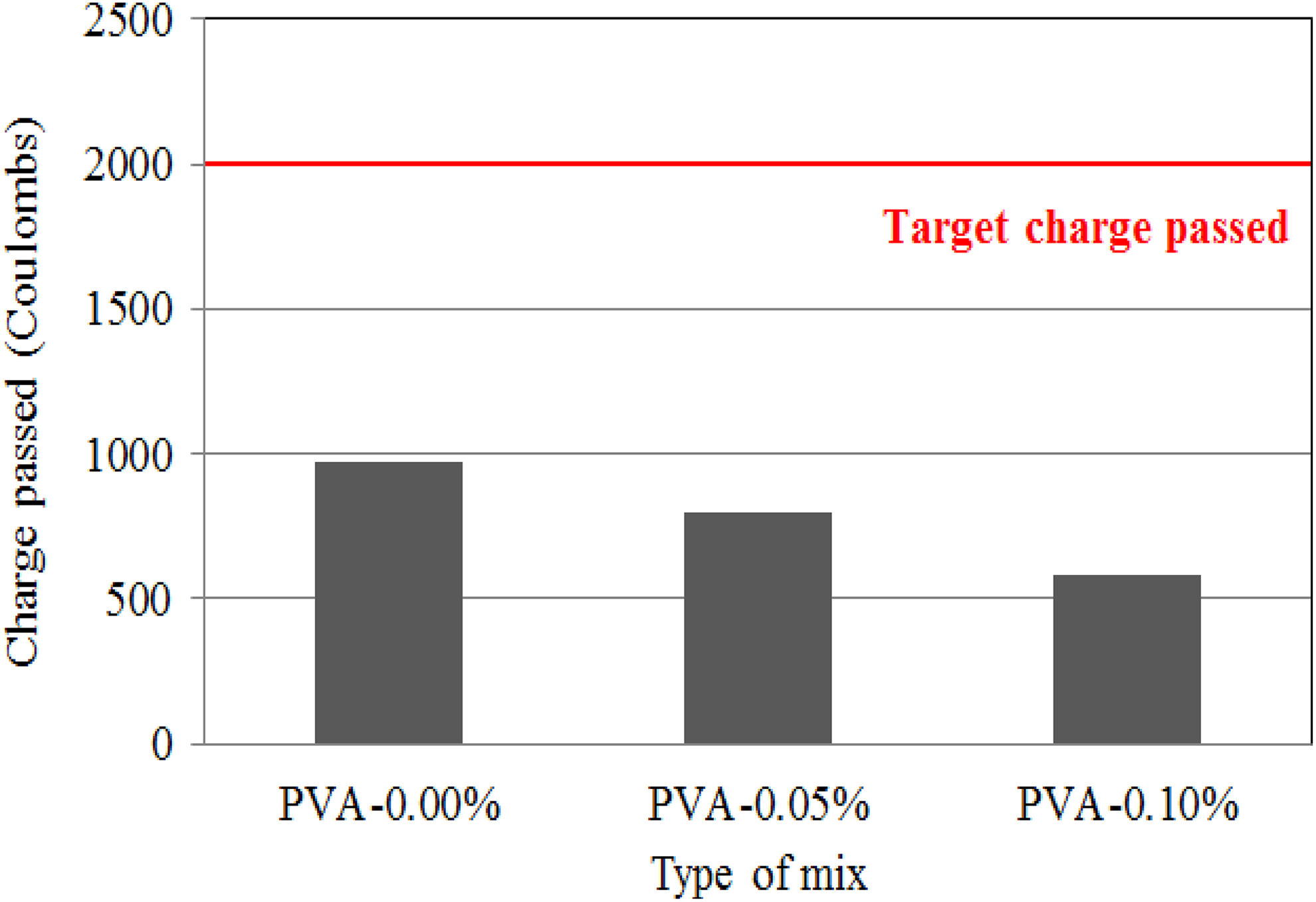
Chloride ion penetration test results for LMFRRSC. PVA: polyvinyl alcohol; LMFRRSC: latex-modified PVA fibre-reinforced rapid-set cement concrete.
Abrasion resistance
Figure 10 shows the wear test results for LMFRRSCs as a function of PVA fibre content. As the PVA fibre content increased, the wear resistance improved because the dropout of concrete particles due to wear was inhibited by the bridging effect of the PVA fibres. Because PVA is a hydrophilic fibre, thus bound strongly to the concrete matrix, it is effective at improving the wear resistance of concrete.
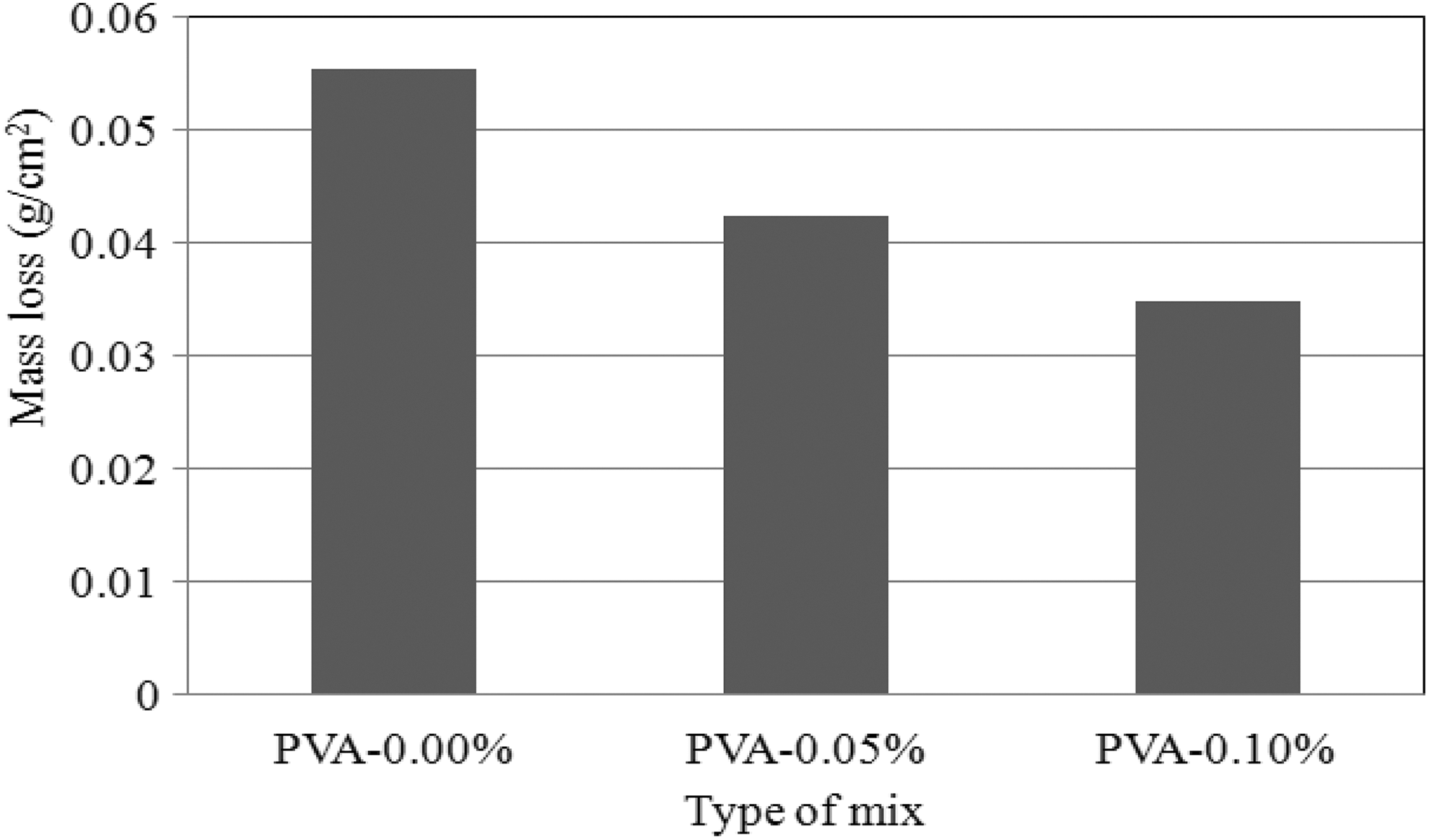
Abrasion test results for LMFRRSC. PVA: polyvinyl alcohol; LMFRRSC: latex-modified PVA fibre-reinforced rapid-set cement concrete.
Conclusions
In this study, we evaluated the effect of PVA fibre reinforcement addition on the performance of LMFRRSCs for emergency repair of concrete pavements. The test results can be summarized as follows:
The compressive strength test results showed that all concretes (LMFRRSCs with 0.0%, 0.05% and 0.10% PVA additive) satisfied traffic-opening standards (>21 MPa after ageing for 4 h and >35 MPa at a material age of 28 days).
The flexural strength test results showed that all concrete samples satisfied traffic-opening standards (>3.5 MPa at a material age of 4 h and >4.5 MPa at a material age of 28 days).
The splitting tensile strength test results showed that all concrete samples satisfied the target value (4.2 MPa for a material age of 28 days); the addition of latex increased the adhesive force between the component materials of the concrete, which, in turn, increased the tensile force of the LMRSCCs. Thus, the addition of PVA fibre resulted in minimal crack formation under tensile loading, increasing the splitting tensile strength.
The bond test results indicated ‘good’ performance for all samples; this was attributed to the excellent adhesion qualities of latex, a polymeric material. The bond force increased slightly with PVA content. Despite enhancement of the bond force of the LMRSCCs, PVA fibres did not have a significant effect on the bond strength with other concretes.
The chloride ion penetration test results showed that, as the fibre volume fraction of PVA fibre increased, the chloride ion penetration decreased. The target criterion of 2000 coulomb or less was satisfied for all PVA fibre volume fractions.
The abrasion test results showed that the wear resistance increased with the PVA fibre content. The PVA fibre additive tightened the internal structure of the concrete via a bridging effect, which prevented dropout.
Footnotes
Declaration of conflicting interests
The author(s) declared no potential conflicts of interest with respect to the research, authorship, and/or publication of this article.
Funding
The author(s) received financial support for the research, authorship, and/or publication of this article: This work was supported by Korea Institute of Planning and Evaluation for Technology in Food, Agriculture, Forestry and Fisheries (IPET) through Agri-Bio Industry Technology Development Program, funded by Ministry of Agriculture, Food and Rural Affairs (MAFRA) (316034-03-3-WT031) and This research was supported by the basic science research program through the national research foundation of Korea (NRF) founded by ministry of education (NRF- 013R1A1A4A01011776).