




Abstract
Forms are vehicles that register the everyday. A bureaucratic form starts a dialogue between an individual and the State in a particular area of public administration. The visual design of bureaucratic forms shapes what is registered and how personal identity is documented in the eyes of the State. This article is situated in the field of administrative justice and argues that we must increase the scope for personal narrative in the design of bureaucratic forms. Meers notes that there has been no sustained research into application forms despite the importance of forms in the administration of the welfare state. By drawing on sociological scholarship on registration and narrative together with socio-legal scholarship on design, the ideas explored offers a novel and interdisciplinary approach to scholarship on the form of forms.
Introduction
The significance of forms for modern living cannot be overemphasised. In this world, ‘nothing can be said to be certain except death and taxes’ (Franklin, 1789), but you need to fill in a form for both, birth and everything else in between. A form can mean very different things to people at either side of the process for which a form is being used. For an applicant, a form is the start of a bureaucratic process, the means through which an individual seeks to assert a right or claim an entitlement. For a bureaucrat, a form is a trigger for registering a claim and is often the basis on which a decision maker will consider a claim. The particular problem explored in a case study below is centred around the failure of a bureaucratic form to provide space or opportunity for individuals to outline their own narrative and personal experiences to the relevant public body tasked with exercising a power. The filling in of a form is a crucial moment in the individual–State relationship and the forms used to register claims and grievances can act as either everyday enablers or everyday barriers to justice.
This article is situated in the field of administrative justice. The 'Design and Registration' section reviews literature on design theory and registration. The 'Forms as Vehicles of Registration' section explains how forms are mechanisms for registering the everyday. The 'Redesigning Forms as Everyday Enablers of Access to Justice' section offers a forward-looking perspective on how we might incorporate narrative to design forms as everyday enablers of access to justice. The goal is to contribute to the scholarship that seeks to improve first instance decision making in public administration. This research ekes out space and recognition for personal narrative in bureaucratic forms. A case study considers a form used by prisoners in Irish prisons to request a transfer to a different country to serve the remainder of their sentence. While the case study focuses on a form used in the Irish Prison Service, the interdisciplinary threads come together to provide a framework to consider the form of forms across all areas of public administration. There are of course limitations of looking at the form of forms broadly across administration with just one case study. In each area of administration particular issues can arise due to the contextual nature of public administration and the nature of the power being exercised by bureaucrats (Donson and O’Donovan, 2015). Other variables include what different entities need to register; plurality of system users (Brown et al., 2021); literacy levels; the significance of what is at stake; legal representation; whether a form is being used at first instance or on appeal; where a form is being filled in or submitted (van der Valk and Rogan, 2023); digitalisation of forms (Tomlinson, 2019; Tomlinson, 2020; Tomlinson and Meers, 2022) and institutional culture (Thomas, 2022a).
The article uses a socio-legal methodology to explore the intersection of the visual design of bureaucratic forms and everyday issues of justice. This research advances the field by holding up bureaucratic forms as a place of law and is part of the body of administrative justice scholarship that challenges the idea that law solely takes place in the courts (Doyle and O’Brien, 2020; Harlow and Rawlings, 2022; Hertogh et al., 2022). The author identifies bureaucratic forms as a place where law takes place, perhaps at the lowest level of any legal process because the filling in and submission of a form is the point in time of registration of the initial claim or grievance. Tracing back through the decision-making process to the form originating the claim or grievance, we see that lack of space for narrative in the form can lead to a misunderstanding between the applicant and the decision maker. In this way, rather than enabling access to justice, forms can be barriers to accessing justice. The core argument advanced on narrative and bureaucratic forms is supported by sociological research on narrative and how the stories we tell are central to our existence, allow us to make sense of the world and position ourselves in space, place and time (O’Neill et al., 2015; Plummer, 2020). How we register these stories is crucial to the operation of the administrative state. What follows is a novel approach to remedying the problem of the lack of mutual understanding and dialogue between an individual and the State by drawing on a wide range of sociological and legal sources.
Design and Registration
Design Theory: Legal Problem Solving and Sense Making
There are many definitions and interpretations of design. Manzini (2015) describes how humans have been designing since first man created tools. Costanza-Chock (2020: 16) offers an all-encompassing explanation: ‘[d]esign thus may be thought of as both a verb and a noun, a universal kind of human activity and a highly professional field of practice (or several such fields), a way of manipulating future objects and systems using specialized software and an everyday use of traditional knowledge embedded in indigenous lifeways, a type of work with one's hands and a way of thinking, an art and a science, and more’. This idea of design being both an art and a science is particularly relevant in considering the visual design of a bureaucratic form and the complex systems of administering prisons and prisoner claims. There are two autonomous elements to design in Manzini's (2015) view: problem solving and sense making. Lawyers have always been designers but perhaps without labelling legal work as ‘design’ or grounded in design theory. Howarth (2013) opines that lawyers have not tended to be reflective or precise about the legal design process (using the contrasting example of the engineering design process) but the literature outlined below indicates that a change is afoot in this regard.
The intersection of law and design is not a new phenomenon. Mashaw's ground-breaking 1983 publication Bureaucratic Justice devotes a chapter to ‘Designing Decision Processes’ in a study on social security claims in the United States. Mashaw (1983: 79) notes that ‘[a]judicative errors are themselves costly, but we are not prepared to pay literally any price to avoid them’. This leads him to pose the question, ‘[h]ow much are good decisions worth?’ (Mashaw, 1983: 79). In relation to how decision processes are designed, Mashaw notes that at first instance level, it is one decision maker making a decision. He proposes that instructing decision makers on how to build the file that they will ultimately review and make a decision on is ‘thus the essence of designing the decision process’ (Mashaw, 1983: 125). Mashaw was using a designerly lens without explicitly linking law and design theory. Some socio-legal researchers look at legal problems as design problems, for example in relation to courtroom design (Mulcahy, 2007), design of parliamentary inquiries (Donson and O’Donovan, 2016), videolink design in courtrooms (Rowden and Wallace, 2019) and participatory research strategies (Perry-Kessaris and Perry, 2020). Perry-Kessaris’ recent book provides novel justification and guidance on how socio-legal researchers can and should do socio-legal research in design mode. She argues that as socio-legal scholars, our ability to make a meaningful research contribution is enhanced by approaching a socio-legal problem as if it were a design problem (Perry-Kessaris, 2021: 26).
I am open to the possibility that if we apply design theory to the form of bureaucratic forms, in some cases the reimagined design may not include space for narrative. Sossin's (2017) paper on ‘Designing Administrative Justice’ refers to the Yukon Family Justice Design workshop where participants said that filling in the forms for family justice system proceedings induced stress and anxiety. This subsequently led to a project aiming to simplify forms to remedy the problem identified by the users, the Yukon Simplified Form Innovation Project (Sossin, 2017: 92). Sossin advocates for a holistic approach to designing for administrative justice and sets out that ‘[t]he goal is an experimental culture that embraces change and empowers all members of the organization to play an active role in improving tribunal operations’ (Sossin, 2017: 93). Perry-Kessaris concludes her 2019 article by asking ‘[a]re we in the midst of a general designerly turn?’ (Perry-Kessaris, 2019: 209). It certainly seems so. The seeds were planted long ago but there seems to be a growing movement among socio-legal scholars to engage with design. Collaboration and participation emerge as key themes from the scholarship on design outlined above and are explored in more detail in the 'Redesigning Forms as Everyday Enablers of Access to Justice' section below. Manzini (2016: 58) describes co-design as a ‘social conversation’, drawing our attention to the fact that this in itself can cause tension. Changes to public body practices, particularly when they are so embedded in the institution, can be stressful for the officials involved. Forms are so varied and used for such a broad range of registrations, we must proceed mindfully and inclusively.
Registration
‘Legal documentation constitutes a crucial precondition for enjoying full citizenship rights and protections’ (Hunter and Brill, 2016: 220). Despite the importance of registration for modern living, the reality of modern registration is that just 51% of the world's population was registered as of 2012 (Hunter and Brill, 2016). The countries where under registration takes place are primarily countries the form part of the Global South (Hunter and Brill, 2016). The Global North has a long history of registration and paper files. Vismann (2008) tracks the development of record keeping right up to the modern-day practice of using files as a way of processing order within public administration. The way the State registers is through the use of files which are ‘comprehensive recording devices’ (Vismann, 2008: 10). These records situate us in space, place and time.
We register stages of life through documents that ultimately inform files that make up our existence in the eyes of the State (Lund, 2001: 4): ‘[e]xplicitly, the quest for documents is about acquiring a written identity comprised of a hierarchy of affidavits that construct the legal person. The individual elements or entries on each document and the relationship of one document to another in a dossier represent an objective written reality about the applicant’. The act of registration using documentation fixes the legal person on paper (Smith, 2020). Registration can also be viewed as a tool to protect the self (Lund, 2001) but some acts of registration or modes of registration can deprive the individual of autonomy and agency. One of the issues with modern registration practices is that the registration choices are made in advance by bureaucrats or politicians and there can be a significant disconnect between the person that we are ourselves and the legal person that the State constructs for us. Registration is dependent on the bureaucrats who register (Pottage, 1995). Vismann (1999: 284) observes that ‘governmental techniques and secretarial practices’ are the ‘hardware of law as compared to its rhetorical software’. They are the physical and tangible parts of law. We leave places of registration with a physical copy of our birth certificate or driving license or property registration folio. We are careful with these documents and keep them safe. They are precious to us. Smith (2020) adds that we can also take away souvenirs or keepsakes of registration. There is a current phenomenon on Irish social media to post a photograph of the green folder that marriage registration authorities give couples with marriage registration forms. This public, performative act is one that signifies the importance of registration to these individuals. Registration is important not only to the State but also to individuals whose identity is entwined with their registration status.
Both Lund (2001) and Smith (2020) offer constructions of the legal person in the eyes of the State that is constituted through the paperwork that the State holds about us. Forms, as currently constituted and utilised, are tools of the system in which we exist. They are not just about access to services or supports, they are a feature of the relationship between an individual and the State (Brown et al., 2021). The narrative constructed about us by forms and State files can be completely detached from a narrative of the self. Spade (2015: 78–79) highlights how trans people face ‘[i]dentity documentation problems’ when public and private bodies have incorrect information on file for an individual and will not permit change of gender to be registered or put significant barriers in place to make any such change to the record. Bureaucratic oppression takes many forms and results in the imposition of unnecessary and unjustified harm on people (Thomas, 2022b: 226). I position bureaucratic forms as a place ripe for exposing examples of bureaucratic oppression. Cook (2022) carries out timely form-led analysis of child support forms and governing documents that illustrates how forms can contribute to bureaucratic oppression. Cook's research exposes how ‘the state's prioritisation of its own interests at the expense of low-income women's interests was achieved through a range of tactics’ (2022: 258). Women who fear abuse as a result of applying for child support may be eligible for an exemption under the Australian system. Despite this exemption, 22 of the 24 women in the study who had experienced domestic violence were channelled into the child support system (Cook, 2022: 251). Cook exposes how the opacity of department instructions, design of forms and multiple steps involved contribute to applicants being filtered out of the exemption process. Cook, pointing to a small box on a form that asks for an explanation as to why child support has not been sought, opines that ‘[i]f women “chose” to provide an account of their experiences of violence within this box, it was unlikely that such a brief account would lead to an exemption’ (Cook, 2022: 252). This links closely with the importance of space for narrative as explored in more detail in ‘Redesigning Forms as Everyday Enablers of Access to Justice’ section.
Bureaucratic oppression can also be found in the State's handling of (so-called) historic abuses and the failure to design transitional justice mechanisms in collaboration with victim-survivors (Gallen, 2020). The Irish State's response to institutional abuse illustrates the harm caused by prioritising ‘official histories’ over victim-survivor testimonies leading to epistemic injustices (Enright and Ring, 2020). The crucial role played by registration and files as recording devices (Vismann, 2008), mandates scrutiny on what is recorded and who has access to those files. Gallen identifies how the Confidential Committee of the Mother and Baby Homes Commission undermined the testimony of victim-survivors by doubting the credibility of such testimony (2023: 148). Gallen illustrates this point by drawing on Crowe's research on the Confidential Committee proceedings. Crowe details how a survivor was able to evidence inaccurate recording of her testimony in the official report by making her own recording when she gave evidence (2021). The State's failure to accurately record the testimony of a survivor is a clear example of both bureaucratic oppression and epistemic injustice. O’Rourke et al. (2018), in their Principal Submission to the Commission of Investigation into Mother and Baby Homes, detail the obstructions victim-survivors face from the State, religious institutions and adoption agencies in attempting to access information. Their report highlights defects in the layout of adoption forms, and procedures relating to the completion of those forms: ‘In some cases, the layout of the form and inadequate procedures make it unclear whether the mother gave informed consent to the adoption. Witness 19, who was adopted through the Rotunda Girls Aid Society, has seen the adoption consent form under which he was adopted. His natural mother had not signed it – it was signed by someone else. “She did sign a smaller form, indicating that she understood the nature of an adoption order … This was a detached sheet from a statement which purports to explain the effects of an adoption order, but it does not at any point indicate her consent to the adoption”.' (O’Rourke et al., 2018: 1.99)
The files that the State holds about us fix us in space, place and time in official documentation. There is much to be gained from connecting research on design and registration together to reflect on how we might design bureaucratic forms as the mechanisms used to register and record. Mashaw was already doing this type of work in all but name back in 1983 with his contribution on building the file. Bureaucratic forms are the originating document in the files bureaucrats build. Forms are a crucial, and under researched, part of the debate on registration and ‘a critical mechanism of the relationship between individuals and the state’ (Brown et al., 2021: 936).
Forms as Vehicles of Registration
Forms as Everyday and Mundane
Meers (2020) notes that there has been no sustained research into application forms despite the importance of forms in the administration of the welfare state. There has been no intense scrutiny of forms across public administration despite forms infiltrating everything and the everyday. ‘[A]pplication forms may appear to be the pinnacle of bureaucratic mundanity, but it is vitally important that they are generally transparent and accessible to the public for a range of reasons’ (Tomlinson and Meers, 2022). There is much to be gleamed from researching the mundane and using mundane methods (Holmes and Hall, 2020). Holmes and Hall (2020: 9) outline that the lens of the everyday offers possibilities, both big and small, and can contribute to our understanding of society and culture. Bureaucratic forms are ideal everyday objects that can act as a launchpad for reflecting on the relationship between an individual and the State.
Meers (2020: 225) notes that ‘at their core, application forms are a means of capturing and shaping information for an administrative worker tasked with a decision’. He describes how forms that prevent the consideration of a relevant factor could lead to the fettering of a discretionary decision. An application form can very much shape and direct what information an applicant will include in their application. Meers’ research demonstrates how the design of forms can restrict how an applicant makes their case by imposing exhaustive criteria for self-categorisation (2020: 232–234).
Misunderstandings in the flow of information between an individual and the State can lead to significant human rights violations and damage the fabric of administrative justice. The information included by an applicant on a form is often quoted back to an applicant in a letter or official decision as the reason for a positive or negative determination. The information included in a bureaucratic form encompasses the most personal of information about an individual. Registering a claim or grievance through a bureaucratic form is a significant moment for an individual. They are asked to distil their life, experience and situation into few pages. The questions asked on a form typically, or should, direct the applicant to include information relevant to the particulars of the claim or grievance and provide information identifying the individual such as full name, date of birth and social security number. Forms are the status quo in terms of how we register a claim or grievance with a public body. Without registration, there is no initiation or prompt for the State to act. Without sufficient visual space for personal narrative, forms can act as barriers to accessing justice. I note here the tension between the position of the applicant and the position of the bureaucrat. Bureaucratic forms have bureaucratic purposes. Bureaucrats need forms to streamline and condense data about an individual. They develop processes by which public bodies can fairly and consistently evaluate claims. There are certain pieces of information that decision makers need in order to assess a claim and a form is a convenient way of pulling that information together. Forms are a mechanism for standardising data about an individual and can act as a checklist of sorts for a decision maker to ensure they have access the information they need to consider a claim.
It is already the case that many forms are submitted to public bodies under detailed cover letters. Cover letters might typically include background information, a list of supporting documentation included with the application and explanatory notes where the form does not provide space for personal narrative or the questions are posed in a way that requires further explanation to fully answer. Inclusion of extra information under cover letter can be problematic for two reasons. First, a decision maker may be more inclined (for reasons of legitimacy and fairness) to focus on what is written on the application form. In terms of what is officially ’registered’, they might focus on what is submitted on the form itself. Second, some applicants, particularly those without legal representation, may not realise they are permitted to include additional information beyond what is requested or there is space for on the form. An example of a focus on an application form itself, over and above supporting material, occurred in Habte v Minister for Justice and Equality [2019] IEHC 47. In Habte the applicant sought judicial review of the Minister's decision to refuse to amend the date of birth on her certificate of naturalisation. When the applicant applied for naturalisation as an Irish citizen, she wrote a date of birth on the relevant form that did not match the date of birth on her birth certificate. She later submitted a letter explaining the differences between the Gregorian and the Ethiopian calendars. A retired senior official from the citizenship division of the Department of Justice gave evidence in court. Humphreys J, in his judgment, summarises the official's testimony: ‘[t]he gist of his evidence was that he was primarily looking at the application form itself for this purpose rather than any other material that was furnished by the applicant specifically’. In circumstances where information can be provided in a piecemeal fashion or through multiple means to public bodies, it is understandable that officials may focus on application forms in determining a claim. Forms are used by officials to streamline information and are an important part of decision-making frameworks. This makes the design of application forms all the more important and is explored in more detail with a case study below. The confusion over a date of birth in Habte is interesting. We might think that something as basic as a date of birth, for which application forms typically provide a few boxes in DD/MM/YYYY format, would not necessarily need further explanation. Clearly such an assumption is based on an understanding of calendars dominant in the Global North and fails to recognise there are countries that use other calendars. Sometimes what appears to be the most basic or straightforward information request may require space for further explanation.
I accept that further space for narrative in certain forms potentially places a greater burden on the State in terms of processing forms. Increasing scope for narrative in bureaucratic forms, in certain areas of administration, could improve decision making at first instance and thus reduce the number of appeals or reviews of administrative decisions. I accept that this is aspirational but at a minimum, the increased scope for narrative would go some way in bridging the gap between an individual and the State. In exploring the question of how much good decisions are worth, Mashaw (1983: 97) identifies the social benefits and social costs of social security decisions and argues that ‘[t]he demand for dignity is ultimately a demand for a process that recognizes the uniqueness of individual perceptions and preferences’. Personal space for narrative on bureaucratic forms goes some way in recognising the uniqueness of the individual and the information they may wish to relay to the decision maker. I want to emphasise that I am not advocating for lengthy administrative forms to be made even lengthier or more confusing for applicants. Instead, I am suggesting that the visual design, questions and prompts in bureaucratic forms could be redesigned in such a way to ensure forms are everyday enablers of access to justice.
It can of course be argued that allowing space for personal narrative benefits individuals with better literacy skills or those with access to legal representation. Both these objections could be remedied somewhat through investment in education and legal aid, respectively. There is also perhaps a risk of performative form filling or making forms even more inaccessible to system users by making them overly long or daunting. While these are valid concerns, it should be noted that just because there is space for narrative on a form, it doesn’t mean it has to be used. The argument I am advancing is that there are circumstances where space is physically needed on the form for an individual to accurately relay their personal circumstances to the decision maker. Without such space, the decision maker cannot see the full story and may arrive at a decision having failed to take all relevant factors into account or based on a misunderstanding of the applicant's situation. In terms of addressing the issue of overly long or daunting forms, that too is a problem that needs to be researched and remedied. If we bring together different stakeholders acting as co-designers (Manzini, 2016) on the design of bureaucratic forms, there may be circumstances where we can reduce the burden on form-fillers and form-readers by including just those questions that public officials need answered in order to assess a claim.
Administrative Law and Reason-Giving
The right to reasons in administrative law is strongly rooted in the jurisprudence of fair procedures. The courts have struggled to develop clear rules on reason-giving in administrative law, with much of the case law centring on the adequacy of reasons for an administrative decision (Bell, 2019). Reason-giving is understood to provide legitimacy, fairness, transparency and trust to the administrative process and exercise of administrative power. The path to trying to get reasons for administrative decisions, as a legal right, takes many twists, turns and ultimately, divergences. We are now at a stage where the extent to which reasons must be given for administrative decisions is jurisdictionally and contextually variable. Mashaw (2001: 18): ‘[a]dministrative law's struggle with the uses of reason and reason-giving as the foundation of legal legitimacy provides insights of a special sort into the relationship of law and reason – and into the work that remains to be done to bring that struggle to a successful conclusion’.
Bureaucratic forms are central to the relationship between law and reasons. Forms transmit the reason for registering the claim to the public body and the reasons for the decision are intrinsically linked to the reasons for applying. Mashaw (2001: 30) outlines that administrative decision makers must give complete reasons for administrative decisions and that in the United States, over half of those who apply for benefits have their claims denied and individuals find these denials ‘deeply perplexing’. He points out that people apply for social security because they think they are entitled to it or because something has happened to them, and they want the State to step in and assist. Where people get negative determinations for their claim, well-explained reasons are all the more important in helping a person understand and accept why their application was unsuccessful. As Holland J observed in a recent Irish High Court judgment, ‘reasons are for losers: winners are usually less concerned with why they won than losers are with why they lost’” (Ballyboden Tidy Towns Group v An Bord Pleanála & Ors [2022] IEHC 7: 259).
The information provided by an applicant on a form is often quoted in a letter or official decision as the reason for a positive or negative determination. Or as occurs in the case study below, issues also arise where there is no space for certain information on a form and a decision maker makes a negative determination due to lack of information. By tracing back through decision-making processes, to the registration of the claim or grievance, we see that design choices in the form provided can lead to misconceptions or misunderstandings on both sides of the form process. The flow of information from a citizen to the State and back again is outlined in the image below (Figure 1).
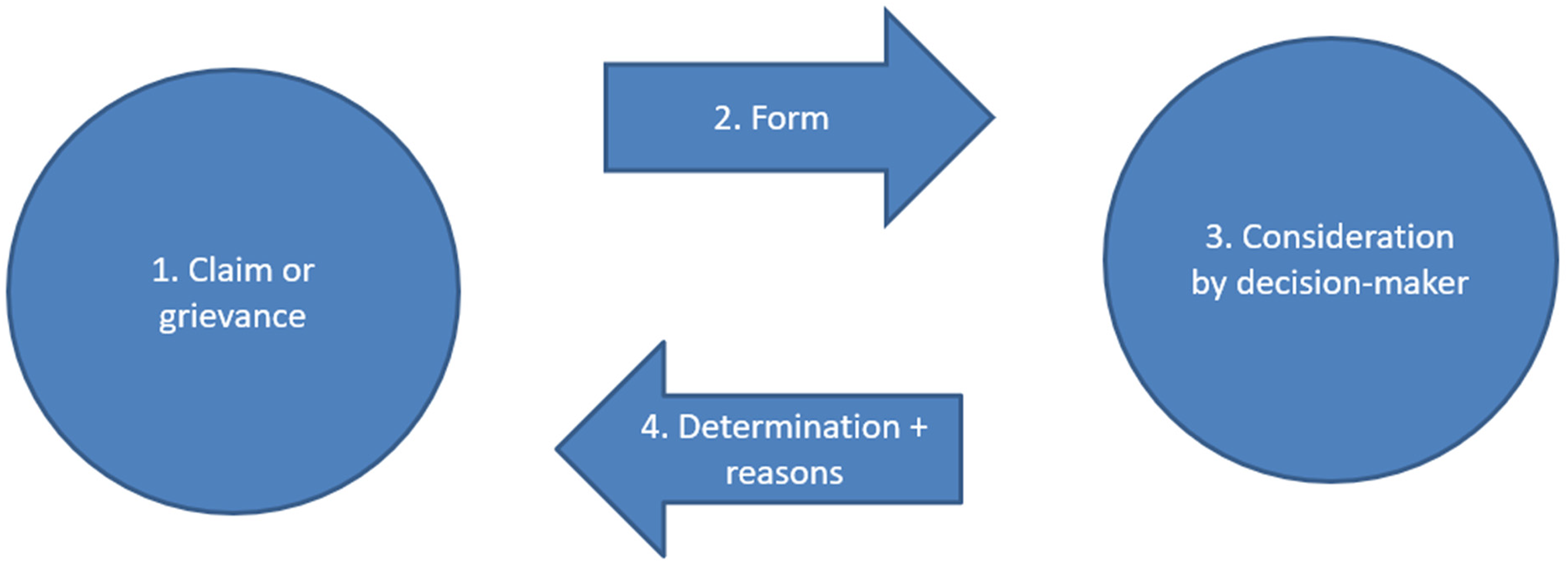
Flow of information between individual and State in a decision-making process.
Through this image we can situate forms as a key component of the administrative decision-making process. This links back to Mashaw's argument on building a file above. Better designed forms can lead to better decision making in public bodies, better determinations being issued that are accompanied with reasons that make sense to the applicant and are consistent with their personal experience and story. Narrative can bridge a gap between the individual and the State. Forms can provide the space and opportunity for this narrative to flow.
Sennett (2018: 262) identifies a ‘recognition gap’ that may exist between authorities and individuals. He uses the example of the Grenfell inquiry and how the authorities were focused on providing reasons that explained why a particular choice of cladding had been selected, while victims wanted acknowledgement of their trauma. This recognition gap is something that we can anecdotally understand too where many individuals will have had a frustrating interaction with a public body who just don’t seem to get ‘it’. There are institutional issues at play here too including a culture of indifference towards applicants (e.g., welfare claimants being viewed as cheats or scroungers, Thomas, 2022a) or systemic racism (e.g., the Windrush scandal, Thomas, 2022c).
Returning to the idea in Figure 1, by tracking back through from (4) Determination + Reasons; (3) Consideration by decision maker; (2) Form and (1) Claim or grievance, I argue that there is a vital link between the choices made in the form of forms that impact the reasons for an administrative decision because one is the function of another. Forms and reasons are correlated vectors in the decision-making processes of public bodies. Reasons are important so that individuals can find closure and accept determinations, knowing that the reasons given correspond to the narrative they laid out on their application form. Reasons are vital in providing applicants with an opportunity to appeal or review a decision if the reasons given for an administrative decision are unlawful or incorrect. If there are gaps in the reasoning, then the applicant can query or challenge the decision. This is what occurred in the case outlined below.
Butcher v Minister for Justice and Equality [2012] IEHC 347
The case of Butcher provides an insightful snapshot of the relationship between forms and access to justice. Through socio-legal analysis of the visual design of the form, I argue that the lack of space for narrative in the form, contributed to the disconnect between an individual and the State. Butcher is an Irish High Court judicial review case challenging the decision of the Minister for Justice and Equality (hereinafter the ‘Minister’) to refuse a British national's application to serve the remainder of his sentence in the United Kingdom. The judicial review was successful on the basis of the Minister's failure to consider relevant considerations. O’Malley J makes several important observations on the Application for Transfer form that contributed to the gap in personal narrative and led to this successful High Court challenge.
The Convention on the Transfer of Sentenced Persons provides a mechanism whereby prisoners serving a sentence in a foreign country may apply to be transferred to serve the remainder of their sentence in a different country. It aims to facilitate the social rehabilitation of prisoners through alleviating hardships such as language barriers and absence of contact with relatives. The Convention is provided for in Irish national law by way of the Transfer of Sentenced Persons Act 1995 and the Transfer of Sentenced Persons (Amendment) Act 1997. The applicant in Butcher was serving a 6 and a half year sentence in an Irish prison for manslaughter. The applicant was a British national and he sought a transfer to serve the remainder of his sentence in the United Kingdom under the Acts. On the relevant application form, the applicant noted his reason for interest in transferring was to enable visits from his elderly mother and family. The National Offender Management Service of the Ministry for Justice in the United Kingdom sent a letter to Irish officials agreeing to the transfer of the applicant. The letter further noted that British authorities would continue to enforce a sentence of 6 years 6 months imprisonment, ‘[h]owever, under British Law, Mr Butcher will be automatically released at the half-way point of the balance of the sentence remaining at the date of transfer’.
The Minister refused the transfer due to the serious nature of the applicant's crime and because the applicant's sentence would be reduced if he were transferred to the United Kingdom. The applicant took judicial review proceedings seeking an order quashing the Minister's decision to refuse the transfer and a series of declarations in relation to the decision-making process. Of particular relevance here is the applicant's claim that the Minister ‘determined the application on the basis of personal or irrelevant considerations and failed to have regard to the applicant's rights under the European Convention on Human Rights and in particular Article 8 thereof’. The other two grounds were (i) fettering of discretion and (ii) denial of a fair and impartial hearing.
The Minister denied all claims made by the applicant. In response to the applicant's claim that the Minister failed to consider the applicant's Article 8 rights, the Minister argued that: ‘the evidence put forward by the applicant was tenuous and not sufficient to engage a consideration of Article 8 – without prejudice to this contention it is pleaded that some restriction of the applicant's rights under Article 8 is a necessary and inevitable consequence of imprisonment in the particular circumstances of the applicant. The respondent also claims that the applicant has failed to adduce any evidence that his transfer would result in his having any contact with his family, particularly since the United Kingdom authorities do not guarantee that he will be located near his family’.
It is clear from this statement that the Minister claimed not to have sufficient evidence to consider the applicant's rights under Article 8. This is odd considering the applicant indicated he wanted to transfer to enable visits from his mother and family and the aim of the Convention is to facilitate social rehabilitation and provide for prisoners to be closer to their families.
In her judgment, O’Malley J set out the following in relation to the Application for Transfer form; ‘[i]t is indeed true that the information given in the application form was scant- however, the form itself does not allow space for much more. There is no suggestion on the face of the form that, for example, it could be accompanied by a letter setting out the applicant's circumstances in more detail. The only reference to additional material is in relation to official documents such as birth certificates and passports. Since it is likely that prisoners in the position of the applicant will be filling out the form without the assistance of a lawyer it is important that they be given the chance to make their case properly. In any event, it would have been open to the respondent to ask for more information if he felt that what was provided was insufficient. In my view the fact that the sole ground put forward by the applicant for the transfer was to be closer to his mother was enough to put the respondent on notice that family rights were being invoked’.
The applicant in Butcher was not given sufficient space or prompts on the physical form to make his case properly. The Minister's decision was quashed by the High Court for not taking into account a relevant consideration, namely the applicant's Article 8 rights. There was a breakdown in the flow of information between an individual and the State that ultimately led to an administrative failure and successful challenge by way of judicial review. Looking to the judgment of O’Malley J, it seems that this breakdown was in part due to the form used by the Irish Prison Service and subsequent failure of the Minister to make further inquiries. The importance of getting bureaucratic forms right is all the more acute in the prison context due to the deprivation of liberty prisoners face and the power the State exercises over their person while they are incarcerated. There is a need to ‘get it right’ rather than ‘put it right’ (Harlow and Rawlings, 2022: 549) because so few prisoners will be in a position to challenge a decision.
Despite the successful judicial review in Butcher and the seriousness of what is at stake, the form currently in use by the Irish Prison service appears to be exactly as O’Malley J described in her 2012 judgment. See below for the form as sent to the author by the Operations Directorate of the Irish Prison Service (Figure 2).
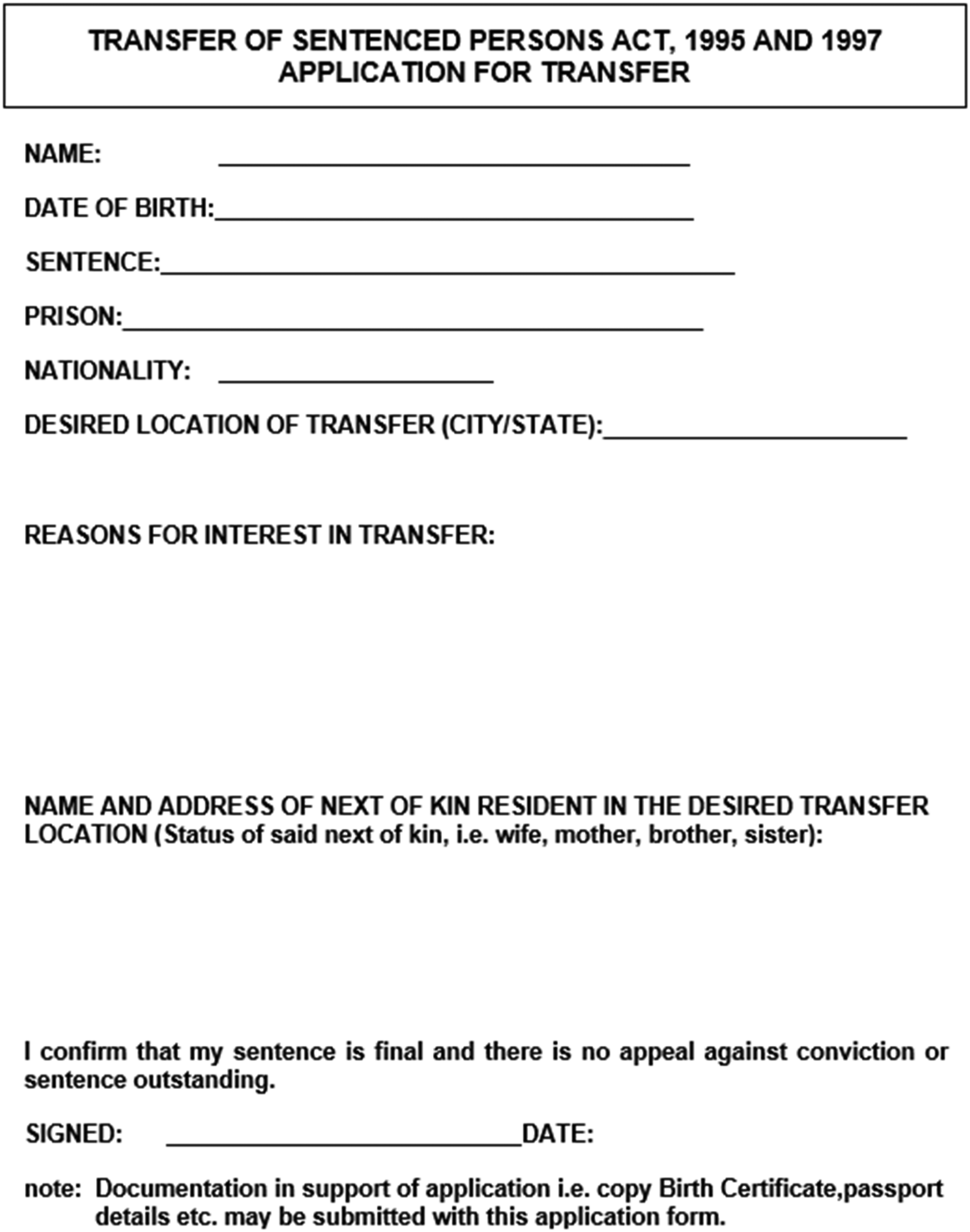
Transfer of Sentenced Persons application form, as received by the author from the Irish Prison Service on 11 February 2021.
The form as currently used by the Irish Prison Service seems to be identical to the form described in Butcher. While the Irish Prison Service is not under any obligation to redesign their form on the foot of the judgment, surely a public body that takes rights seriously would learn from Butcher. This is particularly the case where those filling in forms are doing so without access to legal representation and within a community with lower-than-average literacy levels, with a 2003 Irish study finding that a substantial number of prisoners have no literacy skills (Morgan and Kett, 2003). In querying the paperwork currently used under the Transfer of Sentenced Persons regime Ireland, I was sent an Information Leaflet dated February 2016. This leaflet outlines the legislative framework and process by which a sentenced person may apply for transfer. The leaflet does offer the following guidance in relation to an application: ‘If you are serving a sentence in Ireland, an application form for completion is available to you through prison management. The application should include all necessary contact details of family members who are fully aware of your circumstances and who will be in a position to support you while in custody and on your eventual release if your application is approved’.
This is important guidance. The Irish Prison Service is aware of the importance of family supports for social rehabilitation, but the question remains as to why there is not designated space and prompts for this item on the form itself. Prompts or nudges on a form can act as communicators of what information a decision maker will take into account and what should be included by applicants in order to put together the strongest application possible. The form is the vehicle through which the prison services register the application for transfer and the form as currently constituted leaves a lot to be desired.
Redesigning Forms as Everyday Enablers of Access to Justice
‘Nothing About Us Without Us’
This slogan is frequently associated with disability rights activists, with many citing Charlton and Werners’ respective monographs published in 1998. The concept is also applied in the design context (Costanza-Chock, 2020) and ‘summarizes a burgeoning movement in criminology that is about giving voice to diverse perspectives and a way of doing research’ (Ahmed et al., 2021: 3). Participation is a necessary pre-requisite to meaningful change in public administration. Any changes to the form must involve stakeholders. Working with stakeholders, including prisoners, requires reflection on power dynamics in the design process (Costanza-Chock, 2020: 22). We must be wary of unforeseen harms, ‘[p]rojects with good intentions are not immune from failure, and can even cause inadvertent harm’ (Costanza-Chock, 2020: 96). We must be attuned to the moral obligations of design (Norman, 2013). The design of forms for the prison service requires reflecting on a wide range of factors including agency, restrictions on movement and where registration takes place within prisons. Van der Valk and Rogans’ (2023) research on complaint mechanisms in Irish prisons captures a difficulty prisoners face in physically submitting complaint forms in circumstances where the box for submitting such forms is located in a landing area, highly visible to others in the area (2023: 6). On activating ‘Nothing about us without us’ in the criminology field, Leonard highlights the barriers that people with criminal records may face in securing employment in the sector (2021: 156). This links back to the power dynamics of the design process and in what capacity different stakeholders are entering design mode.
Forms can act as reinforcers of existing power structures and can further exclude and oppress certain individuals and communities. Forms are not tools that will dismantle the master's house (Lorde, 1984) when considered in isolation from wider social and political structures. Despite this limitation, theorising their redesign is an important part of what the Feminist Judgment Project leaders inspired through judgment-writing in offering a new method of legal critique to feminist and critical scholars (Hunter et al., 2010). Design is not always about solving problems, instead it can be used as a critical tool to imagine new futures or possibilities (Pullin, 2009). I activate some of the ideas explored above with what Dunne and Raby term as ‘speculative design’, using design as a means of speculating how things could be (Dunne and Raby, 2013). I accept there is a tension between my redesign of the form without engagement with stakeholders and the design literature outlined in this section. The below is intended as a humble ‘practical-critical-imaginative’ (Perry-Kessaris, 2021) offering and an invitation to others to activate participatory research on the form of forms:
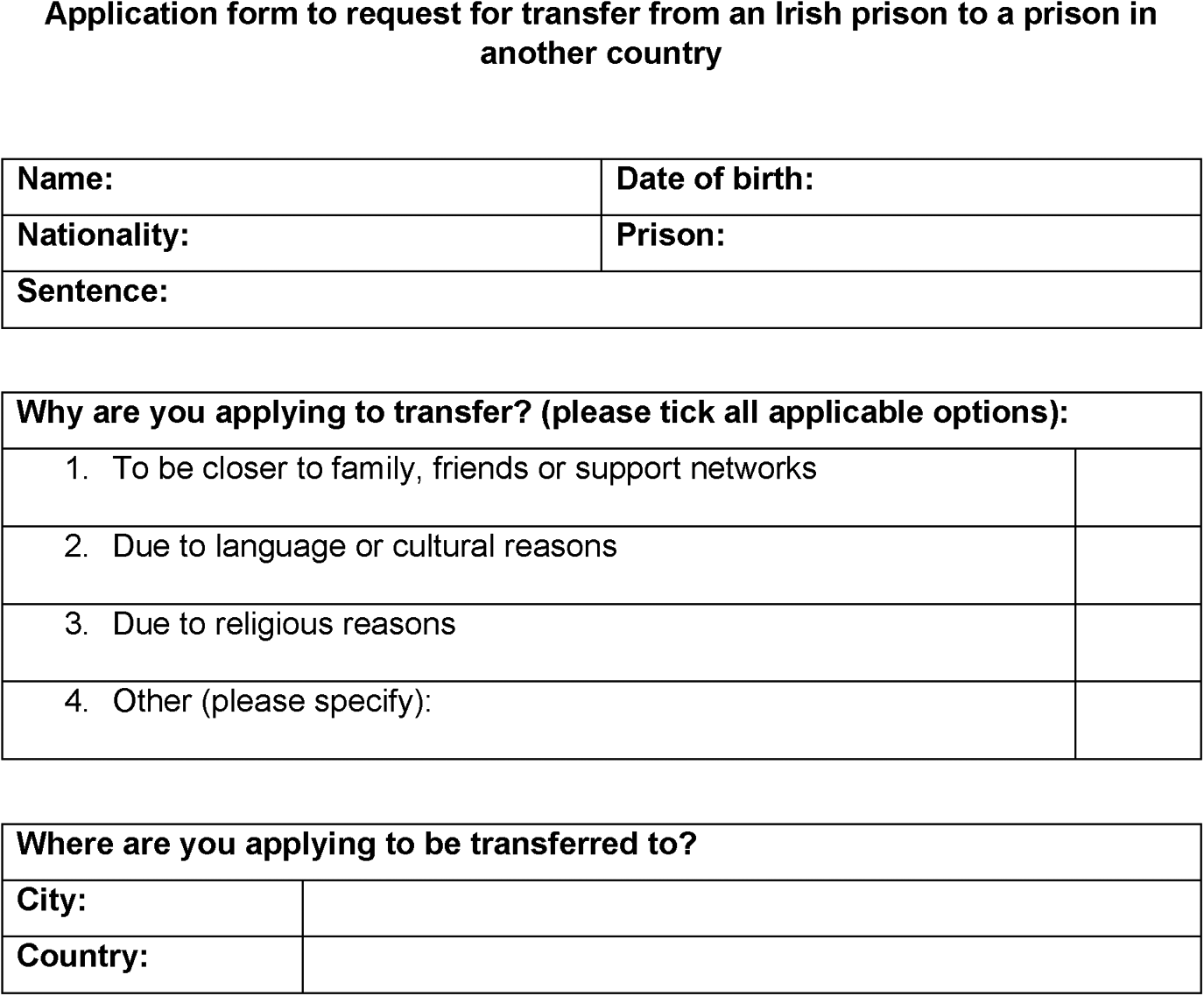
Note the following important points:
It may help your application if you can provide a full picture of why you want to transfer and how a transfer might help your rehabilitation (e.g., prison visits, getting ready for life post-release). You may submit further documentation in support of your application. This could include details about your family, friends or support networks, copies of photographs, letters or any information you want to provide about the destination you wish to be transferred to. There is an information leaflet available in your prison with further information on the application for transfer process.
Details of why you are applying to transfer: (please note you can attach more pages to this form or write on the back if there is not enough room below):

Reflection on Design Choices
Design is not a linear or predetermined process. Testing and refinement are crucial elements of design. I outline here a short reflection on working in design mode. I tried to cover the basic information about the applicant that the prison service needs to process or register the application. I noted that prisoners would be filling in the form in prison, without the benefit of legal representation and by pen so I increased the font size to size 14 to make large boxes that are easier to fill in than the lines on the existing form. This was an attempt to use a human-centred approach (Manzini, 2015) but I note the caveats above about the limitations of me doing this activity as a solitary endeavour. I was thinking about trying to move away from a typical bureaucratic form in an A4 page format and use imagery as different visual entries to the form but struggled to imagine what this might look like. Norman (2013) outlines the importance of style in the design of everyday things. This led me to try and think about the visceral response to the form. I wanted the form to appear encouraging. Working in design mode is an intensely visual endeavour where the visualisation process helps us in tackling the problem we are trying to solve (Ursel, 2017). One of the aims of the statutory regime is the social rehabilitation of sentenced persons but I didn’t get that sense from the current form. I wanted to imagine a form that might indicate compassion and understanding from the State hence the line around including photographs or letters. I tried to design the form with prompts for applicants to include information relevant to a claim that may assist a decision maker in considering all relevant factors. Brown et al., (2021) analyse the concept of ‘administrative burden’ through research on a certain form in a growing body of scholarship on bureaucratic forms. They look at the barriers to and levels of complexity in completing a particular form. The simplicity of the design is a response to the increasingly complex world. The themes of simplicity and accessibility can unite for new modes of inclusive design (Pullin, 2009).
It is a fair criticism to say my redesigned form is in essence reinventing the wheel. My attempt at redesign lacks imagination and flows from a literal interpretation of the Butcher judgment. This limitation is, in part, due to the absence of stakeholder voices. As Ahmed (2017: 181) explains in relation to privilege; there are experiences I am protected from having and thoughts I do not have to think. Ahmed uses this language in the context of disability, but the idea translates to the position of prisoners whose lives and participation opportunities are constrained by bureaucracy, prison rules and forms. I note my privilege in having the research time to do this as an exercise for an academic paper. This can be sharply juxtaposed with the position of a prisoner filling in this form, while incarcerated, in circumstances where the outcome of the application may have significant consequences for their rehabilitation. I do not know how a prisoner might redesign the form. Further research with stakeholders is needed in this regard.
Narrative and Sense Making
In relation to benefit complaints, Thomas (2022a) observes how ‘the welfare bureaucracy both designs and operates the system’. This is true beyond the welfare state, across public administration broadly conceived. The design choices of bureaucrats translate into the systems they operate. Bureaucracy both designs and registers forms. As Butcher exemplifies, in certain circumstances, there is a need for increased personal narrative in bureaucratic forms. There are two main reasons for this. The first is due to the power of storytelling from the perspective of the storyteller. The stories we tell allow us to make sense of the world: ‘stories do not only tell about the past, but can function as guides for future action as part of the store of knowledge we draw on in orienting ourselves within social situations’ (Jackson, 2010). The stories we tell are central to our existence (O’Neill et al., 2015). The forms that are registered are the documents that mark out our lives (Lund, 2001). The information on them should represent our lived experiences, our understandings of ourselves and situate us in place, space and time in relation to a particular claim or grievance. The second core reason I am proposing increasing the scope for narrative in bureaucratic forms is an aspirational attempt for personal stories to forge relational links between registration and decision making to create a culture of compassion within public administration. I am persuaded that this could be achieved through narrative humanisation as part of a human-centred public administration design project. This flows from Plummer's (2020) work on the politics of humanity where he describes ‘a process of narrative humanization by which people come to acquire certain values through stories that designate a good enough human life, one minimally perhaps that highlights the importance of dignity, care for others, compassion, kindness, love, a sense of the good and the fair, and a hope for a better world for all’. Taking the prison transfer example, I posit that most prisoners will want to return to their home country to be closer to their families/support networks or due to language or cultural reasons. Why therefore would we not design the form to give them the best opportunity to be transferred and give space and instruction for applicants to make the best case possible.
The Spike Island ‘Story’ exhibition offers an interesting perspective on the position of a prisoner in shaping their own narrative: ‘“Story” is a selection of work curated by the Education Unit in Cork Prison designed to give agency to the student's narrative through memory and reflection’. Spike Island has on four occasions in history acted as an island prison. It is now a popular tourist destination that exposes histories and injustices about the colonial and post-colonial operations that took place on the island. In August 1985 a major prison riot broke out on Spike Island. An artist in the ‘Story’ exhibition, tells his story through beautifully detailed pots that are on display in one of the former prison cells (Figure 3).
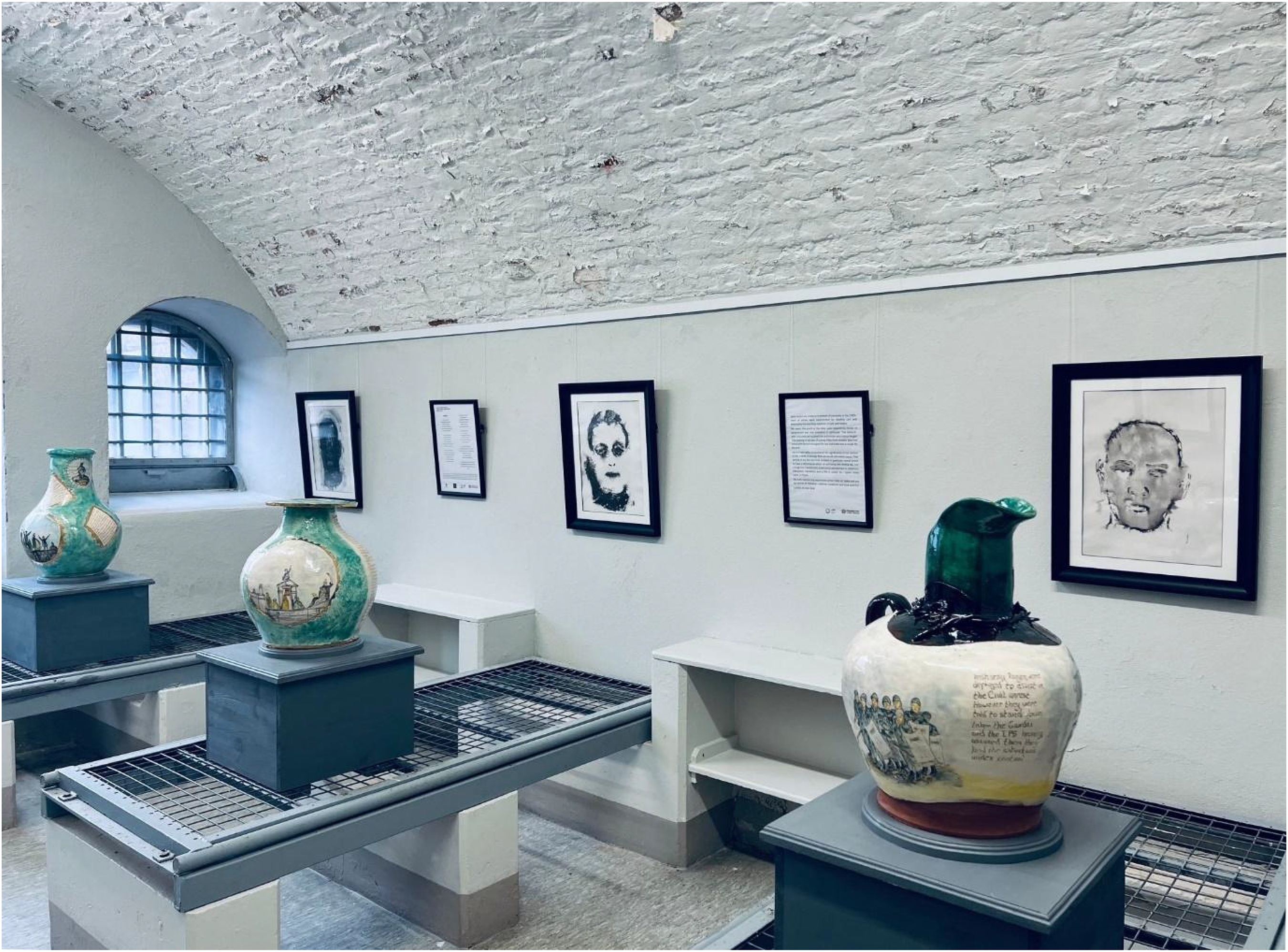
With thanks to Cork Prison Education Unit and Spike Island for permission to use the image of the pots, photography by Jed Niezgoda.
The artist displays the following narrative alongside the pots: ‘Spike Island was home to hundreds of prisoners in the 1980s, most of whom were incarcerated for stealing cars and generating the joyriding epidemic in Cork and Dublin. My peers, the youth at the time, were inspired by stories of gangsterism and one crimelord in particular “The General”, who ridiculed and taunted the authorities any chance he got. The housing of groups of young fellas from socially deprived areas with blatant disregard for law and order was a recipe for disaster. We did not really comprehend the significance of our actions or the extent of damage that we would ultimately cause. That period of my life and that incident in particular would prove to have a detrimental effect on achieving any normal life. For a long time I would only understand and partake in rebellious behaviour, vandalism and a life in crime. So, I spent many years in Prison. My pots express my experience of the riots on Spike and are my stories of rebellion, violence, vandalism and total anarchy. Luckily, no one died’.
Turner (2017) describes how prison art can foster empathetic relationships between the prisoner-artist and the art-viewer. I found the pots on Spike Island to be a powerful and imaginative way of exploring the story of the riot from a prisoner's perspective. This closely relates to Plummer's work on narrative humanisation, explored above. Doyle and O’Brien (2020: 82) stress the importance of narrative and storytelling in the fabric of administrative justice. Forms are frequently the place where the personal story of an individual's claim or grievance begins and therefore must be designed to provide space for personal narrative. We can find a recent example of providing narrative space in the Irish context. A new template social housing form introduced in 2021 is almost identical to its predecessor although the following has been noted of the form: ‘[t]he changes to the form seem largely cosmetic, however, the new form does ask applicants to provide further information in relation to their reasons for seeking social housing supports. Applicants may select from a list provided (from reasons including overcrowding, disability grounds, rent increases, eviction, unfit accommodation and involuntary sharing) or set out their reasons themselves’ (Bowes and Free Legal Advice Clinic, 2021). Space for such questions can contribute to filling the recognition gap between an individual and the State. There is great power in personal narratives such that they can have a humanising effect on public administration. As outlined at the outset, a form is the mechanism through which an individual triggers a claim or grievance. For the applicant, filling in a form can be an incredibly personal, emotional and testing experience. The decisions being made by reviewing bureaucratic forms can have life-changing consequences for individuals. I am committed to the argument that we must eke out space for personal narrative to ensure individuals are given better opportunities to relay their story to the decision makers. This must be part of a wider change across public administration that seeks to remedy the harms being caused to individuals by bureaucratic oppression and epistemic injustices, as outlined above.
The move from tradition paper files to digital files must be interrogated further. The design of digital places of online administration is a concern from accessibility, usability and privacy perspectives. Tomlinson and Meers (2022) warn that increasingly bureaucratic forms are being kept out of public sight due to digitalisation and drives for efficiency. They argue that transparency should be the status quo unless there are compelling reasons not to disclose the full details of a form. They note that some forms will look different depending on how applicants answer earlier questions on online forms. Another issue is that some online forms are inaccessible unless you pass a validation test or have access to a particular form of technology (Tomlinson, 2020). Hagan (2023) offers a comprehensive Form Design Rubric with 11 categories for evaluating court and government forms. The rubric is intended to be completed by multiple stakeholders and can provide structured feedback on forms in public administration. Utilising tools like the Form Design Rubric can act as a bridge between the speculative design and the future work on the redesign of bureaucratic forms in praxis.
Returning to the literature on design and registration outlined at the outset of this paper, designing in a ‘collective, participatory and democratic way’ (Doyle and O’Brien, 2020: 53) is paramount to ensuring forms are everyday records of a person's existence at a point in time that captures information in a way that does not cause harm or misconstrue a person's lived experience. One of the most revealing lessons from Butcher is not that there was a poorly designed form. Poor design or unintended consequences of a design are part of life and the design process. The lesson from Butcher is despite contributing to a successful judicial review, there to date has been no change to the form. There are many modes of design open to us as socio-legal scholars. One I suggest is suitable for design work on bureaucratic forms is dialogic design. ‘Listening’ is a key element of dialogic design as identified by Manzini (2016: 58) where; ‘involved actors are willing and able to establish a dialogic cooperation—a conversation in which listening is as important as speaking’. Working in design mode requires us to reflect deeply on what is being registered and why we register. It is one of the questions a designer must ask when redesigning a bureaucratic form. Registration positions the legal person in space, place and time. The design of forms directly correlates to what is registered. What is registered cements how the State understands us as legal persons. If a form fails to provide space for personal narrative or frames questions in a certain way that doesn’t take account for the plurality of life experiences, then it is likely the form will fail to accurately register the lived experience of the individual filling in the form. This is a failure of public administration. The form then becomes part of the oppression of the applicant rather than a means through which they can access justice (Spade, 2015; Thomas, 2022b). Forms are a mechanism for registering the everyday, their design is an everyday issue of justice.
Conclusion
In identifying bureaucratic forms as a place where law begins for individual system users, I have illuminated the underexplored intersection between administrative justice, registration, narrative and design. Engaging with design theory can offer a scaffold for how we might redesign bureaucratic forms and draw from scholarship on registration and personal narrative to highlight the importance of the stories we record on paper in situating the person in an increasingly complex and bureaucratic world.
The form of forms is part of a wider project seeking to improve administrative decision making and ensure fair and legally sound decisions are made by public bodies at first instance. I hope this paper will lead to rich and interdisciplinary conversations on the relationship between the visual design of bureaucratic forms and how forms act as enablers or barriers to accessing justice.
Footnotes
Acknowledgements
An earlier version of this research benefitted from presentations at the Socio-Legal Studies Association Annual Conference 2021 and European Group for Public Administration PhD Symposium 2021. Thanks go to the convenors and participants for their feedback. Thank you to Professor Mark Poustie for funds from the UCC Head of Law Strategic Fund which enabled attendance at these events. Thanks to the anonymous reviewers whose comments helped improve this manuscript. Thank you to Dr Jessica Smith and Dr Sarah Keenan for their comments on earlier drafts and for their leadership on this special issue. Finally, my thanks to Dr Fiona Donson, Dr Sheelagh Broderick and Aidan Burke for their comments and support at several stages of developing this research. Any errors or omissions remain the author's own.
Declaration of Conflicting Interests
The authors declared no potential conflicts of interest with respect to the research, authorship, and/or publication of this article.
Funding
The authors disclosed receipt of the following financial support for the research, authorship, and/ or publication of this article: This research was funded by a UCC School of Law PhD Scholarship.
