




Abstract
With the rising demand for liver transplantation (LT), research on acute rejection (AR) has become increasingly diverse, yet no consensus has been reached. This study presents a bibliometric and latent Dirichlet allocation (LDA) topic modeling analysis of AR research in LT, encompassing 1399 articles. The United States, Zhejiang University, and the University of California, San Francisco emerged as leading contributors, while Levitsky J and Uemoto SJ were key researchers. The most influential journals included the American Journal of Transplantation, Journal of Hepatology, and Transplantation. The analysis reveals a transition from traditional histological assessments to molecular diagnostics, genetic and epigenetic profiling, and noninvasive biomarkers such as donor-derived cell-free DNA (dd-cfDNA) and microRNAs. Advances in immune checkpoint inhibitors (ICIs), cell-based therapies (Tregs, mesenchymal stem cells (MSCs)), AI-guided immunosuppression, and nanoparticle-mediated drug delivery systems reflect a growing emphasis on precision medicine. In addition, recent exploration of microbiome-based therapies and regenerative medicine, including MSCs and their extracellular vesicles, offers promising new avenues for reducing long-term immunosuppressive drug dependency and enhancing graft survival. These developments not only improve early AR detection and personalized treatment but also reduce toxicity, foster immune tolerance, and expand the scope of individualized therapeutic options. Global collaboration, supported by cutting-edge research and AI-driven decision-making, remains essential for refining AR strategies, improving graft survival, and achieving better long-term patient outcomes.

Introduction
Liver transplantation (LT) is currently an effective treatment for acute liver failure and end-stage liver disease, and is considered one of the greatest medical achievements of the past half-century1,2. Since the first liver transplant by Thomas Starzl in 1963 3 , surgical techniques for LT have advanced; however, long-term survival rates remain disappointing. The acceptance of liver transplants outperforms that of other organs, but acute rejection (AR) remains a significant clinical concern 2 . Currently, the prevention and treatment of AR in liver allografts mainly focus on immunosuppressive therapy, but the existing effective immunosuppressive agents are limited by a series of complications including drug-induced liver injury 4 , nephrotoxicity 5 , neurotoxicity 6 , metabolic disorders 6 , tumor recurrence 7 , and excess immunodepression (such as opportunistic infections and cancers)2,8–11. These complications often result in a narrow therapeutic window for immunosuppressive agents, where achieving sufficient immunosuppression to prevent AR is difficult without inducing adverse side effects. Moreover, the lack of targeted therapies means that immunosuppression is often generalized, leading to increased risk of graft rejection and compromised patient health. Therefore, there is a critical need to develop new immunosuppressive strategies that can offer more effective and personalized approaches to prevent AR while minimizing the associated risks.
Bibliometrics is the comprehensive application of mathematics and statistics to the quantitative analysis and evaluation of academic achievement 12 . It provides a novel, simple, and efficient way to quickly and accurately identify useful points from a vast amount of information, visually presented in the form of graphics. Bibliometric analysis has been widely used in various fields, including medical research, such as immunotherapy 13 , oncology14,15, gastroenterology 16 , ophthalmology 17 , and dermatology 18 .
Topic modeling is an algorithm designed to analyze the hidden structure of a document collection, and is a probabilistic method that can automatically identify topics from a large collection of unstructured documents 19 . The utilization of topic modeling has proven to be effective across various fields, including language science 20 , political science 21 , the medical and biomedical domains 22 , and other research areas 23 . Currently, several topic modeling approaches based on different programming languages are available. We opted for latent Dirichlet allocation (LDA) 24 , one of the most widely used methods for classifying articles into similar topics.
This study evaluated the literature on AR after LT from 2012 to 2021 to identify the basic research, historical evolution, research hotspots, and underlying trends. We hope that these findings will assist researchers in quickly grasping the landscape’s broad overview and provide references for locating potential collaboration partners and selecting journals for submission.
Materials and methods
Data source and search strategy
On November 2, 2022, two investigators (L.J. and Y.W.) independently performed comprehensive searches and data collection through the Web of Science Core Collection (WoSCC). The detailed retrieval strategy is presented in Supplementary Table 1. The timespan was set from 2012 through 2021.
Data processing
The literature selection followed specific inclusion and exclusion criteria. Inclusion criteria: (1) studies addressing AR after LT; (2) publications in English; (3) article and review types; (4) full bibliographic details available. Exclusion criteria: (1) conference proceedings, retracted papers, book chapters, and duplicates; (2) non-English publications; (3) irrelevant studies. The selected articles were retrieved in plain text format, tab-delimited (UTF-8), including complete records and cited references.
Bibliometric analysis
VOSviewer 1.6.18 (Leiden University, Leiden, Netherlands, https://www.vosviewer.com/), a software tool for building and visualizing bibliometric networks25,26, was used to examine the cooperation between the authors included in the research publication, their respective countries and institutions, as well as to visualize the analysis of keywords co-occurrence. The counting method used in VOSviewer was full counting, where each occurrence of a co-authorship or keyword is counted individually, providing a detailed view of the network structure. Moreover, we used Scimago Graphica (https://graphica.app/) to describe country partnership analysis and institutional cluster analysis. In addition, we used the R-bibliometrix (R-4.2.1) 26 to create a historical direct citation network.
CiteSpace (version 6.1.3, Chaomei Chen, Drexel University, USA, https://sourceforge.net/projects/citespace/) is a visual knowledge graph bibliometric tool based on the Java programming language to analyze the development dynamics and future trends of specific topics 27 . We used this software to visualize international collaborations between countries and institutions, as well as to perform a co-citation analysis of references and bursts of co-citation references. The data set comprised publications from 2012 to 2021, and the analysis was conducted using a slice length of 1 year. The following parameters were applied for different types of analysis: (1) Country Collaboration Analysis: g-index: k = 25, LRF = 3.0, L/N = 10, LBY = 5, e = 1.0; (2) Institution Collaboration Analysis: Top 10.0% per slice, up to 100, LRF = 3.0, L/N = 10, LBY = 5, e = 1.0; (3) Co-citation Analysis: g-index: k = 20, LRF = 3.0, L/N = 10, LBY = 5, e = 1.0; (4) Keyword Co-occurrence Analysis: g-index: k = 20, LRF = 3.0, L/N = 10, LBY = 5, e = 1.0.
LDA analysis
LDA is a machine learning algorithm that uses a three-layer probabilistic structure to identify the topics and distribution of documents 28 . It is an unsupervised technique commonly used in information retrieval 29 . The R package “lda” was used to carry out an LDA analysis of the publications included in the study. The corpus for LDA was created using author keywords, titles, and abstracts of the publications.
Preprocessing: Before applying LDA, several preprocessing steps were performed on the text corpus to ensure high-quality input data. First, all text was converted to lowercase to standardize the data. Next, word tokenization was performed after removing special characters and non-alphanumeric symbols. To eliminate common, non-informative words (such as “literature,” “report,” and “study”), a stopword list was applied to the corpus, removing these terms from further analysis 30 . The final step involved the conversion of the text into Term Frequency-Inverse Document Frequency (TF-IDF) counts, a weighting scheme that accounts for both term frequency and the rarity of terms across documents.
LDA Parameters: For the LDA modeling, the Alpha and Beta parameters were set to 0.01 and 0.02, respectively, to control the sparsity of the topic distribution and the word distribution across topics. The number of topics K was fixed at 6, based on a prior evaluation of model fit. The model was trained using 1000 iterations and the burn-in period was set to 0 to ensure stable convergence of topic distributions. The LDA collapsed Gibbs sampler was used to estimate the topic distributions for each document, where Alpha determines the prior distribution for topics in each document, and Beta controls the prior distribution for words in each topic. The resulting outputs included topic distributions for each document and word distributions for each topic.
Word Cloud Visualization: Word clouds were generated to provide a visual representation of the most prominent terms within each topic. The most frequent and highly weighted terms for each topic were extracted based on the topic-word distribution (phi matrix). These terms were visualized using word clouds to highlight their significance within each topic, offering a more intuitive understanding of the core themes represented by the topics.
Document-Topic Categorization: In addition to word cloud generation, document-topic association probabilities (theta matrix) were calculated to categorize documents based on their dominant topics. This categorization allowed for further insights into the primary research themes present within the dataset.
Statistical analysis
R Language and Microsoft Office Excel 2019 were used for descriptive statistical analysis.
Results
Annual growth trend of publications
A total of 1399 articles published between 2012 and 2021 were downloaded for bibliometric analysis based on the screening criteria. A flow chart of the identified records is shown in Fig. 1. As shown in Fig. 2, there were wave-like fluctuations in the number of studies. Correspondingly, the citations also increased significantly. Articles accounted for approximately 84% of the document type (Fig. 2), indicating a greater emphasis on original studies in the field of AR after LT.
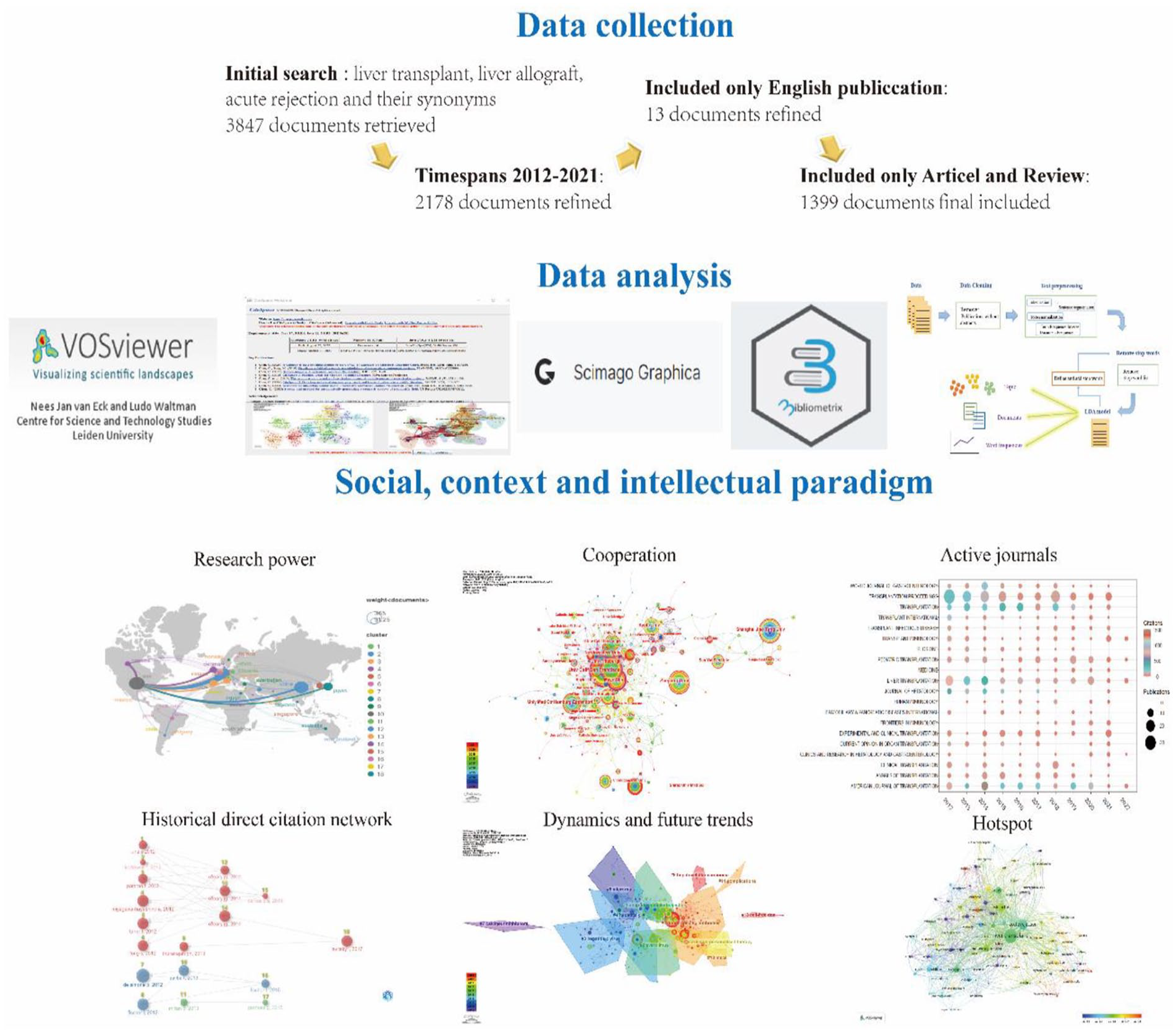
Conceptual design of the current study.

Number of annual publications and citations related to AR after LT research from 2012 to 2021.
Distribution and co-authorship analysis of countries or regions
A total of 56 countries or regions contributed to all the publications. Fig. 3a, b show the global distribution and collaborations among countries and regions, respectively. As shown in Table 1, the top 20 countries were ranked according to their scientific achievements, measured by the number of articles published. The top three were the United States (n = 365), China (n = 296), and Japan (n = 140). International collaboration analysis indicated active cooperation among these countries (Fig. 3a, b).

Distribution of countries or regions and country collaboration of AR after LT research. (a) The global distribution of AR after LT research. The size of the circle represents the number of total documents in different countries; the width of the lines between different countries indicate the strength of their cooperation. (b) The total number of citations for publications from different countries. The size of the circle represents total number of citations in each country. The width of the lines between different countries indicates the strength of their cooperation. (c) Spatial distribution map of countries. The size of the node reflects the frequency of publications, and the links indicate collaborative relationships. The color of the nodes and lines represents different years. The outermost purple circle denotes the country with a significant role in the AR after LT field.
Characteristics of the top 20 countries with the most publications.

Note. Betweenness centrality: Calculated using CiteSpace 6.1.R3 software, it indicates the influence or contribution of the country in the AR after LT field. A value greater than 0.1 signifies important contribution or influence.
The total citations of the United States (citations = 9832) were outstanding, followed by France (citations = 3168) and China (citations = 2881) (Fig. 3c and Table 1). As shown in Fig. 3c, the United States (0.52), Japan (0.13), Poland (0.13), and Canada (0.11) are marked with purple circles and had betweenness centralities over 0.1.
Distribution and co-authorship analysis of institutions
The publications on AR after LT originated from 1561 institutions. Table 2 displays the characteristics of the top 20 institutions contributing 484 (34.60%) of the literature. University of California, San Francisco and Zhejiang University led with the highest number of publications (n = 34), followed by Shanghai Jiao Tong University (n = 33), and University of Pittsburgh (n = 33). University of Pittsburgh had the highest total citations, while University of California, Los Angeles had the highest average citations per publication. Fig. 4a shows the institutions marked with purple circles, including University of California, San Francisco (0.19), University of Pittsburgh (0.17), Mayo Clinic (0.16), and Capital Medical University (0.1). The collaboration network among of significant institutions is depicted in Fig. 4b.
Characteristics of the top 20 institutions based on publications.
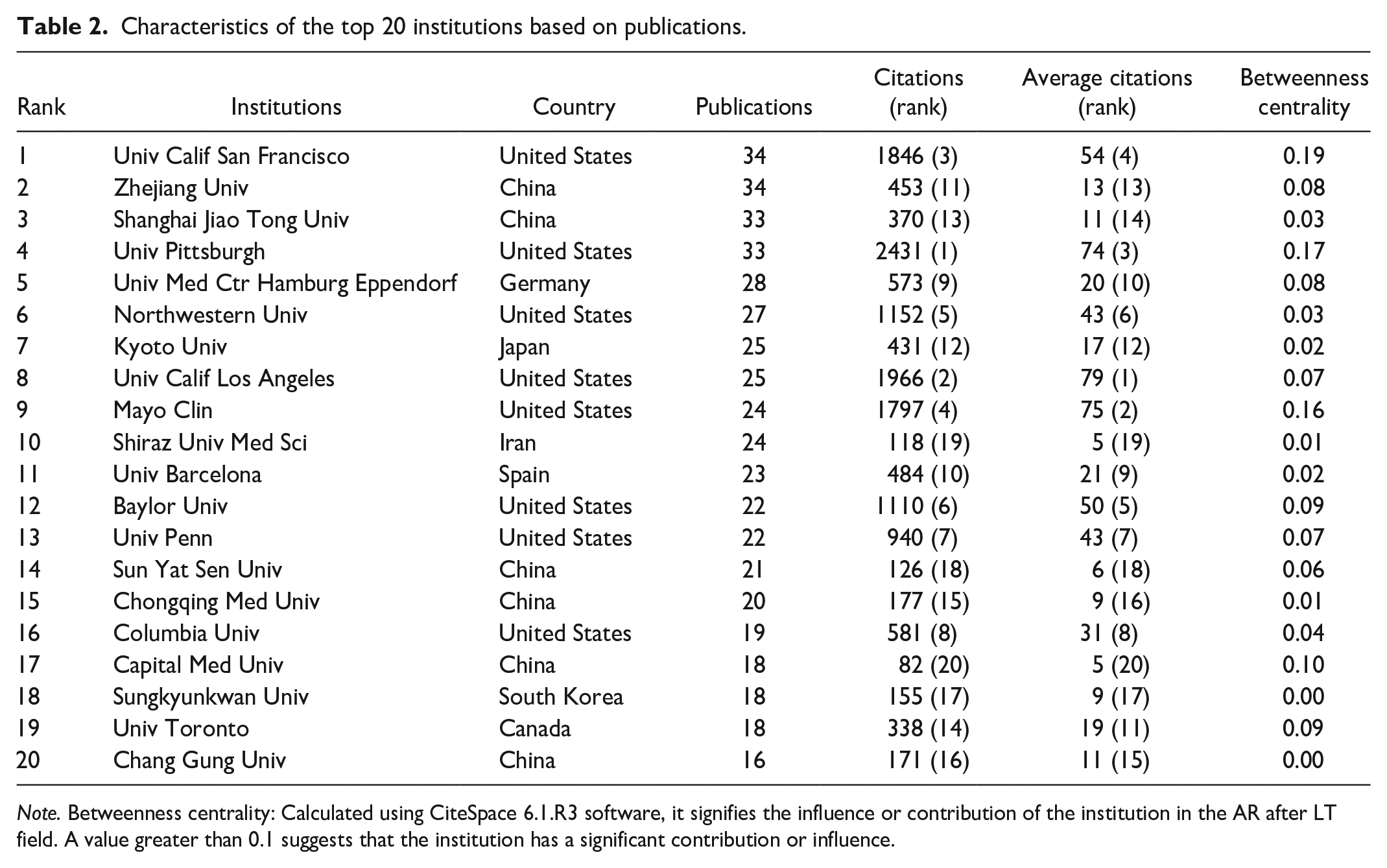
Note. Betweenness centrality: Calculated using CiteSpace 6.1.R3 software, it signifies the influence or contribution of the institution in the AR after LT field. A value greater than 0.1 suggests that the institution has a significant contribution or influence.

Co-authorship network map of institutions and authors in AR after LT research. (a) Collaborations among the primary institutions in AR after LT. Each dot or circle represents an institution, links denote communication and interactions between institutions, and the width of the lines represents the strength of their cooperation. (b) Cooperative relationships among the top 50 institutions. The size of the circle represents the number of citations of different institutions; the lines between nodes indicate the strength of cooperation, that is, the thicker the lines, the stronger the cooperation. (c) The overlay visualization map of authors co-authorship (top 100). Node size represents the number of articles published by each author. The color of the nodes and lines indicates the average publication year, indicated by the color gradient in the lower right corner. Lines between nodes denote strength of cooperation, with thicker lines indicating stronger collaboration. (d) The overlay visualization map of author co-citation (top 100). The size of a circle is proportional to the total number of citations of the author. The color of the nodes and lines signifies the average publication year, based on the color gradient in the lower right corner. Lines between nodes indicate the strength of the co-citation link.
Distribution and co-authorship analysis of authors
A total of 8153 authors made relevant contributions. Fig. 4c presents the network overlay visualization of the top 100 cooperatively productive authors. Among these, Table 3 lists the top 20 most productive authors, led by Levitsky J (n = 19), followed by Uemoto SJ (n = 17), Nashan B (n = 15), and Zheng SS (n = 15). Citations, a measure of a researcher’s standing in the scientific community 31 , highlight the authors with the highest total number Levitsky J (citations = 644), Uemoto SJ (citations = 362), and Zheng SS (citations = 226) (Table 3). Fig. 4d displays a co-citation overlay visualization map of the top 100 cited authors. Despite the overall fragmented co-authorship network among authors shown in Fig. 4c, geographical location appears to be a primary factor contributing to this dispersion. Nevertheless, numerous researchers continue to maintain active collaborations with each other.
Characteristics of the top 20 authors based on publications and citations.

Analysis of journals and cited journals
There were 366 academic journals that published relevant studies, with Transplantation Proceedings (n = 145, citations = 887) ranked first, followed by Liver Transplantation (n = 83, citations = 1877), and Transplantation (n = 68, citations = 1907). Meanwhile, the journals with the highest average citations were American Journal of Transplantation, followed by Journal of Hepatology and Transplantation, classified as Q1 according to the JCR 2021 (Supplementary Table 2). We discovered that, in recent years, Frontiers in Immunology has been focusing on research related to AR after LT (Fig. 5a).

Analysis of journals and cited journals. (a) Annual publication volume of the top 20 journals. The size of the circle represents the total number of documents about AR after LT in different journals; the color of the circle represents the citations of the journals. (b) The dual-map overlay of journals. The citing journals were on the left, the cited journals on the right, with colored path representing the citation relationship between them.
The analysis of dual-map overlays, designed by Chen and Leydesdorff L, revealed the overall scientific contribution 32 . As depicted in Fig. 5b, the results indicated that the literature published in journals in the areas of Molecular/Biology/Genetics and Healthy/Nursing/Medicine were usually cited by Medicine/Medical/Clinical journals.
Historical evolution and the strongest citation burst
To explore the systemic changes in relevant research content over time, we described the historical direct citation networks (Fig. 6 and Supplementary Table 3). These articles may be the cornerstones of this field. Moreover, articles with a high number of citations may indicate key points 33 . The top 20 highly co-cited references on AR after LT research are summarized in Table 4. We used CiteSpace to construct the co-citation analysis of references and cluster analysis, which revealed 14 major clusters (Fig. 7a) with Modularity Q (0.6964) and Mean Silhouette (0.9319) values both greater than 0.5. Supplementary Table 4 summarizes the top 10 articles in each cluster. If a cluster contained fewer than 10 articles, it included all available articles for that cluster. Simultaneously, we performed a timeline view to explore the changes in hot spots of co-cited literature clusters over time (Fig. 7b). “#0 donor-specific antibodies,” “#5 tacrolimus-personalized therapy,” “#8 hepatocellular carcinoma,” “#10 mscs,” “#11 complications,” and “#13 cell-free DNA” were found to be the closest clusters. Notably, AR caused by immunotherapy for LT in the context of liver cancer, represented by cluster “#8 hepatocellular carcinoma,” is currently a major research focus. To explore this aspect, we conducted a supplementary search on June 9, 2024, and retrieved 71 articles. Two authors reviewed the titles and abstracts, and 22 articles were included in the final analyses. We conducted a related analysis, and the results are detailed in Table 5 (Supplementary Table 5). The keyword co-occurrence analysis (Fig. 8) highlights a focus on “liver transplant,” “hepatocellular carcinoma,” “immune checkpoint inhibitor,” and “acute rejection,” indicating interest in using immune checkpoint inhibitors (ICIs) to treat hepatocellular carcinoma (HCC) in LT patients. Keywords like “PD-1 inhibitor” and specific ICIs reflect ongoing studies on their efficacy and risks, while frequent co-occurrence of “acute rejection” and “graft rejection” with “immunotherapy” underscores concerns about AR in this context.
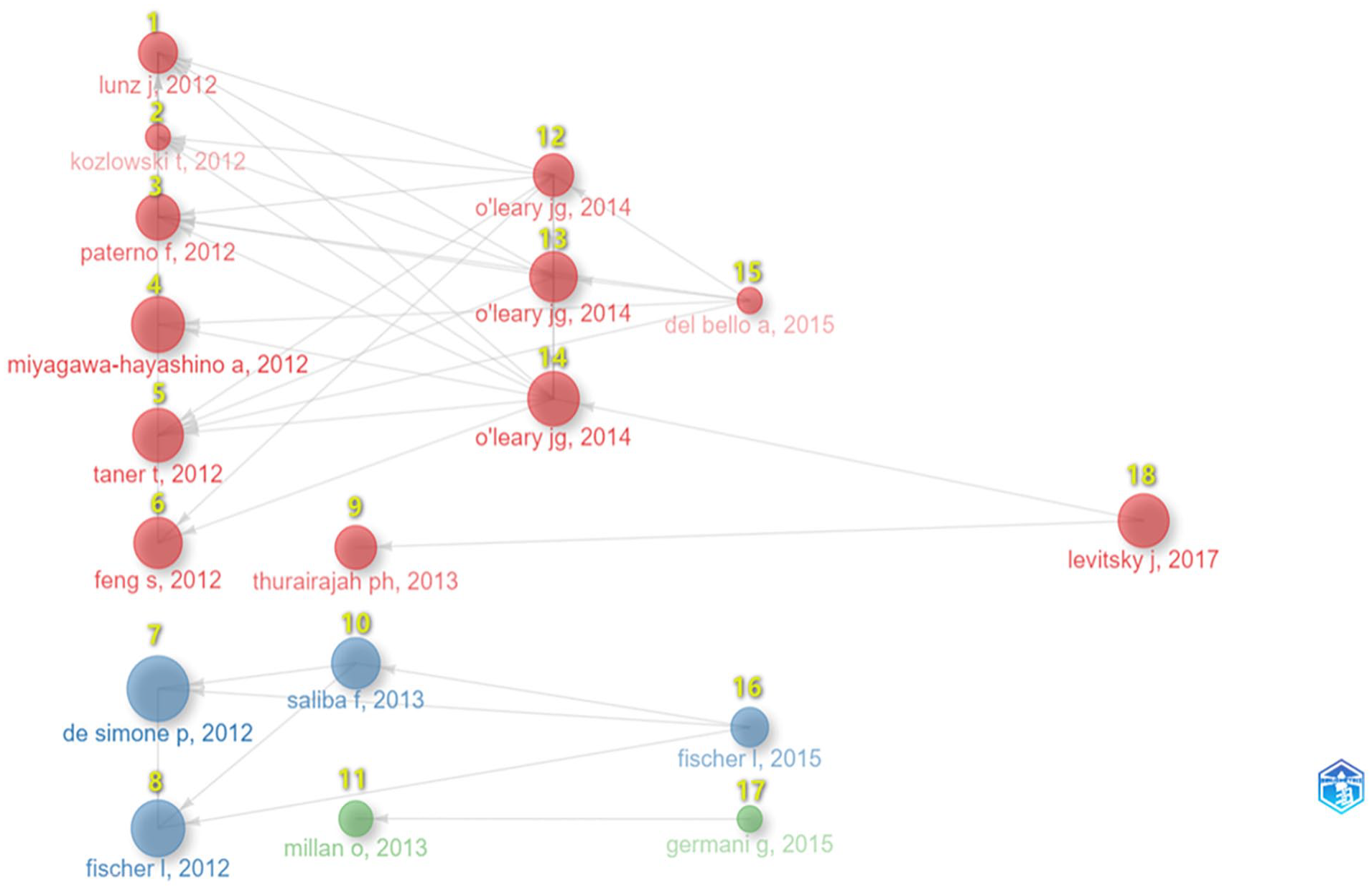
Historical direct citation network in AR after LT research. The links among documents represent the citation relationships in the dataset.
Top 20 most-cited references.


Co-citation network of references and timeline view. (a) Co-occurrence of references in AR after LT research. The size of each node represents the frequency of cited references, while color indicates the year of the first citation. Clusters of references are identified using the log-likelihood ratio algorithm, with each cluster named based on the title of citing article within it. (b) Timeline view of references. The horizontal line signifies the cluster type. Circular nodes represent cited documents, and links between nodes denote co-citation relationships. Cluster IDs are arranged in sequence on the right side of the figure.
Basic information of the 22 articles on AR caused by immunotherapy for liver transplantation for liver cancer research.


Overlay map of keywords in AR caused by immunotherapy for LT for liver cancer research.
As shown in Supplementary Material S6, we set the minimum duration of a burst reference to 4 years, extracting the top 24 references with the strongest bursts by using CiteSpace. The peak period of literature citation tended to occur 3–4 years after publication for the first time. Notably, four references were burst until 2021, comprising two reviews and clinical studies.
Keyword co-occurrence analysis
After appearing more than 15 times, merging synonyms and removing meaningless words, a total of 89 keywords were extracted obtained from the collected publications. Moreover, Fig. 9 illustrates the evolving trend of keywords over time, highlighting that keywords such as “mesenchymal stem cells,” “kupffer cells,” “stromal cells,” “management,” “dendritic cells,” “biomarker,” “rituximab,” “inflammation,” “immunosuppressant” are increasingly prominent in recent years. This suggests that these areas have gained popularity and may emerge as future hot spots in the field.

Overlay map of keywords in AR after LT research.
Topic modeling using LDA
To identify potentially significant keyword themes, we conducted topic modeling. After excluding publications without abstracts, 1389 articles were included in the LDA analysis using keywords (title, abstract, and author keywords). Six primary research topics were identified in this field. The tags of the topics were annotated by scrutinizing the keyword cloud of each topic and the articles they contained. “Topic 1: Donor-specific antibody” (n = 269, 19.37%) was the topic with the highest number of publications, followed by “Topic 2: Immunosuppressive treatments” (n = 260, 18.72%), “Topic 4: Cell Therapy” (n = 233, 16.77%), “Topic 3: Risk factors and outcome” (n = 218, 15.69%), “Topic 6: Biomarkers” (n = 208, 14.97%), and “Topic 5: Genetic phenotype” (n = 201, 14.47%) (Fig. 10a). Fig. 10b, c describes the accumulated and annual occurrences of publications on these topics. The results confirmed that all six topics had received significant attention in the scientific community over the past decade. In 2020, research on biomarkers (topic 6) showed rapid growth; by 2021, the volume of studies related to donor-related research (topic 1) exceeded that related to immunosuppressive research (topic 2).

Research topics related to AR after LT over time. (a) Word cloud. (b) Accumulated occurrences. (c) Annual occurrences.
Discussion
LT remains crucial for treating end-stage liver disease, yet AR remains a leading cause of graft dysfunction, underscoring the need for research into its mechanisms2,34,35. This field, therefore, has great clinical importance and development potential.
Key contributors and institutions shaping AR research in liver transplantation
Our bibliometric analysis identified several key institutions and authors that have significantly influenced research on AR after LT. The United States, China, and Japan are the leading contributors to the field, with the United States holding the highest number of publications (365), followed by China (296) and Japan (140). This dominance reflects not only the size of these countries’ research outputs but also their substantial role in fostering international collaboration. The high citation counts for the United States (9832 citations), France (3168 citations), and China (2881 citations) emphasize their centrality in the AR research landscape.
Notably, institutions such as the University of California, San Francisco, Zhejiang University, and the University of Pittsburgh have made substantial contributions, with the University of California, San Francisco and Zhejiang University leading in publication numbers (34 each). These institutions have influenced the field through pioneering research in both clinical and basic science, particularly in the understanding of immune mechanisms, immunosuppressive therapy, and long-term transplant outcomes. The University of Pittsburgh’s high total citations reflect its foundational role in the development of immunosuppressive regimens and strategies to mitigate AR, while the University of California, Los Angeles’ high average citations per publication indicates the exceptional impact of its high-quality, groundbreaking research. These institutions have not only advanced the scientific understanding of AR but also influenced clinical practice globally through their contributions to standardized diagnostic criteria and treatment protocols.
The active collaboration between institutions across countries, as illustrated by the co-authorship network, further highlights the importance of international cooperation in driving innovation in AR research. For instance, the close collaborations between the USA institutions like the University of California, San Francisco, and Mayo Clinic, along with European and Asian institutions like Capital Medical University, have facilitated the exchange of ideas and accelerated the development of effective strategies for managing AR in LT recipients. This collaborative effort has significantly contributed to the expansion of research in immunosuppressive therapies, biomarkers, and personalized medicine.
On the author front, key figures such as Levitsky J, Uemoto SJ, Nashan B, and Zheng SS have been instrumental in shaping the direction of AR research. Levitsky J, with the highest total citations (644), has been at the forefront of research on immune tolerance and the role of donor-specific antibodies (DSAs) in transplant rejection. Uemoto SJ and Zheng SS, with 362 and 226 citations, respectively, have made significant contributions to understanding the immunological basis of AR and advancing clinical practices. These authors have not only published extensively but have also been instrumental in influencing research agendas, securing funding, and mentoring the next generation of researchers. Their contributions have helped establish a more nuanced understanding of AR and have guided the development of clinical interventions to improve graft survival.
Despite the fragmented co-authorship network among researchers, geographical location appears to be a primary factor influencing collaboration patterns. Researchers in Europe, Asia, and North America have tended to collaborate within their regions, but as shown in the analysis, key authors continue to work across borders, fostering global collaborations. This international collaboration is crucial for addressing the complex challenges of AR and for developing solutions that can be applied in diverse clinical settings.
Guidance on journal selection for AR research in liver transplantation
Many researchers face challenges in selecting the most appropriate journal for their research, as they may not be familiar with all relevant journals in their field. Journal indexes obtained through bibliometric analysis offer valuable guidance for researchers seeking to publish their findings, addressing this issue to a certain extent 36 . Our study identified Transplantation Proceedings, Liver Transplantation, and Transplantation are the most productive journals, while American Journal of Transplantation and Journal of Hepatology rank highest in citation impact. Journal citation paths revealed a shift from molecular biology to clinical research, providing valuable insights for researchers in journal selection.
Insights from 2012 to 2021
Through the historical direct citation networks and the top 20 most-cited references, we gained insights into the foundational literature shaping the field of AR after LT, highlighting key historical developments and emerging trends over the past decade. Our citation analysis demonstrates a paradigm shift from early studies on C4d staining and its role in antibody-mediated rejection (AMR) 37 toward more recent investigations on DSAs and their clinical significance in transplant outcomes38–41. This transition reflects the increasing emphasis on molecular diagnostics and immune profiling, as exemplified by Millan O et al. 42 , who introduced intracellular cytokine monitoring as a surrogate biomarker for AR risk assessment. Notably, recent advancements have also explored innovative transplantation methodologies, such as hydrogels engineered to enhance cell-cell interactions and angiogenesis 43 . This approach represents a promising avenue to improve graft acceptance and overall transplant outcomes.
A notable milestone in the field is the evolution of the Banff schema, which has transitioned from its initial framework in 1997 to a comprehensive classification system in 2016, incorporating AMR, DSAs, and C4d tissue staining44–46. This development has significantly refined the diagnostic criteria for AR, directly leading to the clinical adoption of routine DSA screening and C4d assessment. Furthermore, epidemiological studies by Wiesner et al. 47 and Shaked et al. 48 have established key risk factors and long-term outcomes of AR, directly informing clinical guidelines on patient monitoring and immunosuppressive strategies.
In parallel, shifts in immunosuppressive regimens are evident in the citation network, particularly the transition from calcineurin inhibitors (CNIs) to personalized immunosuppression approaches. The 2012 everolimus trials49,50 and the 2009 “ReSpECT” study 51 demonstrated improved renal preservation with reduced tacrolimus exposure, reinforcing the importance of balancing graft protection with minimizing nephrotoxicity. Moreover, studies on HLA DSAs52,53 emphasize the urgent need for enhanced biomarker monitoring to predict long-term graft survival, with novel noninvasive biomarkers such as donor-derived cell-free DNA (dd-cfDNA) and microRNAs (miRNAs) emerging as promising diagnostic tools.
The implications of our citation network analysis are profound. The increasing citations of C4d, DSAs, and the Banff schema–related studies highlight a transition from traditional histopathological assessment toward a more integrative molecular diagnostic approach. This supports the clinical adoption of DSA screening and immunological risk stratification as standard components of LT management. In addition, the trend toward individualized immunosuppression, as reflected in highly cited studies on everolimus and tacrolimus minimization strategies, suggests that precision medicine approaches will continue shaping immunosuppressive protocols to optimize patient outcomes.
Our co-citation analysis revealed several clusters of highly cited studies that reflect the evolving focus and key trends in the field of AR after LT. These clusters, derived from the citation network, underscore the significant shifts in research topics over time, as well as the growing integration of novel molecular tools, personalized therapies, and noninvasive diagnostic strategies in the management of AR. Below, we provide a detailed discussion of the major clusters and their implications for future research and clinical practice.
Immunosuppressive therapy and personalized approaches
A prominent co-citation cluster revolves around the role of immunosuppressive agents such as CNIs (CyA, tacrolimus), everolimus, and personalized immunosuppressive regimens. Research in the 1980s and 1990s, which focused on CNIs, marked a breakthrough in the management of AR, as these drugs significantly reduced both the incidence and severity of AR. Tacrolimus largely replaced CyA due to its superior efficacy in preventing AR and its broader safety profile 54 . However, the long-term use of CNIs has been associated with nephrotoxicity and other side effects, prompting the development of more targeted therapies.
The introduction of everolimus, an mTOR inhibitor, marked a shift toward minimizing CNI-related toxicity, offering patients a safer long-term immunosuppressive option 55 . More recent research has focused on personalized immunosuppressive therapy, with the use of genetic and molecular profiling to tailor immunosuppressive regimens based on individual patient needs and the unique risks associated with each transplant recipient 56 . Given the complexity of immunosuppressive regimen selection, artificial intelligence (AI) has emerged as a promising tool to assist in clinical decision-making. AI-based models can integrate high-dimensional data from multiple sources, constructing decision trees to optimize individualized immunosuppressive strategies 57 . This approach has the potential to reduce the risks associated with immunosuppressive therapy by facilitating more precise and informed treatment decisions, thereby improving patient outcomes.
In addition, current immunosuppressive treatments often rely on systemic drug administration, which may impair the recipient’s ability to combat malignancies and infections. This limitation has driven research into targeted immunosuppressive drug delivery methods aimed at improving therapeutic efficacy while minimizing systemic toxicity. For instance, Deng et al. 58 demonstrated that nanoparticles loaded with tacrolimus achieved superior immunosuppressive effects at lower doses compared to conventional tacrolimus administration. These findings suggest that nanotechnology-based drug delivery systems could enhance immunosuppressive precision and reduce associated adverse effects. While efforts to eliminate the need for immunosuppressants continue, substantial evidence supports their indispensable role in preventing AR after LT. Thus, ongoing research is focused on developing safer and more effective immunosuppressive agents, optimizing dosage guidance through AI-driven big data analytics, and refining drug delivery systems to minimize systemic exposure and toxicity. These emerging strategies represent key research priorities in the quest for improved AR management in LT recipients.
Molecular diagnostics and noninvasive biomarkers
Another important cluster identified in our co-citation analysis concerns the identification of noninvasive biomarkers for AR diagnosis. Early studies highlighted the potential of miRNA as a biomarker for predicting AR. Studies by Shaked et al. and Wang et al. emphasized the use of serum miRNA profiles to predict AR and guide immunosuppressive regimens without the need for invasive liver biopsies59–61. More recently, cfDNA, particularly dd-cfDNA, has emerged as a promising biomarker for AR detection, with its ability to provide real-time, noninvasive monitoring of graft health 59 . The continued development of noninvasive biomarkers, as reflected in this co-citation cluster, represents a significant step forward in transplant medicine. These biomarkers have the potential to reduce the need for liver biopsy, which is invasive and can be associated with complications. Future research should prioritize the validation and standardization of these biomarkers, aiming to incorporate them into routine clinical practice to improve early diagnosis and management of AR.
ICIs and AR in the context of liver cancer
A particularly intriguing co-citation cluster focuses on the use of ICIs in liver transplant recipients, especially those undergoing transplantation for HCC. ICIs such as nivolumab and pembrolizumab have shown promise in treating advanced HCC and are increasingly being considered for use in LT patients62,63. However, the risk of AR associated with pre-transplant ICI therapy is a significant concern. Studies suggest that pre-transplant ICI therapy within 90 days of transplantation can lead to high rates of AR, whereas longer washout periods may reduce this risk 64 . The findings from this cluster highlight the complex interplay between cancer immunotherapy and transplant immunology. While ICIs hold promise for treating HCC, their use in the transplant setting requires careful consideration of timing and immune suppression protocols. The high incidence of AR after pre-transplant ICI use calls for further research into optimal treatment regimens, possibly combining ICIs with other immunosuppressive or immune-modulating therapies to mitigate the risk of graft rejection while maximizing therapeutic efficacy against cancer65,66.
Transplant immune tolerance and cell-based therapies
The final co-citation cluster addresses the emerging field of transplant immune tolerance, a state in which the recipient’s immune system accepts the allograft without the need for long-term immunosuppressive therapy. Cell-based therapies, including the infusion of Tregs, mesenchymal stem cells (MSCs), and regulatory dendritic cells, have been explored for their potential to induce immune tolerance and prevent AR 67 . Studies suggest that these therapies may help modulate the immune response, allowing the graft to survive with minimal or no immunosuppressive drugs, thereby reducing the risk of adverse effects associated with long-term immunosuppression68,69.
The use of cell-based therapies for inducing immune tolerance represents a promising avenue for future research. This approach not only holds the potential to reduce the need for immunosuppressive drugs but also offers a way to improve graft survival and minimize long-term complications associated with AR. Future studies should focus on optimizing cell-based therapies and identifying the most effective cellular populations for promoting tolerance in liver transplant recipients.
The co-citation clusters identified in our bibliometric analysis provide valuable insights into the shifting landscape of research on AR after LT. As reflected in the major themes—personalized immunosuppressive therapies, noninvasive biomarkers, ICIs, and transplant immune tolerance—the field is evolving toward more precise, individualized, and less invasive approaches to managing AR. These advances, particularly in molecular diagnostics and cell-based therapies, are likely to have a profound impact on both clinical practice and patient outcomes in the near future.
Insights from 2022 to 2025
To ensure our analysis reflects the latest advancements in the field, we extended our original 2012–2021 dataset by conducting an updated search for publications from 2022 to 2025. Two researchers independently reviewed the titles and abstracts of potential articles, ultimately identifying 302 relevant studies (Supplementary Table 7). This comprehensive approach incorporates the most recent studies, enabling a thorough assessment of the latest developments in AR following LT.
The 2022–2025 period builds upon the established research themes from 2012 to 2021, introducing significant innovations in immunological mechanisms, clinical management, and diagnostic tools for AR in LT. At the same time, new research directions have emerged, broadening our understanding of AR and its underlying complexities.
Continuation of established research themes
Immunological mechanisms of AR
Research from 2022 to 2025 continued to deepen our understanding of the immunological mechanisms driving AR, particularly the interplay between innate and adaptive immunity. Studies highlighted the role of neutrophil extracellular traps in AR, showing that they exacerbate liver transplant rejection by modulating high-mobility group box 1 translocation and inducing M1 polarization of Kupffer cells 70 . Moreover, single-cell RNA sequencing and large-scale data integration have revealed the heterogeneity of immune cells within transplanted livers and their association with AR 71 .
Genetic and epigenetic factors
Advances in sequencing technologies have further clarified the contributions of genetic and epigenetic factors in AR. A genome-wide meta-analysis identified non-HLA genetic mismatches between donors and recipients as a significant risk factor for AR 72 . In addition, research has highlighted the regulatory role of specific miRNAs, such as miR-27a-5p, which alleviates acute liver transplant rejection by inducing M2 polarization of Kupffer cells through the PI3K/AKT pathway 73 . These findings not only deepen our understanding of AR pathogenesis but also point to novel therapeutic targets and prognostic biomarkers.
Diagnostic approaches and biomarkers
There has been a marked shift from traditional histological assessments toward molecular diagnostics and noninvasive biomarkers. Dd-cfDNA has emerged as a promising tool, providing real-time insights into graft health and predicting AR without the need for invasive liver biopsies74,75. In addition, serum miRNA profiles have been shown to be reliable markers for early AR prediction, potentially reducing the need for biopsies59,76. This shift reflects a broader trend toward integrating molecular and noninvasive methods into clinical diagnostics.
Emergence of new research directions
Microbiome and immune modulation
Recent studies suggest that the gut microbiome may influence graft survival through immune modulation. Research has explored the relationship between microbiome composition and AR, finding that dysbiosis can disrupt immune tolerance and increase rejection risk 77 . Furthermore, targeted microbiome interventions—such as probiotics and synbiotics—have shown potential in reducing rejection and improving graft health 78 .
Regenerative medicine and tolerance induction
Regenerative medicine and cell-based therapies have become key areas of interest. MSCs, with their immunomodulatory properties, have been extensively studied for their potential to induce tolerance and reduce long-term immunosuppressive drug dependency79,80. Moreover, the potential of human embryonic stem cell–derived mesenchymal stem/stromal cells has been highlighted, demonstrating the amelioration of acute liver injury and opening doors to new regenerative strategies 81 . These therapies, which may include extracellular vesicles secreted by MSCs, have shown promise in improving graft survival and clinical outcomes by modulating immune responses and promoting regulatory T-cell function.
Role of fatty liver in AR
As the global prevalence of fatty liver increases, its impact on transplant rejection has drawn greater attention. Some studies have examined how donor fatty liver might affect the immune environment of the graft, suggesting that steatosis may exacerbate inflammatory responses and increase AR risk82,83. This line of research opens new avenues for improving transplant outcomes by optimizing donor liver quality.
Innovative treatment strategies for AR
New therapeutic approaches for AR have also emerged. Low-dose ICIs (e.g., PD-1 inhibitors) combined with targeted therapies have been investigated for their ability to reduce AR risk 84 . In addition, nanoparticle-based drug delivery systems have shown promise. For instance, enzyme-responsive nanoparticles have been used to deliver immunosuppressive drugs specifically to the liver graft, reducing systemic toxicity and enhancing therapeutic efficacy 85 . Another frontier involves addressing organ shortages through xenotransplantation, which is currently overcoming significant immunological and ethical challenges 86 . Advances in this area could inform new strategies to manage AR more effectively.
In conclusion, the foundational research from 2012 to 2021 has provided critical insights into the mechanisms and treatment strategies for AR in liver transplantation, laying the groundwork for further advances. The recent studies from 2022 to 2025 build upon this solid foundation, offering new perspectives and innovative approaches that significantly enhance our understanding and management of the condition. Together, these two periods of research not only complement each other but also demonstrate the continuous progress in this field, showcasing the growing depth of knowledge that is guiding clinical practices and improving patient outcomes in liver transplantation.
Strengths and limitations
To the best of our knowledge, this was the first bibliometric analysis of the field of AR after LT that could act as a thorough guide for academics and medical professionals involved in this field. This study has some limitations. First, most of our analyses were based on the WoSCC, which is constantly updated, making the current findings provisional. Second, this study included only original articles and reviews published in English. In addition, although the data were manually standardized, bias may still exist. Moreover, when conducting a comprehensive search, some articles may not have had sufficient time to be read and cited by interested authors. Therefore, there may be some discrepancies between our results and the actual publication characteristics, but this may have had little effect on the final results.
Conclusion
This study underscores the substantial progress in AR research following liver transplantation, tracing a shift from traditional histological methods to molecular diagnostics and personalized treatment strategies. Breakthroughs include the identification of noninvasive biomarkers such as dd-cfDNA and miRNAs, improved genetic and epigenetic profiling, and the adoption of precision medicine approaches. Innovations in microbiome-based therapies, regenerative medicine, and nanoparticle-mediated drug delivery systems further enhance AR management by reducing toxicity and improving graft survival. At the same time, the integration of ICIs, cell-based therapies, and AI-driven decision-making has refined immunosuppressive regimens, fostering immune tolerance and optimizing patient outcomes. Taken together, these advancements highlight the critical role of global collaboration and cutting-edge research in advancing AR treatment, setting the stage for continued improvements in long-term graft survival and patient care.
Supplemental Material
sj-docx-1-cll-10.1177_09636897251325628 – Supplemental material for Bibliometric and LDA analysis of acute rejection in liver transplantation: Emerging trends, immunotherapy challenges, and the role of artificial intelligence
Supplemental material, sj-docx-1-cll-10.1177_09636897251325628 for Bibliometric and LDA analysis of acute rejection in liver transplantation: Emerging trends, immunotherapy challenges, and the role of artificial intelligence by Liqing Jiang, Jie Wang, Yihua Wang, Hang Yang, Lingwang Kong, Zhongjun Wu, Ai Shen, ZuoTian Huang and Yingsong Jiang in Cell Transplantation
Supplemental Material
sj-docx-2-cll-10.1177_09636897251325628 – Supplemental material for Bibliometric and LDA analysis of acute rejection in liver transplantation: Emerging trends, immunotherapy challenges, and the role of artificial intelligence
Supplemental material, sj-docx-2-cll-10.1177_09636897251325628 for Bibliometric and LDA analysis of acute rejection in liver transplantation: Emerging trends, immunotherapy challenges, and the role of artificial intelligence by Liqing Jiang, Jie Wang, Yihua Wang, Hang Yang, Lingwang Kong, Zhongjun Wu, Ai Shen, ZuoTian Huang and Yingsong Jiang in Cell Transplantation
Supplemental Material
sj-docx-3-cll-10.1177_09636897251325628 – Supplemental material for Bibliometric and LDA analysis of acute rejection in liver transplantation: Emerging trends, immunotherapy challenges, and the role of artificial intelligence
Supplemental material, sj-docx-3-cll-10.1177_09636897251325628 for Bibliometric and LDA analysis of acute rejection in liver transplantation: Emerging trends, immunotherapy challenges, and the role of artificial intelligence by Liqing Jiang, Jie Wang, Yihua Wang, Hang Yang, Lingwang Kong, Zhongjun Wu, Ai Shen, ZuoTian Huang and Yingsong Jiang in Cell Transplantation
Supplemental Material
sj-docx-4-cll-10.1177_09636897251325628 – Supplemental material for Bibliometric and LDA analysis of acute rejection in liver transplantation: Emerging trends, immunotherapy challenges, and the role of artificial intelligence
Supplemental material, sj-docx-4-cll-10.1177_09636897251325628 for Bibliometric and LDA analysis of acute rejection in liver transplantation: Emerging trends, immunotherapy challenges, and the role of artificial intelligence by Liqing Jiang, Jie Wang, Yihua Wang, Hang Yang, Lingwang Kong, Zhongjun Wu, Ai Shen, ZuoTian Huang and Yingsong Jiang in Cell Transplantation
Supplemental Material
sj-docx-5-cll-10.1177_09636897251325628 – Supplemental material for Bibliometric and LDA analysis of acute rejection in liver transplantation: Emerging trends, immunotherapy challenges, and the role of artificial intelligence
Supplemental material, sj-docx-5-cll-10.1177_09636897251325628 for Bibliometric and LDA analysis of acute rejection in liver transplantation: Emerging trends, immunotherapy challenges, and the role of artificial intelligence by Liqing Jiang, Jie Wang, Yihua Wang, Hang Yang, Lingwang Kong, Zhongjun Wu, Ai Shen, ZuoTian Huang and Yingsong Jiang in Cell Transplantation
Supplemental Material
sj-docx-6-cll-10.1177_09636897251325628 – Supplemental material for Bibliometric and LDA analysis of acute rejection in liver transplantation: Emerging trends, immunotherapy challenges, and the role of artificial intelligence
Supplemental material, sj-docx-6-cll-10.1177_09636897251325628 for Bibliometric and LDA analysis of acute rejection in liver transplantation: Emerging trends, immunotherapy challenges, and the role of artificial intelligence by Liqing Jiang, Jie Wang, Yihua Wang, Hang Yang, Lingwang Kong, Zhongjun Wu, Ai Shen, ZuoTian Huang and Yingsong Jiang in Cell Transplantation
Supplemental Material
sj-html-7-cll-10.1177_09636897251325628 – Supplemental material for Bibliometric and LDA analysis of acute rejection in liver transplantation: Emerging trends, immunotherapy challenges, and the role of artificial intelligence
Supplemental material, sj-html-7-cll-10.1177_09636897251325628 for Bibliometric and LDA analysis of acute rejection in liver transplantation: Emerging trends, immunotherapy challenges, and the role of artificial intelligence by Liqing Jiang, Jie Wang, Yihua Wang, Hang Yang, Lingwang Kong, Zhongjun Wu, Ai Shen, ZuoTian Huang and Yingsong Jiang in Cell Transplantation
Footnotes
Author contributions
Liqing Jiang: Writing—original draft, Visualization, Validation, Software, Methodology, Formal analysis. Jie Wang: Writing—original draft, Visualization, Validation, Software, Methodology, Formal analysis. Yihua Wang: Writing—review & editing. Hang Yang: Writing—review & editing, Validation, Data curation. Lingwang Kong: Writing—review & editing, Validation, Data curation. Zhongjun Wu: Writing—review & editing, Validation, Project administration, Funding acquisition. ZuoTian Huang: Writing—review & editing, Validation, Project administration. Ai Shen: Writing—review & editing, Validation, Project administration, Funding acquisition. Yingsong Jiang: Writing—review & editing, Project administration, Conceptualization.
Assistance with the study
The feasibility of this work was made possible by the availability and accessibility of software tools such as VOSviewer, Scimago Graphica, and CiteSpace. In addition, the use of R-bibliometrix and the “lda” R package has contributed to the successful execution of this project.
Data availability statement
The original contributions presented in this study are included in the article and its Supplementary Materials. No data were deposited in any publicly available repositories. Further inquiries can be directed to the corresponding authors.
Ethics approval
Review and/or approval by an ethics committee was not needed for this study because this article does not contain any studies with human participants or animals. Informed consent was not required for this study because this article does not contain any studies with human participants.
Statement of human and animal rights
This article does not contain any studies with human or animal subjects.
Statement of informed consent
There are no human subjects in this article and informed consent is not applicable.
Declaration of conflicting interests
The author(s) declared no potential conflicts of interest with respect to the research, authorship, and/or publication of this article.
Funding
The author(s) disclosed receipt of the following financial support for the research, authorship, and/or publication of this article: This research was supported by the Chongqing Technology Innovation and Application Development Key Project (cstc2021jscx-gksbX0060) and the Chongqing Science and Health Joint Medical Research Project, 2023MSXM104.

Supplemental material
Supplemental material for this article is available online.
References
Supplementary Material
Please find the following supplemental material available below.
For Open Access articles published under a Creative Commons License, all supplemental material carries the same license as the article it is associated with.
For non-Open Access articles published, all supplemental material carries a non-exclusive license, and permission requests for re-use of supplemental material or any part of supplemental material shall be sent directly to the copyright owner as specified in the copyright notice associated with the article.
