



Abstract
A latent class analysis on a nationally representative Australian sample (N = 1000) identified four subgroups (i.e. classes), ranging from high to low concern about, and willingness to donate to, a national genomic repository under different forms of public and commercial management and access. The distribution of concerns and governance preferences across these classes was investigated. This added to previous research by indicating the degree to which extant concerns (e.g. corporate profiteering, discrimination by insurers) are held by different segments of the community. Based on the governance mechanisms that had widespread support across segments, the following recommendations are made to develop a trusted Australian genomic repository: the repository cannot be solely profit-driven; can utilise an access committee; protections (e.g. ensuring confidentiality of donors) may not require new legislation; data users cannot retain data for future research; the public should remain informed about the intended and/or actual benefits of research.
A commercialisation effect has been frequently observed in the context of biobanking. In particular, it has been reported that people are more trusting of repositories and more willing to share their genomic data when the repository is owned or managed by a public, rather than commercial, entity and when researchers employed by public rather than commercial entities are allowed access to data or tissue samples (e.g. Barnes et al., 2020; Critchley et al., 2015, 2017, 2021; Dive et al., 2020; Goodman et al., 2017; Mählmann et al., 2016; Tupasela and Snell, 2012; Vidgen et al., 2020; Voigt et al., 2020; see also Walshe et al., 2024 for a review). Furthermore, trust in researchers at public institutions is found to decline if the research is funded by commercial organisations (Critchley et al., 2015; Nicol et al., 2016). The impact on trust is greatest when the commercial entity or commercial researcher is located overseas (e.g. Critchley et al., 2017; Goodman et al., 2017; Nicol et al., 2016; Pawlikowski and Sak, 2015).
Despite this, commercial involvement is increasingly needed to ensure the financial sustainability of genomic repositories (Chalmers et al., 2016). This is in part due to costs associated with staffing, training, and the equipment and facilities required to collect, process, and store samples or data (Coppola et al., 2019). In addition, public funding models have increasingly focussed on providing seed funding rather than facilitating the ongoing operational costs of repositories (Albert et al., 2014), in part due to government policies that espouse the benefits of market mechanisms and commercialisation as the means to efficiently achieve outcomes with ongoing financial benefit (Caulfield and Ogbogu, 2015). These conditions necessitate partnerships with industry or contributions from commercial activities (e.g. end-users paying for access to data; see Caulfield et al., 2014b) to cover operational costs and those associated with bringing novel therapeutic products to market (Caulfield et al., 2014a; Nicol et al., 2016).
It is therefore important to clarify public concerns, which are not held homogenously throughout the community (Critchley et al., 2021; see also Milne et al., 2021), so that governance mechanisms can be implemented and appropriately communicated to enhance trust and willingness to donate to repositories with commercial involvement. This is especially so given that many people have little knowledge about or engagement with genetics or genomic research (Staunton et al., 2023; see also Middleton et al., 2023, for a review). When people have low levels of knowledge or understanding about these topics, they may rely on perceived trust as a heuristic to guide decision making (Critchley and Nicol, 2011; Cummings, 2014). Trust is an important factor in predicting levels of support for biobanks and willingness to donate or share biospecimens or genomic data (Bearth and Siegrist, 2020; Critchley et al., 2015; Dive et al., 2020; Kettis-Lindblad et al., 2005; Milne et al., 2019, 2021). In accordance with the trust-as-process model (see PytlikZillig and Kimbrough, 2016 for a review), the implementation of appropriate governance mechanisms may reduce perceived risks of commercial involvement and thus contribute to enhanced trust.
Extant concerns about commercial involvement in biobanking
It has been established that, due to concerns about commercial involvement, people desire independent governance and transparency in biobank management and data access and use (Nicol et al., 2016). People prefer genomic data to be non-identifiable due to concerns of discrimination from employers or commercial entities such as insurance companies (McCormack et al., 2016; Tai et al., 2018). In accordance with these concerns, support for broad consent (i.e. consenting to all future uses of one’s data) declines when commercial interests are involved (Tomlinson et al., 2015; Willison et al., 2009). Willingness to provide genomic data to a repository has been reported to decrease if there is a policy of selling data to pharmaceutical companies, whereas willingness reportedly increases if selling or sharing data are prohibited (Briscoe et al., 2020). Thus, many people have been said to prefer to consent on a study-by-study basis when there is uncertainty about who can access data and how data will be used (McCormack et al., 2016).
There may, however, be a difference between what people would prefer and what they are willing to accept (Taylor and Taylor, 2014). Despite concerns about commercial involvement, people maintain pragmatic support if it is necessary to fund health research (e.g. Lewis et al., 2013; McWhirter et al., 2014; Tomlinson et al., 2015) and generate health outcomes that would not be achieved otherwise (Haddow et al., 2007). However, the public are consistently reported to hold concerns about pharmaceutical companies unfairly profiting from a public resource (Lewis et al., 2013; Steinsbekk et al., 2013) and the patenting of information derived from genomic data (Critchley et al., 2017; Sterckx et al., 2016). Accordingly, people believe that commercial organisations should pay for access to biobank data (Nicol et al., 2016) and that a portion of commercial profits should be allocated towards future research (Joly et al., 2015; Spector-Bagdady et al., 2018). Furthermore, people also want healthcare outcomes to be affordable to the public (Critchley and Nicol, 2011).
Heterogeneity of public attitudes towards commercial involvement in biobanking
To date, few studies have sought to identify individual differences that may help to account for variations in trust, support, or willingness to participate in genomic health research (Walshe et al., 2024). It has been found, for example, that patient groups have a more nuanced understanding of the role of commercial organisations than the general public and are hence more supportive (Haddow et al., 2007). Similarly, breast cancer patients are less concerned about genomic data privacy than non-patients (Rogith et al., 2014).
Critchley et al. (2021) compared people who had donated tissue to public cancer biobanks (i.e. actual donors) to those classified as hypothetical donors or hypothetical non-donors. A latent class analysis (LCA) on the overall sample, which classifies respondents into groups on the basis of similar patterns of responses, classified respondents into one of four groups. There were those opposed to commercial involvement, those supportive of commercial involvement, supportive of commercial involvement but opposed to the selling of tissue, and those concerned about commercial involvement such as private sector researchers accessing donated tissue. Actual donors were more likely to be classified supportive of commercialisation, whereas hypothetical non-donors were more often classified opposed to commercialisation. Actual donors were also less concerned about commercial involvement than hypothetical donors. In terms of demographic differences, men and respondents with disabilities were most supportive of commercialisation, whereas women and those with tertiary qualifications were more likely to be uncertain about commercial involvement.
Aims
In summary, previous work has shown that members of the public understand that commercial involvement in repositories can generate needed health outcomes, but hold concerns about privacy, misuse of data, and profiteering by commercial organisations. However, despite an awareness of the heterogenous nature of public views towards genomic repositories, there is yet to be an empirical investigation of how these common concerns are distributed across the general population. Mapping levels of concerns across the population and identifying differences between segments of the community may assist in identifying specific governance mechanisms that have widespread appeal, and if implemented, could enhance the feasibility of a hypothetical Australian national genomic repository. Furthermore, an awareness of which segment(s) view genomic repositories favourably or not, and how attitudes to governance are distributed, may also assist in effectively targeting communications.
The motivation for this study was to investigate the governance mechanisms and legal safeguards that would support trust in, and willingness to donate to, a national genomic repository in Australia, if one were to be developed. The study was funded by a Medical Research Future Fund (Australian Government – Department of Health and Aged Care) grant. At the time of publication, Australia does not have a national genomic repository. Notably, however, the Genomics Health Futures Mission was established in Australia in 2019, with the aim of investing US$500.1 million from the Medical Research Futures Fund in genomic medicine research. One of the stated objectives of the Mission is to support development of secure data storage, access, analysis and sharing to benefit Australians. The Mission’s Roadmap also includes specific reference to supporting a national clinical and genomic data repository. In this context, then, it is particularly important to understand the factors that influence public trust in genomic data repositories from the perspective of the Australian public.
On this basis, in line with the LCA approach of Critchley et al. (2021), this study aims to statistically identify classes (i.e. subgroups) of the Australian population based on their willingness to donate to, and concerns about, a hypothetical national genomic repository in which there is commercial and/or public involvement. Specifically, this study will quantitatively identify classes of the Australian public based on their attitudes towards management and access by different types of public or commercial organisations. The classes will then be compared on their willingness to donate to a hypothetical genomic repository should the governance mechanisms identified in previous work be implemented. Namely, the extent and means through which profit can be generated from data use, data access controls (who permits access and how/what data is accessed), mechanisms to restrict data misuse and re-identification of donors, transparency about data use (i.e. information about intended and/or actual benefits of research). Classes will also be compared on perceived risks of donating data, such as insurance companies or employers gaining access to data.
Method
Participants
The sample comprised 503 women, 496 men and one person who did not specify their gender aged from 18 to 97 (M = 56.09, SD = 16.72, Median = 58.00). Respondents identified their cultural background as Australian (76.5%) or British (10.4%), followed by a range of Asian and European backgrounds. At the time of completing the survey, respondents were residing in the States of New South Wales (n = 315), Victoria (n = 251), Queensland (n = 197), Western Australia (n = 103), South Australia (n = 72), Tasmania (n = 22), and each of the Australian Capital Territory (n = 20) and Northern Territory (n = 20).
Respondents were employed full-time (37.3%), were retired (32.4%), in part-time or casual employment (19.5%), unable to work due to disability (4%), unemployed (1.5%), full-time students (1.3%) or unspecified (0.6%). Highest educational attainment was reported as vocational qualifications (26.5%) followed by an undergraduate (25.1%) or postgraduate (19.8%) degree, high school diploma (11.8%) or incomplete high school (16.3%). In terms of political orientation, on a scale from 0 (Left) to 10 (Right), the sample was centrist overall (M = 4.94, SD = 2.22, n = 929). Respondents considered religious or spiritual belief to be unimportant (24.1%), not very important (28.9%), quite important (23.9%) or very important (22.3%).
According to census data from 2021 (Australian Bureau of Statistics, 2022), 50.7% of Australians are female with a median age of 38, and 21.5% of the population hold at least a Bachelor’s degree. Over a quarter (29.3%) of Australians were born overseas, and 81% reported their ancestral background as Australian or British. In terms of religiosity, 38.9% of the population reported no religious affiliation. Therefore, this sample is older than the Australian population, with gender, cultural identity, educational attainment, and religiosity generally aligning with census data.
Procedure
Respondents were recruited by a market research company employed by the researchers and participated in the study through computer assisted telephone interviews. The project funding covered the completion of 1000 interviews of up to 15 minutes. Due to the necessity of managing the cost of recruitment, there were no quotas based on age, gender, ethnicity, cultural background, or other minority status criteria. Calls were made proportionally to people within each Australian State and Territory to ensure that the final sample was geographically representative of the Australian population.
Calls were randomly made to landline (30%) and mobile phone (70%) numbers. No incentives were offered for participation. Respondents were informed that the survey would take approximately 10 minutes and were asked to confirm that they were at least 18 years old and consented to participate. They were then asked about their self-rated knowledge of genomic health research and were read a preamble (see Supplemental Appendix A) about what a national repository would do and how genomic data could be used. This was followed by questions related to the research aims and demographics.
Measures
The included items were developed based on Critchley et al. (2017, 2021). Responses to most items (unless specified otherwise) were assessed using 11-point scales. All items are shown in Figures 1 to 8 and in Supplemental Appendices A and B. Respondents rated their likelihood of donating linked genomic data to a national repository if it were managed by various organisations (e.g. universities or research institutes, hospitals, Australian and overseas companies) and their concerns about data being accessed by these organisations. Respondents were also asked whether they had previously donated genomic data for medical research (Yes/No), their self-rated knowledge of genomic research, and the perceived importance of medical researchers having access to a national genomic data repository. Willingness to donate was also assessed under the presence of various governance mechanisms, such as prohibiting the on-selling of data, having an access committee that safeguards access to the data, and the type of consent required from donors. Finally, respondents were asked about perceived risks of donation, such as insurers gaining access to data.
Data analysis plan
To identify classes of the Australian public based on their views of commercial and/or public involvement in a national repository, LCA was conducted using the items about willingness to donate under different types of public or commercial organisation management, and concern about these organisations accessing the data. The most appropriate number of classes was selected using a range of indices (i.e. entropy, Akaike Information Criterion (AIC), Bayesian Information Criterion (BIC), Vuong-Lo–Mendell–Rubin (VLMR)) which are considered holistically as no cut-offs exist (Nylund-Gibson and Choi, 2018). Ideal values for entropy range from .80 to 1, lower scores are preferable for AIC and BIC, and VLMR tests if a model with k-classes provides better fit than a model with (k–1) classes.
Following the LCA, one-way ANOVAs using Welch’s test to account for unequal group variances were conducted to assess differences between the identified classes on demographic factors (i.e. age, education, political orientation); prior knowledge, experience with, and perceived importance of genomic research; and the governance policies and perceived risks. Due to the number of comparisons (31) being made, a Bonferroni corrected alpha level of p = .002 was used. If the significant F test indicated that the classes differed significantly, separate Games-Howell post hoc tests to account for unequal variances were examined to determine which classes differed significantly on each variable.
Results
Identifying classes
Table 1 summarises the LCA results. A four-class solution was chosen. The VLMR index suggested that the four-class solution provided better fit than three classes, and that a five-class solution was no further improvement. There were minimal differences in AIC, BIC, and entropy values between the four- and five-class models.
LCA results in the Australian general population sample.
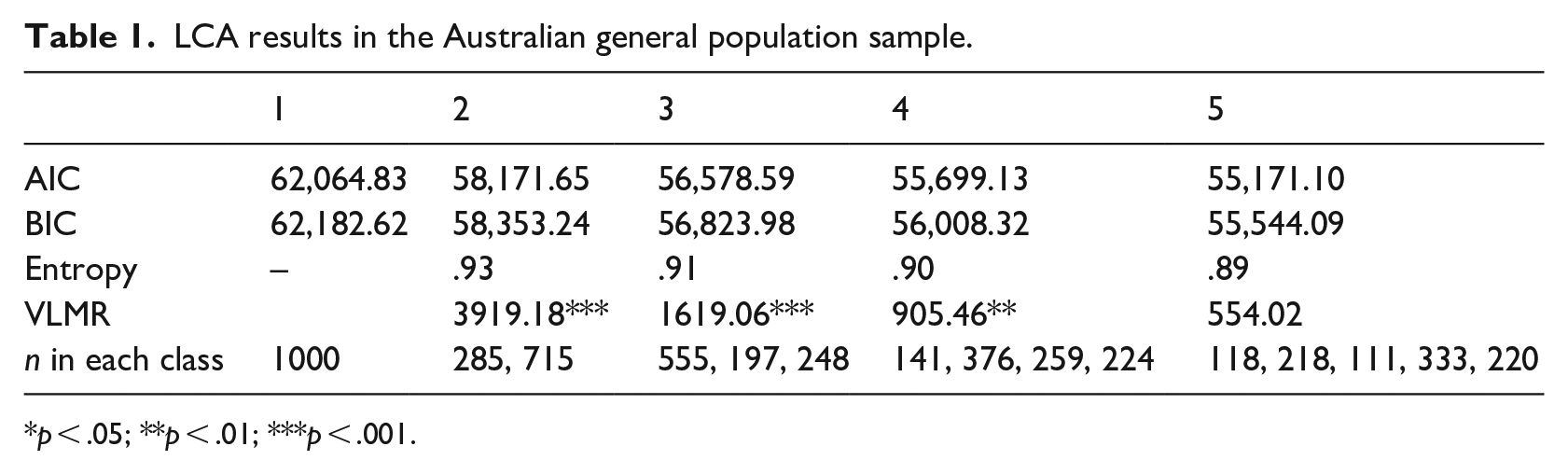
p < .05; **p < .01; ***p < .001.
Mean scores for each item used to define the classes are shown in Figure 1. Class 1 (henceforth referred to as the ‘Unsupportive’ class, n = 141) reported low willingness to donate and high concern regardless of public or commercial involvement. Conversely, Class 4 (Highly Supportive, n = 224) generally reported low concern and high donation willingness. Classes 2 (Moderately Supportive, n = 376) and 3 (Supportive, n = 259) were similar regarding which organisations should be allowed to access the data, with an apparent preference for Australian hospitals and universities. However, members of the Moderately Supportive class appeared less willing to donate than members of the Supportive class if the repository was managed by government.
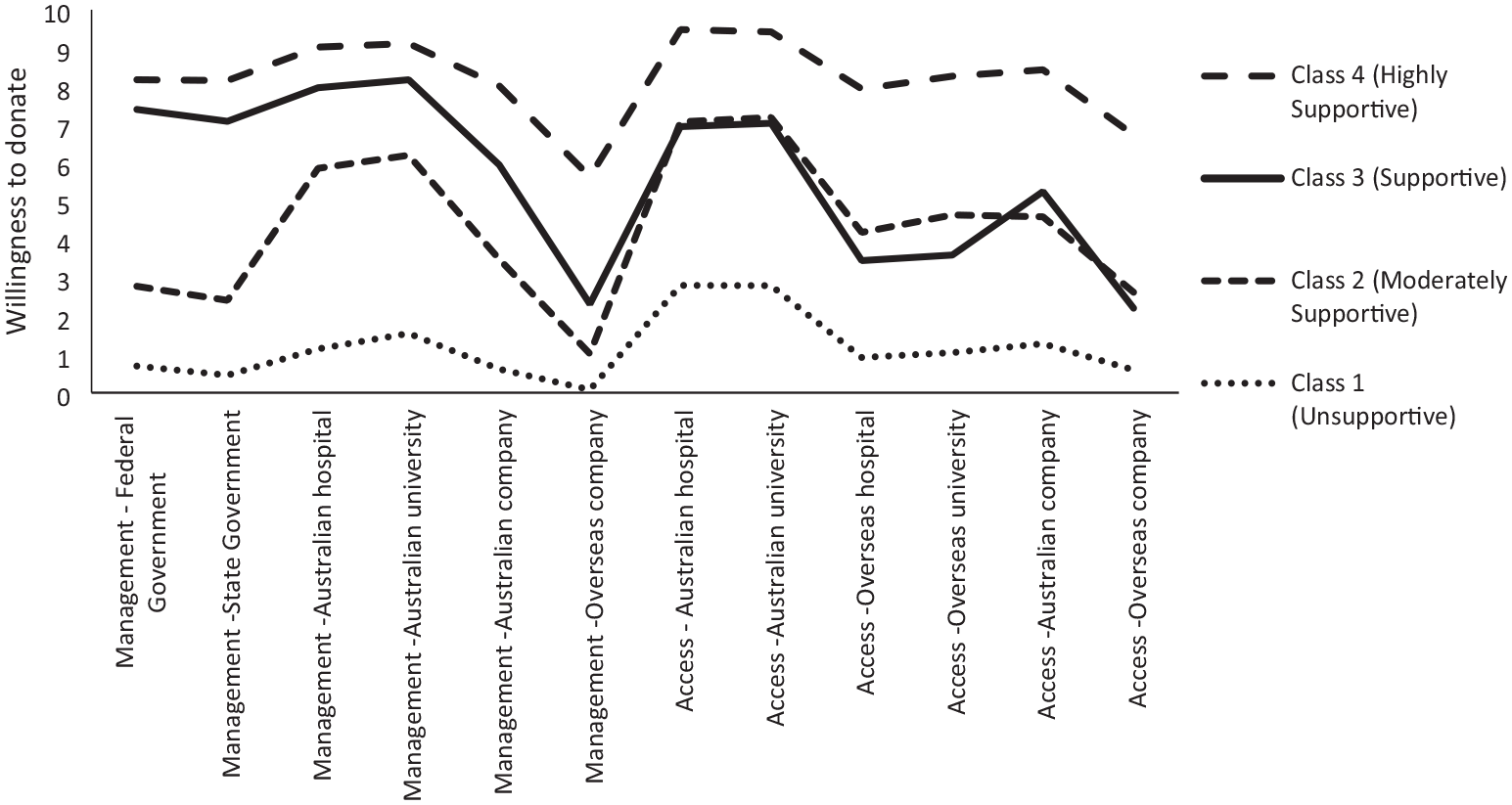
Mean willingness to donate for each class based on public or commercial involvement in a national genomic repository.
Group comparisons
The mean scores and ANOVA results for the group comparisons are shown in Supplemental Appendix B. In the next section, for ease of interpretation, we have broken the results down into thematically similar areas of investigation. With the exception of the demographic results, line graphs are presented to assist with visualising the results for the various perceived risks and governance mechanisms.
Demographics and views of genomic research
No significant demographic differences were found between the four classes on age, gender, educational attainment, and employment status. Similarly, no significant difference in knowledge about genomic research was found between the four classes, with respondents in each class reporting similarly low knowledge (M for combined sample = 2.87, SD = 2.68).
For previous involvement in genomic research, the Unsupportive class (M = 1.98, SD = .15) had a marginally but significantly (p < .05) higher proportion of respondents who had no prior experience in comparison to the Moderately Supportive (M = 1.91, SD = .29), Supportive (M = 1.92, SD = .27), and Highly Supportive (M = 1.91, SD = .29) classes.
There were clear, statistically significant distinctions between each class on the perceived importance of an Australian national genomic repository. The Unsupportive class reported the lowest level of perceived importance (M = 5.30, SD = 2.96). Moderate-to-high through to high levels of support for a repository were respectively reported by respondents in the Moderately Supportive (M = 7.47, SD = 2.17), Supportive (M = 8.35, SD = 1.55), and Highly Supportive (M = 9.02, SD = 1.32) classes.
Perceived risks – misuse
The first four items about perceived risks pertain to the access and use of data (see Figure 2a). The same pattern of responses was observed across the first three items, with statistically significant differences found between each class. The Unsupportive class reported the significantly highest perceived risk about data being used by government or accessed by law enforcement and health insurers. High risk across these conditions was reported by the Moderately Supportive class, with the Supportive class reporting moderate-to-high risk. The Highly Supportive class reported a moderate level of perceived risk across the four items. A similar pattern was observed in regard to employers accessing data (item 4), but with no statistically significant difference between the Moderately Supportive and Supportive classes, with both reporting moderate-to-high perceived risk.
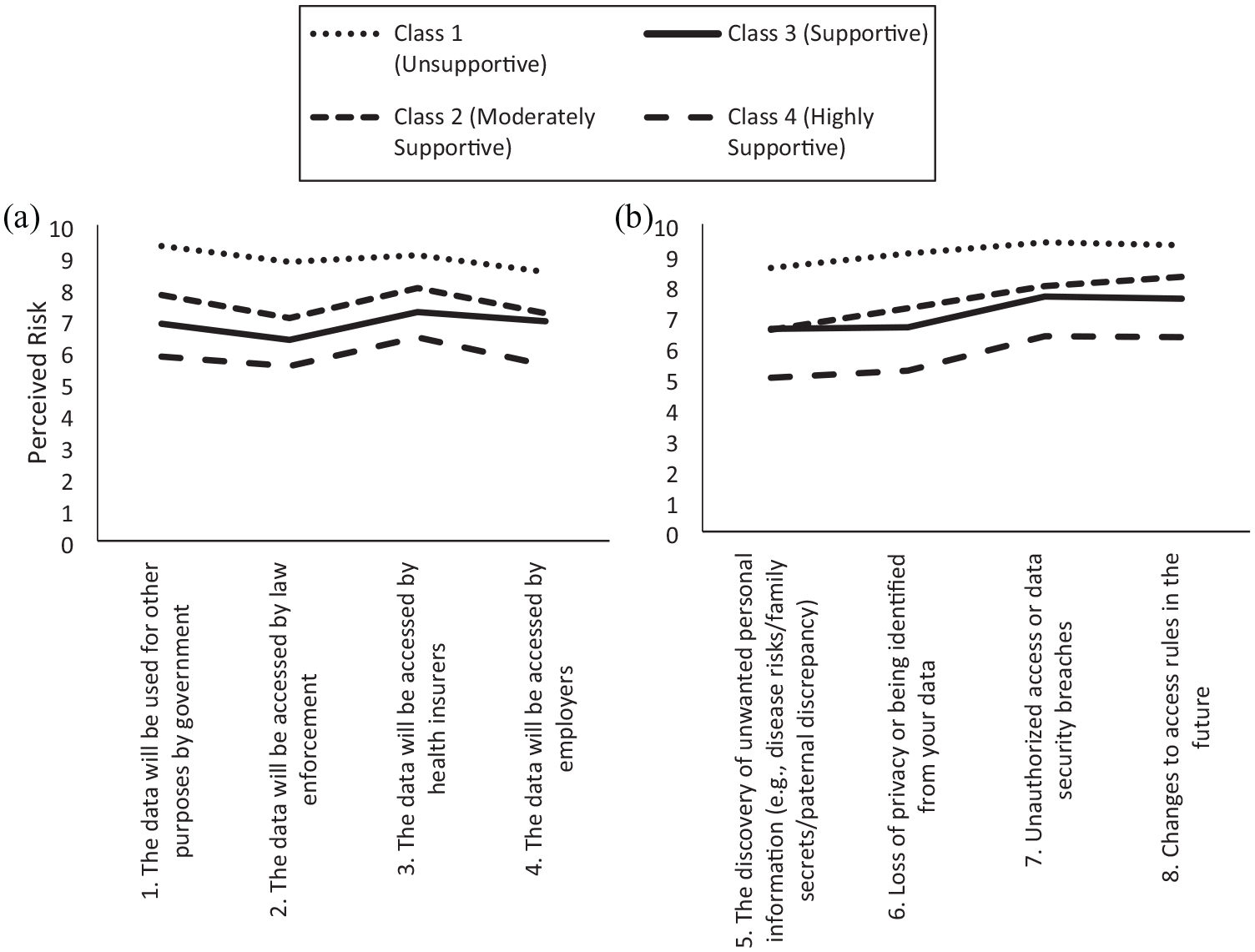
Mean perceived risks associated with potential forms of data misuse and potential loss of privacy or unintended consequences of donation. (a) Potential forms of data misuse. (b) Potential loss of privacy or unintended consequences of donation.
Perceived risks – privacy and access
As shown in Figure 2b, the highest perceived risk was reported by the Unsupportive class across all four items. For items 5 and 7, no difference was observed between the Moderately Supportive and Supportive classes. Both classes reported similar moderate-to-high levels of perceived risk regarding the discovery of unwanted personal information (item 5) and the potential for unauthorised access or data security breaches (item 7). The Highly Supportive class reported significantly lower, albeit still moderate perceived risk on both items.
The pattern of responses for items 6 and 8 was similar. The Moderately Supportive class reported moderate-to-high perceived risk about the loss of privacy or identification (item 6) and high-perceived risk of access rules changing in the future. These were significantly higher than the moderate-to-high risk reported by the Supportive class, which was in turn higher than the more moderate perceived risk reported by the Highly Supportive class.
Governance – profiting from the data
The results across the four items assessing willingness to donate in the presence of governance mechanisms that permit or deny the ability of users to generate profit from the data are shown in Figure 3a. Across each proposed governance mechanism, the Unsupportive class reported statistically significant lower willingness to donate than the other three classes. On the issue of users not being allowed to profit from the data (item 2), no significant difference was observed between the remaining three classes. Thus, the Moderately Supportive, Supportive, and Highly Supportive classes reported similar moderate-to-high willingness to donate. However, on item 3 (i.e. users are allowed to profit from the data), significant differences were observed between these classes. The lowest willingness to donate was reported by the Moderately Supportive class, with slightly higher but still low willingness reported by the Supportive respondents, with low-to-moderate support reported by the Highly Supportive class. Therefore, profit being obtained from the data were of concern, with this slightly more prominent among the Moderately Supportive and Supportive classes.
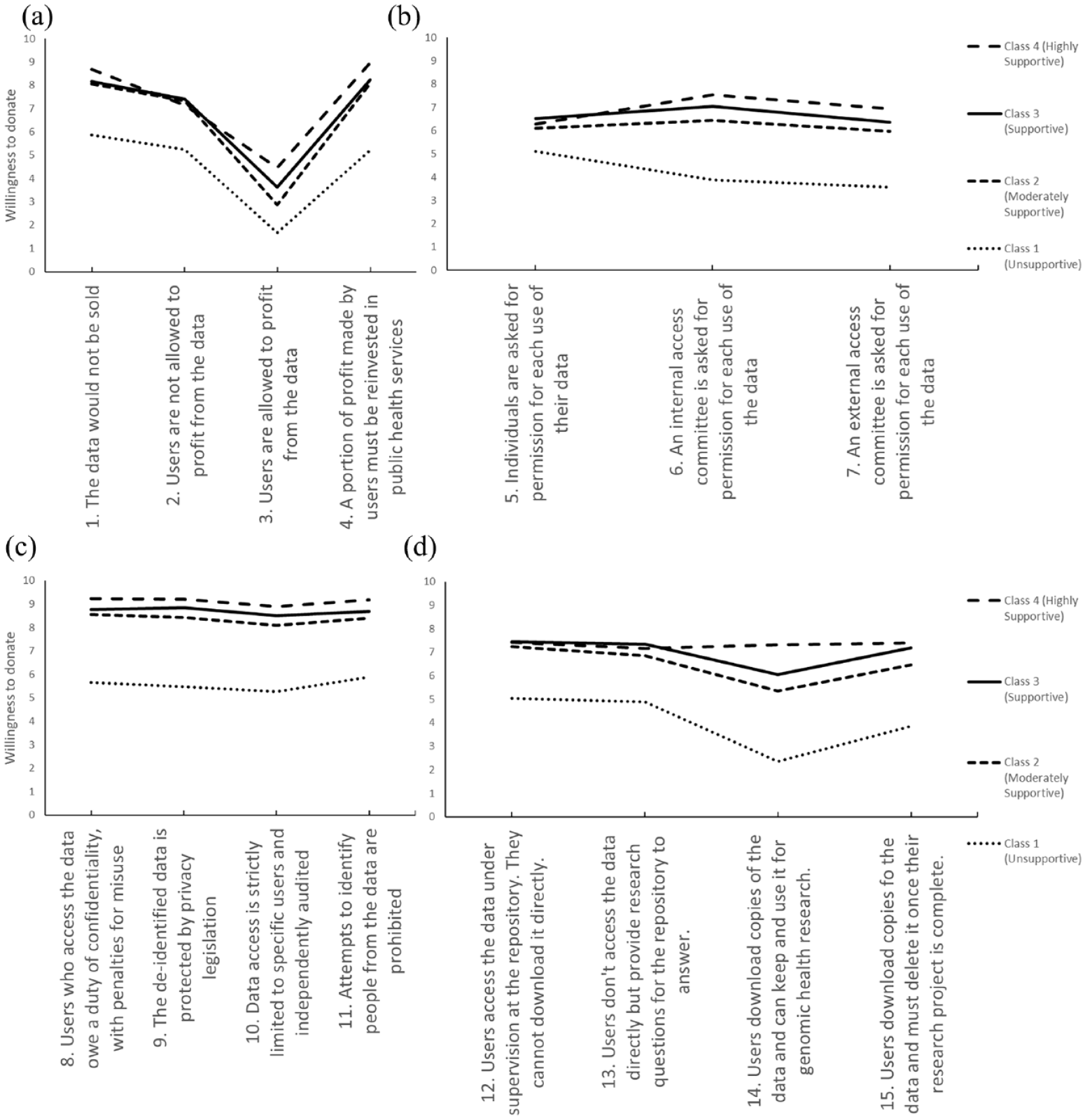
Mean levels of willingness to donate based on governance mechanisms permitting users to profit from the data and to access the data, protections for donors, and methods through which data can be accessed. (a) Permitting users to profit from the data. (b) Permissions required for users to access the data. (c) Protections from donors. (d) Methods of data access for users.
A similar pattern was evident on not allowing data to be sold (item 1). While willingness to donate was high across the three supportive classes under this condition, willingness was significantly higher for Highly Supportive compared to Moderately Supportive respondents. The Supportive class was in the middle and not statistically different to the Moderately and Highly Supportive classes.
Finally, the three aforementioned classes also indicated high willingness to donate if a portion of profits must be re-invested in public health services (i.e. item 4). The Highly Supportive class reported the highest willingness to donate under this condition, and there was no statistically significant difference between the Moderately Supportive and Supportive classes.
Governance – permission for data use
As shown in Figure 3b, the Unsupportive class again reported the lowest willingness to donate across these three conditions. There were few differences across the remaining three classes. There were no significant differences between the three classes on item 5, indicating that the Moderately Supportive, Supportive, and Highly Supportive classes reported moderate-to-high willingness to donate if permission is sought from donors for each use of their data.
Minor differences were observed on items 6 and 7 regarding the use of an access committee. If the access committee is internal to the repository (item 6), the Supportive and Highly Supportive classes reported similar moderate-to-high donation willingness, which was marginally yet significantly higher than that reported by the Moderately Supportive class. If the access committee is external (item 7), the moderate-to-high willingness reported by the Highly Supportive class was significantly higher than the moderate willingness reported by the Moderately Supportive class. The Supportive class was in the middle and not statistically significantly different to both Moderately and Highly Supportive classes. Therefore, the use of an access committee appeared to be generally well supported, but more so by members of the Supportive and Highly Supportive classes.
Governance – protections from misuse of data
Across these four governance mechanisms, the Unsupportive class reported moderate willingness to donate, which was significantly lower than the high levels of willingness reported by the remaining three classes (see Figure 3c). The pattern of results for the remaining three classes across items 8, 9 and 10 was the same. The Highly Supportive class reported significantly higher willingness to donate when there are penalties for violating donors’ confidentiality (item 8), when de-identified data are protected by privacy legislation (item 9), and when data access is limited to certain users and independently audited (item 10) than the Moderately Supportive class. The Supportive class scored between these two classes and did not differ at a statistically significant level to either class.
The prohibition on users attempting to identify people from repository data (item 11) received high willingness to donate from the three classes. Willingness was highest from the Highly Supportive class, with no statistically significant difference observed between the Moderately Supportive and Supportive classes.
Governance – data access methods
Figure 3d summarises the results across four potential governance mechanisms associated with determining the means through which users can access data. The Unsupportive class again reported the lowest willingness to donate out of the four classes across all options. For the Unsupportive class, willingness to donate was moderate under conditions where users access the data under supervision (item 12) or rely on the repository to analyse data on behalf of users (item 13). Willingness was low when users can access data directly, including when users can retain data (item 14) or must delete data at project completion (item 15).
The remaining three classes did not differ significantly on items 12 and 13. Thus, the Moderately Supportive, Supportive, and Highly Supportive classes reported similar moderate-to-high willingness to donate when users can only access data when there is a form of oversight provided by the repository. A different pattern of results was evident across items 14 and 15. When users can download and retain data (item 14), the Moderately Supportive class reported a moderate willingness to donate. This was significantly lower than the Supportive class. The Highly Supportive class reported a moderate-to-high level of support, which was the significantly highest among all four classes. When data must be deleted at project completion (item 15), the Supportive and Highly Supportive classes reported similarly moderate-to-high willingness to donate, and this was significantly higher than that reported by the Moderately Supportive class.
Governance – evidence of benefit
As shown in Figure 4, the Unsupportive class reported moderate willingness to donate across both conditions, which was the lowest across the four classes. Donors receiving information about the intended benefits (item 16) or actual benefits (item 17) of research garnered similarly high willingness to donate from participants in the Moderately Supportive and Supportive classes. The significantly highest level of willingness to donate across both items was reported by the Highly Supportive class.
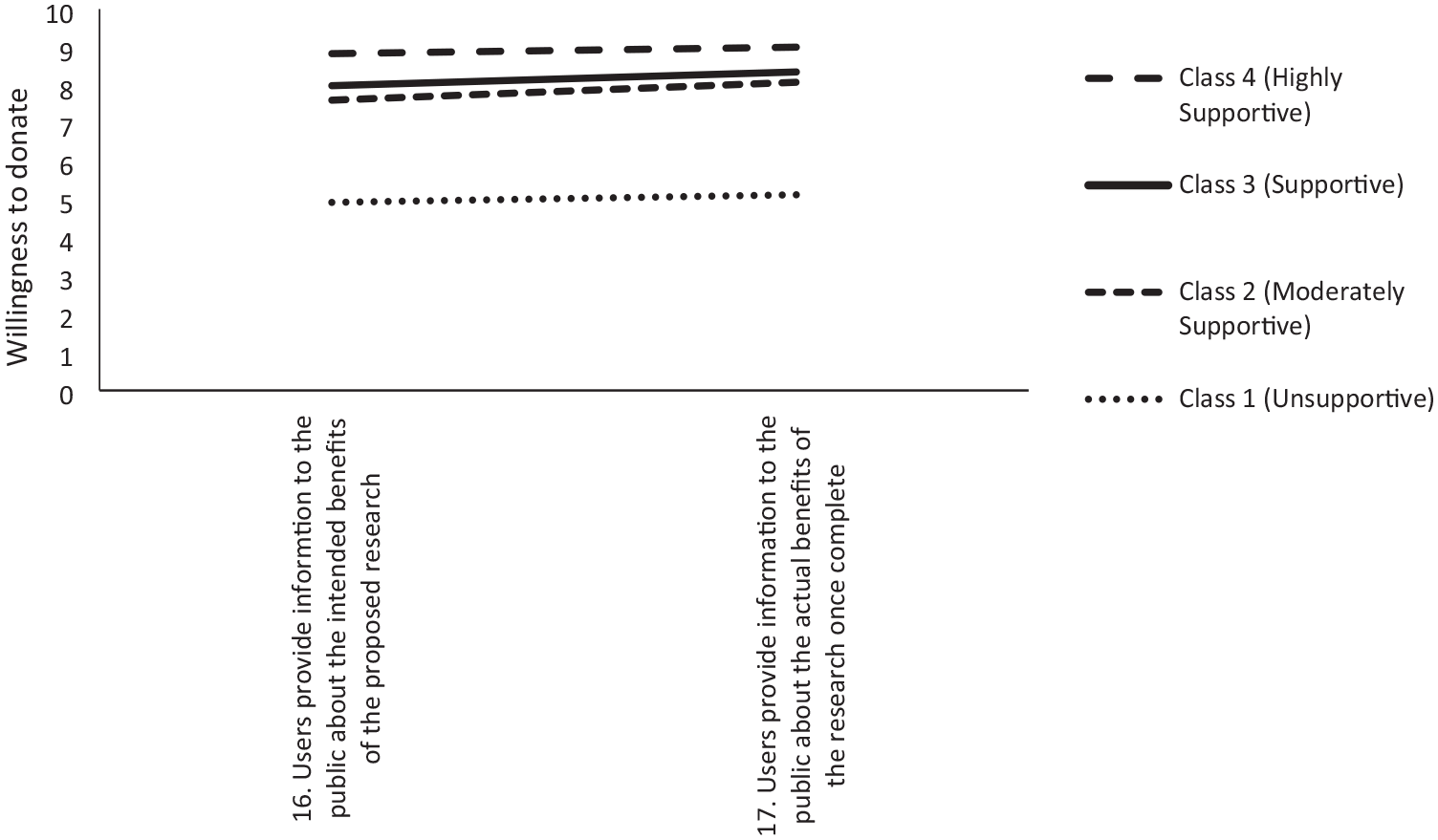
Mean levels of willingness to donate based on information provided to donors about the intended or expected benefits of data use.
Discussion
This study statistically classified respondents as being Unsupportive, Moderately Supportive, Supportive or Highly Supportive on the basis of willingness to donate to an Australian national genomic repository when certain public or commercial organisations could manage the repository or access repository data. If the sample is considered approximately representative of the general Australian population, and the proportions of participants comprising each class is extrapolated accordingly, a minority of the population (14%; Unsupportive) would be unlikely to donate under any condition. It may, therefore, be unproductive to tailor governance controls to align with the preferences of this particular class. Almost one quarter of Australians (23%; Highly Supportive) would be highly likely to donate across a broad range of policy options, with relatively few choices (discussed below) significantly affecting willingness to participate. Most other Australians (a further 63%; Moderately Supportive (26%), Supportive (37%)) would consider a national repository to be important but remain uneasy about donating due to concerns associated with commercial access to, and the potential misuse of, genomic data. The four classes had similar characteristics to the four classes identified by Critchley et al. (2021) in an Australian sample. Of note, Critchley et al. reported that donors were most supportive of commercialisation. Similarly, in this study, the Moderately Supportive, Supportive, and Highly Supportive classes were more likely to have previously donated than members of the Unsupportive class. However, it was noteworthy that knowledge about genomic research was similarly low across all four classes. Given that there was divergence between these classes in levels of trust and willingness to donate, as well as other attitudes which will be described next, it appears likely that respondents from each class were relying on heuristic processing in accordance with the work of Critchley and Nicol (2011) and Cummings (2014). This further reinforces the need for the selection of appropriate governance mechanisms that may enhance the perceived trustworthiness of a national repository.
The concerns held by each class were evident in the items asking about perceived areas of risk. The findings align with those of previous studies which have clearly indicated that the public hold considerable concerns about organisations such as insurance companies gaining access to genomic data (e.g. Critchley et al., 2017; McCormack et al., 2016; Tai et al., 2018). This study has added to these findings by providing an indication of how these concerns may be distributed across the population. The greatest perceived risk was reported by the Unsupportive class, which may have been a contributing factor in this class reporting the lowest level of perceived importance of having an Australian genomic repository. Conversely, the Highly Supportive class felt that having a national repository is highly important and felt that it carried comparatively lower (albeit still moderate) risk. The Moderately Supportive and Supportive classes respectively reported moderate-to-high and high-perceived importance, and concordant levels of perceived risk.
The Moderately Supportive class was distinguished from the Supportive class by holding greater concerns about certain risks. In particular, the Moderately Supportive class reported significantly greater perceived risk than the Supportive class on issues such as data being used by government; data being accessed by law enforcement or insurers; and the potential for loss of privacy and changes to access rules in the future. On each of these, both classes reported significantly greater perceived risk than the Highly Supportive class. Accordingly, in contrast to the Highly Supportive and Supportive classes, the Moderately Supportive class appeared to have emerged in the LCA due to the comparatively lower levels of willingness to donate when a national genomic repository is managed by government.
Given that the greatest perceived risks are held by those comprising the Moderately Supportive and Supportive classes, it is particularly important for the repository to be designed to mitigate the concerns held by these classes. Demonstrating effective governance in relation to the points of particular concern to members of these classes may increase the likelihood of their participation. Proposed governance mechanisms to achieve this will be discussed next.
Commercial involvement in managing a national repository and accessing data
On the basis of the LCA results, a national genomic repository in Australia should ideally be managed by an Australian university or hospital, particularly as this would be most acceptable to people typical of the Moderately Supportive and Supportive classes. This aligns with commonly identified concerns about commercial involvement in biobanking and preferences for management by public organisations (see Walshe et al., 2024). Furthermore, all classes generally preferred domestic rather than overseas entities to be involved in repository management or access of data. Previous research has similarly highlighted public concerns about international access (e.g. Critchley et al., 2017; Nicol et al., 2016).
Governance – profiting from data use
Across all four classes, concerns were held about users profiting from the data. The Highly Supportive class had a visible reduction in willingness to donate if users are able to profit from the data, with the Supportive and Moderately Supportive classes each respectively reporting lower willingness to donate than that. These three classes all reported high willingness to donate if users could not profit from the data and also if the data could not be sold, with the latter contributing to slightly greater donation willingness for the Highly Supportive compared to Moderately Supportive class. Reinvesting profits into public health services was widely supported across the three supportive classes, with willingness most pronounced for the Highly Supportive class.
This combination of findings aligns with previous research which has highlighted public concern about commercial organisations making unfair profits from donated data (see Lewis et al., 2013; Steinsbekk et al., 2013). Furthermore, there is a desire for at least a portion of profits which are derived from an altruistic resource to provide public benefit (e.g. Haddow et al., 2007; Joly et al., 2015; Spector-Bagdady et al., 2018). Notably, this appears to be the case even for people who could be classified as being Highly Supportive. Therefore, if for example, Highly Supportive members of the public viewed a repository as being a solely profit-driven enterprise and became less willing to donate, the current findings suggest that this effect may be even more pronounced for those whose inherent support is lower, such as those who are Moderately Supportive or Supportive.
Governance – permission for data use
The findings appeared to indicate that respondents across the Highly Supportive, Supportive, and Moderately Supportive classes did not have a clear preference for any one form of permitting users access to repository data. The three supportive classes reported moderate-to-high willingness to donate whether donors were asked to provide permission for each use of data, or if an internal or external access committee held the responsibility of granting access to data. There was no difference between the three supportive classes on seeking permission from donors in order to access data. While there was some minor variation between classes, such as the Highly Supportive class reporting greater donation willingness than the Moderately Supportive class if either internal or external access committees are used, this may have simply reflected the base level of trust and willingness to donate held by respondents comprising those classes.
The main insight provided by the current findings is that the use of an access committee, whether comprising members who are internal or external to the repository, is likely to be as appealing to the public as seeking direct permission from donors. This has practical benefits for a national repository and data users due to the efficiencies provided by an access committee in comparison to the time and resources associated with repeatedly contacting donors. Such a conclusion aligns with the findings of Nicol et al. (2016) who identified public support for independent and transparent biobank governance. On the basis of the current findings, any mechanism to provide oversight on who can access data, whether that be requesting permission from donors or using an access committee, may be seen by the majority of the population as being sufficiently transparent.
Governance – protections
Again, only minor differences between the Highly Supportive, Supportive, and Moderately Supportive classes were observed. The Highly Supportive class reported greater willingness to donate across each option (e.g. de-identified data are protected by privacy legislation) than the Moderately Supportive class, which may again reflect the baseline level of willingness to donate of each class. The overall insight provided by the findings is that any form of protection that ensures anonymity and confidentiality will be considered acceptable by the Australian public. Importantly, this means that there is not necessarily a requirement for new privacy legislation to be created and enforced, or for third parties to be required to provide external audit. This does not mean there is no value in improving statutory privacy legislation. We note in this context the process (current at the time of writing) to review and improve the Australian Privacy Act 1988 (Cth). Many recommendations associated with the review may be relevant to the governance of a national genomic repository, such as the recommendation accepted in principle by Government, to consult on introducing a criminal offence for malicious re-identification of de-identified information where there is an intent to harm another or obtain an illegitimate benefit (with appropriate exceptions; Australian Government, 2023). The current findings suggest, however, that such measures may not materially affect the willingness of many Australians to donate to a national genomic repository if they perceive equivalent protections to be in place. For example, a contractual arrangement between the repository and data users that includes an obligation not to attempt to re-identify donors may be regarded by many members of the public as sufficient.
Governance – data access methods
No difference was observed between the Moderately Supportive, Supportive and Highly Supportive classes, with each reporting high willingness to donate when users can access data under supervision at the repository, or when the repository conducts analyses and provides results to data users. The Highly Supportive class reported a similar level of donation willingness across the other two options; when users can download data and either keep it for future research or if data must be deleted at project completion. The Supportive class reported similar willingness to donate as the Highly Supportive class when data must be deleted but reported significantly lower willingness when data are retained. This effect was more pronounced for the Moderately Supportive class, which also reported significantly lower willingness to donate (albeit still at a moderate-to-high level) than the Supportive and Highly Supportive classes when data are deleted after use.
Therefore, the results indicated that the Highly Supportive class does not appear to care greatly about how data are accessed. In contrast, the Supportive and Moderately Supportive classes were notably concerned about users being able to retain data. Thus, an ideal repository would only allow users to access data under supervision or to analyse data on behalf of users. If these are not feasible, ensuring that users delete data after use will have wide appeal, despite potentially affecting the donation willingness of members of the public typical of the Moderately Supportive class.
Governance – evidence of benefit
The two options examined (i.e. donors are provided with information about the intended or actual benefits of research) provided a similar pattern of results, with the Highly Supportive class reporting the highest level of willingness to donate, with no statistically significant differences observed between the Moderately Supportive and Supportive classes. Given that all three classes reported high-to-very high willingness to donate across both options, the results indicated that there is no clear preference for users being informed about the intended or actual benefits of resources. However, it is clear that the public would like to be informed about the research being conducted in some form.
Limitations and directions for future research
Despite efforts to obtain a representative sample, the study was overrepresented by older Australians. The generalisability of the findings is therefore limited. Furthermore, while the high proportion of white Australians accorded with census data, the amount of funding and time available did not permit us to specifically seek the views of culturally diverse groups. Research informing genomic medicine has not adequately included the views of underrepresented social groups, which may be a contributing factor in genomic databases lacking in diversity (Atutornu et al., 2022). Without adequately considering the unique viewpoints of these groups, there is a risk of further alienating individuals, for example, by failing to acknowledge past and present injustices and inequalities that may contribute to distrust in scientific research (Middleton et al., 2023). Accordingly, it has been noted that a national approach to collecting, storing, analysing and sharing genomic data in Australia must involve the consultation and participation of First Nations people (Australian Genomics, 2023). This study clearly falls short in this regard, which therefore highlights a direction for further research.
Future research needs to further explore the specific requirements of an ideal Australian genomic repository. For example, while there was support for an access committee, further study could examine whether this varies with the areas of expertise and backgrounds of committee members. Trust may be lower in an access committee populated by members of the commercial sector. In addition, future research could examine specific governance mechanisms that could mitigate concerns about commercial organisations making unfair profits. Data users may, for example, be required to pay for access to data or for a portion of profits to be obtained by the repository through a royalty system.
Conclusion
By identifying four classes that may reflect the attitudes of Australians, this study highlights considerations that, if implemented, could maximise the public acceptance and feasibility of a national genomic repository for medical research. It also indicates that there may be a class of Australians for whom the introduction of regulatory measures may make little difference to willingness to participate. Efforts targeted to this class may not prove productive. For a clear majority though, the need for repository management to be independent of commercial and political interests, and assurances that all research and associated outcomes are done with integrity, transparency, and pursuit of the public good, are perceived as relevant to levels of willingness to participate and this aligns with previous research. This study recommends the implementation of these conditions, with particular focus on management by an Australian university or hospital; the repository being run with clear public benefit rather than solely for commercial benefit; the use of an access committee (internal or external) to determine who can access data; protections that ensure donor anonymity, even if such protections are solely enforced by the repository; data users must at least be required to delete data at project completion; and the intended and/or actual benefits should be communicated clearly to the public. The efforts of registry managers and sponsors to communicate such governance measures may be usefully targeted through an understanding of how attitudes towards such measures are unevenly distributed across the population.
Supplemental Material
sj-rtf-1-pus-10.1177_09636625241286369 – Supplemental material for Towards a trusted genomics repository: Identifying commercialisation fears and preferred forms of governance across segments of the community
Supplemental material, sj-rtf-1-pus-10.1177_09636625241286369 for Towards a trusted genomics repository: Identifying commercialisation fears and preferred forms of governance across segments of the community by Brad Elphinstone, Jarrod Walshe, Dianne Nicol and Mark Taylor in Public Understanding of Science
Footnotes
Acknowledgements
This article is in memory of Professor Christine Critchley who developed and initially led the project, of which this article is part, prior to her sudden passing.
Funding
The author(s) disclosed receipt of the following financial support for the research, authorship, and/or publication of this article: The authors received funding from a Medical Research Future Fund grant (Australian Government, Department of Health & Aged Care; Grant ID: GHFMESLI000005) to conduct this study.

Supplemental material
Supplemental material for this article is available online.
Author biographies
References
Supplementary Material
Please find the following supplemental material available below.
For Open Access articles published under a Creative Commons License, all supplemental material carries the same license as the article it is associated with.
For non-Open Access articles published, all supplemental material carries a non-exclusive license, and permission requests for re-use of supplemental material or any part of supplemental material shall be sent directly to the copyright owner as specified in the copyright notice associated with the article.
