



Abstract
The cause-specific hazard Cox model is widely used in analyzing competing risks survival data, and the partial likelihood method is a standard approach when survival times contain only right censoring. In practice, however, interval-censored survival times often arise, and this means the partial likelihood method is not directly applicable. Two common remedies in practice are (i) to replace each censoring interval with a single value, such as the middle point; or (ii) to redefine the event of interest, such as the time to diagnosis instead of the time to recurrence of a disease. However, the mid-point approach can cause biased parameter estimates. In this article, we develop a penalized likelihood approach to fit semi-parametric cause-specific hazard Cox models, and this method is general enough to allow left, right, and interval censoring times. Penalty functions are used to regularize the baseline hazard estimates and also to make these estimates less affected by the number and location of knots used for the estimates. We will provide asymptotic properties for the estimated parameters. A simulation study is designed to compare our method with the mid-point partial likelihood approach. We apply our method to the Aspirin in Reducing Events in the Elderly (ASPREE) study, illustrating an application of our proposed method.
Introduction
Competing risks consider the situation where there are multiple events, or multiple causes for a single event, that compete with each other. “Competing” here entails that these risks or events are mutually exclusive (e.g. Putter et al. 1 ). Traditionally for competing risks data analysis, people only consider right censoring, where, if an event occurs, one will observe the event time with the corresponding risk type, and if no event has occurred, one will only observe a right censoring time without any risk type. A nice feature of a right-censored competing risks problem is that the regression coefficients of a cause-specific hazard (CSH) Cox model can be easily computed using the partial likelihood method. 2 More specifically, for a given risk and its CSH Cox model, one can simply set the event times and right censoring times of all the other risks as right censoring times for the risk under consideration and then implement the partial likelihood method to estimate the Cox model regression coefficients; see Putter et al. 1 and Prentice et al. 3 However, this feature will be lost when there are interval-censored event times.
Interval-censored data can arise in competing risks. For example, when a competing risk is related with a chronic disease where its symptoms are slowly progressing, and hence the disease can only be confirmed to occur during a time interval. In this article, we consider semi-parametric CSH Cox models, where the observed event times from competing risks are partly interval-censored (e.g. Kim 4 for partly interval censoring), which means these observed times can include competing risks event times, as well as left, right and interval censoring times. When partly interval censoring arises one may opt to maximize the full log-likelihood to estimate the model parameters. Its computation, however, is intensive 5 and hence will not be useful without improved computational efficiency.
In this article, we will develop a Gaussian-quadrature based fast maximum penalized likelihood (MPL) method for fitting CSH Cox models, where the unknown baseline hazards are approximated using M-splines. Our proposed method provides estimates of both the regression coefficients and approximated baseline hazards, where the non-negative constraint on the baseline hazards is respected. In this method, penalty functions are employed for two reasons: to regularize estimates of the baseline hazards and to ease the requirement for optimal location and number of knots 6 needed for approximating the baseline hazards.
For competing risks data under interval censoring, there exist a few likelihood based methods, particularly Li
5
and Joly et al.
7
The latter is in fact for the illness-death model without covariates, but it can be implemented to competing risks. The method by Li
5
allows covariates, but its optimization computations are achieved through an existing R nonlinear optimization function “
The remaining of this article is organized as follows. Section 2 defines the likelihood under competing risks CSH Cox models and with partly interval censoring. Section 3 provides the details on the computation of the MPL estimates of regression coefficients and baseline hazards and it also discusses how to automatically select the optimal smoothing parameter. Asymptotic results of the MPL estimates are presented in Section 4. Section 5 contains simulation results and also an application of our method to the ASPREE study. Finally, the concluding remarks are given in Section 6.
Model and likelihood
Partly interval censoring (e.g. Kim 4 ) refers to the situation where observed survival times are flexible, and they can include event times, and also left, right or interval censoring times. In this article, we study competing risks CSH models with partly interval censoring. Particularly, we propose a Gaussian quadrature based penalized likelihood approach to estimate semiparametric CSH models, where both regression coefficients and baseline hazards are estimated.
Let
To accommodate interval censoring, we define
For each individual

Let
In competing risks analysis, a cumulative incidence function (CIF), which quantifies the probability of an event with a particular risk occurring before a time

Since each

Let

Computation
We wish to estimate parameters


This is a difficult constrained optimization problem. Employing an R or MATLAB optimization solver to find the solutions is not ideal. This is because (i) these solvers can be limited on the number of constraints (thus the size of
For given smoothing parameters
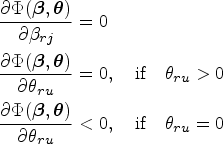
The derivative of


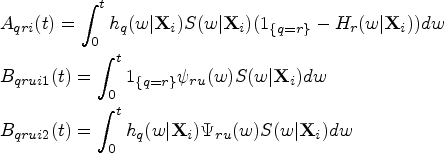
Consider a general integral

Before explaining the algorithm, we first introduce some notations. In this article, we let


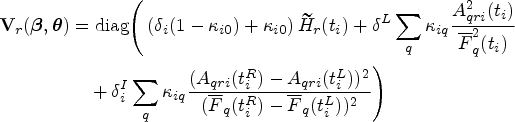
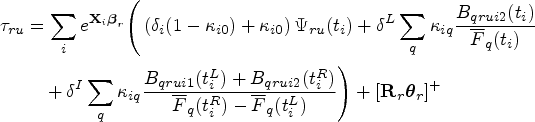
We comment that line search step sizes
Our penalized likelihood approach includes an essential feature: automatic selection of the smoothing parameter. This procedure is especially valuable for users who may not be familiar with the penalized likelihood method. This smoothing parameter selection method is devised by treating the penalty functions as log-prior density functions and views



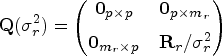



Note that both
Cross-validation (CV) is another commonly adopted approach for estimating the smoothing parameters, and it aims at minimizing prediction errors. As explained by Wood, 19 for semiparametric generalized linear model estimation, marginal likelihood might be preferable to CV due to its resistance to overfitting, lower smoothing parameter variability, and reduced tendency towards multiple minima. Our experience reveals that the proposed approximate marginal likelihood approach has much less computational burden than the CV or the generalized CV method.
In this section, we provide some large sample results for the MPL estimates of the CSH Cox model. Let

Consistency of the MPL estimates will be considered here under the assumption that, when
Consistency of
Assume Assumptions For all
Here,
The proofs of these results can be given directly by following the proofs that appear in the Supplemental Material of Ma et al. 9
The results in Theorem 1 establish consistency for both
In the next section, we develop a large sample normality property for
In practice, since the
Assume, without loss of generality, that the first

Assume Assumptions
Again, the proofs of these results can be obtained by directly following the proofs of the similar results that appear in the Supplemental Material of Ma et al. 9
We remark that matrix
Simulation
Monte Carlo simulations were undertaken to compare the performance of the MPL method with an ad-hoc method commonly used in practice denoted as midpoint Cox. This involves applying a Cox regression to each risk separately, while right censoring all other risks. For interval censored observations, the midpoint of the interval was treated as an exact observed time, and for left censored data, the observed time was divided by 2. We generated survival times,

Observed survival times

The simulation study was designed to examine the estimation method under varying sample sizes and censoring proportions. We ran Monte Carlo simulations with sample sizes of n = 200 and 1000. For all studies, the event proportion was fixed at
Cox (midpoint t) and MPL regression parameter estimation for study 1.
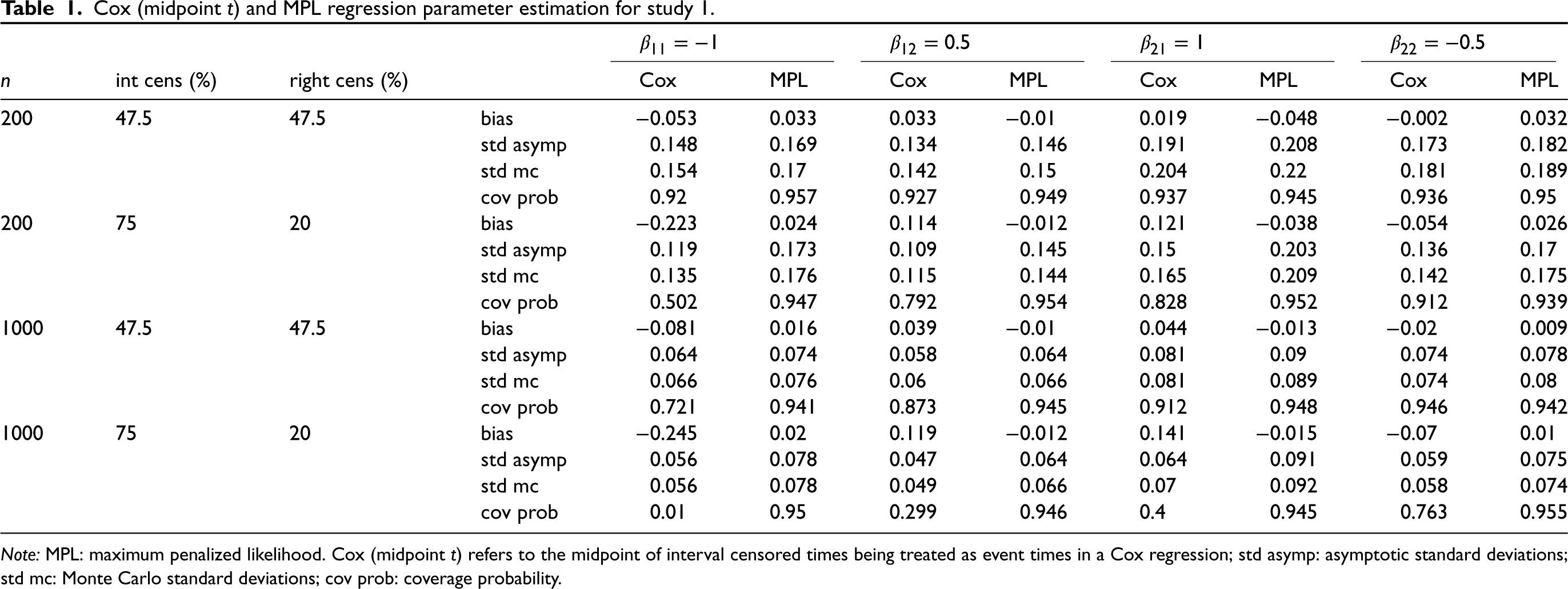
Note: MPL: maximum penalized likelihood. Cox (midpoint t) refers to the midpoint of interval censored times being treated as event times in a Cox regression; std asymp: asymptotic standard deviations; std mc: Monte Carlo standard deviations; cov prob: coverage probability.
Cox (midpoint t) and MPL regression parameter estimation for study 2.
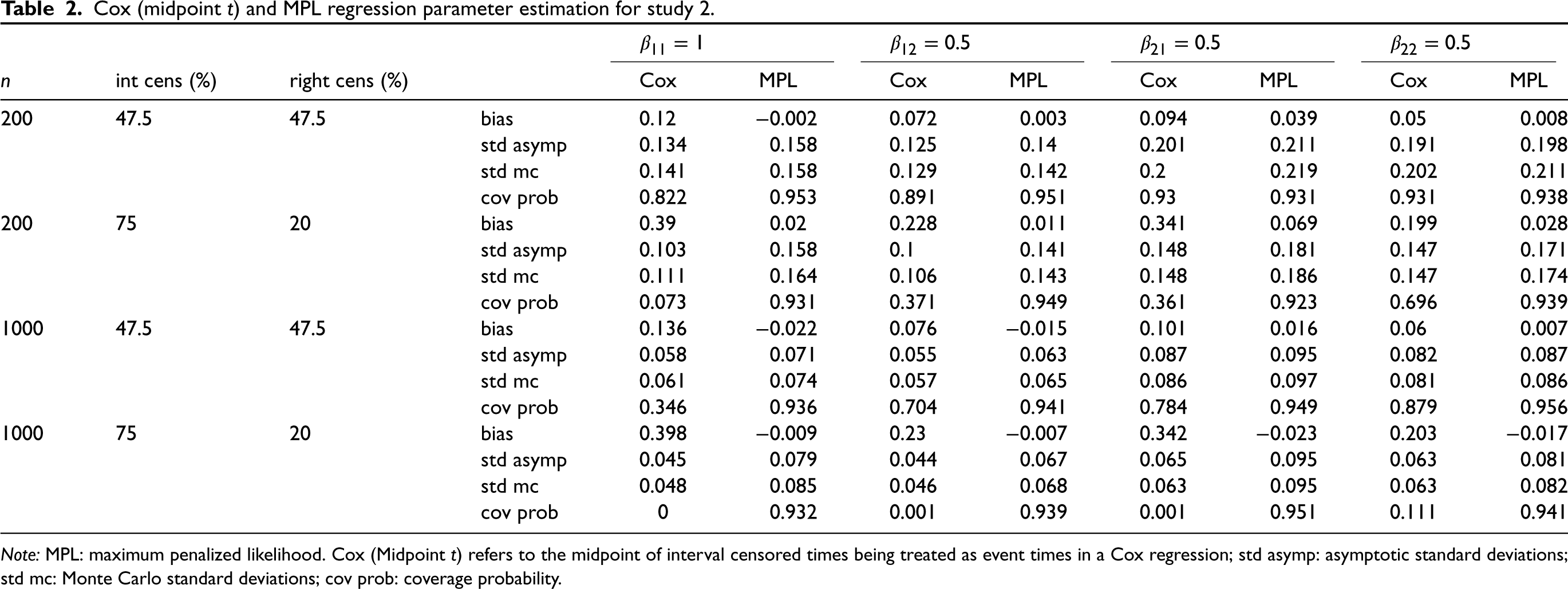
Note: MPL: maximum penalized likelihood. Cox (Midpoint t) refers to the midpoint of interval censored times being treated as event times in a Cox regression; std asymp: asymptotic standard deviations; std mc: Monte Carlo standard deviations; cov prob: coverage probability.
In studies 1 and 2, bias was < 0.1 and lower for the majority of MPL results compared with the Cox regression with midpoint t (Tables 1 and 2). The asymptotic standard errors for the MPL were close to its Monte Carlo estimates, and were larger than those estimated by the Cox regression. However, the increase in precision for the Cox regression resulted in relatively poor coverage probabilities due to its large bias. The MPL coverage probabilities were close to its nominal value of 95%. For the same event proportions, both methods improved in bias and coverage probability when a smaller proportion of left and interval censored times were observed. This is partly due to the decreased width of the intervals that is necessary to produce a smaller proportion of left and interval censored data for the same set of randomly generated
Figure 1(A) and (B) shows the estimated average estimated baseline hazards for scenario 1 for the sample size of 200, and 47.5% right censoring proportion are estimated to be close to their true values for risks 1 and 2, respectively. The true baseline hazards for both risks are contained within the confidence bands. Figure 1(C) and (D) shows the coverage probabilities of the baseline hazards over
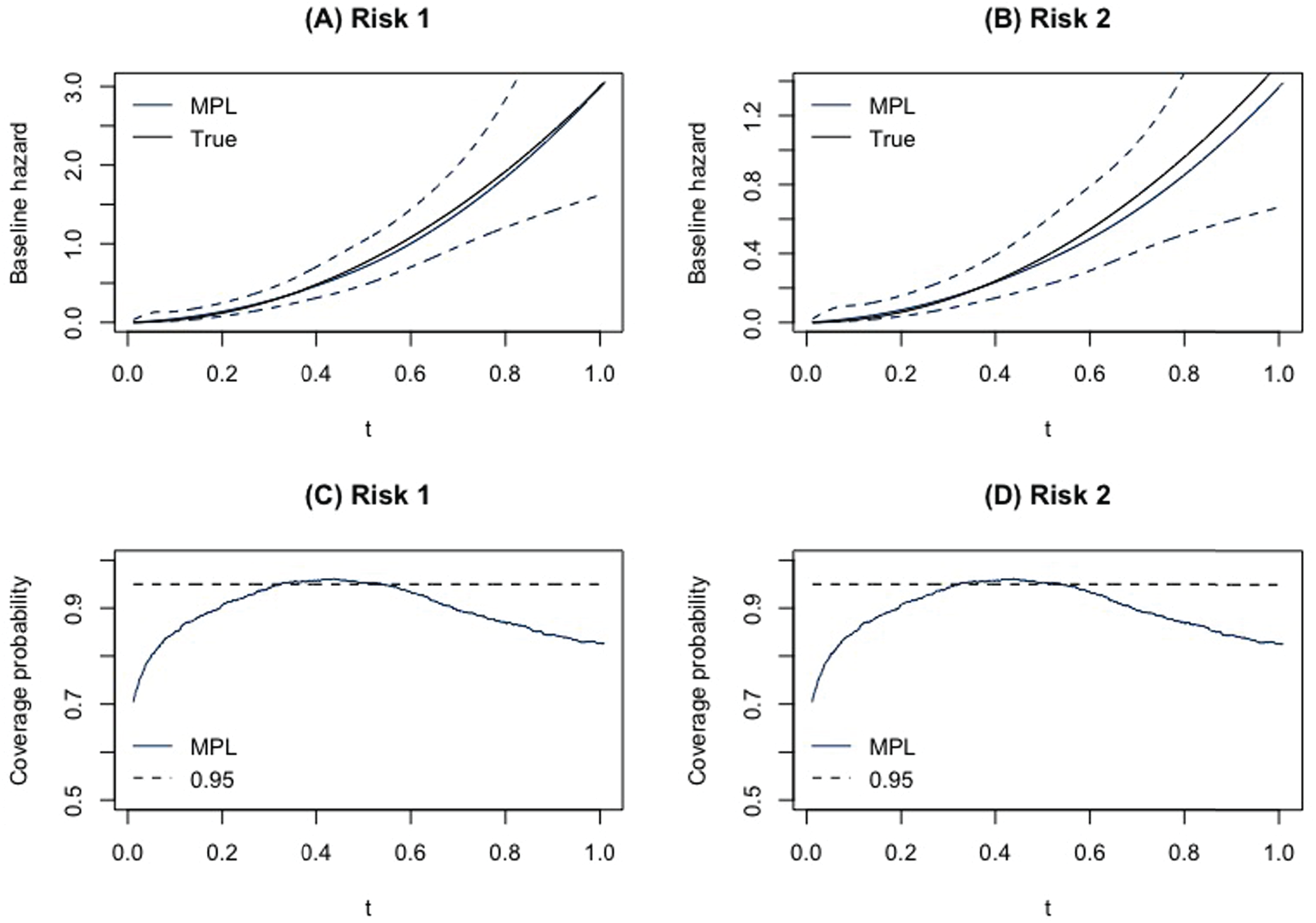
(A) and (B) The average baseline hazards for 1000 Monte Carlo runs, the true baseline hazards and the confidence bands for risks 1 and 2, respectively. (C) and (D) The coverage of the baseline hazards for risks 1 and 2, respectively.
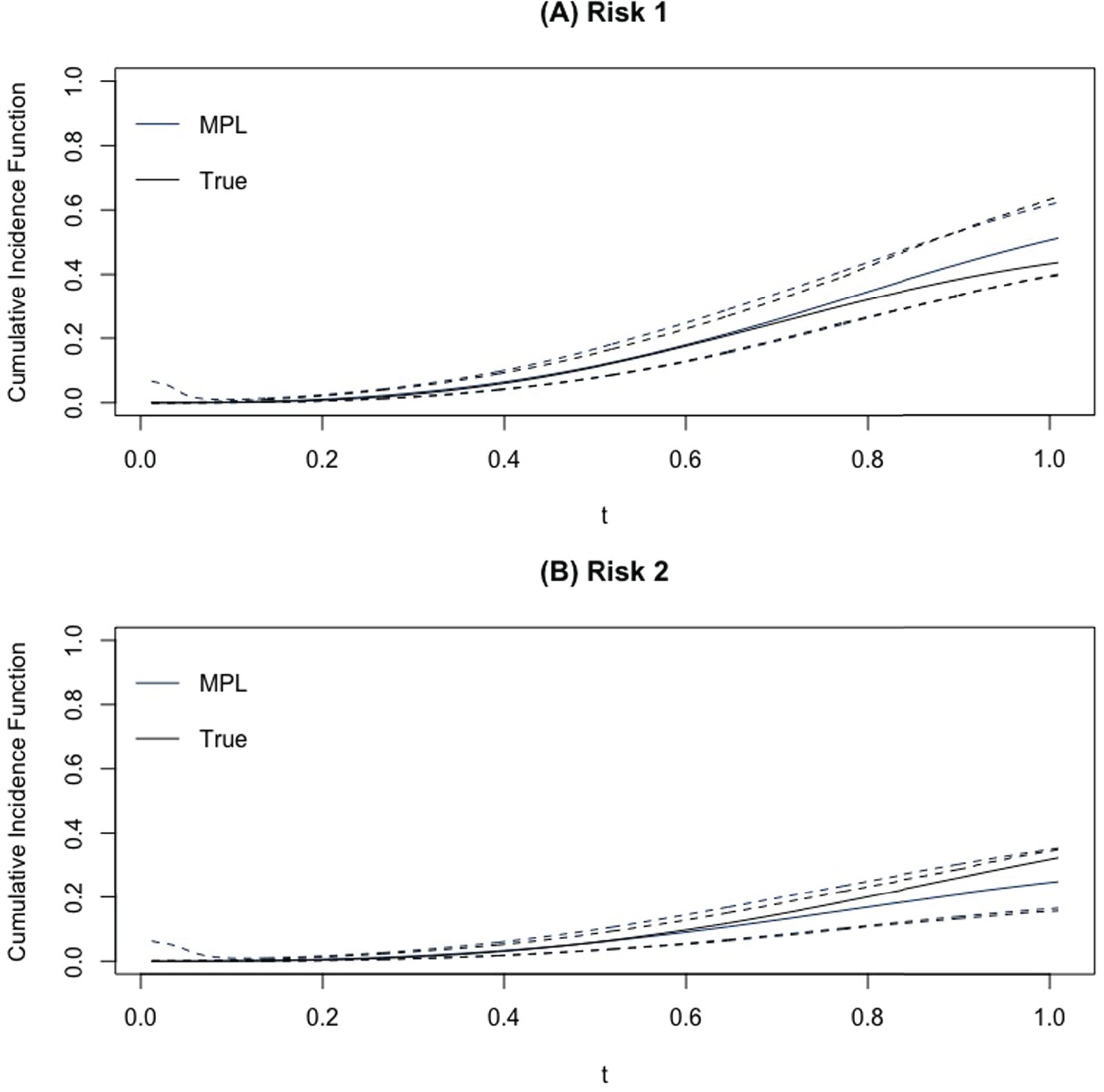
(A) and (B) The average of cumulative incidence functions (solid blue line) for 1000 Monte Carlo runs for scenario 1 with
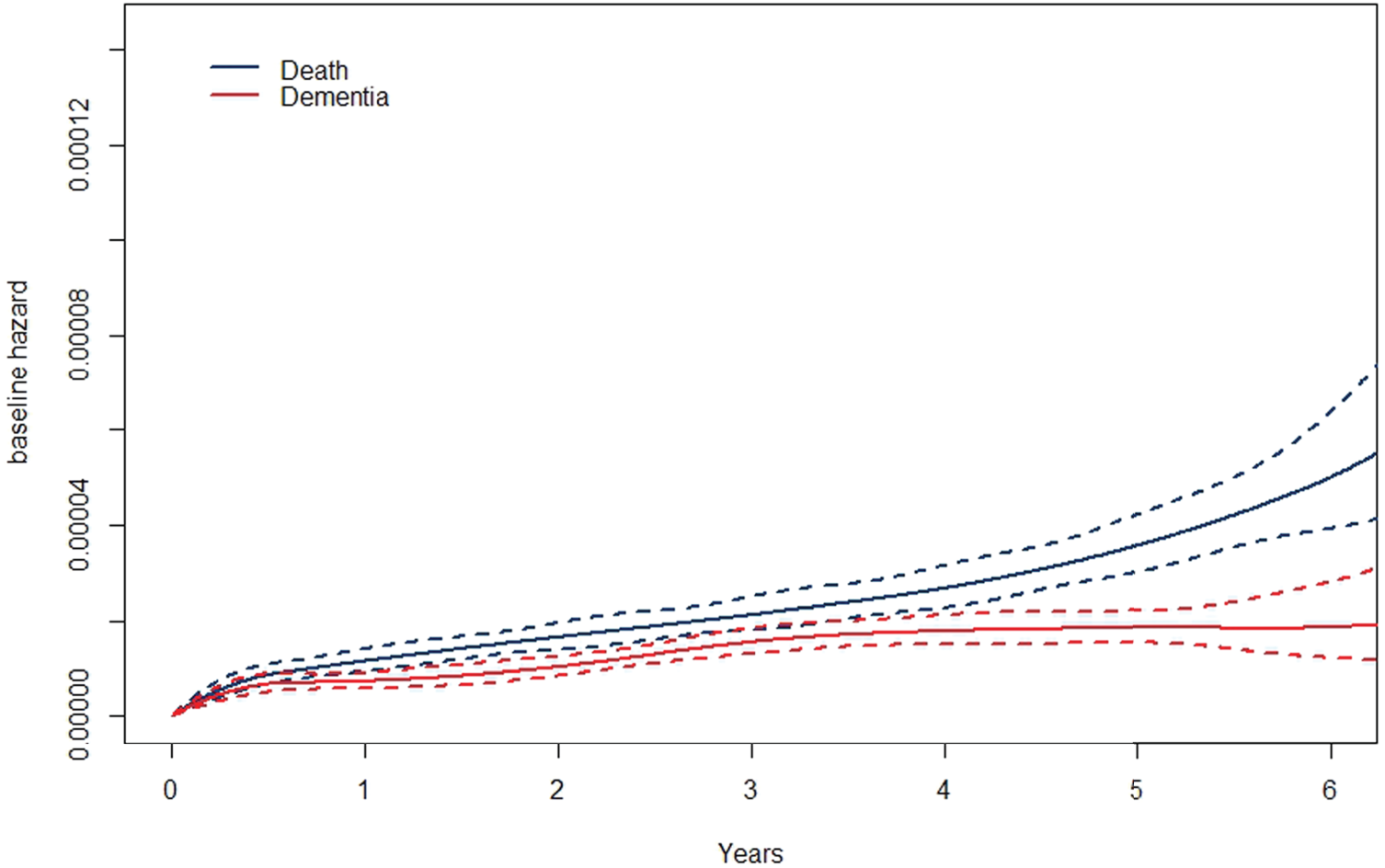
Baseline hazards for death (blue) and dementia (red) and their confidence bands based on the MPL in the ASPREE study. MPL: maximum penalized likelihood; ASPREE: Aspirin in Reducing Events in the Elderly.
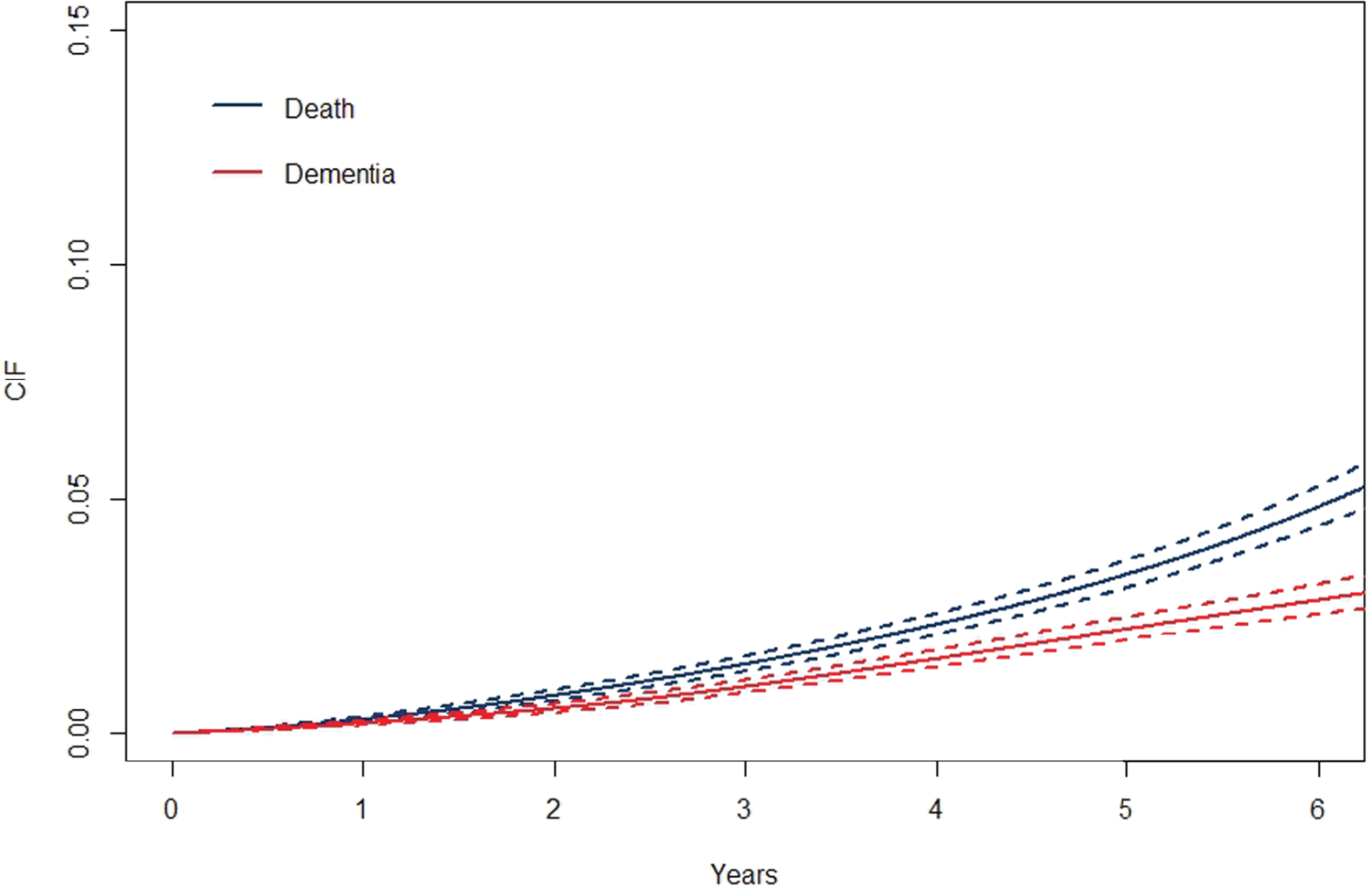
Cumulative incidence functions for death (blue) and dementia (red) and their confidence bands based on MPL in the ASPREE study. MPL: maximum penalized likelihood; ASPREE: Aspirin in Reducing Events in the Elderly.
The simulations were conducted on a 2021 MacBook Pro with an Apple M1 Pro chip and 16 GB RAM. For study 1, with approximate right censoring proportions of
This study was initiated to explore the time to dementia in elderly patients while accounting for the competing risk of death and baseline covariates such as age, gender, education level, country of birth, and living arrangements (live alone or with others). The data was sourced from the “ASPirin in Reducing Events in the Elderly” (ASPREE) trial, a clinical trial conducted in Australia and the United States to determine whether daily use of 100 mg of enteric-coated aspirin would prolong the healthy lifespan of older adults. 21 The trial included 19,114 relatively healthy older individuals, with 9525 randomized into the intervention group (aspirin) and 9589 into the control group (placebo). The participants were followed up every year for a maximum of 7 years. We selected dementia as an appropriate interval censored outcome since its diagnosis typically occurs over an extended period and in this trial was assessed every 2 years.
There were 963 (5%) deaths (event data) and 575 (3%) dementia cases (interval censored), and the remaining 17,576 (92%) were right censored. The hazard ratios estimated under both methods are largely in agreement for both outcomes. The standard errors in all parameters tend to be slightly larger for the MPL as observed in the simulation study. The p-values based on a cut-off of
MPL and Cox (midpoint t) regression parameter estimates for death and dementia in the ASPREE trial.
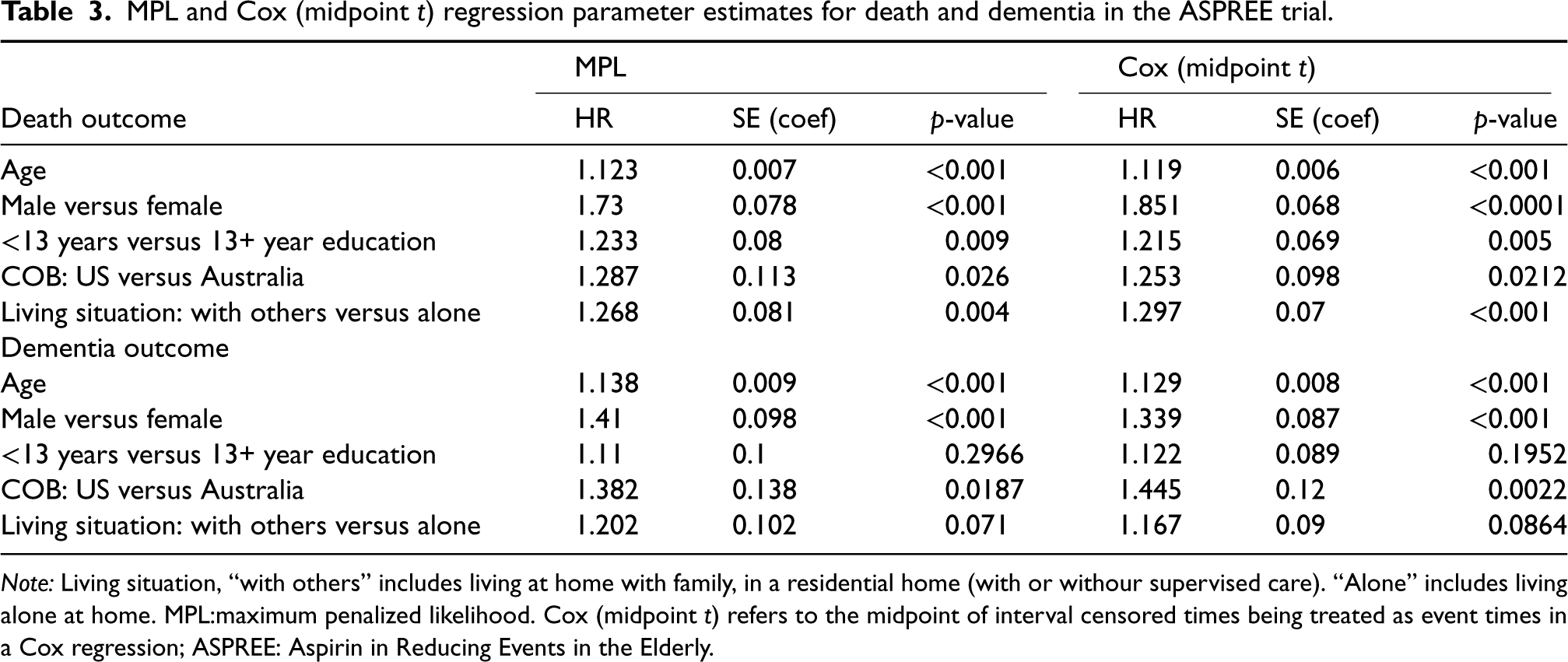
MPL and Cox (midpoint t) regression parameter estimates for death and dementia in the ASPREE trial.
Note: Living situation, “with others” includes living at home with family, in a residential home (with or withour supervised care). “Alone” includes living alone at home. MPL:maximum penalized likelihood. Cox (midpoint t) refers to the midpoint of interval censored times being treated as event times in a Cox regression; ASPREE: Aspirin in Reducing Events in the Elderly.
Figure 3 shows the baseline hazards of death and dementia. Based on this, we can see the risk of death is greater than dementia throughout the study period. Figure 4 shows the baseline cumulative incidence functions for the two outcomes. We can see that the incidence is higher in death than in dementia, however, based on their confidence bands is not significantly different. Figure 5 shows the survival curves of death (Figure 5(A)) and dementia (Figure 5(B)) by sex. In both outcomes, males’ survival curves are significantly lower than that of females.
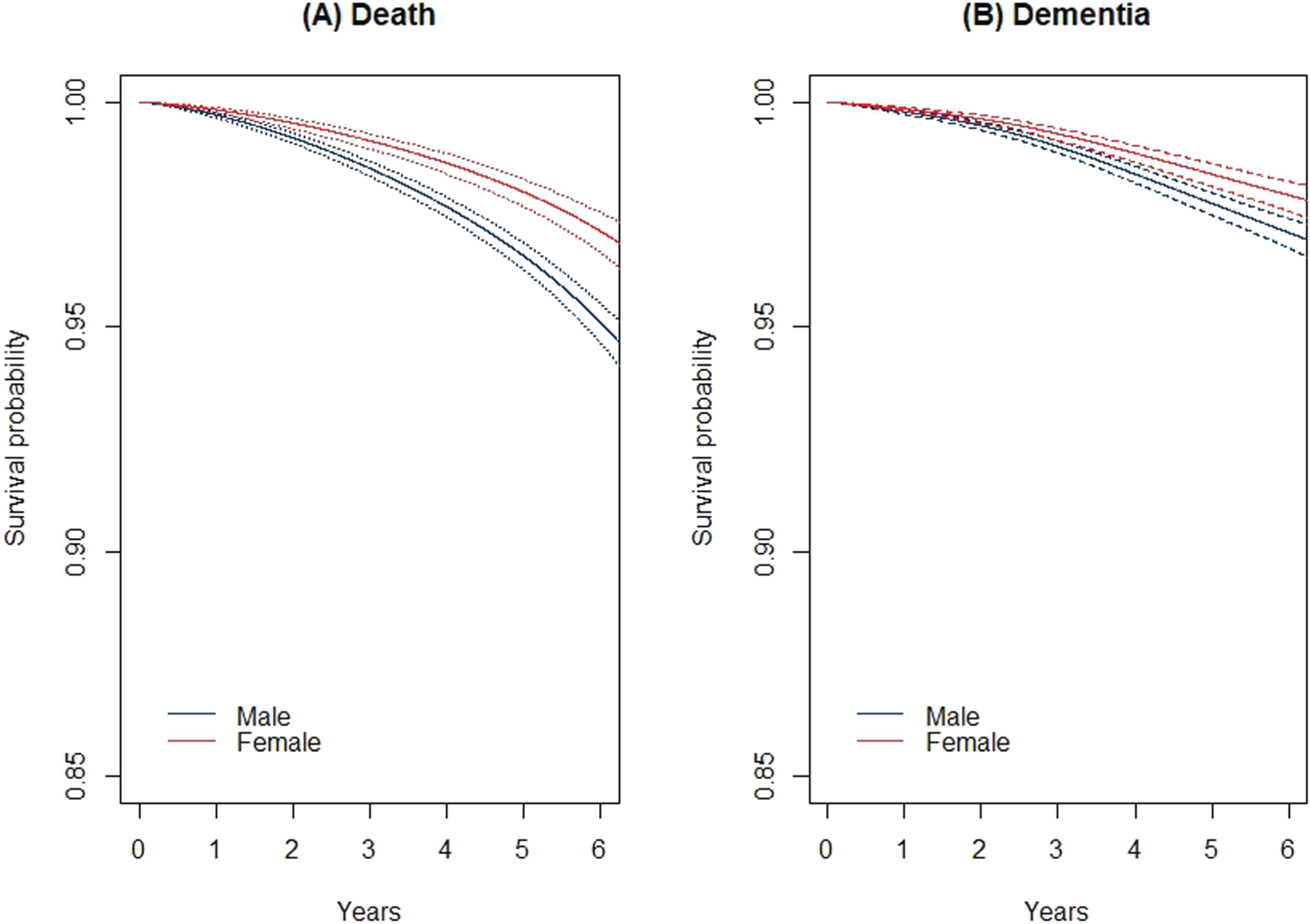
Survival curves for death (a) and dementia (b) by sex and their confidence bands based on MPL in the ASPREE study. MPL: maximum penalized likelihood; ASPREE: Aspirin in Reducing Events in the Elderly.
When compared with the method of sieves for semi-parametric models, an advantage of penalty is that it makes the optimal number of basis functions and knots less important since the smoothing parameter can correct under or over smoothing. The MPL method is implemented in R and currently available on Github at https://github.com/josephdescallar/phcshMPL.
In this article, we also develop asymptotic properties of the constrained MPL estimates. Any semi-parametric PH regression model contains a baseline hazard as the non-parametric component and regression coefficients as the parameters of interest.
For inference of semi-parametric proportional hazard (PH) regression models, one unfortunate weakness of Cox’s partial likelihood or its modifications is that they cannot provide accurate risk predictions for individuals, which can badly limit applications of PH models. For likelihood based methods, although they are able to supply accurate individual predictions as they estimate baseline hazard and regression coefficients together, asymptotic results are more difficult to derive due to possibilities of active constraints.
Supplemental Material
sj-pdf-1-smm-10.1177_09622802241262526 - Supplemental material for Cause-specific hazard Cox models with partly interval censoring – Penalized likelihood estimation using Gaussian quadrature
Supplemental material, sj-pdf-1-smm-10.1177_09622802241262526 for Cause-specific hazard Cox models with partly interval censoring – Penalized likelihood estimation using Gaussian quadrature by Joseph Descallar, Jun Ma, Houying Zhu, Stephane Heritier and Rory Wolfe in Statistical Methods in Medical Research
Footnotes
Acknowledgements
The authors thank the ASPREE study group for use of the ASPREE trial data, and Le Thi Phuong Tao for assistance with the dataset.
Data availability

Declaration of conflicting interests
The authors declared no potential conflicts of interest with respect to the research, authorship, and/or publication of this article.
Funding
The author(s) received no financial support for the research, authorship and/or publication of this article. This research received no specific grant from any funding agency in the public, commerical, or not-for-profit sectors.
Supplemental material
Supplemental material for this article is available online. Supplemental material containing the asymptotic properties and details of the Score vectors and Hessian matrices of the proposed estimators are available online.
References
Supplementary Material
Please find the following supplemental material available below.
For Open Access articles published under a Creative Commons License, all supplemental material carries the same license as the article it is associated with.
For non-Open Access articles published, all supplemental material carries a non-exclusive license, and permission requests for re-use of supplemental material or any part of supplemental material shall be sent directly to the copyright owner as specified in the copyright notice associated with the article.
