




Abstract
This essay is a personal reflection as an artist living and engaging with a derelict plant nursery and the various opportunities for artistic practice that have arisen from this post-industrial site which is being returned to nature. It uses the context of the derelict greenhouse complex, past and present, to consider seasons as polyrhythmic and how the fluid seasonalities inside and outside have affected one another and in turn influenced the production of artwork over one and a half decades. The essay draws on inspiration from the writings of the architect Richard Neutra, philosopher Vilém Flusser, the media theorist Marshall McLuhan, the artist Robert Smithson, the anthropologist Viveiros de Castro and the theorist Nathalie Loveless. Through exploring seasonality, multinaturalism and biorealism, I try to show a way forward for artistic practice to bridge the gap that is developing between society and nature.
Introduction
In August 2009, my wife and I became the owners of a plant nursery complex in Denmark and embarked on a decade-long journey of documenting its gradual decay. Over time, we witnessed the slow, entropic dissolution of the greenhouses and the complex temporalities that surfaced through this process. This essay is a personal reflection on how a site, once a space of industrial control over nature, was transformed into an open system of interactions between human and non-human agencies, revealing layers of rhythm and change that became fundamental to my artistic practice.
The act of turning off electricity, water, and heating supply for all the greenhouses marked a pivotal moment, signifying a shift from artificial control to an organic, evolving state. In this transition, what had once been a rigidly structured horticultural environment, governed by the mechanized rhythms of industrial production, became subject to the fluid, overlapping cycles of decay, renewal, and seasonal variation. The moment of disconnection set in motion a cascade of entropic processes, exposing the polyrhythmic interplay between the site's material structures and the ecological forces that reclaimed them. The demolition of the 30-meter brick chimney nearly a decade later symbolized the final collapse of its industrial identity. This transition into what I describe as ‘biorealism’, a term coined by the architect Richard Neutra (1954), frames my artistic approach to documenting the site as a living, evolving entity rather than a relic of the past. Neutra's notion of biorealism suggests a design philosophy rooted in the interplay between human and natural systems, an idea that resonates deeply with the way this project unfolded over time.
In parallel with biorealism, I also draw on the philosophical lens of multinaturalism, which challenges the dichotomy between nature and culture, instead acknowledging multiple, interwoven perspectives on reality. As the greenhouse complex decayed, the interdependencies between plant life, insects, fungi, and human intervention became ever more apparent, demonstrating how time does not flow uniformly but exists as a web of entangled temporalities. These insights shaped my understanding of how artistic practice can operate as a mode of engagement with the temporal complexities, bridging the widening gap between society and nature in an era of accelerating environmental crisis.
In addition to the concept of biorealism, I will draw on inspiration from the writings of the philosopher Vilém Flusser (2000), the artist Robert Smithson (1996), media theorist Marshall McLuhan's (1997) writings about technological environments, Viveiros de Castro's (2004) idea of ‘perspectivism’ and theorist Nathalie Loveless's (2019) concept of ‘polydisciplinamory’.
Observing the rhythms in the seasons and how they have affected and were influenced by the greenhouses on the site has allowed me to reflect on how my art practice can have a relevance to issues within society, especially in a time of climate crisis. The project in the initial phase was ten years. It is now six years into the second phase of the project (without the greenhouses) and the relatively long length of the project has allowed me to question my own relation to temporality and seasonality.
The long duration of this project has afforded me the opportunity to observe, document, and reflect on how materiality and temporality intersect in unexpected ways. By situating this work within the framework of biorealism and multinaturalism, I explore how entropy itself can act as a revealer of hidden rhythms, exposing the cycles of emergence, decomposition, and transformation that shape our environments. The greenhouse complex, in its gradual surrender to nature, became a site where time itself took on a fluid quality, dissolving distinctions between past and present, control and surrender, human and non-human agency.
This essay will unfold through a close examination of entropic processes, tracking how they have shaped my artistic practice and deepened my engagement with questions of temporality, decay and regeneration. In doing so, I aim to illuminate how artistic documentation can serve as both a reflective and a generative tool, allowing us to perceive the unseen forces at work in the world around us. Ultimately, my intent is to position this project as an inquiry into the ways in which art can function as an interface between the human and the more-than-human, offering new perspectives on how we navigate and understand our entangled existences within the shifting landscapes of the Anthropocene.
Taking over an industrial site
'Stories are bigger than ideologies, in that is our hope.’
Donna Haraway, The Companion Species Manifesto, pg. 17
This is a personal story intended to illuminate how a post-industrial site can be transformed. Through reflections on time and temporality and their impact on my practice, I hope to provide novel perspectives on the evolving relationship between society and nature. Surveying the buildings (See Figure 1) in the first weeks after moving in, I became acutely aware of the various work processes that had once sustained this so-called ‘controlled horticultural environment.’ Initially abandoned and marked by the remnants of labour and industry, the site offered a complex canvas that resonated with themes of transition, decay, renewal, and coexistence. Over a decade, I engaged with this space not just as an observer but as an active participant in its transformation, a space suspended between its industrial past and its potential for natural and human integration.
The property lies within an area associated with nurseries for over a century, yet this type of horticultural industry is waning. Rising fuel prices, stagnating produce costs, and global capitalist shifts have rendered such small-scale operations increasingly unsustainable. Large, automated greenhouses now dominate, requiring far less human labour. The site thus embodies my own interests and circumstances, but it also gestures toward a broader, more universal inquiry into the reconciliation of human industry and the natural world. The architecture and design were conceived to maximize plant production with minimal staff resources. Every inch of space was utilized, and an elaborate system of huge rolling tables enabled access to all the plants within the vast greenhouses. These tables were ingeniously assembled using off-the-shelf components: concrete drainage pipes as support pillars, steel piping for the rolling mechanism, and large plastic tables framed with aluminium. Long concrete paths connected all the spaces, from the greenhouses to the potting room with its soil-covered automated plant-potting machine, to the canteen, packing room, and loading bays. Large trolleys transported plants, and an intricate watering system delivered water through thousands of plastic pipes, sourced from the main public supply, a groundwater well, and a massive rainwater reservoir.
The process of adapting the complex into artist studios began right away, as I needed space to store and develop work for upcoming exhibitions. The setup was curiously compatible with the needs of a studio: spacious buildings of various sizes and heights, each with fluid accessibility. The transformation from industrial utility to creative habitat deepened the scope of my practice. The old packing house, canteen, and heating building were not just relics of productivity but spaces ripe for reimagination. Converting them into studios was an act of preservation and repurposing, fostering artistic creation within the framework of the old. Many of the tools and materials found a second life: plastic sheeting for packing artworks, plant pots for mixing paints, extension cables and lighting for new works. Smashed-up concrete pipes filled an unwanted pond, metal transport trolleys became moveable walls, and a large stainless-steel packing table proved ideal for my etching workshop.
Each building carried its own atmosphere and echoes, shaping the art produced within. The building we called the ‘soil room,’ once home to an enormous potting machine, became a space for large-scale installations using found materials. The staff canteen, with its intimate proportions, evolved into a music studio where local community members rehearsed and performed. Workshops with children, discussions with curators, and collaborations with international artists animated the space. In occupying this site and witnessing its oscillation between ‘natural’ and ‘cultural’ states, I became attuned to the multiple temporalities that surfaced in these transitions. These shifts revealed how historic temporalities of work, economic activity, and material presence were folded into the ‘timescape’ (Adam, 1990), leaving residual traces that continued on slow, almost imperceptible arcs.
Historic temporalities made visible through memories and entropy
As DeSilvey and Edensor (2013) suggest in their work on ruination, entropy can be seen not simply as a process of loss but as one of transformation and revelation. Throughout my early explorations of the greenhouse complex, I sensed the lingering presence of those who had worked and lived here. Abandoned, rusting machines were slowly being reclaimed by the forest; attics were stuffed with obsolete tools and forgotten materials; thirty years’ worth of accounts lay gathering dust. The past was not merely a memory but a material presence, inscribed into the very fabric of the place.
One morning, while working in the packing house studio, I heard a noise from the road outside.
Stepping out, I encountered a man in his early sixties taking photographs of the house. Over a two-hour conversation in Danish, he revealed his deep personal connection to the site.
He had spent his early childhood living in half of the house, sharing a bedroom with his brother, the same bedroom my sons now slept in. As we walked the property, he described a past both distant and familiar: before indoor plumbing, hot showers were taken in the greenhouses, where a coal-fired furnace heated the complex. Coal was delivered by lorry and removed as ash through an underground network of rail carts, pulleys, and chutes. Before and during the Second World War, bananas and tobacco had been cultivated here, adding another temporal layer to the site's history.
A few weeks later, a retired scrap merchant provided yet another perspective. As a teenager, he had helped construct the greenhouses and had worked as a backup stoker, tending the coal furnace through the night. His recollections painted a picture of the seasonal rhythms that governed life at the plant nursery: fuel deliveries in winter, fertilization in spring, spraying in summer. Each cycle was shaped by the materials and energy sources available at the time.
DeSilvey and Edensor (2013), in their analysis of industrial ruins, speak of ‘the potency of decayed matter’ and how its transformation disrupts linear narratives of progress. As I dismantled the greenhouses, I became acutely aware of entropy at work, the slow unmaking of a site, its shift from order to disorder, from industry to scattered remnants. The act of breaking apart plastic tables, removing cement pipes, and handling sheets of glass had to be done methodically to prevent chaos from overtaking the process. Entropy here was not merely decay but a revelation, exposing underlying rhythms of accumulation, dispersal, and reinvention (See Figure 2).
Robert Smithson's seminal ‘A Tour of the Monuments of Passaic, New Jersey’ (1996) became a touchstone in my reflections. His exploration of entropy, the way structures transition from stability to dissolution, offered a framework for understanding the complex temporalities at play. As he noted, in a society that increasingly sees everything as an image, even ruins become reimagined. In documenting the greenhouse complex, I found myself engaging in a similar process: capturing how entropy not only dismantles but also reveals hidden rhythms of place and memory.
Documenting and representing the process of ruination itself
At the core of my practice at the time was the meticulous documentation of the greenhouses through photography and video. This process was more than archival; it was a meditation on time and memory, capturing the shifting interplay of light, shadow, and the encroachment of nature reclaiming space. It was at least partly about apprehending and making visible the temporalities that took effect in the decaying greenhouses, and its long-arc process of entropy. The greenhouses became increasingly ruinous and were then finally demolished. I documented the process of ruination itself, observing as glass ceilings shattered (mainly due to the weight of the snow in the winter) and steel frames became entwined with vines, weeds and trees, their rigid forms softened by mosses and wildflowers that wove themselves into the structure. This documentation became a narrative of resilience and symbiosis, emphasizing the persistent dialogue between human-made structures and the natural world.
In his book Towards a Philosophy of Photography, Vilém Flusser (2000) argues that: “Apparatuses were invented in order to function automatically, in other words independent of future human involvement. This is the intention with which they were created, the notion of the photographer as a ‘passive’ interloper in the photographic experience, secondary to what is made possible by the technology at hand. The machine controls the processes, and even though the photographer makes a choice in relation to how the photograph is taken and processed, he or she is secondary to an outcome predetermined by the existing technologies.” Pg. 73.
I used this idea in my work in through allowing the context of the production of the lens-based imagery to dictate and control the process. The post-industrial site became an extension of the apparatus of the camera in that its architecture and structure define how I engage with it as a subject through photography and video. In 2015 I installed and then relocated automatic time lapse cameras in the greenhouses and in 2016, I began to interpret Flusser's idea of the apparatus even more directly through using the vast archive that I had built up since 2009 as a reference in composing the next works. I set up semi-permanent tripods throughout the site and began re-enacting photographs and videos as exactly as possible to create a type of ‘control’ and to incorporate my archive into the apparatus as well.
In one half of the site, I made no interventions other than regularly going for walks and documenting the spaces. These spaces were the most entropic in the complex as they allowed natural agents to influence the process of decay and didn’t involve me orchestrating or influencing them. In the other half I made deliberate changes, removing large tables, structural elements, and the glass. In areas I completely removed the structures and trees began to grow there. So, in one half of my industrial complex, I was examining time as a concept and process, where I attempted to use re-enactment and repetition as a way of engaging with the entropy without disrupting it physically. Whilst in the other half I removed as much of the architectural elements as possible and documented the same passage of time but here I was more directly implicated in the apparatus of change. Some rhythms and processes of change (temporalities) were associated with decay and became most visible on the entropic half. Other temporalities, of new tree growth for example, became more visible in the cleared half. One aspect, which became increasingly apparent, was the relationship to seasonal temporalities. Through the photographs and videos, I was looking into the encounters between different seasons occurring inside the greenhouse and outside, exploring how they clashed or synced, and how animals and plants adapted to these sometimes-contradictory environments and the seasons of nature regenerating in unexpected ways.
To represent and share the process of entropy and decay, and the temporal rhythms entangled with this process, my point of departure was that it is impossible to fully relay the real experience of space via a two-dimensional representation of the space, whether still or moving. In planning an artistic installation to represent entropy, I therefore decided to augment the sensation of the photographic and video works with a three-dimensional spatial construction echoing the spaces represented whilst making it clear that it was not an attempt to replicate the spaces in a gallery environment (See Figure 3).
The artwork resulting from this project has been exhibited as installations of photographs of the nursery interior displayed on lightboxes made from recycled light components that were once used in the greenhouses to help plant growth. The photographs, taken over a period of many years, depict details of the place in a state of abandonment. We see signs of the changing seasons and the slow takeover of weeds. We also see subtle signs of human interference. The photographs represent these different and overlapping rhythms of change. The light-box photographs have been presented on a large, modular, wooden display structure with an accompanying series of video-monitor works on the surrounding walls. The structure functions architecturally in its own right, extending in three directions across the exhibition space and referencing ideas of transparency and modularity that was common to the architectural modernism of the mid-twentieth century. I aimed to address multiple temporalities through the presentation of the artefacts from the nursery as apparatus for displaying documentation of the greenhouses’ decay over a 10-year period. This could be termed ‘multi-dimensionality’, and I plan to develop this further in connecting future installations of the artwork with real-time site-related temporalities such as temperature and sunlight and allowing these factors to determine the choice of sequencing of image and sound in non-linear film works.
The tension between site, documentation, and gallery presentation has long been central to the discourse of Land Art, a movement that emerged in the late 1960s and 1970s. Artists such as Robert Smithson, Nancy Holt, and Michael Heizer worked directly in remote or industrial landscapes, producing large-scale interventions that often resisted traditional modes of exhibition. As these works were frequently ephemeral, inaccessible, or subject to environmental degradation, documentation, particularly through photography and film, became both a necessary surrogate and an artistic medium in its own right. This created a conceptual disjunction: the gallery became a site for viewing traces of actions that took place elsewhere, at another time, raising questions about presence, mediation, and the authority of the archive. In this context, documentation is never neutral; it is a constructed experience, often shaped as much by technological apparatuses and curatorial framing as by the site itself. The act of documenting a post-industrial greenhouse site over time becomes both an aesthetic practice and a philosophical investigation (See Figure 4). My artwork did not attempt to recreate the original site within the gallery but instead acknowledges the limitations and possibilities of mediation, using installation to reflect the layered, nonlinear temporalities embedded in the landscape's slow transformation.
Fluid seasonality, the phenological/seasonal cycles of interior and exterior
Whilst documenting the seasonal changes over the 10-year period of the project, I became increasingly aware of the natural events in the life cycles of plants, animals, and ecosystems. These phenological cycles, (which include the recurring phases in an organism's life, like flowering, leafing, breeding, migration, and hibernation), were influenced by the relationship between the interior and exterior of the greenhouses (Cleland et al., 2007; Schwartz, 2013). The cycles are directly influenced by environmental cues, especially temperature, day-length, and rainfall (Parmesan and Yohe, 2003). For example, I was able to observe first-hand how the increase in temperature in the interior affected the flora and fauna and subsequently influenced the outside. The variegated site, a hybrid of industrial complex and regenerating ecosystem, made visible the heterogeneity of seasonality in different locations across the complex. Phenological cycles are also important indicators of environmental health and have become particularly significant in studying climate change, as shifts in these cycles (e.g., plants flowering earlier or birds migrating at different times) can reveal the impacts of warming temperatures and shifting weather patterns (Berkes, 2012; Flusser, 2000).
Seasons, the cyclical changes in weather and climate that occur throughout the year, have been a fundamental aspect of human life for millennia. They influence our activities, cultures, and traditions, and shape our relationship with the natural world. While most people in the Northern Hemisphere are familiar with the traditional four-season cycle, nature's rhythm is far more complex, embodying what can be described as “polyrhythmic seasonality” (Ingold, 2000; Latour, 1993). Unlike the simplistic division of the year into four seasons, polyrhythmic seasonality acknowledges the concurrent and overlapping cycles that govern aspects like climate, ecology, and celestial events (Descola, 2013; Merchant, 1980). These overlapping rhythms can vary in duration, intensity, and impact, creating a rich tapestry of seasonal experiences. Across different cultures and regions, people have developed their own unique ways of understanding and adapting to polyrhythmic seasonality. Indigenous communities, for example, often have finely tuned knowledge systems that incorporate celestial events, (Cajete, 2000; Kimmerer, 2013) change by being more attentive to polyrhythmic temporalities, we could increase a sense of environmental entropy and stewardship (Tsing, 2015).
There is much evidence of historic and contemporary societies that adhere to a framework of seasons as polyrhythmic, rather than blocked off into four seasons. Some Native American tribes have six seasons and others have two, three, or four (Aveni, 2001). Sometimes they were aligned with the cycle of life: baby, youth, adult, elder. They often used legends to explain the seasons (Koch, 2006). At the core of polyrhythmic seasonality is the astronomical rhythm, the Earth's orbit around the sun. This primary rhythm is the basis for the traditional four-season environmental indicators, and animal behaviours to navigate the complexities of seasonal model, with the solstices and equinoxes marking significant transitions in the year (Moore, 2014).
However, this celestial rhythm is not alone. One of the most well-known overlapping rhythms is the lunar cycle, which affects tides, animal behaviour, and even human physiology (Plummer et al., 2016). The interplay of lunar phases and the solar year creates unique combinations of light and gravitational influences, influencing the behaviour of various organisms and, consequently, our perception of different seasons (Vidler, 1992). The atmosphere, influenced by both solar and lunar cycles, exhibits its own set of rhythms. Jet streams, high and low-pressure systems, and monsoon patterns create intricate and often unpredictable weather rhythms (Picon, 2010). These atmospheric rhythms can dramatically affect the onset, intensity, and duration of seasons, contributing to the polyrhythmic nature of seasonal change (Lefebvre, 2004).
Viveiros de Castro (2014), a renowned Brazilian anthropologist, introduces the concept of “perspectivism.” Rooted in his studies of Amerindian cosmologies, perspectivism posits those different beings, (e.g., humans, animals, spirits) perceive reality from their own perspectives, challenging the Western notion of a single, objective reality, and suggesting instead that reality is inherently multiple and contingent on perspective. In his recent work, de Castro has deepened the implications of perspectivism, arguing that it offers a way to rethink the relationship between nature and culture. Perspectivism blurs the boundaries between these domains, as it presents a world where humans and non-humans are seen as part of a continuous, relational field rather than as discrete entities. This has profound implications for anthropology, as it calls for a more nuanced understanding of human-environment interactions and a rejection of dualisms. This extends to de Castro's work conceptualising “multinaturalism,” as a contrast to Western notions of multiculturalism. While multiculturalism acknowledges the coexistence of multiple cultural perspectives within a single nature, multinaturalism recognizes the existence of multiple natures as perceived by different cultures. Rather than reinforcing a rigid nature–culture divide, this concept invites a re-examination of how such categories are constructed and mobilized across different epistemologies. While anthropological literature, particularly in ecological and relational approaches such as those of Ingold, has done much to challenge the nature-culture dichotomy, multinaturalism brings further nuance to these debates by foregrounding ontological plurality.
Polyrhythmic seasonality as a concept extends to ecological systems and ties into this idea of “multinaturalism.” Indeed, as I observed the seasonal temporalities that flowed relative to the process of entropy I documented in a complex variegated site, multinaturalism was a concept that helped me make sense of what I saw. Polyrhythmic seasonality weaves together the natural rhythms of the environment, the cyclical patterns of time, and the cultural rhythms of human societies. It draws from the idea of polyrhythm in music (where multiple, often contrasting, rhythms coexist and interact), extending this concept to patterns found in natural and human activity. Flora and fauna respond to a multitude of environmental cues, including day length, temperature, precipitation, and food availability. These cues vary in frequency and intensity, resulting in complex seasonal behaviours best described as polyrhythmic. The Earth itself is a living system of interlocking cycles; solar cycles, lunar cycles, tidal patterns, and the annual rotation around the sun, which gives rise to the seasons. Each of these cycles operates at its own frequency, yet they interact in complex ways.
My understanding of the term “polyrhythmic seasonality” originates in ecological theory and anthropology, particularly in the work of scholars such as Tim Ingold (2000) and in the rhythmanalysis of Henri Lefebvre (2004). It refers to the overlapping, asynchronous rhythms of seasonal change experienced by different species and systems within the same environment. Rather than a linear or uniform cycle, it emphasizes the coexistence of diverse, sometimes conflicting temporalities. Building on this, “multi-dimensional seasonality” expands the idea to include not only natural rhythms but also those shaped by human intervention, architectural form, technological mediation, and long-term processes such as ruination or regeneration. In this sense, multi-dimensional seasonality encompasses polyrhythmic seasonality but also accounts for the layered, constructed ways in which seasonal time is experienced, documented, and represented.
In recognising the polyrhythmic seasonal (and other) rhythms untangling and re-entangling through entropy in the greenhouse, I saw how this perspective engenders a particular take on environmental stewardship. And this shaped by artistic practice, to take care of the temporalities that had ‘wildly’ found their way into my greenhouses. Nathalie Loveless's concept of polydisciplinamory was well fitted to this purpose, as it refers to an approach in academia and artistic practice that embraces the integration and collaboration across multiple disciplines with a spirit of openness and affection. It promotes a relational and inclusive way of thinking that fosters creative, unexpected connections and values the complex interplay of varied methodologies. Loveless argues that this approach cultivates innovation, empathy, and holistic understanding, which supports practices that are responsive to contemporary social and ecological challenges through collaborative synergy. I was inspired by her book How to Make Art at the End of the World: A Manifesto for Research-Creation, (2019) towards the end of the project with the greenhouses and realised I was already enacting her concept of care practice on the site and in the project. Her care practice emphasizes the integration of care as a fundamental, transformative element within artistic, academic, and activist work. It recognizes care not only as an interpersonal ethic but as a collective, political act that underpins sustainable practices and relationships.
Whilst documenting the greenhouse complex, I became increasingly aware of how subtle distortions of seasonality were occurring. Within the greenhouse interior, spring buds burst earlier than outside due to the accumulation of solar heat trapped by the glass, creating a warmer, more stable environment. This early start extended to flowering and fruiting stages, as the warmer air expedited these processes compared to plants outside. By contrast, autumn leaf fall within the greenhouses could be delayed due to the retained warmth that extended growing conditions, presenting a desynchronization between the interior and exterior plant cycles. This staggered timing highlighted the sensitivity of phenological events to subtle shifts in temperature and shelter.
The greenhouse environment also played a significant role in the life cycles of animals. Birds, for instance, took advantage of the semi-enclosed spaces for nesting, with some species laying eggs earlier inside due to the premature warmth. The structures provided a protected environment for fledglings, though they needed to navigate the glass and metal framework. Insects responded similarly, with many emerging in response to the interior's warmer temperatures earlier than those outside. This artificial advance in timing could lead to mismatches in the availability of food resources and pollination opportunities, impacting both plant and animal life. As temperatures inside fluctuated with broken panels and natural encroachment over time, the boundaries between the interior and exterior phenologies began to blur. This interplay fostered a liminal space where both natural and altered conditions coexisted, allowing for a unique study of resilience, adaptation, and the micro-ecologies that arose when my interventions intersected with the processes.
An example of the desynchronization between the interior and exterior plant cycles is visible in a photograph of an apple tree (see Figure 5). One could be quick to assume that the photograph was taken in late August when apples normally ripen in Denmark. But this photograph was taken in July, and due to the apple tree breaking into the greenhouse the apples artificially ripened. The same could be said of other photographs where either the plants blossoming, or the weather conditions give us clues to the seasonal moment but due to changes in the architecture and or local climatic anomalies the representation becomes distorted. Photography is a representation of space and time and in this way has become a dominant factor in representations of seasonality. But photography has since its inception, like other media before it (painting especially), pointed to clearly defined representations of seasonality whilst one could argue that, given the extreme climactic events we have recently been experiencing, contemporary seasonality is becoming more and more entropic.
The recent development in advanced AI image technologies will likely enhance existing biases exponentially and thus continue the trend of representing seasonality in very fixed ways.
While AI-generated imagery holds the potential to simulate complex seasonal environments, it often relies on large datasets trained on historically normative or idealised visual representations of seasons, for example, stock photographs of blossom-filled spring landscapes, autumnal foliage, or snow-laden winter scenes. Such images are widely used in commercial, design, and aesthetic contexts rather than scientific ones, and their outputs risk reinforcing a static and homogenised visual culture that overlooks the increasing instability and regional variability of contemporary climate conditions. As scholars such as Joanna Zylinska (2019) and Crawford (2021) have pointed out, AI systems do not operate in neutral ways but are embedded within sociotechnical and aesthetic frameworks shaped by human intent and institutional power. The concern, then, is not that AI inevitably distorts reality, but that, (without critical intervention), it may perpetuate visually codified forms of seasonality that no longer correspond to lived or ecological realities.
Richard Mosse's satellite-based works on the Amazon rainforest in his artwork Broken Spectre (2022), exemplify this ambivalence. They circulate as aesthetic objects in exhibitions and biennials worldwide and as commodities in public and private collections. At the same time, they can be mobilised by climate activists and scientists as powerful visual evidence of deforestation and ecological destruction. Yet the very same imagery could also be appropriated by corporations to monitor terrain and plan further extractive activities. His practice highlights how visual technologies never remain fixed in meaning but instead move across contexts with different (and often opposing) agendas. In my own practice, I aim to draw attention to a similar rupture, where temporal and climatic instability manifests visibly in the landscape, such as in the premature ripening of apples. The challenge is to develop more fluid and responsive modes of representation that embrace uncertainty rather than suppress it. I find it more productive to move towards the entropic and increasingly unpredictable polyrhythmic seasonality we now find ourselves in. How can one care for temporal patterns undergoing change if we continue to represent them statically, at a fixed point in the past.
Nurturing a polyrhythmic relation between nature and society through artistic practice
Since the Enlightenment and then the Industrial Revolution, humankind has attempted to distance itself from nature by aestheticizing, analysing, and categorizing it (Descola, 2013; Latour, 1993). The human–nature dualism, a product of Enlightenment thought, has been identified as a key factor in the ecological crisis, leading to the catastrophic consequences we are now witnessing extreme climatic events that do not necessarily threaten nature as such but threaten human existence on this planet (Morton, 2013; Plumwood, 1993).
Acknowledging polyrhythmic seasonality and “multinaturalism” enriches our understanding of the natural world (Ingold, 2000; Viveiros de Castro, 2014). These concepts underscore the intricate interplay of diverse rhythms and cycles that govern the ebb and flow of life on Earth. By embracing this complexity, we can better appreciate the diversity of nature and the interplay of the seasons, each influenced by a unique blend of astronomical, lunar, atmospheric, and ecological rhythms (Kohn, 2013).
Human societies have long been attuned to these natural rhythms, adapting their cultural practices to the cycles of the natural world. Agricultural societies, for example, organize their calendars around the seasons, with planting and harvesting activities aligned with the rhythms of rainfall and temperature (Mazoyer and Roudart, 2006). Festivals and rituals are often timed to coincide with seasonal milestones, such as the winter solstice or the spring equinox, reflecting a deep cultural connection to the cycles of nature (Eliade, 1959). However, within human culture, there are also polyrhythms that arise from social, economic, and technological factors. These rhythms may not always align with natural cycles (Adam, 1990). For example, the rhythms of industrial society, governed by the clock and the calendar, often clash with natural rhythms (Thrift, 2008). The rigid schedules of work and school, designed for efficiency and productivity, create a dissonance with the slower, more fluid rhythms of the natural world (Crary, 2013). This dissonance is a form of polyrhythmic tension, where the artificial rhythms of human activity are superimposed on the natural rhythms of the environment. In contemporary society, this tension is exacerbated by the globalized economy, where different regions of the world operate on different schedules and rhythms (Harvey, 1989). The 24-h news cycle, the stock market's opening and closing bells, and the constant connectivity enabled by technology create a complex web of overlapping rhythms that can be both synchronizing and destabilizing (Rosa, 2013).
This interplay of temporalities became central to my practice, embodied most vividly in the final days of the greenhouse project. The last series of video pieces captured the demolition as an act of metamorphosis rather than destruction. This moment signified both an end and a beginning, as the skeletal frames were taken down, and the space, now open to the sky, began its conversion into a forest. Now, as trees have taken root where cement paths once led workers through their daily routines, the project continues in a quieter, more subtle way. The forest grows, nourished by the soil that has absorbed decades of stories, and the human touch fades back into the earth. My work, etched into that space through images, video, and physical interventions, remains as a testament to the cycles of life, resilience, and the dialogue between human and non-human worlds. The project has not just been an observation of a place but a deep, personal reflection on how art can engage with the slow, persistent work of nature reclaiming its own. This led me to rethink our relationship to architecturally designed spaces that we could otherwise design spaces in ways that reflected and synchronised with processes of entropy and decay, and the temporalities entangled with this. It led me to biorealism.
Biorealism in my artistic practice
The Modernist architect Richard Neutra (See Figure 6) coined the term “biorealism” in his groundbreaking treatise, Survival Through Design (1954). His philosophy was intended to inscribe “the inherent and inseparable relationship between man and nature.” Neutra joined the Greek word bios, meaning life, and realism as he believed that architecture took its cue from how humans behave and evolve, and his imperative that art and architecture must address the senses. Neutra, who was a prominent figure in the 1940s, −50 s and −60 s in modern architecture, recognized the profound connection between architecture and the natural environment, aiming to create structures that coexist harmoniously with nature. Many architects at the time were primarily concerned with the aesthetics and functionality of buildings.
Neutra's concept of biorealism not only transformed the architectural landscape but also serves as a timeless inspiration for sustainable design and environmental consciousness. It emphasized an architectural philosophy deeply connected to the rhythms and needs of human life, as well as the natural environment. His designs sought harmony between built spaces and their ecological contexts, ensuring that occupants would feel an intrinsic connection to their surroundings. This approach aligns seamlessly with the idea of ‘polyrhythmic seasonality’, which involves recognizing the varied, overlapping cycles within an environment, such as shifts in light, temperature, plant life, and animal activity. This integrated view champions adaptability and acknowledged that our environments are composed of multiple, coexisting rhythms that shape and influence human experience. Through biorealism, Neutra's buildings not only exist within nature but respond dynamically to its polyrhythmic tempo, creating spaces that resonate with the continuous interplay of seasonal variations.
Neutra's concept of biorealism has been a useful prism for me to view my painting agenda and artwork in general. I seek to reveal an empathetic emotional character in my artworks that emerges from the subject matter such as buildings themselves, their settings, the woods, trees, and other subjects. These approaches can be traced back to the ancient wisdom of indigenous cultures (as discussed earlier in this text), traditional ecological knowledge in indigenous contexts maintained a balance in ecosystems which are increasingly at risk of destabilisation. In ‘Secret Knowledge’, David Hockney (2006) argues that the evolution of realism in Western art has been deeply intertwined with technological advancements, particularly in the emergence of photorealism in the 1960s and 1970s and later in hyperrealism, where artists pushed the boundaries of illusionism using photography as a foundational reference. This dialogue between technology and realism resonates with my own practice, when I draw on Neutra's concept of bio-realism to explore the connection between humans and their use of optical devices such as the camera obscura and camera lucida. He suggests that many Old Masters employed these tools to achieve heightened realism, a practice that finds parallels environment. Neutra's architectural philosophy emphasized a seamless integration of built spaces with nature, a principle I translate into painting by merging natural forms with architectural structures, creating immersive compositions that reflect our deep entanglement with the world around us. Through this lens, my work extends the discourse on realism beyond mere visual accuracy, embedding it within a broader ecological and phenomenological experience.
Historically, the question of permeability in modernist architecture has been approached with starkly different ambitions, from Le Corbusier's controlled purism, where glass and concrete regulate the inside-outside threshold, to Theo van Doesburg's more experimental openness to spatial flow and chromatic dynamism. My work aligns more closely with the latter, exploring not only visual transparency but also the psychological and ecological permeability of built environments. My paintings resonate with this lineage while also confronting the Anthropocene condition, where architectural boundaries are no longer stable but are increasingly subject to environmental forces. What interests me is not only how these structures perform permeability in a design sense but how, over time, they reveal unintended vulnerabilities, how light, weather, time, and decay reassert agency. By situating my paintings alongside these failed or altered architectures, I am proposing an aesthetic that acknowledges entropy as part of the formal language, and that treats ecological transformation as co-author rather than threat.
Sustainability was a central theme of Neutra's work. He understood the importance of minimizing a building's environmental impact. By using passive design strategies and incorporating renewable materials, he ensured that his structures were not only functional but also eco-friendly (See Figure 7). Neutra's biorealism was a visionary approach to architecture that sought to harmonize the built environment with the natural world. His emphasis on biology, functionality, and sustainability laid the foundation for a more ecologically conscious and people-centred approach to design. It was many of these attributes of Modernist architectural practice that drew me to the style in the first place. But I also recognise the pitfalls of striving towards a utopian modernist ideal without having a checking mechanism to make sure that the ideal adapts empathetically to the contexts and situations it encounters.
Marshall McLuhan suggested that art could be that checking mechanism in his essay “The Relation of Environment to Anti-Environment” (1997). He explained that every new technological environment needed to be critiqued from multiple angles from a position of distance and he argues that art and culture in general, (given it is not easily instrumentalised by nature) could fulfil such a role in society. My own interpretation of biorealism is about connecting to other human beings through the artwork and allowing people to see the world through a more empathetic and critically reflective lens. Recent scholarship into TEK (Traditional Ecological Knowledge) or ILK (Indigenous Local Knowledge) could provide a way to create a counter environment in which to critically evaluate the developments of new technological environments.
Scholar and author Daniel Wildcat's (2009) writing focuses on indigenous environmentalism, climate resilience, and the significance of traditional knowledge in addressing contemporary ecological crises. In works such as ‘Red Alert! Saving the Planet with Indigenous Knowledge’, Wildcat advocates for Indigenous perspectives on ecology and sustainability, emphasizing the interconnectedness of human, ecological, and cultural systems. His writing challenges readers to adopt an “Indigenuity” approach, combining Indigenous ingenuity with practical strategies for sustainable living and environmental stewardship. Wildcat's writing often critiques Western, technocratic approaches to climate issues, arguing that these approaches overlook cultural and spiritual dimensions vital to sustainable solutions. Instead, he champions place-based knowledge, relationality, and respect for biodiversity. Wildcat's prose is accessible and persuasive, making a case for integrating Indigenous wisdom into global environmental practices and policy. His work has had a significant impact on fields like environmental studies, Indigenous studies, and policy advocacy, as he highlights the role of Indigenous knowledge in creating resilient, adaptable, and sustainable futures.
Indigenous scholar and educator Gregory Cajete (2000) centres on Indigenous knowledge systems, ecology, education, and spirituality in his writing. His works explore Native science, which he presents as a holistic approach to understanding the world that integrates traditional ecological knowledge, spirituality, art, and a deep relationship with nature. In ‘Native Science: Natural Laws of Interdependence’, Cajete articulates the principles of Indigenous science as distinct from Western scientific methods, emphasizing interconnectedness, respect for all living beings, and an embodied, experiential form of learning. Cajete also advocates for culturally responsive education that honours Indigenous ways of knowing and learning. In ‘Look to the Mountain: An Ecology of Indigenous Education’, he discusses education as a relational practice that nurtures identity, community, and ecological awareness. His work is influential in Indigenous education and environmental studies, as he promotes a worldview that seeks harmony with natural systems and offers alternative ways to address environmental and social challenges.
Conclusion: Towards a reinterpretation of biorealism
Inspired by Robert Smithson's ideas around entropy in art, I am attempting in an improvised and intuitive way to amalgamate an ecological care practice into a methodological art practice where the social, cultural, and natural can coexist in a state of flux. A type of anarchic garden of the mind and of reality where, at the end, all that is left is some random remnants of a forgotten industry disappearing into a forest of trees and weeds. I can use my artwork in different ways as a reflective tool to harness the best parts of human creativity to find ways forward for life on this planet, hopefully in some small way allowing people to be inspired by the connections that the artworks map. It has become increasingly evident that the arrival of the Anthropocene and all that it entails with global warming and climate change, does not necessarily spell doom for nature or the earth but presents the biggest challenge so far for the survival of humankind. I see a role for art to probe architecture, design, and planning, to re-evaluate the past, and to begin to construct and re-imagine a possible future and to coin Richard Neutra's term to chart ‘a survival through design’.
Now, as trees and wildflowers have taken root where cement paths once led workers through their daily routines, the project continues in a quieter, more subtle way. This new phase is marked not by human intervention but by the organic, unhurried processes of nature, an evolution that underscores the essence of resilience. What was once a site of relentless industrial productivity has become a canvas for the slow choreography of seasons, the subtle rise of saplings, and the steady return of ecosystems. The forest grows, nourished by soil that has absorbed decades of stories: whispered conversations of labourers, the clatter of machines, and the rustle of wind through shattered glass panes. In this transition, the human touch recedes into memory, surrendering space to the whispers of leaves and the flutter of wings. My work, etched into that space through images, video, and physical interventions, lingers as an artifact of this dialogue. Photographs and films document not just the physical remnants of the greenhouses but the passage of time, how ivy overcame steel, how sunlight filtered through cracked panes at different angles as the years wore on, and how silence gradually replaced the sounds of industry. The act of documentation became a form of listening, a way to hear the site's own stories as they unfolded. These visual records now serve as testaments to the cycles of life and renewal, capturing moments when nature breached the grid-like order of the industrial, claiming its space with quiet tenacity. Physical interventions, installations made from salvaged glass and rusted frames, remain in the various studios. Remnants of some of the concrete paths are weathered and transformed by the elements. Aluminium, concrete and steel sculptures are located around the site.
These pieces were not meant to last unchanged; they were created as part of the landscape's metamorphosis. Over time, what began as stark human impositions have become almost seamless in their decay, melding into the undergrowth, their presence a subtle trace of coexistence rather than domination. Moss and grass carpet the surfaces where once my hands placed glass fragments, and vines have entwined sculptures as though to soften their edges, merging art and nature in a shared narrative of growth and erosion. The project has transcended its initial goal of observing and recording the space; it has become a deep, personal meditation on what it means for art to act as a participant in, rather than a mere commentator on, the environment. It is a reflection on the humility required to witness and honour the slow, persistent work of nature reclaiming what was disrupted. This act of witnessing acknowledges that change does not always come in sweeping gestures but in the quiet accumulation of small transformations, the seed that takes root in a forgotten crack, the bird that builds its nest in the rusted hollow of a former machine, the fungi that consume the wood of old packing crates. A parallel sensibility can be found in the work of MUF Architecture/Art and their proposal for Beckton Alp in East London, an artificial spoil heap left behind by a former gasworks site. Rather than impose a definitive sculptural or architectural statement upon the land, MUF proposed a process of bioremediation, allowing natural and social processes to guide the site's future transformation. Their intervention sought to frame decay and contamination not as problems to be erased, but as conditions to be worked with, acknowledging the slow, uneven rhythms of ecological recovery. In this context, the role of art and design was redefined as one of stewardship, curation, and sensitivity to existing systems. The Alp, once a toxic relic of industrial production, was to become a living terrain of possibility, shaped by wind, seeds, weather, and human access. Like my own site-based practice, MUF's project articulates a vision of art that participates in landscape as a collaborative, time-bound act, resisting monumentality in favour of a slow choreography between human presence, environmental agency, and material change.
As the forest thickens, a new narrative unfolds, one where human activity is just a chapter in the greater story of the land. The artwork, no longer just an imprint of past human activity, speaks to an ongoing relationship between people and place, one that is fluid and responsive. It asks questions: What does it mean for an artist to step back, to create spaces where nature completes the piece? How does one navigate the boundary between intervention and surrender?
These reflections extend beyond the project itself, touching on broader questions of sustainability, stewardship, and the legacies we leave behind in the landscapes we inhabit. The once-ordered greenhouses now exist only in memory and image, the site transformed into a sanctuary for new life. The human hand, once dominant and insistent, has relinquished its grasp, allowing the unpredictable, wild reclamation to take centre stage. This is where the true meaning of the project lies: not in the art that was created, but in the space that was opened for nature to reclaim. It is in the acceptance that art can be transient, that it can hold space for something greater than itself. This project could be seen to be a testament to that openness, to witnessing, respecting, and ultimately, collaborating with the powerful patience of the natural world of which humankind is a small part.
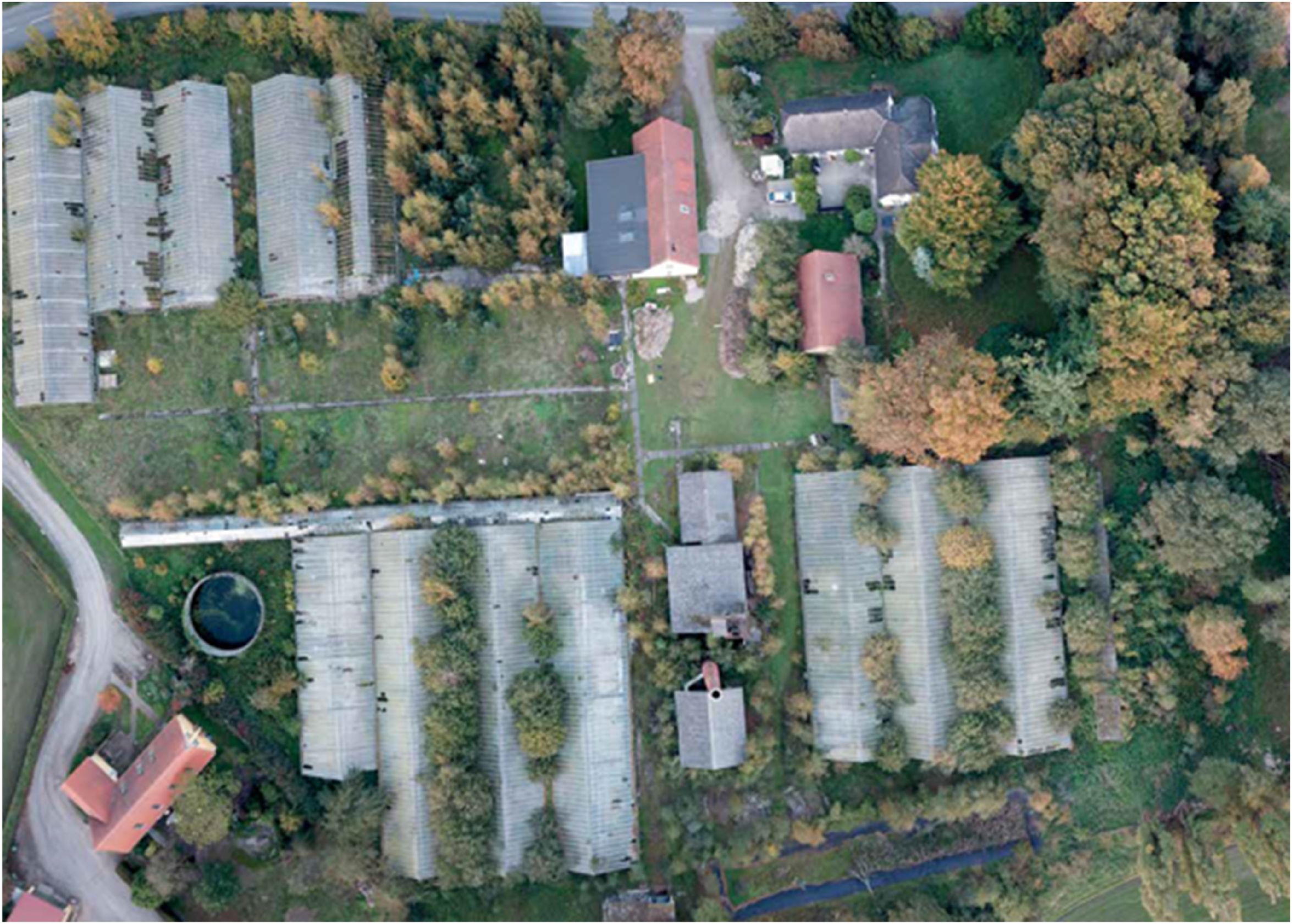
View of the complex from above: Greenhouse archive, 2009–2019.
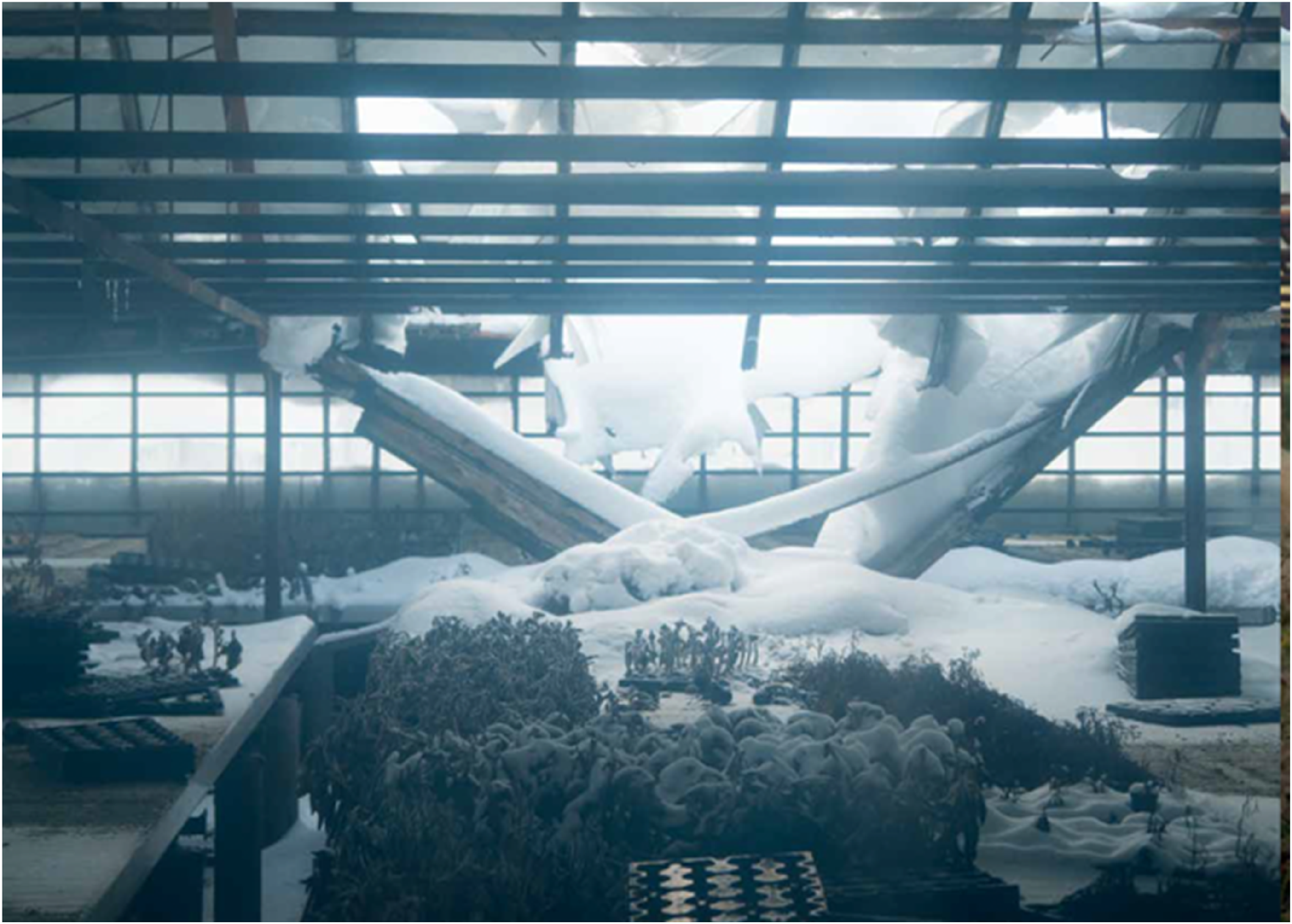
Snowstorm 1: Greenhouse archive, Eamon O'Kane 2009–2019.
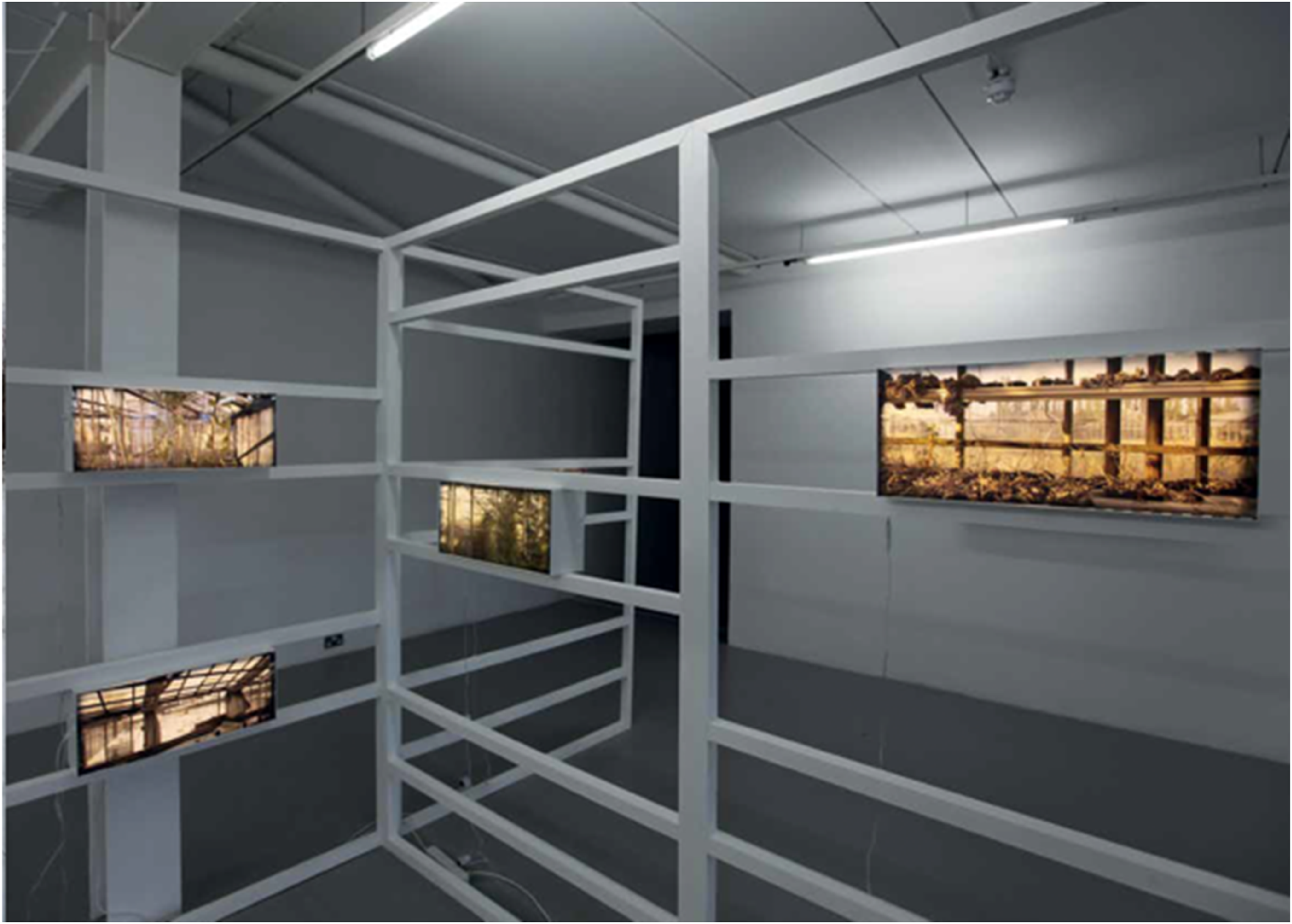
Eamon O'Kane, Where there are people there are things, installation view, CCA, Derry, N. Ireland, 2014.
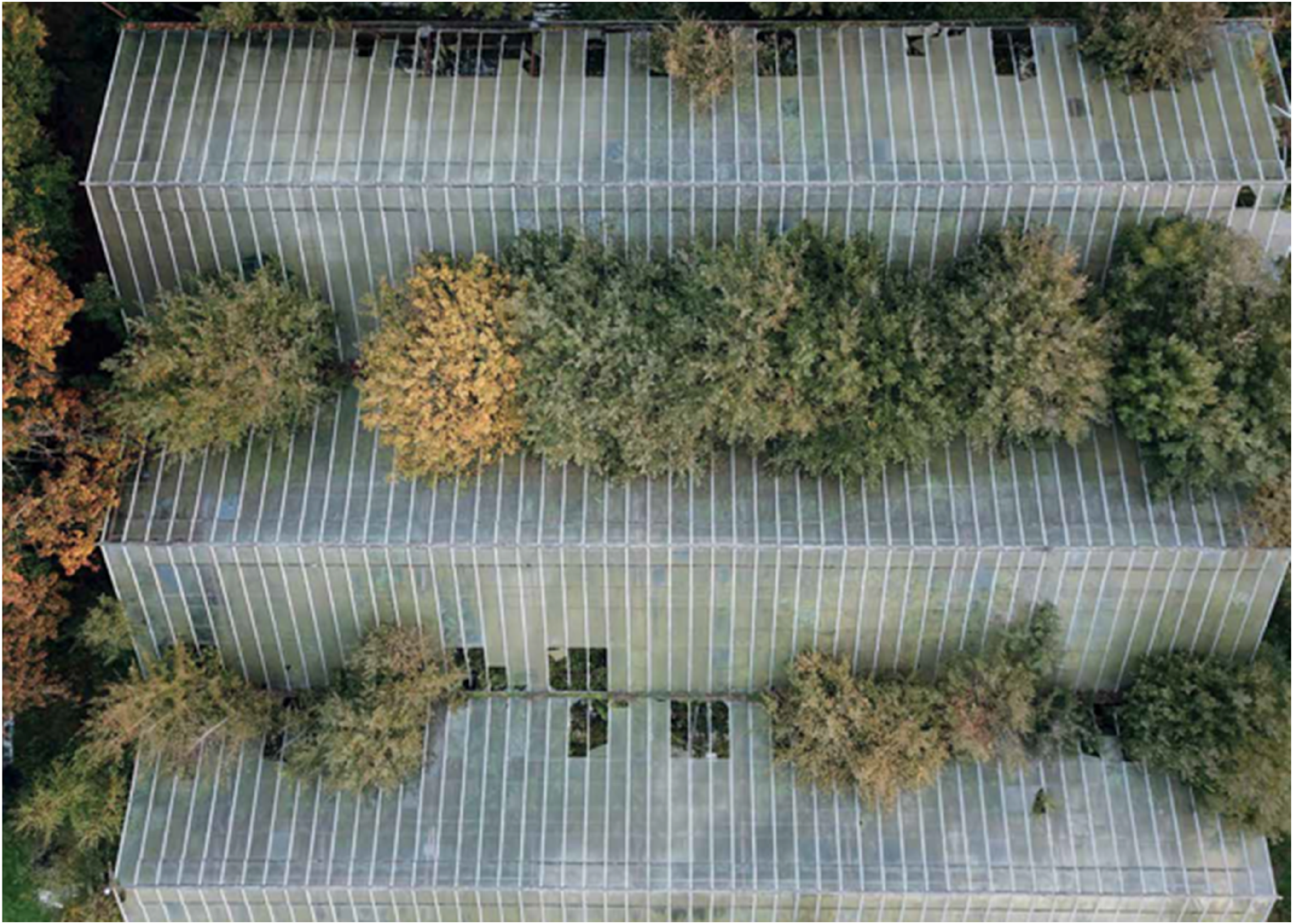
Trees from above 1: Greenhouse archive, Eamon O'Kane 2009–2019.
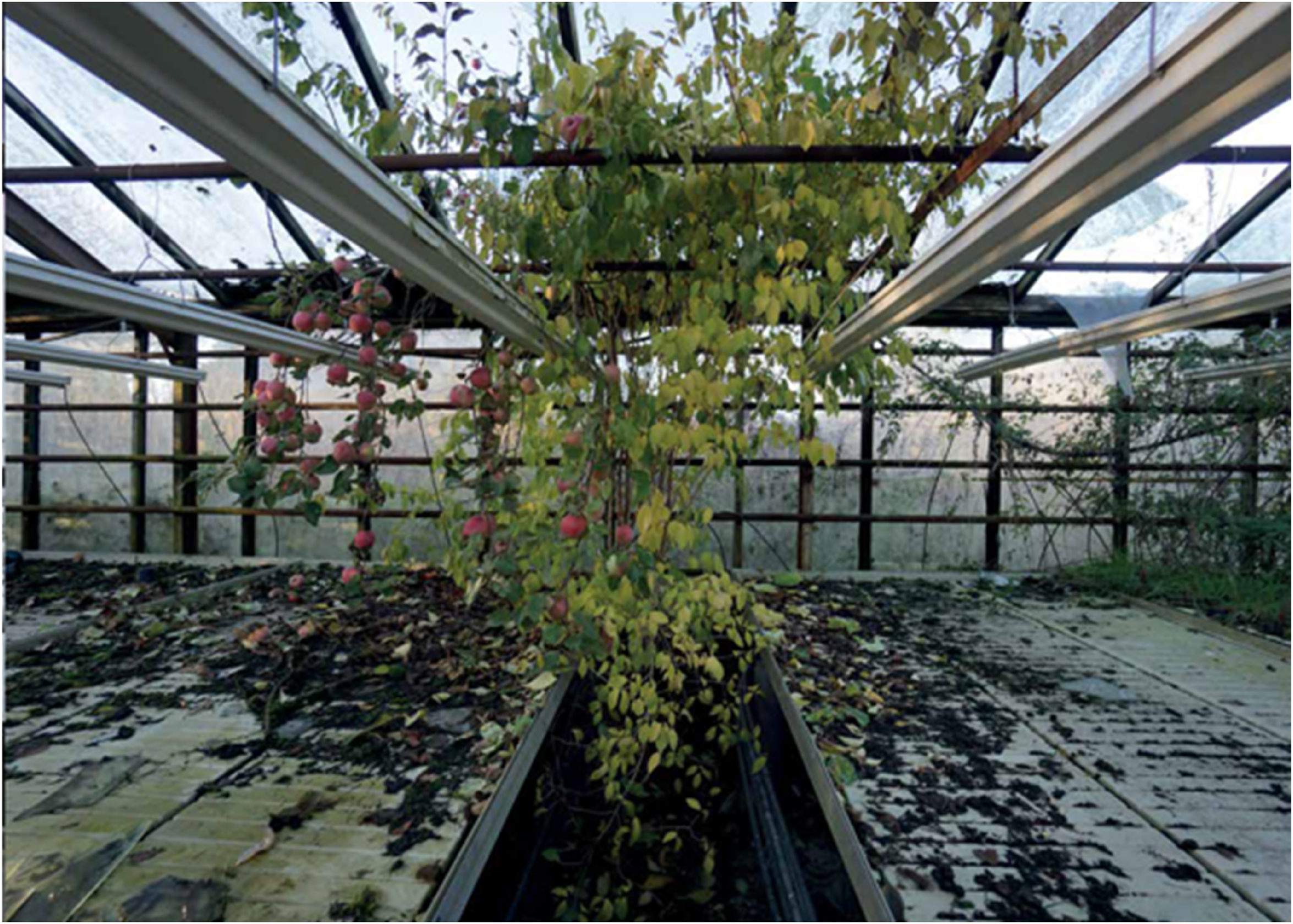
Greenhouse archive, 2009–2019.
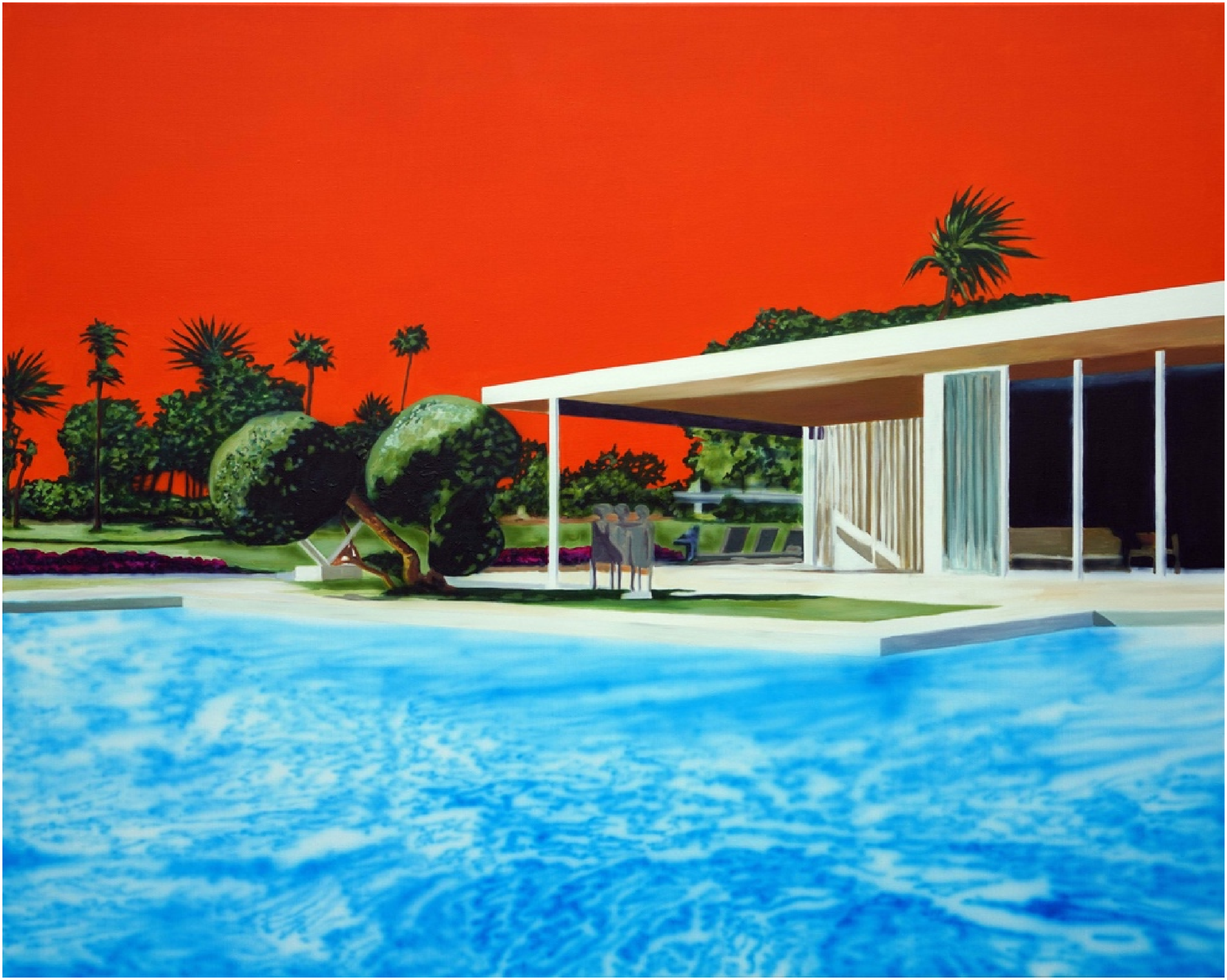
Neutra Malson house with swimming pool, Palm Springs, Eamon O'Kane 2022, acrylic on canvas, 120 × 150 cm.
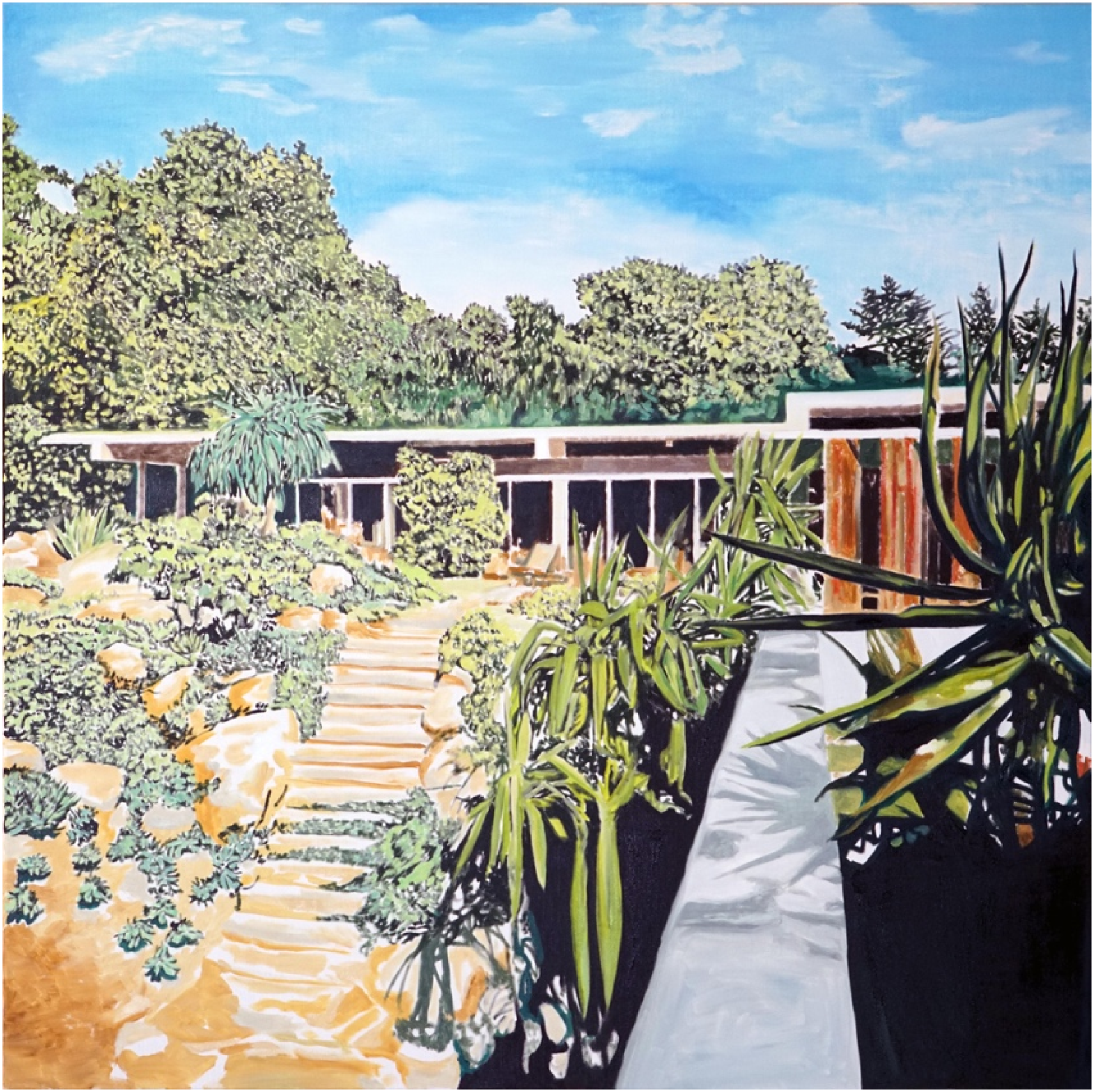
Neutra Garden Eamon O'Kane 2021, oil on canvas, 120 × 120 cm.
Footnotes
Acknowledgements
I would like to acknowledge the contribution of Anja Musiat, Emil O’Kane, Marianne O’Kane Boal and Joanna O’Kane who have supported the development of the project and provided valuable feedback in the writing of this text. Thanks also to the CALENDARS project research team for their feedback on this research. Particularly Scott Bremer who so generously gave his time and insights.

Funding
The author discloses receipt of the following financial support for the research, authorship, and publication of this article: This work was supported by strategic funding from KMD, UiB Bergen and the CALENDARS project funded by the European Research Council (ERC) under the European Union's Horizon 2020 research and innovation program [Grant agreement 804150].
Declaration of conflicting interests
The author declared no potential conflicts of interest with respect to the research, authorship, and/or publication of this article.