



Abstract
The Public Libraries Act (1850) marked a turning point in British history, establishing public libraries as we recognise them today. Since its inception, public libraries have remained at the heart of communities, persevering through numerous challenges to meet the diverse needs of their users. To mark the 175th anniversary of the Act, this systematic literature review was commissioned with the aim to compile recent research which demonstrates the value and impact of public libraries in the United Kingdom, whilst also identifying characteristics and deficiencies within the current research landscape. A core search string was developed, translated and applied to six databases, in addition to four sources of grey literature to capture non-academic publications. Analysis of the resulting literature highlighted the prevalence of qualitative, grey literature which centred mostly on the experiences of public libraries in densely-populated areas of England. Overall, six key themes were identified which illustrate the value and impact of public libraries in the UK. Four of these themes aligned with the Universal Library Offers designed by Libraries Connected (Culture and Creativity, Health and Wellbeing, Information and Digital, Books and Reading), whilst two separate themes emerged concerning Economic Value and Impact as well as Library Space and Place. The review findings show that public libraries play a vital role within their communities by providing free access to collections, technology, training and trustworthy information which fosters lifelong learning, entrepreneurship, cultural engagement and active citizenship. Alongside meeting the emotional and social needs of their users, public libraries offer multifunctional hubs which contribute to social justice and economic development, emphasising their continued relevance and resilience. This review manages to capture recent evidence which accurately represents the enduring value and impact of public libraries in the UK, and maps the current research landscape in order to inform future study.
Keywords
Introduction
The end of the 19th century saw the introduction of the first Public Libraries Act (1850, 13 & 14 Vict. c. 65) in Great Britain. This liberal-driven, socio-political initiative gave local boroughs the power to develop free libraries for the public, establishing public libraries as we know them now. The current legislation across England and Wales, The Public Libraries and Museums Act (1964), embodies the same core principle of making information accessible for everyone (English Heritage, 2016; McKenna-Aspell, 2023). However, as any user of modern public libraries knows, they have evolved. Information provision has grown to include over 15 million academic articles (Gryphon, 2016) as well as patent searching and market research through Business and Information Centres (Cowley, 2015; DCMS, 2015h). Service provision has also expanded to include creative workshops (DCMS, 2016o) and support for physical health and wellbeing (DCMS, 2021; De Brún, 2020), to name a few.
Yet, moving with the times has presented many challenges, some of which continue to this day. The public sector has suffered from restructuring and slashed budgets, leading to reduced opening hours and the threat of closure (Casselden et al., 2019; Coates, 2021; Fletcher, 2019). This austerity has, in turn, negatively impacted the mental health of staff, who not only see the effects on the communities they serve, but operate under a constant paranoia about how future spending reductions will affect their libraries and their jobs (Hitchen and Julia, 2019). Arguments have also been put forward that changing public expectations and poorly-focussed community service provision have contributed to a loss of popular interest in public libraries (Coates, 2021; Fletcher, 2019). This is potentially supported by a fall in the percentage of the population borrowing a book from 18.1% in 2011/12 to 8.8% in 2021/22, and the decrease in annual library visits from 282 million to 115 million in the same time period (Coates, 2021).
We must also consider the ever-lasting effects of the COVID-19 pandemic which, at the time, shut library doors overnight and necessitated the adaptation of services in response to unprecedented challenges. Staff faced difficulties with service provision, not being able to communicate effectively with patrons and being forced to constantly shift guidelines whilst being frustrated that they could not always reach those affected most (Robinson et al., 2023). In the face of such adversity, libraries were able to provide click-and-collect, home delivery, wellness checks and a whole range of alternative services showing the flexibility and care of library staff (Reid and Mesjar, 2023). These changing tides over the last decade have shown that public libraries must stay true to their traditional values whilst remaining forward-thinking and innovative to ensure their survival for generations to come (Massis, 2015).
Although library advocates criticise the lack of explicit government recognition for the valuable role of public libraries (CILIP, 2024), they nevertheless have opportunities to align themselves closely with government policies, and could have an even greater impact if better incorporated into a wider political strategy (Local Government Association, 2024). Public libraries contribute directly to Labour’s current mission-driven manifesto (Labour, 2024), with particular support for economic growth through education, knowledge and information. They also underpin the Department for Education’s aim in ‘giving every child the best start in life’ (Department for Education, 2025a) as well as the upcoming National Year of Reading (Department for Education, 2025b). With the correct support and recognition, public libraries and their dedicated workforce provide essential services which allow individuals and communities to flourish.
In celebration of the 175th anniversary of the Public Libraries Act (1850, 13 & 14 Vict. c. 65), this systematic literature review was commissioned as a collaborative study between Oxford and Cambridge University libraries, with support from the Chartered Institute of Library and Information Professionals (CILIP) and Libraries Connected. The overall aim was to build a larger evidence base for local and national Government, as well as the wider library sector, which champions the role of public libraries and demonstrates value and impact over the last 10 years, in spite of the challenges they are facing. As such, the research question and some of its parameters were predetermined to establish: What recent research has been done to assess the value and impact of public libraries in the UK?
To answer this question, the following three research objectives were set:
To conduct a systematic literature review presenting research published within the past 10 years that documents the value and impact of public libraries in the UK.
To highlight key areas in which public libraries offer value and impact within communities across the UK.
To identify research gaps and suggest recommendations that will improve the scope of research into public libraries in the UK.
Overall, this research will build and expand upon the Independent Library Report for England carried out by the Department for Culture, Media and Sport in 2014, which set the expectation for how public libraries ought to change in the following 10 years in order to meet evolving user needs and stay relevant (DCMS, 2014). The resulting Libraries Taskforce set out priorities and objectives (DCMS, 2015a, 2015l, 2016o), including the four Universal Library Offers of Culture and Creativity, Health and Wellbeing, Information and Digital, and Books and Reading (Libraries Connected, no date). This systematic review will provide an overview of the work that has been undertaken in the past 10 years which demonstrates how public libraries provide value and impact to their communities, particularly in regards to the four Universal Library Offers (Libraries Connected, no date).
Methodology
Search string
This systematic review was guided by information provided in the Cochrane Handbook for Systematic Reviews of Interventions (Higgins et al., 2024). After defining the scope of this review, a core search strategy was designed to capture existing literature that could help answer the research question. It was therefore necessary to consider the different search terms and synonyms that could be included. For example, whilst ‘public libraries’ can be difficult to define, in legal terms they are funded, and either run or commissioned, by local government with various organisational approaches adopted to fulfil the statutory duties laid out for local authorities by the Public Libraries and Museums Act (1964; DCMS, 2018b; Woodhouse and Zayed, 2021). Terms such as community, local, rural, council or county libraries were therefore included to identify literature that referred to any library that could be classified as a public library (DCMS, 2018b). The search strings for each database, which used a combination of terms similar to, or adapted from, the core search string below, have not been used previously and can be found in Supplemental Materials 1 to ensure reproducibility.
(“public librar*” OR “community librar*” OR “local librar*” OR “rural librar*” OR “council librar*” OR “county librar*”) AND (impact OR opinion* OR value OR inspir* OR outreach OR engage* OR influen* OR importan* OR benefit* OR advantage* OR significan* OR outcome* OR contribut* OR effective* OR efficiency OR skill* OR aware* OR opportunit* OR challenge* OR train* OR learn* OR literac* OR develop*) AND (“United Kingdom” OR UK OR Brit* OR Scot* OR Wales OR Ireland OR England)
Databases
Following initial pilot searches to determine the accessibility and viability of potential databases, the Library Science Database and Dissertations & Theses Global Database on ProQuest, as well as Scopus, the Web of Science Core Collection, Education Resources Information Centre (ERIC) and Library, Information Science & Technology Abstracts (LISTA) were selected and searched on their respective platforms. Emerald was excluded during the pilot search due to limited paper availability, duplication of content and low relevance to the research question. In addition, grey literature sources relevant to the scope of this research were searched systematically, including Libraries Connected, Arts Council England, Local Government Association and the Department for Culture, Media and Sport (DCMS). Each of these databases were searched separately in April 2025, by a team of librarians from across the Universities of Oxford and Cambridge, and the findings have been reported according to the search extension for Preferred Reporting Items for Systematic Reviews and MetaAnalyses (PRISMA) guidelines (Page et al., 2021; Figure 1).
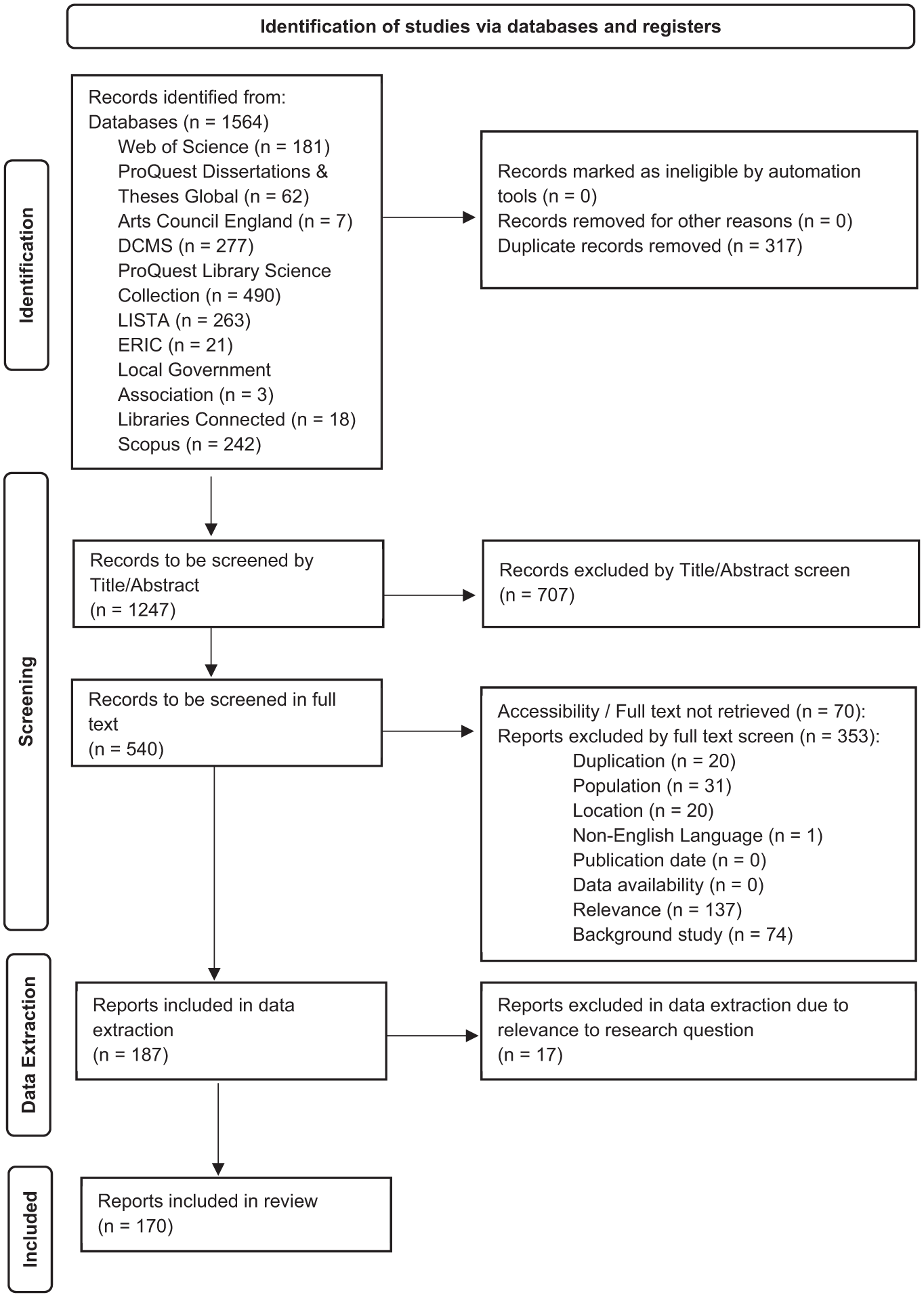
PRISMA flowchart summarising systematic review process and results.
Inclusion and exclusion criteria
Search filters for the last 10 years (1st January 2014–1st April 2025) were applied because the focus of this review was to identify literature dated from 2014 onwards following the commission of the Independent Library Report for England by the UK Government, which highlighted the importance of public libraries to local communities at the time (DCMS, 2014). This review seeks to examine the recent evidence published since the commission of this government report. Any subsequent limits were applied thereafter using the following inclusion and exclusion criteria (Table 1).
The exclusion criteria used during screening.
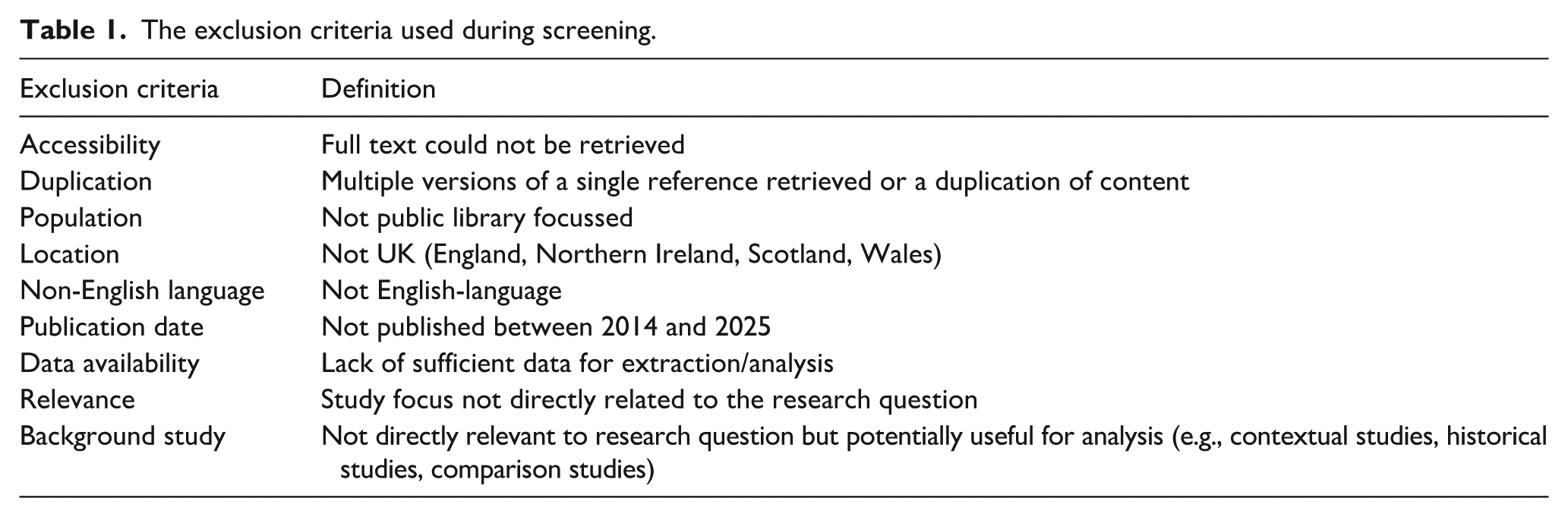
There were no restrictions on publication type as the intention was to broaden the scope of this search beyond literature published solely in academic journals, as shown by the inclusion of multiple grey literature sources (Table 1). Furthermore, due to the established scope of this review, only literature concerning public libraries in the United Kingdom and written in English language were considered (Table 1).
Screening and data extraction
Before screening, all records were exported from each database as RIS files and uploaded to the review-management platform, Rayyan. The total number of records for each database search has been reported (Figure 1). The deduplication function in Rayyan was used to identify and exclude duplicate records prior to title and abstract screening. The remaining records were screened by two authors independently from one another using the inclusion and exclusion criteria in order to minimise risk of bias (Table 1). A consensus was reached for any records where the eligibility for full-text screening was in question. The number of records following deduplication, title and abstract screening in the first instance, and then full-text screening have also been reported (Figure 1). The data extraction and synthesis phase involved the collation and summarisation of the key findings, by two authors independently, as well as details pertaining to each of the 187 records (Figure 1) identified during full-text screening. The following information was collated: publication type, location of study population, aim, methodology (qualitative, quantitative or mixed methods), mode of data collection and key findings. Whether the record concerned one or more of the Universal Offers was also recorded, so a thematic analysis could be conducted. During the data extraction phase, a further 17 records were excluded because, on reflection, these records did not help to answer the research question.
Results & discussion
Overview of the included studies
Following screening and initial data extraction, 170 publications were selected for inclusion in this review (Supplementary Materials 2). By analysing the metadata of these studies, an overview of the research landscape is provided.
Publication year
Since 2014, the majority of literature relating to the value and impact of public libraries in the UK was published between 2015 and 2017 (Figure 2). In 2015, widespread funding cuts and library closures, as well as the launch of the Libraries Taskforce, may have been the catalyst for this surge in publications, potentially through renewed interest and advocacy for the public library sector (BBC, 2015; DCMS, 2015n). Publications declined significantly after 2017, remaining consistently low with no more than 13 studies per year. A slight increase in publications is visible after 2021, with literature published from 2020 onwards naturally focussing on how library services adapted during the global COVID-19 pandemic.
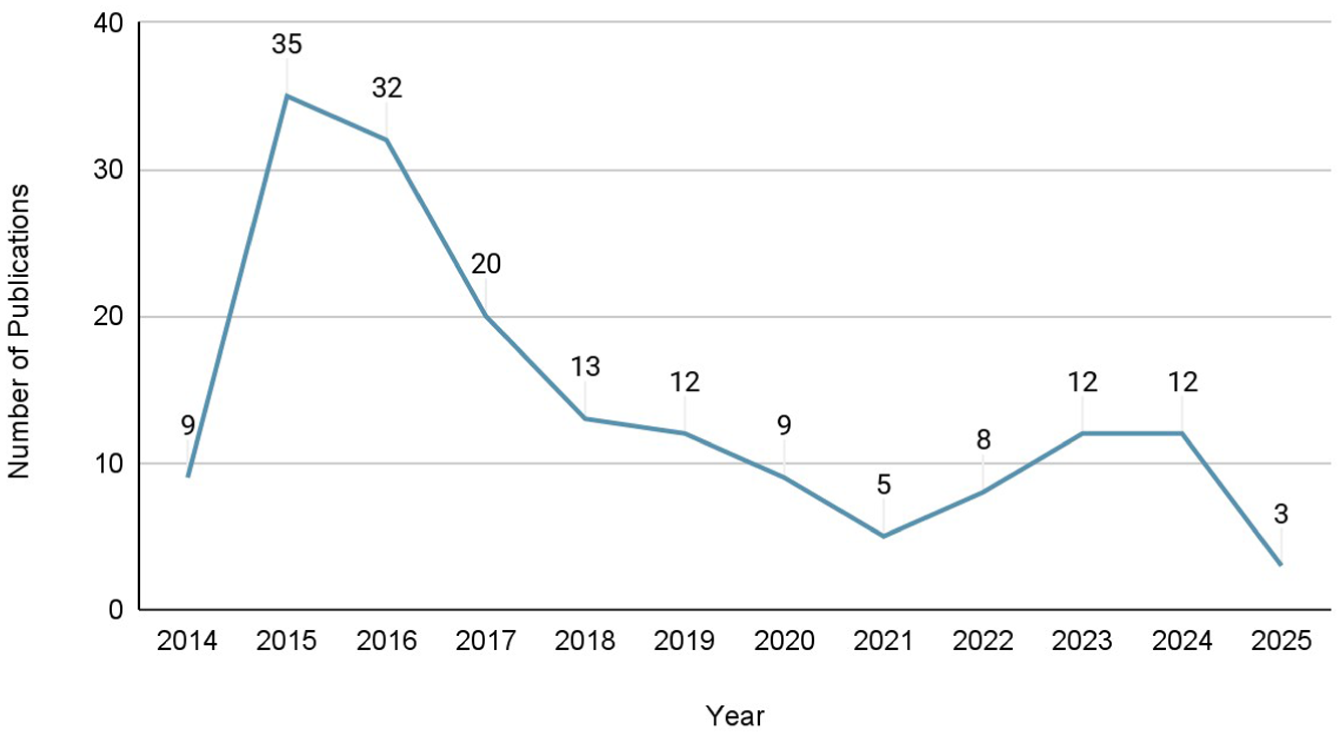
Number of publications by year.
Types of publication
Grey literature dominates the findings of this review, with less than half (39%) the publications classified as academic in nature (Figure 3). Most of this grey literature consists of DCMS case studies (46%), followed closely by reports from various government and corporate bodies (31%). Other sources of grey literature included in this study are government correspondence and guidance, PhD theses, statistical datasets, and press releases (Figure 4). Alongside a handful of conference papers and book chapters, journal articles are the most prominent form of academic literature included in this review (35%). These academic sources offer critical and evidence-based perspectives, strengthening arguments surrounding the impact and value of public libraries. Nevertheless, whilst grey literature may lack the same academic rigour of peer-review publishing, its inclusion in this study helps to develop an understanding of where and how public libraries are being discussed in the UK. From the findings of this review, it is clear that grey literature is a rich source of information when assessing the value and impact of public libraries, offering broader insights beyond traditional academic sources.
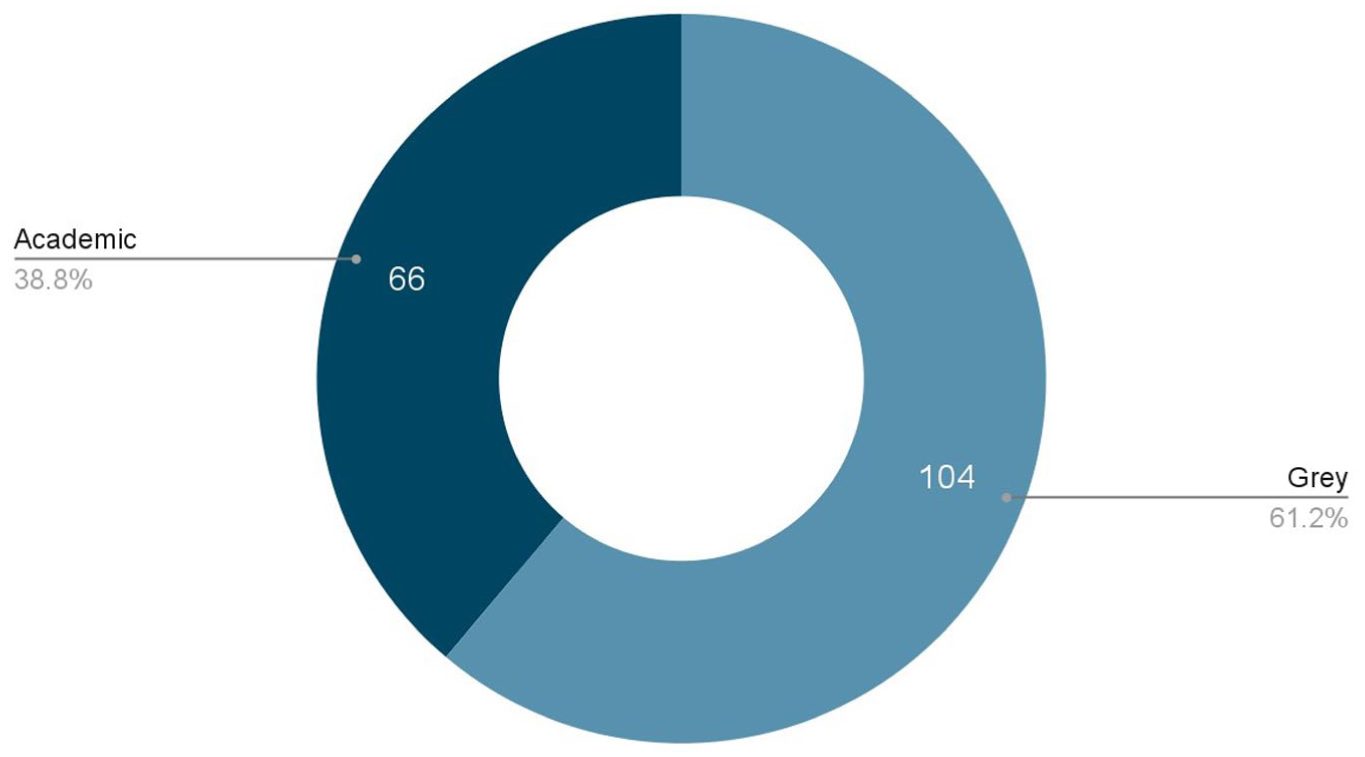
Types of literature sources included.
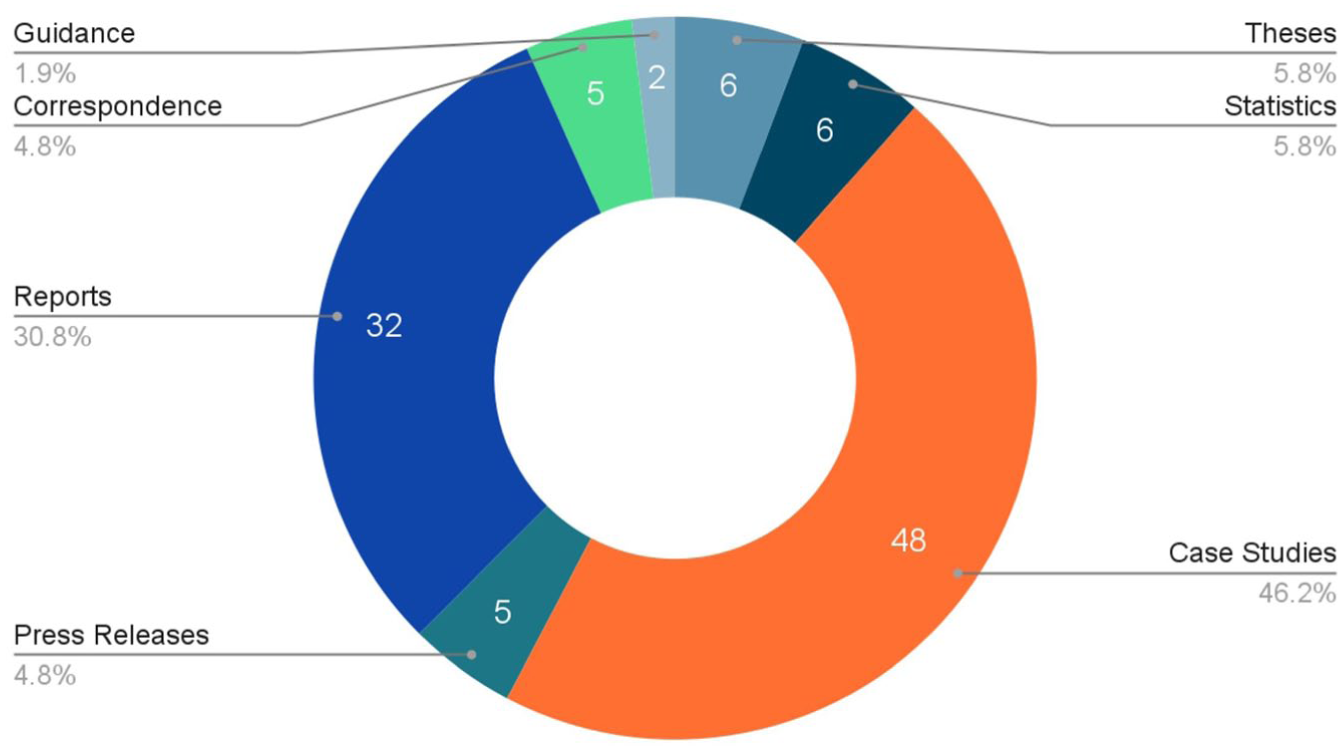
Types of grey literature featured.
Geographic settings
The publications identified during this review focus predominantly on England as the setting for their research (Figure 5). This means that the findings of this review are heavily England-centric, with far less studies choosing Scotland, Wales, Northern Ireland or the United Kingdom as a whole as the location within which to base their research. Whilst publications focussing on the United Kingdom more generally make up only 20% of the total studies included in this review, perhaps even more staggering is the significant lack of literature with findings exclusively from Scotland, Wales and Northern Ireland (Figure 5). Therefore, research analysing the value and impact of public libraries in the UK is unevenly distributed in regards to location and setting.
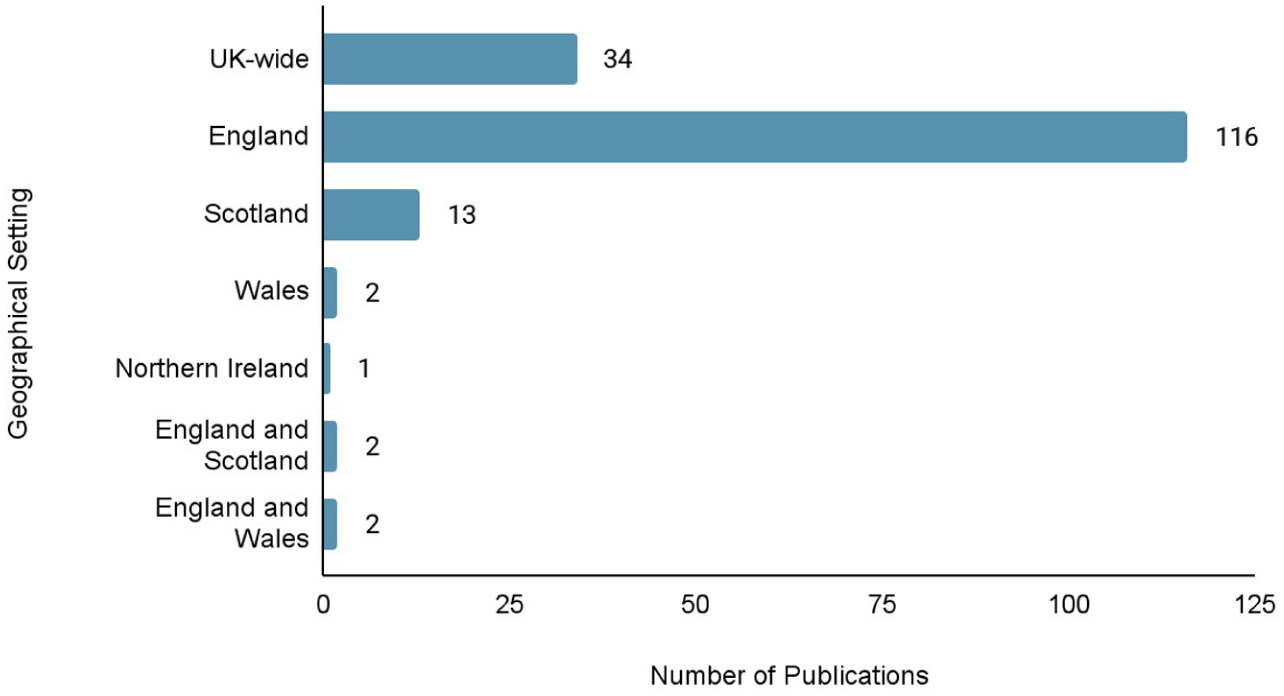
Number of publications by nation.
Methodological approaches
Perhaps unsurprisingly, the majority of publications took qualitative approaches when assessing the value and impact of public libraries, with very few quantitative methodologies adopted (Figure 6). In fact, far more studies were considered mixed methods (34%), than wholly quantitative (8%). This might be considered typical within the field of public library research (and library and information science more generally), highlighting the dominance of qualitative research and the need for more quantitative investigations. The methodology of sixteen publications was also classified as not applicable, specifically in the case of government correspondence and press releases.
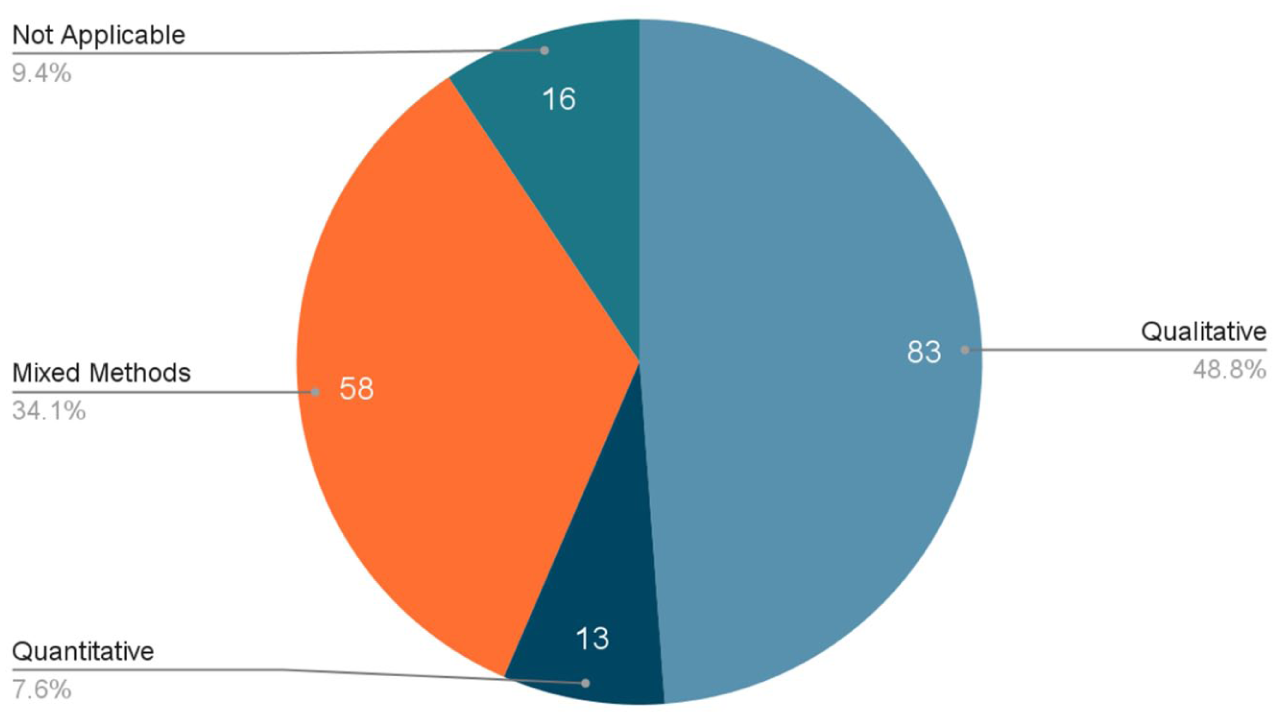
Methodological approaches featured.
Research themes
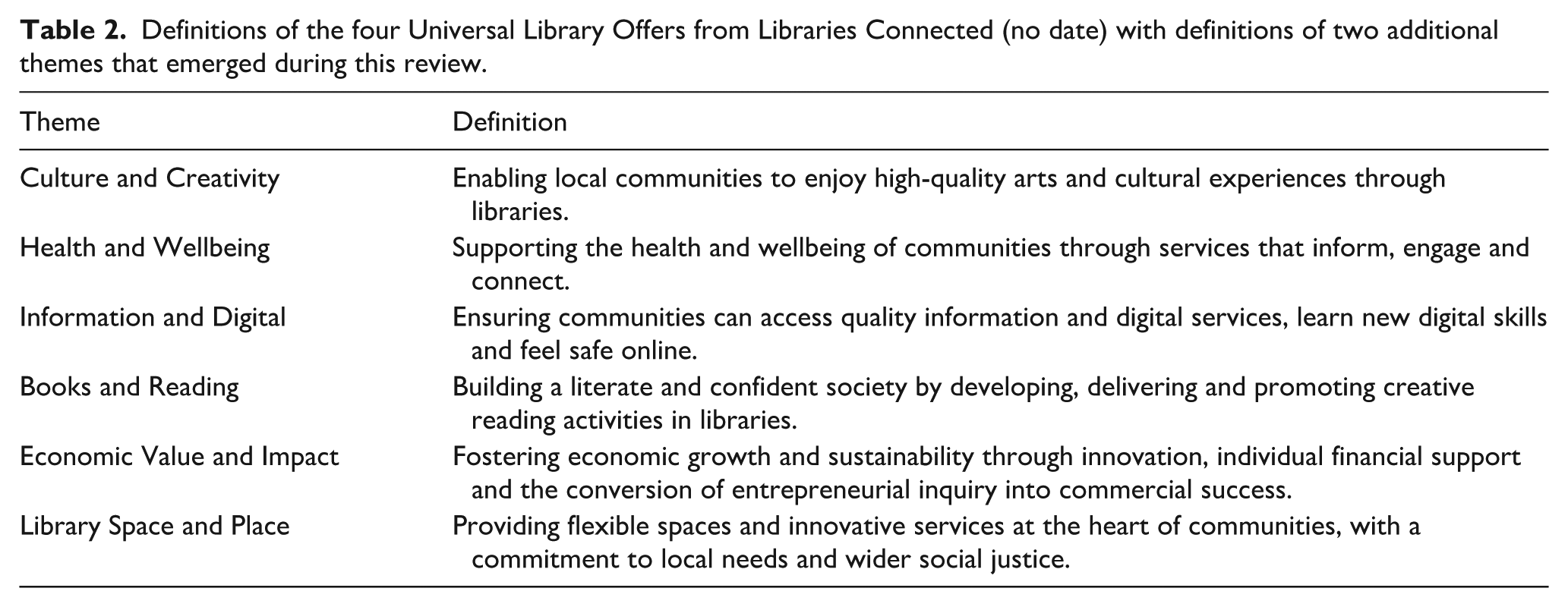
Six themes were identified during analysis of the 170 publications, the definitions of which can be found in Table 2. Four of these themes were pre-determined based on the four Universal Library Offers developed by Libraries Connected: Culture and Creativity, Health and Wellbeing, Information and Digital, Books and Reading (Libraries Connected, no date). The final two themes emerged during the screening and data extraction phases of the review process, and were viewed as necessary in order to adequately demonstrate the value and impact of public libraries in recent times. These two additional themes concern Economic Value and Impact, as well as Library Space and Place. In particular, this final theme was developed from an abundance of literature which spanned across multiple Universal Offers, alongside numerous studies which made particular reference to the importance of space and place during their investigations into the value of public libraries.
Definitions of the four Universal Library Offers from Libraries Connected (no date) with definitions of two additional themes that emerged during this review.
Of the four Universal Library Offers, Information and Digital was most prevalent across the literature, followed by Health and Wellbeing, Culture and Creativity, and lastly Books and Reading (Figure 7). This is possibly a reflection of trends which have evolved in recent years, with interests in digital developments and wellbeing issues becoming prominent in library narratives at the expense of traditional library values such as access to books and reading development. A large proportion (46%) of the publications also embodied the new themes mentioned previously, warranting individual analysis and discussion due to both their prevalence and overarching narratives.
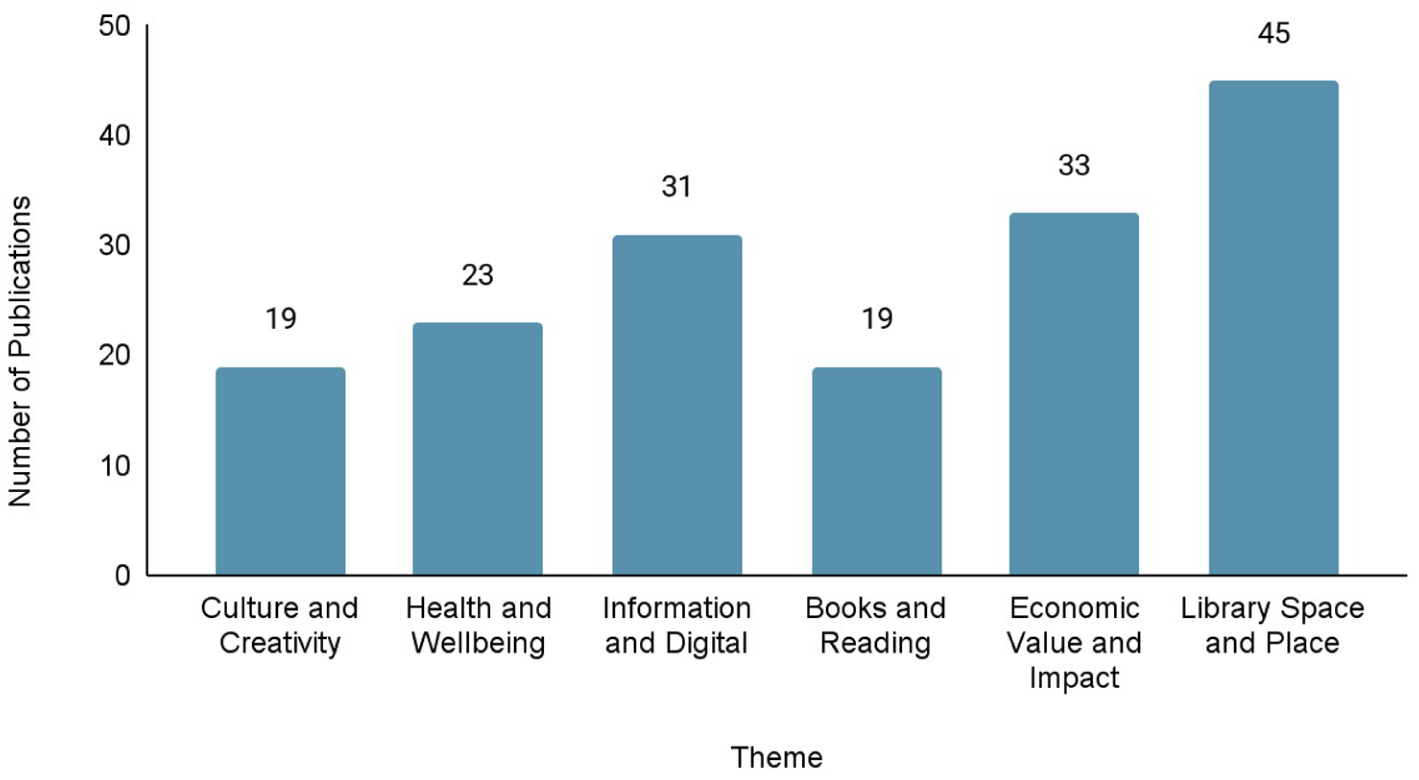
Number of publications by theme.
Culture and creativity
Numerous studies show the value of public libraries in supporting creativity and engagement with the arts. They are particularly vital in providing creative opportunities for disadvantaged community members as well as young people (DCMS, 2015s, 2015u; Glen and DCMS, 2017a; Hobbs, 2015). Engagement with arts-based library services has been shown to have wider benefits, including improvements to wellbeing, skills development, employability, and social inclusion (DCMS, 2015p, 2015u, 2016o; Simmons, 2015). Creative opportunities in public libraries have a significant impact on both individuals and the creative industry as a whole, empowering artistic expression through space and resources, and strengthening the creative economy as a result (Libraries Connected, 2024a). This review encountered numerous case studies which demonstrate the creative opportunities available in public libraries, the majority of which centred around: exhibitions and performances; training and workshops; clubs and makerspaces; and free access to creative technologies (DCMS, 2014, 2015s, 2015u, 2016m, 2019b; Hoenke, 2019; Taylor, 2014; Wilson, 2017). At the heart of these case studies is the idea that public libraries help to reduce barriers, empowering their communities to explore artistic and creative expression.
Alongside supporting participation in the arts, public libraries play an important role in increasing cultural awareness and preserving local heritage. Reaching those who often struggle to access cultural opportunities, public libraries facilitate meaningful engagement with activities and products which help to increase cultural capital (Summers and Buchanan, 2018). Several studies showcase the variety of events, exhibitions, projects and activities which public libraries host to promote diversity within local communities (Badwal, 2016; DCMS 2016n,DCMS, 2016o, 2017m, 2024b; Taylor, 2014; Vincent, 2015). Badwal (2016) notes that the development of special collections containing local history and cultural resources, as well as the cultural research done by library staff to inform the design of inclusive library programmes, is a key part of serving a diverse community.
Public libraries also support diverse user groups, especially those marginalised in society, to feel included and represented within their local community. When multiculturalism is embedded within both collections and services, such as through multilingual libraries, users of all backgrounds are given the opportunity to explore their own socio-cultural identities and gain a sense of belonging (DCMS, 2016j; Little and Murray, 2024; Miller, 2014; Peterson, 2019, 2023; Robinson, 2014). Public libraries celebrate and raise awareness of diverse backgrounds, providing opportunities for both learning and self-discovery, which often elicit positive responses from participants (DCMS 2016n,DCMS, 2024b; Vincent, 2015). Having a diverse library workforce was also noted as beneficial in generating feelings of inclusion and belonging amongst users (Peterson, 2023), and ensuring that respect for different identities, such as those within the LGBT community, is embedded in library practices remains essential for fostering a safe environment for self-expression (Guyan, 2021).
Public libraries are shared multicultural spaces that allow diverse communities to mix, interact and connect (Guyan, 2021). The inclusive and open environment fostered within public libraries helps to facilitate social interaction and cultural exchange between diverse community groups, allowing users to negotiate their own cultural identities and form deep, meaningful connections with others within the library space (DCMS, 2016o; Miller, 2014; Peterson, 2019). The informal and neutral setting gives users the chance to observe others as well as form bonds and micro-connections through library activities and events (Miller, 2014; Peterson, 2019; Robinson, 2014). The literature also strongly argues that public libraries help to foster community cohesion by bringing people from diverse groups together and allowing them to connect and better understand one another (Glen and DCMS, 2017a; Peterson, 2019; Simmons, 2015). Library users can form shared identities with those of similar backgrounds or interests, as well as increase their knowledge and awareness of other socio-cultural identities which exist within their local community.
Health and wellbeing
Public libraries play an important role in supporting public health by providing access to reliable health information and resources. Research indicates that many users seek health information in the library before consulting healthcare professionals, and approximately 94% of library users have found some or all the health information they needed (Ingham, 2014). To promote health literacy among the public as well as library staff and healthcare professionals, some studies and programmes have highlighted the strong cross-agency collaboration between public libraries and health organisations such as the National Health Service (NHS), the Patient Information Forum, Health Education England, and Public Health England (Carlyle et al., 2022; De Brún, 2020; Lancashire Health Hub, no date). Public libraries also extend the reach of public health initiatives, assisting the NHS with addressing health information inequality, whilst also helping communities to make informed health decisions and manage their wellbeing more effectively, as exemplified by the Wellbeing through Reading and the Death Positive Library programmes (Hackett, 2018; Ingham, 2014; Phul et al., 2024; Pitsillides et al., 2023).
Government case studies have demonstrated that a wide range of library activities are designed to support individuals with disabilities, mental health problems and special educational needs, such as through employment opportunities, assistive technologies and specialised collections (DCMS, 2015r, 2015t, 2016q, 2016t). In addition, several studies have examined how libraries support the wellbeing of marginalised groups, including people with mental health conditions, refugees, and community-dwelling adults (Brewster, 2014; Karki et al., 2024; Taylor and Simon, 2026). A recent cross-sectional study found that around 80% of respondents agreed that library services could improve their mental health and wellbeing (Karki et al., 2024). Evidence also suggests that library engagement positively impacts public health, with Arts Council England reporting that those who use libraries on a regular basis are 1.4% more likely to report good general health, potentially resulting in annual medical cost savings of £1.32 per person (Fujiwara et al., 2015). However, there is a gap in up-to-date research exploring the extent to which public library efforts have helped to facilitate savings for health services in more recent years.
While loneliness and isolation increase with age and are significantly correlated with low socio-economic status, research shows 88% of users believe that public libraries are beneficial for individuals experiencing these feelings (Karki et al., 2024; Vincent, 2018). Their engagement with library services was often driven by a desire for social bonding and a sense of community (Allan and Innocenti, 2024; Cao, 2019). Opportunities are also offered which give vulnerable and lonely members of the community a chance to participate more actively in their library services, particularly through provision of local volunteering positions (DCMS, 2016e). Public libraries have responded to the diverse needs of their communities, addressing issues such as adult obesity, social inclusion, and health inequalities (DCMS, 2016n; DCMS, 2016r). These initiatives demonstrate the social and emotional value in fostering a sense of belonging and connexion, which is instrumental in tackling loneliness, particularly among the most vulnerable members of society (Dodd and Bawden, 2024).
The role of public libraries in empowerment extends across a broad demographic, encompassing different ages, genders, and ethnicities. Several studies have highlighted how libraries empower children, families, older adults, women, and refugees (DCMS, 2016l; Libraries Connected, 2022; Local Government Association, 2022; Spencer-Bennett, 2022). Libraries also empower individuals with mental health problems, who may experience difficulties in making decisions in daily life (Brewster, 2014). Furthermore, a notable 58% of public libraries organise welcome or social events for refugees and their hosts (Libraries Connected, 2022), and many libraries provide training to improve health literacy and strengthen community bonds, fostering a more informed, connected, and confident society (Carlyle et al., 2022; Peterson, 2023).
Information and digital
Public libraries are vital in offering free access to digital infrastructure which supports those who might be digitally excluded, demonstrating how libraries contribute to wider anti-poverty strategies. In 2016, 11% of households in Great Britain had no internet access; 21% of them due to lack of skills and around 10% due to financial constraints (Office for National Statistics, 2016). Results of surveys in 2020/2021 indicate all libraries can provide access to computers, internet and Wi-Fi, as well as printing and scanning services (Arts Council England, 2022). These approaches allow library users to access the Internet either through library-owned devices or their own, as well as utilise a wide range of digital hardware and software. The COVID-19 pandemic proved a major turning point for digital inclusion initiatives in public libraries. With the closure of physical spaces, libraries made a rapid shift towards digital engagement and service delivery to support their communities and ensure continuity (Robinson et al., 2023; Usherwood and Usherwood, 2021). During this period, the sector experienced a sharp rise in demand for online resources, and library services were often reconfigured to maintain user access (DCMS, 2021; Libraries Connected, 2024b).
Public libraries also go beyond simply providing digital infrastructure by offering a wide range of digital skills programmes designed to build confidence and abilities (DCMS, 2015m; McKrell, 2014). These initiatives highlight the long-standing role of public libraries in supporting digital skills development and tackling inequalities. Socially and economically marginalised groups are often disproportionately disadvantaged in an increasingly digital world, and public libraries offer essential lifelines for reducing barriers to digital access (Allmann and Radu, 2023; Anderson and Whalley, 2015; Mears, 2021). Whether through access to digital resources, digital literacy programming, jobseeker support or social media communications, public libraries help to address the digital divide and ensure universal access to technology at no financial cost (Arts Council England, 2022; Casselden, 2023; Geekie, 2016; Reid and Mesjar, 2023).
Public libraries have been shown to play a vital role in supporting communities through equitable access to information. In an age of misinformation, public libraries are particularly important for ensuring access to trustworthy sources, as well as playing a central role in developing information literacy skills. Public libraries make information accessible to every social class, enabling users to develop both traditional information literacy skills and more modern media literacy skills through exposure to both analogue and digital information, alongside support from library staff (Ottonicar et al., 2018). This became particularly valuable during the COVID-19 pandemic, with research showing that many people turned to less trustworthy sources for their information on political issues, rather than trusted information services such as public libraries (Usherwood and Usherwood, 2021).
Furthermore, public libraries are in a unique position to respond to the needs of resettling groups, by providing information, resources and training that helps individuals cope with the trauma and stress of resettlement (Lloyd, 2015). Studies show that this is achieved through assistance with visa applications, library enrolment, DBS checks, English-language classes, and social events (Libraries Connected, 2022). Information access within libraries also has broader benefits, contributing to health and wellbeing; employment and job-seeking; education and learning; business enterprise; diversity and culture; and social inclusion (Hackett, 2018). Whilst there remains a need for greater public awareness and stronger service promotion, public libraries make important contributions within their communities through information access and associated skills development (DCMS, 2024b; Usherwood and Usherwood, 2021).
Public libraries are recognised as centres for lifelong learning, offering a wide range of educational activities and high-quality information resources (Vaizey and DCMS, 2015). Libraries deliver tailored programmes for all age groups, including reading programmes, ICT sessions, jobseeker support, and research initiatives (DCMS, 2014; Naji, 2018). Science, Technology, Engineering, and Mathematics (STEM) education has also become a strong focus in public libraries, particularly for children. One study showed that 95% of library staff surveyed reported hosting STEM events, most of which aimed to foster creativity and active learning amongst participants (LaConte, 2020). Similarly, robotics activities in libraries have been shown to widen future career aspirations amongst children (Cheung et al., 2024). Through the vital role of both space and staff, libraries can support users’ personal and professional development by fostering self-driven learning and a culture of curiosity (Groen and Clover, 2016; Naji, 2018). Library education provides benefits for both individuals and wider society, contributing in areas such as migrant integration and environmental sustainability (Chowdhury et al., 2025; Salzano et al., 2022).
Books and reading
Undoubtedly, borrowing reading materials remains the most popular reason for visiting a library (DCMS, 2019f, 2020). Nevertheless, public libraries have gone beyond providing just physical literature, offering free access to a diverse range of reading mediums. This is in response to changes in reading behaviours, with a growth in usage of audiobooks and ebooks (Libraries Connected, 2025), but also a side effect of the COVID-19 pandemic. With limited access to physical buildings and library stock, public libraries worked hard to provide alternative approaches through collection services, home delivery, and expanded audiobook provision (Casselden and Paxton, 2025; McMenemy et al., 2023). Public libraries have also responded to their communities by establishing multilingual collections, creating opportunities for children to externalise their multilingualism as a skill and offering representation for families (Little and Murray, 2024).
Public libraries are able to facilitate the connexion between wellbeing and reading. Beyond reading groups and book clubs that provide interaction and address social isolation (DCMS, 2015t; Sbaffi and Rowley, 2015), bibliotherapy initiatives have been hosted in libraries with participants finding a reprieve from difficult life experiences through an increased interest in reading and mindfulness (Phul et al., 2024). Non-traditional books also make an impact, with libraries facilitating access to alternative methods of reading such as wordless books and groups to discuss literature and how it impacts them (Hollins et al., 2016). Overall, public libraries are dedicated to fostering a love, and active engagement in, reading. For example, the ‘Reading Hackers’ programme gave young people the opportunity to volunteer to help engage their peers in reading whilst also building valuable skills for the future (Francis, 2016).
The provision of reading materials and encouragement to develop literacy skills is essential for those of all ages (National Literacy Trust, 2022), but it is particularly important during early development, as highlighted by Government policies and priorities (Department for Education, 2025a). Public libraries play an integral role in supporting reading and literacy skills, which can be seen as a form of social justice by building foundations that will widen future opportunities (Rankin, 2016). This is not only vital for children, but also provides pivotal bonding exercises with their parents (Smith, 2018, 2019), and serves as a basis for the development of critical thinking skills (LaConte, 2020). This provision of reading activities extends through childhood, with the Summer Reading Challenge reaching over three quarters of a million children aged 4–11 each year, and aids in filling the learning gaps when children are not reading in school (DCMS, 2016s, 2019e)
Economic value and impact
Multiple case studies were identified which demonstrated how public libraries can support individuals with their financial circumstances, whether this be someone facing financial hardship or wanting to start a business (Allmann and Radu, 2023; Arts Council England, 2022; Davidson, 2019; DCMS, 2015b, 2015c, 2015d, 2015e, 2015f, 2015g, 2016h, 2017a, 2017j, 2017m, 2018a, 2018c, 2019a, 2023; Geekie, 2016; Hackett, 2018). Several records have shown how public libraries help to equip jobseekers for the interview and recruitment process through digital skills training, increase the visibility of community banks and credit unions, and help users to access welfare support platforms (Allmann and Radu, 2023; Arts Council England, 2022; Davidson, 2019; DCMS, 2015v, 2016p, 2023; Geekie, 2016; Hackett, 2018; Naji, 2018).
Findings also showcased the wider impact that public libraries have had on local and national economic growth (DCMS, 2015h). For example, numerous Business and IP Centre (BIPC) case studies highlight how libraries are a vital resource in helping with the establishment of local businesses, especially those with limited financial means, by facilitating access to research, patent and literature searches, and the means to obtain advice from intellectual property (IP) attorneys (Cowley, 2015; DCMS, 2015b, 2015c, 2015d, 2015e, 2015f, 2015g, 2015h, 2015k, 2016b, 2018a; Hackett, 2018). Evidence has shown that this has helped to break down barriers to business start-ups and bring new products to the UK market, converting innovation into commercial success stories (Cowley, 2015; DCMS, 2015h, 2015k, 2015q, 2016b, 2018a; Hackett, 2018), which is all in keeping with the current Government’s plans for the future (Labour, 2024).
Further to this, the British Library’s BIPC national network has shown that libraries can, and have been, transformed into spaces of business and enterprise through the consolidation of existing knowledge, resources and facilities (DCMS, 2015h). As both an information and enterprise hub, these spaces have encouraged the growth and establishment of small businesses by providing comprehensive business support, stimulating entrepreneurial activity and creating employment opportunities (DCMS, 2015h). Although the central locations enabled the BIPC national network to utilise existing resources, the spread of case studies centres primarily in large cities across England, and less on rural areas, Wales, Scotland or Northern Ireland (Simmons, 2015). This indicates that there is scope for further expansion of BIPC networks across the UK, utilising the expertise, resources and trustworthiness of public libraries to kickstart economic growth. This could also partially explain why there is a lack of awareness of business-support services and the wider economic impact of public libraries outside of these urban areas (Simmons, 2015). Further evidence from the LibraryPlus scheme and Libraries Deliver Newsletter have shown public libraries to be drivers of business and economic growth in their respective areas by helping to establish 199 new businesses, 254 new jobs and 40 one-to-one support sessions with prospective entrepreneurs, respectively (Cowley, 2015; DCMS, 2015h, 2015k, 2015q, 2016b, 2017k, 2018a; Hackett, 2018).
It is clear that in order to maintain economic sustainability and facilitate long-term support for the community, without relying too heavily on a volunteer workforce, a combination of public and private funding, collaborative partnerships and large-scale investment is required (Ashley and Niblett, 2014; DCMS, 2015i, 2016e, 2016l, 2017c, 2017e, 2017g, 2017h, 2024a; Lynch et al., 2024; Massis, 2015). Libraries have been shown to generate additional income streams through innovative means, adapting to the contemporary needs of the community, implementing cost-saving initiatives, and maintaining financial stability in the process (DCMS, 2016a, 2017c, 2017d, 2017e, 2017f, 2017g, 2017h, 2017i, 2017l). One such example is the installation of Amazon lockers at three public libraries in West Sussex, which were used by 80–100 people per week and, in doing so, encouraged the community to engage more with library services (DCMS, 2016a). Additional examples have also shown that even those who are not actively using the library have demonstrated a willingness to provide financial support in order to keep these services running for all (Fujiwara et al., 2019). Furthermore, the impact of collaboration and partnership with other organisations, networks and hubs to create models of economic sustainability that enable libraries to become more self-sufficient financially, and better serve the needs of a contemporary society, have also been highlighted (DCMS, 2016a). Such partnerships have shown the potential of making savings in other areas of the public sector, including the NHS, by empowering the community to manage their own health concerns (Naji, 2018), and offering joint ventures to centres of culture and local history (DCMS, 2015j).
Library space and place
Public libraries appear to be in a unique position, providing both diverse services and adaptable spaces to meet a range of community needs and agendas within a single setting (Arts Council England, 2022; DCMS, 2015o, 2017n; Local Government Association, 2022). As demonstrated by their ability (both collectively and individually) to fulfil multiple Universal Offers, public libraries provide spaces and services which are characterised by unparallelled flexibility and variety (DCMS, 2015p, 2016c, 2016d, 2016e, 2016f, 2016g, 2016h, 2016i, 2016j, 2016k, 2016l, 2016n, 2017b, 2017c, 2017d, 2017e, 2017f, 2017g, 2017h, 2017i, 2019c). Participation statistics published by Libraries Northern Ireland (2023) showcase the wide range of activities offered as part of the core library service across Northern Ireland in 2022/23, which range from reading groups and social clubs to IT skills sessions and school visits. This breadth allows public libraries to cater for different audiences and add value at any stage of life (DCMS, 2014, 2016o; Glen and DCMS, 2017a). Having accessible and multifunctional spaces is also deemed a key asset of public libraries, making them particularly sought-after as partners and hosts for wider national programmes and events (DCMS, 2019d; Hobbs, 2015; Miller, 2014).
Public libraries are shaped and driven by their communities, designing services which reflect local needs and identities, thus generating a sense of community ownership (Badwal, 2016; DCMS, 2017m; McConnell, 2017; Ruthven et al., 2023). When public libraries face threats of service reduction, barriers to access and potential closures, communities have shown passionate resistance, challenging the implementation of controversial plans which could alter and limit local library services (Glen, 2019; Glen and DCMS, 2017b, 2017c, 2020a, 2020b). As valued hubs of community activity and vital centres of support, public libraries often act as essential resources for vulnerable community members (Badwal, 2016; DCMS, 2024b; Dodd and Bawden, 2024; Peterson, 2019). Their shared and inclusive spaces bring people together to promote connexion and community cohesion (McConnell, 2017; Peterson, 2023; Ruthven et al., 2023). Public libraries are often perceived positively within their communities by users and non-users alike, offering a welcoming, inviting and nurturing atmosphere that empowers users and facilitates meaningful engagement with services (Appleton and Hall, 2023; McConnell, 2017; Robinson, 2014; Ruthven et al., 2023; Simmons, 2015; Spencer-Bennett, 2022). The value of library staff, who build relationships with users and contribute greatly to feelings of belonging and safety, should also not be understated (Brewster, 2014; Charles, 2016; DCMS, 2024b; McConnell, 2017).
The literature shows that public libraries continue to prove their resilience in the face of adversity. A valuable component of their nature is an ability to adapt and innovate in order to sustain their vital services and continue to meet the evolving needs of their communities (Massis, 2015; Vincent, 2018). Studies demonstrate that public libraries are willing to explore new ways to support their users, and they remain proactive in widening their local appeal (Sbaffi and Rowley, 2015; Summers and Buchanan, 2018). The move to digital service provision is also an indicator of innovation whether in times of crisis, such as the COVID-19 pandemic (Libraries Connected, 2024b), or simply to reflect wider social trends (Ottonicar et al., 2018). Numerous case studies also discuss the implementation of community library service models showing the ways in which libraries are adapting in order to both save and revitalise local facilities which often faced financial constraints and threats of closure (DCMS, 2016c, 2016d, 2016e, 2016f, 2016g, 2016h, 2016i, 2016j, 2016k, 2016l, 2017b, 2017c, 2017d, 2017e, 2017f, 2017g, 2017h, 2017i). Furthermore, innovative and mutually-beneficial partnerships between public libraries and other organisations have proven successful in attracting new users, expanding library provision and remedying financial constraints (Allen et al., 2018; Chelin, 2015).
Public libraries do not exist in isolation (DCMS, 2018d; Sen, 2014). Research shows that, through a broad range of services as well as a commitment to social justice and democracy, public libraries make a significant contribution to both local authority and national government priorities (Badwal, 2016; DCMS, 2018d; Delica and Elbeshausen, 2017; Labour, 2024; Leguina et al., 2021; Vincent, 2015; Wilkin, 2018). Ultimately, libraries play an important role as social equalisers and are dedicated to supporting inclusion in various capacities (Appleton and Hall, 2023; DCMS, 2024b). By providing free and open access to services, support and resources, public libraries help to break down socio-economic barriers and tackle social inequalities which exist on both a local and national scale (Appleton and Hall, 2023; DCMS, 2024b; National Literacy Trust, 2022).
Public libraries also have a significant impact in promoting democratic values and improving quality of life (Badwal, 2016; Glen and DCMS, 2017a; Leguina et al., 2021). Through their epistemic function, public libraries are valuable in developing active citizenship by providing free access to information and learning resources (Appleton and Hall, 2023). With rising concerns surrounding the spread of misinformation, libraries also equip users with the skills necessary to identify and use trusted and accurate information sources (Usherwood and Usherwood, 2021). This empowers citizens and facilitates more meaningful participation in social, cultural, economic and political spheres (Appleton and Hall, 2023; Usherwood and Usherwood, 2021).
Limitations
It is important to recognise that this systematic review, like any, has its limitations. Firstly, specific definitions for public library, value and impact were chosen in order to set boundaries for the authors which would facilitate both the screening and data extraction phases. However, it must be recognised that there are numerous ways of defining and interpreting these concepts, with the definitions selected having a potential impact on the review process and results. This is particularly important in relation to eligibility criteria and, more specifically, the judgement as to whether a publication is deemed relevant to the research question. Therefore, choosing alternative interpretations of any of the three concepts defined in this review, may produce different findings or include literature which was excluded from this study.
Another limitation concerns scope, in particular the focus of this review on a UK setting, and the retrieval of mostly England-centric literature. As a result, the findings of this study may not be generalisable on a national scale, and more focused research surveying the use and impact of public libraries across Scotland, Wales and Northern Ireland would be needed to provide a more comprehensive outlook across the British Isles. Although not within the aims of this research, the relevance of the findings in this review could potentially be better understood if situated within a global context. As has been seen with the work of Vakkari et al. (2014) and the ALM-field, Digitisation and the Public Sphere (ALMPUB) research project (Audunson et al., 2021), collating evidence across multiple countries helps to not only solidify findings relating to the benefits and impact of libraries, but can also be used as a strong evidence base to inform policy making.
Conclusion
Summary of findings
This study’s main purpose was to systematically review literature from the past 10 years which demonstrates the value and impact of public libraries in the UK. Findings indicate that public libraries in the UK are valuable and impactful in six key areas, four of which are aligned with the Universal Library Offers. Nearly half of the publications reflected the two new themes which emerged during this review, namely Economic Value and Impact, and Library Space and Place. The prevalence of these themes in the body of literature retrieved during this study indicates the versatility of public library usage, and how this has evolved beyond more traditional values like the provision of reading material.
This review has also demonstrated that grey literature is a valuable source of information for assessing the value of public libraries. It was a key aim of this research to capture stories of impact on communities and individuals that might not necessarily be recorded in traditional academic sources. Although the high proportion of grey literature identified makes it more difficult to account for biases, and the heterogeneity of these sources has made data extraction more time-consuming, it is recommended that any future systematic review of this topic continues to factor grey literature into the search.
Furthermore, as a result of the available literature, the findings of this review are heavily England-centric, with relatively few studies focusing on Scotland, Wales, Northern Ireland, or the United Kingdom more generally as their research context. Despite this limitation, the evidence consistently demonstrates that public libraries have been found to contribute greatly to the creative economy and enhance cultural capital by facilitating meaningful engagement with cultural activities and the development of personal identities. They also play a vital role in health and wellbeing by providing access to reliable health information and resources, as well as supporting the emotional and social needs of their users, including issues such as loneliness and social isolation. Research also shows that public libraries address the information and digital needs of their communities, offering free access to technology, the Internet, and skills training, while serving as centres for lifelong learning available to all social groups. Notably, literature published from 2020 onwards has increasingly focused on how library services adapted in response to the global COVID-19 pandemic. Whilst extending beyond the traditional provision of books and printed media, public libraries maintain a valuable role in supporting literacy development and continue to diversify their collections to promote inclusion and accessibility, as reading behaviours have also evolved in response to the digital provision of reading material. In addition, they help foster entrepreneurship, employability, and sustainability through collaboration, thus contributing to local and national economic development. Finally, the literature highlights the significance of library space and place, with libraries acting as multifunctional, flexible, and inclusive community hubs that demonstrate resilience and a strong commitment to social justice and democratic values. Together, these findings have begun to piece together how public libraries contribute to communities across the UK, particularly in urban areas in England, and identify research gaps that warrant further exploration.
Research recommendations
This review has highlighted that the majority of available literature demonstrating the value and impact of public libraries in the UK is concentrated on major cities across England. Arguably, this does not provide an accurate reflection of the UK population as a whole. It is therefore important to further investigate the needs of rural communities outside of densely-populated urban areas, and encourage research across all four nations. Additionally, a significant lack of quantitative data, especially in comparison to the prominence of qualitative data, has been emphasised during this review. This is perhaps unsurprising given the scope of the study, which was not restricted by publication type and, as such, aimed to collate personal accounts and local reports not published in peer-review journals. While it is crucial to obtain these valuable insights through qualitative literature, this review has also highlighted the value of statistical data in projecting the measurable impact of library services. Therefore, the gathering of more quantitative data is warranted to present to stakeholders, in particular local and government authorities. Furthermore, there are opportunities in the future to conduct a deeper analysis of any of the six themes highlighted in this review, particularly in regards to books and reading, economic value and impact, and library space and place.
Moving forward, the research landscape will need to consider how ongoing societal changes will impact the public library sector. It is inevitable that public libraries will need to continue adapting as they have done since the inception of the Public Libraries Act in 1850, especially following the worldwide events of recent years and the continued growth of our digital world. As the availability and accessibility to information continues to shift, it is crucial that vulnerable members of society do not fall further behind and that public libraries remain true to their core values, being open to everyone. To remain in-keeping with this ever-changing landscape, a repeat of this systematic review is recommended in 5 years’ time, so appropriate action can be taken by all concerned stakeholders. Further to this, with additional funding, resources and time, it would be possible to expand upon the findings of this review. This search was limited to public libraries, so comparisons with other types of libraries could be conducted in the future. The scope of this research was also limited to the UK, and could therefore be expanded to explore the value and impact of public libraries on a global scale.
Supplemental Material
sj-xlsx-1-lis-10.1177_09610006261431330 – Supplemental material for The Impact and Value of Public Libraries in the UK: A Systematic Review
Supplemental material, sj-xlsx-1-lis-10.1177_09610006261431330 for The Impact and Value of Public Libraries in the UK: A Systematic Review by Emily Blanchard, Caitlin Fitzjohn, Ka Ki Ho and Hannah McGivern in Journal of Librarianship and Information Science
Supplemental Material
sj-xlsx-2-lis-10.1177_09610006261431330 – Supplemental material for The Impact and Value of Public Libraries in the UK: A Systematic Review
Supplemental material, sj-xlsx-2-lis-10.1177_09610006261431330 for The Impact and Value of Public Libraries in the UK: A Systematic Review by Emily Blanchard, Caitlin Fitzjohn, Ka Ki Ho and Hannah McGivern in Journal of Librarianship and Information Science
Footnotes
Acknowledgements
The authors would like to thank Dr Jessica Gardner, Antony Brewerton and Katherine Burchell for their support and guidance during this review process. The authors are also grateful for the feedback received from Louis Coiffait-Gunn, Isobel Hunter and Emma Hoddinott.

Ethical considerations
This article does not contain any studies with human or animal participants. Therefore, ethical approval was not required in order to conduct this systematic literature review.
Consent to participate
Informed consent to participate is also not applicable to this study.
Funding
The authors received no financial support for the research, authorship, and/or publication of this article.
Declaration of conflicting interests
The authors declared the following potential conflicts of interest with respect to the research, authorship, and/or publication of this article: This systematic review project began as a report commissioned by the Libraries Alliance from which this manuscript has been developed for sole peer-review publication in this journal. Otherwise, the authors have no other potential conflicts of interest to declare with respect to the research, authorship, and/or publication of this article.
Data availability statement
The data for this research will be made available via the Oxford University Research Archive (ORA) and the University of Cambridge Repository - Apollo.
Supplemental material
Supplemental material for this article is available online.
Author biographies
References
Supplementary Material
Please find the following supplemental material available below.
For Open Access articles published under a Creative Commons License, all supplemental material carries the same license as the article it is associated with.
For non-Open Access articles published, all supplemental material carries a non-exclusive license, and permission requests for re-use of supplemental material or any part of supplemental material shall be sent directly to the copyright owner as specified in the copyright notice associated with the article.
