



Abstract
This paper presents results of a survey of library and information science (LIS) practitioners, which explored their research activities and the support needed from employers for research collaborations and dissemination of results. Findings show that while LIS practitioners are actively engaged in research, there are significant gaps in the available supports offered by LIS employers across different library sectors. Dedicated time for research is limited, particularly in public libraries, for example, but when practitioners receive dedicated time, their research engagement and dissemination activities increase. The study also found that the type of LIS service significantly affects practitioners’ dissemination activities, with those working in national, state and territory libraries and special libraries, disseminating significantly more research results than practitioners working in other types of libraries. The findings point to a potential risk of a research dissemination divide in the Australian LIS sector, where the study was conducted. The study recommends enhancing the value placed on both conducting and sharing research related to employment or professional practice, to have a positive impact on library services and local communities. Encouraging presentations at conferences was identified as a valuable first step towards increasing LIS practitioners’ engagement with sharing research results, generally and writing up results for publication. Overall, these findings highlight the need for greater employer support and more targeted efforts to promote research engagement and dissemination among LIS practitioners.
Keywords
Introduction
Research in the library and information science (LIS) profession generates new knowledge and informs practice, contributing to the ongoing development of the field (Hall, 2010). Research benefits the profession, institution and individual, including improved service delivery, enhanced decision-making and increased professional development opportunities (Harowitz and Martin, 2013; Wilson, 2013). Yet, many practitioners find conducting research to be daunting and overwhelming, particularly if they lack formal training or experience. Despite recent strategies to build research capacity among Australia’s LIS practitioners, a vibrant research culture remains uncommon in the sector. To foster such a culture, it is crucial to understand how research is currently perceived and experienced by these practitioners. Nguyen and Hider (2018) argue that for LIS research in Australia to become relevant to practice and achieve a critical mass, all stakeholders must participate. This paper addresses this need by investigating the experiences and perceptions of national LIS practitioners, a key stakeholder group. This paper presents findings from a survey of 291 Australian LIS practitioners, focusing on current research activities and employer support for research. By understanding practitioners’ research experiences and needs in the context of their workplaces, this study demonstrates how best to foster a profession that embraces a research culture to create positive, evidence-based outcomes for individuals and organisations.
Literature review
LIS practitioners’ engagement with research
Numerous studies have investigated LIS practitioners’ engagement with research, globally. In 2011, Luo surveyed 555 practitioners across library sectors and found reading research articles to improve one’s work, or to provide reference services, were the most popular reasons for 77% of practitioners. Similarly, Powell et al.’s (2002) earlier work found almost 90% of professional association members in the United States (US) read research from journals, regularly. However, recent studies indicate a shift in practitioners’ reading practices. Kennedy and Brancolini (2018), for example, observed a 20% decline in librarians reading the full content of research-based articles (78.47% in 2010; 58.41% in 2015). Although reading research was a job expectation (88.09% in 2010; 84.09% in 2015) almost half (44%) of librarians surveyed did not enjoy it. Relatively low reading levels are also evident among American health sciences librarians, with only one-third of 624 respondents reading research literature each month (Lessick et al., 2016), primarily due to a lack of time (Kennedy and Brancolini, 2012, 2018).
Many practitioners conduct research to support decision making, evaluate services and programmes and advance the field (Luo, 2011). However, the degree of research engagement varies across time, specialisation, and location. For instance, Kennedy and Brancolini (2018) observed a 15% increase in American librarians who conducted research since graduating (61.54% in 2010, 76.70% in 2015). In contrast, studies of health librarians show that less than half conduct their own research (e.g. Lessick et al., 2016; McNicol and Dalton, 2007). Adkins (2019) argues that public librarians do not engage in research due to the lack of emphasis on research in their job descriptions. This issue is rooted in the culture and tradition of public librarianship. Given their numerous responsibilities, and in times of limited resources and increased demands for demonstrating value and efficiency, public libraries allocate staff time and resources to essential services that provide clear and direct benefits to their users. In 2021, Research Libraries UK and the Arts and Humanities Research Council commissioned a scoping study to investigate LIS practitioners’ roles in academic and scholarly research (Evidence Base, 2021). They found practitioners bring significant expertise, skills and insights as collaborators and leaders of research, with many opportunities for librarians to develop and enhance their research roles. To embrace such opportunities requires changes to how research is valued and supported within libraries, including building research capacity and enhancing practitioner-researchers’ visibility.
Increasing LIS practitioners’ research productivity
Recent research demonstrates growing interest in enhancing practitioners’ research productivity, particularly for dissemination (Hoffmann et al., 2017). One notable driver for this in the North American academic library context relates to publishing expectations for librarians for tenure and promotion. Studies indicate that practitioners are inclined to share their research findings (Kennedy and Brancolini, 2018), particularly when they receive support from employers (Pickton, 2016).
Galbraith et al. (2014) revealed librarians holding faculty status and tenure-track appointments published more frequently and made substantial contributions to high-impact and influential journals. Hoffmann et al. (2017) highlighted the intricate dynamics shaping librarians’ research productivity, including the interconnectedness of personal attributes, peer interactions and institutional supports. Chang’s (2016) work emphasised academic librarians’ commitment to research extends beyond faculty status and tenure-track appointments, with a growing culture of collaboration. This appears consistent with practitioners’ desires to collaborate; Lessick et al. (2016) found librarians welcomed opportunities for research collaboration between academics and experienced practitioner-researchers.
Ryan (2012) highlights that public librarians have lower publication rates compared to their academic librarian colleagues due to differing research traditions, mandates and requirements. This discrepancy negatively impacts the LIS literature and overall evidence base, as public library practitioners contribute less to scholarly discourse. Supporting this claim, Penta and McKenzie (2005) conducted a content analysis study revealing that over a 4-year period, only 3% of article authors in North American LIS journals were employed in public libraries. Even in the Public Library Quarterly, only 14% of the authors were public librarians. This underrepresentation underscores the need for greater involvement of public librarians in research to enrich the field’s knowledge base.
There are also concerns regarding the frequency of publication and topics studied by practitioners. Finlay et al. (2013) revealed journal articles written by librarians regardless of which LIS sector declined by 10% between 2002 and 2011, compared with a 20% increase by non-librarian authors. Articles co-authored by librarians and researchers doubled over this period and received twice as many citations as librarian-only authored articles. The subject matter of practitioner-authored papers focused on practice-related concerns and less on theoretical advancements, which was attributed to a lack of institutional support or encouragement for publishing. These findings underscore the intricate interplay of institutional structures, collaboration opportunities and personal attributes in shaping librarians’ research productivity.
An environmental scan of Australia’s LIS research landscape found practitioners published their work locally, with 60% of material appearing in Australian publications, with practitioners as principal authors (Middleton and Yates, 2014). A bibliometric study of LIS articles published by Australian authors in ISI-ranked journals in the field found one-fifth were authored by at least one practitioner; while nearly 16% were authored entirely by practitioners, just over 4% were jointly authored with academics (Jamali, 2018).
Numerous studies over two decades have identified barriers and motivators in practitioners’ engagement in research writing and presenting (e.g. Bradley, 2008). Motivation to publish is facilitated by supportive factors such as peer review, mentoring and access to relevant literature databases and software. These findings echo Klobas and Clyde (2010) who identified personal motivation as a key driver for publishing school librarians. Recently, Thielen and Stuit (2021) surveyed 255 early-career librarians on their research practices, with confidence in research and publication skills significantly affecting engagement. Librarians required to publish by their institutions expressed more confidence in their ability to publish scholarly, peer-reviewed articles; these respondents also expressed deeply personal considerations for research and publishing, highlighting the potential for early-career research engagement to enhance the quality of literature, advance the profession and sustain LIS research (Thielen and Stuit, 2021: 20).
Institutional expectations and support for LIS practitioner research
Institutional support is essential for practitioners to engage in research (Hoffmann et al., 2017; Hollister, 2016), and several studies examine how practitioner-researchers can best be supported (e.g. Alemanne and Mandel, 2018; Joint, 2005; Powell et al., 2002). While these studies originate in academic libraries in the US and Canada, they provide valuable insights on incentivising librarians to be research active and strategies for supporting practitioners to increase research engagement, applicable to all library contexts.
Smigielski et al. (2014) identify two categories of institutional supports: (i) ‘formal institutional’ supports, established by administrators; and (ii) ‘informal grassroots’ supports, established by peers (p. 262). Formal supports include sabbaticals, workload adjustments and financial resources, while peer-developed supports include writing groups, research support groups, and journal clubs (p. 262). Studies show practitioners value peer support and collaborative activities (Crampsie et al., 2020), with designated research time and writing groups valuable for increasing research confidence (Ackerman et al., 2018).
While increasing numbers of practitioners can access institutional research supports, the nature and availability of these supports and librarians’ awareness of these, varies significantly between institutions (Kumaran, 2019). A survey of Canadian library directors and deans revealed disconnections between administrators and librarians’ views (Berg et al., 2013). Administrators felt research expectations were too low, while librarians felt expectations were either adequate or too high. The survey also found while administrators were confident in their institutions’ abilities to support practitioner-research, they believed librarians overestimated the lack of available time, funding and other support.
Hoffmann et al. (2017) found academic librarians’ research success was significantly, positively affected by strong institutional support alongside a focus on individual qualities, and interaction and support from peers and community. They also found while librarians desired a supportive institution, feeling supported by one’s institution and feeling expected to do research were not significantly related to research output. The authors call for more research to further illuminate the impact of supportive institutions on practitioner-researchers, particularly to understand what librarians mean by ‘feeling supported’ to do research.
Research design
This study is part of the larger Library and Information Science Research Australia (LISRA) project, designed to examine research culture and practice within the profession. 1 This paper provides empirical results of a national questionnaire exploring Australian practitioners’ current and desired levels of engagement with research. The study addresses the following research questions:
What support do LIS practitioners receive from their employers to do research?
What are LIS practitioners’ experiences in conducting research and applying results in practice?
How do LIS practitioners disseminate or share their research findings?
To what extent are LIS practitioners interested in engaging in future research activities, including dissemination and what support is needed?
Method
This paper presents an analysis of the research experiences and practices of 291 respondents currently or previously working in an Australian library or information service. Following ethics approval by team members’ institutions, advertisements were posted on the LISRA website, on social media, via professional e-lists and through direct emails to library directors or managers inviting them to promote the survey to staff. All questions were optional, no identifying information was collected, and data were analysed at an aggregated level; respondents were informed that returning the questionnaire indicated informed consent. Pilot tests were conducted using a subset of the target population.
Questionnaire design
The questionnaire explored research culture in workplaces, focusing on research priorities, barriers and supports for practitioner-research and capacity for applying and conducting research.
2
The questionnaire gathered information from respondents via open and closed questions under the following headings: (i) Your employment, (ii) Your Education; (iii) Your Understanding of Research; (iv) Your Research Training and Development; (v) Your Research Experience and Support Needs; (vi) Your Beliefs and Attitudes Towards Research; (vii) Your Current Involvement In Research Activities; (viii) Your Future Research Activities; (ix) Research Topics; and (x) Your Final Comments. This paper analyses a subset of questions on practitioners’ current involvement in research, including available employer supports and other needs to foster research engagement. Recognising the varying interpretations of research, the following statement was provided to clarify the phenomenon under investigation. This statement is based on the Australian Research Council’s definition of research: For the purpose of this survey research is defined as ‘the creation of new knowledge and/or the use of existing knowledge in a new and creative way so as to generate new concepts, methodologies, inventions and understandings’. Research can include a range of activities including undertaking a literature review, gathering and analysing primary data, disseminating findings through publications and presentations. Research can take place in the context of professional practice and/or as a dedicated project.
Questions related to employer supports and dissemination strategies (What support options does your employer provide to enable you to conduct research? In the last three years, how have you disseminated the results of your research?) were adapted from previously published research (Kennedy and Brancolini, 2012). Respondents could select multiple, pre-coded categorical response options and provide additional details, as needed. Two dichotomous questions (‘yes’ or ‘no’) ascertained whether respondents could conduct research during scheduled work hours (with an open text box provided to document full-time equivalent (FTE) or percentage of time), and whether research was included in performance reviews and planning processes (adapted from Harvey et al., 2013; Powell et al., 2002).
Respondents were asked when they last: (1) conducted research related to their employment, (2) conducted research related to the LIS profession and (3) applied published research findings to their professional practice or employment. Response options included eight categorical variables: (1) this week, (2) last week, (3) 2–3 weeks ago, (4) 1 month ago, (5) less than 6 months ago, (6) over 6 months ago, (7) over 1 year ago and (8) never. To simplify interpretation, we collapsed these options into five subcategories during data analysis: (1) in the last 2 weeks, (2) in the last 1–2 months, (3) in the last year and (4) over a year ago or (5) never. This adaptation aimed to facilitate comparisons with similar studies, such as Powell et al. (2002) who used four categories (i.e. never, seldom, occasionally, frequently), to explore research involvement related to a specific position, conduct of research related to LIS and application of published research to practice.
Respondents were asked when they last: (1) conducted research related to their employment, (2) conducted research related to the LIS profession and (3) applied published research findings to their professional practice or employment. Response options comprised eight categorical variables: (1) this week, (2) last week, (3) 2–3 weeks ago, (4) 1 month ago, (5) less than 6 months ago, (6) over 6 months ago, (7) over 1 year ago and (8) never. Four additional subcategories were created to facilitate the interpretation of results: (1) in the last 2 weeks, (2) in the last 1–2 months, (3) in the last year and (4) over a year ago or never. These questions were adapted from earlier studies, such as Powell et al. (2002) who used four categories (i.e. never, seldom, occasionally, frequently), to explore research involvement related to a specific position, conduct of research related to LIS and application of published research to practice.
Two questions adapted from Harvey et al. (2013) were used to determine future research interests, based on a five-point Likert scale (1 = strongly disagree, 2 = strongly agree, 3 = neither agree nor disagree, 4 = agree and 5 = strongly agree). A single select, five-option question documented respondents’ preferred role in future research. Two open-response questions prompted respondents to reflect on (1) what would help them apply existing (e.g. published) research to professional practice and (2) what would help them to undertake research as part of their professional practice.
Sample and analysis
Demographic data on employment characteristics, presented in Table 1, were aggregated for comparative analysis to ensure sufficient group sizes. Respondents worked either full-time (186) or part-time/casual (79). The sectors included university libraries (124), public libraries (46), special libraries (44), national, state or territory libraries (30), and other academic libraries (19) combining Tertiary and Further Education (TAFE) and school libraries.
Demographic characteristics of LIS participants (n = 291).
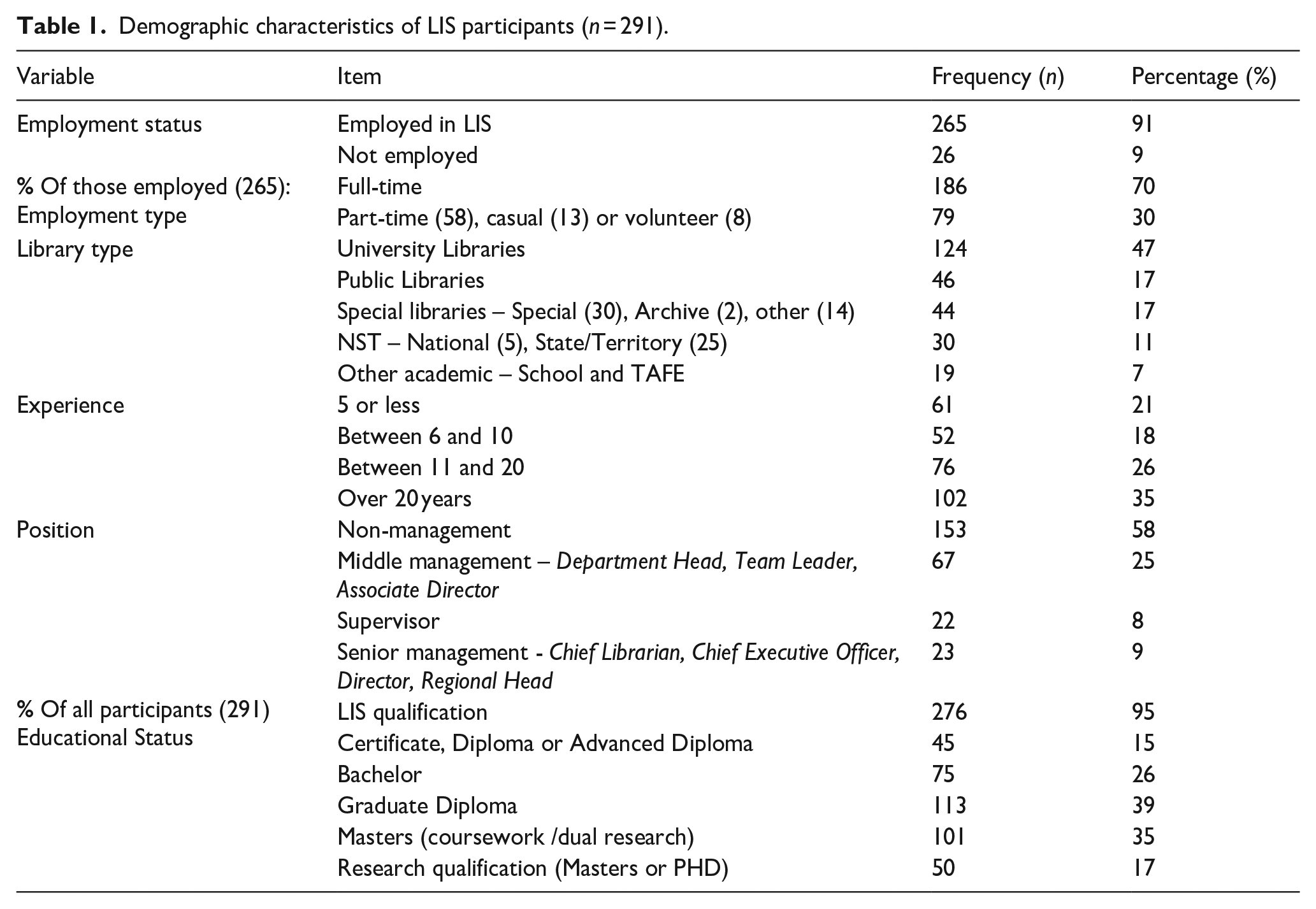
While the distribution of respondents aligns with several sectors reported in the latest available Australian Bureau of Statistics (ABS, 2011) data, there is a notable difference in the proportion of academic library respondents. According to ABS data, 19% of librarians in Australia work in higher education, whereas 47% of our respondents were from university libraries. This significant difference may be attributed to the self-selecting nature of the survey and the higher engagement of academic librarians in research activities. As such, academic librarians may have been more inclined to participate in a study focused on research engagement and dissemination.
Employment levels ranged from non-management (153), supervisor (22), middle management (67), and senior management (23). Years of experience were categorised into five or fewer years (61), 6–10 years (52), 11–20 years (76) and over 20 years (102). All responses were categorical and mutually exclusive. Personal demographic variables included region and state of residence, gender and birth year. Respondents’ educational status included whether they held or were studying towards a LIS qualification (276) or a research qualification (50) and qualification type. Multi-selection, pre-coded categorical questions were used, with an open response provided if categories did not apply.
Parametric and non-parametric tests were performed using SPSS statistical software, including t-tests and one-way ANOVA with post hoc Bonferroni testing and Chi-squared tests on contingency tables. Multiple response variables were converted to binary variables for analysis of group differences on the ‘future research’ Likert scale question. No significant differences were identified across all variables for LIS qualification, age, region or state, therefore these results are not reported. To illustrate major themes, quotes from qualitative data obtained via open questions are included.
A backward stepwise binary logistic regression analysis was performed to examine whether employment characteristics (e.g. library sector, support for research, research time available, inclusion of research in performance and planning, and type of research activity (conducting or applying)), along with respondent characteristics (e.g. age, gender, experience, and qualifications), had a predictive influence on research dissemination. Placeholder binary variables were computed for categorical variables comprising over two categories, and Pearson’s product-moment correlation was used to assess for multicollinearity. No variables with a Pearson’s r greater than 0.8 were used.
Findings
What support do LIS practitioners receive from their employers to do research?
A significant proportion of LIS practitioners reported a lack of research support from their employers, with 41% receiving no support (Table 2). Among those who did receive support, the most common were workshops or continuing education (40%) and dedicated work time for research (21%). Other forms of support included travel funds (12%), research design consultation (11%), research project funding (8%), and sabbatical-style release (5%). Notably, university-based practitioners had significantly more opportunities to attend workshops (48%) than those in TAFE or school libraries (11%). Additionally, part-time or casual employees had greater access to sabbatical-style release for research (10%) compared to full-time employees (2%), though such support was generally rare. An analysis of aggregated support categories revealed that 32% of respondents received employer support for only one of the identified categories, 14% received support for two categories, 6% for three categories and 6% for four to six support categories. Importantly, there were no significant differences in the overall availability of support across different library types or other employment and demographic characteristics.
Support options provided by employers to engage in research activities.
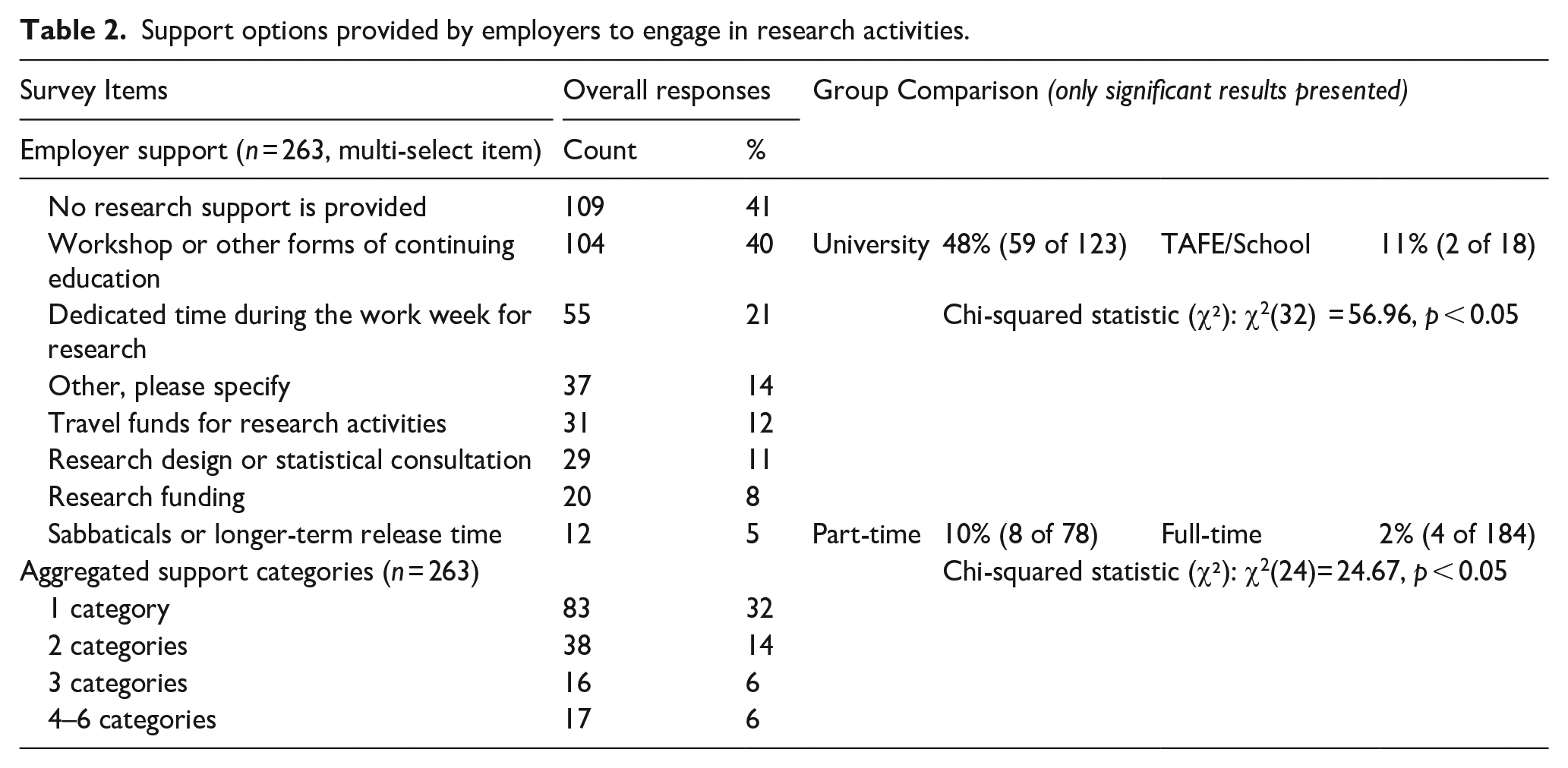
Qualitative comments from respondents indicated varied perceptions and needs regarding research support. Some (37) were unsure of the support provided or how research activities differed from daily tasks. Additional tangible supports suggested included mentoring (6), peer research events (2), funding for workshop or conferences (4), and study leave (2), were also reported. However, eight respondents noted that employer support was often provided on a case-by-case basis, requiring special permission.
Fifteen respondents were uncertain if research support was available; one noted, ‘I have not asked – generally we are very tightly funded, but there would be some flexibility if there was a really worthwhile project’. There was also uncertainty in distinguishing between research and daily tasks (3), with one respondent noting it ‘depends what you mean by “dedicated time” – my role requires me to seek comparators and understand the library context in which we operate’. Another respondent explained ‘Basic research to respond to customer’s needs is a core task. Time is allocated as required. This does not include LIS research’. Another said they were ‘Not entirely sure. It is not that clear to me what type of support would be offered if I wanted to conduct practice-based research’. Only 22% of respondents received time during regular work hours to conduct research. This support was more common among practitioners in national, state and territory libraries (37%) and special libraries (36%) compared to those in public libraries (9%). The mean full-time equivalent (FTE) allocated for research was 0.19 (SD = 0.20), with most respondents (73%) receiving between 5% and 20% of their work time for research. Respondents who expressed agreement with the statement ‘Currently there is too little time in my workday to do research’, were given significantly fewer hours to do research, averaging only 0.12 FTE or about 5 hours per week. In contrast, those who disagreed received a mean FTE of 0.28, or roughly 11 hours per week, which they considered sufficient (Table 3).
Library type differences in time allocated for research and satisfaction with research time.
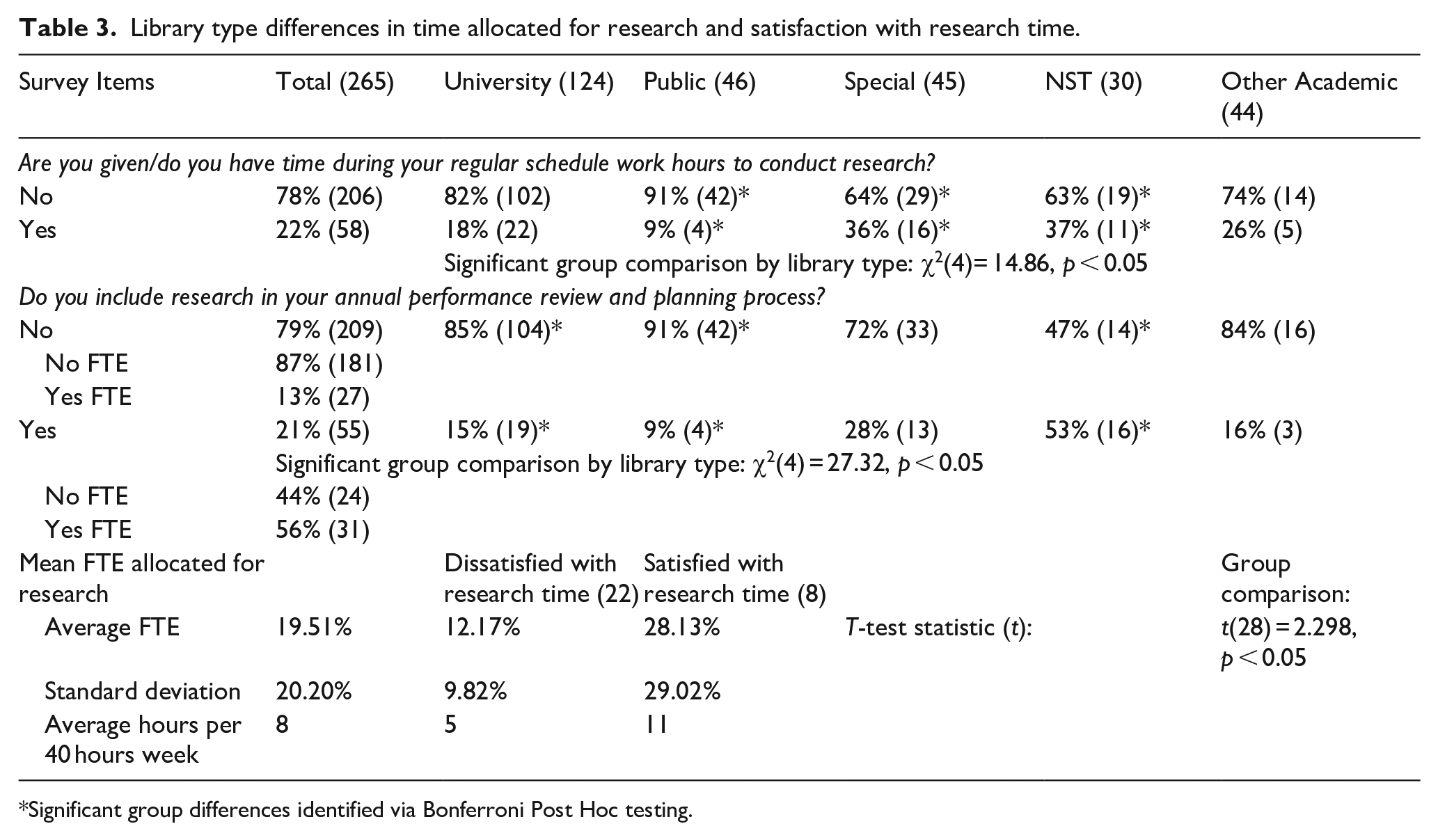
Significant group differences identified via Bonferroni Post Hoc testing.
Research was included in performance reviews and planning processes for 21% of respondents, but 44% of this cohort did not receive additional time for research during the workday. Participants from National, State or Territory libraries (53%) were significantly more likely to include research in performance reviews compared to those from University (15%) and Public libraries (9%).
Respondents who held or were studying towards a research qualification were significantly more likely to receive time to conduct research (41%); only 19% of respondents without a research qualification received research time. Similarly, 35% who held a research qualification included research in performance reviews and planning processes, compared to 18% of respondents without research qualifications. Of the 15 research-qualified respondents given time for research at work, only eight (53%) included research in performance reviews; this suggests research engagement for this cohort may be personally driven, with research not formally noted by employers.
Respondents without research qualifications from national, state and territory libraries were significantly more likely to incorporate research activities in performance reviews (48%). In contrast, the majority of their counterparts from university libraries (87%) and public libraries (91%) without research qualifications mostly did not include research in performance reviews (Table 4). A significant disparity in research time allocation for non-research-qualified respondents across different library types was also identified. More than a third of these respondents from national, state and territory libraries (35%) and special libraries (34%) were allocated time during work hours for research, while only 22% in school or other educational libraries, 13% in university libraries and 9% in public libraries received dedicated time. There were no significant differences in the number of respondents with research qualifications employed in different library sectors, and no significant differences in employment level or years’ experience for employer support.
Research qualification differences in time allocated for research by library type.
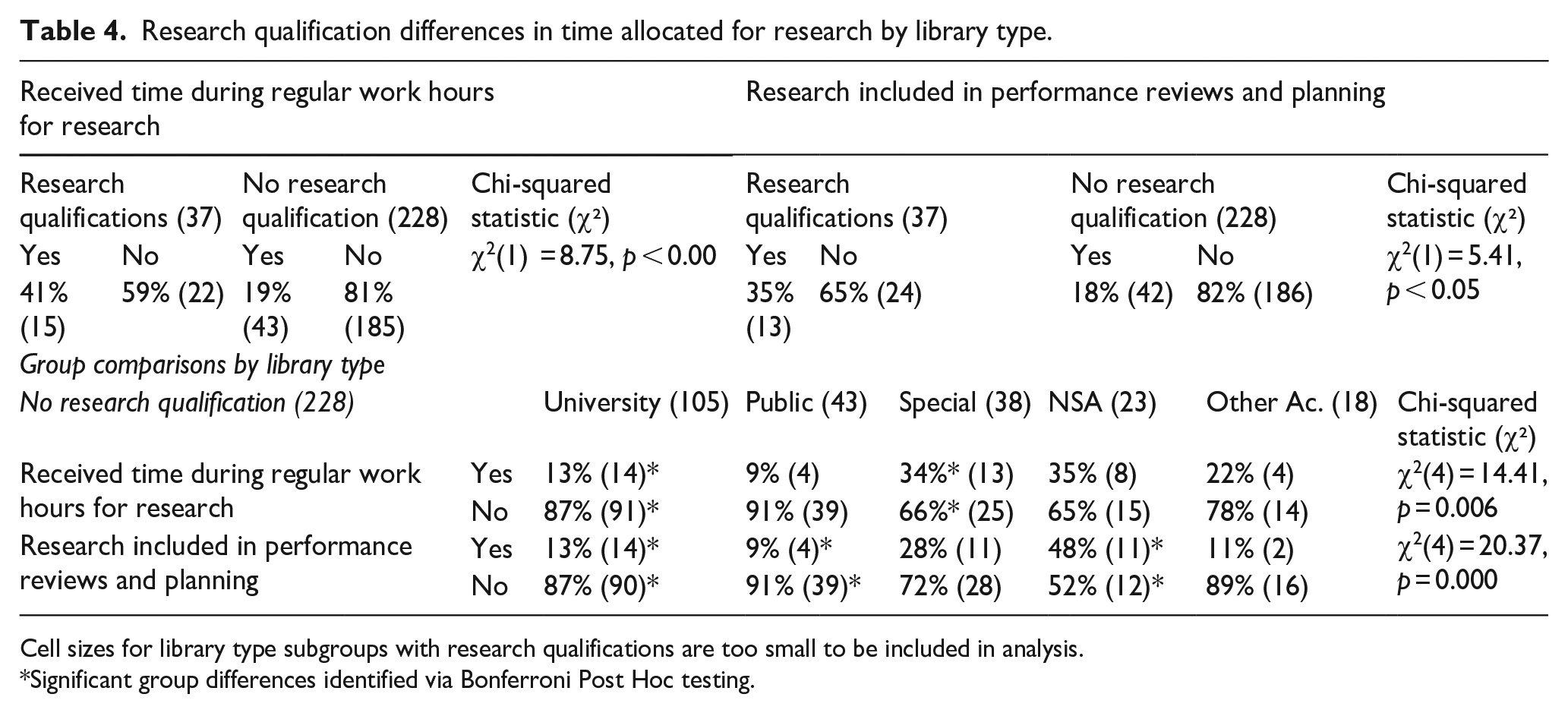
Cell sizes for library type subgroups with research qualifications are too small to be included in analysis.
Significant group differences identified via Bonferroni Post Hoc testing.
What are the LIS practitioners’ experiences in conducting and applying research?
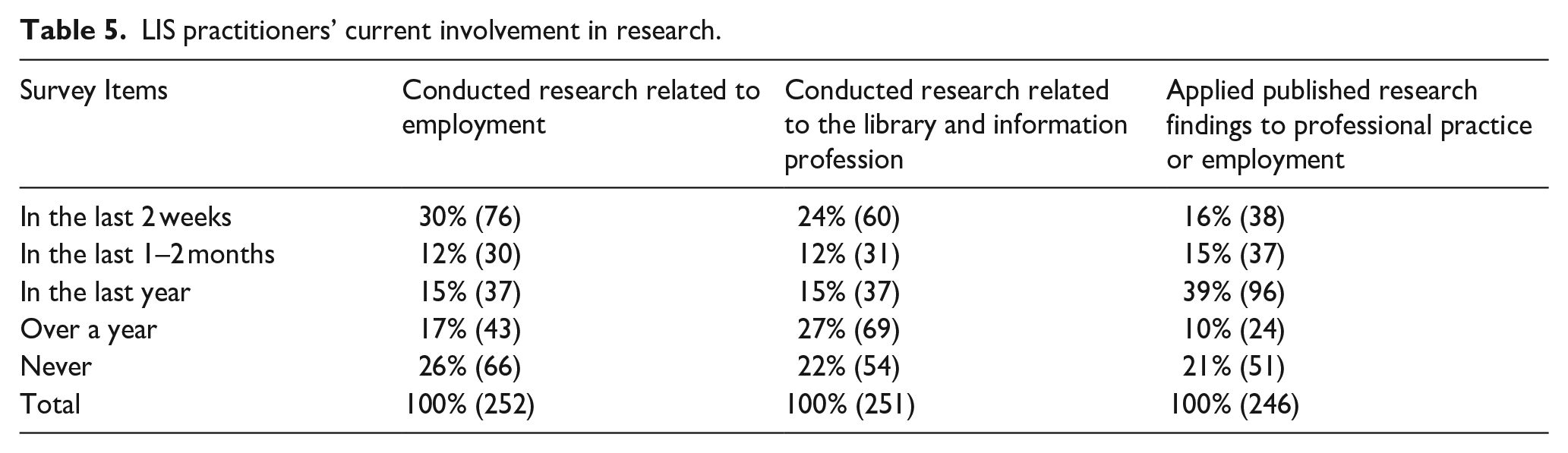
Research engagement among practitioners showed varying frequencies over time, influenced by the purpose behind the research (see Table 5). Interestingly, just over a quarter of respondents had never conducted employment-related research (26%). However, more than one-third (42% within the last 2 months) engaged in employment-related research semi-regularly. When it came to research related to the profession, the frequency was slightly different. Nearly a quarter of respondents (22%) had never conducted profession-related research. Among those who did, 24% had engaged in such research in the 2 weeks prior to the questionnaire, albeit less frequently than employment-related research. One in three respondents (30%) regularly applied published research findings to their professional practice or employment, with 15% having applied research findings in the previous 2 weeks and a further 15% within the previous 2 months.
LIS practitioners’ current involvement in research.
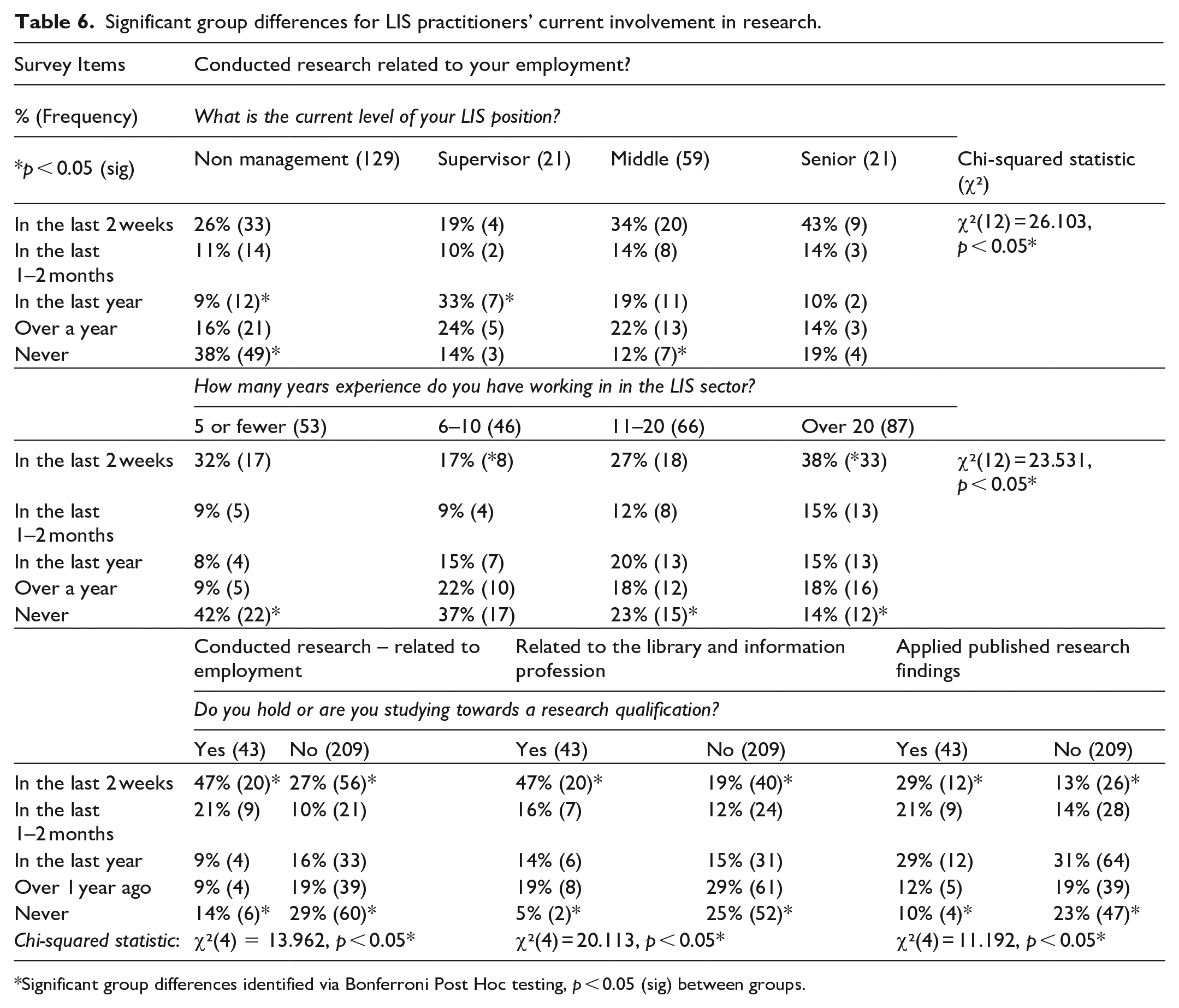
Significance testing revealed distinct demographic trends in practitioner involvement in research compared to trends noted for employer support and expectations of research (Table 6). No significant differences were identified across library sectors in the frequency of conducting research for the detailed frequency categories.
Significant group differences for LIS practitioners’ current involvement in research.
Significant group differences identified via Bonferroni Post Hoc testing, p < 0.05 (sig) between groups.
A significant difference was identified in conducting employment-related research based on employment level. Senior managers were more frequently involved, with 43% undertaking such research in the previous 2 weeks, and only 19% never doing so. In contrast, over half of non-management respondents had either never (38%) or over a year ago (16%) conducted employment-related research, while 26% had done so recently. Part-time or casual employees were significantly more likely to have never engaged in employment-related research (39%, 27 of 69) compared to full-time employees (22%, 36 of 162) (χ2(7) = 16.04, p < 0.05). Experience also played a significant role (χ2(21) = 32.58, p < 0.05). Those with over 20 years of experience were more likely to have conducted such research recently (32%), whereas 42% of those with five or fewer years of experience, and 23% with 11–20 years of experience, had never done so.
Respondents with research qualifications were significantly more likely to conduct research regularly. Specifically, 37% reported conducting employment-related and 42% conducted profession-related research in the week prior to the questionnaire research in the same period. Comparatively, only 19% and 13% of respondents without a research qualification conducted these types of research, respectively, during that time. Application of research findings to work was also undertaken more regularly by research qualified practitioners with 50% having applied research in the past 2 months, compared to 27% without research qualifications.
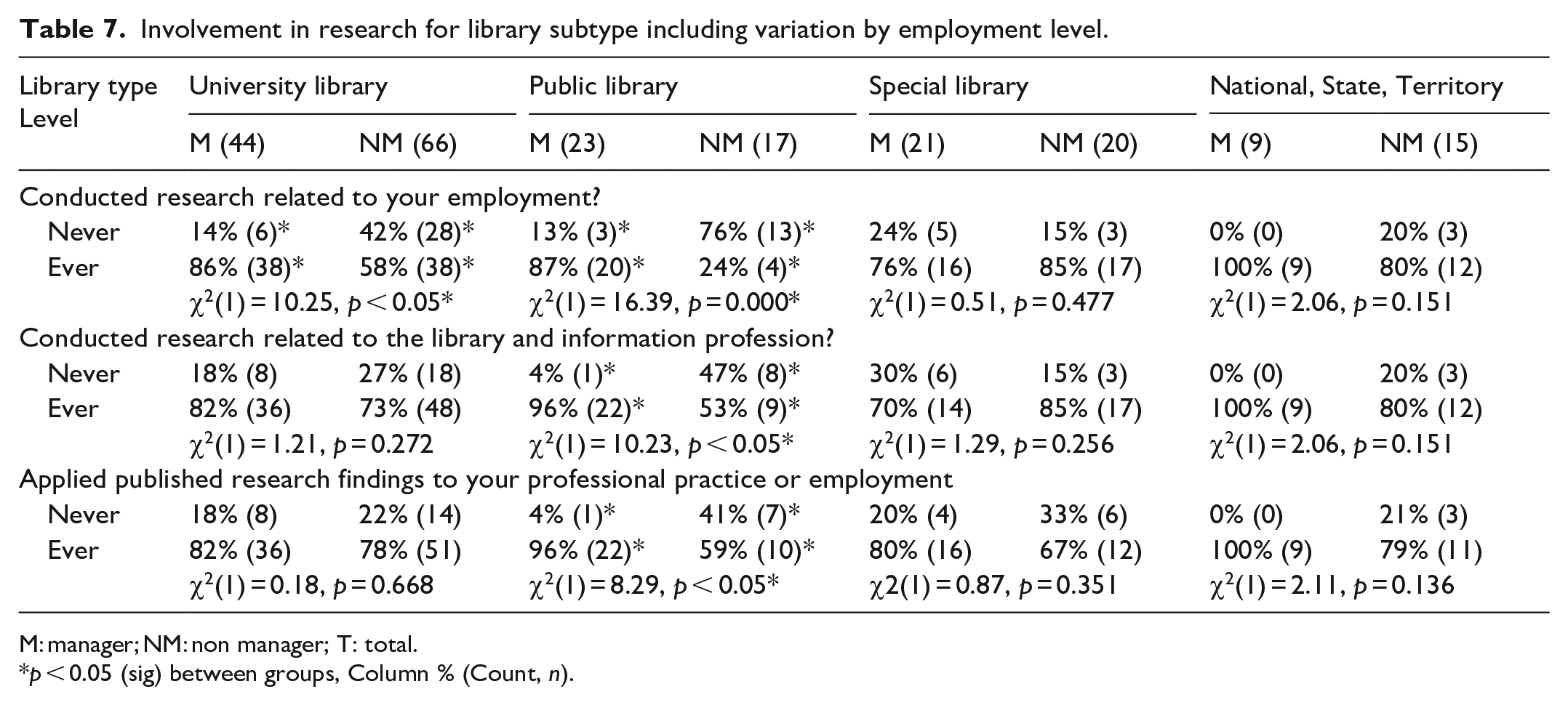
Further subgroup analysis revealed pronounced differences in research frequency between management and non-management positions across various library types (see Table 7). To enable sufficient sample sizes, supervisors, middle-management and senior management were combined into one group and compared to non-management employees. The ‘frequency of research’ categories were simplified into those who had engaged in research at some point versus those who had never engaged.
Involvement in research for library subtype including variation by employment level.
M: manager; NM: non manager; T: total.
p < 0.05 (sig) between groups, Column % (Count, n).
In public libraries, respondents in non-management positions were significantly more likely to have never engaged with research, compared to those in management. In university libraries, non-management respondents were also significantly less likely to have undertaken employment-related research but were on par with management in profession-related research and applying research to practice. Within special or other libraries, and within national, state or territory libraries, however, research across all three categories was comparable between respondents in management and non-management positions. The other academic library group was excluded from this analysis due to small sample size.
How do LIS practitioners share their research findings?
Respondents were asked about their methods for sharing the research results over the past 3 years. Results demonstrate that 43% of respondents did not share any research results during this period (see Figure 1). Just over a third (36%) wrote internal research reports at their workplace, but none presented these results within their organisation. Conference presentations were given by 22% at national, 17% at local, and 9% at international, with 11% publishing in conference proceedings. Blog publishing was undertaken by 12%. Book-related publications were undertaken by very few, with 5% contributing to a chapter and 3% publishing a book as a sole-author or co-author. Other options noted by 5% included having journal articles submitted or underway (3), publishing a newsletter (1), writing reports for external organisations (1) and presenting training sessions (1). No respondents had published an article in a refereed journal.
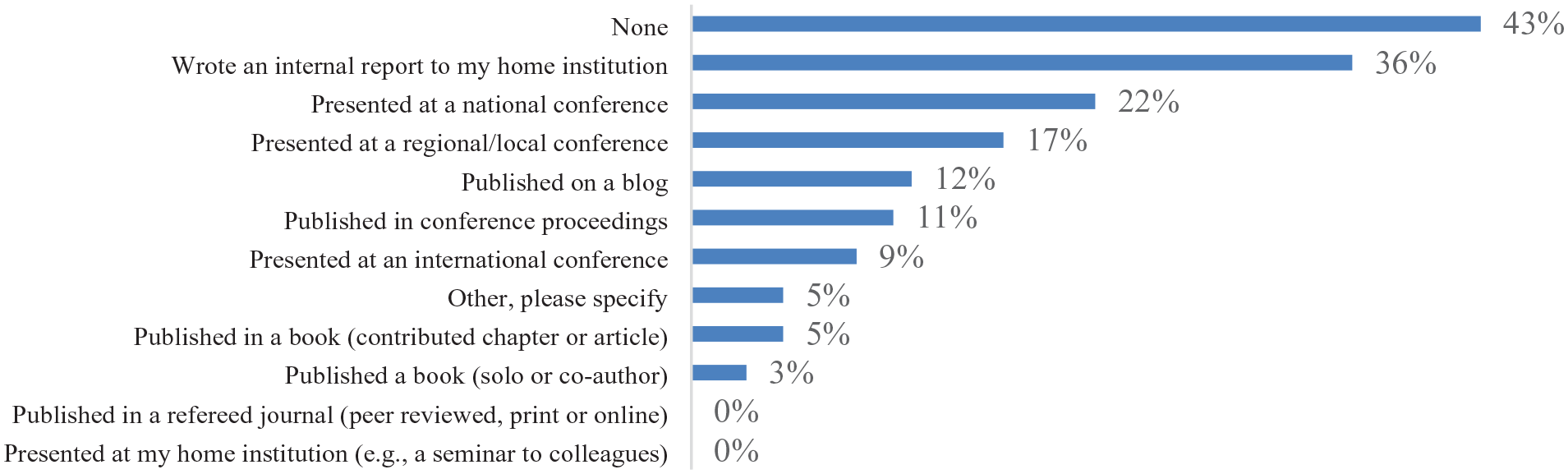
LIS practitioner dissemination of research results in the previous 3 years (n = 232).
Significant demographic trends were evident for trends in the dissemination of research results (see Table 8) related to employment characteristics, qualifications and gender. Female practitioners were more likely to report no methods for disseminating research compared to their male counterparts. On the other hand, male practitioners were significantly more active in sharing their research, with 22% having presented at international conferences versus only 7% of female practitioners. Additionally, 13% of male practitioners had completed book-related publications, compared to just 2% of female practitioners.
Significant group differences for LIS practitioners’ dissemination of research results.
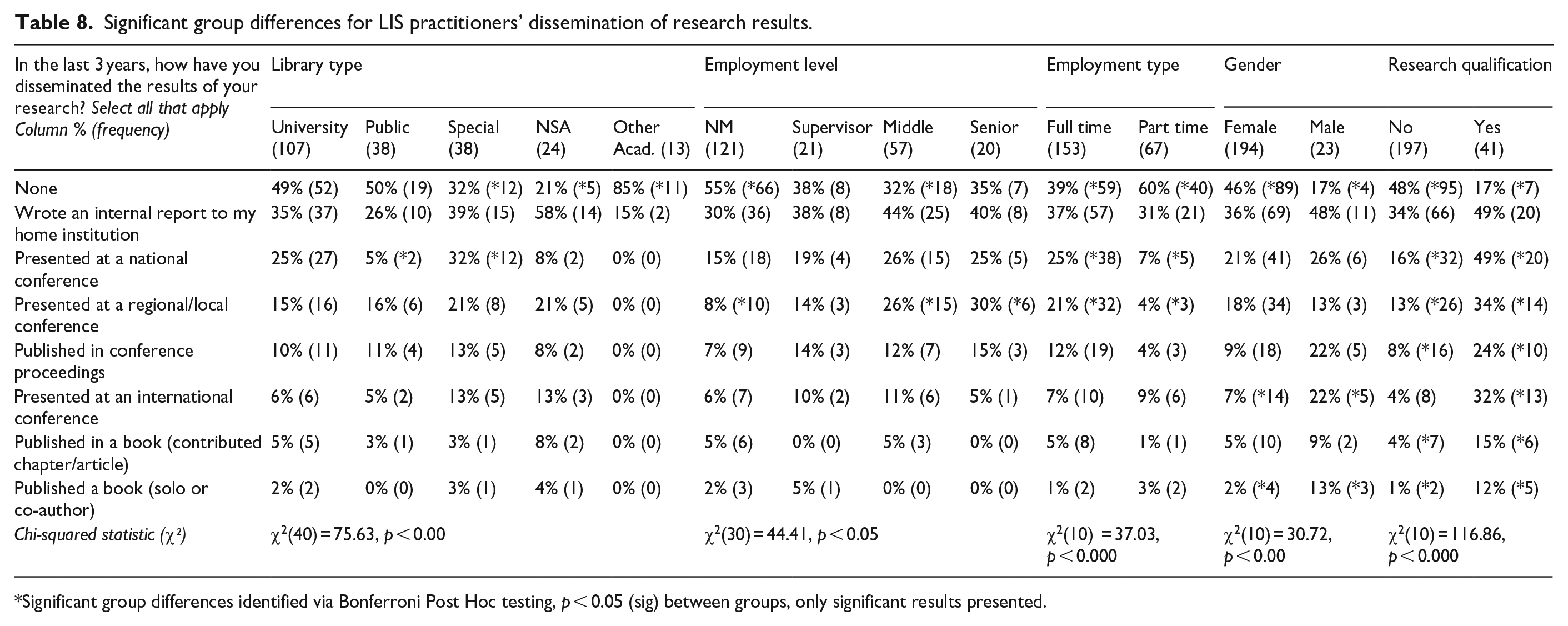
Significant group differences identified via Bonferroni Post Hoc testing, p < 0.05 (sig) between groups, only significant results presented.
For employment level, middle and senior management respondents were notably more active in sharing their research at conferences. Specifically, 26% of those in middle management and 30% in senior management positions presented at regional or local conferences, in stark contrast to just 8% of non-management employees. Full-time employees demonstrated a higher propensity for presenting at national (25%) and regional conferences (21%) compared to their part-time counterparts, who presented at rates of 7% and 4%, respectively. Respondents from special libraries were significantly more likely to have presented at a national conference (32%) compared to those in public libraries (5%). Lastly, Respondents with a research qualification were significantly more likely to have shared results at conferences, with the most frequent response being presenting at a national conference. A third of respondents with a research qualification had presented at a regional or local conference (34%) or an international conference (32%).
A significant proportion of part-time or casual practitioners (60%), non-management employees (55%), those from TAFE or school libraries (85%) and participants without a research qualification (48%) reported no methods for disseminating their research findings. This highlights a notable gap in the sharing of research results among these groups, underscoring the need for greater support and resources to facilitate the dissemination process.
A quarter of respondents (25%, 59) shared their research through a single venue, whereas 15% (34) used two venues and 16% (37) disseminated via three or more venues. A comparison using a Bonferroni correction revealed that those employing two or more venues tended to publish in a more diverse range of formats (see Figure 2). Respondents using only one venue primarily wrote internal reports (59%). Those using two venues were significantly more likely to present at national (47%) or regional/local conference (35%) and publish in conference proceedings (24%) compared to single-venue practitioners. Those using three or more venues were significantly more active across all conference types and were also more likely to publish on blogs and contribute to books. Specifically, they were significantly more likely to present at national (78%) or international conferences (46%) compared to those using only two venues. The most notable demographic trend identified was the presence of a research qualification. Practitioners with a research qualification were significantly more likely to use three or more publication venues (55%), while those without a research qualification were more likely to use only one venue (54%, χ2(2) = 16.33, p < 0.05).
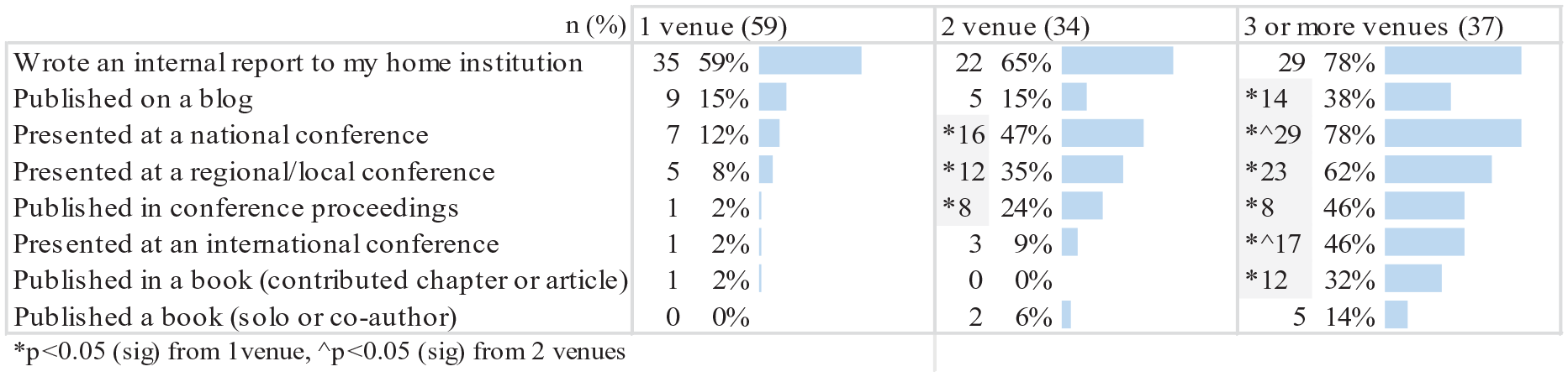
Changes in publication types with increased dissemination venues for LIS practitioners.
To what extent are LIS practitioners interested in engaging in future research activities and what support is needed?
LIS practitioners were asked about their future interest in conducting and sharing research. Half of respondents were extremely (27%, 69 of 251) or very (23%, 58) interested, with 19% (47) slightly or not interested. The mean Likert scale rating was 3.54 (SD = 1.18), indicating moderate to strong interest. Regarding preferred future research roles, 38% (96 of 254) wanted to be part of a team led by someone else, 30% (76) preferred independent research with expert supervision or guidance, and 14% (35) favoured solo research. Notably, 15% (38) were undecided, and 4% (9) did not want to participate in research teams.
Research qualifications significantly influenced these preferences. Those with research qualifications showed higher interest in future research (M = 4.38, SD = 0.96) compared to those without (M = 3.37, SD = 1.15, t(249) = 5.33, p = 0.000). Additionally, 37% (16 of 43) with qualifications preferred solo research, against 9% (19 of 211) without, who largely preferred team-led roles (42%, 88% vs 19%, 8, χ2(4) = 26.21, p = 0.000).
Open-ended questions revealed that time and support were critical needs for applying and conducting research. Time was frequently cited, with 69 mentions for applying research and 111 mentions for conducting it. Respondents emphasised the lack of time during work hours for reading research, with one respondent explaining ‘Time. . .is in very short supply at a public library and unrealistic given our funding realities’. Respondents also noted the need for dedicated time away from daily duties for research projects, with one person stating, ‘Time release away from daily duties [is needed] to concentrate on a research project’.
Support was the second major need, mentioned 35 times for applying research and 52 for conducting it. For applying research, 27 of the 35 mentions related to management, culture and organisational support, as illustrated by the following comment: ‘Support from management in the library I work in [is needed to apply research results in practice]. We tend to have an impulsive, reactive rather than strategic planning approach’. For conducting research, 22 of the 52 mentions highlighted the need for internal support and incentives, ‘More support [is needed] from within the organisation I work for and potentially incentives for the organisation to support LIS professionals wishing to pursue real research’.
Respondents also identified sector-specific gaps in research priorities. One person noted, ‘A library that supports research [is] perhaps a state library or specialist library that does this, rather than a public library that [has] a different focus’. Funding was a recurring theme, mentioned 14 times for applying research and 29 times for conducting it. A respondent identified a need for ‘lots of sustained support during the [research] process which. . .is unrealistic given our funding realities’. Time-related support was noted six times for applying research and 26 times for conducting it. Mentorship, guidance or peer support was less frequently cited (9 times for applying and 13 times for conducting research). Although one respondent noted the value of both ‘Hands-on guidance in conducting research within a professional practice setting [and] Mentoring’, the lack of comments on this topic suggests that practitioners do not see mentorship as a highly beneficial resource for supporting research.
How to ensure optimal employer support for encouraging dissemination of practice-based research
To understand how workplace and demographic factors influence the likelihood of practitioners sharing their research, a logistical regression was conducted using a sample of 175 cases with complete data. We categorised respondents into two groups: those with experience in sharing research (coded as 1) and those without (coded as 0). Additional binary variables were created to account for workplace or demographic variables that were not originally coded as binary. Three specific types of research experience were also included: conducting employment-related research, conducting research related to the LIS profession and applying published research in professional practice.
Our analysis (presented in Table 9) revealed that place of employment was the most significant factor. Practitioners working in national or state/territory libraries were 30 times more likely, and those in special libraries were 25 times more likely to share their research compared to others (p = 0.014 and p = 0.012, respectively). Secondly, having dedicated time during work hours for research activities made practitioners 12 times more likely to disseminate their findings (p = 0.000). Practitioners who had previously applied published research to their practice were 8 times more likely to share their own research (p = 0.001) and practitioners who had conducted research related to the LIS profession were 5 times more likely to disseminate their research (p = 0.002). Lastly, full-time employees were three times more likely to disseminate their research (p = 0.010) and male practitioners were seven times more likely to disseminate research compared to female practitioners (p = 0.018). The model explained 51.9% (Nagelkerke R 2 ) of the variance in dissemination experience and correctly classified 78.3% of the cases.
Logistic regression of demographic and employment variables on dissemination experience..
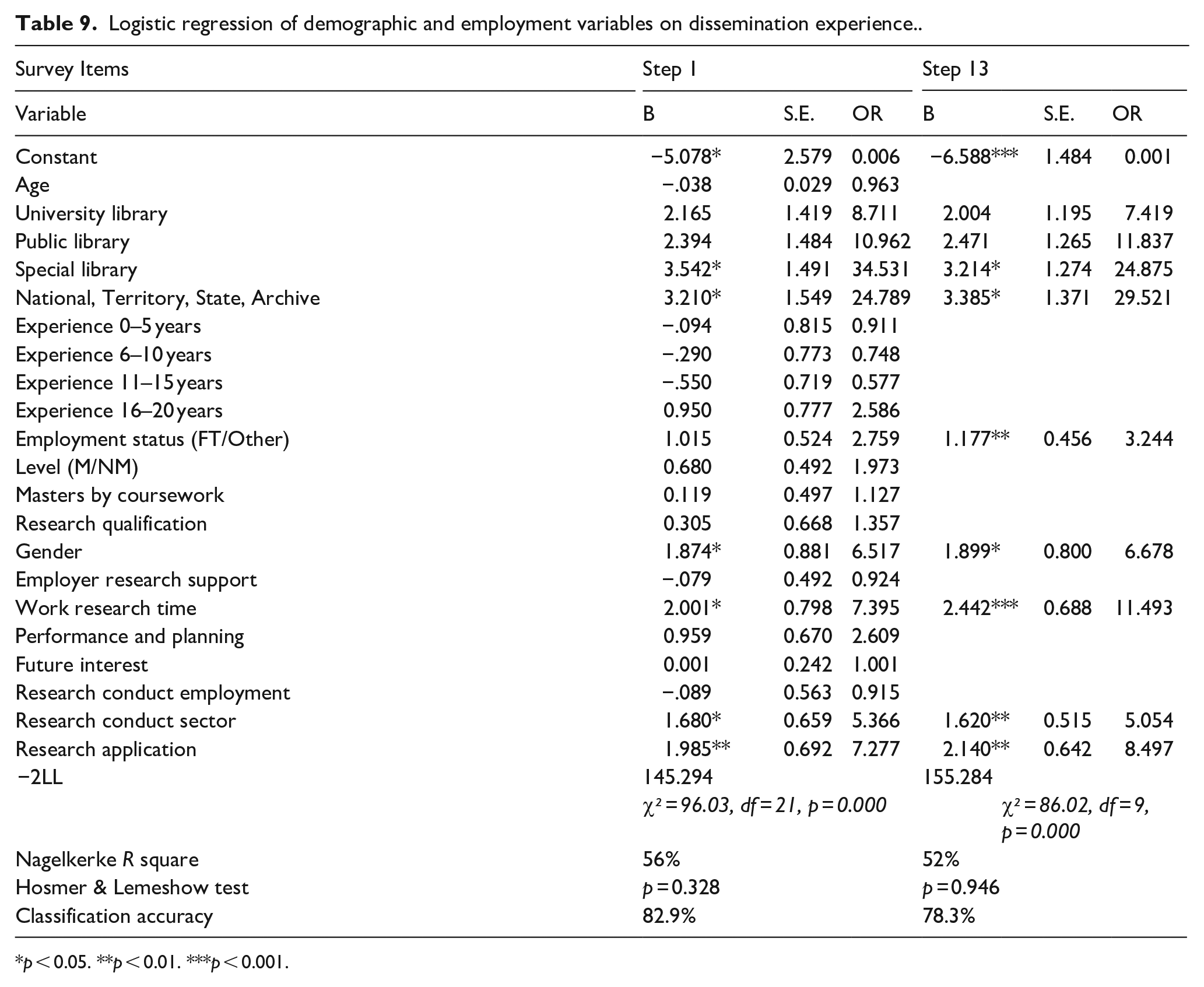
p < 0.05. **p < 0.01. ***p < 0.001.
Interestingly, other factors such as age, level of employment, years of experience, postgraduate coursework master’s or research qualifications, future research interest, and employer support showed no significant impact on the likelihood of disseminating research. Additionally, whether research activities were included in performance reviews or planning and research related to personal employment also had no significant effect.
Discussion
Motivating LIS practitioner-researchers requires targeted employer support
A substantial finding from this study reveals that despite a lack of employer support, many Australian LIS practitioners are actively engaged in research. Specifically, 74% are conducting research related to their day-to-day work practices, while 78% engage in research related to the broader LIS profession, and 77% apply published research findings to their professional practice. These findings are consistent with global trends; for instance, Kennedy and Brancolini (2018) found that 77% of their sample in 2015 and 62% in 2010 had conducted research since completing a LIS degree, while Babb (2017) reported that 79% of librarians conduct research as part of their duties.
Previous studies, such as Kennedy and Brancolini (2018), have shown that academic librarians generally have access to research support, with only 5.62% (37 of 658) reporting no access to employer support. In contrast, our study found that 41% of all respondents reported receiving no research support from their current employers. Notably, 34% of university or academic librarians in our study reported receiving no support, which is not significantly different from the overall average of 41%. This suggests that the lack of employer support for research is a widespread issue across different types of libraries in Australia.
In contrast to studies from the US and Canada, where institutional support significantly correlates with increased research activities (Kennedy and Brancolini, 2018; Powell et al., 2002), our study highlights Australian practitioners’ motivation to conduct research despite minimal support. This raises important questions about the intrinsic motivations and external factors driving Australian practitioners’ research activities beyond employer support. Future research should delve into these factors to provide valuable insights for employers and policymakers aiming to cultivate a research-centric culture in the field.
Time allocation for research activities
Only 20% of practitioners in our study reported receiving dedicated work time for research activities. This finding underscores the significance of time allocation in fostering research engagement among librarians, which is consistent with Powell et al. (2002), who observed higher research engagement among librarians with scheduled research time. Most respondents allocated between 5% and 20% of their workweek to research, aligning with previous studies’ findings. For example, Fox (2007) found that librarians committed 10% of their time to research, though ideally they needed 15%. Respondents who found their research time sufficient averaged 28% (~11 hours) per week, while those with insufficient time averaged 12% (~5 hours). These findings align with Berg et al. (2013), who identified 25% as the ideal time allocation for research.
Contextual differences in research culture
Most previous studies on practitioners’ research engagement originated in the US and Canada, focusing on academic libraries where practitioners have academic status, are required to engage in research and often have dedicated research-related work time. This study extends this literature by providing insights from Australia, where academic status is not the norm. The findings suggest that workplace type significantly impacts respondents’ experiences in two ways: (1) the time provided by employers for research activities and (2) the level of research engagement. National and state/territory libraries, as well as special libraries, provided more time (37% and 36%, respectively) for research, while public libraries devoted almost no time. This disparity risks creating a research divide and minimises the contributions of public library practitioners to LIS scholarship.
Sector-specific research engagement
Research engagement varied significantly across different library sectors in Australia. High research engagement rates were evident in national and state/territory libraries and special libraries with 87% and 74% of practitioners involved in research activities, respectively. Research activity among university librarians included 69% involved in employment-related research, 77% in profession-related research and 88% applying research findings to practice. In comparison, public libraries showed slightly lower engagement rates (60% in employment-related research, 78% in profession-related research, and 80% applying research findings). The greater support for research in Australian national or state/territory libraries, and special libraries, appears to result in higher research involvement. However, the limited support for research in public libraries does not equate to a lack of research activity, as six in ten public librarians had previously engaged in research. Greater insight into the research culture within public libraries is needed to ensure this cohort is sufficiently supported in developing their research capacity and capabilities.
Implications for research-qualified practitioners
Research-qualified practitioners in national or state/territory libraries and special libraries reported comparable levels of research time and support. This suggests a robust research culture that values employee contributions to research outcomes. In contrast, research engagement in public and university libraries appeared more dependent on individual initiative rather than institutional support or recognition. This is particularly interesting for university-based practitioners, given that they are employed by research organisations, where research-informed practice and acknowledgement of contributions to research are expected for academic staff. Less than half of research-qualified respondents across sectors received dedicated research time, indicating a missed opportunity to leverage practitioners’ research capabilities effectively.
International comparisons
The disparity between Australian practices and international norms, particularly in the US and Canada, where academic librarians commonly receive institutional support and recognition for research, underscores the need for Australian universities to align more closely with international standards. The limited inclusion of research in performance reviews for non-academic staff further highlights the gap in supporting practitioner-researchers in Australian university settings.
Leveraging conferences as a first step for Australian LIS practitioner to share research
Although 73% of Australian LIS practitioners engaged in employment-related research, only 57% reported involvement in publishing their research. In contrast, Babb (2019) found that North American librarians 79% regularly participated in research activities, with a significant proportion (79%) actively publishing. Babb also noted that 67% of respondents considered conducting research mandatory for job descriptions or promotion, while 43% indicated research was encouraged but not required. The limited inclusion of research activities in performance reviews and planning processes (9%) in Australia reflects a lower emphasis on research within the sector.
Academic status and international research culture
There are notable disparities in research dissemination venues between Australian and international practitioners. For instance, Kennedy and Brancolini (2018) and Albarillo et al. (2022) focus on academic librarians in North America, documenting national conferences, refereed journals, and workplace presentations as primary sharing channels. In contrast, our study found that Australian librarians, including academic librarians, favour internal reports for their workplaces and presenting at national and local conferences. Notably, no respondents in our study disseminated research via refereed journals or presentations in their institutions. This highlights a difference in dissemination practices and may reflect differing levels of support and expectations for research engagement between Australian and North American libraries.
Both Babb (2019) and Kennedy and Brancolini (2018) focused on academic librarians, who often benefit from academic status requiring publication for tenure or promotion. Academic status also provides a strong research culture and comprehensive support such as travel funding, study leave and encouragement to pursue advanced degrees (including PhDs), facilitating increased research productivity and collaboration with academic researchers.
Influence of employment sector on dissemination activities
In our study university library respondents comprised only 47% of the sample. While these librarians engage in research, they receive less institutional support and the academic culture differs significantly compared to their counterparts in Canada and the US, resulting in lower research output and collaboration rates. This underscores the importance of academic status in comes with research requirements, it also signifies a more robust support system and a culture that actively encourages and facilitates research activities for practitioner-researchers. These differences contribute to the distinctive landscape of research engagement between Australia, Canada and the US.
Employment type significantly influences dissemination activities among respondents. National, or state /territory libraries and special libraries exhibit higher rates of research dissemination compared to public and other academic libraries which show minimal engagement. Special library respondents are notably more active in presenting at national conferences, while public library respondents had almost no conference participation. Despite high research engagement levels, only half of university library respondents disseminate research, typically through internal reports or national conferences. These findings highlight a potential publishing divide in Australia, underscoring the need for equitable research engagement across all library sectors to support evidence-based practices and sector-wide innovation.
Avenue for research dissemination
One-quarter of respondents primarily disseminate research through internal reports, contrasting with Babb’s (2019) findings where a third (34%, 10 of 23) disseminated research externally and only three (10%) disseminated only internally. Malik et al.’s (2023) study of academic librarians in Pakistan found 80% of 203 respondents disseminated research externally, with most (63.5%) using journal articles and 43.8% using conference or workshop presentations. Our findings underscore the importance of leveraging conference participation and training in writing and presenting to empower the Australian LIS sector to effectively utilise these venues and respond to calls to ‘announce, advocate and communicate’ (Thorpe, 2021) research.
Supporting Australian LIS practitioners to share research
Writing, publishing and presenting research are the final steps research (Hallam, 2018: 457). However, our study reveals a potential undervaluation of research tied to practical aspects of library operations. Through our logistic regression model, we investigated how personal and workplace characteristics influence practitioners’ engagement in disseminating research findings. Notably, practitioners who engaged in research related to the broader LIS profession, rather than solely their immediate employment, demonstrated a heightened inclination to disseminate their findings. This finding prompts critical reflection on the recognition and valuation of research tied to everyday library tasks. It suggests that practical research may be undervalued, potentially limiting opportunities to share innovative practices with the wider sector. This observation aligns with previous research by Chang (2016) and corroborated by the Evidence Base (2021) report, highlighting a pervasive tendency to undervalue research-related library activities within the broader research landscape. This discrepancy may stem from various factors, including the nature of research topics, the methodologies employed or practitioners’ intrinsic motivations.
Future research should explore practitioners’ engagement in professional research aligned with day-to-day responsibilities, which may not align with academic standards of novelty but are personally meaningful and interesting to practitioners, irrespective of immediate work requirements. Understanding these dynamics could illuminate barriers to dissemination and inform strategies to integrate research into daily library workflows.
Enhancing research integration and dissemination
The application of research findings to professional practice strongly predicts dissemination engagement, indicating that practitioners who utilise others’ research are more likely to engage in research writing and sharing themselves. This underscores that research activities are primarily driven by employees. However, integrating research into the daily workflow of library tasks and providing enhanced support for dissemination could enhance writing and sharing practices. The study underscores the critical role of allocated research time during the workday for dissemination, with 36% of respondents receiving research time sharing findings, compared to only 8% who do not. Additional research is needed to fully comprehend the impact of allocated research time on Australian practitioners’ writing and sharing experiences.
Addressing disparities: Employment status and gender
There are disparities in dissemination outcomes based on employment status and gender, as 62% of full-time employees disseminated results compared to 40% of part-time or casual employees. Gender discrepancies in predicting dissemination outcomes are the most concerning finding of our study. Despite comprising only 11% of respondents, males had a dissemination rate of 82% compared to 54% among females. Additionally, female practitioners were less likely than males to engage in dissemination activities overall. Males also exhibited higher rates of presenting at international conferences or publishing book contributions. However, our results indicated no gender differences in research engagement, support from employers, or time allocated for research between the two cohorts. Further research is needed to uncover the specific barriers hindering female respondents from publishing research outcomes and participating in conferences, thereby ensuring equitable opportunities for all practitioners.
Reframing LIS practitioners as research partners: The role of collaborative research
Global expectations within the LIS sector increasingly emphasise recognising practitioners’ research contributions. Previous international studies suggested moderate interest in research among 38% of practitioners (McNicol, 2004). However, our study reveals a significant increase, with 50% of respondents expressing interest. Many prefer collaborative research settings, either joining teams led by others (38%) or pursuing independent research under expert guidance (30%). These findings align with Lessick et al.’s (2016) study, where practitioners expressed desires to collaborate on research projects with academics and/or more experienced practitioner-researchers. Additionally, the Research Assistance and Development for Australian Researchers (RADAR) programme (Given et al., 2022) serves as an exemplar of an evidence-based model for building collaborative research teams between LIS academics and practitioners.
Advantages of research-qualified practitioners and research collaborations
Research-qualified practitioners across all library sectors demonstrate higher research engagement, receive dedicated research time and disseminate findings more widely. They are poised to lead practice-based research teams and mentor others, yet many still prefer independent work. Overcoming this preference barrier is crucial for fostering a collaborative research culture in LIS practice.
Training practitioners in collaboration skills while undertaking research qualifications would empower them to effectively lead teams and supervise projects. Additionally, LIS researchers possess expertise in discipline-specific research processes, making them well-suited to actively partner with practitioners and drive research projects forward. Nguyen and Hider (2018) argue that LIS academics should forge robust partnerships with librarians to enhance the capabilities of practitioner-researchers as well as benefit their own research. They propose initiatives such as mentoring programmes and research training courses. The RADARprogram exemplifies the benefits of apprenticeship-based models in cultivating collaborative research practices (Given et al., 2022).
Addressing time and support barriers
As practitioners are encouraged to develop and enhance their roles as partners in, and pioneers of, research (Evidence Base, 2021), the field must reduce or mitigate the key barriers to research identified in this study: time and support. These are often cited as barriers to practitioner research (Jamali, 2018; Partridge et al., 2024; Turner, 2002), yet these are particularly salient in the Australian context, where academic status is not the norm. There are long-term benefits for both LIS practitioners and LIS academics in building research networks, developing communities of practice and enabling practice-based, collaborative research practices (Given et al., 2022). Doing so will narrow the gap between LIS research and LIS practice, and between LIS researchers and LIS practitioners (Hall et al., 2022).
Conclusion
This study provides valuable insights into the research activities of Australian LIS practitioners and highlights the support necessary from employers to foster research and facilitate dissemination. Despite practitioners’ active engagement with research, there exists a noticeable gap in the support provided across different library sectors. Identifying these gaps underscores key areas where employers can enhance their support for research-related activities.
The observed skew in the sample distribution towards academic libraries highlights a potential area for targeted interventions to encourage research engagement among public and school librarians. We acknowledge that this imbalance could influence the results, particularly in relation to the findings on research engagement across sectors. However, the study’s focus on exploring research activities across different library sectors remains relevant, and the larger representation of academic librarians provides valuable insights into a group heavily involved in research. We recommend that future studies consider stratified sampling techniques or targeted outreach to underrepresented sectors to achieve a more balanced sample distribution.
The study reveals a significant limitation in dedicated research time, particularly evident in public libraries. However, where practitioners had allocated research time, a clear positive impact on research engagement and dissemination was observed. For organisations facing budgetary constraints or lacking clarity on how to initiate support, allocating at least 20% of practitioners’ time to research emerges as a valuable investment, yielding tangible outcomes.
The findings also highlight concerning trends hindering research communication among Australian practitioners. There is a risk of a geographic research dissemination divide, with Australian practitioners less active than their international peers in sharing results. Moreover, the types of library and information service significantly influence respondents’ dissemination activities, pointing to potential disparities in dissemination practices within the Australian sector. Supporting practitioners to present at conferences is an important step towards increasing practitioners’ ability to share results.
Practitioners are more inclined to share results when conducting research related to the broader LIS profession rather than focus solely on their employment. This underscores the need for greater support and encouragement for practitioners to engage in research that documents their professional practice and demonstrates benefits to local communities. Facilitating dedicated time during the workday for research activities is crucial in this regard.
To effectively support practitioners throughout the research lifecycle, employers must actively promote research activities and facilitate the dissemination of research outcomes, enabling innovations in practice to reach external audiences. Merely providing time and support for research activities is insufficient; efforts should extend to enable the writing and dissemination of research outcomes through conferences and ultimately refereed publications. This comprehensive approach ensures that research funds and time are utilised effectively, documenting Australian innovations and contributing significantly to the global professional knowledge base.
In conclusion, enhancing support for research activities among Australian LIS practitioners is essential for fostering innovation and advancing the field. By addressing gaps in support, promoting dissemination practices, and encouraging research about the profession, employers can empower practitioners to contribute meaningfully to the advancement of LIS knowledge and practice worldwide.
Footnotes
Acknowledgements
The authors would like to thank the library and information practitioners who generously contributed their time and thoughts to this research project. The authors would also like to thank the Australian Library and Information Association, and National and State Libraries Australasia for the support as project partners.
Declaration of conflicting interests
The author(s) declared no potential conflicts of interest with respect to the research, authorship, and/or publication of this article.
Funding
The author(s) disclosed receipt of the following financial support for the research, authorship, and/or publication of this article: This work was supported by the Australian Research Council under Grant LP150100456.
