



Abstract
Love is a cornerstone of the multispecies family. It has implications for how companion animals and their human companions know and treat each other. Descending through the universe of living to the universe of information, this paper aims to understand information in the deep engagement between humans and companion cats and dogs. A phenomenological lens of Information Experience and Posthumanism is combined with ethnographic methods to guide the research. I start with the represented affective information in human-animal material and embodied encounters, including in relation to human beds, house doors, room lights, animal cuddles, and touch. Then, I describe human and animal ways of understanding the inner and emotional lives of the other as another existential layer of information interaction in these encounters. To inform the examination of loving and living with cats and dogs, I show how human participants, who have more power in the relationship, learn to give their animals more agency and let the animal be through informational activities of recognizing species differences, imitation, and considering the animal’s best interests within the family. The study provides insights for applying love as a way of understanding information in more-than-human relations, highlighting meaningful information shared between lovers (or knowers), encompassing both humans and animals, as they contribute to each other’s information making and taking.
Keywords
Introduction
Humans are companion species existing within a world shaped by interactions, both intra- and inter-species (Potts and Haraway, 2010: 322). Actually, they cannot live and work without a process of becoming with other humans, animals, plants, technologies, and things around them. Companion animals and humans (capable of thoughts, feelings, and recognized as sentient beings) form close encounters across species in the homes and cities (Cudworth, 2011), forming multispecies families.
Multispecies families represent a form of more-than-human life. They are characterized by the active inclusion of a non-human member in family development through companionate relations, shared spaces and activities, and meeting the needs of all species (Franklin, 2006; Smith, 2003). The label of a companion member can apply to any species. In this paper, I restrict the application of the term to the most typical candidates: (1) humans, as they cannot be excluded from the concept of family, (2) cats, and (3) dogs. Cats and dogs are selected for their evolutionary basis to communicate with and understand humans, and staying with humans voluntarily (Pongrácz and Dobos, 2023). Various species can become companions through processes such as epigenetics, training, genetic selection, or habituation. However, they may primarily offer hedonistic value without fulfilling a social role in the family, or simply tolerate captivity (Pongrácz and Dobos, 2023).
The multispecies entanglement in such families shapes and is shaped by the information that comes from and into humans or non-humans, living or non-living things, and is taken into use. From an information behavior approach, Huvila (2022) refers to this interplay as the nexus of participatory information making and taking, rather than that of a flow of information from a human/non-human source to its user. All species take up or create a variety of informational elements (i.e., information forms, genres, channels, actions) as an (alternative) way of sensemaking and communicating across species to shape shared meanings in daily life with each other (Solhjoo et al., 2024).
This article draws attention to the existence of the “red thread of information” (Bates, 1999: 1048) woven across the emotionally entangled lives of companion humans, cats, and dogs. The red thread symbolizes the continuous and interconnected informational elements that run through the living universe. Bates (2007, 2022) articulates that within the universe of living, all animals and humans produce and engage with documentation (or information) in various ways, channels, and layers.
This is a phenomenological paper with seven sections. The first two sections present the research background, significance, and objectives, followed by the methodology section. Then, there are three sections of research findings as thematic clusters of information experience. In the concluding section, research findings are revisited as a means to discuss the implications for loving or knowing (other species) as an existential way of understanding information in more-than-human relations.
Research objective and significance
Sometimes there is a lack of understanding across species that can increase problematic behaviors and have a negative effect on the welfare of the whole family, especially the animals (Bouma et al., 2020; Rohlf et al., 2010). Living with other species with different embodied and cognitive capabilities, require an understanding of it that must include a sense of inner being and not just its outer meaning and behaviors (Fudge, 2014). Most previous studies at the intersection of information behavior and human-animal relationship were built on a very limited view of the nature of information, pre-designated information resources, such as recorded health information on the internet or veterinary client handouts (e.g., Baxter and Viera, 2020; Kogan et al., 2010; Kuhl et al., 2021; Plantz, 2013). They overlooked the numerous information flows within daily social interactions, affiliation, play, or simply living with a companion animal. This study significantly broadens our comprehension of information by examining exchanges among beings unable to communicate verbally. While our discipline often views information as objective and text-based, confined to digital formats and documents and “sources,” this research redefines it within social dynamics and informing interactions across different species.
Love is a cornerstone of forming and informing a multispecies family. Because it has implications for how companion partners know and treat each other (De Jaegher, 2021). One of the precious moments of my daily life is when I take my companion dog to the neighborhood park. It is his time to do what he wants, and I follow him. Sometimes, in a safe and quiet area, I close my eyes, grab the leash tight, and let him lead me. Within this enjoyable daily activity, I have learned to turn my attention to smells and noises around us and tried to feel the park differently. I believe love is the starting point of my engagement with my dog and his way of feeling, doing, and knowing the world. According to Cudworth (2011), what draws humans and certain animals into emotionally entangled lives is the fact that animals have their own lives and perspectives (p. 155). My dog and all the previous companion animals in my life, inspired me to engage in something beyond what I had already learned and knew in information behavior studies. This article highlights the significance of love and affective engagement in shaping shared understanding within multispecies families.
Experiencing affective information has been a matter of keen interest in Information Science since the 1990s (Hartel, 2019). Affect is an umbrella concept that encompasses positive and negative emotions, feelings, and moods (George, 1996: 145). By adding more sensitivity and intimacy to the field, the affective turn touches on various aspects of how individuals interact with information, including their affective and inner states while seeking information, communicating, making meaning, or making decisions (e.g., Kari and Hartel, 2007; Kuhlthau, 2004; Nahl and Bilal, 2007). Affective information is intertwined with cognitive and sensory factors of experience (Savolainen, 2014, 2020). The recent issue of Library Trends, the “Joy of Information,” explores positive emotionality (Hartel and Siracky, 2022). Love and joy are introduced as approaches to a nuanced and holistic understanding of information behavior (Savolainen, 2022), and to more inclusive and empathic information practices that center the voices and experiences of all individuals (Greenshields and Polkinghorne, 2022).
While the affective turn has significantly advanced our understanding of information within human contexts, there is currently a gap in studies that apply affect to information experiences emerging within more-than-human companionship. Exploring information shaping mutual understanding and cohabitation across different species, particularly when they have disparate bodily and cognitive configurations, may necessitate a deeper consideration of affective factors.
De Jaegher (2021), a philosopher and cognitive scientist, proposed loving as a pivot point for understanding how humans know: both loving and knowing are basic, existential ways of relating that involve the lover (or the knower) deeply in what they engage with (Candiotto and De Jaegher, 2021). Therefore, the participatory sense-making through the lens of love, is a way of three becomings: the lover (knower), the loved (known), and the relation between parties interested in knowing each other (Candiotto and De Jaegher, 2021; De Jaegher, 2021). Even within emotional companionship and attachment present in a multispecies family, love influences the construction of their shared understanding and cohabitation, as humans, dogs, or cats become both the lover and the loved.
By following the “red thread of information” (Bates, 1999: 1048), or “taking an informational lens” (Gorichanaz, 2023: 639), this research explores a gap within the literature regarding how love serves as a pivot point for participatory sense-making, fostering deep connections and mutual understanding between humans, cats, and dogs living as a family. It enriches our understanding of information experiences within interspecies relationships and the concept of affective information.
A phenomenological approach
The phenomenological lens of Information Experience (Bruce et al., 2014; Gorichanaz, 2020), as a metatheory (Bates, 2005), guides the research question and methodology. A phenomenological question explores the meaning of a possible experience (van Manen, 2014). Information experience is a useful approach in studying information with others (e.g., other species), rather than objectifying (non-human) animals in information research (see Solhjoo et al., 2022b).
To connect with intangible information phenomena as experienced in daily living with companion humans, cats, and dogs, I developed my methodology influenced by visual-digital ethnography (Pink et al., 2015) and multispecies ethnography (Hamilton and Taylor, 2017) with a phenomenological perspective. The detailed research design and its methodological implications has been previously published (Solhjoo et al., 2022a). The methods to gather experiential material from both human and animal agents in the research context began with a walking video interview with human participant(s) accompanying their dog/cat as the animal undertook normal everyday activities at home. Next, a 2-week pet photo diary activity, capturing moments that facilitated understanding among family members, was conducted, and followed by a final photo elicitation interview. Ten multispecies families residing across Aotearoa New Zealand were recruited from a pre-survey study (Solhjoo et al., 2022c), selected based on the close relationship and active role of their companion cat or dog within the family (refer to Appendix A for profiles of participating families). The research was approved by the Ethics Committee of Te Herenga Waka Victoria University of Wellington (No. 29730).
This study followed an ethical and empathetic practice for interacting with animal participants. As a human researcher, I treated the participating cats and dogs as sentient beings, allowing them to understand, decide, and participate in their own way. For instance, while they could not communicate informed consent in the same way as human participants, I prioritized their voluntary participation and representation of their perspectives in data collection and analysis by considering the psychology and communication methods (e.g., the body language, well-being, and preferences) of cats and dogs.
Once empirical descriptions of lived experiences were collected, the study progressed to the reflective inquiry phase, aimed at identifying and categorizing the underlying meanings inherent within the experiential data (a phenomenological analysis). This involved layers and rounds of thematic analysis (van Manen, 2014) on textual, and audio-visual materials in a creative process of discovery and disclosure about “how information is actually experienced by humans and their cats/dogs in their emotional relationships.” During the analysis, I maintained the sense of wonder and thematized every possible information experience (event, happening, occurrence, object, action, relation, situation, thought, feeling, etc.). However, to see new possibilities as well as limits in my analysis, I had main sources for thematic insights (known as insight cultivators in a phenomenological theme analysis (van Manen, 2014)): the fundamental forms of information (or world of information) of Bates (2006, 2022), the foundational existentials of life (van Manen, 1990), and the knowing as loving of De Jaegher (2021; see also Candiotto and De Jaegher 2021).
The thematic analysis was not designed to result in the reporting of a list of themes (of informational elements), but it was helpful in writing this phenomenological paper about the three broad thematic clusters of information experience, describing information within the emotionally entangled lives of humans with cats/dogs. According to van Manen (2014) “for phenomenological work, writing is closely fused into the research activity and reflection itself” (p. 354). Therefore, I started experimenting with writing in the middle of my reflective analysis. This article maintains the phenomenological writing style of presenting meaning, closeness, and deep sensibilities (van Manen, 2014), with the help of other writing techniques. Primarily, I derived my writing strategy from the thematic narrative approach, composed of precise excerpt-commentary-units, as a disciplined and effective way to convey rich detail and multivocality (Emerson et al., 2011) of this research (e.g., the participants’ lived experiences, the researcher’s reflections, and others’ scholarly thoughts). This writing technique was introduced into Information Science by Hartel (2020) within the ethnographic tradition. To evoke more sensory experiences, I also applied the visual anthropological writing technique of Pink (2006), embedding images and hypermedia in my written text. It is common to use different techniques in phenomenology, by keeping the phenomenological gaze at the heart of the research and writing.
The following three sections present the findings as broad thematic clusters of information experience, where informational elements manifest in recognizable forms within the emotionally entangled lives of participating multispecies families. These sections include: (1) “A Space for You Next to Me, in Me, in My World”: representing affective information exchange across a shared environment. (2) “Feel My Pain, Feel My Joy”: understanding the feelings of the other species. (3) “Let Me Be in My Being”: the role of recognizing the animal agency in shaping human information experiences.
A space for you, next to me, in me, in my world
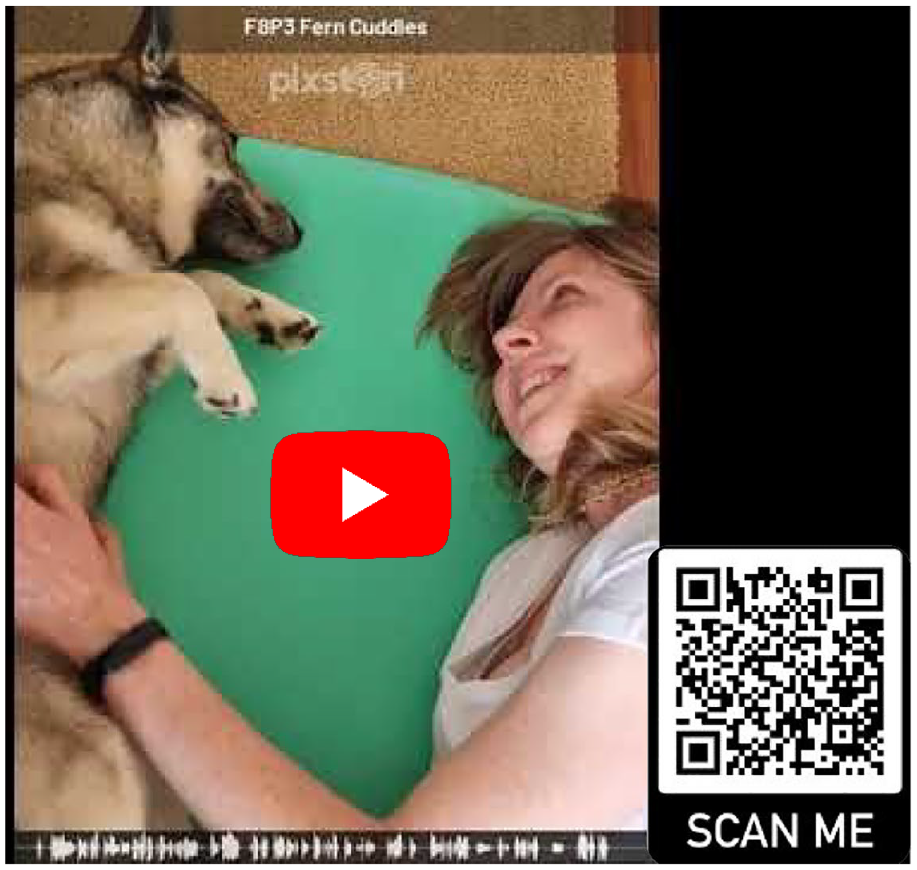
Emotional representation of information is found in the material and embodied interactions of the multispecies families participating in this research. Among the empirical material gathered (about the experiences of understanding cats/dogs), almost all families share at least a photograph (or a voice recording) in their diaries of their intimate relationships, often depicting their cuddles, bodies in a spot of sunshine, bedtime encounters, etc. (e.g., Video 1). Understanding the shared meaning in daily life with cats/dogs seems to require some knowledge of the concrete elements that shape their interactions. This section explores the meaning of the sensory material information that appears in certain intimate situations/spaces of the lived experiences of the participating multispecies families.
Coming together in a human bed (or couch, sofa) is a form of affective information exchange between human and animal. This is evident in Image 1.
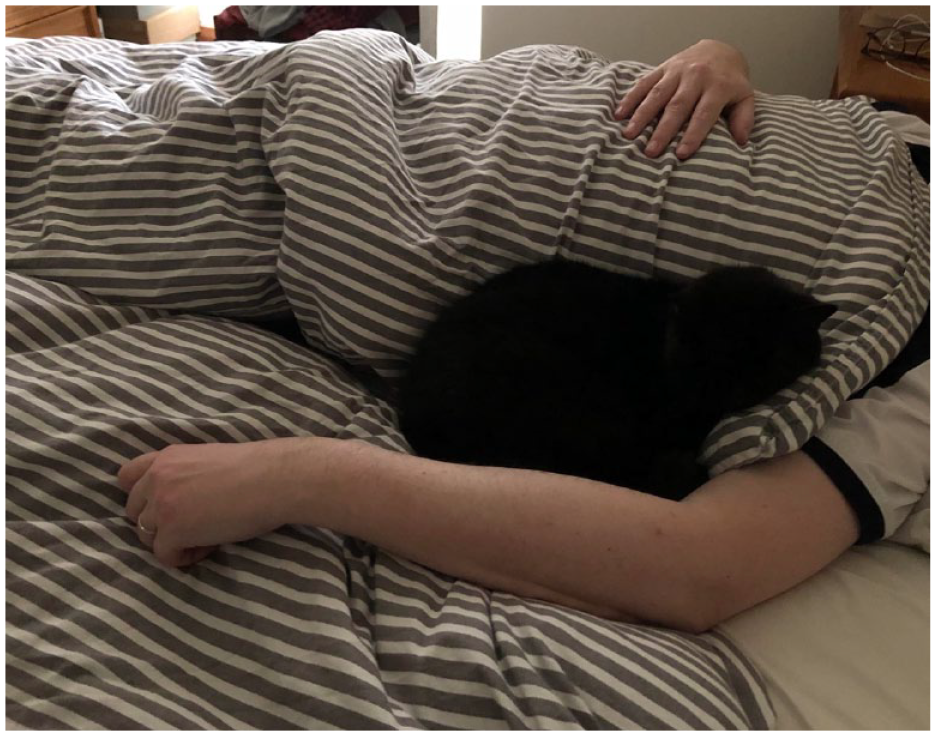
Charlie loves to cuddle up to us in bed (Family J, pet photo diary).
Bella shared this photo, lying on the bed with Charlie (black cat), and described it as a joyful experience that starts by Charlie, every night, telling the family to come to bed and sleep together. During our follow-up talk, Bella also added, “. . .every so often, when we cuddle up in bed, I will just kind of run my hands through his fur, looking for cuts or bruises.”
The bed provides an opportunity for physical touch and the expression of affection between Bella and Charlie. The experience of bed-sharing (or any other intimate space, like a couch or sofa) is related to a sense of closeness and physical intimacy between the bed partners (Fuentes et al., 2022), regardless of their species. The absence of such an experience in bed is apparent in Bandit’s (dog) daily life, described by Ava, his human companion: He is not a big fan of popping up on the bed. He pops up for a little bit, but then he hops down. . . I guess being not super affectionate [talking about Bandit] can be quite challenging because you know that’s one of the key things. . . you want to have that . . . but we love him and accept him for who he is. (Family D, walking interview)
Sharing coming-together spaces, such as the bed, provides an informational element that is multifunctional, offering affective information that can lead to a better understanding of each other. For example, Bella interprets cuddling up in bed as a way of obtaining information about her cat’s health and well-being. Subjective studies in psychology on bed-sharing practices between partners or parent-child suggest an impact on happiness and socioemotional development. For instance, bed-sharing practices that involve closer bodily contact between mothers and infants, like co-sleeping, are associated with more positive affect and behavior in the infant’s responses to the mother (Lerner et al., 2020). Neurochemicals can release hormones (e.g., oxytocin), which are associated with positive emotions and communication between humans and animals (see Odendaal and Meintjes, 2003; Romero et al., 2014). These hormones, which can affect moods, are internal informational elements within their bodies and relationships that inform their being, feeling, and thinking.
Within the gathered lived experiences, apart from relaxation spots like the bed and couch, two other similar coming-together spaces emerge in the multispecies home that are given emotionally informative meaning by the participating families: the home entrance door and the home office. Watch the Video 2 from Mary describing how her cats spend the day with her in the office:
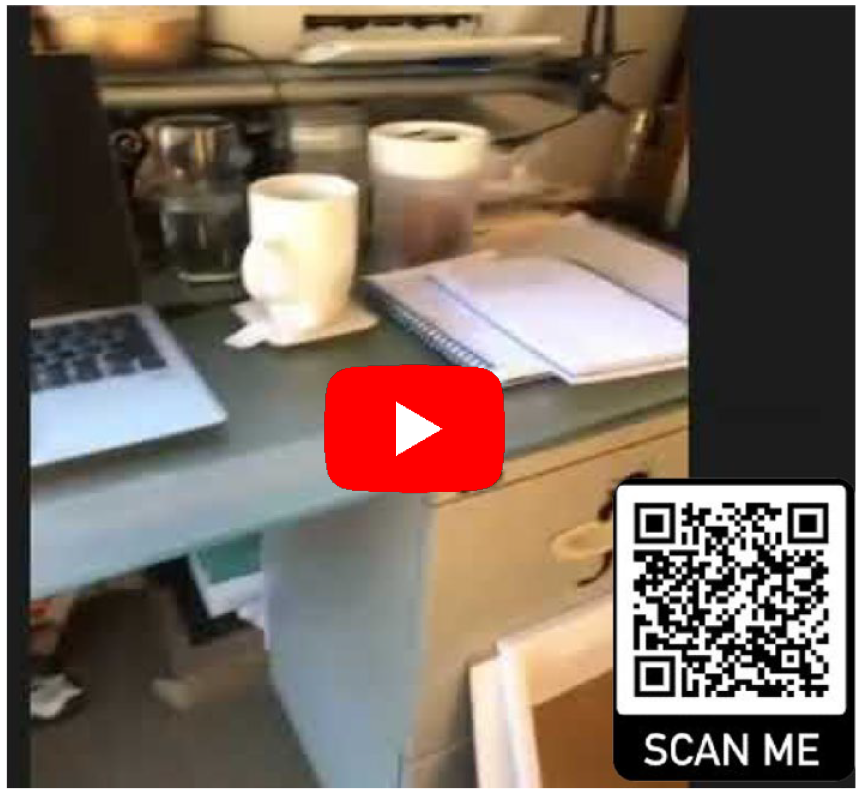
My study buddy (Family A, walking interview).
Likewise, Jennifer shared a photo of her dog, Fern, at the front door and noted, “This was my welcome home, she greets me like this, rolling over side to side. Clearly happy to see me” (Family H, photo elicitation interview).
The examples of greetings at the door and napping on/around the home office desk illustrate the loving and knowing connections between humans and cats/dogs, similar to what happens on the bed. These connections extend beyond physical spots in the home, generating internal informational elements that shape deep engagements between humans and animals.
The affective information within coming-together spaces is shaped through bodily encounters. A good example comes from Mary during the photo-elicitation interview. She is living with three cats, who lost the oldest one, Evo, after our first (walking) interview: Now I wake up alone, and I go to sleep alone. Nobody is near me because the other boys [cats] sleep wherever the heck they want these days. It was always Evo at the foot of the bed. He’d be tapping into me for warmth which felt very nice. Now I wake up alone. I actually get quite cold in the morning because there’s no Evo to keep me warm. (Family A, Photo elicitation interview)
Mary feels alone due to the absence of her cat and his embodied qualities, such as body size and warmth, highlighting the experience of affective information from bodily encounters in a specific shared space. It seems that the bed itself represents the embodied presence of the absent loved one. The sensory and memorial aspects of the bed result from the previous bodily encounters between Mary and Evo, becoming informative and meaningful for Mary. The emplaced embodied pattern shaped here is an informational element informing the emotional attunement, a process of being in sync emotionally with another species (Dutton, 2012; Martens et al., 2016). Mary and Evo on the bed at night used to create a sense of shared connection and empathy. The shared sense of self between humans and companion cats and dogs has been reported in previous studies (Irvine, 2004; Shilling, 2022). This shared sense of connection with others in a particular space persists even when the other no longer exists, as illustrated by Mary’s experience of missing her deceased cat, or my own lived experience with Peter (my dog), who liked to spend most of his time resting on my bed when I was out.
The sunlight evokes affective information expressing in a multispecies family. Ava (a human participant) shared a screenshot from her recent post on Facebook (Image 2), saying: Posted Bandit’s in the sunshine photo on Facebook. When the sun is shining Bandit wants to go out or sometimes likes to sleep in the sun. . . [Facebook post] isn’t something I do that often, but this picture was indicative of our positive moods. (Family D, pet photo diary)
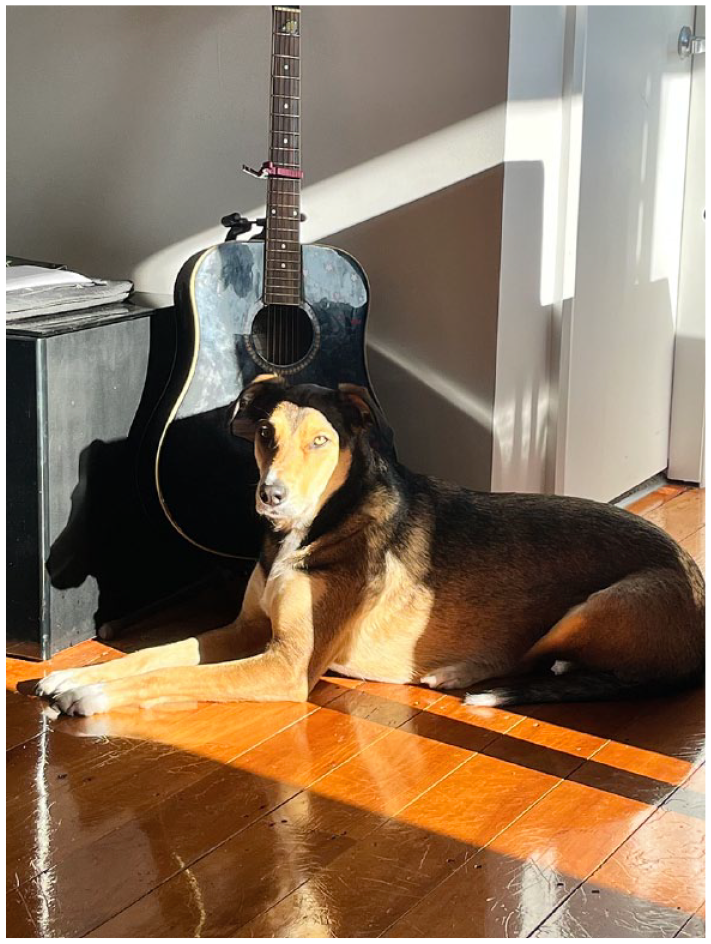
Warm and comforting (Family D, Pet Photo diary).
The sunlight indeed gives a warmer quality to the image; I felt it even as an outsider watching the image. This goes beyond the sense of sight (as seen in the example above). Ava and Bandit sensed the warmth of the sunlight around them, both with their own senses and through each other’s embodied appearance, and responded to it by expressing certain feelings.
The sensory quality of sunshine (e.g., light and temperature) experienced through the body of oneself or the other (an animal in a loving relationship) leads us to experience and express emotional information. For example, a human might share a photo on Facebook, or a cat might express its feelings through allogrooming. During my video tours, I saw intimate moments of a cat licking his human companion in a spot of sunshine. One could reflect that feelings of happiness, pleasantness, and love are evoked in both participants (human and animal) by sensing the sun on their bodies. The effect of sunlight on the daily mood and cognition of animals and humans has been reported in previous studies (Denissen et al., 2008; Knoop et al., 2020; Wirz-Justice et al., 2021). From a neurochemical perspective, increased sunlight prompts the pineal gland to send out melatonin to areas of the brain known to be involved with feelings of love, and an increase in dopamine and serotonin occurs in the body (Fisher, 2006; Lambert et al., 2002). From the human lived experience perspective, anthropologist Hauge (2015) studied the effect of daylight as a bio-social phenomenon on people’s mundane everyday lives. She describes people as being informed by nature, craving daylight to feel well, like the photosynthesis process in plants (p. 73). In this research, the actions and appearance of animals under sunshine, as well as the emotional and reflective expressions of their humans, make sunlight an information phenomenon integrated into the family’s daily practices of love, giving rise to more emotional information experiences.
Humans and animals express affective information to each other mostly through touch. Attending to touch is evident in this clip extracted from my online walking interview with Mary (the human) and Giz (the cat) on their bed, under the afternoon sunlight:
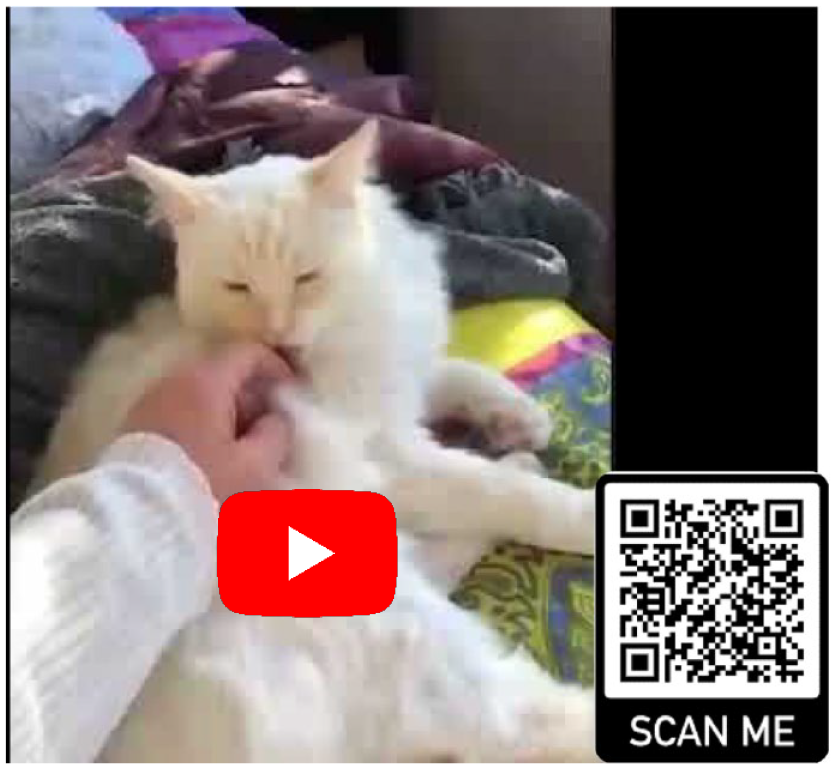
Afternoon greetings (Family A, walking interview).
In this close observation, both human and animal companions on the bed use touch in a special way to acquire or express information. Mary uses her hand to feel the cat’s fur, just as Giz uses her tongue to feel Mary and to groom her skin. The appropriateness and duration of their physical intimacy are informed by their joint touch, making it meaningful for both of them. Mary knew where and how to touch Giz. She determined when Giz was satisfied with or uninterested in her touch. When the cat started licking Mary’s finger, she stopped her hand movements and let him lick for a couple of seconds. Then, Giz seemed comfortable, showed his belly, and Mary rubbed it as his preferred petting area. These actions represent the exchange of information between them. Despite human preference for spoken words, partners from different species can learn meaningful communicative touch through loving and living together. These touch talks as informational elements mostly appear in their emotional connection, including holding hands, rubbing faces, cuddling, petting, brushing, belly rubs, tapping paws, poking noses, pushing heads, biting, kissing, etc.
To reflect on precisely what happens when Mary and Giz experience this piece of information, Savolainen’s (2020) characterization is insightful: information experience constitutes receiving, acquiring, and interpreting sensory and cognitive-affective information. Here, gentle touches between Mary and Giz, via hand, fur, tongue, and skin, involve somatic senses (e.g., perceptions of temperature, vibration, texture, and taste of each other’s bodies) as well as perceptions of feelings (e.g., compassion and enjoyment). These informational phenomena shape their understanding of each other and their relationship. To reach this stage of meaningful communicative touch, their bodies are engaged and recognized in their own ways (as a human, as a cat).
The reflection on touch as an informational element is more evident in Image 3. Barbara shared the image describing how she teaches her baby to pet the dogs: The very first process we had with [my baby] was like [telling] gentle and supporting her to have her hand out flat, like fingers spread out, and just rubbing them on the dog’s back. We are very aware of dog attacks. . . it happens when children got too close. Or they pull their ears, fur, or pinch them or something like that. And that dog is just being protective of themselves or their bodies. . . if the dogs feel uncomfortable, we will move [baby] away. We would use language like look [the dog] is pulling her head away from you (Family G, walking interview).
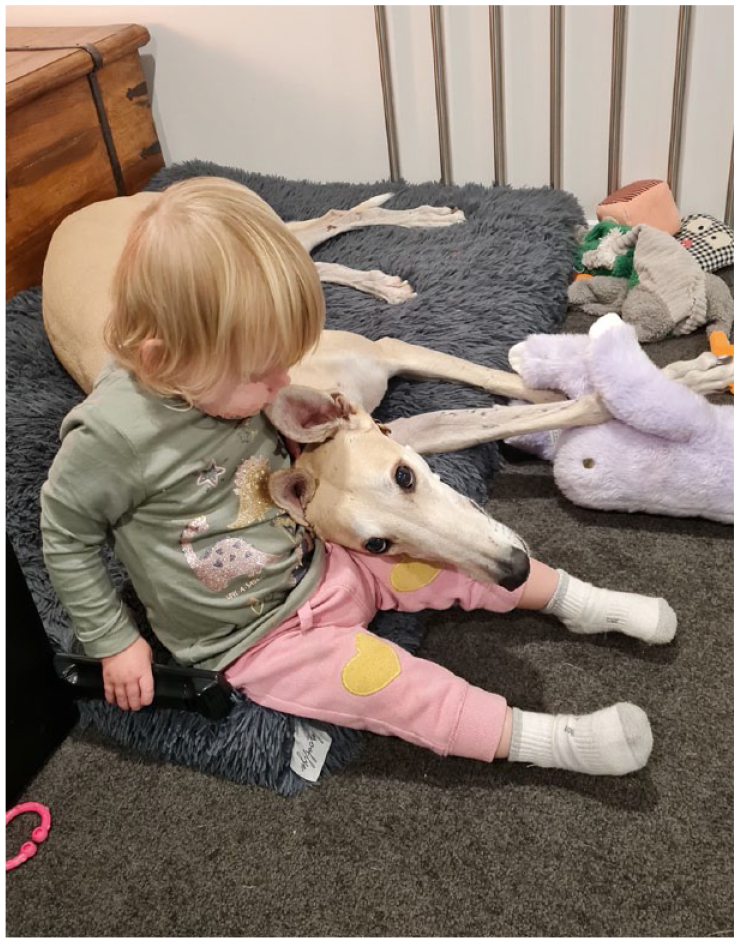
Best friends (Family G, Pet Photo diary).
The above lived experience is important because it illustrates that the human experience of becoming informed by touch is shared with others. In infant care studies, communicative touch has been found to be more important than verbal communication (Hertenstein et al., 2006). Barbara loves (and knows) both her baby and her dog. Through her deep intracorporeal engagements, she understands how to touch in the way the dog likes and how the baby touches and grabs in a baby way (i.e., she respects the dog’s dogness and the baby’s babyness). She uses that multimodal information to guide her baby and teach her how to touch the dogs.
Although all animals (including humans) often touch each other when they are engaged (e.g., in intimacy and play behaviors), and their interactions are gauged by gaining sensory information (e.g., whether the other is tense or relaxed), tactile sensation has not been the explicit focus of studies as much as visual and auditory stimuli (Monsó and Wrage, 2021). In Information Science, tactile elements of information have been reported in practices where two partners are involved, such as renal care nurses (Bonner and Lloyd, 2011) and tango dancers (Lupton, 2014), or in object-oriented practices such as archaeology (Olsson, 2016), enthusiast car restoration (Lloyd and Olsson, 2017), and grocery shopping (Ocepek, 2018). In Information Science, by moving away from speech and vision, we can see touch as the first sense and an early facilitator of expressing/acquiring information, especially within shared living and knowing with other species.
In this section, various modes of affective information exchange (communication) between humans and cats/dogs within a shared sensory material environment are outlined. This includes their coming-together spaces and embodied interactions, along with their associated emotional responses. The subsequent section describes lived experiences within participating multispecies families, elucidating the ways in which understanding the emotions of other species occurs, fostering sense-making for both humans and animals.
Feel my pain, feel my joy
Among multispecies engagement, where there is a lack of conventional information sources, such as common language that can help in understanding their world, experiencing affective information becomes an especially important source of understanding. Humans and other mammals’ evolutionary systems of emotional and social behavior co-regulate by being around each other (Carter and Porges, 2016; Porges, 2009). Having discussed the representation of information exchange within the emotionally entangled situations between humans and cats/dogs, and its relation to other information experiences, what follows is an exploration of the lived experiences of feelings (as experiencing affective information) related to better knowing each other within a multispecies family.
Animal practices are taken up as information by the human to make meanings about the animal’s moods. Olivia, for example, describes how she sees Izzy as a “grumpy old lady”: She doesn’t necessarily interact with every dog that she meets, so I always have to be aware of it. Some days she’s good with other dogs, other days she’s not. . .She’ll growl if she feels they’re in her personal space. So, it’s about watching her cues and how she behaves. (Family I, walking interview)
Olivia deliberately pays attention to her dog’s actions as a means of acquiring information, specifically about Izzy’s internal state. This informs her ability to perceive meaningful sensations from the gestures and behaviors of her animal. Similarly, Image 4 shows Giz (the cat) in pain, suffering from an upset tummy, shared by his human companion, Mary.
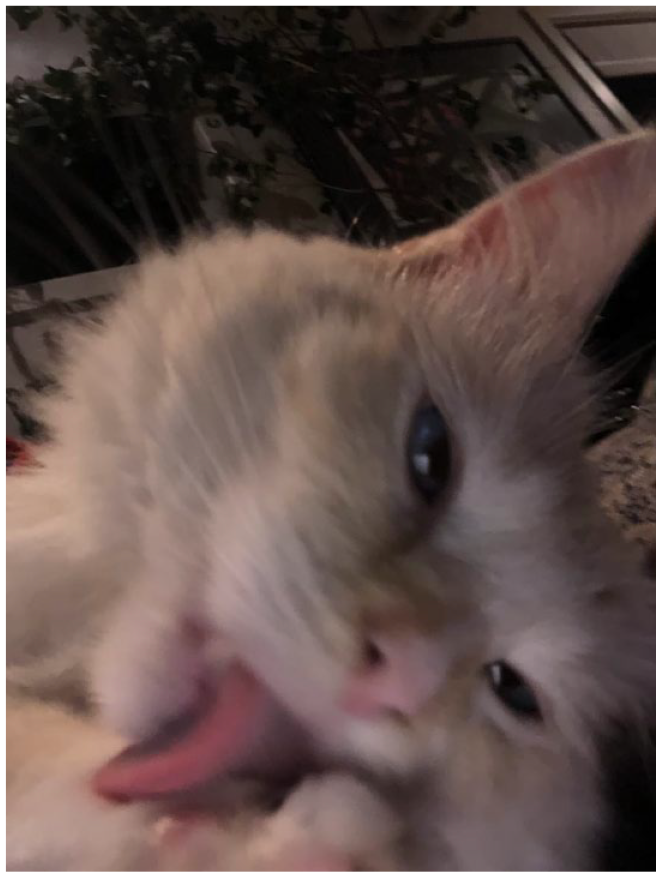
Poor little Giz (Family A, Pet Photo diary).
Both Izzy’s mood and Giz’s state of pain were mainly recognized through their actions, postures, and gestures (e.g., cat paw licking or his tense facial expression). These practices are used by their human companions to infer the animal’s feelings. The ability of humans to recognize the emotional state of their animals through bodily cues and eye expressions has been reported in previous studies (e.g., Burza et al., 2022; Tsai et al., 2020). During the data-gathering of lived experiences, many portraits of the cats and dogs shared by their humans were accompanied by descriptions about how they experienced their animal’s fear, pain, joy, or happiness. As Olivia describes, it is about watching an animal’s cues through life.
In this context, the animal’s negative feelings affect human knowing. Karen shared her lived experiences about taking the cat, Rexy, to the vet: I don’t know why I’ve never really been very good at taking my cats to the vet. . . I think it’s because [cats] find the whole thing so traumatic, going in the box and crying all the way. [Rexy] actually really hates it and I just feel so sad when I have to take her [to the vet]. I don’t want my animals to be upset, so taking Rexy for her annual checkup was quite upsetting. (Family F, walking interview)
Karen’s knowing derived from her previous experiences, as well as her cat’s emotions (a mix of first and third person perspectives). As previously discussed, attention to an animal’s body is an important source of information experienced by human companions. There is also some evidence from previous information experience studies that others’ emotions, in general, are forms of information that affect us (see Huttunen et al., 2019; Lupton, 2014).
Veterinary visits are associated with a higher emotional closeness to animals (Franck et al., 2022). A higher level of closeness means that the partner feels empathy for the other (Young et al., 2018) and is more sensitive to their expressive cues that convey information about their feelings (Prato-Previde et al., 2020). Therefore, attention to Rexy’s anxiety (e.g., the action of not going into the box, or the vocal expression as informational elements) shaped Karen’s understanding of the unpleasant outcomes of going to the vet. The motivational role of one’s own negative emotions in giving rise to information seeking or information avoidance has been reported within the field (see Savolainen, 2014, 2019). Experiencing affective information from an animal’s body is related to accessing or avoiding further information (e.g., avoiding the veterinarian) in daily life.
In contrast, animals’ positive emotions help to create a meaningful shared life. Mary described: I always get a greeting at the door. It is so nice somebody looking forward to you coming home, even if it is because they’re just hungry. . . but Cam [cat] has done that the whole time. He meets me at the door every day and Giz does that sometimes. One or two, it is really nice. (Family A, photo elicitation interview)
This pleasant, common situation at the door experienced by Mary (and her cats) is embedded with a wide range of information, from emotional awareness to the actions of another, to creating a positive response that meets the emotional state of another. Being greeted or feeling loved at the door are the pleasures of living with a companion animal, examples of “higher things” in life (as described by Kari and Hartel, 2007). Within the information experience of a multispecies family, there are identifiable aspects of life that transcend the everyday tasks of fulfilling a companion animal’s basic needs (Solhjoo et al., 2022b). Mary uses the expressive, affective information (e.g., being at the door) of her cat partner to interpret their deep engagement in life (called “embodied attention” by Dutton (2012)). She becomes so entangled with the experience (i.e., somebody looking forward to you coming home) that it becomes part of the joy of her daily life.
Sarah interpreted similar meaning from her experiences of the usual door greetings by her dogs, paying more attention to behaving as the dogs want: . . .I like to remind myself with dogs, that they are always so happy to see me when I come home. I have done it for years. So, sometimes I ignored them a bit. Since I’ve experienced it for years. It’s not that much exciting for me. Yet for them that’s a really exciting moment. So now I’ve changed my behaviors around them. When I come home and I open the door, I try to acknowledge this happy moment. (Family B, walking interview)
Within Sarah’s experience, the door greeting is the dogs’ joyful moment of daily life. The human companion recognizes the embodied information and responds to the positive emotional expression of her dogs, recognizing that the dogs are also affected by her emotions. By harmonizing with the dogs’ actions she changes the banal routines of daily dog greetings into something enjoyable.
Co-presence informs humans about the ability of cats and dogs to understand others’ feelings. Khloe describes her experience of the co-present interaction of her cat, Otis, when things are not going well at their home: Otis [cat] knows if things aren’t going well, he stays close to me. But if things are going well, he’ll be popping off doing his own plan. So, he’s on the vibe, he knows what’s happening. . . For example, if I’m sick, or feeling so rubbish. While I am resting in bed Otis comes collapse on my chest, cuddling me like its ok mom, I’ve got you. (Family C, walking interview)
Or Image 5 shows Rexy, the cat, being comforted by Holly, the dog, as described by their human companion: This photo was taken when Rexy was having problems with her teeth. She was in a lot of pain and had to have her teeth removed. She wouldn’t play with Holly, so Holly kept bringing her favorite toys, and then just lay quietly by the cat. It seemed like she wanted to try and provide comfort to Rexy. (Family F, pet photo diary)
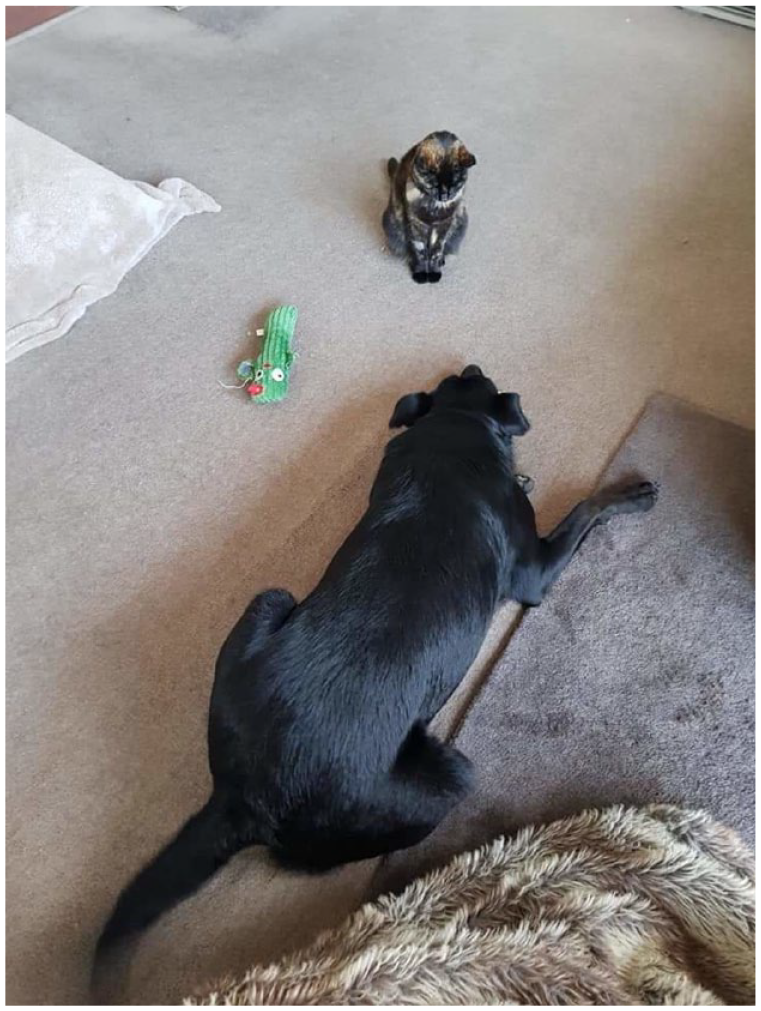
Poor Rexy (Family F, Pet Photo diary).
Both stories are important because they reflect the meaning of an internal feeling (experiencing affective information) shaped by the co-presence of two members and influencing one’s action toward another species. Although the above verbal extract conveys the subjective experience of the human about her animal (not the lived experience of the cat/dog), we can imagine the animal being empathetic toward their companion. Overall, understanding the emotional (inner) lives of other species in our relationships requires imagination (Fudge, 2014; Lewis and Owen, 2020). According to Khloe, Otis being in the same bed when she was sick was an informational element that provided emotional support for her. By his presence, Otis informed Khloe that he felt her pain. Animal studies show that empathy exists in group-living animals because they are innately affected by the emotions of others (De Waal, 2010).
The informational aspect of co-presence in human-animal relationships becomes more visible when there is separation. When I met one of the families at their home for our walking interview, Olivia, a human companion, explained that her husband had recently been hospitalized. She said, “Izzy [the dog] misses him badly. She keeps waiting for him at the doorway to come home” (Family I, walking interview).
A similar experience with Otis, the cat, was described by Khloe, as he missed the other cat in the family: “When Slide [cat] passed, Otis was going around the house meowing, looking for him, and trying to find him and it just broke my heart” (Family C, walking interview).
The excerpts above illustrate that the affective informational element of human-animal co-presence to some extent involves understanding the meaning within separation from one another. The other partner (human or animal) who needed to express or respond to emotions is absent. For Otis and Izzy, there was a sudden lack of dyadic information exchange within their daily home.
In the first two finding sections, I explored the ways interspecies beings exchange affective information and understand the inner feelings of one another without being able to communicate verbally. The final finding section explores a crucial aspect of this multispecies understanding, illustrating how humans, as a species with more power in the relationship, learn to empower their cats/dogs and grant them agency through various informational practices.
Let me be in my being

Izzy at the beach. “She definitely is a thoughtful dog. She loves to observe what’s going on around her” (Family I, pet photo diary).
We have experienced and imagined meanings of the material and internal information shaping the emotionally entangled lives of humans and cats/dogs. The emotional representation of information exchange in their worldly interactions and concrete situations brings them opportunities to understand and enjoy their shared life. In this sensory-material space, the experienced feelings of one another reflect another layer of the red thread of information woven across their shared lives. As they become deeply engaged in each other’s world and feelings, they extend subjectivity beyond themselves (e.g., Sarah likes to remind herself that her dogs are always so happy to see her coming home). Based on the lived experiences of the participating families, extending subjectivity (or letting be) is an important information activity experienced in multispecies loving and knowing. According to Maclaren (2002), learning to let be is bodily and intersubjective: we learn it in our relations with others by letting others be (cited by De Jaegher, 2021). In what follows, the informational elements behind “letting be” are discussed.
Observing differences among species is an important way of acquiring information in a multispecies family. Reflecting on Barbara teaching her baby how to touch Levi and Zoe (the dogs), Barbara shared some images showing the relationship between the baby and the dogs (Images 3 and 7).
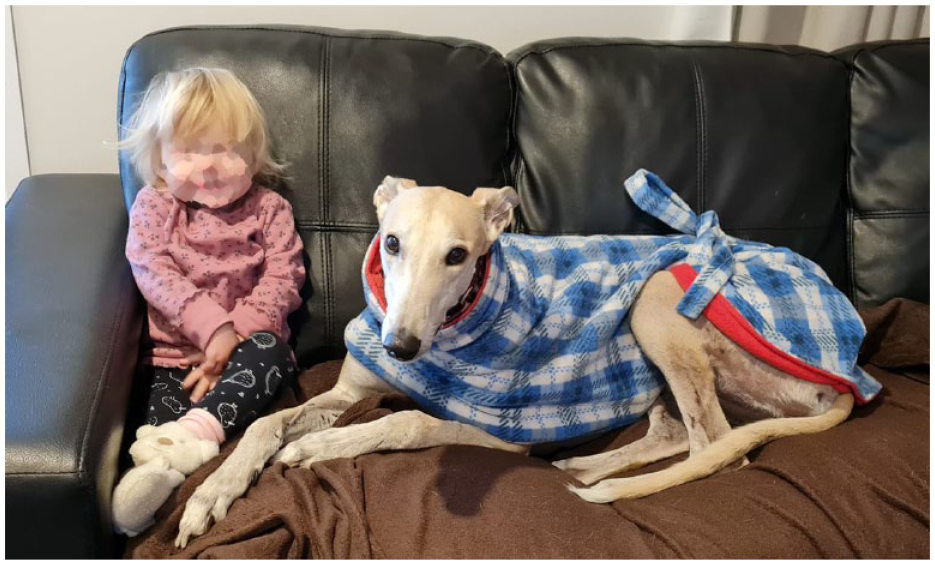
Best friends II (Family G, Pet Photo diary).
For Barbara, both actors in the image (i.e., baby and dog) are very close family members receiving her love and care. Within the above image, the closeness, as well as the differences between the baby and the dog, are represented. As noted earlier, in sharing information with her baby about how to pet the dog, she recognized the otherness of the dog. She specifically mentioned: “My dogs are pets, but they are also animals with natural wild instincts, and you have to be aware of that.” She not only recognized the differences between different species (baby and pet), but she also described the different personalities of her two dogs when interacting with the baby. To help her create a safe space for the baby and the dog to interact, Barbara observed and gathered information about their differences (e.g., from bodily appearance to internal feelings) as significant actors (knowers) shaping the family and its relationships.
Imitation is a way of information making in a multispecies family. In Sarah’s case (from the previous section), she learned about her dogs’ emotional state as she arrived home by copying their greetings rather than ignoring them. This bodily mimesis evokes corresponding emotions (Fuchs and De Jaegher, 2009). Here, imitating another’s moods or actions is related to the information needed to learn and live with other species. Karen’s experience provides another example. She shared images called “the family crazy time” to show a playing experience between her dog and her husband. Karen notes: Holly [dog] has the ball and she does lots of play bows. And [the husband] gets on the floor and does the play bow back. She really gets excited and runs around the lounge which ends up in a noisy chaotic dance that they both love. They make lots of growling, talking noises. (Family F, pet photo diary)
I think Karen called it “crazy time” because she saw her husband as close to the dogness. The play bow is the dog’s typical body language when she is happy. By learning the differences between human and dog physicality, the human companion uses this dog’s recognizable message (an informational element) through imitating her. Recent experiments suggest that dogs and cats are also able to learn to reproduce the movements of their human companion (Jardat and Lansade, 2022). Here, the family members experienced information about the other’s mind through their close interactions in activities such as playing. Then, they used a similar action to communicate information with the other species. This kind of flow of information has also been found in Lupton’s (2014) study of dancers and music producers.
Attention to the animal’s best interests is informative for multispecies living. Participating families had special human–animal leisure activities, which were discontinued when the dogs started to get bored. Karen described her experience with Holly at the agility course: The thing I’d like to do was agility. But I just got bored about it because she started misbehaving. Because she was bored, and I stopped focusing, because I got bored. So, when I got sick, it was almost like it was a good excuse to not go back. (Family F, walking interview)
The goal behind the above-lived experience is to provide life enrichment for the dog and improve their sociability. It is structured play requiring enthusiasm from both parties (Haraway, 2008). The experiential nature of play (coined by Suorsa, 2015 in knowledge creation) helps to reflect on the informational phenomena of human attention to the animal’s preferences. In this study, humans experienced play through their animals. The boredom of Holly, expressed through her bodily cues, was used as a source of information to stop the activities, letting her voluntarily participate in the play process. Therefore, there was a unique way of experiencing information in playing with the dog which relates to being free and openly interactive with the other non-human and the environment. In the field of Information Science, playing is considered in terms of entertainment and collaborative experience to enhance learning (Suorsa, 2015). In studying the multispecies family, Power (2008) finds that hierarchical relations between dogs and humans are regularly disrupted, as dogs’ needs and preferences are incorporated into the routines of daily life.
The following story from another aspect of daily life, is valuable to show how a cat’s best interests become a source of information for human. Mary describes her experience of thinking about Evo’s end of life: . . . [the vet] did say that [Evo] is getting pretty old and that at some point in the not-too-distant future we’d have to start thinking about what was the best for him. I think that was a really kind way of letting me know that it was time to start thinking about him and how he was doing, rather than me just going: yeah he sleeps all day, and I give him cuddles, I feed him and he’s Ok. But in fact, he wasn’t really [good], because he kept on losing weight. . . (Family A, photo elicitation interview)
The vet provided a piece of factual information which could serve as part of Barbara’s understanding of Evo’s circumstances. However, according to her, the meaning behind this experience is respecting Evo’s being, versus considering her own desire to keep him. Deciding on ending the life of a beloved animal is a very complicated process, involving experiencing various forms of cognitive-affective information, as I have experienced once in my life. Evo’s agency as a partner in shaping this understanding would be undermined if Barbara did not consider Evo’s best interests through the information received from his body condition.
Finally, recognizing this agency of the animal helps to make information about the daily life of a multispecies relationship. Mary shared a photo of Giz sitting on the kitchen bench (Image 8) and describes it as, Cats on the bench or not? What if you don’t have a choice? What if the training I gave him was all to no avail and he now hops on the bench! Bloody ragdolls just do as they please. As they are the bosses, not me. I am simply the maid. (Family A, pet photo diary)
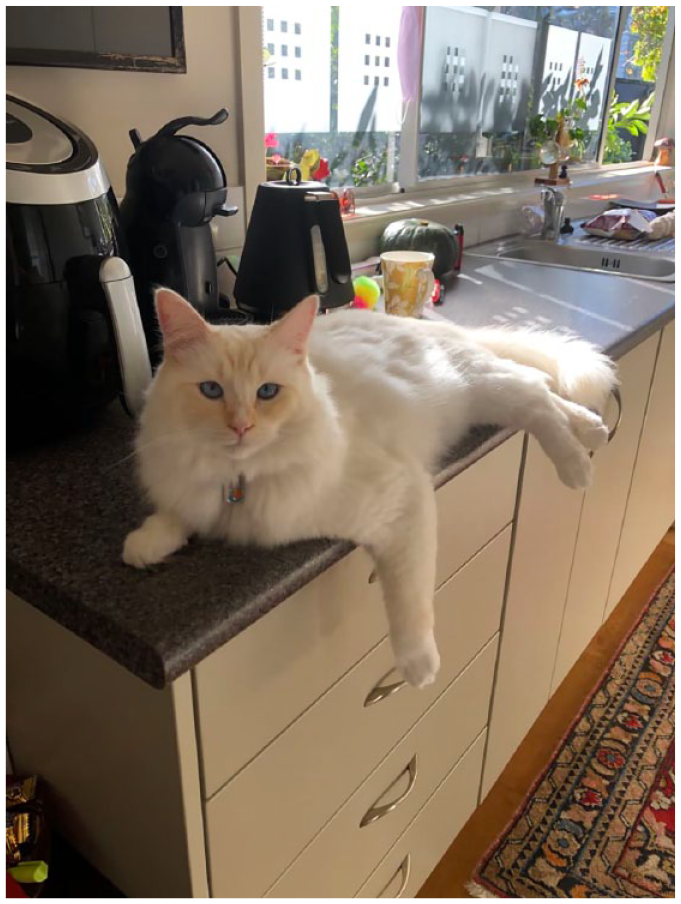
It’s my bench (Family A, pet Photo diary).
A cat sitting on the bench which is considered as a place for humans to eat or cook translates as a power imbalance between human and cat (e.g., who rules in the kitchen). Giz’s action (i.e., sitting on the kitchen bench) and Mary’s feedback (i.e., giving up on removing him from the bench) are their way of information creating and accepting the subjectivity of the other partner.
This interaction represents a reciprocal bond of affection and understanding. The actions of the cats, for instance, define and influence Mary’s experience. In the context of a shared life with animals, a human companion is never isolated in experiencing specific information. Both partners, human and animal, form and inform their relationship.
Letting animal be as a way of knowing in a multispecies family, is perfectly illustrated in Olivia and Izzy’s relationship: It took us nearly three years to get Izzy to complete her training course, not because she didn’t know what she was doing. She didn’t want to do so. She has a very strong nature and I love that about her. She just does things in her own time. For instance, when we were training the recall with her, we knew she heard us. We knew that she knew what we wanted to do. But she would not come back immediately, because she was making her point. It would always be at her time. So, once we figured that out, that was easy. (Family I, walking interview)
Olivia builds her relationship with Izzy by understanding what her dog does or likes to do because she loves Izzy and does not want her to be miserable. In acquiring information to shape their (joint) life, Olivia is not limited to herself: she expands her perspective to recognize the subjectivity of Izzy in making decisions (e.g., in the training procedure). According to De Jaegher (2021), humans often know others in an overly deterministic manner, where the knower heavily dictates the process, leaving less room for the known, which limits understanding. In Izzy’s training scenario, Olivia could have approached it with preconceived notions or expectations about how the dog should behave and respond to commands. This approach would restrict her ability to grasp Izzy’s unique personality. Instead, Olivia adopts a more flexible and empathetic approach, considering Izzy’s perspective, which informs how she conducts training.
During the experiential data gathering, many stories of respecting an animal’s agency and subjectivity were shared by participating families. These included situations where they tried to build understanding in their engagement with their cat/dog (e.g., shared decision-making). This could mean letting them have private time, space, and interactions, freedom to decide when to give cuddles, choosing what and how to be fed, taking sniffing walks or off-leash walks, or even choosing the family to live with. These instances of an animal’s freedom are not just the absence of human control. They are exactly what De Jaegher (2021) described as letting be: an ongoing, moving, dialectical balancing between the being of the knower (who lets be) and the being of the known (who/which is, separately, by itself, but also in the context of this engagement) (p. 859).
Concluding discussion
Drawing on phenomenology, this paper describes the information experience of emotionally entangled lives between companion humans/cats/dogs. Their everyday life is embedded with the joy of information—from basic needs to pleasure. Information, the red thread woven through the social texture of the multispecies family, is shaped within their shared intimate sensory-material arrangements, emplaced patterns, bodily encounters, and feeling internal emotions and subjectivity of one another.
Earlier in my studies, I suggested that the nature of human-animal relation, which is crucial to understanding the multispecies informational world, could be considered through an information experience approach (Solhjoo et al., 2022b). The current findings demonstrate how to empirically approach information experience as an informational lens for understanding human relations with other species (more-than-human relations). Information Experience has allowed me to broaden the subjectivity of information and the information experiencer into new conceptual realms. It means all living beings become informed by anything and many things that they find informative in life with others. Other species become not only information but also information users and providers, engaging deeply with humans as both those who inform and those who are informed. The information and its interactions are, in fact, co-created by all partners involved within a unique context.
The informational elements presented in this article are extraordinary, profound, beyond human dialogue, and deeply meaningful. They typically are not considered informational, as they are not textual or verbal. But real or imagined, they are felt by the partners in multispecies families, helping them to build (shared) understandings in daily living without a common language.
Yu and Liu (2022) explored the nature of information experience as a phenomenon to understand how it differs from other types of experiences. They disambiguate two conceptualizations of information experience: the a priori conception and the a posteriori conception of information. A priori experience involves predesignated informational or communicative products and associated phenomena. A posteriori experience involves being informed by anything that a person regards as informative (p. 10). This study is a posteriori research on information experience, where information emerges afterward. It is essential for scanning the changing world shared with multispecies for new forms of information that can be considered and possibly incorporated by Information Science, eventually becoming part of future a priori studies (Gorichanaz, 2023).
Love is found to be a cornerstone of the multispecies family, an institution fostering a variety of informational elements (e.g., forms, genres, and channels of information) through engagement with various lovers from different species, as information providers and givers. It creates mutually meaningful information between the lovers (or knowers). For instance, by exploring human-animal emotional entanglements within their multispecies household, all the lived experiences described in the bed, couch, under the sunlight, and by the door, reveal ways of multispecies emotional information communication.
The beings and feelings of both humans and animals, intertwined with shared time-space rhythms, constitute another layer of loving and knowing. It helps partners to become informed, use each other’s inner (emotional) state to make meanings in their relationship and adapt their own feelings and actions accordingly. For instance, according to the findings, co-presence during difficult times (feeling sad, experiencing pain) demonstrates the capacity of cats/dogs (as knowers) to comprehend the feelings of the other species (the known). Through their presence, they facilitate a dyadic exchange of affective information (e.g., feeling safe and relaxed), exemplifying a way of knowing and loving each other in a multispecies family.
Finally, through loving and knowing the other species, both parties change. Being in love means signifying others and being in connection with significant otherness (Haraway, 2008). In this study, individuals, who hold more power in the relationship (mostly humans), acquired the skill of allowing the other to be. I cannot confidently articulate the perspective of the animal participants, given my boundaries of having a human body and perception. Humans typically are the dominant species. However, as they engage in a reciprocal relationship of love and understanding, they, too, undergo changes and limitations in their relations with animals. For instance, those who have shared their living spaces with cats/dogs understand how the material aspects, architecture, and even the internal feeling of their homes evolve due to the presence of the animal.
These findings could potentially contribute to Information Science by offering insights into establishing more compassionate and inclusive information institutions for a more-than-human world. Using love as a framework in Information Science can be observed in certain practices among information professionals when designing their libraries and services. However, it has not been widely reflected in the literature and is not integrated into theoretical frameworks (Greenshields and Polkinghorne, 2022: 465). The perspective of loving as knowing, which brings us closer to the agency and inner feelings of others, can be applied in any institution, beyond the multispecies family, that involves a variety of stakeholders, social dynamics, physical informing interactions, and emplaced embodied patterns.
The illustration (Figure 1), adapted from De Jaegher’s (2021) “loving as knowing” perspective and Isto Huvila’s (2022) metaphor of “making and taking information,” demonstrates how love serves as a form of participatory sense-making across companion species, whether human-human, human-animal, or human-object. Humans, as a companion species, are constantly engaged with more-than-human entities in various settings such as homes, libraries, offices, labs, hospitals, fields, cities, and wildlife, and more (Potts and Haraway, 2010). Humans and non-humans can both be lovers and loved (using and providing information), striving to share understanding with each other and coexist. Within any institution, information users and providers can never be fully comprehensible and effective unless they consider the overall engagement and experiences of the various entities shaping their system or community. By creating a common intimate space, feeling each other, and extending subjectivity to one another, they can better understand the other and their relationship, rather than misunderstanding them.
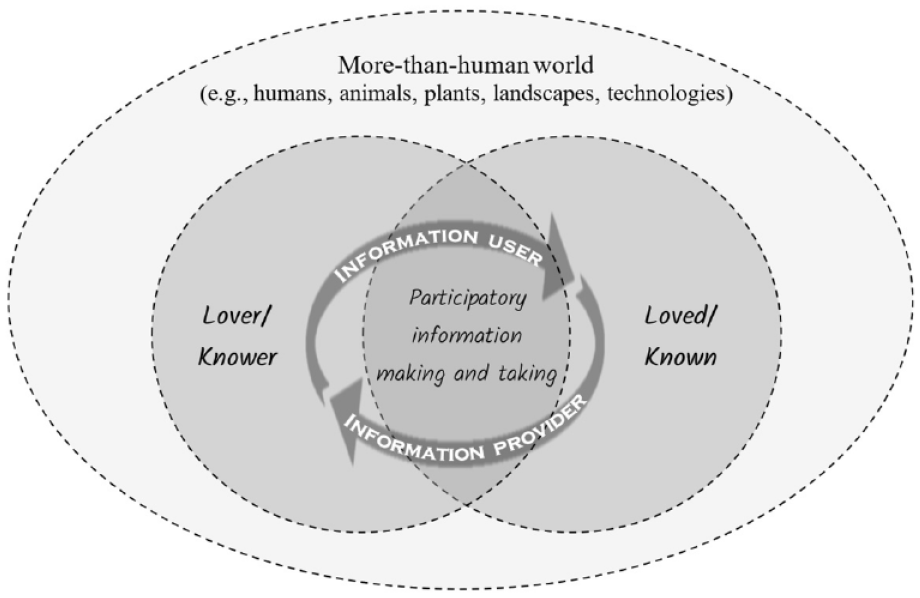
Loving within more-than-human world creates mutually meaningful information between lovers/knowers, whether humans and non-humans.
For instance, by viewing libraries and their communities through this lens, it’s possible to extend services beyond simply meeting the community’s information needs. Instead, it involves recognizing the community (library users) as empowered individuals who are valued and understood by the library. As a result, the actions and insights of the community, such as their empowerment, feelings, skills, and knowledge, become crucial to the library’s growth. Practices within libraries, like user engagement, are no longer just services provided by the library; they become fundamental to the library’s own needs.
This shift fosters genuine collaboration and interaction with the human and non-human members of the community and their local knowledge and culture, leading to better-designed infrastructures, services, and resources. In this sense, information institutions, such as libraries, and their services become more than just solving problems for specific groups. They are created by humans for the benefit and enrichment of more-than-humans. This includes fostering deeper engagements between user-document, librarian-patron, visitor-artifact, and human-AI relations.
This research emphasizes the importance of learning to let others be, especially those who are different from us, such as cats and dogs, as a form of understanding and experiencing information. This process, within a multispecies family, involves recognizing species differences, imitation, and considering the animal’s interests and preferences by humans who live with them. Such practices of letting the animal be underscore the empathetic and participatory nature of sense-making. Letting others be eventually creates an alternative approach to information, one that diverges from conventional, objective, verbal, or textual formats. Instead, it embraces various forms of information that organically evolve as beings with diverse embodied and cognitive traits seek mutual understanding.
Supplemental Material
sj-docx-1-lis-10.1177_09610006241255418 – Supplemental material for The red thread of information across more-than-human love
Supplemental material, sj-docx-1-lis-10.1177_09610006241255418 for The red thread of information across more-than-human love by Niloofar Solhjoo in Journal of Librarianship and Information Science
Footnotes
Acknowledgements
I would like to express my sincere appreciation to my friends Jenna Hartel, Maja Krtalić, Anne Goulding, Michael Miller, and the anonymous reviewers for their thorough evaluation of the manuscript and their thoughtful suggestions for improvement.
Declaration of conflicting interests
The author declared no potential conflicts of interest with respect to the research, authorship, and/or publication of this article.
Funding
The author received no financial support for the research, authorship, and/or publication of this article.

Supplemental material
Supplemental material for this article is available online.
Author biography
References
Supplementary Material
Please find the following supplemental material available below.
For Open Access articles published under a Creative Commons License, all supplemental material carries the same license as the article it is associated with.
For non-Open Access articles published, all supplemental material carries a non-exclusive license, and permission requests for re-use of supplemental material or any part of supplemental material shall be sent directly to the copyright owner as specified in the copyright notice associated with the article.
