



Abstract
The transition of a companion animal and a human companion into a shared family context is an everyday yet complex process that involves information interactions. Concerned with the cognitive information that resides within humans’ and animals’ minds, this article aims to explore the knowings (having knowledge or awareness about something) of all multispecies family members. Building upon an information experience approach, the research process consisted of experiential material gathering with multispecies ethnography, followed by phenomenological reflections and writing. Findings are organised into three main sections: animal knowing, human knowing and their engaged knowing. The cognitive information presented in this study is sometimes unconventional, yet innovative within the field of Information Science. the article contributes to the cognitive view of information by showing how diverse information from both humans and animals interweaves to shape a harmonious understanding in everyday life and provides implications for information research, practice and design.
Keywords
1. Introduction
An evolutionary lens of Information Science recognises that information, much like biological traits, emerges and evolves over time in all organisms, such as humans, animals and plants as a valuable internal resource for survival and adaptation [1,2]. Information is not a static entity but rather a dynamic phenomenon that undergoes changes and adaptations to fit changing environments and needs, and many of our current information behaviours might route back to our biological traits that even existed in animals. An intriguing facet of evolution within our daily existence, with direct implications for our information-related actions, is the presence of animals in our homes. Companion cats and dogs hold a unique position in the lives of human beings. Many of us choose to live in a multispecies home, where our lives, spaces, activities, experiences and feelings are entangled with other species, such as cats and dogs. The practice of keeping animals as companions in our homes traces back to the domestication and co-evolution of certain species with humans. Over thousands of years, animals such as dogs and cats have adapted to live in close proximity to humans, benefitting from shelter and food, while offering services and companionship.
The transition of a companion animal and a human companion into a shared family context is an everyday yet complex process that involves adapting to new roles and dynamics over time. This transition for both the human and their animal is triggered and influenced by information. As they are living with other species, the individuals’ existing information landscapes are fractured, requiring them to acquire new ways of knowing [3].
Knowing is about what individuals actually do in everyday action and interaction – the processes involved in sense-making [4]. It encompasses various aspects, from embodied know-how to thinking, reasoning and collective habits, codes and norms. The nature and processes of this understanding are intricately constructed and highly contextual, with the knower intimately connected to the known [5]. This dynamic is reminiscent of how a human knows to tame a free-living cat, how to treat a companion cat or how a cat instinctively knows how to hunt a mouse or communicate with a human companion. In these instances, both parties know how to move between experientially different worlds.
De Jaegher’s explanation of knowing as an active and mutually transformative engagement between knowers and knowns [6,4] holds potential significance in understanding the cognitive dynamics in multispecies families as an internal connection and structure of caring for each other. De Jaegher believes that all the things we do are not based on an objective, discretising logic, but on a living, lived logic [6]. In other words, knowing occurs in action and when humans participate in actions that involve more-than-human elements (such as living with a cat or dog), they are transformed and transform the other animal. In this shared existence, the human, cat or dog knows how to (inter)act and become (a family) together.
For example, many enacting and expressing capabilities of cats’ and dogs’ bodies, become information in a multispecies family [7]. In special situations, a wagging tail informs an expression of enjoyment, for both the human who observes it and the dog who wags it intentionally or unconsciously. Humans, a species without tails, have never used tails in human–human relations. So, how does the wagging tail become meaningful information in a multispecies context?
Information Science, at its core, seeks to construct a comprehension of information and knowledge. Famous information scientists have contributed to the cognitive view of information [1,8–12]. From the cognitive perspective within Information Science, information is typically seen as the factor that can alter a cognitive state, while simultaneously being recognised as the subjective knowledge that resides within our minds [9]. Corresponding to Buckland’s category of ‘information-as-knowledge’ [10], or Bates’‘Information 2’ 1 [1], for information to be effective, its source must hold meaning substantial enough to reshape the recipient’s perspective. In presenting her evolutionary framework of information and knowledge, Bates [1] asserted that throughout the history of the field many novel ideas took time to emerge because, despite our high intelligence as a species, these ideas violated conventional thinking to such an extent that we are unable to develop that emergent understanding.
Companion animals are different from their human companions and yet similar in some respects. In daily life, they (human and non-human animals) know the home and its members, and routines. They play with, watch and utilise each other. They all have agency in the family, as they become engaged with the other’s movements, sensing their purposes and feelings.
However, their ways of sensing and perceiving life vary due to their inherent bodily and cognitive capacities. I know that my dog’s colour vision is not as good as mine; however, he has better auditory receptors. Our bodily experience of the senses is critical to any understanding (of information) [8]. However, this is not information in itself, but rather, modes through which information is transferred [13]. Madden [2] defined inherent bodily capacities (i.e. biological equipment) as ‘potential information’, which becomes actual information when it causes a change in an entity, resulting in being informed (p. 10). I have previously detailed how interspecies interactions mutually influence each other through various forms of (potential) information, including external information artefacts, bodies, objects, spaces and interactions [7]. However, to achieve a comprehensive understanding of information experiences within multispecies families, I have identified a gap in the existing literature and my own previous publications. This gap pertains to understanding how these embodied or external information through social interactions among different species shape the internal subjective minds of both humans and animals (p. 23).
This is significant as it prompts a fundamental query of how companion humans and animals gain awareness of each other (knowing each other better) and participate in an informed and meaningful relationship (living well together). In this context, Information Science, especially information behaviour studies, can embark on understanding themes specific to multispecies families. This includes exploring multispecies ways of knowing, distinct knowing within humans’ and animals’ minds, and the interconnected knowing between them.
Just as humans need to adjust to new routines and assume additional responsibilities associated with their cat or dog, the companion animal also needs to understand their human and acquire new communication skills within the family. The ability of different species to engage in sense-making, mutual understanding and interaction is profoundly captivating, rooted deeply in the evolutionary progression of their cognition and communication. As both the human and the animal navigate this new shared existence, they must work together to build a sense of shared understanding in their unique family situations. This process involves information interactions in both individual and participatory forms, serving as a means of learning in this newfound shared life. As an information scientist, I find this type of knowing – having knowledge or awareness about each other and their shared existence – between humans and cats/dogs both enthralling and intellectually stimulating.
Alternatively, in the relationship between the universe of the living and the universe of information [14], it is important to better understand information (as awareness or knowing) because it has implications for how humans treat those they are engaged with (humans or non-humans) [6]. Every reader of this article who has shared their life with an animal has experienced, even without a common language, nervous system or body anatomy, that humans and animals show sympathy towards each other and share meanings. In fact, to live and flourish together, participatory information taking and making [15] are part of us, rooted in the social texture [14] of our shared multispecies everydayness.
Previous studies with cognitive approaches in exploring information, coupled with evidence from my information experience studies employing a multispecies perspective [7,16,17], have driven the focus of this article towards the mental states of humans and their companion animals. This article aims to explore knowings of the members of multispecies families. Specifically, the research question is: What are the ways of knowing that shape the actions and existence (i.e. doing and being) of members within a multispecies family (as distinct species) to live a good life together?
This study marks the first attempt to combine multispecies and cognitive approaches in exploring information experience. Insight will be gained through the exploration of the lived experiences of participating multispecies families, involving humans, cats and dogs as active participants.
2. The information experience inspiration
Information experience is both my research approach and research phenomenon [18,19]. As a research approach, it offers a lens for investigating various facets of information–communication engagement [19], encompassing a range of activities related to information, from creation to understanding, or information making and taking [15]. In my view, information experience is an informational prism. Just as a prism uncovers the spectrum within light, it allows me to perceive the nuances of the informational world around humans and their companion animals. When I shift my viewpoint through this prism, it offers new and vibrant insights into the richness of information existence within the life of a multispecies family.
This article is part of a series of publication related to the findings of the Information Experience of Multispecies Families. The primary article [16] highlighted the pivotal role of love as a cornerstone in becoming informed within the multispecies family dynamics. It delved into the affective dimensions of information exchange that characterise the daily deep engagement between humans and animals. Conversely, the subsequent article [7] focused on the art of living harmoniously with animals through experiencing information from external resources. It explored the dynamic between external information around humans and animals and the ways in which information becomes embodied through their physical interactions and social engagement. This article redirects its gaze to the internal aspect of information, focusses on the mental state that weaves through the learnings of human–animal relationships to uncover the information experiences that shape the creation of knowledge in their engagement.
A phenomenological lens provided by information experience opens up the way for creativity in research process. I combined the phenomenology research guidelines of van Manen [21] with multispecies ethnographic methods to conduct this research [67].
The study began with empirical (experiential) data-gathering of the lived experiences of 10 multispecies families living across Aotearoa New Zealand (see appendix A for the profile of participating families). This stage applied sensory, digital-visual ethnographic techniques. These techniques are common in multispecies ethnography to investigate concepts within human–animal relationships [22]. Families participated in a walking video interview accompanying their dog/cat as they undertook normal everyday activities at home. They then completed a 2-week pet photo diary (in the form of digital photovoice) related to anything that helped family members (humans and animals) understand each other. Finally, the human members reflected on their photo diaries in a photo elicitation interview with the researcher. Through the procedure, I gathered direct descriptions of experiences of the human and animal members of the family. In this research, a total of 278 photovoice entries were received, ranging from 14 to 75 entries from each family. In addition, a total of 10 walking interview videos and 10 recorded photo elicitation interviews – one per family – were received and analysed, each lasting 1 to 2 h.
The detailed implications of methodological techniques used in this study to represent animals as an agency (active actor) in information research have been previously reported [17]. According to the first panel discussing the multispecies turn in Information Science [22], it is important to emphasise that engaging animals in information behaviour studies is not easy and involves a matter of perspective. Regardless of the approach we take – whether objective methods (such as using wearable devices and sensors on animals) or subjective approaches (such as visual and sensory ethnography), as employed in this study – we are always using human-made methodologies, techniques or tools in our attempts to understand the minds of animals and their ways of apprehending themselves, others, and the world. Thus, I believe the key for a human researcher or participant to successfully interpret an animal is to be able to immerse into the animal world through their mutual connections and representations. Being close to animals helps humans to reach the edges of their limitations, break boundaries, look and listen differently and become native to the world of the other species [17].
So, in the stage of (phenomenological) reflection, through the application of various techniques on the collected experiential materials, such as haptic viewing, I (the human researcher) aimed to uncover the essence of cognitive information in the daily lives of humans and their cats and dogs. The reflection, as the data analysis stage, was neither inductive nor deductive, rather it was reductive. 2 The aim of the reduction was to re-achieve direct contact with the concept under study (i.e. information) as it was experienced or as it showed itself, rather than as we conceptualise it [21].
For the phenomenological reduction, I typically wondered in the recorded videos, photographs, texts and verbal descriptions, attempting to step back, observe and sense experiences from the perspective of each human and animal members of the family. Letting things related to information (as learning, informing and understanding) in their world present themselves on their own terms, I then thematised them. Thematic analysis refers to the process of recovering structures of meanings that are embodied and dramatised in experience represented in a text, image or video. That was one way I could also consider the information experience of an animal in as real a way as the information experience of the human(s) in the family context. With the help of the human who shared the daily activities with the animal, I tried to access the inner lives of particular cats or dogs, so that I might know what and how they feel and experience cognitive information. This phenomenological approach has the potential to provide a robust (non-anthropometric) understanding of the animal life [23,24].
The outcomes, or themes, which emerged from the phenomenological exploration served as creative shortcuts providing guidance for crafting this phenomenological narrative. The majority of the insights and conceptual reflections happened during the writing of this article. In what follows, you will read about the lived experiences of participating multispecies families, to explore their experiences of cognitive information and its use by offering possible interpretations. The excerpt-commentary units [25,26] and the inclusion of videos and images [27] were used to effectively convey the richness and complexity of the lived experiences, allowing for multiple perspectives from human and non-human participants. I encourage readers to approach the finding sections with a sense of wonder, adopting a phenomenological perspective as they read and perceive the content.
3. Animal knowing
3.1. Echoes of experience
Within the lived experiences of participating families, I observed the information possessed by companion cats and dogs stemmed from their past encounters, encompassing both experiences within and beyond their familial environment. Consequently, it can be posited that the animal’s previous experiences inform the multispecies daily life. This is vividly illustrated in Levi’s lived experience of being a racing dog, described by his human, Barbara: He is so massive physically. I think he really struggled at first [when he came to our family from the kennel], but only because he never lived in the house. Everything was quite confusing for [Levi]. He didn’t have a very good body awareness. So, he blocked our doorway to our kitchen. He was fearful of any noises. He often bumped into [my baby], causing her to cry. And then he would just freeze and stare at me panicking, because he didn’t know what to do.…I think the most important thing with greyhounds is that they’re so used to living in kennels and they are only let out for races; the prospect of a normal life would be frightening for them. (Family G, walking interview)
Or Barbara shared an image of her brother and Zoe, the dog (see Image 1), and described: My brother used to live with us, three years ago. [Ben] and Zoe have a beautiful relationship that developed in the house during the time they have together…Zoe just gets so excited whenever she sees him. She will run around the house like a maniac, which she does not normally do. Normally, she’s a very calm girl. She would jump on him and snuggled right into him [which she normally does not cuddle anyone]. (Family G, pet photo diary)
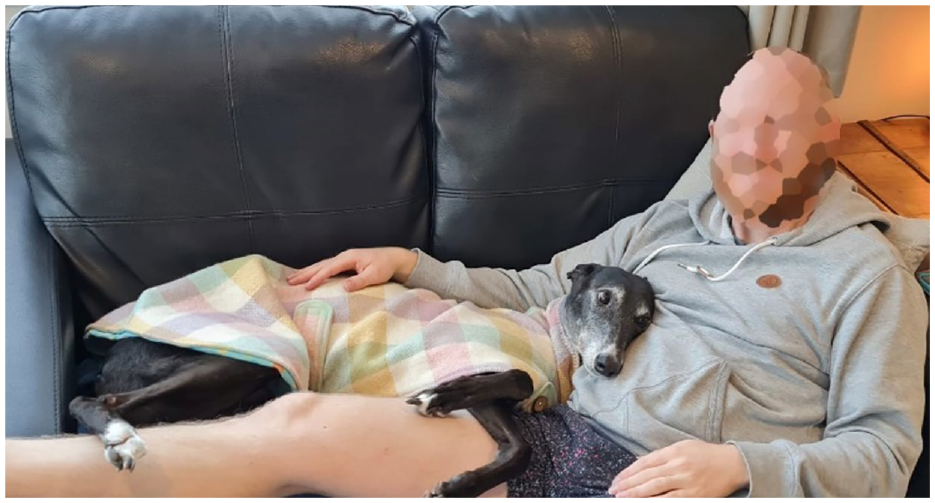
Zoe and my brother (Family G, pet photo diary).
The above lived experiences hold significance in shedding light on Zoe and Levi past encounters, which serve as valuable information for family practices. The instances of being a racing dog or having another individual in the family constitute a form of information that profoundly shapes the present demeanour and conduct of the dogs. Animals passively or actively use their experiences in daily practices, as a form of learned information. Information learned from living with Ben (in the past) stored in Zoe’s mind (i.e. her memories) for later use, such as shaping her emotional expressions when Ben visits the family. Or in Levi’s story, you can see the lack of information about living in a family home that causes him to be scared of the home, baby, and so on. The dog’s previous experiences associated with their current being and doing is a piece of information that spreads across the family.
Another good example would be interpreted from the reaction of Izzy, the dog, on the way to the beach. Olivia, her human said: She knows when we are going. Because we drive, and we only drive that road to go to the beach. As soon as she recognizes she’ll start talking the whole way. And she just gets more and more loud and excited until we reach [it] and let her run. (Family I, photo elicitation interview)
The above excerpt is pointing to the spatial memory of Izzy. She remembers the locations or spatial relationships within the way to the beach. Animal cognition studies objectively explore the spatial memory informing animal movement and actions [28], and highlight its influence on further social learning about food locations or other resources [29]. Within the above examples of internal information experiences, we should also consider the environmental stimuli that enable the animals to become informed or learn about the daily spaces and practices.
3.2. Learning in lived existence
Animals knowing is not just about the past, they know about the present. Animals know the daily routines of the family. This is illustrated within Cam’s real-life situation (see Image 2). Mary captured the image and described: ‘It’s 4 pm, dinner time. Cam doesn’t normally just lie around waiting for dinner. He normally comes and rubs against me for a reminder to give his dinner at the correct time!’ (Family A, pet photo diary).
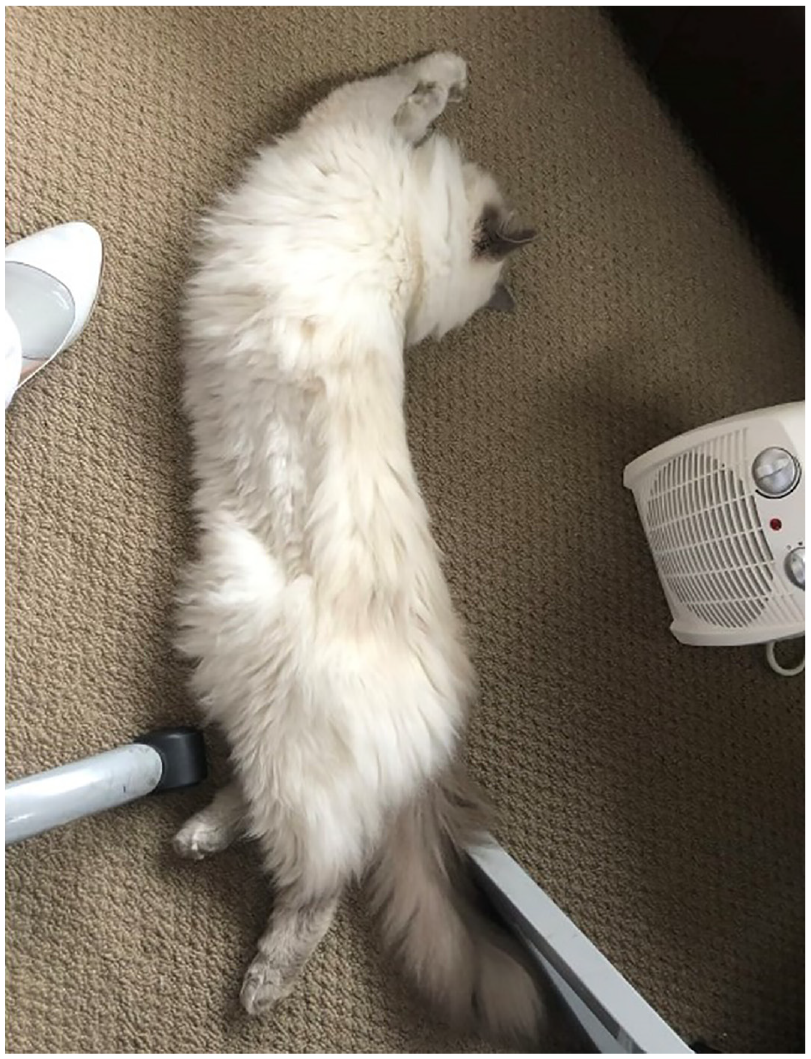
It’s dinner time (Family A, pet photo diary).
The above excerpt sheds light on the routines of animal behaviour as a learned behaviour or skill. As described by Mary, Cam usually reminds his dinner time, like a daily habit. As shown in the image, Cam is rubbing and stretching against the floor, near Mary’s shoe in the office (According to Mary, he appears there acting like this around his usual dinner time). Cam acquired information and learnt about dinner time from repetitive events in the family. The purpose of information taking from daily routines is to gain mastery over the environment. I have gathered many lived experiences of animal’s taking and making information about the routines of their family, from having food, to daily walks and going to bed.
In the information behaviour research, the habits and routines have been mostly explored as deeply ingrained patterns of information seeking, sharing or use [30,31]. However, in a broader view, in more everyday settings, there are also some indications about the informational concept of daily routines in forming understanding and meaning in life [9,32]. Habits are an important source of information in multispecies daily co-existence, especially for the animal. Dogs usually feel better when they know the routine of a day [33]. A repeatable schedule lends a sense of security (a mental state) from knowing what to expect. When something changes in the home, or within the family activities, dogs become frustrated and unsettled due to the uncertainty (a mental state). Habit has cognitive and embodied components [34]. The cognitive aspect of a habit involves the information process inside the cat’s/dog’s mind that guides their embodied behaviour. Its embodiment is obvious within Cam’s image (see Image 2). Also, some human participants described routines in relation to their animal’s body clock, an internal biological process that informs their animal’s actions.
Similarly, animals understand their family members. Mary, a participant living with three cats, described the lack of such knowledge within her cat’s playfights: ‘Cam is firm but gentle with Giz. But Giz [the younger cat] does not read [Cam’s] signs and creates more angst for Cam. Hopefully this will settle as Giz gets older’ (Family A, photo elicitation interview).
The above example highlights the importance of an animal’s ability to perceive the other’s information expressions. Giz seems to sense information, such as hearing the other cat hissing. However, due to his age or other circumstances, he is unable to engage in the cognitive process of integrating the received information into his existing knowledge base. Lueg [8] perfectly discussed this in the human information behaviour context. He focusses on several cognitive biases that influence how humans sense and perceive information. He suggests that failing to notice information relevant to a task needs to be considered by information behaviour researchers.
In the multispecies family, members are from the same and different species, some use words, some use vocalisation or body language. The animal learns about them through daily life. This knowing happens internally and is stored as a source of information within their mind. The lack of it, considered a misunderstanding or misinformation within the mind, causes problems inside the family. Some cognition studies of human–animal relations also report scientific evidence about dog/cat ability to interpret humans’ attentional state and goals when interacting with them [35].
3.3. Traces of instinct
Apart from the gradual development of cognitive information in an animal’s being, I find another form of subjective knowing, which seems to be a goal-directed learning, but gained without any conscious effort. It may appear unusual at first, but allow me to elaborate.
In the multispecies family, instinct is an unconscious knowing of the animal used in daily practices. It is illustrated within Mary’s lived experience of receiving a cricket from her cat (see Image 3).
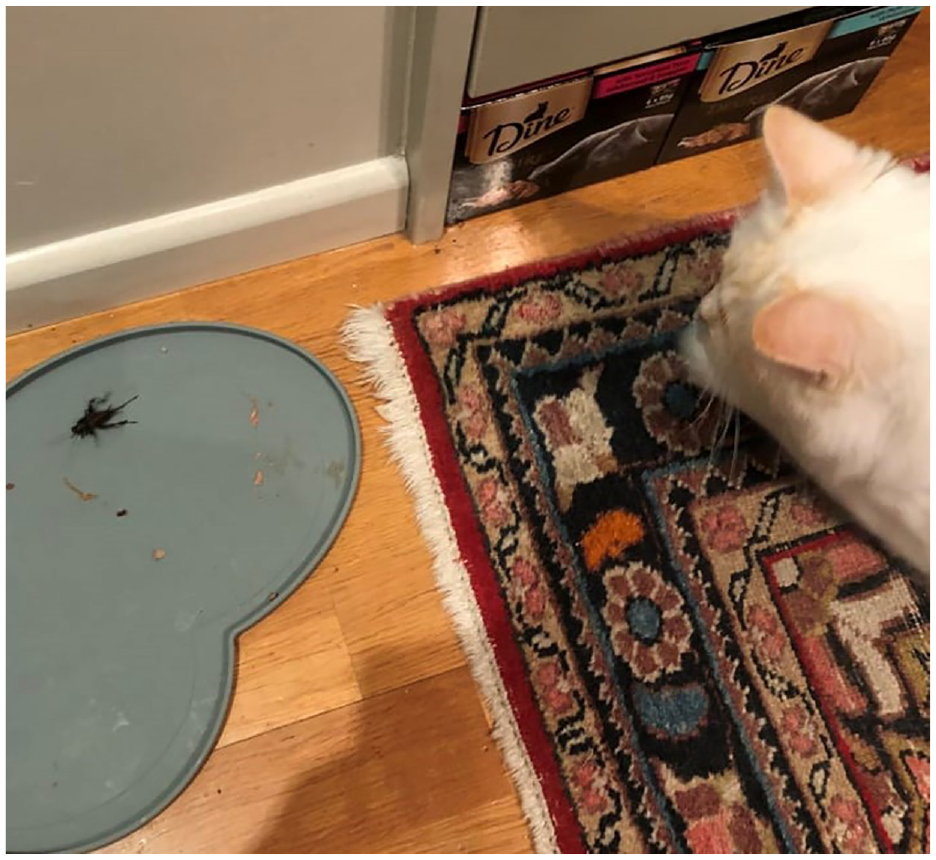
Giz brought me a present (Family A, pet photo diary).
The example highlights the cat’s hunting instinct. He catches an insect and offers it to his human. The cat uses his unconscious knowing to inform his family practices. Undoubtedly, they constitute a multispecies household, and even the perspective within their home may undergo a transformation. I gathered many strange and funny photos of animals mimicking their natural behaviour in the family and converting the usual home to a multispecies home. Instinct, as cognitive information, existed in the animal’s mind and body without conscious awareness or deliberate thinking. However, it can still inform their thoughts and behaviours. Within the human information behaviour, one might explore a similar informational concept in gut feelings and sudden realisations in humans.
An animal’s instincts in a multispecies family context act as a form of goal-directed learning. This is evident in Jennifer’s photo and description about the lived experience of Higgs, the dog, during a thunderstorm (see Image 4).
… you can kind of see his mouth, is in the middle of barking and crying. Nothing usually works to calm him down when there’s thunder…He continues to be upset and for example bark at the stuff. Most of the time we try to distract him by giving him cuddles or treats, but nothing actually works. So, we ignored him. But he did settle down once the storm was over. (Family H, photo elicitation interview)
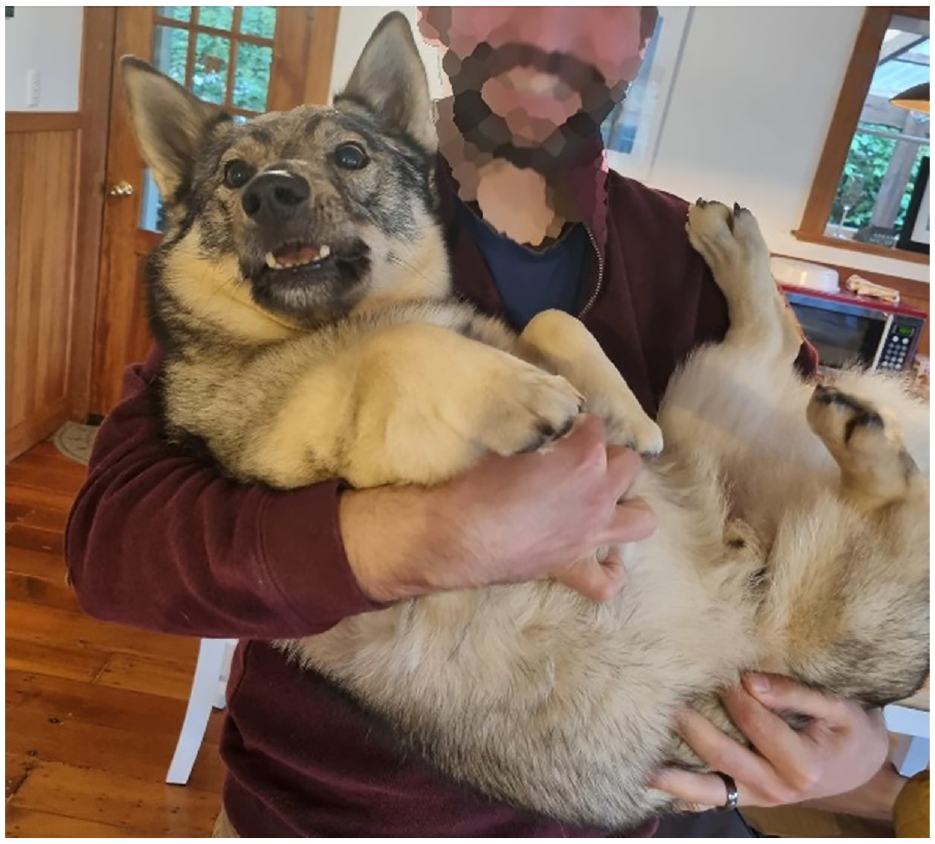
Thunderstorm (Family H, pet photo diary).
The dog exhibits a goal-directed behaviour arising from his instinct (internal information) to communicate his needs with the humans. For instance, he barks to signal the danger of the thunderstorm. Barking originates from the dog’s innate knowledge. He instinctively learns to bark and continues to do so in times of uncertainty, a behaviour that operates on an unconscious level. However, barking serves as a certain goal essential for his survival. These actions in the long term will build up the family’s shared knowledge, as a common language-like communication (see subsection ‘Linguistic Connections’).
The information experience approach acted as a prism, aiding me in revealing the spectrum of animal knowing, a concept that might feel unconventional yet innovative within the field of Information Science. I found that the companion cats’ and dogs’ cognitive information derived from their previous experiences both within and outside their families. Their previous experiences associated with their current being and doing was a knowing that spread across the family. Therefore, sometimes their memories were imagined by their humans, from the animal’s represented information. The article also delved into the significance of cats’ and dogs’ acquired habits and routines through coexisting with humans, which emerged as another form of animal’s knowledge. Similarly, their capacity to comprehend and respond to the actions of others added another dimension to their cognitive engagement with information. Furthermore, the realm of unconscious knowing, driven by the cats’ and dogs’ instincts, guided their daily practices in the multispecies family. The animals gained goal-directed learning using their instinct to form their living and communicating with humans.
4. Human knowing
In the multispecies family there are two different knowers. This section changes the viewpoint to the subjective information experiences of the human members of the family.
4.1. Memory and attention entwined
Childhood memory acts as important source of information for humans to take care of their animals. This is evident from Khloe’s childhood memory about her wounded cat: My mom and dad were working parents. They didn’t have time to do the full care that [the injured cat] needed. So, I did a lot of the cleaning, the wound care, the feeding, watching out for infection. So, that gave me a real insight into spotting the red flags [in cats] and knowing when to intervene. (Family C, walking interview)
In another scenario, Ava described how she turned to raw feeding her dog: ‘I felt that raw food was better because I grew up on a farm. And I thought that dogs should eat more natural things which is better for their stomach’ (Family D, walking interview).
On the contrary, Karen stated her lack of childhood memory with cats and dogs: ‘I was raised with no animals. So, I always been very careful and scared [being around dogs]. At first I couldn’t read the body language of Holly’ (Family F, photo elicitation interview).
The above examples illustrate how childhood memories of Khloe and Ava profoundly influence their perceptions when making daily decisions. However, Karen associates her limited abilities with dogs to her lack of childhood connection with them. Remembering childhood experiences seems to provide information for humans to understand and live with their current dog/cat. I do not say whether the information gained from memories is true or false, as some might believe raw feeding is not a good option for animals in the family context. However, such information is etched in human minds, serving as meaningful knowledge that guides their caregiving practices. Within childhood studies, scholars have noted this association as a child’s relationship with nature shapes their identity as an adult [36].
Apart from childhood memories, there are shared or common memories that are collectively experienced with others in the family. Remembering them informs family practices. Many excerpts described in the previous section about animal memory were mutually experienced with their humans and told by their humans. Those memories were shaped within their shared activities. So, they have no special information need or interest, but they were exposed to possibly novel information through being aware [37] in a shared life and gained the knowledge through simply being conscious and sentient.
The process of learning from experience has been a subject of study in Information Science. In an examination of document phenomena, Gorichanaz and Latham [13] introduce the concept of ‘adtrinsic information’ to describe a person’s past and social world contributing important information to the document experience. Building upon this, Gorichanaz [38] and Ocepek [32] reveal how people incorporate memories into their daily works, such as art creation and grocery shopping. Moreover, Lee et al. [39] unveil distinct categories of memory – positive, negative and practical – alongside their potential impacts on everyday information behaviour.
Overall, memories attract human attention for monitoring information in daily life. This is evident within Khloe’s memory of losing a cat and become more attuned to particular types of information: I keep an eye out just for different things happening in the community. Because last year, one of our cats, was shot with a BB gun. This is active around here. There are some cat [Facebook] pages that let you know about where had been recent attacks on cats in the area and things like that. So, I kind of keep an ear out about safety tips on how to keep my new [cats] safe. (Family C, photo elicitation interview)
The above lived experiences illustrate attention towards specific information. Khloe knows they need to know about specific things. She selectively focusses on specific information. Therefore, attention is a cognitive source of informing, inside the mind, about outside stimuli. In defining human information seeking behaviour, Bates [37] highlights this as an activity of monitoring that is directed and passive information acquisition. In a more contemporary study, Gorichanaz and Latham [40] identified attention as one way through which an individual’s focus is directed outwardly, thereby influencing their internal world (in terms of gaining wisdom). In the above lived experience, Khloe, having gone through the loss of a cat due to a BB gun attack (prior experience), developed the practice of maintaining a heightened awareness of information shared on Facebook regarding such attacks. She does not actively search for it; rather, her attention leads her to regularly monitor the pages for any updates or news.
4.2. Everyday insight
Daily observing is the main approach to inform human perceptions about animals and their practices. This is vividly experienced and described by Mary about her cats: ‘I think they learn about me as much as I learn about them. I’m quite an observant person as it is’ (Family A, walking interview). Or Sarah explained how she learned about her dogs: ‘… pretty much by reading books. But [I learned] by having them, by living with them. Because every dog is different. So, mostly by watching’ (Family B, walking interview).
Both participants mention observation as an everyday input to form their understanding. By observing, they mean gathering sensory information through probably sight, hearing, touch, taste and smell. I consider humans’ daily observations not merely as a sensory input, but as information that changes them. Within the lived experiences, I find observations related to evolution, comparison and judgement.
In multispecies families, judging is important cognitive information processed from observed information. This is illustrated within an image shared by Mary of her cat after a couple of days being sick (see Image 5). Mary described: ‘He is digging. You can tell he is getting better because he is getting back to his normal playful self again. He’s playing more, which is great’ (Family A, pet photo diary).
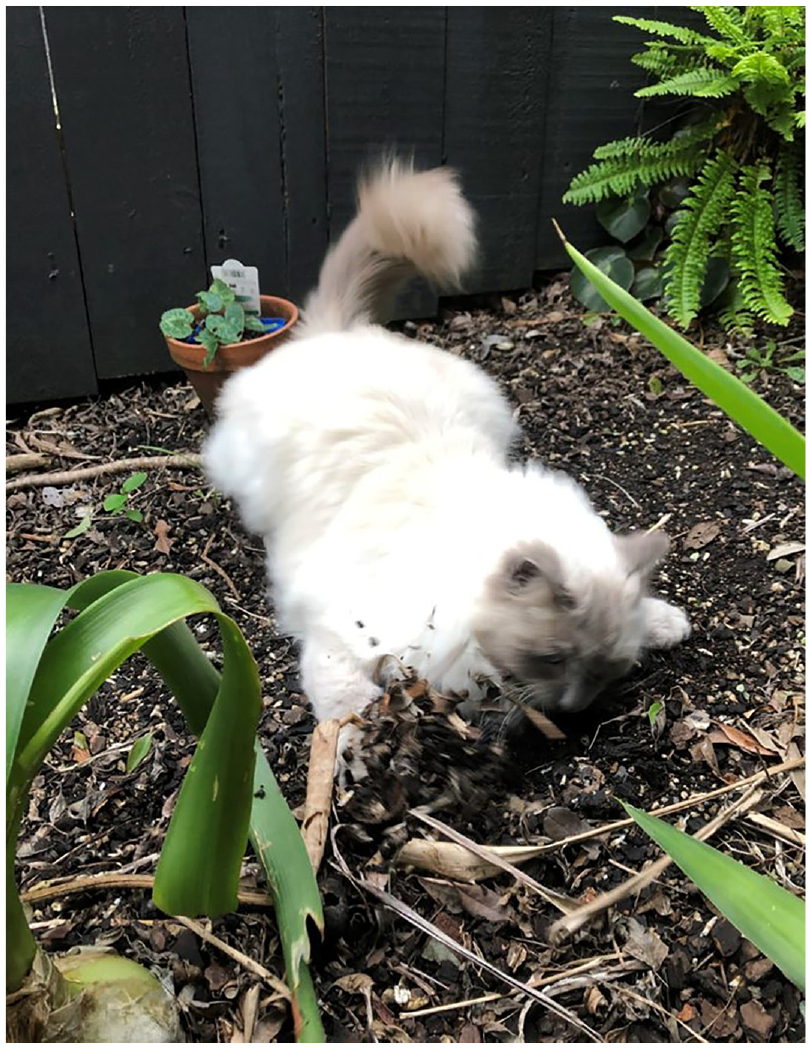
Healthy sign (Family A, pet photo diary).
Sometimes, the everyday input of human observation takes the shape of comparing between members of the family to form a judgement. The following excerpt from Linda’s pet photo diary explicitly illustrates this concept. Her dogs, Sky and Benji, are playing with a puzzle and she captured the image to share how they approached the same game differently (see Image 6):
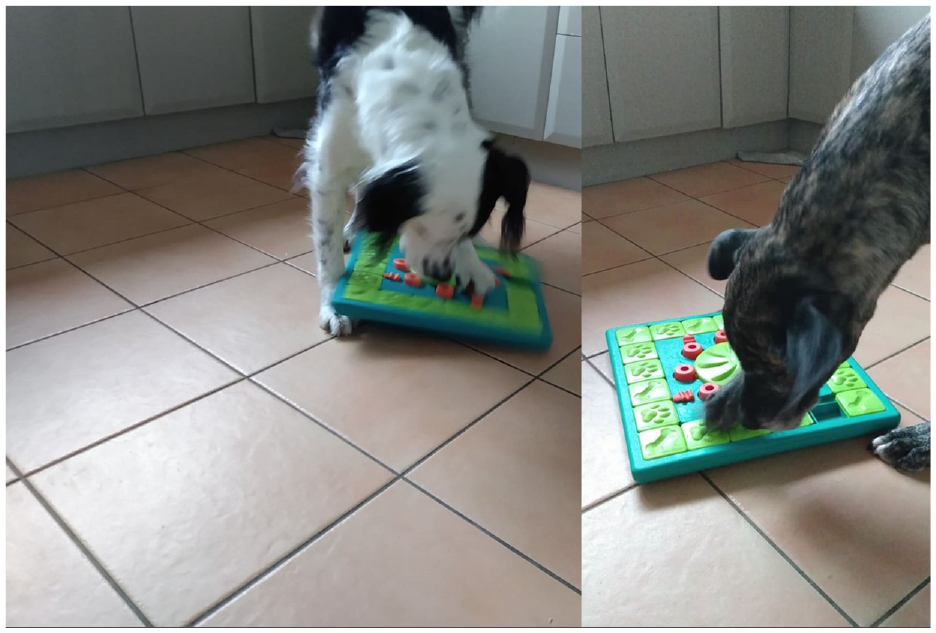
The puzzle (Family E, pet photo diary).
Images 5 and 6 highlight judgement as human internal cognitive information. Their judgement results from what have been observed between two distinct points of time or two different entities, such as the cat is getting better, or dogs play differently. Linda has shared her observed information in Image 6. Sky, the dog on the left, is tensed, scratching the puzzle harshly, lifting it up, as he is more impatient compared with Benji. Benji pulls the puzzle pieces towards him with less force. So based on this observation and many more in everyday contexts, Linda judges them and makes personal beliefs as experiencing cognitive information.
Humans also learn through trial and error in daily living with animals. This is evident within Mary’s lived experience about the way she learned to provide her cats with the best playing activities at home: It was just trial and error with lots of different toys really. I started off with bits of paper, and then we went to ping pong balls, and then we’ve got tennis balls as well. They’ve got plenty of stuff. I think it’s just experimenting to see what it is that they like. For example, this is a cat grass and catnip. Sometimes they have arguments on who gets the cat grass and catnip. (Family A, walking interview)
In the above example, Mary makes information as a subjective knowing about her cat’s preferences. She learns it from her attempts of providing different playing materials, observing the cats’ reactions and making decisions. This article points to trial and error as a cognitive information experience (as opposed to its embodied and material aspects). It is an everyday input that consists of a variety of cognitive activities inside the mind, from planning different approaches, monitoring results and adjusting strategies based on feedback. The participating multispecies families mentioned trial and error in managing the animal feeding, caring or simply living with them.
In her thesis about everyday food-related practices, Polkinghorne [41] found trial and error in information practices related to knowing-how. She concluded trial and error as an embodied information experience, which is related to information creation, needs, seeking, sharing and use. Drawing inspiration from Bates’ models of information seeking [37], the process of trial and error could be likened to information sampling and selecting. It is active repeated information browsing in a physical or informational object to reach a meaningful result [42] – such as repeatedly examining various objects to understand the cat’s preferred play activities.
Bates [42] also speculated that information sampling and selecting, or trial and error, in humans might have evolved from a generic behaviour of foraging behaviour of animals. We can easily understand the relationship between foraging behaviour of animals and trial and error in human knowing. Both emerged from repeated experiences, involved exploring and finally led to discovery in a form of information acquisition or information creation.
4.3. Beyond reality
Within the context of human–animal relationships, imagination plays a role in how humans perceive their animals. This is evident in relation to Evo, a cat member of Family A, who passed away during the course of this study. The final entry in the pet photo diary featured a portrait of him (see Image 7).
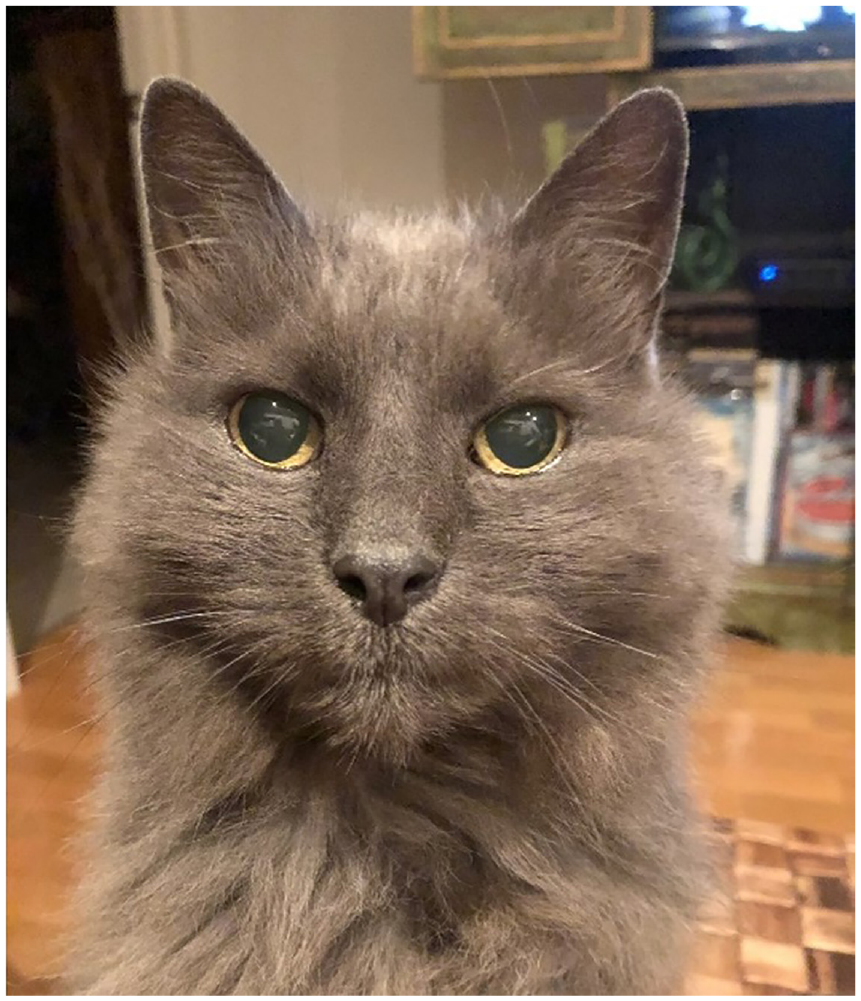
RIP Evo (Family A, pet photo diary).
The above example presents imagination as cognitive information that allows Mary to create an idea about Evo’s afterlife. ‘Rainbow Bridge’ is a common comforting idea that provides solace to individuals who have lost their animals. It is her mental representation combining elements of previous experiences, feelings and sensory inputs.
Sometimes, an animal’s memory is imagined by their humans. This is evident from Karen’s experience about her dog’s problem with the car: When we first got her, we just couldn’t get her to go in the car. It was upsetting for everybody as we thought she didn’t like us…But then we found out actually she just wants to go in the back [not the car seat]. That’s fine now as we know about it. So, I do not know, but maybe that was what they taught her before. (Family F, walking interview)
Within the above story, the human is talking about the mental state of her dog. This piece of information might be true or just the imagination of the human. The human takes that information from the represented information in the animal’s corporeal expression. So, Karen interpreted that someone else might have taught Holly to only go to the boot of the car.
Representation is not synonymous with memory. When I wrote about the animal’s previous experience (in subsection ‘Echoes of Experience’), I typically meant information internally encoded in the animal’s nervous system; but representations are external media (such as an animal’s body and behaviour) [43] that inform the outsider about the animal’s inside. Bates [44] identifies the represented information as one of the fundamental forms of information, which is information that is encoded or embodied. In the above example, the embodied information in Holly’s interaction with the car is picked up by Karen to shape a way of thinking.
Imagination is a human way to empathise and understand perspectives different from our own [45] – stepping in the shoes of others. Living in a multispecies context, where there is no common language, anatomy and neural system between species, humans should use imagination to take information from other species or make information about them. One might say we cannot gain knowledge by relying on imagining and it is not related to Information Science. In contrast, perception as our source of knowledge is working based on imagination and visualisation of previous experiences [46]. Even in grounding information within human information seeking, Lueg’s [8] emphasis is on information perceived but not actually sensed. Imagination that is very relevant to daily practices of the multispecies family could be one of missing internal information that needs to be explored further in information behaviour research.
Moreover, future-oriented thinking is information visualised inside the human mind. This is illustrated within Sarah’s lived experience of living with Emma, a dog who sometimes gets aggressive towards other dogs. She mentioned: ‘If she goes to attack another dog. She could be put down, so I have to put her on the lead every time’ (Family B, walking interview). Similarly, Linda’s lived experience sheds light on the peril she senses when her dogs are off-leash: When he runs it scares me a lot. He always comes back and he’s always visible. But when he just doesn’t come right away, it scares me sometimes that he will run on a street and then get run over. (Family E, walking interview)
The above experiences highlight human imagination about the potential future, a form of experiencing emotional-cognitive information for managing the safety of their dogs. This mostly arises from negative feelings, such as fear, and imagining sad scenarios (i.e. negative thoughts), such as a dog’s death.
Nevertheless, I gathered lived experiences of positive future-oriented thoughts, such as aspirations and future plans, which aid individuals in comprehending their lives with animals and making informed decisions.
These forms of internal information are mostly studied as an affective turn in Information Science [47]. In information behaviour literature, a range of positive and negative emotions has been identified that evoke from human interactions with the informational world, as well as a reason for information seeking or information avoidance [48]. For instance, anxiety and desire are both found to be a common inner phenomenon to characterise the everyday experience of managing personal information [49]. The current findings about imagination and predictions as internal information show that cognition and emotion are intricately interconnected. This integrated view has been recently seen in the field [9,50].
Overall, this (finding) section represents knowledge (as a way of knowing) from the perspective of human members of the families. Familiar concepts within the cognitive turn of Information Behaviour research, such as human memory, attention, observation, judgement and trial and error were discussed from the lived experiences of participants. The article also ventured into more unconventional notions. Imagination and future-oriented thinking involved visualising information within the human mind, guiding the human’s perception about their animals and managing the daily life of multispecies.
5. Human–animal engaged knowing
Having contemplated the subjective knowing of both human and non-human members within the participating multispecies family, you might notice information that extends beyond the boundaries of individual minds. Moving ahead, this section shifts to human–animal engaged knowing. The concept of engaged knowing emphasises that understanding is not solely the result of individual internal processes but refers to a joint understanding that emerges through reciprocity and dynamic engagement between individuals [4,6]. This entails delving into how human–companion animals become informed together at an intersubjective level.
5.1. Linguistic connections
In exploring the cognitive information in human–animal relationships, I find their speaking/listening interactions fascinating in a way that each multispecies family develop their communications. Indeed, language serves as a medium for sharing information and knowledge among people, representing a unique avenue of exploration within the realm of Information Science [11]. So, I wonder how it works between humans and animals?
The language-like conversation between humans and animals is their common cognitive information, important for daily life. This is illustrated in experiences shared between Bella and Charlie: [Charlie] is quite vocal and very social, but he has an interesting vocal range. If he wants affection, he’ll go for affection with a lovely singsong voice. If he’s hungry, he’ll tell you. Because if he meows and you don’t act quickly enough, like feed him or…He would get loud…We think when he’s in a bad mood he goes like a quick meow [Bella mimics Charlie’s voice]. We think that means he is grumpy with us. And he’s got that old cat thing where he sometimes gets a little bit lost. It feels like he just doesn’t know where he is and so he meows really loudly. So I call him to make sure he knows that I’m here and it’s okay. I think he just needs a little bit of reassurance. (Family J, walking interview)
In the example, we see two conversing agents, which are different but develop a shared knowledge. On one side, there is Charlie’s communicative ability. He uses different sounds, probably with gestures, to convey information to Bella who is from another species. The vocal repertoire of the cat is wide. Companion cats have learned to efficiently communicate with humans thanks to their flexibility of vocalisation behaviours different from feral cats [51].
On the other end of this communication, Bella, as any human, uses language to store observations in her mind, as symbolic representations, and then to share them with others, as well as her cat. In general, communication is based on mutuality and built around shared knowledge [52], so it would be the same in human–animal conversations. I do not interpret Charlie’s vocalisation as the same as human language. However, what is obvious in the above excerpt is that both the cat and human influence each other’s understanding through shared expressions, verbal and non-verbal cues. They have a meaningful language-like conversation that is developed collaboratively in their shared situations and environments. This conversation is an intersubjective (collaborative) awareness.
Another good example is presented between Olivia and Izzy: I talked to [my dog] like she’s a toddler. Cause I know that she has a great understanding of certain things. But I talked to her just like she’s a little child. Not necessarily in a little children voice, but just talked to her in simple sentences. It’s incredible how she understands and speaks with you. Although we don’t have a language, you get to understand her body language and what she needs or wants. For instance, if she wanted to sit up [on the couch], but the cushion was there. She would just stare at it, make silent barks or tap her feet on the [wooden] floor. So, she’s telling me you got to move it. I am learning her manners and what she wants. (Family I, walking interview)
Olivia describes her own ability to use an intermediate-level language that is more baby-like, less complex than natural human language, as well as her dog’s cognitive ability to understand certain vocal words and expressions. She also highlights the communicative abilities of Izzy, such as staring, tapping on the ground, soundless barks. The dog communication is more embodied and situationally grounded in their home. So, they make up a unique internal communication system that is beyond human language. Meaningful multimodal signals shape in their joint interactions and store in their minds and bodies to be used for information sharing across species.
5.2. Playful connections
Humans and animals make joint meanings in their enjoyable shared practices. A good example is Sarah’s hide and seek playing with her dogs, Jess and Emma: I would throw a stick into the river; the dog would jump in the river, and she’d get the stick and while she was doing that I would hide. I can do it more with Jess, she would engage more with mental tricks without a treat. She just wants to catch sticks and balls. And she knew the game. She would come find me. (Family B, walking interview)
Similarly, this is exemplified through Mary’s experience with her cats during grooming. Mary sent three photos to share their experience (see Image 8).
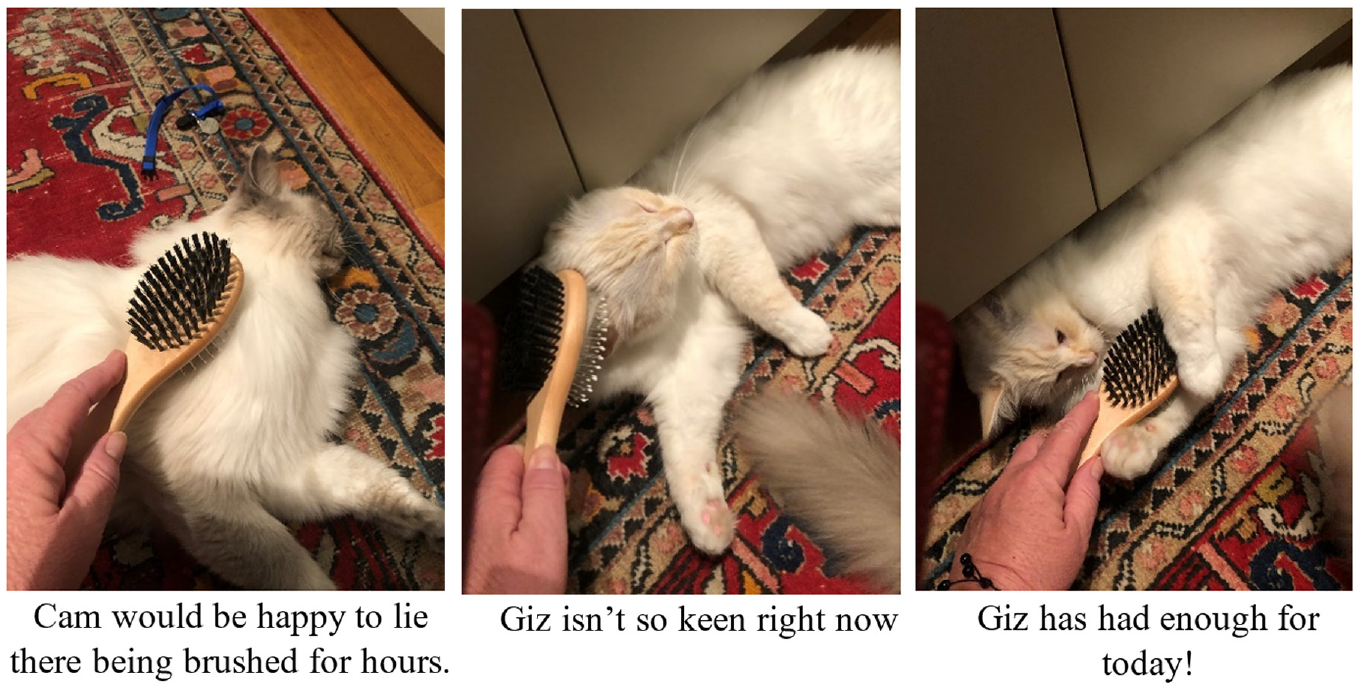
Brushing (Family A, pet photo diary).
In the shared lived experiences between humans and cats/dogs, information is collaboratively created through their mutual engagement. Activities such as play and grooming are cooperative and enjoyable, allowing all participants to freely contribute, exchange information (i.e. information making and taking) and enhance the interaction. For instance, in the hide and seek game, each agent’s actions are contingent upon and influenced by the actions of the other. The patterns of interacting shape the game and make it meaningful for Sarah and the dogs.
Similarly, in grooming interactions, Mary’s responsiveness to the cats’ behaviours influences their actions, generating shared information (i.e. engaged knowing). In their daily life, the cats become aware that others observe and respond interactively to their actions. They begin to view each other’s communicative cues (as being aware). It is easy to understand how this awareness could develop further, causing them to use gestures purposefully for information sharing. For example, pushing away the head, grabbing the brush or remaining still and extending the body are meaningful messages learnt in their joint interactions. These have now been stored in their minds as information to be used/interpreted in the right situation.
The footprints of this type of engaged learning and knowing could be found in recent companion animal practices and literature. Concepts such as ‘positive reinforcement’ [53] and ‘cooperative care’ [54] have emerged, respecting the autonomy of animals and allowing them to actively participate in training and healthcare procedures. These concepts foster trust and pleasure in the animal–human relationship, enhancing the overall learning experience.
Within the realm of knowledge creation, Suorsa [55] proposed a novel perspective by likening knowledge process to play. She suggested that play facilitates togetherness in human learning, which eventually contributes to their cognitive information. This concept was further explored in the context of the Joy of Reading programme [56] that provided a lens through which knowledge creation was explored as a collaborative accomplishment.
An intriguing aspect of Suorsa’s research [57] was its multi-professional and multi-organisational nature. She explored playful knowledge creation among teachers and libraries from different organisations. Notably, engaged knowing can flourish in contexts where different entities interact freely and playfully. This can be explored in human–animal, adult–child and even human–robot relationships, where agencies vary but all contribute to the emergence of a shared knowledge.
In human cognition, scholars discovered that the dynamic coupling of two agents yields knowledge that would not occur in one of the partners alone [6,58]. The meanings initially born from the shared interactions of two partners are spontaneous and reciprocal, gradually evolving into their routines [58]. The engaged knowing is not merely among humans. It could help to understand humans with other-than-humans and expanding our understanding of information and its use. A recent good example would be in the chapter of the study by Christen and Neustein [59] learning from dog cognition for applications in human–robot interaction. Similar to this research, they highlighted that cognitive processes of dogs naturally occur in a collaborative manner with humans, when both sides reflect each other’s enjoyment and happiness, and so foster a cognitive intersubjectivity [59].
5.3. Empathic connections
Engaged knowledge between human and animal goes beyond knowing each other’s actions and communication cues; it also involves mutual empathy. Take, for example, an entry from Olivia’s pet photo diary (see video 1). She puts voice on her dog’s expression.
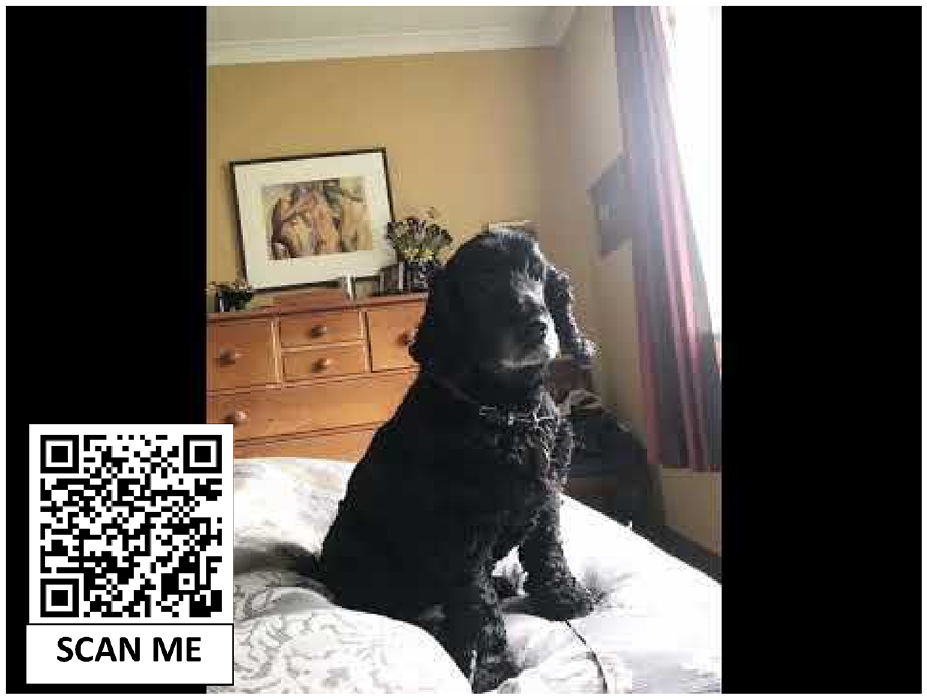
Mum it’s time you got up (Family I, pet photo diary).
The above photovoice highlights Olivia’s feeling about having access to the thoughts of her dog. She relates what Izzy knows and feels. Within their communication, individuals take the role of each other, creating a sense of shared knowledge.
I cannot directly speak from the animal experience. However, I can interpret the animal’s empathy in human mutual experiences. As an example, Jennifer shared her experience about how her two dogs communicate with her. She mentioned: … Apart from talking and body language, I think they pick up on moods. If I’m not feeling well, they’re very attentive. Kind of coming over, cuddling, and comforting me, which is really sweet…Or if I’m holding their lead, and I get anxious of [another] dog, then they’ll growl at it…So, I guess we have different levels of communication. (Family H, walking interview)
Jennifer’s lived experience highlights the strong empathetic connection she shares with her dogs. Her emotions, whether positive or negative, are instinctively mirrored by her dog companions, showcasing a form of shared empathy. Through this deep sense of connection and communication, they effectively understand and experience each other’s feelings and mental states. These instances of empathetic mirroring provide them with cognitive information that become life routines and guide their actions in their everyday activities.
Empathy has been highlighted within human–human speech [52] as well as, human–companion animal communication [60]. In the multispecies context, Schnegg and Breyer [61] considered empathy as unconscious development of knowledge to understand how differently others experience the world. In Information Science, empathy has been discussed as an approach. It allows information scholars to immerse themselves in the lives of others to explore their knowledge [62]. It is a positive movement to expand Information Science literature and profession as a means to increase understanding, connection and compassion.
Overall, this final finding section described the lived experiences of participating multispecies families to present their engaged knowing. This form of knowledge (or cognitive information) was discovered in the dynamic interaction between human and animal in three contexts: their linguistic, playful and empathic connections. In meaningful language-like conversations, they learned how they can impact another’s being and be impacted by others’ expressions. Through playful activities that cultivated trust and delight, the animal–human relationship was enriched, enhancing their shared cognitive information practices. Finally, engaged knowledge was found in their mutual empathy, as a form of understanding about each other’s mental states.
6. Harmony in diversity: implications for information science
The cognitive turn of Information Science places the human mind at its core to understand information and its use [47]. However, there is much to be uncovered by extending its scope to encompass human relations with others (more-than-human entities). Humans have always lived among larger assemblages that include them with other animals. In their everyday family life, humans know companion animals that do know them back.
Information scholars might underestimate certain ideas and subjects, such as animals, assuming they are unworthy of academic exploration. As an information behaviour researcher living with animals my whole life, this article was driven by the curiosity to unravel the essence of cognitive information in our shared life with companion cats and dogs.
The information experience approach acted as a prism, aiding me in revealing the spectrum of internal informational concepts around humans and their companion animals [16]. Multispecies relationships within households, reveals that experiencing cognitive information shapes their everyday life and shaping by it is far more intricate than the initial perception of the field. Cognitive information holds a more expansive significance beyond conventional subjectivity and perception. It spans relational, experiential, behavioural, biological and instinctual dimensions, contributing to diverse forms of learning (e.g. adopting different ways of listening, engaging in collective thinking and becoming attuned to others’ ways of living).
The findings began by describing about animal and human knowing, such as perception, learning, memory, imagination, communication, social logics and additional traits. Then, it converged on the concept of human–animal intersubjective knowledge for harmonious human–animal coexistence. The presented categories are not mutually exclusive; individuals, both human and non-human, may learn to employ a combination of engaged knowing and distinct knowing in different contexts and stages of their lives.
Upon exploring the cognitive information experiences of diverse members within the multispecies family, a realisation emerged: cognitive information transcends individual minds and fosters unity, creating a shared understanding that informs the coexistence of humans and animals. In other words, the communal aspects of knowledge construction across species emphasise the interconnectedness of individuals (whether human, dog or cat) with others and their shared environment [7]. For example, through shared activities such as playing, talking and empathy, humans and animals learn to co-construct information they need to know about each other.
Individuals within a relationship (e.g. a multispecies family) learn to know each other and their shared activities better, aiming to gain mastery over the relationship and their environment. This is because misinterpreting the other partner(s) may lead to a breakdown in any relationship or system. This insight could be applied in various contexts involving human connections with others (e.g. human–animal, human–human or human–object), emphasising that knowing happens when things are connected.
Interspecies information systems, a growing field in Animal–Computer Interaction, could greatly benefit from this approach. One example is a hardware soundboard used by cats, dogs and their human companions – an innovative communication tool based on augmentative and alternative communication [63,64]. This tool aids animals in expressing their needs and desires in their daily lives. For instance, a dog can convey pain and its location by pressing ‘ear’ and ‘ouch’ buttons, allowing them to communicate effectively with their human companions. A research group, ‘How They Can Talk’ [65], is currently investigating how this tool can enhance communication and understanding between humans and their cat/dog companions. Success in such designs and the understanding of them is rooted in a profound comprehension of human–animal knowings (individual and participatory sense-making).
The purpose of interspecies information systems, according to van der Linden [66], should enable better actions among different species rather than exerting control, especially from humans over animals. His concern resonates with the foundational understanding of knowing within multispecies families. In this study, humans, dogs and cats receive and interpret information from their relationships and shared actions not to underestimate the other party, but rather to better comprehend and interact with them, recognising their agency in shared lives. It is about knowing each other better, rather than knowing each other wrong and underestimating the other party in a relationship [6].
The rapid proliferation of AI technologies has seamlessly integrated them into our daily lives, turning them into our assistants, friends and companions. For many individuals, living without these technologies has become nearly unimaginable. A multitude of cognitive information forms and interactions observed in human–animal engagement can be seamlessly applied to how artificial intelligence can engage with humans in more socially connected and enduring relationships. Multispecies knowing could highlight a more inclusive design and introduces new approaches to behavioural modelling by mimicking natural relations (systems) and their interconnected dynamics. It also incorporates more diverse communication cues in AI. This is not mere speculation; in fact, this approach has already been pursued by scholars in the field of computer science [59,67].
Finally, in human–human social engagements, beliefs about living with companion animals sometimes turn into objective knowledge. Multispecies cognitive information could help us understand the connections of how an initially internalised knowing about living with animals gains an objective and public nature through the shared experiences of diverse individuals with the same concept. For example, if many people believe the idea that a cat’s/dog’s tail is a tool for conveying meanings and it becomes documented in different formats, then this idea transforms into common sense, going beyond individual perspectives to become objective knowledge. However, the danger lies in the potential for these widely held beliefs to be inaccurate, leading to false learning and actions among human companions towards their animals. In addition, such objective knowledge sometimes oversimplifies the complexities of relationships across species, potentially resulting in misguided behaviours and dangerous interactions between humans and animals.
Overall, considering the multispecies aspect of cognitive information (i.e. the consideration of other species alongside humans in shaping knowledge) could potentially lay the foundation for a better understanding of internal information experiences and the design of inventive external information artefacts and systems in different contexts.
Supplemental Material
sj-docx-1-jis-10.1177_01655515241268845 – Supplemental material for Knowing within multispecies families: An information experience study
Supplemental material, sj-docx-1-jis-10.1177_01655515241268845 for Knowing within multispecies families: An information experience study by Niloofar Solhjoo in Journal of Information Science
Footnotes
Declaration of conflicting interests
The author(s) declared no potential conflicts of interest with respect to the research, authorship, and/or publication of this article.
Funding
The author(s) received no financial support for the research, authorship, and/or publication of this article.

Supplemental material
Supplemental material for this article is available online.
Notes
References
Supplementary Material
Please find the following supplemental material available below.
For Open Access articles published under a Creative Commons License, all supplemental material carries the same license as the article it is associated with.
For non-Open Access articles published, all supplemental material carries a non-exclusive license, and permission requests for re-use of supplemental material or any part of supplemental material shall be sent directly to the copyright owner as specified in the copyright notice associated with the article.
