




Abstract
The rise of misinformation as a prominent societal challenge has given rise to a plethora of educational efforts aimed at equipping individuals with the knowledge and skills needed to successfully navigate this increasingly daunting information environment. Librarians are on the frontlines of this challenge and have called for new approaches that go beyond more conventional information literacy education. One approach gaining attention is games, and several have emerged with promising results, largely due to their immersive nature that allows players to experience the dynamics of misinformation. In particular, game environments can be designed to highlight the psychological and emotional dimensions of misinformation, arguably the most significant shortcoming of more skills-based approaches to discerning misinformation. In this study, we developed a misinformation escape room and conducted a pilot study in five public libraries to study its effectiveness. Initial findings are encouraging. The misinformation escape room program, consisting of the gameplay plus a debrief discussion, appeared to increase awareness of certain misinformation tactics (e.g. deepfakes), generate reflection on the psychological dimensions of misinformation, and shift attitudes in ways that made many players more cautious of misinformation, potentially influencing their future social media behaviors.
Introduction
As misinformation has infiltrated everyday life, many practitioners and scholars have been inclined to focus on skills to help discern fact from fiction. But what if the core problem is not just a skills deficit? Misinformation literature suggests many factors that contribute to one’s beliefs in certain information, including the role of emotions, cognitive biases, and personal identity. While the information literacy field is not oblivious to these factors, developing educational resources that can successfully address them has proven more elusive. Approaches range from those rooted in the conviction that “the bulk of disinformation on the Internet could be combated with basic evaluation skills” (Sullivan, 2019), to fundamentally new approaches that draw on research in other fields, particularly the psychological sciences. Checklists that encourage one to “check your biases” or “watch your emotions” are common manifestations of the former. More novel approaches are informed by, for instance, the notion that “while facts make an impression, they just don’t matter for our decision-making, a conclusion that has a great deal of support in the psychological sciences” (Wardle and Derakhshan, 2017).
Librarians are on the frontlines of fighting misinformation, engaging directly with people in diverse communities around the world. This position affords them a unique perspective on misinformation at personal and local levels. In a study exploring librarian experiences, perspectives, and suggestions for more effective misinformation programing, Young et al. (2021) found that librarians are quite attuned to the complexities of misinformation. They acknowledged that conventional approaches (e.g. panel discussions, expert presentations) have largely failed to address the challenges, using language demonstrating implicit recognition of the psychological dimensions of misinformation. They were also acutely aware of the political nature of misinformation and felt stymied in balancing their professional commitments to provide trustworthy information with the imperative to maintain their trusted positions in their communities.
In this paper, we explore the potential of a play-based approach to misinformation education. Games have many qualities that are well suited for a topic like misinformation. Games allow participants to step into an environment that provides permission to play toward mastery—and fail safely—an attribute not present in more conventional forms of misinformation education (Tekinbas and Zimmerman, 2003). Social games offer opportunities for players to discuss problems together, a particularly salient attribute for a controversial topic such as misinformation. Games are also fun and appealing to people of all ages.
In this study, we designed and evaluated a misinformation escape room as one such play-based approach. Our investigation focused on two dimensions of analysis. We assessed the experiences of the escape room players to understand if the immersive, interactive and collaborative qualities of an escape room could generate learning and reflection on the psychological dimensions of misinformation. Second, we assessed the experiences of librarians who ran the game to learn if the game addressed their concerns and suggestions for library programing on misinformation. Our research questions were:
Does the escape room improve people’s understanding of various misinformation techniques, including: misleading data, deepfake images and video, and social media bots?
Does the escape room encourage reflection on the psychological dimensions of misinformation, including the role of cognitive biases and emotion?
How does the escape room influence people’s attitudes toward misinformation and potential social media behaviors?
What are the design implications of the game for ongoing misinformation escape room development?
This is an exploratory study based on data from 17 gameplay sessions of the prototype escape room, comprising 80 participants working in teams of 3–6 players. The primary aim was to reveal patterns and insights on the above questions to inform our ongoing research program and contribute to the literature on using game-based approaches for misinformation education.
Relevant work
Psychology of misinformation
The psychological sciences literature is replete with studies contending that the psychological dimensions of misinformation call for more fundamental changes in approaches to misinformation education (Beene and Greer, 2021; Lor, 2018; Revez and Corujo, 2021; Sullivan, 2019). This research highlights the need to account for the role of personal beliefs, social identity, emotion, confirmation bias, motivated reasoning, and epistemic beliefs (Lewandowsky et al., 2012). Misinformation is especially effective because it exploits cognitive biases and triggers emotional reactions (Lewandowsky et al., 2012; Nickerson, 1998; Pennycook, 2017; Pennycook and Rand, 2019; Taddicken and Wolff, 2020). Emotions open a door into cognitive functioning with emotional arousal increasing people’s willingness to share information (Berger, 2011). Social media content that evokes high-arousal positive (awe) or negative (anger or anxiety) emotions are more viral (Berger and Milkman, 2012). Anger makes a person more defensive and partisan (liable to believe misinformation from their party), while anxiety lowers a person’s defenses, making them vulnerable to misinformation from the other party (Weeks, 2015).
There is increasing recognition in the library and information science field that these emotional and cognitive aspects need to be more actively considered in information literacy research (Revez and Corujo, 2021). Librarians are also implicitly aware that effective programing would need to account for the psychological dimensions of misinformation to go beyond what is typically covered in media and information literacy programs (Young et al., 2021).
Games and misinformation
Educational games have a long history, and recently games on misinformation have begun to emerge. Two of the more researched ones—Bad News and Breaking Harmony Square—draw on the concept of inoculation theory, the notion that exposure to specific misinformation strategies and techniques can help people better recognize it later (Roozenbeek and van der Linden, 2019, 2020). In Bad News, players launch their own misinformation campaign to gain fictional notoriety. In Breaking Harmony Square, players work to plunge a fictional community into chaos. Research on these two games has produced promising results (Basol et al., 2020; Roozenbeek and van der Linden, 2019, 2020). For Bad News, the findings suggest that the game improves people’s awareness of the prevalence of misinformation and gives them a confidence boost to successfully recognize misinformation in the real world (Basol et al., 2020). For Breaking Harmony Square, players of the game were better at spotting fake posts that incited emotions and sought to polarize audiences (Roozenbeek and van der Linden, 2020). At the same time, Pimmer et al. (2020) tested Bad News and a German game called Fakefinder and found only modest increases in ability and information recognition after playing the games. The authors suggest integrating more advanced techniques and strategies, such as a competition element for greater engagement.
Games have several characteristics of the types of formats the librarians believed would be needed for a more successful misinformation educational program, according to Young et al. (2021). For instance, librarians recommended that a focus on skills building would fail to attract people, or only appeal to people who already have the skills to recognize misinformation. They were concerned that skills-based approaches would come across as “preachy.” In contrast, they thought that programs that encouraged people to talk to one another, rather than a didactic approach in which the librarian plays the role of the educator, would be more effective. They raised the need for programs that are less direct in their approach to misinformation, what one participant called “hiding the broccoli in the brownies.” (Young et al., 2021).
Escape rooms and libraries
Escape rooms are live interactive adventure games in which a team of players collaborate to solve puzzles and complete a mission in a set amount of time. A worldwide phenomenon, they are also popular in formal and informal educational settings. For instance, Breakout EDU, a leader in providing standard-based escape room game kits for the classroom, has been used by over 400,000 teachers worldwide (Learn More | Why Breakout EDU?, n.d.).
Escape rooms are also popular in public libraries, where they have been deployed to offer STEM learning, curriculum support in partnership with schools, and information literacy instruction, in addition to offering entertainment value (Kroski, 2018). Kroski’s book, Escape Rooms and Other Immersive Experiences in the Library, provides numerous examples and how-to instructions for libraries to host and create escape rooms catering to a variety of audiences.
Escape room design
The design of the misinformation escape room was a collaborative and iterative process. The misinformation literature informed our selection of misinformation technologies and techniques, emotional triggers, and cognitive biases. We interviewed librarians who have developed or delivered escape rooms in their libraries to capture their experiences, lessons learned, challenges, and suggestions. Students contributed an initial storyboard as part of a design class, and the study team partnered with a local escape room developer to develop the actual puzzles and complete the work. Throughout this process, we tested the escape room with students and colleagues, who were not included in the data for this study.
This collaborative design process allowed us to derive a number of design requirements. Overall, we avoided incorporating skills-building into the game, focusing instead on designing an experience that would target certain cognitive biases and emotional triggers. One focus was vulnerability. We wanted people to experience being fooled by misinformation. The feeling of vulnerability is closely related to third-person effects, the tendency for individuals to believe only others are susceptible to (in this case) misinformation. Another focus was confirmation bias, the tendency to believe things that fit one’s preconceived notions of the world. We approached this through a narrative construction in which players are led to believe that powerful entities cannot be trusted and adding a plot twist that reveals an unexpected outcome.
We incorporated a core set of common misinformation techniques—misleading headlines, manipulated charts, deepfake images and videos, and influencers and social media bots—to build awareness of the sophistication of these techniques. We posited that building or reinforcing this awareness would serve to provoke people’s critical thinking when encountering questionable information. We avoided triggering terms such as “misinformation” or “fake news,” both in the game itself as well as in how it is described and promoted, based on librarian interviews (Young et al., 2021) that such terms would not attract the groups they believe would benefit from participating in the game. Like other misinformation games, we designed the game around a fictional theme, allowing us to avoid politically charged topics.
Unlike most misinformation games, our escape room is a collaborative experience. The group collaboration feature responds to librarians’ desire for formats that would allow people to talk with one another (Young et al., 2021). In a collaborative environment, individual behaviors are oriented toward a common goal (Beznosyk et al., 2012), and collaboration helps to increase interdependence while communicating and supporting within a group (Depping and Mandryk, 2017). Another unique feature of our game is the incorporation of a post-game debrief. Game literature suggests that the opportunity to reflect on an experience and the real-life implications is when most learning occurs (Lederman, 1992; Schwägele et al., 2021).
“The Euphorigen Investigation” is the title of our misinformation escape room. The final version consists of a mission, a narrative that is woven throughout the game, and five puzzles. In the game, players take on the role of an investigator looking into a company that makes a supplement, Euphorigen, that is about to be introduced into the public water supply. Players collectively solve a series of puzzles involving different types of misinformation and disinformation tactics to determine whether the product can be trusted (Figure 1).
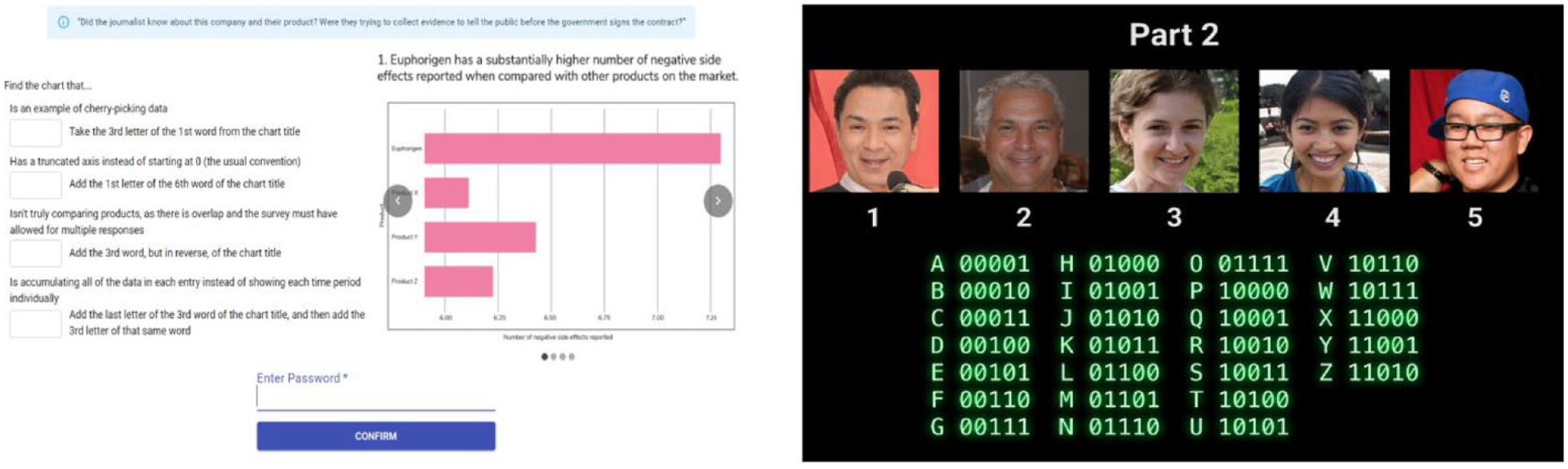
Screenshots of game puzzles: misleading charts (left) and computer-generated images (right).
The game’s climax occurs when players share a video that turns out to be a deepfake. Our goal with this design was to provide players with the visceral experience of being fooled and to reflect on the consequences of spreading misinformation. This moment offers an interesting question that comes up in the debrief discussion: to what extent do users of social media have a choice whether to share or not, when the platforms are designed to encourage and reward sharing and motivate constant engagement with popular topics? (Figure 2)
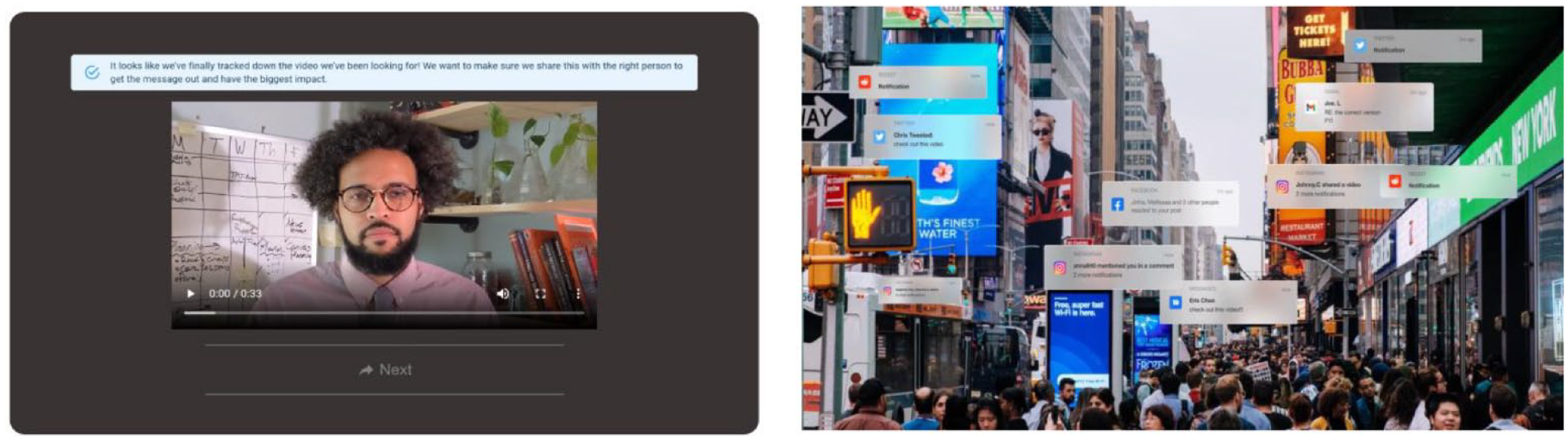
Screenshot of game scene when players unwittingly share the deepfake video.
Research design
Methods
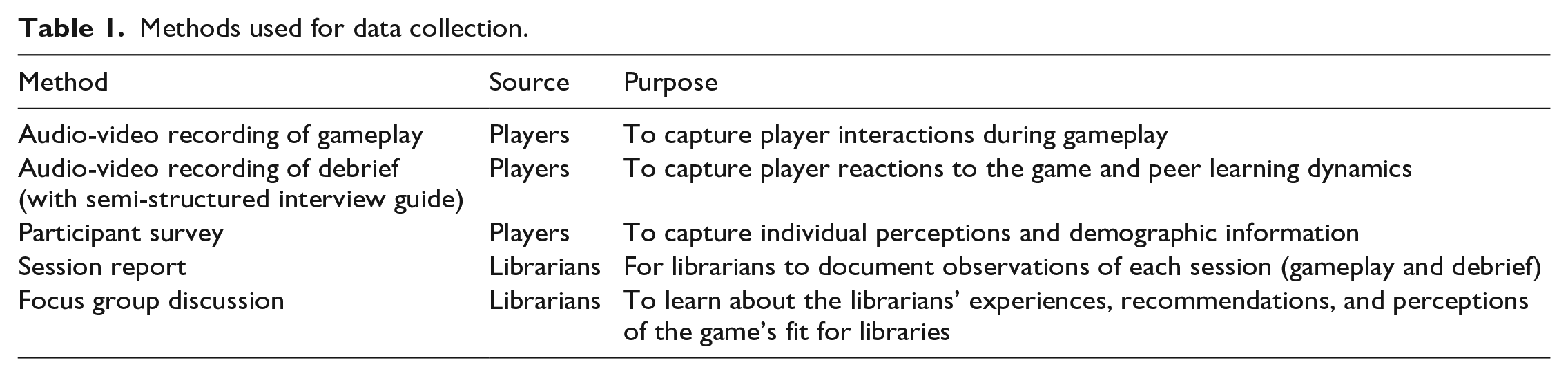
The game experience consisted of two parts: (1) playing the escape room in a group setting and (2) participating in a post-game debrief facilitated by the game host (librarian). We administered the following data collection methods (Table 1):
Methods used for data collection.
The debrief discussion included six questions, asking players to discuss and reflect on the game’s goals, the disinformation tactics they encountered, the plot twist when they shared a deepfake video, and real-life implications and personal experiences.
The participant survey captured individual attitudes about misinformation in society, influence of game on learning goals, social media behaviors, and demographic information. To encourage completion, we offered six $50 gift cards, drawn randomly at the completion of the study.
The session report was an online spreadsheet for librarians to record brief notes about each session. The focus group discussion was conducted with the six librarians after they finished all of their sessions. The discussion covered: logistics, game and debrief implementation, librarians’ perceptions of player learning, and alignment with other library information literacy programs and services.
Data collection
For the study we engaged public libraries in Washington State, a diverse state where the research team has strong relationships. We designed the study for librarians to host the game, lead the debrief discussion, and submit data to the research team. We provided training for the librarians to complete these tasks, including: 1 hour project introduction and logistics, 1.5 hours gameplay and discussion of learning goals, 1 hour game host training, and 1 hour debrief training.
The libraries promoted the game and scheduled the sessions via their own communication channels (newsletters, websites, social media). The recruitment material identified the game as a research project for individuals ages 14+. Each library scheduled three sessions, aiming for 4–6 players per session. Librarians hosted the games using their video conferencing platform of choice (e.g. Zoom or Teams), led the debrief discussions, and directed players to the online survey. The entire process took about 75 minutes (45–60 minutes gameplay, 15–20 minutes debrief discussion, 5 minutes optional survey) (Figure 3).
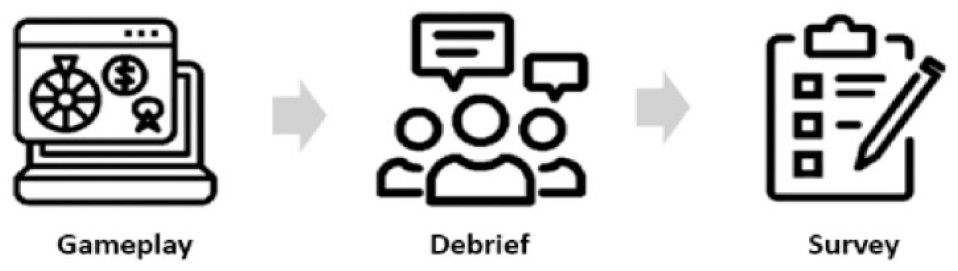
Data collection procedure.
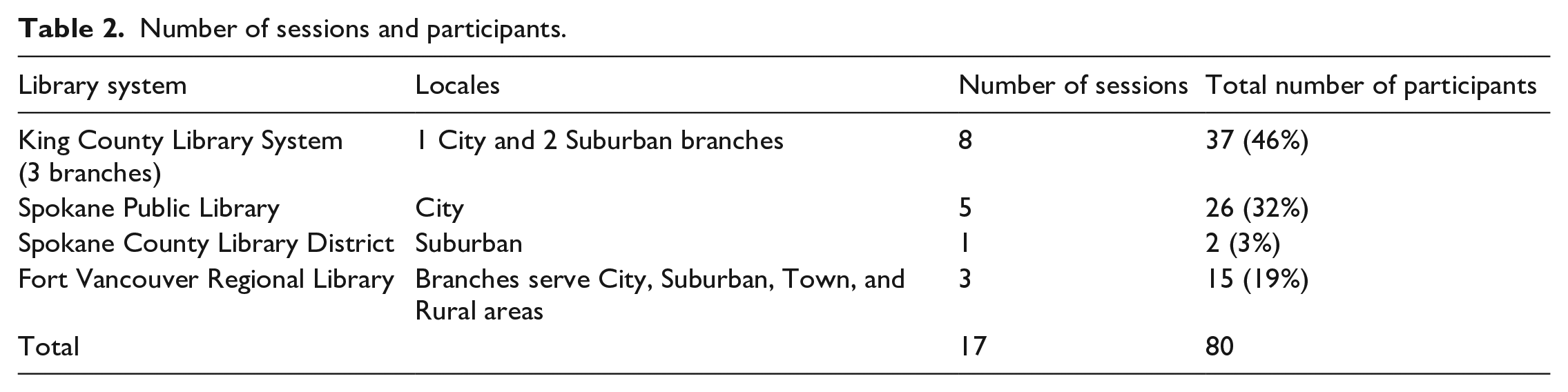
The study was run from February to March 2021. The libraries hosted a total of 17 sessions with 80 participants. Sixty-four participants completed the optional survey, of which 50 were used in the analysis (incomplete surveys were discarded).
The survey consisted of multiple-choice and two open-ended questions. The multiple-choice questions were designed to understand participants’ social media behaviors, attitudes toward misinformation, and demographics. One open-ended question probed reasons for changing one’s mind on something they had previously believed, and the other asked how the overall experience of Euphorigen Investigation (gameplay and discussion) affected the way they feel or think about misinformation (Table 2).
Number of sessions and participants.
Sample description
The characteristics of the participant sample are taken from the participant survey (n = 50). Note that this figure is less than the total number of participants (n = 80), and thus approximately 60% of representation. Demographically, 33 participants (66%) are female, and the majority of participants were 35 years old and above (26, 52%), suggesting that the game had broad appeal across gender and age.
Regarding social media behavior, 35 participants (70%) use social media (Facebook, Twitter, YouTube, Instagram) several times per day, 6 (12%) several times per week, 5 (10%) less frequently, and 4 (8%) never. Thirty-one participants (62%) shared information on social media (post, reply, repost) on important social or political issues and the majority (19, 38%) did this monthly or less often.
Regarding the question “how widespread is misinformation in our society,” on a 6-point Likert scale (1 = “not widespread at all” to 6 = “extremely widespread”), 40 participants responded that it is very widespread (option 5 or 6). A similar pattern was observed in response to the question “how big of a threat is misinformation to our society.” Forty-three participants responded that it is a high threat (option 5 or 6).
Twenty-three participants played the game with people they did not know and 18 with a combination of people they knew and did not know, far exceeding the nine participants who played the game with people they knew.
Data analysis
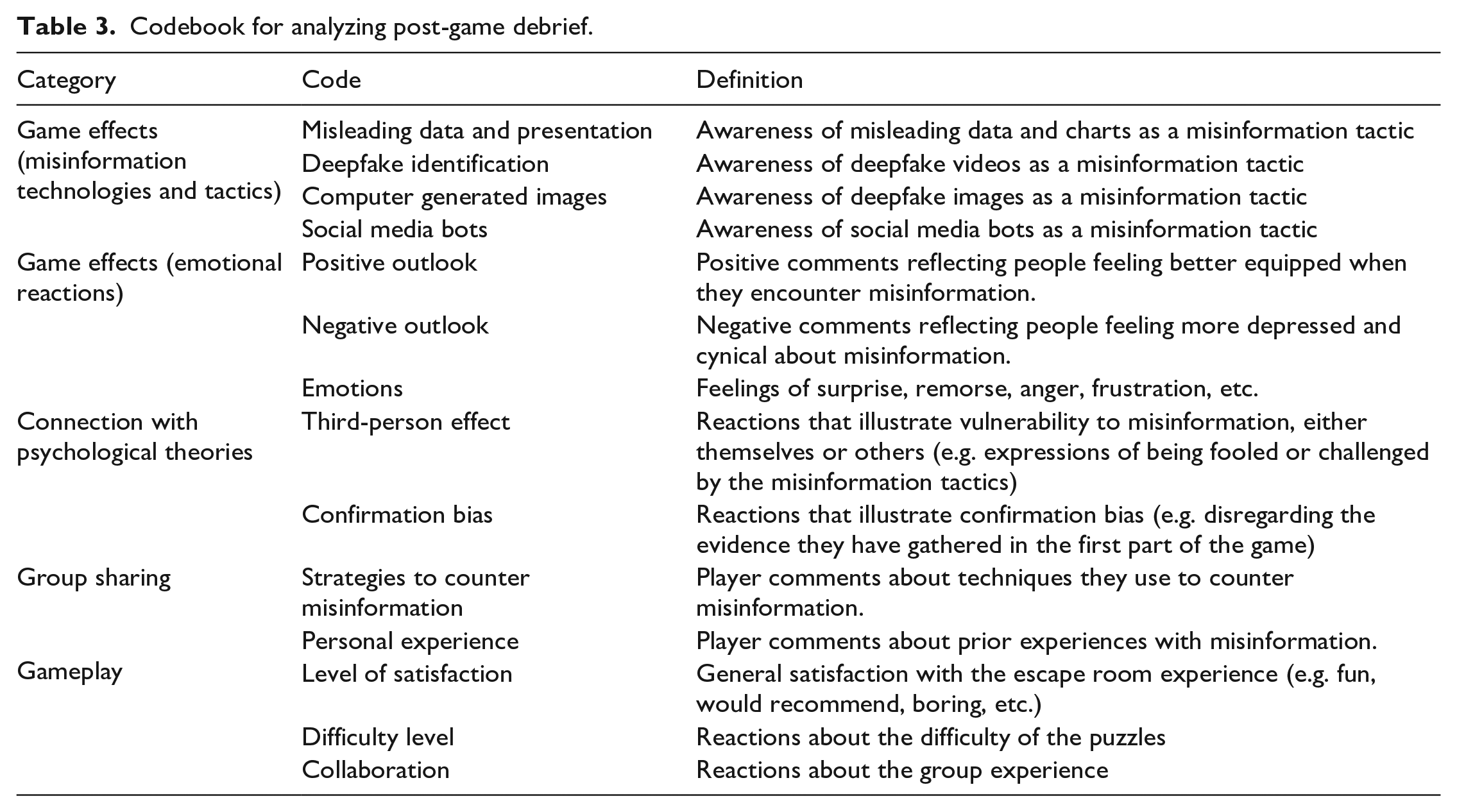
Data analysis included 17 video recordings and the participants’ responses to two open-ended questions from the survey. We transcribed the 17 video recordings of the post-game debrief sessions using a combination of machine-based and human transcription. We then coded the sessions using ATLAS.ti using paired coders, following a consensus model in which two coders compare the coded responses, identify any discrepancies and discuss them with the goal of reaching a consensus (Hill et al., 1997). Coders wrote analytical memos describing their coding processes, and we held weekly meetings to share and compare notes. We used a combination of inductive and deductive coding approaches. We used predefined codes for topics we were interested in based on prior misinformation research (e.g. different psychological theories related to misinformation), and emergent codes for topics from the data that were discovered from the coding process. Finally, the Principal Investigators reviewed and confirmed the final codebook (Table 3). This approach allowed for both organization and rich description of the data set and theoretically informed interpretation of meaning (Braun and Clarke, 2006).
Codebook for analyzing post-game debrief.
Discussion of findings
RQ1. Does the misinformation escape room improve people’s awareness of the techniques and strategies used to spread misinformation?
Prior research highlighted that librarians perceived a need for resources that went into the inner workings of misinformation, especially the newer techniques and strategies that people may be less familiar with. Euphorigen features several misinformation techniques: misleading headlines, manipulated charts, deepfake images, deepfake videos, social media bots and influencers. We hypothesized that players would have varying degrees of awareness of these techniques, with greater awareness of misleading headlines and manipulated charts (that have been around for a long time before misinformation became the issue it is today) and less awareness of deepfake images and videos that use newer technologies (e.g. deepfake images are created by deep-learning algorithms called generative adversarial networks (GANs).
Analysis of the debrief discussions largely confirmed our hypothesis. Most comments centered on the deepfake images and videos. Many of these comments indicate that the technology was new to them. For instance:
I thought
For others, the game appeared to reinforce something they had heard about or seen.
Yeah, this latest election for the presidency has
We also found evidence of many players sharing their strategies for detecting misinformation. These two quotes appear associated with the headlines puzzle and manipulated charts puzzle respectively.
I’ve fallen into that trap before. Where I’ll read a headline. And then I’ll assume that the headline tells like a good chunk of the story when it doesn’t. So ever since then, I’ve gotten in the habit of like, whenever I see something that I think is interesting,
RQ #2: Does the escape room encourage reflection on the psychological dimensions of misinformation, including the role of cognitive biases and emotion?
The second research question aims to understand the degree to which the game experience encouraged reflection on the psychological dimensions of misinformation. We were particularly interested in the set of cognitive biases and emotions that we designed into the game, while also capturing other reactions through the open coding process.
Reflections on vulnerability
Research on misinformation confirms that everyone is vulnerable to misinformation, regardless of educational level, ideological affiliation, or other characteristics (Burkhardt, 2017; Howard et al., 2021; Wu et al., 2019; Yang and Tian, 2021). Yet most people do not believe they are susceptible, a tendency that is supported by many psychological theories, such as confirmation bias and third person effect. Confirmation bias refers to the tendency to interpret new evidence as confirmation of one’s existing beliefs or theories (Nickerson, 1998). It is problematic with regard to misinformation because of the tendency to look for the presence of what you expect, as opposed to looking for what you do not expect (Klayman, 1995). Third person effect is defined as the theory of perceptual differences between individuals and others. People believe that others are more vulnerable to media effects than they are (Jang and Kim, 2018).
We designed Euphorigen to elicit feelings of vulnerability connected to these two theories. One technique was in how we crafted the game’s mission and narrative. Read objectively, the mission states that the company’s Euphorigen product may or may not be safe and effective. Yet, we knew based on observing participants during the design phase that players would initially be suspicious of the product based on preconceived notions of distrust of corporations and government. As such we anticipated that when players reached the plot twist point in the game, where they learn that the video they have shared is a deepfake, they would feel fooled.
Another technique for eliciting feelings of vulnerability was to design the game’s first two puzzles—involving misleading headlines and manipulated charts—to logically reveal that the product could be trusted (i.e. all the manipulated charts were portraying Euphorigen in a negative way), but emotionally reinforce players’ initial skepticism of Euphorigen. This worked as intended. We did not find any comments in the debrief indicating players had picked up on the signals from the first two puzzles to conclude that Euphorigen was safe and effective, a powerful illustration of confirmation bias.
. . .It made me think a lot about
I am hyper aware of misinformation - how easily it’s generated and how easily it spreads. I talk about it practically daily in some capacity or other.
It definitely made me
Another technique for provoking the feeling of vulnerability is the deepfake images puzzle. Most groups of players struggle to differentiate the real from the computer-generated images and found this to be the most memorable puzzle.
It made me think more about the
Finally, we found numerous comments about vulnerability that illustrate the power of third-person effect.
It just confirmed my view that there is a lot of misinformation out there on the internet and that
Misinformation being spread is more common nowadays I feel like.
Reflections on sharing misinformation
Social media platforms are designed to encourage sharing as it is integral to their business models. Sharing without pausing to consider a piece of information’s trustworthiness, however, contributes to the spread of misinformation. Accordingly, we designed the game to encourage reflection on the act of sharing, the impact of their sharing of information, and ways of recovery from situations where they have accidentally shared misinformation. We approached this by incorporating a plot twist into the game. Once players find the video recorded by the scientist (as described in the game’s mission) they believe they have successfully completed the escape room. When they share the video, however, a message appears alerting them that the video was in fact a deepfake produced by someone aiming to malign the company.
Analysis of the debrief discussions and confirmed by the librarians in the focus group discussion indicate that the plot twist largely worked as intended.
We all know that video is like a deepfake thing. I bet that that’s a big piece of it because it confirmed what we went into believing that you shouldn’t put a drug in people’s water supply. So when we saw that video, I was like, Hey, we finished it. We’re done. And then there was this whole other part about, um,
This seemed to also elicit a number of other reflections about sharing.
I am not that active on social media, so I am not that concerned about sharing misinformation. But I will make sure to double check the information I share if I have to share anything because I For me, it was a reminder that a lot of things online can be fake no matter how you think about it and you really have to check for evidence if it’s true or not.
It affects how much I trust information from people I don’t know. Whereas before I might have been more likely to automatically trust someone
We also found evidence of people discussing whether they should share the video or not during gameplay. In designing the game, we decided not to offer players an option to not share. Instead, in the debrief session, we ask players to recall this point in the game and ask whether they would have liked to have a choice in their decision, and whether they feel that we truly have a choice in the current information ecosystem, especially as social media users in environments that encourage constant engagement. Indeed, many players commented that the escape room scenario, where one did not have the choice, is not too different from real life.
Game hosts also asked players to comment on the final part of the game where they must contact all of the people they inadvertently shared the deepfake with and send them the real unaltered video to undo the damage, and imagine what would have happened in a real situation. As hoped for, players uniformly mentioned that this is completely unrealistic. One participant likened this to the impossibility of putting the toothpaste back in the tube. Once (mis)information is shared on social media, it is irreversible.
Like, in real life, if you share something on Facebook, can you kind of retract it and go back and follow you know, the journey and like, basically
I think
RQ3: How does the escape room influence people’s attitudes toward misinformation and potential social media behaviors?
The third research question concerns the extent to which players exhibited any indications that the game influenced their attitudes toward misinformation and their own social media behaviors. Many comments demonstrated a heightened sense of
I will be
I’ve always tried to be
I think the question of how the clinical data is, or how the misleading graph has all the fake data, was interesting. So we wonder how much we see in the news.
Yes. I agree with the points as well.
Participants also shared strategies they do or will employ when engaging with potentially problematic information. Some comments referred to a general approach of being more careful.
Yeah, I think the same thing about teaching is to
If we can have fake videos, I can say what I learned from the game is
I own a small business selling crystals, minerals, and fossils. I am researching my product every single day to post information. There are other similar businesses that do the same selling similar products. There is a problem in this community regarding misinformation, fake products, and more. I have always been very careful what I share about my products; however, I haven’t been as careful about what I consume on social media. I always assume that other shops have worked as hard as I do. I have caught misinformation from time to time, but the
Other participants shared more specific strategies for assessing information reliability, such as “vibe” checking and fact checking.
I was doing an article for my capstone project where those are sourced and it had all the things for the crap test on it, but it just had like
As a digital generation, we’re just generally more used to getting our sources through social media. So there’s generally a more natural like, like, some people won’t double-check. But like, there’s generally just a sentiment,
Some participants talked about the trustworthiness of information sources.
It’s always good to check. I feel like some of the things that they have us check, I sort of understand what information on the internet is not entirely trustworthy, definitely not worthy to go into a paper and what is like, what is pretty solid, but I think
RQ4. What are the design implications of the game for ongoing misinformation escape room development?
In addition to assessing the effects of the game on participants, we wanted to understand how participants reacted to the design of the misinformation escape room itself. Did Euphorigen Investigation promote cooperation and teamwork? Did it support reflection on real life examples of misinformation? Did it encourage conversations that would support peer learning?
One theme that emerged from the data concerned the immersive quality of the game itself. Participants noted that the escape room improved their awareness of misinformation techniques and allowed them to experience misinformation in a fun and engaging environment.
I want to point out, I learned this from the people who built the game that all of that kind of misleading graphs are, were taken from real-world examples that are shown, especially like by politicians when they’re trying to tell a specific story, or you know, just kind of like, showing part of the data or truncating, the access, right? So
Participants also appeared to appreciate the team nature of the game and how it encouraged cooperation. The collaborative play experience allowed all participants to contribute to solving the puzzles. Importantly, the gameplay provided a common experience among the participants that appeared to facilitate the sharing of personal experiences during the debrief.
I liked that I’ve come out of this feeling like we all did an equal.
What’s the average size of these groups because there really were only four of us.
As intended, the game stimulated the recall and sharing of real-life experiences with misinformation. In the case of a team game like Euphorigen Investigation, this learning also occurs in participants who may not be active speakers during the post-game debrief.
I really dislike misinformation. I think I’ve done it like, I think there was a negative impact that people actually got spam or fraud or anything like that. But it was more of the connotation that immediately as soon as I sent it out to a group, somebody replied back going, don’t click on that link. It’s malicious or something like that. And
Librarian feedback
Librarians also shared feedback and suggestions for improving the experience so that it is easier to implement and more effective for a public library setting. For one, they wanted real-life examples of the puzzle elements, believing this would reinforce patron learning. The librarians expressed that such examples would be very useful during the debrief to help connect the game experience with players’ experiences with misinformation in real life.
The librarians also offered suggestions for new games targeting different age groups, communities of interest, and other languages as a way of reaching more people in their geographical communities. They also shared that an in-person version of the game would likely be very appealing, especially after a long period of having various restrictions on social gathering due to the pandemic.
Other feedback focused on the practical challenges of implementing an online game. Despite our use of familiar technologies (Zoom or Teams and a web browser), there were still many issues reported where players had trouble turning on their mics or video, screen sharing, or performing other functions. Librarians also had difficulty managing recruitment (e.g. no-shows would leave some teams with only a couple of players).
General discussion
The first three research questions aimed to understand the extent to which the game had an impact on improving awareness of misinformation techniques, encouraging reflection on the psychological dimensions of misinformation, and influencing attitudes toward misinformation and social media behaviors. Overall, the initial results are promising. Players became newly aware of or reinforced their awareness of techniques such as misleading headlines, manipulated data, and deepfake images and videos. They also recognized how they were fooled and shared thoughts about vulnerability to misinformation. The game also appears to have shifted attitudes toward being more concerned about misinformation, with possible implications for future social media behavior. We believe three factors in particular played a significant role in producing our results and may be useful considerations for other play-based approaches. The three factors are the immersive experience, collaborative play, and post-game debrief.
Immersive experience
Games exemplify a form of situated learning where players experience a simulation in an immersive environment. Euphorigen Investigation, like other misinformation games (e.g. Bad News and Breaking Harmony Square), share this characteristic. As games, they are a safe environment in which to engage in misinformation activities and “fail” without real-world consequences. These games also offer an opportunity to stretch reality and create an interesting mix of fact and fiction. In Euphorigen Investigation, while the premise may initially feel absurd—introducing a brain-boosting supplement into the water supply—some players did make the connection to fluoride. This aligns with research showing that experiencing consequences in the virtual world is important for people to process real-world implications (Ahn et al., 2014). The intentionally designed “failure” (i.e. sharing deepfake video) in the escape room also led some participants to openly discuss their own experiences of mistakenly believing or sharing misinformation in real life.
There was some evidence that the immersive nature of Euphorigen Investigation influenced player attitudes toward misinformation, and possibly their social media behaviors. While it was beyond the scope of this study to assess future social media behaviors, other research suggests that games have this potential, largely due to their immersive qualities (Dede, 2009; Leemkuil and de Jong, 2012; Liu et al., 2011).
Collaborative play
In contrast to many other misinformation games, Euphorigen Investigation is a collaborative game, played by teams of 4–6 people. The collaborative nature of the game seems to have contributed to both the enjoyment and learning goals. All teams completed the game with many players commenting positively on the social experience. In addition to the competitive drive to complete the game within the time limit, the collaborative design allowed each player to contribute their ideas for solving the puzzles, a reflection of the concept “no one knows everything; everyone knows something” (McGonigal, 2008). Gee (2014) compares collaborative game play to collective intelligence, stating “human minds are plug-and-play devices; they’re not meant to be used alone. They’re meant to be used in networks.”
The shared experience of playing the game together appeared to provide a natural pathway for players to talk in the post-game debrief about the game and their own experiences with misinformation. The debrief itself is an essential component of the escape room experience, not a secondary supplement. Together, the game experience and the debrief collectively had an impact on user outcomes. While we did not compare the debrief discussion as a stand-alone activity against the game plus debrief experience, the librarians believed the combined experience had a wider appeal and achieved greater results than a more conventional educational program. Offering the game through libraries contributes to other research calling for more community-based approaches to misinformation (Lee et al., 2022). While most existing research focuses on the individual’s relationship to misinformation in terms of the evaluation of information or strategies for addressing misinformation, our study contributes to community-based approaches by offering a collaborative experience where individuals work together and discuss ways to more effectively deal with misinformation.
Importance of librarian-led post-game debrief
As part of the overall experience, the librarians led a post-game debrief discussion using a debrief guide containing eight questions. The role of the discussion is to transform the subjective and situational knowledge developed during the game into objective and transferable knowledge (Sanchez and Plumettaz-Sieber, 2019). In the game, players misidentify deepfake images and unwittingly share the deepfake video, and then talk about it during the debrief within the group of people who had that shared experience. This led players to also share personal anecdotes of family members, their own strategies for detecting misinformation, and other experiences and opinions about misinformation. Without the post-game debrief experience, it is unlikely that such conversations would have occurred. We analyzed a sample of the gameplay videos as well (we recorded both the gameplay and the post-game debrief), revealing, as expected, that players were caught up in trying to solve the puzzles and completing the escape room in as little time as possible, and as a result did not have time to share their thoughts about the game during the game. All in all, the debrief discussion appeared to confirm its critical role in participant learning (De Freitas, 2006; Sardone and Devlin-Scherer, 2016).
We further observed that players frequently minimized their participation on social media or their role in believing or spreading misinformation. Many players stated that they do not spend a lot of time on social media, have a small number of followers, or only share memes or entertaining content. Sometimes they attributed their low level of engagement to misinformation. While it is impossible to ascertain the veracity of their self-described social media avoidance, the sharing of such comments within the group might indicate that participants did become more cautious or critical of misinformation. This also highlights the importance of discussing how passive behavior (e.g. clicking on misleading articles, reading misinformation) can affect information flows for themselves as well as others in the information ecosystem, even when people may believe they are not “actively” contributing to the misinformation problem.
The role of the library and librarian was likely instrumental in creating a conducive environment for discussion and participant learning. Libraries are highly trusted institutions in the U.S. (Geiger, 2017). They are considered safe spaces, and librarians have typically developed personal connections with many of their patrons. As such, people have certain expectations of library programs, and in analyzing the post-game debrief we noted that all of the conversations were civil and constructive. However, participants also knew this was a research project and provided consent to have their conversations recorded, introducing a confounding factor.
The librarians also used their position to guide the discussion in ways that seemed most fruitful for each team of players. They could give more time to questions that generated a lot of comments, allow the players to take the conversation in different directions, add additional probes, and contribute their own expertise as appropriate. The librarians were also able to call on people who were quieter in the debrief and otherwise use their presence and skills as educators to foster a safe and supportive space for discussion.
Lastly, we have been using the feedback to improve the existing game and extend the project in new directions. For Euphorigen Investigation we created a resource kit for librarians to use during the debrief session. It is also adaptable in cases where libraries want to incorporate their own resources. We developed an in-person version of the game that libraries can print and assemble on their own with commonly available office supplies. Additionally, we developed a co-design framework and tested it by convening a group of BTS ARMY fandom members (i.e. fans of the music group BTS) to co-design their own escape room.
Limitations
This was an exploratory study of a prototype misinformation escape room designed to surface trends and insights for future research. As such we do not make any generalizable claims. The quantitative survey sample is small (n = 50), so we only use it to describe the sample, and not to analyze for statistical significance in the findings. Accordingly, we do not include frequency of codes in the data, nor do we describe findings as held by a few, some, many, or most of the players. Qualitative scholars argue that frequency counts can misrepresent the methodological role of qualitative research (Brinkmann, 2015; Gergen et al., 2015; Terry et al., 2017). This form of research aims to describe how participants describe their experience and thoughts, and it can be misleading to conflate the frequency of a qualitative statement with its meaningfulness (Clarke and Braun, 2013). Based on the findings of this exploratory study, the research team developed a large-scale study where we will be in a position to make broader claims. These findings will be reported in a separate manuscript.
An additional concern is the potential for respondents to have been influenced by social desirability bias in their responses. This potential was mitigated by the fact that the researchers did not facilitate the escape room experience. The experience itself was facilitated by librarians, and researchers only engaged with librarians after the game sessions were complete.
Finally, the study sites are all in Washington State. While Washington is a diverse state, it still represents a limitation.
Conclusion
Games have emerged as a promising medium to address misinformation. Games are immersive and interactive, allowing players to engage with misinformation techniques, experience the consequences of misinformation, and fail safely without real world repercussions. Games can be memorable, offering opportunities to reflect, and allow people to talk about difficult issues spurred by a game’s fictional context.
The authors developed a misinformation escape room and undertook a pilot study to assess its effectiveness. We pursued this project in collaboration with librarians who are on the frontlines of misinformation. Prior research has found that librarians are well attuned to the nuanced challenges of misinformation in their communities, and cognizant of the shortcomings of more conventional information literacy approaches.
The initial findings are encouraging. The misinformation escape room (gameplay plus debrief discussion) appeared to increase awareness of certain misinformation tactics (e.g. deepfakes), generate reflection on the psychological dimensions of misinformation, and shift attitudes in ways that made many players more cautious of misinformation, potentially altering their future social media behaviors. The study also revealed numerous areas for improvement as well as suggestions for extending the misinformation project into other directions (e.g. games for different age groups and interest groups; an in-person version).
Based on player and librarian feedback, we identified several important considerations for other misinformation games and play-based approaches. Our game’s collaborative design (played by teams of 4–6 people), game host (librarian) facilitation, and post-game debrief, provided opportunities for reflection and sharing of how people process information and confront misinformation in their lives. The post-game debrief plays a particularly important role. In addition to being a peer learning opportunity, it allowed people to reflect on the play experience and apply it in real world contexts which is argued as one of the core strengths of using games in this setting (Ge, 2017). Librarians serving as the game host and facilitator of the post-game discussion worked well because of their expertise as information professionals. We believe this arrangement could also work well in other settings such as schools or even informal gatherings.
Finally, the study points to the need for further research. A larger study would allow for more conclusive evidence, confirming or challenging the patterns and insights that emerged from this pilot study. A longitudinal study would produce evidence on the degree to which the game influenced future attitudes and behaviors. Comparative studies could examine a hosted versus stand-alone version, or an online versus an in-person version. Additionally, game design research could explore ways for designing new games that account for different misinformation strategies, topics, communities, and cultures.
Footnotes
Declaration of conflicting interests
The author(s) declared no potential conflicts of interest with respect to the research, authorship, and/or publication of this article.
Funding
The author(s) received no financial support for the research, authorship, and/or publication of this article.
