




Abstract
Equality, diversity, and inclusion (EDI) has gained increased attention within the library and information professions, becoming an important aspect of the ethical framework and strategic planning of several professional bodies. This paper uses a data-driven analysis of material from the iSchools conferences (iConferences) as a case study to examine how we might facilitate EDI in practice and engage more effectively with our communities in a virtual context with the move to more online conferences. Our findings identify both positive and negative aspects about the use of online conference platforms and raise concerns over the possibility that virtual conferences may increase unconscious bias and assumptions that could impact adversely on those already disadvantaged. Transparency and communication are key to identifying and addressing any barriers to equality and so online conferences need to ensure clarity and transparency concerning privacy, content, and process, and to demonstrate awareness of the diverse backgrounds of their community members.
Keywords
Introduction
This paper is part of our ongoing research into aspects of equality, diversity, and inclusion (EDI) within the library and wider information professions, with a specific focus on the platforms used for virtual events in the context of scholarly communication. It engages with and joins ongoing discussions on EDI within these professions (Foy, 2021; Mallon, 2019; Poole, 2021; Redd et al., 2020; Sanchez-Rodriguez, 2021), and particularly with a view to being “inclusive and culturally competent practitioners” (Jaeger et al., 2015: 127), reflecting the wide diversity of our interests and scholarship at the same time as acknowledging the potential for bias and exclusion.
The overall concept of EDI has gained increased attention in the field of Libraries and Information Studies (LIS) and is included as an important aspect in the ethical framework and strategic planning of several professional bodies, such as the Chartered Institute of Library and Information Professionals (CILIP), the Association of College and Research Libraries (ACRL), the American Library Association (ALA), and the International Federation of Library Associations and Institutions (IFLA) (ACRL, 2018; ALA, 2017; CILIP, 2018; IFLA, 2012). The authors are aware that in North America the term DEI (Diversity, Equity, and Inclusion) is usually used to represent these concepts and inform the scholarship there with significant emphasis on social justice and the training aspect of LIS professionals (Crist and Clark/Keefe, 2022; De La Rosa et al., 2021; Espinal et al., 2018). Our research, nevertheless, reflects our institutional academic training and experience of working in the UK and Chinese contexts, and so here we use EDI, with our definitions below; equality rather than equity is used to indicate the goal of ensuring that every individual is offered the same opportunities in a system regardless of circumstance. Positionality is often overlooked (Colón-Aguirre and Bright, 2022) and acknowledged here to clarify our position regarding the research terms and context. To be noted, in North America the LIS acronym itself generally refers to the field of Library and Information Science (Colón-Aguirre and Bright, 2022), while the term denotes Library and Information Studies in the UK setting.
Regardless of these differences, as information professionals, our community is well placed to promote equal opportunities, diversification, and inclusion, whether for “race, ethnicity, gender, socioeconomic status, education, ability, language, literacy, geography, and orientation” (Jaeger et al., 2015: 127), in our rich fields. We can take a lead by foregrounding awareness as well as by putting it into practice when arranging all forms of activities, including virtual events.
In this paper we address concerns over long standing inequalities, exclusion, and bias in the LIS field, hoping to achieve sustainable development of EDI to help toward a more just, diverse, balanced, and inclusive scholarly environment. It is essential that all members of our field have an equal voice to bridge the digital divide that has become more apparent with the global pandemic and the “new normal” way of working in the post-pandemic condition (Corpuz, 2021). It is our concern that online conferences, rather than widening the range of participating voices, result in disadvantaging underprivileged groups. Our research is important to serve as a benchmark investigation within a longitudinal study that helps to explore how EDI is implemented in the context of scholarly events with virtual access, and what has changed in terms of supporting EDI. These are complex issues and our intention here is to raise them for discussion and debate rather than to offer any simplistic all-purpose solution to applying EDI.
Equality is defined in CILIP’s ethical framework as “ensuring that every individual has equal opportunities and is not treated less favorably on the basis of their specific ‘protected characteristics’ or social background” (CILIP, 2018: 1). Diversity in the context of EDI is defined there as “taking account of the differences between people and groups of people and placing a positive value on those differences [. . .]. This is strongly linked with promoting human rights and freedoms, based on principles such as dignity and respect” (CILIP, 2018: 2). Our view of inclusion follows the ALA definition as “an environment in which all individuals are treated fairly and respectfully; are valued for their distinctive skills, experiences, and perspectives; have equal access to resources and opportunities; and can contribute fully to the organization’s success.” (ALA, 2017: 1).
EDI has often been seen as a less prioritized and add-on option, but in the context of “crisis” such as the prolonged pandemic, it is even more at risk. Now the “existing disparities” are exacerbated with the vulnerable minority groups “disproportionately impacted” in many areas, and this is potentially worsened as this challenging situation can result in the majority groups reverting unwittingly to their “exclusionary habits and bias behaviors without even realizing it” (Partington, 2020: 1). The global pandemic has served to accentuate the differences and aggravate the digital divide – the invisible barrier that separates the “haves” from the “have-nots” (Van Dijk, 2017) and digital equality—the systemic fragility of our systems, possession of equipment and comfort in its use (Milana et al., 2021). Many people and global regions have challenges with Internet access as well as with digital literacy. These differences have always been there but now because of the pandemic they are brought into sharper focus (Niner et al., 2020). Removing these standing inequalities, allowing equal and balanced voices, increasing diversity of language, gender, and intellectual pursuits are all laudable aims. Beyond these, however, there are also issues about diversification in relation to resources, funding, white privilege, affiliation to high profile and high ranked institutions, which may also impede full equality and inclusion for many.
Despite being long proposed and promoted within academia, with “many research and policy papers [. . .] documenting the widespread disadvantages faced by under-represented groups [. . .]” (LERU, 2019: 3), EDI is, in most of the cases, being treated as a “benevolence” and a necessary “compliance” without any fundamental understanding of its profound goals and vision; as a result this tends to bring about, at best, typically surface-level changes of individual behavior (Shaibah, 2020), rather than addressing systemic issues. EDI is about the “public benefit”; the acknowledgment and respect for the differences among people and minority groups despite their “protected characteristics,” which include but are not limited to “race, gender, disability, religion of belief, sexual orientation, and age” (CILIP, 2018: 1), as also regulated in many countries’ legislation. 1 It can be argued that it goes further than this and that it is more about altering our mindset, changing the “way of thinking, speaking, acting and planning that can be continually improved” (Partington, 2020: 1). Research has proposed that there needs to be a deeper understanding of EDI and a paradigm shift in our thinking and practice in terms of how we understand “justice (the right and inclusive think to do) and excellence (the best and smart thing to do)” (Shaibah, 2020: 1).
Current research in the context of the pandemic has focused on EDI practice in the workplace with remote working (Gardner, 2020), in the library workforce (López-Fitzsimmons and Nagra, 2021), and EDI strategies in online learning environments (Milana et al., 2021; Scarpena and Fail, 2021). Recent endeavors in implementing inclusion have been made in the context of scholarly conferences, particularly for underrepresented researchers, with panels convened to support the marginalized community members and facilitate community building to construct alliances and encourage advocates (McMillon-Brown, 2021). Grounded in the goals of inclusion, diversity, community, and environmental stewardship, proposals have been made about adopting “a federated model” to “delegate responsibility” for the organization of large-scale conferences, which would “push participation, decision making and organizing to regional levels, while maintaining coherence at a global scale” (Etzion et al., 2022: 359).
Within the LIS community, EDI has been studied particularly with regard to enhancing social justice and diversity in LIS education, curriculum design, and the workplace (Cooke et al., 2016; Dali and Caidi, 2017). Diversity is understood here as that which “is not limited to demographic characteristics and lifestyles, [. . .] but also includes different manifestations of diversity in the field of LIS” (Dali and Caidi, 2020: 1). In the context of scholarly communication, EDI is also considered within the process of building communities at a distance; something that has received attention over time. Building an online community requires a focus on creating a sense of belonging, connectedness, trust, and interactivity within the group by understanding their culture, needs, behavior, and the expectations of their members (Mahony, 2017; Sadera et al., 2009). The ideal status and goal of applying EDI in a community at a distance relies on both cultural understanding and sympathetic technical support (tools, rules, etc.) for that community to thrive online. With the increasing number of international online events, we need to investigate how EDI is implemented in practice and discuss how organizers can better develop and apply EDI strategies to advocate for justice and excellence, improve critical engagement and ensure an equal voice for all.
This research has a focus on the library and information professions generally and more specifically on their implementation of EDI for online events. These are broad and wide-ranging issues and so to keep within the article constraints, this paper uses the iConference as an indicative case study to point to aspects that are more generally applicable. The academic conference, as one typical form of scholarly communication and a way of showcasing research progress and outputs, is relevant to every scholar at whatever stage of their academic career. The conference experience is also closely related to their work, achievements, academic social networking, and other aspects. In summary, conferences function in the intellectual development, career development, ancillary professional activities, and non-professional activities of participants (Etzion et al., 2022).
As one of the most influential global gatherings in the field of Information Science, with a broad spectrum of scholars and researchers, the iConference is held annually by the iSchools organization, a “worldwide association of Information Schools dedicated to advancing the information field” (iSchools, n.d.). It has been selected here as the iConference represents the latest advancement of scholarly events in the LIS field and its development can be traced over time with metrics openly and freely available on their website. We follow and build on previous studies to evaluate EDI by using the metrics of iConference participation, notably Bogers and Greifeneder (2016) who looked at the potential for bias stemming from a lack of diversity in the established review process, and Mahony and Fu’s (2021) examination of aspects of diversity and divergence at iConferences with the potential for language bias due to the preponderance of the English language. The information professions are well placed to take a leading role in foregrounding and supporting EDI within their work and structures. Bogers and Greifeneder (2016) interrogated data from the 2014 iConference hosted in Berlin, which was the first held outside of North America, perhaps looking ahead to the first East Asian hosted iConference in Wuhan in 2017. Their interest was in the potential for cultural bias in the review process, recommending that, to push back against this, the conference organizers should increase the number of both female and Asian reviewers to be a better match with the overall iSchools community and in so doing allow for more diversity of accepted papers (Bogers and Greifeneder, 2016). Mahony and Fu (2020) had more general concerns over diversity within the iSchools community and the dominance of the English language restricting the inclusion of much of that community. They asked whether the move to a fully virtual iConference would impact on diversity in a positive way once the need for travel and the associated budgetary constraints were removed.
For background, the 2020 iConference in Boras, Sweden, was originally expected to be held in-person but moved online following the onset of the global pandemic. The 2022 conference was wholly online, whereas the 2021 iConference, being considered here, was an anomaly as it was originally scheduled as an in-person event hosted at the University of Renmin in Beijing and subsequently moved online in response to the pandemic regulations. The announcement confirming it as an online conference was accompanied by a 3-week extension to the deadline for proposals. This meant that potential participants could then submit proposals within that deadline in the knowledge that they would not have to find the funds needed for attendance; funds which often are simply not available to graduate students and early career researchers, particularly from less prestigious and less well-funded institutions. With the metrics freely available for both previous in-person and later virtual conference environment, it makes iConference an ideal case study to look at the changes and effects in implementing EDI in such scholarly events.
Materials and methods
The questions driving this research are:
(1) how might conference organizers (this is not limited to the iConference but with wider implications) facilitate EDI in practice to engage more fully with their research community?
(2) how might the new ways of organizing global events/conferences, such as using a virtual attendance platform (like SCOOCS 2 —Digital Event Platform), bring about unconscious bias and assumptions, impacting negatively on those already disadvantaged?
To address these questions, a data-driven analysis reviewing performance with regards to EDI was conducted on the iConference organization. The case study method was selected for its capability of investigating the “how and why” question of a phenomenon; and in this case, how EDI was implemented in the virtual conference context. Our goal is to expand and generalize theories and not to extrapolate probabilities (Yin, 2014: 21).
The first step is awareness and the annual iConference gives a degree of measurable metrics that cover a suitable time span to allow an empirical data-driven analysis. The data used here are taken mainly from the 2021 iConference webpages 3 (which are publicly available and open to all) with the summaries of participant numbers, submissions, published proceedings, and the saved static Participants page from the SCOOCS platform which was open to conference participants in that year (saved during the conference to prepare this research but no longer available); other relevant information was collected from the iConference webpages which are in the public domain. All the data collected conforms to General Data Protection Regulation (GDPR) regulations as confirmed to us by the university departmental ethics advisor. We make use of the information supplied by registered participants, suitably anonymized, harvested from the online SCOOCS conference platform. 4 The specific data elements drawn from participants’ information, the submissions, and conference publications were analyzed to investigate the changes, underlying issues, and needs. 5 The data from the web content, SCOOCS platform (excluding personal identifiable information), and iConference website were migrated to a Microsoft Excel worksheet for initial data cleaning. The irrelevant parts were identified and deleted, followed by removal of duplicates, using conditional formulas, Excel pivot tables, and chart function from Numbers for Mac, to allow several data aspects to be analyzed. These included participant numbers, geographical breakdown, position distribution, skills comparison, submissions and publications (see Figure 1 for a summary of the data analysis process).
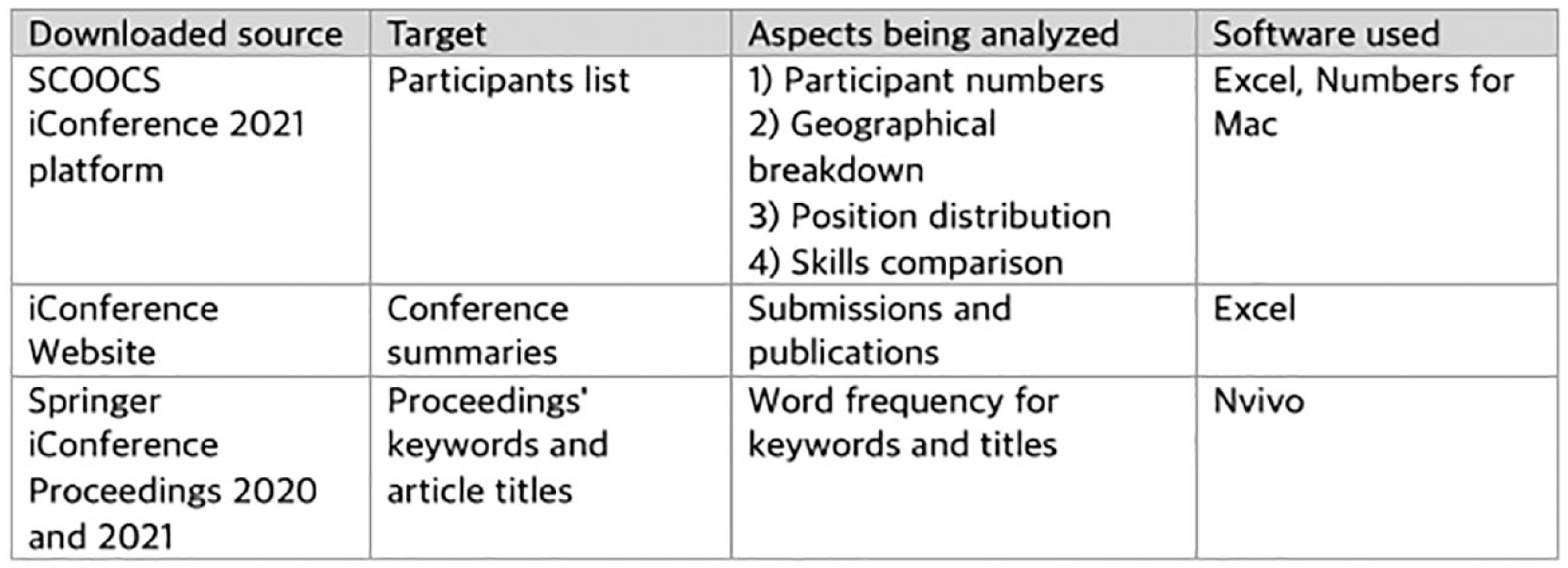
Summary table of data analysis process.
The keywords and article titles from the published proceedings (Springer Lecture Notes in Computer Science, LNCS) were also collected. For the data from the Springer proceedings, as the goal was to identify the publication trend from unstructured textual data, NVivo 12 was used to analyze the word frequencies of the titles and keywords taken from the published proceedings of iConference and iConference 2020 and 2021. Using the word count tool provided by NVivo, a minimum word length of three was selected, the standard stop words 6 were removed, and words with the same stem identified and grouped together under the root word. On examination, the keywords from the published articles were, in almost all cases, simply repeating content words from the titles and hence excluded from the analysis to give a more accurate result.
Results
Position breakdown of participants
This section of the data is investigated to review the equality and inclusion aspects that are evidenced from the “Position” details given by conference participants, and to see the extent of the representativeness of participants at different academic stages. Analyzing the participants’ information, their “Position” details as registered on the SCOOCS platform are summarized in Figure 2. It is notable that 64% (n = 114) of them left this field blank when registering and 3% of them (n = 11) gave irrelevant information to describe their “Position.”
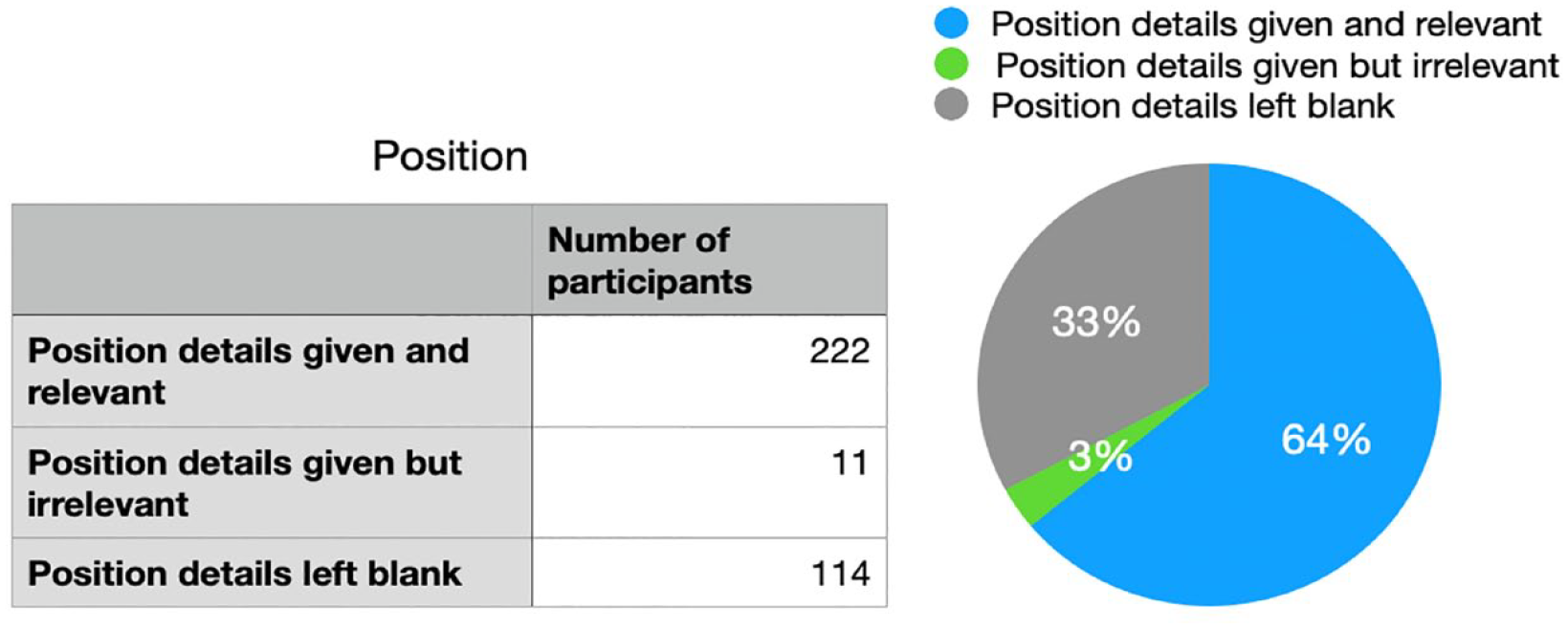
Participants’ Position details summary.
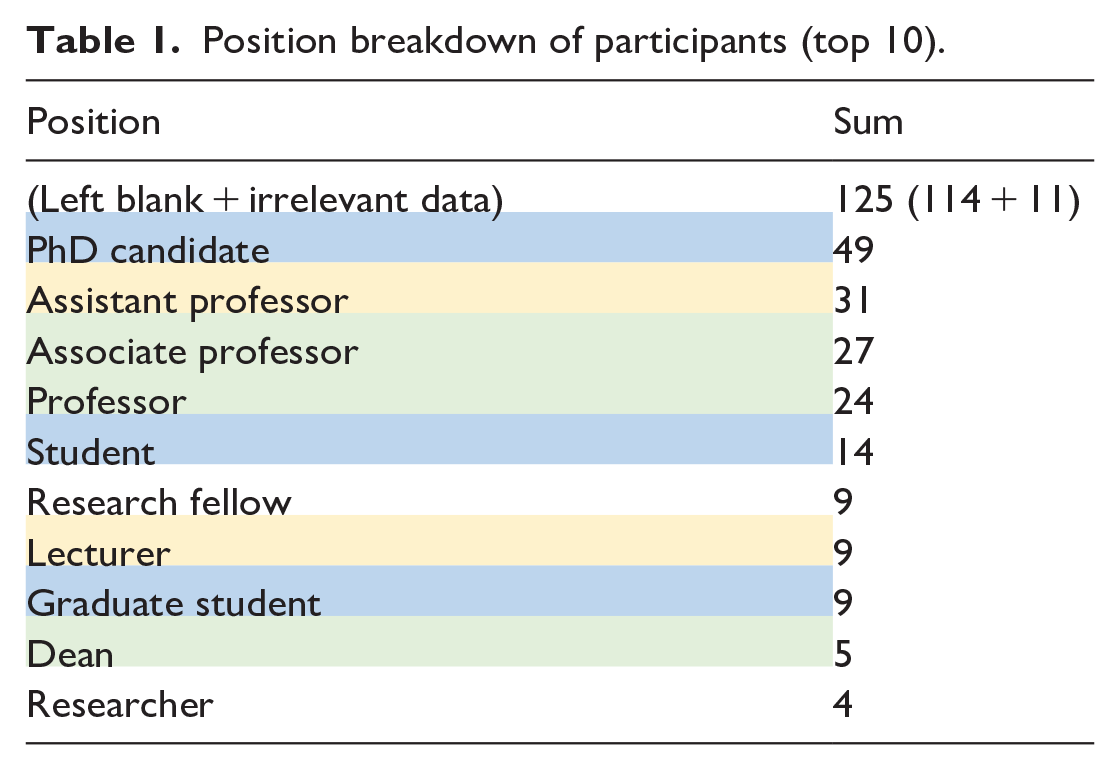
Table 1 shows the summary of the top 10 most frequent “Positions” recorded by the participants on the SCOOCS platform. Labeling them by the career stages, the blue represents student researchers, the yellow young/junior researchers, the green mature/senior researchers, and the unlabeled ones gave ambiguous answers that did not indicated their career stages. From the total registrations, 21% were student researchers (n = 72); 12% were the junior researchers (n = 40); and 16% were senior academics (n = 56). By analyzing the effective numbers demonstrated on the table, the student and junior researchers constituted a significant part of the conference participants. Of note, by far the largest group (n = 125, 36% of the total number recorded) chose not to specify their position, or they gave irrelevant information due to a possible misunderstanding of what was required. This aspect will be further analyzed in the Discussion.
Position breakdown of participants (top 10).
Geographic breakdown of participants
The data concerning geographic breakdown is analyzed to explore the demographic diversity and inclusion of conference participants, and to examine the changes following the pandemic with the conference moving online. The details of participants’ geographic breakdown in 2021 (when the conference was virtual) and a review of participants number from 2006 to 2022 (from in-person to virtual) were analyzed, to track the background of participants with the changes in conference venue.
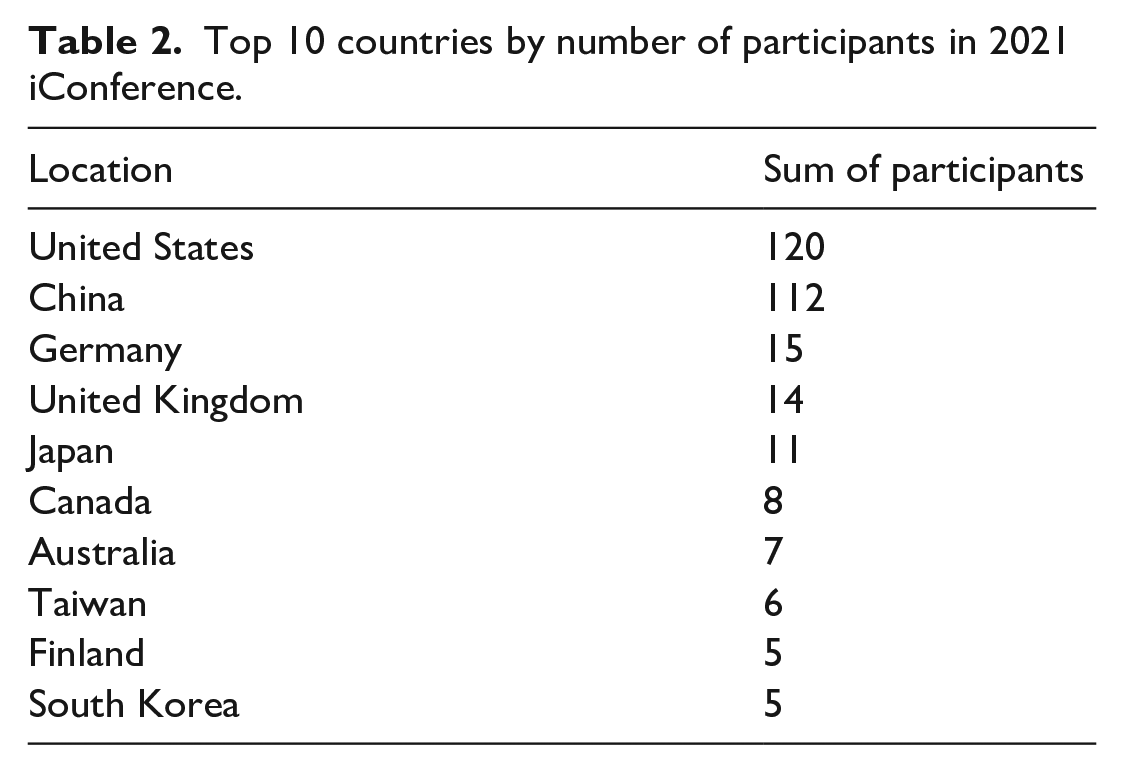
The current iSchools membership is “loosely organized into three geographic regions: Asia Pacific, Europe, and North America” (iConference, 2021c). The online SCOOCS platform used in 2021 allowed a free text box for those registering to record their “Location”; most recorded a country with some adding a city and several choosing not to record any location. These data were normalized and assigned to the country and region displayed in Tables 2 and 3.
Top 10 countries by number of participants in 2021 iConference.
Sum of participants by continent in 2021 iConference.
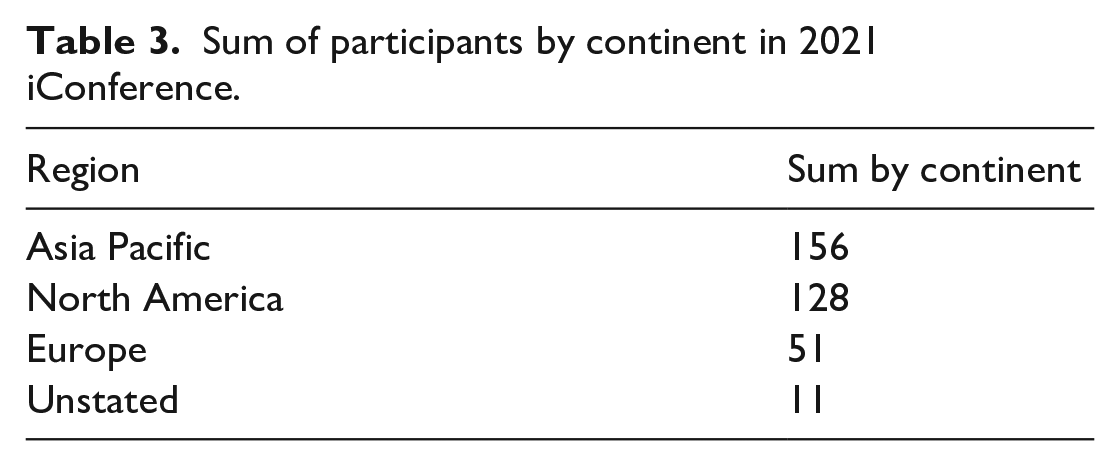
From Tables 2 and 3, although the US was the country with the greatest number of registered participants in the year 2021, the Asia Pacific region had more combined registrations. This should come as no surprise as this conference was hosted in Beijing and would anticipate much regional support, particularly with a Chinese language track and many local conference chairs. In addition, the Asia Pacific “region is the most geographically broad of iSchools regions, spanning from China in the northern hemisphere to Australia in the southern hemisphere” (iConference, 2021c).
Table 2 shows the top 10 counties by number of participants for 2021, and this iConference was the first time that the number of participants located in East Asia (Mainland China, Japan, Taiwan, and South Korea, n = 112 + 11 + 6 + 5 = 134, 38.6%) exceeded those that gave their location as North America. When compared to the past conference participants, this would be expected to bring a greater diversity of voices. Nevertheless, as the total number of registered participants dropped significantly (see Table 4—data sourced from the iConference webpages), it suggests that this conference has more impact when held in North America as it attracted more participants when held there despite 2021 having the affordances of being held online. This may be something specific to this conference, however, rather than a more general issue, and it may need to develop more significant global impact to encourage dominant audiences when held in countries outside of North America. It is not possible to make generalized statements based on this data which is limited to one conference organization.
IConference registered participants by year.
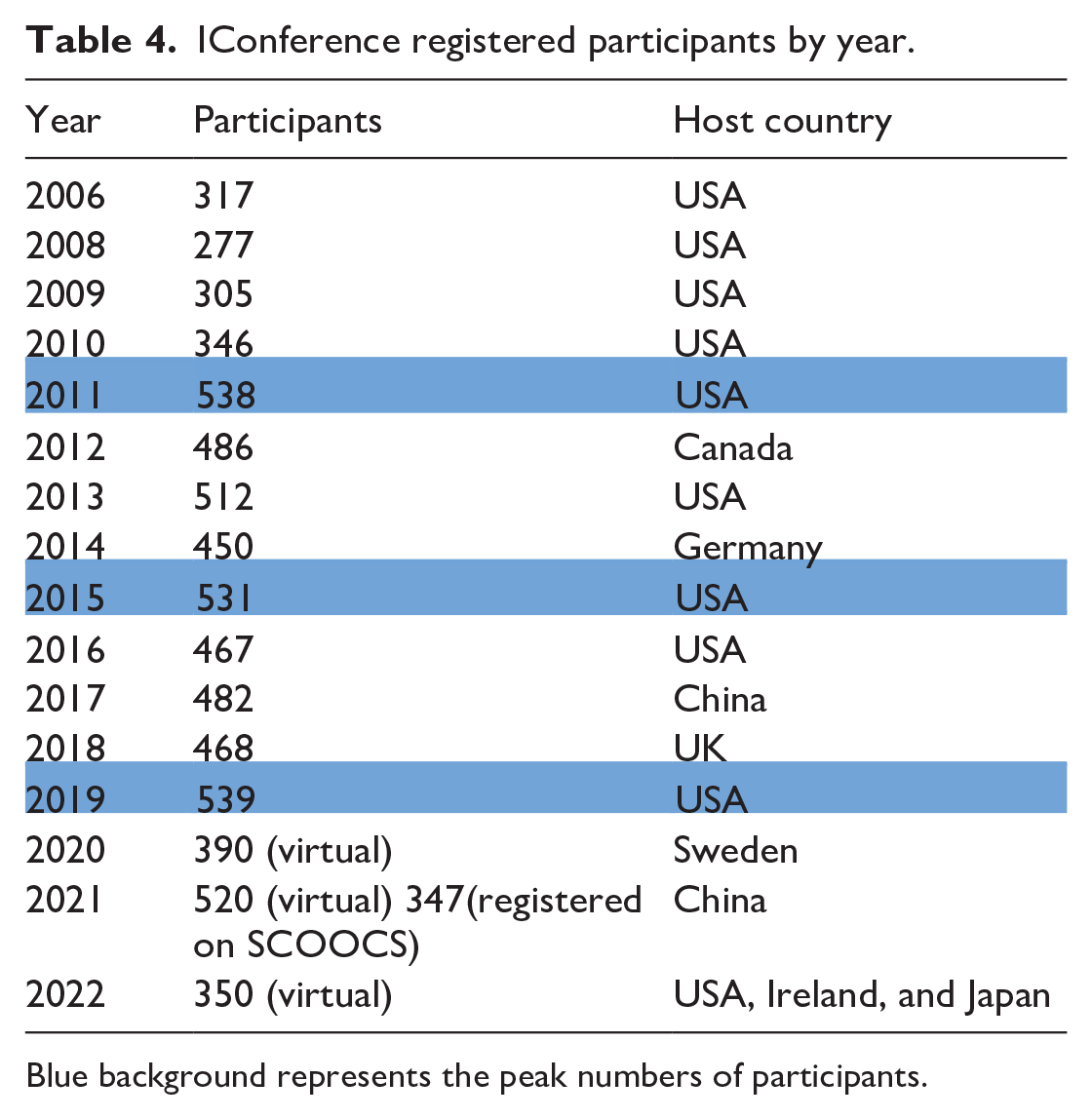
Blue background represents the peak numbers of participants.
From Table 4, there was no iConference held in 2007 and for the other years before moving online the figures are for the “total registered participants” as listed on the conference webpages. For the online conferences, the figures are for “total registered virtual participants” in 2020, and for the “total virtual participants” in 2021 and 2022, with no information about how these numbers were calculated. The Summary of iConference 2021 states that the number of virtual participants was 520 (iConference, 2021a). It needs to be noted, however, that the number of registered users on the online conference platform for 2021 was 347. There is a discrepancy between the numbers of participants as SCOOCS did not record the people who attended the conference using a link from the organizers but without registering on the platform. It is understandable that the conference organizers would use the greater number and there are several possibilities for the difference, but these would be speculative as we have no evidence; nevertheless, the variation of 173 is not an insignificant number and represents an almost 50% increase. The 2022 iConference was also a virtual one, hosted on SCOOCS jointly by universities in USA, Ireland, and Japan. The reported total number of virtual participants on the Summary page was 350 (iConference, 2022). The SCOOCS data is not publicly available but, as the published figure for 2021 was almost 50% higher than the number of registrations, it may also be expected that the number of registrations for 2022 would similarly be significantly lower than the total published figure. For this research we consider the details of the 347 participants who registered on the SCOOCS platform in 2021 as these are the only ones that we have information about.
It is not possible for privacy reasons to give a screenshot/snip of the Participants page on the SCOOCS platform, but the Location field immediately followed the Organization field as: “Name—Position—Organization—Location—I offer—I look for” (the last two fields help participants make connections). With the juxtaposition of Organization and Location, the data in the latter most likely refer to the location of the organization rather than where the registered participant is/was based or located. These are additional problems for ascertaining the demographic balance of event participants; the organization that participants belong to, and their geographical location do not necessarily match their ethnicity or even accurately indicate their first language. For example, the Russian Federation is partly in (Eastern) Europe and partly (Northern) Asia, and the official language of the Canadian province of Quebec is French rather than English.
An additional consideration regarding the lower attendance numbers for the virtual conference, when we might have expected them to be higher with travel and accommodation no longer needed, is that of the registration fees. Figure 3 shows the rates for 2021; the 2020 rates are still online but only show the full rate, with the early registration rates no longer available, in Swedish Krona: General Registration 3000 ($347) and Student Registration 2000 ($232) (iConference, 2020b). Organizing and running a virtual conference needs finance and unless independent funding is secured to cover the whole event, registration fees are necessary. In the case of the iConference there are also the publication fees needed for the LNCS proceedings. The online platform and other services need to be paid for; a virtual conference is not a free conference. Nevertheless, there may still be reluctance by some to pay the more modest registration fee when the opportunities for networking and making new connections are significantly reduced. Note that for the in-person 2019 iConference held in North America, registered participants are reported as 539 with General Registration fee at $650 (rising to $700 for late registrations) and Student Registration at $450 ($500 for late) (iConference, 2019). The 2022 registration fees were similar to 2021 (iConference, 2022), making them nearly 50% of the cost of the in-person 2019 event without calculating the additional expense for accommodation and travel, particularly if coming from outside the USA. For 2022, it was pleasing to see that there was also a new low fee for Bachelor and Master registration (Early/Standard/Late, $25/35/45), making it even more affordable for them and taking away the need for institutional, or other, funding support.
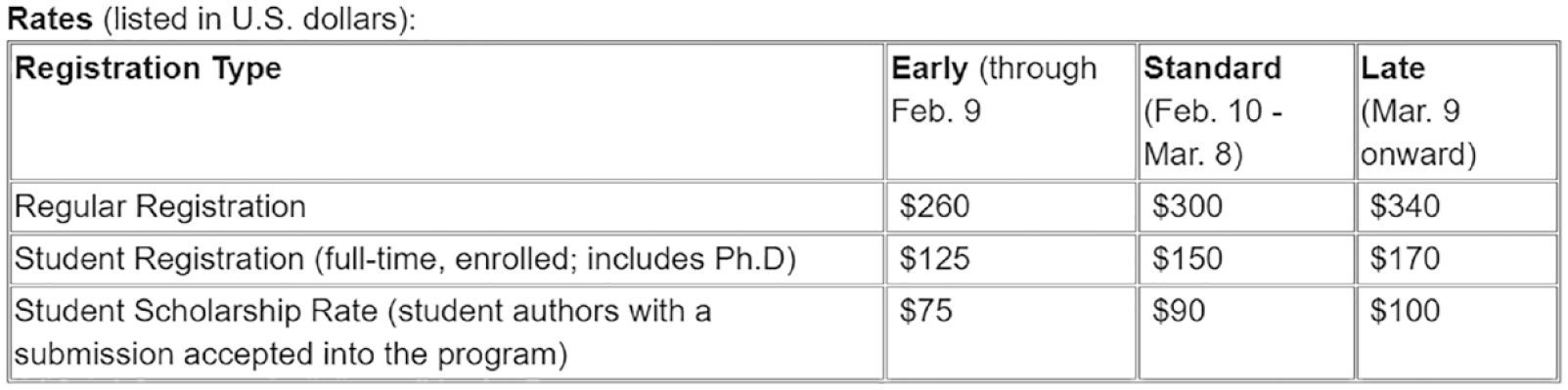
Registration rates, iConference 2021 (iConference, 2021a).
Online engagement
The 2021 conference was the first time that the iConference used a virtual platform to manage the event and participation; the 2020 conference, originally scheduled to be in-person at Boras, used Zoom video conferencing in response to the global pandemic (iConference, 2020b). As 2021 was the first time they had used the SCOOCS online system, there may have been some reluctance on the part of some participants to use the platform or more specifically to providing the information that was being asked for. Prior to opening registration, an instruction guide (iConference, 2021b: Presenters Onboarding) was circulated with details about how to register as well as a guide to navigating SCOOCS, testing, uploading, and, if presenters wished, recording their presentation in advance (iConference, 2020c). Users were asked to set up a profile and provide information about themselves as well as setting tags for their interests to receive suggestions of potentially relevant connections based on those tags. This was followed with a statement saying that the information they gave would only be visible to other conference participants and not beyond the platform. Other than this statement, there was no clear information about the privacy policy, details of cookies used, the data that would be collected, how and for how long that data would be held, and in what way and under what circumstances it would be made available. If this information was available elsewhere (access to SCOOCS is no longer possible), it was not adequately foregrounded.
There were several other options for participants to be involved in the conference, to access without registration, or to register using existing accounts of other systems, such as Google, etc. Based on the data in Figure 4, a significant number (almost 50%) of those participating in the conference were unwilling, for whatever reason(s), to use the platform and submit any details there. Having an accurate profile image is perhaps a distinct advantage when trying to identify individuals and network at conferences; nevertheless, a considerable number of participants did not upload a profile photo to the conference platform (Figure 4, 68% n = 236). Moreover, 28% (n = 97) of the registered participants provided neither a profile photo nor their “Position” information.
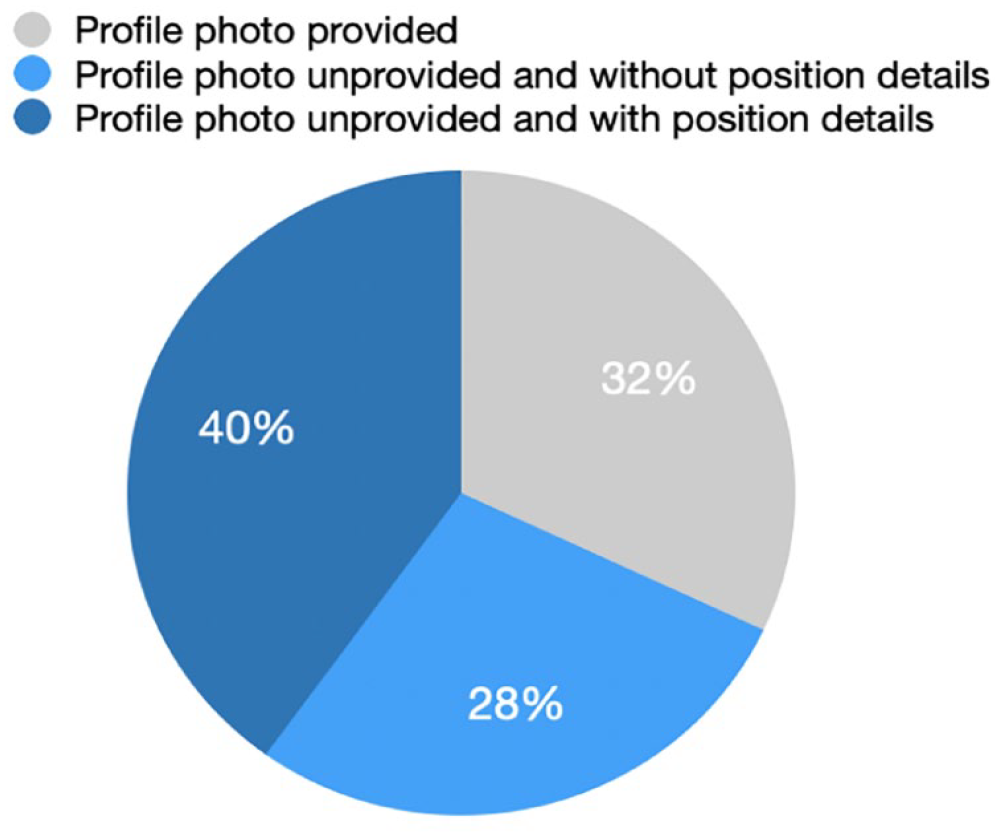
Profile photo analysis cross position details.
Cross calculating the profile photo uploaded with the participants’ region (see Figure 5), those located in the Asia Pacific region seemed more reluctant to upload their profile photo (28% provided profile photos, n = 42/149). Participants having their location as North America and Europe, however, had similar but higher percentages of profile photos (36% in North America provided photos, n = 46/128 and 35% of those in Europe, n = 18/51).
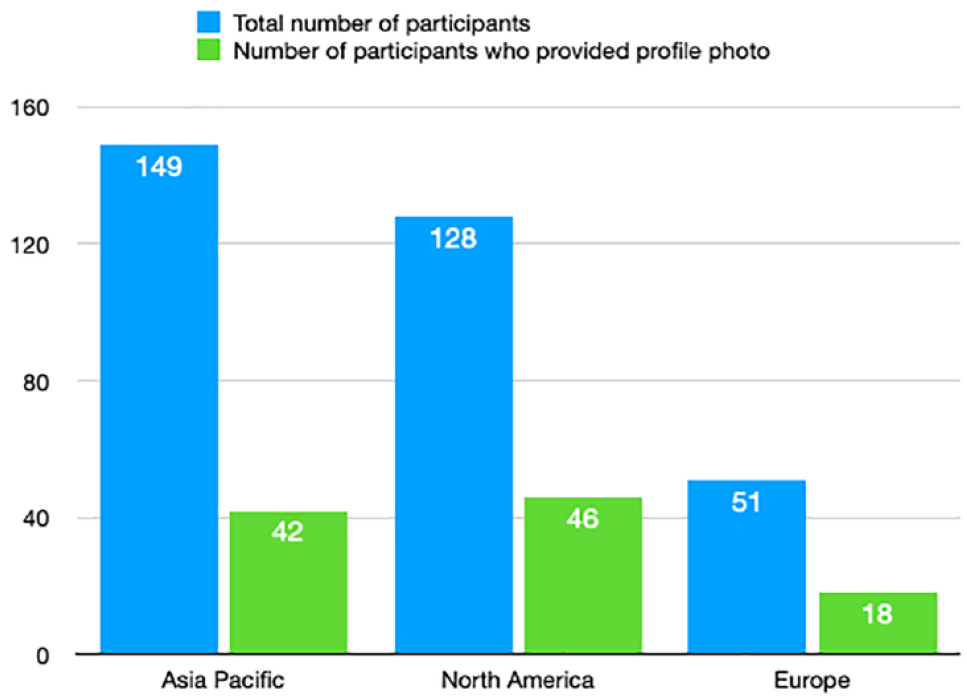
Profile photo provision and regions.
Submissions
The analysis of the submissions and publications of the conference, is included to explore the themes that caught the interest of the community, and to see if there was a change in the themes after the conference was moved online. Most importantly, the keywords are analyzed to investigate whether “equality, diversity, and inclusion” is flagged as one of the conference themes or whether they indicate a potential bias.
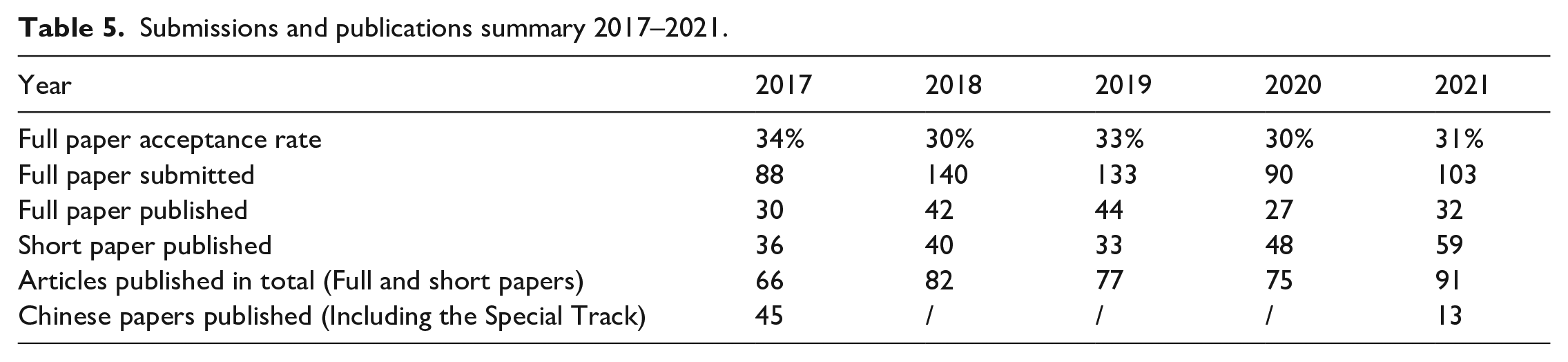
From the summary of the submissions and publications (Table 5), a notable change in the context of the global pandemic was the decrease in the number of full papers submitted (90 in 2020 and 103 in 2021) compared to the previous 2 years. However, in the same period there was a sharp increase in the number of short papers that were published (48 in 2020 and 59 in 2021), perhaps demonstrating an increase in emerging, cross-cutting, and exploratory research (as suggested in the 2021 CFP) against this backdrop of the global pandemic (iConference, 2020a). This suggests an identification of diverse types of research output and an inclusive acceptance of that research that may be in its early form but nevertheless, promising and instructive.
Submissions and publications summary 2017–2021.
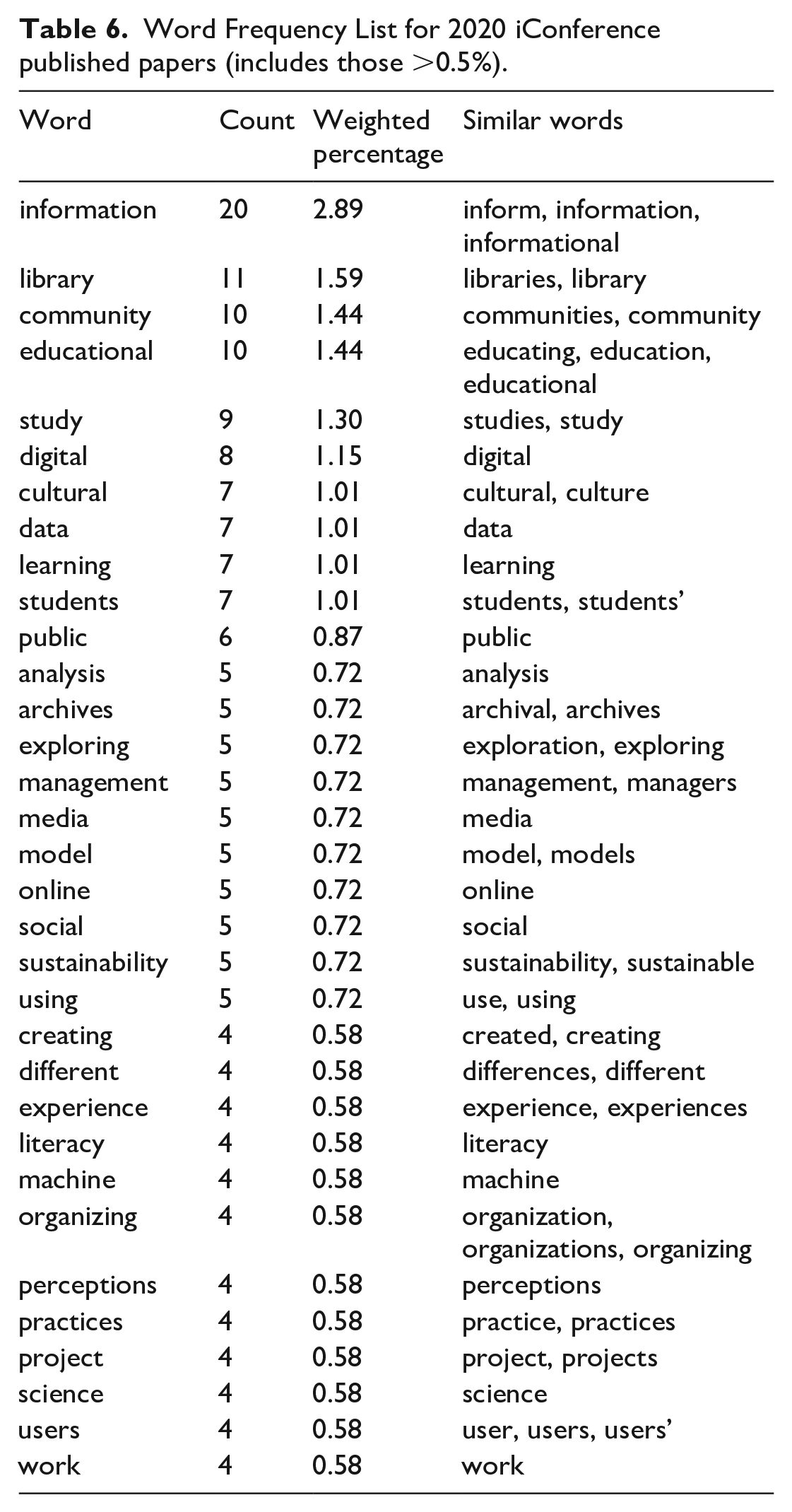
By analyzing the 75 article titles from the iConference 2020 proceedings, Sustainable Digital Communities (Sundqvist et al., 2020) and the 92 titles from the two volumes of the iConference (2021) proceedings, Diversity Divergence Dialogue (Toeppe et al., 2021) in Springer LNCS, two word frequency lists (see Table 6 for 2020 and Table 7 for 2021) were generated in order to identify any changes in the topics of the published papers. Not surprisingly, the most frequently appearing word in both conferences was “information” with a weight of 2.89% in 2020 and 2.36% in 2021, with several other words continuing to be the topics of focus for this conference, such as “library,” “study,” “data,” “digital,” and “cultural.”
Word Frequency List for 2020 iConference published papers (includes those >0.5%).
Word Frequency List for 2021 iConference published papers (includes those >0.4%).
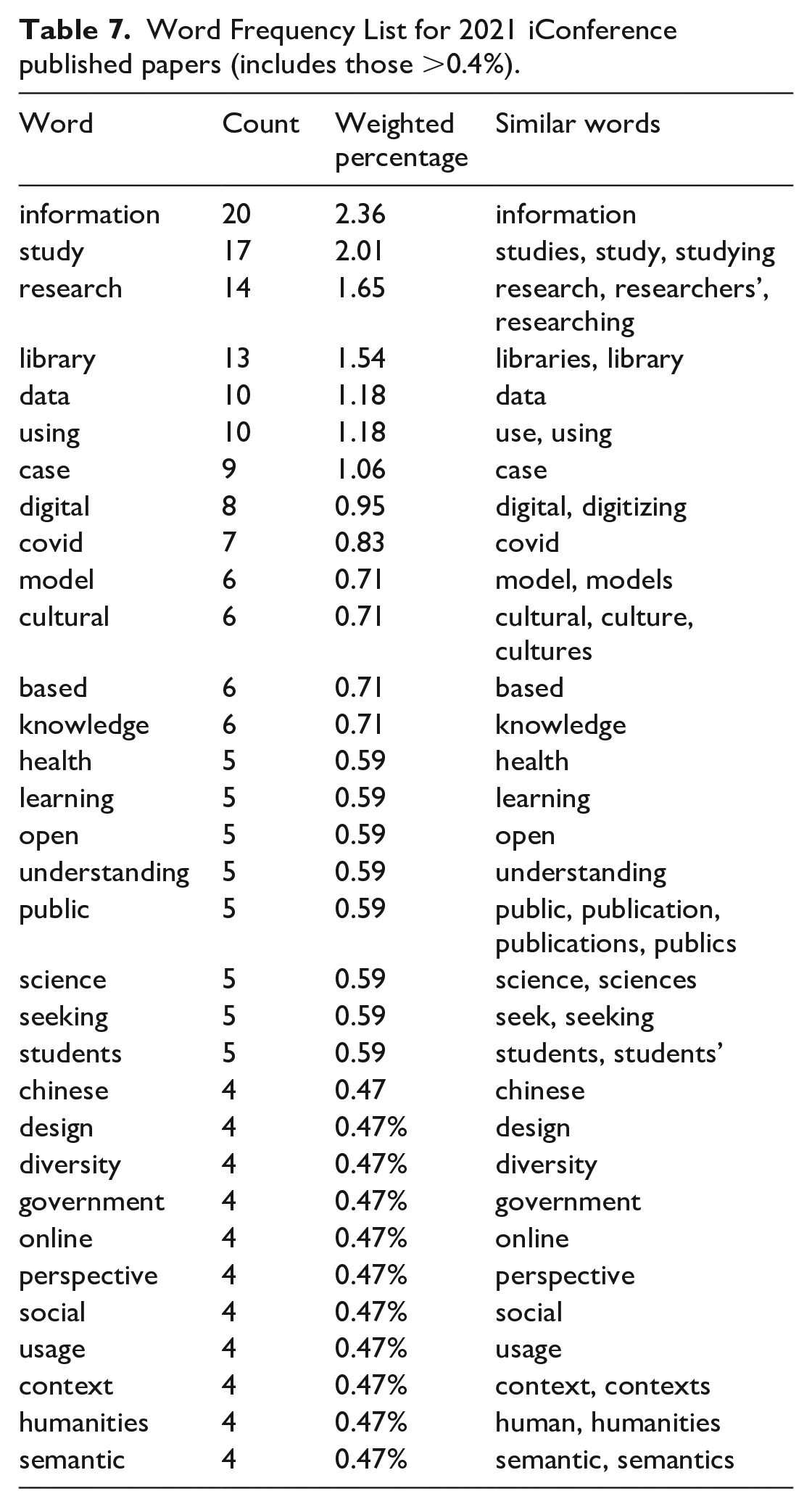
While there are several words that notably became on trend and caught the interest of information professionals, “covid” and “health” are the two content words that explicitly reflect the global concern over the pandemic and the increasing focus on research in these areas. As the theme of 2021 was diversity, and hosted by Renmin University, several words that reflected that emerged and strengthened, for example, “cultural,” “open,” and “diversity”; interestingly “Chinese” appears on this list, adding to the local aspect where the conference was held. This is an indication of the localization of research in the LIS field, hence a suggestion for considering research diversity in conference submissions.
The keyword lists have mostly terms relating to the core topics and research areas that information and librarianship professionals focus on (e.g. information, data, knowledge, library) and hence the submissions for an academic conference in this field. However, what is mostly missing are keywords that concern EDI in a general sense, such as equal opportunities, awareness, equal rights, etc. (such as those in CILIP’s ethical framework). With the exception of one keyword that appeared in a high position in the year 2020—“community” (see Table 6), that loosely suggests a concern about EDI, it is generally neglected within the conference body even after becoming a virtual one, which implicitly reflects bias in its publications. It may be that it is generally neglected by researchers in the field, or that the conference organizers did not highlight it as a key theme. In both cases, it demonstrates an unconscious bias as its importance is overlooked.
Skills comparison
A comparison between the skills that participants declared that they had to offer and the skills that they were interested in or looked for is valuable in terms of building up a picture of what a conference is about and particularly for giving an insight to the organizers, and other participants, from the participants’ perspective. It also gives indications of the specific fields that the researchers within the community served by the conference have been working on and the emerging areas they look forward to. This data highlights area of interest and professional expertise and so helpful to the organizers with regards to EDI to enable them to better engage with and understand their community, particularly with regards to new possible groups of participants and their research directions. The increasing use of this in virtual conferences seems intended to take the place of the traditional interaction at conference breaks and other networking opportunities. Unfortunately, no public data is available here to measure its use and effectiveness.
Nevertheless, at the conference for which we have the data, they used a controlled vocabulary of prescribed terms, unlike the other registration data fields, which kept the range of terms manageable but at the same time limited the nuance, which may have skewed the overall findings; an additional free text box (with a necessary limit on characters) would have allowed for a more granular interpretation.
Looking at the comparison Table 8, the items highlighted are those “looked for” but not “offered.” This would seem to indicate a skills gap amongst the registered conference participants where skills, presumably, in demand were missing amongst them.
Comparison table of the top 10 skills participants provide and look for.
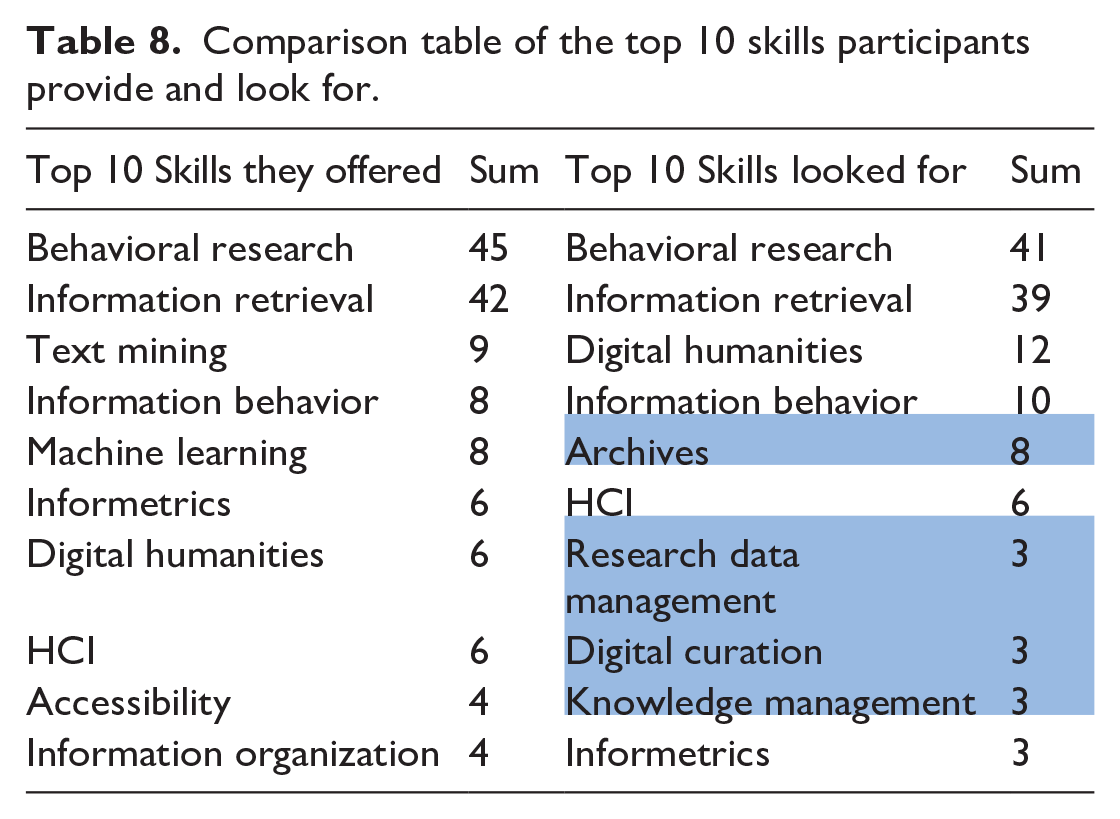
Looking at the fuller picture of skills comparison in Figure 6 suggests that certain skill descriptors, particularly in “Machine Learning” and “Text Mining” (arguably, and in some areas, the latter is closely linked to and a sub-set of the former) offer more than is looked for. “Behavioral Research” and “Information Retrieval” are both at a significantly higher level but “offered” and “looked for” are closely matched. This may well indicate that those with these skills to offer also looked for those working in a similar research or practice area with whom they could meet, discuss, and possibly look to collaborate.
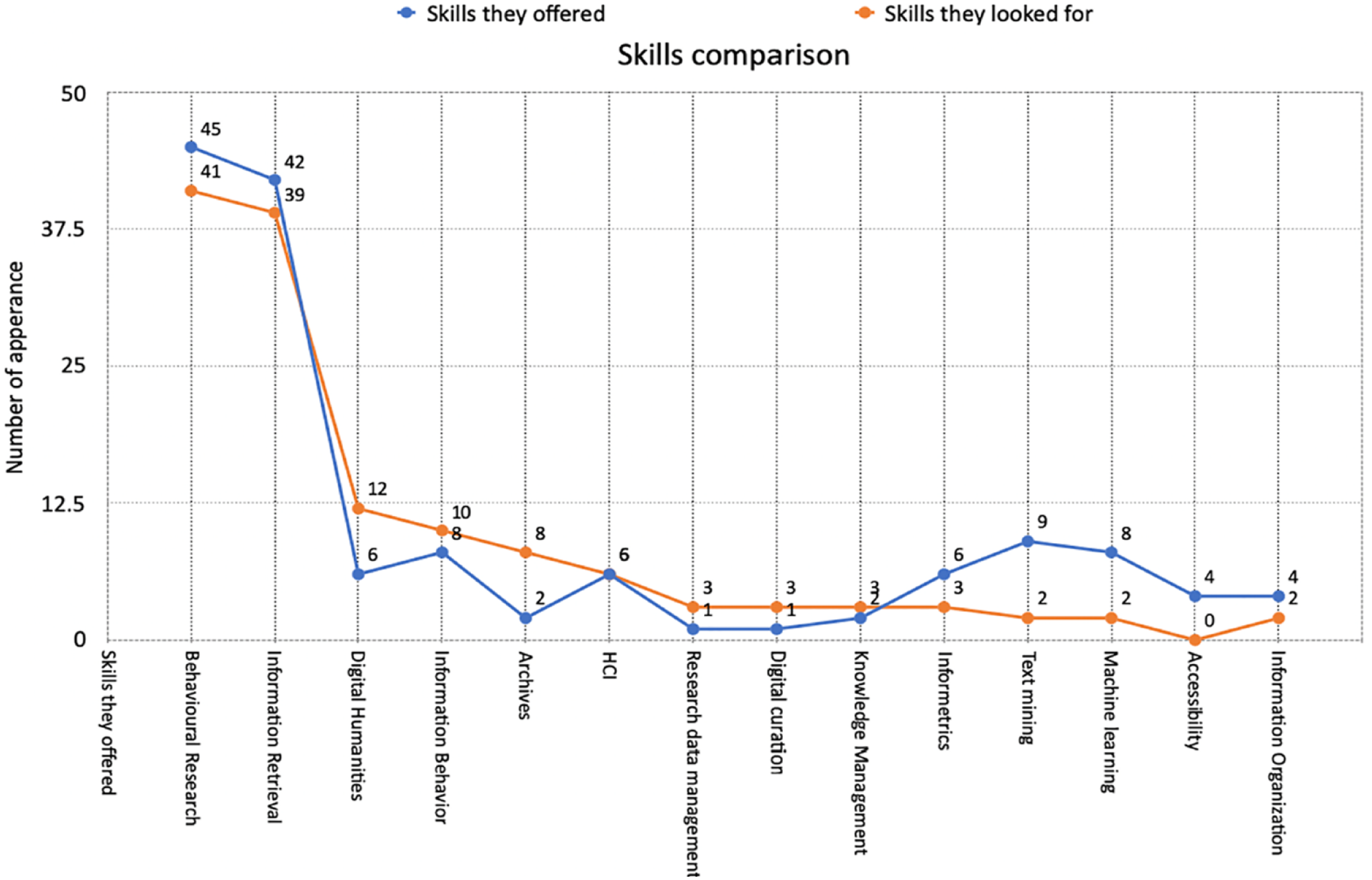
The 2-D line chart of the skills comparison.
This analysis of skills comparison gives some clues to the diversity of the participants background, and interdisciplinary professions as the participants look for a wide range of skills at the conference. In addition, this will help conference organizers see trends developing over time and better engage with new and emerging groups within the profession, another tool to help assess the effectiveness of their EDI mechanisms. The LIS field is essentially highly interdisciplinary (Prebor, 2010), and therefore the inclusion of professions from all relevant fields as participants is a necessary strategy to be inclusive of all scholarly activities. This skills comparison also touches the mechanism of conference attendance, where participants expect to encounter co-workers, build connections, and explore possible collaborations (Etzion et al., 2022). Skills matching is a straightforward way to achieve these goals for conference attendees.
Discussion
This paper uses data primarily from the iConference (2021) as a case study to examine how the library and information community as a professional body has responded to EDI and whether an unconscious bias exists, especially in the context of a crisis where the members’ interest should be central.
From the results of ’Position’ breakdown of participants, it is clear that some registrants uploaded irrelevant information when registering their position. Looking at this more closely, they seemed to have understood “Position” as the place (city) in which they were located, taking this term literally as a dictionary definition: “The place in which a person, thing etc., is located or has been put” (OED online s.v. 1. Position, n). Interpreting the term differently, without clear and explicit clarification or explanation, the participants appeared to lack equal understanding of these terms and shared experience in using the conference service; some did not have common ground on which to participate. This commonality needs to be created by the conference organizers through efforts to understand the barriers and issues faced by the diverse array of participants within their community. Some words of explanation, a more encompassing field title (e.g. your job or position title), or a drop-down menu, would have clarified this.
The analysis of the iConference participant numbers raises several points of interest for this research. With the current and continuing global pandemic moving events and conferences online, removing the difficulties associated with travel and other budgetary concerns, it may well have been expected that the number of participants would increase. Nevertheless, despite this, the number of actual registered virtual participants at the last three iConferences (2020, 2021, and 2022), all virtual events, show a significant (possibly dramatic) decrease and may, regrettably, be the start of a general decline in numbers. When participants numbers reached peaks, including in 2011, 2015, and 2019, those iConferences were held in North America (see section 3.2), which could be considered to be the birth place of the iSchools movement (Mahony and Fu, 2021). Since 2011, however, even for those (in-person) ones held outside North America the numbers did not fall below 450 and so it would appear that the pandemic plus holding this particular conference online has had a significantly negative effect on those prepared to register for participation.
The findings suggest that in the case of the virtual format, participants’ considerations about whether to attend an event or a conference are different from that of an in-person one, and especially for one at an international scale. It may be that factors, such as the time difference of presentations, the arrangement of the event (e.g. SCOOCS online platform), the transparency of the arrangements, the diversity of interaction forms, the extent (or lack) of interpersonal connections, the global impact of the event, and so on, have a stronger influence on participants’ decision to attend than the traditionally expected factors such as traveling and budgets. A Nature readers’ poll notes some of the many positives and negatives of online conferences: “readers cite the ease of attending from anywhere in the world as a major perk, although they admit that virtual events haven’t been able to simulate the networking with colleagues they enjoyed in person” (Remmel, 2021: 185). Indeed, 49% of those they surveyed appreciated the increased accessibility most, whereas 69% considered “poor networking opportunities” to be “the biggest drawback of virtual conferences” (Remmel, 2021: 186).
Along with other conversational properties, a profile picture is arguably one way to reach out and build a professional presence in the digital world, although this is closely linked to the way in which people choose to present themselves online (boyd and Heer, 2006). Despite this, at the conference being analyzed, there was still significant reluctance to upload personal information and more so with regards to a profile photo. There could be many competing reasons for this, such as access was done in a rush immediately before the event, at a hectic time workwise, or that these participants felt that they were too busy to explore the system adequately before the conference; then again, it could be a response to a situation where less interaction and hence contact would be anticipated or even preferred, and perhaps seeing the lack of social interaction opportunities, some participants simply did not bother giving their information. An alternative explanation would be that there were concerns over privacy issues and this may be evidenced by the number of participants who provided only the minimum details (e.g. name, organization) on SCOOCS but did not include other further information that was asked for, such as their profile picture and position. Moreover, for participants from underrepresented groups, remaining anonymous removes the visible differences and hence the experience of belonging to a diverse minority group (Song, 2020), so that they can interact and participate at the same level as other participants in what is a predominantly white and female LIS profession (De La Rosa et al., 2021; Mehra, 2019). Biases exist whether conscious or unconscious and choosing anonymity by conference participants at virtual events may be a positive choice to avoid stereotypical assumptions by organizers and fellow participants, even those “committed to equity, because many thinking processes, such as stereotype activation, occur outside awareness or control” (Ford et al., 2019).
The SCOOCS, virtual event platform, promotes itself as a “community platform” for both “virtual and hybrid events,” with many universities (including iSchools) and corporate institutions listed as clients, as well as having indicative ‘Case Studies’. Their pages list a range of features, including “Event Analytics” as well as statements of GDPR compliance and data privacy, and possible integrations such as with Zoom, YouTube, and Eventbrite. 7 Although those functions and features incorporated in the platform are commonly used in many countries, they are restrictive in some (e.g. YouTube is blocked in China; GDPR is not applied outside UK and EU), resulting in an unconscious bias in serving all participants and excluding those from a different working/academic culture.
To acknowledge the EDI initiatives being proposed and advocated in the library and information professions, within and outside of the academy, close attention should be given to the equality and inclusion of diverse voices. More help and support should be given to junior members of the community. Good examples are the principles outlined in the 2022 iConference CFP: “commitment to sustainable development; equity, diversity, and inclusion; openness; global reach” (iConference, 2021b). To achieve these aims, the conference organizers need to ensure that equal opportunities are given to more junior researchers and to students, particularly those from less advantaged backgrounds and less prestigious institutions, so that they can keep up to date with the current trends and research in their chosen field. To facilitate an inclusive academic and/or professional environment, the conference scenario should also provide a bridge for them to connect with more senior researchers and practitioners as part of their professional development.
Along with analyzing the data from the iConference, we ask what is the nature of EDI and how we in the information professions should respond to it? Is it a slogan or a mindset, a way of thinking, speaking, acting, and planning scholarly activities, or just “benevolence” and “compliance”? Do these concerns address the requirements and motivation for participants attending online events or should we consider wider possible factors that might influence attendance and participation? Justice, as the right and inclusive thing to do should be understood and perceived as such by the participants and not just be something that is declared by the organizers, equally with “excellence (the best and smart thing to do)” (Shaibah, 2020: 1).
All these points above make a strong argument for the importance of implementing EDI in the process of events planning with a standard policy/framework to make everything transparent and clear, explaining the need for the registration fee, the overall value of conference registration, what can be expected from the event, ensuring that common concerns are being recognized, and building common ground for mutual understanding within the community. Transparency and communication are key to identifying and addressing any barriers to equality and so online conferences need to ensure clarity and transparency concerning privacy, content, and process, and to demonstrate awareness of the diverse background of the members of their community.
Conclusions
The purpose of this paper is to discuss possible concerns over EDI and reflect on its current status within the library and information professions by using the iConference (showcase of the iSchools movement) as an indicative case study. Through analyzing data from the conference, especially one in a virtual format, it considers how we might make use of our place and influence in the information field to take a lead in promoting and facilitating EDI, and to foreground awareness by putting it into practice in all of our activities.
This is not just about justice and doing the right thing but about new ways of thinking. The global pandemic has opened a window of opportunity for change. The virtual conference removes the need for travel and accommodation, reduces the cost of attendance, but not the “inequality in access and participation” (Niner et al., 2020: 254). The virtual conference makes it harder for the inexperienced participants, attempting to build a network, or those from minority groups to establish themselves. Nevertheless, it is an essential part of their development as researchers and practitioners as “Giving a [conference] talk confers recognition and prestige, particularly for students and early-career researchers” (Ford et al., 2019: 32). It is traditionally the job of the PhD supervisor or mentor to introduce students around at conferences and other events to help them make connections, but this is no longer possible to the same extent. An introductory email does not have the same impact as an informal meeting and greeting at one of the many social breaks factored into an in-person event; these are the places in which serendipitous meetings and discussions can lead to future collaboration, projects, and possible employment. In addition, the physical conference pulls people together at the same time and place whereas a virtual event generally features more convenient scheduling times, convenient for the presenters but not necessarily for those in different time zones who may have work or family commitments. For event organization, we still have work to do but the pandemic forcing the move online has given us the opportunity to move away from the established models and to “reinvent conferences to models rooted in sustainability, equitability and inclusion” (Niner et al., 2020: 253).
A significant issue is not so much the bias disadvantaging minority groups, such as the unequal distribution of privilege leading to unequal opportunities, but one of a “lack of awareness” at institutional level and within the wider community (LERU, 2019: 11); the bias and implicit inequality that is there at an unconscious level. This is reflected in our findings from the analysis of the conference—the lack of adequate definition of terms (“Position”), the limited function of the SCOOCS platform in some countries, and the unconscious bias of themes in receiving papers. As above, this may be aggravated by the pandemic where the dominant groups may “revert unwittingly” (Partington, 2020: 1), further accentuating the invisible barrier that separates the “haves” from the “have-nots” (Van Dijk, 2017). Moreover, remaining anonymous needs to be an option for participants at virtual conferences to allow them to remove the visibility of their diverse minority status, if they wish to do so, to avoid any stereotypical assumptions, and be able to interact and participate equally.
Minority groups may be underrepresented, and unconscious bias may be impossible to eradicate but, nevertheless, we must strive to ensure that all members of our community have an equal voice and that they feel that they are valued and recognized. As information professionals, we will be judged on how we respond to and how effectively we take the lead on EDI; this is a long-term endeavor that must not only reflect the membership and be supportive of its wide diversity, but it must also be “seen” by the membership to do so.
Taking the iSchools community as an example of a leading global body for the information professions, they have taken action at an institutional level. They have the iSchool Inclusion Institute (i3) to “help encourage diversity and inclusion” in the information professions. Their activities are documented online along with details of their members’ participation in previous iConferences, including 2020 (10 projects represented with poster winner and a runner up) (iSchool Inclusion Institute, 2022). The number of i3 participants are not recorded for 2021 as registrants would have input their home institution rather than i3—another case for having a limited free text box. Nevertheless, Booth et al.’s (2020) LNCS publication uses i3 as a case study for REU (Research Experiences for Undergraduates) as an initiative to involve students in research (in some institutions this would be described as the Connected Curriculum) to facilitate underrepresented groups progressing to graduate programs. They acknowledge the racial imbalance in US graduate information science programs and the knock-on effect that this has for the information (and related) professions (Booth et al., 2020). So far, all i3 academic partners appear to be institutions in the USA, and it would be good to see the iConference being the platform to develop such initiatives and further conversations around EDI across the global information community.
Our recommendations based on the above research are that it is essential to keep, and even to extend, the continuing communication with members of our communities and provide channels to listen to their diverse voices and needs. For events such as an academic conference, the establishment of an EDI committee or panel should be considered; a place where minorities and those who identify themselves as part of a less prioritized group could find their community and raise issues to enhance EDI implementation and other relevant research. Our library and information communities need to identify barriers that exist in promoting academic equality and communication; we should all continue to monitor equality, diversity, and inclusion both within our executive, membership, and events participation, and that this becomes part of our long-term strategic vision.
At all events, conferences and otherwise, there needs to be clarity and transparency over privacy issues, information that is put on social media dissemination, registration fees, the information required at registration and also during the conference. Students (at all levels) and junior members of staff need support and need to be afforded a meaningful experience to encourage them to engage and participate. In addition, strategy and guidance for EDI should be discussed and established within our various communities to set the direction and future trajectory. We need diverse forms of engagement to encourage participation during an event or a conference with well-established and clear data privacy policy. For example, SCOOCS has clear GDPR compliant and Data Privacy statements on their website that could have been foregrounded within the conference information to allay any privacy concerns that participants might have had. Organizers need to have a clear understanding of the diversity within their community and hence the range of potential event participants to be able to develop a meaningful set of terms for data entry on registration. As has been argued, “communally, conferences are venues for shaping and sustaining the culture of academic fields, training, and broadcasting community values of ‘how things work around here’, ‘what counts’, and what ‘great’ work looks like” (Etzion et al., 2022: 352). It is our information professions’ responsibility to work toward an ideal venue for scholars at all stages and from all backgrounds.
Further work is planned to make a comparison with data based on participants and publications resulting from other conferences held in 2022 and the year after, to see how, if at all, the implementation of EDI can be further improved especially in the later hybrid forms of conferences in post-pandemic years. This needs to be done over time and ways to improve EDI should be trialed and examined in its practice. It is also planned to adopt qualitative approaches to investigate EDI issues and solicit feedback from conference participants. Collecting the responses, emotions and experiences of participants from different backgrounds and academic levels is key to this research and supplementing the quantitative numbers. With the example of the iConference, it was not possible to make a direct comparison with Boras and Renmin as the data from the former was not available due to Sweden’s strict privacy laws. Nevertheless, with more online events being held at a global scale and possibilities for implementing diverse forms of interactions online, future work will also focus on designing practical EDI strategies and supportive documents that work toward a more equitable digital future across the globe.
Footnotes
Declaration of conflicting interests
The author(s) declared no potential conflicts of interest with respect to the research, authorship, and/or publication of this article.
Funding
The author(s) received no financial support for the research, authorship, and/or publication of this article.
