



Abstract
This work explores international research into library and information studies (LIS) education as part of the diversity, equity, inclusion and access (DEIA) agenda and identifies options for LIS education reform in addressing racial inequity in the library profession in the UK. The paper sets out the UK legal, higher education and LIS education contexts, focussing on the role of the professional association, accreditation and the curriculum, and the library and information workforce, and highlights current practices in DEIA in the UK. Using a methodology drawn from bibliometric approaches, a set of academic and professional articles related to DEIA and the LIS curriculum are analysed and nine interpretative repertoires are then identified and discussed. Four core mature repertoires concentrate on the professional association, the university, LIS faculty and the curriculum. These core clusters are surrounded by emerging repertoires which are more recent and more critical. Each repertoire is discussed, referring to key sources and authors to present a picture of trends and complexity in recent (2000–2022) literature on the topic. The aim of this work is to provide a detailed view of existing practice in LIS education relating to DEIA. LIS schools are a vital part of the professional pathway: without a qualification there is no profession, and university students are more-often-than-not drawn from the more privileged and wealthier sectors of society. It is recommended that LIS schools recruit students and faculty who reflect communities and develop the abilities of students to serve the communities they may or may not reflect. These are categorized into clusters, in an attempt to inform LIS education reform in the UK.
Introduction
A workforce which is unrepresentative of the population undermines the very essence of librarianship (Chan, 2022) and contradicts the ethical norms enshrined by American Library Association (ALA) (ALA, 2010) and the Chartered Institute of Library and Information Professionals (CILIP) (CILIP, 2018) as well as the Australian Library and Information Association (ALIA) (ALIA, 2020) and International Federation of Library Associations (IFLA) (IFLA, 2012). There has been a significant and increasing amount of research in library and information studies (LIS) education, mostly in the US, commenting on whiteness in the profession, and reviews drawn from annual Association for Library and Information Science Education (ALISE) annual statistics (in the US and in Canada) and the CILIP Workforce Survey (in the UK) are currently bringing this discussion to the fore. These discussions are not limited to the global north, and IFLA have recently been amplifying commonly under-represented voices through their work on LIS education (IFLA, 2022). The increase in mobility of students and LIS professionals (pandemic notwithstanding) also means that LIS classrooms increasingly include students from around the world, that professionals are moving across borders and library users are migrating around the world, not always out of choice.
The UK LIS profession needs to keep pace with these changes through wider representation and development of cultural competence if it is to thrive. Overall’s definition of cultural competence as: “. . . the ability to recognize the significance of culture in one’s own life and in the lives of others; and to come to know and respect diverse cultural backgrounds and characteristics through interaction with individuals from diverse linguistic, cultural, and socioeconomic groups; and to fully integrate the culture of diverse groups into services, work, and institutions in order to enhance the lives of both those being served by the library profession and those engaged in service” (2009: 189–190)
is adopted here, and will be discussed later in this paper.
The need for cultural competence has never been more urgent if we are to adequately serve a diverse user base from around the globe. As there has been very little academic research on this topic in the UK, this paper puts the spotlight on international research into LIS education as part of the diversity, equity, inclusion and access (DEIA) agenda and makes some recommendations on how we in the UK must make a difference. This paper initially sets out the UK legal, higher education and LIS education contexts, focussing on the role of the professional association, accreditation and the curriculum, and the library and information workforce, and highlights some current practices in DEIA in the UK. Using a methodology drawn from bibliometric approaches, the paper gathers a set of around 200 academic and professional articles related to DEIA and the LIS curriculum and identifies nine repertoires or clusters of keywords which are then analysed and discussed. Four core mature repertoires concentrate on the professional association, the university, LIS faculty and the curriculum. These core clusters are surrounded by emerging repertoires which are more recent and more critical. Each repertoire is discussed, referring to key sources and authors to present a picture of trends and complexity in recent (2000–2022) literature on the topic. The aim of this work is to provide a detailed view of existing practice in LIS education relating to DEIA. The role of the Library and Information Studies (LIS) school is only part of the picture, but it is a vital part of the professional pathway: without a qualification there is no profession, and university students are more-often-than-not drawn from the more privileged and wealthier sectors of society (Gable, 2021; Gallagher, 2018). There are two broad approaches. LIS schools need to recruit people (students and faculty) who reflect the communities we serve, and we need to develop the abilities of students to serve the communities they may or may not reflect. These, along with more nuanced and detailed ideas, are categorised into clusters, in an attempt to inform LIS education reform in the UK.
Literature review
It is now 30 years since Ismail Abdullahi wrote about how LIS schools in the US should make greater efforts in the ‘recruitment and mentoring of minority students’ (Abdullahi, 1992: 307). He was referring to words from even further back by Mohammed Aman – ‘Libraries and the library profession have constantly ignored the needs of black people’ (Aman 1972 in Josey, 1972: 150–161) in a text edited by the leader of the recently established Black Caucus of the American Library Association (BCALA) (Walker 2015 in Hankins and Juárez, 2015: 135–160). One could no doubt go back many years and see the same problem being raised in different forms and promptly disregarded. Under-representation of minorities in the library profession is not new. The literature on the topic of representation within LIS education is necessarily inter-twined with that of the profession. Teasing out what is happening in LIS education, therefore, can help us to understand the embedded nature of whiteness in librarianship (Hathcock, 2015; Jennings and Kinzer, 2022; Pawley, 2006; Schlesselman-Tarango, 2017; Wickham and Sweeney, 2018, Yoon and McCook, 2021) and perhaps identify strategies for UK LIS education, some proposed many times before, in the hope that this time they may make a difference. This section introduces some important background context from the UK. The legal frameworks relating to diversity, equity, inclusion and access are introduced, showing how race equality sits within wider equality considerations. This is followed by a discussion of recent developments in decolonisation in UK Higher Education, leading to an analysis of the UK LIS context, looking at the professional association, accreditation and the LIS curriculum, the library and information workforce and practices, and a brief introduction of salient workforce statistics.
UK law
It is important to provide some legal context here. The UK has been a destination for people from around the world since Roman times, and the involvement of Britain in slavery and the development of the British Empire, subsequently the Commonwealth, ensured a continual flow of migrants who have continually made important contributions to culture, society and the workforce (Olusoga, 2016). After World War Two migration increased rapidly through the 1950s until the introduction of the Commonwealth Immigrants Act 1962 which required immigrants to have a job before arrival to qualify for a visa. Since then, immigration controls have been a cause of much tension in politics and on the street. Responding to these tensions, the Race Relations Act 1965 made discrimination on racial grounds a criminal offence. This was subsequently adjusted to a conciliation approach which had little effect. The revised Race Relations Act 1968 ‘made it unlawful to discriminate on grounds of colour, race, ethnic or national origins in employment, housing and the provision of commercial and other services’ (Fiddick and Hicks, 2000: 7). This was again revised in 1976, widening the scope to ‘employment, training and related matters, in education, in the provision of goods, facilities and services and in the disposal and management of premises’ (Fiddick and Hicks, 2000: 8) and identifying direct and indirect racial discrimination. While direct racial discrimination was designed to address discrimination against individuals, indirect racial discrimination sought to address ‘treatment which may be described as equal in a formal sense as between different racial groups but discriminatory in its effect on one particular racial group’ (Fiddick and Hicks, 2000: 8). This revision was reviewed periodically by the Commission for Racial Equality. One of the findings of the inquiry into the policing of the racially-motivated murder in London of Stephen Lawrence (Macpherson, 1999) was of institutional racism within the Metropolitan Police, which led to an extension of the Race Relations Act 1976 to include all public services, and in 2000 the Race Relations Amendment Act was put into effect, making it a requirement of all public services to promote racial equality (Fiddick and Hicks, 2000). The subsequent Equality Act (2010) addressed similar imbalances (Ahmed, 2012) and merged nine pieces of legislation ((the Equal Pay Act 1970; the Sex Discrimination Act 1975; the Race Relations Act 1976; the Disability Discrimination Act 1995; the Employment Equality (Religion or Belief) Regulations 2003; the Employment Equality (Sexual Orientation) Regulations 2003; the Employment Equality (Age) Regulations 2006; the Equality Act 2006, Part 2; the Equality Act (Sexual Orientation) Regulations 2007) (EHRC, 2022). The Equality Act (2010) is designed to cover discrimination towards people with any of nine protected characteristics: age, sex, sexual orientation, gender reassignment, race, religion or belief, marriage and civil partnership, disability, pregnancy and maternity.
Decolonisation in UK higher education
The pursuit of inclusive campuses as essential elements of higher education can be signposted through visions, missions and strategies, but require significant institutional change if they are to be realised (Alger, 2018). In recent years this change has been called for through an increasing agenda of decolonisation. Participation in UK higher education has increased rapidly in the 21st century, due to 1990s policy changes which led to vocationally focussed polytechnics converting into universities. There have been significant moves around anti-racism, more commonly referred to as decolonisation, since the wider adoption of Critical Race Theory (Gillborn, 2006), leading to calls for decolonisation of the curriculum and initiatives such as UCL’s ‘Why is my curriculum white’ (Peters, 2018) and #RhodesMustFall (Bhambra et al., 2018). Sian (2019) discusses how the widely reported lack of black and minority ethnic (BAME) people in professorship roles demonstrates there is much more to be done in terms of institutional racism in British universities and she considers how this racism manifests itself through micro-aggressions, exclusionary interactions, structural processes of racism, white resentment, white guilt and white privilege, Eurocentricity in the curriculum and lack of adherence to public policies and strategies. After decades of male dominance, more women than men are now graduating in first degrees and postgraduate courses, and although more men than women are in full time academic roles, this is reversed for part time; people from disadvantaged backgrounds are less likely to go into higher education (although this is slowly improving); disabled students are more likely to take arts and humanities courses than science, technology, engineering and mathematics (STEM); and although there is an increasing number of students from BAME backgrounds, they are less likely to complete their studies (Gallagher, 2018). Students are calling for a decolonial approach, staff are evaluating the curriculum, and there is widespread activity through the university sector in engaging with diversity and inclusion work (Bhambra et al., 2018). If these failings are apparent throughout UK higher education, then they will be visible within LIS education, making anti-racist work even more urgent.
LIS education
LIS education in the UK is an under-researched area in terms of diversity, equity, inclusion and access. However, there is some recent investigation and discussion into the make-up of the library workforce in Britain which provides context for discussion.
CILIP – The professional association
The voice of the professional association is important here as it plays an important role in ‘shaping professional ideology around a topic’ (Hill, 2021: 1379). In the UK, CILIP’s BAME Network was established in 2019, building on their Libraries, Information and Knowledge Change Lives position paper along with their Disability, LGBTQ+ and Women’s Networks (CILIP, 2019). These diversity networks have only very recently been established as part of the CILIP response to the Workforce mapping (CILIP, 2014) which led to the Changing lives position statement (CILIP, 2017c) and ‘Big conversation on ethics’ (CILIP, 2017a), updating their 2004 Ethical principles (CILIP, 2004) to the current Ethical framework (CILIP, 2018). We are yet to see significant outcomes from these very recent initiatives on LIS education. However their potential in impacting on professional views and standards is likely to lead to conversations around LIS school curricula via the accreditation process and other engagement between faculty and students and the wider profession.
Accreditation and the LIS curriculum
The LIS curriculum is currently informed by the accreditation requirements of the CILIP Professional Knowledge and Skills Base (PKSB) (CILIP, 2013) and the quality assurance guidelines Subject Benchmark Standards (SBS) (QAA, 2015). A newly revised version of the PKSB includes some recognition of the relevance of equality and diversity (now included within Ethics and values, Customer focus, service design and marketing 10.5 and 10.7 and Strategy 12.5), while the SBS for Librarianship, Information, Knowledge, Records and Archives Management does not include any mention of equality/diversity, equity, inclusion and access, concentrating instead on the umbrella term of Ethics to convey these important issues. The SBS are all being gradually updated ‘to incorporate consideration of how practice within disciplines addresses the wider social goals of equality, diversity and inclusivity’ (QAA, 2022). There is no due date for the revision of the Librarianship standards as yet. CILIP-accredited library programmes are reviewed every 5 years by a peer-reviewer and an accreditation officer. At these reviews faculty, professional services staff and students contribute to discussions which centre around the extent to which the curriculum maps to the PKSB Standards. The CILIP Ethical Framework (CILIP, 2018), introduced in 2018, makes much stronger statements about DEIA and is an essential part of the new version of the PKSB and, as such, features in accreditation evaluations.
Workforce
In 2009 the London branch of CILIP commissioned a short study to explore reasons behind under-representation of BAME library staff in London. Nine participants were interviewed about their experiences, and it was found that barriers faced by them included qualifications, alienation and lack of representation, cultural differences, lack of support, language barriers, perceived racism, immigrant rights problems and added life pressures such as language, additional qualifications or denial of benefits (Williams and Nicholas, 2009). The report also identified efforts which were being made at the time to address these issues, including CILIP’s Encompass Project (Rhodes, 2010). This project, similar in aims to the ALA Spectrum initiative (ALA, 2018), set out to re-dress imbalance in the profession through a trainee scheme and workplace development linked to CILIP’s qualification for paraprofessionals. There has been little mention of the initiative in recent years and there is very little evidence of any progress or impact from the project (Arkle, 2016; Pang, 2018). Two other initiatives, at the British Library and at National Library of Scotland were also cited in the 2009 study, emphasising the role of employers in addressing inequality in their workforce. Subsequently, in the British public library sphere, it was found that staffing issues should be addressed by taking a new approach to recruitment (to widen cultural diversity of staff) and training (including developing ‘cultural awareness’) (Birdi et al., 2012: 123).
There was little ongoing public discussion in the UK LIS profession around diversity, equity, inclusion and access (DEIA) matters until a major swell of interest around the publication of the CILIP/ARA workforce mapping (Hall et al., 2015) prompted CILIP to first seek to ‘champion equality and diversity’ in their 2016–2020 Action plan (CILIP, 2016) and built on this through the CILIP Equalities and Diversity Action Plan (CILIP, 2017b), which responded to the Workforce mapping, ‘with the aim of becoming an organisation that truly represents and achieves diversity and celebrates and encourages it in others’ (CILIP, 2017b: 1). Similarly, the Archives and Records Association (ARA) took the same survey as a call-to-action (Chilcott et al., 2021). Chowdory (2018) challenged what seemed to be the adoption of diversity as a trend. She identified a selection of initiatives (Diversity Scholars programme, unconscious bias workshops, inclusive leadership training) which could help increase the diversity of the library and information profession in the UK.
In terms of staffing, Society of College and National and University Libraries (SCONUL) commissioned research into the experiences of BAME staff in academic libraries, which gave voice to the research participants and highlighted their negative experiences including lack of diversity, with increasing whiteness going up the hierarchy, a feeling of being monitored, racism and micro-aggressions within the workplace which were not adequately dealt with, a glass ceiling in terms of promotion, few opportunities for training for (mostly BAME) paraprofessional staff, tokenistic equality and diversity initiatives, lack of support from trades unions and lack of encouragement to progress. The participants recommended a strategic approach to equality and diversity, creation of opportunities to progress, addressing lack of diversity in the workforce and introduction of a BAME mentorship programme (Ishaq and Hussain, 2019). There have been efforts to accelerate this process through regional and national BAME networks: Diversity in Libraries of the North (DILON, 2022) and the CILIP BAME Network (CILIP, 2022) linking the professional association with the wider profession and practice. Research into academic libraries staff (Ishaq and Hussain, 2019), research into black female professors (Rollock, 2019), and diversity in academia (Ahmed, 2012; Akel, 2019; EHR, 2021) all in the UK strongly point to the need to identify and address institutional racism in UK higher education, both in faculty and professional services staff.
Practice
In library professional practice, the Radical Librarians Collective and the Journal of Radical Librarianship have given a voice to the struggle against neoliberalism in Higher Education (Quinn and Bates, 2017) while the visible focus of the UK library profession on anti-racism in Higher Education has been on collection decolonisation (Crilly and Everitt, 2021). Charles (2019) went on to highlight the growth in calls for decolonisation of the curriculum, linking this to the BAME attainment gap. She identified practical actions which librarians could take in addressing these concerns, by analysing reading lists and calling out vendors practices, as well as including research from the global south supported by publishers and authors from the global north, and the implementation of unconscious bias training across higher education. Similarly, Clarke (2019) discusses the Goldsmiths College (University of London) ‘Liberate our library’ initiative through an approach underpinned by critical librarianship and critical race theory, where librarians worked with students and faculty to redress the Western imbalance in the collections. The institution-wide approach incorporated initiatives such as a dedicated MARC 500 field for liberatemydegree, allowing them all to be searchable as a collection, arranging conferences and events, collaborating with faculty and teaching and learning leads, delivering workshops framed around information literacy, creating a zines collection and diversifying reading lists. These actions all require trained staff to implement them, which increases demand for resources. The Goldsmiths approach is considered exemplary within the UK profession and other academic libraries are adopting this best practice approach. In Oxford, the Bodleian Law Library took a curriculum diversity approach to enact decolonisation in their collection. They adjusted their classification scheme aiming to de-emphasise a Western/imperial-centred focus and used reading lists and library guides as discovery aids to offset the imbalance, highlighting unconscious bias as a factor in sustaining the lack of inclusivity in the collection (Watson, 2019). As awareness grows and libraries of all types address their biases (Crilly and Everitt, 2021) it is increasingly important that new professionals are aware of their own unconscious biases and that suitable skills are developed both in the workplace and in LIS education to facilitate this work.
A note on UK workforce data
This paper focuses on one of the protected characteristics: race and relies on data gathered and published in 2012 (LSIS, 2012) and 2014 (CILIP, 2014). At the time of writing a new workforce survey is under way, which will consider all of these characteristics (CILIP, 2021). In the meantime, in the UK library staff have been found to be 93.4% white (LSIS, 2012), increasing to 96.7% white (CILIP, 2014) compared to the labour workforce’s 90.1% white (2012) and 87.5% white (2015) (Table 1). The figures for ethnicity characteristics in LIS education in the UK show that the total UK domiciled student population was 73% white, while white UK domiciled postgraduate taught students studying Information services were 84% white (HESA, 2021) (Appendix Table A2) and those identifying as white in the most recent census (2011) were 86% (Gov.uk, 2018).
White LIS students/workforce in UK.

Some care should be taken with these figures: the HESA data is for Information services students and will likely include programmes other than LIS. Nevertheless, this helps set a context where there appears to be a distinction between ethnic diversity ratios in UK higher education information students (84%) and those in the LIS profession (96.7%).
Summary
This review has attempted to explain the UK context for equity and diversity work in the library profession. The relationship between CILIP and LIS education providers is paramount here, as the accreditation process directly influences the LIS curriculum. Situated within universities, LIS faculty and students as well as university libraries are inevitably influenced by wider issues relating to decolonisation. The responses from these libraries are notable for their tangible efforts and their likely influence on course content in discussions around collection management, for example. While universities sit within a somewhat rarified world of visible DEIA work compared to the outside world, LIS programmes contribution to the professional pathway means the progression of qualified librarians into work will continually influence professional practice.
There are contextual differences in the US compared to the UK, which this work recognises. Both countries have engaged with colonialism (at home in the US) and Empire (abroad for the UK), the 1960s were a watershed moment when British citizens migrated from abroad to the UK, and American civil rights issues were brought out onto the streets (Holmwood, 2018). The pursuit of inclusive campuses as essential elements of higher education can be signposted through visions, missions and strategies, but require significant institutional change if they are to be realised (Alger, 2018). Poole et al. (2021) in their timely and wide-ranging review refer to the Institute of Museum and Library Services (IMLS) report (Sands et al., 2018) noting the lack of racial and ethnic diversity in the profession and recommending recruitment from Historically Black Colleges and Universities (HBCUs) and Minority Serving Institutions (MSIs), offer more scholarships, recruit from the profession and consider alternative levels of qualification. They discuss the lack of impact of the 1964 Civil Rights Act on the make-up of the profession in the US, and how this was still the case in the new century, even to-date. Some change was noted – literature and research was found to be more diverse, and social justice became more visible. However, these spots of relative success, were deemed to be ‘ambivalen[t]’ and ‘lacking in demographic diversity’ (Poole et al., 2021: 260). They note increasingly demographically diverse populations being served by the profession and similar representations to those in the UK, as noted earlier here, where the proportion of white LIS students is lower than white population, while the proportion of white LIS staff is greater than the population.
The next section considers the methodology adopted in this work, which aims to identify and explore the range of options available to LIS education in challenging racism.
Methodology
The approach to this work comes from a constructivist interpretivist stance. This considers race and other characteristics to be socially constructed, responding to the context in which they are situated. While a critical approach was considered for this work, the author is not sufficiently skilled in critical race theory to do this justice. A content analytic approach was therefore adopted, which would allow the identification of the available options available to LIS education in challenging racism, first through identifying and analysing keyword clusters, and then through analysing the content of the related peer-reviewed literature to identify themes. This approach helped to very quickly identify, for example, that almost all of the literature on LIS education and DEIA is situated in the US, and discusses race, rather than other characteristics such as gender, sexuality, age. This limits generalisability of the findings on two counts. Firstly the US context on race is markedly different to the UK; secondly what is written about race will not apply to gender, sexuality etc.. Nevertheless, and although other methods could have been adopted, this work is part of a portfolio of ongoing projects looking at LIS education and DEIA and as a first step helps to divide the very large literature into manageable pieces. A large set of relevant peer-reviewed literature was gathered. Keyword clusters were used to identify interpretative repertoires which help to highlight key concepts, topics and issues. Interpretative repertoires are related terms or vocabularies used by members of a community of interest to discuss a certain topic and ‘construct versions of their worlds’ (Potter, 1996: 116). In this instance they help to show different temporally overlapping foci of peer-reviewed research into race in LIS education. This section explains the approach taken, discusses the use of software and databases and identifies limitations of the methodology.
Search strategy
In order to identify relevant academic and professional literature, various searches were made on subscribed databases Web of Science and Library and Information Science Abstracts (LISA). Queries were also made on the university discovery layer and on Google Scholar. There is a large amount of comment on the LIS profession in general and on workplace diversity which is no less important than LIS education, but outside the scope of this work, therefore excluded from the search. The query, adjusted for technical differences between databases was:
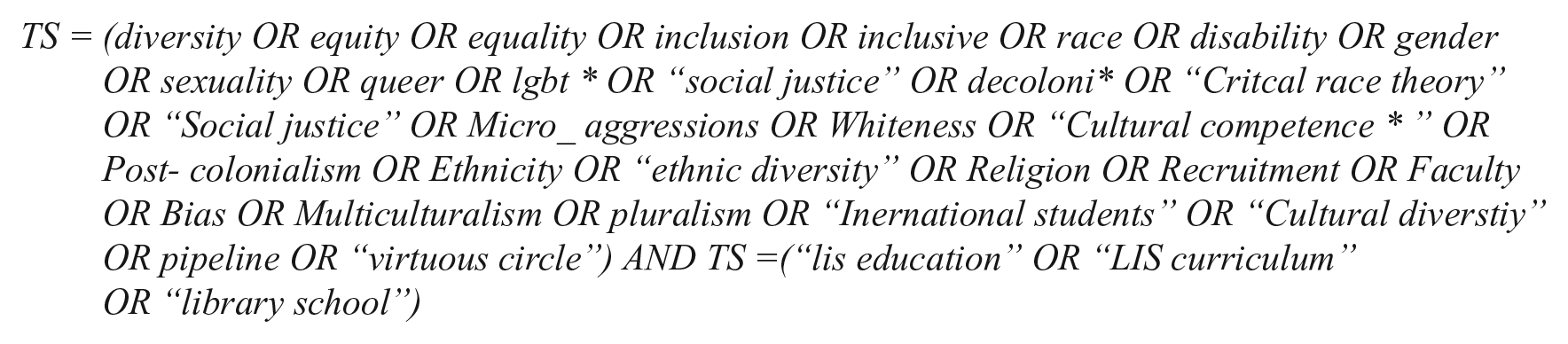
TS = (diversity OR equity OR equality OR inclusion OR inclusive OR race OR disability OR genderOR sexuality OR queer OR lgbt * OR “social justice” OR decoloni* OR “Critcal race theory” OR “Social justice” OR Micro_ aggressions OR Whiteness OR “Cultural competence * ” OR Post- colonialism OR Ethnicity OR “ethnic diversity” OR Religion OR Recruitment OR Faculty OR Bias OR Multiculturalism OR pluralism OR “Inernational students” OR “Cultural diverstiy” OR pipeline OR “virtuous circle”) AND TS =(“lis education” OR “LIS curriculum” OR “library school”)
Topics (in Web of Science) and Abstracts (in LISA) were searched with this query, and keywords were added or subtracted to refine queries and increase or decrease their scope depending on the number of non-relevant articles identified. Results sets were downloaded and imported into Endnote.
Bibliometrics
The Web of Science and LISA results sets were merged, duplicates and non-relevant articles were removed, and the remainder were imported as .ris files into VOS-Viewer and visualised. It is acknowledged that the choice of queries, the identification of relevant documents, the level of detail applied to VOS-Viewer queries, and the use of databases are all influenced by the researcher’s experience and level of expertise in using the software and interpreting visualisation results, the algorithms in the databases, the subscriptions of the university library and the dominance of the global west in research literature. This means that there are any number of visualisations and keyword clusters that may be derived through this approach. However, the efforts made here attempt to mitigate the impact of these influences. For this work, the final merged list was 52 (Web of Science) and 54 (LISA); duplicates were removed, leaving 74 documents. Non-relevant documents were removed, leaving a set of 52. These were then merged with a hand-curated set (153) which the author had been collecting into Endnote over time, duplicates and non-relevant documents were again removed, leaving 196. The result of this approach means that although it cannot be said that a definitive list can be found, the literature identified was relevant and represents a fair selection of current thinking in indexed academic publications in English on the topic between 1999 and 2021. The author acknowledges the existence of a growing amount of important critical material by under-represented and marginalised voices on the topic available online in blogs (e.g. Smith, 2020) and other social media, which are not indexed by subscription databases. Some of them are included here but they would require a specific focus in future work. While the visualisations are helpful illustrations of the complexity and range of the topic, the data behind the illustrations was also explored here. The clustered data is broken down by VosViewer into nine sets of related groups of keywords, each measured by three different weighting attributes (links, total link strength, occurrences) which can be used to identify trends in the data. Links refer to quantity of links to other keywords, occurrences refer to the frequency the keyword appears in the dataset (van Eck and Waltman, 2014). In this work the focus is on the cluster number (1–9) and the occurrence of terms. The output table is included in full in the Appendix Table A1.
It is acknowledged that nearly all the articles considered here are written by North American authors and concentrate on race as the salient issue. Very little relevant literature on LIS education outside North America, and very little anywhere on LIS education and disability, sexuality, gender, or any of the other protected characteristics could be found. It is the hope of the author that the current groundswell of interest in DEIA in the library and information profession, particularly from students, will change this imbalance and would encourage any LIS students reading this paper to consider making their DEIA work public in some form.
Findings
This section introduces the context of the peer-reviewed research in the dataset and identifies nine interpretative repertoires, which are based on the cluster data generated by VosViewer, when importing the Endnote citations. The nine repertoires are divided into two groups: mature and emerging. The mature repertoires appear in the core of the cluster map, while the emerging repertoires orbit the core. The keywords and the related literature relating to each repertoire are discussed in order to identify the variety of practices and approaches employed in leveraging anti-racism in LIS education.
The resulting keyword cluster map is shown in Figure 1.
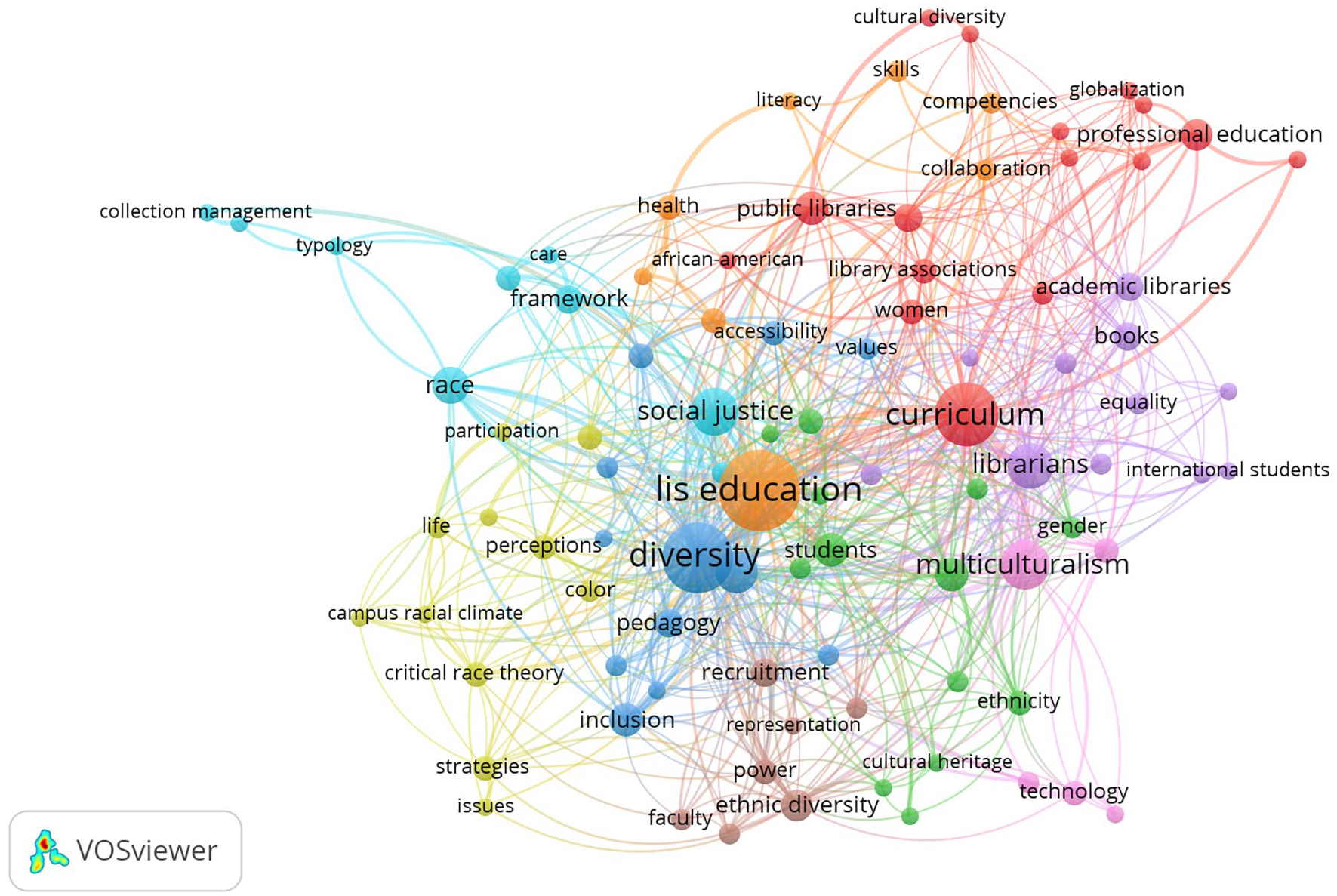
Cluster map from 196 results, 92 keywords occurring two times or more.
The table of keywords shows the keywords in this results set are organised into nine clusters, each ranked by frequency (Appendix Table A1). There has been a steady annual increase in articles over time (Figure 2) demonstrating a growing awareness of the problems and challenges faced by LIS education. Special journal issues, with a higher concentration of keywords, can be identified by the spikes in 2000 (Library Trends), 2013 (Library Quarterly), 2015 (Library Trends and Library Quarterly), 2018 (Library Trends).
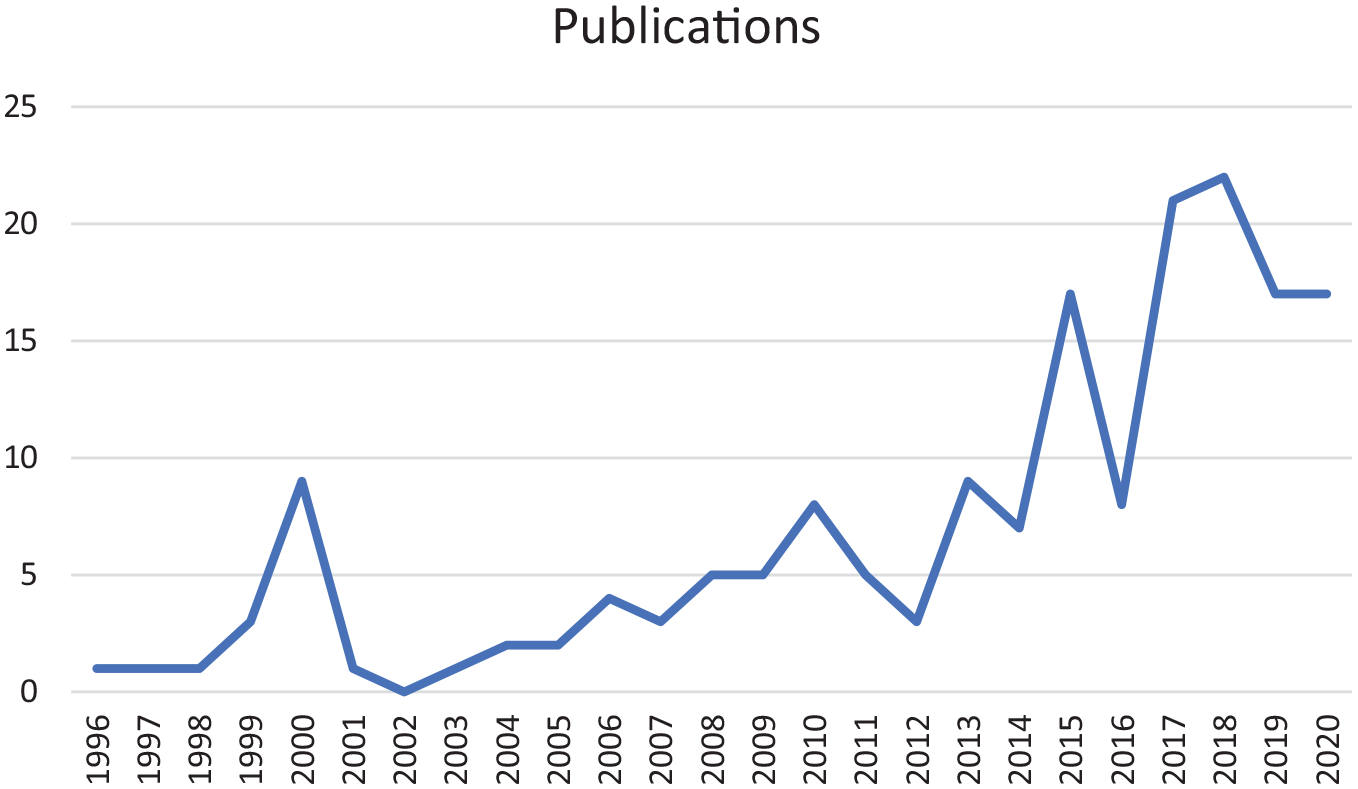
Articles over time.
The keywords over time have demonstrated a noticeable increase in specificity (Appendix Table A3), the terminology around social justice becoming more visible from 2016, corresponding to the rise in global awareness of race issues through the Black Lives Matter movement. The clusters (Table 2) can be identified as different repertoires (Potter, 1996) within the discourse of DEIA in LIS and are apparent within the texts sampled here. Teasing them apart from their overlaps increases their visibility and shows the multiple approaches to knowledge formation in the topic through a set of varying terminologies. No one of these repertoires is privileged over any of the others, but they ebb and flow over time in relation to wider contextual changes in thinking and practicing in the field of diversity, equity, inclusion and access in library education.
Clusters as interpretative repertoires.
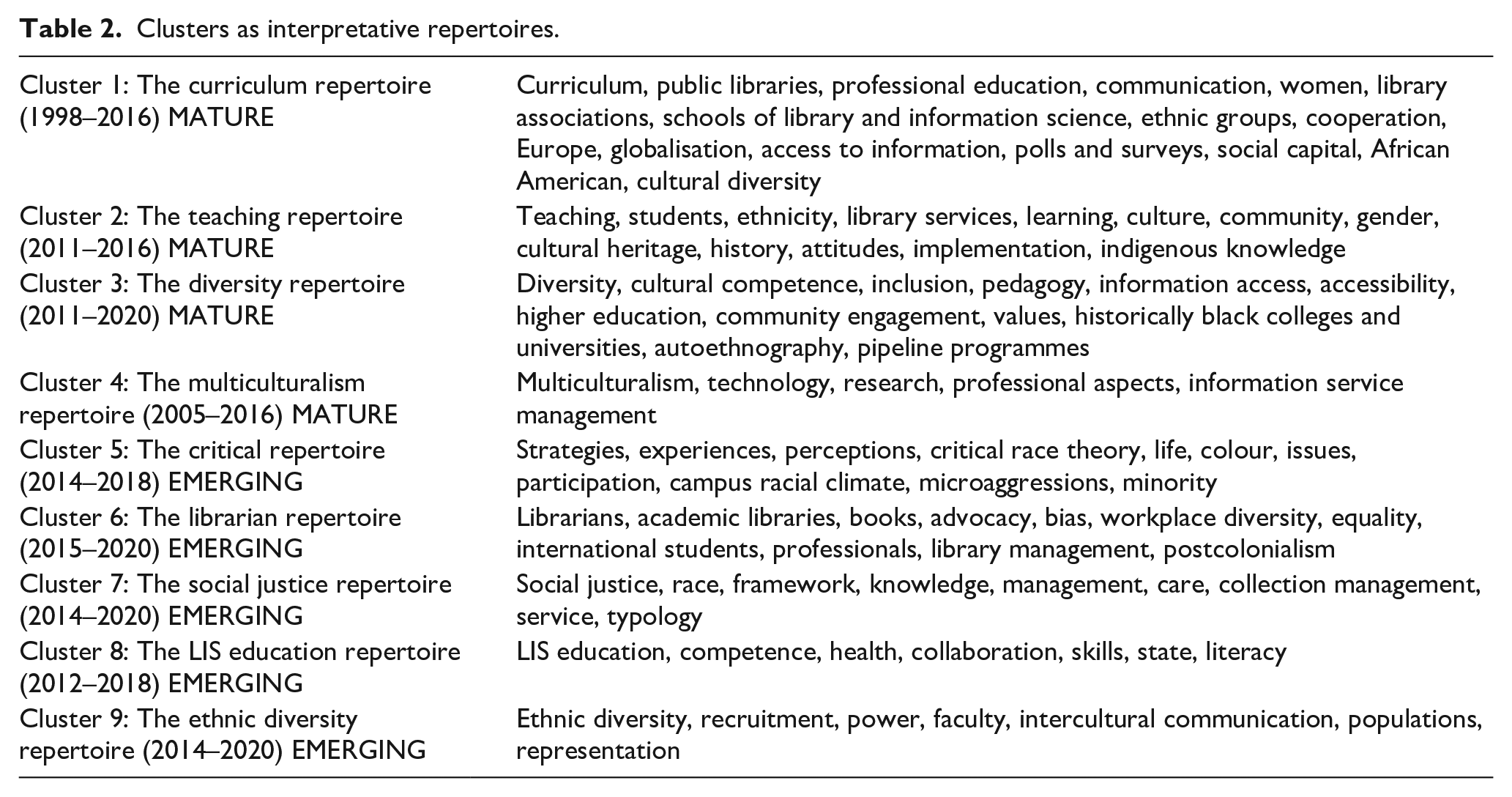
These nine interpretative repertoires intertwine and fade in and out as the focus of research shifts over the 20 years in this study, revealing multiple ideas through their terminologies and focus. The range of publication dates of articles within each cluster helps to shed some light on their stage of development. The more established repertoires (curriculum, teaching, diversity, multicultural) include literature across and beyond the last 20 years and are identified here as mature. They contain ideas which have been discussed and developed over a lengthy period and are related to the power structures in LIS education: the professional association, the university, and the faculty through the preferred means of communication, the curriculum. The curriculum is a powerful tool in representing the ideals of the profession (as interpreted and legislated by the association), the ways and means and principles of the educational institution and the expertise and interests of its representatives, the faculty. The accredited curriculum is reflective of the legal context, institutional and educational quality measures and professional attitudes and is used to determine what is taught, and how. Alongside the curriculum and teaching repertoires there are the diversity and the multicultural repertoires. There is a relationship between these two pairs, which overlap in a way which informs their mutual development, as the curriculum and teaching seek to address issues around diversity and multiculturalism in LIS education.
Circulating around these four mature clusters are five emerging repertoires (critical, librarian, social justice, LIS education, ethnic diversity). These have developed more recently, in the last 8–10 years. These represent a more grass-roots approach to the discussion, coming from students, library staff and faculty. They tend to be critical of the mature repertoire and may propose radical measures which present challenges to the power bases centred on the profession, education, the law and current practice.
The nine repertoires, discussed in the next section, represent various ideas, approaches, measures and practices which combine dynamically to provide a framework of diversity, equity, inclusion and access in LIS education in the academic and professional literature.
Nine repertoires
This section examines each of nine repertoires, discussing their vocabulary and considering the related literature. Key points from literature related to each repertoire are highlighted, identifying a range of related approaches which have been made to address diversity, equality, inclusion and access issues in LIS education, with a focus on anti-racism work.
The curriculum repertoire (1998–2016) mature
This repertoire centres on the role of the curriculum in DEIA work in LIS education and spans the whole 20-year period of the collection (the year is the average of all the years each keyword appears, so the span is actually wider than the year in the table, see Table 3).
Cluster 1: date, keyword, frequency.
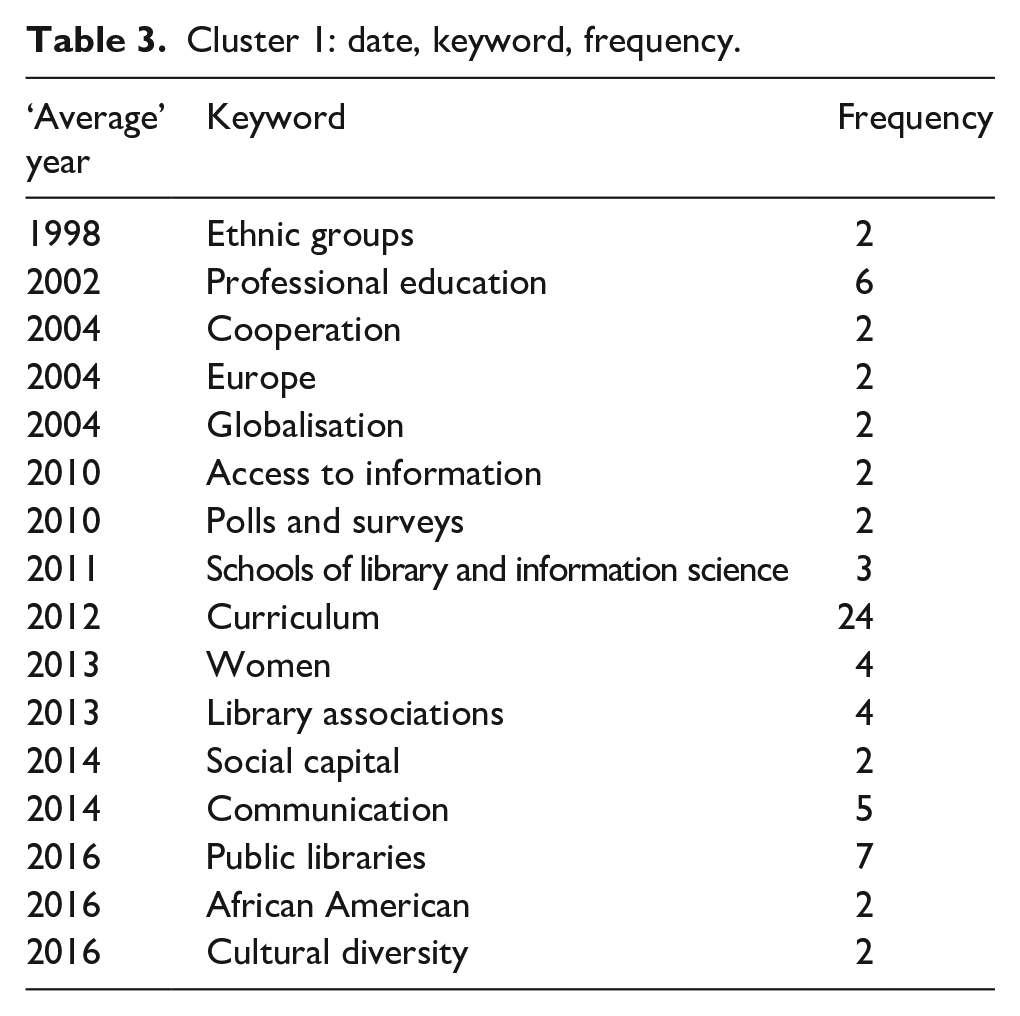
The terms illustrate how the centres of interest in diversity, equity, inclusion and access since the turn of the century shift over time. The early keywords (ethnic groups, professional education, cooperation, Europe, globalisation) emphasise how the gradual internationalisation of the profession has led to an increase in diverse populations not just in the US but beyond, in Europe (Abdullahi and Kajberg, 2004). This first period coincides with a growing realisation in the US that previously minoritized groups were becoming the majority in a multicultural society (Gollop, 1999).
In later years there is a recognition of the professional role of providing ‘access to information’ to ethnically diverse and patrons with disabilities (Bonnici et al., 2015) and the role of the LIS school curriculum comes under more discussion in a special issue of Library Quarterly (Jaeger et al., 2013). Communication, particularly intercultural communication, is represented across the period, acknowledging that there are cultural differences between library staff and library patrons, thus reinforcing both the whiteness of the profession but also the need for cultural competence (Abdullahi, 2007; Caidi and Dali, 2015; Singh, 2020). The importance of public libraries as multicultural venues is recognised, Bashi̇r (2020) commenting on their role ‘as mediators between society, culture and users’ (p. 548), while engagement activities relevant to the cultural needs of the users reinforces the importance of cultural competence (Blackburn, 2014). In the field, librarians are increasingly required to provide support like that of a social worker. This support needs to be of high quality to safeguard the user (Westbrook, 2015) and in recent years the role of the library in supporting marginalised populations has become ever-more visible.
Gibson and Hughes-Hassell (2017) identify four practical roles for LIS faculty: ‘Know the issues, the history of the field, and the community; build students’ theoretical, practical and ethical foundations; amplify voices of the marginalised; engage in public discourse’ (Gibson and Hughes-Hassell, 2017: 322–323). These are presented as imperatives, using the power of faculty to influence and centralise equity in the LIS curriculum, and thus represent the ALA core values and the diversity statement (ALA, 2022b) in their teaching. ALA-accredited programmes’ curricula are driven by such statements, which are bounded by legal requirements on one side and by professional ethics on the other. The link between the profession and the curriculum can help to ensure an integrated ethical approach to education as well as practice. LIS student engagement with such communities in their learning helps to provide a memorable experience and learning opportunities. The Mix IT Up! programme in 2011–2015 provided LIS students with access to marginalised communities as part of their studies (Montague, 2015), the inclusion of diversity issues in knowledge organisation classes (Adler and Harper, 2018) and consideration of access relating to service delivery (Majinge and Msonge, 2020) all highlight examples where the curriculum is designed to support LIS students’ knowledge and understanding of the key issues around DEIA. While electives allow LIS schools to widen their offer, DEIA electives may not always be chosen by the students who would benefit most from them and integrating diversity into the core curriculum is considered a more effective holistic approach. Cultural competence spreads across the repertoires and integrating it into the curriculum as well as developing it through engagement activities are widely considered to be valuable approaches (Blackburn, 2014; Singh, 2020; Villagran and Hawamdeh, 2020). The importance of developing cultural humility alongside cultural competence is important: ‘the ability to maintain an interpersonal stance that is other oriented in relation to aspects of cultural identity that are most important to the other person, the ability to recognise the context in which interactions occur, and a commitment to redress power imbalances and other structural issues to benefit all parties’ (Hurley et al., 2019: 549). One’s cultural competence may not always be as proficient as we would like it to be. The curriculum should include practitioner perspectives – understanding the microaggressions and discrimination experienced by reference librarians of colour should inform theory and practice (VanScoy and Bright, 2017).
The view that it is important to integrate diversity into the core curriculum is widely held, supported by some who additionally recommend an increase in critical theory content (Brown et al., 2018) while a call for clearer communications in how programmes will develop student’s level of knowledge and understanding of social justice issues within the profession (Jones, 2020) is a reminder that reaching out needs to go beyond the ‘low hanging fruit’ of enthusiastic early course applicants. In addition to diversifying the curriculum, Caidi and Dali (2015) recommend increasing support for students, reaching out to different communities for recruitment, and working on communication. Their approach, subtitled ‘Diversity by Design’ (Dali and Caidi, 2020: 15) argues that if diversity is built into the very foundations of curriculum design, taking a holistic rather than an opportunist approach, this would generate a longer-term effect. Although they note that some feel that their broad approach to diversity may dilute impact, they contend that as diversity has different meanings and emphases around the globe, where race, ethnicity and religion all intersect, an international view is of paramount importance (Dali and Caidi, 2020). Their idea is built upon the findings of their 2015 survey, which proposed ‘a three-tiered approach . . . outreach and promotion; recruitment and retention; and interpersonal and intercultural dialogue’ (Caidi and Dali, 2015). Embedding this within the curriculum rather than situating ‘diversity’ in one class on diverse users requires institutional and professional change which is much harder to enact than adding on.
The teaching repertoire (2011–2016) mature
The second identified repertoire centres around teaching (see Table 4). There is a different emphasis here to the curriculum repertoire, although they are by nature closely associated.
Cluster 2: date, keyword, frequency.
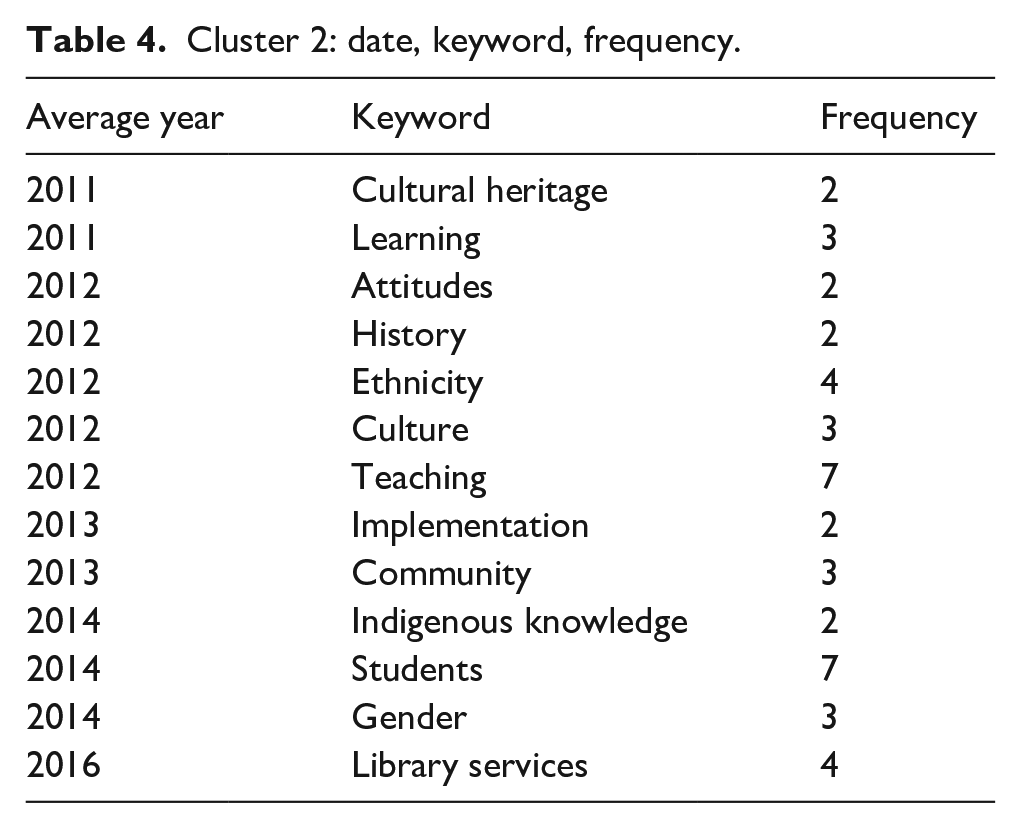
The purpose of teaching is to support learning, which is framed by the curriculum. Hence, while the curriculum repertoire provides a framework for learning, the teaching repertoire focuses on making that learning happen. There are early recommendations of community engagement through service learning (placements and internships), the Spectrum initiative (financial support and mentoring designed by ALA to change the workforce demographic), subject guides and reading and literacy interventions (Roy, 2001). These engagement opportunities are often mentioned as opportunities for LIS students to engage with a diverse community (Garwood-Houng and Blackburn, 2014; Montiel-Overall and Littletree, 2010), echoing calls from the curriculum repertoire to focus on the development of cultural competences (Blackburn, 2015; Caidi and Dali, 2015; VanScoy and Bright, 2017). The global nature of the profession is proposed as an opportunity to widen cultural competences to reflect the growth in international student numbers and international research collaboration (Saunders et al., 2013). There is some mention of a more critical approach, through analysis of documentation of library competences and LIS education, whereby the authors challenge whiteness in the profession (Brook et al., 2015; Cruz, 2019). While the involvement of students in their own learning, a natural element of Freire’s critical approach (Freire, 1970), starts to appear in efforts to decolonise curricula (Charles, 2019) there are overlaps with the critical repertoire which will be discussed later.
The diversity repertoire (2011–2020) mature
This third repertoire centres around diversity and cultural competence. The literature here is embedded in a particularly rich cluster of ideas/terms (see Table 5).
Cluster 3: date, keyword, frequency.
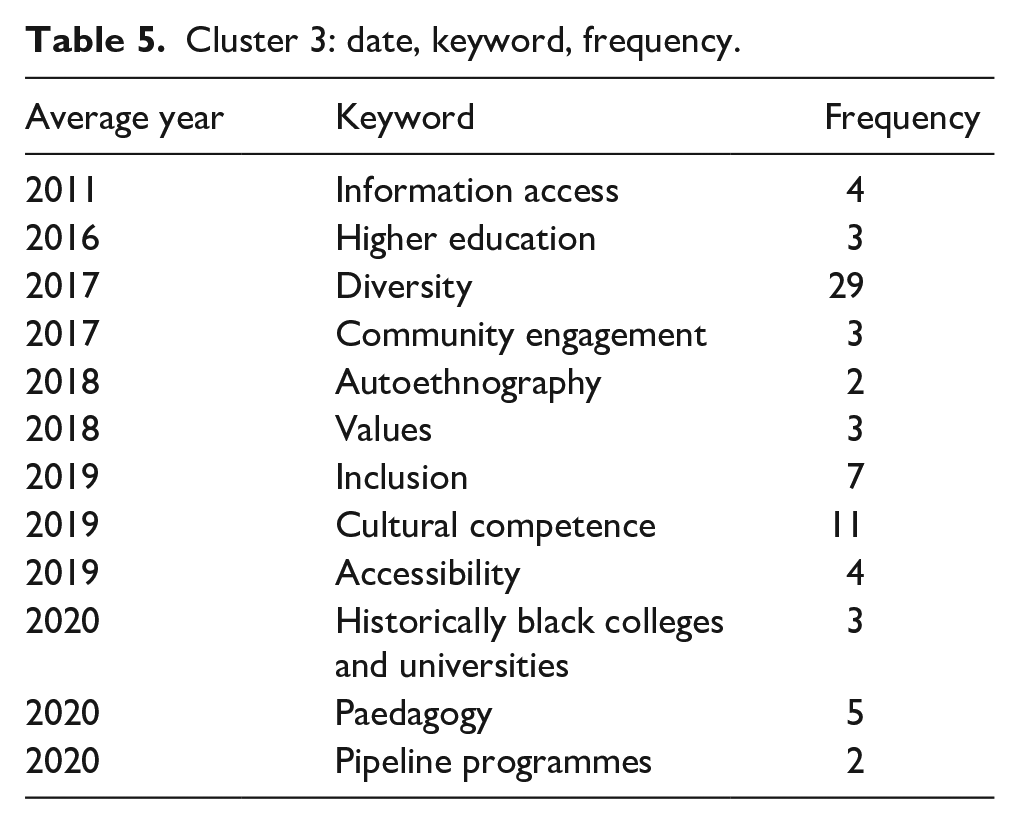
The term ‘diversity’ is used so broadly since 2010 that it does not help to tell us the focus of this repertoire. Looking more closely, this is where cultural competence, which is mentioned across repertoires, is mostly situated, along with inclusion and pedagogy. The adoption of cultural competence in librarianship is built upon work in social and caring professions such as teaching, social work, health (Overall, 2009) and centres on a multicultural approach which acknowledges and accepts cultural differences in a diverse community, enabling librarians to support underserved and excluded populations by developing expertise in understanding diverse cultures. In her seminal article, Overall (2009) develops a framework for cultural competence in librarianship based on a socially constructed notion of knowledge and culture. Her framework is based on the inter-linking of three domains: cognitive (self-examination), interpersonal (cultural appreciation) and environmental (contextual cultural knowledge), cultural competence reflecting the level of fulfilment of the domains (Overall, 2009: 191). If the framework is applied to LIS education and professional development, it could help to identify areas where efforts should be made in curriculum design or in-service training needs. The model suggests one can reach ‘full cultural competence’ or ‘cultural proficiency’ (Overall, 2009: 186), although cultural competence may be more realistically considered to be ever ongoing or in flux rather than completable. The benefits of adopting a cultural competence approach in Australia were considered by Blackburn (2015), who examined the US situation and found much of the implementation could be paralleled in her native Australia. In the UK, Birdi et al. (2012) considered the role of multiculturalism and social capital in the development of public library staff competences, finding that training in this area was limited, outdated and superficial, employers relying on “existing knowledge and skills’ (Birdi et al., 2012: 124), this being explored in more detail by Syed (2014). It seems that despite its widespread discussion in British health and education circles, cultural competence has barely reached the UK LIS literature. There is, however, a wealth of research publications into cultural competence in LIS which can be drawn from. The consistent work of Nicole Cooke on this topic demonstrates how the struggle to achieve diversity in LIS needs to be embedded into the foundations of the profession, its education and its practice, and is ongoing and continual (Cooke, 2013; Cooke et al., 2016; Cooke, 2014, 2017, 2019; Cooke and Colón-Aguirre, 2021; Cooke and Hill, 2017; Cooke and Jacobs, 2018; Cooke and Kitzie, 2021; Cooke and Sweeney, 2017). Her vital work reminds us of the importance of a holistic approach, that ‘LIS education must prepare aspiring professionals to work with and in all types of communities and environments’ (Cooke, 2017: 115), and that to do this we need to engage with the professional association, the curriculum, the standards, students, employers. Her work aims to embed diversity into librarianship ‘as an important and required component of LIS curricula and overall strategy for the betterment of the profession’ (Cooke, 2017: xii). However, she notes that ‘the field continues to not reflect, and perhaps not fully understand, the diverse and dynamic communities it serves’ (Cooke and Jacobs, 2018: 3). Alongside her work, diversity and cultural competence have been increasingly discussed, in relation to their inclusion in the LIS curriculum, in readings thus creating awareness (Villagran and Hawamdeh, 2020), developing best practice (Bashi̇r, 2020), preparing students to work with different cultural groups (Alajmi and Alshammari, 2020) and moving beyond the focus on collections and access and towards race and privilege (Chancellor et al., 2021), although ‘diversity was scarcely increasing in terms of the number of professionals, faculty, students, and resources’ (Poole et al., 2021: 260). It seems that despite scholarly effort in discussing marginalisation and well-intended interventions the impact of these on the make-up of the profession is so-far minimal (Caidi and Dali, 2017).
There are some tensions which should be noted here. If diversity in the population is greater than diversity within the profession, does cultural competence signal the profession surrendering to its own whiteness? Is cultural competence the easy way out of a tricky racial conundrum, where a more challenging but arguably more effective alternative would be to diversify the profession through ensuring staff represent all the protected characteristics? A recent update to the environmental domain of the framework was suggested, to address criticisms of ‘obscuring racism and power structures in librarianship and society’ (Blackburn, 2020: 229), and an alternative ‘Campus racial climate model’ (historical, psychological, behavioural, organisational and compositional dimensions) was suggested as a more critical alternative (Gollop and Hughes-Hassell, 2017: 54–55). In a recent review of Southeast Asian LIS schools, it was found that adopting cultural competences was ‘important and necessary to produce culturally competent and culturally sensitive graduates who can serve diverse communities and develop inclusive services for all users’ (Maestro et al., 2018: 111). In the UK the decolonisation of universities, courses and collections is gathering momentum. Applying decolonisation approaches to LIS education could make an impact. In the UK, Birdi (2021) proposes a three-step framework with associated readings (colonial legacy on university campuses, the curriculum and the profession). This framework could be used in curriculum development, supporting cultural competence work, and preparing library students for their professional involvement in decolonisation initiatives when they graduate.
In a wider setting, LIS education being informed by professional association policy (Hill, 2021), Blackburn (2015) recommends the inclusion of cultural competence as a key component of professional guidelines, LIS curriculum and practice, thus building on the ‘virtuous circle’ (Jaeger and Franklin, 2017; Jaeger et al., 2015) which fosters inclusion throughout the professional development and practice cycle. This is also highlighted by Caidi and Dali (2015) who recommend a holistic approach whereby LIS schools should consider the influence of their marketing and student recruitment on developing more diverse culture. Although Historically Black Colleges and Universities (HBCU) are particular to the US, there are lessons to be learned from their efforts in LIS education such as pathways and radical pedagogy (Cooke, 2019; Ndumu and Walker, 2021), while online professional training could be developed to be more inclusive (Moorefield-Lang et al., 2016).
The multiculturalism repertoire (2005–2016) mature
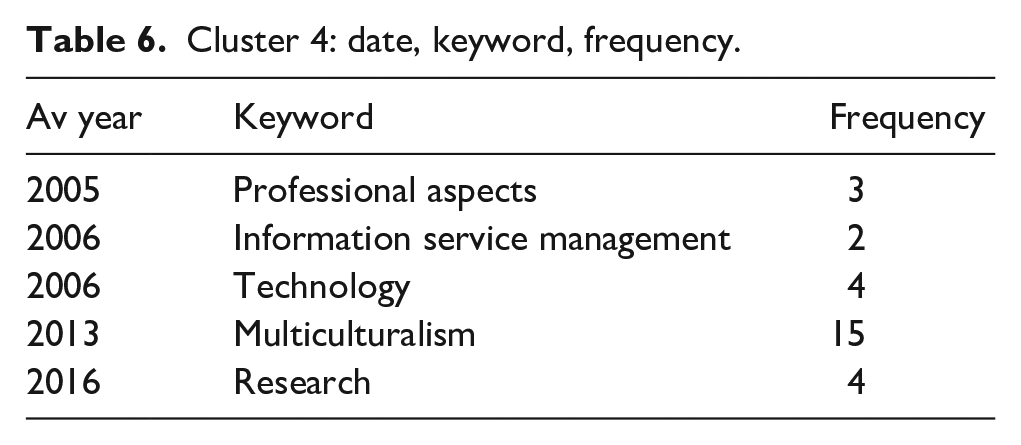
The fourth repertoire, multiculturalism (see Table 6), is another challenging concept. As shown in Figure 3 the term ‘multicultural’ came into popularity in the 1990s and has fallen in and out of use since then but can be found in various LIS texts and is consistently in use throughout this collection. More recent critical work discusses the challenging prospect that ‘the concept of multiculturalism and its enactment in practice may work to reinforce “whiteness” as normative: Casting the “multicultural” as the eternal “other”, even within a paradigm of celebration and “inclusion”’ (Boyd and McShane, 2021: 15).
Cluster 4: date, keyword, frequency.
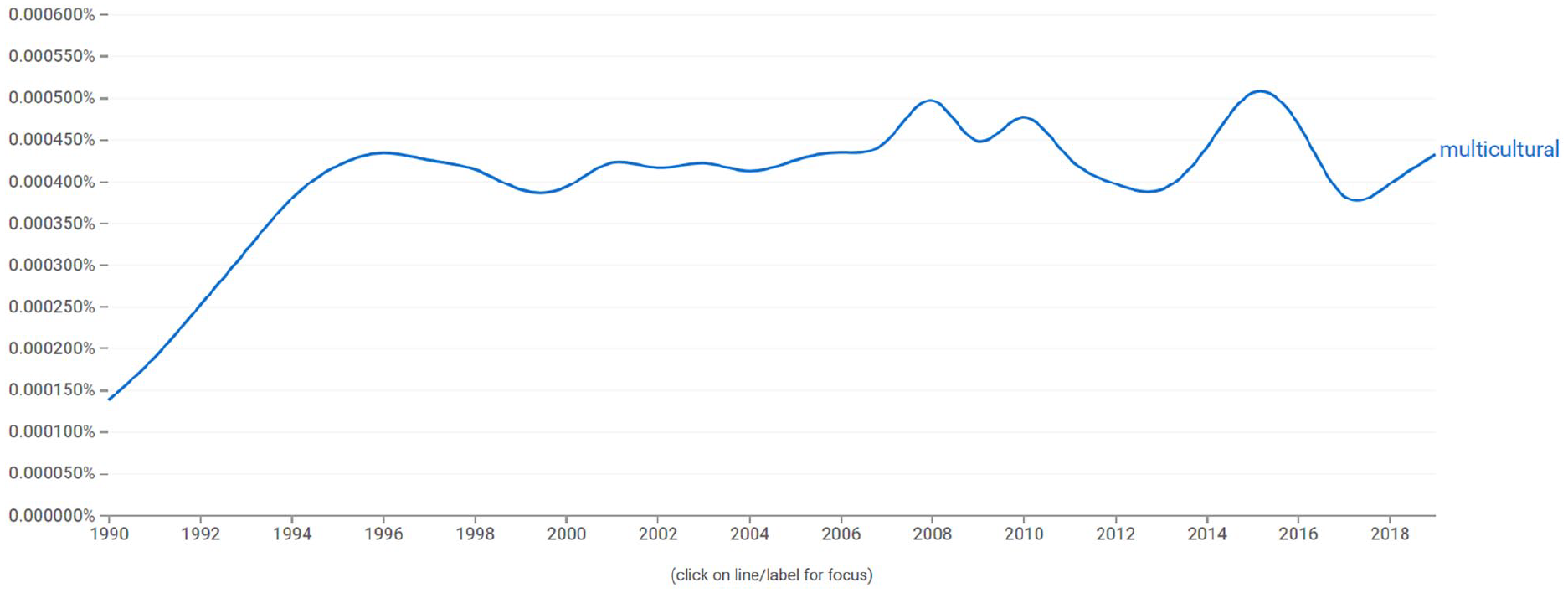
‘Multicultural’ use of term, Google ngram.
Pawley (2006) discusses the relationship between ‘race’ and ‘multiculturalism’, pointing out the commitment by ALA to diversity in their accreditation standards, which have been more embedded since then and in the current draft revision feature in Standards I, II, III, IV and V (ALA, 2022a) as well as in the Core Values (ALA, 2022b). She considers how ‘race’ is not widely used, ‘ethnicity’ being a preferred term (which ‘has usually been used to refer to long shared cultural experiences, religious practices, traditions, ancestry, language, dialect or national origins (e.g. African-Caribbean, Indian, Irish)’ (Law Society, 2022)), and notes these as being dimensions of multiculturalism, which also can include ‘race, gender, class, ethnicity, and sexuality’ (Pawley, 2006: 163), all of which have different histories. In the UK, the Equality Act 2010 considers race as including colour, ethnic or national origin or nationality, while ‘minoritised ethnic’ is the preferred term, ‘. . .as it recognises that individuals have been minoritised through social processes of power and domination rather than just existing in distinct statistical minorities. It also better reflects the fact that ethnic groups that are minorities in the UK are majorities in the global population’ (Law Society, 2022). This means that grouping them together under a non-polarising term such as diversity or multiculturalism means it is easier to avoid the more challenging aspects of, particularly, race. Using four paradigms of LIS (science/technology, business/management, mission/service and society/culture) (2006: 153), she recommends considering the extent of white privilege and how it obstructs the creation of non-white spaces. She goes on to identify five recommendations for LIS education: ‘dismantle the umbrella term “multiculturalism” and treat as separate entities its constituent components, especially race; make alliances with, and even recruit, faculty with a scholarly interest in race; set aside the faculty-as-expert model of curriculum development and practice in favor of the principles and methods of critical pedagogy; seek inspiration and ideas from other types of organization; and above all, prioritize race as a matter of urgency (just as LIS prioritized technology in the last two decades of the twentieth century)’. (Pawley, 2006: 153)
If we are to successfully challenge the orthodoxy and recognise the central part LIS education plays in the (potentially) virtuous circle then recognising the embedded nature of privilege and tackling this at through curriculum development this should develop students’ (and our own) abilities in challenging the lack of diversity in the profession (Alajmi and Alshammari, 2020; Chancellor et al., 2021; Singh and Rioux, 2021; Villagran and Hawamdeh, 2020). These recommendations can equally be applied to the British context, where multiculturalism sits within a history of imperialism and colonialism, and decolonisation efforts are widely discussed (Bergan and Harkavy, 2018; Bhambra et al., 2018; Crilly and Everitt, 2021; Jason and Heidi Safia, 2018; Sian, 2019).
The critical repertoire (2014–2018) emerging
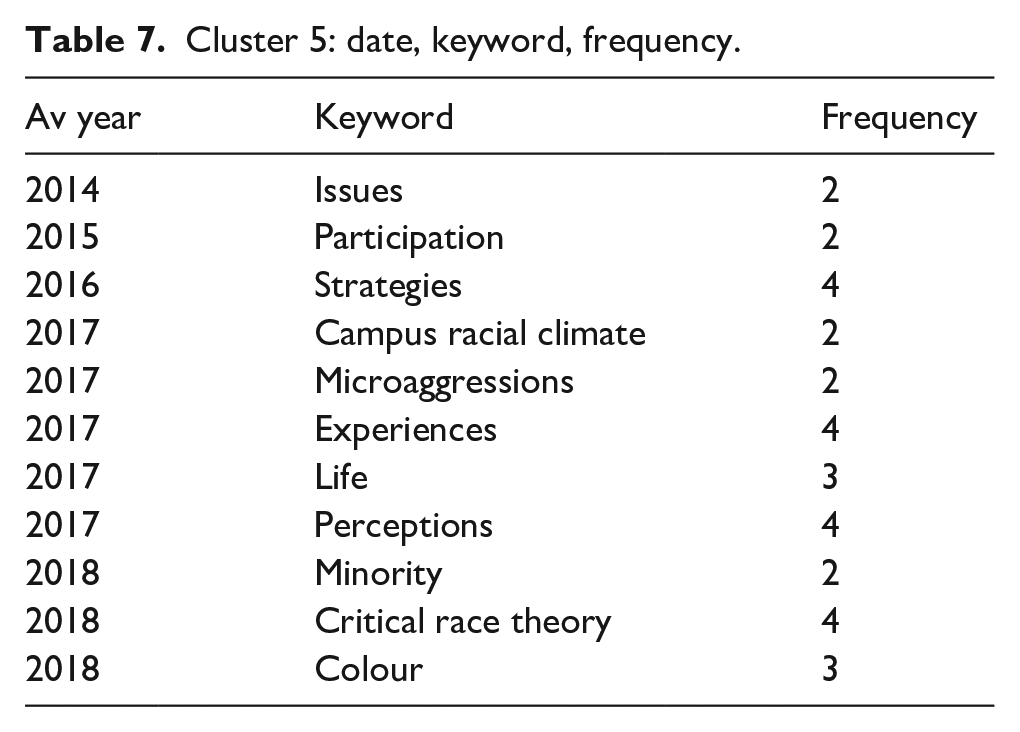
In this repertoire more precise language specific to critical thinking starts to appear (Table 7): campus racial climate, microaggressions, critical race theory have all been increasingly used since 1990 (Figure 4).
Cluster 5: date, keyword, frequency.
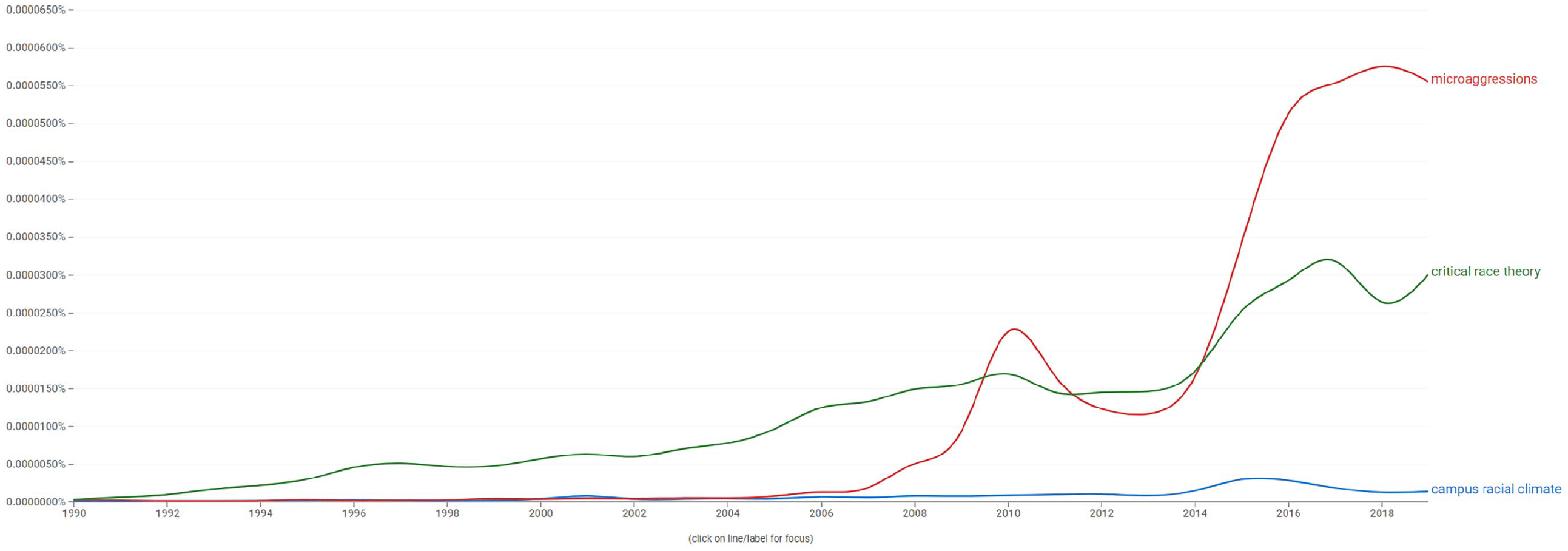
campus racial climate, microaggressions, critical race theory – use of term – Google ngram.
These terms demonstrate the development of a more sophisticated language use, which arises with the increasing complexity of ideas and conversations within the DEIA discourse. The term ‘microaggressions’ has leapt up in use recently, while critical race theory has had a more sustained increase, also steepening since 2014, the year in which Black Lives Matter started to gain global momentum. Since that period this specialist terminology has allowed more detailed discussion around anti-racism, leading to the development of ideas around efforts to adjust ‘the library profession’s relationship to difference: from one that attempts to minimise racial inequality by ignoring the significance of racial difference, to one that works in and through difference in all of its difficulty and creative potential’ (Brook et al., 2015: 277). This shift called for requires more than just interventions. It requires what Cooke et al. (2016) would call a ‘blended approach that emphasises culture; context; and critical thinking that extends across curricula, professional practice, and research’ (2016: 120). This requires a radical shift across the profession – from association through LIS school to the workplace – a holistic approach, or ‘a seismic societal shift in attitude’ (Chancellor et al., 2021: 183). It requires tools (Brook et al., 2015), training (Cooke et al., 2016), and a reassertion of the social justice role in all library sectors. It is vital to address the issues around microaggressions through reflection to develop culturally competent allies (Alabi, 2018; Arroyo-Ramirez et al., 2018). Such examples of awareness development would need to be set in a framework of cultural competence and introduced in both workplace training and in the LIS curriculum (Mestre, 2010), giving voice to librarians of colour (VanScoy and Bright, 2017). Teaching sophisticated terminology to students and practitioners will reinforce their understanding and enable them to discuss issues in more detail. This would be another step towards a shift in attitudes.
The librarian repertoire (2015–2020) emerging
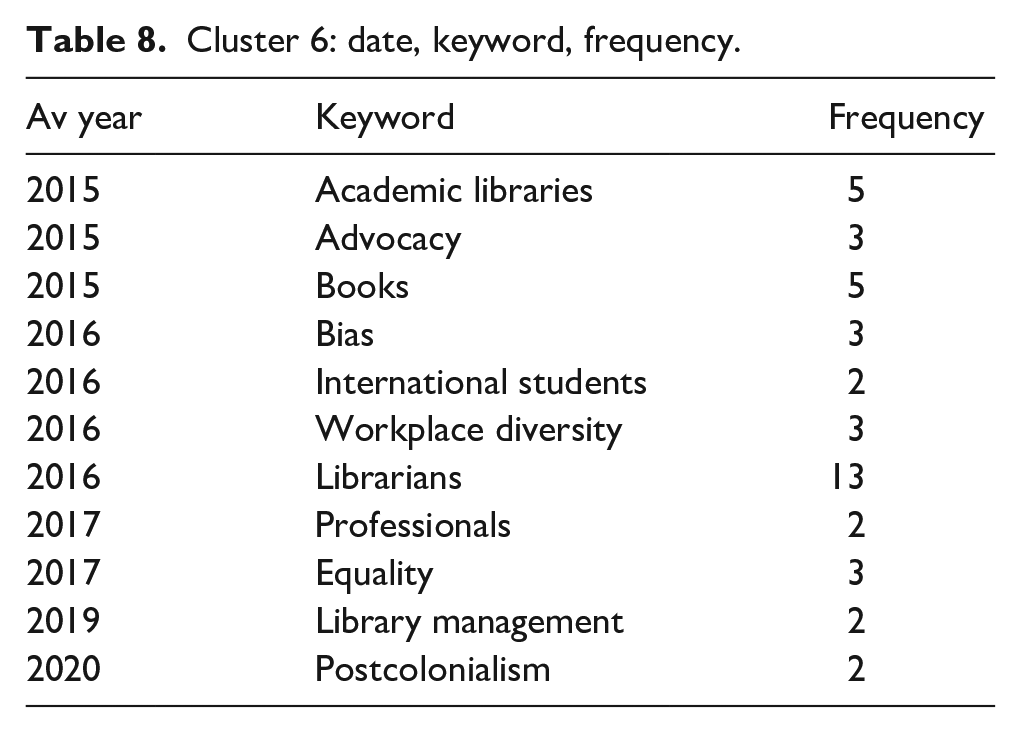
This apparently general repertoire (Table 8) puts the spotlight onto the practitioner librarian. If the virtuous cycle is to succeed then the workplace will need to adapt, enhance workplace diversity and advocate for equity. The skills taught in LIS school around cultural competence will then have impact in, for example, decolonisation of collections. Embedding this into the collection management curriculum would prepare students for projects in this area, such as the recent work on postcolonialism in the Bodleian Law Library in Oxford (Watson, 2019). These workplace projects recognise the role of cultural institutions in perpetuating imperialist and colonial attitudes as well as modern experiences of ‘gentrification-induced displacement’ (Welch, 2019: 241). Again, a holistic approach taking the wider view of structural oppression will be needed if we are to challenge these embedded structures (Brown et al., 2018), and that means identifying diversity in all its forms: ‘staffing, culture, collections, services and programming’ (Cruz, 2019: 226), learning from international practices (Saunders et al., 2013), applying these not only to interactions with other people but also with cultural knowledge and information (Onifade and Bridges, 2018). Villagran (2020) goes further, recommending evaluation of cultural intelligence or cultural quotient, drawing from business psychology. This cultural intelligence, defined as ‘an individual’s capability to function effectively in a new or unfamiliar environment across various cultural settings’ (Villagran, 2020: 286) would be particularly relevant, for example, for international or area studies librarians. Needless to say, if the profession were more diverse, colleagues and users would equally benefit. Attracting people with different cultural and language skills, for example, would contribute towards a more culturally expert profession (Caidi and Dali, 2015).
Cluster 6: date, keyword, frequency.
The social justice repertoire (2014–2020) emerging
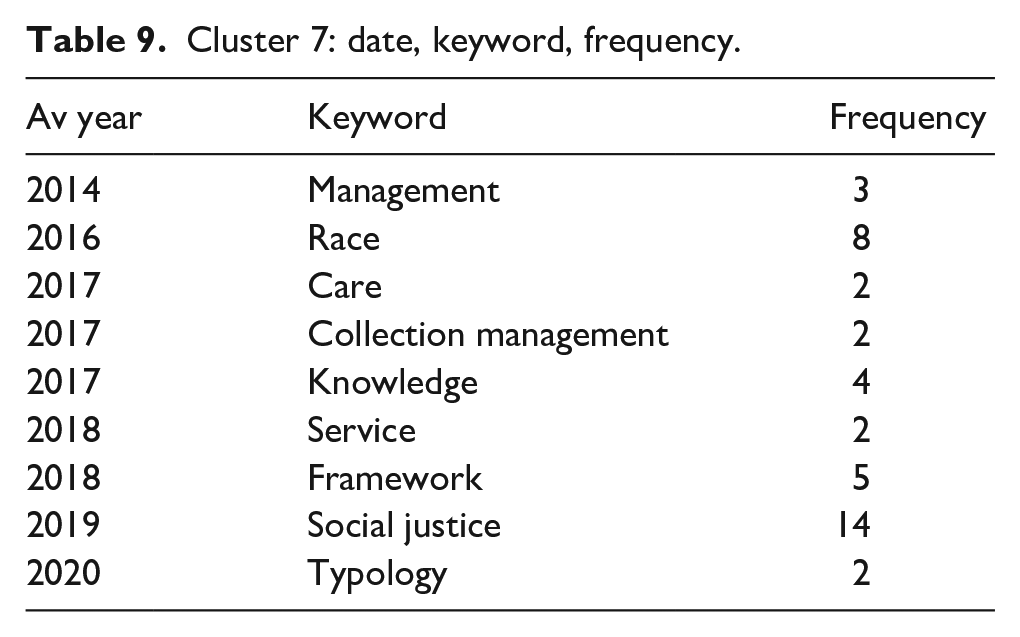
Here we consider the growth in the role of the term social justice, at the centre of this repertoire (Table 9). Again, there is consistent growth of this term since 1990 and this compares to a more gradual increase in the use of the term ‘cultural competence’ (Figure 5).
Cluster 7: date, keyword, frequency.
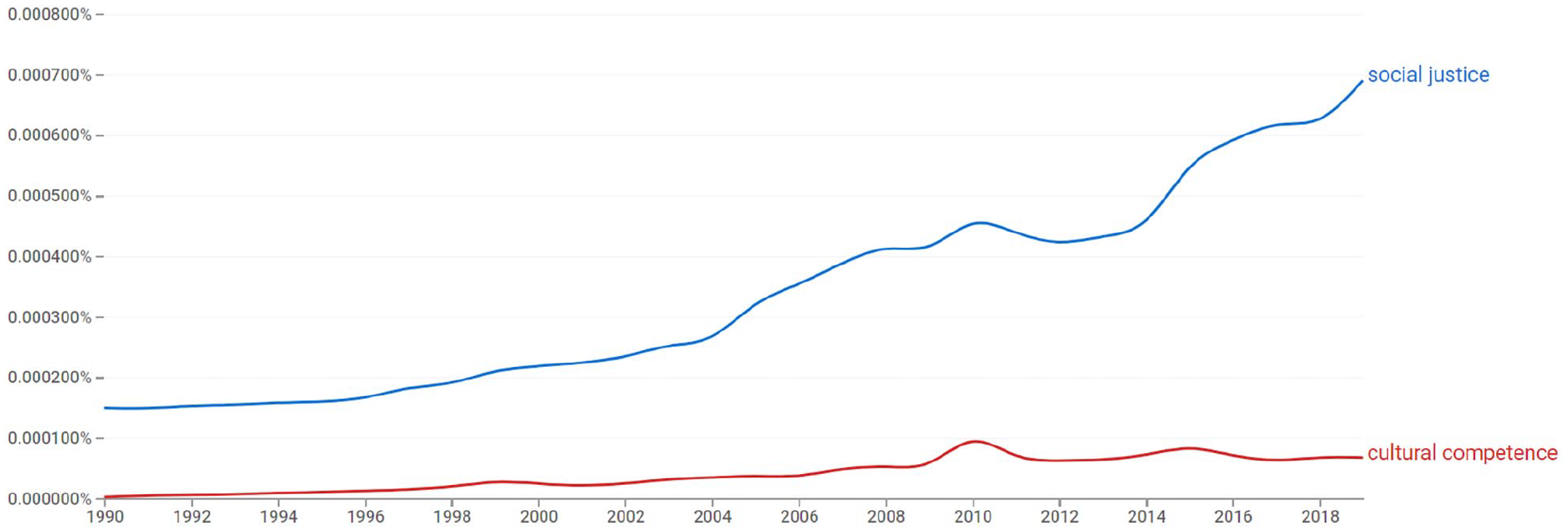
Google n-gram: social justice, cultural competence, 1990–2019.
There is a long association between what we know as social justice and library and information studies and the profession, going back to the 1970s. In the LIS literature collected here, social justice appears from 2015, in an influential special issue of Library Trends (volume 64, issue 2). In the introduction to that issue, Mehra describes the importance to LIS of ‘the spirit of the social justice mission, which is to design systems and services that are equitable, meaningful, and empowering for marginalised and disenfranchised people’ (Mehra, 2015: 181–182) and notes the increasing efforts in designing services to include underserved communities and the tensions raised in the critical literature between neutrality and social justice, leading to a call for more work on the development of social justice theory in LIS (Mehra et al., 2018). The underpinning of the ALA Core Values of Diversity and Social Responsibility to the LIS curriculum should encourage the discussion of social justice issues, where social justice is ‘a core manifestation of both social responsibility and diversity’ (Roberts and Noble, 2016: 513). Roberts and Noble (2016) go on to consider how faculty should be seen to model their commitment to these through their teaching and research through ‘praxis, action, advocacy’ (p. 514). Again, this shows how the virtuous circle (Jaeger et al., 2015) links the association, the curriculum, and professional practice. Social justice principles can also underpin work in transforming the LIS curriculum by being adopted as topics of study and as teaching and learning tools (e.g. critical reading groups) thus developing students’ cultural competence (Cooke et al., 2016). These tools, described as ‘experiential pedagogic approaches for facilitating critical self-reflection through coursework’ (Singh, 2020: 304) can include discussion, self-reflection and participatory activities. How these are delivered to the students can vary, although there seems to be a move towards specific electives in LIS programmes which focus on social justice topics (Singh and Rioux, 2021). However, there are also arguments that embedding within the core curriculum would have more impact and existing offers are not sufficiently visible (Jones, 2020). There seems to be general agreement in Singh and Rioux’s statement that ‘conversations about social justice must start with addressing race, privilege, and intersectionality and their implications for the LIS workforce, as well as developing strategies to bridge gaps in prevailing power imbalances in the LIS profession’ (Singh and Rioux, 2021: 214). This apparent growth in social justice work as ‘a sub-discipline in LIS’ (Winberry, 2021: 17) would in the longer term require support from research (Adkins, 2017).
This is challenging work, which needs to be sensitively managed. Faculty, students and workforce alike would require comprehensive training and self-development (Gibson and Hughes-Hassell, 2017). Underpinning social justice with cultural competence should contribute to more successful representative services (Mi and Zhang, 2017; Poole et al., 2021) and it has been suggested that a critical revision of the environmental domain of the cultural competence framework would empower professionals in their work in challenging embedded structural racism and marginalisation (Blackburn, 2020). Again, we see the need for a holistic approach to enable the virtuous circle.
The LIS education repertoire (2012–2018) emerging
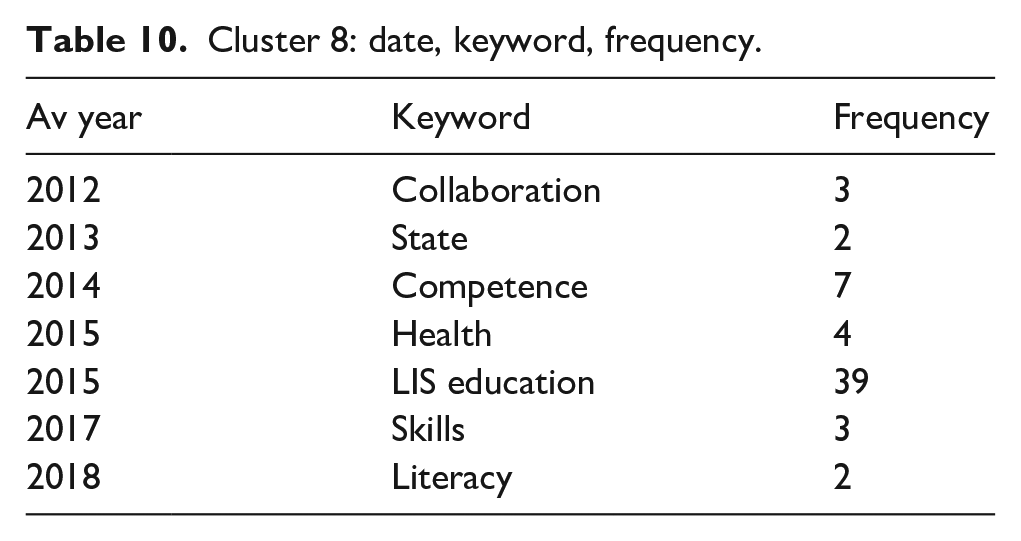
Much of the literature includes references to competences and skills (Table 10). However, LIS education should be more than a skills and competences training programme. It should contribute to the development of aware professionals who, through knowledge and understanding, are empowered to enact change in the pursuit of equitable service delivery. This also requires development of personal characteristics such as empathy, confidence and leadership. It means making social justice and cultural competence course content visible, including in learning outcomes (Jones, 2020), educating all in issues of marginalisation (Gibson and Hughes-Hassell, 2017), developing teaching skills enabling the delivery of inclusive services for all abilities (Moorefield-Lang et al., 2016). It means looking closely at how we have addressed issues of race and inequality (Chancellor et al., 2021) and making the effort to learn from colleagues with lived experience (Ndumu and Walker, 2021). It means recognising that there is work to be done (Maestro et al., 2018) and engaging with the wider profession (Moen et al., 2020). The virtuous circle once again appears: diverse populations need diverse librarians (Bonnet and McAlexander, 2012); diverse librarians need to offer diverse services and programmes (Cruz, 2019), diverse librarians need to be attracted to and developed within visibly culturally competent programmes (Lilley and Paringatai, 2014; Roy, 2017; Villagran and Hawamdeh, 2020; White, 2017) and they need to be taught by diverse faculty, who once were students. The support and commitment of the professional associations as agents of standards evaluation is paramount (Hill, 2021). Specialist groups such as the Association for Library Service to Children (ALSC), whose competences strongly focus on diversity and inclusion (ALSC, 2020), contribute to ‘strengthen the social justice fabric of the profession’ (Moreillon, 2015: 212). There are many important lessons in the US experience which have already been discussed in the context of Australia (Blackburn, 2014, 2017, 2020) and adopting cultural humility (Hurley et al., 2019) may strengthen our resolve in taking this difficult path.
Cluster 8: date, keyword, frequency.
The ethnic diversity repertoire (2014–2020) emerging
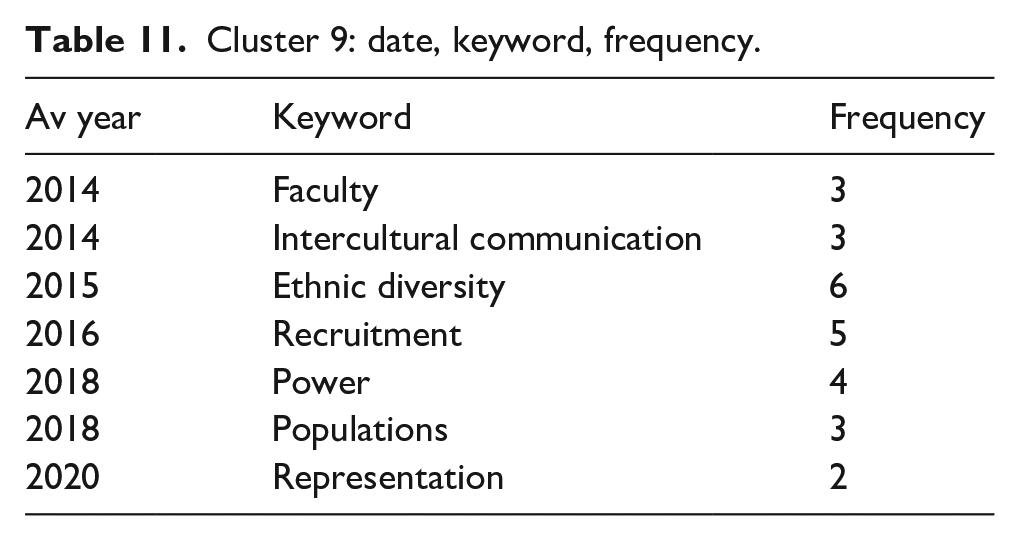
It is quite clear from the data that ethnic diversity is related to student as well as faculty and library staff recruitment (Table 11). This is rather a small cluster set but it is a reminder of a need to address this lack of diversity throughout the professional pathway. Going back further, Abdullahi (1992) set out suggestions for diverse student recruitment: ‘Establish a recruitment programme; develop a recruitment action plan; develop an effective awareness programme; develop a funding programme; develop support services to aid in student retention; engage in mentoring’ (pp. 308–309). These fundamental steps still apply today and are enacted across Higher Education in the UK to attract and support students in general. Applying them specifically to address lack of diversity requires a step-change, demonstrating a stronger commitment to Widening Participation (Fernando and Kenny, 2021) and diversity at Masters’ level through the mission and vision of the institution, the faculty, the department and the programme. Attracting more diverse students to LIS programmes means making the programme more attractive to the targeted individuals (Caidi and Dali, 2015) through the complex strands discussed above – making the commitment visible in the curriculum (Alajmi and Alshammari, 2020), engaging with professional practice and committing through a research agenda (Cooke et al., 2016; Subramaniam et al., 2012; Sung and Parboteeah, 2017) and removing financial barriers to study such as through the Spectrum initiative (ALA, 2018; Cooke, 2014) offers support to students from marginalised backgrounds. However, such well-meaning initiatives do not always reach the most deserving – the funding offered does not cover in-state fees, let alone out of state and the sixty places on offer support less than 1% of degrees (Jennings and Kinzer, 2022).
Cluster 9: date, keyword, frequency.
Summary
Unpicking the nine repertoires helps to identify not only concepts and ideas but also practices and interventions. The discussions above demonstrate the complexity of the literature, and thus the context of DEIA work over the last 20 years. While the source of much of this literature is North America, this variety of approaches can be used to influence similar work in the UK. Granted, the context varies and the experiences of marginalised people in LIS education are different, but the power structures which create and maintain those experiences (the professional association, the university and the faculty) and the curriculum which embodies these structures remain rooted in colonial and empirical histories. This enables at least the spirit of these ideas to translate across cultural and geographical boundaries.
What are the options for LIS education?
In this section ideas and practices from the repertoires are considered in the UK LIS education context to identify useful strategies relevant to the UK and suggestions on how these could be applied are made.
Returning to Gibson and Hughes-Hassell’s earlier quote (‘Know the issues, the history of the field, and the community; build students’ theoretical, practical, and ethical foundations; amplify voices of the marginalised; engage in public discourse’ (Gibson and Hughes-Hassell, 2017: 322–323), the ways in which these critical points could be enacted in the curriculum include recognising the wide set of protected characteristics, and including ‘class, socioeconomic status, religious and political views, nationality, and personality type’ (Adkins, 2017: 146) additional characteristics which are becoming increasingly visible and contested in 21st century society. Recognising them and designing them into the curriculum through Diversity by Design (Dali and Caidi, 2020) will show students that programme leads take the issues seriously. Classes covering diversity in knowledge organisation, and service accessibility are just two suggestions from the literature, there are many examples to be found which would be relevant to the specific nature and culture of a LIS programme in the UK which would be directly relevant to LIS students. Linking curriculum developments to engagement with communities through university-led Widening Participation (Fernando and Kenny, 2021) would also have the potential to contribute to recruitment and the development of student cultural competences, although bespoke methods specific to the library and information professions, tying in with Summer Reading Challenges or local schools activities would also be worthy of consideration.
The teaching repertoire identifies the value of service learning, placements or internships in terms of wider engagement and expands the scope still further to include international research collaborations and recognising the benefit of immediate access to international students in terms of cultural competences. Despite reservations made earlier, the ALA Spectrum Scholarship Programme could act as a model for a revived Encompass project in the UK, led by CILIP and supported by accredited learning providers and employers. There is a barrier in the UK professional pathway, which is the Masters’ itself. CILIP-accredited programmes are available in various regions in the UK, and online and in-person offers attempt to include differing learning needs. However, fees for UK Masters’ in general are high and despite efforts to keep these lower to reflect the lower earning capacity of graduates, and the recent introduction of the £11,836 Post Graduate Loan (https://www.gov.uk/masters-loan/what-youll-get), this still does not cover living expenses and the reduction in income due to part-time or even full time study. The content-rich diversity repertoire calls for a holistic approach, which would link together CILIP, accredited learning partners, QAA, students, and employers in discussions on how the Professional Knowledge and Skills Base (CILIP, 2013) would more fully reflect the diversity we need to develop. This could then enable the virtuous circle, feeding informed and diverse students back into the professional pathway and as faculty. Awareness would move beyond collections and access towards more fundamental issues around race and privilege, while specifically British approaches such as Birdi’s (2021) three-step framework and Jimenez et al. (2022) decolonial lens could inform curriculum development, cultural competence work and professional development. The embedded nature of privilege, which informs everything, from classification and collection management to recruitment and marketing, would be tackled in the curriculum, recognising the impact of the multiculturalism repertoire, founded on decolonisation. The critical repertoire embeds social justice across library sectors, and through its terminology encourages a deeper engagement with challenging topics, and gives voice to librarians of colour, which could enable Cooke et al.’s (2016) blended approach to link to the virtuous circle, triggering a new stage in the evolution of the profession.
Meanwhile, the librarian repertoire notes the need for new skills for librarians involved in decolonising collections, which could be embedded into collection management courses, alongside identifying diversity across the profession, services, collections and culture (Cruz, 2019) and developing cultural intelligence alongside cultural competence by attracting staff and students with complementary cultural experiences and language skills. Decolonisation efforts in UK Higher Education libraries are widening, and funding is available to support work in this. Linking to these efforts through the curriculum, teaching LIS students about DEIA and linking these classes to actual decolonisation efforts in their local context will reinforce the value of the efforts and prepare the students to engage in these projects in their professional lives. The social justice repertoire builds on this, recommending a development of social justice theory in LIS, which would underpin service design. There is an important role for faculty, as researchers and teachers, modelling their commitment, and the use of social justice tools such as critical reading groups, discussion, reflection and participation helps to underpin a social justice approach with cultural competence ideals. The UK practitioner-led Critical Approaches to Libraries Conference (CALC) (https://www.calc.coventry.domains/8-2/) welcomes student contributions, and the opportunities for LIS school-led webinars celebrating student work are limitless. Students, the workforce, and faculty as well as employers will need education and continuing professional development to maintain this evolutionary process. Moving onto the LIS education repertoire, we find the importance of so-called soft skills (empathy, confidence, leadership) as vital to the shift, and these would be integrated into the curriculum as well as being supported in continuing professional development – peer learning could help to give voice to marginalised communities. The PKSB includes some of these ‘generic skills’ (CILIP, 2013), they could be revised to include more DEIA-related content. Finally, the ethnic diversity repertoire notes the importance of recruitment strategies (faculty, professional services as well as students) and underscores the vital importance of making a commitment to DEIA visible in the mission, the vision, the strategy and the curriculum. Although UK universities do not require a strict adherence to the messaging of mission and vision that should not prevent LIS schools in making their own statements in public-facing websites to demonstrate their commitment to inclusive teaching.
Conclusion
This paper has set out to draw together various ideas and practices which have been implemented and reported in academic LIS research literature and identify examples which help to open up LIS education. The LIS curriculum and surrounding teaching and learning activities are an essential part of a professional pathway, the virtuous circle and a holistic approach is the only way to change the lack of representation of marginalised populations in the profession. This requires a whole-profession commitment, and a whole-institution commitment. If the ultimate aim is the decolonisation of the LIS profession, then the university, the department, the LIS programme, the modules, the reading lists all need to be reviewed. Commitment needs to be expressed in policies, mission and vision statements, website module descriptions; and it needs to be seen to be real commitment through collaboration with students and under-represented professionals. The professional association and employers have a crucial role to play here as accreditors, representatives and as the public face of the profession, while employers need to demonstrate their commitment through action and support. LIS programmes should recruit students who reflect wider communities through outreach and scholarships and should commit to teaching students to serve communities they do not reflect, adapting their curriculum to this end by embedding into core modules as well as developing specific optional modules, re-examining their reading lists, and celebrating student work on equity, diversity and inclusion issues. Faculty need to invite guest speakers from marginalised groups, focus their research on inclusion, and encourage PhD students from wider communities.
These changes will not be easy fixes and will most probably require a generational shift. Of course, there are many examples in the UK of efforts to reduce the gaps. These should be celebrated more widely – there is barely any UK research into diversity, equity, inclusion and access in LIS education to date. It is the hope of this author that the profession – from association through employers to workforce, students, faculty and researchers – builds on work already done in the shadows to bring change through LIS education reform. It is our collective responsibility.
Footnotes
Appendix
Keyword adoption over time.
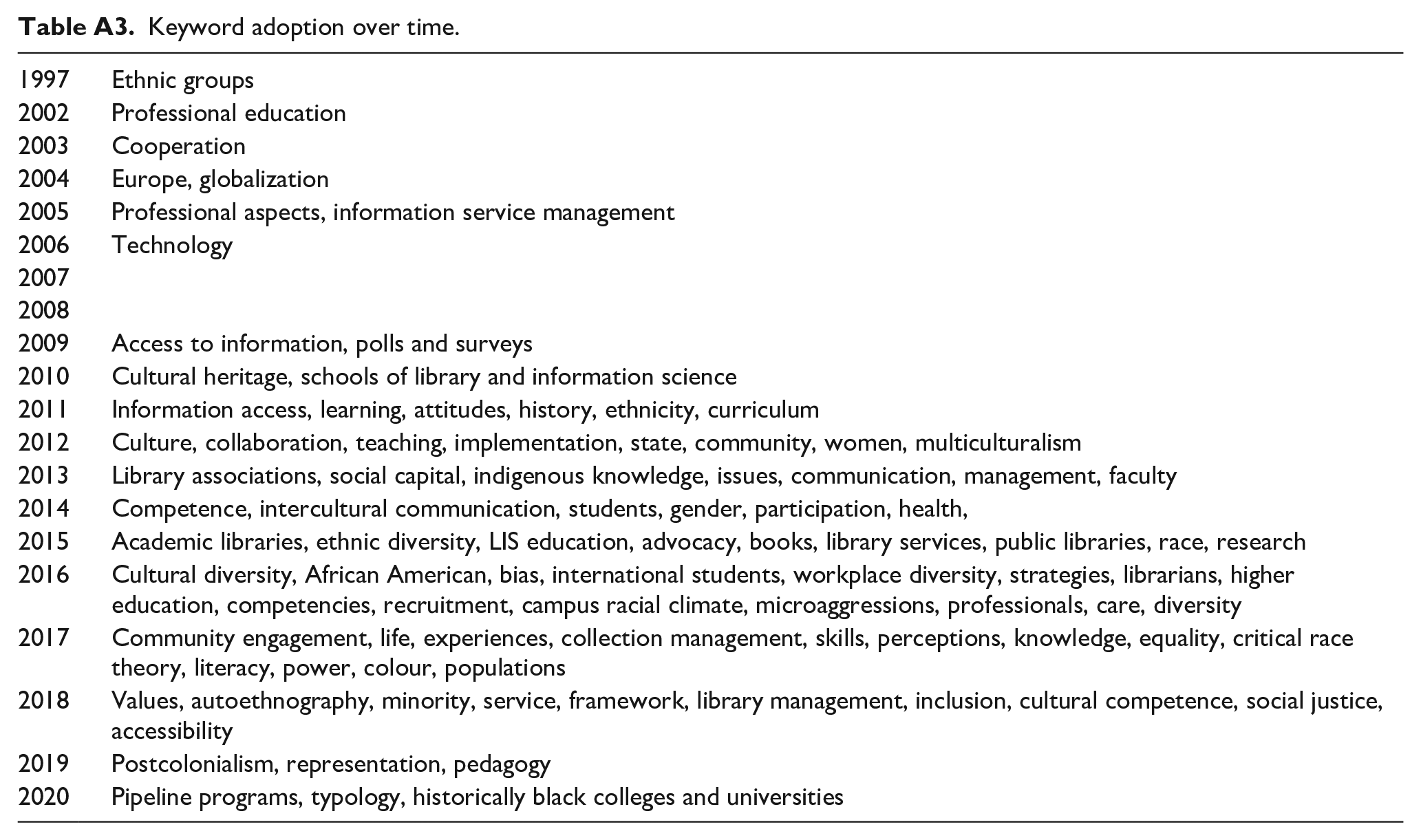
| 1997 | Ethnic groups |
| 2002 | Professional education |
| 2003 | Cooperation |
| 2004 | Europe, globalization |
| 2005 | Professional aspects, information service management |
| 2006 | Technology |
| 2007 | |
| 2008 | |
| 2009 | Access to information, polls and surveys |
| 2010 | Cultural heritage, schools of library and information science |
| 2011 | Information access, learning, attitudes, history, ethnicity, curriculum |
| 2012 | Culture, collaboration, teaching, implementation, state, community, women, multiculturalism |
| 2013 | Library associations, social capital, indigenous knowledge, issues, communication, management, faculty |
| 2014 | Competence, intercultural communication, students, gender, participation, health, |
| 2015 | Academic libraries, ethnic diversity, LIS education, advocacy, books, library services, public libraries, race, research |
| 2016 | Cultural diversity, African American, bias, international students, workplace diversity, strategies, librarians, higher education, competencies, recruitment, campus racial climate, microaggressions, professionals, care, diversity |
| 2017 | Community engagement, life, experiences, collection management, skills, perceptions, knowledge, equality, critical race theory, literacy, power, colour, populations |
| 2018 | Values, autoethnography, minority, service, framework, library management, inclusion, cultural competence, social justice, accessibility |
| 2019 | Postcolonialism, representation, pedagogy |
| 2020 | Pipeline programs, typology, historically black colleges and universities |
Acknowledgements
The author is grateful for initial feedback received during the writing of this paper from Dr Nancy Stevenson and Dr Alison Hicks and for the detailed and thoughtful comments from the reviewers of the first draft.
Author’s note
I am writing this paper as a white heterosexual cisgendered middle-aged middle-class man with a chronic disability and I recognise the privileged status I have as an Associate Professor in a large highly regarded university in London, teaching on a well-respected and long-lived Library and information studies (LIS) programme. My hope is that through this work I am using my access to power to challenge what I see as long-suffered inequalities in the profession. I accept that my views are formed through a lifetime of privilege, which has blinded me to these and other inequities and I appreciate that the lens I look through is distorted by my privilege and by my conscious and unconscious views and aspirations. The act of researching and writing this article has enabled me to self-reflect and become more aware of the fundamental importance of this topic in LIS education. I want the MA LIS at University College London (UCL) to become more equitable, diverse and inclusive, contributing to the development of a more inclusive profession, and I hope that this work impacts on the programme, and on others in the UK.
Funding
The author(s) received no financial support for the research, authorship, and/or publication of this article.
