




Abstract
Equity, diversity and inclusion (EDI) practices in the library and information professions can be linked to the curriculum of the professional qualification, which plays an important role in preparing students for practice. The aim of this small, non-generalisable survey of recent graduates at one UK library school, a collaboration between two academic staff and two current and recent students, was to identify how the curriculum could better prepare graduates to address EDI issues in their workplace. Approaches for cultivating effective pedagogical strategies included the importance of recognising and exploring personal identity; group work and community building and embedding an EDI ethos, approach and method within the curriculum. Important gaps relating to the preparation of students for EDI practices that were noted included management and leadership; fostering learner positionality and addressing the broad scope of EDI work including all protected and other characteristics, alongside tensions between individual and structural approaches to change.
1. Introduction
Equity, diversity and inclusion (EDI) is a complex term that is being increasingly scrutinised within Library and Information Studies (LIS). As Hudson [1, p. 6] points out, this ‘maddeningly vague’ term encompasses a variety of coded assumptions about the state and focus of anti-discriminatory practice in the field. The most prominent focus of scholarly literature in this area is often statistical or demographic representation as well as the development of individual cultural competence as the means to achieve an inclusive working environment. However, this narrative also risks positioning diversity as a problem to be ‘solved’ while failing to challenge the ‘systemic character of racial domination’ [1, p. 17], including the role that ‘white-centred thinking’ plays in perpetuating privilege and inequality [2].
Hudson [1, p. 26] goes on to state that challenges to the dominant LIS diversity narrative require ‘the purposeful creation of spaces within which such work can be undertaken in an ongoing way’. One such space might be the LIS school, which has both the capacity to contribute to the ongoing theorisation of library diversity work and the platform to challenge many of the structural issues that limit current critical approaches to these issues. This article, which is co-written by two members of academic staff, a current student and a recent graduate of an MA programme in LIS, is an initial attempt to explore these ideas, including what role the LIS school can play in addressing the structural issues that limit anti-discrimination theory and practice within the profession today. To this end, the research question that this article explores is:
RQ1. How could the LIS curriculum better prepare graduates [from the XXX institution] to address EDI issues in their workplace?
This question is explored through surveying historic and recent graduates of the MA/PG Diploma in LIS at University College, London (UCL) about how their studies supported them in EDI or anti-discriminatory activities as well as the gaps that they noticed within their educational provision and subsequent career. The goal of this work is to reflect on and, ultimately, take a local programmatic approach to the redesign of a more socially justice focused graduate-level curriculum. This is particularly important given that our MA/PG Diploma programme, which has been offered as part of the first British School of Librarianship since 1919, is taught in one of the world’s most multicultural cities. In addition, while our educational offering has long been recognised for its excellence preparing students for more traditional elements of librarianship, it has not been until recently that work has started to explore how to prepare graduates for critical approaches to information challenges.
The decision to frame our study in terms of EDI formed one of the most complex challenges of the entire research design. While we recognise the pitfalls of this term, as outlined by Hudson [1], it is also the term that is most used in the United Kingdom, where this study took place. However, acknowledging that there are many understandings of what is meant by EDI, we defined this concept for survey participants as ‘a term to refer to the ways in which inclusion and equitable treatment of diverse individuals are practiced and promoted within an organisation’. Our definition of EDI further positions these efforts as designed to question structural heterogeneity in the workplace and combat the exclusion and marginalisation experienced by diverse employees. We also draw attention to how, under the UK Equality Act of 2010, protected characteristics may refer to age, disability, gender reassignment, marriage and civil partnership, pregnancy and maternity, race, religion or belief, sex and sexual orientation.
2. Literature review
2.1. Library staff experiences of EDI challenges in the UK workplace
The UK workplace is characterised by numerous EDI-related challenges. Although EDI work embraces complexly intertwined intersectional identities, the most widespread EDI initiatives in UK libraries have put emphasis on addressing the challenges of racial and ethnic inequalities in higher education, particularly responding to the rise of student activism centred around decolonising universities. Within this social movement, the racially homogeneous make-up of the UK library workforce (commonly summarised as 96.7% white) came to be critiqued [3,4]. In the literature discussing ethnic diversity issues and the effect of marginalisation experienced by library workers and LIS students of colour [3,5–7], there are conflicts between personal accounts and institutional discourse, and the mechanism of such tension has been elucidated by Ahmed [8] in her influential work On Being Included. In actuality, the lack of ethnic diversity in the UK library sector has been raised as an issue since the 1970s [9–14]. With the process of advancing equity being slow and labour-intensive, EDI work has been noted as taking its toll on individual librarians speaking up from their lived experiences of inequalities. In this context, diversity initiatives implemented by institutions – including employers, professional organisations and LIS faculties – can be seen as ‘performative’ [15], failing to earn the full trust of librarians of colour who are frequently pressurised to confront tokenisation, appropriation and commodification of their labour.
While US librarians of colour have disseminated their critical insights into equity through academic publications [16–19], such practice is still uncommon in the UK, excepting Narrative Expansions edited by Crilly and Everitt [20]. For UK librarians of colour, key knowledge production sites have been personal conversations; closed in-person conferences [21–23]; newsletters [3,4]; blogposts [7,15]; online events [24] and Twitter threads. The use of these platforms, on one hand, helps minoritised librarians to carefully manage their sense of privacy, safety and community, for which reason links to specific Twitter pages are not cited here. However, on the other hand, with their voices unrecorded or scattered, there came to exist a gap, resulting in Ishaq and Hussain [25, p. 336] stating: Despite recent growth in studies on the work experiences of BAME staff in UK public sector organisations, literature in this field remains relatively limited (…). In relation to the library sector, studies in this area are even more sparse (…).
It is furthermore important to note that, as has been examined by Arkle [26], the above structure of marginalisation similarly affects the workplace experience of librarians with other minoritised identities, relating to (but not limited to) class, disability, gender and sexuality. In addressing the challenges and needs of these groups, North American research outputs are again more widely disseminated [27–32], but UK perspectives can also be found, if searched beyond the boundaries of traditional academic LIS publications [33–35].
2.2. Changing role of LIS education
LIS education has traditionally formed one of the most prominent ways that librarians have been prepared for the challenges of the workplace in the United Kingdom. Within this context, professional education has been tightly woven with the work of the Chartered Institute of Library and Information Professionals (CILIP), which became a key library and information association in 2002. In the same year as CILIP’s creation, Enser [36] identified that the vocational aspects of LIS were one of the driving factors in the continued popularity of accreditation with universities being eager to engage with professional bodies as a way of enhancing interest in their course and its graduates. However, the growth of accreditation initiatives also heralded the development of a marked tension between the academic and vocational aspects of LIS. Weller and Haider [37] expressed that the move towards professional degrees and a decreased emphasis on academic research and teaching exacerbated a pre-existing lack of cohesion in LIS and widened the gap between information research and the information profession. Conversely, Berry [38] stated in 2009 that his students bemoaned the dearth of graduate jobs and desired a stronger focus on career placement and guidance in their university courses. These are issues not dissimilar to those of the present day, as students and recent graduates navigate the fallout of the COVID-19 pandemic and ensuing cost of living crisis in the United Kingdom.
To this day, CILIP mandates that accredited courses must afford students both a grounding in research practices and the opportunity to take part in placement or training activities. Enshrining practical experience in accreditation requirements acknowledges the changes undergone by the field since the Information Age began. As early as 1987, Brittain identified that the crop of new jobs relating to Information Technology and Information Management was largely taken up by non-LIS graduates, when LIS graduates themselves could just as easily take them on [39]. It therefore became the task of LIS degrees to prepare students for opportunities that would not be considered traditional librarianship but nevertheless required a similar gamut of skills. Twenty-two years later, Johnson [40] noted that the biggest challenge facing LIS programmes was the need to integrate a more overt focus on technology into their educational offer, as evidenced by the small proportion of LIS graduates in IT roles. However, while the shifting focus of LIS education towards equipping students with the experiences and skills they need to thrive in the workplace is well-evidenced, an emphasis on preparing students to face EDI challenges was yet to become part of this ethos.
2.3. EDI and the LIS curriculum
Recent years have sparked considerably more research into EDI and the LIS curriculum. In the United States, the perception that LIS students were unprepared for approaching questions of diversity meant that the 2010s saw the growth of literature advocating for more research into EDI issues as well as involvement with institutions that support under-represented groups [41]. Authors also suggested making the focus on EDI clearer within course descriptors given that the topic was often well received by students [42]. Other early work proposed more concrete approaches, including Mehra et al.’s [43, p. 46] ‘Framework for Action’, which recommended focusing on attitudes and behaviours as well as curriculum and representation interventions. Another initial proposal came from Montiel-Overall [44, p. 261], who identified service learning as the means to ‘transform (EDI-focused) course content from theory to reality’. Most recently, Winn et al. [45] advocated for ‘an intentional, structured, and empathy-driven approach’ [46, p. 3] to curriculum reform, with a focus on developing faculty communications skills, embedding EDI across the curriculum and nurturing safe spaces for discussion. US educators have also led efforts to reimagine EDI-focused LIS education through the lens of critical race theory (CRT), arguing that a failure to do so limits LIS graduates’ ability to identify and challenge racism, whether this exploitation is implemented or experienced by them [47,48].
This period also saw a growing emphasis on EDI within professional accreditation standards. At a global level, International Federation of Library Associations and Institutions (IFLA) identifies EDI as a Foundational Knowledge Area, recommending that it ‘should drive programme development, including decolonisation and indigenisation of content and practice’ [49, p. 5]. The proposed revisions to the ALA’s [50] Standards for Accreditation further embed EDI within LIS education, including in planning and infrastructure as well as the curriculum. By 2018, then, Poole et al. [51, p. 260] judged that stakeholders had achieved ‘scattered and modest successes’ in strengthening EDI learning and teaching. Others, however, maintain that the presence and effectiveness of diversity initiatives still varies across different library school programmes, depending on instructors, students and curricula [45,52–54]. This is certainly the case within the United Kingdom, which has yet to develop a substantial community, network and body of knowledge centred around EDI. It is particularly notable that EDI has a minimal presence in CILIP’s [55] Professional Knowledge and Skills Base (PKSB) with equality (rather than equity) and diversity only receiving cursory mentions as part of an overview of guiding ethical principles (also see the limited treatment in the QAA [56]). The uncritical emphasis that LIS accreditation standards place upon unpaid work placements, which may further perpetuate inequalities in the field [57], provides another example of CILIP’s lack of engagement with questions of EDI. In addition, very little empirical research has been published on this topic with Birdi [58], who explores the potential for education reform through the lens of decolonisation and Inskip [59], whose proposed holistic review of institution, department, programme and course content as well as engagement with professional associations and employers aligns with Jaeger et al.’s [60] ‘virtuous circle’ approach, providing two of the few exceptions.
2.4. Self-directed and employer-driven continuing professional development
Another prominent way in which UK libraries have been prepared for the workplace is through self-directed and employer-driven learning opportunities. The need to keep up with changes in the profession, which may include working in different environments or with new methods and equipment [61, p. 34], means that these forms of continuing professional development (CPD) have always played an important role within librarianship. Frequently associated with the need to adapt to technological advances [61,62] as well as, more recently, teaching responsibilities [63], education schemes have also been linked to a perceived lack of skills in Library and Information Science (LIS) graduates [64]. The need for continuing education has further been connected to generational change, including expected retirements from the profession as well as a ‘talent squeeze’ wherein the skills of newer generations of librarians start to overtake that of the middle generations [65]. However, while the field may agree on the need for professional development, there is little consensus about the best means to achieve this with Robinson and Glosiene [62, p. 3] noting that CPD can be provided by ‘national libraries, academic departments, professional organisations, government agencies, special interest groups, and commercial providers’. Within the United Kingdom, it has been CILIP that has been at the forefront of many initiatives to support CPD in the workplace. While their chartership and fellowship schemes have been critiqued for being ‘light-touch’ [66, p. 28], CILIP’s support for qualifications nonetheless ensures that ongoing education is embedded within professional discourse.
At the same time, there has been little focus on professional EDI initiatives within LIS literature, with much of the research that exists emanating from the United States rather than the United Kingdom. In addition, existing initiatives, which are often aligned with the American Libraries Association (ALA) [67] Core Values of Librarianship as well as the Association of College and Research Libraries (ACRL)’s Diversity Standards [68], tend to be outward facing, focusing on recruitment strategies [69–73], residency schemes [74,75] and broader outreach programming [72,76]. In contrast, little detail is provided about EDI-related staff development opportunities despite the value that is accorded to the promotion of ‘ethnic/cultural sensitivity in the workplace’ [77, p. 1; also see [78]] and the reported widespread presence of training schemes [79]. Andrade and Rivera [69], for example, provide a wealth of information about the diversity climate studies carried out at the University of Arizona, but stop short of presenting specifics about the subsequent series of staff workshops. Similarly, Simmons-Welburn [80] limits herself to merely suggesting that Diversity Dialogue Groups would be useful in a library setting. In contrast, more concrete specifics are provided by Lazzaro et al. [81], whose library-staff trainings centre on exploring intersectional power differences. Designed to ‘forge authentic connections’ [81, p. 332] within the library community, these workshops stand out for linking training to staff needs rather than merely staff-patron relationships [82].
2.5. Summary
The UK workplace faces numerous EDI-focused challenges given historic and ongoing inequities. To date, however, research into the design of appropriate educational programming has been limited, both in terms of workplace training and LIS education. These gaps and oversights provide a further impetus for this article.
3. Methodology
This study employed a descriptive survey methodology to examine how to better prepare LIS graduates from UCL to address EDI issues in the workplace. Specifically, data were gathered through an online questionnaire method, which was seen to be the most appropriate way to reach a large and geographically dispersed community. The sensitivity of this topic, as well as the make-up of the research team, which included lecturers who have been responsible for course content as well as ex-peers, meant that a questionnaire method was also seen to form a suitable way to ensure anonymity and confidentiality.
The questionnaire was hosted on Qualtrics and consisted of nine questions (see Appendix 1). After requesting graduation date and geographic demographics, the questionnaire asked a series of closed, scale and open-ended questions related to (1) the inclusion of EDI topics within participants’ MA/PGDip education at XXX institution and (2) EDI-related activities that these graduates have since engaged with (or are currently engaging in) at the workplace. The study provided a definition of EDI to ensure an initial shared basis for participant responses.
The study employed a purposive sampling method and was sent via email to graduates of the MA or PG Diploma Programme in LIS at UCL. To ensure further confidentiality related to the study, the questionnaire was sent through the Alumni Relations Office, who maintain contact details for alumni who have agreed to receive communications. Reliable statistics on total number of graduates from our programmes are not currently available, but this approach meant the questionnaire was sent to a total of 733 alumni. The questionnaire was open for a total of 6 weeks. Responses to open-ended questions were thematically coded using NVIVO software. Each questionnaire response was coded individually by members of the research team, who later came together to elaborate the final coding structure.
Limitations to the study include the focus on graduates from one UK-based LIS programme, which curtails the generalisability of the research. In addition, responses were limited to graduates who had expressed an interest in receiving alumni communications, which may have excluded certain respondents; alumni contact details may also have been outdated, which could have focused attention on the responses of more recent graduates. Future research could explore the use of professional mailing lists to attract a broader range of responses, although it would be harder to ensure responses were limited to graduates from UCL’s programme. Analysis of the data is further limited by the fact that responses from the same individual cannot be tracked across multiple survey questions, which precludes the examination of correlations between different variables. Finally, we acknowledge that certain demographics, as identified in the survey responses (see below), were very under-represented in this study, which again limits the generalisability of the study.
4. Findings
4.1. Respondents
The survey received 59 valid responses for a response rate of 8%. In terms of geographic location, 79% of respondents indicated they were from Europe (including the United Kingdom). The second-most common geographic location of respondents was North America. Although there were respondents from Africa (2%) and Asia (8%), this survey was undertaken by a predominantly Western population. In terms of qualification decade (see Chart 1), the most cited decade was 2011–2020, which accounted for 47% of respondents. The three most frequently selected decades (2011–2020; 2001–2010; 1991–2000) account for 91% of total respondents. As a result, this research largely reflects the experiences of individuals who qualified in the last 30 years, with a heavy focus on the 21st century. Merely, three respondents qualified prior to 1991. In terms of work sector (see Chart 2), the most heavily represented sector is Academic/FE, which is where 46% of respondents currently work and 20% indicated that they have previously worked. School trails behind Academic/FE as the second-most-common current sector. While Law and Corporate/Commercial were relatively popularly cited as previous sectors, none of the respondents indicated Law as their current sector, and only one individual is currently in Corporate/Commercial. The survey also asked about respondents’ protected characteristics, as outlined in the UK Equality Act (see Chart 3). Respondents indicated their identification with the stated protected characteristics a total of 31 times. It must be borne in mind that an individual may have identified with more than one characteristic and therefore have selected multiple responses. Sexual orientation was selected 12 times (39%) and sex five times (16%). Disability and Pregnancy and Maternity were each selected four times. Three respondents selected Religion or Belief, and two selected Marriage or Civil Partnership. Notably, only one respondent selected Race or Ethnicity as a protected characteristic. None of the respondents identified with Nationality or Gender Reassignment.
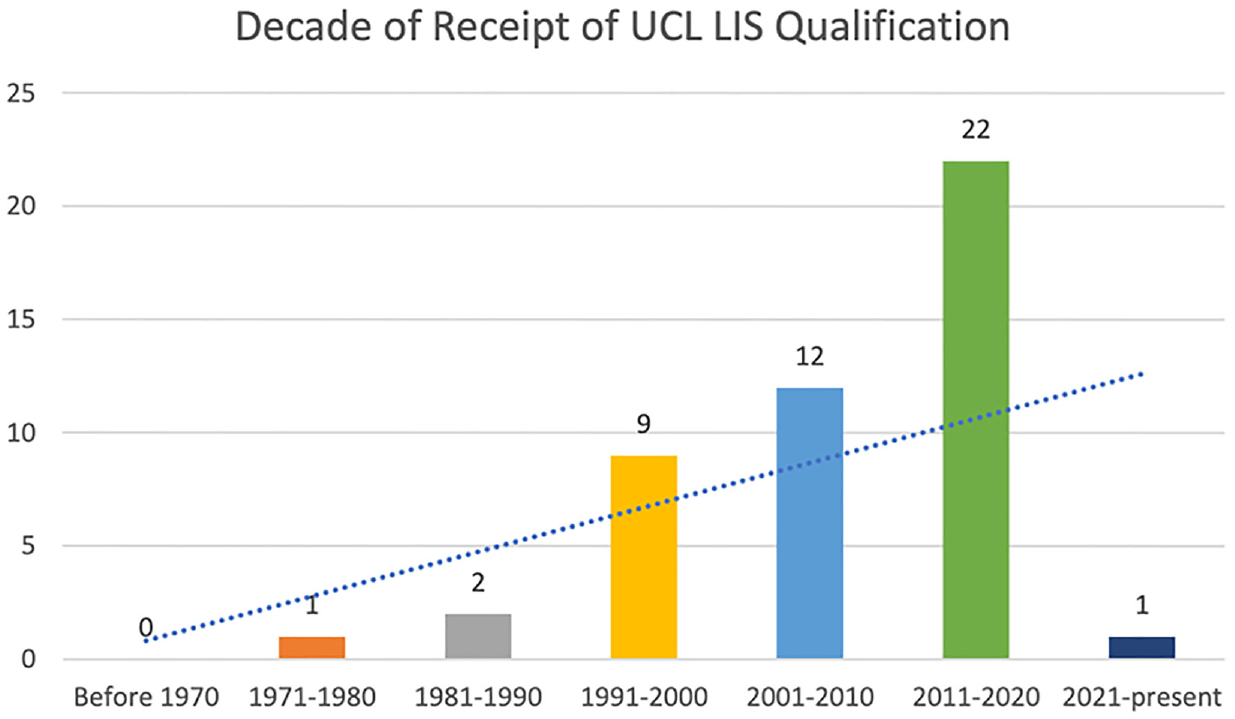
Decade of qualification.
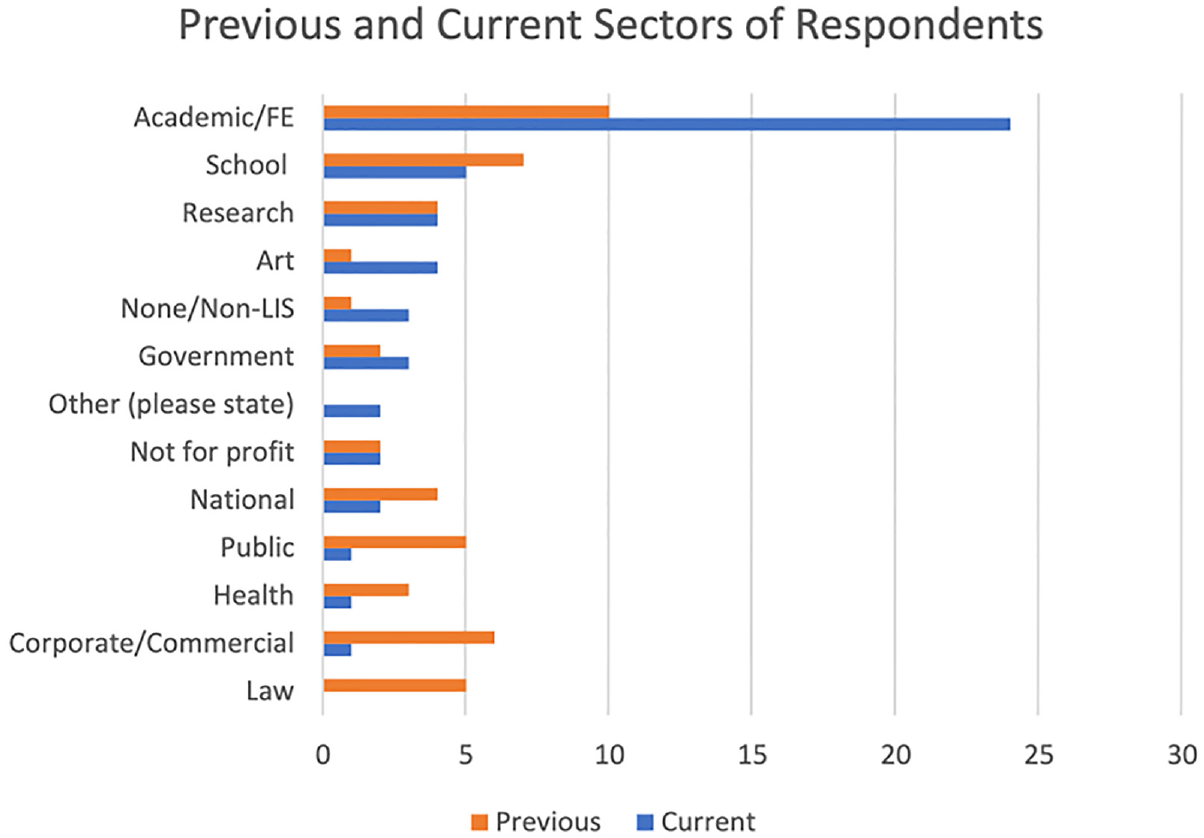
Previous and current sector of respondents.
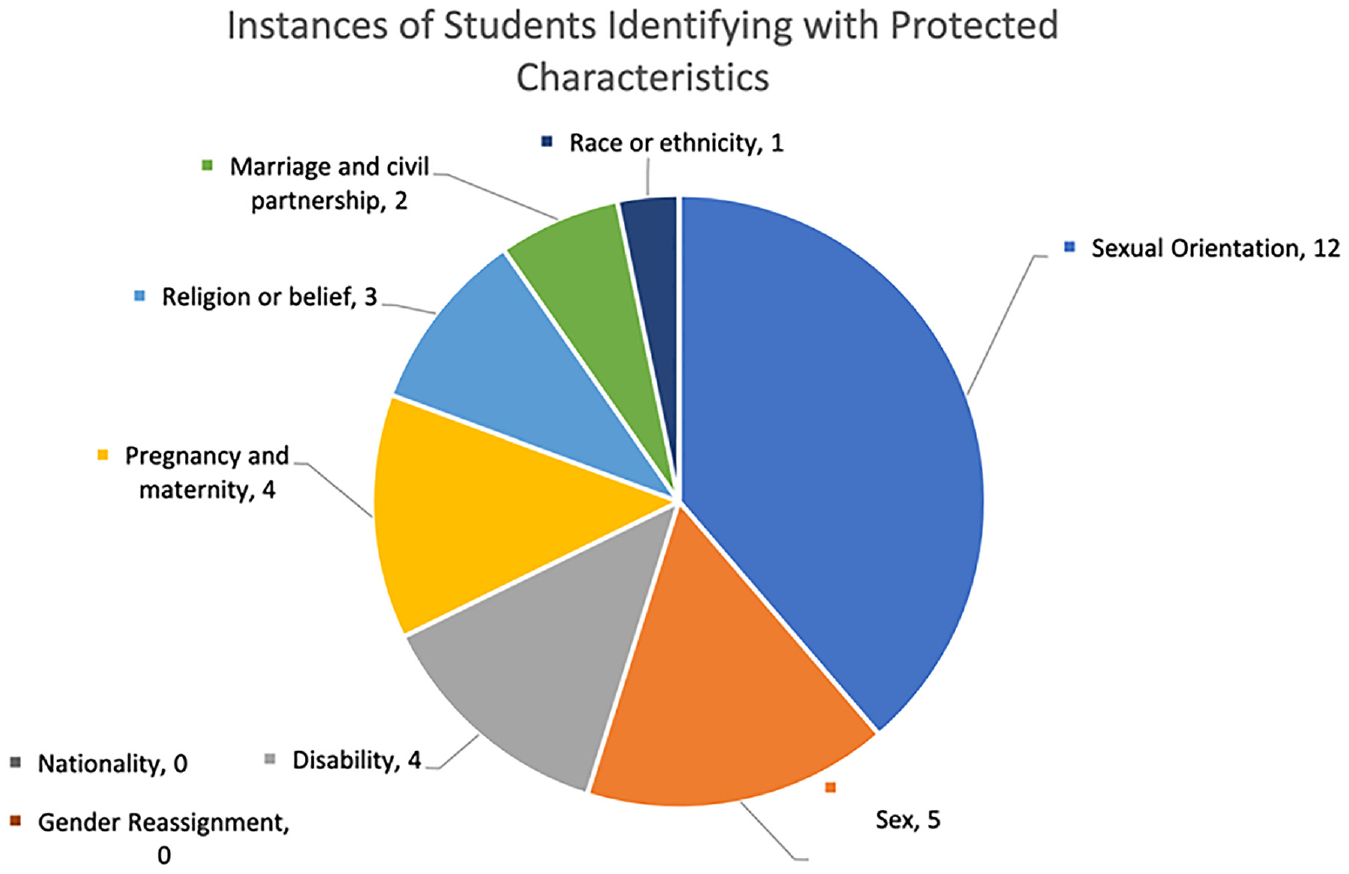
Instances of protected characteristics.
4.2. Effective pedagogical strategies
Analysis of the questionnaire’s free text responses offers insight into effective pedagogical strategies for EDI-focused work. Some of these were directly suggested by the participants, while others were drawn out from their responses. These responses provide guidance about how an EDI-focused LIS curriculum at UCL could be reviewed, including in relation to personal identity, group work and embedding.
One of the first notable themes within questionnaire responses was the important role that personal identity played in helping participants to become aware of and engaged in EDI topics. Responses that talked about experiences of marginalisation indicate how tapping into feelings and emotions about the impact that EDI issues have upon one’s own life or professional career can form a powerful hook into the LIS curriculum. Thus, one participant became aware of ableism in the profession when their major professional conference ‘excluded many people with protected characteristics’ when it returned to in-person only (R015). For others, their interest in EDI was catalysed by their promotion to a managerial role, which provided more scope to influence and shape the local EDI climate. As one participant pointed out, having to lead training on this area ‘taught [them] an enormous amount’ (R002). Another stated that needing to think about how they, as a manager could address issues in the workplace helped them to ‘understand some of the barriers that may exist for certain groups to enter the profession’ (R014). The need to become ‘familiarised…with updated and new legislation’ (R002) also provided a useful entry point for some professionals, including related to ‘service accommodations, GDPR and what can and can’t be shared/worked on’ (R006). Participants also talked freely about the important role that personal study, reading and writing had played in their education to date with one participant describing how this had ‘helped [them] to grapple and face issues [they were] having at work, why, and how to potentially resolve them’ (R006). These motivations may subsequently help to explain the broad array of protected characteristics recognised in participant EDI work.
A second theme identified in questionnaire responses relates to the important role that group work and community building plays within EDI-focused education. Working with others, whether this is in a professional association or with sympathetic allies, is seen to both maintain people’s motivation to become involved with EDI work and to move them forward in their understanding of issues at stake, even given ongoing workplace challenges. One participant, for example, spoke of the ‘consequential’ gains they had been able to achieve when working with a professional association, including ‘the formation of an EDI steering group, recommendations across all areas of activity and the establishment of an annual award for a global majority individual to undertake postgraduate LIS study’ (R011). For others, the benefits were more emotional, with another response mentioning how online forums had allowed them build networks ‘among peer librarians in the region’ (R020). Workshops and discussion groups were also seen to be effective tools for EDI work, both due to their ability to build ‘shared understandings of the issues’ among colleagues (R030) and to affect tangible change or ‘translate issues of equity into action’ (R042). This was particularly the case when workshops were ‘backed up by EDI communities for staff’ which helped to build ‘an ongoing push rather than just training that could be forgotten’ (R030). Hearing ‘from other people’s perspectives’ (R022) was also seen to be a valuable benefit of group activities with another participant noting how their ‘best learning experience has been supporting a PhD student with a visual impairment’ (R025).
The third theme identified in the questionnaire relates to the importance of embedding an EDI ethos, approach and method either ‘integrated throughout’ (R006) or ‘interwoven throughout every aspect’ (R019) of the LIS curriculum. While participants recognised that ‘times were very different in the 1990s’ (R019), when they received their LIS education, a growing recognition that EDI impacts ‘every aspect of the profession’ (R019) meant that participants unanimously called for an embedding of EDI within the ‘design stage, not tacked on as an addition’ (R017). This included ‘discussion in lectures, inclusion of materials in reading lists, overall inclusion of its impact naturally imbedded into course content’ (R031). More specific modules that were noted by participants as being particularly ripe for integration of ideas in EDI included modules focusing on collection management, cataloguing and professional practice.
4.3. Gaps in provision
Analysis of the questionnaire highlighted several effective pedagogical strategies that the LIS programme at UCL might adopt within an EDI-focused curriculum. However, findings also present insight into ways in which this LIS programme could also improve their EDI education, including connected to management, positioning and the broader shape of EDI.
One noted area for improvement relates to questions of management and leadership, which respondents frequently positioned as a major impediment to EDI work. Concerns about how EDI is implemented on an institutional level point to the need for UCL’s LIS programme to ensure that there is a strong EDI focus within modules that focus on practical managerial practice and strategic direction. Knowledge of inclusive hiring, for example, is one area that the questionnaire highlights is currently missing, with one respondent stating that ‘recruitment practices that are unwelcoming or not accommodating enough to candidates who differ from the majority’ (R022) forms one of the biggest barriers to EDI work from their experience. The perception that managers either demonstrate ‘complacency’ (R011) or are ‘not equipped, and do not like to confront, this issue in and honest way’ (R008) means that the management of diverse teams forms another organisational issue for which library managers may currently be unprepared. Beyond everyday issues, frequent mentions of a lack of ‘dedicated time required for policy changes’ (R013) or ‘financial limitations whereby breaking the norm would demand specially funded schemes’ (R027) illustrate the importance of embedding EDI within strategic planning topics as well as broader policy work considerations. Otherwise, as one respondent pointed out, the positioning of EDI initiatives as ‘on request, not as default’ runs the risk of sidelining progress due to staff fear of being seen to cause ‘trouble’ (R006).
A second area of improvement relates to fostering learner positionality, particularly if, as the previous section recommends, personal identity provides a way into EDI work. In this context, positionality refers to how ‘differences in social position and power shape identities and access in society’ [83] While experience provides a powerful hook for the embedding of EDI in the workplace, there is also a risk that learners may uniquely impose their own viewpoint onto the perspectives of those who are marginalised or be unable to see the layers of institutional inequalities that go beyond their experience. Responses that dismiss EDI as merely ‘not be[ing] horrible to our patrons’ (R026) or assert that they ‘don’t think there are barriers in [their] organisation’ (R030) provide powerful examples of difficulties some library workers may have in seeing broader issues. Even respondents who are otherwise able to talk fluently about their EDI knowledge (or lack of it) seem to struggle with their own positionality, with most questionnaire responses focusing far less on an awareness of self (and others) in relation to the realities of marginalisation. Examples of how an awareness of positionality might be developed include reflection on where activities come from, such as the respondent who realised ‘that [they are] in a position of privilege’ (R019). It might also include being aware of who benefits from interventions, as demonstrated by the respondent with a stammer who stated that their workshop formed a ‘useful exercise in increasing [their] confidence in presenting to colleagues’. Care must consequently be taken to foster an awareness of learner stance or how social position impacts access to and movement within the world rather than merely recognising identity.
A third area of focus is the need to engage learners with the broad scope of EDI work rather than popular perceptions. The study questionnaire was specifically designed to ask about the EDI work in relation to all personal characteristics that are protected under UK law, including age, disability and gender reassignment as well as race and ethnicity. While this focus prompted useful reflection on the need to extend current EDI initiatives, the exhortation that future EDI work needs to focus on ‘not just BAME’ (R004), may also imply that respondents believe that racial and ethnic marginalisation is either already adequately supported or is no longer an issue within the workplace. These responses demonstrate that there is an ongoing need at XXX to explore layers of marginalisation as well as tackling the perception that one group’s EDI gains are equivalent to another’s loss. Issues are further complicated by questionnaire responses that seem to draw on ageist labels or stereotypes. The perception that ‘heads [of libraries] are mostly male of an age group which is not touched by these considerations’ (R004), for example, sits awkwardly with the thoughtful (and proactive engagement) that we noted in questionnaire responses from older generations. While responses such as these were not widespread, they provide further evidence of the need to unpick narrow understandings of marginalisation and to move beyond one-size-fits-all approaches to recognising and combatting discrimination.
5. Discussion
Findings from this study provide valuable insight into how the LIS programme at UCL might reform its’ EDI-focused curriculum. Speaking to alumni from this LIS programme reinforces that, like other studies have demonstrated, there is an overwhelming need for social justice topics to be embedded within UCL’s curriculum rather than corralled in a separate module or course [43,45]. This approach also aligns with the placing of equity and diversity at the heart of CILIP’s [55] PKSB, which guides UK LIS education. Survey comments also draw attention to the need to ensure curriculum changes go hand in hand with other structural anti-oppressive work, including a focus on representation [41,43]. At the same time, alumni surveyed in this study also clearly alluded to the need to think more carefully about the pedagogical strategies that will support anti-oppressive educational endeavours. Literature to date has tended to focus on the big picture with few concrete details about the delivery and approach of educational programming [43,55,58,59]. However, the importance that survey comments place on approaching EDI topics in the company of peers and more experienced survey members speaks to the need to move beyond recognising the power of social learning [45,81] to explore how community pedagogies can be put into practice into the classroom. Difficulties talking about positionality mean that findings from this study also reinforce the need for UCL’s LIS programme to go beyond an emphasis on developing understandings of difference to centre how learners situate themselves in relation to the intersectional power dynamics that shape both their and other’s access to information structures.
Notwithstanding, findings also highlight several tensions related to how these findings might be put into practice, particularly related to emotional and invisible labour and the need for structural critique. One particularly complex tension that was raised in this study relates to labour or the role that marginalised communities are expected to play within EDI-focused LIS education. Survey responses indicate the huge value that can be gained from listening to the stories and experiences of marginalised groups, with participants indicating that a focus on personal identity often provides the hook to engage them more closely with EDI work and group work or community building creating meaningful EDI-related educational experiences. Active and responsible listening is also often cited as one of the key features of effective allyship [84], and lived experience is frequently critiqued for being absent from EDI initiatives [2]. However, as both scholars and practitioners have pointed out, these preferences also raise concerns about the demands that this approach places upon marginalised groups, including the pressure of responsibility ‘for creating a more diverse and inclusive culture’ [85] and the emotional burden of sharing microaggressions, racial trauma [86] and invasions of privacy, particularly when this work is not ‘recognized, compensated or acknowledged’ [87]. In effect, EDI initiatives that are solely premised upon the labour of marginalised communities become a form of racial capitalism, wherein social or economic value is derived ‘from the racial identity of another person’ [88]. These findings consequently raise questions about how UCL’s LIS programme might draw upon the experiences of marginalised groups in a respectful and supportive manner, which might include the provision of financial compensation or the employment of professional facilitators, although it is important to note that a reliance on precarious labour may also perpetuate inherent inequities.
A second, even more complex tension relates to the emphasis that questionnaire responses seem to place upon ‘retrofitting’ the profession or making space for previously excluded groups within existing structures rather than challenging the systems of domination [2] or subordination [1] that led to marginalisation in the first place. While comments demonstrate sincerity and inclusion is an important focus within homogeneous professions like librarianship, diversity work can also be critiqued for failing to ‘trouble’ hegemonic cultural practices [2] or ‘power and privilege at a structural level’ [73, p. 440]. The PKSB’s [55] focus on equality rather than equity could be seen as another indicator of diversity work that does not interrogate the structural aspects of diversity work. Thus, while the survey’s suggestions to adapt existing managerial practices or create more inclusive collections are important issues to address, they can also be seen as framing diversity work in terms of assimilation or integrating marginalised groups into dominant ones [89] rather than recognising how existing professional structures are coded to promote majority values as ‘the norm’ [2]. The emphasis that the survey responses place on individual competence or self-development similarly frame discrimination as the error of an irrational individual – and EDI work as rectifying a temporary sickness or aberration [1, p. 14] rather than as challenging how LIS becomes a site in which marginalisation is (re)produced [1, p. 21]. Any reform of UCL’s LIS EDI curriculum must subsequently engage with questions about the performativity of diversity, particularly as this has been interpreted in much library work to date [90], as well as continuing to contribute to work that aims to theorise and facilitate structural critique.
In addressing issues related to LIS programming, educators might learn from colleagues in Archives and Records Management (ARM) who have also been exploring how to address questions of representation and marginalisation within their professional education. As Sexton et al. [91, p. 5] point out, a shift to a more person-centred and relational approach to archival practice has led to a need to consider the ‘deep, emotional impact’ of working with records and archives, particularly related to how specific communities and individuals have been harmed by archival work. Along those lines, ARM colleagues have started to integrate trauma-informed approaches into professional education, including using role-play, case study and real-world examples as well as through the design of specific trauma focused modules. Gilliland’s [92, p. 194] work to raise ‘professional consciousness about the politics associated with archives’, which has parallels with LIS debates about questions of neutrality, provides another example of an approach that might shape future LIS responses to EDI challenges. Framed in terms of the ‘obligations and ethics’ of archival education, Gilliland’s [92] exploration of how the archival profession is addressing contemporary social justice-oriented challenges also includes the development of specific ethics related modules (that are based on experiential/service-based pedagogy), as well as additional structural changes, such as the inclusion of social justice aims within the broader mission of the department. While these changes have been variously received by students (and professionals), they indicate a potentially useful way forward for LIS education.
6. Conclusion
As we were writing this article, Research Libraries UK (RLUK) [93] published a report into how EDI is represented in job descriptions and hiring practices in the research library sector in the United Kingdom. Noting the growing number of institutions that centre EDI within their ‘library’s goals, values, and working practices’ (p. 6), this report speaks to the vital importance of ensuring that LIS graduates are prepared to meet the challenges of diverse, activist and anti-oppressive working environments within UK settings. At the same time, the low number of EDI-focused roles demonstrates that there is considerable work to be done before UK research libraries meet goals for anti-oppressive practice. Findings from the study reported in this article demonstrate that LIS programmes are essential to this ongoing and time-sensitive work, as the centring of diversity as a core value within the PKSB [55] indicates. Surveying recent (and less recent) graduates has enabled our institution to establish several concrete actions that we can take to centre anti-oppressive practice within our professional education, including through drawing upon personal identity, integrating more informal collaborative learning support and embedding these ideas across the curriculum. Findings also indicate where we need to focus more time and energy, including related to how we approach management, positioning and broader understandings of EDI. Together, these changes will help our LIS programme to contribute to the structural reforms that lie at the heart of sensitive and meaningful education.
Notwithstanding, many challenges remain, as tensions related to invisible labour illustrate. The noted emphasis on individual, retrofitted solutions to diversity forms another point of concern and findings from this study further note that curriculum reform must encompass ongoing theorisation and reflection on structural critiques as much as practical endeavours. We also note the need for a renewed and more nuanced focus on equity and diversity issues within the UK’s guiding LIS education documents, such as [55], something that may be underway as the PKSB enters revision. Future research should consequently remain vigilant to the performativity and the individualisation of EDI work, including by analysing prevailing professional discourses, guiding standards and actions. The recognition that this study is limited to a small number of graduates from one specific LIS school further indicates the need to carry out more qualitative research into the structure and focus of the LIS curriculum, including through engaging more comprehensively with the lived experience of marginalisation and/or oppression. At the same time, now is not the time to merely ‘start conversations’. Instead, this study has demonstrated that LIS schools have both the opportunity and the platform for leading EDI-related change in the profession and it is vital that we respond decisively to ongoing challenges and opportunities.
Footnotes
Appendix 1
Declaration of conflicting interests
The author(s) declared no potential conflicts of interest with respect to the research, authorship and/or publication of this article.
Funding
The author(s) received no financial support for the research, authorship and/or publication of this article.
