




Abstract
Google Scholar has become an important search platform for students in higher education, and, as such, can be regarded as a competitor to university libraries. Previous research has explored students’ intention to use Google Scholar (GS) and University Digital Libraries (UDLs), but there is a lack of comparative studies that explore students’ preferences between these two platforms. Therefore, this study seeks to explore the search behaviour of a select group of users, international postgraduate students and more specifically compares the factors that influence their use of Google Scholar and University Digital Libraries (UDLs). A questionnaire-based survey, based on the factors in the UTAUT model (unified theory of acceptance and use of technology) was conducted to collect data on acceptance and use of technology of GS and UDL’s respectively. Data was collected from 400 international postgraduate students studying in the United Kingdom. Confirmatory factor analysis was used to establish the contextual influencing factors, whilst structural equation modelling examined the predicted model. The results suggest some differences between the influence of various factors between the UDL dataset and the GS datasets. They suggest that social influence (SI) did not affect behavioural intention (BI) for either data set, but that for the UDL dataset, effort expectancy did not affect BI, whereas for the GS dataset facilitating conditions did not influence BI. The approach taken in this study further facilitates research into the use of search tools to progress beyond ease of use as a main driver and to explore the relationship between internal and external influences of use. Recommendations for further research are suggested and the value of the insights gained for UDLs and their provision and support for all students is discussed.
Keywords
Introduction
Digital library systems have become a popular and convenient means for students to access scholastic and research resources, and many researchers have examined the factors that influence students’ intention to use the university digital library (Hwee and Yew, 2018). The use of search tools such as, Google and Google Scholar (GS), has also received considerable interest and both search tools have been widely accepted by both academics (Ollé and Borrego, 2010) and students (Cothran, 2011). Wang (2020)has recently suggested that the scale and sophistication of technology involved in Google Scholar far exceeds that of the library-oriented service providers, and, in general, performs better than other discovery services. GS is known for its size and growth. For instance, the database contained approximately 160 million documents in 2014 (Orduna-Malea et al., 2015) and by 2019 had more than doubled to 389 million records (Gusenbauer, 2019). Moreover, GS is known for its extensive coverage, wide range of languages and publications, high growth rate and recovery of greater numbers of citations in contrast to the other interdisciplinary databases such as, Web of Science Core Collection (WoSCC) or Scopus (de Winter et al., 2014; Harzing, 2014; Meho and Yang, 2007). On the other hand, Al-Qallaf and Ridha (2019) suggest that the university library website has become the centre for the ‘dissemination of digital information; the portal to a multitude of e-resources and e-services; the main gateway for virtual users; and a marketing tool allowing libraries to project their image’ (p. 1).
This article reports on a study that sought to determine how international university students perceive the tools available to them for information searching, and their evaluation of GS relative to UDLs. Focussing on the factors that influence students’ perception and use of their UDL and GS the aim of this study is to answer the following two questions:
(1) To what extent do international postgraduate students adopt their University’s Digital Library and/or Google Scholar as a means of locating scholarly information that supports their studies?
(2) What are the factors that influence this adoption for: (a) Google Scholar (GS); and (b) their University’s Digital Library (UDL)?
The study draws on the unified theory of acceptance and use of technology (UTAUT) (Venkatesh et al., 2003) and its critical factors such as the effect of social influence and/or individual effort, to predict behavioural intention relating to acceptance and use of the digital library and search systems. Postgraduate students were chosen for this research because their information needs are more complex than those of undergraduate students (Catalano, 2013). In addition, the study focussed on international postgraduate students, since they may often face challenges in searching for information, particularly if they are searching for information in a language with which they are still developing their competency. Another factor that suggests that this is an important group to study is that in the UK (where the study was conducted) international students comprise around a fifth (20%) of the postgraduate enrolments (Marginson, 2018; UK Council for International Student Affairs (UKCISA), 2019. In this context (of international postgraduate students, UDL and GS), the study explores the UTAUT with the aim of providing university libraries with a deeper understanding of their users and the aspects of their information services that determine student preference and, in turn, how the university library might best promote and facilitate students’ effective use of UDLs alongside GS.
Literature review
University Digital Libraries versus Internet search engines
The term ‘digital library’ refers to a ‘library where some or all of the holdings are available in electronic form, and the services of the library are also made available electronically’ (Rosenberg, 2005: 1). Liu (2008) describes academic library websites as offering access to ‘online catalogs, electronic databases, subject resources, library instruction/tutorials, and digital collections’ (p. 6). Consequently, academic library websites have the potential to serve as a centralised ecosystem for information where users’ effort in locating information is minimised and the development and sharing of learning, concepts and experiences are nurtured.
However, academic libraries are challenged by the increased availability, on the internet, of different sources of information. This availability has resulted in users of academic libraries, such as academics and postgraduate students, utilising other information sources together with the library website (Sultan and Rafiq, 2021; Tapfuma and Hoskins, 2019). Google Scholar™ (http://scholar.google.com) launched by Google in 2004 is one such source, a Web database of academic documents queried using a version of the Google search engine. Google Scholar (GS) has received considerable research attention as a tool for identifying and finding significant publications (e.g. Harzing and Alakangas, 2016; López-Cózar et al., 2018; Moed et al., 2016). Studies have contrasted the retrieval and accuracy of GS with those of subscription databases and reported an improvement in its performance over time. Harzing (2014) demonstrated that the coverage of GS was increasing steadily and, also that it was able to provide considerable coverage for various disciplines, increasing its suitability as a resource. More recently, however, Martín-Martín et al. (2018) compared GS with Web of Science and Scopus and reported that the unique citations reported by GS have a much lower scientific impact, on average, than the citations found by the other two databases. Further, Halevi et al. (2017) have drawn attention to GS’s limitations in the areas of: advanced searching; support for data downloads; absence of quality control; and citation manipulation. From the user perspective, the simplicity of the GS search interface makes it preferable to more complex interfaces (Shen, 2012; Tella et al., 2017). Ankrah and Atuase’s (2018) investigation of postgraduate students’ awareness of using electronic resources found that these students found it more comfortable to access information from GS, rather than the databases offered from within the library. On the other hand, Al-Muomen et al. (2012) found that faculty members can enhance library usage by encouraging postgraduate students to utilise the library to complete their assignments, study and undertake research.
Previous researchers have also inquired into the reasons why postgraduate students and scholars utilise, or do not utilise, academic library websites. Drachen et al. (2011) found that Google or GS were the search engines most frequently utilised by PhD students, their rationale for this being the greater user-friendliness of these platforms in contrast to library-provided databases. More specifically, Wu and Chen (2014) found that graduate students preferred the usability of GS and the ability to obtain full-text documents. However, they appreciated the quality of the resources retrieved from library databases and value such databases as source of scholarly literature. Nicholas et al. (2017) noted that the majority of students rarely started their information search from the library web page and instead utilised their own bookmarks/shortcuts to access information sources.
In addition to research that investigates student views towards GS and the university digital library, there is also a significant body of prior research based on surveys of student use of library databases and other resources For example, studies conducted in the Webster University Library (2016) and in the Wyndham Robertson Library (2016) indicated that more than 90% of the students were satisfied with their usage of the library website, library databases and access to online articles. Another survey at Boston University (Boston University Libraries, 2017) reported that 57% of graduate students used the libraries’ online resources at least once a week. Moreover, they were generally satisfied with the provision made by the libraries for library journals and databases. A survey of the UK’s Loughborough University Library (Loughborough University, 2015) indicated that 55% of the research-based postgraduate students utilised the online resources at least once a week whilst 29% used the resources every day.
Theoretical foundations
Several models and theories of technology acceptance have been designed for use in a range of contexts, such as organisational or consumer information systems, and are used to explain, understand and make predictions about how individuals accept and ultimately adopt new technology products and services. The models have been amended and revised over time, as a result of the many attempts to validate or extend them through use. Fishbein and Ajzen (1975), Ajzen and Fishbein (1980), developed the Theory of Reasoned Action (TRA) which was extended in 1985 into the Theory of Planned Behaviour (TPB; Ajzen, 1985); this then developed again with Taylor and Todd’s (1995) Decomposed Theory of Planned Behaviour (DTPB). Davis (1989) Technology Acceptance Model (TAM), which builds on the TRA, has been extended further in both TAM2 (Venkatesh and Davis, 2000) and in the Unified Theory of Acceptance and Use of Technology (UTAUT); Venkatesh et al., 2003). Samaradiwakara and Gunawardena (2014), in comparing these various theories, found UTAUT had the greatest explanatory power with regards to people’s behavioural intention to use technology. Accordingly, this study draws on the UTAUT model as a basis for exploring the influence of its four principal factors, namely Performance Expectancy (PE), Effort Expectancy (EE), Facilitating Conditions (FC) and Social Influence (SI), on the behavioural intention (BI) to use GS and/or the UDL. In order to extend the UTAUT model for use in the context of student use of digital library systems, seven independent variables were further identified from related research (e.g. Alzahrani et al., 2019; Buchanan and Salako, 2009; Goh and Li Liew, 2009; Jeong, 2011; Lavidas, 2020) investigating the factors that influence the intentions of users to use various forms of digital library systems. These were organised into two latent variables (labelled, System Features and Individual differences) to enable scrutiny of their effect on the concrete intention to utilise a system (i.e. BI).
Theoretical model
Figure 1 depicts the conceptual model of the influencing factors and the hypothesised relationships of this study. The UTAUT was extended to identify ‘System Features’ and ‘Individual Differences’ which may impact on students’ assessment of the core principal factors, viz, Performance Expectancy (PE), Effort Expectancy (EE), Facilitating Conditions (FC) and Social Influence (SI), on the behavioural intention. Individual Differences consisted of elements pertaining to Domain Knowledge, Computer Experience, Computer Self-Efficacy and Motivation while System Features include user perception of Accessibility, Visibility and Relevance of a system.
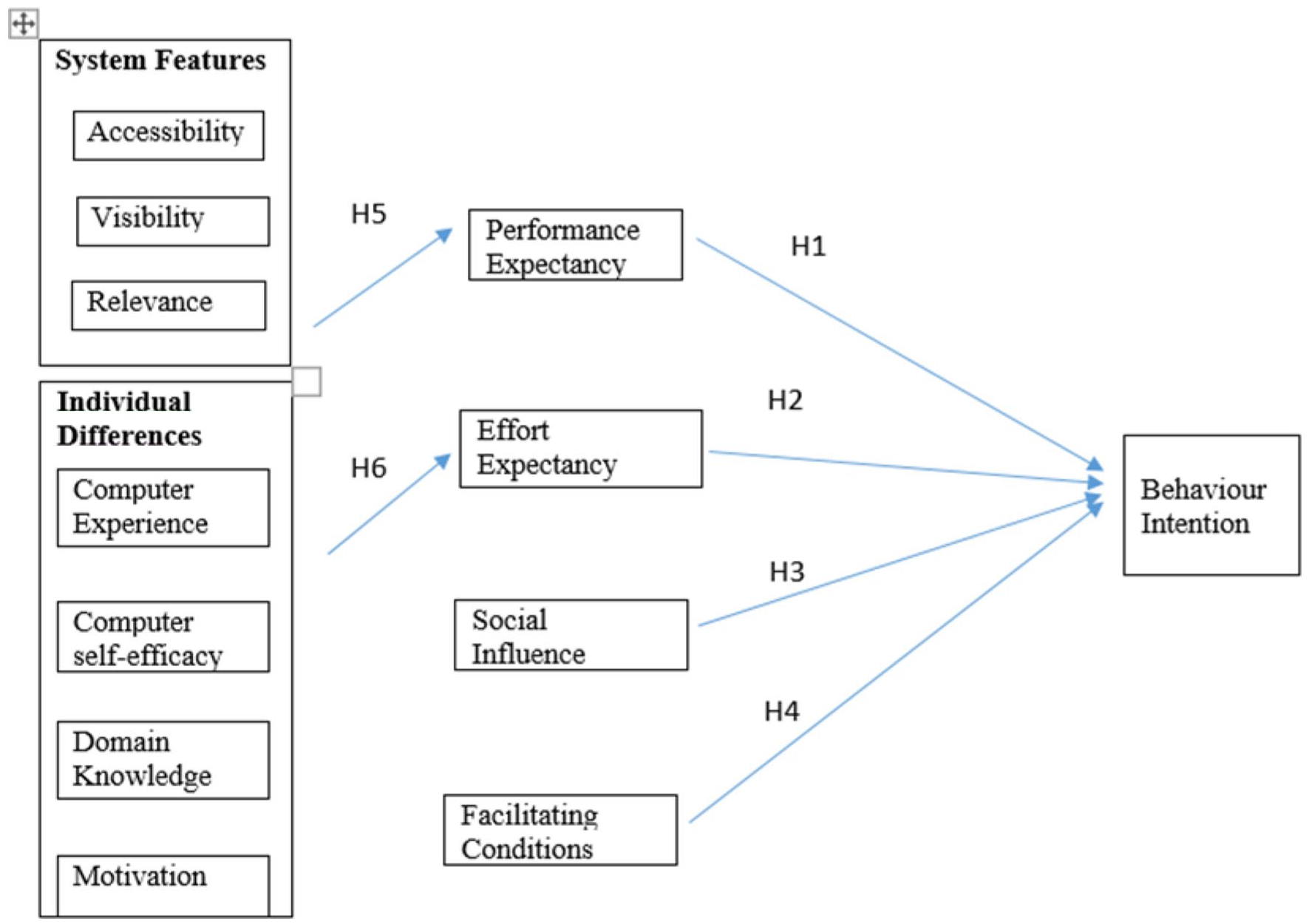
Theoretical Model (extended from Venkatesh et al., 2003).
Performance and effort expectancy
Performance expectancy (PE) is defined as ‘the degree to which an individual believes that using a system will help him or her attain gains in job performance’ (Venkatesh et al., 2003: 447) and concerns how informative, useful, meaningful, significant and helpful the information service is to the user (Dwivedi et al., 2016). Effort Expectancy (EE) is defined in Venkatesh et al. (2003: 450) as ‘the degree of ease associated with the use of the system’ and further concerns the extent of convenience perceived in the use of a system. Students’ acceptance of digital library services is dependent on performance expectancy (PE), effort expectancy (EE) and social influence (SI), whilst students’ ‘use behaviour’ is dependent on facilitating conditions (FC’s) and intention to use (Awwad and Al-Majali, 2015).
In this study it is proposed that the perceptions of PE and EE influence international students’ intention to use their UDL or GS. Therefore, this research hypothesises that:
H1: Performance Expectancy directly influences students’ Behavioural Intention
H2: Effort Expectancy directly influences students’ Behavioural Intention
Facilitating conditions and social influence
Facilitating conditions (FC) are defined as ‘the degree to which an individual believes that an organizational and technical infrastructure exists to support the use of a system’ (Venkatesh et al., 2003: 453). Social influence (SI) has been defined as ‘the degree to which an individual perceives it to be important that others believe they should use the new technology (Venkatesh et al., 2003: 451). With regard to postgraduate student use of GS or UDLs, previous studies suggest social influence (SI) may have a strong and direct influence on behavioural intention (Cothran, 2011; Oh and Colón-Aguirre, 2019). A study by Moorthy et al. (2019) found that the behavioural intention of international students to utilise digital libraries was positively and significantly influenced by facilitating conditions and social influence. In this study it is presupposed that FC and SI would influence the postgraduate students’ intention to use the library resources hosted or promoted by the university library, which include GS. Therefore, this paper hypothesises:
H3: Facilitating Conditions directly influence students’ Behavioural Intention
H4: Social Influence directly influences students’ Behavioural Intention
Extensions to UTAUT
Previous research suggests that there are also other contextual factors that influence student use of UDL’s or GS, including the computer self-efficacy of the student, which may be influenced by extrinsic motivation deriving from their pleasure in using a technology (Venkatesh et al., 2012). Ebijuwa and Mabawonku (2019) also found a significant relationship between computer self-efficacy and use of electronic library resources, amongst undergraduate students. In general, it is important to extend the model to focus on context and aspects of that may shape behaviour. For example, in the context of searching for scholarly information, Umukoro and Tiamiyu (2017) found that student use of the digital library was influenced by service factors such as user satisfaction, the library environment, system quality and self-efficacy. On the other hand, they found that the factors inhibiting the use of the digital library included lack of awareness and absence of training.
Jeong (2011) suggested that knowledge of the domain is a strong predictor of perceived ease of use. Al-Faresi and Patel (2012: 220) added Domain Knowledge (DK), defined as: ‘The person’s knowledge of a particular discipline, domain, or area that is relevant to the search’. Smith et al. (1999: 227) suggested that Computer experience (CS) influenced Effort Expectancy (EE) and defined EE as: ‘The amount and type of computer skills a person acquires over time’. Finally, Taherdoost (2018: 964) points to the importance of motivation, and defines intrinsic motivation as: ‘the perception that users will want to perform an activity because it is perceived to be instrumental in achieving valued outcomes’.
Informed by previous studies of factors influencing digital library use, such as Thong et al. (2002) and Park et al. (2009), further factors were identified relating to the facilitating conditions of the system including its perceived Visibility (VI), defined as ‘The degree to which a system is observable or apparent in an organization’ (Thong et al., 2002: 222), its Accessibility (AC) defined as ‘The degree of convenience with which an individual accesses an information system’ (Park et al., 2009: 199) and its Relevance (RE) ‘The degree to which the system matches tasks as carried out in the current environment’ (Thong et al., 2002: 221). The study therefore proposes the following hypotheses:
H5: System Features directly influence students’ Performance Expectancy
H6: Individual Differences directly influence students’ Effort Expectancy
Further, the study hypothesises:
H7: Accessibility, Visibility and Relevance of the System directly influence students’ Performance Expectancy
H8: Computer Self-Efficacy, Computer experience, Domain Knowledge and Motivation directly influence students’ Effort Expectancy
In this study the effect of moderating variables, such as age or educational status, and on each of the hypotheses was not explored in the analysis.
Methodology
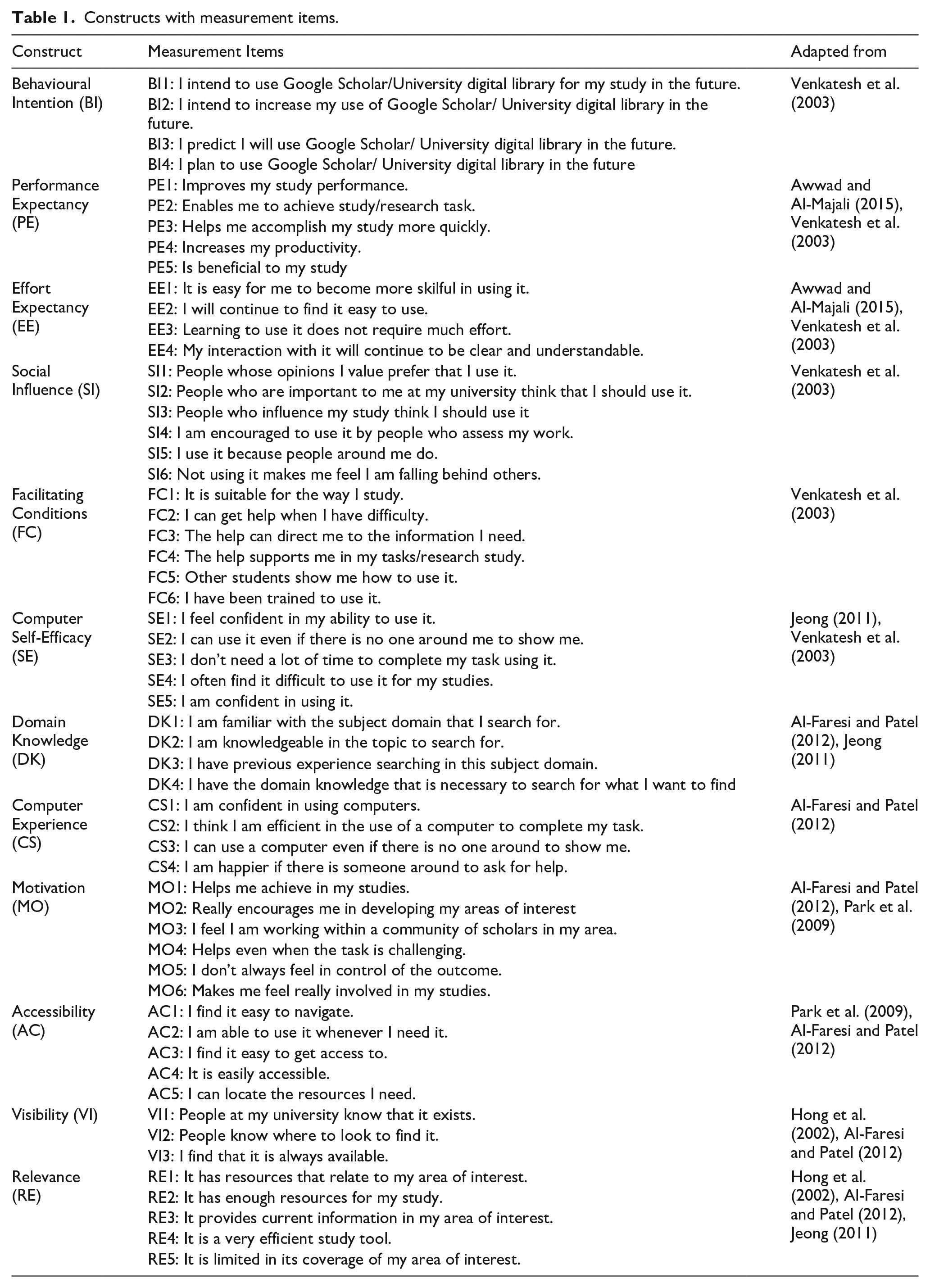
Two related questionnaires were used in data collection, the first questionnaire related to the use of GS and the second to the use of a UDL. The questionnaires consisted of a set of measurement statements for each of the constructs of the extended UTAUT model and measured on a 5-point Likert scale (strongly disagree to strongly agree). These statements were principally adopted, with suitable re-phrasing to suit the context of GS/UDLs, from prior studies (Table 1).
Constructs with measurement items.
Sample and data collection
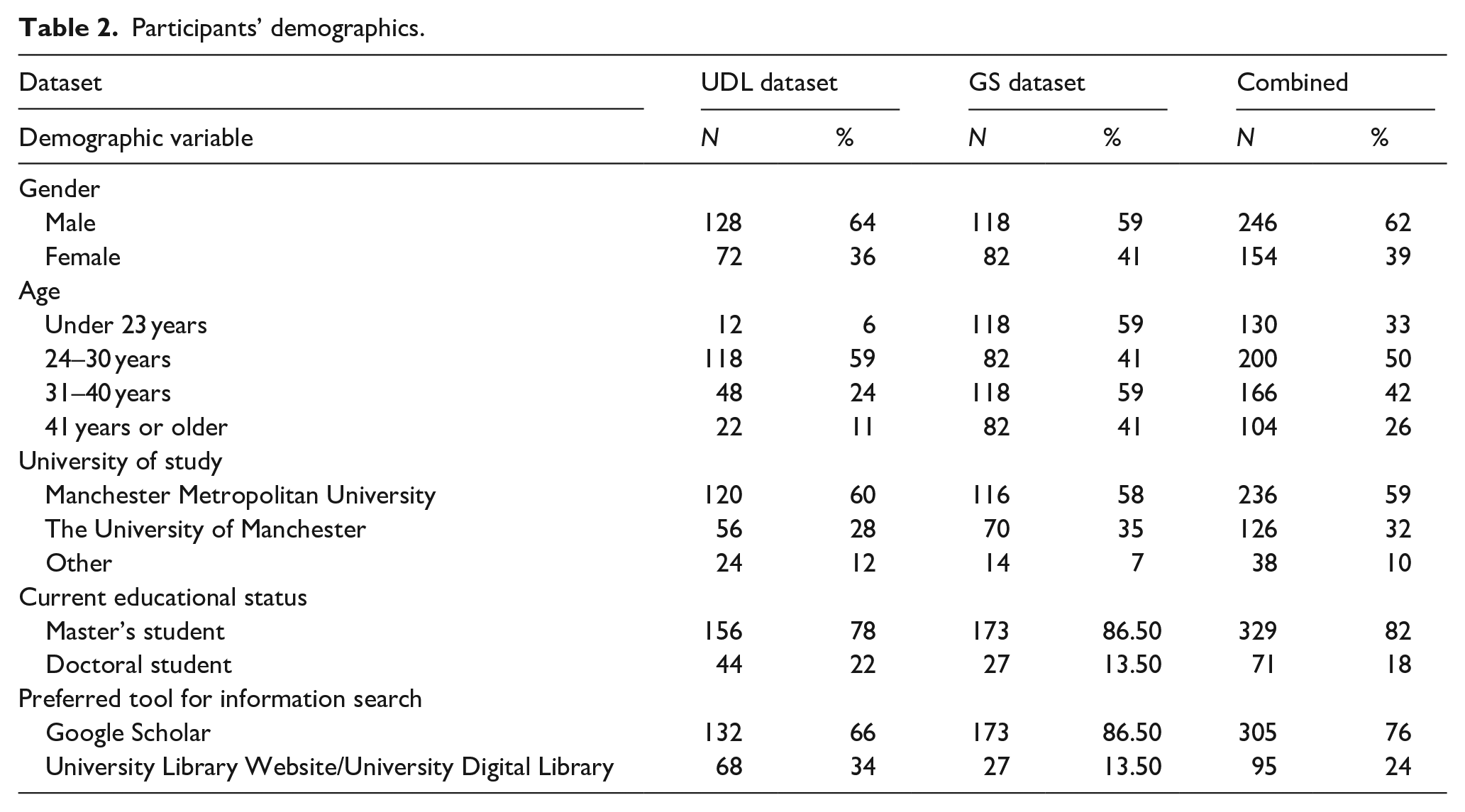
The study population comprised international postgraduate students from three universities in Manchester, UK, recruited using purposive and convenience sampling. The majority of the participating students were male (62%), aged between 24 and 30 years (50%) and were Master’s students (82%) from the Manchester Metropolitan University (59%). Most of the students from both groups preferred to use Google Scholar (76%) rather than their UDL (Table 2).
Participants’ demographics.
Data analysis
The data obtained from the questionnaire were analysed in three stages. In the first stage, the reliability of all the data were confirmed using Cronbach’s alpha. Exploratory and Confirmatory Factor Analyses (EFA and CFA) were then conducted on the latent variables to study, and confirm the validity of the factor structures that represent these constructs. The convergent validity of these constructs was based on their AVE (average variance extracted) and CR (Composite Reliability). Statistical Package for the Social Sciences (SPSS) v24 was utilised for these tests. In the second stage, structural equation modelling (SEM), which indicates the relationship between the latent constructs, was utilised to develop structural models for the two datasets. Two models were created, one for each dataset, and evaluated to assess their overall fit and test the study’s hypotheses. The statistical package AMOS (v21.0) was utilised for the model development. Finally, multiple regression analyses were performed using SPSS v24 to scrutinise the nature and extent of the relationship between the study’s different constructs.
Results
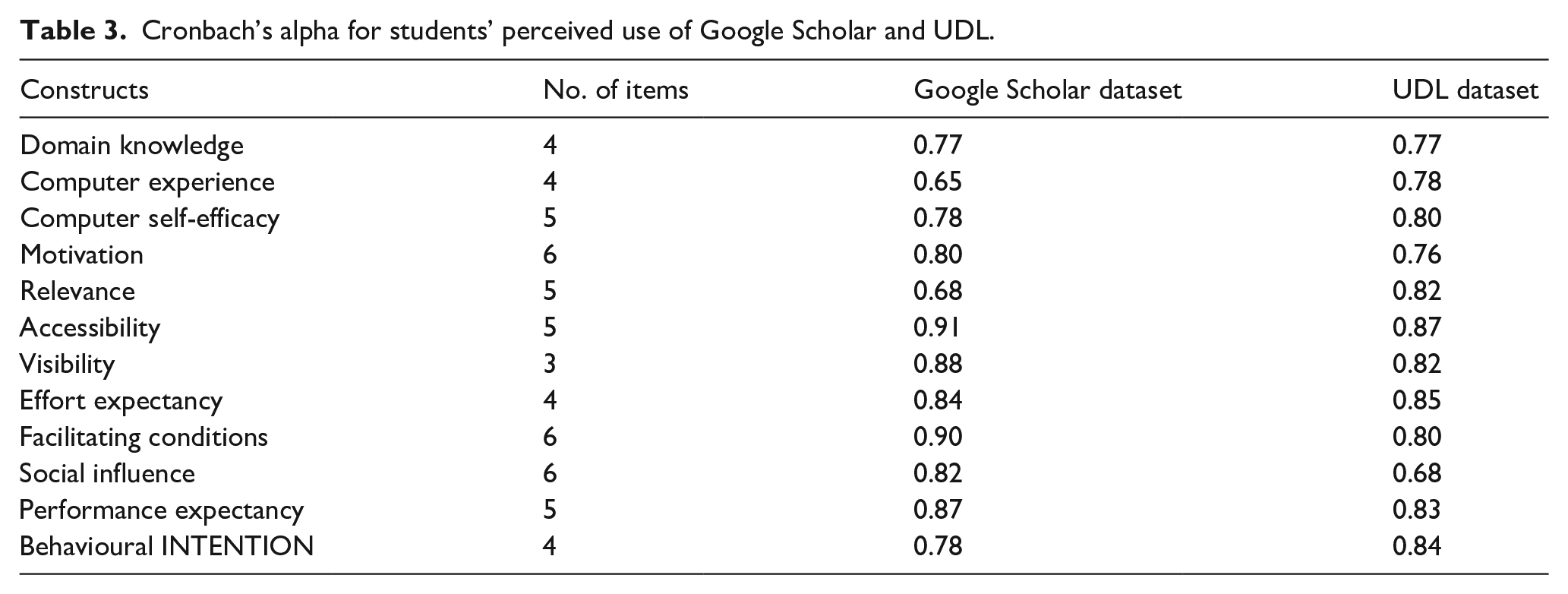
The reliability of the constructs utilised in the study were analysed using Cronbach’s alpha. Overall, the majority of the items in the questionnaires were found to be acceptable for use with a value of >0.7 as deemed acceptable (DeVellis, 2003) with the alpha coefficients for the Google Scholar dataset ranging from 0.64 to 0.91 and the Cronbach’s alpha coefficients for the UDL dataset ranging from 0.68 to 0.87 (Table 3). Although the alpha coefficients were <0.7 for Computer Experience (α = 0.65) and Relevance (α = 0.64), these two items were considered moderately reliable (α = 0.50–0.70) based on the cut-off points proposed by Hinton et al. (2014) for reliability. Consequently, it was inferred that all the measures were internally consistent and reliable.
Cronbach’s alpha for students’ perceived use of Google Scholar and UDL.
The EFA for the UDL dataset resulted in the elimination of items CS4 and MO6 from further analysis since they did not meet the acceptable factor loading values of at least 0.5 or had an Eigen value >1. The EFA for the GS data set resulted in the elimination of a single item, MO4, from further analysis since it did not meet the cut-off.
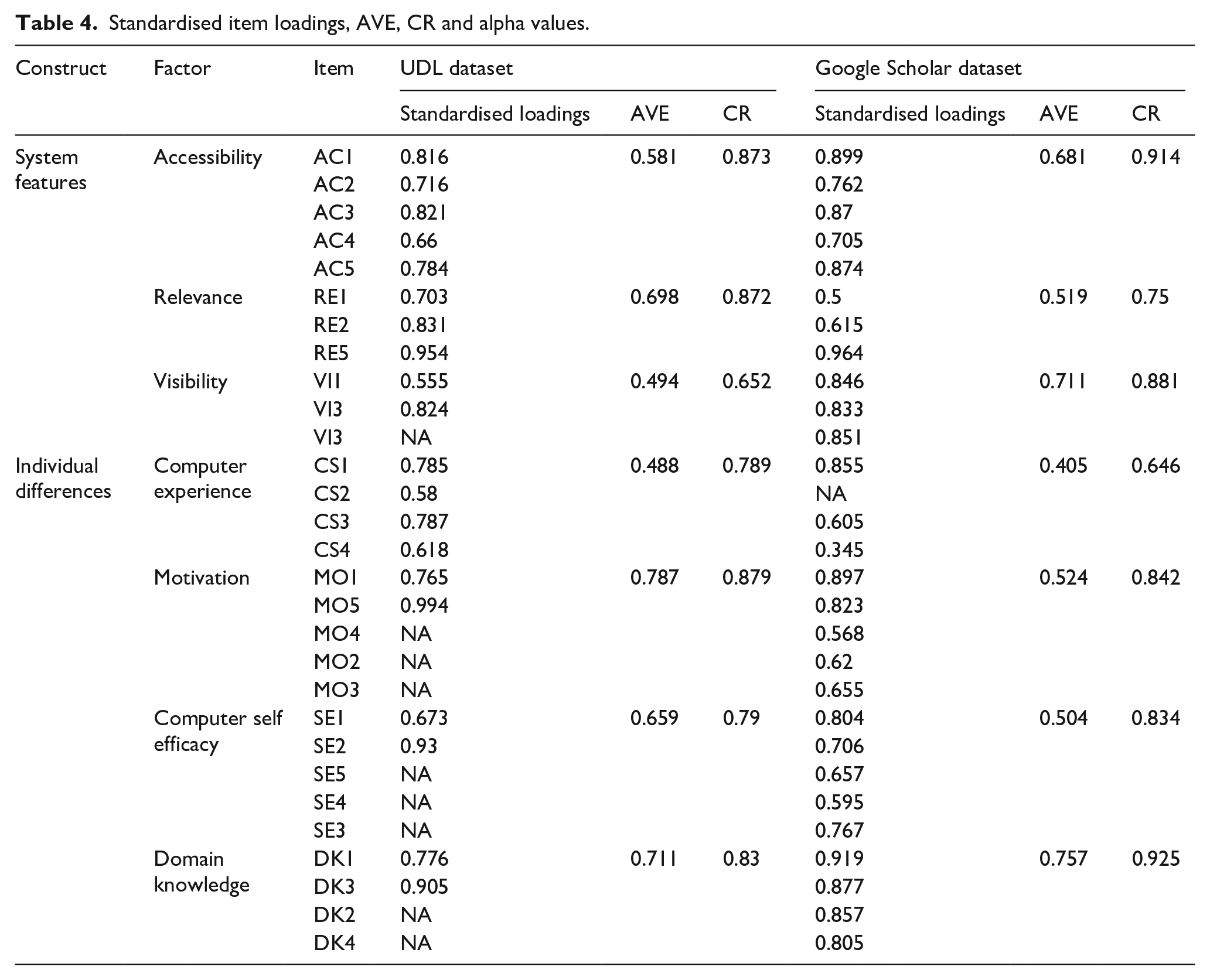
CFA was performed on the datasets to check whether the measurement models accurately reflected the constructs of the study (Table 4). The CFA for the UDL dataset revealed that 22 out of the 28 items have factor loadings greater than 0.7, which is considered acceptable for construct validity. The AVE (average variance extracted) exceeds the acceptable value of 0.5 for 5 out of the 7 sub-constructs, that is, except Visibility (AVE = 0.494) and Computer Experience (AVE = 0.488). On the other hand, the CR (Composite Reliability) exceeds 0.7 for 6 out of the 7 sub-constructs, with the exception being Visibility (CR = 0.652). Similarly, for the GS data set, 19 out of the 28 items have factor loadings greater than 0.7. Also, the AVE is >0.5 for 6 of the 7 sub-constructs with the exception of Computer Experience (AVE = 0.405). Also, the CR exceeds 0.7 for 6 out of the 7 sub-constructs, with the exception of Computer Experience (CR = 0.646). Overall, this indicated that the there was a moderate to high correlation between the latent variables and their component variables.
Standardised item loadings, AVE, CR and alpha values.
In the second stage of the analyses, SEM was utilised to examine the relationships between all the constructs in the predicted model. SEM estimates the structural models with Behavioural Intention (BI) as the main endogenous factor, denoting the intention of students to utilise Google Scholar/their UDL. Effort Expectancy (EE), Performance Expectancy (PE), Facilitating Conditions (FC) and Social Influence (SI) were regarded as the exogenous variables whose influence on BI is examined through the model. Individual Differences (ID) and System Features (SF) are included to scrutinise their impact on EE and PE respectively (Figures 2 and 3).
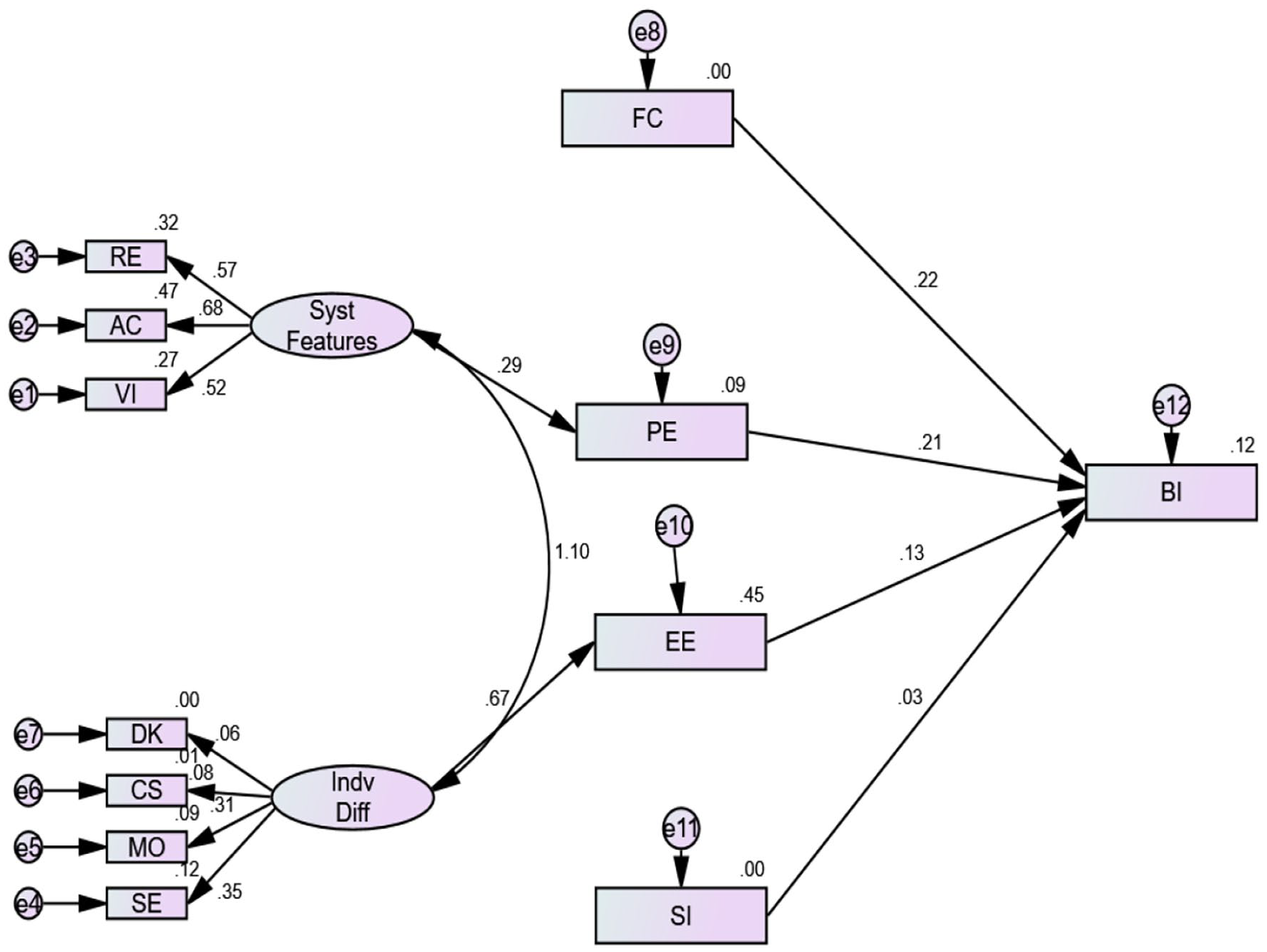
Structural equation model using AMOS – UDL dataset.
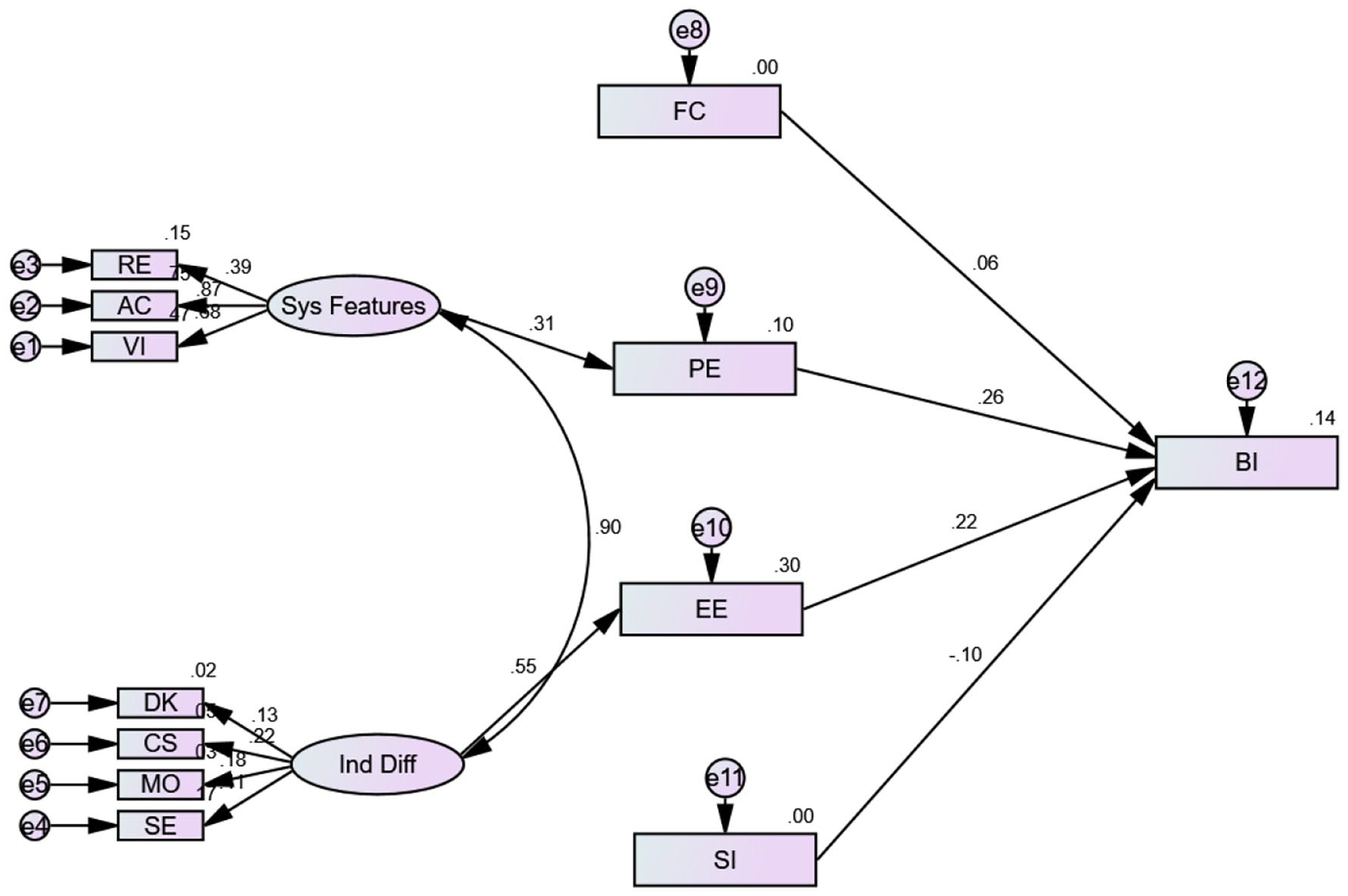
Structural equation model using AMOS – Google Scholar dataset.
Table 5 summarises the model fit indices of the scales obtained for the structural models. The CMIN/DF of 4.379 and 4.476 indicate that the models are a good fit since the values are within the guideline value (<5). The values of CFI (0.861, 0.854), NFI (0.912, 0.906), RFI (0.881, 0.873), IFI (0.976, 0.869) and TLI (0.943, 0.924) are close to 0.9 indicating the goodness of fit of the models.
Model Fit Indices.
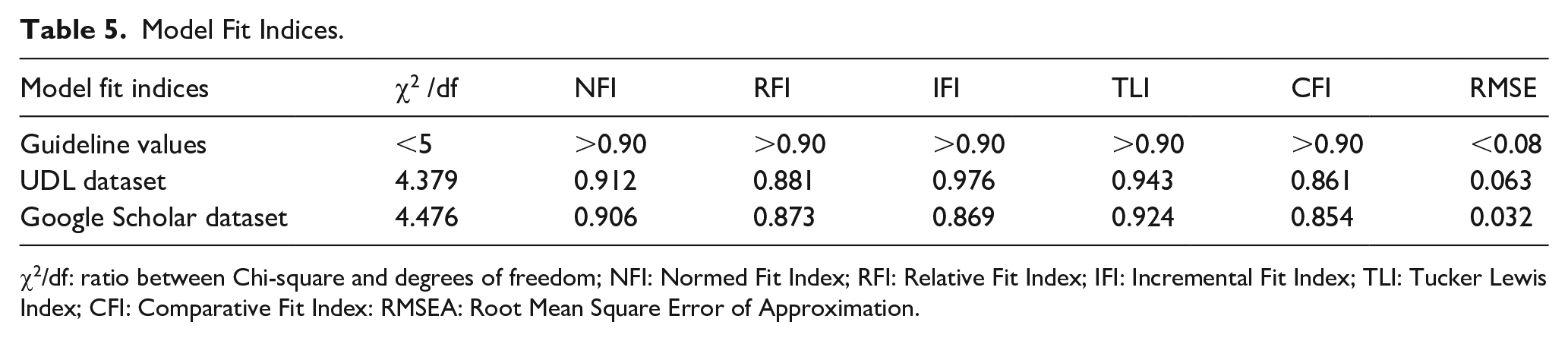
χ2/df: ratio between Chi-square and degrees of freedom; NFI: Normed Fit Index; RFI: Relative Fit Index; IFI: Incremental Fit Index; TLI: Tucker Lewis Index; CFI: Comparative Fit Index: RMSEA: Root Mean Square Error of Approximation.
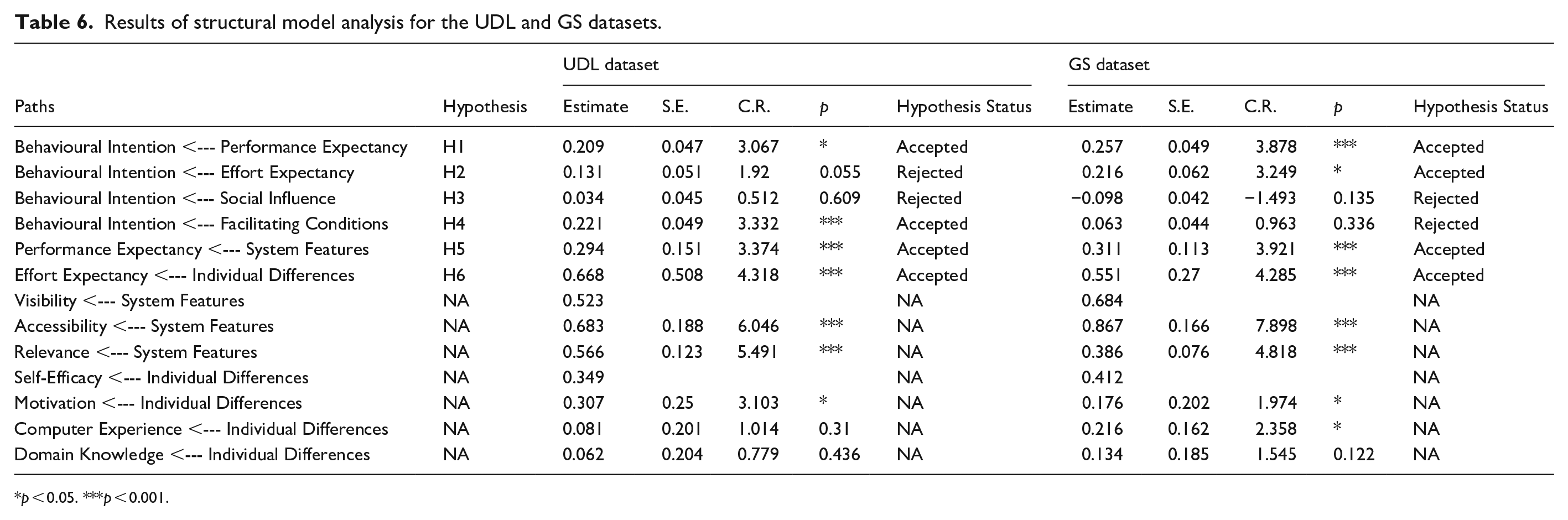
Table 6 summarises the outcomes of the structural models for both datasets. As seen in the conceptual model, six hypotheses were proposed for testing. Scrutiny of the SEM revealed that Behavioural Intention <― Effort Expectancy (H2) and Behavioural Intention <― Social Influence (H3) were rejected for the UDL dataset as the associated path coefficients were not statistically significant. Similarly, Behavioural Intention <― Social Influence (H3) and Behavioural Intention <― Facilitating Conditions (H4) were rejected for the GS dataset as again, the associated path coefficients were not statistically significant.
Results of structural model analysis for the UDL and GS datasets.
p < 0.05. ***p < 0.001.
The overall model fit statistics for the UDL model indicated that this model offers a good fit to the data. Four out of six paths were statistically significant and thus, four of the hypotheses were supported. Accordingly, PE and FC were significant determinants of BI. On the other hand, System Features significantly determined PE and Individual Differences determined EE. Similarly, the overall model fit statistics for the GS model indicated that this model offers a good fit to the data. Again, four out of six paths were statistically significant and thus, four of the hypotheses were supported. Accordingly, PE and EE were significant determinants of BI, and System Features significantly determined PE and Individual Differences affected EE.
Further, System Features, in turn, was significantly influenced by Accessibility (0.683) and Relevance (0.566) at p < 0.01. Individual Differences was found to be influenced by Motivation (0.307, p < 0.05) in the UDL dataset. On the other hand, for the Google Scholar dataset, System Features was again significantly influenced by Accessibility (0.867) and Relevance (0.386) at p < 0.01 while Individual Differences was significantly influenced by Motivation (0.176) and Computer Experience (0.216) at p < 0.05.
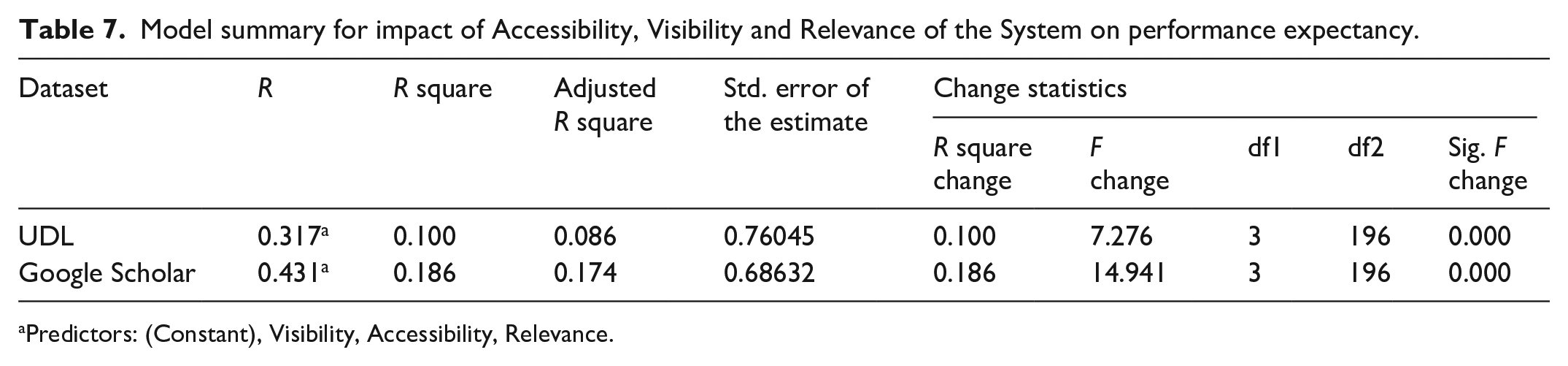
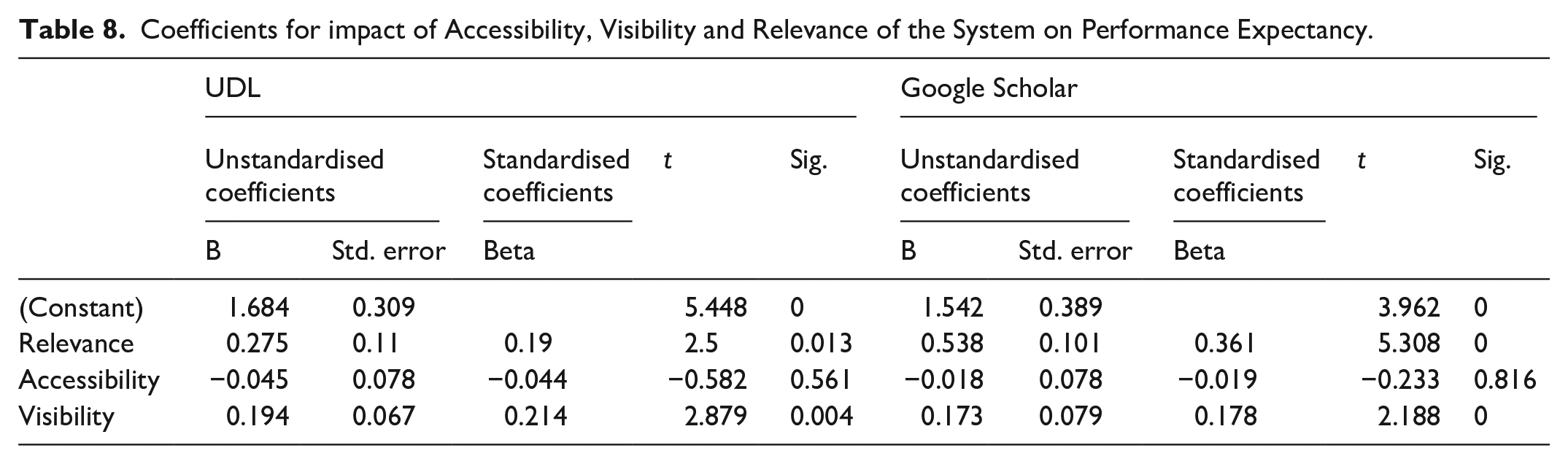
The effect of Accessibility, Visibility and Relevance of the System on Students’ Performance Expectancy was analysed for the two datasets using multiple regression analyses (MRA) (Tables 7 and 8). In the UDL dataset, it could be seen that 8.6% of the variation in the Performance Expectancy could be explained by Accessibility, Visibility and Relevance. Moreover, the effect was found to be positive and significant in the case of Relevance and Visibility. In the Google Scholar dataset, 17.4% of the variation in the Performance Expectancy could be explained by Accessibility, Visibility and Relevance. Moreover, the effect was again found to be positive and significant in the case of Relevance and Visibility. Consequently, hypothesis H7 that is, Accessibility, Visibility and Relevance of the System directly influence students’ Performance Expectancy could be partially accepted for both datasets.
Model summary for impact of Accessibility, Visibility and Relevance of the System on performance expectancy.
Predictors: (Constant), Visibility, Accessibility, Relevance.
Coefficients for impact of Accessibility, Visibility and Relevance of the System on Performance Expectancy.
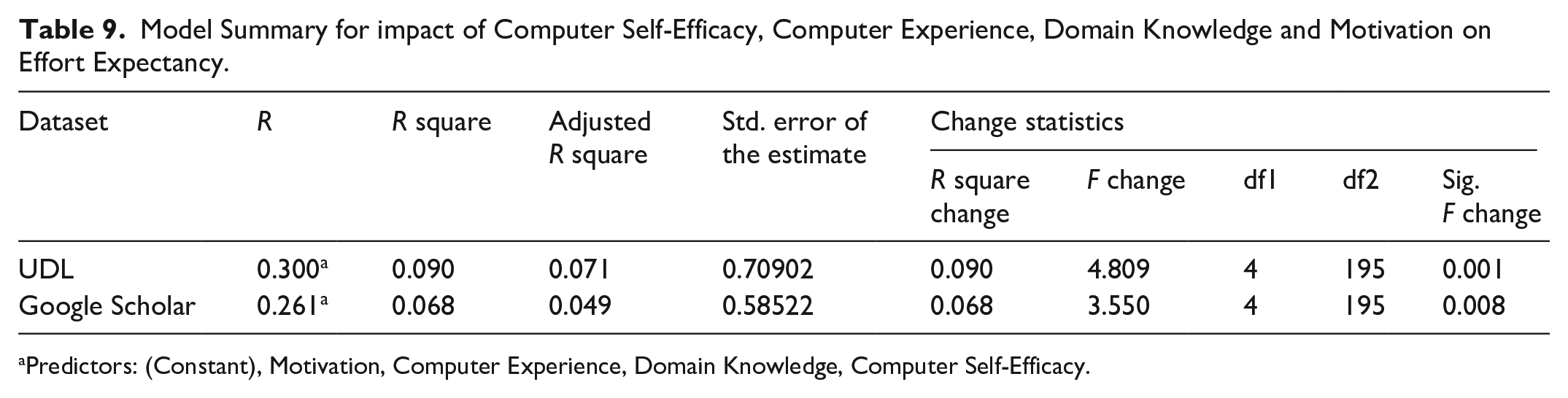
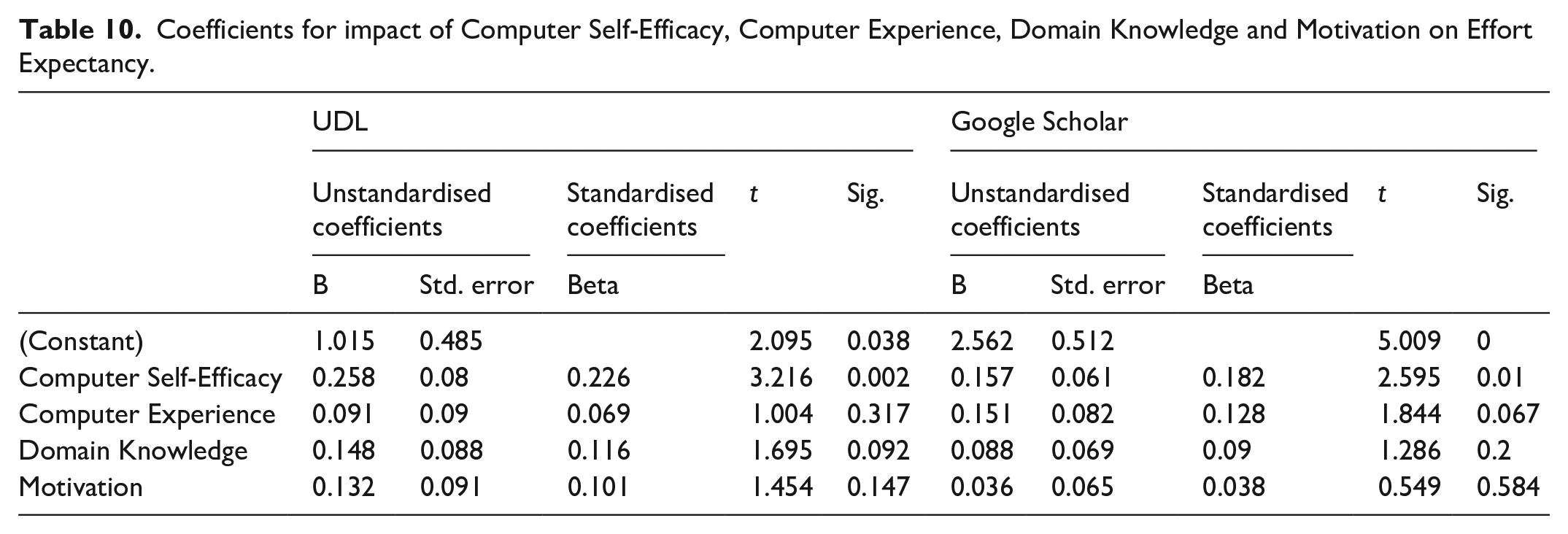
Next, the effect of Computer Self-Efficacy, Computer Experience, Domain Knowledge and Motivation on students’ Effort Expectancy was analysed using MRA for both datasets (Tables 9 and 10). It can be seen that 7.1% of the variation in the Effort Expectancy can be explained by Computer Self-Efficacy, Computer Experience, Domain Knowledge and Motivation in the UDL dataset. Moreover, the effect was found to be positive and significant only in the case of Computer Self-Efficacy. In the Google Scholar dataset, it can be seen that 4.9% of the variation in the Effort Expectancy could be explained by Computer Self-Efficacy, Computer Experience, Domain Knowledge and Motivation. Again, the effect was found to be positive and significant only in the case of Computer Self-Efficacy. Consequently, hypothesis H8, that is, Computer Self-Efficacy, Computer experience, Domain Knowledge and Motivation directly influences students’ Effort Expectancy can also be partially accepted for both the datasets.
Model Summary for impact of Computer Self-Efficacy, Computer Experience, Domain Knowledge and Motivation on Effort Expectancy.
Predictors: (Constant), Motivation, Computer Experience, Domain Knowledge, Computer Self-Efficacy.
Coefficients for impact of Computer Self-Efficacy, Computer Experience, Domain Knowledge and Motivation on Effort Expectancy.
Discussion
The goal of the present study was to examine the factors that affect the acceptance and usage of UDLs and Google Scholar by international postgraduate students. The results from the SEM models on Behavioural Intention (BI), indicate postgraduate student perception of GS is based on Performance Expectancy and Effort Expectancy, while the intention to use the UDL is based on Performance Expectancy and Facilitating Conditions. The results also highlight the performance expectancy directly influences behavioural intention of the students and the direction has been positive. The study is in consistent with the findings of Chao (2019) and Pan and Gao (2021).
Overall, the study’s findings indicate that a user’s BI could be promoted by task-oriented and non-emotional perceived gains from usage of a technology. For instance, the influence of Performance Expectancy on the BI to use a technology in both datasets is consistent with the findings of others, such as Venkatesh et al. (2003) and Awwad and Al-Majali (2015). On the other hand, Effort Expectancy was found to influence BI for Google Scholar only; this is consistent with other studies, including Venkatesh et al. (2012) and Awwad and Al-Majali (2015).
Facilitating Conditions influenced BI for UDL only. This finding is consistent with the findings in prior studies from Awwad and Al-Majali (2015). Social Influence, however, did not appear to influence BI for either GS or the UDL. Previous studies that have reported Social Influence as a factor, such as Moorthy et al. (2019) were undertaken in the undergraduate student context and with respect to intention to use the digital library service. It is possible that restricting this study to the postgraduate student context, a group with experience and training in conducting independent research, might could account for the limited impact of social influence on behavioural intention.
In summary, the resulting model indicates that the participants, international postgraduate students, perceive Performance Expectancy and Effort Expectancy, factors with a task-orientation, as strong determinants of the use of Google Scholar and task-based Performance Expectancy and the organisational-based factor of Facilitating Conditions as determinants for use of the UDL.
To gain further insight into the factors influencing use, the factors of ‘Individual Differences’, SE, DK, CE and MO, and the ‘System Features’ VI, AC and RE were explored for their influence on students’ performance and effort expectancy in both datasets. With respect to both datasets, it was found that a system’s Relevance and Visibility significantly affected students’ Performance Expectancy. With regards to Effort Expectancy, the study found that it was directly affected by Computer Self-Efficacy in both datasets. This suggests that Performance Expectancy, for example captured in the statement ‘. . . enables me to achieve study/research task’ influencing use in the postgraduate context is based on perceptions of Accessibility and Relevance (for example, as captured in the statements used in the questionnaire, ‘I find . . . is easily accessible’, ‘. . .has resources that relate to my area of interest’ and that Effort Expectancy, captured in the statement ‘It is easy for me to become more skilful in using . . .’ is based on their perceived Self-Efficacy, for example in the statement ‘I feel confident in my ability to use . . .’. In summary, this would appear to be consistent with the status of the postgraduate student as an independent researcher who chooses a search tool that they perceive themselves as competent to use.
Findings in previous studies relating to the influence of the individual factors of Domain Knowledge and Computer Self Efficacy present a somewhat mixed picture. Hong et al. (2002) also established their influence on digital libraries’, whereas Park et al. (2009) also identified that Accessibility (Ease of access) and Relevance impacted on the perceived ease of use of a system. The study by Hong et al. (2002) also found support for the influence of Relevance. In contrast, while Jeong (2011) confirmed the influence of Domain Knowledge, self-efficacy was not found to influence perceived ease of use. The approach taken in this study to model the postgraduate student perceptions of Google Scholar, and of the UDL, with regards to intention to use clearly identifies the influencing factors of PE, EE, FC and SI, and in turn the individual and system factors and their influence on EE and PE respectively. As PE influenced intention to use both GS and UDL, but EE influenced intention to use GS only and FC influenced intention to use UDL only, distinct differences were obtained in the model of user perceptions for the two platforms.
Conclusions and further research
The detailed examination performed of the extended UTAUT model developed by this research identified the effect of its constructs on international students’ intention to utilise Google Scholar or UDLs. Further, two additional constructs namely, Individual Differences and System Features, were utilised to extend the UTAUT model to provide insights into the influence of these on use of GS and the UDL.
In the light of these findings, several practices to improve UDL use can be recommended. For instance, induction programmes for international students at universities in the UK must include awareness and training sessions on the features and facilities of the UDLs. Moreover, UDL design must place emphasis on usability to ensure that the users find the interface intuitive and simple to use. Accordingly, usability testing must be a critical facet of UDL design and implementation. UDL designers must keep abreast of changing technology trends and incorporate new features as and when feasible. Also, teaching staff should be encouraged to ensure that international students are given assignments and exercises that involve the usage of the UDL. This will help to increase students’ familiarity with the system and hence encourage their usage of it.
This study has contributed to knowledge, practice and theory. From a knowledge perspective, the study’s findings: highlight the factors influencing the acceptance and usage of Google Scholar and UDL’s provide insights regarding the factors that drive usage of Google Scholar and UDLs. From a practical standpoint, the study’s findings highlight the aspects of Google Scholar that make it an effective information resource for scholars and offer insights for designers of UDLs with regard to the design of a UDL that will be an effective academic source of information for students. Finally, from a theoretical standpoint, the study’s findings provide a new validated extension of the UTAUT model to include aspects of individual differences and system features in influencing students’ intentions to use UDLs and Google Scholar.
This study is not, however, without limitations. For instance, the study focussed solely on international postgraduate students. Future research should consider involving other academic users of UDLs such as, faculty, and doctoral and undergraduate students. In addition, the findings from this study have the potential to inform the development of the support university libraries can provide to their user base, in general, and international postgraduate students, in particular. More specifically, the key finding that perceived Performance Expectancy influences Behavioural Intention for both GS and the UDL, and that perceived System Features are related to this key factor indicates that libraries should focus on highlighting system relevance and the accessibility to promote use. Furthermore, the finding that perceived Self-Efficacy (related to perceived Effort Expectancy) strongly influences international students’ intention to use Google Scholar, whereas perceived Facilitating Conditions (rather than Effort Expectancy) strongly influences BI to use the UDL, could be utilised by libraries to investigate student perception of GS as a tool they feel able to use and perception of the UDL as more supportive in their studies.
Footnotes
Acknowledgements
The authors extend their appreciation to the Deanship of Scientific Research at King Saud University.
Declaration of conflicting interests
The author(s) declared no potential conflicts of interest with respect to the research, authorship, and/or publication of this article.
Funding
The author(s) disclosed receipt of the following financial support for the research, authorship, and/or publication of this article: The first author received a scholarship from King Saud University, Riyadh, Saudi Arabia to conduct this research in part fulfillment for the award of PhD.
