



Abstract
The UK digital divide, whereby sections of society have limited use of digital technology, results in unequal access to information, knowledge, goods and services. The Covid-19 pandemic has exacerbated the push to a digital world, and this has challenged people who suffer digital exclusion, including older people, who are more likely to lack digital skills and understanding. Public libraries play a key role in tackling digital exclusion, providing digital skills training and support, and access to equipment and Wi-Fi thereby enhancing the social inclusion of marginalised groups. During the Covid-19 pandemic innovative solutions were piloted to help tackle digital exclusion and social isolation despite closure of face-to-face library interventions, particularly during lockdowns. This article explores evaluation of the Housing Plus Pilot, providing remote digital skills training and support to older people living in sheltered housing in Newcastle upon Tyne during 2021, delivered through partnership between Your Homes Newcastle, and Newcastle City Libraries. A qualitative case study approach examined a small sample of older people’s perceptions regarding the success of the pilot, and their digital literacy before and after training using semi-structured interviews via telephone. Findings showed that the pilot enabled older people to gain the necessary digital knowledge and skills required to boost confidence in becoming digitally literate citizens. Tackling digital fears and enabling them to reinforce learning through the provision of their own tablet, and free access to Wi-Fi in their sheltered housing provided a springboard for digital behaviour change. Use of a social setting in sheltered housing not only kept older people safe during socially distanced times, but also provided a supportive environment in which to learn and practice skills, together with a step-by-step training approach that focussed on the individual, which was wellsuited to this demographic.
Keywords
Introduction
The digital divide refers to the gap that exists in society between people who have full access to digital technology and those who do not, due to various socio-demographic factors including age, region, financial status and disability, which results in inequality of access to information, knowledge, services and goods (Baker et al., 2020; Serafino, 2019). It therefore exposes the difference between ‘those who have access to and use of potentialities of ICT (information and communication technology) for their own achievements, and those who are not in a position to access or use those potentialities’ (Education Audiovisual and Culture Executive Agency, 2013).
Digital exclusion manifests itself in many ways, particularly related to a lack of sufficient access to technological devices and infrastructure, limited appropriate skills and knowledge and insufficient motivation to want to use technology (Baker et al., 2020). Dimaggio (2004) in Seifert (2020: 674) suggests that such digital inequality therefore results in a ‘multi-dimensional digital divide, subdividing it into usage, skills, social support and self-perception’.
The Covid-19 pandemic has accelerated the shift towards digital technology (Centre for Ageing Better, 2021a), thereby exposing and intensifying the digital exclusion that exists, particularly among those sections of the population who are older (Centre for Ageing Better, 2021b) and more likely to have previously been internet nonusers (Serafino, 2019). It is suggested that ‘using the internet is not like riding a bike – a skill you gain and then retain’ (Age UK, 2021), with many older people becoming lapsed users following retirement and requiring their skills and knowledge to be updated as technology changes over time. In addition, ‘the pandemic has not prompted substantial numbers of older people to get online’ (Age UK, 2021) despite many business and service providers greatly increasing their online delivery during this period. This is particularly the case for older people aged 75+ years, and those who were previously digitally excluded.
Public libraries act as inclusive accessible community hubs for digital training and support, and working in partnership with other organisations have provided important spaces for enhancing and strengthening emergency digital inclusion initiatives (Allmann and Blank, 2021), thereby connecting communities and supporting those who are most vulnerable (Libraries Connected, 2020). Despite their crucial role, they were not deemed an essential service by Government during the early stages of lockdown and therefore faced challenges related to face-to-face delivery, further intensified by a lack of funding and resources due to austerity measures over the past decade (anon ref).
This article reports on evaluative qualitative research concerning the Housing Plus Pilot, a digital literacy initiative undertaken during the summer of 2021 by Your Homes Newcastle, a social housing provider for Newcastle City Council, working in partnership with Newcastle City Libraries. The pilot aimed to provide tenants aged 55 and over with their own tablet, together with basic digital skills training enabling them to feel confident using technology during the pandemic through telephone training initially, and accommodation-based training in small groups as lockdown measures lessened. All participants undertaking the telephone training option received 16 hours of training and those attending face-to-face sessions a minimum of 12 hours of support. Participants were set up as users of the online teaching resource, Learn My Way and guided through the Online Basics module, and basic tablet use training was embedded into the delivery so that users were able to identify and navigate, the Home Screen, Gmail App, File management tools, Google Chrome. In addition, library accounts were set up for each participant and they were shown how to access and use the online library Apps, BorrowBox and Libby to enable them to download free Ebooks, audio books and magazines. As all participants were social housing tenants, they already had free access to Wi-Fi in their sheltered housing common rooms through the Council’s Go Digital programme.
The aim of the research was to investigate the relative success of this digital literacy initiative, by exploring feelings of confidence and social connectedness that participants experienced following the training. It also considered how organisational partnerships, in this case Newcastle City Libraries and Your Homes Newcastle, can work to alleviate digital exclusion amongst older people. Participants from this first pilot are shown in Figure 1 below.
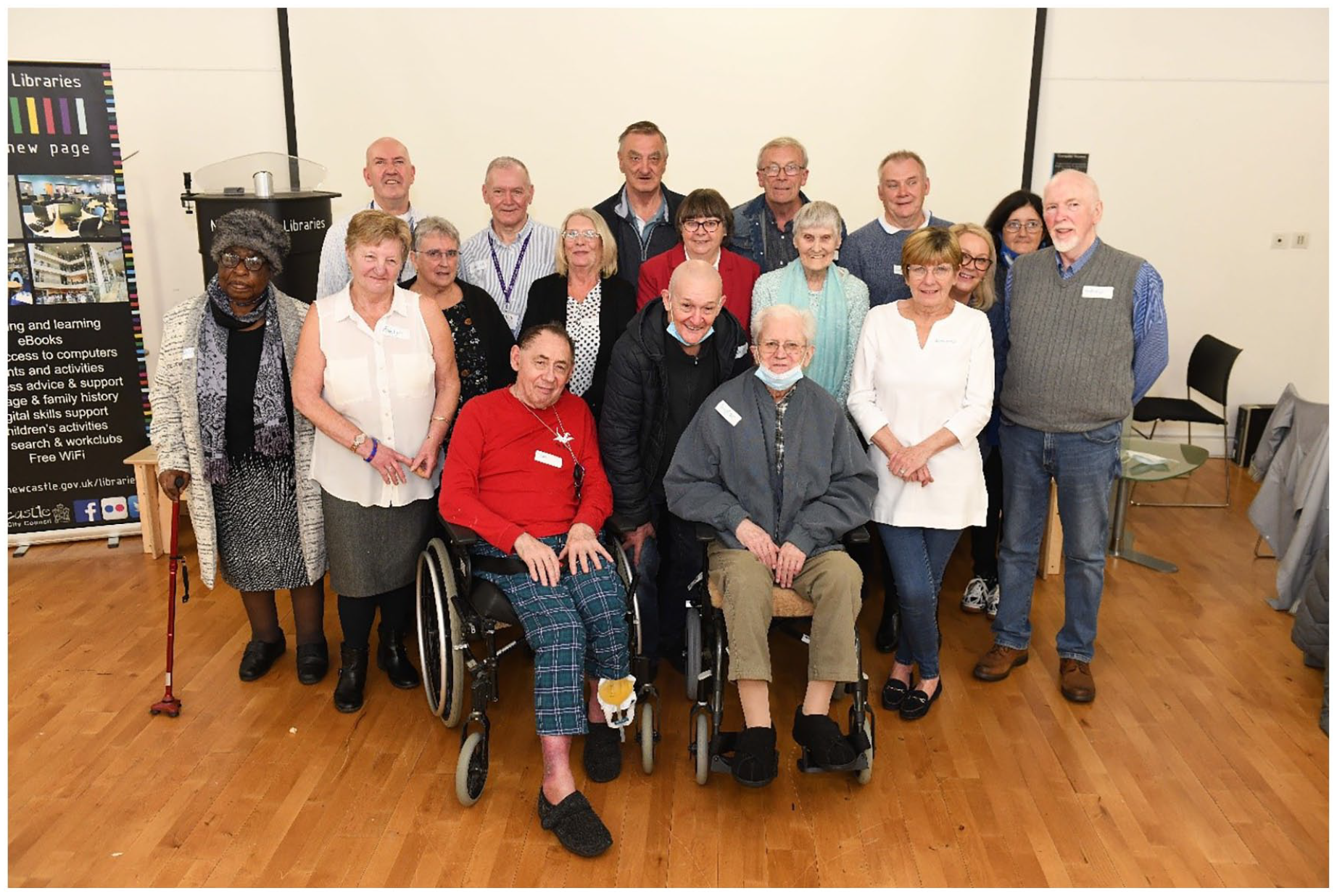
Housing Plus Pilot participants and their trainers at an award event in Newcastle Central Library.
The research focussed on the following questions:
What challenges exist for older people in engaging with digital technology and the internet? Was this exacerbated during the Covid-19 pandemic?
How did older people participating in the Housing Plus Pilot feel about their digital skills and confidence before and after the training?
What difference does this digital literacy training make to older people’s feelings of wellbeing and social and digital inclusion? Do they feel more able to cope with digital by default services?
What aspects of digital literacy training were particularly successful and why?
How does library involvement in digital skills support and training benefit the wider service, and reach new audiences?
Literature review
Older people
The UK is experiencing a demographic time bomb, with a rapid increase in the proportion of older people in the country. The 65 and over age group has grown significantly, with projections that they will comprise a quarter of the UK population by 2050 (Office for National Statistics, 2021). The 85 and over age group have the fastest growth however, and are predicted to comprise 7% of the total UK population by 2066 (Office for National Statistics, 2018), creating complex economic, public service and societal impacts. In addition, well-being reduces as people age (Office for National Statistics, 2018), with an increase in loneliness and social isolation (Davidson and Rossall, 2014), resulting in increased social exclusion and sometimes higher mortality levels (Holt-Lunstad et al., 2015). Higher levels of disability and age-related chronic conditions are also more prevalent in older age groups (Harper and Walport, 2016).
The Covid-19 pandemic has amplified societal divisions, exacerbating inequality (Centre for Ageing Better and Ipsos MORI, 2021), and impacting older people in a variety of ways. The shift to digital provision during the Covid-19 pandemic challenged older people generally more prone to digital exclusion, and lacking the digital skills necessary to be confident users of the internet (Age UK, 2021). The Covid-19 pandemic essential ‘shone a new light on the digital divide between the technology haves and have nots in wider society’ (Reid and Bloice, 2021: 46).
It is worth noting that older people however are not homogenous with regard to internet use and factors related to age, gender, education and income affect propensity to engage with technology, such that ‘men and older adults with higher educational and economic status (are) more likely to use the internet. In addition, individuals’ health, prior experience with technology, social salience (internet use among the members of one’s social network), and contextual factors, such as country-specific wealth and communication technology infrastructure, (are) predictors of internet usage by older adults’ (Seifert, 2020: 674). Therefore, there exists a challenge in identifying and meeting the skills requirements of this particular section of the population.
Digital exclusion
Sanders (2020: 4) provides a broad definition of digital exclusion ‘where a section of the population have continuing unequal access and capacity to use information and communications technologies (ICT) that are essential to fully participate in society’. It is important to understand that digital exclusion exists on a spectrum, cutting across multiple axes and needs to be considered in terms of ‘the extent to which people can engage with the modern world’ (Roscoe and Johns, 2021: 4), and that a key aspect of it relates to the ability of an individual to adapt to the technological changes that confront them. Digital exclusion also acts as a ‘gateway’ (Roscoe and Johns, 2021: 4) to further exclusion related to financial and social aspects, for example.
The number of adults using the internet in the UK stands at 95% (Lloyds Bank, 2021) with the Covid-19 pandemic causing a major uplift in digital activity in the past year. However, there are some sectors of the population where internet use is significantly lower, such as older people, benefit claimants, and people experiencing disability (Office for National Statistics, 2020: 2). In addition, digital engagement is patchy across the UK with areas such as the Northeast of England having the third highest level of people offline (8%), and some of the lowest levels of digital confidence and usage resulting in the second highest levels of digital disengagement (32%) in the UK (Lloyds Bank, 2021). It is also worth noting that many internet users are what can be termed narrow users, whereby internet use is limited to a few online activities each day, with this phenomenon tending to be most prevalent amongst older sections of the adult population (Centre for Ageing Better, 2021b).
Although the proportion of older people using the internet has doubled since 2013 (Office for National Statistics, 2020: 2), there still exists a sizeable gap in skills, and many internet non-users are also classed as disadvantaged due to factors such as age, social class, disability and low school leaving age (Things Foundation and Yates, 2017).
‘Overall digital inclusion is deeply intertwined with inequalities and deprivation, meaning that those who are impacted are often marginalised in other ways too and face wider challenges of exclusion’ (Roscoe and Johns, 2021: 12) and as such it is an important part of social policy. Seifert et al. (2018) argues that older adults are particularly vulnerable to internet related social exclusion due to being less active users compared to their younger counterparts, resulting in feelings of not belonging to what has become an increasingly digitally dominated society.
Social exclusion
Digital exclusion therefore results in social exclusion and is even more prevalent in what Allmann and Blank (2021) call the era of compulsory computing. Social exclusion is ‘a complex and multi-dimensional process. It involves the lack or denial of resources, rights, goods and services, and the inability to participate in the normal relationships and activities, available to the majority of people in a society, whether in economic, social, cultural or political arenas. It affects both the quality of life of individuals and the equity and cohesion of society as a whole’ (Levitas et al., 2007).
Helsper’s (2012) Corresponding Fields Model considers the complexity of the links between social and digital exclusion, examining how digital exclusion leads to social exclusion, and how digital engagement enhances social inclusion. She considers that lack of access, skills and attitudes serve to ‘facilitate or inhibit the influence of offline resources on corresponding digital resources’, whereas ‘relevance, experience quality, ownership and sustainability are seen as the enablers and barriers to going from the digital field to the social field’ (Helsper, 2012: 419).
Therefore digital and social exclusion are intricately linked, such that ‘digital needs are almost always embedded in social circumstances’ (Allmann and Blank, 2021: 18). Seifert (2018) argues that exclusion from digital participation in everyday life results in subjective feelings of social exclusion for those unable to fully interact in what has become, a digitally dominated society. ‘Taking into account the subjective component of an individual’s exclusion is crucial insofar as objective access to the digital world alone may not be a sufficient criterion or predictor of social exclusion’ (Seifert et al., 2018: 776).
Benefits of digital knowledge for older people
Gaining digital knowledge and skills and becoming digitally literate means that older people feel more relevant in today’s society (Pihlainen et al., 2021) helping them to control their own lives and maintain independence. Such feelings of independence and control over their lives helps them to form ‘identity capital’ (Pihlainen et al., 2021: 164) thereby strengthening self-confidence and self-image. This building of digital confidence therefore helps to grow older people’s digital participation, and inclusion (George-Walker and Tyler, 2014).
Other benefits arising from digital literacy include wellbeing and improved quality of life, providing new forums for active engagement in society, enabling new forms of social interaction, providing linkages to family and friends thereby reducing social isolation and loneliness particularly during times of lockdown, and providing peer support for aspects to do with health (Pihlainen et al., 2021).
It is crucial that successful digital literacy training uses an appropriate environment suitable for learning new technology, and helps to lower anxiety levels, in addition to stressing the usefulness and ease of what is being demonstrated. Chen et al. (2012) suggest additional key factors enhancing senior technology acceptance include training that supports self-efficacy, technology anxiety, health and ability and provides suitable facilitating conditions.
Bandura’s (2000) social cognitive theory suggests that the importance of personal efficacy is vital for successful learning. Therefore, people will be unlikely to do something unless they feel that they can do that thing confidently and easily. Whilst Gilster (Bawden, 2001: 248) argues that digital literacy should be viewed as an essential life skill, or even a survival skills, ‘becoming as necessary as a driver’s licence’ in order to navigate the modern world.
Role of libraries
There exists ‘a lack of ownership and coordination at national, regional and local levels when it comes to tackling digital exclusion’ and although local government is well placed to provide digital literacy support in conjunction with voluntary actors, austerity measures have served to create challenges for effective joined-up action (Roscoe and Johns, 2021: 13).
Public libraries played a key role during the Covid-19 pandemic in trying to overcome the digital divides persisting in communities, enhanced by their closeness to local communities, and an ability to ‘keep an eye on situations and people’(Reid and Bloice, 2021: 54). However, this role is underappreciated and there is a real need for central government and local councils to recognise this more fully, helping to support what public libraries do. Allman et al. (2021) argue that the digital skills of library workers should be improved, along with a move to embed digital inclusion efforts into a wider social inclusion agenda, and greater awareness raising and community outreach regarding the vital role that public libraries can play in combatting digital marginalisation.
Public libraries can be viewed as ‘an essential service for recovery from the pandemic, uniquely equipped to offer human contact and support from the broadest range of people’ (Libraries Connected, 2020: 3), by providing support for literacy and learning, fighting isolation and promoting wellbeing, dealing with the challenges of lockdown and helping support local recovery. Public libraries therefore have a key role to play in supporting the independent living, socialisation and future social care initiatives of older people, and are ‘a population scale platform for meeting the population scale challenges of ageing’ (Shared Intelligence, 2017: 10), providing a vital age-friendly inclusive feature for society (World Health Organization, 2007).
Therefore, this research seeks to explore the Housing Plus Pilot, and to examine the perceptions of those who undertook the training, using a qualitative case study approach.
Method
A qualitative case study approach was undertaken, to better understand older people’s perceptions of their own digital literacy skills following training, together with an appreciation of the difference this training made to their lives during the pandemic. Qualitative methodology enables the researcher to construct meaning from individual experiences, in order to help develop patterns of theory (Cresswell, 2003: 18), and using a case study approach enables in-depth investigation from the perspective of all stakeholders involved (Pickard, 2013).
Fifteen semi-structured interviews were conducted with a purposive sample of older people who took part in the training, using a series of open-ended questions to help generate discussion. In this particular instance older people were defined as those aged 55 and over, as this was the minimum age of the sheltered housing residents. Interviews have many benefits (Cresswell, 2003; Gorman and Clayton, 2005; Pickard, 2013), but in this instance, they were particularly chosen due to their immediacy, adaptability, personal contact (via telephone), speed at providing rich data, and opportunity to explore the topic of digital literacy and personal feelings. Access to respondents was enabled through means of a gatekeeper who worked for Your Homes Newcastle and was actively involved in their training.
All respondents were based in sheltered social housing with ages ranging from 53 to 91 years old, and most being aged between 60 and 75. All interviews were conducted via telephone due to the pandemic, and the vulnerable nature of some of the respondents. Interviews were recorded using Word, then transcribed, and analysed using NVIVO software to establish key themes and draw out salient points. Pickard (2013) emphasises the importance of verifying transcripts prior to analysis, to ensure accurate representation of what was said, thereby reducing potential interviewer bias and improving subsequent analysis.
Constant comparative analysis ensured that emergent themes were identified, enabling the generation and suggestion of a variety of properties and hypotheses about digital literacy (Glaser, 2008). Ethical approval was obtained prior to the research using Northumbia University protocol, and participant names were anonymised. All participants gave their informed consent to be interviewed and quoted as part of research analysis and dissemination.
Limitations relate to the small nature of this case study, meaning that generalisations may not be applicable to the wider community, however the ability to undertake in-depth investigation (Pickard, 2013) of older people’s experiences and feelings, together with detailed examination of a novel training approach helped provide further evidence of the value of public libraries more widely, in addition to identifying best practice aspects for professionals.
Findings and analysis
Generational issues and the macroenvironment
All participants were aged over 55, apart from one person with multiple disabilities, and all living in sheltered accommodation. A third of participants stated they had a disability which affected their ability to participate fully in society, including being unable to work before pensionable age, and getting out and about particularly during the Pandemic. Types of disability experienced included physical incapacity, epilepsy, sight loss and memory loss. It is well documented that people with disabilities experience greater levels of digital exclusion than other sectors of the population (Serafino, 2019), and this was certainly intensified during the pandemic.
Most participants were from the Baby Boomer Generation (1946–1954) or Silent Generation (born 1928–1945) and therefore more likely not to have learnt digital skills as part of their education or had exposure to technology during their working and everyday lives. As an older generation they were more susceptible to social exclusion from the digital world, particularly due to:
Lacking experience, skills and social support for accessing the internet;
not using digital technology;
lacking previous work related digital experience;
low technological socialisation throughout their lives; and
additional age-related barriers regarding cognition, physical, financial and social aspects of digital engagement (Seifert et al., 2018: 777).
Participants had previously worked in a variety of roles including manual trades, sales and retail, armed forces, domestic and caring jobs and administration. There were very few who had worked in a professional capacity, apart from one individual who had been a nurse. Most participants were local, with only one was from another country having settled in Newcastle some years ago.
“I do believe I am of a generation where I would describe myself as illiterate on computersation. Other people would pick up devices and do things, but I’m stranded”.
Despite the similarities of this cohort, it is worth noting that other commentators have suggested that older people can be a highly diversified group (Pihlainen et al., 2021), and age may not necessarily be the fundamental point of distinction of a generation, therefore it is important to also consider temporal, social and cultural contexts (Costa et al., 2019).
The participants undertaking this pilot training were trailblazers, and although most were very scared of technology, they all expressed an interest and desire to learn more. They initially perceived the digital literacy training to be difficult, however many respondents were surprised by the simplicity of the content once they started to learn and understand the technology better. Many respondents had undertaken previous learning that was not necessarily positive, learning by rote, failing in the mainstream education system, or receiving technology training where they had felt unsupported.
“When something is explained to you, it falls into place really. It feels not that easy, but really it is confidence and simply following the pages, 1,2,3,4. After every lesson you take a step back, and start your tablet up again, and you remember a lot more than you thought you would”.
Participants felt that we now live in a digital world, citing the multiple ways in which technology is part of everyday living, from paying bills and shopping online, to searching for information, and communicating with others. Many felt that they were a left behind generation in terms of digital skills and expertise, and the training they received was helping to prepare them for a time when age and impairment might impact on their ability to engage as fully with society. They expressed a genuine interest in finding out more about technology, with an acceptance that it had become a vital part of life, particularly following the pandemic.
“Everything is technology now, all the kids. . .. they have technology, they are brought up with it, I wasn’t brought up with it”.
“I mean all these shops in town are closing down or going online, I think in a few years’ time there will not be any high streets. You have to go along with it don’t you, I mean we have got everything now on direct debit and you can get the bank through the phone. I went into Barclays the other day, and a woman showed how to pay a cheque online, you don’t even have to go in. As I get older, I probably won’t be able to get out now, so I can learn now”.
There was frustration from some participants at the increasingly digital world they found themselves in, and the fact that they were unable to navigate it despite its apparent simplicity. These aspects help to demonstrate the perceived sense of social exclusion that participants felt in terms of not belonging fully to what they felt was a digitally dominated society.
In addition, the Covid-19 pandemic placed further challenges on individuals, with those experiencing poor health having to shield, and self-isolate. Digital expertise and associated communication acted as a lifeline to the outside world, in addition to having a regular training session every week with contact from another human being. For those undertaking group sessions, there was an opportunity to meet other people in their sheltered accommodation that they might never have seen before.
“With the lockdown, I was having to self-isolate, I am clinically vulnerable you know. I didn’t know to get shopping and that, I was scared to use it and put my details on and everything. So, I thought, ***** it’s about time you got a little bit more technical and start understanding things, cos this is the way of the world isn’t it”.
Seifert (2020) suggests this increased focus on digital for social participation during the Covid-19 pandemic has resulted in the perpetuation of ageism, and the double-exclusion of older people whereby existing social and digital exclusion is intensified through society’s reliance on on-line only provision of information, social interactions, retail and services to enable social distancing.
Motivators for undertaking digital skills training
There were six overriding themes that emerged from analysis of the data as to what motivated participants to undertake digital skills training as can be seen from Figure 2 detailing popular reasons for engagement
The digital world
Confidence
Independence
Communication
Training approach
Technology
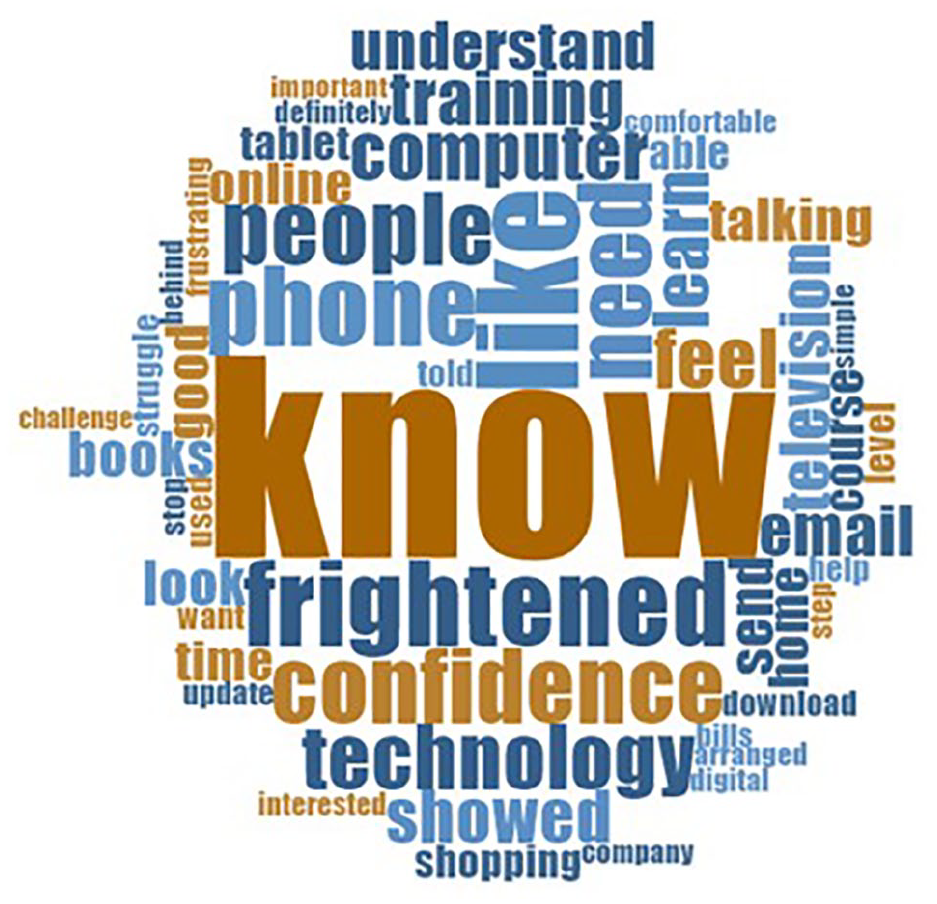
Word cloud of most frequent terms related to motivations for undertaking Housing Plus Pilot training.
Chen et al. (2012) argue that individual factors related to self-efficacy and confidence, anxiety, ability and facilitating conditions motivate older people to accept and engage with technology on an on-going basis. Martínez-Alcalá et al. (2018) identify that motivation is a fundamental part of how older adults learn digital literacy skills successfully.
The digital world
We have already considered that participants acknowledged the growth of the digital world in their lives, both socially and in terms of interacting with goods and service providers. Digital skills and confidence were sometimes lacking due to age and social circumstances, and learning basic skills provided a way of opening doors to the digital world, helping to increase their independence.
“Even BBC iplayer into my telly was a massive challenge for me, I had to get my son to do it. It is so simple, but it is only simple when you know how to do it”.
Most participants did not want to feel left behind, aware that they were from a generation where many had missed out on immersion in a digital world during school education and working years, and therefore needed to upskill to avoid becoming trapped in a ‘digital skills bubble’ where some activities were familiar, but many more were foreign (Schreurs et al., 2017).
“I felt really as if I was getting left behind, you know, everyone you talk to has got the internet”.
Seifert (2020) suggests that older people experience a perceived sense of social exclusion from the digital world due to their lack of engagement with technology, therefore as the need for inclusion is a basic human motivation, digital skills training provides an opportunity to feel more socially included in modern society.
Confidence
Many participants reported feeling frightened of technology, with limited usage prior to their training. They were not only scared because they lacked the knowledge and skills to use technology effectively, but also because they did not trust technology and worried about security and privacy issues. They were also scared that they would break things. These feelings resulted from a lack of understanding and knowledge about technology, together with awareness of what can go wrong from the wider media. Anxiety acts as an important barrier for technology adoption by older people (Tsai et al., 2015) therefore participants felt the training helped alleviate fears and improved their confidence.
“I was just scared to be honest with you, to use the computers and that, cos you hear that much about them, don’t you, about people getting your information and stuff like that”.
“I was frightened in case I was gan (sic) on to something I shouldn’t have gan (sic) on to, and I was going to get into trouble for it. . .. . .I was going to press the wrong buttons or whatever. I used to class it as, you might find this funny, but I used to class it as a nuclear bomb”.
Some individuals who had experienced limited use of technology through previous employment, were still nervous as systems and devices had changed significantly, others had bad experiences of technology training previously and this had put them off.
“That’s what it is all about yes, not being frightened of tech. At work I had to do quite a few complicated things on the computer, and I thought I could do that, I can do it again”.
“Years ago, I did a class in the library, I think it was spreadsheets, and the trainer said oh you just do this, this, and this, and then she just walked away. And I thought well, what’s the point, so I never went back”.
Others were frustrated by technology. They hoped the training would boost their confidence using technology and make them feel more positive towards digital aspects.
“I was really nervous to start with because I knew nothing at all about it. But everything went well. I felt comfortable, and all my fears went away after that first lesson. If I went wrong, it was alright”.
Independence
With the growth of an increasingly digitally reliant world, respondents acknowledged the importance of possessing the necessary skills and understanding to cope with this new digital environment. Many participants felt that having access to a digital device, in addition to having the knowledge and skills to use it effectively improved their independence, such that they no longer had to rely on close family and friends for support.
“I didn’t want to be dependent on others. I wanted to be independent, and I didn’t want to give up”.
“My daughter does everything for me online when I need to pay the bills and things like that. So, anything I need, she’s always done it for me. I just think . . . I need to stop being frightened of it, and try to get in the know, and try to get up to date with things”.
This mirrors discussions related to the struggle for digital autonomy by older people acting as a motivation (Costa et al., 2019), where feelings of anxiety are balanced by perceptions of the benefits of being online particularly related to becoming independent technology users.
Indeed, there was a pride exhibited from participants in being able to do things for themselves following their training, and not being reliant on others for things that were perceived to be quite simple once the basics were learnt. Participants with disabilities felt that having digital knowledge and skills gave them greater freedom and independence, particularly regarding physical access to shops and services.
“It was like learning to drive, and it opened a new world for us, I could just go out. Learning that, has taught me, that everything I need to know, I can go on there and it’s there ready, marvellous”.
“And sending emails now, I could never have done that, because I put it to the back of my mind with my disabilities. I mightn’t be great, but I really really enjoyed doing it, and the stuff I learnt will really help me in the future, doing things. . .and my mobility is bad as well”.
This desire to be independent has a strong relationship with feelings of confidence using technology and digital devices. All the participants exhibited poor technological confidence; not only did they lack access to digital devices, but they also did not possess the necessary knowledge and skills required to use such devices confidently and effectively. Learning basic digital skills therefore helped initiate a new chapter in people’s digital lives. ‘It is first and foremost a form of (re)capturing their sense of belonging within the complexities of modern society’ (Costa et al., 2019: 575).
Communication
Participants particularly valued the increased communication that comes with digital technology, as the pandemic has limited social interaction, increasing the potential for loneliness and isolation. Some of the participants were vulnerable due to disability or being older and had reduced their interaction with other people face to face, therefore software such as Facebook and Zoom enabled them to communicate remotely with family and friends thereby maintaining connections with the outside world. Therefore the internet is viewed ‘as a tool for socialisation capable of evading feelings of isolation when physical connection is not possible’ (Costa et al., 2019: 572).
“Now I asked him about seeing my nephews in America, and he said yes you can set up a thing so I can get in contact with them and see them on my video, on my laptop thing. . .. I have been talking with them and it has been absolutely brilliant”.
Others wanted to explore social connections more widely, for example past colleagues and people with similar interests.
“50 years ago, I knew a friend for a short period of time, when I was in the navy, and I recognised him on Service Pals; I haven’t really spoken to him yet, but I intend to”.
Email was viewed by several participants as a valuable tool for communicating with business and service providers, therefore understanding how to use it was a vital part of modern communication. It was interesting that this simple form of communication was something that many participants did not know how to do before their training, which impacted on their ability to communicate effectively particularly during the Covid-19 pandemic.
“The one thing I couldn’t do, which was the main reasons I wanted to do the course. I couldn’t send an email; I didn’t know how to. You know in this day and age, they say go online and send an email, well I can’t send an email cos I don’t know how to. It was like different companies would just presume that everyone was updated on technology”.
“I mean learning how to send an email on a scale of 1-10 was 10, because ‘ee’ yes, I can send an email. It might be trivial to some people, but I can send an email. You know, it really meant something, out of all of it, that was the most important thing I had achieved”.
There was also acknowledgement that digital communication was not necessarily a panacea, and had negative impacts too, encouraging exclusion and behaviour that resulted in physical inactivity.
“Party political broadcast on behalf of the old coming up. I want people to stop using their phones and start speaking to people again. It’s a phone culture. You can be in a room full of people, and still be on your own, because they are all on their devices. I think it starts to put a barrier in”.
“Well, I’m comfortable on the tablet that I’ve got now, I check it just about every day now. . .. but it started to get addictive, where I was ganning (sic) on it and being on it for about 6 hours, and I didn’t realise I was on for so long”.
For a small number of respondents, the value of the training was more about the contact and communication they experienced during training sessions, whether in a small group or via telephone one-to-one. The close relationship built up with the instructor became a real bonus for some respondents who felt socially isolated during stricter lockdown periods. This social dimension of digital literacy skills training is particularly important and a key motivating factor more generally for older people (Costa et al., 2019: 162).
“It was something to do, that sounds bad, cos it happened on a Tuesday, and some weeks where it was a Monday and a Tuesday. So, to start it was something to go and do. I don’t get out much, so I thought I would give it a try”.
“With it being a lockdown, I looked forward to the days when Lisa was going to ring. It really helped, and I think even if I was going to be rubbish, or fail the course, I would have still enjoyed talking to ***** or someone”.
Training approach
As mentioned previously the training used a couple of different delivery methods, dependent on the various states of lockdown at the time of delivery. All face-to-face library based digital skills training was suspended, and the Housing Plus Pilot focussed on digital skills training of people living in sheltered accommodation as this helped target a particularly isolated group of people. Phase 1 of this pilot occurred during strict lockdown, so used a series of one-to-one telephone interviews together with a dedicated tablet. Phase 2 occurred when lockdown rules were relaxed, so small group training was offered to sheltered accommodation residents, in common rooms using the same content, and providing a dedicated tablet for each attendee. The ease of access and personalisation of learning acted as key motivators for older people undertaking the training.
Participants enjoyed the one-to-one telephone training with a few particularly preferring the privacy aspects as it made them less self-conscious about their lack of digital knowledge and skills, and therefore more receptive to receiving training. However, there were some issues related to being able to hear properly for those respondents who had hearing impairments, and synchronisation of tablets had been a challenge on a few occasions. Training without seeing the instructor means that things can be more convoluted and can take more time than being face-to-face.
“When you’re in a classroom with other people doing it, and you have got a tutor, I mean they are thinly spread. And you are seeing other people type and you think they are good, and you haven’t got a clue, and you feel embarrassed and everything. You feel really self-conscious about asking and that but doing on the phone as she could see the same pages, there was no room for me to make a mistake really in what I was doing. It was brilliant”.
“On the phone. . .. he asks me to open a page, but he is not that page himself, so it wastes time on the telephone. Face to face is better, it’s good because he sees what I am doing, and I understand whatever he is telling me to do. On the phone it is difficult, because you don’t hear properly, and time is wasted on the phone”.
Face-to-face training had the benefit of being in small groups in sheltered accommodation and mitigated some of the challenges of remote telephone training. There was also an opportunity for attendees to meet other residents, particularly those who felt more isolated. Initial attendees reported that others within the sheltered accommodation who previously had not come forward for training, were now less hesitant based on the experiences of the pilot cohort. Other attendees reported that this pilot training had whet their appetite for further training, and they wished to visit the library to explore further.
“I thought it was a nice setting, in our accommodation, because we all have different things, we can’t get out much”.
“You get to know the people, because there are 30 odd different flats here, but you never see some people at all. The majority of people in the class I had never been before. I have been here a year now, and I have never seen the people”.
The important motivator here is that digital literacy training was carried out in a social setting; training in the sheltered accommodation helped develop the digital literacy of participants by providing a network of support (particularly with group sessions) (Schreurs et al., 2017), in addition to the opportunity to practice skills learnt using freely available Wi-Fi in a social supportive environment.
All participants valued the step-by-step approach of the training, and the relaxed way in which the training was delivered, enabling attendees to feel at ease, and able to ask anything they wanted without feeling intimidated. They valued the fact that they were not made to feel stupid, and that a supportive ethos of you can’t be wrong was used to instil confidence and support their learning. This all helped to stem technology anxiety and enhance motivation further.
“Nobody lost their temper, you know if I couldn’t do it, it was ok. I was really pleased that I could do most of it, in the evening I would come over to the community centre where I got the connection, and I used to go and play about with things. I couldn’t do anything wrong”.
They also appreciated the patient and down to earth approach of instructors, with learning personalised to work at an individual’s own pace, and aspects explained carefully so that respondents felt at ease with the content they were learning. Ensuring that instructors are the right fit for training is crucial as they play an important role in maintaining the motivation of participants (Martínez-Alcalá et al., 2018).
“No, I just thought ***** had done a really good job. He was really patient with us, it wasn’t like being in a classroom or a school, we had a really good laugh. He pushed you as far as he could, and then he went over it again until you registered with it”.
“***** has the patience of a saint, I mean honest to God, that lass just made me feel so much at ease. We clicked straight away, we got on amazing, she just kept saying, anything at all, you know you are not sure of I will just explain it, whether I have got to explain it 10 times or 20 times, don’t worry, I will explain it again”.
Additionally use of helpers in the face-to-face sessions further supported personalised learning which was particularly beneficial for older adults (Leung et al., 2012 in Yoo, 2020), and the pilot sessions became more than just an opportunity to learn but also an opportunity to socialise and feel part of something.
“The support was the biggest thing. And in terms of learning, I am not conscious of what I learnt, but I have got the confidence to go and try more”.
Technology
All participants could be viewed as digitally poor prior to the training, whether that be because of lacking digital devices, having limited skills, or not having access to an internet connection. Most respondents owned few digital devices with many simply having a mobile phone, with usage often limited to basic functions such as telephone calls or accessing popular social media such as Facebook. There was a lack of confidence from those with technology in navigating and using it. There was also a historical lack of interest in using modern technology, although the pandemic appeared to have changed this desire for some.
“I did have some technology background through the iphone, but still things I didn’t know about. I could find my way round the phone, but I couldn’t do these attachment things, or do bookmarks, I didn’t have a clue, I didn’t understand it”.
Easy access to technology acted as a motivator for course participants. As they lived in sheltered housing, they had free access to Wi-Fi, but for many this was in a communal lounge and therefore a less attractive proposition when attempting to reduce social contact due to the pandemic. At least one respondent had Wi-Fi brought into their own accommodation because of the training they received.
Obtaining a free tablet at the start of the training was a bonus for many participants, particularly as some were shielding during lockdown. Its similarity to a mobile phone made transferring knowledge and skills learnt easier, and its simplicity and portability helped enable a variety of new opportunities for digital engagement. As mobile device usage is currently one of the fastest growing technologies (Yoo, 2020), and ‘tablet devices have the potential to become indispensable in connecting older adults’ to the outside world (Tsai et al., 2015: 705), being given a tablet was an important motivating factor. Many participants felt grateful as they were unable to afford to buy a tablet themselves, whereas a small number initially felt awkward as they were more able financially to afford to buy similar equipment.
“I was over the moon. I thought we would be borrowing it (the tablet) until the end of the training, and then they would take it back off us, it has opened a lot of doors”.
Outcomes from the training
Five key themes arose from the data regarding the outcomes of the digital skills training for participants. These outcomes link directly to the motivators for learning – particularly coping with a digital world, and becoming independent in digital skills, in addition to being more socially connected to others in a pandemic world.
Knowledge and skills
Confidence
Springboard for further learning
Social interaction and accessibility
Library aspects
Knowledge and skills
Gaining knowledge and learning skills that helped engagement with technology demystified what had been for many respondents a previously alien world. Technology was perceived as something difficult to learn, however many participants were pleasantly surprised at the simplicity of what they learnt. Such barriers were immense and breaking these down through simple instruction opened a whole new world for many respondents and directly changed their online behaviour following training.
Key topics that respondents mentioned as enabling their digital confidence included:
Getting on the internet
Searching for information
Using a tablet
Cookies and security
Licencing
Downloading apps
Printing
Online banking
“I suppose also that when something is demystified that it becomes. . .. you realize actually you can do it. Actually, that’s a wonderful feeling I think so”.
Although these skills are important, it is only part of what makes someone digitally literate and understanding socio-emotional aspects is also crucial to defining digital literacy. The cognitive and socio-emotional aspects of digital engagement are related to the development of competency and confidence (Schreurs et al., 2017), and help older people to develop self-efficacy thereby cultivating greater overall digital participation (George-Walker and Tyler, 2014).
Confidence
Not only did the desire for confidence act as a motivator for taking up training, but technological confidence was one of the most frequently cited outcomes from this training, particularly from people who had previously been frightened of technology. This worked hand in hand with gaining skills and knowledge, providing a better understanding of digital devices and how technology works and enabling people to enjoy their interactions with technology.
“I have been using the Google search, and I love it, and well I am confident with that. That’s all it is, being confident with using it and then I will enjoy it, you know”.
For the very few participants who experienced limited levels of technology usage during their working lives, this training boosted their confidence engaging with new technologies. For most participants fear of technology was very real, and gaining confidence was vital for them to feel comfortable enough to try things and not panic. It was often the
“Going through the various modules, I was learning, and because I did have some skills and ability it helped me get those basics even better. . .. All steps added together make a significant difference. It gives me the spirit to go on”.
Also, the way in which training was delivered helped to build confidence too, using a patient step by step approach and focussing very much on the individual.
“Spot on. I think confidence, you know, ***** explained everything, and he didn’t miss anything. Nothing was too much for him”.
Chen et al. (2012: 3) argue that ‘older adults are more prone to learn and use new technology when they consider such technology to be useful and relatively easy to use’, and will increase their usage behaviour as their confidence levels improve, facilitated by a relaxed and comfortable training environment.
Springboard for further learning
Increased knowledge, skills and confidence resulted in many of the participants expressing a desire to learn for themselves in the future. They were aware that to keep up with the modern world, interaction with digital was important, and that technology would continue to evolve.
“In the future, now that I am on board, I would learn myself. That’s the thing with technology, you don’t know where it ends or where it begins. You just accept whatever is going into your brain”.
Their newfound confidence meant that they were hopeful that they could build on their basic training refining their skills further. A few participants discussed wanting to undertake more advanced training or refresh their skills in a few years. Others were keen to do other things, such as explore their family tree and link up with their Doctor’s General Practice (GP) surgery online.
“Once we get out of lockdown, I will look forward to getting down to the library and meeting up with ***** and the team and sitting down and working through the things that are barriers. As I am very sure those people can take me through the barriers”.
“When it’s back to normal I am going to go to my GPs to get a form to be able to go online with my GP, for my medication and appointments. I am leaving that for now until I get confident, don’t want to put all my eggs in one basket, baby steps”.
For some participants, their previous educational experience had been particularly poor, and this training had helped them to appreciate that learning could be interesting and valuable to their wellbeing.
Social interaction and accessibility
As previously mentioned, all participants were based in sheltered accommodation, being older in age, with some experiencing poor health and disability. The Covid-19 pandemic had challenged their ability to interact as fully with the outside world, and the training alleviated this isolation in two main ways.
The training sessions themselves provided an opportunity for individuals to interact regularly either via the phone (during lockdown), or in small groups in their sheltered accommodation following lockdown. Many looked forward to this weekly interaction and established strong relationships with their trainer, and fellow learners. For one participant who attended the small group sessions based in his sheltered accommodation, he met people living nearby whom he had never seen before. This regular meeting during the pandemic certainly helped to enhance the social lives of the respondents and provided a structure and focus to each week.
In addition, development of digital skills and knowledge, together with access to a digital device allowed participants to engage with a digital world previously inaccessible. For example, the use of social media, such as Facebook, helped to reconnect people. Use of video calling brought family and friends closer together. Using online shopping and banking facilities was helpful to those with a physical disability, unable to get out as easily. Use of the online library also provided entertainment to some respondents, in addition to saving money on books, magazines and newspapers. The ability to use email and search for information reinforced social use thereby improving participants’ sense of belonging (Seifert et al., 2018).
Therefore, feelings of social inclusion resulted from this training and were directly linked to the digital inclusion that participants experienced, enabling them to better belong to a society that has become increasingly socially distant during the Covid-19 pandemic.
Enjoyment and excitement
All participants enjoyed their training, with anticipation and excitement being experienced initially.
“When I got the tablet, I was excited as I was looking forward to learning and having somebody one to one. I was able to say how useless I was, I was able to declare it and not hide it, and someone believe me”.
During their learning, this excitement continued as they were able to practice on their tablets between sessions and follow up on their new skills learnt. For a small number of participants however there was a fear that they might break their tablet, and they were less keen to practice and experiment. As a result of the training all respondents felt that they had enjoyed the learning and possessed a new confidence in exploring and using technology. In addition the role of enjoyment helped build well-being amongst participants.
“When they taught us about emails. She showed us how to send a photograph, and she explained everything about the licensing, and to download a photograph off the internet and then send it to her. And I done it, and she talked it through a couple of times. I was, well. . ..′hopping and bopping’ and I sent one to my daughter as well. I was hopping and bopping, I was so proud of myself. I was over the moon”.
“I enjoyed the whole lot because everything was done simple, and if I wasn’t sure about something, he went over and over again with us. He was very patient with us, and he spoke my kind of language, if you understand what I mean, he put it in simple terms all these long verbs, it was a very good course”.
Library aspects
Awareness and access to Newcastle’s online library was an important outcome from the digital literacy training, although there were some mixed responses from participants.
Several participants had not previously been aware of the online library account and were overjoyed to discover this facility. They had started to engage with Borrowbox and accessing magazines. The convenience of using the library remotely was a positive for many respondents, particularly those wishing to avoid visiting the city, and those who had not previously engaged with the physical library but felt happy interacting online.
“I didn’t know it (online library) was there. I mean I knew about the library, and I knew you could borrow from the library, but I didn’t know how to. . .. but now I use Borrowbox all the time now. I’ve got about 5 titles waiting to come in. It saves me money as well, I usually buy paperbacks now, I enjoy going into that and seeing what’s available”.
“Because of this course I have ended up on my tablet, and I download a lot of books now, I have started enjoying reading”.
“The library is just at the tip of my fingers now, I found that really good”.
Access to the online library also served to spark new interest and enthusiasm in the physical library for some.
“I have always been a library member and been to the library in the past. I have always enjoyed reading. I never used the library for years, then it was, I forget what it was. After lockdown, I thought right, I renewed my library card, because ***** said I needed it updating. I have started using the library for other things, you know”.
The partnership between the social housing provider and a public library service means that participants benefitted not only from learning new skills, but also provided a way of re-engaging with lapsed library users and non-users. Public libraries are an important tool for enabling social exclusion and supporting digital skills development on an ongoing basis, however it is sometimes challenging to target those individuals who do not engage with the library.
Conclusion
The Housing Plus Pilot made a real difference to the participants interviewed during this research, even more important when one considers the Covid-19 pandemic and the move towards a more digital world during this period.
All participants felt more confident because of the training and had changed their behaviour as a result. The possession of a tablet and having access to a free Wi-Fi connection meant they were able to actively try out the skills they had learnt following training reinforcing what they had learnt. The focussed training through telephone and small group instruction, allowed them to feel supported and able to ask the questions they needed to gain the skills and confidence required. It also enabled them to have more targeted support which provided an individualised learning experience.
The digital literacy training evaluated adhered to what Martínez-Alcalá et al. (2018) suggests is a successful model, comprising four important aspects: training material that was genuinely useful to learn, a collaborative and supportive environment that resulted in proactive learning, the fostering of social inclusion and provision of opportunities for autonomous learning.
The role of personal efficacy is crucial for motivating older people to learn digital skills, and that demands a particular training experience. Bandura (2000: 75) argues that ‘unless people believe they can produce desired effects and forestall undesired ones by their actions, they have little incentive to act’ therefore the role of confidence building and simplifying content was crucial, and that was greatly dependent on the way that training occurred, and the instructors delivering the sessions.
It is also important to understand that older people are not necessarily a homogenous group in terms of digital ability, and therefore training needs to be appropriately situated (Costa et al., 2019), and suited to its participants. The Housing Plus Pilot tackled this well by adopting a targetted approach aimed at sheltered housing residents, who although not necessarily homogenous, did possess common traits related to vulnerability and isolation during the Covid-19 pandemic.
‘Taking into account the subjective component of an individual’s exclusion is crucial insofar as objective access to the digital world alone may not be a sufficient criterion or predictor of social exclusion’ (Seifert et al., 2018: 776). This perceived sense of social exclusion resulting from lack of access to the digital world, particularly during the pandemic, has been a key limiting factor for older people’s engagement with technology. Although barriers exist for older people in gaining the necessary digital skills for navigating the digital world, this training has provided an opportunity for people to face their fear and do it anyway. It has helped boost confidence and provide a catalyst for participants to use their new knowledge to engage with the digital world in a more proactive way, greatly enhanced by the ownership of a tablet, and access to free Wi-Fi.
The following quotes sum up the overall sentiment from the older people interviewed.
“I came away really confident. The amount of things I have learnt about the internet. I am never going to be a master, but I am a lot more confident. I know how to do a little bit more. . ..
I am not as scared as I was, I know I am not going to blow the world up; I can cancel or delete.”
“It is just a way of life now, and without the likes of people like ***** and ***** and everyone involved; helping people who have got no idea about technology, or very little idea. You are opening up a whole new chapter in people’s lives technology wise. You are so patient and giving people that little bit more knowledge”.
However, there are aspects that need to be considered with caution. This pilot was small in focus, and time-intensive for participants adhering to what Allman et al. (2021) discovered in their own research, with digital literacy training being context specific and operating at an individual level. The Housing Plus Project was very much on the ‘front lines’ of the digital divide and this approach brings with it a vulnerability that requires the full support of policy makers if it is to be effective. There are challenges in scaling this type of approach up to benefit more older people, and issues to do with ensuring that digital skills taught remain current as technology develops.
Key recommendations resulting from this pilot include the following
The use of small group training sessions based in sheltered accommodation provides older people unable to visit the city library with a viable alternative for learning digital skills.
The use of a familiar setting allows participants to meet other people in their sheltered housing and feel part of their social setting, in addition to helping to develop support networks.
Provision of a tablet allows older people to practice skills learnt reinforcing training content. This is particularly important for those who may experience cognitive issues.
Tablets have many benefits as they help simplify understanding and are similar to mobile devices such as smartphones, which many participants have access to.
Trainers need to be patient, experienced and supported by helpers to ensure personalised, targeted help to older people.
Linking to library, health and other council apps is vital to ensure that participants become connected citizens. The benefits of the library for leisure, well-being and further research are important.
Due to the changing nature of technology, and the cognitive and other challenges that older people face, it is recommended that support is offered following training through continuing contact with the library and its digital literacy offer.
Partnerships between public libraries and social housing providers provide a mutually beneficial arrangement that enhances services offered and actively works towards greater social and digital inclusion.
It is suggested that future research which examines a wider sample of digital literacy approaches is important to better understand this phenomenon, in addition to establishing how ongoing digital literacy skills for older people can be maintained in an accessible and inclusive manner. Consideration of the value of partnership working between the public library and other service/third sector would help to identify models and approaches that work best for digital literacy of older people.
Footnotes
Declaration of conflicting interests
The author declared no potential conflicts of interest with respect to the research, authorship and/or publication of this article.
Funding
The author received no financial support for the research, authorship and/or publication of this article.
