




Abstract
As organisations that collect and maintain cultural artefacts, independent libraries make important contributions to cultural sustainability. Surfacing and elaborating on these contributions has the potential to establish their value to wider sustainable development agendas. However, sustainability policy and research across the gallery, library, archive and museum sectors tends to focus on environmental, social and economic concerns. The small number of studies that do consider cultural sustainability tend to focus on the role of galleries, libraries, archives and museums in heritage preservation, without consideration of their role in sustaining culture through the three other key areas of preserving and promoting cultural identity, cultural diversity and cultural vitality. In addition, previous studies do not consider the role of culture in enabling sustainability at an organisational level. Complementing previous research on the relationship between museums and cultural sustainability (conducted in Australia, Cyprus and Romania), this study seeks to expand understanding of the relationship between galleries, libraries, archives and museums and cultural sustainability in the context of the independent library sectors in the United Kingdom and the United States. Semi-structured interviews conducted with professionals from independent libraries in both countries employed a card-based game method to explore the key areas of cultural sustainability in which their organisations can contribute. Interviews also explored the challenges associated with achieving organisational sustainability, together with the organisational values that impact the sustainability of independent libraries. The research identifies a series of supportive and conflicting relationships between the contributions that independent libraries make to each of the four key areas of cultural sustainability, as well as the organisational values that can inhibit or assist organisational sustainability. Resulting in a framework to assist in the management of internal organisational sustainability and contributions to external cultural sustainability agendas in independent libraries, it provides a new perspective to support understanding of the relationship between galleries, libraries, archives and museums and cultural sustainability.
Keywords
Introduction
Independent libraries are an important, yet often overlooked, aspect of both British and American heritage. With origins dating back to the 18th and 19th centuries, independent libraries came into existence before the widespread development of government-funded public library systems. Those founded on a subscription library model relied on the fees paid by their members, while institutions founded as privately endowed public libraries or the libraries of Mechanics’ Institutes relied on support from wealthy benefactors on philanthropic grounds. Today, independent libraries continue to maintain their financial independence and are typically reliant on member subscriptions and additional funding from charitable bodies and other activities (Forster, 1995; Hopper, 2008). They continue to provide a unique cultural and social space for their communities, with collections that can provide fascinating insights into their users’ interests over the centuries and buildings that are often historic landmarks. Yet despite this, as with many organisations in the GLAM (gallery, library, archive and museum) sectors, financial instability and a lack of strategic planning means that many independent libraries face an ongoing struggle for survival (Bishop and Rowley, 2012; Forster, 1995).
The development of sustainability models and indicators for GLAMs offers the opportunity to address these issues. The employment of such measures can benefit GLAMs by providing a holistic method by which to view their operations and thereby overcome strategic planning issues. It can also provide justification for their continued financial support by demonstrating their contribution to the wider sustainable development goals of society (Jankowska and Marcum, 2010; Stylianou-Lambert et al., 2014). However, the typical focus of these models on environmental, economic and social sustainability can also lead to the neglect of their original mission. With pressure being placed on organisations to meet targets and demonstrate value according to these three areas of sustainability, the ‘acquisition, preservation, and research’ of their collections can become ‘subordinate’ to these other ‘aims’ (Anderson, 2009: 6).
Increasing acknowledgement of culture as the ‘fourth pillar’ of sustainability (Hawkes, 2001) could enable better alignment between external sustainability goals and organisational missions. The protection of cultural heritage assets, as a core means by which cultural values and meanings are transferred between generations, is considered crucial for cultural sustainability to be possible (United Nations Educational Scientific and Cultural Organisation, 2013). In addition, since culture pertains to the ‘beliefs and practices’ that shape the way that ‘things are done and our understanding of why this should be so’ (Canadian International Development Agency (CIDA), 2000: 1), it can also provide a lens by which to comprehend and implement the changes necessary to enable sustainability to be possible (Hawkes, 2001:25). Yet the focus of most sustainability research in these sectors has remained on environmental, economic and social concerns (Jankowska and Markum, 2010; Stylianou-Lambert et al., 2014). The few studies conducted into the relationship between cultural sustainability and GLAMs tend to focus either on developing ‘broader (external) cultural policies’ (Stylianou-Lambert et al., 2014: 569) without consideration of internal practices or on developing indicators related to improving the preservation and conservation of the physical cultural artefacts in their collections (Pop et al., 2019). There is no previous research considering the dynamic nature of the role that organisations play in the cultural sustainability of their communities from the perspective of practitioners, nor of the role that culture plays in enabling organisations to take the steps to becoming more sustainable institutions (Hawkes, 2001; Loach et al., 2017). The research reported in this article seeks to expand understanding of the relationship between GLAMs and cultural sustainability within the context of independent libraries in the United Kingdom and United States. Three main objectives were set for this study:
To establish understanding of the contributions of independent libraries to external cultural sustainability agendas and the challenges in realising these contributions,
To consider the role of organisational culture in achieving sustainability in independent libraries,
To contextualise the notion of cultural sustainability in independent libraries with respect to the wider GLAM sector.
To meet these objectives, four research questions were posed:
Research Question 1. What strengths and weaknesses do independent library professionals perceive in their organisations’ contributions to cultural sustainability agendas?
Research Question 2. What are the main challenges to achieving sustainability in independent libraries?
Research Question 3. What changes are required to overcome these challenges and achieve sustainability in independent libraries?
Research Question 4. How does understanding of the cultural sustainability of independent libraries contribute to the wider understanding and development of cultural sustainability in the GLAM sector?
There are a number of benefits to conducting this research in the context of independent libraries in the United Kingdom and United States. For independent libraries specifically, it will help to address the hitherto lack of sustainability research in the sector and ensure that it is brought in alignment with current research trends in the wider GLAM sectors. The inclusion of independent libraries located in both the United Kingdom and United States within the study will also be beneficial to the sector in drawing together insights on the sustainability of these libraries from organisations that have previously existed in relative isolation from each other. Since previous empirical research on cultural sustainability in GLAMs has focused on museums in Cyprus (Stylianou-Lambert et al., 2014), Romania (Pop and Borza, 2016; Pop et al., 2019) and Australia (Adams, 2010), it will also be the first study to conduct research on cultural sustainability in the organisational context of libraries and the geographic context of the United Kingdom and United States.
Literature review
Sustainable development, or, ‘development that meets the needs of the present without compromising the ability of future generations to meet their own needs’ (World Commission on Environment, 1987: 43) has been an important factor in shaping policy and research since the 1980s. Recognising that we must move away from ‘exclusively economic’ ideas about development to a more holistic approach that balances economic growth against a concern for the natural environment and the social well-being of humanity (Hawkes, 2001: 9), it has resulted in organisations increasingly being expected to demonstrate their contributions to social, economic and environmental sustainable development goals (Savitz, 2006).
Although originally considered a component of social sustainability, it is now widely agreed that culture is of equal importance to economic, environmental and social concerns in enabling sustainable development (Hawkes, 2001). Owing to the multiple possible definitions of what we mean by ‘culture’, perceptions of the role that culture plays in sustainable development and what exactly is meant by cultural sustainability can differ according to the discipline from which it is approached (Barthel-Bouchier, 2013). Soini and Birkeland’s (2014: 213) analysis of the discourse on cultural sustainability identifies seven storylines, including ‘heritage, vitality, economic viability, diversity, locality, eco-cultural resilience, and eco-cultural civilization’, which each apply their own diverse meanings to the concept.
Culture can refer to ‘intellectual and creative products’, such as those which GLAMs work to conserve and produce (CIDA, 2000: 1). However, it can also refer to ‘the shared “patterns of thought and behaviour, values, and beliefs”’ (Barthel-Bouchier, 2013: 11) of a society, being part of its ‘fabric’ and shaping the way that ‘things are done and our understanding of why this should be so’ (CIDA, 2000: 1). From this perspective, culture is not only integral to the existence of a society or social group in the first place but can also be seen to provide us with the means of ‘comprehending’ and ‘implementing’ the changes in our ideas about living that are required to enable a more sustainable society to be possible (Hawkes, 2001: 25).
Although much work is still necessary to fully understand and develop the notion of cultural sustainability, since the protection of cultural heritage and the strengthening of cultural vitality have emerged as two key ‘storylines’ within the scientific discourse surrounding the term (Soini and Birkeland, 2014), it is clear that finding ways to demonstrate the contributions of GLAMs to cultural sustainability can be a useful method for demonstrating the value of such organisations to wider society. Yet despite this, a review of the previous research on sustainability and GLAMs found only four studies (of a total of 47) that made a specific reference to the concept of ‘cultural sustainability’, all of which were conducted in the museums sector. Indeed, despite the key role that libraries play in preserving and providing access to cultural assets, the focus of sustainability research conducted in libraries continues to remain on ‘greening’ initiatives (Jankowska and Marcum, 2010: 162) or the economic and social aspects of sustainability (Beutelspacher and Meschede, 2020; Chowdhury, 2014; Hamilton, 2004; Pinto and Ochôa, 2017).
As one of the four studies to focus on cultural sustainability in museums, Stylianou-Lambert et al. (2014: 566) develop a comprehensive list of the ‘parameters of cultural sustainability’ to which museums contribute, which include seven key areas: ‘Heritage preservation’, ‘Cultural skills and knowledge’, ‘Memory/Identity’, ‘New audiences/inclusion’, ‘Cultural diversity/intercultural dialogue’, ‘Creativity and innovation’, and ‘Artistic vitality’ (Stylianou-Lambert et al., 2014: 570). Conducting their research across the museums sector in Cyprus, the model was developed to aid cultural policy makers in identifying ‘weaknesses or gaps’ in particular areas of cultural sustainability within different museum environments (Stylianou-Lambert et al., 2014: 572) and marks a significant move away from the traditional focus on environmental, economic and social concerns within sustainable development models for museums. However, the focus of this research on developing ‘broader (external) cultural policies’ (Stylianou-Lambert et al., 2014: 569) does not allow for any consideration of internal practices in museums and how these may need to be adapted to demonstrate and improve contributions to wider cultural sustainability agendas.
Adams (2010) draws on existing publications and governmental guidelines within the sustainable development field to develop a set of indicators for use within museums that incorporates all four dimensions of sustainability, including cultural sustainability. In comparison to the policy-focused model of Stylianou-Lambert et al. (2014), the development of such specific goals and indicators can help towards making sustainability more relevant and manageable to practitioners at an organisational level. However, while Adams’ (2010) model includes cultural sustainability as an equal concern alongside environmental, economic and social concerns, when compared to the discourse surrounding cultural sustainability, its interpretation of the role of museums in cultural sustainability is limited to their work in preserving physical cultural artefacts. With the main cultural sustainability goal being ‘to hold the collection in perpetuity and maintain its quality’ (Adams, 2010: 46), no measures are developed to suggest how museums can improve their contributions to areas of cultural sustainability beyond heritage preservation, such as those identified by the seven separate parameters established by Stylianou-Lambert et al. (2014, see above).
In common with Adams (2010), Pop and Borza (2016) also argue for the importance of developing sustainability indicators for museums that include a consideration of the factors that affect their own internal organisational sustainability. Conducting interviews with experts from the Romanian museums sector, the study considers how factors such as ‘the type, size and management and marketing strategies applied by a certain museum can influence its sustainability’ (Pop and Borza, 2016: 6). The data collected provides the basis for the development of a set of 33 indicators and a model for the ‘objective . . . measurement of museum sustainability’ (Pop and Borza, 2016: 6). As well as providing museums with indicators to demonstrate their contributions to external sustainable development agendas, they include indicators to measure the internal sustainability of the museum as an organisation. However, as with Adams’ (2010) model, while the indicators developed to measure cultural sustainability do cover a concern for increasing collection ‘research’ alongside improving collection ‘storage’ and ‘conservation’ (Pop and Borza, 2016: 6), these indicators again do not go beyond preserving and providing access to physical cultural artefacts.
A more recent study by Pop et al. (2019), again conducted across the Romanian museums sector, seeks to take the ‘less debated perspective’ by evaluating ‘the role of economic, social, and environmental sustainability in supporting the cultural mission of museums’ (p. 14). In comparison to previous research, which focuses on how cultural heritage can be used ‘as a resource for achieving economic, social, and environmental goals’, the study demonstrates how particular ‘components of social and economic sustainability have the capacity to influence cultural sustainability’ and enable museums to accomplish their ‘goals related to the preservation, conservation, and research of cultural heritage’ (Pop et al., 2019: 14). By subverting the relationship between the four dimensions of sustainability in this way, this study marks a significant move towards a more in-depth exploration of the complexities of the relationship between GLAMs and cultural sustainability. However, as with the previous studies, the focus is solely on the role that organisations play in preserving and providing access to physical cultural heritage objects, and their contributions to the other parameters of cultural sustainability as identified by Stylianou-Lambert et al. (2014) remain unexplored.
The tendency of GLAM sustainability literature to focus on how they can ‘contribute to . . . sustainable development’ according to their ‘function’ as institutions that ‘conserve and valorize the cultural resources of a community’ (Pop and Borza, 2016: 2–5) has also led to other notions of cultural sustainability to remain overlooked. In particular, despite the fact that the role of ‘patterns of thought and behaviour, values, and beliefs’ (Barthel-Bouchier, 2013: 11) in enabling sustainability is recognised as an important consideration in the broader discourse surrounding cultural sustainability, the role of organisational culture in enabling GLAMs to achieve their own internal sustainability is rarely considered.
The role of the ‘traditions, values, policies, beliefs, and attitudes’ (Mullins, 2007: 721) that constitute an organisation’s culture has long been an important area of organisational research. The Competing Values Framework (CVF), which seeks to capture the different perspectives and values that exist in an organisation, is a useful method by which to consider the management of organisational culture for effective organisational performance (Cameron, 2013). As a variation on the CVF, the Museum Values Framework (MVF, Figure 1) proposed by Davies et al. (2013) is of particular relevance to understanding organisational culture in GLAMs.
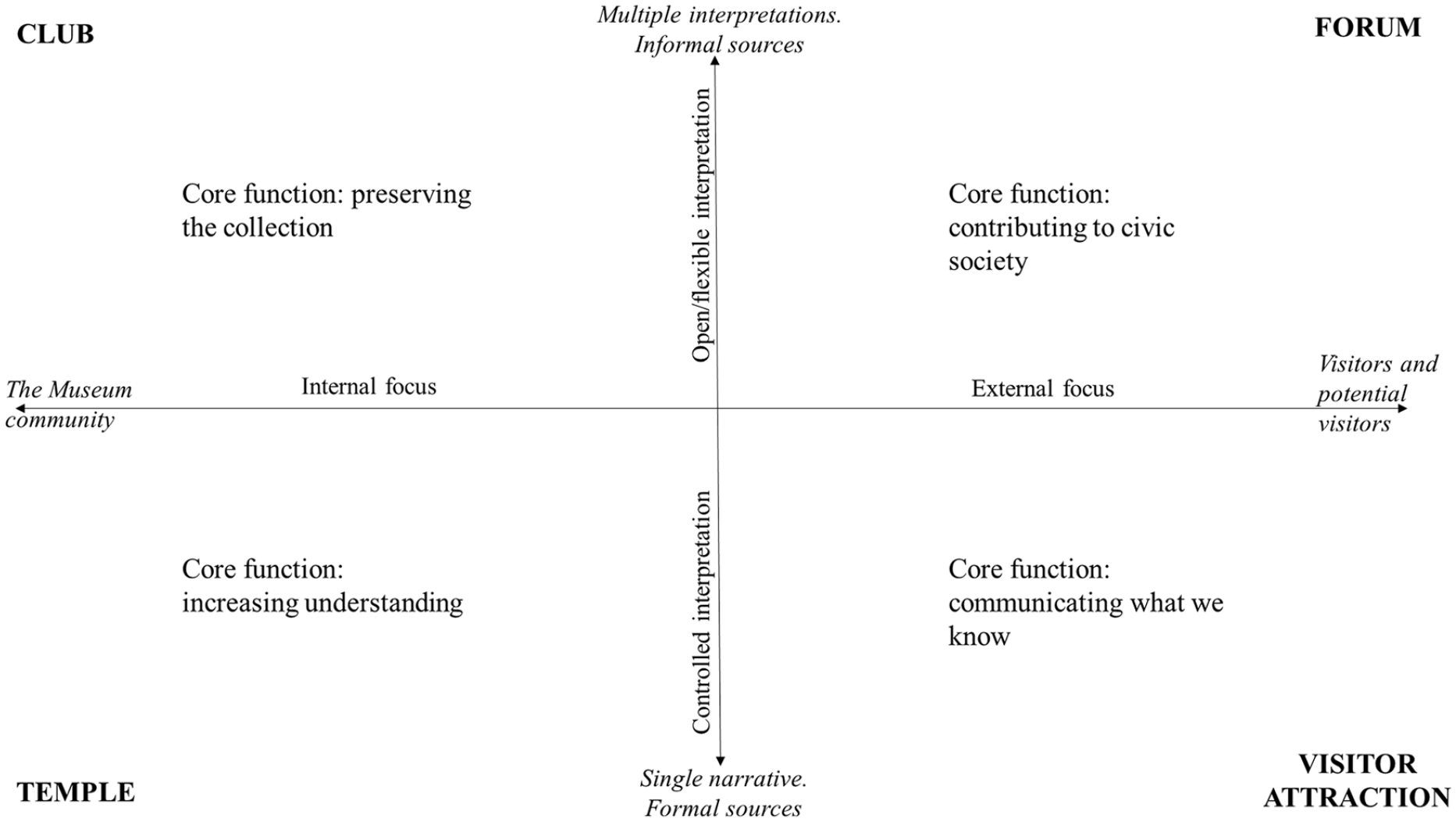
A simplified version of the Museum Values Framework adapted from Davies et al. (2013).
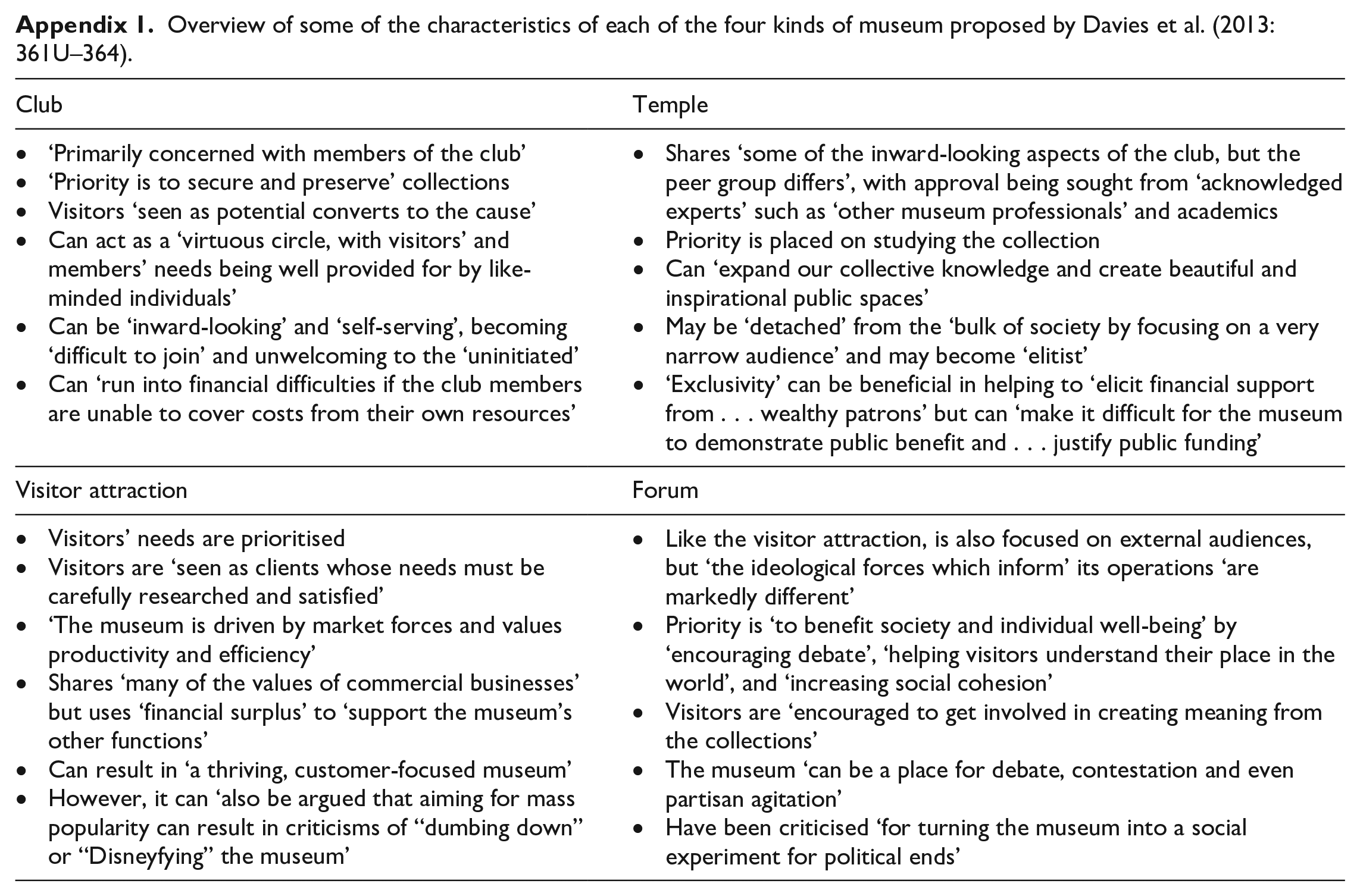
According to its position in relation to the axes, each quadrant of the MVF is representative of a different museum environment that prioritises different core functions, different audiences and stakeholders (the horizontal axis), and different beliefs about the conceptualisation of knowledge related to its collections (the vertical axis). These four different kinds of museum are categorised by Davies et al. (2013: 351) as either a ‘Club’, ‘Temple’, ‘Visitor Attraction’ or ‘Forum’, which each have their own characteristics and possible positive and negative attributes (Appendix 1). By identifying which characteristics tend to be emphasised by a museum, it is possible to use the framework to ‘analyse behaviour’ within the organisation and consider any ‘tensions’ that may exist (Davies et al., 2013: 354). However, as with other studies that focus on organisational culture in GLAMs (Chidambaranathan and Regha, 2016; Chidambaranathan and Swarooprani, 2017; Kaarst-Brown et al., 2004; Shepstone and Currie, 2008), the focus is on improving the general effectiveness of organisations rather than on enabling sustainability to be achieved.
One study from the GLAM sectors that does consider the role of organisational culture in enabling the sustainability of an organisation is Newman’s (2010) investigation into the sustainability of community archives. Developing a ‘methodological framework for assessing the likely sustainability of Community Archives’, the study identifies a number of organisational factors that impact on the sustainability of archives, including governance, funding, staff skills, collaboration, the dynamism of the organisation, its preservation and archival practices, and its levels of community engagement (Newman, 2010: 62). A series of characteristics related to each of these factors are identified as corresponding to the likely sustainability of the archives, and include cultural concerns such as whether or not the archive’s stakeholders have positive attitudes towards ‘change’ and ‘growth’ (Newman, 2010: 62). However, while the study does provide a holistic perspective on the environment necessary for the sustainability of collections at an organisational level, there is no consideration of the wider discourse on sustainable development. As a result, it does not consider the relationship between internal organisational sustainability and external sustainable development agendas. Without providing recognition of this relationship, the framework cannot identify any conflicts that may exist between these different agendas.
While important contributions towards ensuring cultural sustainability is included as an equal concern alongside economic, environmental and social concerns in GLAM sustainability models have been made, it is clear that cultural sustainability remains an under-explored topic in the literature on sustainability in GLAMs. The focus on demonstrating contributions to external cultural sustainability agendas and developing indicators related to preserving and providing access to physical cultural artefacts has meant their contributions to other areas of cultural sustainability, and the challenges faced by practitioners at an organisational level to realise these contributions, remain unexplored. In addition, despite the fact that culture itself plays an important role in enabling sustainability, the role of culture in enabling organisational sustainability remains unaddressed.
Methodology
Data collection methods
As the aim of the study was to gain an in-depth understanding of a previously under-researched area, the researchers decided to undertake semi-structured interviews, as they would provide the opportunity to generate qualitative data and gain deeper insights from the professional viewpoints of the participants (King and Horrocks, 2010). Since the overarching aim of the research was to collect empirical data to develop understanding of the relationship between GLAMs and cultural sustainability, it was also important that the data collected built on the previous body of knowledge surrounding the topic. For this reason, the researchers returned to the previous literature on GLAMs and cultural sustainability to develop an overview of the key topics that would need covering during the interview process.
With regard to developing understanding of the contributions of independent libraries to external cultural sustainability agendas, the model proposed by Stylianou-Lambert et al. (2014) for developing cultural policies to improve the contributions of museums to cultural sustainability offered the most comprehensive account of the relationship between GLAM organisations and cultural sustainability. In addition, Soini and Birkeland’s (2014) review of the discourse surrounding cultural sustainability was identified as one of the most comprehensive accounts of cultural sustainability more generally. By gradually combining similar topics identified in these two studies, it was possible to develop a simplified overview of the main facets of cultural sustainability that would be relevant to independent libraries. This process resulted in the development of four key categories that would guide the interviews: ‘Heritage Preservation’, ‘Cultural Identity’, ‘Cultural Vitality’ and ‘Cultural Diversity’ (Figure 2).
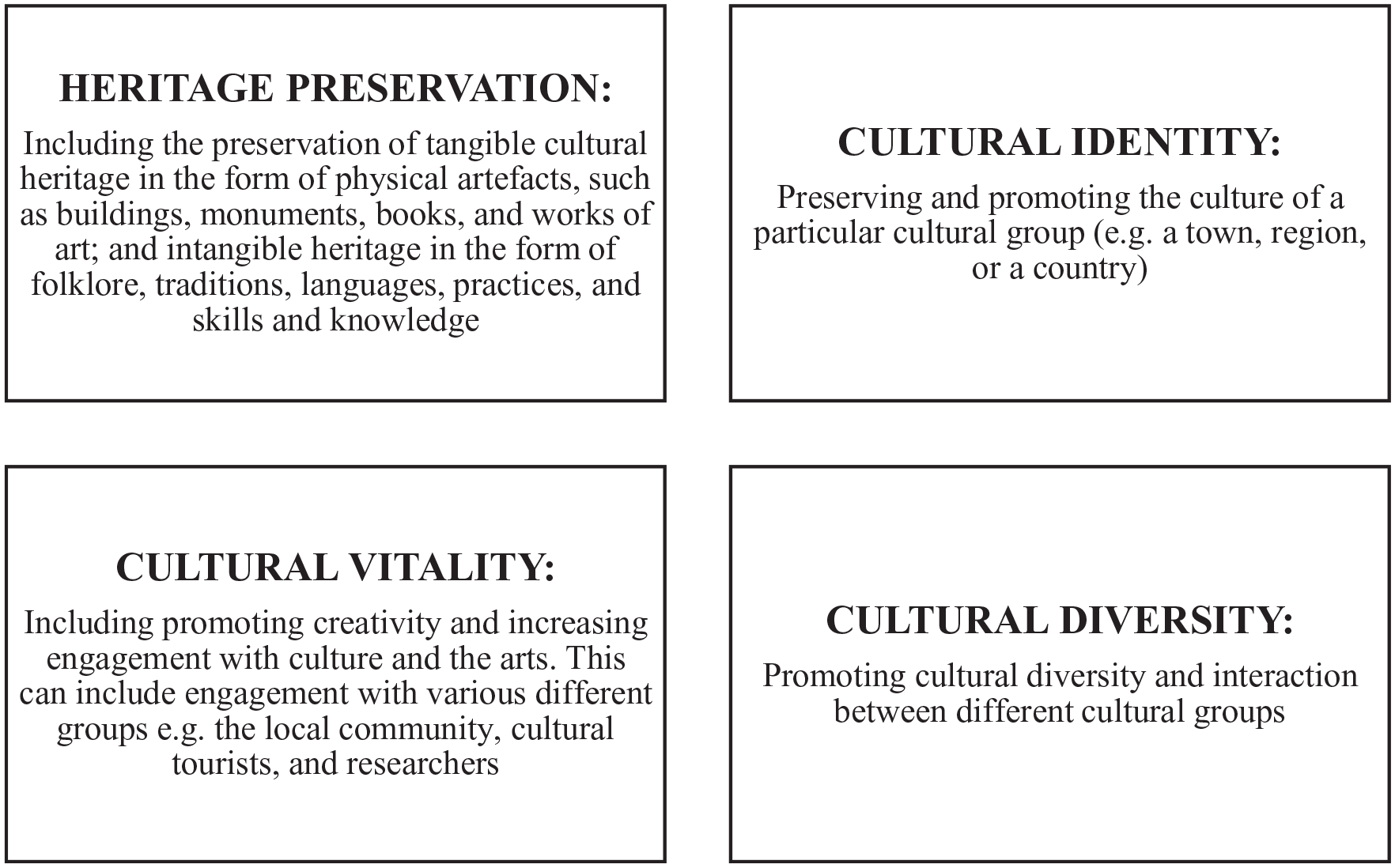
Categories developed to guide the discussion on the contributions of independent libraries to cultural sustainability agendas.
Similarly, to guide the collection of data regarding the challenges and changes necessary to achieve sustainability in independent libraries, the eight factors identified by Newman’s (2010) framework for investigating the sustainability of archives was identified as a particularly useful method for achieving a holistic perspective on the sustainability of collections-based organisations. Using data gathered through an earlier stage of this research (Loach et al., 2020) together with insights generated from pilot interviews with professionals working in the independent library sector, these factors were refined to produce six key factors that would be used to create a holistic perspective on the challenges and changes necessary for achieving sustainability in independent libraries. These were ‘Governance’, ‘Funding’, ‘Staffing’, ‘External Support’, ‘Collections’, and ‘Community and Users’.
To help focus the interviewees’ thoughts and ensure that all of the key categories were sufficiently covered, the researchers decided to utilise a card-based game method (Rowley et al., 2012), developing two sets of cards to guide data collection. The first set provided the four key categories developed to guide the discussion on the contributions of independent libraries to cultural sustainability agendas (Figure 1). The second set was made up of six cards with the key factors of ‘Governance’, ‘Funding’, ‘Staffing’, ‘External Support’, Collections’, and ‘Community and Users’, which would guide the discussion on the challenges and changes necessary for achieving sustainability.
The questions asked in relation to each set of cards were determined through an iterative process that included pilot interviews. The researchers reviewed and revised the questions until they were confident that the interview schedule would support the interviewees in providing comprehensive and meaningful answers. For the first set of cards, the interviewer would ask participants to order the cards in terms of how important they felt each category was to the overall aims of their organisation. Once completed, the interviewer would ask the participant to describe the contributions of their organisation to each of the four categories. Having spent some time considering each category in more depth, participants had the opportunity to re-order the cards if they felt it to be necessary. For the second set of cards, the interviewer would ask each participant to order the cards according to how important each of the six factors were in enabling the sustainability of their organisation. Three key questions would be asked in relation to each of the six factors: ‘What are the main challenges that you face in this area?’ ‘What have you done to overcome these challenges?’ and ‘Is there anything else that you think could be done to improve things further?’ As with the first set of cards, participants had the opportunity to re-order the six factors if necessary.
Throughout the interview process, the researchers endeavoured to ensure transparency. The participant information sheet and consent form explicitly stated the purpose of the research. As well as providing detailed information on the purpose of the study and what would be expected of the individual during the interview, these documents provided information on the efforts that would be made to ensure confidentiality and anonymity as well as the intended outcomes of the research and how the data collected would be put to use.
Sampling frame
Since there is no comprehensive list of independent libraries, this study uses the membership lists of two important groups of independent libraries, the Independent Libraries Association (ILA) (United Kingdom) and the Membership Libraries Group (MLG) (United States). Founded in 1989, the ILA has 33 members, including The Portico Library (Manchester), the Newcastle Literary and Philosophical Society, and the Devon and Exeter Institution. Founded in 1991, the MLG has 22 members, including The Athenaeum of Philadelphia, The New York Society Library and The Mercantile Library (Cincinnati).
In total, the researchers conducted 19 interviews in the ILA (United Kingdom) libraries and 7 interviews in the MLG (United States) libraries during a research trip to the United States. According to the assurances given to participants regarding confidentiality and anonymity, the researchers removed individual names and specific details that could enable their identification and assigned each transcribed interview with an individual code to enable the data collected from each participant to remain distinguishable from each other. These were UK1 to UK19 for the ILA libraries and USA1 to USA7 for the MLG libraries.
Data analysis
Interview transcripts were transcribed verbatim and imported into NVivo for analysis. Having spent some time reading and re-reading the transcripts and adding annotations regarding any emerging themes or interesting observations, a deductive and inductive thematic analysis was employed on each transcript to enable ‘data reduction’ (Hennink et al., 2011). An initial process of deductive coding was carried out, with codes being based on the themes used on the cards as well as according to whether ‘challenges’ or ‘changes’ were being discussed. Following this, the extracted data were further analysed to produce a set of inductive codes that sought to provide a more in-depth analysis of the data related to each of the deductive codes. For example, in relation to the deductive code of ‘Challenges’ under the parent code of ‘Governance’, further inductive codes included ‘outdated governance system’, ‘lack of continuity’ and ‘lack of involvement in the library’. In general, the majority of the inductive codes could be found to relate directly back to their respective deductive codes in this way. However, when necessary, new codes such as ‘Relationships between concepts’ were established to represent new ideas that emerged from the data.
After completing the coding of all the transcripts, the researchers rearranged the inductive codes into a series of broad categories and sub-categories. In some cases, in order to find ‘more selective and abstract ways of conceptualising the phenomena of interest’ (Bryman, 2012: 569), initial codes were dropped and combined into new codes. This process gradually led to a hierarchical presentation of the data in relation to the deductive codes and the two overall objectives of the research.
Findings
Strengths and weaknesses in the contributions of independent libraries to external cultural sustainability agendas
The first half of the interview invited participants to consider the strengths and weaknesses in the contributions of independent libraries to cultural sustainability through the four areas of Heritage Preservation, Cultural Vitality, Cultural Identity and Cultural Diversity. Sixty-nine percent of participants selected Heritage Preservation as the area in which they perceived their organisation to provide its strongest contributions. This was exemplified by responses from UK16 and UK1, with UK16 describing their organisation’s tangible heritage as ‘almost . . . a prerequisite’ to ‘all the other stuff that we do’ and UK1 noting that without physical objects such as the building and the collections, there ‘just wouldn’t be any point’ to their organisation’s existence.
While most interviewees agreed on the importance of Heritage Preservation, some participants also described a more complex relationship between the four categories. For example, interviewee UK6 noted a two-way relationship between Heritage Preservation and Cultural Vitality in their organisation. Suggesting that the two areas ‘speak to each other’, their work to promote Cultural Vitality through ‘literary festivals and other events’ was considered to not only be ‘derivative’ of the collections that they preserve but also what ‘funds’ the preservation of this heritage (UK6). Similarly, although none of the participants considered Cultural Diversity to be their organisation’s strongest contribution and there was general acknowledgement that the sector struggled to appeal to audiences beyond their traditional ‘white . . . upper, middle class’ user base (UK6), there was a consensus over the need to broaden the ‘appeal’ to more ‘than one group in order to stay vital’ (USA6). However, as well as acknowledging these supportive relationships between activities carried out in each area, participants noted that conflict could arise between them. For example, UK5 described how there was ‘a tension between the increase in use’ of collections and artefacts ‘needed to take part’ in promoting Cultural Vitality and Cultural Diversity while also ensuring‘ the conservation work necessary’ for Heritage Preservation continues to be sustained.
Other interviewees suggested that this conflict between the activities carried out in each area went beyond the tension between the use and preservation of tangible heritage to include a tension between the preservation of the intangible aspects of their heritage, such as the organisation’s traditions as a subscription library, and the development and diversification of their cultural offer. For example, UK7 described how their work in Cultural Vitality ‘is quite topical . . . right now’ and had caused a lot of debate between members of the governing committees ‘over what the institution is for’. While some were ‘very keen to expand and move onwards’, the interviewee described how there was also a ‘quite vocal group which doesn’t want anything to change’ and did not ‘seem bothered’ that this might mean that the institution ‘will die if they don’t find ways to encourage more people in’ (UK7). Meanwhile, although USA5 described how their membership was becoming more aware of the need to take their institution ‘beyond this notion of the subscription library’ to ‘start to engage with the community and bring more people in’, they also felt that some members remained ‘horrified by the idea’ as they didn’t ‘want people to know about their secret club’.
The importance of preserving the intangible aspects of the libraries’ heritage was especially apparent in the way that a number of participants misinterpreted the notion of Cultural Identity. Despite the examples of ‘a town, region, or country’ being provided on the Cultural Identity card, many of the participants’ responses focused on their role in preserving and promoting their organisations’ identity rather than preserving and promoting the identity of the wider community. For example, UK9’s response focused on the importance of preserving and promoting their organisation’s identity ‘as the oldest library in [name of city]’ and maintaining its ‘unique place in the landscape of the city’. USA6 similarly described how they ‘strongly feel’ the importance of their organisation’s ‘cultural identity’ as ‘one of the oldest cultural organisations in the State’.
By considering Cultural Identity to relate to their organisations’ identities as libraries rather than the identities of their local communities, these responses suggest that a common concern for these institutions is the need to support a cultural identity that goes beyond geographic boundaries to encompass the ideals that libraries seek to embody. This was epitomised by UK6’s response, who considered the Cultural Identity that their institution exists to support ‘less in geographic terms and more in terms of the libraries themselves as cultural spaces’. However, some of the interviewees also suggested that, owing to the origins of their institutions as subscription libraries, there was a need to differentiate between what was considered to be the negative and positive connotations associated with this identity and to identify which elements were worth keeping. UK15 considered their institution’s origins as a subscription library to have led to it developing an identity as ‘quite a closed’ organisation, and while not thinking it was necessary to entirely ‘dispel the idea of a subscription library’, it was felt that the focus should be more on promoting ‘its tradition of independence’ rather than any notions that it exists for a specific ‘group of people’. Meanwhile, USA3 similarly described how it was necessary to try and move their organisation beyond its identity as a ‘conservative membership institution’ that seeks to ‘recreate something that earlier generations liked’, to being more about ‘invoking very deep, idealistic notions’ of ‘libraries as spaces of freedom’ and ‘self-discovery’, where ‘you can read anything you want’.
Challenges to achieving sustainability in independent libraries
Having completed the questions related to the first set of cards, the interviewer provided participants with the second set of cards related to organisational sustainability. Similar to the previous cards, interviewees first ordered the cards according to the areas that they considered presented the main challenges to their organisation. The majority of participants chose either Governance, Staffing or Funding as the area representing their organisation’s greatest challenge, with 88% choosing one of these three areas. Of these participants, 30% chose Governance as their organisation’s greatest challenge, 27% chose Staffing and 31% chose Funding. The remaining 12% of participants considered Community and Users to be the area that represented their greatest challenge to achieving sustainability, while none of the participants chose External Support or Collections.
With regard to Governance, a common concern raised by many of the participants was that the size of their governance board was too unwieldly, making collaborative decision making difficult to achieve. Described by UK12 as the ‘legacy of a structure that had come from the very beginnings . . . when the members were really running the library’ and would have been involved in ‘buying books and signing cheques and things like that’, it was now felt that such governance structures were ‘really unworkable for a modern charity’. USA5 similarly described the ‘problematic legacy’ of their ‘governance structure’, and the difficulty in establishing ‘an engaged board of trustees that give generously with their time and their financial support’.
While discussing Staffing, many of the interviewees described how their organisations still maintained traditional staffing structures that did not match the changing needs of the organisation, making it difficult to sustain their expanding activities. UK13 noted how their ‘role as librarian’ had ‘evolved quite significantly’ from the ‘traditional librarian’s role of 20 years ago, when events weren’t considered as important’, while UK5 remarked that although their ‘governors’ ambition’ was to ‘have the place open more’, they ‘don’t have enough of us to do what we need to do’.
Meanwhile, while discussing funding, participants described how their organisations’ reliance on the traditional funding strategy of ‘one third membership, one third endowment, and one third rental income’ (USA3) did not always prove to be reliable. The ‘reasonable’ (UK9) and ‘modest’ (UK3) membership fees charged by institutions were not considered to be a particularly ‘lucrative revenue source’ (USA2) for their organisations, and although endowment funds and rental income were described as important sources of income for ensuring ‘long-term sustainability’ (UK15), they were also described as only procuring ‘enough to cover every day running costs’ (UK12). The precarious nature of these sources of income when, for example, ‘rents come up for renewal’ (UK9) or more widespread economic difficulties occur such as ‘2008 and the financial crash’ (UK6) were also considered to cause institutions to become preoccupied with ensuring that they have ‘funds to protect’ themselves ‘in case of emergencies’, thereby impeding any investment in development (UK12).
Echoing the challenges discussed related to Staffing, challenges related to External Support were again considered to mainly arise from the use of traditional staffing structures that were unable to provide the staff necessary to apply for financial support from external funding bodies or to foster lasting collaborative relationships with other organisations. As several participants described, a lot of ‘energy’ is required for ‘writing grant applications’ (USA2) as it is a ‘very complicated and time consuming’ process (UK5) and Staff do not often ‘have the time to do it’ (UK7), hence a ‘dedicated person’ is needed for ‘serious funding bids’ (UK15). It was also felt that it was difficult ‘to facilitate’ the development of ‘really engaging relationships’ that ‘go beyond just one event’ (UK11) when collaborating with other organisations for the same reason.
With regard to the main challenges related to Collections, participants described how the continued use of traditional collection policies, which often include ‘rules’ that the libraries should not ‘get rid of anything’ (UK9), made it difficult to find space for their ever-growing collections as they cannot ‘actually throw anything out . . . unless [they] change the rules’ (UK13). Furthermore, although participants felt that their institutions’ continued focus on collecting and ‘promot[ing] the printed, physical book’ (UK15) was important for differentiating independent libraries from academic and public libraries; many also felt that their libraries’ collections remained under-used. UK1 described how people would generally join their library ‘because they want to come to the events’, leaving the books to be considered as ‘a nice add on’ and like ‘a decoration in the rooms’, while UK14 described their members as being ‘supportive’ of the library collections but not ‘actually us[ing] them’.
One of the main challenges identified related to the organisational factor of Community and Users was the persisting perceptions of independent libraries as exclusive organisations. A common concern among participants was the need to attract new members beyond an ‘ageing membership’ (UK13). Indeed, the majority of participants agreed that having ‘a diversity of users’ was essential to having ‘a sustainable institution’ (USA4) and that it was crucial that they continue to work to create a ‘solid, very wide, very diverse user base’ (UK6). Many of the interviewees described how over the course of the 20th century their libraries had ‘lost track’ of their ‘origins and become elitist clubs’ (UK8), seeing ‘their role only as a kind of club for old boys who share a particular bibliographic interest’ (UK14). Compounding this air of exclusivity was what several of the interviewees described as the desire of some of their membership to be secretive about their library’s existence. As UK9 described, the classic thing that happens is that somebody will join, and they will say things like ‘Why did I never know you were here?’ and then as soon as they join they don’t want anyone else to join, because it’s their private place then.
Changes necessary for overcoming challenges and achieving sustainability in independent libraries
In relation to Governance, participants described how they had taken steps to modernise their libraries. Crucial changes described included downsizing the governance board to around half its original size and enabling continuity to be achieved by allowing ‘the possibility of immediate re-election for a second term’ to get ‘a mix of new blood and people staying on’ (UK12). Establishing nominating committees that focus on ‘bring[ing] in the right mix of skills’ was also described by USA5 as an important development.
A number of interviewees described steps taken to update their staffing structures and better reflect the needs associated with the diversification in services that has occurred in recent years. Having roles dedicated to specific tasks such as fundraising and marketing, which in the past had been treated as additional activities to be divided between existing staff, was seen as a crucial step in the ‘professionalisation of the library’ and the ability to ‘create more development opportunities’ by USA4. UK2 similarly described how ‘professionalising the service’ and getting a ‘proper Marketing Department, Courses Department, and Events Department’ had been crucial to ‘bring[ing] the library along’ and turning it around from being a ‘quaint’ and ‘old’ institution that ‘no one knew about’ to one that’s ‘reputation’ and ‘user figures’ have ‘consistently been going up and up and up’.
Steps had also been taken by a number of organisations to move away from a reliance on the three traditional sources of funding, with the aim being to build what USA1 described as ‘more diverse revenue streams’. The development of more commercial streams of funding, such as letting the library space for private events and functions, was one of the most common methods highlighted for doing this. Establishing mechanisms to increase income from individual giving, such as ‘benefit dinners’ (USA2) and ‘annual appeals’ (USA5) was also considered useful. However, this tended to be more so the case with participants in the United States than the United Kingdom, where participants generally considered the funding that they received in this manner to be far more irregular, therefore making it impossible to ‘rely on . . . because you really just don’t know when they’re going to come in’ (UK13).
The changes necessary to overcome challenges in the area of External Support again related back to the issues raised in the area of Staffing. Participants described how they had recently employed staff whose roles would be ‘dedicated’ to ‘build[ing] deeper connections’ (UK16) and working in a more ‘systematic’ and ‘organised way’ to develop more ‘formal reciprocal relationships’ (USA6) with other local organisations. Partnering with larger and more established institutions that often have greater ‘expertise’ and ‘capacity’ when it comes to writing funding bids was also described by UK19 as a particularly fruitful method for helping their library access external funding.
The specialisation of collections according to their key strengths was a strategy identified by some institutions as a means by which to increase their readership. UK2 described how this had helped to improve the ‘reach’ of their collections by increasing their appeal beyond ‘the local community’ to an ‘international’ research audience. USA4 similarly described how, having ‘lost’ a lot of their ‘traditional lending library readership’, narrowing the focus of their collections according to its key subject strengths had enabled them to ‘become an internationally renowned research library’. Specialisation was also considered a useful way to overcome issues regarding the lack of space, as it could provide the opportunity to update ‘weeding and acquisition polic[ies]’ to ‘reflect’ the ‘change in focus of their organisation’ and allow for more sustainable policies to be put into place (USA2).
As well as taking steps to build ‘formal marketing strategies’ (UK2) and to develop ‘programming’ that would ‘attract younger and more diverse audiences’ (USA3), several participants identified more specific methods to address the perceptions of independent libraries as elitist institutions. For example, UK9 and USA5 described how increasing their ‘presence on the street’ through ‘window displays’ (UK9) and ‘sandwich boards’ (USA5) had been particularly successful in making their libraries ‘seem more inviting’ (USA5) and getting ‘more people coming in’ (UK9). Meanwhile, USA4 described how they had made changes to their marketing strategy which included starting to describe the fee charged for membership ‘as a donation’ rather than as something that would provide ‘privileges’. This had been particularly effective at getting the majority of their members to consider their membership ‘as a way that they can support the library’ and aid it in having a ‘positive impact on the community and the world around us’ rather than as something that would provide them with ‘benefits’ (USA4).
Discussion
The contributions of independent libraries to external cultural sustainability agendas and challenges in realising these contributions
Based upon the four parameters of cultural sustainability derived from Stylianou-Lambert et al. (2014) and Soini and Birkeland (2014), the data collected during the first stage of the interviews initially sought to gain insights into how practitioners felt their organisations contributed to cultural sustainability according to these parameters, and which were their strongest and weakest contributions. However, the data collected suggested that the way practitioners viewed their contributions to cultural sustainability was far more complex than that of an organisation contributing to broader sustainable development agendas.
The insights provided by the participants elaborate on the conceptualisation of Cultural Sustainability in GLAMs provided by Stylianou-Lambert et al. (2014) in these key ways:
Participants did not view the importance of their organisation’s contributions to each of the four areas equally and considered Heritage Preservation as fundamental to their organisations’ work in all other aspects of cultural sustainability (depicted through the enlargement of the Heritage Preservation dimension in Figure 3).
Participants had complex understandings of their organisations’ contributions to some of the individual parameters of cultural sustainability. In particular, participants considered their contributions to Heritage Preservation to include the preservation of both tangible and intangible forms of heritage, and their contributions to Cultural Identity to involve efforts to sustain and promote the culture of both the local community and the organisation itself (depicted through the addition of sub-categories to the dimensions of Heritage Preservation and Cultural Identity in Figure 3).
Participants considered the parameters of Heritage Preservation and Cultural Identity as things that independent libraries exist to sustain, while the parameters of Cultural Vitality and Cultural Diversity were considered as things that can make independent libraries more sustainable (depicted by the labels added beside the top and bottom dimensions in Figure 3).
Participants highlighted the existence of relationships between the parameters that they judged to be things that they exist to sustain (Heritage Preservation and Cultural Identity) and the parameters that they consider make independent libraries more sustainable (Cultural Vitality and Cultural Diversity) that could be both supportive and the cause of conflict. The conflict that can arise between these parameters would, therefore, appear to be the main barrier to independent libraries achieving successful contributions to all four areas of cultural sustainability (depicted by the arrows added between the different parameters and the addition of the line through the centre of Figure 3).
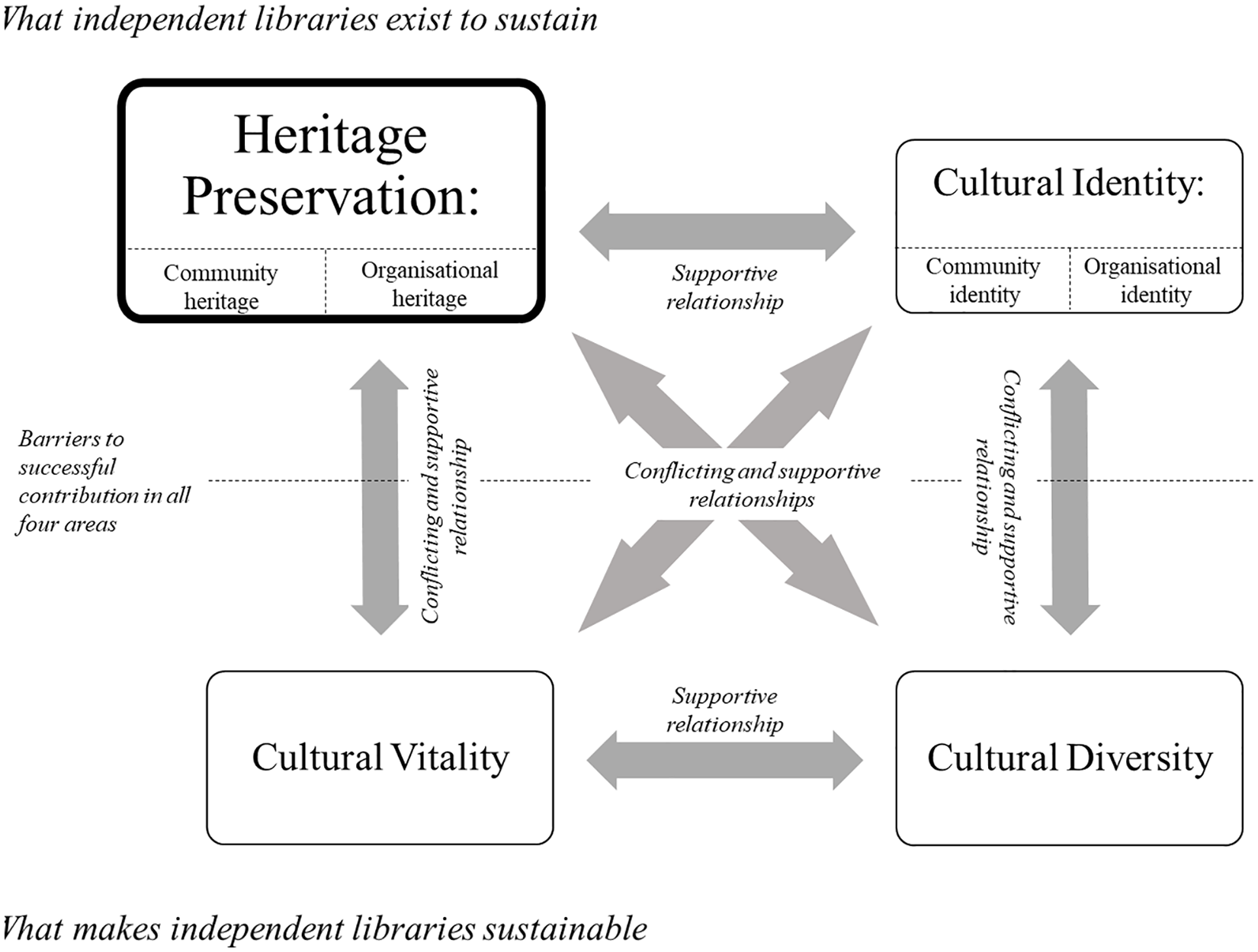
How participants perceived the contributions of independent libraries to cultural sustainability agendas.
The role of organisational culture in achieving sustainability in independent libraries
The aim of the second stage of the interviews was to gain insight on the challenges to and changes necessary for achieving organisational sustainability in independent libraries. Table 1 provides a summary of the main challenges to achieving sustainability in independent libraries and the changes considered necessary to achieve sustainability in relation to each of the organisational factors.
The main challenges to achieving sustainability in independent libraries and the changes necessary to increase their sustainability.
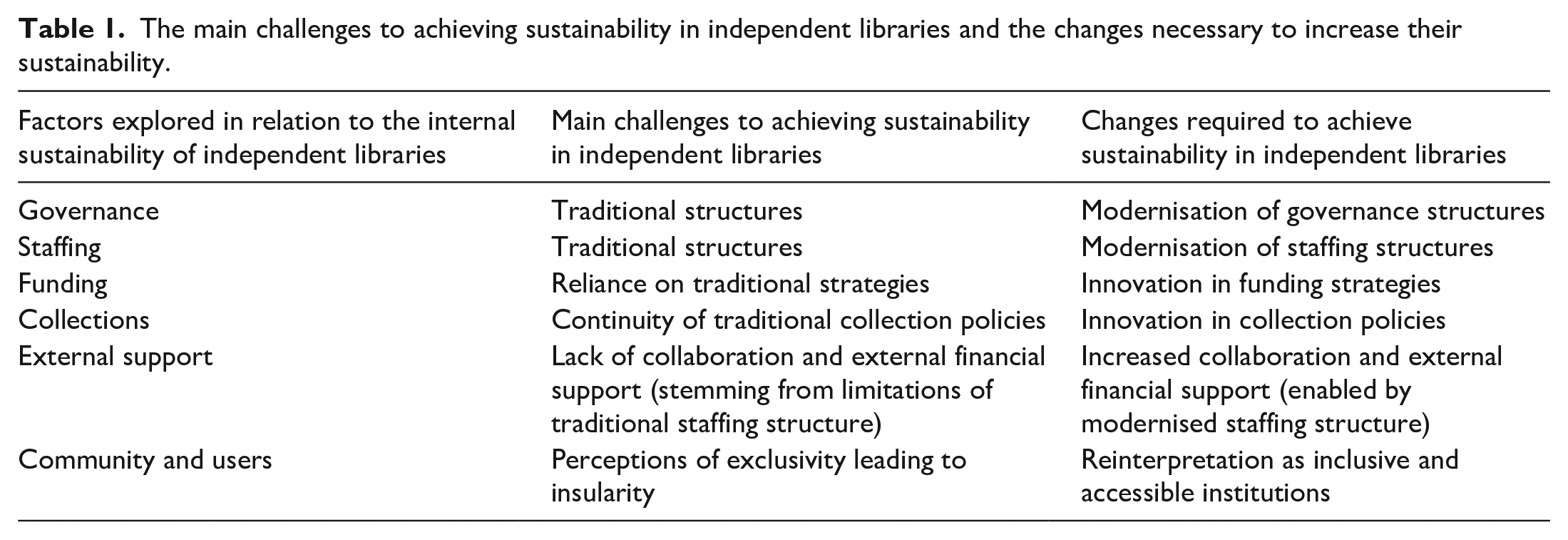
According to these findings, it is possible to perceive unsustainable independent libraries as those that value tradition, continuity and exclusivity, and sustainable independent libraries as those that relinquish these values in favour of modernisation, innovation and inclusivity. However, since sustaining organisational heritage and identity is of fundamental importance within these libraries, a complete overhaul in organisational culture could potentially jeopardise their cultural value. If independent libraries are to manage the organisational change necessary to ensure their future survival successfully alongside their commitment to sustaining their organisational heritage and identity, it is essential that their sustainability strategies include recognition of the tension between these somewhat conflicting priorities.
The MVF (Figure 1) proposed by Davies et al. (2013) is of particular relevance to understanding the conflicting priorities and values that exist in independent libraries. The internal focus of the ‘Club’ and ‘Temple’ modes on the museum community closely resemble the membership-focused nature of independent libraries. The negative repercussions that this can have by causing institutions to become unwelcoming, ‘difficult to join’ and ‘elitist’ (Davies et al., 2013: 352) is also reflected in concerns regarding exclusivity and insularity in independent libraries. Furthermore, the difficulties that museums operating in these modes can face owing to their reliance on internal funding from ‘members’ ((Davies et al., 2013: 352) and ‘wealthy patrons’ ((Davies et al., 2013: 353) would appear to bear similarities to the issues related to the reliance of independent libraries on the three traditional forms of funding, that are all internally managed by the libraries themselves.
The characteristics considered to make independent libraries unsustainable would therefore appear grounded in the priorities and values associated with the ‘Club’ and ‘Temple’ modes. The external focus of the ‘Forum’ and ‘Visitor Attraction’ modes meanwhile seem to embody many of the characteristics considered necessary for independent libraries to become more sustainable. The emphasis of the ‘Visitor Attraction’ mode on allowing the needs of visitors and ‘market forces’ (Davies et al., 2013: 353) to drive the organisation’s development can be seen to embody the need for independent libraries to become more commercially minded and more aware of the needs of potential markets beyond their traditional user base. The emphasis of the ‘Forum’ mode on participation and fostering a sense of shared community ownership of the collections would seem to embody the inclusivity and accessibility felt necessary to ensure the relevance of independent libraries to a wider community.
To become sustainable, this suggests that independent libraries need to adopt characteristics that are more typically associated with the externally focused ‘Forum’ and ‘Visitor Attraction’ modes. However, the underlying assumption of the MVF and indeed any version of the CVF is that the effective management of organisations does not require a radical shift from one mode of operating to another but rather the careful management of ‘the interrelationships, congruencies, and contradictions’ that exist between them (Cameron, 2013). Indeed, as the functions prioritised by each quadrant of the framework are of equal importance to the organisation’s overall success, a radical change from one mode of operating to another could prove damaging (Cameron, 2013). Since an emphasis on heritage preservation and upholding a traditional library environment has so far been crucial to retaining the unique cultural value of independent libraries as ‘beautiful and inspirational’ spaces (Davies et al., 2013: 352), a radical shift could be particularly harmful.
Interpreting the data regarding the internal sustainability of independent libraries according to the MVF also offers the opportunity to draw more immediate links between the internal organisational culture of the libraries and their potential contributions to cultural sustainability. For example, the tendency to operate according to the ‘Club’ and ‘Temple’ modes that prioritise heritage preservation and upholding organisational traditions can explain why Heritage Preservation and Cultural Identity were identified as the libraries’ strongest contributions to cultural sustainability, particularly since that heritage and identity is grounded in the libraries themselves rather than the wider local community. Adoption of the external focus of the ‘Forum’ and ‘Visitor Attraction’ modes and their respective priorities related to contributing to ‘civic society’ and ‘communicating’ with broader audiences (Davies et al., 2013: 353) would meanwhile appear to offer the opportunity for independent libraries to improve their contributions to Cultural Diversity and Cultural Vitality.
It is upon this basis that the conceptual framework in Figure 4 is proposed. Aligning the parameters of cultural sustainability outlined in Figure 1 with the four quadrants of the MVF framework devised by Davies et al. (2013), it highlights how the priorities and values associated with the ‘Club’, ‘Temple’, ‘Forum’ and ‘Visitor Attraction’ modes are supportive of contributions to particular parameters of cultural sustainability. In addition, it demonstrates how the internal focus of the ‘Club’ and ‘Temple’ modes, which support the preservation of the heritage and identities of the libraries (‘What independent libraries exist to sustain’), can often conflict with the external focus of the ‘Forum’ and ‘Visitor Attraction’ modes, which are supportive of cultural diversity and cultural vitality (‘What makes independent libraries sustainable’). The framework thereby provides a tool by which to consider how to balance these conflicting priorities, not only to ensure the sustainability of the libraries themselves but also to ensure their successful contribution to all four parameters of cultural sustainability.
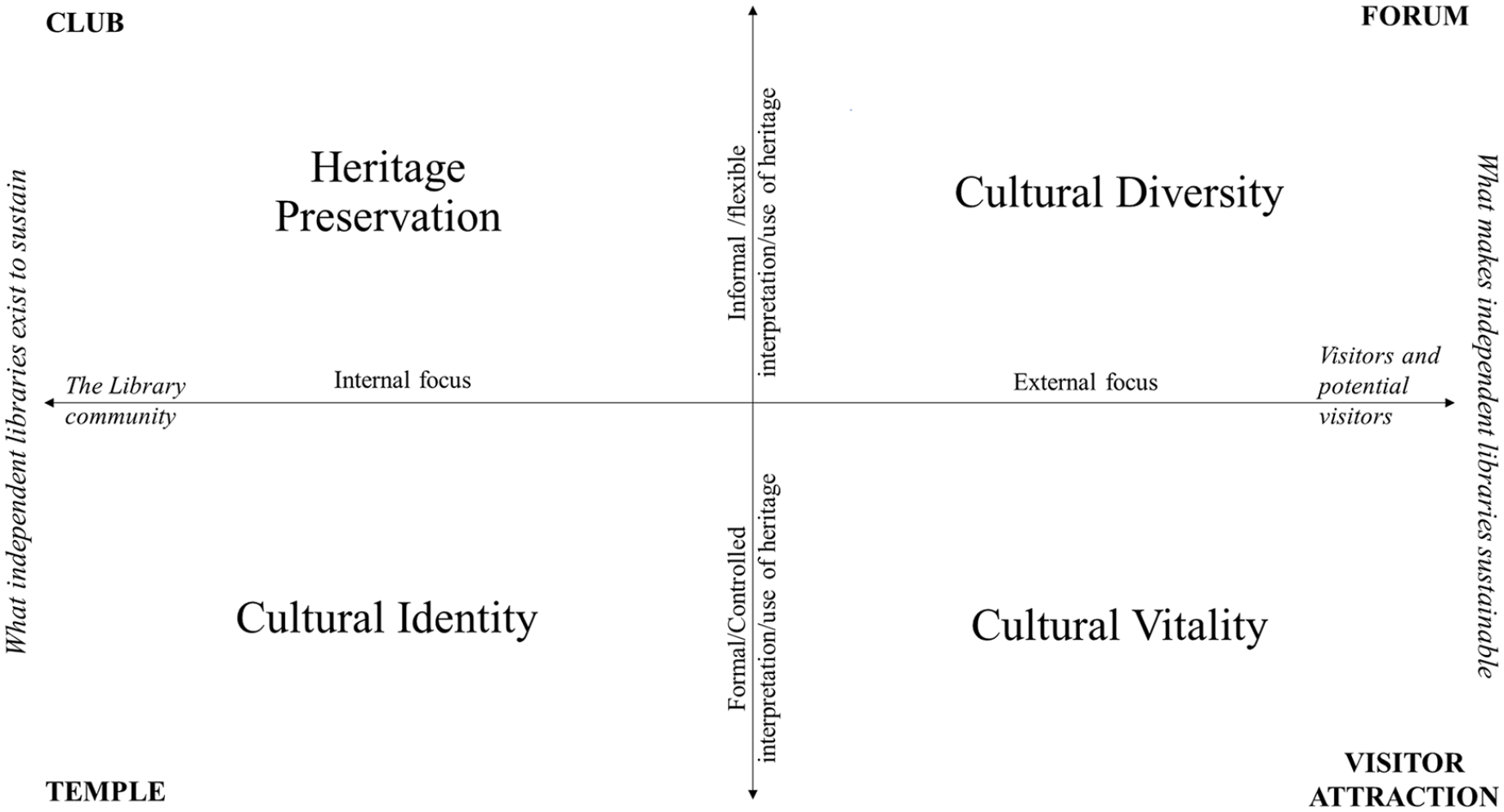
Conceptual framework for managing internal organisational sustainability and contributions to external cultural sustainability agendas in independent libraries.
Conclusion
This research has significantly developed understanding of the complexities of the relationship between GLAMs and cultural sustainability. In particular, by drawing on the literature on organisational culture to develop the Conceptual Framework for Achieving Cultural Sustainability in Independent Libraries, it has been possible to reveal the multi-layered and often conflicting sustainability requirements of GLAMs to preserve cultural heritage, ensure the effective management of the internal culture of their organisations and demonstrate commitment to external cultural sustainability goals.
Conducting the research in the context of independent libraries has considerably enhanced understanding of the sector’s cultural value and the issues that affect the future survival of these libraries and their cultural heritage. However, it also raises concerns about the generalisability of the findings to other GLAMs. For example, the conflict that exists between preserving organisational heritage and identity and increasing cultural vitality and cultural diversity in independent libraries may not have as much relevance to other GLAMs. In addition, while Davies et al. (2013) MVF has proven invaluable in considering the role of organisational culture in enabling sustainability in independent libraries, it may not have as much relevance to other libraries where sustaining heritage is not a primary concern.
Further research to test the applicability of the framework to other organisations within the GLAM sectors could therefore be beneficial, as would research to consider how existing models from the library sector similar to Davies et al. (2013) could be used to evaluate the management of the internal culture of libraries for the purpose of enabling cultural sustainability. For example, the four-space model developed by Jochumsen et al. (2012), which considers public libraries to consist of four overlapping spaces that provide opportunities for inspiration, learning, meeting and performance, could assist in the development of cultural sustainability indicators that focus on a broader range of functions for libraries beyond preserving and providing access to heritage.
As the first study to include independent libraries in the United Kingdom and United States, this research has been invaluable in drawing together insights on the sustainability of these libraries and enabling the sharing of best practices between them. Further research including similar private libraries from other countries could be beneficial in providing additional opportunities to share such insights. Finally, while the study does provide a holistic perspective of sustainability at an organisational level, it could also be beneficial to conduct further research into the role of national and international initiatives such as large-scale digitisation projects, which are increasingly vital to ensuring the sustainability of heritage in individual organisational collections.
Footnotes
Appendix
Overview of some of the characteristics of each of the four kinds of museum proposed by Davies et al. (2013: 361U–364).
| Club | Temple |
|---|---|
| • ‘Primarily concerned with members of the club’ • ‘Priority is to secure and preserve’ collections • Visitors ‘seen as potential converts to the cause’ • Can act as a ‘virtuous circle, with visitors’ and members’ needs being well provided for by like-minded individuals’ • Can be ‘inward-looking’ and ‘self-serving’, becoming ‘difficult to join’ and unwelcoming to the ‘uninitiated’ • Can ‘run into financial difficulties if the club members are unable to cover costs from their own resources’ |
• Shares ‘some of the inward-looking aspects of the club, but the peer group differs’, with approval being sought from ‘acknowledged experts’ such as ‘other museum professionals’ and academics • Priority is placed on studying the collection • Can ‘expand our collective knowledge and create beautiful and inspirational public spaces’ • May be ‘detached’ from the ‘bulk of society by focusing on a very narrow audience’ and may become ‘elitist’ • ‘Exclusivity’ can be beneficial in helping to ‘elicit financial support from . . . wealthy patrons’ but can ‘make it difficult for the museum to demonstrate public benefit and . . . justify public funding’ |
| Visitor attraction | Forum |
| • Visitors’ needs are prioritised • Visitors are ‘seen as clients whose needs must be carefully researched and satisfied’ • ‘The museum is driven by market forces and values productivity and efficiency’ • Shares ‘many of the values of commercial businesses’ but uses ‘financial surplus’ to ‘support the museum’s other functions’ • Can result in ‘a thriving, customer-focused museum’ • However, it can ‘also be argued that aiming for mass popularity can result in criticisms of “dumbing down” or “Disneyfying” the museum’ |
• Like the visitor attraction, is also focused on external audiences, but ‘the ideological forces which inform’ its operations ‘are markedly different’ • Priority is ‘to benefit society and individual well-being’ by ‘encouraging debate’, ‘helping visitors understand their place in the world’, and ‘increasing social cohesion’ • Visitors are ‘encouraged to get involved in creating meaning from the collections’ • The museum ‘can be a place for debate, contestation and even partisan agitation’ • Have been criticised ‘for turning the museum into a social experiment for political ends’ |
Declaration of conflicting interests
The author(s) declared no potential conflicts of interest with respect to the research, authorship and/or publication of this article.
Funding
The author(s) received no financial support for the research, authorship and/or publication of this article.
