




Abstract
Independent libraries are important cultural assets for their communities yet have largely been overlooked in mainstream library research. This research seeks to bring these libraries into the limelight by building a profile of their cultural contributions. Through a content analysis of the websites of the libraries of the Independent Libraries Association (UK) and Membership Libraries Group (US), it demonstrates that independent libraries preserve and facilitate access to a variety of important cultural assets and, while often characterised as ‘hidden gems’, are proactively working to increase engagement beyond traditional audiences, whilst also making significant contributions to the cultural sustainability agenda.
Keywords
Introduction
Today, the public, policy and research focus in both the UK and the US is on state-funded libraries, such as academic and public libraries and the challenges that they face in a digital age (Cox et al, 2019; Godin, 2016; Jones, 2017; Seal, 2014). Some attention is given to special libraries and other information services that operate in commercial, school and medical settings, but almost no attention is given to the precursors of the public library movement, non-profit membership or independent libraries. Yet many of these libraries still exist, maintaining important collections, offering services to both members and the general public, and making important cultural and social contributions to their communities. Indeed, in these times of austerity for public libraries, there may be a resurgence of the independent library model. For example, on 23 May 2015, The Seattle Times reported on plans for the opening of a new cultural institution within the city. Founded by ‘local dynamo’ David Brewster, Folio: The Seattle Athenaeum would be an independent library and cultural centre, providing fee-paying members with access to a large collection of books, a comfortable and quiet space to read and work, and a programme of literary events, all within the setting of an attractive historic building (Gwinn, 2015).
The subscription library model upon which the Seattle Athenaeum is based was particularly prominent during the 18th and 19th centuries, before the widespread development of government-funded public library systems. During this period, an increasing thirst for knowledge and a desire for self-improvement prompted individuals to come together to establish their own libraries. Funded by the annual subscription fees paid by their members, these libraries provided individuals with the opportunity to access a wide range of resources, including books, newspapers and periodicals, which, owing to the high cost of printing at the time, were often beyond most people’s budgets (Crawford, 1997).
In addition to subscription libraries, several other independent library models were also prevalent during the 18th and 19th centuries. Industrialists set up libraries as part of mechanics’ institutes to provide their working-class employees with a means by which to improve their skills and knowledge. Wealthy individuals established privately endowed public libraries for their communities on similar philanthropic grounds. Meanwhile, catering for more socially elite circles, many literary, scientific, philosophical and historical societies also formed their own libraries to support the specialist interests of their members.
Regardless of when, where or why these libraries were founded, what links them together and makes them ‘independent’ is the way that they are funded and governed (Forster, 1995). In comparison to academic, public and professional libraries, they do not exist as part of any larger parent organisation, nor do they receive any direct funding from any such organisation or from the government. Decisions over how these institutions operate are made entirely through their own internal governance systems, which typically include committees made up of the libraries’ members, who derive from the local community. Financially, they are reliant on member subscriptions and additional funding from charitable bodies and other activities (Forster, 1995; Hopper, 2008).
Commonly retaining original book collections, archives and artefacts within historic buildings, independent libraries are an important part of their communities’ cultural heritage. Yet a continued struggle for financial stability faced by many independent libraries has meant that the future of this heritage is often at risk (Bishop and Rowley, 2012). Loach et al. (2017) suggest that recent debates surrounding the importance of cultural sustainability provide a new impetus for ensuring the survival of such libraries, particularly as protecting cultural heritage and encouraging cultural vitality have emerged as two of the key ‘story lines’ within the related scientific discourse (Soini and Birkeland, 2014). However, Loach et al. (2017) go on to suggest that independent libraries, as well as museums, libraries and archives (MLAs) in general, still have a journey to travel in articulating their contributions to the cultural dimension of sustainable development agendas. In particular, they argue that developing an in-depth understanding of the cultural assets of different kinds of MLAs is paramount to being able to not only understand the unique nature of their contributions to cultural sustainability, but also for being able to provide suggestions for improving these contributions at a practical, organisational level.
To ensure the future of independent libraries and their heritage, two important questions need addressing. Firstly, it is essential to establish an overview of the cultural assets maintained by independent libraries and their perceived value. Due to the historic perspective taken by the majority of previous research in the sector (Allan, 2013; Bowd, 2013; Crawford, 1997; Manley, 2003), to date there has been no systematic analysis of the cultural assets currently held by independent libraries in the UK or elsewhere. Developing understanding of the value of these libraries and their cultural assets is also essential for explaining why their survival is important.
Secondly, we need to consider how these libraries can best sustain themselves and their cultural assets. There is some previous research into how independent libraries can improve their practices, for example with regard to the preservation and conservation of collections (Fenn and Muir, 2003), or the use of digital marketing (Bishop and Rowley, 2012; Hopper, 2008). Yet such research does not take into account the complex nature of these organisations and the numerous factors that affect their sustainability (Adams, 2010). A broader strategic approach, supported by a more holistic conceptual framework, is therefore required.
The remainder of this article will seek to address the first of these questions by establishing the nature and extent of the cultural assets currently held by independent libraries in the UK and the US, exploring access to these assets, and developing an overview of the range of activities and services that independent libraries typically provide for their communities.
Literature review
Research that focuses on independent libraries is sparse. The majority of studies take a historical perspective, which does nothing to promote the role of independent libraries today and into the future. For example, several studies examine the role and growth of subscription libraries in 18th-century Britain (Allan, 2013; Bowd, 2013). Manley (2003) focuses on Scottish circulating libraries and their role as community libraries, while Bruce (2018) explores the contribution and legacy of subscription libraries in the context of Canadian public libraries.
The few studies that do provide a contemporary perspective tend to focus on specific areas of practice, such as the preservation and conservation of collections (Fenn and Muir, 2003), the development of marketing strategies (Hopper, 2008), and the use of digital marketing (Bishop and Rowley, 2012). While such research is invaluable in helping to improve the prospects of independent libraries, it does not explore the complex nature of these organisations, and the numerous factors that inevitably affect their sustainability. A more comprehensive overview of the current situation in independent libraries is given in Willson’s (2005) study. This considers the impact that wider changes in the provision of education and library services have had on independent libraries, how independent libraries continue to operate and survive in light of these changes, and how they can capitalise on the unique benefits that they offer their users to secure the future of their organisations.
Willson’s (2005) study is particularly useful in that it provides an account of the practical steps that have been taken related to funding strategies, the development of partnerships and collaborations, and the use of volunteers to ensure the continued survival of independent libraries. Since the study was conducted more than 10 years ago it is, however, likely that significant changes have occurred within the sector in the interim. In addition, the focus of the research is on independent libraries located in the UK. While it is of course invaluable to have an in-depth account of the sector in this country, it is possible that further research including a comparative element between independent libraries in different countries could prove beneficial by facilitating the sharing of best practices between organisations that have hitherto remained in relative isolation from each other.
Methodology
Sampling frame
One of the characteristics of independent libraries is that each is unique. Since there is no comprehensive list of such organisations, this article uses the membership lists of two important groups of independent libraries, the Independent Libraries Association (ILA) (UK) and the Membership Libraries Association (MLA) (US). Including libraries from both the UK and the US in this study provides the potential for an interesting comparison between the evolution and current status of libraries in two major English language-speaking countries, which, over the years, have shared many traditions in the development of their library sector.
The ILA was established in 1989, with a view to supporting the conservation, restoration and public awareness of independent libraries, through co-operation, social events and information sharing between members. Its founding members were independently funded subscription libraries founded between 1798 and 1841, when there were few public and university libraries. Many of these libraries also provided other facilities for members, such as museums, adult education and dining facilities. In recent years the membership of the ILA has extended to include other libraries with varying histories, including libraries that have been preserved through funding from partner institutions and those that never had subscribing members (such as town libraries). ILA members include: The Portico Library (Manchester), Plymouth Propriety Library, Tavistock Subscription Library, the Working Class Movement Library, and the Newcastle Literary and Philosophical Society.
The MLG was founded in 1991 in New York, as a support group for US membership libraries. As with subscription libraries in the UK, membership libraries were numerous in the 18th and 19th centuries but went into decline with the development of free public libraries. Those that do survive today tend to be in older cities and continue to maintain original collections in historic buildings. To be ‘an active and voting member’, an institution must be ‘financially self-supporting, cannot be part of a larger organisation, and must provide a circulating library to its members’ (Wikipedia, 2018). Libraries that only partially meet these criteria can become associate members. Current members include: the Boston Athenaeum, the Mechanics Institute Library, San Francisco, The Athenaeum of Philadelphia, The Mercantile Library of Cincinnati and The New York Society Library.
Data collection
Document research was chosen as the method of data collection, because the documents/websites were ‘already in existence and are simply . . . waiting to be assembled and analysed’ (Bryman, 2012: 543). Websites were accessed by either following links from the ILA’s website (www.independentlibraries.co.uk) and the MLG’s Wikipedia page (https://en.wikipedia.org/wiki/Membership_Libraries_Group); or by conducting a search for the library’s name through Google. To minimise the possibility of any inaccuracies in the data collected from the websites, other sources, such as the social media platforms of the independent libraries were also examined.
Importantly, it is acknowledged that the websites have been produced by professionals working in independent libraries, with the intention of promoting their organisations. There is therefore potential for bias, but, on the other hand, it is useful to understand what practitioners believe are the most important facets of their organisations and where they perceive their cultural value lies.
The use of web documents to generate the profile of the sector presented no ethical issues, as the data they contain had been ‘deliberately and voluntarily made available in the public Internet domain’ and therefore did not require the researcher to consider issues of privacy or gain informed consent from participants (Hewson et al., 2003: 53). Other ethical considerations regarding ‘harm to participants’ or the deception of participants could also be discounted as there was no direct interaction with the organisations or individual participants at this stage (Bryman, 2012: 135).
Thematic analysis
To generate the profile of the sector from the websites, a qualitative content analysis was undertaken. Qualitative content analysis consists of a ‘searching-out of underlying themes in the materials being analysed’ (Bryman, 2012: 557) and ‘allowing categories to emerge out of data’ (Bryman, 2012: 291). Such an approach is appropriate for ensuring an in-depth profile of the sector is developed that is not restricted by preconceived notions of the kind of data that needs to be recorded.
Data recording and analysis began with the listing of each of the libraries alphabetically in rows in an Excel spreadsheet. To initiate the data collection, three generic categories that could be expected to be applicable to every organisation were first listed in columns across the top of the spreadsheet (location of the library, the type of library (e.g. subscription library, mechanics’ institute), and the date that the library was founded). Each website was then examined page by page, with a new column being added to record further data each time a new category was identified. If a new category was identified, previously analysed websites were re-visited to collect data on the new category. The data collection and analysis started with UK libraries, and moved onto US libraries. This process was continued until data saturation was considered to have been achieved and no new categories were emerging. Further thematic analysis in NVivo was then used to recategorize the 17 categories identified according to five key themes of ‘Historic origins and organisational traditions’, ‘Book collections’, ‘Additional collections’, ‘Buildings’ and ‘Activities’.
Findings
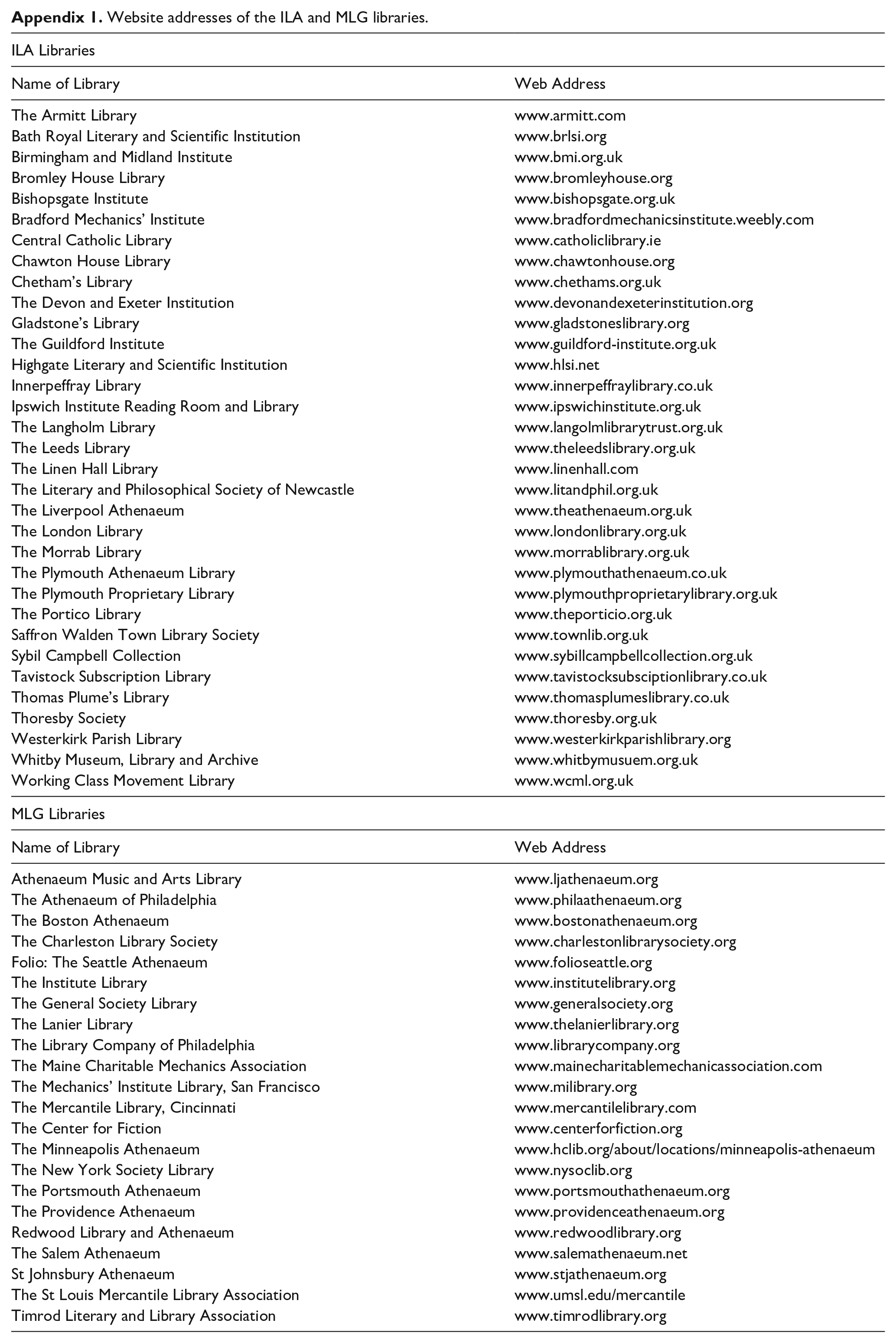
Unless otherwise referenced, the data in this section was gathered from the ILA and MLG library websites. A list of their website addresses is provided in Appendix 1.
Historic origins and organisational traditions
The ILA’s membership includes 33 libraries, the majority of which were founded during the 19th century (58%, Figure 1). Of the ILA’s membership 45% are classed as subscription libraries, 21% are society libraries, 15% are privately endowed public libraries, 12% are mechanics’ institutes and 7% are independent research libraries (Figure 2). Its oldest member is Chetham’s Library in Manchester, which, having been founded as a privately endowed public library in 1653, is considered the ‘oldest surviving public library in the English-speaking world’.
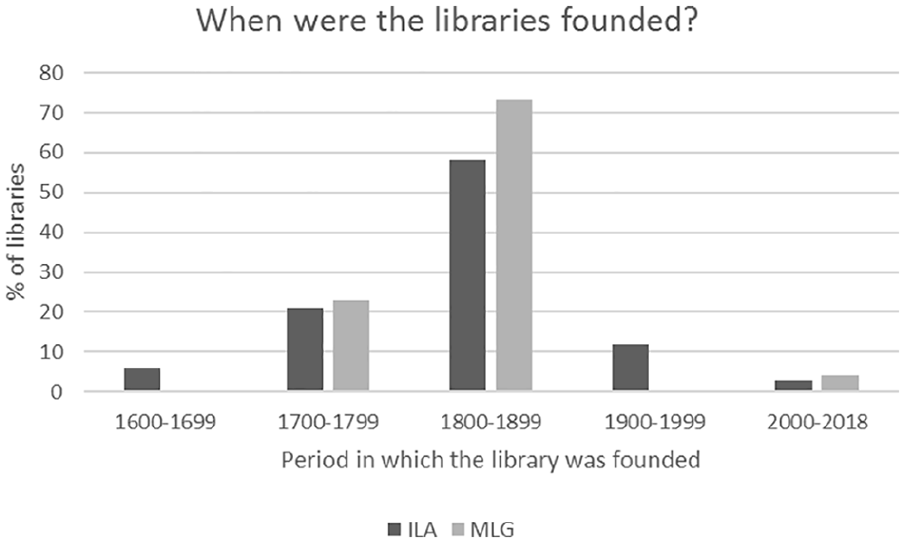
The periods during which the libraries in the ILA and MLG were founded.
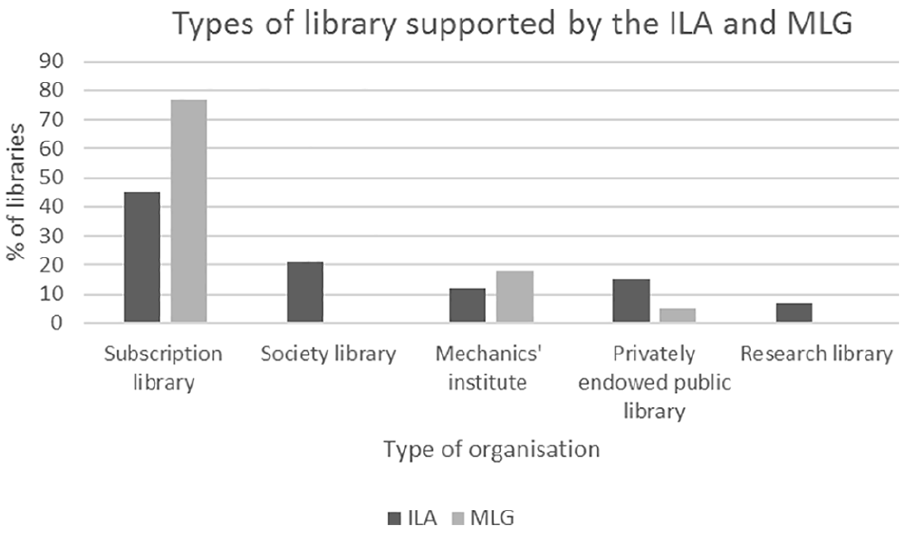
The types of library supported by the ILA and MLG.
The current membership of the MLG meanwhile stands at 22 institutions, with six of these having associate membership status. The majority of the MLG libraries were again founded in the 19th century (73%, Figure 1). Of its libraries 77% are classed as subscription libraries, 18% are mechanics’ institutes and 5% are privately endowed public libraries (Figure 2). Its oldest member is the Library Company of Philadelphia, which was founded in 1731 by Benjamin Franklin and is described on its website as ‘America’s first successful lending library and oldest cultural institution’.
Although the ILA and MLG do support a small number of institutions that have more recent origins, both associations emphasise the historical nature of most of the libraries in their membership, suggesting that significant value is attached to their historic origins. For example, the MLG’s Wikipedia entry highlights how each one of its full members have ‘celebrated more than 100 years of existence, with four having survived for 250 years or more’ (Wikipedia, 2018). Meanwhile, the ILA include a quotation from a Financial Times article, which describes independent libraries as ‘havens of books, conversation and cultural events with histories stretching back centuries’, at the top of its website’s homepage (ILA, 2018). Of the libraries that have origins dating back to the early 20th century or before, the majority prominently display information regarding their institution’s history on their individual websites, with many referencing the founding date of their institution on their homepage or within their logo and branding. Examples include Bromley House Library, The Leeds Library, The New York Society Library, and The Institute Library.
The majority of the libraries also have dedicated sections on their websites for providing in-depth accounts of their organisational history. For example, The Library Company of Philadelphia’s website provides an account of its history as ‘America’s first successful lending library and oldest cultural institution’, describing how it was founded by Benjamin Franklin in 1731 with ‘50 founding shareholders’ who each ‘contributed 40 shillings and agreed to pay ten shillings thereafter’. The Library of Innerpeffray’s website similarly provides an in-depth description of its history from its foundation as ‘the first public lending library in Scotland’ in the 17th century through to the present day. This written description is further supported by an animated video entitled ‘335 years in 3 minutes – The Living Library’.
In addition to promoting awareness of their historic origins, many of the libraries also highlight what can be described as a the ‘traditional subscription library experience’ offered by their institution. This experience is often summarised within the benefits of membership as including access to book collections that are primarily of the physical kind (as opposed to digital), a quiet space to read, think and write, and the opportunity to be part of the library’s cultural and intellectual community. For example, The London Library’s list of membership benefits includes having access to ‘More than one million books to browse, borrow and enjoy’, ‘A congenial place to work, relax or study’, and the opportunity to be part of a community of ‘authors, academics, students, researchers, and professionals’ who ‘share our facilities and their love of learning’.
The importance placed on this environment that independent libraries seek to maintain is perhaps best summarised on Folio: The Seattle Athenaeum’s website. Although Folio was only founded in 2014, it is described as having been ‘inspired by’ the longstanding tradition of other independent libraries in America. Providing access to ‘book collections and rooms for discussion and writing on important issues’, its mission is presented as being to create ‘an inviting, intimate home for “the community of the book”’. Since Folio does not share the historic roots of the other libraries in the MLG or ILA, this would suggest that the value placed on their historic nature goes beyond a sense of pride regarding the individual history and the resilience of their organisations, to include a sense that they play a vital role in upholding broader subscription library traditions. Furthermore, it is suggested that these traditions are not simply being preserved for posterity as an example of past customs but are believed to continue to play an active role in supporting the broader cultural life of their communities.
Book collections
Extent and nature
One of the most tangible indicators of the cultural assets held by independent libraries is the extent and nature of their book collections: 76% of the libraries in the ILA and 73% of the libraries in the MLG provide information on their websites regarding the size of their book collections (Figure 3).
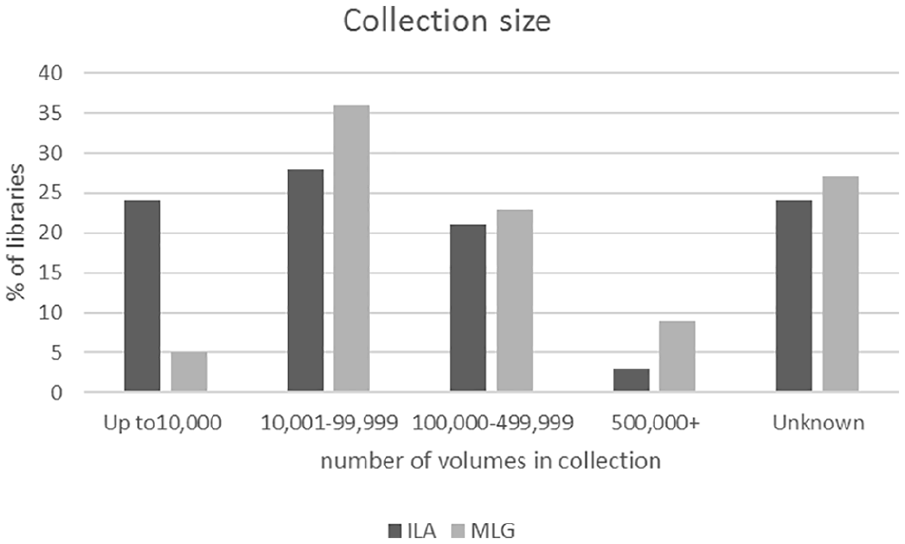
Size of the book collections maintained by the ILA and MLG libraries.
From this data it is clear that the sizes of the individual collections in each of the libraries can vary significantly, from a few thousand to over a million volumes. For example, having fewer than 1000 volumes, the Tavistock Subscription Library’s collection is the smallest of those in the ILA that provide this data, while The London Library’s collection, which stands at more than 1,040,000 volumes, is by far the largest. Meanwhile, with 9000 volumes the St Johnsbury Athenaeum has the smallest collection of the MLG libraries that provide this data, while the Boston Athenaeum has the largest at more than 600,000 volumes.
Despite their varying sizes, analysis of collection descriptions on each of the library’s websites reveals a series of shared strengths that can be detected across most of the collections held by the ILA and MLG Libraries. These can be categorised according to the following four themes.
Local history and culture
Many of the libraries have collections of books relating to the local area that have been built over their institution's history. These reflect the development of the local community over the centuries and provide an invaluable insight into local identity. Many of the works included within these collections were written by local authors and would often have been produced in small numbers, making them difficult to locate elsewhere. In consequence, whilst some of the libraries’ collections may be relatively small, their value in terms of the regional heritage that they contain is of great significance. Indeed, while it has one of the smallest collections in the ILA’s membership, the Tavistock Subscription Library holds works relating to industry, archaeology, natural history, myths, legends and poetry of the local area. Similarly, the Redwood Library and Athenaeum’s collection is described as focusing mainly on the local area, having ‘most concentration on Newport, Aquidneck Island, Rhode Island and New England, radiating with less concentration geographically towards other U.S. environs’. These collections are invaluable resources for both local history enthusiasts and academics researching the history and culture of particular regions.
These collections can also act as a valuable resource for social history by providing insights into the interests and reading habits of their members over the centuries. The Portico Library in Manchester is a prime example of this, with its main collection having developed over the course of the 19th century, from when the library first opened in 1806 to when it stopped regularly adding to its collection in the early 20th century. This strength is also identified in many of the MLG’s libraries’ collections, including The New York Society Library’s collection, which includes ‘nearly 300,000 volumes’ of ‘fiction and literature, biography, history, social sciences, the arts, and travel’, that ‘reflect the reading interests of its members over the last 260 years’.
Rare books and collections of specialist interest
With many of the libraries holding pre-18th century items, a number of rare books can be found within their collections. Innerpeffray Library in Scotland holds numerous items relating to Scottish history that include incunabula dating back to the 15th century, while Chetham’s Library holds items such as the first printed atlas of England and Wales from 1579, and a first edition of Milton’s Paradise Lost from 1667. Examples from the MLG libraries include the Providence Athenaeum’s collection of rare first editions by authors such as Walt Whitman, Herman Melville and Louisa May Alcott, as well as an original hand-coloured edition of Audubon’s Birds of America which is held at the Minneapolis Athenaeum.
Other collections may not be as notable for the rarity or age of the books that they maintain; however, their specialist focus can provide a unique insight into a specific subject that is unavailable elsewhere. Examples from the ILA libraries include the collections at the Working Class Movement Library, which focuses specifically on collecting items ‘related to the development of the political and cultural institutions of the working class’ since the industrial revolution, and the Sybil Campbell Collection, which assembles material related to the professional and educational development of women in the first half of the 20th century. In the US, the collections at the St Louis Mercantile Library ‘concentrate on Western expansion and the history, development and growth of the St. Louis region and of the American rail and river transportation experiences’ and is ‘distinguished as one of the largest’ collections in the country related to American railroad, river and inland waterways history. The Athenaeum of Philadelphia, meanwhile, focuses on collecting material related to ‘the history and antiquities of America, and the useful arts’, and is considered particularly strong in American architecture and interior design history.
Collections related to notable figures
A number of the library’s collections have connections to notable figures. Gladstone’s Library, which began life when the 19th-century British Prime Minister William Gladstone donated his own personal collection to the public, includes many heavily annotated volumes that can be consulted by researchers interested in his life and career. The Langholm Library, meanwhile, maintains the collection of the Scottish writer and politician, Hugh MacDiarmid, while the Bath Royal Literary and Scientific Institution holds the collections of the 19th-century naturalists Christopher Edmund Broome and Leonard Jenyns.
Connections to notable figures also exist in the collections held at the MLG libraries. Having been founded by Benjamin Franklin, it is perhaps unsurprising that the Library Company of Philadelphia holds his personal collection. The Boston Athenaeum meanwhile holds portions of the personal libraries of religious and political figures such as Cardinal Cheverus, Henry Knox and George Washington, while the Salem Athenaeum in Massachusetts holds the collection of the 18th-century educator and physician, Edward Augustus Holyoke.
Modern lending collections
Lastly, it is also important to note that alongside their historic collections, many of the libraries still offer their members access to a modern lending library. This would seem to be more common in the US than in the UK, with only 27% of the 33 ILA libraries offering this service in comparison to 72% of the 22 MLG libraries. While it is possible that this could signify that the continuation of this service is considered to be of more value in the US than in the UK, it could also simply be a reflection of the membership requirements of the MLG, which restricts membership to libraries that specifically ‘provide a circulating library to its members’ (Wikipedia, 2018).
Collection access
While it is possible to conclude that the strengths identified above would have little interest beyond a niche membership that the libraries may attract, efforts to increase accessibility to the collections would appear to highlight the extent of the perceived cultural significance that is attached to them. For example, despite access to the collections often being promoted as a benefit of membership, 72% of the libraries in the ILA and 68% of the libraries in the MLG now offer either access for researchers or full public access to their collections (Figure 4).
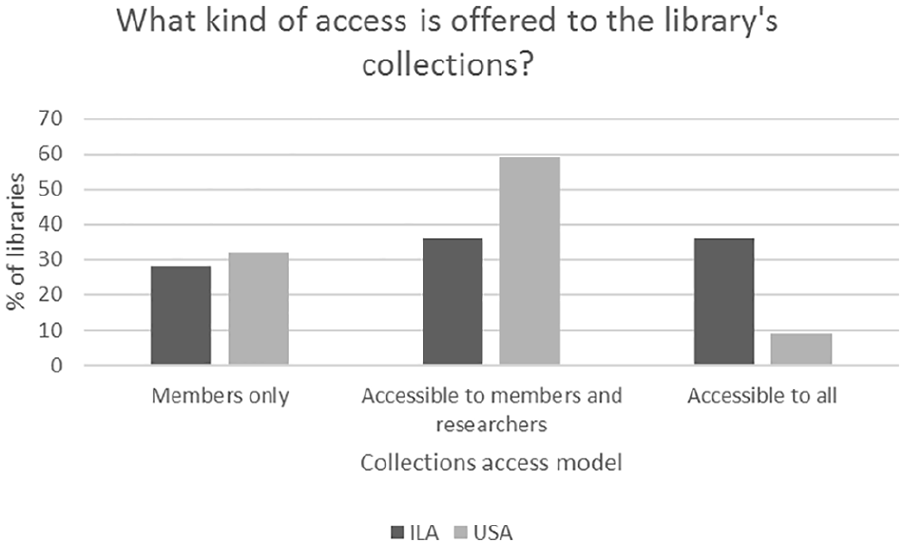
Access to the collections held by the ILA and MLG libraries.
The development of online catalogues by many of the libraries would also appear to suggest a general movement towards increasing accessibility to the collections, with 64% of the ILA libraries and 82% of the MLG libraries now having a full online catalogue or being in the process of developing one.
Additional collections
In addition to books, many IL’s hold significant artefacts, including paintings, sculptures and antiques (Figure 5). Some also maintain more unexpected items, such as the collection of fossils held at the Bath Literary and Scientific Institution in the UK, and the collection of locks held at the General Society of Mechanics and Tradesmen of New York in the US, which ‘represents one of the most complete anthologies of bank and vault locks in the world, with more than 370 locks, keys and tools dating from 4000 BC to the modern 20th-century’.
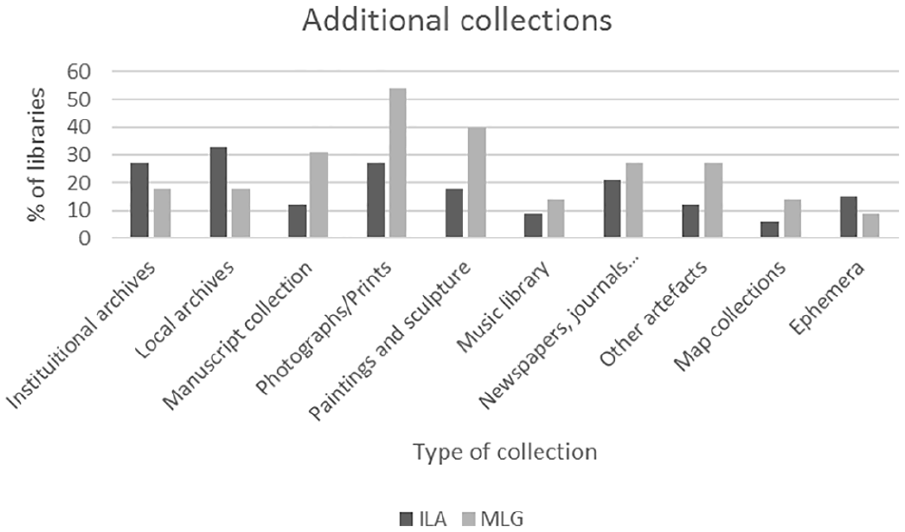
Additional collections held by the ILA and MLG libraries.
Having provided their membership with access to the latest news sources over the centuries, many also preserve long runs of newspapers, journals and periodicals that are often difficult to find elsewhere, as well as collections of ephemera that document everyday life. In the UK, Chetham’s Library in Manchester holds a number of albums and scrapbooks of locally printed material, including theatre programmes and political pamphlets that date back to the 18th century. A large collection of Civil War ephemera meanwhile resides at The Library Company of Philadelphia in the US, being made up of over 50,000 items that includes ‘recruiting posters . . . newspapers, political broadside and leaflets, tickets, trade cards, cartoons . . . ribbons, and buttons’.
Institutional archives maintain detailed accounts of the history of these libraries. These can include minutes from committee meetings that can date back to the institution’s inception and records of book loans that can provide an account of the interests of the library’s membership. These are again a valuable resource for social history research and can provide insight into the lives of many notable figures connected to these institutions over the course of their existence. The Portico Library, for example, has supported research into the lives of the atomic theorist John Dalton and the 19th-century novelist, Elizabeth Gaskell, both of whom used the library’s collections. Meanwhile, The New York Society Library’s ‘City Readers’ project has involved digitizing over ‘100,000 records of books, readers, and borrowing history’ from the library and making them publicly accessible online. Having ‘served 42 members of the first nine American Congresses’, these records are described as being capable of shedding ‘new light on the interests of the men who shaped the nation’. Its ‘57 Female Readers’ project also provides insight into the interests of this ‘small but active slice of the Library’s’ original membership.
The archives of local figures, organisations and societies also often end up preserved by these libraries. The Morrab Library in Cornwall maintains a large archive of donated photographs that capture images of everyday life in the area, from the mid-19th century through to the 1970s. The Armitt Library in Cumbria holds archives related to a number of notable local figures, including Beatrix Potter and John Ruskin, whilst in the US, the Athenaeum Music and Arts Library in La Jolla, San Diego holds a large collection of donated artists’ books that represent the work of ‘regional artists and presses’, and the St Johnsbury Athenaeum in Vermont meanwhile archives ‘records of local clubs and individuals, photographs, general research materials, and institutional records’.
Buildings
Many of the libraries are located in historic buildings, and their preservation is described as forming an important part of their organisational missions, especially as 79% of the libraries in the UK and 77% of the libraries in the US have premises listed as being of some level of historic significance according to the systems used in each country. Both the location and nature of their buildings impacts on accessibility, and the extent to which it is viable for the independent libraries to engage in activities that attract a wider audience, generate income or integrate into their local community.
In the UK, 79% of the library buildings are pre-20th century, with the majority dating from the 19th century (Figure 6). Several also exist in buildings from earlier periods, either due to having been founded much earlier or because they chose to occupy premises that were already in existence. Examples include Chetham’s Library, which is set within a 15th-century baronial hall, and Tavistock Subscription Library, which resides within an abbey gatehouse that dates from the 12th century.
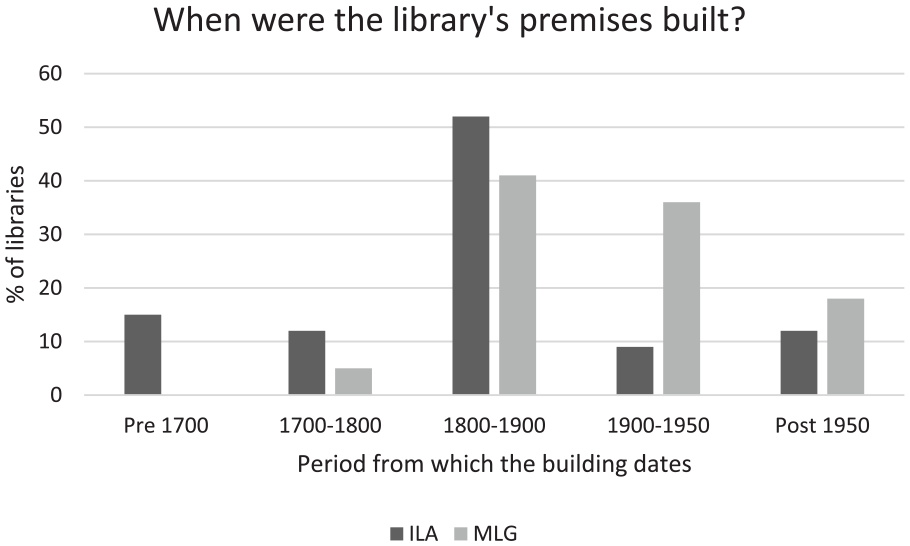
Periods from which the ILA and MLG library buildings date.
As 85% of the libraries in the UK were founded before the 20th century (Figure 1), this would suggest that the majority still exist within their original premises, or at least premises that have been occupied for a considerable period of the organisation’s existence. This would however not appear to be the case in the US, with only 45% of the libraries residing in buildings that date back to before the 20th century (Figure 6), despite 95% of the institutions having been founded in the 19th century or earlier (Figure 1). Further examination of the MLG library websites revealed that this is associated with a trend during the first half of the 20th century for the libraries to move to larger, often purpose-built premises. This trend has continued to a lesser extent in more recent years. Two notable examples are The Library Company of Philadelphia and The Mercantile Library in New York. Since its inception in 1731 The Library Company of Philadelphia has moved premises six times, either taking on or building new, larger premises during times of expansion, or taking on smaller premises during times of financial hardship. Its current premises were purpose built in 1965 and coincided with a programme of redevelopment which sought to establish the library’s reputation as an ‘independent research library concentrating on American society and culture from the 17th through to the 19th centuries’.
Meanwhile, The Mercantile Library has recently undergone a similar process of transformation, which has included a move to new premises. Having been founded as a membership library in 1820, in 2005 the decision was made to rename the organisation as The Mercantile Library Center for Fiction, and to refocus the mission of the institution from providing traditional library services for readers to promoting fiction and supporting writers. With the long-term aim being to establish its reputation as the ‘only organization in the United States devoted solely to the vital art of fiction’, over the course of this research project it has since been renamed again as simply the Center for Fiction. In October 2018, it also left the historic Manhattan premises that it had occupied since 1932, to move to a new purpose-built building in Brooklyn.
This apparent trend of moving to new premises to support the expansion and development of organisations could indicate that more value has been placed on the development of services in the libraries in the US than on the preservation of buildings. The above examples of organisations that have chosen to distance themselves from their historic roots as membership libraries and reinvent themselves as something new would also suggest that, at least for some organisations, there has been pressure in more recent years to not only update their physical spaces but also to update their organisational missions to ensure their continued relevance.
Nevertheless, despite the majority of the MLG libraries no longer being in their original buildings, 77% do still have premises that are registered as being of historic significance. Alongside the traditional membership library services described in the section ‘Historic origins and organisational traditions’ above, for most of the MLG libraries these buildings continue to be described as an integral part of their cultural offer. For example, considerable effort is made to provide historical information on The New York Society Library’s ‘handsome Italianate town house’, which, having been built in 1912, is listed as a New York City Landmark. The San Francisco Mechanics’ Institute also provides a detailed description of its 1909 building, which was built in the beaux-arts architectural style by ‘one of the most distinguished’ of the city’s architects, Albert Pissis’.
Activities
The cultural contributions of these institutions can also be seen to involve far more than the preservation of cultural artefacts and organisational histories. Indeed, 94% of the ILA libraries and 100% of the MLG libraries provide descriptions of a range of cultural, social or educational activities on their websites (Figure 7). For example, in terms of cultural activities, 79% of the libraries in the ILA and 91% of the libraries in the MLG provide programmes of cultural events, which commonly include events such as book readings, lectures and concerts; 33% of the ILA libraries and 50% of the MLG libraries also hold exhibitions, which can either be based upon material in their own collections, or the work of local artists.
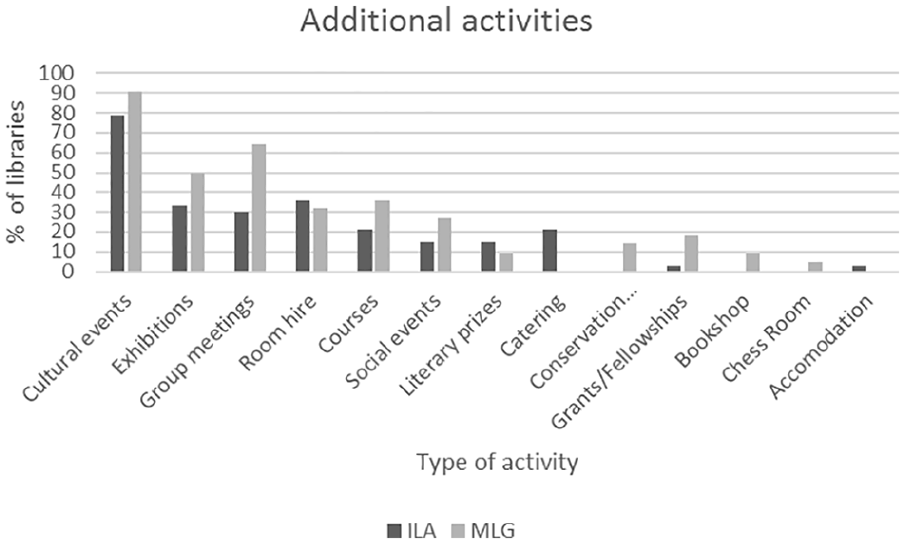
Additional activities provided by the libraries in the ILA and MLG.
Regarding social activities, a number of the libraries run events such as coffee mornings or annual dinners for their members or provide a meeting space for local societies. These include special interest groups such as reading or writing groups, or local history or film societies. Educational activities provided by the libraries range from formal courses to study languages, history or creative writing, to more informal workshops that can focus on anything from learning traditional crafts to improving everyday IT skills. In some of the libraries, this educational focus has developed to include the offer of grants or fellowships to students using their collections for research purposes. For example, Chawton House Library in the UK offers visiting fellowships in partnership with the University of Southampton for students who wish to use its collections, which primarily focus on the history of women’s writing. Meanwhile, The Library Company of Philadelphia in the US offers a series of fellowships that support research in a variety of fields related to their collection’s strengths in ‘the history of America and the Atlantic world in the 17th, 18th, and 19th centuries’.
An analysis of the events posted on the individual library’s websites over a two-month period provided further elucidation of the unique contributions these libraries make to the cultural vitality of their communities. Table 1 provides a summary of just some of the events posted by three ILA libraries and three MLG libraries from 1 May to 30 June 2018.
Examples of events hosted by ILA and MLG libraries.
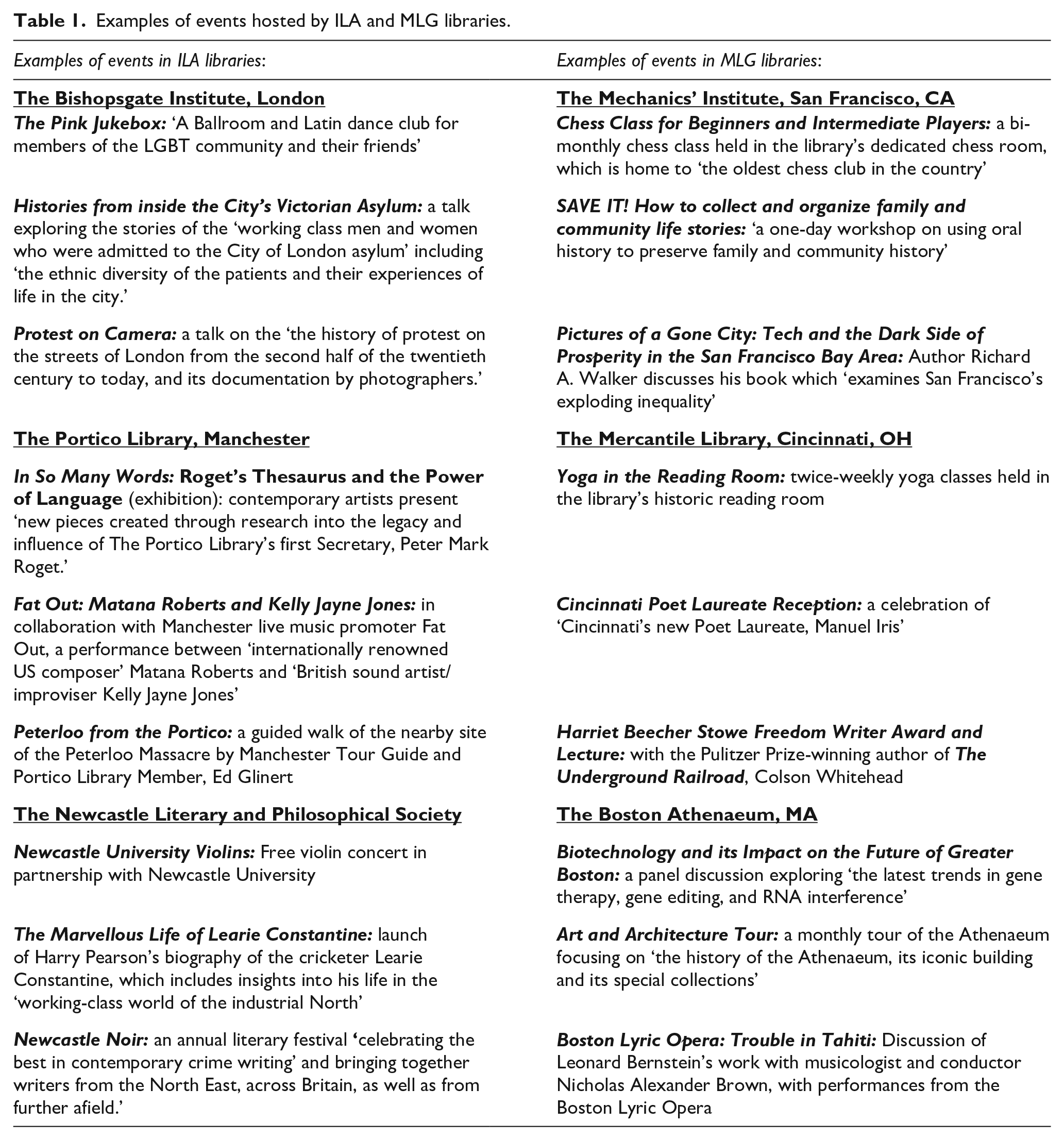
As well as demonstrating the diversity of the events on offer in both the ILA and MLG libraries, these examples also highlight a number of similarities between the kinds of events which tend to be provided by independent libraries, and the extent to which they are involved within the cultural life of their communities. For example, as well as promoting aspects of their libraries’ history (In So Many Words, Art and Architecture tour), many of their events also tend to focus on the heritage of the wider local area (Histories from Inside the City’s Victorian Asylum, Protest on Camera, Peterloo from the Portico). Many also play a part in discussing current social issues within the context of the local area (Pictures of a Gone City, Biotechnology and its Impact on the Future of Greater Boston) or promote the work of contemporary local artists (Cincinnati Poet Laureate Reception, Newcastle University Violins, Boston Lyric Opera). Collaboration with other local organisations also appears to be common (Fat Out, Newcastle University Violins, Boston Lyric Opera), as does the use of the libraries as a space to host artists from further afield for the benefit of the local community (Fat Out, Harriet Beecher Stowe Freedom Writer Award and Lecture, The Marvellous Life of Learie Constantine, Newcastle Noir
Lastly, it is important to note that these activities are not just restricted to library members. Despite many of the libraries originally having been intended for the benefit of a paying membership, 82% of the ILA libraries and 100% of the MLG libraries now offer at least partial public access if not full public access (Figure 8). Partial public access generally consists of access for tours of the library or access for exhibitions and events being offered to members of the public, with open access to the collections and to certain areas of the library being restricted to members.
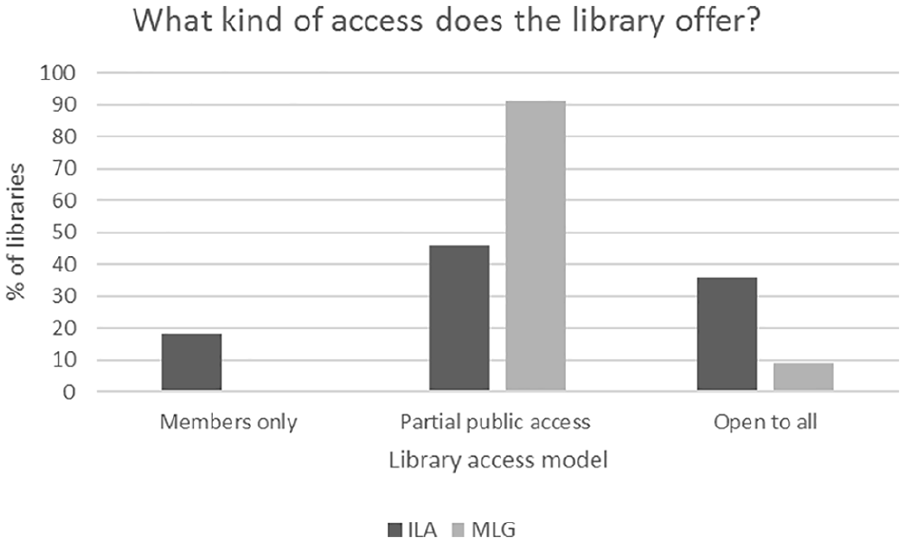
Access provided to the ILA and MLG libraries.
Although 18% of the libraries in the ILA continue to only be accessible to members, overall these figures would appear to reflect a move towards greater public access, and, along with the diverse range of activities provided (Figure 7), a growing commitment from both the ILA and MLG libraries to engaging with their communities more widely.
Discussion and conclusion
This article offers a profile of independent libraries, including their assets, access to those assets and the activities through which independent libraries both support themselves and contribute to their communities. The findings reported in this article provide a convincing case for the value of the cultural assets held and managed by independent libraries in the UK and the US, although the sizes of collections vary considerably. These collections typically include books and other documents on local history and culture, rare books and collections of specialist interest, collections related to notable figures and collections that are a resource for social history. A reasonable proportion of libraries, but by no means all, provided access to their collections through an online catalogue. In addition to managing significant book collections, many independent libraries preserve and provide access to an assorted range of other artefacts, including paintings, sculptures, maps and antiques.
Further to their collections, the other major asset held by most libraries is the building in which their collections are housed. Such buildings are an important venue for members and visitors, and many of the other activities that independent libraries organise and/or host. Many independent libraries are housed in listed buildings (UK) or buildings ‘of historic significance’ (US). Some independent libraries remain in their original buildings, although there is greater evidence of moving building for more space in the US than there is in the UK.
Since this is the first study to seek to profile independent libraries and their assets and activities, it makes a significant contribution to awareness of the nature of independent libraries. Most other studies on independent libraries have taken a historical perspective (Allan, 2013; Bowd, 2013; Bruce, 2018; Manley, 2003). It also offers the first comparison between independent libraries in the UK and US. The findings demonstrate a great deal of congruence across the libraries in both countries, with the majority sharing similar historic origins and maintaining collections, artefacts, and buildings that are considered to have similar cultural value for their communities. Independent libraries in both countries can also be seen to be working towards increasing public access and engagement, particularly through the diversification of the activities that they provide. The inclusion of independent libraries from both the UK and US in the profile also provides a useful foundation from which to undertake further comparative research into the development strategies of the libraries in each country, which could ultimately facilitate the sharing of best practices between organisations that hitherto have remained in relative isolation from each other.
While some researchers have examined the responses of independent libraries to key areas for survival, including preservation (Fenn and Muir, 2003), marketing (Bishop and Rowley, 2012; Hopper, 2008), and the development of funding strategies, partnerships and collaborations, and the use of volunteers (Willson, 2005), no prior studies have profiled a significant group of independent libraries. This study therefore provides a platform for understanding the nature of independent libraries and their assets and activities that, according to the arguments put forward in Loach et al (2017), can inform future research into not only how these libraries can ensure the long-term sustainability of their organisations, but also how they can better articulate their value according to their contributions to cultural sustainability and the unique role that they play in preserving heritage and encouraging cultural vitality in their communities.
This research has a number of limitations that could usefully be addressed through further research. First and foremost, the scope of this study is limited to the members of the ILA and MLG, organisations which exist in two English-speaking countries with a relatively common tradition in terms of their libraries. Further research could explore profiling independent libraries who are not members of the ILA or the MLG, as well as those located in different countries. In addition, while the website analysis undertaken by this study offers insight into the libraries’ resources and activities, it does not provide nuanced insights into the management of the independent libraries, their future strategies and aspirations, and the challenges that they face in ensuring their survival. Further case study-based research could therefore have the potential to inform both policy and practice towards the long-term sustainability of independent libraries. Such research should also be accompanied by investigations into the present and future value and contribution of independent libraries, from the perspectives of various stakeholder groups, including managers, users, and non-users of independent libraries. This research would be best facilitated by a case study approach in order to generate contemporary insights into the perceived contribution of independent libraries to the cultural heritage of the places (e.g. towns, cities and regions) where the independent libraries are located.
Footnotes
Appendix
Website addresses of the ILA and MLG libraries.
| ILA Libraries |
|
|---|---|
| Name of Library | Web Address |
| The Armitt Library | www.armitt.com |
| Bath Royal Literary and Scientific Institution | www.brlsi.org |
| Birmingham and Midland Institute | www.bmi.org.uk |
| Bromley House Library | www.bromleyhouse.org |
| Bishopsgate Institute | www.bishopsgate.org.uk |
| Bradford Mechanics’ Institute | www.bradfordmechanicsinstitute.weebly.com |
| Central Catholic Library | www.catholiclibrary.ie |
| Chawton House Library | www.chawtonhouse.org |
| Chetham’s Library | www.chethams.org.uk |
| The Devon and Exeter Institution | www.devonandexeterinstitution.org |
| Gladstone’s Library | www.gladstoneslibrary.org |
| The Guildford Institute | www.guildford-institute.org.uk |
| Highgate Literary and Scientific Institution | www.hlsi.net |
| Innerpeffray Library | www.innerpeffraylibrary.co.uk |
| Ipswich Institute Reading Room and Library | www.ipswichinstitute.org.uk |
| The Langholm Library | www.langolmlibrarytrust.org.uk |
| The Leeds Library | www.theleedslibrary.org.uk |
| The Linen Hall Library | www.linenhall.com |
| The Literary and Philosophical Society of Newcastle | www.litandphil.org.uk |
| The Liverpool Athenaeum | www.theathenaeum.org.uk |
| The London Library | www.londonlibrary.org.uk |
| The Morrab Library | www.morrablibrary.org.uk |
| The Plymouth Athenaeum Library | www.plymouthathenaeum.co.uk |
| The Plymouth Proprietary Library | www.plymouthproprietarylibrary.org.uk |
| The Portico Library | www.theporticio.org.uk |
| Saffron Walden Town Library Society | www.townlib.org.uk |
| Sybil Campbell Collection | www.sybillcampbellcollection.org.uk |
| Tavistock Subscription Library | www.tavistocksubsciptionlibrary.co.uk |
| Thomas Plume’s Library | www.thomasplumeslibrary.co.uk |
| Thoresby Society | www.thoresby.org.uk |
| Westerkirk Parish Library | www.westerkirkparishlibrary.org |
| Whitby Museum, Library and Archive | www.whitbymusuem.org.uk |
| Working Class Movement Library | www.wcml.org.uk |
| MLG Libraries |
|
| Name of Library | Web Address |
| Athenaeum Music and Arts Library | www.ljathenaeum.org |
| The Athenaeum of Philadelphia | www.philaathenaeum.org |
| The Boston Athenaeum | www.bostonathenaeum.org |
| The Charleston Library Society | www.charlestonlibrarysociety.org |
| Folio: The Seattle Athenaeum | www.folioseattle.org |
| The Institute Library | www.institutelibrary.org |
| The General Society Library | www.generalsociety.org |
| The Lanier Library | www.thelanierlibrary.org |
| The Library Company of Philadelphia | www.librarycompany.org |
| The Maine Charitable Mechanics Association | www.mainecharitablemechanicassociation.com |
| The Mechanics’ Institute Library, San Francisco | www.milibrary.org |
| The Mercantile Library, Cincinnati | www.mercantilelibrary.com |
| The Center for Fiction | www.centerforfiction.org |
| The Minneapolis Athenaeum | www.hclib.org/about/locations/minneapolis-athenaeum |
| The New York Society Library | www.nysoclib.org |
| The Portsmouth Athenaeum | www.portsmouthathenaeum.org |
| The Providence Athenaeum | www.providenceathenaeum.org |
| Redwood Library and Athenaeum | www.redwoodlibrary.org |
| The Salem Athenaeum | www.salemathenaeum.net |
| St Johnsbury Athenaeum | www.stjathenaeum.org |
| The St Louis Mercantile Library Association | www.umsl.edu/mercantile |
| Timrod Literary and Library Association | www.timrodlibrary.org |
Declaration of Conflicting Interests
The author(s) declared no potential conflicts of interest with respect to the research, authorship, and/or publication of this article.
Funding
The author(s) disclosed receipt of the following financial support for the research, authorship, and/or publication of this article: This work was supported by the Arts and Humanities Research Council (grant number 8H/LO12197/1).
