




Abstract
This study explores whether resveratrol effectively protects the reproductive system against isoflurane-induced toxicity in testicular tissue. In this experiment, we randomly divided 60 adult male C57BL/6 mice into six groups (n = 10). Five consecutive days per week, mice were exposed to 1.5% isoflurane for 1 h/day and were given 50 and 100 mg/kg resveratrol. After 35 days (the completion of the mouse spermatogenesis period), the left testis was removed for histomorphometric evaluations, while the right testis was used to determine the Capacity of total antioxidants and lipid peroxidation. To analyze the Parameters of sperm, chromatin maturation, and DNA fragmentation, the left caudal epididymis was used. Based on a one-way analysis of variance (ANOVA), we considered a difference in means of 0.05 to be significant (P0.05). Compared to the control group, the isoflurane group showed a significant decrease in testicular weight, volume, sperm parameters, and tissue histomorphometry. Comparatively, to the control group, malondialdehyde levels increased, and the total antioxidant capacity decreased significantly. Resveratrol improved all of the above parameters in the simultaneous treatment groups compared to the isoflurane group. It did not, however, reach the level of the control group in all cases. It has been demonstrated that resveratrol, with its powerful antioxidant properties, reduces the reproductive toxicity of isoflurane by inhibiting free radicals and increasing the testicular tissue's antioxidant capacity.
Introduction
The most common male reproductive disorders worldwide is infertility. 1 The causes of infertility among men can arise from disruptions in any stage of spermatogenesis. It is believed that abnormal or disordered sperm is the primary cause of infertility problems among men. 1 It has been found that infertile men have high levels of reactive oxygen species. 2 Men infertility is primarily caused by reactive oxygen species (ROS), and the amount and quality of sperm motility are inversely related to ROS production by defective sperm. It has been observed that there is a significant relationship between the changes in the fertility parameters of infertile men and the ROS levels. A decreased total antioxidant capacity is associated with decreased sperm quality due to excessive ROS production. In addition to reducing sperm motility, inhibiting glycolytic enzyme activity, and damaging the acrosomal membrane, oxide DNA damage is also associated with the damage caused to the sperm membrane. Ultimately, it leads to the sperm being incapable of fertilizing the embryo, resulting in a successful pregnancy. 3 Therefore, ROS can cause spermatogenesis defects and male infertility. 4 Male infertility is associated with a reduction in sperm motility and a decreased number of motile sperm. Sperms produced by these people have more dead sperms and DNA damage than those made by productive individuals. The inhalation anesthetic isoflurane is widely used for general anesthesia in animals and humans. Despite its widespread clinical use, this drug adversely affects the reproductive systems of humans and experimental animals. Exposure to it alerts sperm parameters,5–9 and there have been reports of testicular damage caused by exposure to Iso. Despite the unclear mechanism by which Iso causes these effects, it is thought to interfere with the antioxidant defenses of tissues and disrupt the balance of free radicals. DNA's structure is extremely susceptible to oxidative damage, as is well known. Mutagenic changes caused by oxidative damage to DNA can disrupt the integrity of the germ cells and, in some cases, impede fertilization. It has been shown that oxidative stress influences DNA damage and apoptosis in germ cells. 10 There are various effects of oxidative stress on the sperm, including reduced motility, morphological defects, DNA damage, lipid peroxidation, and reduced sperm acrosome reactivity.11,12 Due to their high metabolic rate and susceptibility to oxidative stress, testicular tissues must contain a high level of antioxidant defenses. 13 Many herbal plants contain antioxidant properties which can preserve reproductive tissues against different toxicity.14–20 Resveratrol (also known as 3,5,4'-trihydroxy-trans-stilbene) is a natural phytoalexin.21,22 There are at least 27 plant species that contain this compound. Several studies have demonstrated that resveratrol has antioxidant, anti-inflammatory, and anti-diabetic properties.23,24 It also has a stronger reduction effect than other phenols on lipid peroxidation. 24 Furthermore, resveratrol has been shown to reduce DNA damage through its ability to eliminate hydroxyl radicals. The results of another study showed that resveratrol significantly reduced the apoptosis of testicular germ cells. 25 Based on the beneficial and multiple therapeutic effects of resveratrol, especially its antioxidant properties, this substance could likely protect the testicle from the oxidative toxic effects of the anesthetic isoflurane. Reviewing the sources, there is no study on resveratrol’s protective effects against isoflurane-induced toxicity in testicular tissue. Furthermore, no analysis has been conducted to determine the mechanisms and results of these two substances. Accordingly, this study examined whether Resveratrol protects sperm parameters, DNA fragmentation, and changes in testicular tissues from Isoflurane-induced toxicity.
Materials and methods
Animals and experimental procedures
The Ethics of Research Committees of Kerman University of Medical Sciences, Kerman, Iran (ID: IR. KMU.REC.1400.476) approved all animal experiments and research procedures. In the animal room of Shiraz University of Medical Sciences, 60 adult male C57BL/6 mice (6-8 weeks old) were maintained under standard conditions with a 12:12 dark: light cycle and a temperature of 22°C and a humidity of 40%–60%. During the study period, they had free access to food and water. An acclimatization period of 1 week was provided to the subjects.
Study design
In this study, animals were randomly divided into six groups (each group containing 10 mice) and treated as follows for 35 days:
The control group received normal saline intraperitoneally and was exposed to 100% oxygen (1.5 L per minute) in the anesthesia chamber (5 consecutive days per week, 1 hour daily). In the Isoflurane (Iso) group, isoflurane (1.5 L/min) was administered in an anesthesia chamber that contained 1.5% isoflurane in 100% oxygen for 1 hour per day, 5 days per week. The Low-dose Resveratrol group received 50 mg kg-1 of Resveratrol per day intraperitoneally and was exposed to 100% oxygen (1.5 L/min) in the anesthesia chamber (1 hour per day; for five consecutive days each week). The High-dose Resveratrol group: received 100 mg kg-1 per day of Resveratrol, 26 Intraperitoneally and was exposed to 100% O2 (1.5 L/min) in the anesthesia Chamber (1 hour/day; five consecutive days per week). Those in the low-dose Resveratrol + Iso group received Resveratrol (50 mg kg-1 per day) intraperitoneally and isoflurane (1.5 L/min) in a chamber containing 1.5% Isoflurane in 100% oxygen (1 hour/day; five consecutive days). A high-dose Resveratrol + Iso group received Resveratrol (100 mg kg-1 per day) intraperitoneally, along with isoflurane (1.5 L/min) in an anesthesia chamber containing 1.5% isoflurane in 100% oxygen (1 hour per day; five consecutive days a week).
The duration of this study was 35 days (the period during which mice undergo spermatogenesis). The amount of isoflurane to be administered was determined by a pilot study. To achieve this goal, 20 mice (n = 5) were exposed to various concentrations of isoflurane (1%, 1.5%, and 2%; 1 hour daily, five consecutive days per week), then evaluated for sperm parameters (count, morphology, motility, viability, DNA fragmentation) in comparison to a control group. Some animals died from high doses of Iso, and their testicular tissue was severely damaged. During the measurement of sperm parameters, 1.5% isoflurane in 100% oxygen was found to produce the best results (1 hour per day, 5 days per week). According to a study that investigated the protective effects of resveratrol on the neurotoxicity of isoflurane in mice, the high dose of resveratrol was considered to be 100 mg/kg, and the low dose of 50 mg/kg was chosen to investigate whether resveratrol with half this dose still has protective effects against isoflurane. 26 Also, both doses were examined in the pilot test conducted to ensure effectiveness in this study.
Preparation of drugs
By dissolving resveratrol powder in normal saline, daily solutions of 50 and 100 mg/kg of resveratrol were prepared according to the dose selected and the average weight of each mouse. Afterward, it was vortexed for 3 minutes to mix it thoroughly. Injections were administered intraperitoneally using a 1cc syringe. Anesthesia was issued in a closed chamber, whose entrance is connected to the anesthesia machine to enter oxygen and isoflurane. Furthermore, the mice were weighed weekly and on their last treatment day.
Specimen collection
At the end of the 35th day, ketamine and xylazine were used to anesthetize the animals. As soon as the animals were sacrificed, the right testis was removed, cleaned with phosphate-buffered saline (PBS), and weighed for biochemical analysis. The left testis was removed and fixed in 10% buffer formalin for the histological examination.
Sperm collection
The caudal epididymis was dissected and cut into slices in 2 mL of Ham's F10 medium containing 1% Bovine Serum Albumin (BSA). The dishes were placed in an incubator with CO2 at 37°C for 30 min to allow sperm to enter the medium.
Evaluation of sperm parameters
The World Health Organization (WHO) Manual, 2010 method 27 determined sperm count and motility on a microscope slide smeared with sperm suspension. To analyze sperm morphology, 10 µm sperm were smeared on slides and then dried and stained using a Diff Quick kit; After the prepared sperm smear was completely dried, fixative solution (methanol-based solution) was added to fix the cellular components, and in the next steps, staining was done with solution B (a buffered solution of Eosin Y) and solution C (a buffered solution of thiazine dyes), respectively. We calculated the percent of spermatozoa that had abnormal morphology. To calculate the percentage of living and dead sperm, Eosin-Nigrosin staining was used to assess sperm viability.
Evaluation of chromatin maturation
Sperm Chromatin Maturation Assay (SCMA) kits were used to determine the level of chromatin maturation in sperm nuclei. After the preparation of the sperm smear and its complete drying, the slide was fixed with solution A for 30 min and first stained with solution B for 7 min and then with solution C for 3 min. Finally, after indirect washing and complete drying, its evaluation was done with a light microscope. Immature sperm and their instability are caused by the replacement of protamine by histone in the nucleus of the sperm. 28 When aniline blue is used to stain spermatozoa, immature spermatozoa absorb more aniline blue and turn blue due to their high histone levels.
DNA fragmentation assessment
Using the Sperm DNA Fragmentation Assay (SDFA) kit, DNA fragmentation was measured. In preparation for the test, 15-20 million sperms were suspended from the sperm samples after two PBS buffer washes. As a next step, spermatozoa were immersed in agarose microgel and smeared onto a slide. Dehydration, staining, and denaturation were performed in this order. Spermatozoa without fragmentation had large halos (the same or larger in diameter than the sperm's head). As well as sperms with medium-sized halos (halos greater than one-third of the smallest diameter of the sperm's head and less than the smallest diameter).
Biochemical analysis
Measurement of lipid peroxidation
According to Ohkawa and colleagues in 1979, 29 malondialdehyde (MDA) levels were measured in the testis at 532 nm by using the thiobarbituric acid (TBA) method. The MDA concentration was measured as nmol/mg protein.
Measurement of total antioxidant capacity
To estimate the total antioxidant capacity, the Ferric Reducing Antioxidant Power (FRAP) method was used. Oxidation and reduction are the basis for this method. The reduction of Fe3+ in the 2,4,6-Tri (2-pyridyl)-s-triazine (TPTZ) complex occurs by taking electrons from antioxidant substances and converting them into Fe2+. During this regeneration process, a color change occurs. After reduction, the Fe3+-TPTZ complex (yellow color) is transformed into a blue Fe2+-TPTZ complex. For this purpose, a specific and constant amount of FRAP reagent and sample was poured into each of the wells of the microplate and after 10 min of incubation at 37°C, the absorbance of the samples at a wavelength of 593 nm against the blank solution was read by an ELISA reader. Then, the unknown concentration of the samples was calculated using the standard curve of one millimolar iron sulfate solution. Therefore, the FRAP test measures antioxidant activity and capacity in living biological systems.30,31
Morphometric Evaluation
Following weight measurement, the left testis was preserved in a buffered formaldehyde solution for 1 week. A testis was divided into eight to 12 slabs according to the orientation method to obtain Isotropic Uniform Random (IUR) sections. A graded ethanol series was applied to dehydrate the tissues fixed in paraffin. We prepared five-micron tissue sections and stained them with hematoxylin-eosin. A stereological technique was also used to measure the diameter of the seminiferous tubules, the height of the reproductive epithelium, as well as the diameter of the spermatogonial cells. 32
Statistical analysis
A Prism analysis program (GraphPad, version 8.0, USA) was used to analyze the data. In all cases where the data are normally distributed, their value is represented as mean ± standard deviation (M ± SD). We analyzed the data using a one-way analysis of variance and a Tukey test. Statistically significant differences were accepted as p < .05.
Results
The effects of Resveratrol (RSV) on the testis weights and volume, Testis index, and Change in body weight of mice were treated with Isoflurane (Iso).

The statistical analysis was carried out using a one-way ANOVA. The data are presented as means and standard deviations (SDs).
*: p < 0.05 compared to the control group.
#: p < 0.05 compared to the Iso group.
The effect of RSV on the sperm parameters in the mice treated with Iso.

The statistical analysis was carried out using a one-way ANOVA. The data are presented as means and standard deviations (SDs).
*: p < 0.05 compared to the control group.
#: p < 0.05 compared to the Iso group.
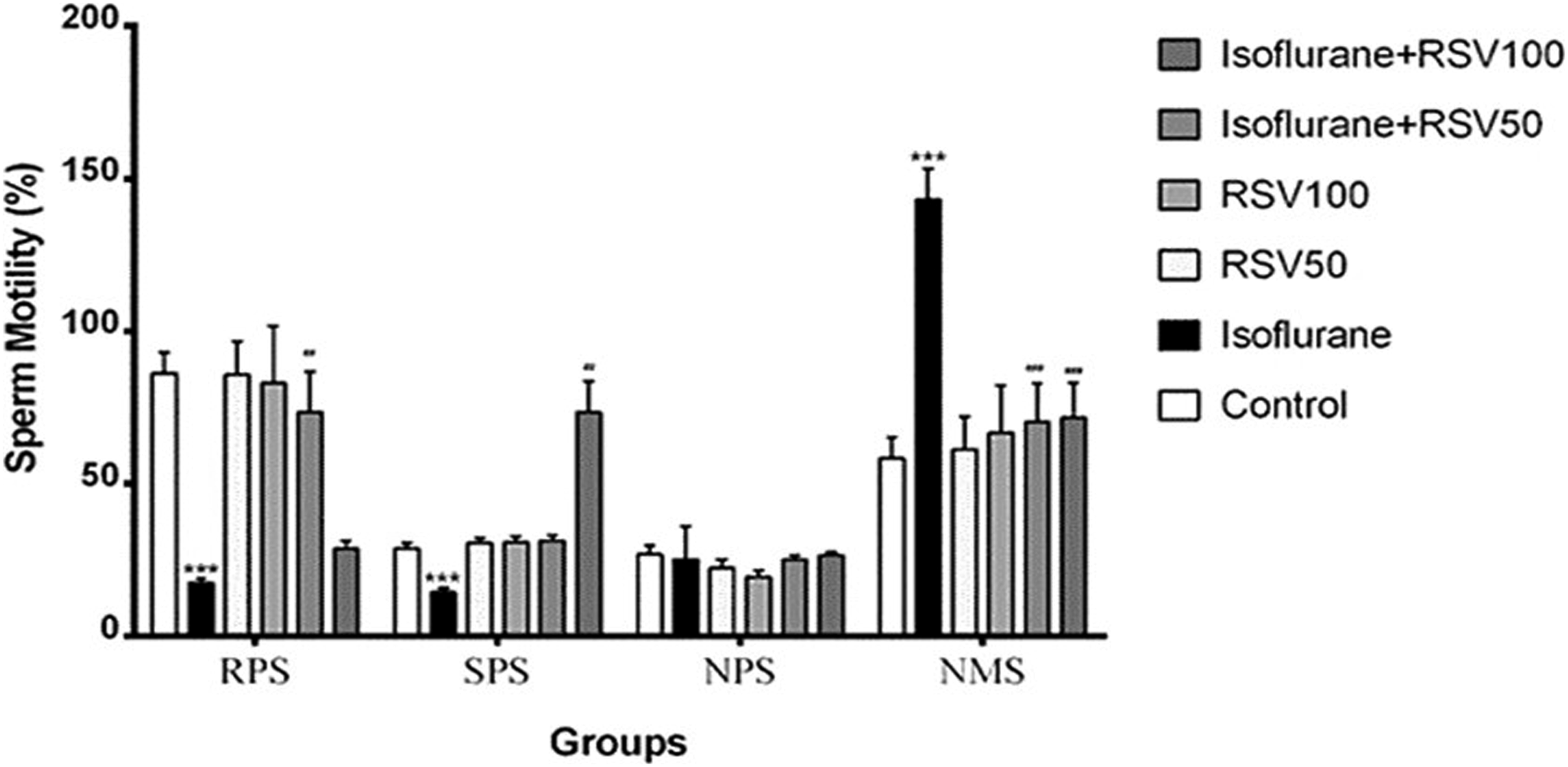
Evaluation of the effects of Resveratrol on sperm motility in mice treated with iso. The statistical analysis was carried out using a one-way ANOVA. The data are presented as means and standard deviations (SDs). (RPS: Rapid Progressive Sperm, SPS: Slow Progressive Sperm, NPS: Non-Progressive Sperm, NMS: Non-Motile Sperm).
The effect of RSV on sperm Chromatin Maturation and DNA Fragmentation in the mice treated with Iso.
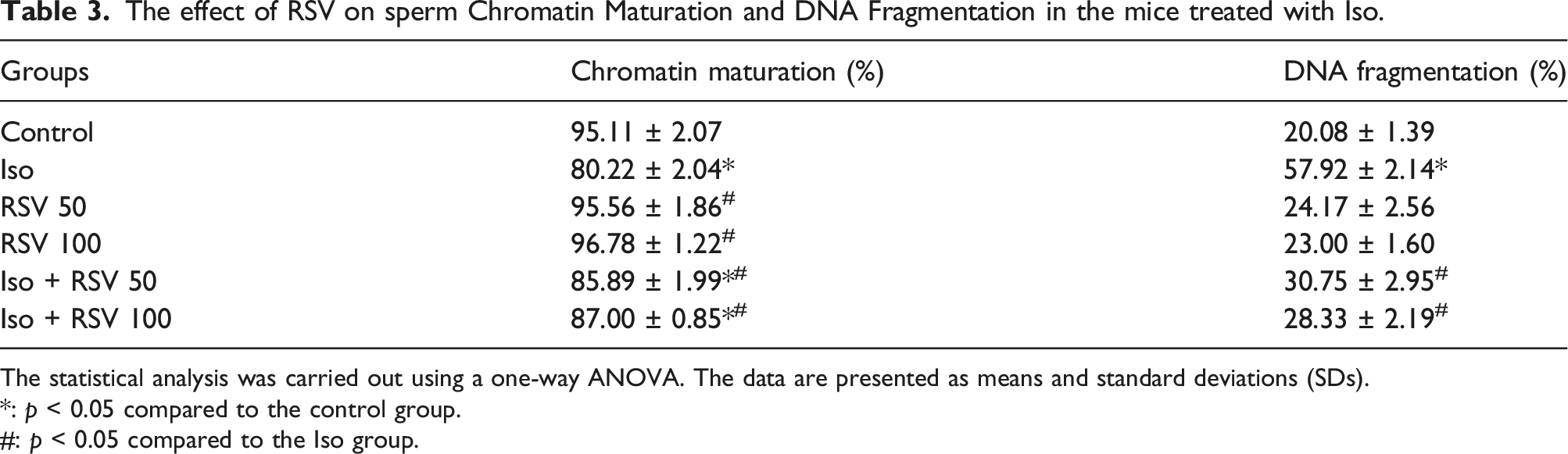
The statistical analysis was carried out using a one-way ANOVA. The data are presented as means and standard deviations (SDs).
*: p < 0.05 compared to the control group.
#: p < 0.05 compared to the Iso group.

The effect of Resveratrol on Lipid Peroxidation of the testis: MDA (nmol/mg protein) level in mice treated with Iso. The statistical analysis was carried out using a one-way ANOVA. The data are presented as means and standard deviations (SDs).
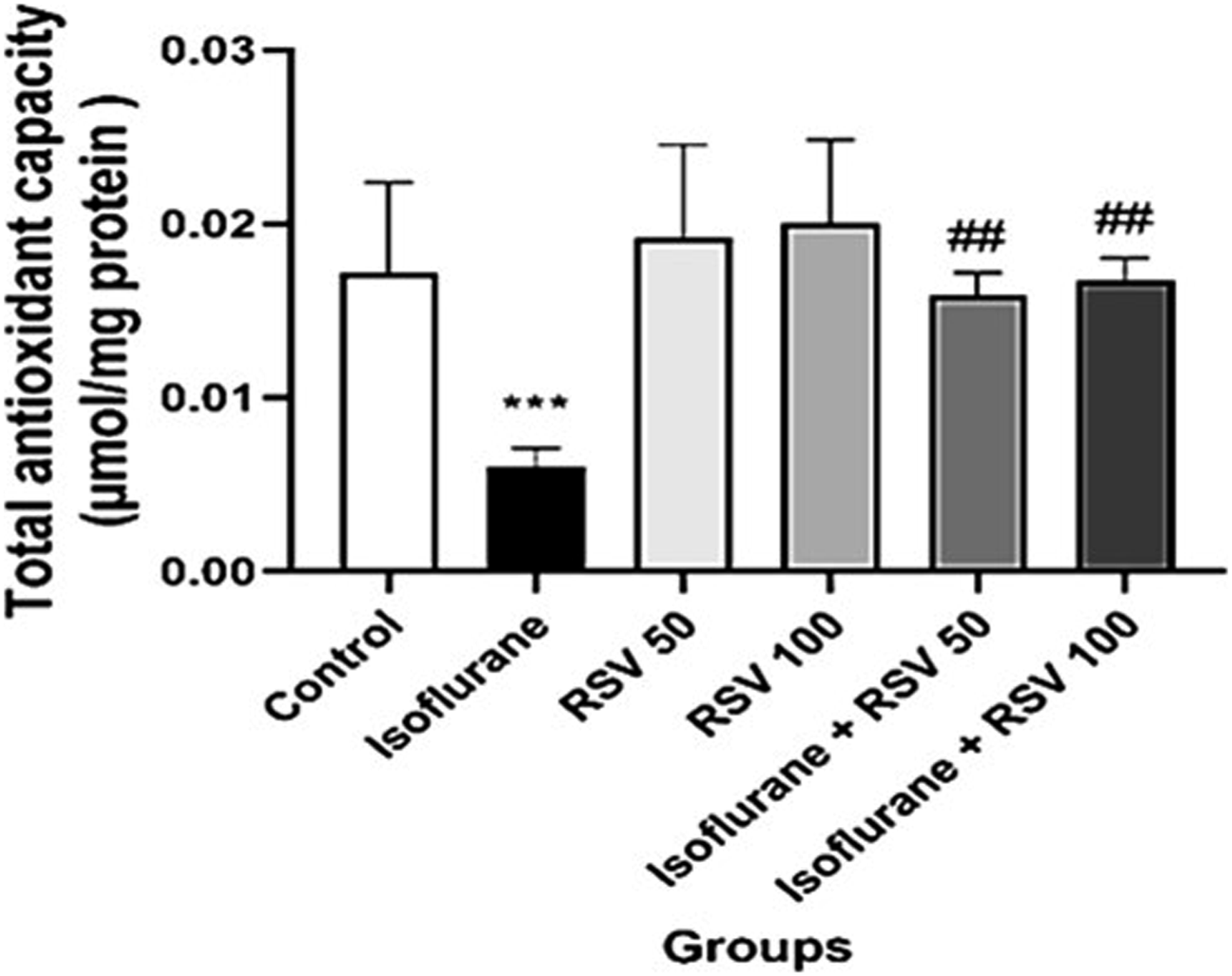
The effect of Resveratrol on Total Antioxidant Capacity of the testis: TAC (µmol/mg protein) level in mice treated with Iso. The statistical analysis was carried out using a one-way ANOVA. The data are presented as means and standard deviations (SDs).
The effect of RSV on the Morphometric parameters of testis in the mice treated with Iso.

The statistical analysis was carried out using a one-way ANOVA. The data are presented as means and standard deviations (SDs).
*: p < 0.05 compared to the control group.
#: p < 0.05 compared to the Iso group.

The maturation of chromatin in the sperm nucleus of mice stained with the SCMA Kit. Pink-colored sperms are sperms with mature nuclei, while blue-colored sperms are sperms with immature nuclei.

Sperm DNA fragmentation (SDF) test. Following treatment with a lysis buffer and acid solution for denaturation and deproteinization. DNA is intact in sperm that produce a large halo (a) or a medium-sized halo (b). Spermatozoa with fragmented DNA produce either a small halo (c), no halo (d), or a degraded nucleus (e).

Light microscopy of H & E cross sections stained testis from control and experimental groups. Morphology of seminiferous tubules in the testis of (a) control, (b) Isoflurane, and (c) Iso + RSV groups.

An examination of the morphology of epididymal sperm from mice stained with the Diff Quick Kit. (a) Normal sperm morphology, (b) Sperm with an abnormal mid-piece, (c) Sperm with an abnormal head, and (d) Sperm with an abnormal tail.
Discussion
Data collected during this study indicate that Iso may cause reproductive toxicity as a result of oxidative stress; administering RSV concurrently as an antioxidant can reduce this toxicity. Studies have shown that long-term/chronic exposure to waste anesthetic gases can damage the genome and lead to oxidative stress. 33 There has been evidence that Iso can cause impairments of the reproductive system in some studies.5–7,34,35 It was shown in this study that isoflurane anesthesia reduced sperm motility and caused damaged sperm cells to undergo apoptosis. During the treatment period in the Iso group, we found that the Sperm Count decreased significantly, which agrees with the results of several other studies.6,7,34 Moreover, the average number of live sperm, which corresponds to the viability of sperm, was significantly reduced in the isoflurane-treated group when compared to the control group, indicating that isoflurane has detrimental effects on epididymal sperm viability; this has been confirmed in previous studies. 5 By disrupting the 54-AR-Kisspeptin-GPR androgen pathway, chronic exposure to isoflurane can inhibit the synthesis and secretion of Gonadotropin Releasing Hormone (GnRH) and thus influence sperm production; 8 the sperm can be impaired in maturity and quality as a result of this condition. Nevertheless, concurrent administration of Resveratrol as an antioxidant could reduce this toxicity. Numerous studies have shown that antioxidant supplements improve the parameters of sperm in infertile men. It has been shown that antioxidant supplements may improve sperm concentration, motility, morphology, and DNA; 36 Compared to the isoflurane group, resveratrol significantly increased the average percentage of progressive sperms and significantly decreased the average percentage of non-motile sperms. Additionally, A significant improvement in sperm counts was observed in the group receiving resveratrol and isoflurane compared to the group receiving isoflurane alone. The groups treated with resveratrol and isoflurane revealed a significant improvement in sperm counts compared to the group treated with isoflurane. Additionally, resveratrol + isoflurane significantly increased the viability and normal morphology of sperm as compared to isoflurane alone. Several studies have demonstrated that the use of antioxidants can improve sperm motility, reduce the number of immobile sperm, increase sperm survival, as well as protect DNA from oxidative damage in infertile men. 37 As a result of ROS present in sperm, the plasma membrane of sperm is oxidized, causing lipid peroxidation. Because the sperm membrane contains a high amount of unsaturated fatty acids, it is very susceptible to oxidative damage, which may adversely affect sperm motility, membrane fluidity, and fertilization ability. Additionally, ROS damages axoneme proteins and disrupts mitochondrial and DNA functions, which accelerates the consumption of ATP.38,39 Several additional conditions can also be caused by damage to sperm DNA, including a decrease in fertility, disruption of the development of the fetus, infertility, and congenital defects. 39 In the present study, Resveratrol was used as an antioxidant to inhibit the isoflurane's destructive oxidative stress effects, and we found that it was effective in preventing these destructive effects in addition to its antioxidant properties. Resveratrol significantly reduced malondialdehyde (MDA) levels in the Iso group, suggesting that it has an anti-lipid peroxidation effect. The reduction in antioxidant enzyme levels is caused by oxidative damage, which results from lipid peroxidation, as previously reported.40,41 An investigation into the role of resveratrol in the prevention of testicular damage has been conducted by Singh et al. A combination of resveratrol and cisplatin significantly reduced the increase in lipid peroxidation levels. 42 To measure the integrity and fertility potential of sperm membranes, sperm motility, and viability are the most important parameters. As it is well known, spermatozoa are extremely sensitive to oxidative damage.2,40,41 Additionally to lipid peroxidation and ATP depletion, oxidative stress affects axonal protein phosphorylation and can negatively affect membrane and ion channel enzyme activity, membrane fluidity, and sperm motility. 2 As a result of ATP depletion, cells may die, which may contribute to the reduced viability of sperm in the present study. 2 In vivo and in vitro studies have reported diminished sperm motility5,7,35 and sperm viability 5 after treatment with Iso. To support this hypothesis, As a result of our studies, we have discovered that Resveratrol significantly modified the effect of Iso on sperm motility and viability. Mice treated with iso showed a significant reduction in epididymal sperm, possibly resulting from improved free radicals and oxidative stress. Due to its anti-lipid peroxidation and anti-oxidant properties, resveratrol may lessen the harmful effects of iso on sperm morphology and count.43,44 It has been demonstrated that inhaled anesthetics damage DNA in sperm cells. 36 The current study showed that isoflurane exposure decreased chromatin maturation, and resveratrol partially prevented the damage caused by the isoflurane exposure. Furthermore, Sardas et al. investigated the genotoxic effect of waste anesthetic gases in occupational exposure and antioxidant protection against these toxic effects. As a result of occupational exposure to anesthetic gases, oxidative effects damage DNA, and a diet containing antioxidants for 12 weeks significantly reduced DNA damage. 45 The measurement of antioxidant capacity can be considered one of the indicators for biochemical evaluation. There was a significant decrease in the treatment group with isoflurane compared to the control group in the present study. It was found that RSV in groups treated simultaneously with isoflurane improved compared to groups receiving isoflurane alone. Experimental and clinical studies have been conducted over the past 25 years to investigate the pathophysiology of oxidative stress and its impact on reproductive disorders in both men and women. Many antioxidant agents, including resveratrol, have benefitted the sperm and pregnancy rate in both in vitro and in vivo studies. 46 Studies have linked increased ROS production with significant DNA damage, including changes in the double and single strands of DNA, breakdowns in DNA cross-linking, and changes in chromosome structure.47,48 The data presented in this study support previous studies by showing that iso leads to increased fragmentation of sperm DNA and that resveratrol's severity is slightly decreased when iso is combined with resveratrol. In the middle stages of spermatogenesis, most DNA damage occurs due to the protamine-histone transition pathway. Thus, most DNA damage occurs during the intermediate stages of spermatogenesis during the translocation of protamine and histone. 49 It is hypothesized that isoflurane causes failure disorders by affecting this process. Compared with the control group, the results of this study revealed a significant decrease in the height of the reproductive epithelium and diameter of seminiferous tubules treated with isoflurane. Additionally, the average diameter of spermatogonial cells was significantly decreased compared to the control group in the isoflurane group. A significant increase was observed in the mean diameter of seminiferous tubules and the diameter of spermatogonial cells when resveratrol and isoflurane were administered simultaneously. Isoflurane + high-dose resveratrol also significantly increased the reproductive epithelium's height compared to isoflurane alone. Due to its antioxidant properties, resveratrol decreased the toxic effects of isoflurane on the diameter of seminiferous tubules and the height of the reproductive epithelium. Many researchers believe that the atrophy of seminiferous tubules is caused by the loss of sex cells and the high rate of apoptosis of these cells. 50 Sperms are produced in the seminiferous epithelium by the process of spermatogenesis, so ultrastructural changes in the wall of the seminiferous tubules of the testicular tissues caused by isoflurane may adversely affect spermatogenesis by disrupting the process of spermatogenesis and thus reducing fertility. 51 According to the results of other studies, isoflurane also causes tissue damage, such as nuclear agglutination in spermatocytes, large lipid droplets, and autophagosomes in the cytoplasm. It has been reported that isoflurane disrupts the spermatogenic tubes and the spermatogenesis process. It has been suggested that the testicular damage caused by isoflurane may result from an imbalance in sex hormones. 34 Iso mice showed a significant decrease in the weight and volume of their testis during treatment. This weight loss may also be caused by a reduction in testicle size, a reduction in the diameter of seminiferous tubules, an increase in interstitial space, or a decrease in epithelial thickness.52,53
Conclusions
The present study found that isoflurane had harmful effects on the testis, with oxidative stress and excess production of ROS being the main causes of this damage. Based on the results of this study, it can be concluded that the metabolites of isoflurane cause oxidative stress by disrupting the balance between oxidation and reduction. An oxidative stress condition leads to organ poisoning as it causes lipid peroxidation and damages macromolecules such as DNA and proteins. The toxicity of isoflurane in mice's testicular tissue can be reduced by resveratrol. It has been demonstrated that using this compound as a supplement to isoflurane in laboratory models reduced the adverse effects of isoflurane on male mice and treated-induced infertility.
Footnotes
Declaration of conflicting interests
The author(s) declared no potential conflicts of interest with respect to the research, authorship, and/or publication of this article.
Funding
The author(s) disclosed receipt of the following financial support for the research, authorship, and/or publication of this article: This work was supported by the current study was financially supported (Grant No. 99000763) by the Kerman University of Medical Science, Kerman, I.R. Iran.
