




Abstract
Brick kilns in the suburban areas in developing countries pose a big threat to the environment and hence the health of their workers and people residing around them. The present study was planned to assess the lung functions, oxidative stress parameters and DNA damage in brick kiln workers. A total of 31 male subjects working in brick kiln, and 32 age, sex and socioeconomic status matched controls were included in the study. The lung volumes, capacities and flow rates, namely, forced expiratory volume in first second (FEV1), forced vital capacity (FVC), FEV1/FVC, expiratory reserve volume, inspiratory capacity (IC), maximal expiratory flow when 50% of FVC is remaining to be expired, maximum voluntary ventilation, peak expiratory flow rate and vital capacity were significantly decreased in the brick kiln workers. Increased oxidative stress as evidenced by increased malonedialdehyde levels and reduced glutathione content, glutathione S-transferase activity and ferric reducing ability of plasma were observed in the study group when compared with controls. Our results indicate a significant correlation between oxidative stress parameters and pulmonary dysfunction, which may be due to silica-induced oxidative stress and resulting lung damage.
Introduction
Brick kilns in the suburban areas in the developing countries pose a big threat to the environment and thus the health of their workers and people residing around them. 1 –3 Exposure to silica is the most important and severe health hazard to workers. Furthermore, loads of smoke, poisonous gases, heat and heavy metals in soil pose a serious threat to their well-being. 4,5
Brick kilns and their occupational hazards are an extremely less studied area of research. Earlier studies have found alarming levels of suspended particulate matter, respirable suspended particulate matter, silica content in soil, humidity and noise levels in work environment along with heavy metals. 2 –7 Silicosis has been extensively researched and documented to cause various ill effects on health, but studies in brick kilns are lacking considering the fact that these kilns possess several other risk factors like diesel exhaust, heat and radiation exposure and heavy metals along with the most important one, silica. Kilns use diesel for combustion in the baking of bricks whose complete and incomplete products of combustion are known to be genotoxic, cytotoxic, fibrogenic, free radical generating and DNA damaging in addition to being carcinogenic. 8 Exposure to heat and radiation can cause genetic mutations, DNA strand breaks, DNA–protein cross-links, radiation pneumonitis, fibrosis and diffuse alveolitis. 9 Studies have demonstrated increased level of heavy metals, most notably of lead, in brick kiln soil, 4,5 which give rise to neurological, hematological, gastrointestinal and immunological pathologies and even neoplasms, in which prime targets being heme synthesis enzymes, thiol-containing antioxidants and enzymes. 10
There is a paucity of data on hazardous health effects in brick kiln workers. Few studies have measured and documented pulmonary functions of brick workers. 11 –17 Although there appears to be consistent evidence of increased risk of pulmonary damage in brick workers, the nature and the magnitude of the risk varies. Along with nonmalignant and malignant pulmonary diseases, cancer of the larynx, colon cancer and cardiovascular diseases were found significantly more in brick workers. 12 Both silica and heavy metals cause free radical damage and load the body with oxidative stress. 10,18,19 Although silicosis has been demonstrated to be associated with DNA damage, apoptosis and cancer, studies in brick workers are inconclusive. 20,21
Hence, the present study was planned to find out the environmental health effects in brick kilns workers by assessment of certain parameters like pulmonary functions, oxidative stress markers and DNA damage.
Materials and methods
The study was conducted in Department of Physiology and Department of Biochemistry, University College of Medical Sciences (UCMS) and Guru Teg Bahadur Hospital, Delhi. Ethical clearance from Institutional Ethics Committee for Human Research (IEC-HR), UCMS, Delhi, was obtained and a written informed consent was obtained from the participating subjects.
Study population
The study was conducted on 31 male brick workers, aged 20–40 years, who were occupationally exposed to silica in brick kilns. A total of 32 males not exposed to brick works served as controls. Controls selected for the study were from the staff of UCMS doing menial jobs such as sweepers, sanitary workers, daily wage laborers and security guards having similar socioeconomic status as that of brick workers (most of them living in slums and having average monthly income nearly 150 US$ = 7000 INR). Subjects and controls were matched for age, sex and socioeconomic status.
Subjects working in kiln for less than 1 year were excluded. Those on medication, which affect lung functions, and those with a history of respiratory illness before joining the job were not considered. Smokers and subjects with upper respiratory tract infections in preceding 3 weeks or with any systemic illness, such as diabetes, tuberculosis, hypertension, and so on, were excluded.
Since this was a time bound and budget constraint study for MD thesis, the sample size for the study group was decided as 30 which would be adequate for statistical analysis as suggested by our statistician. A total of 50 subjects were shortlisted on the basis of our inclusion criteria. Out of these, three declined to take part in the study and seven refused to give blood samples. Pulmonary function tests (PFTs) were carried out on the remaining 40 subjects. Of these, nine were unable to perform maneuver correctly/give three consecutive adequate respiratory efforts and were excluded from the study. The ability to perform maneuver was based on the acceptability and reproducibility criteria for spirograms acceptability (i.e. being free from artifacts, having good start and satisfactory exhalation). 22 Hence, finally our study group comprised of 31 subjects (Figure 1).
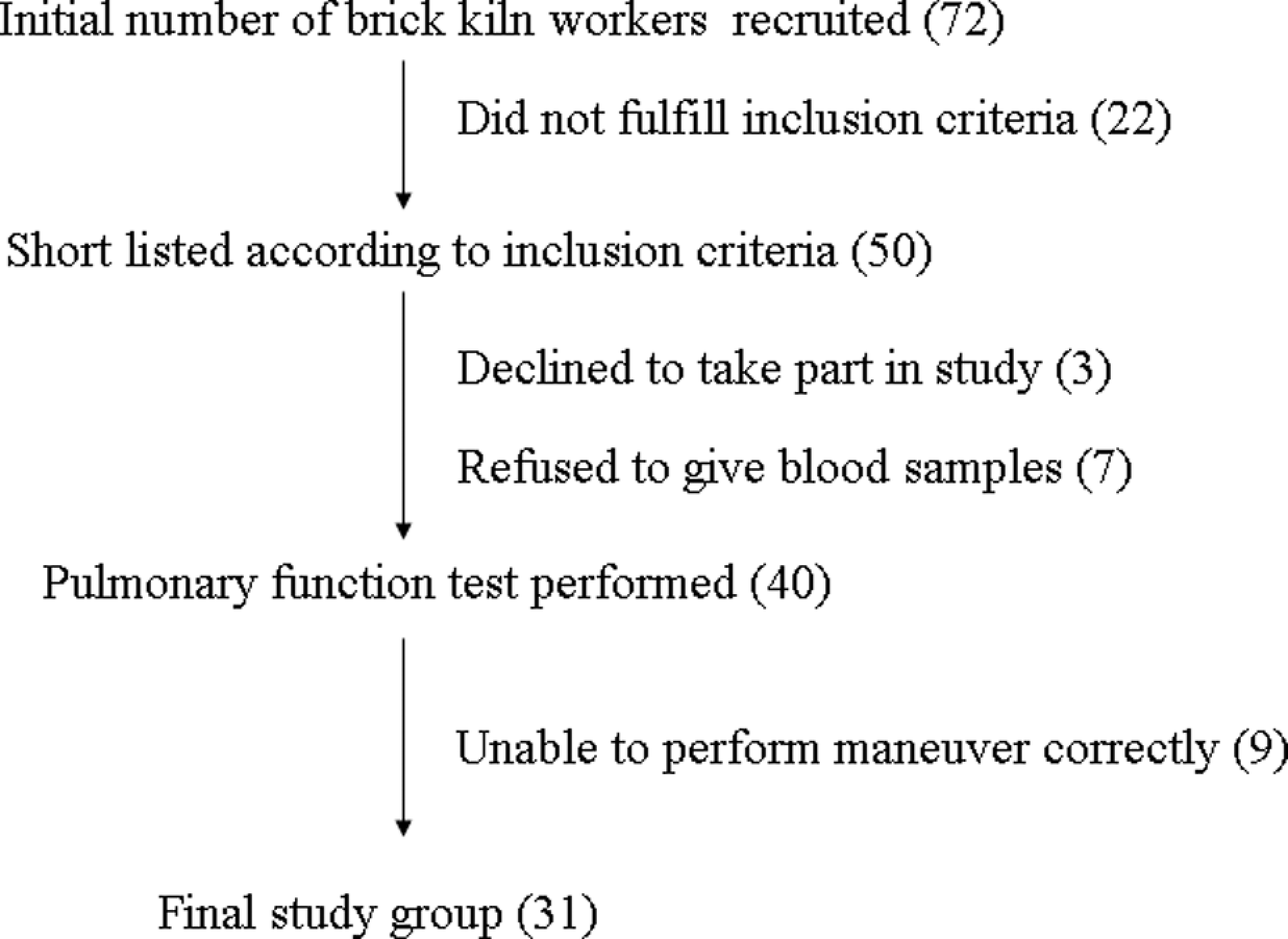
Recruitment of subjects.
A comprehensive modified questionnaire based on American Thoracic Society (ATS), National Heart and Lung Institute (NHLI) division of lung diseases–2005 recommendation (American Thoracic Society Guidelines) 23 suitable to Indian scenario was used for epidemiological research study. Performa was filled-in for each participant, and history, pulse examination, general physical examination and systemic examination for each system were carried out. Anthropometric measurements (weight, height, chest circumference and body mass index (BMI)) were recorded. The standing height of each subject was measured without shoes to nearest 1 cm and weight by weighing scale to nearest 1 kg.
Pulmonary function tests
The PFTs were carried out on subjects using Sibelmed Datospir 120B precision portable spirometer, with built-in computer program using standard laboratory methods. The machine was calibrated daily.
The subjects were called in batches of 2–3 on 2 days in a week for investigation. They were tested on relatively empty stomach (i.e. about 2–3 hours after a light meal). In order to ally anxiety and apprehension associated with testing, they were familiarized with the procedure and apparatus to be used. The ambient temperature on different days varied from 18 to 24°C. Lung function tests were done on all the subjects who performed the tests with maximum possible effort. The end point of the test was assessed by the shape and size of the flow volume curve. Before selecting the best, reproducibility and validity criteria were used. 22 Subjects giving three consecutive inadequate respiratory efforts were excluded from the study.
All the PFTs have been carried out under the guidelines as specified in ATS statement (Snowbird workshop on standardization of spirometry).
Estimation of oxidative stress markers in blood
Level of MDA in serum
Serum malondialdehyde levels were measured as an in vivo index of lipid peroxidation using the colorimetric method described by Satoh. 24 Lipid peroxides are precipitated from serum with trichloroacetic acid and heated with thiobarbituric acid (TBA). The reaction results in formation of a chromogen which is extracted with n-butyl alcohol. Absorbance is then measured at 530 nm. The concentration of malonedialdehyde (MDA) was expressed in nmol/mL serum.
Ferric reducing ability of plasma
Ferric reducing ability of plasma (FRAP) was determined as described by Benzie and Strain. 25 This method measures the ability of antioxidants present in the sample to reduce ferric-tripyridyltriazine (Fe3+-TPTZ) to ferrous (Fe2+) form, which absorbs light at 593 nm. The change of absorbance is directly related to the ‘total’ reducing power of the electron-donating antioxidants present in the reaction mixture. The results were expressed as micromoles per liter.
Level of GST in serum
Glutathione S-transferase (GST) activity in serum was measured spectrophotometrically according to the method of Habig et al. 26 using 1-chloro-2,4-dinitrobenzene (CDNB) as substrate. The formation of CDNB–2,4-dinitrophenyl glutathione was monitored by measuring the net increase in absorbance at 340 nm against the blank. The enzyme activity was calculated using the extinction coefficient of 9.6 mmol/cm and expressed as units of product formed per milligram of protein per minute.
GSH content in RBC
Reduced glutathione (GSH) content in whole blood was measured by the method given by Tietze. 27 This method is based on the development of yellow color when 5,5′-dithibis-2-nitrobenzoic acid is added to sulfhydryl compounds. The chromomorphic product formed was measured spectrophotometrically at 412 nm. The concentration of GSH was expressed as milligram per deciliter of blood.
Assessment of DNA damage
Genomic DNA was extracted using HiPura Blood Genomic DNA Isolation Mini Prep Purification Spin Kit (DNA isolation kit) obtained from HiMedia Labs (India).
DNA was stored at −20°C until analysis. DNA laddering assay was used to assess DNA damage. Briefly, each DNA sample (10 μL) was precipitated with 100% ethanol, mixed with bromophenol blue, loaded on ethidium bromide stained 1% agarose gel and gel electrophoresis was run. It was then compared with 100 bp DNA marker. 28 On agarose gel electrophoresis, these gave a characteristic ‘laddered’ appearance if apoptosis was present. Necrosis was characterized by random DNA fragmentation, which forms a ‘smear’ on agarose gel. Both the smear formation and laddered appearance were taken as connoting the DNA damage.
Statistical analysis
Analysis was done by SPSS 17.0 statistics package. Paired t test was performed to compare lung functions and oxidative stress between brick kiln workers and controls. Pearson’s correlation coefficient between lung function parameters and levels of oxidative stress biomarkers was determined by Pearson’s test. DNA laddering was analyzed using McNemar’s chi-square test.
Results
No significant difference was observed between the two groups (brick kiln workers and controls) for age, height, weight and BMI on comparing the groups by paired t test (Table 1). On comparing the two groups for all lung volumes and capacities, it was found that forced expiratory volume in first second (FEV1), FEV1/forced vital capacity (FVC), vital capacity (VC), inspiratory reserve volume (IRV) and inspiratory capacity (IC) came out to be statistically low (p < 0.05) in subjects when compared with controls. The decrease in FVC, forced inspiratory vital capacity and expiratory reserve volume in the workers was not significant (Table 2).
Anthropometric measurements of subjects (brick kiln workers) and controls

BMI: body mass index.
Pulmonary volumes and capacities of subjects (brick kiln workers) and controls
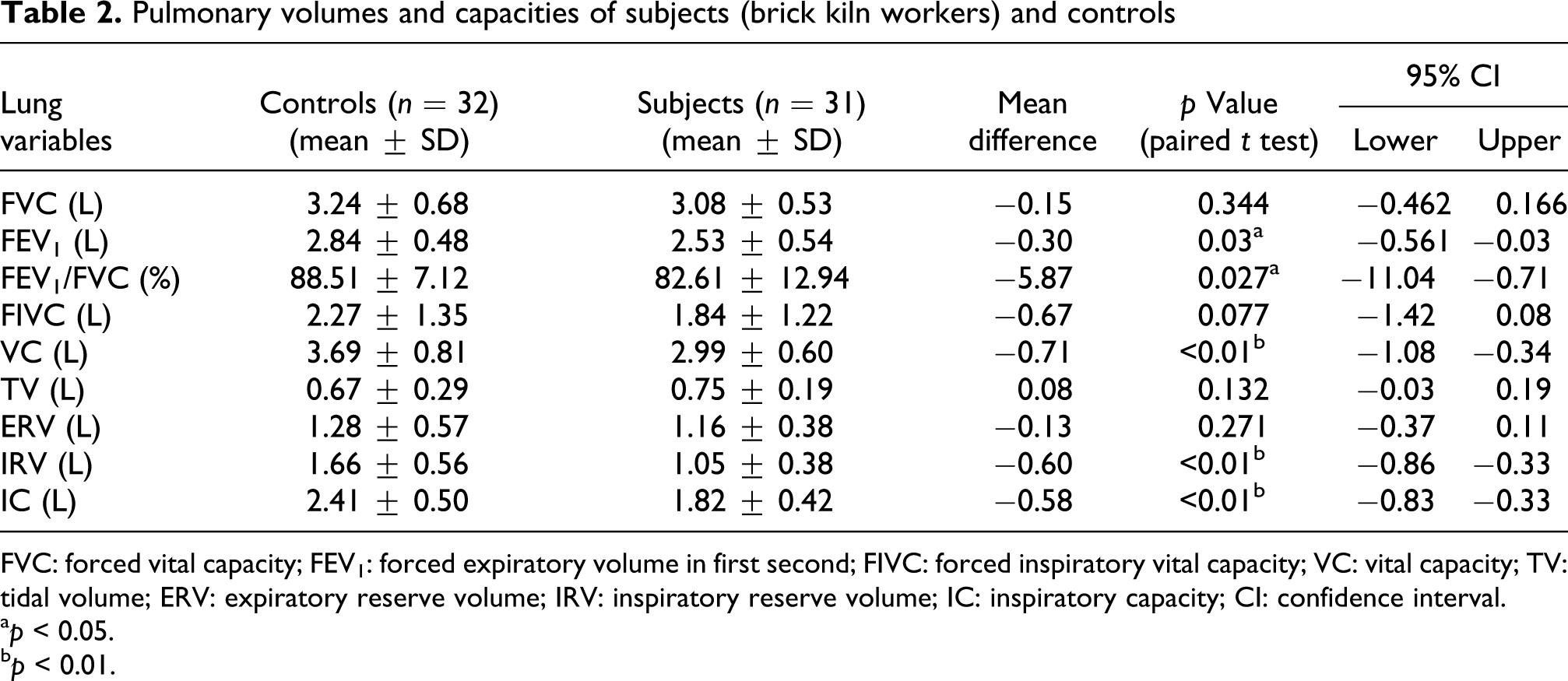
FVC: forced vital capacity; FEV1: forced expiratory volume in first second; FIVC: forced inspiratory vital capacity; VC: vital capacity; TV: tidal volume; ERV: expiratory reserve volume; IRV: inspiratory reserve volume; IC: inspiratory capacity; CI: confidence interval.
a p < 0.05.
b p < 0.01.
Flow rates like peak expiratory flow rate (PEFR), MEF50%, FEF25–75% and maximum voluntary ventilation (MVV) were significantly low (p < 0.05) in subjects when compared with controls. The value of MIF50% was also decreased in exposed subjects but could not reach the level of significance (Table 3).
Pulmonary flow rates of subjects (brick kiln workers) and controls

PEFR: peak expiratory flow rate; MEF50%: maximal expiratory flow when 50% of forced vital capacity remaining to be expired; MIF50%: maximal inspiratory flow when 50% of forced vital capacity remaining to be expired; FEF25-75%: forced expiratory flow during 25-75% of forced expiration; MVV: maximum voluntary ventilation; CI: confidence interval.
a p < 0.01.
b p < 0.05.
On comparing the groups using paired t test, the values of MDA came out to be statistically high (p < 0.05), while FRAP, GST and GSH were statistically low (p < 0.05) in subjects when compared with controls (Table 4).
Comparison of oxidative stress parameters of subjects (brick kiln workers) and controls

MDA: malonedialdehyde; FRAP: ferric reducing ability of plasma; GST: glutathione S-transferase; GSH: reduced glutathione; CI: confidence interval.
a p < 0.01.
Pearson’s correlation was applied to determine the correlation between pulmonary parameters and oxidative stress parameters. GSH was found to be correlated significantly with FEV1, PEFR and MVV. While MDA was found to have significant negative correlation with PEFR and MVV, FRAP was correlated significantly with FEV1/FVC, PEFR, MEF50%, FEF25–75% and MVV. There was no significant correlation between GST and all of the pulmonary parameters (Table 5).
Pearson’s correlation between pulmonary parameters and oxidative stress parameters in brick kiln workers
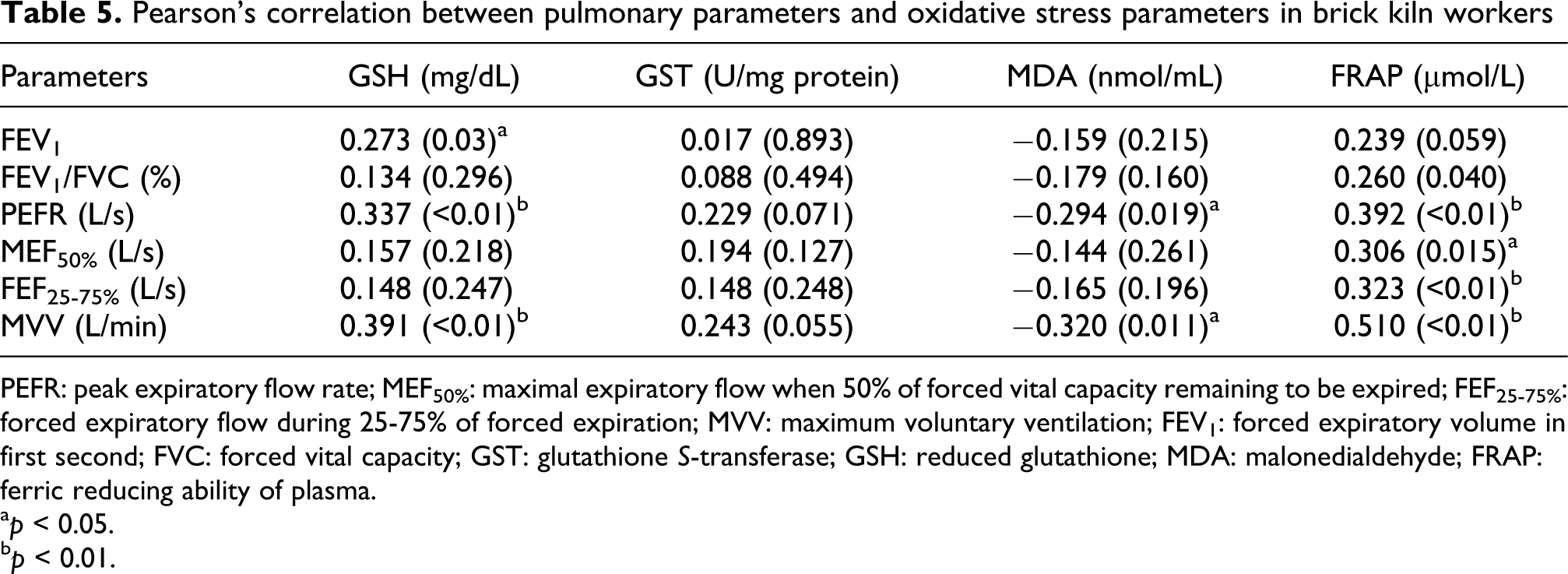
PEFR: peak expiratory flow rate; MEF50%: maximal expiratory flow when 50% of forced vital capacity remaining to be expired; FEF25-75%: forced expiratory flow during 25-75% of forced expiration; MVV: maximum voluntary ventilation; FEV1: forced expiratory volume in first second; FVC: forced vital capacity; GST: glutathione S-transferase; GSH: reduced glutathione; MDA: malonedialdehyde; FRAP: ferric reducing ability of plasma.
a p < 0.05.
b p < 0.01.
On comparing the lung functions and oxidative stress parameters among brick kiln workers working for less than 5 years and more than 5 years using t test, no significant difference was observed between them for any of the parameters.
Of the 31 (35.5%) samples in test group, 11 were found to be damaged (either DNA fragmentation or smearing) when compared with 4 (12.5%) of 32 in control group. However, by McNemar’s chi-square test, DNA damage was not found to be significant (p = 0.092) in brick kiln workers.
Discussion
The present study was planned to assess the lung functions and oxidative stress parameters in occupationally exposed brick kiln workers. We observed that most of the lung volumes, capacities (FEV1, FEV1/FVC, VC, IRV and IC) and flow rates (PEFR, MEF50%, FEF25–75% and MVV) were significantly lesser in the study group (brick kiln workers) when compared with controls.
The studied brick kiln plant was an old fashioned factory, approximately 25 years old using out-dated techniques based on manual molding and making of brick from clay soil of ‘bangar’ (old alluvium) area, transporting of raw bricks to the factory, then manual stacking of the bricks in the fire kilns for baking. The burning of liquid fuel (i.e. diesel) in the primitive kilns is responsible for the major part of the mist of fumes and respirable particles in the plants and in their vicinity, in addition to dusts generated into the environment of the workplace during different stages of processing.
On comparing the two groups (brick kiln workers and controls) for lung volumes and capacities, FEV1, FEV1/FVC, VC, IRV and IC came out to be statistically lower (p < 0.05) in subjects when compared with controls. Similarly, flow rates like PEFR, MEF50%, FEF25–75% and MVV were found to be significantly lower in brick workers than in controls.
Previous studies on brick workers have shown similar findings of mixed restrictive and obstructive ventilatory defects. 11 –15 Studies on brick kiln workers have shown that exposure to silica caused progressive decrease in FVC or VC in workers without producing classical silicosis (i.e. classical radiological signs). 11,13 Decrease in respiratory parameters especially FEV1 and FEF25–75% is the first measurable sign of the initiation of bronchitis and obstructive lung disease. In some studies, it was found that maximal mid expiratory flow rate or FEF25–75% was reduced, 29,30 which is quite similar to our finding, showing that smaller airways are affected.
In an earlier 2-year follow-up study, Chen et al. observed no difference in decline in FVC and FEV1 between subjects and controls after adjustment for age, sex, height and smoking status and concluded that the lung function damage was predominantly an obstruction of the large and medium airways. 14
Lung functions of brick workers working for less than 5 years when compared with those working for more than 5 years did not reveal any significant difference. This finding is different from the findings of earlier studies, 13,14 which found pulmonary functions decreasing as duration of exposure increased with significant trends for FEV1/FVC%, MMEF, FEF50% and FEF75%, but is similar to an earlier occupational study which found no significant correlation between deterioration of lung functions and the time of occupational exposure. 31 Wong and Musselman found significantly increased mortality from lung cancers among slag wool workers employed for less than 5 years but not among those employed for 5 years or longer. 32 Similarly, McDonald et al. reported significantly increased mortality from respiratory cancer, heart disease and other nonmalignant respiratory disease among workers at a friction products factory with less than 1 year of employment, but such increases were not found among long-term employees. 33 These authors have suggested that workers exposed to occupational hazard for a shorter exposure duration might have been assigned to jobs having heavier exposure and consequently experienced a higher mortality risk. The reason for discordance of lung function derangement and duration of exposure might be that maximum damage to lungs have been caused in early period of exposure and also young workers exposed to less duration might have been assigned heavy load of works when compared with senior ones. Moreover, workers in brick kiln were exposed to other factors like smoke and heat of furnace along with sunlight, and so on, which may have contributed to increased oxidative stress and early involvement of lungs.
In the present study, subjects suffering from upper respiratory diseases were excluded, but it was observed that some other respiratory symptoms, indicating chronic bronchitis were more prevalent in exposed group than in controls. Signs of chronic bronchitis like cough and chronically increased mucus production were found in 48.38% subjects in exposed group when compared with 12.5% subjects in nonexposed group. This is similar to an earlier study which found higher prevalence of respiratory symptoms indicating chronic bronchitis.
15
No other respiratory signs or symptoms like chest tightness, wheezing or breathlessness were observed in our study. Subjects suffering from systemic illness, such as diabetes, tuberculosis, hypertension, and so on, which increases the oxidative stress and may thereby confound the results, were not included in the present study. Smokers were also excluded to rule out the known confounding factor for decrease in pulmonary functions and increase in oxidative stress.
14
Studies have suggested that the silicon-based free radicals (Si, SiO and SiO2) on the surface of freshly fractured silica and the associated generation of hydrogen perioxide and hydroxyl radicals (
Levels of MDA were significantly high (p < 0.01), while FRAP, GST and GSH were significantly low (p < 0.01) in subjects when compared with controls (Table 4). Increased levels of MDA indicate increased free radical load and resulting lipid peroxidation in the brick kiln workers. Reactive oxygen species degrades polyunsaturated fatty acids forming MDA. Thus, it is used as biomarker to measure the level of oxidative stress. GSH, an antioxidant, functions directly as a free radicals scavenger. Levels of GSH in brick workers were also found to be significantly less than that in controls, indicating decreased free radical scavenging ability and thus increased oxidative stress. These findings corroborate with the earlier findings in silicosis patients, in which serum level of MDA was higher and the GSH level of patients who worked with air drills (having more silica exposure) was significantly lower than that of patients in other occupations. 19,36 GSH plays a critical role in protecting against silica-induced cell injury through its antioxidant activity and silica led to a dose- and time-dependent decrease in GSH content. 36 GSH has been suggested to play an inhibitory role in the activation of nuclear factor kB, which is one of the key molecules activated by silica exposure and which controls many important functions such as immunity, inflammation, pulmonary epithelium damage and apoptosis. 37
GST utilizes GSH for the detoxification of toxins and xenobiotics and change in GST activity is further suggestive of adaptive mechanism to counteract oxidative stress situation. A decrease in the level of GST would lead to higher levels of peroxyl free radical resulting in increased lipid peroxidation and cell damage. Decreased GST levels (p < 0.01) in exposed group when compared with control group indicate higher levels of peroxyl-free radical resulting in increased lipid peroxidation and cell damage. Our findings are similar to another study, in which MDA levels were increased and the activity of GST was significantly lower in subjects exposed to mineral wool. 38
FRAP denotes ‘total antioxidant power’ or ‘total reducing power’ of electron donating antioxidants. Its decreased levels simply connotes decreased antioxidant power of plasma, and thus increased propensity for oxidative stress and resulting damage at cellular and molecular level. FRAP was significantly reduced (p < 0.01) in the exposed group indicating reduced antioxidant capacity. To the best of our knowledge, this is the first study that reports a correlation between GSH levels, GST activity and FRAP in brick kiln workers.
DNA damage as assessed by DNA laddering assay was found in more number of brick kiln workers (11 of 31) than in nonexposed controls (4 of 32). Although statistically it was not found to be significant (McNemar’s chi-square test), this may be due to the small sample size. Many earlier studies have shown findings of DNA damage due to silica exposure. Sarih et al. reported that silica induces DNA damage in macrophages 21 and subsequent studies confirmed such a phenomenon under both in vivo and in vitro conditions as detected by morphological alterations and/or DNA gel electrophoresis. 39,40
A significant positive correlation was observed between GSH level and FEV1, PEFR and MVV. MDA is negatively correlated with PEFR and MVV. A positive correlation was observed between FRAP and all the pulmonary parameters except FEV1. GST was not correlated with any of the pulmonary function parameters. Hence, it can be inferred that MDA, GSH and FRAP, the markers of oxidative stress, may also act as potential biomarkers of pulmonary function deficits.
Our results are consistent with earlier findings that oxidative stress parameters and lung function tests are correlated. 19,41 In our earlier study on workers exposed to styrene, we observed both deranged oxidative stress parameters and lung functions but there was no direct correlation between the two. 42 No study has earlier investigated the correlation of FRAP and GST levels in plasma and lung function in brick kiln workers.
In the present study it is found that lung functions and oxidative stress are deranged in brick kiln workers, along with an increase in DNA damage, which may be due to increased oxidative stress resulting from excessive exposure to silica. The measurement of silica in ambient air also needs to be carried out and we propose to do so at a later stage. Considering the risk involved, it is suggested that appropriate preventive measures should be taken at the earliest by using masks, proper ventilation and antioxidants supplements in diet.
Study limitation
In the present study, although the lung functions and oxidative stress parameters were found to be significantly deranged in brick kiln workers, significant increase in DNA damage could not be observed. This may be because the present study sample size is very small.
Footnotes
Declaration of Conflict of Interest
The authors declared no conflicts of interest.
Funding
This research received no specific grant from any funding agency in the public, commercial, or not-for-profit sectors.